The Ultimate Guide to Low-Maintenance Evergreen Ground Cover Plants

Bare patches of dirt make any garden look sad, and that’s exactly what ground cover plants fix.
Low-growing, creeping, and endlessly adaptable, they add year-round greenery under trees, along paths, and across slopes prone to erosion.
I’ve planted these across our gardens, and they’ve never let me down.
Some bloom their hearts out, others just bring rich texture. Some love full sun, others thrive in deep shade, and a few shrug off drought completely.
Success comes down to matching the right plant to your zone, light, and soil.
This list covers 15 tough, low-maintenance options I’ve grown myself or seen recommended by planting experts I trust.
How to Choose the Right Ground Cover for Your Yard
Picking a ground cover isn’t about grabbing whatever looks prettiest at the nursery. Your yard has its own personality, and the right plant needs to match it.
Here’s what actually matters when you’re narrowing down your options.
Check your light first. Sun-lovers like creeping juniper and sedum turn leggy and weak in shade. Shade plants like pachysandra scorch and fade under full sun. Walk your space at different times of day before you buy anything.
Test your soil drainage. Some plants, like bearberry and candytuft, need soil that drains fast or their roots rot. Others, like wintergreen, want soil that stays consistently moist. A quick dig-a-hole-and-fill-it-with-water test tells you which type you’re dealing with.
Think about foot traffic. Creeping thyme handles light steps between stepping stones just fine. Bugleweed and periwinkle can’t take any walking at all. Match the plant to how the space actually gets used, not how you wish it got used.
Know your hardiness zone. Bearberry survives brutal zone 2 winters, while dwarf mondo grass needs the milder conditions of zone 7 and up. Planting outside your zone means watching your ground cover die every winter no matter how well you care for it.
Consider how fast you want coverage. Aggressive spreaders like ajuga and periwinkle fill space quickly but need boundaries to stay contained. Slower growers like bergenia take longer but never turn into a maintenance headache down the road.
Match these five factors to your space, and the plant almost picks itself.
15 Evergreen Ground Cover Plants to Keep Your Garden Green All Year
1. Pachysandra Fills Shady Spots Fast

Plant Overview
Scientific name: Pachysandra terminalis
Zone: 4 to 8
Exposure: partial shade to shade
Height: 6″ to 12″
Width: 12″
Bloom time: spring
Flower color: white
Pachysandra is my top pick for dry shade under trees. This plant takes a year or two to get going, but once it does, nothing stops it. Dense, glossy leaves form a thick green carpet that chokes out weeds on its own.
You won’t need to water it much after it settles in. Drought doesn’t bother pachysandra one bit. I like using it along paths since it grows upright and neat instead of sprawling everywhere.
Watch out for one thing though. Some types spread aggressively and crowd out other woodland plants nearby. Choose Allegheny spurge instead of the common Japanese type if you want something gentler on your other plantings.
Also read: 14 No Mow Lawn Ideas with Ground Covers
2. Periwinkle Handles Slopes Like a Champ
Plant Overview
Scientific name: Vinca minor
Zone: 4 to 9
Exposure: sun to shade
Height: 4″ to 6″
Width: 12″ to 24″
Bloom time: mid-spring to early summer and periodically thereafter
Flower color: violet-blue
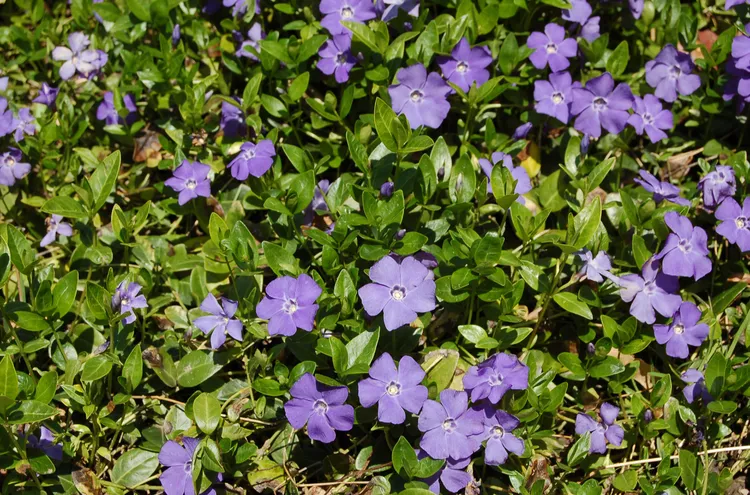
Got a hill that keeps eroding? Periwinkle grabs onto slopes and holds soil in place better than most plants I’ve tried. Its trailing stems root as they creep, which explains why it works so well on banks.
Small purple or white flowers pop up in spring and keep blooming on and off through summer. The foliage stays glossy year-round, even under snow.
I’ve planted this in shady spots under trees where grass gives up completely.
Here’s my honest warning. Periwinkle can get pushy and climb right over your other plants if you skip the yearly trim. Check your state’s invasive plant list before adding it, since some regions restrict it for good reason.
3. Monkey Grass Barely Needs You
Plant Overview
Scientific name: Liriope muscari
Zone: 4 to 10
Exposure: part shade, shade, sun
Height: 10″ to 16″
Width: 12″ to 24″
Bloom time: late summer, early fall
Flower color: violet-purple
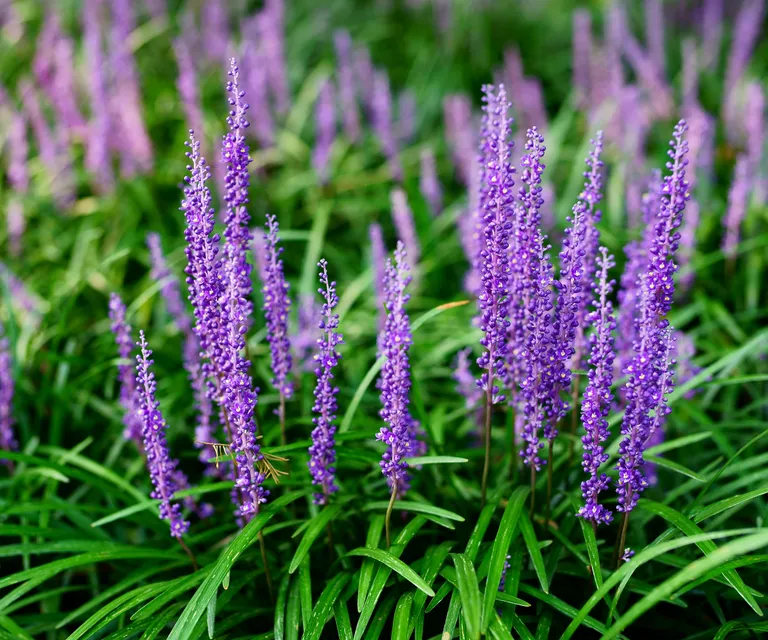
Monkey grass, also called liriope, might be the laziest gardener’s dream plant.
It shrugs off drought, tolerates poor soil, and produces cheerful purple flower spikes from midsummer into fall. Grass-like leaves arch gracefully and never look messy.
Zones 4 through 10 all work fine for this plant. That’s a huge range for one evergreen. Silver and variegated varieties exist too, so you’re not stuck with plain green if you want something flashier.
Birds enjoy the black berries that follow the blooms. I’ve noticed sparrows and finches stopping by my patches every autumn. Just know this plant spreads on its own and lands on invasive lists in a few states.
Also read: 15 Ground Cover Plants for Sunny Garden
4. Creeping Juniper Covers Ground in a Hurry
Plant Overview
Scientific name: Juniperus horizontalis ‘Blue Chip’
Zone: 3 to 9
Exposure: full sun
Height: 8″ to 12″
Width: 5′ to 6′
Bloom time: N/A
Flower color: N/A
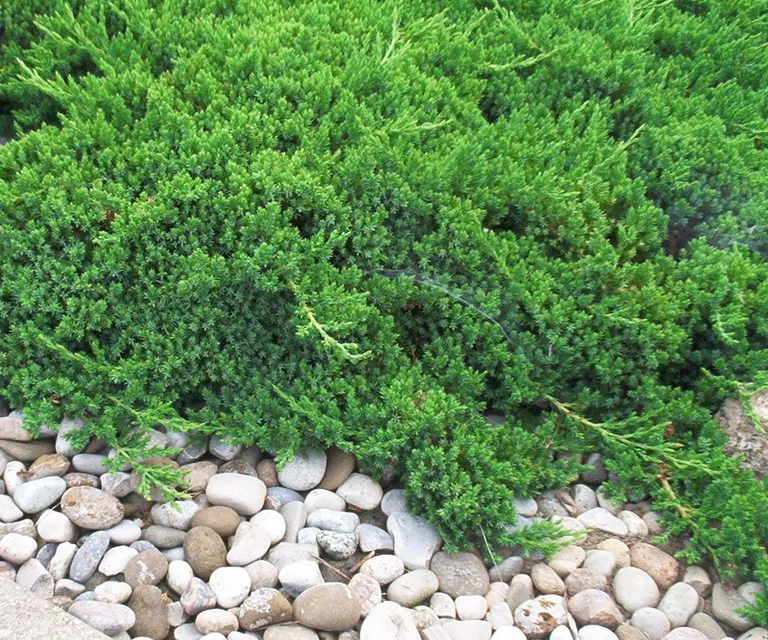
Need to cover a lot of space with one plant? Creeping juniper spreads five to six feet wide from a single specimen, and it does this without any coaxing from you. Needle-like foliage stays soft blue-green all winter long.
Full sun brings out the best color in this conifer. Shade makes it leggy and thin, so pick an open spot. Gravel gardens and rock gardens both suit this plant perfectly, and it holds its shape without flowering.
Drought never fazes creeping juniper once roots settle in. I’ve watched neighbors ignore theirs for entire summers with zero damage done. This plant handles brutal winters better than almost anything else on this list.
5. Bearberry Thrives Where Nothing Else Will
Plant Overview
Scientific name: Arctostaphylos uva-ursi
Zone: 2 to 6
Exposure: full sun to partial shade
Height: up to 1′
Width: 3′ to 6′
Bloom time: mid and late spring
Flower color: white with pink edges
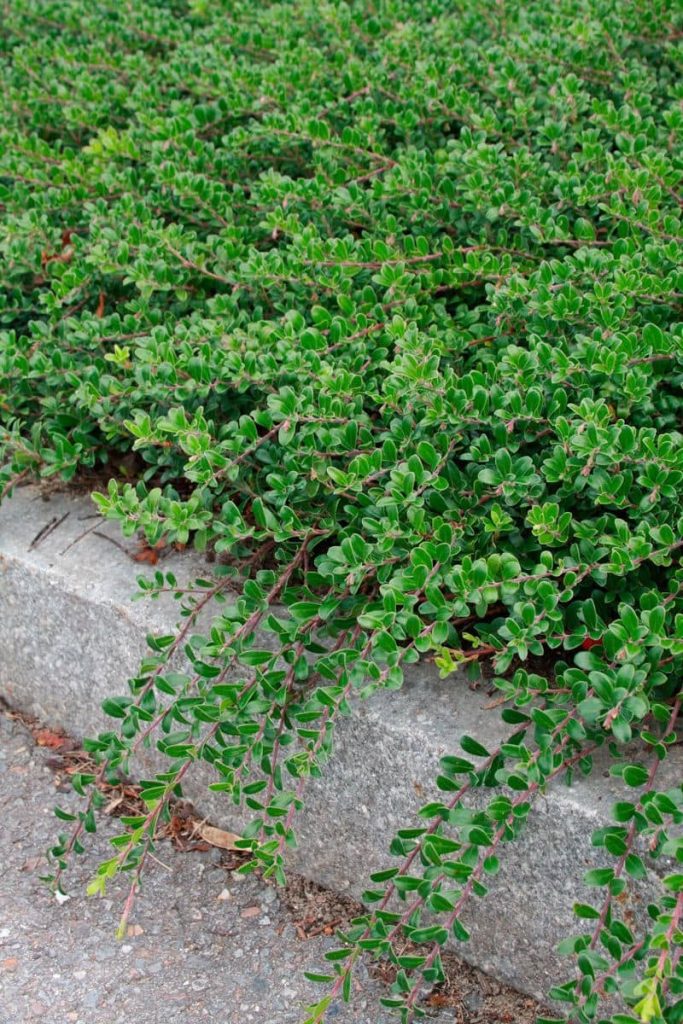
Cold weather scares off a lot of plants. Bearberry laughs at zone 2 winters and keeps its glossy leaves through the whole season. Small bell-shaped flowers show up in spring, white with a blush of pink at the edges.
Rocky soil doesn’t bother this plant at all. Sandy banks and gravel slopes actually suit it best. One plant spreads three to six feet, so a handful of them can carpet a large area in just a few seasons.
Acidic soil matters here more than with most ground covers. Test your soil before planting if you’re not sure what you’ve got. I’ve had the best luck tucking bearberry into rock gardens where drainage runs fast and stays sharp.
6. Creeping Thyme Smells as Good as It Looks
Plant Overview
Scientific name: Thymus coccineus
Zone: 5 to 9
Exposure: full sun
Height: 2″ to 3″
Width: about 1′
Bloom time: summer
Flower color: lavender, magenta, purple, white
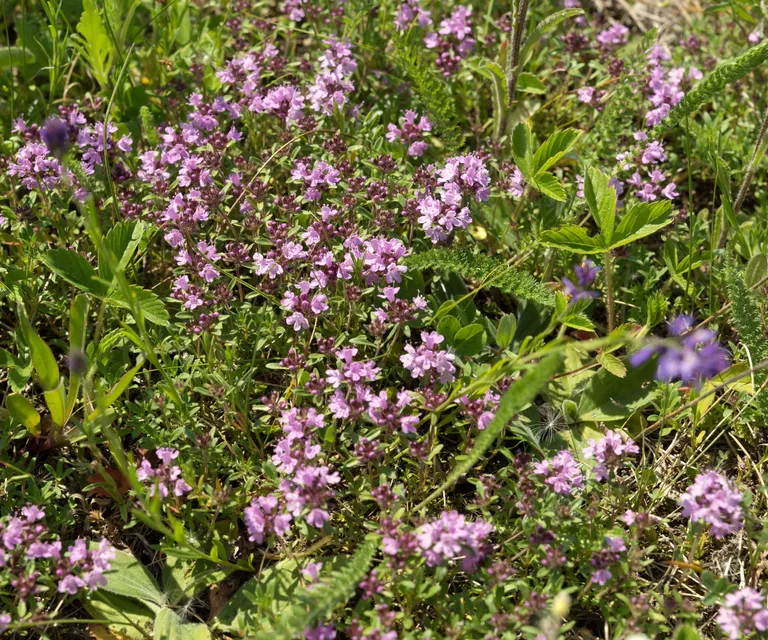
Walk near creeping thyme and you’ll catch that herby scent right away. Tiny leaves pack tightly onto woody little stems, forming a mat barely taller than your shoe.
Summer brings a wave of purple or lavender blooms so thick it looks painted on.
Rocky, poor soil actually works in this plant’s favor. Rich soil makes it leggy and less floriferous.
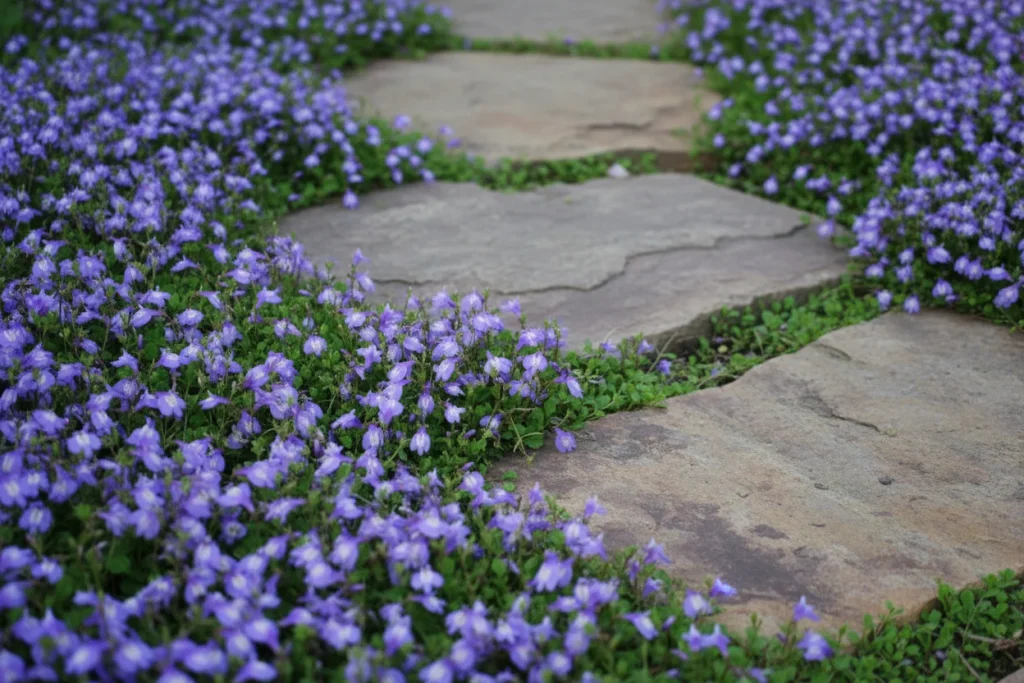
I plant thyme between stepping stones since it handles light foot traffic and releases that scent when you brush against it.
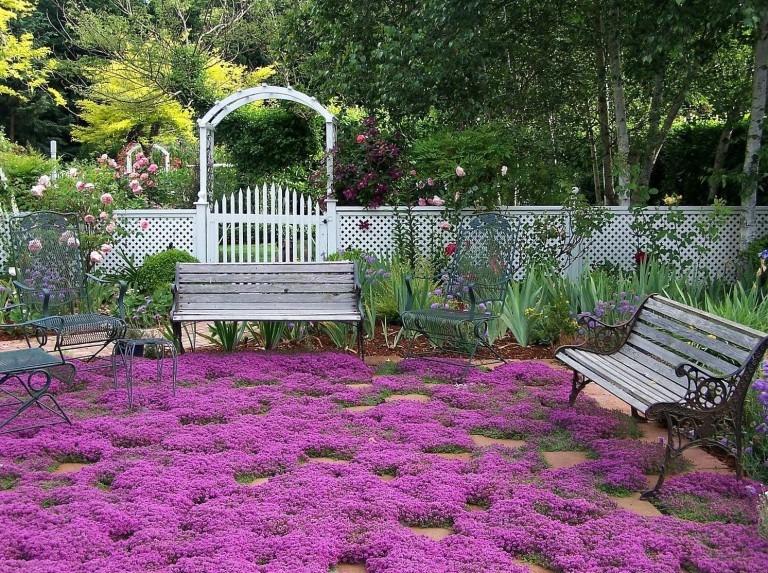
This isn’t just a pretty face either. Creeping thyme is edible and has been used for centuries for its medicinal properties.
The Royal Horticultural Society gave it their Award of Garden Merit, and honestly, one sniff tells you why.
7. Golden Groundsel Feeds the Bees
Plant Overview
Scientific name: Packera aurea
Zone: 3 and up
Exposure: sun to shade
Height: varies, forms low mats
Width: spreading
Bloom time: spring, summer
Flower color: yellow
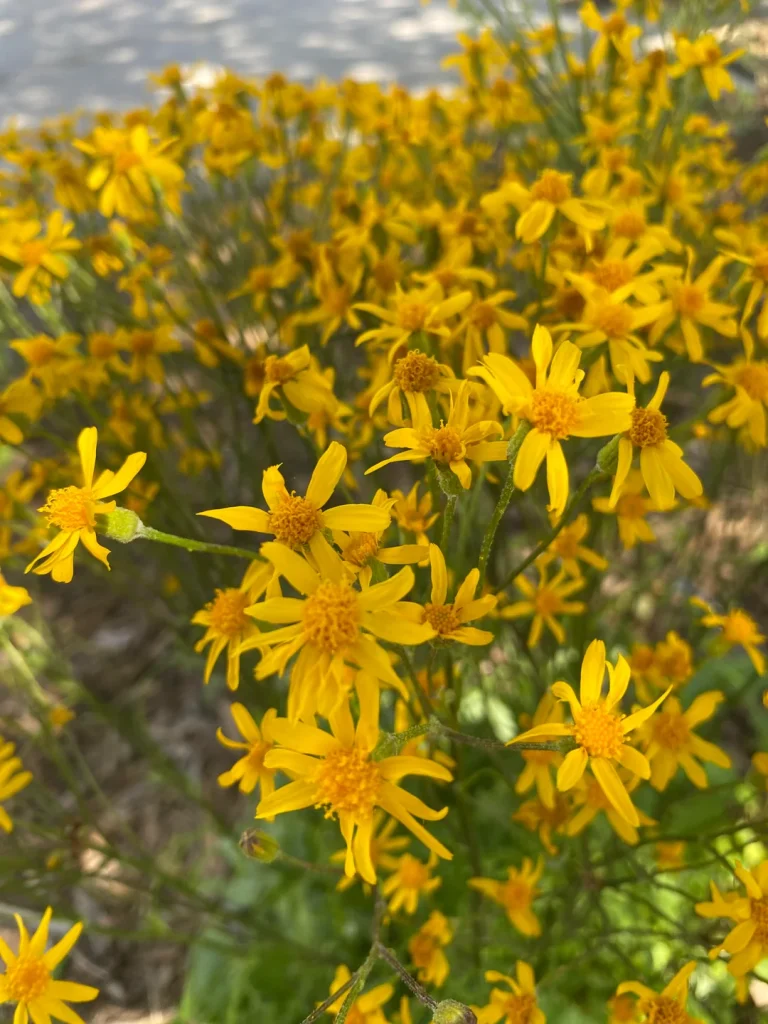
Native plants earn extra points from me every time. Golden groundsel grows almost anywhere, wet or dry, sun or shade, good soil or bad. That kind of flexibility makes it nearly foolproof for beginners.
Yellow daisy-like flowers rise on tall stems during spring and summer. Bees swarm this plant the moment it blooms.
Twenty species of butterflies use it as a host plant, feeding caterpillars that later become the pollinators your whole garden depends on.
Foliage stays mostly evergreen and forms a thick mat that smothers weeds underneath. Zone 3 gardeners can grow this without worry.
If you want a wildlife-friendly ground cover with zero fuss, golden groundsel deserves a spot on your shortlist.
8. Cotoneaster Gives You Three Seasons in One Plant
Plant Overview
Scientific name: Cotoneaster spp.
Zone: 5 to 8
Exposure: full sun to partial shade
Height: 9″ to 1′
Width: 4′ to 6′
Bloom time: late spring, early summer
Flower color: white
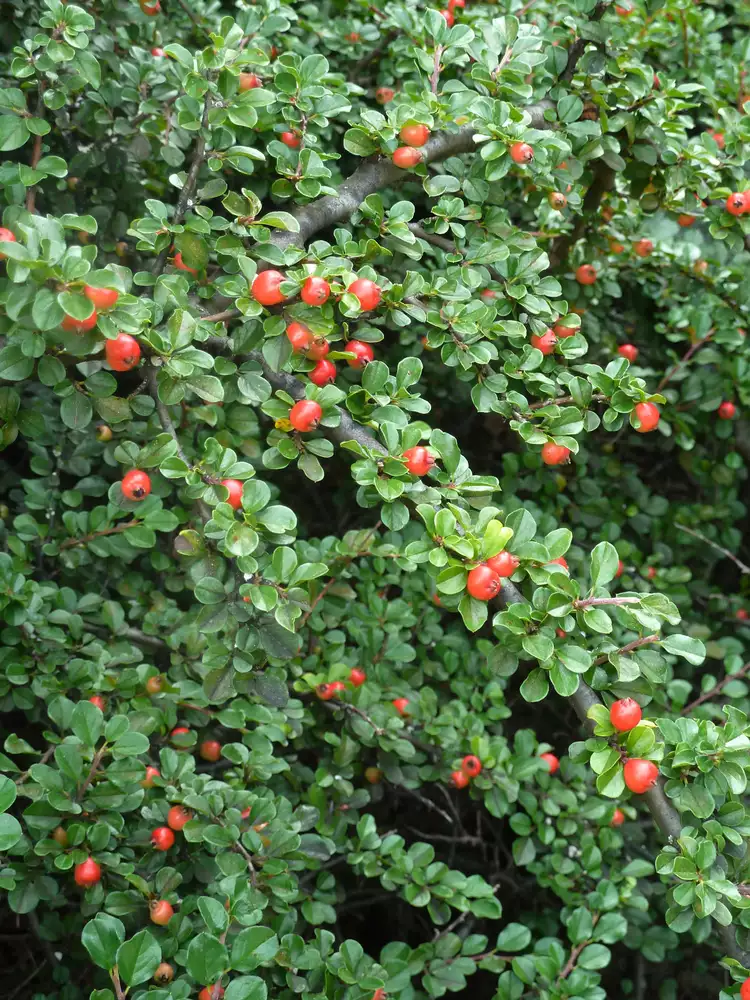
Some plants give you one good season. Cotoneaster gives you three. Tiny white flowers open in late spring, ruby red berries follow through fall, and the leaves themselves turn from green to red as winter closes in.
Birds love those berries once frost hits. I’ve watched robins strip a cotoneaster hedge clean in a single afternoon. Glossy, small leaves grow along low, almost creeping branches that spread four to six feet from one plant.
Front yards and urban gardens both suit this shrub well. Drought rarely bothers established plants, and soil requirements stay flexible across loam, clay, or sand.
Anyone wanting color changes without constant upkeep should give cotoneaster a serious look.
9. Sedum Wears Every Color You Can Imagine
Plant Overview
Scientific name: Sedum spp.
Zone: 4 to 9
Exposure: full sun
Height: up to 1′
Width: 1′ to 2′
Bloom time: summer
Flower color: pink
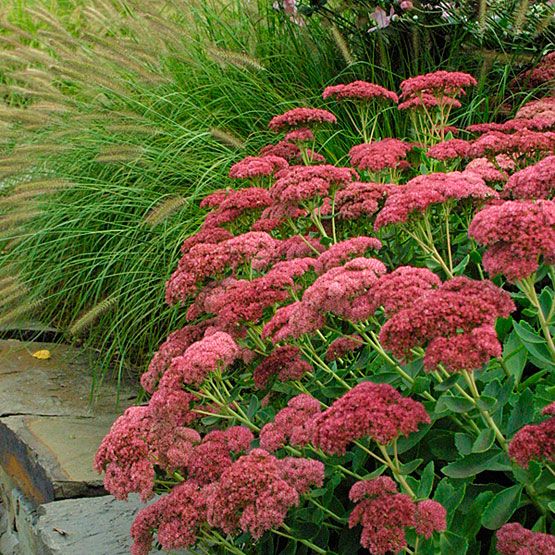
Stonecrop never bores me. Leaves shift between green, blue, red, purple, and yellow depending on the variety and the season. Some cultivars even mix cream and green on the same leaf, which looks almost painted by hand.
Pink flower clusters rise above the foliage on tall stems come summer. Bees and butterflies can’t resist them. I’ve grown sedum in rock gardens, containers, and bare patches alike, and it never complains about any of it.
Drought means nothing to this plant once it’s settled. Well-drained soil matters more than rich soil here. If your yard bakes in full sun and nothing else survives, sedum probably will.
10. Bugleweed Spreads Fast, So Plant It With a Plan
Plant Overview
Scientific name: Ajuga reptans
Zone: 3 to 10
Exposure: sun to shade
Height: 1″ to 6″
Width: 6″ to 18″
Bloom time: spring, summer
Flower color: blue, pink, purple, white
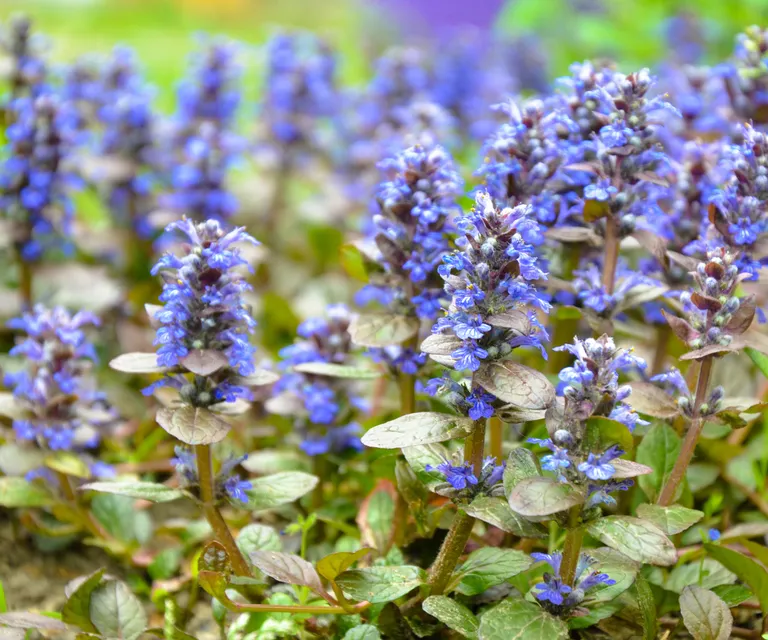
Crinkled burgundy leaves make bugleweed stand out from typical green ground covers. Spikes of blue, pink, or purple flowers shoot up in late spring and stay showy through early summer.
Few plants pack this much color into such a short height.
Stolons root wherever they touch soil, and that’s the catch. Colonies form fast, sometimes faster than you’d like. I always plant ajuga somewhere hardscaped, like between pavers, so it can’t sneak into the lawn.
Deer leave it alone, and drought barely slows it down. Foot traffic is the one thing this plant can’t handle.
Give bugleweed rich, well-drained soil and a boundary it can’t escape, and you’ll have a ground cover that never needs deadheading.
11. Wintergreen Rewards You With Winter Berries
Plant Overview
Scientific name: Gaultheria procumbens
Zone: 3 to 8
Exposure: part shade to shade
Height: 3″ to 6″
Width: 6″ to 12″
Bloom time: summer
Flower color: white
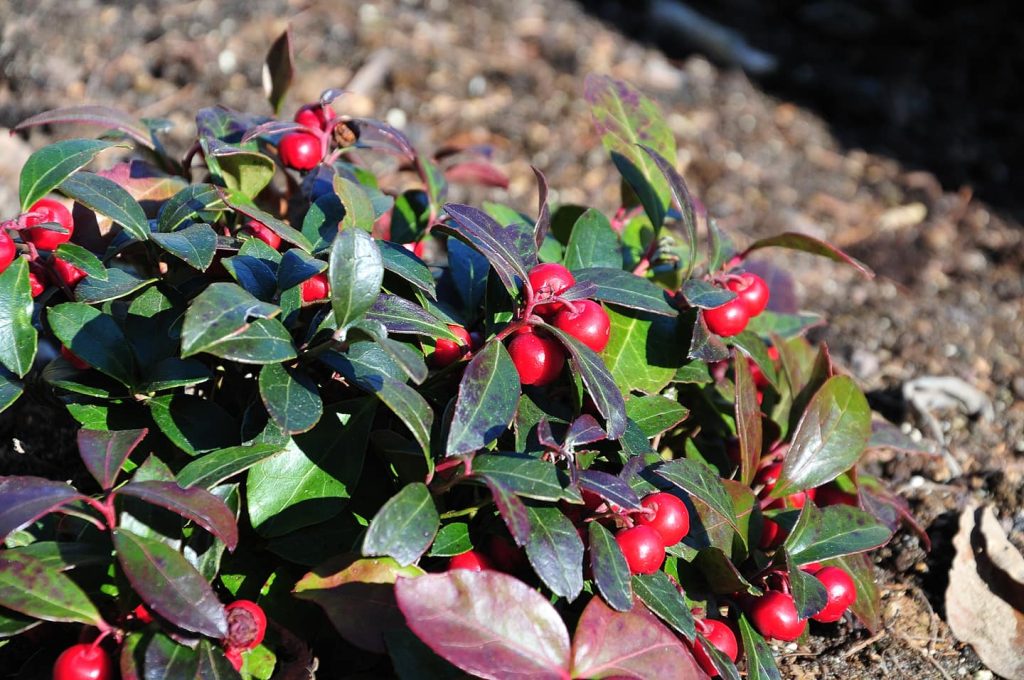
American wintergreen stays low and quiet most of the year. Glossy dark green leaves turn a deep purple once cold weather arrives, which adds unexpected color to a dull winter bed.
Small white bell-shaped flowers bloom in summer without much fanfare.
Bright red berries follow those blooms and last well into winter. Birds rely on them when food gets scarce.
Both the leaves and berries smell and taste like actual wintergreen, since the plant’s oil is the same one used in gum and toothpaste.
Moist, acidic soil suits this plant best. Woodland understories are its natural home. Plant it ten to twelve inches apart if you want a dense carpet, and give it a few seasons to fill in completely.
12. Basket of Gold Lights Up Early Spring
Plant Overview
Scientific name: Aurinia saxatilis
Zone: 4 to 10
Exposure: full sun
Height: 6″ to 1′
Width: 1′ to 2′
Bloom time: spring
Flower color: yellow
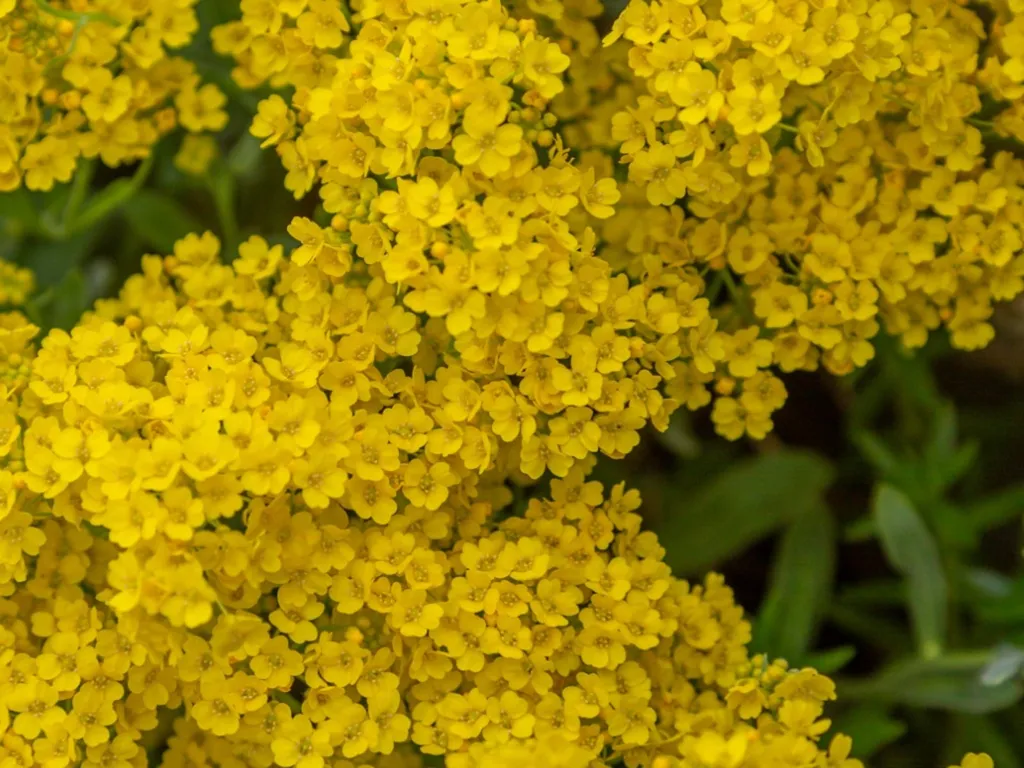
Silvery foliage alone makes basket of gold worth planting. Each leaf carries a faint blue tint that catches the light even in winter.
Then spring hits, and the whole plant explodes into bright yellow blooms packed so tightly you’d swear it was glowing.
Well-drained soil keeps this plant happy year-round. Rich, damp soil causes root problems fast. I’ve tucked basket of gold into rock walls and gravel beds, spots where drainage runs quick and little else wants to grow.
Drought resistance comes standard with this plant. The Royal Horticultural Society recognized it with their Award of Garden Merit for good reason. Few evergreens deliver this much cheerful color for so little effort on your part.
13. Evergreen Candytuft Looks Like Fresh Snow
Plant Overview
Scientific name: Iberis sempervirens
Zone: 3 to 9
Exposure: full sun
Height: 6″ to 1′
Width: 12″ to 18″
Bloom time: mid spring to early summer
Flower color: white
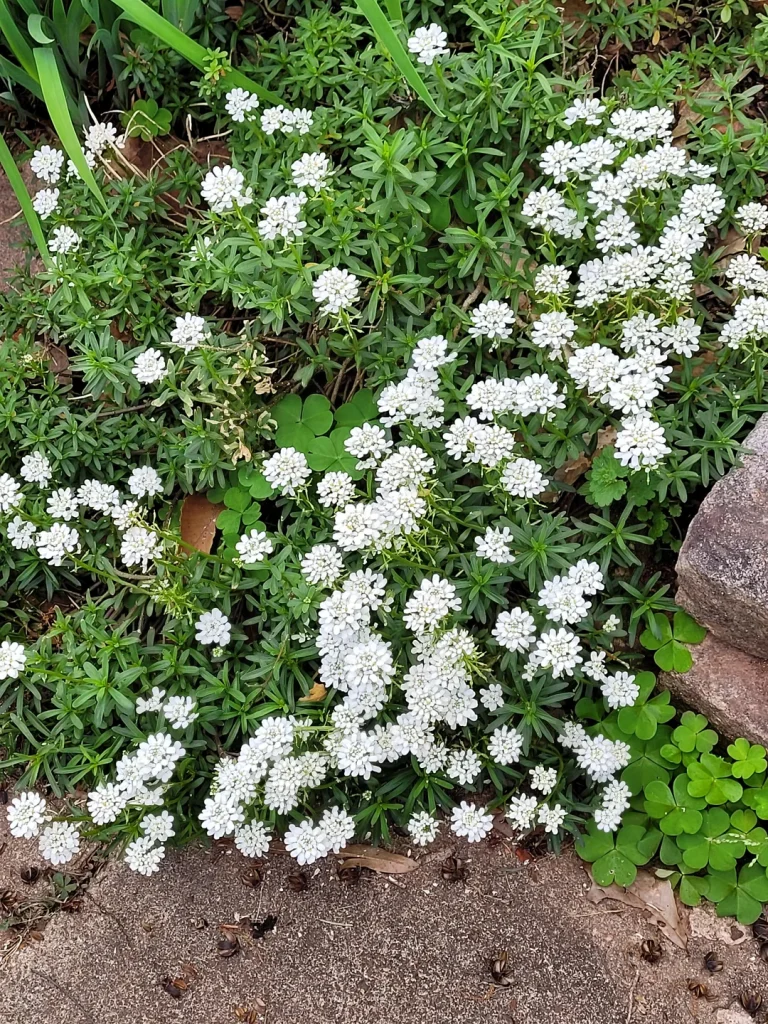
Snowdrifts in springtime sound impossible, but candytuft pulls it off. Tiny white flowers cluster so thickly across the plant that the green leaves practically disappear underneath.
I’ve had visitors ask if my garden was still covered in frost.
Light green leaves stay thick and healthy through winter, holding their shape under snow and ice. Full sun brings out the heaviest bloom.
Alkaline to neutral soil works best, so add a little chalk if your yard runs acidic.
Borders and informal flower beds both look sharp with this plant lining the edges. Drought resistance means you won’t baby it once established.
Anyone building a white garden theme should start their plant list right here.
14. Bergenia Squeaks and Blooms Its Way Into Your Heart
Plant Overview
Scientific name: Bergenia spp.
Zone: 3 to 8
Exposure: part sun to shade
Height: 6″ to 1′
Width: 12″ to 18″
Bloom time: spring
Flower color: pink, red, white
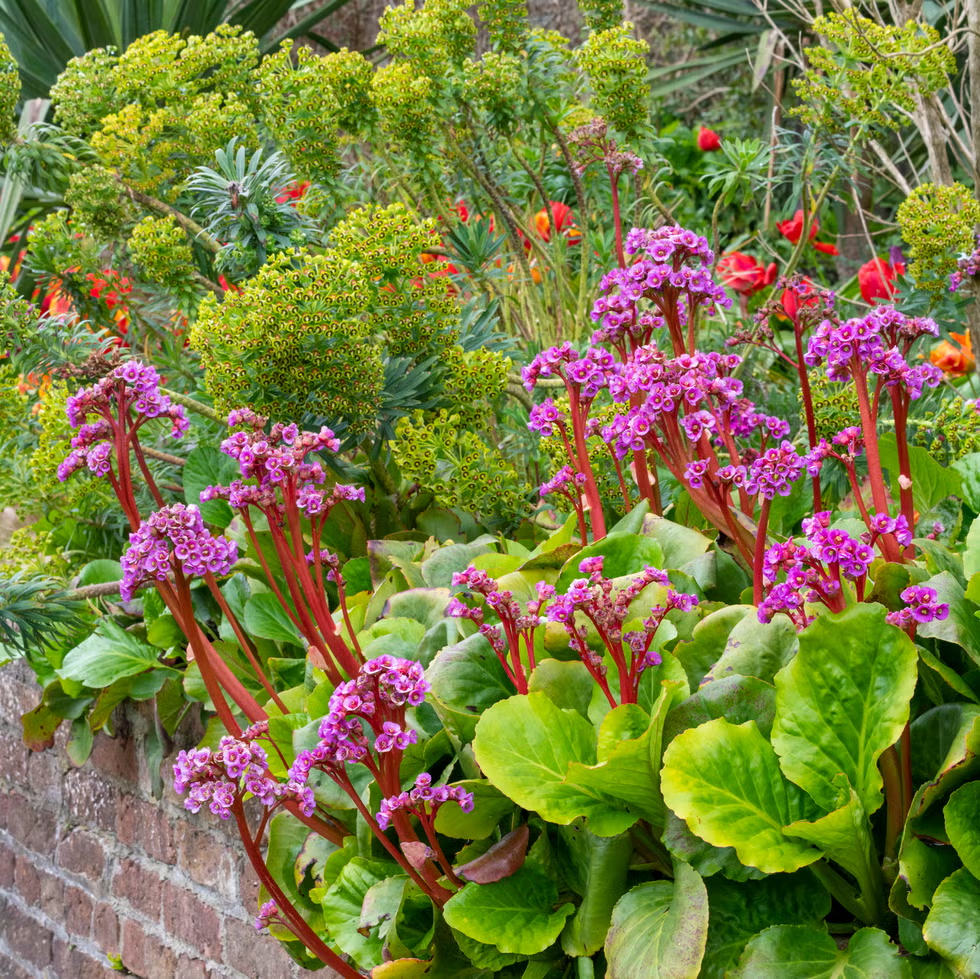
Rub two bergenia leaves together and you’ll hear an actual squeak. That’s where its nickname, pigsqueak, comes from.
Large, glossy leaves stay evergreen year-round and deepen into burgundy tones once cold weather settles in.
Pink or red flower clusters rise above the foliage each spring on sturdy stems. Deer tend to avoid this plant completely. I’ve grown bergenia in dry shade under trees where most other flowering perennials simply give up.
Rhizomes spread slowly, so you won’t fight this plant for territory. Drought tolerance holds up well once roots establish. Rock gardens, low borders, and shady beds all give bergenia room to show off that unusual texture.
15. Evergreen Sedge Brings a Wild, Natural Look
Plant Overview
Scientific name: Carex spp.
Zone: 5 to 9
Exposure: full sun to full shade
Height: 1′ to 2′
Width: 1′ to 2′
Bloom time: N/A
Flower color: N/A
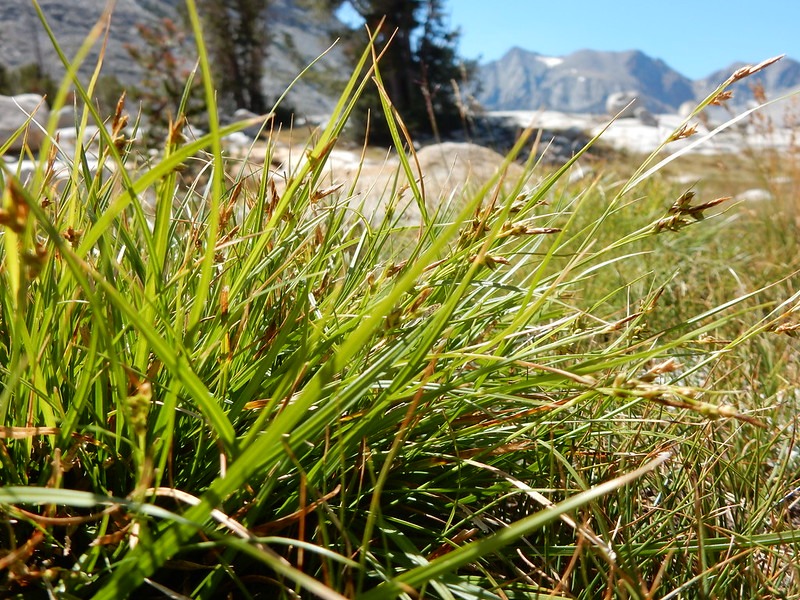
Grassy tufts give any garden a relaxed, meadow-like feel. Sedge handles sun, shade, or anything between without complaint. Several species native to North America thrive in open fields and dappled woodland light alike.
No flashy blooms show up on this plant, and that’s fine by me. Texture does all the work here. I mix sedge into gravel gardens and prairie-style beds where its arching blades sway with every breeze.
Soil tolerance runs wide, from acidic to slightly alkaline, and drainage matters more than fertility. Established clumps need almost no care beyond an occasional trim. If your garden needs movement and texture rather than color, sedge fills that gap perfectly.
Frequently Asked Questions
What’s the Fastest-Spreading Evergreen Ground Cover?
Creeping juniper wins this one easily. A single plant spreads five to six feet without any help from you. Periwinkle and bugleweed spread fast too, but they need boundaries so they don’t take over neighboring beds.
Can Evergreen Ground Covers Handle Foot Traffic?
Most can’t, so tread carefully. Creeping thyme is the exception here, since it tolerates light steps between stepping stones just fine. Plants like bugleweed, periwinkle, and bergenia need to stay off the walking path completely.
Do Evergreen Ground Covers Need Fertilizer?
Rarely, once they’ve settled in. Most of these plants actually perform worse in overly rich soil. A light layer of compost in spring gives sedge, sedum, and similar plants all the boost they need.
What’s the Best Evergreen Ground Cover for Full Sun?
Creeping juniper, sedum, and basket of gold all love baking in direct sun. Their foliage colors up best under strong light. Shade actually makes these plants stretch out and lose their compact shape.
What’s the Best Evergreen Ground Cover for Full Shade?
Pachysandra and bergenia handle deep shade without complaint. Both grow well under large trees where grass gives up. Wintergreen also does fine in shady, moist woodland-style beds.
Are Any of These Plants Considered Invasive?
Yes, a few can be. Periwinkle, monkey grass, and bugleweed spread aggressively and land on invasive lists in certain states. Check with your local extension office before planting any of these near natural areas.
Final Thoughts
Fifteen plants, one goal: no more bare dirt. Some of these thrive in blazing sun, others love deep shade, and a few handle both without blinking.
Pick based on your soil, your light, and how much spreading room you’re willing to give.
I’ve grown most of these myself, and each one earned its spot through actual performance, not just good looks. Start with one or two that match your toughest problem spot. Watch how fast your yard changes once green replaces brown for good.
Article Resources: