15 Ground Cover Plants for Sunny Garden

Bare, sun-baked patches of ground are one of the most frustrating problems in any yard. Grass struggles, weeds take over, and the whole area looks tired.
Ground covers are the answer. These low-growing plants spread across the soil, choke out weeds, and look beautiful doing it.
I’ve watched a simple ground cover completely transform a dull sunny spot into something worth showing off.
Whether you’re dealing with a slope, a rocky patch, or a tired corner, one of these 15 plants will fix it.
15 Most Beautiful Sun Loving Ground Cover
1. Creeping Thyme
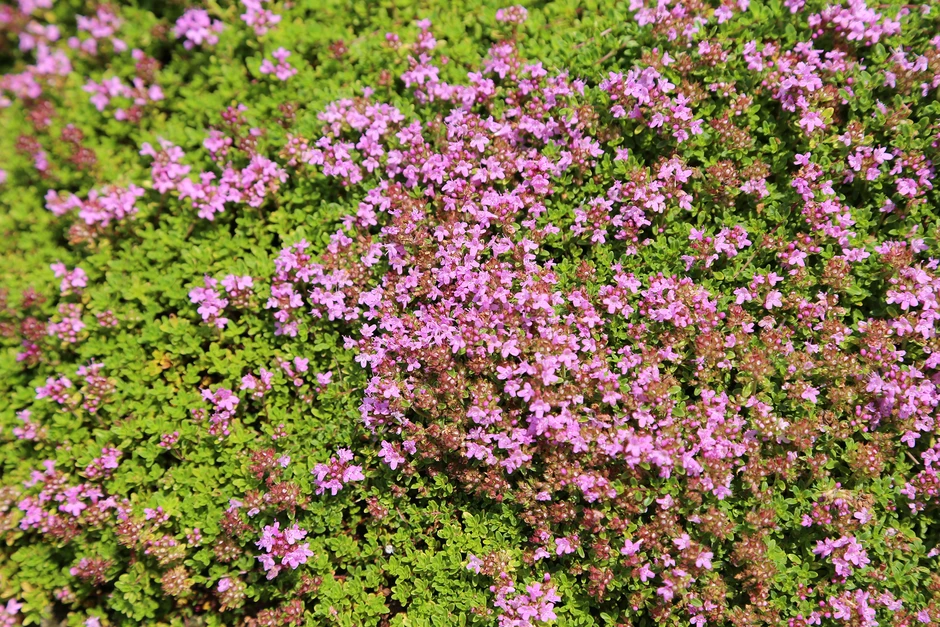
Creeping thyme is one of my all-time favorites. You can actually walk on it. Most plants would hate that — this one loves it.
When you step on the leaves, they release the most refreshing herbal scent into the air. It’s like a free aromatherapy session right in your garden. No other ground cover gives you that.
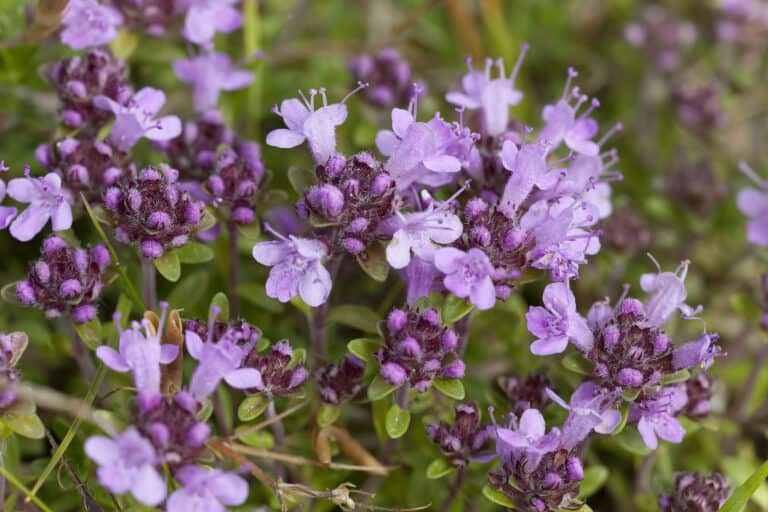
This plant thrives in poor, well-drained soil. Full sun is where it truly shines. Tiny pink, purple, or white flowers appear in summer, and pollinators absolutely swarm them.
Plant Overview:
- USDA Growing Zones: 4 to 9
- Color Varieties: Pink, purple, red, or white flowers
- Sun Exposure: Full sun to part shade
- Soil Needs: Average, well-draining, neutral to slightly alkaline
Also read: 15 Drought Tolerant Ground Cover Plants
2. Catmint
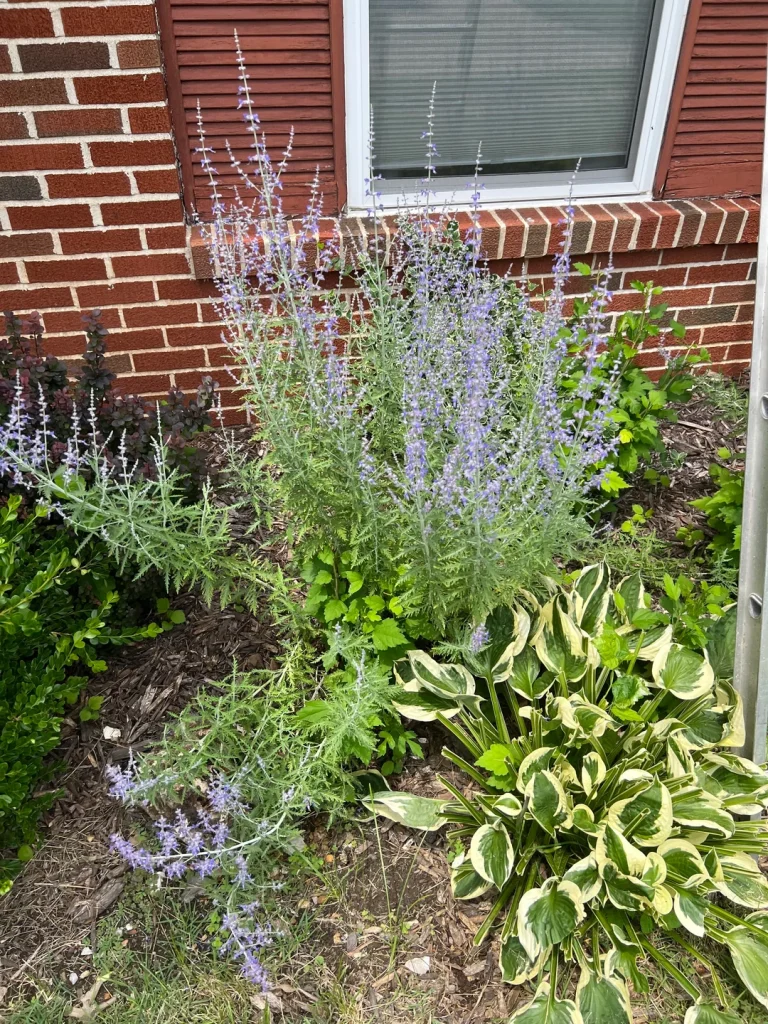
Catmint is the ground cover that keeps on giving. Cut it back after the first bloom and it flowers again. That kind of effort-to-reward ratio is hard to beat.
Drought tolerance makes it perfect for hot, dry spots. The grey-green leaves give off a faint lemony scent when you brush against them.
Dwarf varieties like ‘Little Trudy’ stay just 8 to 12 inches tall — ideal for a true ground cover effect.
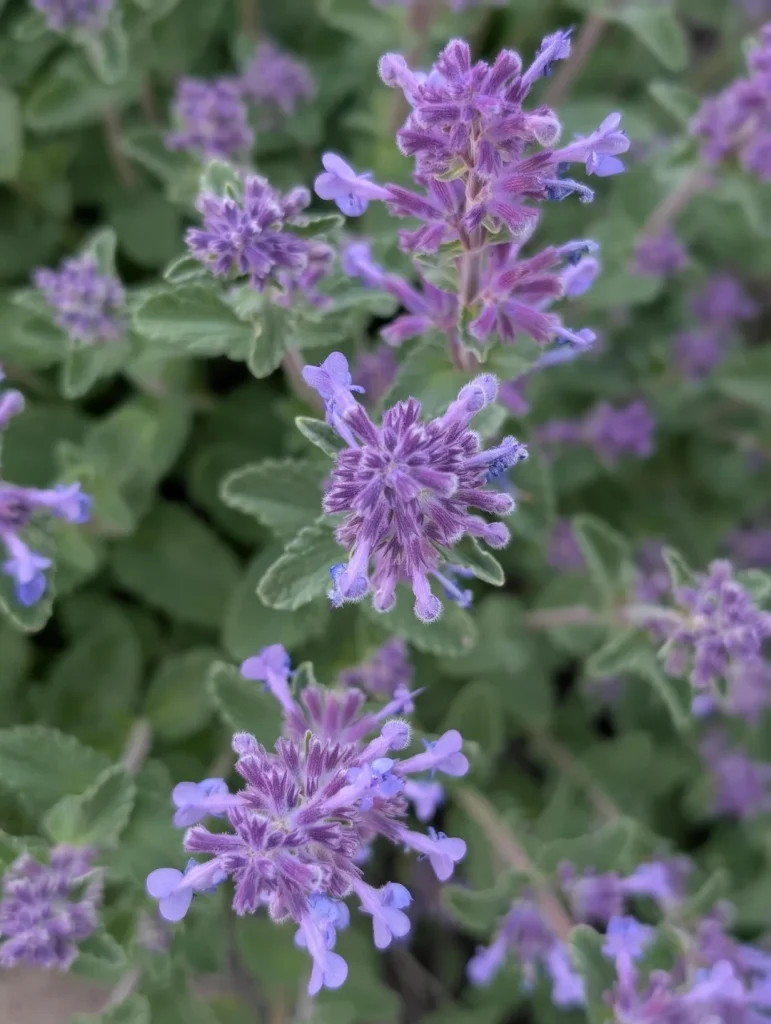
Bees and butterflies can’t stay away from those blue-violet flower spikes. Your sunny patch will feel alive all summer long. Honestly, I’d plant this one just for the pollinators alone.
Plant Overview:
- USDA Growing Zones: 3 to 8
- Color Varieties: Blue, violet, or white flowers
- Sun Exposure: Full sun to part shade
- Soil Needs: Average, dry to medium moisture, well-draining
Also read: 15 Ground Cover That Chokes Out Weeds
3. Lamb’s Ear
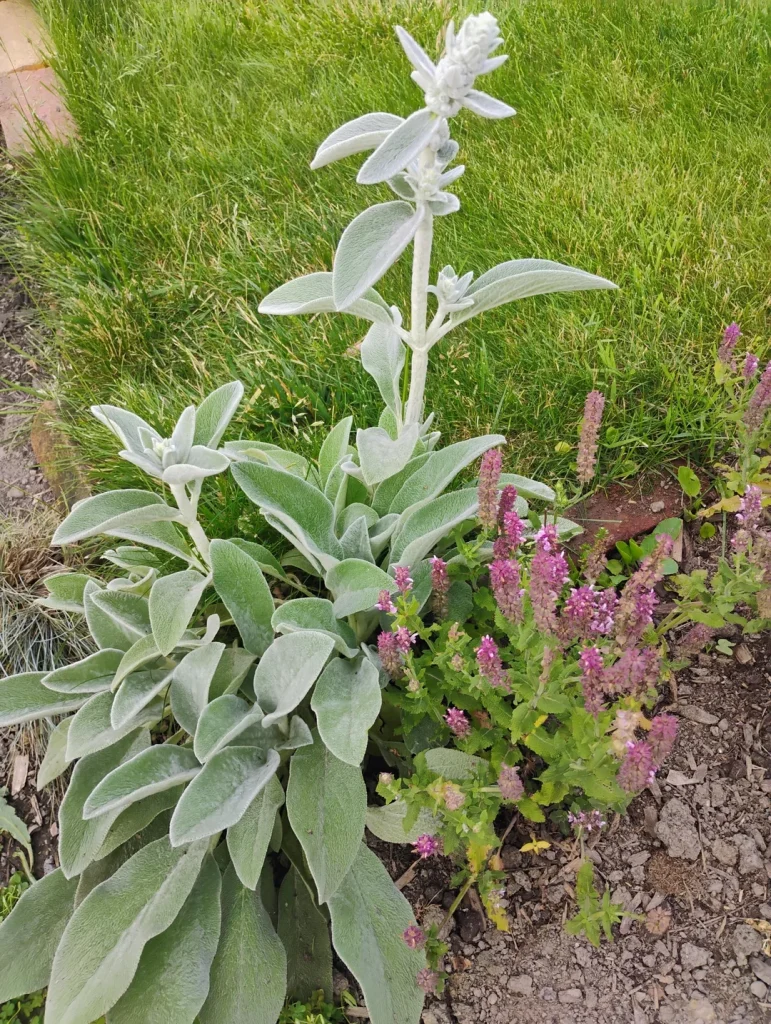
Lamb’s ear brings something most plants can’t — incredible texture. Those thick, silvery leaves are genuinely soft to the touch. Running your hand across them is oddly satisfying.
Deer and rabbits leave it completely alone. Hot, dry conditions don’t bother it either. This plant is tougher than it looks.
Not a fan of the tall flower spikes? Try the cultivar ‘Silver Carpet’. It rarely flowers and stays low and tidy all season, letting that gorgeous silver foliage do all the talking.
Plant Overview:
- USDA Growing Zones: 4 to 7
- Color Varieties: Silver-grey foliage, light purple flowers
- Sun Exposure: Full sun to part shade
- Soil Needs: Average, dry to medium moisture, well-draining
Also read: 13 Stunning Flowering Ground Cover Perennials
4. Creeping Phlox
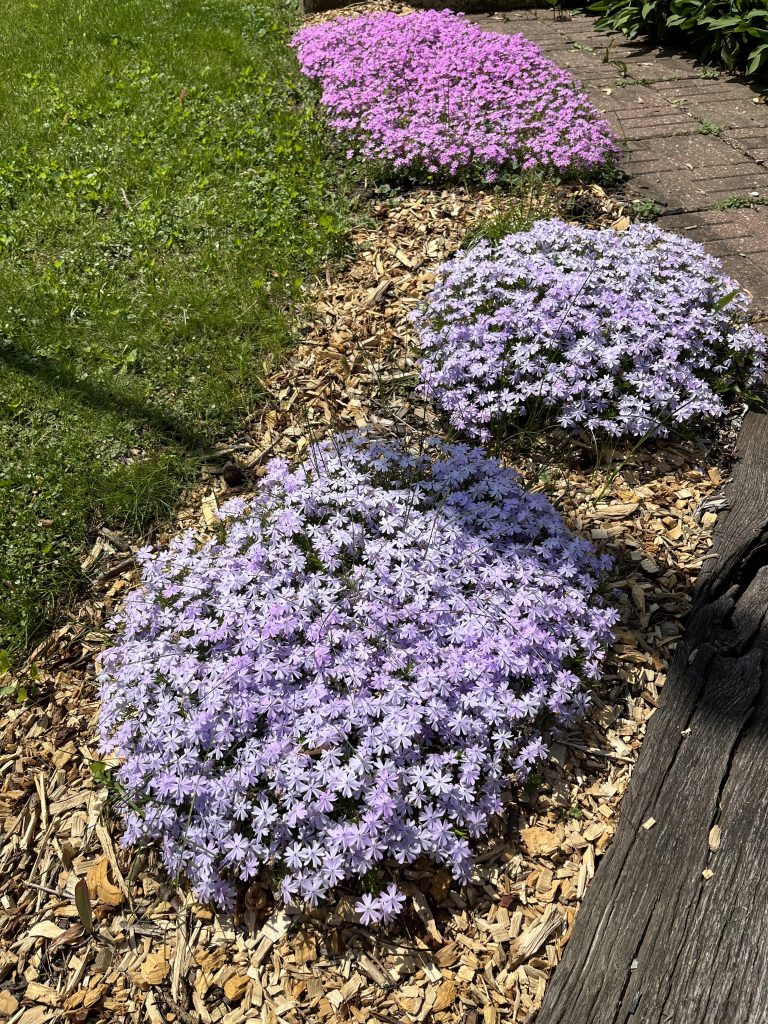
Creeping phlox puts on one of the most dramatic spring shows I’ve ever seen. Come mid-spring, the entire plant disappears under a blanket of star-shaped flowers. Pink, lavender, rose, white — take your pick.
This North American native forms a dense 6-inch mat. Butterflies swarm it during bloom time. Slopes and rocky banks are no problem for this tough little plant.
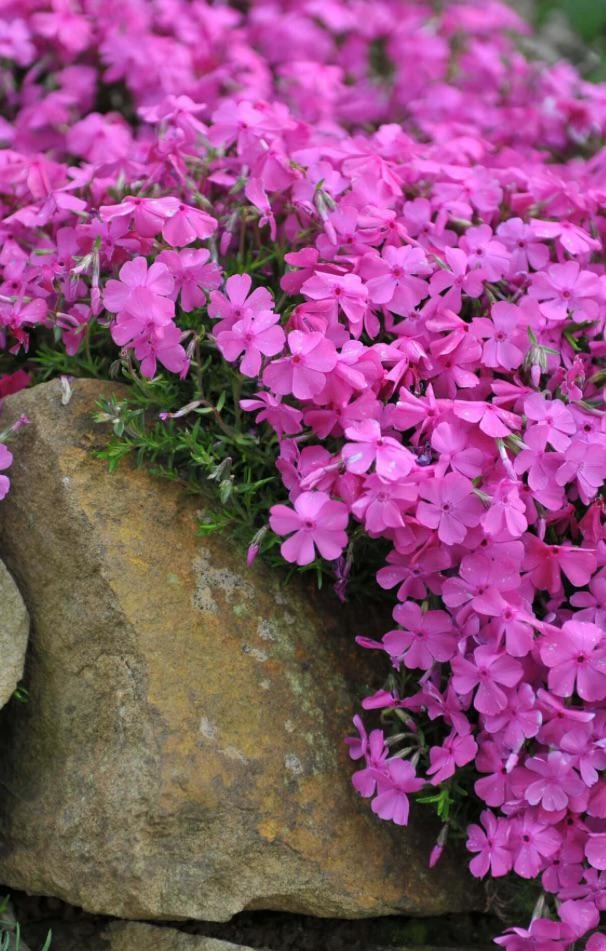
Established plants handle drought without missing a beat. Deer won’t touch it. Once it settles in, you barely have to think about it.
Plant Overview:
- USDA Growing Zones: 4 to 9
- Color Varieties: Purple, pink, white, rose, lavender
- Sun Exposure: Full sun to part shade
- Soil Needs: Loamy, well-draining
5. Creeping Juniper
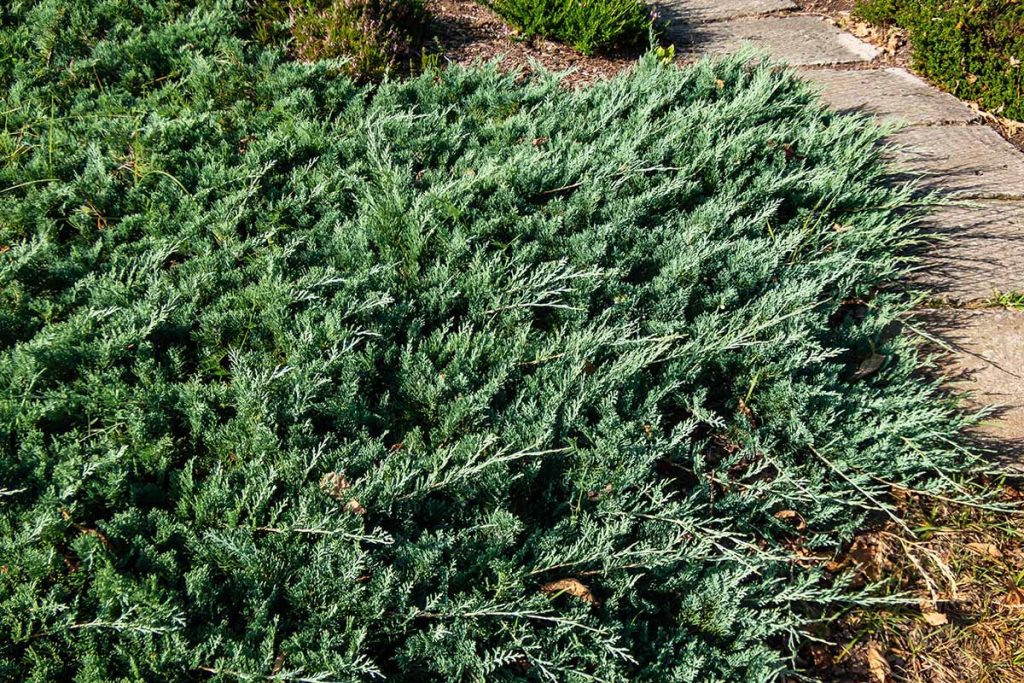
If you have a problem slope, this is the plant I always reach for. Creeping juniper (Juniperus horizontalis) hugs the ground tightly and spreads wide. Few plants control soil erosion on sunny hillsides as effectively.
The variety ‘Blue Rug’ is a personal favorite. It stays incredibly flat and produces stunning blue-green foliage year-round. Evergreen coverage through winter is a huge bonus most gardeners don’t expect.
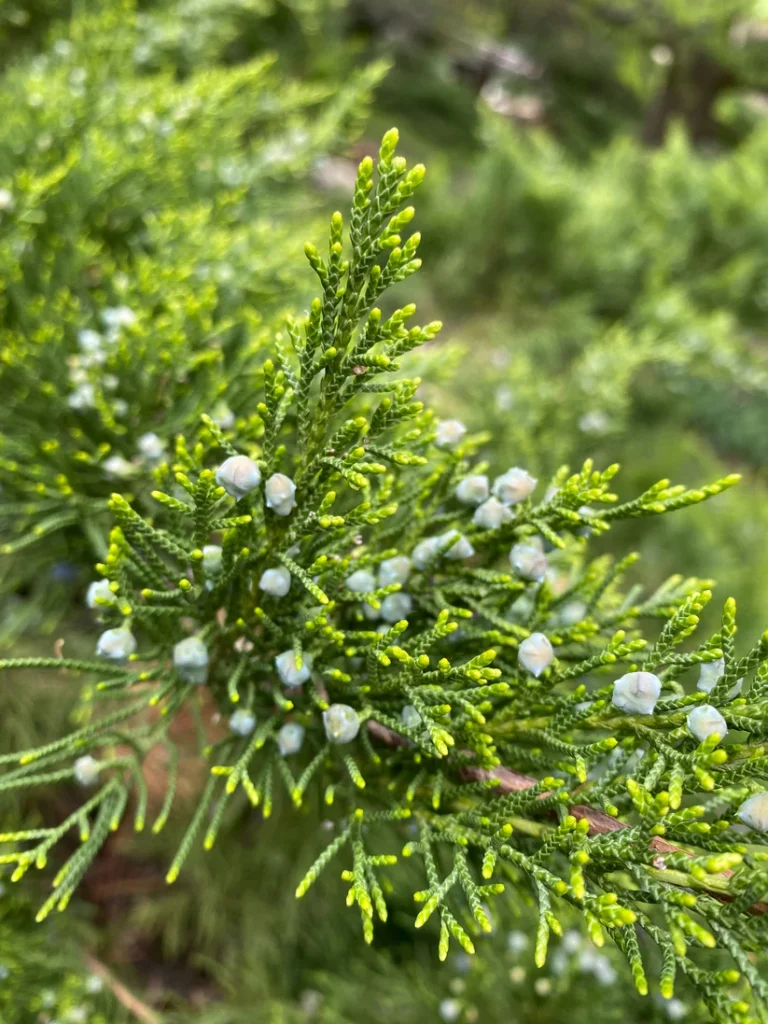
Low maintenance is the name of the game here. A light prune in spring keeps it tidy. Beyond that, you can pretty much leave it alone.
Plant Overview:
- USDA Growing Zones: 3 to 9
- Color Varieties: Dark green, yellow-green, or blue-green foliage
- Sun Exposure: Full sun
- Soil Needs: Average to sandy, dry to medium moisture, well-draining
6. Angelina Sedum
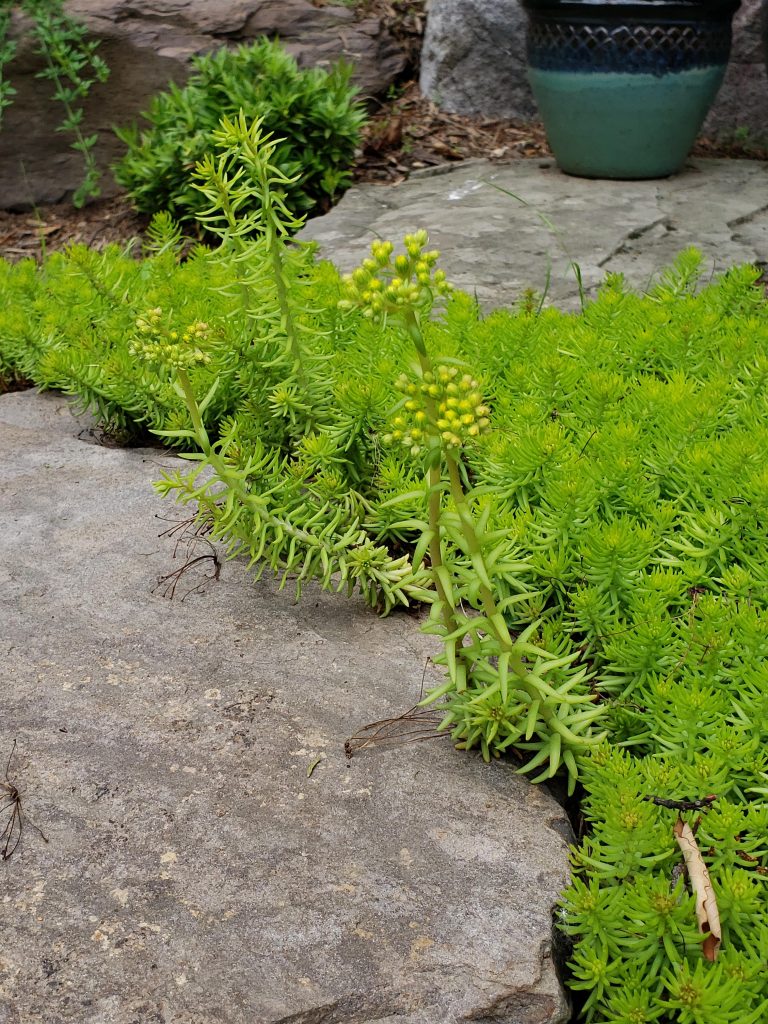
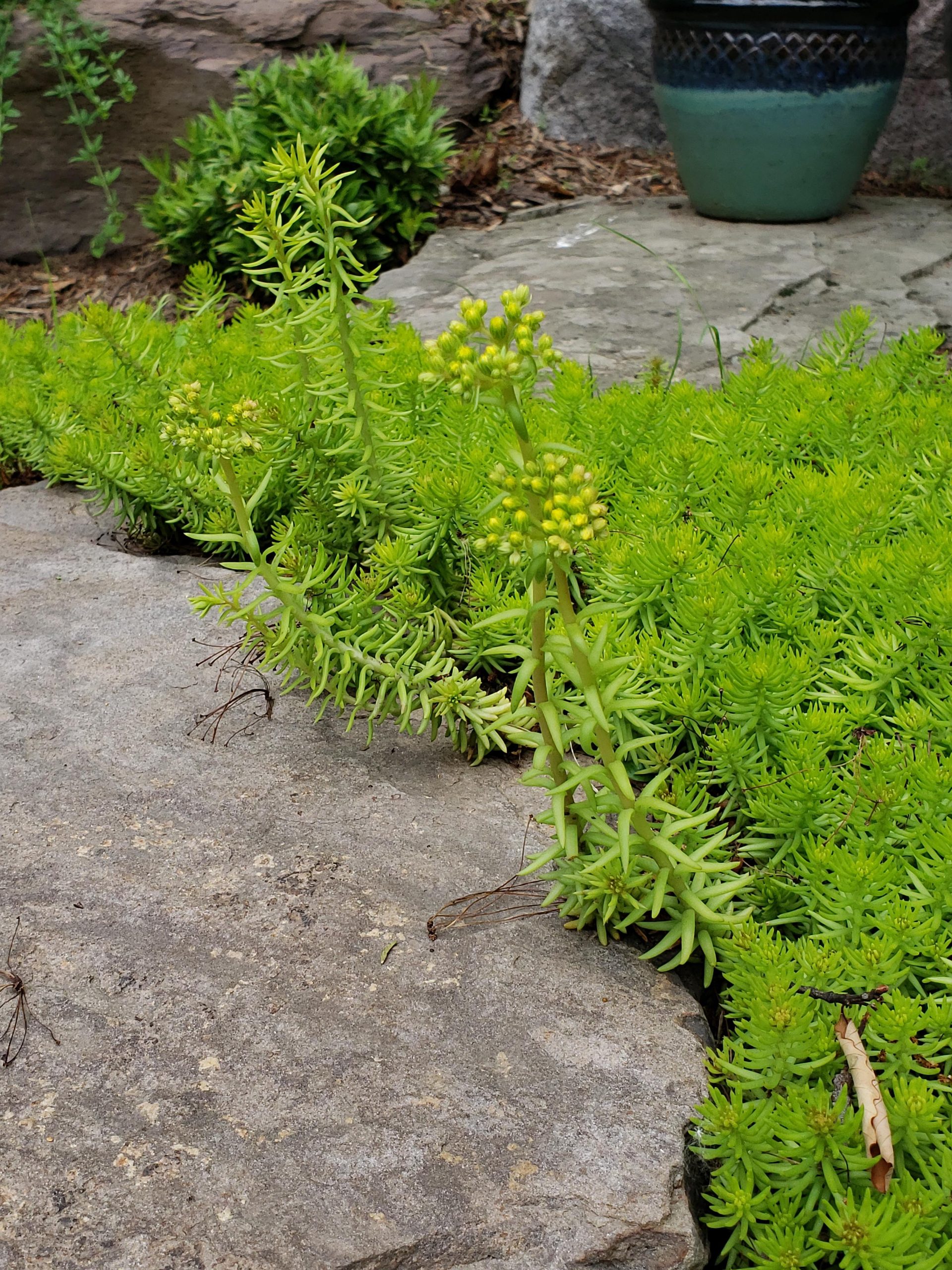
Most people expect a boring, flat green mat. What you actually get with Angelina sedum (Sedum rupestre ‘Angelina’) is a glowing carpet of golden-chartreuse foliage that turns burnt orange in fall. Few ground covers pull off a color show like this one.
This plant thrives on neglect. Poor soil, full sun, minimal water — it handles all of it with ease. Succulent leaves store moisture, so dry spells are no crisis.
The flowers are a little gangly, honestly. Many gardeners snip them off to keep the focus on that gorgeous foliage. Smart move, in my opinion.
Plant Overview:
- USDA Growing Zones: 5 to 8
- Color Varieties: Golden to chartreuse foliage, reddish-orange tints in fall
- Sun Exposure: Full sun
- Soil Needs: Average, dry to medium moisture, well-draining
7. Ice Plant
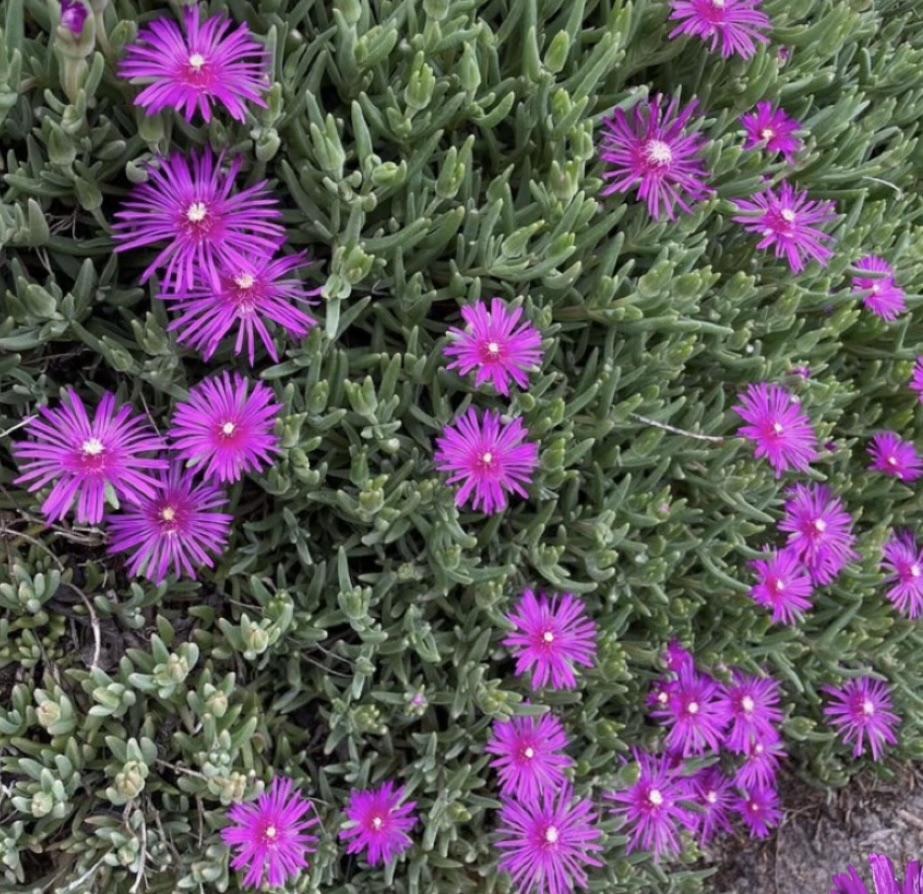
Some ground covers just quietly do their job. Ice plant (Delosperma cooperi) puts on a full-blown show with bright red-purple, pink, orange, and yellow blooms covering the plant all summer long. Your sunny patch will look like it’s on fire — in the best way.
This is a succulent, so drainage is everything. Soggy soil will kill it fast. Get the drainage right and this plant practically takes care of itself.
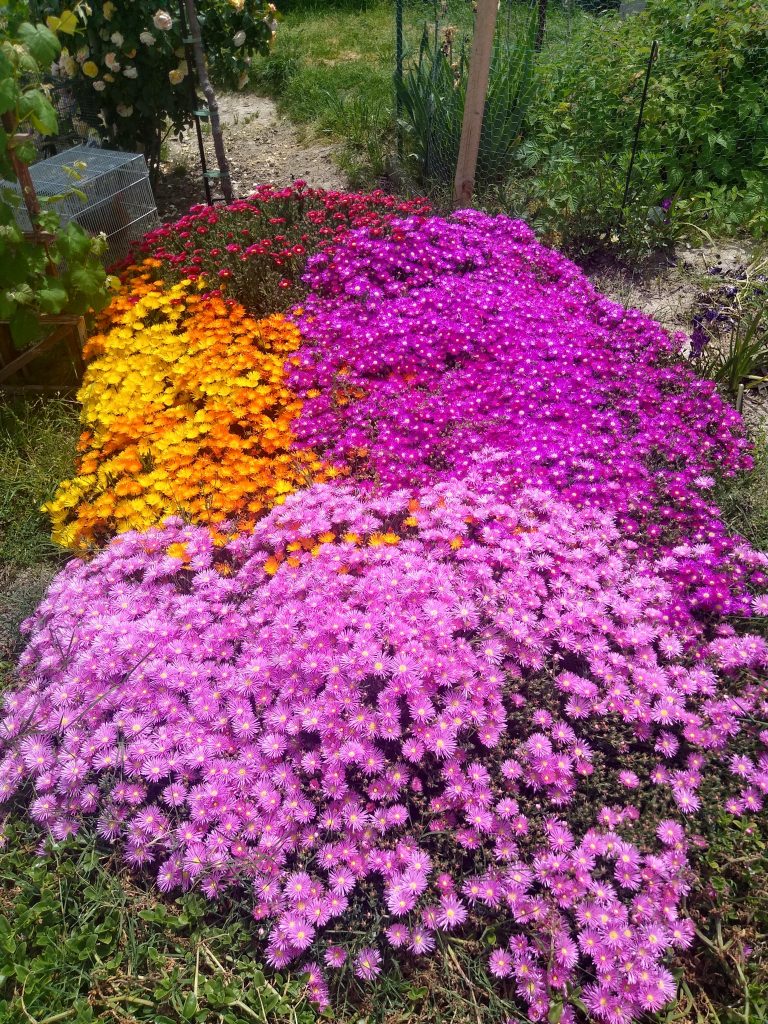
Heat and drought? No problem at all. Full sun only brings out more of those electric blooms. Pollinators go absolutely wild for them too.
Plant Overview:
- USDA Growing Zones: 5 to 10
- Color Varieties: Red-purple, pink, scarlet, orange, or yellow flowers
- Sun Exposure: Full sun
- Soil Needs: Dry, neutral pH, well-draining
8. Candytuft
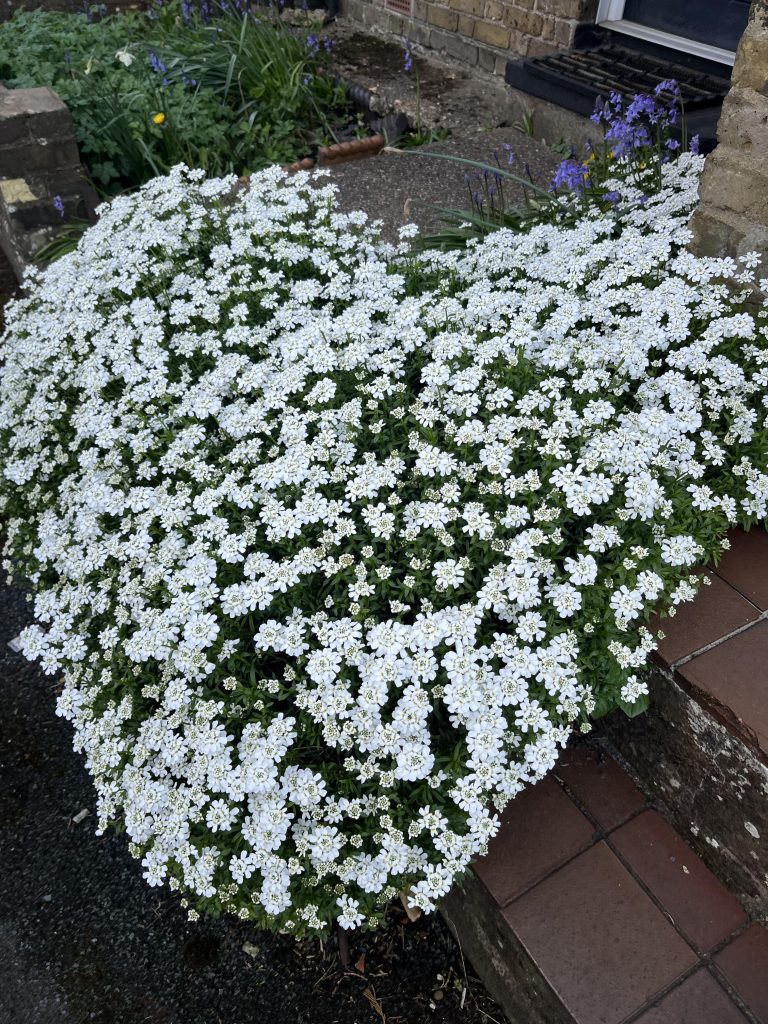
Every sunny garden deserves at least one plant that stops people in their tracks.
Candytuft (Iberis sempervirens) does exactly that, covering itself in pure white flower clusters each spring with a sweet fragrance to match. It looks almost too perfect to be real.
After the flowers fade, shear them off. The deep green, evergreen foliage takes over and looks sharp all season. Rock gardens and stone wall edges are where this plant truly belongs.
Butterflies love it. Deer won’t touch it. Growing just 6 to 8 inches tall, it stays neatly in its lane without much fuss.
Plant Overview:
- USDA Growing Zones: 3 to 9
- Color Varieties: White flowers
- Sun Exposure: Full sun
- Soil Needs: Average, well-draining
9. Creeping Dianthus
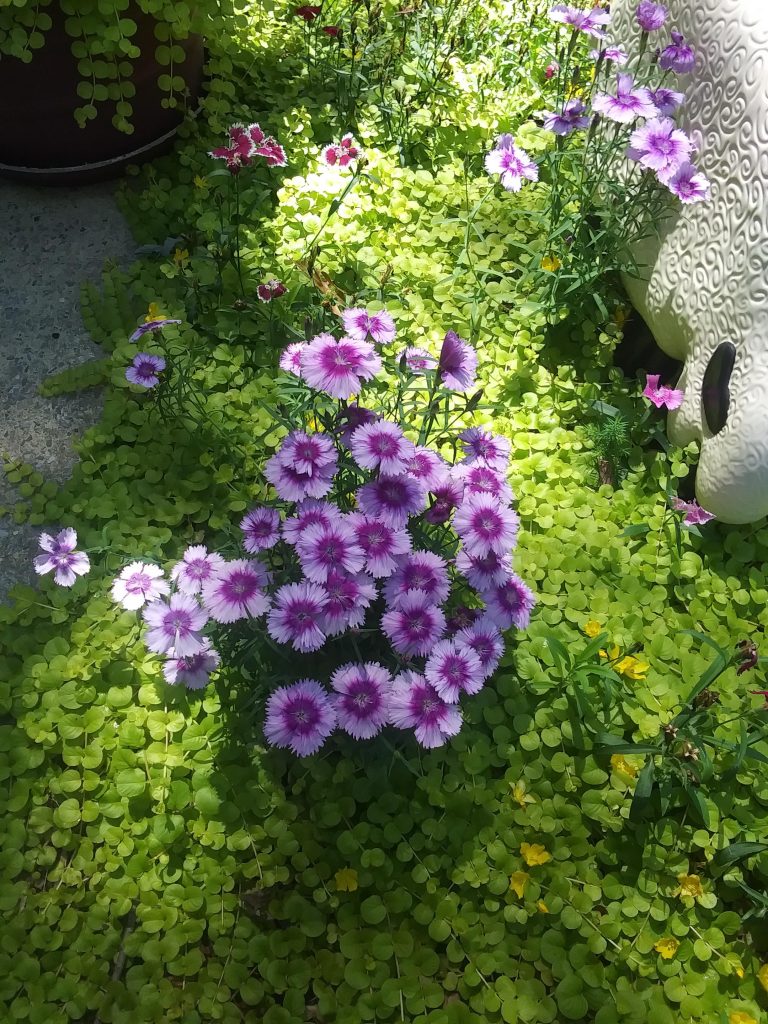
Want a ground cover that smells as good as it looks? Creeping dianthus (Dianthus deltoides) produces fragrant flowers from early through midsummer in shades of pink, red, and white. The blooms are even good enough to cut and bring indoors.
Dense, blue-grey foliage forms a tight mat just 3 to 10 inches tall. Well-drained soil is a must — overwatering is the one thing this plant won’t forgive. Get that right and you’ll have very little else to worry about.
Cultivars like ‘Firewitch’ and ‘Arctic Fire’ are among my personal favorites. Both are tough, reliable, and absolutely stunning in full bloom. Your sunny borders will never look better.
Plant Overview:
- USDA Growing Zones: 4 to 9
- Color Varieties: Pink, red, white flowers
- Sun Exposure: Full sun
- Soil Needs: Average, well-draining
10. Creeping Golden Oregano
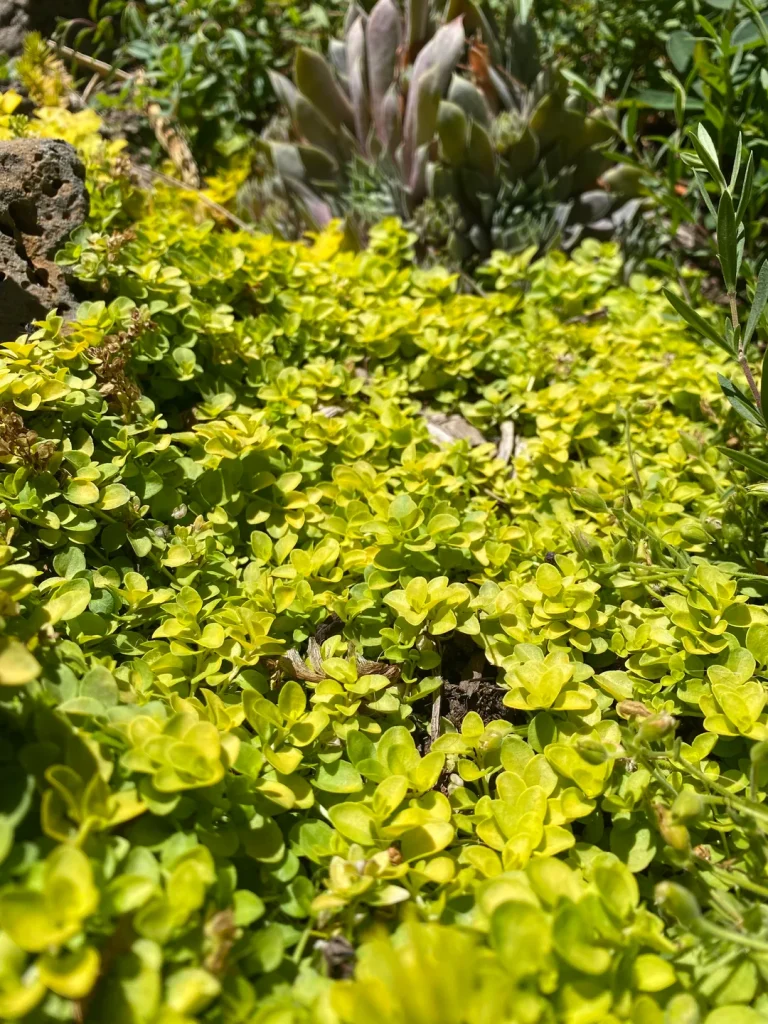
Here’s one that most gardeners completely overlook. Creeping golden oregano (Origanum vulgare ‘Aureum’) works beautifully as a ground cover and brings a splash of brilliant yellow color to sunny spots. Full sun turns those leaves a rich, glowing gold.
Growing just 3 to 5 inches tall, it spreads to about 12 inches wide. Deer and rabbits leave it completely alone. Drought tolerance makes it perfect for dry, sunny corners that other plants struggle with.
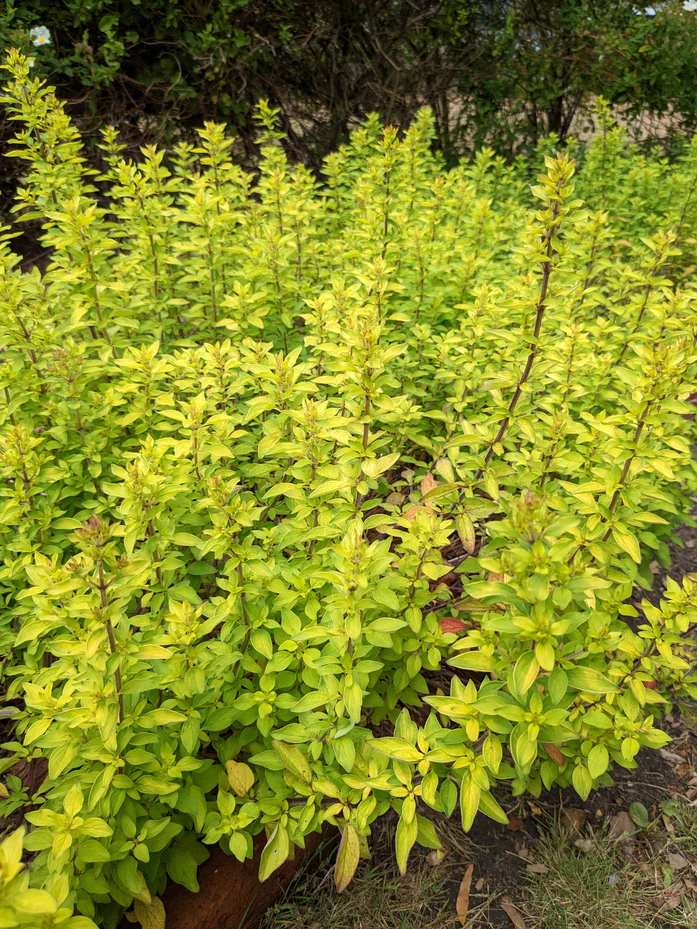
Dividing it in early spring is easy. That means you can spread it around your garden for free. Few plants are this generous.
Plant Overview:
- USDA Growing Zones: 4 to 9
- Color Varieties: Brilliant yellow to lime-green foliage
- Sun Exposure: Full sun to partial shade
- Soil Needs: Average, well-draining, drought tolerant
11. Snow-in-Summer
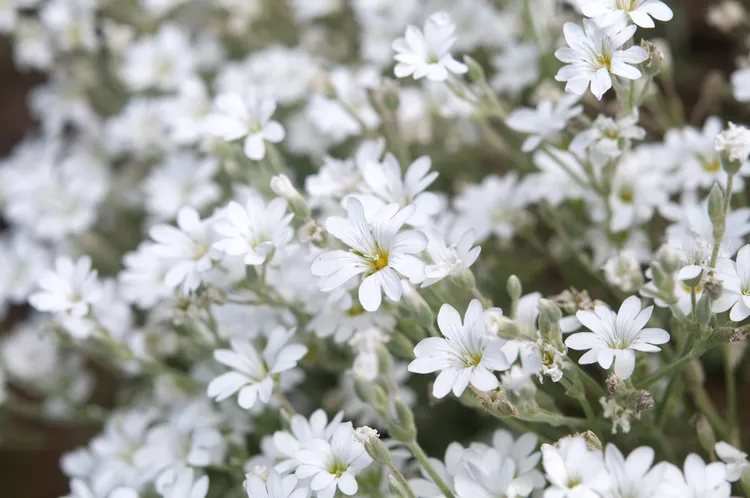
Few names in gardening are as perfectly descriptive as this one. Snow-in-summer (Cerastium tomentosum) produces such a thick blanket of pristine white flowers in early summer that the plant literally looks like a snowdrift. It spills beautifully over stone walls and garden edges.
Rocky, shallow soil is no problem here. Drought tolerance is excellent once the plant settles in. Hot and humid climates can be a challenge though, so good airflow helps.
Silvery-grey foliage keeps things interesting even after the blooms fade. The plant stays low and spreads steadily across sunny patches. It’s one of those quiet workhorses that earns its place every single year.
Plant Overview:
- USDA Growing Zones: 3 to 7
- Color Varieties: White flowers, silvery-grey foliage
- Sun Exposure: Full sun
- Soil Needs: Sandy, dry, well-draining
12. Cranesbill Geranium
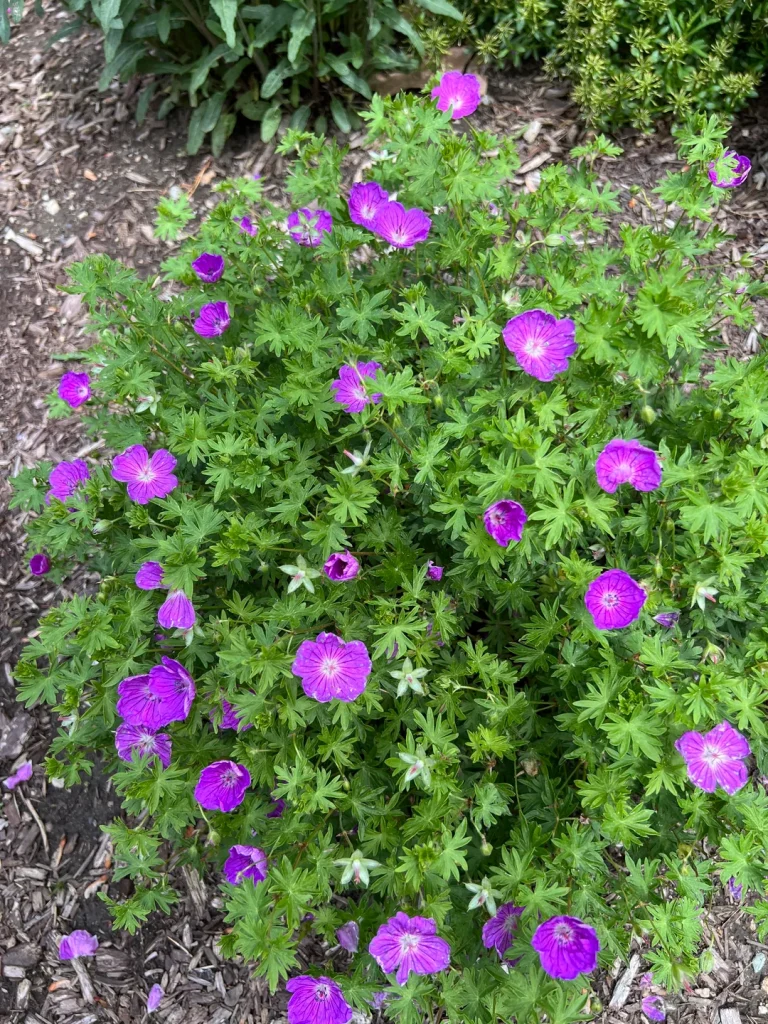
Don’t confuse this one with the annual geraniums you see in window boxes. Cranesbill geranium (Geranium sanguineum) is a tough perennial with maple-like leaves and delicate 5-petaled flowers that bloom on and off all summer long. That kind of staying power is rare.
Shorter cultivars like ‘Biokova’ and ‘Ballerina’ work perfectly as ground covers.
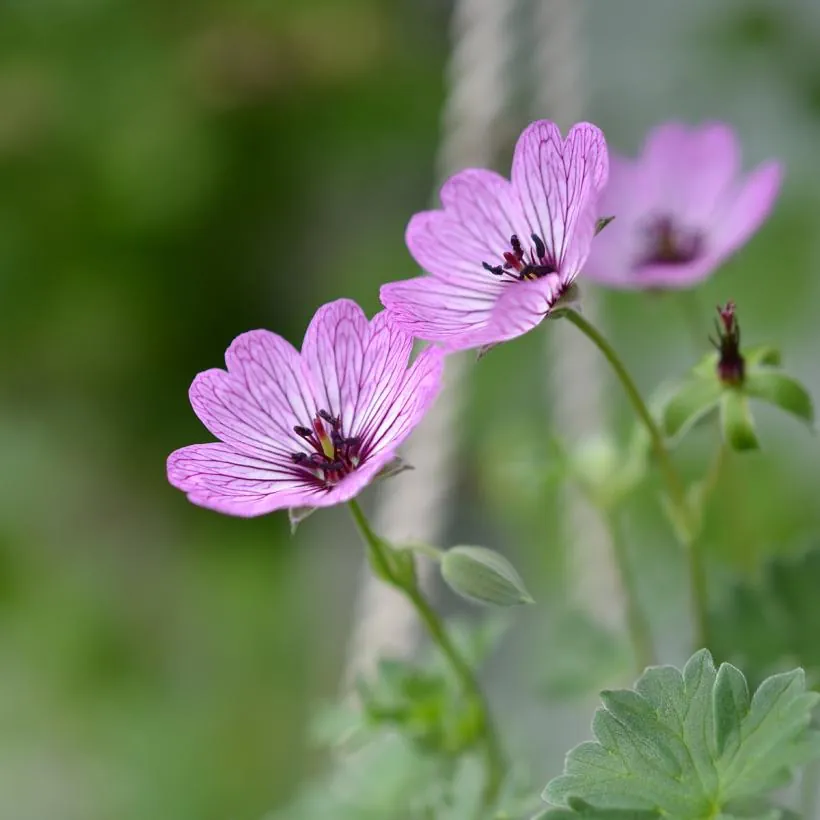
Heights can range from 6 to 24 inches, so choosing a compact variety matters. These unfussy plants adapt to a surprisingly wide range of growing conditions.
Hot southern gardens? Give it a little shade from neighboring plants and it handles the heat just fine. Cooler climates get full sun performance without any complaints. Truly one of the most adaptable plants on this list.
Plant Overview:
- USDA Growing Zones: 4 to 8
- Color Varieties: Pink, magenta, white flowers
- Sun Exposure: Full sun to part shade
- Soil Needs: Average, well-draining
13. Bugleweed
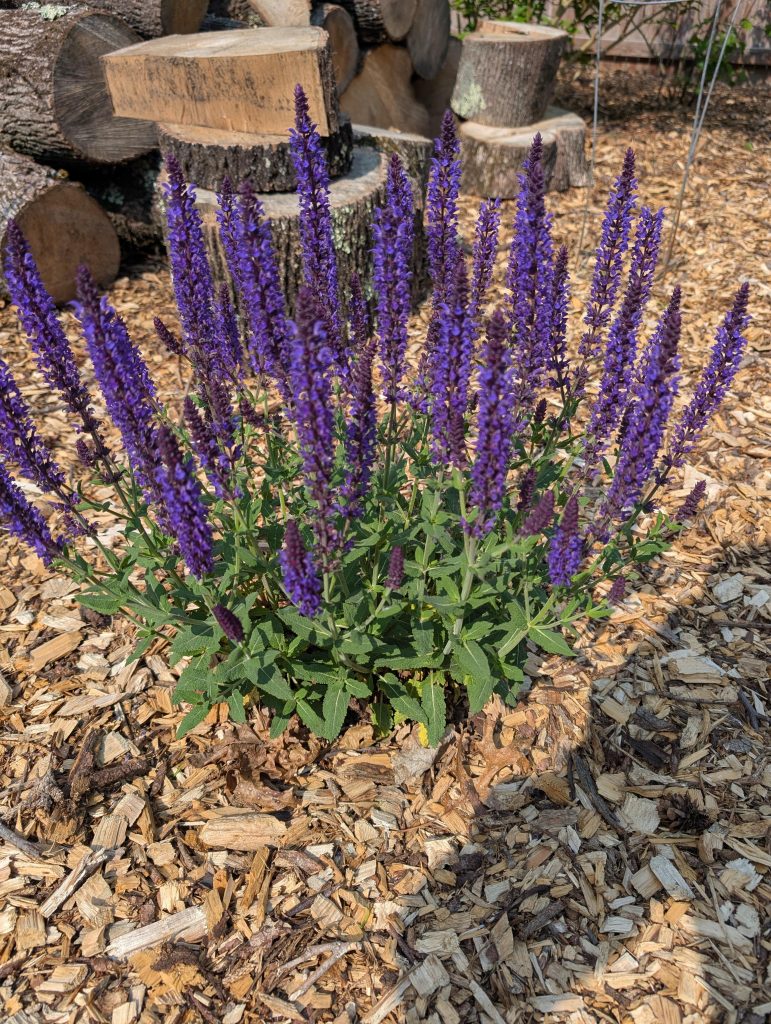
Weeds don’t stand a chance against this one. Bugleweed (Ajuga reptans) spreads so aggressively that it simply smothers anything trying to grow beneath it. For a weed-free sunny patch, few plants work harder.
Purple-blue flower spikes shoot up in midsummer and look stunning against the dark, glossy foliage.
Cultivars like ‘Black Scallop’ and ‘Chocolate Chip’ bring even more drama with deep bronze and purple leaves. In mild climates, the foliage stays attractive all winter long.
Sun or shade, this plant genuinely doesn’t mind either. Dry soil is tolerable, though consistent moisture brings out its best. Just stay on top of trimming, because it will spread beyond its boundaries if you let it.
Plant Overview:
- USDA Growing Zones: 3 to 9
- Color Varieties: Purple-blue flowers, foliage in green, bronze, or dark purple
- Sun Exposure: Full sun to partial shade
- Soil Needs: Acidic, well-draining
14. Vinca Minor
Sometimes the most reliable plants are the ones nobody talks about enough.
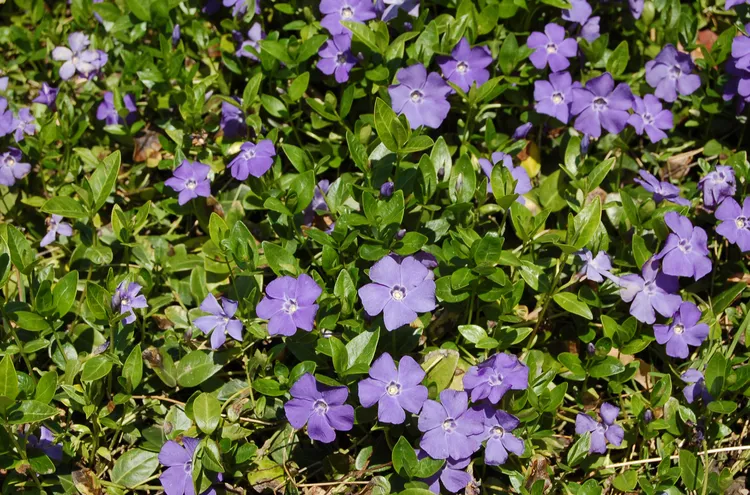
Vinca minor, commonly called periwinkle – creeps steadily across the ground, producing pretty blue, lavender, or white flowers in spring and summer. Pest problems are almost unheard of with this one.
Reaching just 3 to 6 inches tall, it forms a tidy, dense carpet that stays attractive season after season.
Adaptable soil needs make it one of the easiest ground covers you’ll ever grow. Loamy, sandy, clay — it handles nearly anything you throw at it.
Warmer climates get a true perennial from this plant. Cooler zones may treat it as an annual, but the coverage it provides in a single season is still impressive. Either way, you get great value from very little effort.
Plant Overview:
- USDA Growing Zones: 4 to 9
- Color Varieties: Blue, lavender, purple, white flowers
- Sun Exposure: Full sun to partial shade
- Soil Needs: Loamy, sandy, or clay, well-draining
15. Rockspray Cotoneaster
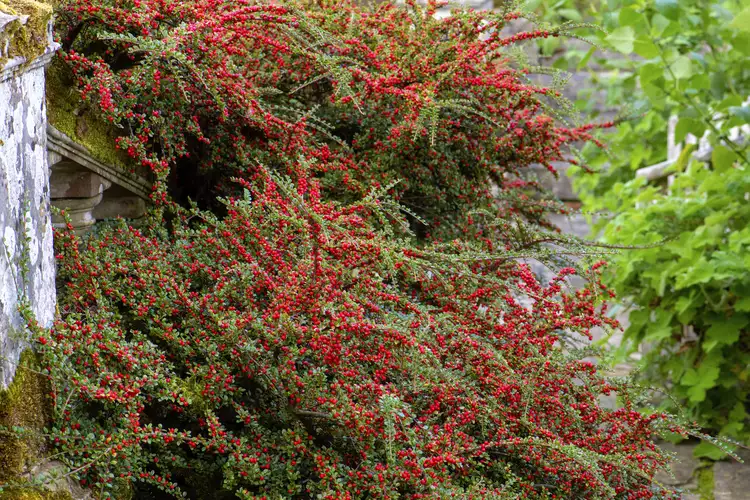
Saving one of the most striking plants for last felt right. Rockspray cotoneaster (Cotoneaster horizontalis) is technically a shrub, but its strong horizontal spreading habit makes it one of the best ground covers for large sunny areas.
It grows outward far more eagerly than it grows upward.
Small pink flowers appear in spring and give way to clusters of bright red berries in fall. Those berries provide serious ornamental value well into winter. Birds love them too, so your garden gets a little wildlife action as a bonus.
Pruning in spring keeps it manageable and looking sharp. Sunny hillsides and slopes are where this plant really earns its place. Few ground covers deliver this much visual interest across all four seasons.
Plant Overview:
- USDA Growing Zones: 5 to 7
- Color Varieties: Pink flowers, bright red berries
- Sun Exposure: Full sun to part shade
- Soil Needs: Moist, loamy, well-draining
Choosing the Right Ground Cover for Your Sunny Spot
Picking the right plant comes down to your specific conditions. Dry, rocky soil calls for tough succulents like ice plant or Angelina sedum. Slopes and erosion problems are best handled by creeping juniper or rockspray cotoneaster.
Fragrance lovers should lean toward creeping thyme, catmint, or creeping dianthus. Pollinator gardens benefit hugely from candytuft, creeping phlox, and ice plant. Deer pressure? Lamb’s ear, candytuft, and creeping golden oregano all laugh it off.
Start with one or two plants that match your conditions. Watch how they perform through one full season. You’ll quickly discover which ones your garden loves — and trust me, you’ll want more.