15 Drought Tolerant Ground Cover Plants

Tired of watching your garden turn brown every summer? I’ve been there and trust me, swapping thirsty plants for drought tolerant ground cover plants changed everything for me.
These tough little performers fill bare patches, choke out weeds, and look stunning without demanding constant watering.
So, where do you start? We’ve hand picked some of our favorite drought tolerant ground covers that you can add to your home landscape or garden area.
Quick Comparison: All 15 Plants at a Glance
This table gives you a fast side-by-side look at all 15 plants so you can match the right one to your garden in seconds.
| Plant | Scientific Name | Type | Sun | Zones | Spread |
|---|---|---|---|---|---|
| Creeping Thyme | Thymus spp. | Herbaceous Perennial | Full Sun | 2–9 | 6–18 in |
| Angelina Sedum | Sedum rupestre | Perennial Evergreen | Partial–Full | 5–9 | 1–3 ft |
| Ice Plant | Delosperma cooperi | Hardy Perennial | Full Sun | 6–10 | 12–24 in |
| Yarrow | Achillea millefolium | Perennial | Full Sun | 3–9 | 12–36 in |
| Creeping Phlox | Phlox stolonifera | Perennial | Partial–Full | 4–8 | 2 ft |
| Dwarf Periwinkle | Vinca minor | Evergreen Perennial | Any Light | 4–9 | 18 in |
| Lantana | Lantana camara | Perennial / Annual | Full Sun | 7–11 | ~6 ft |
| Snow in Summer | Cerastium tomentosum | Perennial Flower | Full Sun | 3–8 | 9–12 in |
| Basket of Gold | Aurinia saxatilis | Herbaceous Perennial | Full Sun | 3–7 | 12–18 in |
| Blue Grama Grass | Bouteloua gracilis | Ornamental Grass | Partial–Full | 3–10 | 12–20 in |
| Oregon Grape | Berberis aquifolium | Evergreen Shrub | Partial–Full Shade | 5–9 | 2–5 ft |
| White Clover | Trifolium repens | Herbaceous Perennial | Partial–Full | 3–10 | 1–1.5 ft |
| Winecups | Callirhoe involucrata | Perennial | Full Sun | 4–8 | ~3 ft |
| Bearberry Cotoneaster | Cotoneaster dammeri | Evergreen Shrub | Partial–Full | 5–8 | ~6 ft |
| Mountain Rock Cress | Arabis alpina | Perennial | Full Sun | 4–9 | 4–6 in tall |
Why Choose Drought Tolerant Ground Cover?
Switching to drought tolerant ground cover is one of the smartest things you can do for your garden. It saves you time, money, and a whole lot of stress during dry spells.
- Saves water: These plants survive on minimal rainfall once established, cutting down your irrigation needs significantly.
- Suppresses weeds naturally: Dense, spreading growth shades the soil and crowds out weeds before they get a chance to take hold.
- Prevents soil erosion: Ground covers lock soil in place on slopes and bare patches, protecting your garden from wind and rain damage.
- Low maintenance: Most drought tolerant varieties need little fertilizing, pruning, or fussing — plant them and let them do their thing.
- Attracts wildlife: Many of these plants draw bees, butterflies, and birds, turning your garden into a thriving little ecosystem.
- Works in tough spots: Rocky soil, steep slopes, shady corners — drought tolerant ground covers handle conditions that other plants simply can’t.
15 Hardy and Drought Tolerant Ground Cover Plants
1. Creeping Thyme
- Plant Type: Herbaceous Perennial
- Geographic Origin: Europe
- Plant Size: 6 to 18 inches wide
- Sun Exposure: Full Sun
- Plant Zone: 2 to 9
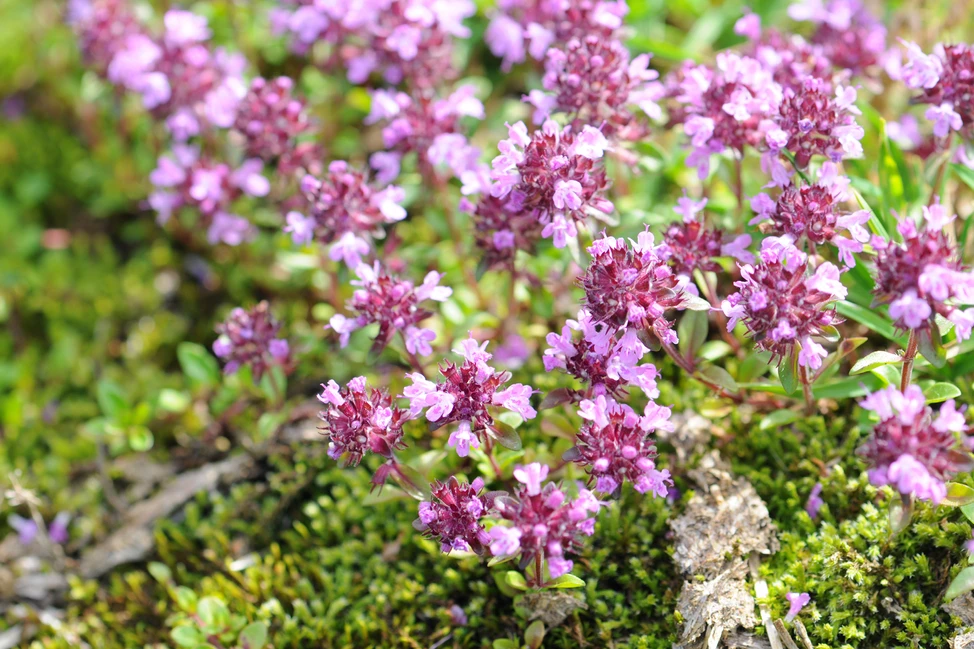
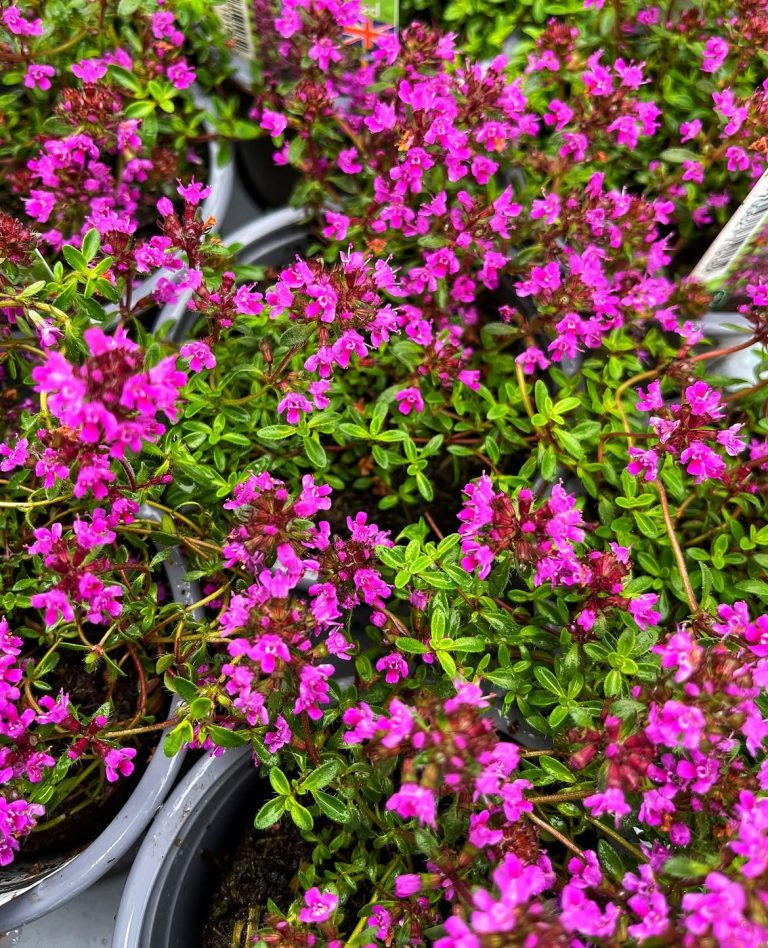
Few ground covers pull double duty like creeping thyme. It hugs the soil at just 2 to 3 inches tall, so you can tuck it between pavers or along a garden edge without it ever swallowing the path.
Give it full sun and it rewards you with purple, pink, or white blooms by midsummer. Sandy or rocky soil is actually a plus here, not a limitation.
Note: this is a true culinary herb. Snip a few sprigs for cooking, and since it’s edible, you can plant it right at the edge of a vegetable bed without worrying about it near food crops.
It also handles light foot traffic well, releasing a burst of fragrance every time you step on it.
2. Angelina Sedum
- Plant Type: Perennial Evergreen
- Geographic Origin: Europe
- Plant Size: 1 to 3 feet wide
- Sun Exposure: Partial to Full Sun
- Plant Zone: 5 to 9
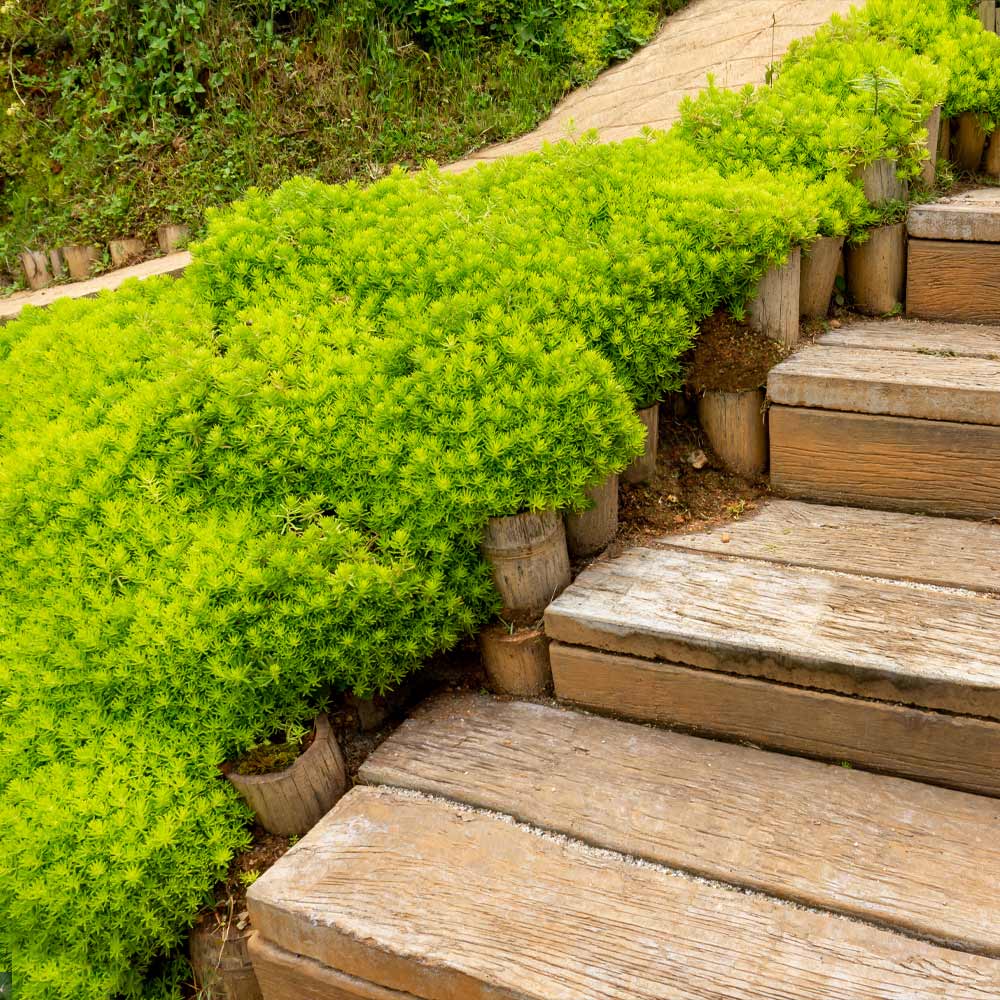
Angelina sedum earns its keep with color that changes on its own schedule. Golden-green foliage catches the light all summer, then shifts to a warm rust orange once the weather cools.
Well-draining soil and plenty of sun keep it spreading steadily through zones 5 to 9.
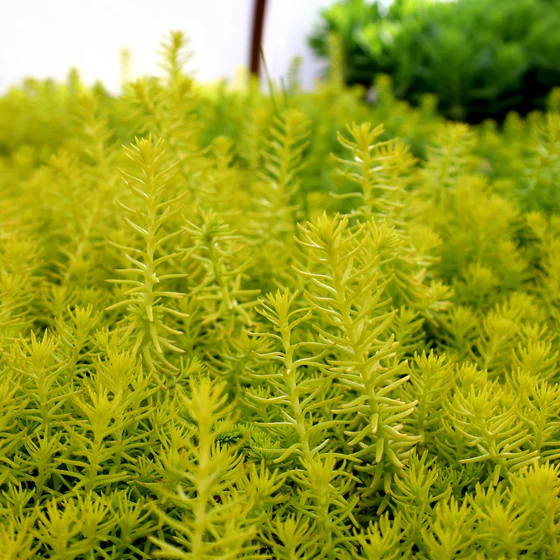
Here’s the part worth knowing: you rarely need to buy more than one plant.
Snap off a stem, press it into soil, and it roots on its own within a couple of weeks, which makes it one of the cheapest ways to fill a rock garden or green roof over time.
3. Ice Plant
- Plant Type: Hardy Perennial
- Geographic Origin: Africa (South Africa)
- Plant Size: 12 to 24 inches wide
- Sun Exposure: Full Sun
- Plant Zone: 6 to 10
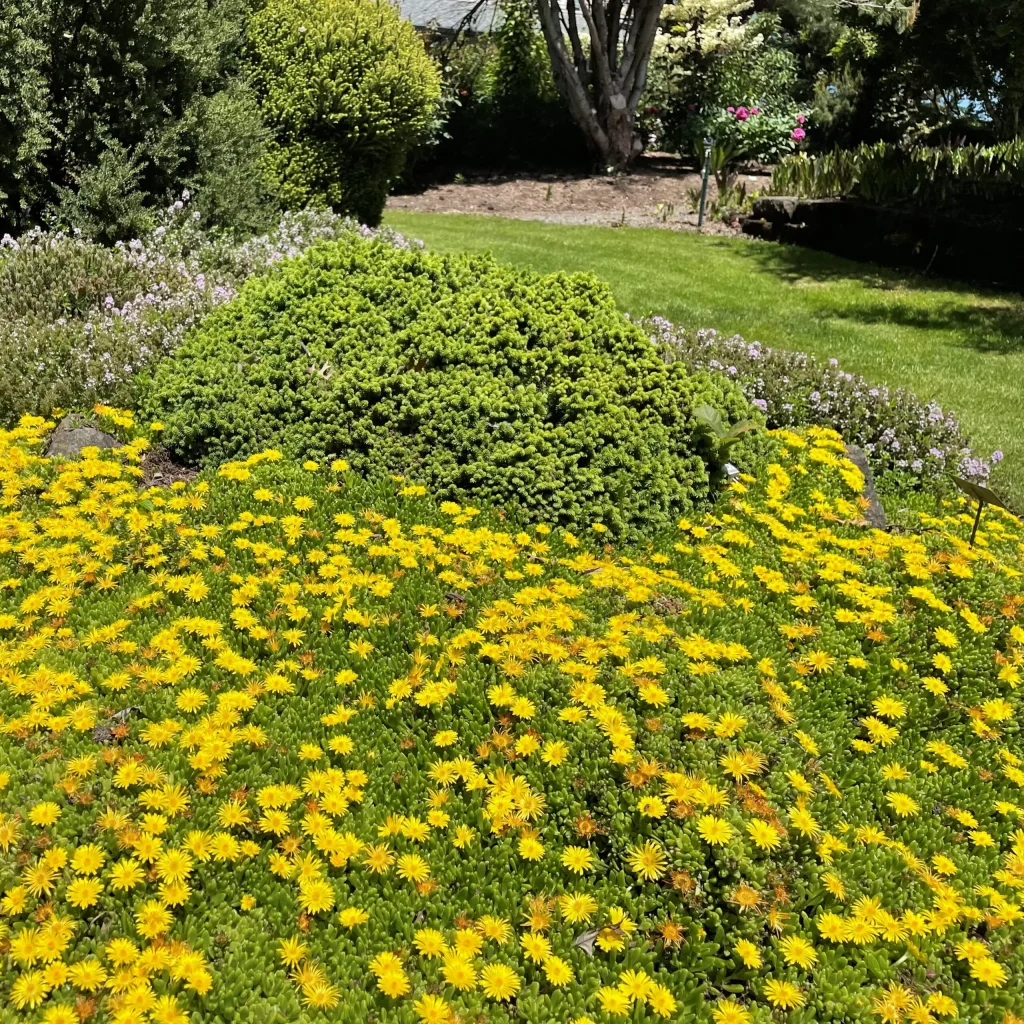
Ice plant brings color that looks almost artificial. Delosperma cooperi throws out daisy-like blooms in shades so vivid they stop people mid-walk.
Dry, sandy soil is where it belongs. Give it too much moisture and it sulks, so this is not a plant for low, soggy corners.
One thing worth adding here: its thick, water-storing leaves make it one of the better choices for holding a slope together.
The dense mat it forms grips loose soil during heavy rain, which is exactly the job most people are hiring a ground cover to do in the first place.
4. Yarrow
- Plant Type: Perennial
- Geographic Origin: Europe, Asia, North America
- Plant Size: 12 to 36 inches wide
- Sun Exposure: Full Sun
- Plant Zone: 3 to 9
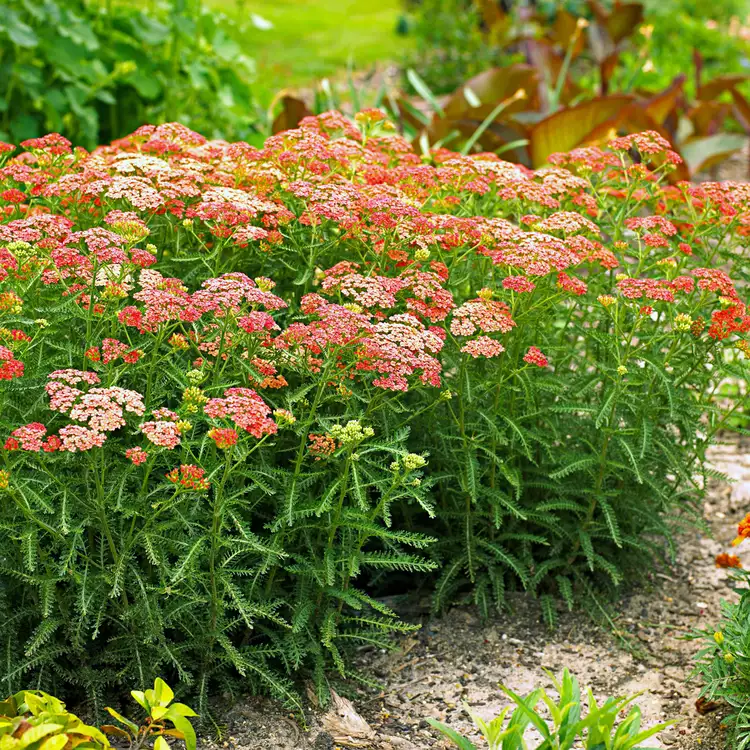
Yarrow works even before it blooms. Fern-like foliage gives the ground texture, then flowers arrive in white, yellow, pink, red, purple, or orange depending on the variety you pick.
Dry, poor soil never slows it down, which is why xeriscapers reach for it so often.
What deserves a mention: the flower heads dry beautifully.
Cut a few stems at peak bloom, hang them upside down, and you get long-lasting dried arrangements for free, no florist required. It’s a small bonus that turns a ground cover into a cut-flower source too.
5. Creeping Phlox
- Plant Type: Perennial
- Geographic Origin: North America
- Plant Size: 2 feet wide
- Sun Exposure: Partial to Full Sun
- Plant Zone: 4 to 8
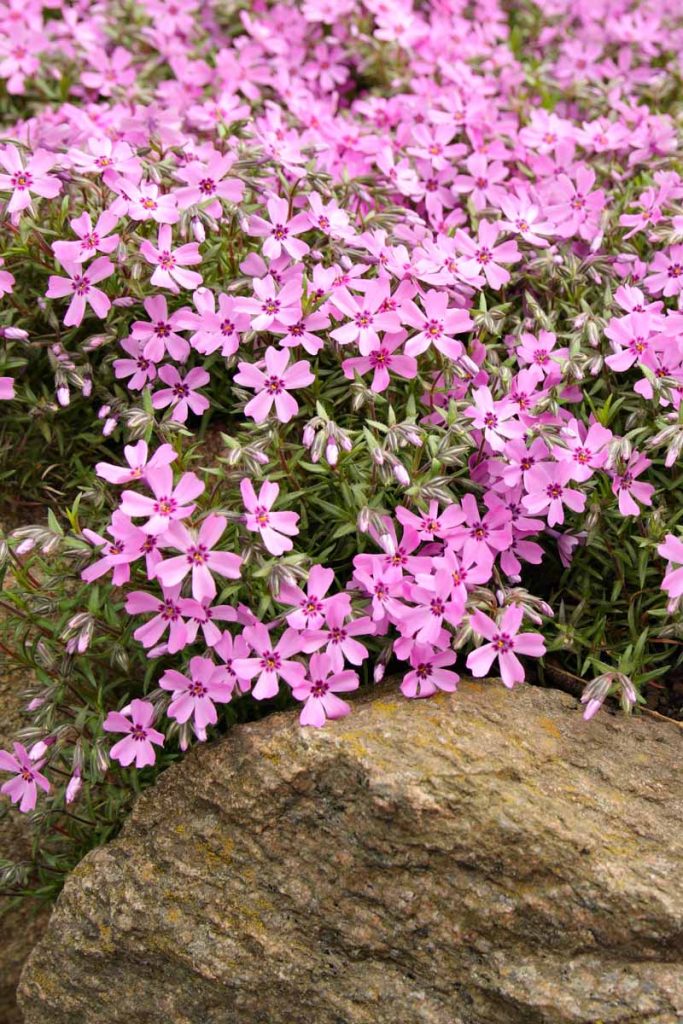
Creeping phlox stages one of the best spring shows of any ground cover. Lavender, pink, bluish-purple, and white blooms spread across the ground like a painted quilt.
Rocky or poor soil suits it fine, and the needle-like foliage stays green through winter.
A point worth adding: after four or five years, the center of the clump tends to thin out. Dig and divide it in early fall, and you get free plants for another bed instead of watching the middle go bare.
It also pairs naturally with early spring bulbs like daffodils, since the phlox fills in right as the bulb foliage starts to fade.
6. Dwarf Periwinkle
- Plant Type: Evergreen Perennial
- Geographic Origin: Europe
- Plant Size: 18 inches long
- Sun Exposure: Any
- Plant Zone: 4 to 9
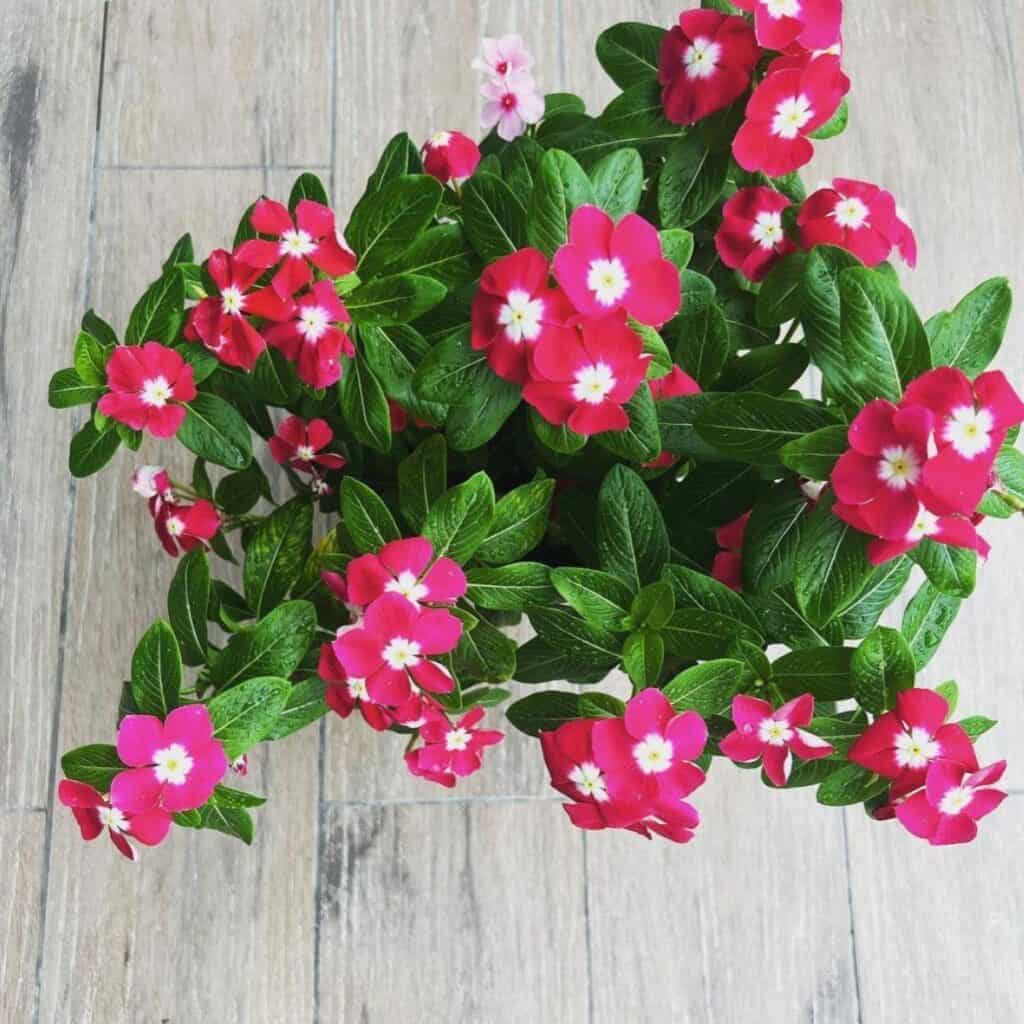
Dwarf periwinkle is deceptively tough for such a small-flowered plant. Trailing vines produce lavender, purple, blue, or pink blooms all season, and it shrugs off poor soil and low light without complaint.
It’s toxic to pets, so keep that in mind if dogs or cats roam the yard.
In mild, humid climates this plant can spread past its bed and into nearby woodland edges, where it’s been flagged as invasive in several states.
It’s a fantastic problem-solver for a contained shady slope, but give it a hard border like a walkway or metal edging so it stays where you planted it.
7. Lantana
- Plant Type: Perennial / Annual
- Geographic Origin: Tropics, Mexico, West Indies
- Plant Size: 6 feet wide
- Sun Exposure: Full Sun
- Plant Zone: 7 to 11
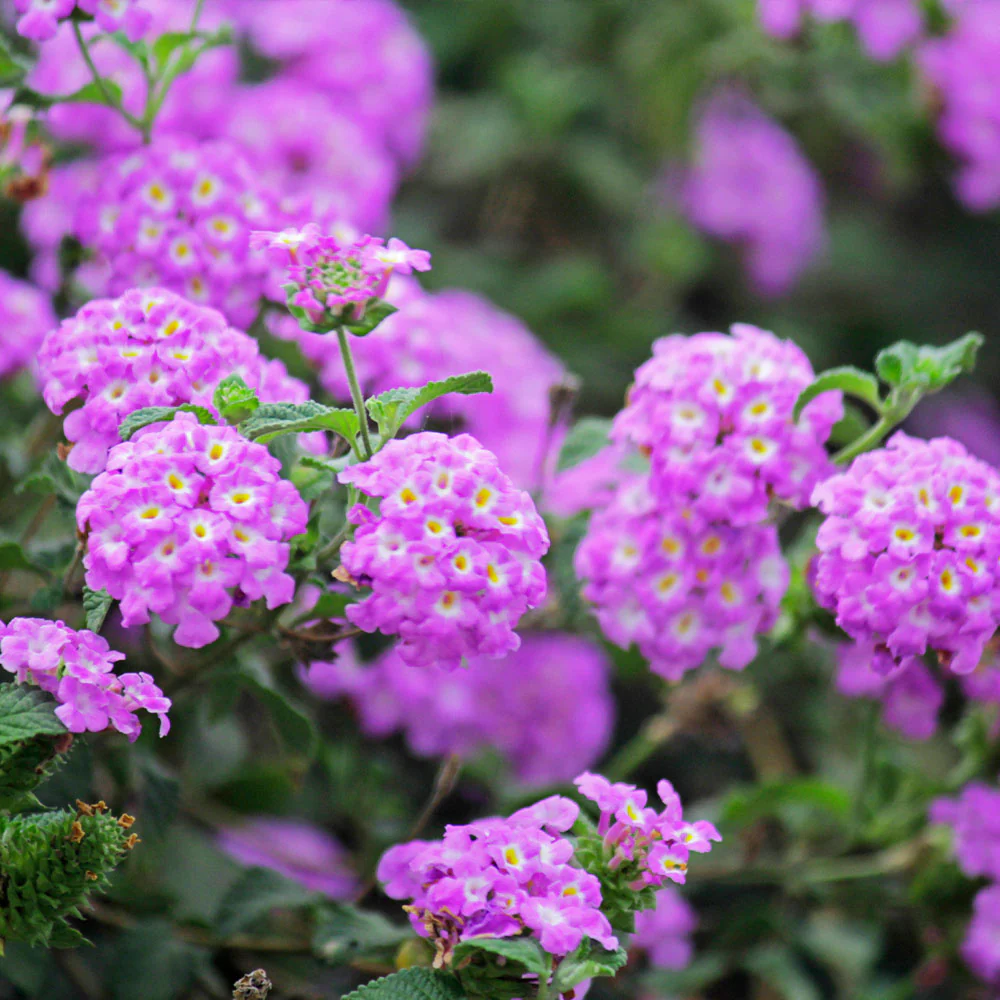
Lantana thrives on heat that would wilt other plants. Multi-colored flower clusters bloom nonstop through summer, mixing pink, orange, yellow, white, blue, and purple often on a single head.
It spreads up to 6 feet wide and works just as well trailing from a container as it does in an open bed.
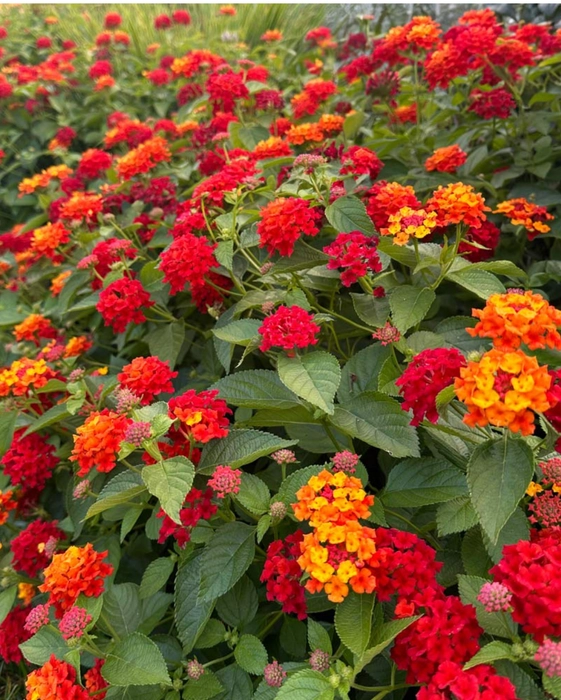
Note: those berries that follow the flowers are toxic if eaten, so this is one to place carefully around small children or pets that graze.
On the upside, the blooms are a genuine hummingbird magnet, not just a bee-and-butterfly plant, so it earns its space in a wildlife garden.
8. Snow in Summer
- Plant Type: Perennial Flower
- Geographic Origin: Europe
- Plant Size: 9 to 12 inches wide
- Sun Exposure: Full Sun
- Plant Zone: 3 to 8
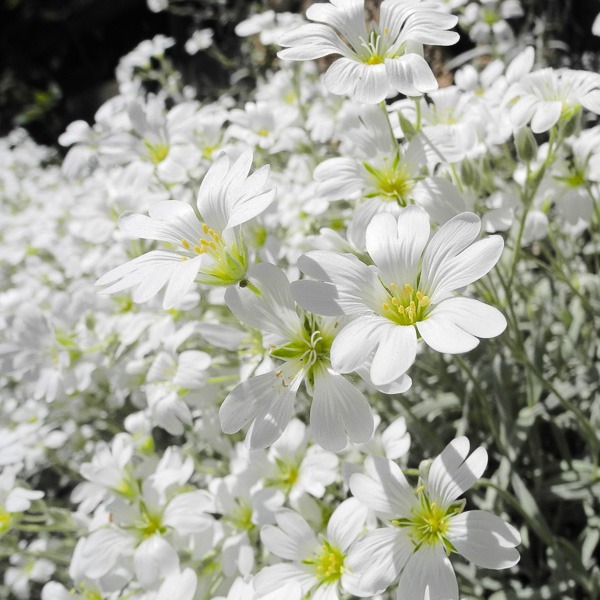
Snow in summer lives up to its name every June. Star-shaped white flowers blanket the blue-gray foliage so thickly it looks like frost settled on the bed overnight.
Sunny, dry spots bring out the best in it, and rocky, loamy, or sandy soil all work fine.
Shear the whole plant back by about a third right after the first flush fades. It looks brutal for a week. But it tightens the mat back up fast. It also often triggers a lighter second bloom later in the season. Skip this step and you’re left with straggly, bare-centered growth for the rest of summer.
9. Basket of Gold
- Plant Type: Herbaceous Perennial
- Geographic Origin: Europe, Asia
- Plant Size: 12 to 18 inches wide
- Sun Exposure: Full Sun
- Plant Zone: 3 to 7
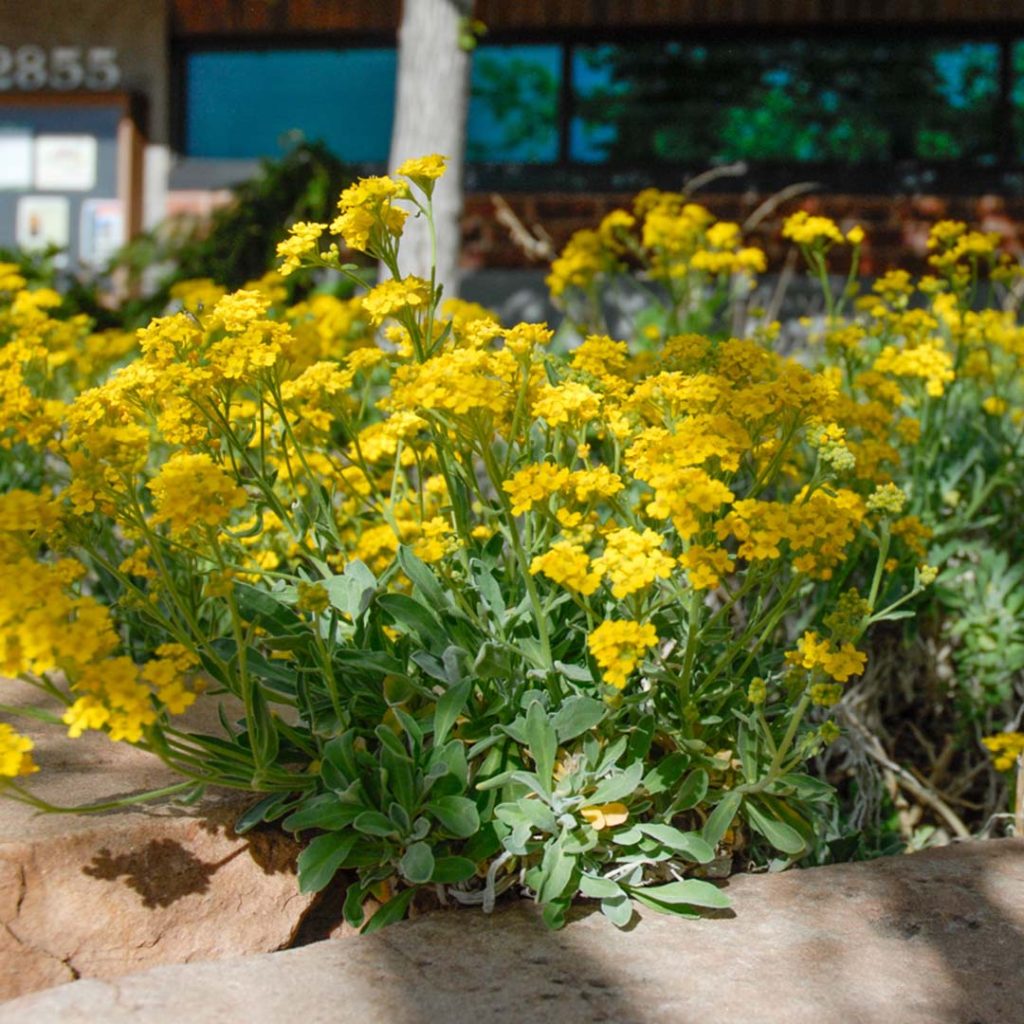
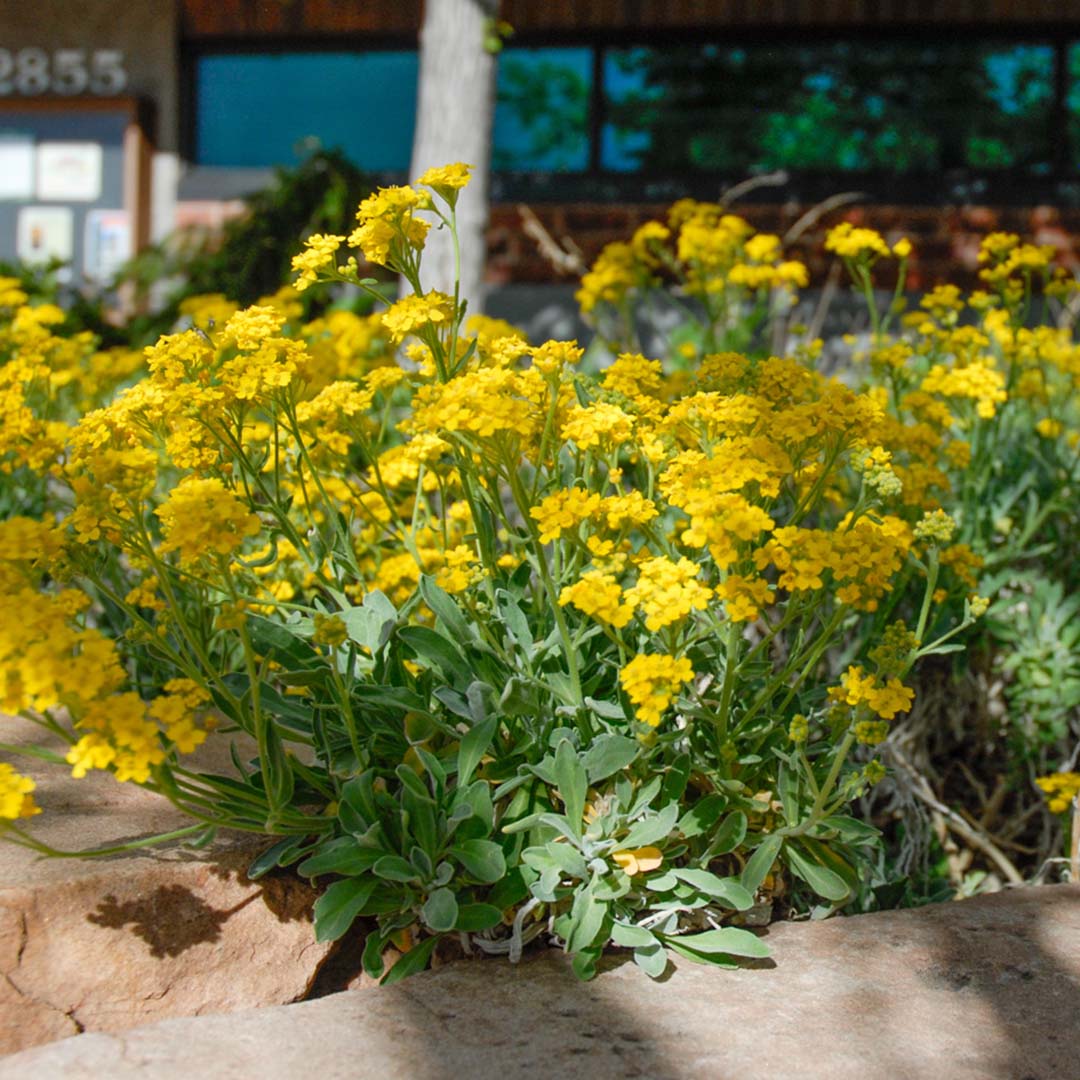
Basket of gold earns its name outright. Come spring, bright yellow blooms cover rocky walls, dry slopes, and border edges like a wave of sunshine.
Shallow, rocky soil suits it perfectly, and deer generally leave it alone.
Worth knowing before you plant it: this one tends to burn out after three or four years, especially in warmer zones, so treat it as a plant you’ll refresh rather than a permanent fixture.
Letting a few seed heads mature and drop each year keeps a patch renewing itself without extra work on your part.
10. Blue Grama Grass
- Plant Type: Ornamental Grass (Warm-Season)
- Geographic Origin: North America
- Plant Size: Clump-forming, 12 to 20 inches tall
- Sun Exposure: Full Sun to Partial Shade
- Plant Zone: 3 to 10
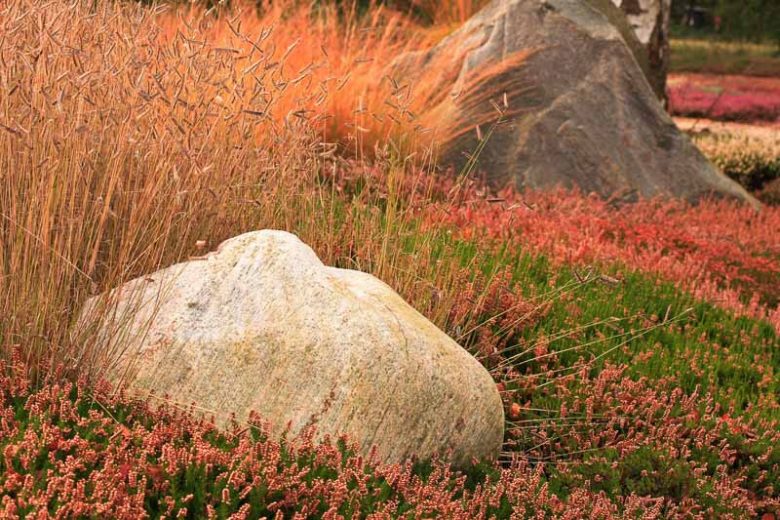
Blue grama grass adds something the flowering ground covers on this list can’t: movement. Its distinctive seed heads curl sideways like tiny eyebrows, giving the bed texture even in winter.
It adapts to a wide range of soils and handles zones 3 to 10 without fuss.
One addition worth making: once established, it needs almost no supplemental water at all, which is part of why cities in the Southwest use it in low-water lawn conversions.
Mow it once a year in early spring to clear old growth, and that’s essentially the entire maintenance list.
11. Oregon Grape
- Plant Type: Evergreen Shrub
- Geographic Origin: Northern North America
- Plant Size: 2 to 5 feet wide
- Sun Exposure: Partial to Full Shade
- Plant Zone: 5 to 9
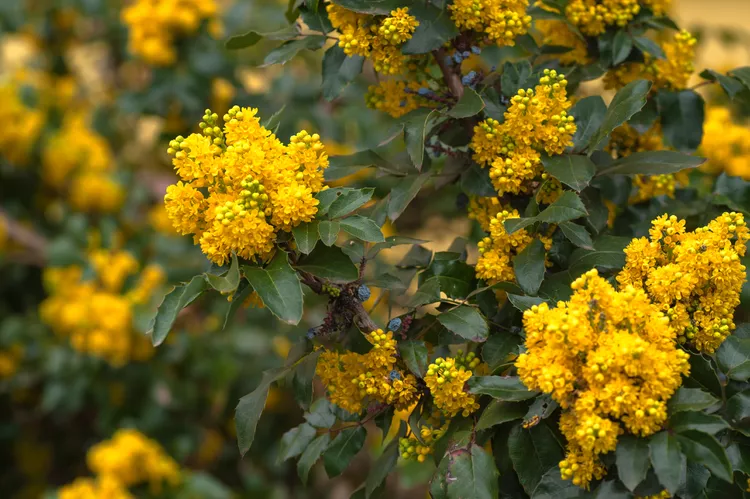
Oregon grape is one of the rare drought tolerant ground covers built for shade. Green and burgundy foliage pairs with bright yellow flowers and deep purple berries for year-round interest in a dark corner.
Water it once a week and it stays healthy with almost nothing else required.
What’s worth adding: those tart berries aren’t just edible, they make a genuinely good jelly if you can beat the birds to them.
This plant also happens to be Oregon’s official state flower, which says a lot about how well it performs in tough, shaded conditions across the Pacific Northwest.
12. White Clover
- Plant Type: Herbaceous Perennial
- Geographic Origin: Europe
- Plant Size: 1 to 1.5 feet wide
- Sun Exposure: Partial to Full Sun
- Plant Zone: 3 to 10
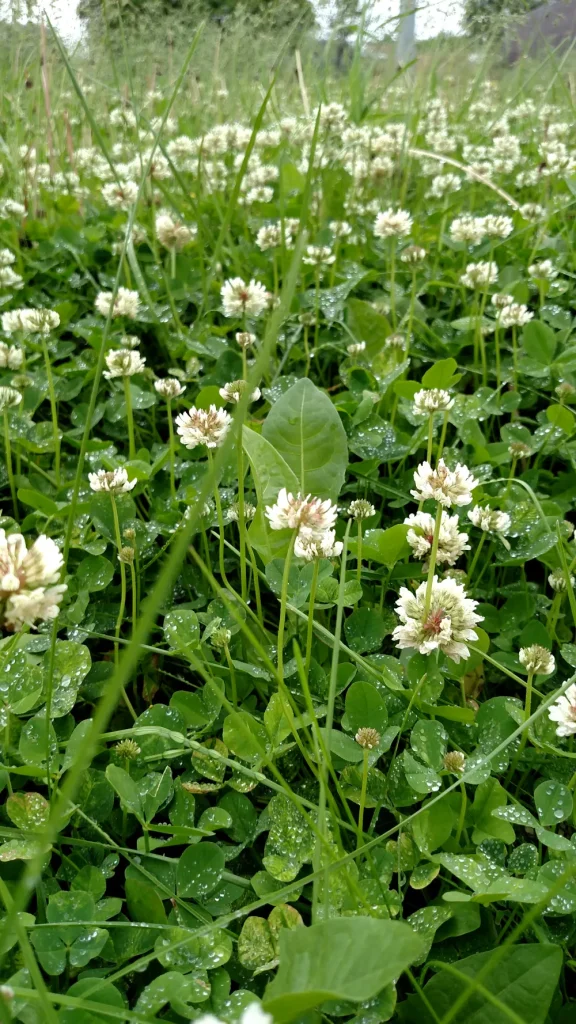
White clover might already be living in your lawn. Most people pull it as a weed, missing one of the hardiest, most drought tolerant ground covers around.
Small white flowers appear in spring, and foot traffic, pets, sun, and rain barely register with this plant.
Clover fixes nitrogen in the soil through its roots, which means it actually feeds the grass growing around it instead of competing for nutrients.
The trade-off is that blooming clover draws bees, so if bare feet are a regular thing in your yard, mow before the flowers open to keep the lawn sting-free.
13. Winecups
- Plant Type: Perennial
- Geographic Origin: Southern United States
- Plant Size: 3 feet wide
- Sun Exposure: Full Sun
- Plant Zone: 4 to 8
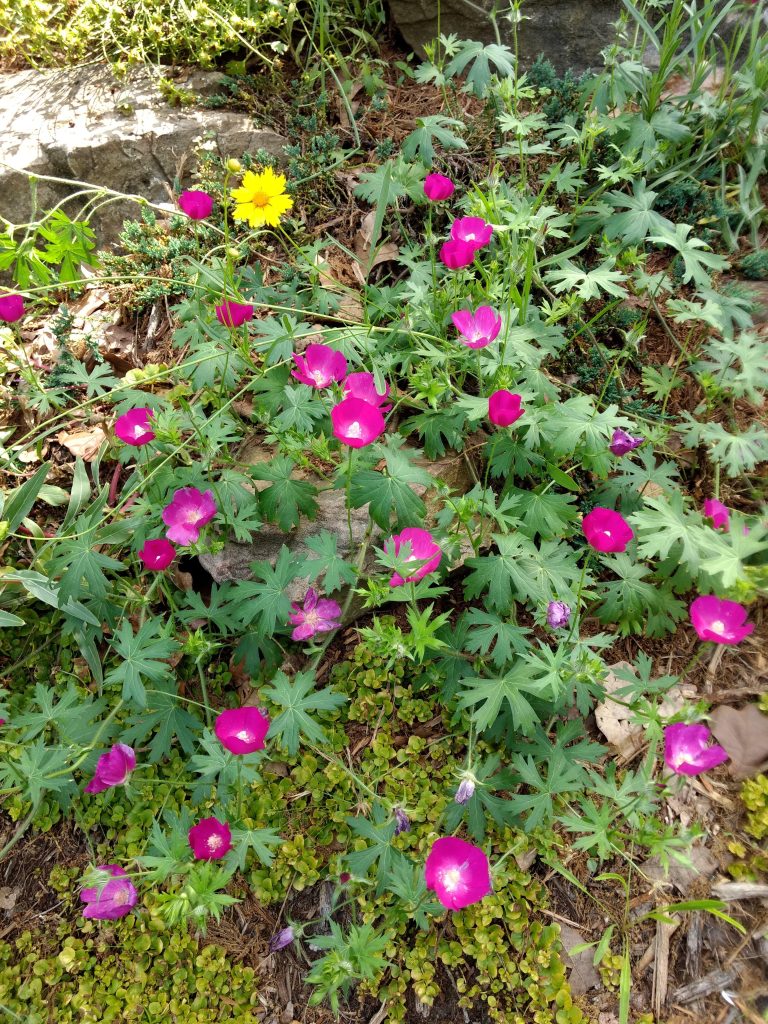
Winecups handle hot, dry open spaces better than almost anything else on this list. Cup-shaped flowers in pink, purple, and maroon bring jewel-toned color to spots where other plants give up.
Thick, vine-like stems form dense mats quickly across bare ground.
One thing worth flagging: winecups grow from a deep, carrot-like taproot, which is exactly what makes them so drought resilient but also why they resent being dug up and moved once settled.
Choose the spot carefully at planting time, since transplanting an established clump rarely goes well.
14. Bearberry Cotoneaster
- Plant Type: Evergreen Shrub
- Geographic Origin: China
- Plant Size: 6 feet wide
- Sun Exposure: Partial to Full Sun
- Plant Zone: 5 to 8
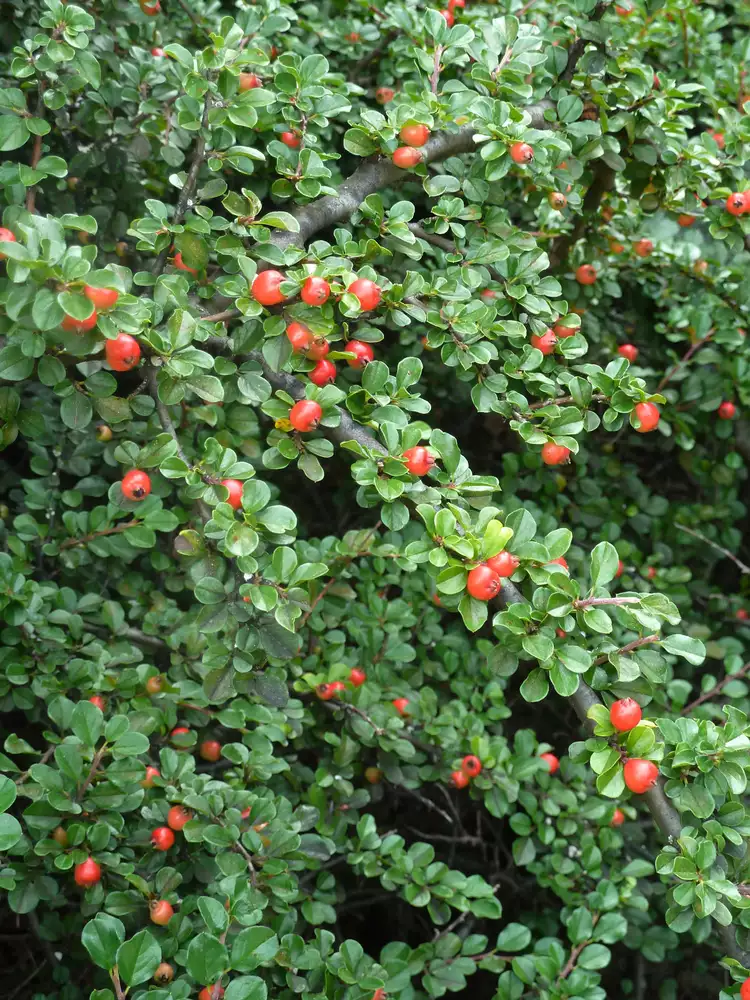
Bearberry cotoneaster keeps giving long after the flowers fade. Tiny white blooms in spring lead to bright red berries that hang on well into winter.
It spreads nearly 6 feet wide while staying under 12 inches tall, and birds treat it like a buffet.
Worth adding before you plant it widely: in parts of the Pacific Northwest, this shrub has escaped gardens and naturalized in wild areas, so a few regions list it as a species to watch.
It’s still a fine, low-fuss choice for most home gardens, just check whether it’s flagged in your specific county before planting it near a natural area.
15. Mountain Rock Cress
- Plant Type: Perennial
- Geographic Origin: Europe, Mediterranean
- Plant Size: 4 to 6 inches tall, spreading widely
- Sun Exposure: Full Sun
- Plant Zone: 4 to 9
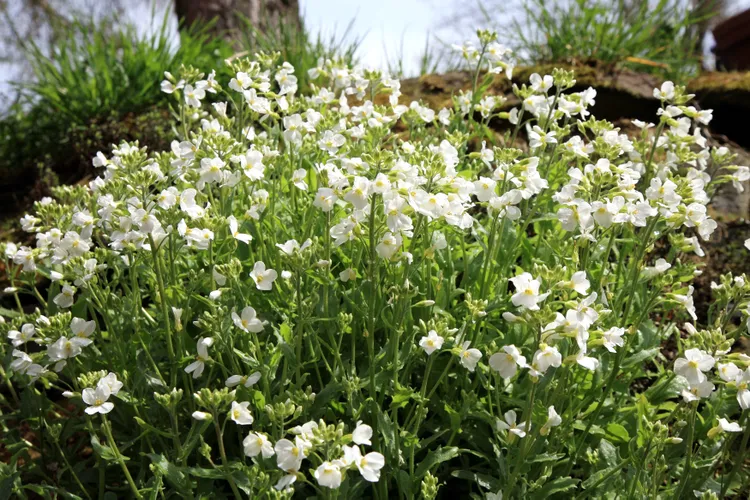
Mountain rock cress, also known as aubrieta, forms one of the most striking low carpets in a spring garden. A dense mat just 4 to 6 inches tall erupts with color, spilling beautifully over walls and rocky slopes.
It prefers alkaline soil with a pH between 6.5 and 7.5, so acidic gardens may need a little lime worked in first.
Here’s the detail worth adding: shear the plant back by half right after it finishes blooming.
Skip this step and the mat gets leggy and woody in the middle within a couple of seasons, but a quick trim keeps it compact and often coaxes out a smaller second bloom later on.
Finding Your Perfect Drought Tolerant Ground Cover
Choosing the right drought tolerant ground cover plant doesn’t have to feel overwhelming.
Every garden has its own personality — different soil, different sunlight, different climate — and this list has something for all of them.
Shady corners? Oregon grape and dwarf periwinkle have you covered. Scorching, sun-baked slopes?
Ice plant, lantana, and winecups will thrive where others fail. Want something that doubles as a lawn alternative? White clover and creeping thyme are ready for the job.
A Few Things Worth Remembering
Even the toughest drought tolerant plants need regular watering during their first growing season.
Roots need time to establish before they can handle dry spells on their own — so give them that early support and they’ll reward you for years.
Soil drainage matters more than most people realize. Nearly every plant on this list prefers well-draining soil, so if your garden holds water after rain, consider amending it with sand or grit before planting.
Starting from seed saves money. Plants like yarrow, basket of gold, creeping thyme, and mountain rock cress all grow well from seed — just make sure your timing lines up with the right temperatures.
The Bigger Picture
Filling your garden with drought tolerant ground covers isn’t just about saving water — though that’s a genuinely great bonus. These plants suppress weeds naturally, prevent soil erosion, and reduce the time you spend maintaining your outdoor space.
Less watering. Fewer weeds. More beauty. That’s a trade worth making.
Pick one plant from this list that suits your conditions and start there. Gardens grow one good decision at a time, and choosing a drought tolerant ground cover might just be the best one you make this season.