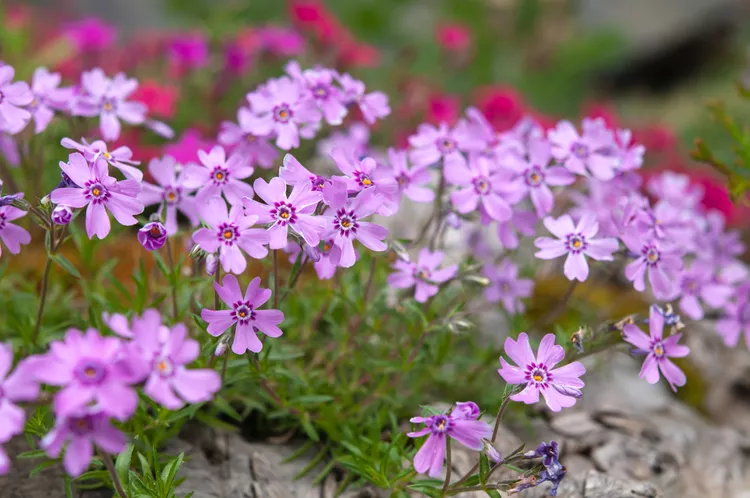
13 Fast-Growing Ground Cover Perennials That Smother Weeds Naturally

Weeds ruined my first garden bed. Every weekend I pulled another batch, and every weekend they came right back. Then I switched strategies.
I planted perennials that grow so thick and fast, weeds simply can’t find room to sprout. My weeding time dropped by half.
Below, you’ll find 13 tough, ground-hugging plants that do the same job for your yard, no chemicals or backbreaking labor required.
13 Perennials That Will Crowd Out Your Weed
1. Creeping Thyme Chokes Out Weeds With Fragrant Ground Cover
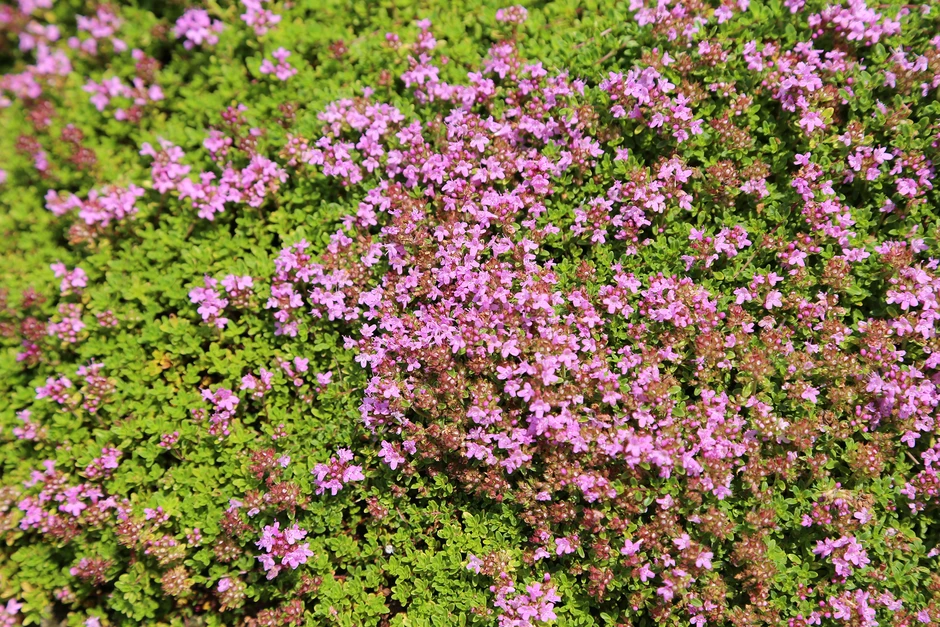
I planted creeping thyme along my garden path last spring, and I’m still amazed at how fast it filled in. You’ll see it stay under 3 inches tall, yet it spreads across bare soil quicker than most ground covers I’ve tried.
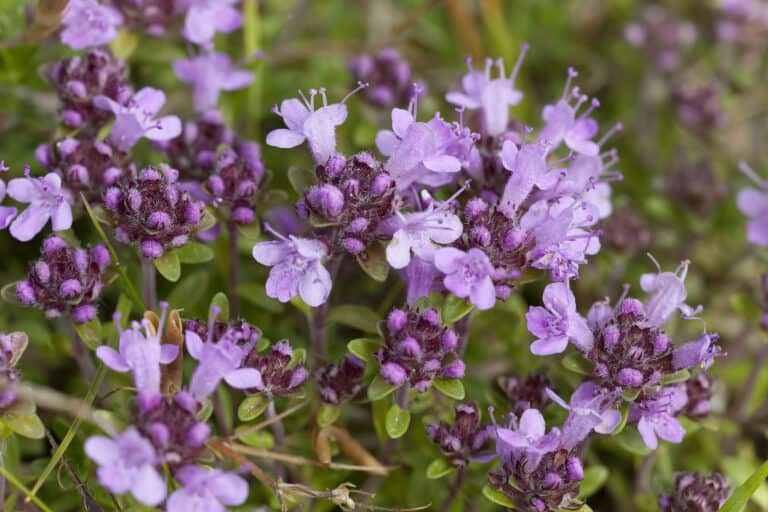
Bees seem to love those tiny purple flowers as much as I do.
Crush a leaf between your fingers, and you’ll catch a burst of herby fragrance that instantly tells you this isn’t your average lawn filler.
If you’re gardening in zones 4 through 9, you’re in luck. I’d give it full sun and well-drained soil, and you’ll keep it happy.
Don’t worry about poor, rocky ground either; I’ve found creeping thyme actually prefers those tougher spots over rich garden soil.
Do you want a lawn substitute that never needs mowing? You can walk on creeping thyme without hurting it, so I always recommend it between stepping stones or along a garden path.
Plant Overview:
- USDA Zones: 4-9
- Exposure: Full sun
- Height/Spread: 2-3 in tall, 3-12 in wide
- Bloom Time: Summer
- Soil Needs: Well-draining, sandy or rocky
Also read: 15 Ground Cover That Chokes Out Weeds Completely
2. Moss Phlox Blankets Slopes in Spring Color
Steep banks gave me nothing but headaches when I first started gardening. Mowing them felt dangerous, and I watched grass struggle to grip the loose soil every single time. Then I found moss phlox, and it solved both problems for me at once.
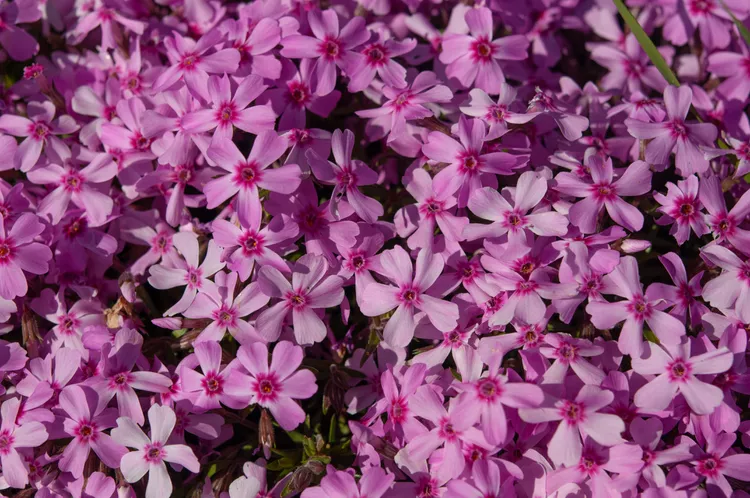
You’ll get a dense, needle-like mat that grips hillsides and smothers weeds at the same time.
I love watching blooms erupt each spring in blue, pink, purple, or white; the whole plant stays covered for several weeks straight. Foliage stays evergreen through winter in most climates too, so you’re never looking at bare dirt.
Full sun brings out the best blooms, in my experience. If you’ve got a hot, dry spot that’s killed other plants, that’s exactly where I’d put moss phlox.
Plant Overview:
- USDA Zones: 3-9
- Exposure: Full sun
- Height/Spread: 4-6 in tall, up to 2 ft wide
- Bloom Time: Spring
- Soil Needs: Well-draining, poor to average
Also read: 13 Flowering Ground Cover Perennials for Your Garden
3. Ajuga Spreads Fast in Sun or Deep Shade
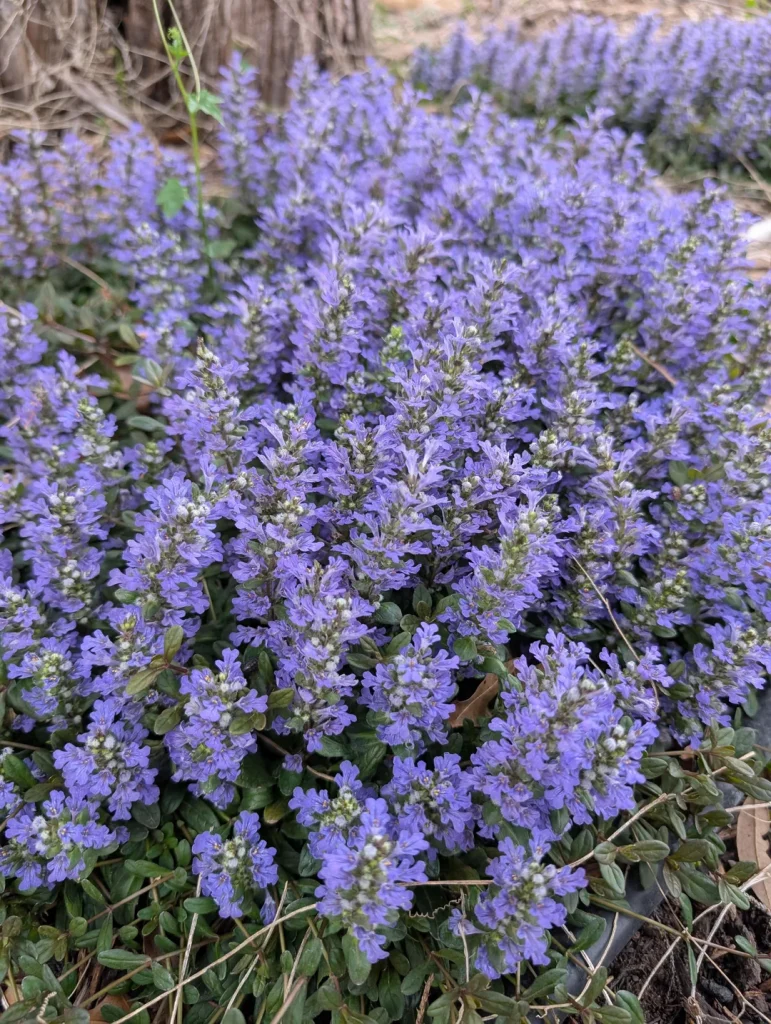
Shady spots under trees used to frustrate me constantly. Grass wouldn’t grow there, and I watched weeds take over instead every year.
Ajuga, also called bugleweed, doesn’t care how little sun you give it.
You can plant this in anything from full sun to full shade, which I rarely find in a ground cover. Purple flower spikes rise above glossy foliage each spring, and I still think it’s one of the prettiest low-growers out there.
Leaf colors range from deep green to burgundy to variegated, so you’ve got options depending on the look you’re after.
I’ll warn you now: ajuga spreads aggressively through runners. Keep it contained with edging, or you’ll find it creeping straight into your lawn.
Plant Overview:
- USDA Zones: 3-10
- Exposure: Full sun to full shade
- Height/Spread: 2-6 in tall, spreads via runners
- Bloom Time: Mid to late spring
- Soil Needs: Well-draining, average, acidic preferred
4. Hardy Geranium Blooms Nonstop From Spring to Frost
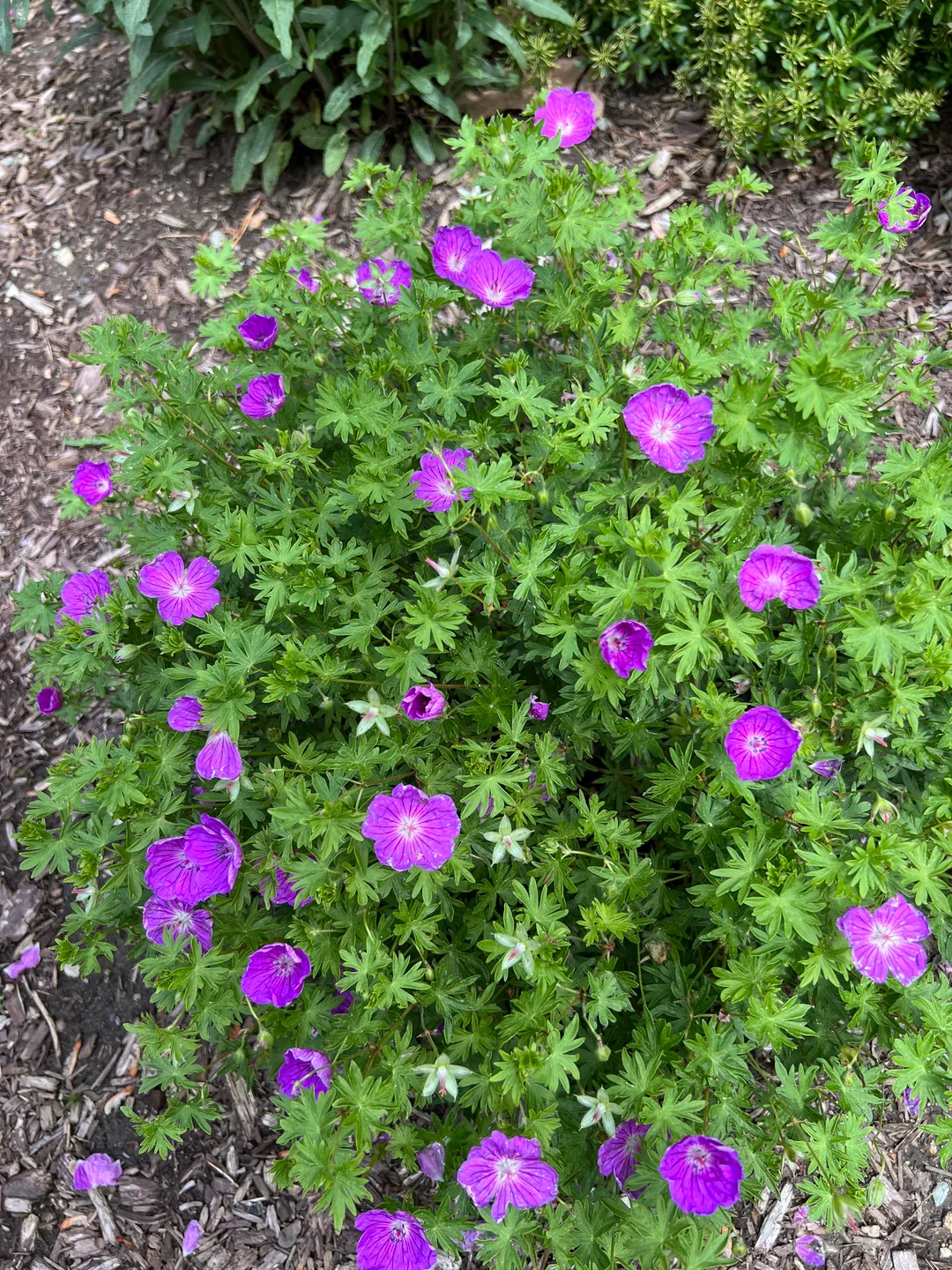
Hardy geranium, sometimes called cranesbill, earns its spot on this list through sheer stamina. You’ll get flowers from spring all the way through the first frost, which is rare for any perennial.
Bloom colors range from soft pink to deep magenta to true blue, depending on the variety you choose.
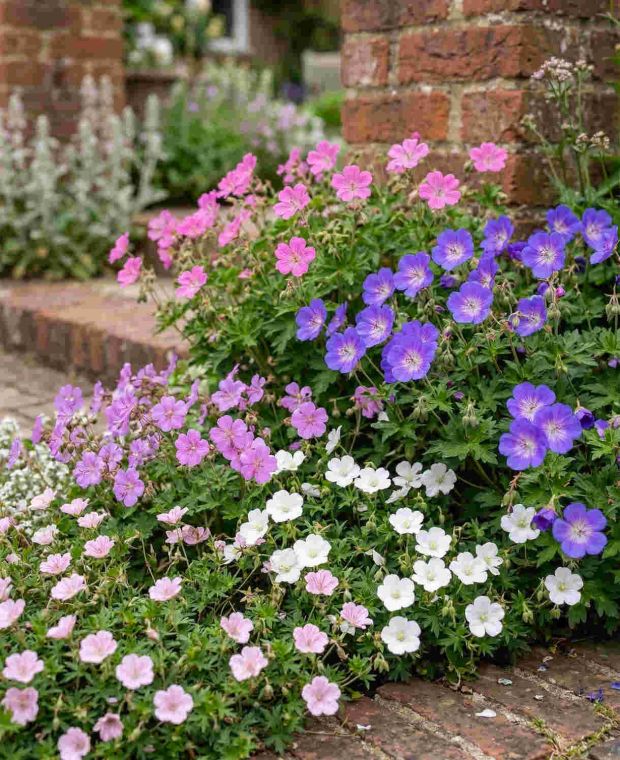
This plant forms a mounded clump that spreads wider each year. Weeds struggle to find any gap once hardy geranium fills in. Give it full sun for the best flower show, though it tolerates partial shade just fine.
Rozanne is the variety most gardeners reach for first. You’ll find it recommended constantly, and for good reason: it blooms longer and spreads faster than most older varieties.
Plant Overview:
- USDA Zones: 4-8
- Exposure: Full sun to partial shade
- Height/Spread: 12-18 in tall and wide
- Bloom Time: Spring through frost
- Soil Needs: Well-draining, average
5. Coral Bells Add Year-Round Color Beneath Trees
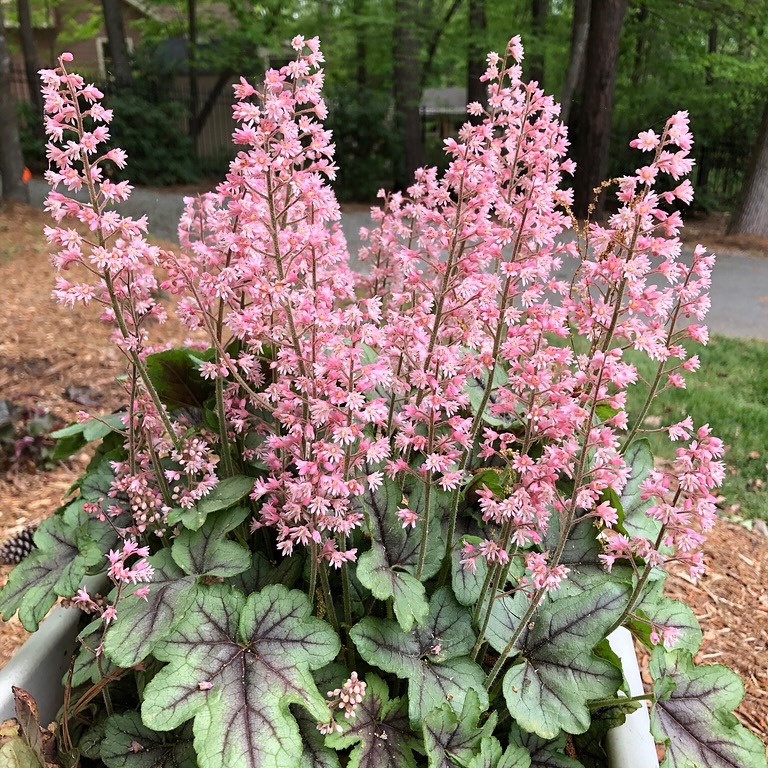
Do you have a shady corner that looks bare most of the year? Coral bells fix that with foliage that stays colorful in every season.
Leaf colors span deep purple, lime green, amber, and near-black, so you can match almost any color scheme.
This plant forms tight, lobed clumps that block light from reaching weed seeds below. Delicate flower spikes rise above the foliage in late spring, and hummingbirds seem to notice them fast.
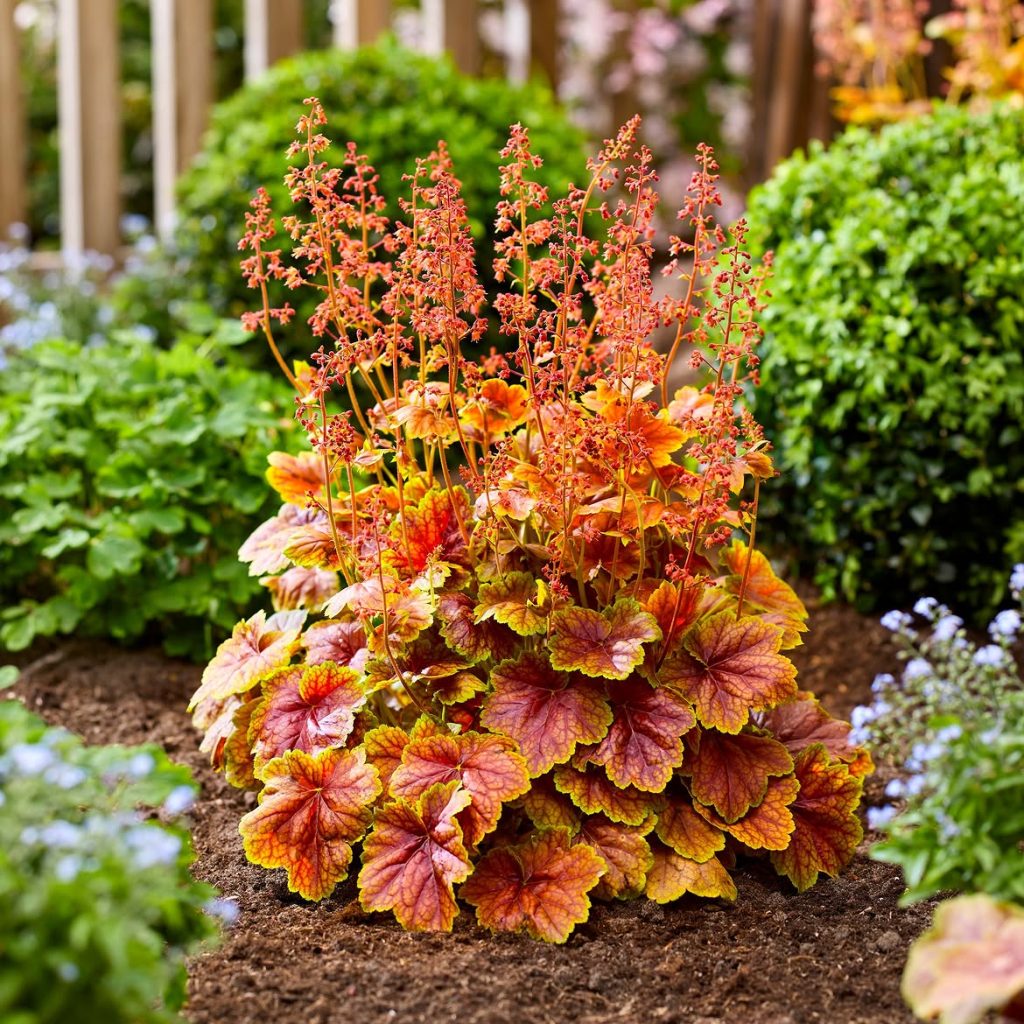
Space plants 12 to 16 inches apart, and you’ll get solid coverage within a season or two.
Partial shade suits coral bells best, though it adapts to both sun and deeper shade. Heavy clay soil, humidity, and short dry spells don’t bother this plant much either.
Plant Overview:
- USDA Zones: 3-9
- Exposure: Partial shade (adapts to sun or shade)
- Height/Spread: 6-20 in tall, 12-16 in spacing
- Bloom Time: Late spring
- Soil Needs: Well-draining, tolerates heavy soil
6. Hosta Smothers Weeds With Broad, Bold Leaves
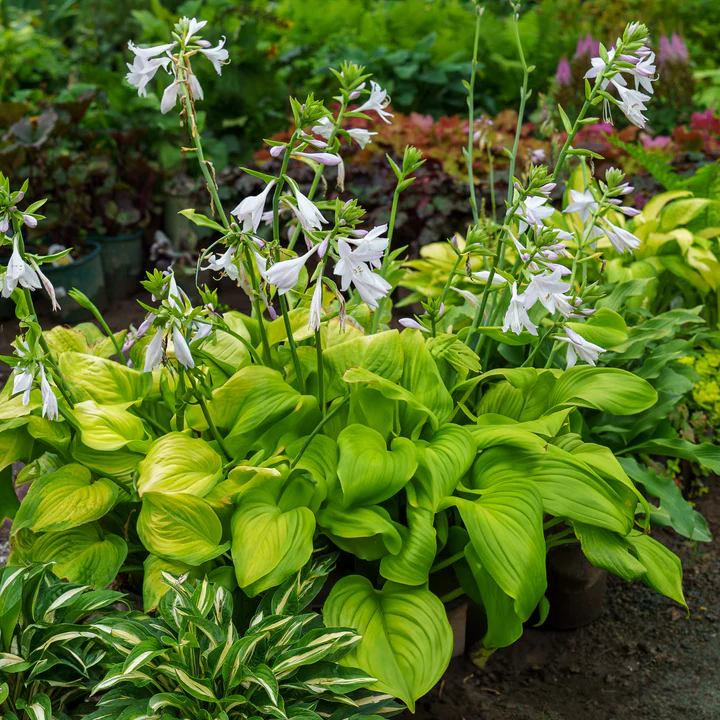
Big leaves mean big weed control, and hosta proves that better than almost any shade perennial. You’ll find varieties ranging from tiny 4-inch minis to massive types that stretch 30 inches across.
Each variety casts enough shade underneath to keep weed seeds from ever germinating.
This plant isn’t invasive, so you won’t spend years pulling it out of places you didn’t want it. Smaller varieties need tighter spacing to close gaps quickly. Larger types fill space on their own within two or three growing seasons.
Partial to full shade keeps hosta happiest. Leaf colors and patterns vary so widely between cultivars that you could fill an entire shade bed with nothing but hostas and never repeat a look.
Plant Overview:
- USDA Zones: 2-9
- Exposure: Partial shade to full shade
- Height/Spread: 4-30 in tall, varies by cultivar
- Bloom Time: Summer (foliage is the main draw)
- Soil Needs: Well-draining, rich, moisture-retentive
7. Creeping Phlox Carpets the Ground in Evergreen Color
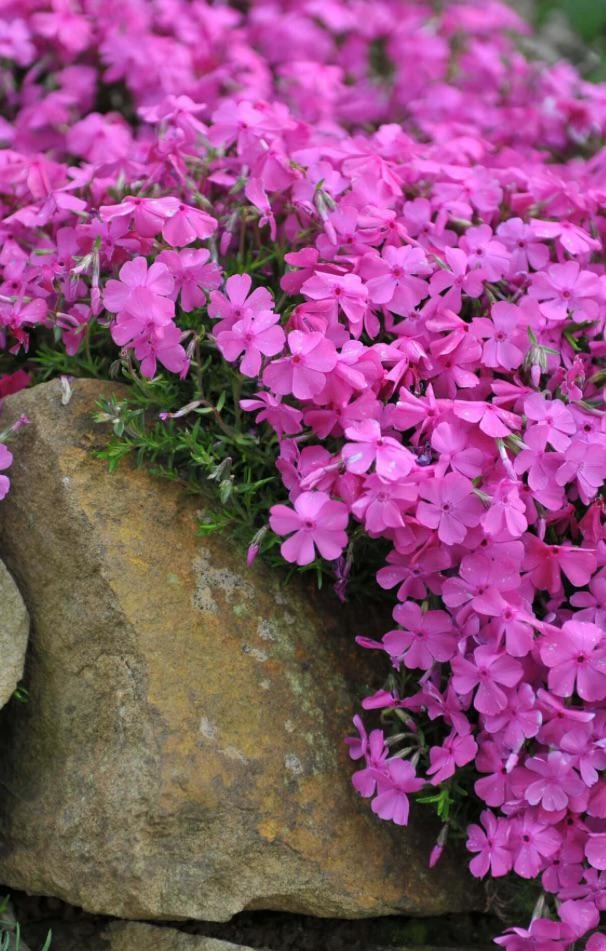
Creeping phlox forms a moss-like carpet that stays green through most winters. You’ll notice this plant looks almost identical to moss phlox, and that’s because the two are closely related.
Spacing matters more here than with other ground covers; give each plant 15 to 18 inches of room to spread properly.
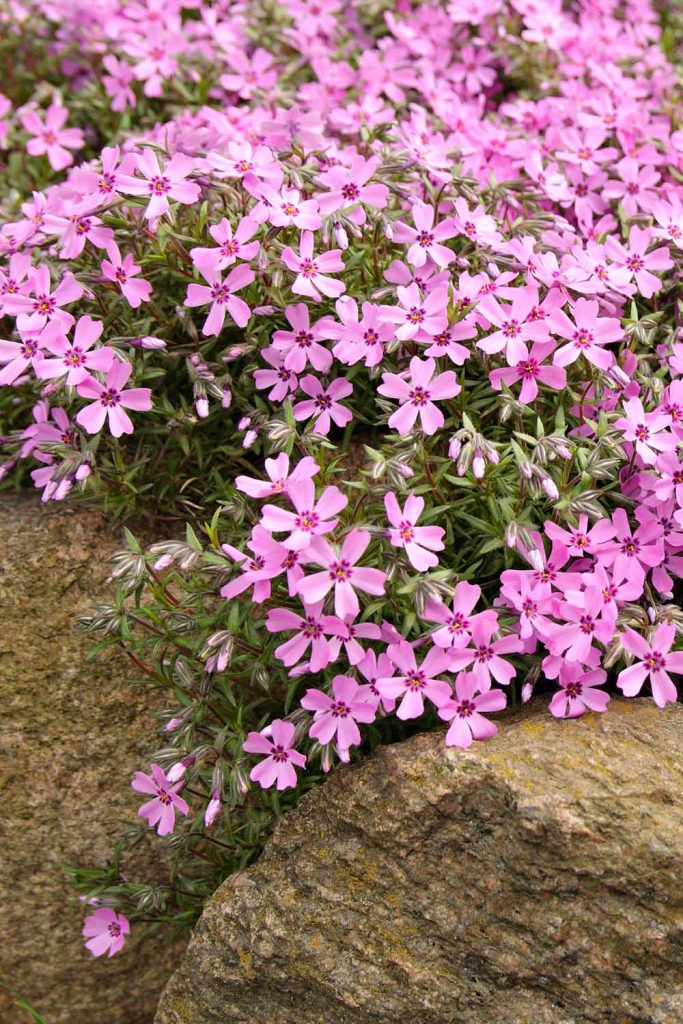
Full sun brings out the heaviest bloom coverage. Spring flowers arrive in shades of pink, red, blue, and white, often covering the foliage so completely you can’t see any green underneath. Weeds simply can’t punch through once the mat fills in.
This plant tolerates poor soil without complaint. Rocky slopes, dry banks, and neglected corners all work well for creeping phlox.
Plant Overview:
- USDA Zones: 3-9
- Exposure: Full sun
- Height/Spread: 4-6 in tall, spacing 15-18 in apart
- Bloom Time: Spring
- Soil Needs: Well-draining, tolerates poor soil
8. Sedum Handles Drought While Blocking Every Weed
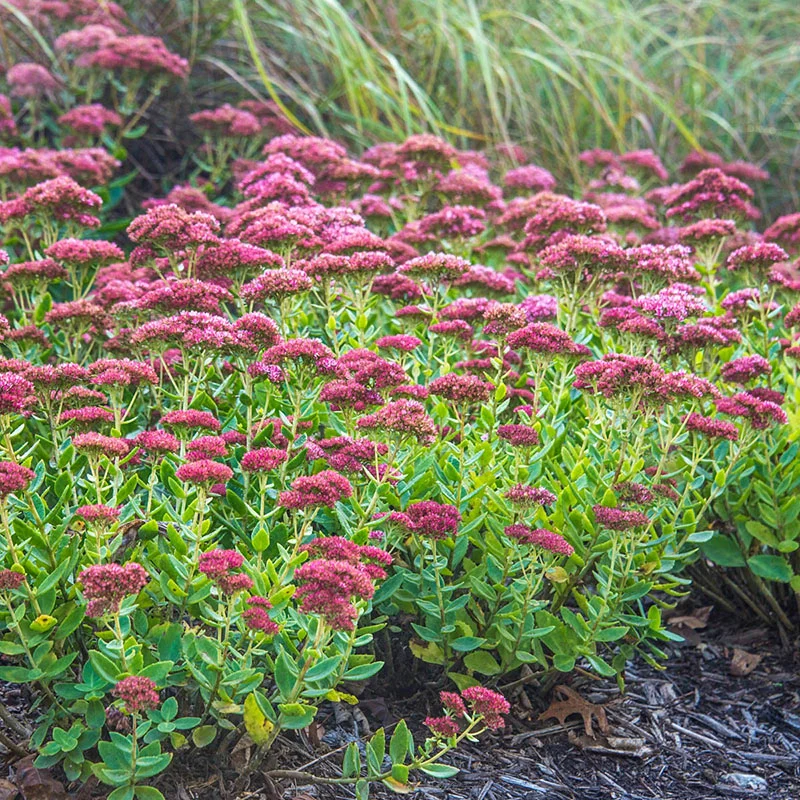
Drought kills most ground covers within a season. Sedum shrugs it off completely.
Thick, succulent leaves store water, letting this plant survive weeks without rain while weeds around it wither.
Height and habit vary enormously across sedum varieties. Low, creeping types hug the soil at just 4 inches tall, while upright varieties like Autumn Joy reach 18 inches with rounded flower clusters.
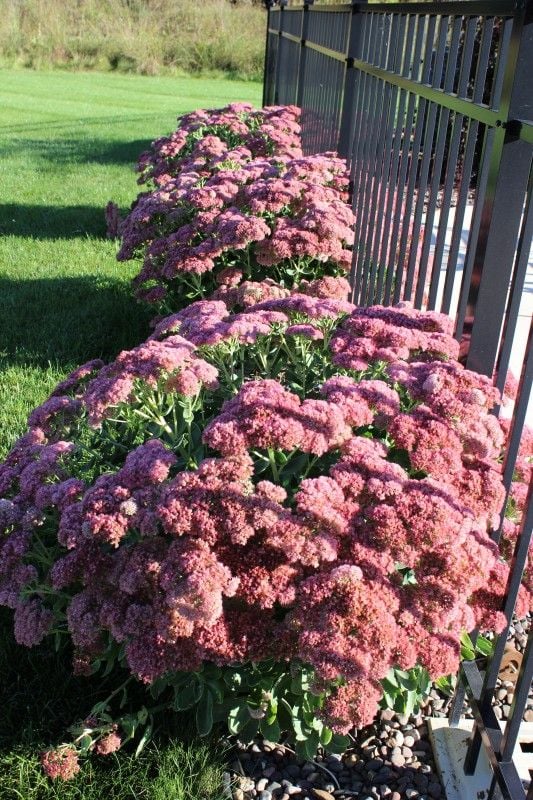
Bees and butterflies flock to sedum blooms in late summer, right when many other flowers have already faded.
Sun tolerance depends on the variety you pick. Some sedums handle full shade, though most prefer as much sun as you can give them.
Plant Overview:
- USDA Zones: 3-10
- Exposure: Full sun to shade (varies by variety)
- Height/Spread: 4-18 in tall, depending on type
- Bloom Time: Late summer
- Soil Needs: Well-draining, tolerates poor and dry soil
9. Lamb’s Ear Blocks Weeds With Soft, Silvery Foliage
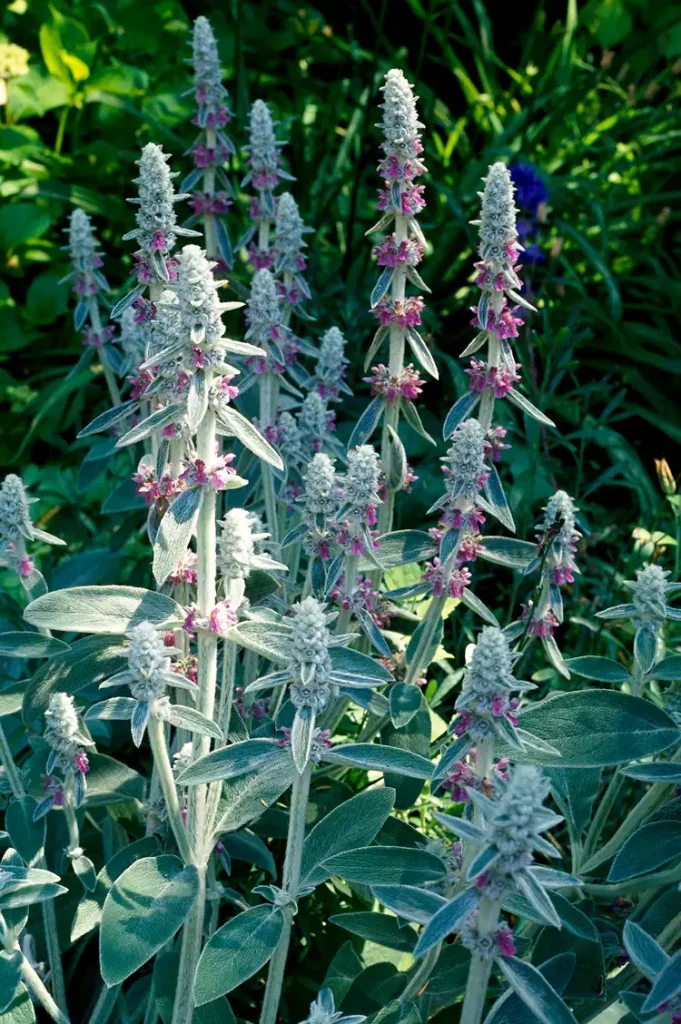
Lamb’s Ear stands out from every other plant on this list through touch alone. Fuzzy, silver-gray leaves feel almost like velvet, and kids in particular can’t resist petting them.
That same fuzzy texture helps the plant survive intense heat and drought without wilting.
This plant spreads through dense clumps that choke out weeds fast. Purple flower spikes rise in summer, though many gardeners trim them off to keep the foliage looking neat.
Full sun keeps the leaves silvery and compact; too much shade makes the plant leggy and less effective at weed control.
Rabbits and deer tend to leave lamb’s ear alone. That fuzzy texture apparently isn’t appetizing to them, which makes this plant a solid pick if wildlife damage is a concern in your yard.
Plant Overview:
- USDA Zones: 4-9
- Exposure: Full sun
- Height/Spread: 6-12 in tall, spreads in clumps
- Bloom Time: Summer
- Soil Needs: Well-draining, tolerates dry soil
10. Sedges Fill Gaps With Grass-Like Texture
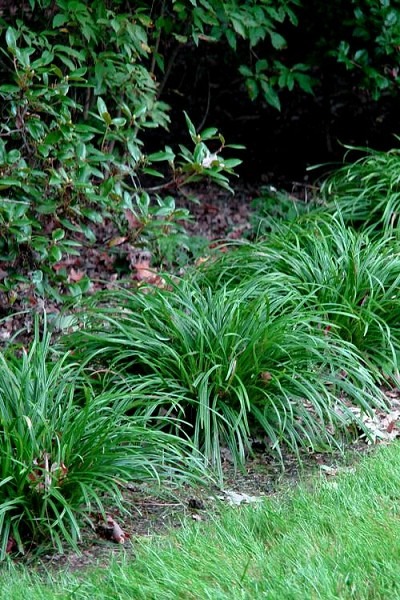
Sedges bring texture to spots where flowers feel out of place. Clumping, grass-like blades spread slowly at first, then knit together into solid coverage.
Plant them about a foot apart, and you’ll see gaps close within a couple of seasons.
Light needs vary by species, so check the tag before you buy. Some sedges handle full shade under trees, while others thrive in open sun. Either way, this plant fills space weeds would otherwise claim.
Low maintenance defines sedges better than any other trait. You won’t need to divide, deadhead, or fuss over this plant once it settles in.
Plant Overview:
- USDA Zones: 3-10
- Exposure: Full sun to shade (species-dependent)
- Height/Spread: 6-18 in tall, spacing 12 in apart
- Bloom Time: Inconspicuous; grown for foliage
- Soil Needs: Well-draining, adaptable
11. Bergenia Blocks Weeds With Bold Winter Color
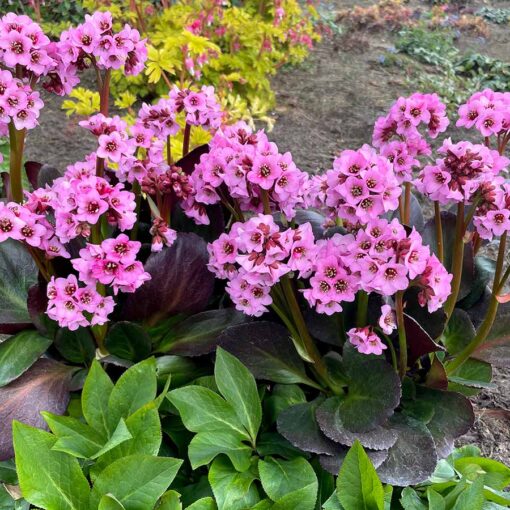
Large, leathery leaves give bergenia an edge most ground covers lack. Weeds can’t push through foliage this thick. Winter brings a bonus too, since many varieties turn bronze or burgundy once temperatures drop.
Pink flower clusters rise on sturdy stalks in early spring. Bees visit these blooms before most other perennials even wake up.
This plant tolerates sun, shade, and everything between, which makes it easy to place almost anywhere in your yard.
Bergenia earns its nickname, elephant ears, honestly. Once you see the leaf size in person, the comparison makes total sense.
Plant Overview:
- USDA Zones: 3-8
- Exposure: Full sun to full shade
- Height/Spread: 12-18 in tall and wide
- Bloom Time: Early spring
- Soil Needs: Well-draining, average, moisture-retentive
12. Lady’s Mantle Softens Beds While Crowding Out Weeds
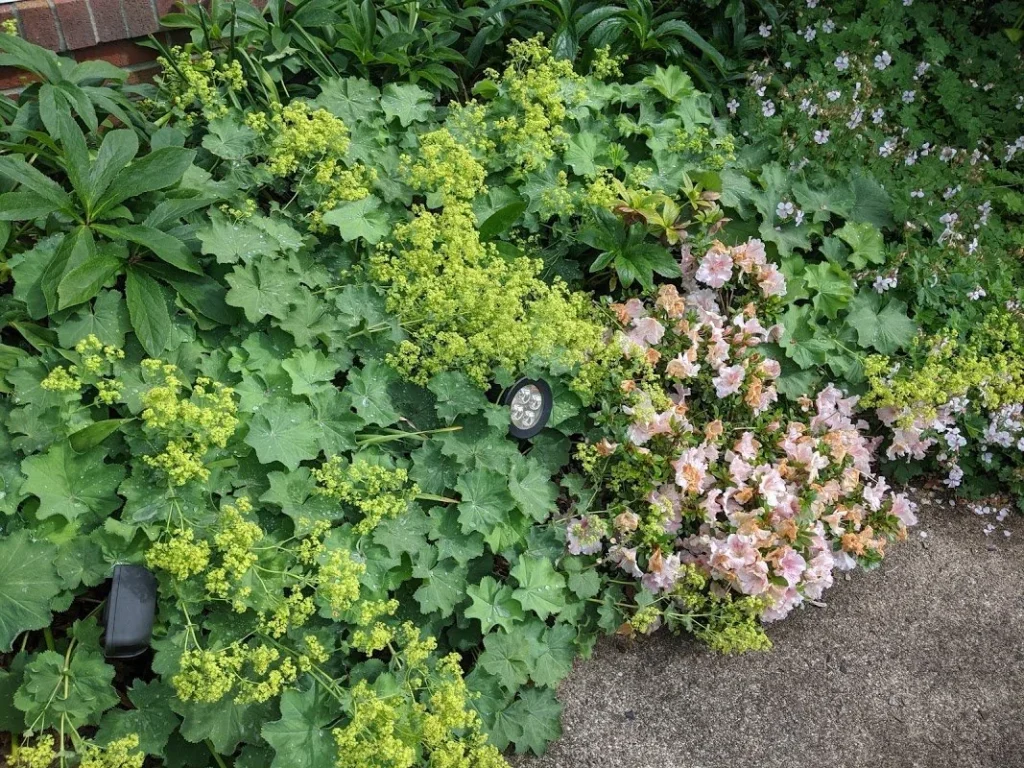
Chartreuse flower clusters set Lady’s Mantle apart from anything else on this list. Soft, scalloped leaves catch dew drops in a way that looks almost magical each morning. Weeds rarely find room once the foliage mounds up.
Partial shade suits this plant well, though full sun works too in cooler climates. Self-seeding happens gently here, unlike more aggressive spreaders on this list.
You’ll get a few volunteer seedlings each year, never an overwhelming takeover.
Cut the foliage back hard after flowering. Fresh leaves regrow quickly, and you’ll keep the plant looking tidy through fall.
Plant Overview:
- USDA Zones: 3-8
- Exposure: Full sun to partial shade
- Height/Spread: 12-18 in tall and wide
- Bloom Time: Early summer
- Soil Needs: Well-draining, average
13. Periwinkle Forms a Thick, Fast-Spreading Mat
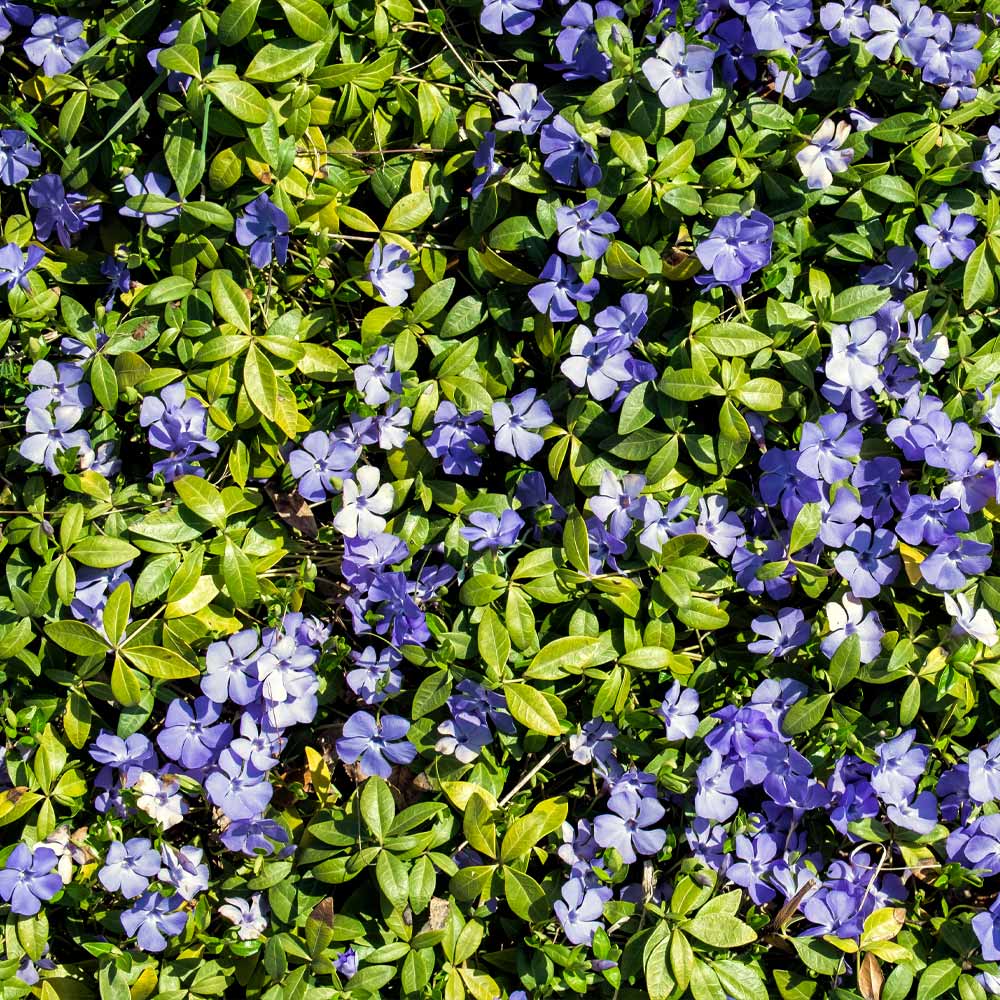
Periwinkle spreads faster than almost any plant on this list. Stems root wherever they touch soil, and that habit lets periwinkle cover ground at a pace weeds simply can’t match.
Blue to violet flowers appear each spring across the glossy, evergreen foliage.
Heat tolerance runs high once this plant establishes. Both full sun and partial shade work well, giving you flexibility most ground covers don’t offer.
Watch this one closely, though. Periwinkle spreads so aggressively that it can escape garden beds entirely, so keep edging or borders in place to contain it.
Plant Overview:
- USDA Zones: 7-9
- Exposure: Full sun to partial shade
- Height/Spread: 6 in tall, spreads indefinitely without borders
- Bloom Time: Spring
- Soil Needs: Well-draining, average
Your Weed-Free Garden Starts With the Right Plants
Thirteen plants, one goal: fewer weeds and less work. Each one on this list fills space fast enough to leave weeds with nowhere to grow. Pick a few that match your sun and soil, and you’ll spend far less time pulling weeds next season.
Start small if you’re unsure. Try one or two plants in your toughest spot first, and expand once you see how well they perform. Your back will thank you, and so will your weekends.