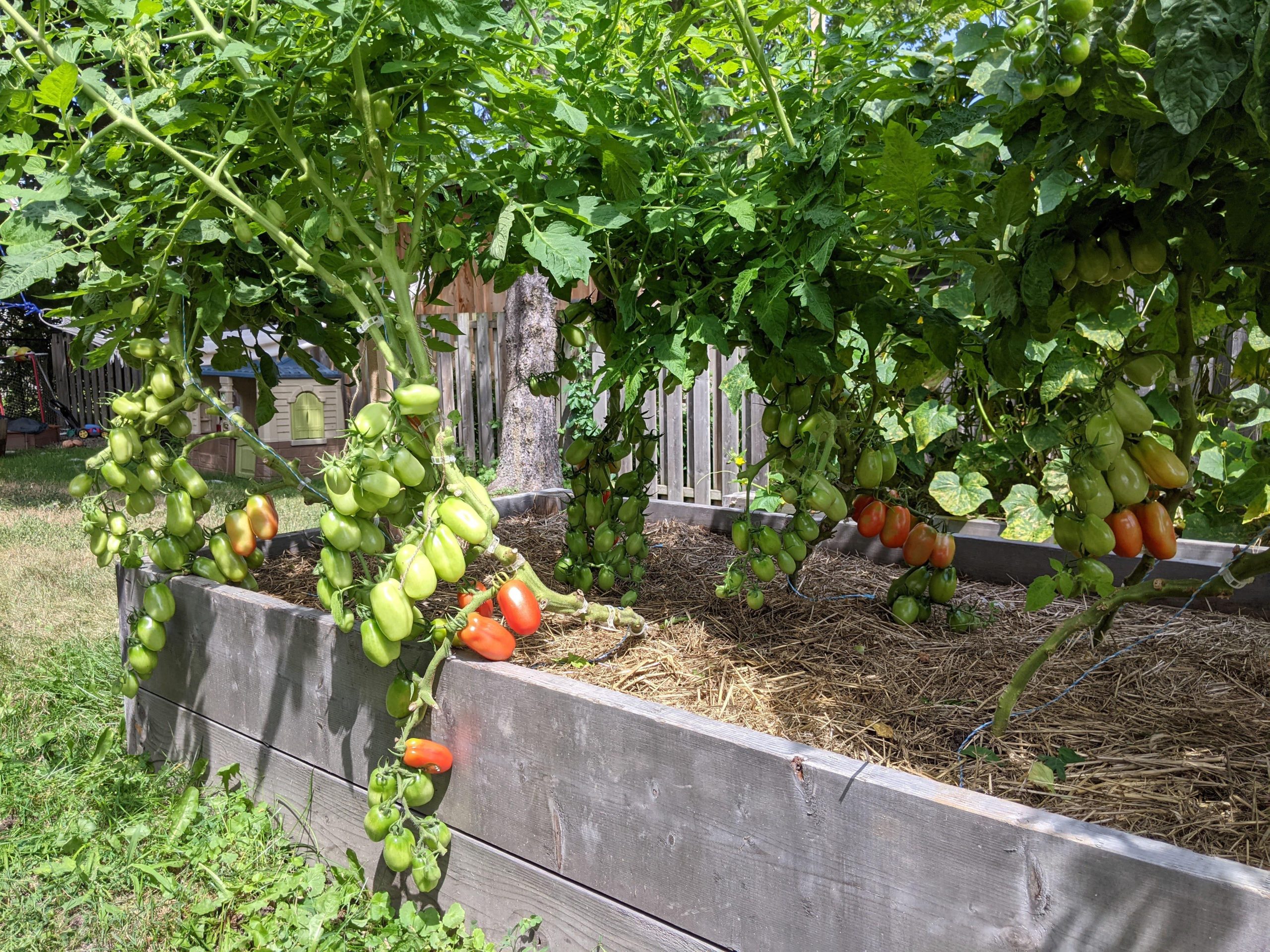
How to Grow Tomatoes in Raised Bed? A Step By Step Guide

Nothing beats the taste of a homegrown tomato, bursting with flavor and sunshine. If you’ve ever bitten into one straight from the garden, you know grocery tomatoes just don’t compare.
But let’s be honest—getting tomatoes to thrive can feel tricky. Too much water, too little sun, or that dreaded plant disease can ruin your harvest.
Here’s the good news: you don’t need a huge backyard or a green thumb to grow amazing tomatoes. With a small raised bed, you can produce juicy, vibrant fruit all season long.
Now, before we get our hands dirty, let me warn you: growing tomatoes in raised beds is not magic. It’s science, a little patience, and a lot of love.
You’ll need to pick the right varieties, prepare your soil, and know how to water, support, and prune your plants like a pro.
But trust me, by the end of this article, you’ll be armed with all the tips and tricks I’ve gathered from years of trial, error, and stealing a few secrets from expert gardeners.
Also read:
10 Most Effective Tomato Trellis Ideas to Provide Support and Style
Why Raised Beds and Their Benefits for Growing Tomatoes
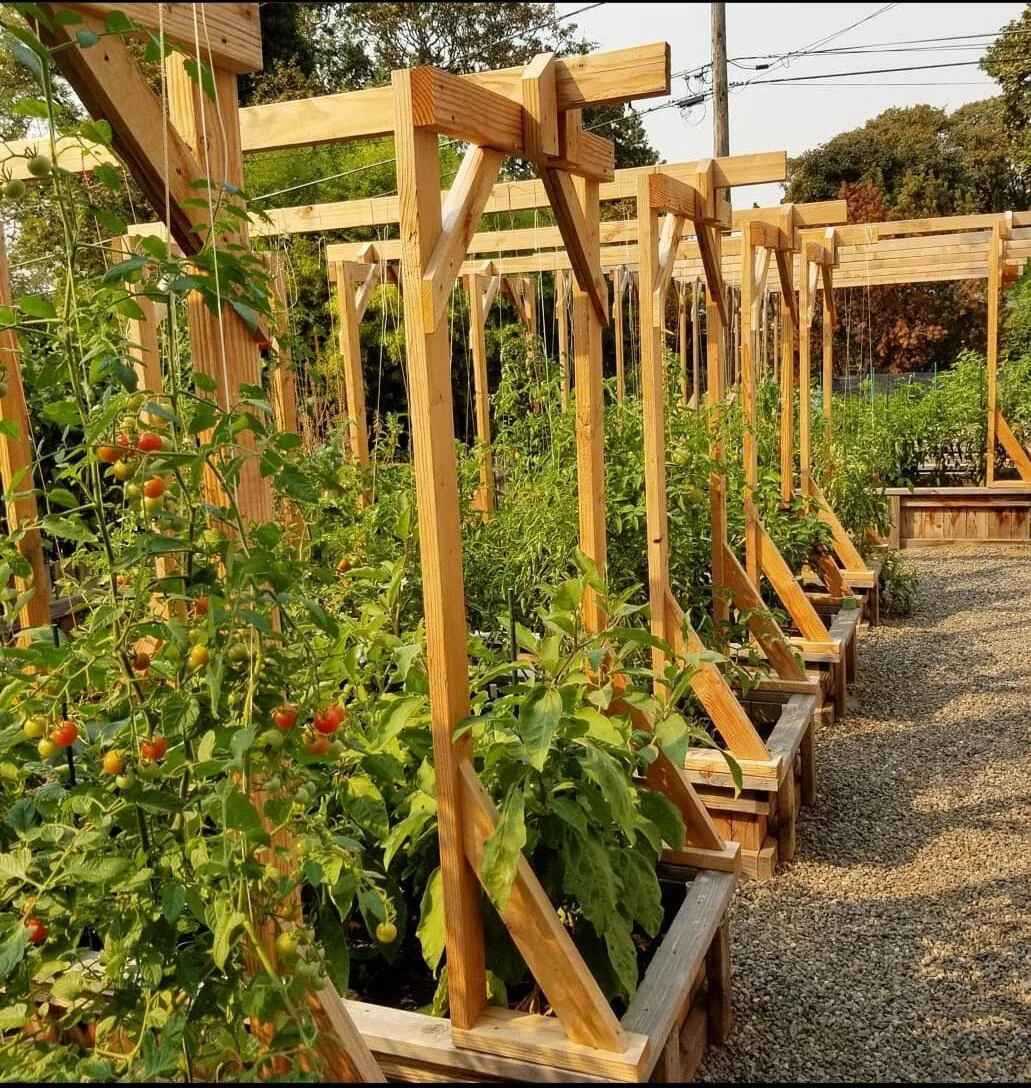
Ever wonder why so many gardeners swear by raised beds? Let me tell you—they’re basically the VIP suite for your tomatoes.
First off, soil control is king. You can mix nutrient-rich compost, loamy soil, and other amendments. This creates the perfect environment for roots to dive deep. Your plants get all the nutrients without fighting weeds or clay-packed ground.
Drainage is another huge win. Raised beds keep water from pooling around roots. This helps your tomatoes stay happy and disease-free.
They also warm up faster in spring, giving your plants an early start. No more waiting around for cold soil to thaw.
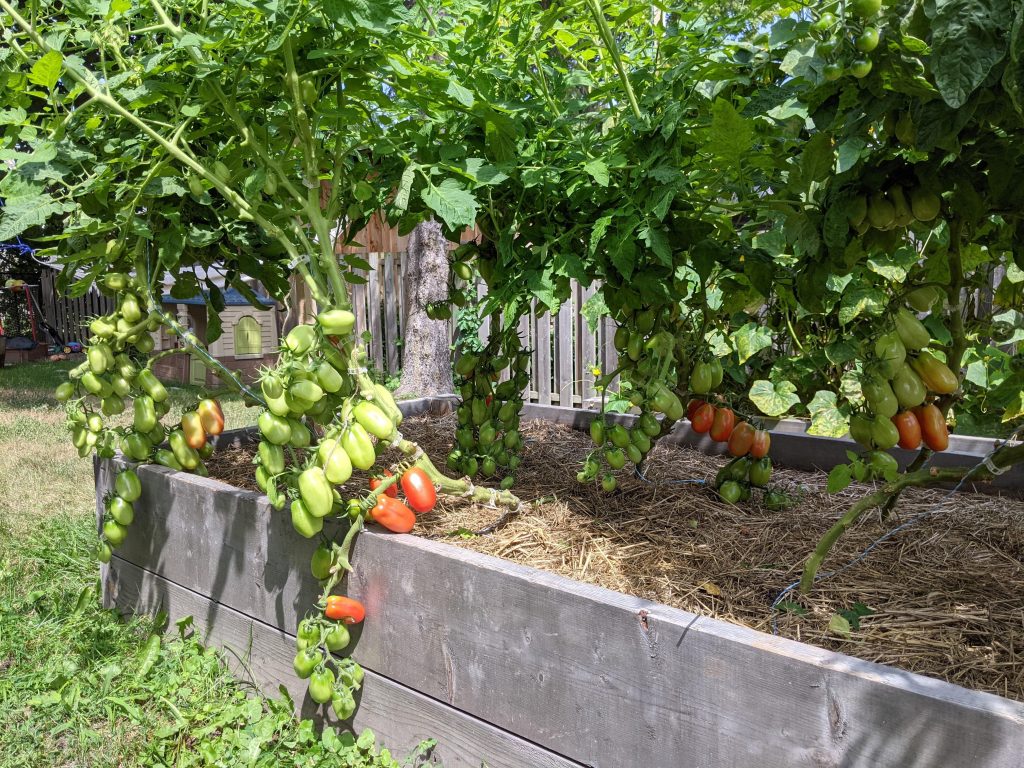
And let’s be honest, raised beds keep your garden neat and accessible. Less bending, less mud on your shoes, and fewer battles with sneaky weeds.
In short, raised beds give your tomatoes the perfect home and make your gardening life much easier.
Choosing the Right Tomato Varieties for Your Raised Bed
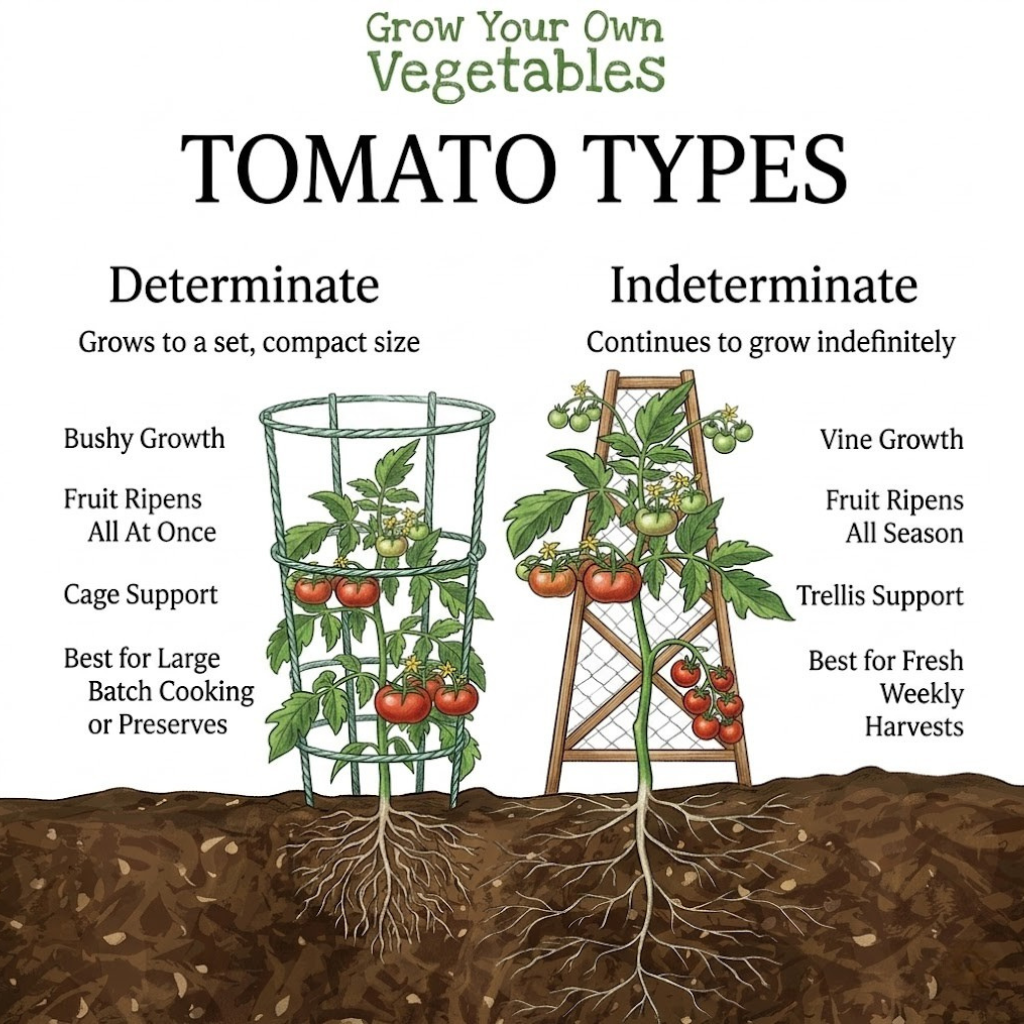
Now let’s talk tomatoes themselves. Not all varieties do well in raised beds. You mainly have two types: determinate and indeterminate.
Determinate tomatoes are compact and tidy. They grow to a set height and produce fruit all at once. Perfect if you want a burst of harvest for sauces or canning. Minimal pruning, minimal fuss.
Indeterminate tomatoes are the divas. They keep growing and producing fruit until frost hits. These need trellises or cages because they can get tall—sometimes ridiculously tall. The payoff? Fresh, juicy tomatoes all season long.
For raised beds, I like mixing a few cherry or small varieties with one or two indeterminates. It’s a balanced approach. Easy to manage, and you get snackable tomatoes plus bigger ones for dinner.
Preparing Your Raised Bed for Planting
Getting your raised bed ready is step one for happy tomatoes. Location matters. Pick a spot with full sun for at least 6–8 hours a day.
Tomatoes are sun addicts—they need it to ripen fruit and stay disease-free. Avoid low spots that collect water or shady corners near trees.
Filling of Raised Bed: You can use cardboard, logs & sticks, fallen leaves, and pine straw before putting the soil in your raised bed.
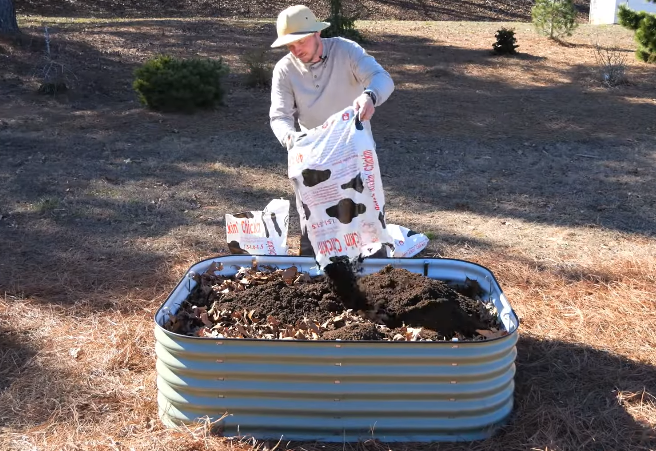
Soil Preparation
Your tomatoes deserve rich, loose soil. Raised beds let you control this easily. Start with a mix of garden soil, compost, and well-rotted manure or organic amendments. Aim for slightly acidic soil with pH 5.5–6.5.
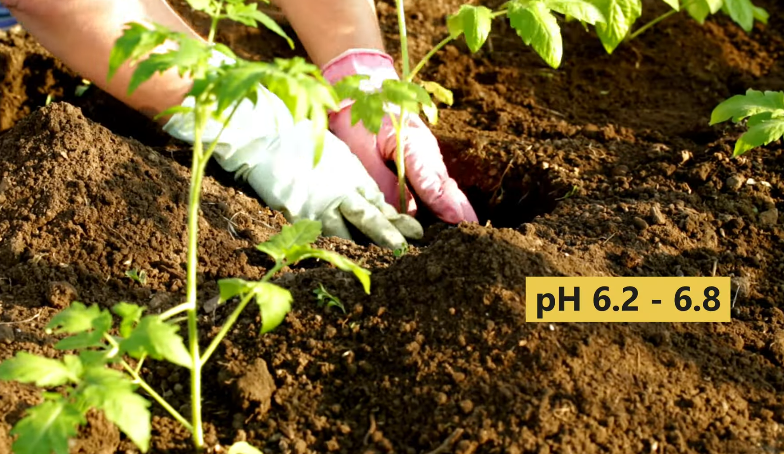
Loamy soil drains well but still retains moisture—perfect for roots to explore and suck up nutrients. If your soil tends to compact, mix in coconut coir, peat moss, or perlite to improve aeration.
Before planting, turn the soil well, remove weeds and rocks, and check that it’s soft enough for roots to grow freely. Adding a layer of mulch after planting helps retain water and keeps weeds at bay.
Planting Technique and Timing
When to plant? Wait until nighttime temperatures consistently stay above 50–55°F (10–13°C). Frost kills tomatoes, so don’t rush. Start seeds indoors 6–8 weeks before last frost, or buy healthy seedlings from a nursery.
Transplant seedlings deeply into your raised bed, burying stems up to the first set of leaves. Your raised bed should be at least 12-18 inches deep. This encourages extra roots along the stem, giving plants more stability and nutrient access.
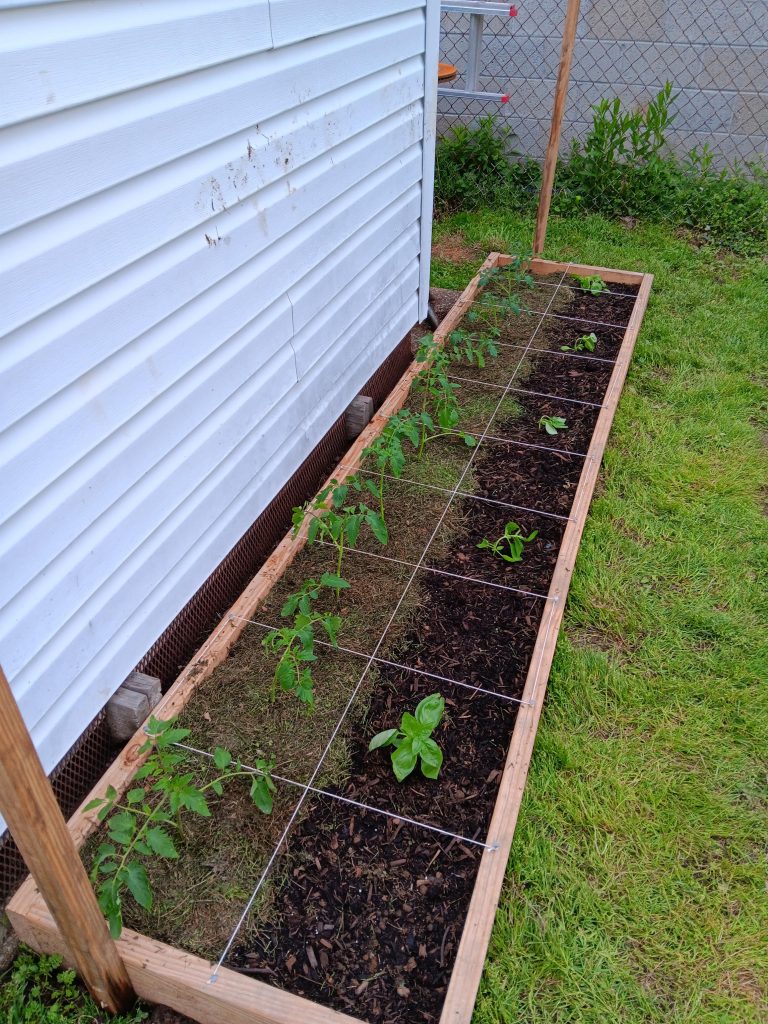
Space determinate varieties 18–24 inches apart and indeterminate 24–30 inches. Crowded plants invite disease and make pruning harder.
How to Support Tomatoes in Raised Beds:
Tomatoes need support to grow tall and strong. Use stakes, cages, or trellises right when you plant. Tie vines loosely with soft garden ties. Don’t wait—older stems break easily.
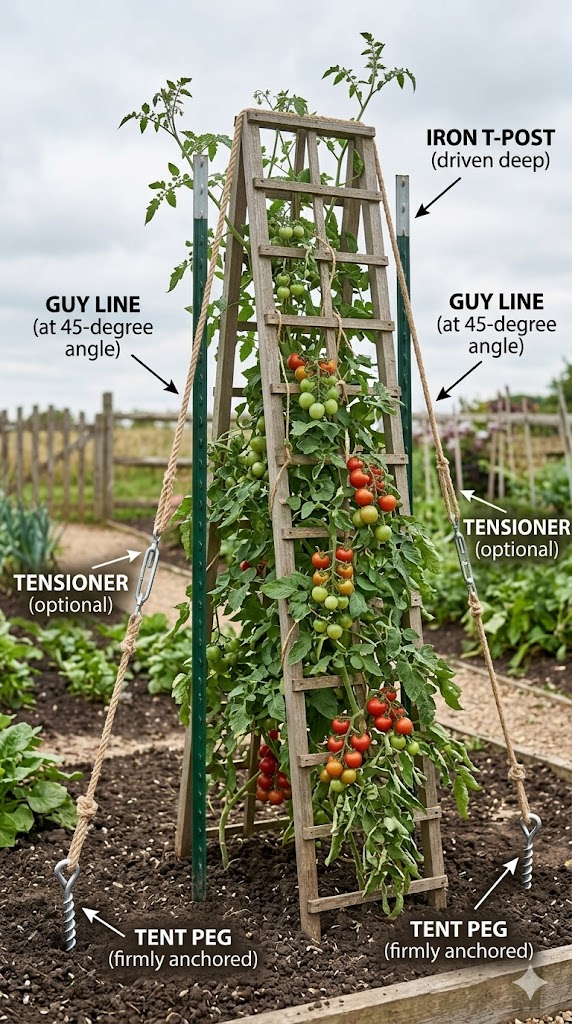
For indeterminate varieties, prune regularly and guide vines onto supports. Determinate types need smaller cages or stakes. Keep supports sturdy; wind and heavy fruit can topple weak ones.
Proper support keeps fruit off the soil, reduces disease, and makes harvesting easier. Your plants will thank you with bigger, cleaner tomatoes.
Watering and Mulching Essentials
Raised beds drain fast, which is great for avoiding root rot, but it also means they dry out quickly.
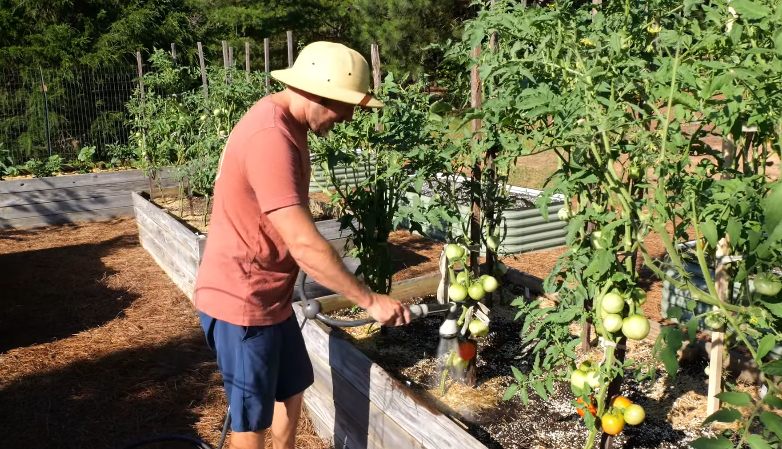
Water deeply at the base 1–2 times per week, adjusting for rainfall and soil moisture. Avoid wetting the leaves to reduce fungal disease risk.
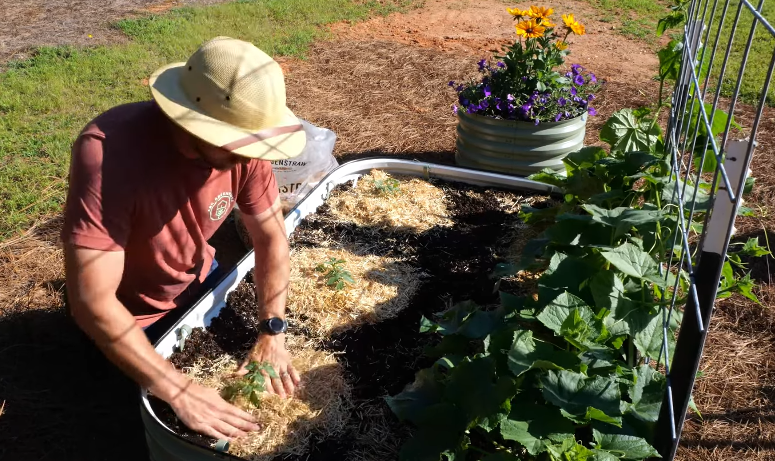
Mulch is your friend. Apply 2–3 inches of straw, shredded leaves, or bark mulch. It keeps soil cool, conserves water, and prevents weeds. Mulching also prevents fruit from sitting on wet soil, which reduces rot.
Ongoing Care
Prune carefully. Remove lower leaves touching the soil and pinch out suckers between the main stem and branches. This improves air circulation and reduces disease.
Keep an eye on pests like aphids, hornworms, and whiteflies, and deal with them early.
Aphids cluster on new leaves and suck the life out of plants. Hornworms? Big green caterpillars that look harmless until they devour half your leaves overnight.
FYI, a strong spray of water can knock off small pests, or use organic neem oil for heavier infestations.
FAQ’s
What to Plant with Tomatoes in Raised Bed
Tomatoes love good company. Plant basil nearby—it improves flavor and keeps pests away. Onions, garlic, and chives repel harmful insects too. Carrots and lettuce grow well between tomato plants, using space efficiently.
How many tomato plants in a 3×6 raised bed?
In a 3×6-foot raised bed, you can fit about 6–8 tomato plants comfortably. Space determinate varieties 18–24 inches apart and indeterminate varieties 24–30 inches apart.
Final Words:
Growing tomatoes in raised beds is a game-changer for any gardener. You gain total control over the soil quality and drainage. This leads to healthier plants and a much bigger harvest.
Remember to provide consistent water and plenty of sunlight. Support your vines early to prevent breaking. With these simple steps, you will enjoy fresh, homegrown tomatoes all summer long.