15 Stunning & Creative Fall Container Garden Ideas for Porch

Your porch works hard all summer, then fall hits and it goes flat fast. Petunias fade. The color drains out. Suddenly your entry looks like it’s waiting for someone to notice and do something about it.
Fall containers fix that in an afternoon. You don’t need a landscaper or a truckload of pumpkins. You need the right color combo, a few textures that play off each other, and one or two props that tie the whole thing together.
I pulled together 15 porch container ideas that go way past “mum in a pot.” Some lean bold and layered. Some go quiet and monochrome. Pick the one that matches your house, and steal the formula.
The Details That Make a Fall Porch Container Pop
Layer your heights
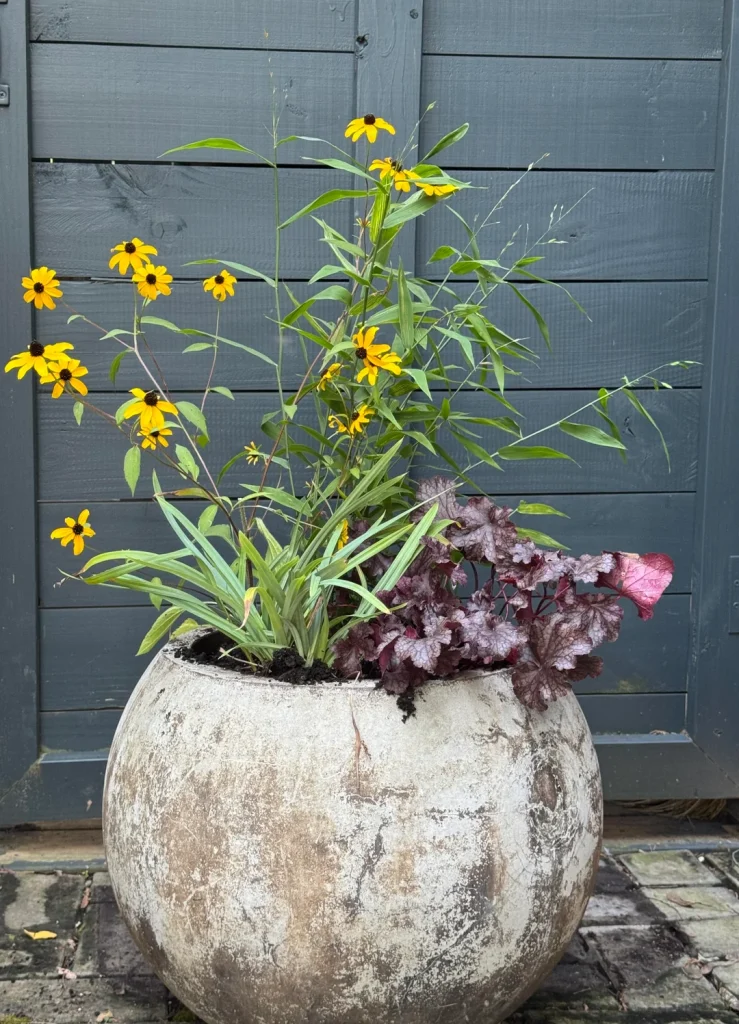
I always start with the tallest plant first, then build down from there. Put grass or spiky foliage in the back or center. Add mounding mums or kale in the middle.
Let something trailing spill over the front edge. This “thriller, filler, spiller” layering gives your eye somewhere to travel instead of landing flat on one level.
Repeat your color 2-3 times
One orange pot on your porch looks like an afterthought. Three touches of orange, in the mums, a pumpkin, and a trailing vine, looks like you planned it.
I like picking one dominant color and one accent, then scattering both across every pot on the porch. Your whole entry reads as one cohesive scene instead of a few random containers.
Mix a real plant with a prop.
Pumpkins and gourds add instant shape and color, but they can’t do all the heavy lifting. If your pot is nothing but props, it looks like a display, not a garden.
Anchor every arrangement with at least one living plant, then let the pumpkins fill in the gaps. That mix is what makes a container feel grown, not staged.
Match your container to your door.
This one’s easy to skip, but it changes everything. A black urn against a black door disappears into the background.
Swap it for terracotta or a lighter concrete pot, and suddenly it stands out the second you walk up.
I always stand back and squint at my door and pot together before deciding on a color. If they blend, I know I need more contrast.
Vary your pumpkin sizes, not just your plants.
A cluster of same-size pumpkins reads flat, even against great flowers. Mix minis with a big statement pumpkin, and toss in an odd-shaped gourd or two.
That size variation does as much visual work as your plant choices, and it costs you nothing extra at the pumpkin patch.
Don’t ignore your container’s material.
Terracotta warms up a display instantly. Black or charcoal planters make bright colors pop harder. Concrete leans modern and calm.
Before you buy new pots, think about which finish actually supports the mood you’re going for, not just which one you like on its own.
Nail these six, and honestly, almost any plant combo on this list will work beautifully on your porch.
15 Fall Container Garden Ideas for Porch
1. Magnolia Wreaths and Layered Pumpkin Steps
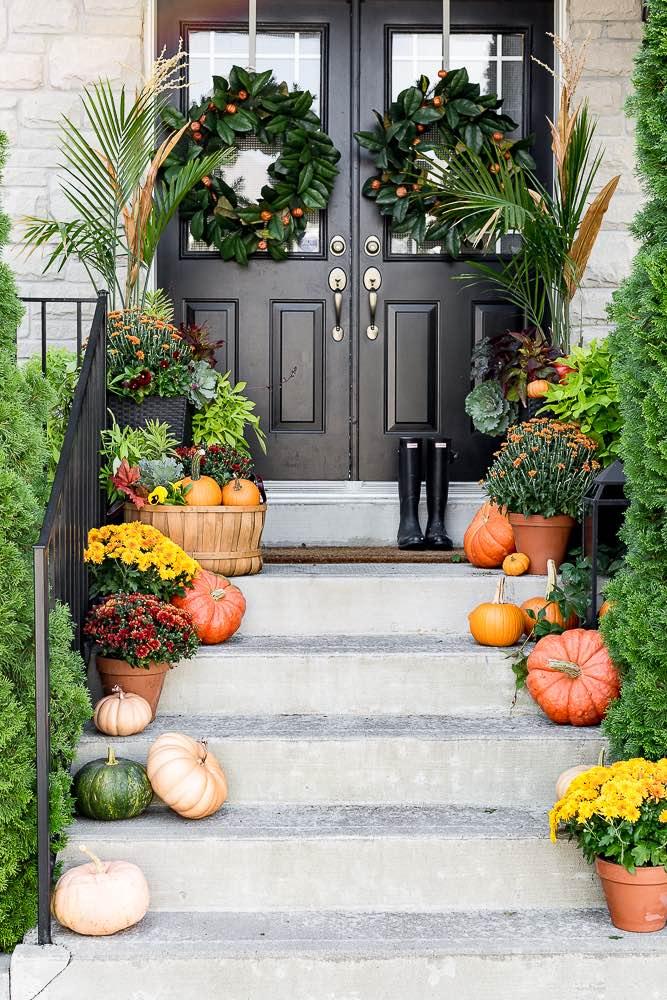
Two magnolia wreaths with orange berries anchor this double-door entry, and layered greenery does the rest.
Palm fronds and dried grasses shoot up behind mixed mums in rust, gold, and burgundy. Baskets packed with kale, pansies, and pumpkins sit right at the threshold.
I love how the pumpkins take over the stairs instead of staying in pots. White, orange, and green ones scatter down each step, getting bigger toward the bottom. It reads intentional, not leftover.
Why it works: Repeating the pumpkins on every step pulls your eye down the whole staircase instead of stopping at one pot. The dark door lets every warm color pop hard.
Decor formula: magnolia wreath + basket planter + mixed mums + pumpkin cascade down the stairs
If your entry has stairs, steal this. Even five pumpkins in graduating sizes will do it.
2. All-White Farmhouse Porch with Ghost Pumpkins
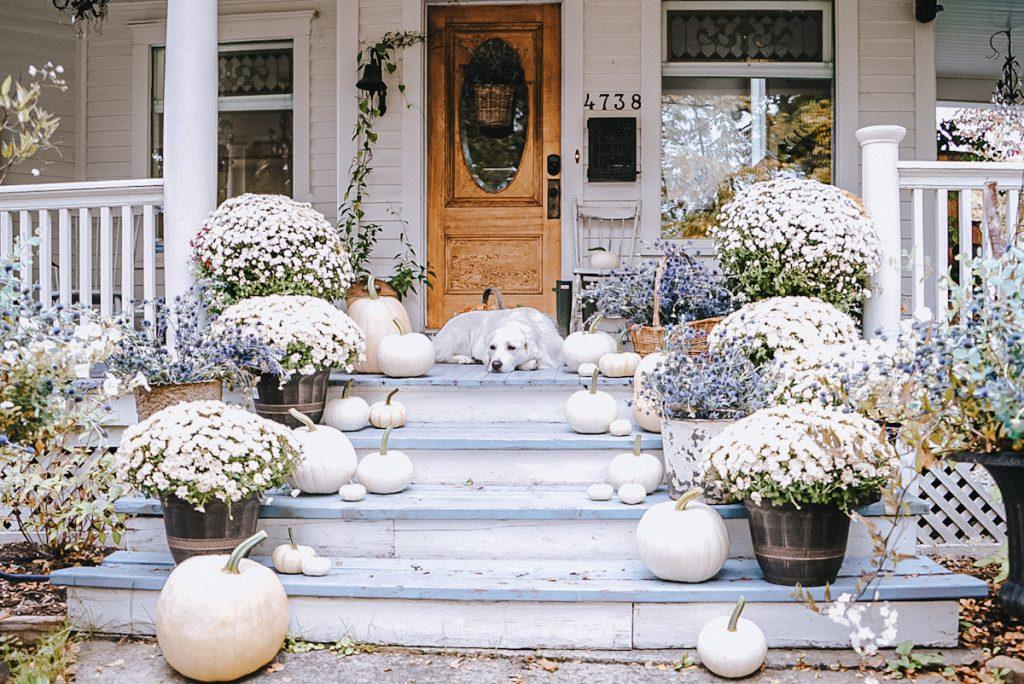
This one throws out the usual orange-and-gold fall palette completely.
White mums fill oversized woven baskets on both sides of the door, and white pumpkins in every size roll across the steps like they landed there naturally. A few dusty blue thistle blooms sneak in for contrast.
The wood door and pale blue-painted steps keep the whole look soft instead of stark. Nothing fights for attention here. It’s calm, and that’s the point.
Color note: White and cream mums read as elegant, not boring, when you vary the pumpkin sizes and let the natural wood tones warm things up.
Proportion tip: Go bigger than you think on the mum baskets. Oversized planters are what make this look expensive instead of sparse.
This is the move if your house already leans neutral or coastal. Adding orange here would actually clash.
3. Black Urn with Trailing Ivy and Purple Salvia
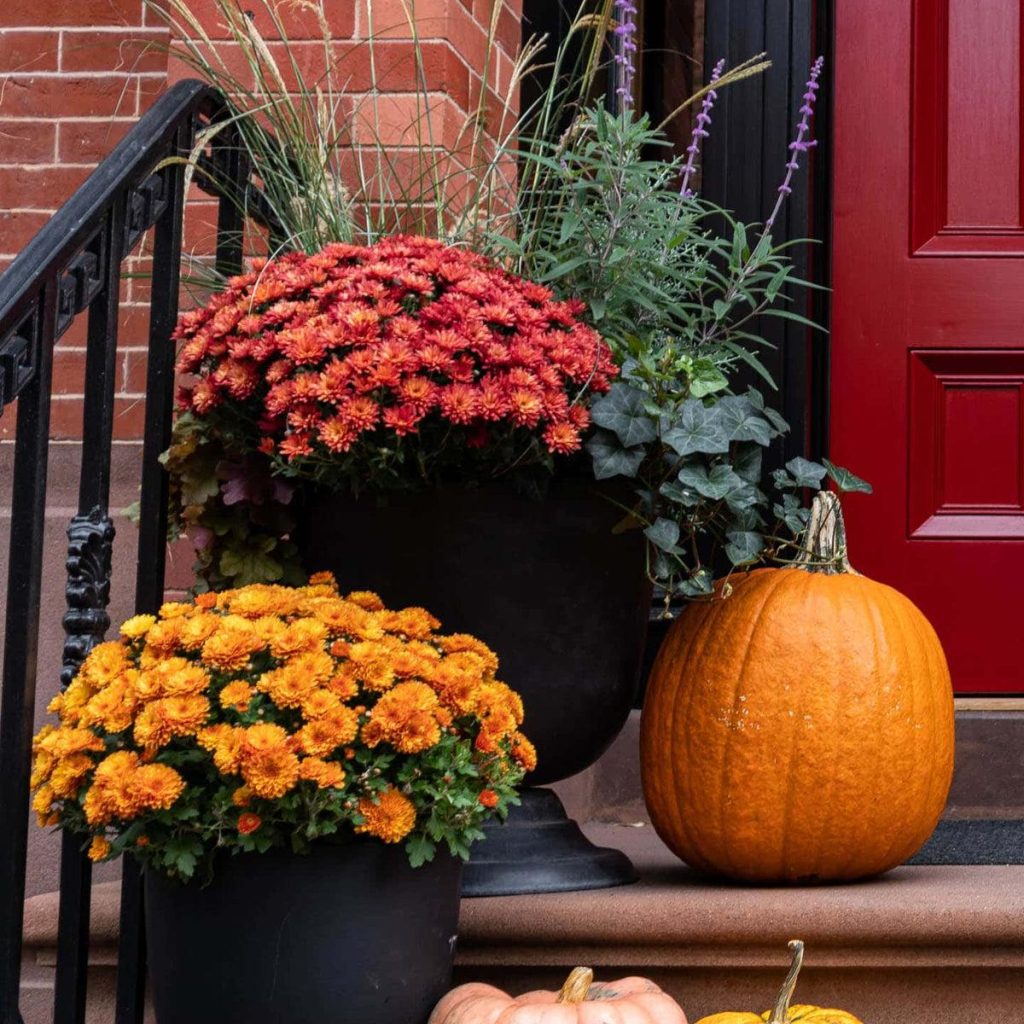
This container proves you don’t need five plants to make a statement. Rust-orange mums fill most of the black urn, and ornamental grass shoots up behind them for height.
Purple salvia spikes add a color you don’t usually see in fall containers, and trailing ivy softens the pot’s edge.
A second, smaller pot of golden mums sits at the base, plus one big classic pumpkin leaning against the urn.
Decor formula: black urn + mounding mums + ornamental grass + one trailing plant + a single statement pumpkin
Landscape note: The purple salvia is doing more work than it looks like. Orange and purple sit opposite each other on the color wheel, so even a few spikes make the whole arrangement feel richer instead of flat.
Try this if you already own a taller urn-style planter and don’t want to buy new ones.
4. Layered Grass, Coral Bells, and Heirloom Pumpkins
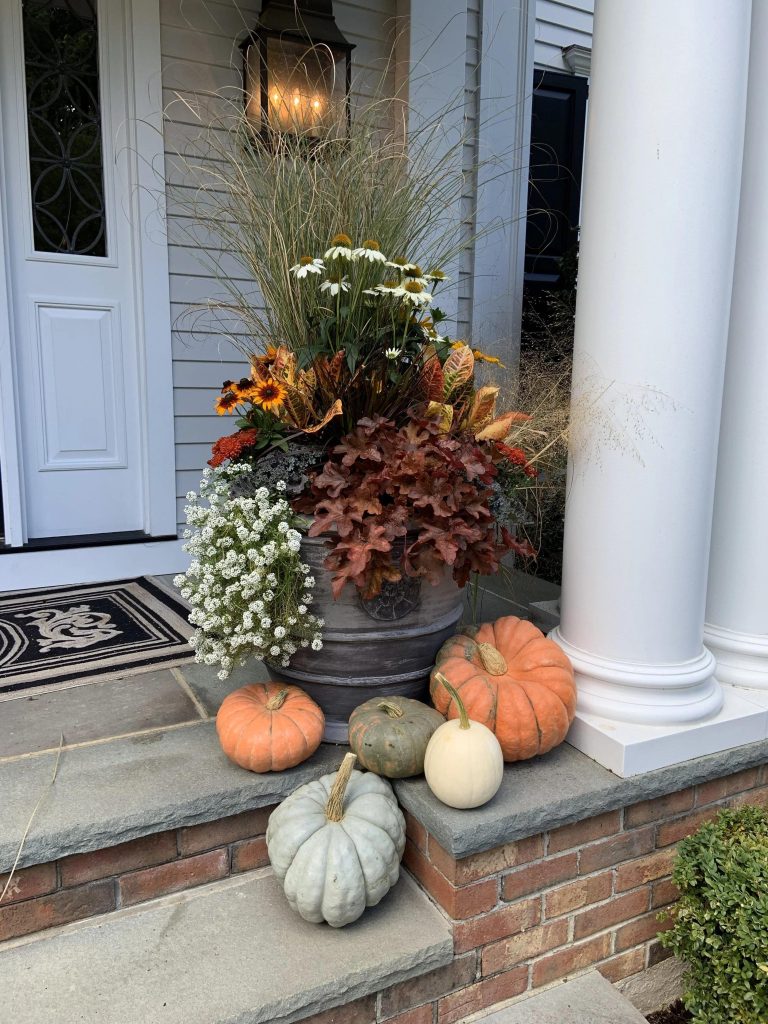
This container skips mums almost entirely and leans into foliage instead.
Ornamental grass and white coneflowers rise up top, croton adds streaks of orange and red in the middle, and burgundy coral bells spill low around the base. A trail of white alyssum softens one side.
Heirloom pumpkins in orange, white, and blue-gray cluster at the pot’s feet, picking up every color already happening in the plants above them.
Why it works: Nothing here is a typical “fall plant,” but the color story still reads as fall instantly. Burgundy, orange, and cream carry the whole thing without a single mum.
Copy the look:
- Tall grass or spiky foliage for height
- One dark burgundy plant for depth
- A trailing white or cream flower
- Heirloom pumpkins in mixed, unusual colors
If you want your porch to look more “designed garden” than “seasonal decor,” this is your template.
5. Hot Pink Mums with a Cozy Side-Table Vignette
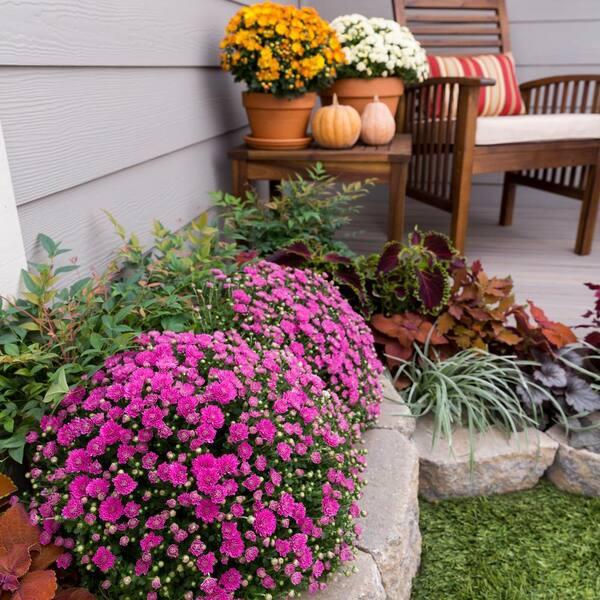
This one splits the fall display into two zones. A ground-level border overflows with hot pink mums, mixed with coleus and ornamental grass tucked along a stone edge.
Off to the side, a wooden bench holds a simple side-table vignette: terracotta pots with orange and white mums, plus a couple of mini pumpkins.
Best for: Porches or side entries with a seating area, where you want the display to feel lived-in rather than staged for photos only.
Upgrade idea: Swap the plain terracotta for aged or painted pots to tie the table display closer to your border planting below.
Hot pink isn’t a color most people reach for in fall, but it works exactly because it’s unexpected against all that orange and gold everywhere else.
6. Tall Black Planter with Grass, Kale, and a Ghost Pumpkin
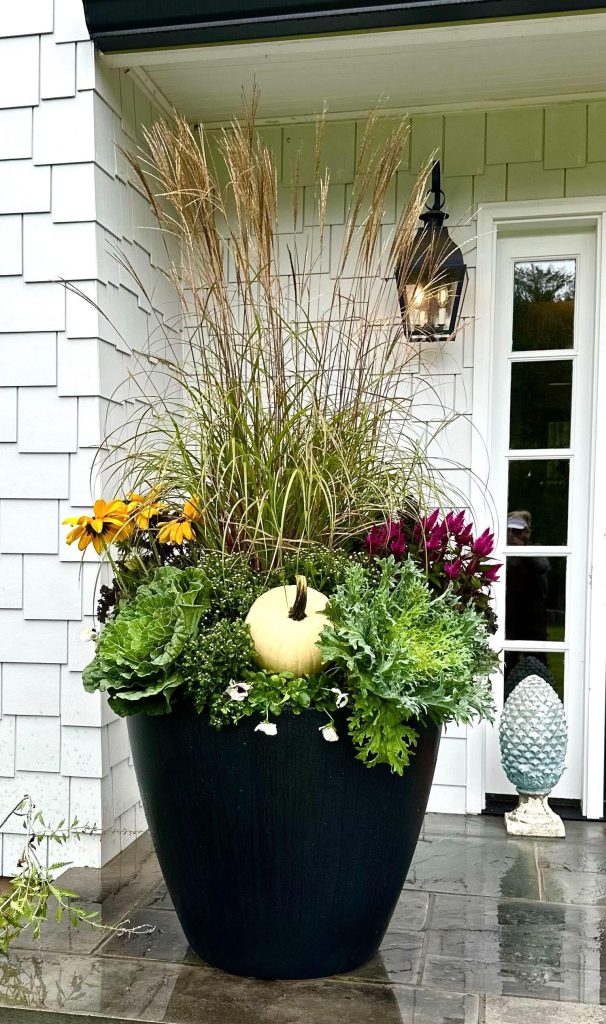
This oversized black planter goes big on height and texture instead of flowers. Ornamental grass shoots straight up top, and it’s the tallest plant in the whole batch so far.
Below it, black-eyed Susans and magenta celosia add color on either side, while ruffled kale and cabbage fill the base in cool green and blue tones.
A single white pumpkin sits nestled right in the center, almost hidden until you look twice.
Why it works: Tucking the pumpkin into the foliage instead of setting it on top makes it feel discovered, not staged. The kale’s ruffled texture also plays nicely against the grass’s straight, wispy blades.
Proportion tip: A planter this tall needs a plant that clears the rim by at least a foot. Anything shorter and the grass won’t read from the street.
If you’ve got a deep porch corner that needs height, this combo fills it without looking top-heavy.
7. Moody Purple Kale and Pansy Container Pair
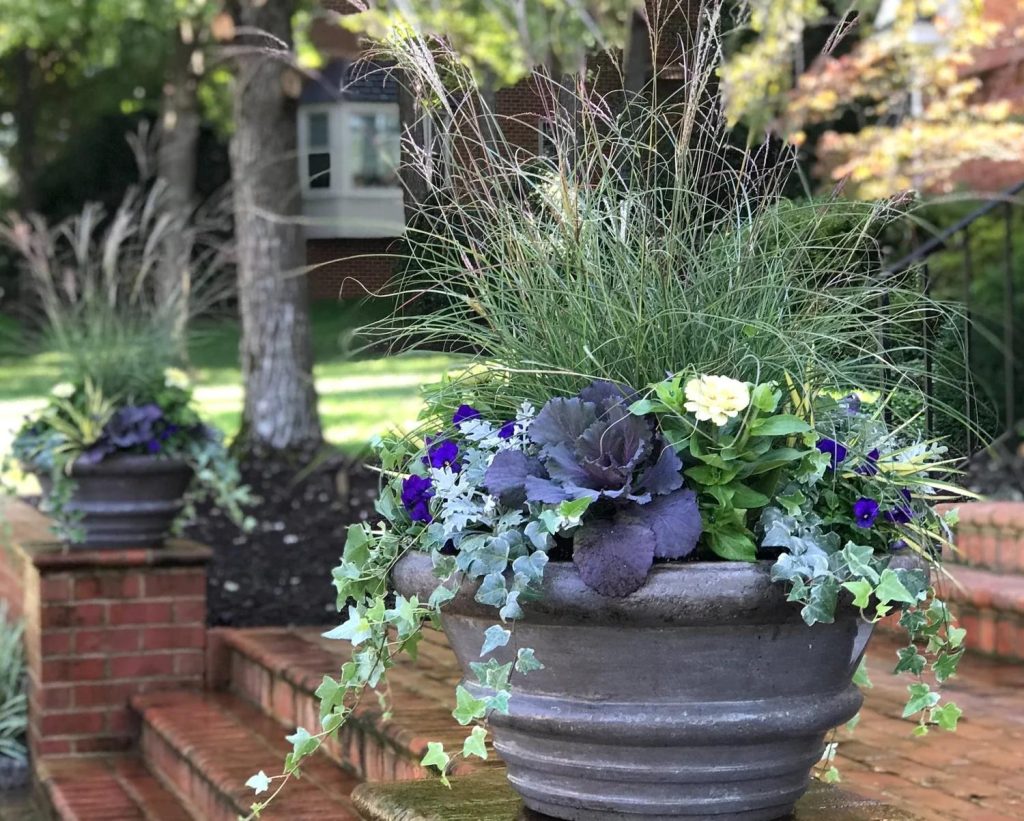
This one skips orange completely and builds around purple, silver, and cream instead. Purple ornamental cabbage sits front and center, framed by violet pansies and dusty miller’s silvery leaves.
Pale yellow blooms add a soft highlight, and trailing ivy spills over the concrete urn’s edge.
A second matching planter repeats the same combo further down the path, which is what makes this idea work as well as it does.
Decor formula: ornamental grass + purple kale + violet pansies + dusty miller + trailing ivy
Landscape note: Placing matching planters along a path or wall does more for curb appeal than any single showy pot. Your eye follows the repetition straight to the door.
This is the sophisticated, muted choice if bright orange and gold feel like too much for your home’s style.
8. Red Mums, Kale, and a Single Pumpkin Cluster
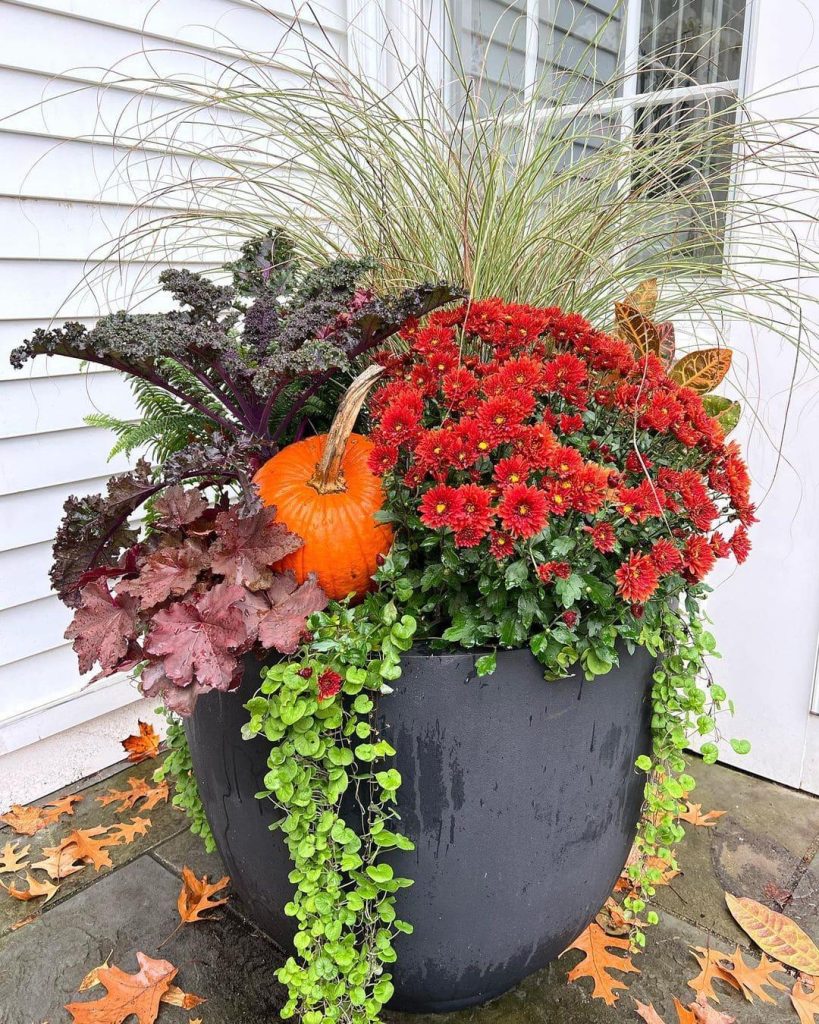
Deep red mums fill most of this planter, and they’re the real showstopper here. Dark purple kale and burgundy coral bells sit to one side, adding depth without competing for attention.
Ornamental grass rises up the back, and creeping jenny spills bright green over the pot’s edge in two long trails.
One classic orange pumpkin tucks in beside the mums, doing exactly enough without stealing the show.
Why it works: Keeping the pumpkin count to just one lets the red mums stay the star. Too many pumpkins here would compete with that color instead of supporting it.
Copy the look:
- One dominant mum color (go bold, not muted)
- A dark foliage plant for contrast
- Two trailing vines for movement
- A single pumpkin, not a cluster
Try this if your porch pot is more about the flowers than the fall props.
9. Navy Urn with Marigolds and Blue Cabbage
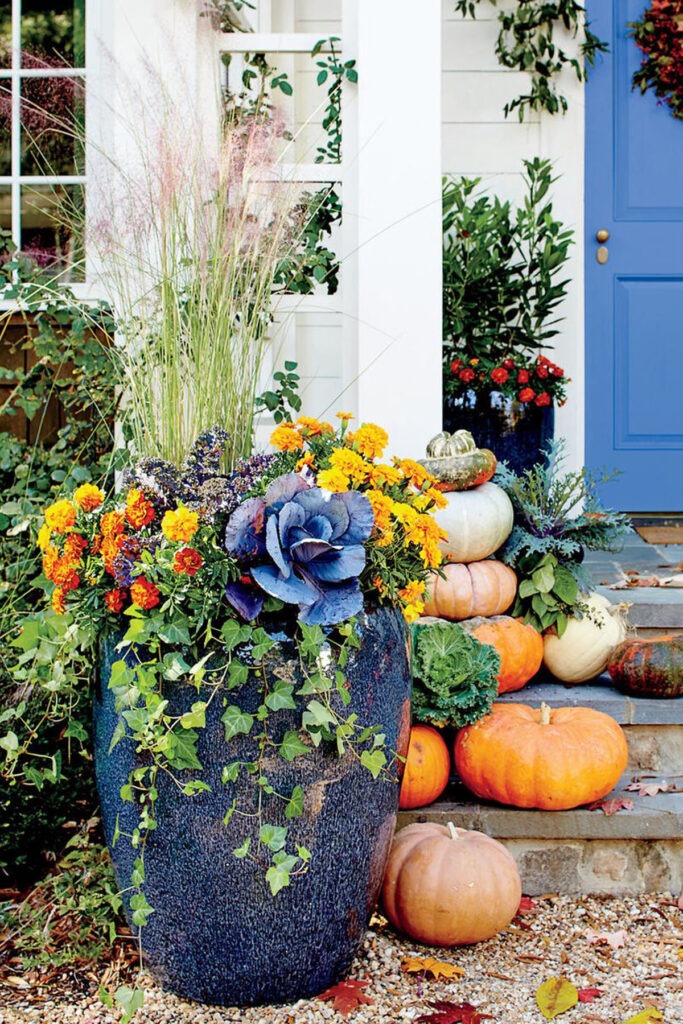
This tall navy urn pairs orange marigolds with an unexpected blue-purple cabbage, and the color clash is exactly why it works.
Purple heliotrope adds another cool tone up top, while ivy trails halfway down the pot’s glazed surface. A matching red-mum planter sits by the door for balance.
Pumpkins and gourds pile up the steps beside it in cream, orange, and green, echoing the same colors from the urn above.
Best for: A blue or navy front door, where the glazed pot can pick up the same tone and tie the whole entry together.
Upgrade idea: Add one more blue-glazed piece nearby, like a smaller pot or a lantern, so the color feels intentional instead of a one-off.
Marigolds bring a warmer, more saturated orange than mums, so reach for them if you want your color to feel bolder.
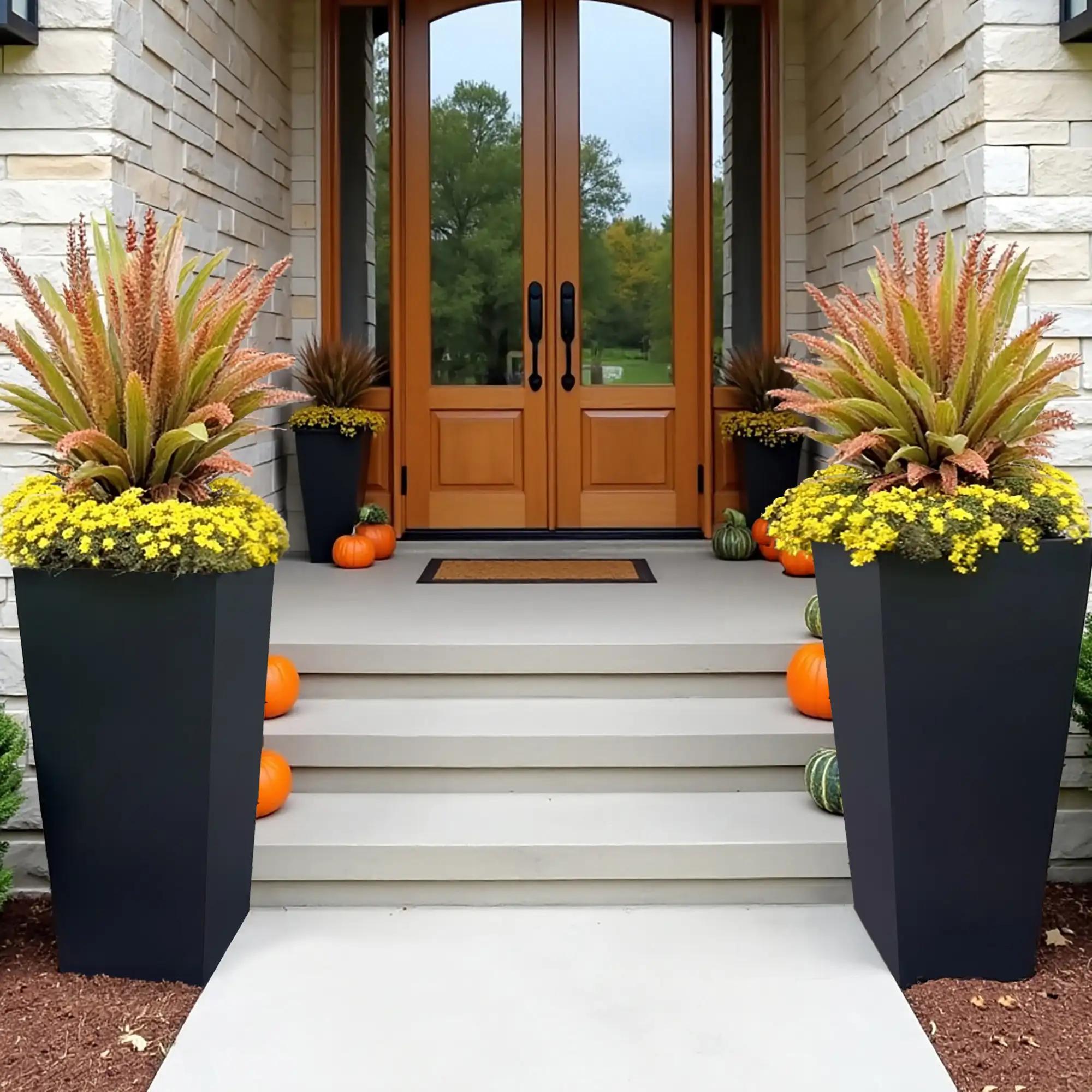
10. Matching Tall Planters with Feathery Grass and Yellow Mums
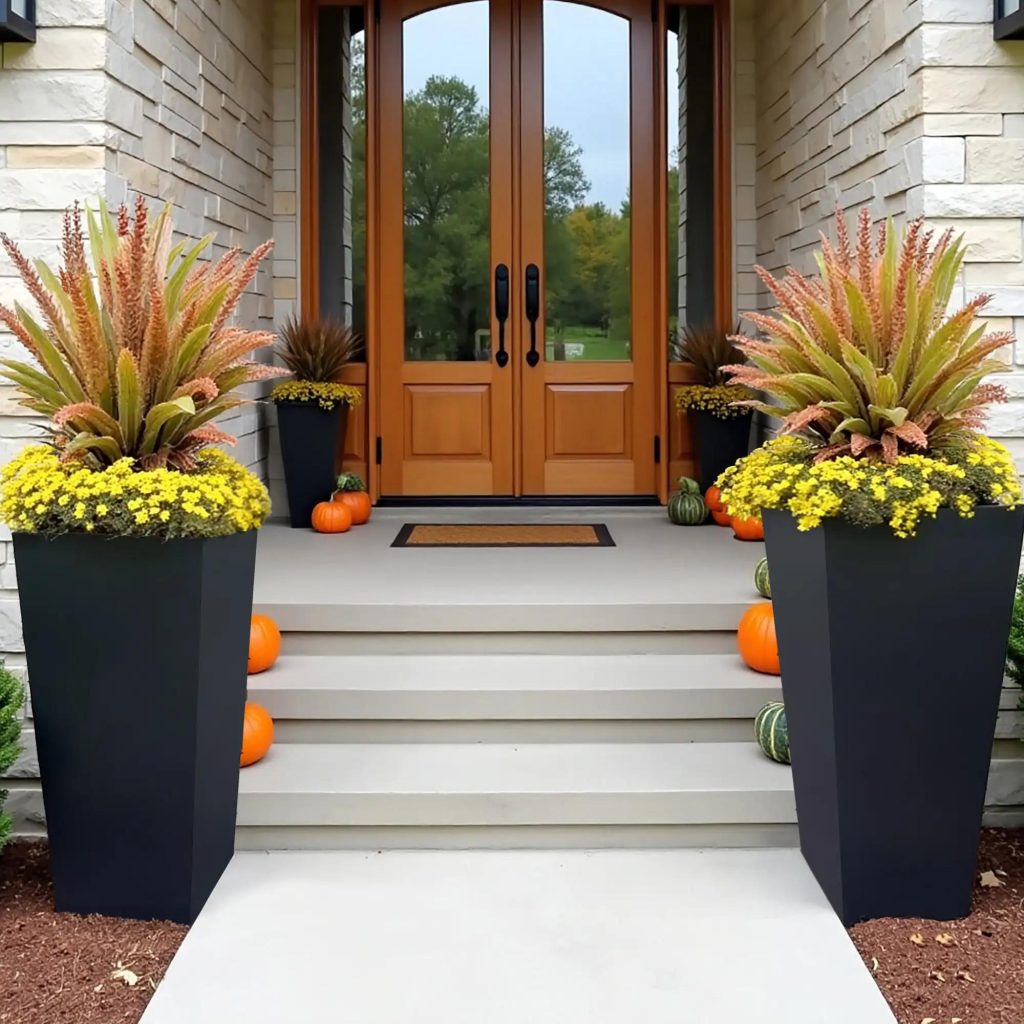
This pair of sleek black planters flanks a double-door entry, and the tall feathery grass gives them serious presence.
Bright yellow mums fill the base of each pot, and a second smaller planter sits behind, echoing the same grass in miniature. Mini pumpkins and gourds scatter along the steps in between.
Best for: Modern homes with clean architectural lines, where a fussy, cottage-style container would feel out of place.
Proportion tip: Tall, narrow planters like these need a plant with real height and movement. Grass that arches and sways does more here than a compact mum ever could on its own.
The matching pair is what sells this look. One planter this striking would feel random. Two makes it a design choice.
11. Faux Sunflower Urn with Grass and Twin Pumpkins
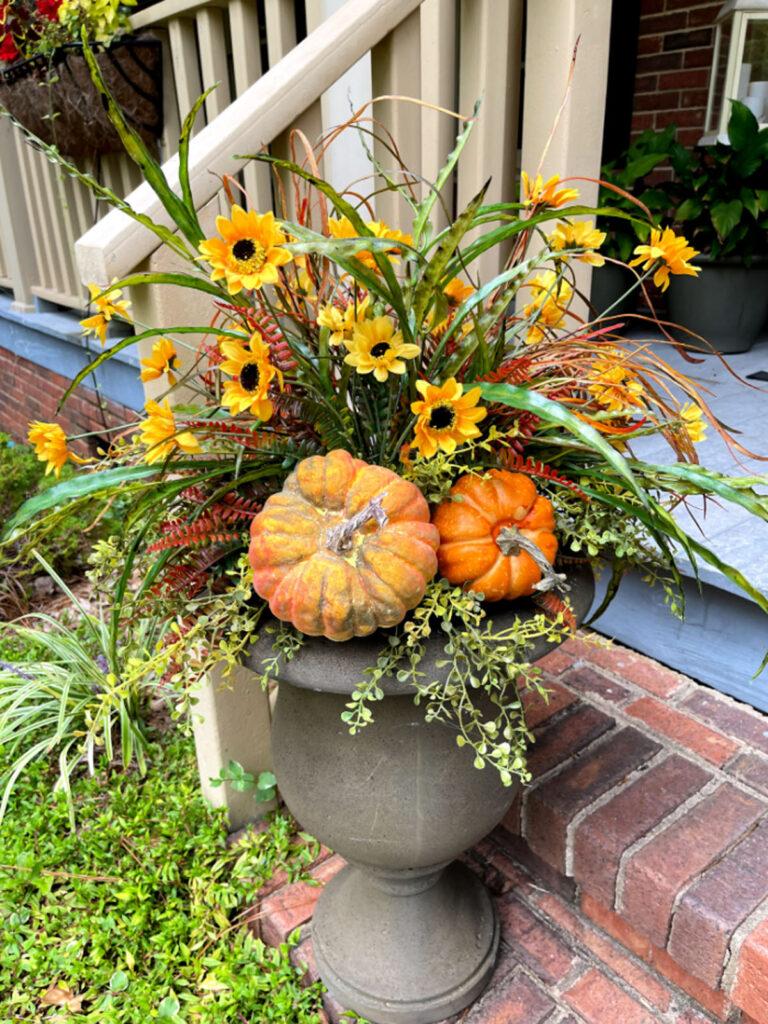
This concrete urn takes a different route with faux sunflowers instead of live mums, and the payoff is a display that never wilts before Thanksgiving.
Wispy ornamental grass and red fern-like foliage fan out behind the flowers, giving the whole arrangement a wild, gathered-from-the-field feel. Two pumpkins in slightly different sizes sit tucked into the base, with trailing greenery softening the urn’s edge.
Why it works: Faux stems mean you can pack in more height and volume than live flowers usually allow at this price point, and sunflowers read as fall without leaning on the usual mum-and-pumpkin script.
Swap idea: If you’d rather go live, swap the faux sunflowers for real ones in a vase tucked inside the urn’s soil, then refresh them every week or two.
This one’s worth considering if you want a display that survives an unexpected cold snap without dropping a single petal.
12. Mixed Terracotta Pots with Sunflowers and Jewel-Tone Mums
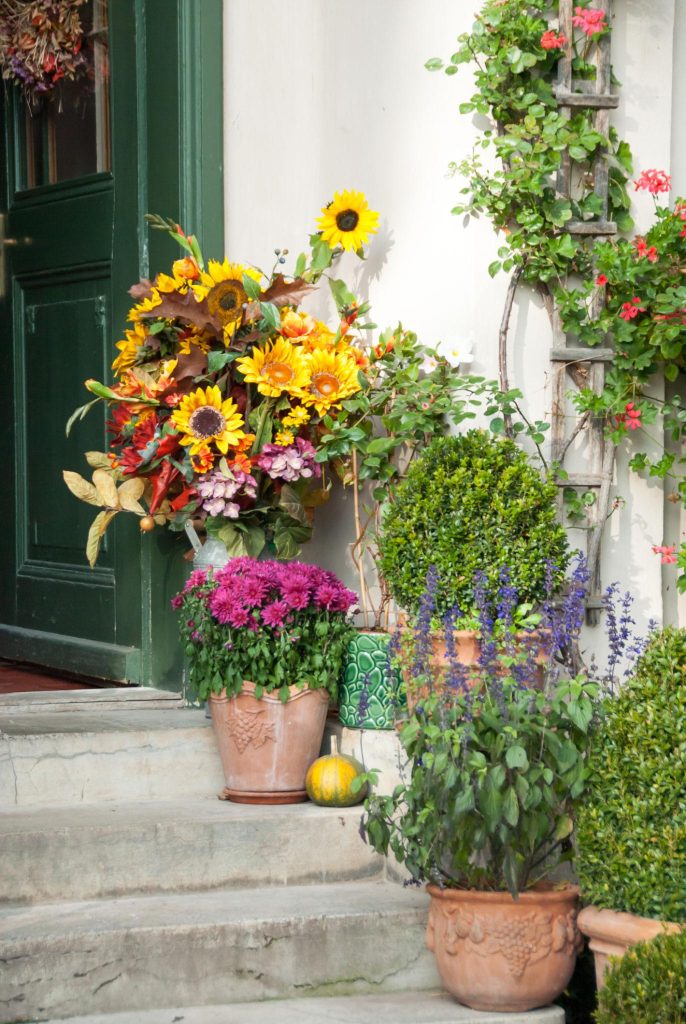
This entry skips the single-planter approach and builds a whole cluster instead. A tall faux sunflower bouquet leans against the doorway, and terracotta pots of magenta mums, purple salvia, and a boxwood topiary crowd together below it.
A vine-covered ladder trellis climbs the wall to the side, and a single striped pumpkin sits at the base.
Decor formula: oversized faux floral bouquet + magenta mums + trained topiary + climbing vine on trellis
Landscape note: Grouping pots of different heights and shapes, instead of matching them, gives this display an old-world, collected-over-time feel. It works especially well on a porch with mismatched vintage containers already sitting around.
If your entry has a narrow step or ledge, this cluster approach fills the space without needing one giant planter.
13. Terracotta Pair with Celosia and Stacked Pumpkins
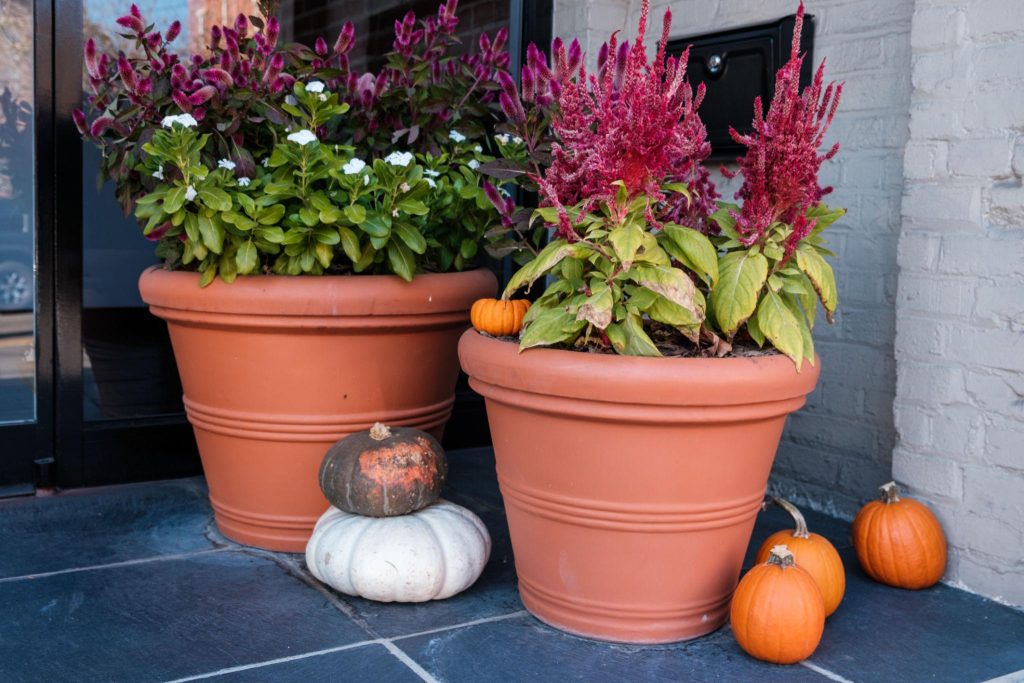
Two matching terracotta pots hold magenta celosia and white vinca in one, and taller crimson celosia in the other, giving this pairing a rich, jewel-toned punch.
The plumed celosia blooms rise like little flames above the foliage, which is exactly what makes this combo stand out from the usual mum lineup.
A stack of pumpkins and gourds, cream on top of charcoal-orange, sits between the pots, with three more classic orange pumpkins scattered to the side.
Best for: Entries that get good sun, since celosia needs bright light to hold that saturated color through fall.
Copy the look:
- Two matching terracotta pots, different heights
- Plumed celosia for vertical texture
- One pumpkin stack instead of a scattered pile
Celosia isn’t a plant most people reach for first, but it holds its color longer than mums once the weather turns.
14. Layered Black Planters with Kale, Cabbage, and Evergreen
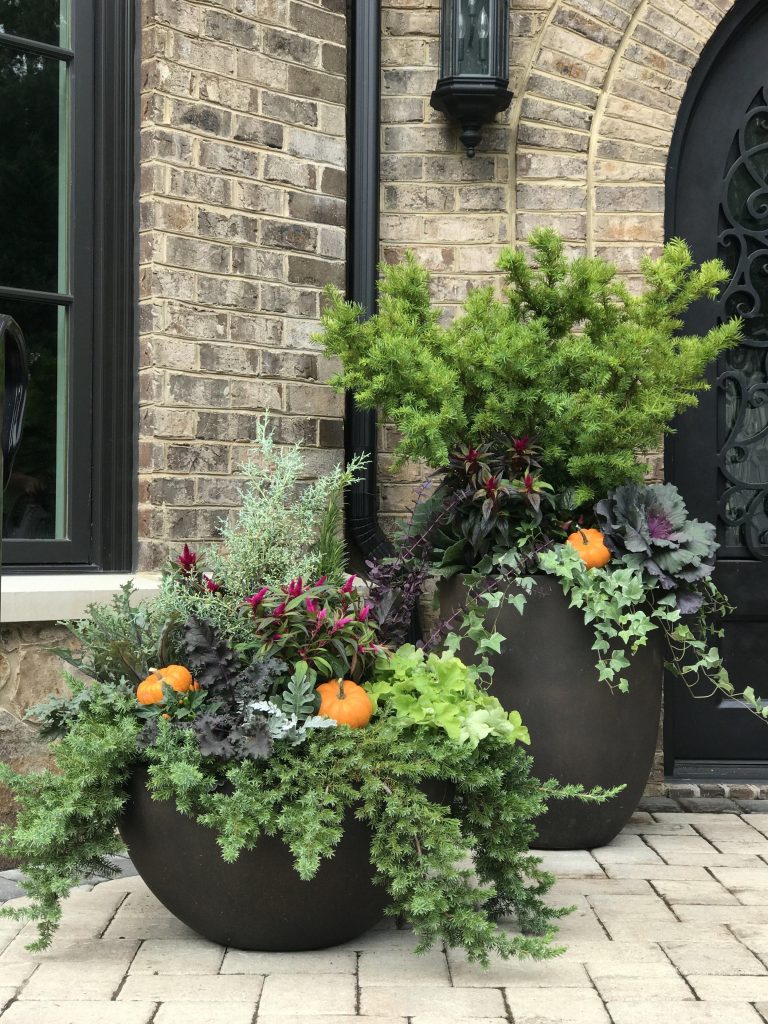
This pairing goes moodier and greener than most fall displays, leaning on evergreen shrubs instead of grass for height.
The larger planter pairs deep green foliage with burgundy coleus and purple ornamental cabbage, while the smaller one in front mixes crimson celosia, silvery dusty miller, and chartreuse coral bells. Trailing juniper and ivy spill over both rims.
Mini pumpkins tuck in low, almost hidden among the leaves rather than sitting on top.
Why it feels refined: Using evergreen as your backbone instead of grass means this display holds its structure well past fall, right into winter, without looking sparse once the flowers fade.
Upgrade idea: Add a string of warm white lights woven through the evergreen for a display that carries straight through the holidays.
This is the pairing to copy if you want fall decor that doesn’t need a full teardown come December.
15. Terracotta Heather and Berry Cluster
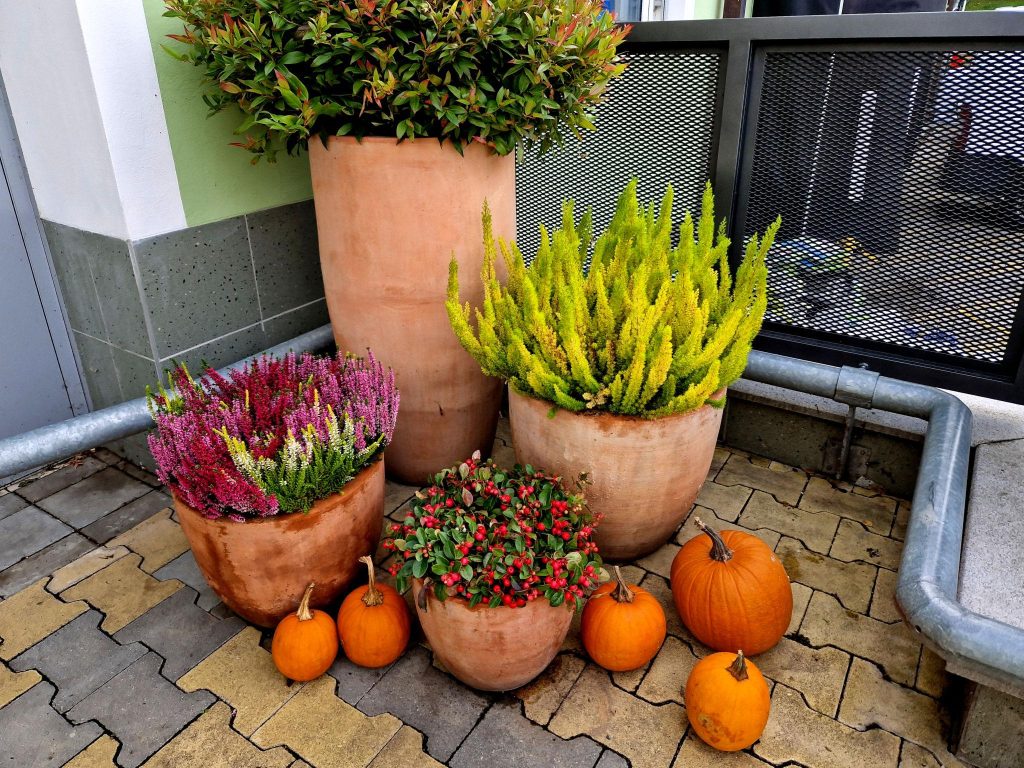
This grouping trades mums for flowering heather, and the effect is softer and a little unexpected. Pink and white heather fills one pot, chartreuse heather fills another, and a low pot of red-berried wintergreen sits between them.
A tall shrub with reddish new growth anchors the whole cluster from behind in an oversized terracotta pot.
Six small pumpkins line up along the pavers in front, tying the grouping back to fall without needing a single mum.
Landscape note: Grouping different terracotta pot sizes together, instead of matching them exactly, gives this corner a nursery-display charm that feels curated rather than purchased as a set.
Proportion tip: Let your tallest pot anchor the back corner, then step the rest down in height toward the front so every plant gets its moment.
If mums feel overdone to you, heather is the easiest swap that still says fall.
FAQ’s
How long do fall containers actually last?
Mums and pansies usually hold their color for 6-8 weeks in cooler fall weather. Pumpkins and gourds stay fresh for 8-12 weeks if you keep them out of direct rain and off wet soil.
Kale and cabbage actually get better looking as temperatures drop, so those two can carry you well into December.
Do I need to water fall containers as much as summer ones?
No, cooler air and shorter days mean your plants drink a lot less. Check the soil with your finger every few days instead of watering on a set schedule. If the top inch feels dry, water. If it’s still damp, wait.
Can I mix real pumpkins with real plants in the same pot?
Yes, but don’t bury the pumpkin’s stem in wet soil, since that speeds up rot. Set it on top of the soil or nestled into the foliage instead.
A little airflow around the pumpkin goes a long way toward keeping it fresh through the whole season.
Will my fall container survive the first frost?
Mums, kale, and ornamental cabbage all handle light frost just fine, and kale actually turns more colorful after a cold snap. Tender plants like celosia and coleus won’t survive a hard freeze, so treat those as early-fall color that you’ll swap out later.
Check your specific zone’s first frost date so you know roughly when to plan the switch.
What’s the easiest way to make a store-bought pumpkin display look less basic?
Vary your sizes and colors instead of grabbing a uniform batch. Stack a couple, scatter a few loose ones down the steps, and tuck one or two right into your planted containers.
That mix of placement does more than any single fancy pumpkin could on its own.
Final Words
Fall containers don’t need to be complicated to look like you hired someone. Pick one formula from this list, grab plants in two or three repeating colors, and let your pumpkins do double duty as both decor and design.
Your porch will look pulled together in an afternoon, and honestly, that’s really all it takes.