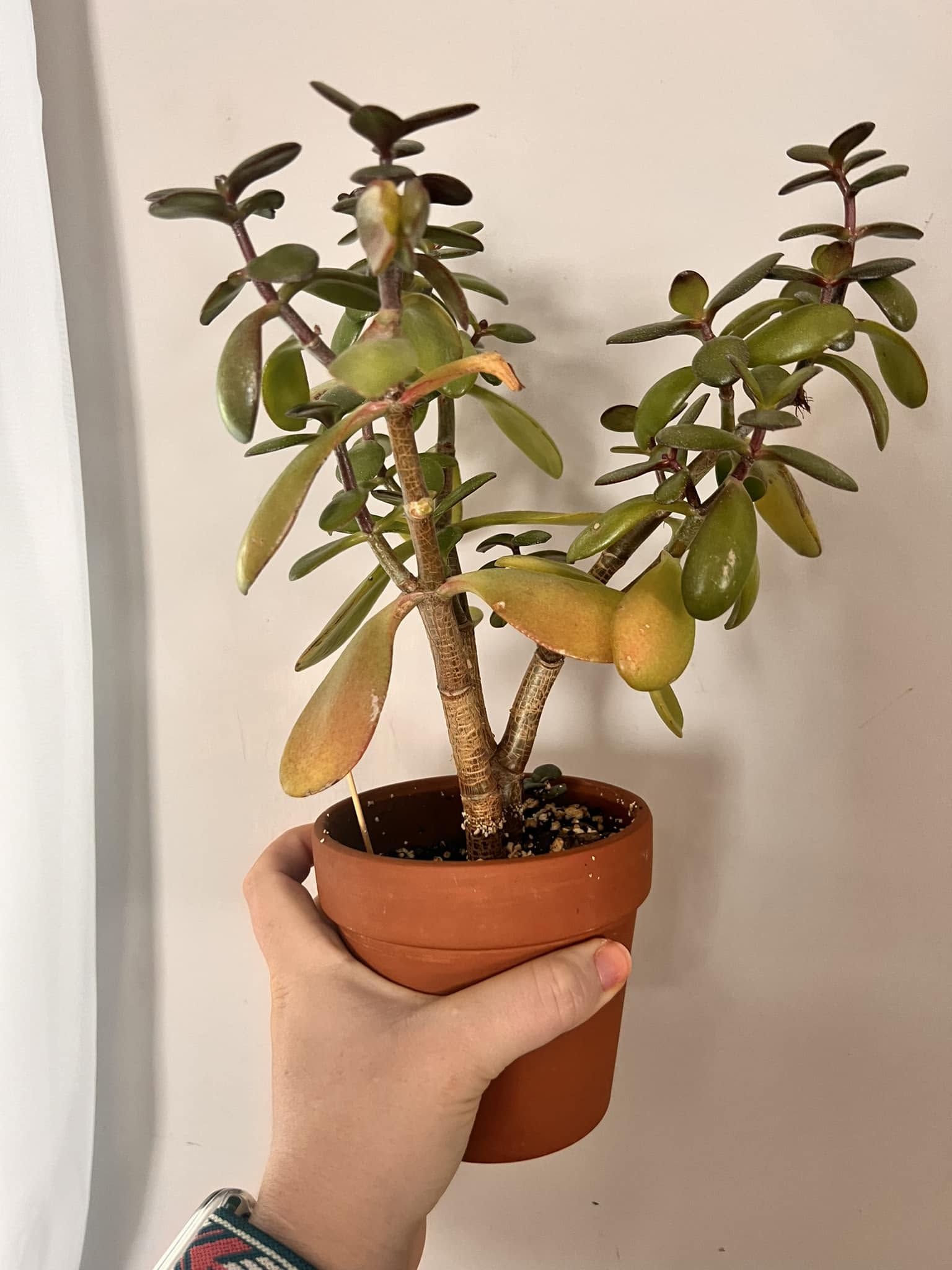
Jade Plant Yellow Leaves: 7 Causes and How to Save Your Plant

Jade plants have a reputation for being nearly impossible to kill. So when the leaves start turning yellow, it catches you off guard.
You water it the same way you always have. Nothing looks obviously wrong. Yet those glossy green leaves are fading fast.
Here’s the tricky part. Yellow leaves on a jade plant can mean 7 different things, and some of them call for the exact opposite fix.
Treat the wrong cause and you can make the problem worse. This guide walks you through each cause, how to spot it, and how to fix it.
Quick Diagnosis: Match the Symptom First
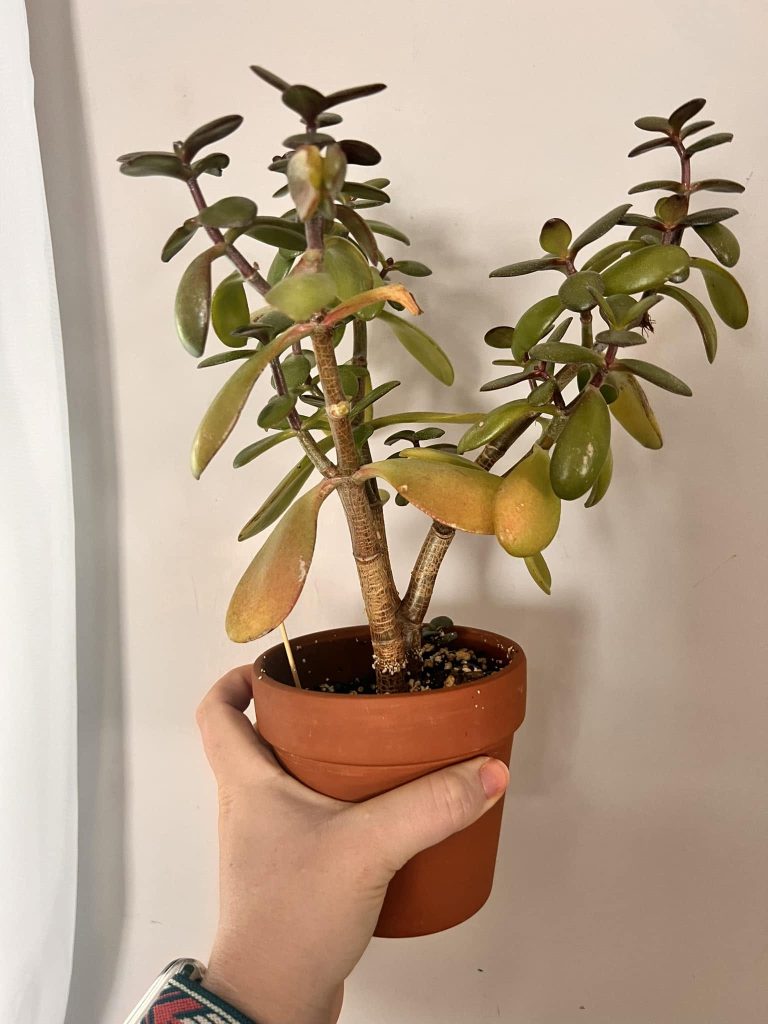
Before you change anything, look closely at the leaves. The exact way they’re yellowing tells you a lot.
- Plump leaves turning yellow: Likely overwatering.
- Wrinkled, leathery leaves that feel thin: Likely underwatering.
- Yellow leaves that feel mushy or squishy: Likely root rot.
- Yellow spots or bleached patches facing the window: Likely too much direct sun.
- Pale, stretched-out growth with yellow leaves: Likely too little light.
- Only the oldest, lowest leaves turning yellow: Likely natural aging, not a problem at all.
Keep this list in mind as you read through the causes below. It will save you from guessing.
Overwatering and Root Rot (The Most Common Cause)
Jade plants are succulents. They store water in their thick leaves and stems, which means they don’t need much help from you. Water too often and the roots can’t breathe. They start to rot.
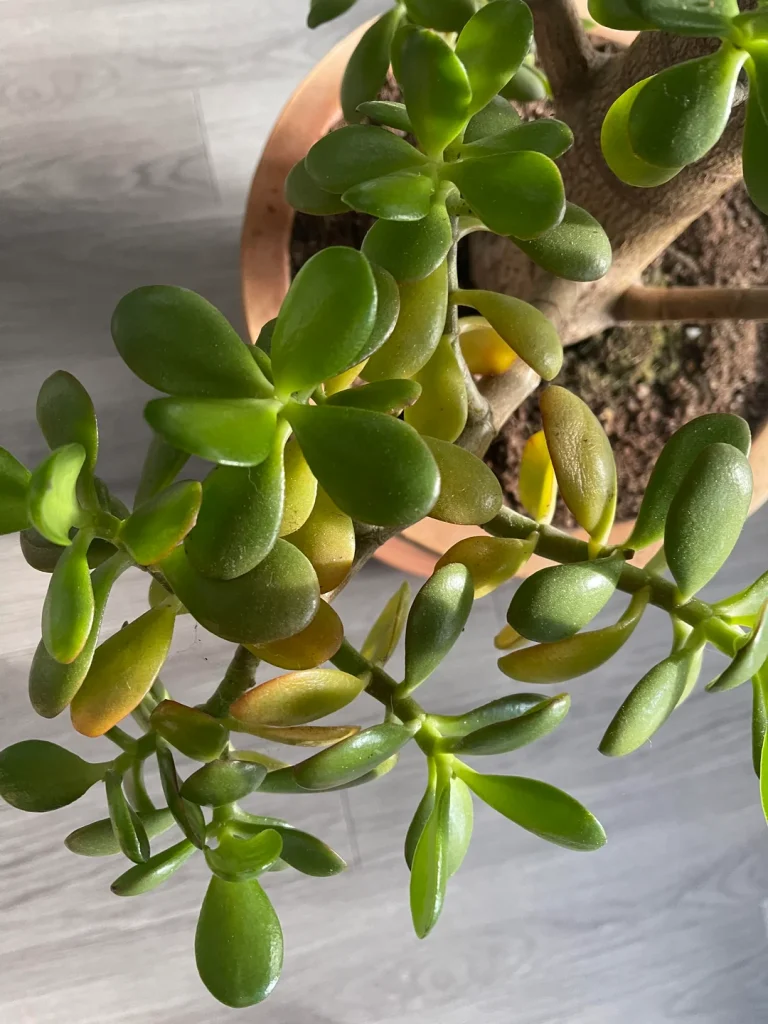
What it looks like: The leaves stay plump but turn yellow or pale. The soil feels wet days after you last watered it. In advanced cases, the stems near the base feel soft or mushy instead of firm. A foul smell coming from the soil is a bad sign too.
If the rot has reached the trunk, the lower stem may look dark or feel spongy when you press it gently. This is often the point where a jade plant starts to lose whole branches, not just leaves.
The fix:
- Stop watering right away and let the soil dry out completely.
- Gently remove the plant from its pot and check the roots. Healthy roots are white or light tan and firm. Rotting roots turn brown or black and feel mushy.
- Trim away any rotten roots with clean, sharp scissors.
- Repot in fresh, well-draining succulent or cactus mix. Never reuse old, soggy soil.
- Going forward, water only when the soil has dried out completely, and never let the pot sit in a saucer of standing water.
If the trunk itself is soft and mushy all the way through, the plant likely won’t recover in its current form.
Your best move is to take healthy cuttings from the top, let them callous over for a day or two, and root them fresh. This is often how jade plants come back from severe root rot.
Underwatering
It’s less common, but a jade plant can also go too long without water. This usually happens when a plant gets forgotten in a corner or when someone waters so sparingly that the roots never get a real drink.
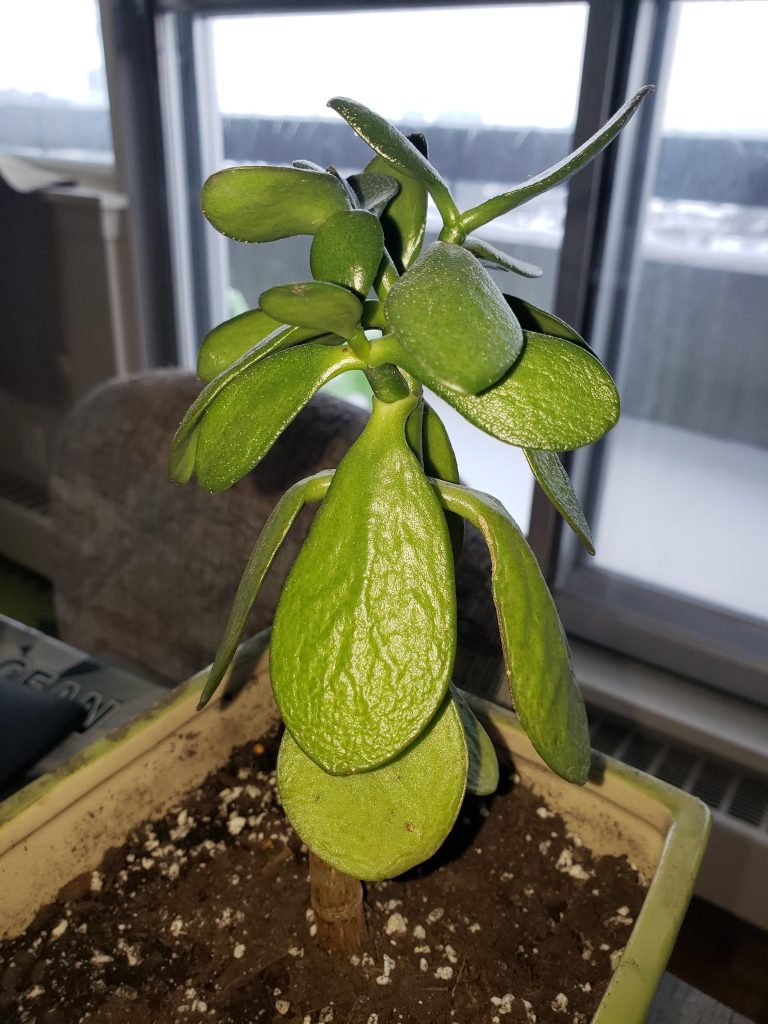
What it looks like: The leaves lose their shine and firmness. They look wrinkled and leathery instead of smooth and plump.
Some leaves may feel crispy at the edges before they yellow and drop.
The fix: Give the plant a thorough watering. Water until it runs freely out the drainage holes, then let the pot drain completely.
Don’t let it sit in water afterward. Within a week or two, you should see the plant plump back up and new growth start to appear.
Too Much or Too Little Light
Jade plants love bright light, but there’s a limit. Too much direct sun, especially through a hot window, can scorch the leaves. Too little light causes a different kind of stress.
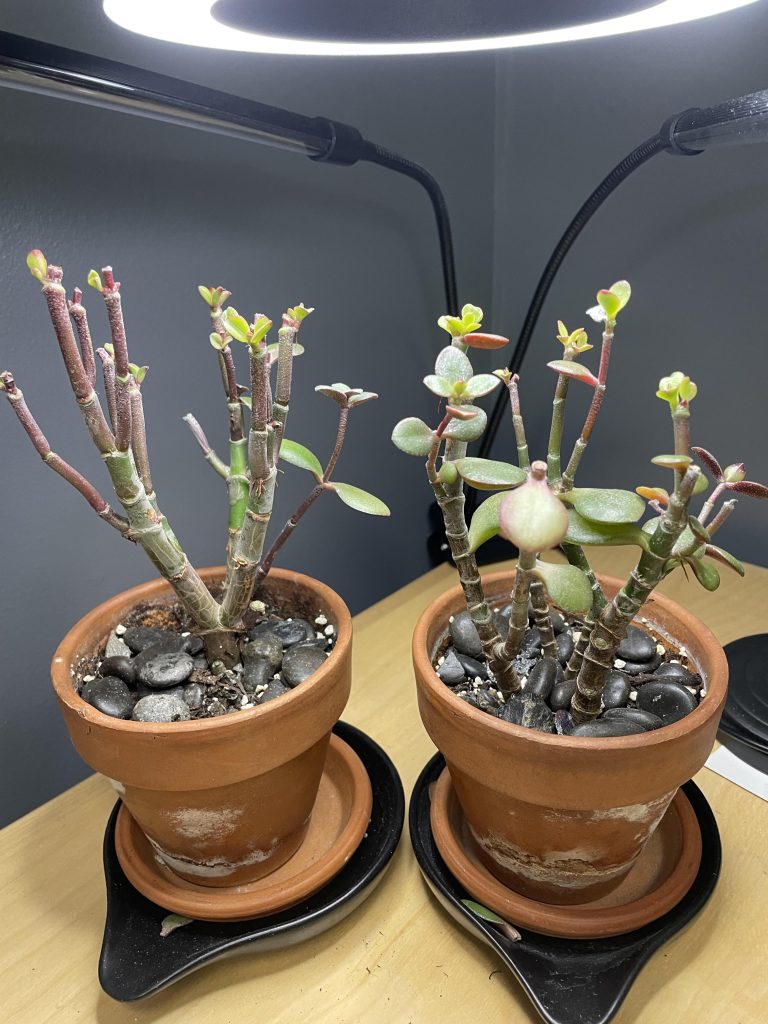
Too much sun: Leaves develop yellow or bleached patches, usually on the side facing the window. In bad cases, the spots turn brown and papery.
Too little light: The plant stretches toward the nearest light source. Stems grow long and thin instead of compact. New leaves come in smaller and paler than usual, and older leaves may yellow as the plant redirects energy toward reaching for light.
The fix: If your jade plant is getting scorched, move it a few feet back from the window or add a sheer curtain to soften the light.
If it’s stretching and pale, move it closer to a bright window or add a grow light. Rotate the pot every few weeks so all sides get even light and the plant grows evenly.
Fertilizer Problems (Over- and Under-)
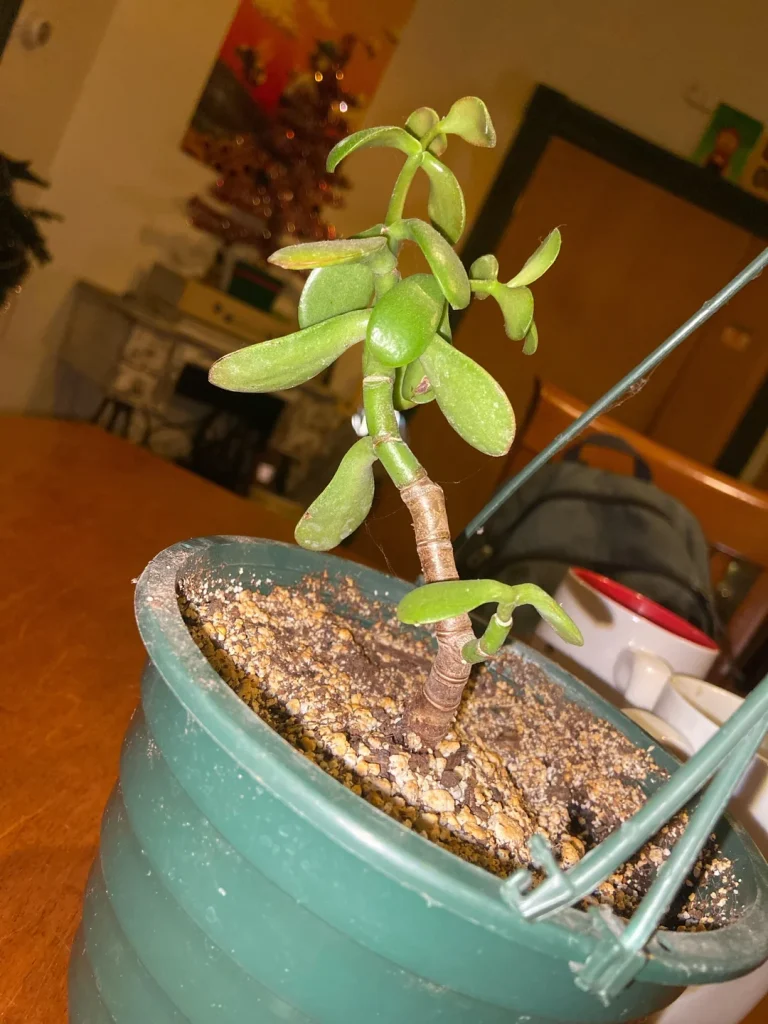
Jade plants don’t need much fertilizer. That’s easy to forget, especially if you fertilize your other houseplants on a regular schedule.
Too much fertilizer: Excess fertilizer builds up in the soil and can burn the roots. This shows up as yellow leaves that drop off, sometimes along with a crust of white salts on top of the soil.
Too little fertilizer: This is less common, but a jade plant that’s never fed can eventually run low on nutrients. Leaves may turn pale green or yellow all over, not just on the older growth.
The fix: If you’ve been over-fertilizing, flush the soil with plain water to wash out the excess salts, then hold off on feeding for a few months.
If the plant seems underfed, use a balanced, water-soluble fertilizer diluted to half strength, and only during spring and summer when the plant is actively growing.
Cold Drafts and Temperature Stress
Jade plants like it warm and stable. Sudden temperature swings stress the plant, and that stress often shows up as yellow leaves.
What it looks like: Yellowing that appears suddenly, often after a cold snap, a draft from an open door, or a spot near an AC vent or heater. In severe cases, the leaves feel mushy where cold has damaged the cell walls.
The fix: Move the plant away from drafty windows, exterior doors, and heating or cooling vents. Keep it somewhere the temperature stays fairly steady, ideally between 55°F and 75°F.
If your jade plant spends summers outdoors, bring it in before nighttime temperatures drop near 50°F.
Pests
Jade plants don’t attract pests as often as other houseplants, but it still happens, especially when a plant is already stressed from other issues.
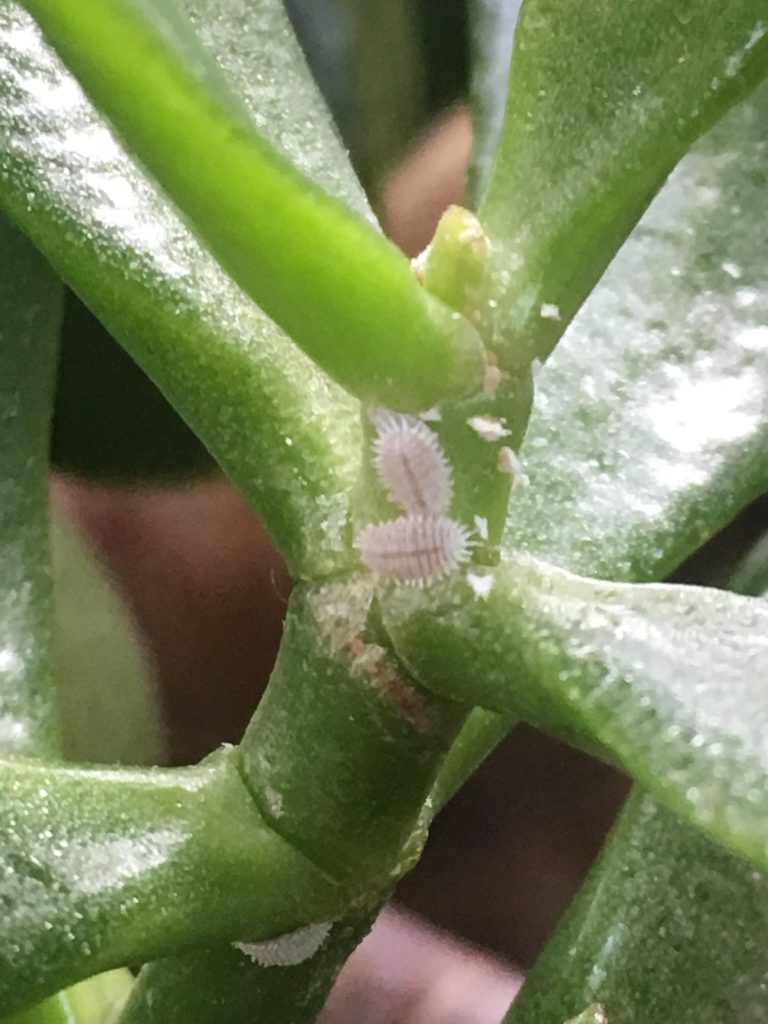
What to look for: Check the undersides of leaves and where leaves meet the stem. Mealybugs show up as small, white, cotton-like clusters. Spider mites are harder to spot, but you may notice fine webbing or tiny specks moving on the leaves. Both pests feed on plant sap, which weakens the plant and turns leaves yellow.
The fix: Wipe off visible pests with a cotton swab dipped in rubbing alcohol. For a bigger infestation, treat the whole plant with insecticidal soap or neem oil, following the label instructions. Keep the plant out of direct sun for a day after applying neem oil, since sunlight can react with the residue and scorch the leaves.
Natural Aging (Not a Problem)
Not every yellow leaf is bad news. Jade plants naturally shed their oldest leaves as part of normal growth, especially before their winter dormant period.
What it looks like: Only the lowest, oldest leaves near the base of the stem turn yellow and drop. New growth at the top of the plant still looks healthy, firm, and green.
The fix: Nothing to fix here. You can gently remove the yellow leaves for a tidier look, but the plant is just doing what jade plants do.
Frequently Asked Questions
Should I cut off yellow leaves on my jade plant?
You can remove them if they’ve already turned yellow and are clearly done. It won’t help the leaf recover, but it keeps the plant looking neat and lets you focus your attention on fixing the underlying cause.
Can a jade plant recover from yellow leaves?
Yes, in most cases. Once you identify and correct the cause, whether it’s watering, light, or fertilizer, the plant should stop losing leaves and start producing healthy new growth within a few weeks.
Why are only the bottom leaves on my jade plant turning yellow?
This is usually natural aging, not a problem. Jade plants drop their oldest, lowest leaves as they grow, especially heading into their dormant season.
How often should I water a jade plant?
Water only when the soil has dried out completely. Depending on your home’s light and humidity, that’s often once every one to two weeks in the growing season, and even less in winter.
Can overwatering and underwatering look the same?
Not quite. Overwatered leaves stay plump but turn yellow, while underwatered leaves look wrinkled and thin. Feeling the leaves is the fastest way to tell the two apart.
Final Thoughts
Yellow leaves on a jade plant feel alarming at first, but they’re rarely a mystery once you know what to look for.
Match the symptom to the cause, make one adjustment at a time, and give the plant a few weeks to respond. Jade plants are tough, and most bounce back quickly once the real problem is fixed.