13 Winter Flowers That’ll Keep Your Pots Blooming All Season

Your summer pots looked amazing. Then the first frost hit, and now they’re just… empty. Sad little pots of dead petunias.
Here’s the thing: winter doesn’t mean bare containers. Plenty of flowers actually thrive in cold weather, and some bloom brighter once the temperature drops.
From cheerful pansies to fragrant shrubs that perfume your porch in January, these 13 winter flowers will keep your pots looking alive all season long.
Before you start planting, there’s one rule worth knowing first.
Pick the Right Pot (and the Right Zone) Before You Plant
Your containers don’t get the same protection as garden soil. In the ground, soil insulates roots from extreme cold. In a pot, roots are exposed to the air temperature on all sides.
That’s why experts recommend choosing plants rated two USDA zones colder than where you live. If you’re in zone 7, pick plants that can handle zone 5 winters. This gives your roots a real safety margin.
Pot material matters too. Terracotta looks great, but it cracks easily once water freezes inside it.
Stone, fiberglass, and wood hold up much better through repeated freezes and thaws.
Read more: 13 Flowers to Plant in Winter for the Earliest Spring Blooms
Common Winter Container Mistakes (and Easy Fixes)
Overwatering is the biggest killer of winter pots. Cold soil holds moisture longer, so plants need less water than they did in summer. Only water when the top inch of soil feels dry.
Wrong soil pH trips up a lot of gardeners too. Heathers and camellias need acidic soil to thrive.
Regular potting mix won’t cut it, so look for an ericaceous or acid-loving blend instead.
Skipping deadheading is another common one. Spent blooms on pansies and violas slow down new flower production. Pinch them off regularly to keep the blooms coming.
Also read: 15 Cool-Weather Vegetables That Taste Even Better After a Frost
13 Winter Flowers for Pots That Keep Blooming Through the Cold
1. Pansies and Violas
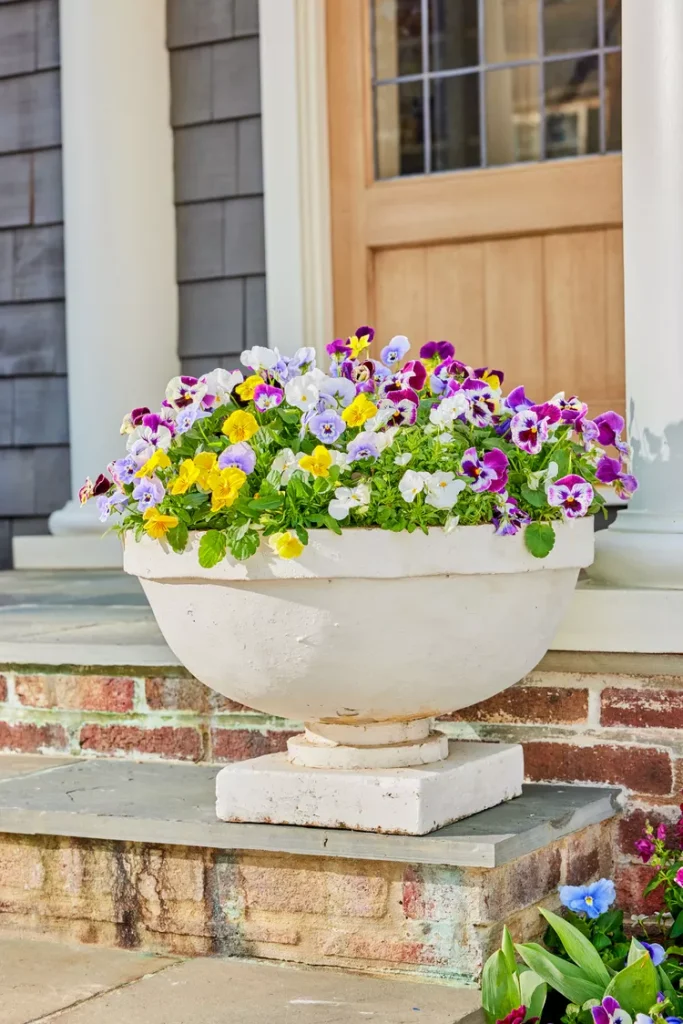
These cheerful little blooms are the classic pick for winter pots, and for good reason. They come in nearly every color you can imagine, from deep purple to bright orange.
Look for varieties labeled “winter-flowering,” since these are bred to handle the cold.
Pansies and violas need consistently moist soil, but not soggy. Let them dry out and they’ll wilt fast. Deadhead spent flowers often to keep new ones coming all season.
Hardiness zones: 6-10
2. Winter-Flowering Heather
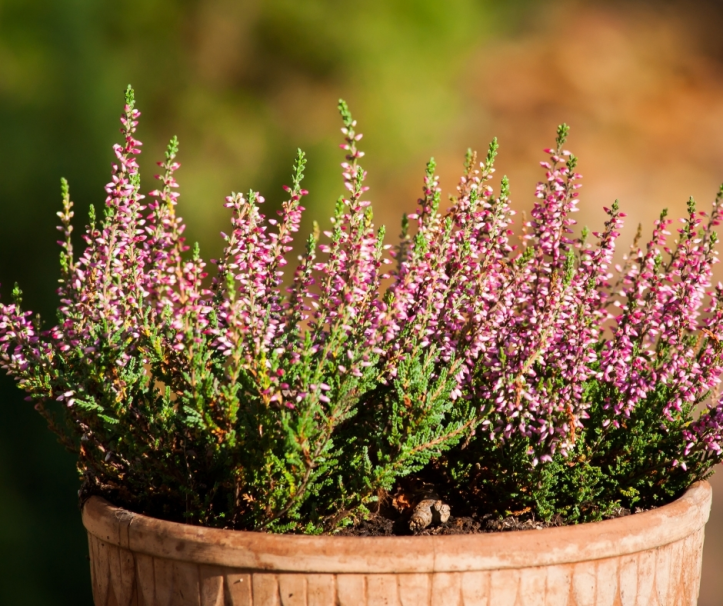
Few plants pack this much color into the coldest months. Heather forms low, mounding clumps in shades of pink, purple, and white, and it keeps blooming from late fall right through early spring.
Most heather varieties need acidic soil, so skip regular potting mix. Use an ericaceous blend instead, and give it full sun for the best flower show.
Because of its soil needs, heather does best in its own pot rather than mixed with other plants. As a bonus, it’s one of the first food sources for early pollinators in late winter.
Hardiness zones: 4-8, depending on variety
3. Hellebores
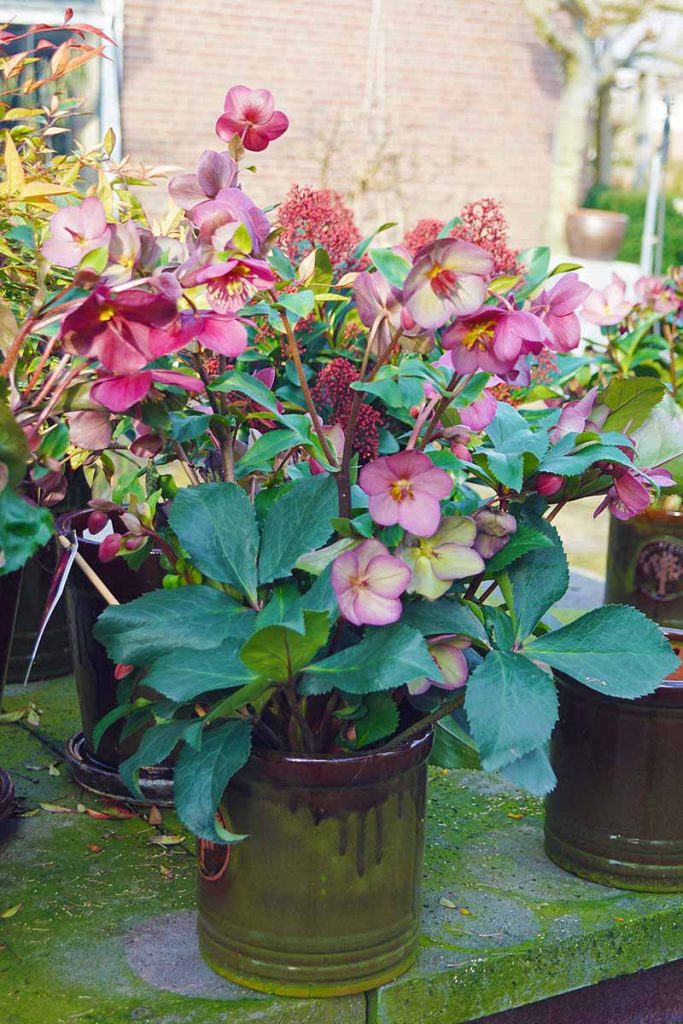
Don’t let the odd, nodding flower heads fool you. Hellebores are tougher than they look, and they’ll keep blooming through snow and hard freezes without complaint.
They come in shades from deep burgundy to soft white, and many varieties have delicate speckled centers. Plant them in rich, well-draining soil, and keep them somewhere with dappled shade.
One important tip: keep the crown above the soil line when you plant. Bury it too deep and the plant will struggle to bloom.
Hardiness zones: 4-9
4. Camellia
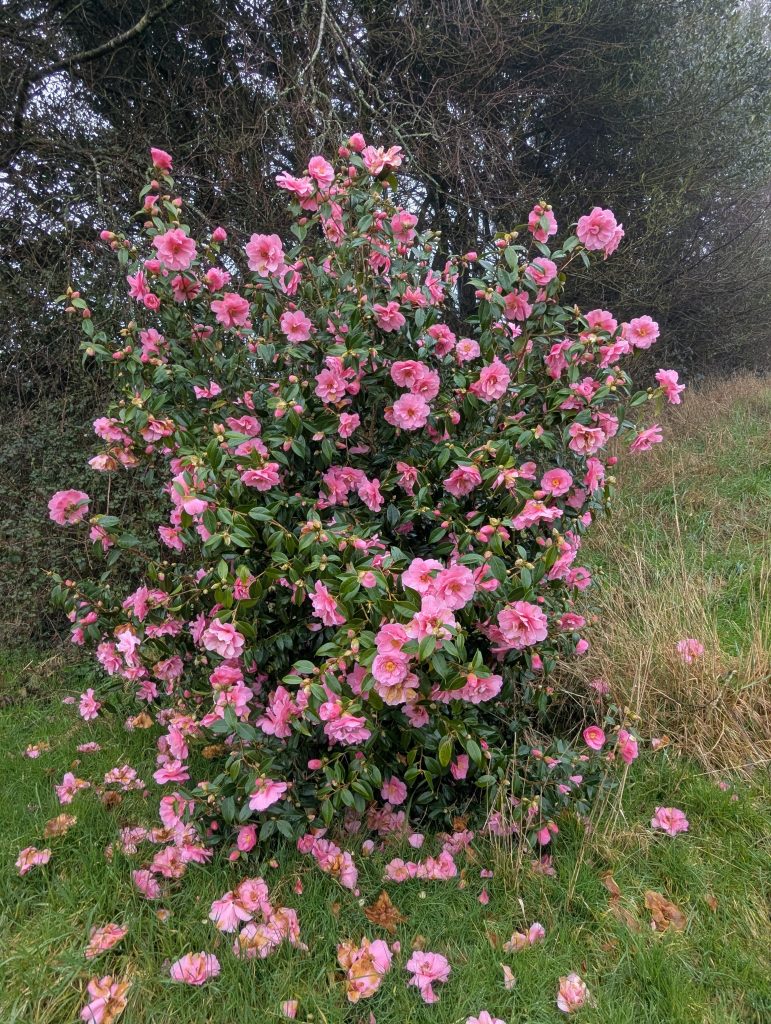
For a big, glossy statement piece, nothing beats this shrub. Sasanqua varieties bloom right through December, filling pots with ruffled flowers in shades of pink, red, and white against deep green leaves.
Camellias need acidic, well-draining soil and consistent moisture, so water with rainwater when you can.
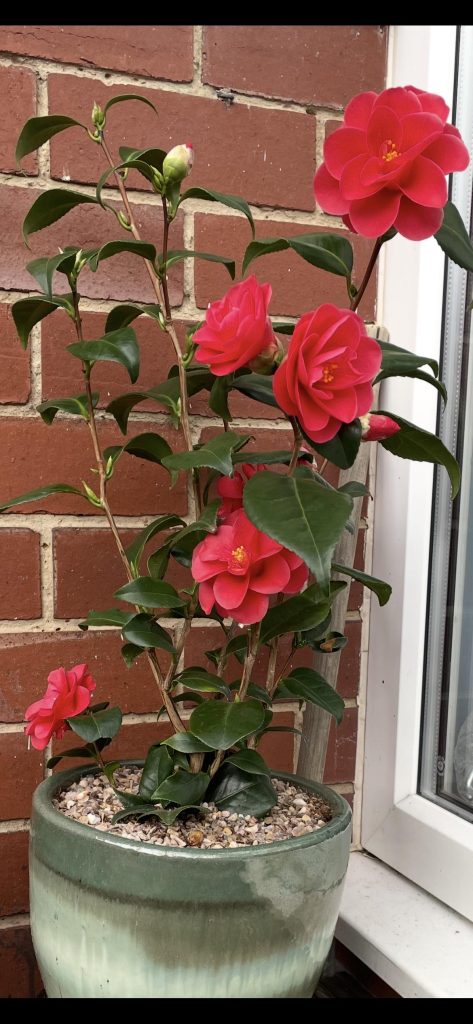
Repot every two to three years as the roots fill in, and give the plant partial shade to protect it from harsh sun.
Keep it somewhere sheltered. Early frosts can damage the flower buds before they even open, which cuts your bloom season short.
Hardiness zones: 7-10
5. Skimmia Japonica
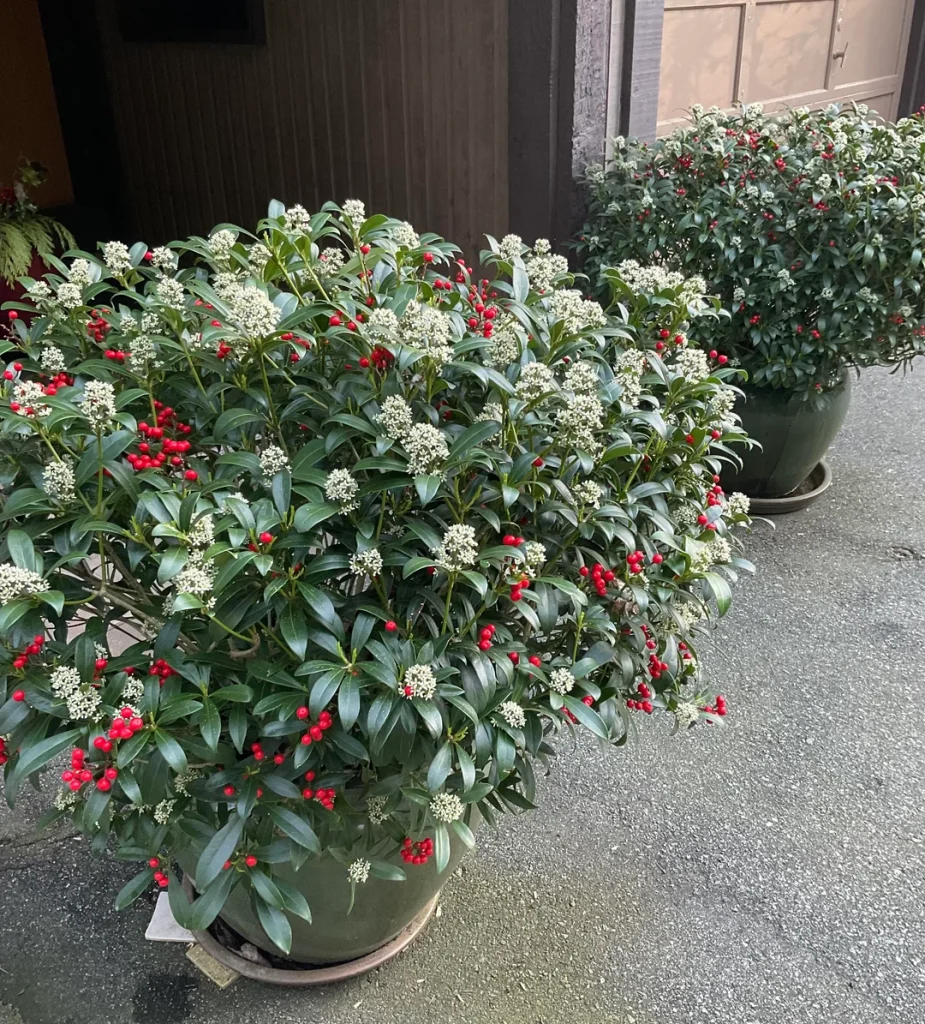
This shrub does double duty as both a winter flower and a spring show. Red buds cluster along the stems all winter, then burst into white or pink flowers once the weather warms.
It thrives in partial shade, making it perfect for a porch that doesn’t get much direct sun.
The glossy, evergreen leaves keep the container looking good even before the buds open.
If you want berries along with the flowers, you’ll need both a male and a female plant nearby. Only female plants produce the bright red berries, and they need a male pollinator close by to set them.
Hardiness zones: 7-9
6. Sweet Box
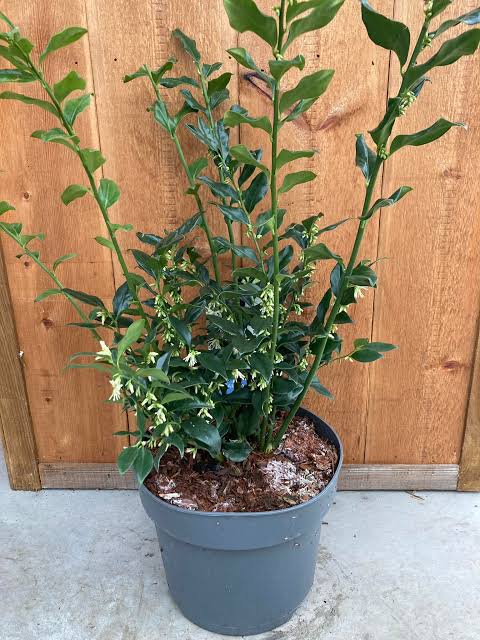
You might smell this one before you see it. Sweet box packs an incredibly strong fragrance into tiny, easy-to-miss white flowers, and just one pot near your door can perfume the whole entryway.
The evergreen leaves stay glossy and full through the coldest months, so it never looks bare.
Give it rich soil that stays a little moist, and you’re basically done. This plant asks for almost nothing else.
Come summer, the flowers give way to small black berries. Prune only to remove dead growth. Anything more is overkill.
Hardiness zones: 6-9
7. Daphne Odora
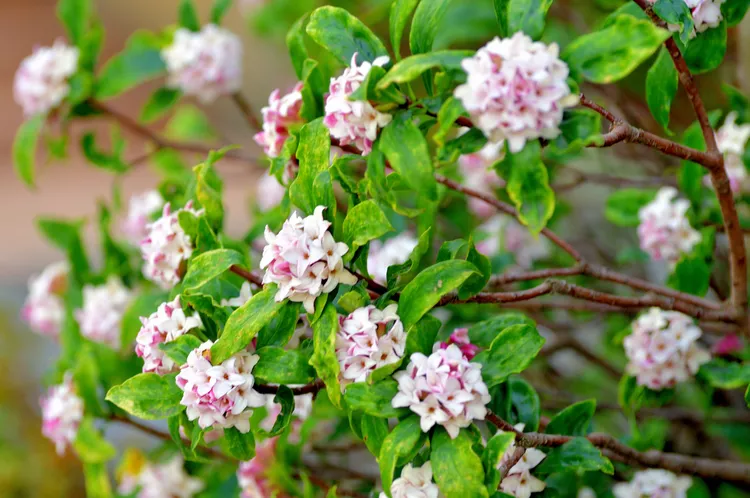
If you love fragrant gardens, this shrub deserves a spot on your porch. Small clusters of pink and white flowers open in late winter, and the scent is strong enough to notice from several feet away.
It’s a slower grower, which actually works in its favor for containers.
You won’t be repotting it every year to keep up with its size. Just give it well-draining soil, since soggy roots are its biggest weakness.
Keep it somewhere sheltered from harsh winter wind. A bit of protection goes a long way toward keeping those blooms intact.
Hardiness zones: 7-9 (look for February daphne if you’re in a colder zone, hardy to zone 4)
8. Hardy Cyclamen
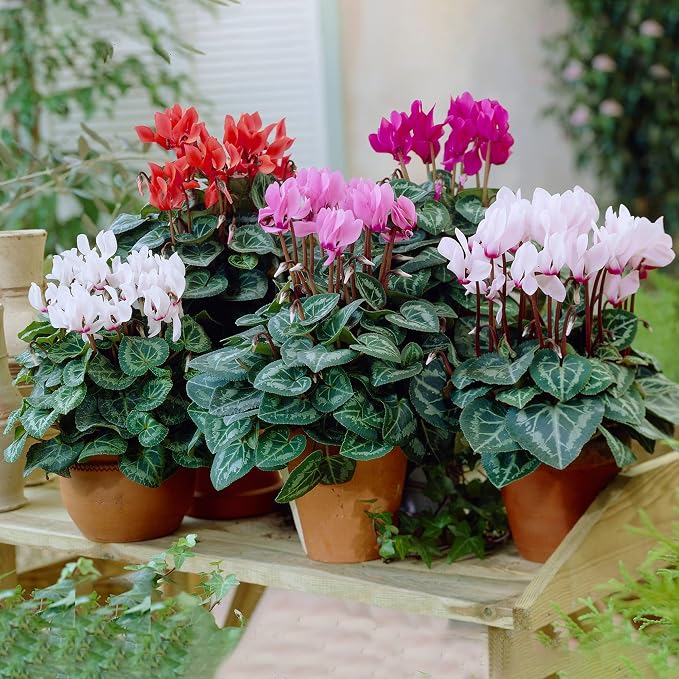
Here’s a plant that looks delicate but isn’t. Hardy cyclamen sends up small, swept-back flowers in pink, magenta, or white, hovering just above patterned silver-green leaves.
Plant the corms at the same depth they came in, and don’t cover them too deep.
They hate sitting in wet soil, so good drainage matters more than almost anything else with this one.
Give them a few years and they’ll surprise you. Established plants can spread to fill a good chunk of your pot, so don’t crowd them with too many neighbors.
Hardiness zones: 4-9, depending on the species
9. Witch Hazel
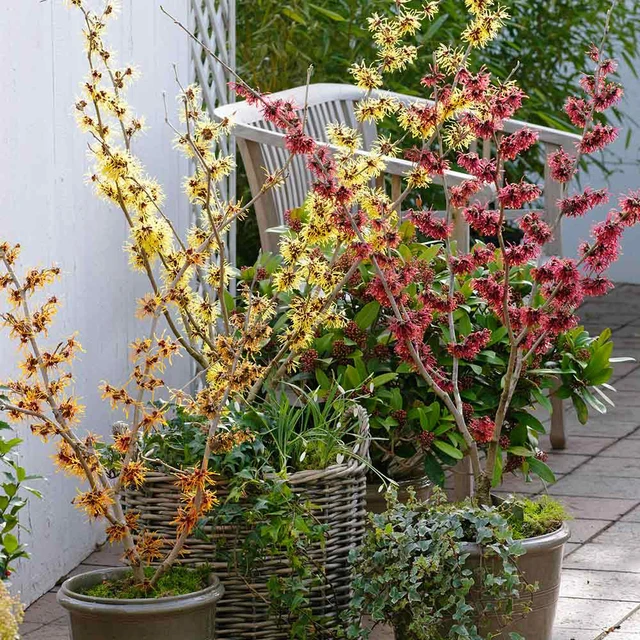
You’ve probably driven past this shrub in winter without realizing what you were looking at.
Bare branches suddenly covered in thin, ribbon-like flowers in yellow, orange, or red. It’s an odd, beautiful sight against a gray winter sky.
Witch hazel grows fairly large, so you’ll want a substantial pot to match. It’s worth the extra room. Few winter shrubs put on a show this unusual, and the flowers often carry a light, spicy scent too.
Full sun brings out the best color. Partial shade still works, but you’ll notice fewer blooms.
Hardiness zones: 5-8
10. Winter Aconite
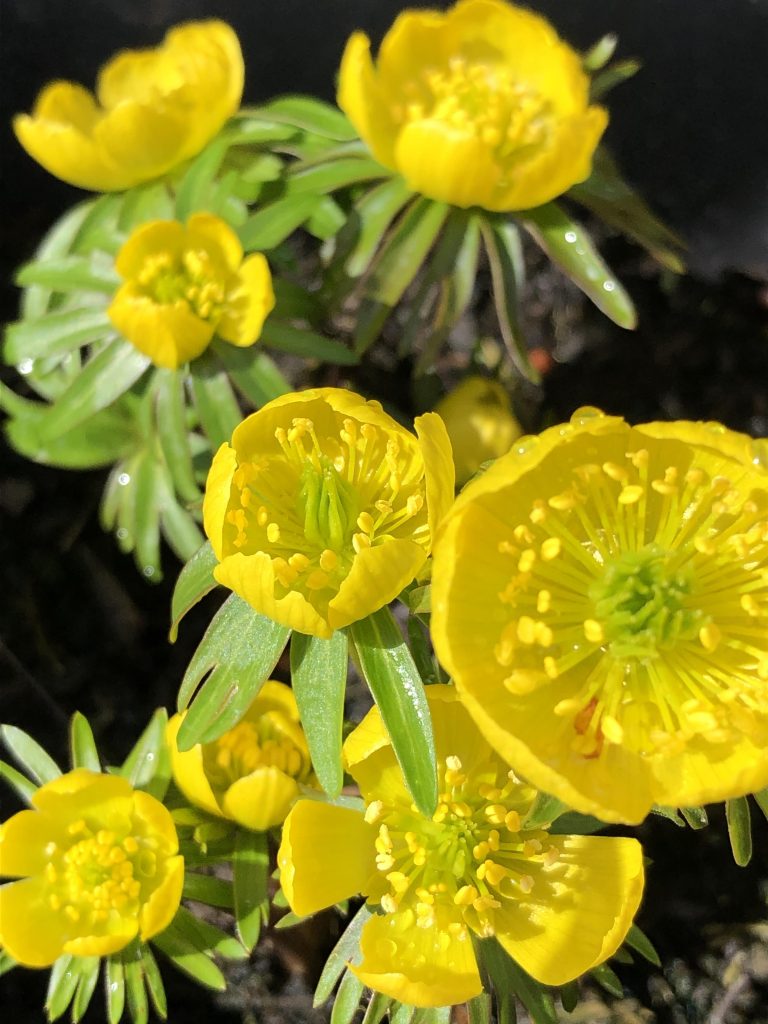
Low to the ground and easy to overlook in a nursery, winter aconite still deserves a place in your pot. Its bright yellow, buttercup-shaped flowers push through even when snow is still on the ground.
Plant the tubers in fall, and don’t expect much right away. They take their time settling in. Once established, though, they’ll naturalize and come back thicker every year.
Pair them with taller plants for contrast. On their own, they’re small enough to disappear next to bigger blooms.
Hardiness zones: 4-7
11. Viburnum Tinus (Laurustinus)
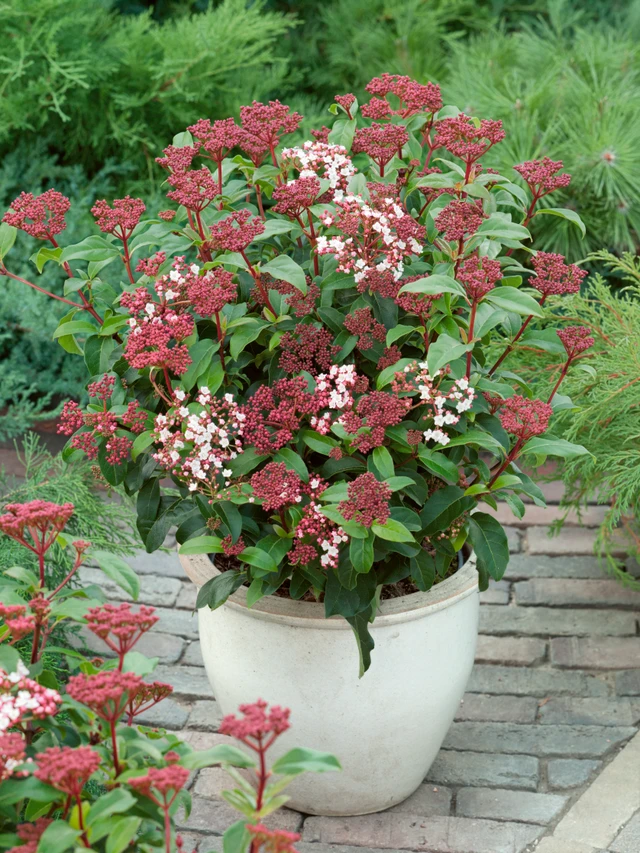
This one’s a workhorse. Clusters of small white flowers, tinged pink at the edges, open steadily from fall all the way into spring. Then blue-black berries follow, so you get two seasons of interest from a single shrub.
It handles a container well, and it doesn’t fuss over soil type the way camellias or heather do. Regular potting mix is fine. Just don’t let it dry out completely.
Give it a spot with some sun, and prune lightly after flowering if it’s outgrowing its pot. That’s really all the maintenance it needs.
Hardiness zones: 7-9
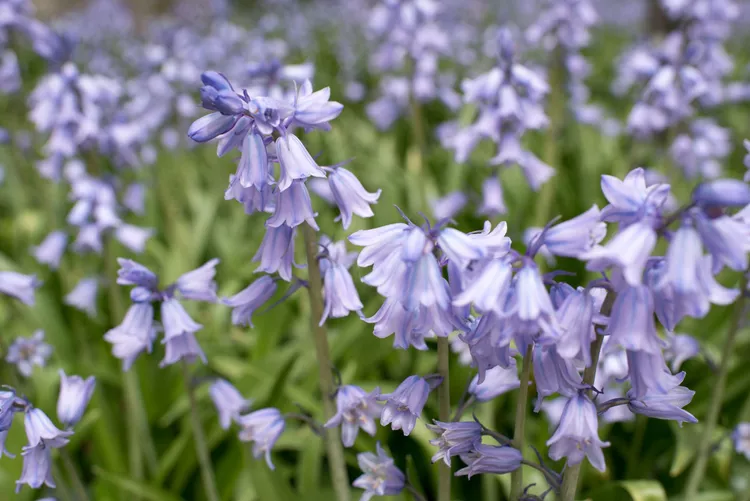
12. Snowdrops and Early Spring Bulbs
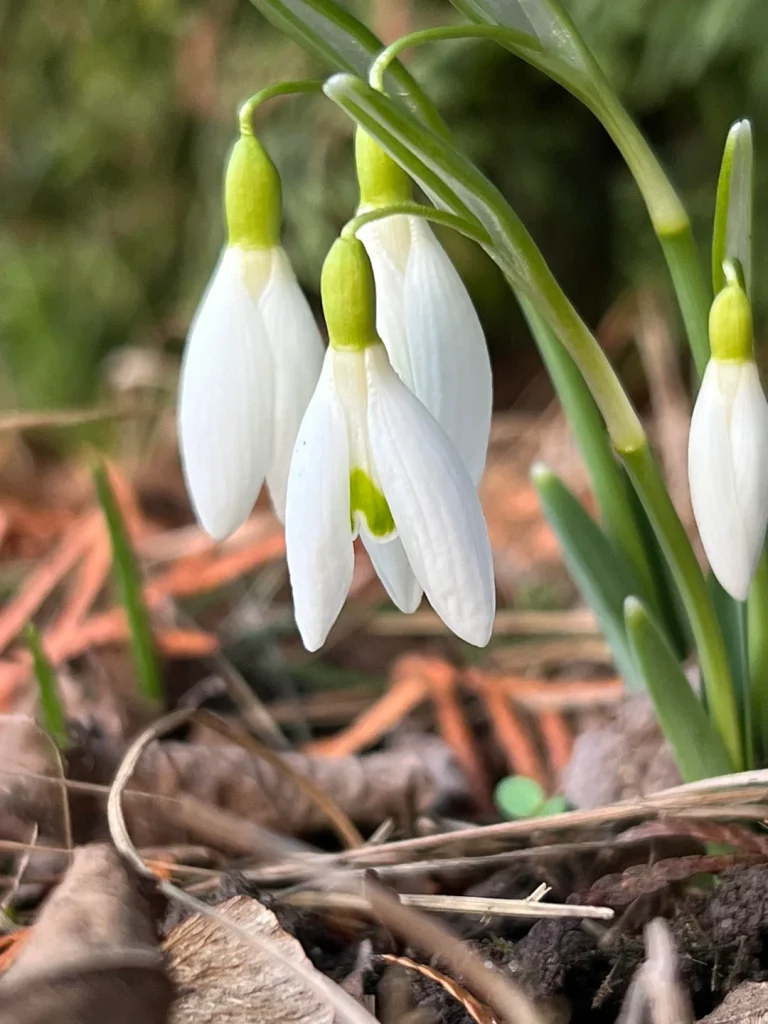
Nothing says “winter’s almost over” quite like the first snowdrop pushing through frozen soil.
These tiny white bells often bloom while there’s still snow on the ground, which is exactly why gardeners love them so much.
Plant the bulbs in fall, and mix in a few crocus or Iris reticulata for a longer bloom window. Layering different bulbs at different depths, sometimes called a bulb lasagna, stretches your color from late winter into early spring.
Good drainage is non-negotiable here. Add grit or perlite to your potting mix, or the bulbs will rot before they ever get the chance to bloom.
Hardiness zones: 3-8, depending on the bulb
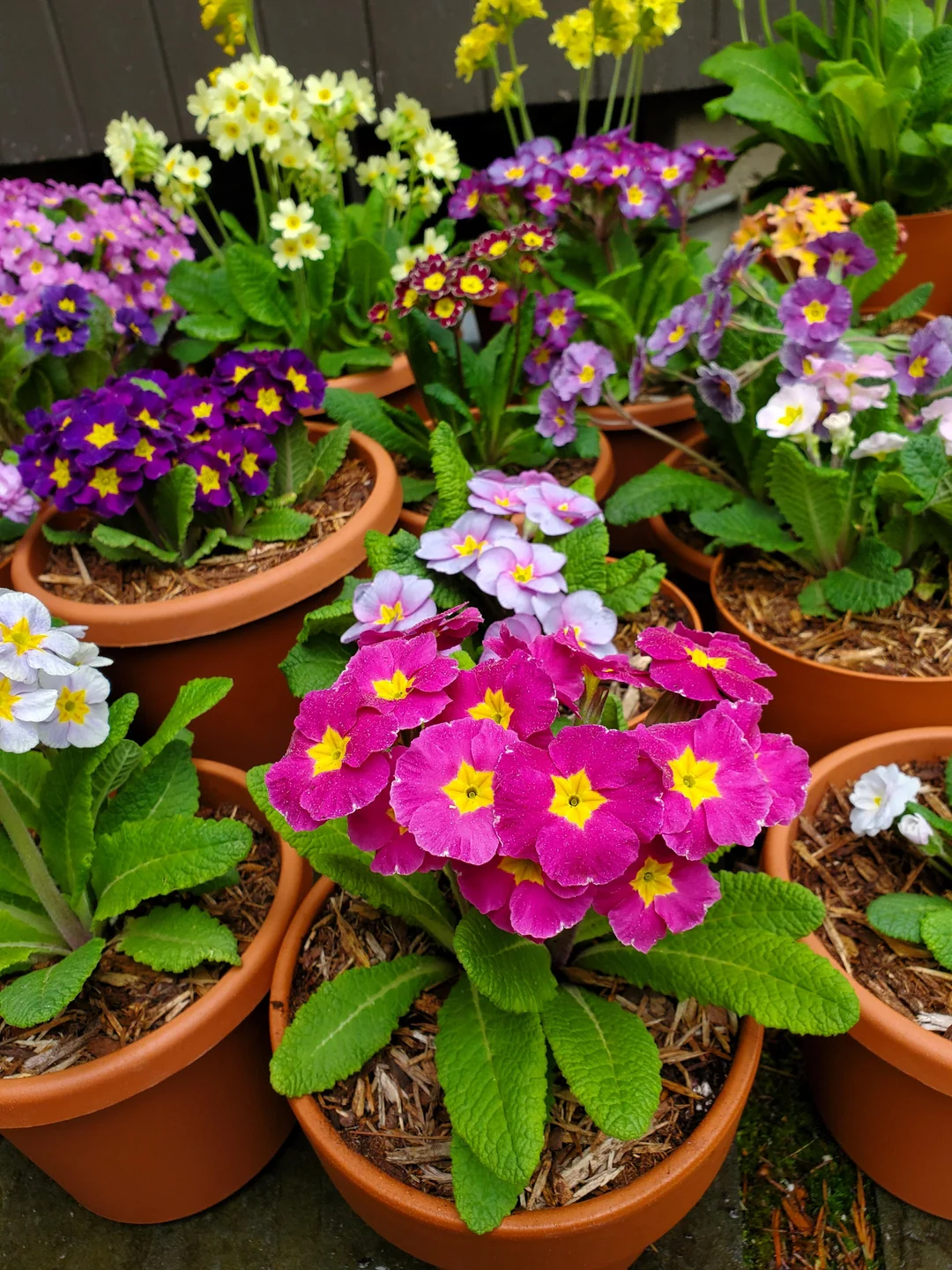
13. Primrose
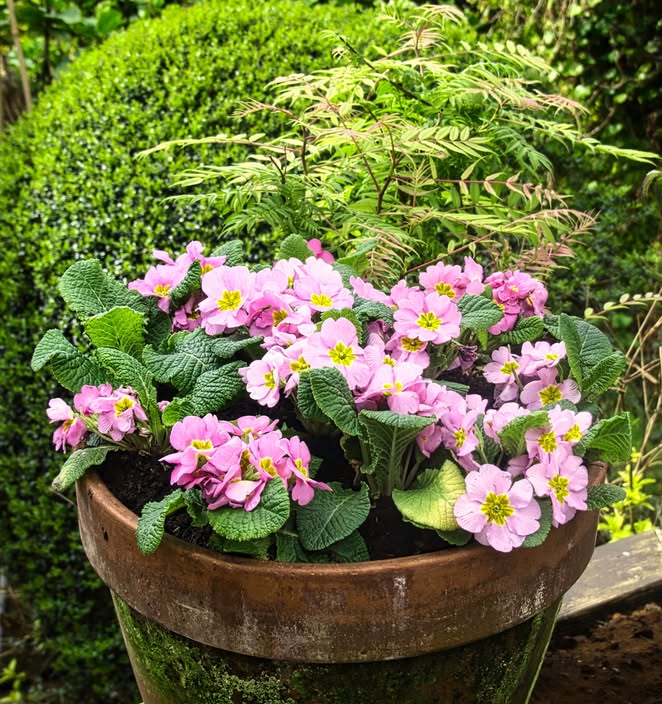
You’ll find these sold everywhere once garden centers stock up for winter, and it’s easy to see why.
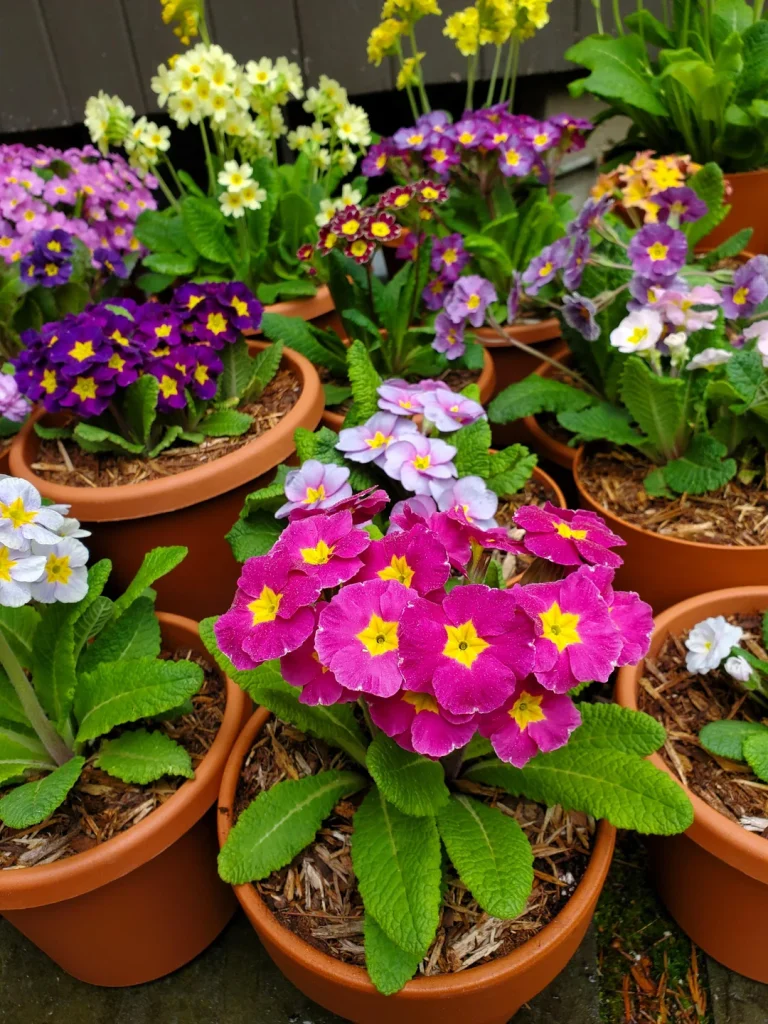
Primroses bloom in nearly every color, often with a bright yellow eye at the center, and they keep flowering for months in cool weather.
They’re inexpensive, too, which makes them an easy way to fill gaps in a mixed container without blowing your budget. Give them moist soil and a spot with some shade from harsh afternoon sun.
Once temperatures climb in late spring, they’ll fade. Treat them as a seasonal filler rather than a permanent resident, and swap them out when the weather warms.
Hardiness zones: 4-8 (many are grown as cool-season annuals outside this range)
FAQ’s
Do winter flowers in pots need any special soil?
Most do fine in a quality potting mix, but a few are picky. Heather and camellias need acidic, ericaceous soil, while bulbs like snowdrops need extra grit or perlite for drainage.
Check each plant’s needs before you toss everything into one pot.
Can I mix different winter flowers in the same container?
Yes, as long as their soil and light needs line up. Pansies, hellebores, and skimmia pair well together since they all like similar moisture levels.
Keep heather in its own pot, though, since its acidic soil needs don’t play nice with everything else.
Will these flowers survive a hard freeze?
Most of the plants on this list are built for cold, but containers still freeze faster than garden beds. Wrap pots in fleece before a hard freeze, or move them somewhere sheltered like a porch or garage for a night or two.
Following the two-zone rule when you buy plants gives you extra insurance too.
How much should I budget for a winter pot?
It depends on what you choose. Pansies, violas, and primrose are cheap and easy to swap out each year, while shrubs like camellia or witch hazel cost more upfront but come back year after year.
A mix of both keeps costs down while still giving you long-term structure.
Do I need to feed my winter container plants?
Most potting mixes come with fertilizer already built in, and that usually lasts four to six weeks.
After that, a liquid feed every couple of weeks keeps flowers coming if your plants are still actively blooming.
Final Thoughts
Winter pots don’t have to sit empty until spring. With the right picks, your porch can stay colorful from the first frost all the way through the last one. Start with one or two flowers from this list, see what thrives in your space, and build from there next season.