13 Stunning Fall Flowers to Grow in Shade

Everyone told me my shade garden would go quiet by September. They were wrong. Plenty of flowers save their best show for fall, and most never need direct sun.
Liza and I learned this by accident, tucking hydrangeas under our porch overhang years ago. Now our shadiest corners burst with color long after the front beds fade.
13 flowers below thrive without sun, bloom right through frost, and ask for little beyond moisture and decent soil.
Grab your gloves. Your shade garden holds more potential than you think.
13 Shade Loving Flower Plants for Fall
1. Reblooming Hydrangea
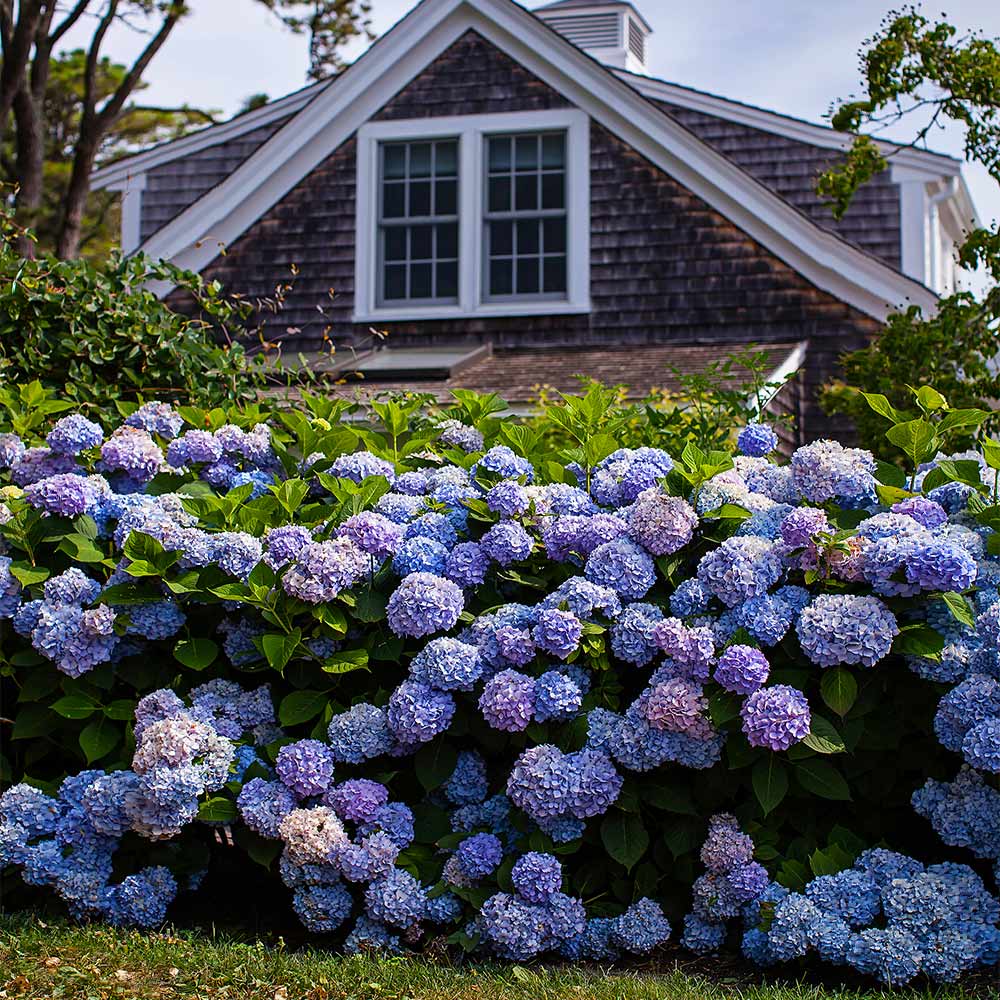
You’ll fall for this shrub the moment it blooms a second time. Bigleaf and mountain hydrangea handle Zones 5 through 9, and they actually prefer afternoon shade over blazing sun.
Color stays richer and lasts longer when the plant skips harsh midday light.
Water is the one thing you can’t skip here. Miss a few days and the flowers turn crisp fast. A layer of mulch holds moisture and keeps roots cool during dry stretches.
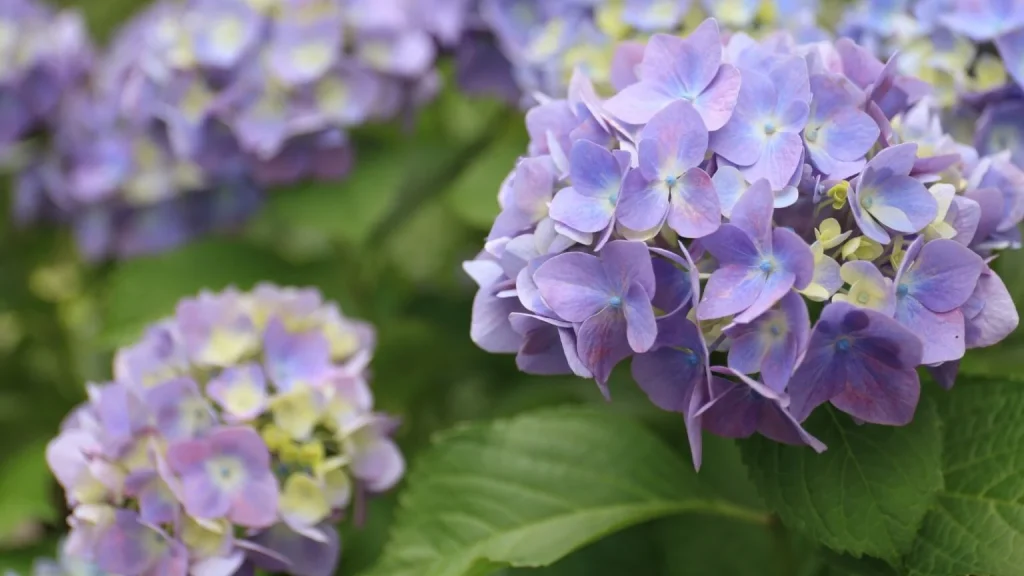
Containers work great too, as long as the pot drains well. Try ‘Let’s Dance Rhythmic Blue’ for violet-blue clusters, or ‘Tuff Stuff Ah-Ha’ if you want something compact under three feet tall.
Plant Overview
- Name: Hydrangea macrophylla, Hydrangea serrata
- USDA Hardiness Zones: 5 to 9
- Light: Afternoon shade preferred
- Soil: Moist, well-drained
- Height/Spread: Up to 4 feet by 4 feet (varies by variety)
- Bloom Time: Midsummer to fall
Also read: 13 Front Yard Hydrangea Landscaping Ideas
2. Hardy Fuchsia
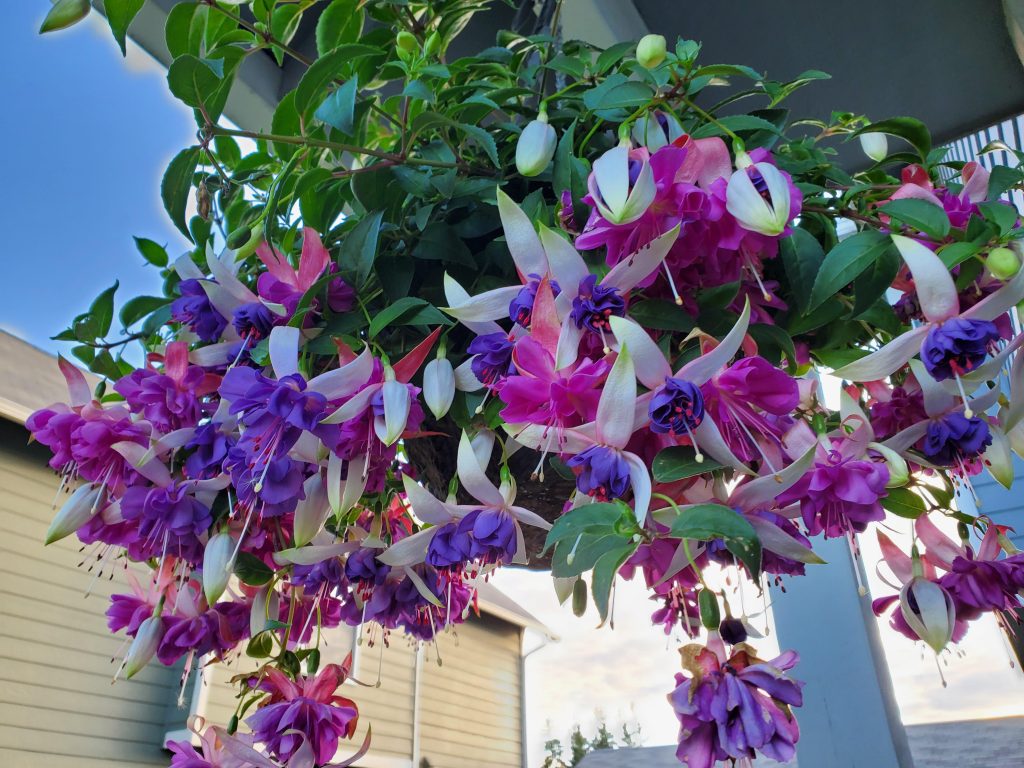
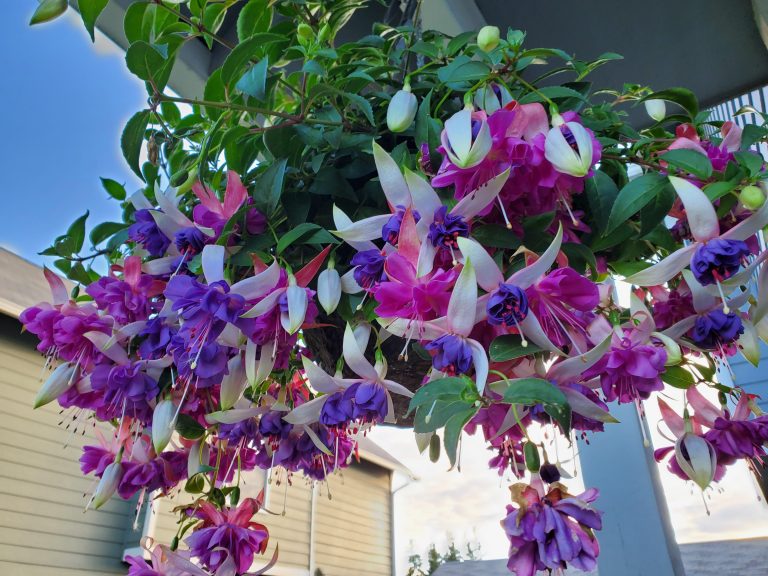
Hummingbirds practically line up for this one. Fuchsia magellanica grows as a shrub reaching six to ten feet tall, hardy in Zones 6 through 9, with small red and pink flowers dangling from every branch.
Shade brings out its best side during hot summers, even though it can handle some sun. Planting it near a house wall or stone structure gives the roots extra winter protection.
Blooms keep coming from summer clear into fall. Want an even smaller option? Tender fuchsia varieties do beautifully in containers on a shaded porch or deck.
Plant Overview
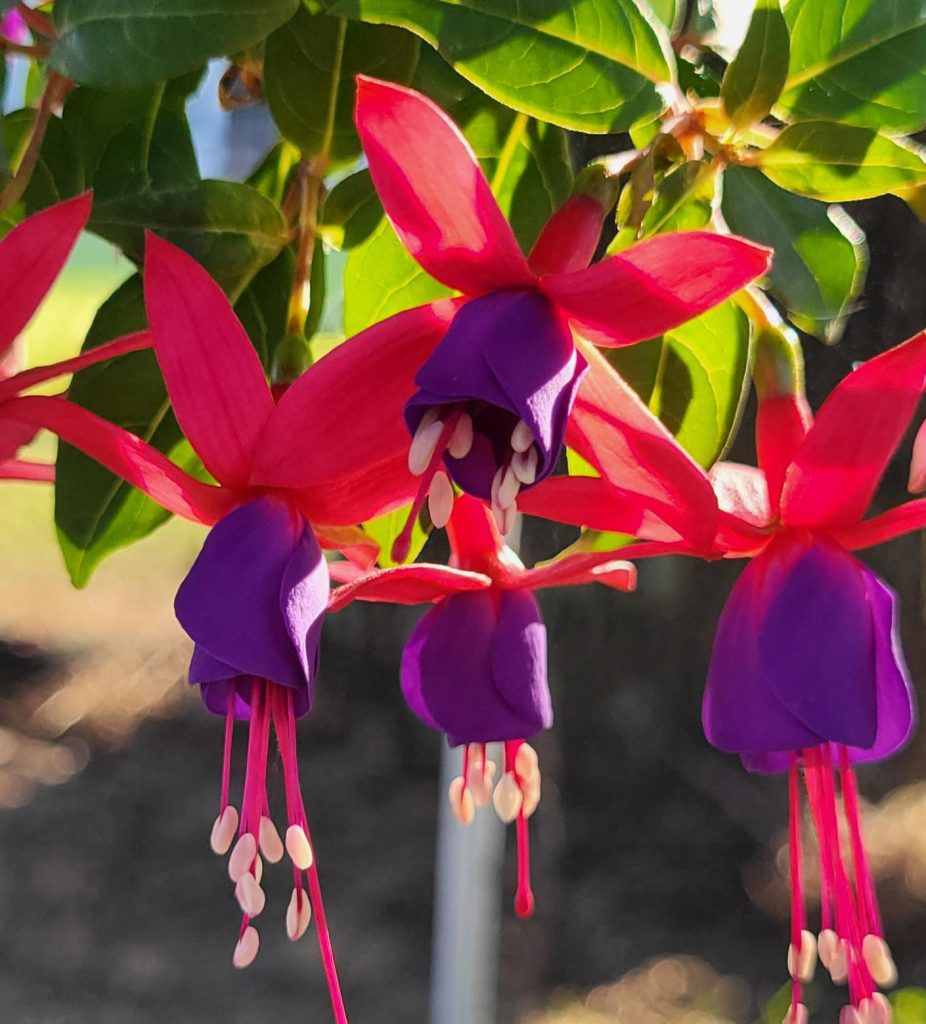
- Name: Fuchsia magellanica
- USDA Hardiness Zones: 6 to 9
- Light: Partial shade
- Soil: Moist, well-drained
- Height/Spread: 6 to 10 feet
- Bloom Time: Summer through fall
Also read: 15 Best Fall Flowers to Plant in Your September Garden
3. Yellow Wax Bells
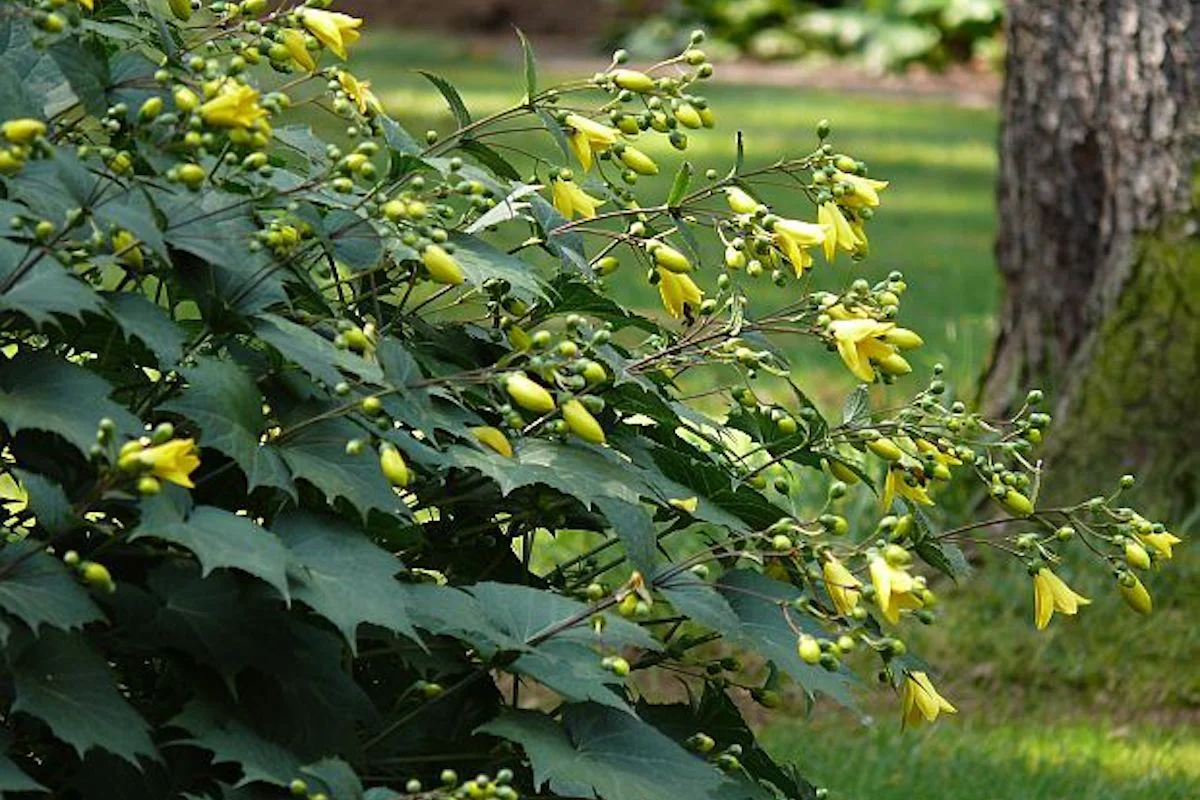
Hardly anyone grows this plant, and honestly, that’s a shame. Kirengeshoma palmata is a shade perennial in the hydrangea family, hardy in Zones 5 through 8, growing about four feet tall and wide.
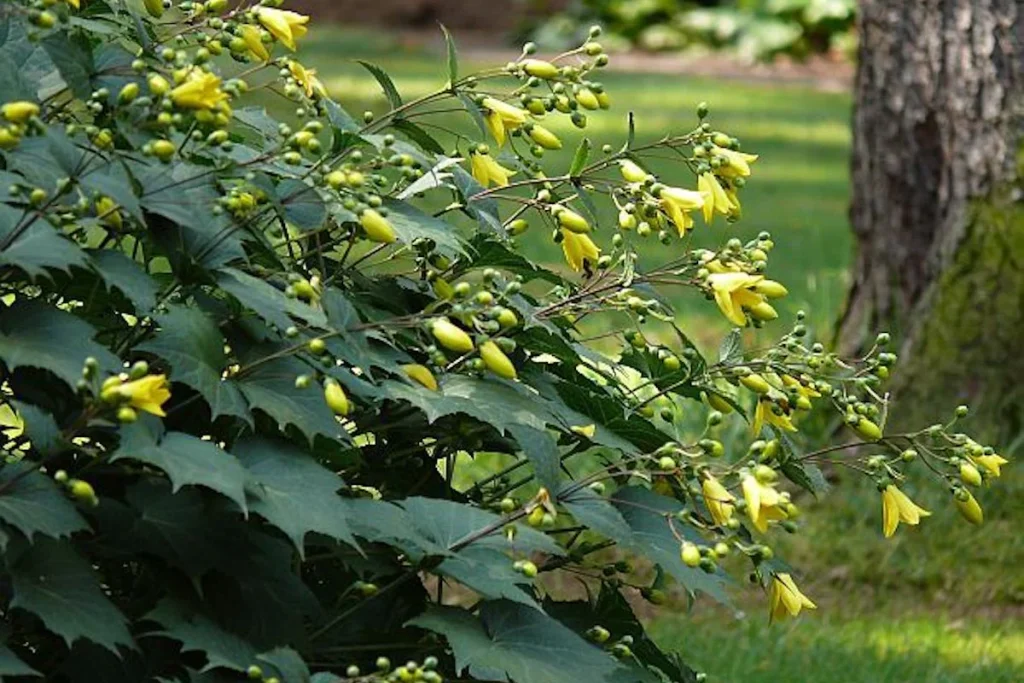
Big, bold, palm-shaped leaves set off waxy yellow flowers that open in late summer. It rarely fusses over care. Moisture and shade keep it thriving once it settles in.
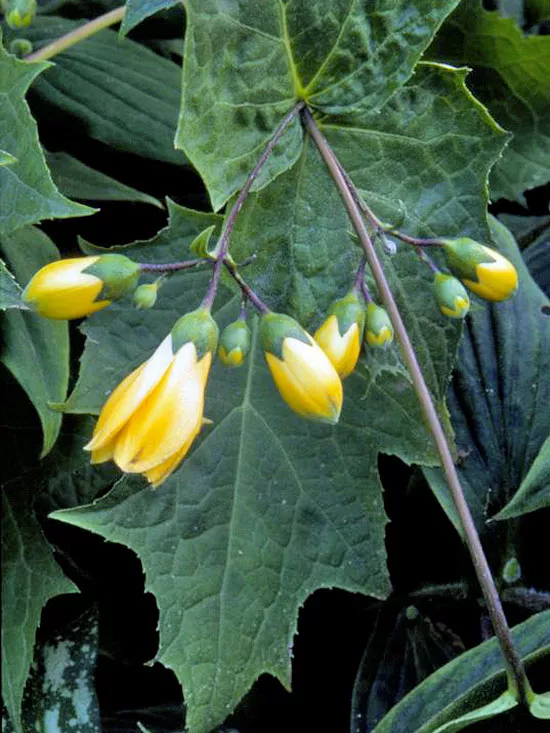
Regular mulching helps hold onto the dampness this perennial craves. Garden centers rarely carry it, so a specialty nursery or a generous gardening friend might be your best bet.
Plant Overview
- Name: Kirengeshoma palmata
- USDA Hardiness Zones: 5 to 8
- Light: Shade
- Soil: Moist
- Height/Spread: About 4 feet by 4 feet
- Bloom Time: Late summer into fall
Also read: 12 Best Fall Shrubs for Stunning Front Yard
4. Japanese Anemone
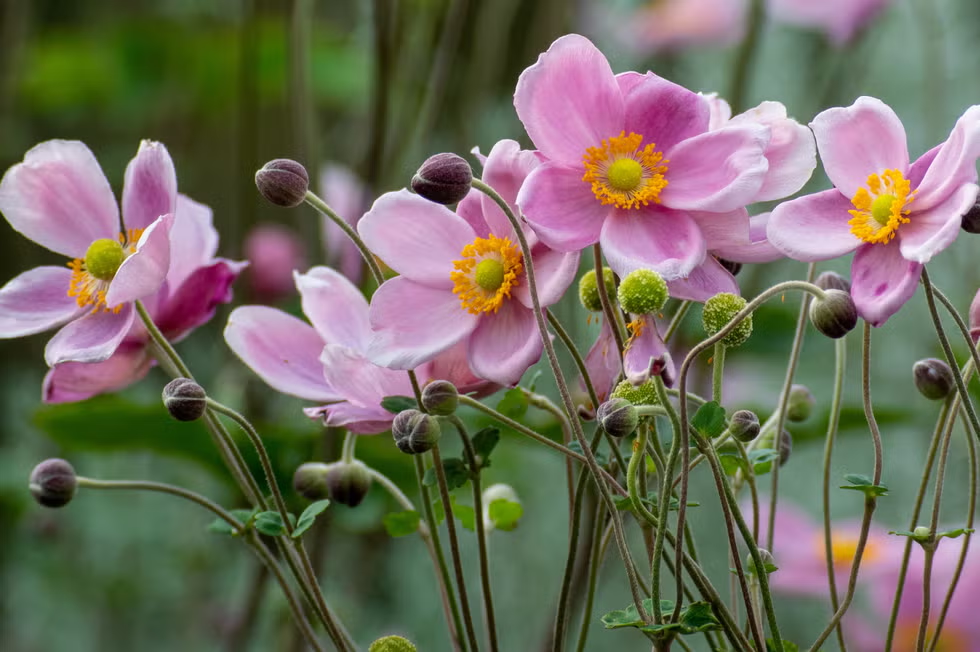
Poppy-like blooms spin open on wiry stems well into October. Known botanically as Eriocapitella x hybrida, this perennial suits Zones 4 through 8 and tolerates full sun to part shade.
Purple, pink, and white varieties all exist, but ‘Honorene Jobert’ earns its reputation by blooming from late August straight through frost.
Rich, well-draining soil keeps the roots happy, and a bit of winter mulch protects plants in colder climates.
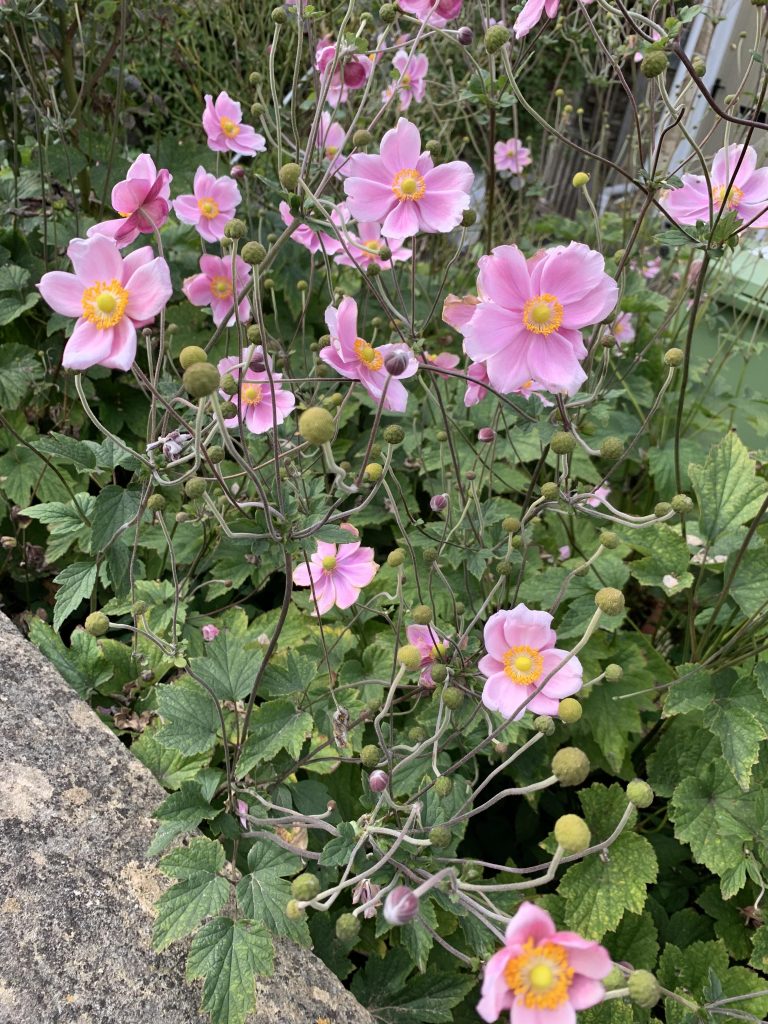
Sharp, cut foliage adds texture even before the flowers show up. Height swings wildly by variety too, running anywhere from a foot and a half to five feet tall.
Plant Overview
- Name: Eriocapitella x hybrida (Anemone x hybrida)
- USDA Hardiness Zones: 4 to 8
- Light: Full sun to part shade
- Soil: Rich, well-drained
- Height/Spread: 1.5 to 5 feet
- Bloom Time: Late summer through frost
5. Palm-Leaf Begonia
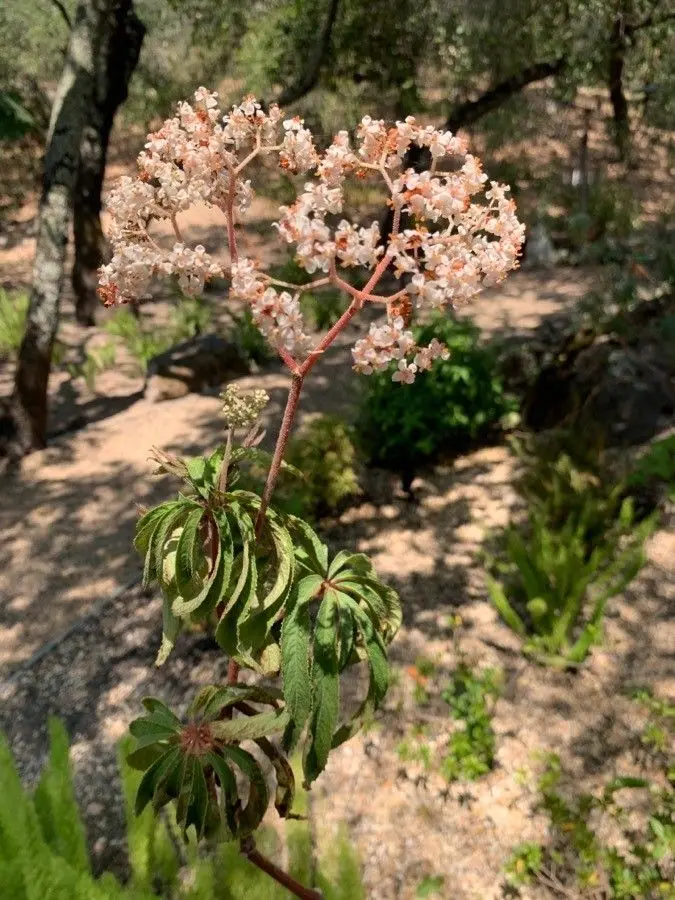
Tropical leaves make this one stand out fast. Begonia luxurians grows well in Zones 9 through 11, though most gardeners in cooler areas treat it as a summer annual or bring it indoors before frost.
You’ll notice clusters of white and yellow flowers blooming for weeks on end. Filtered sunlight suits it best, especially under tree canopy.
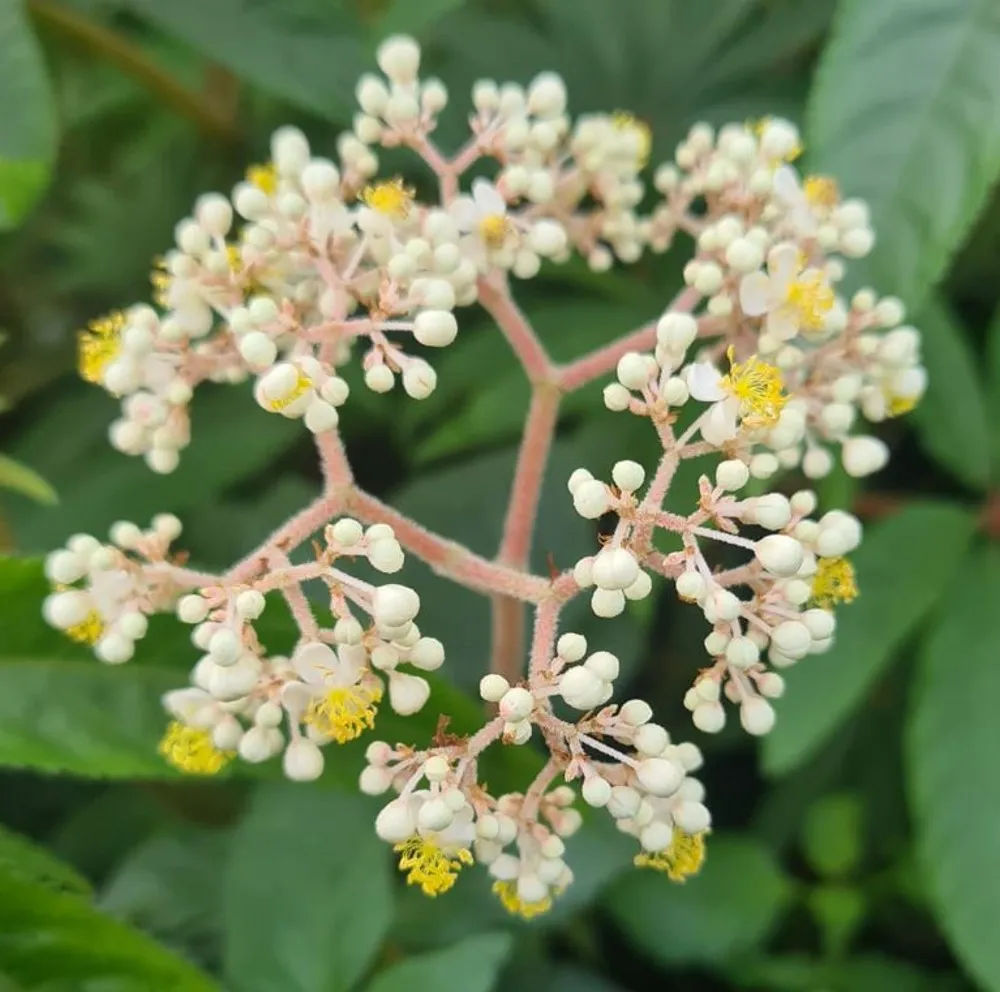
Mine went from twelve inches to four feet in a single summer, which still surprises me.
A container filled with quality potting mix gives roots room to spread. Sunrooms and greenhouses work fine for overwintering it as a houseplant.
Plant Overview
- Name: Begonia luxurians
- USDA Hardiness Zones: 9 to 11
- Light: Filtered sun to part shade
- Soil: Rich, well-drained potting mix
- Height/Spread: Up to 4 feet (grown as annual outside its zone)
- Bloom Time: Summer into fall
6. Coral Bells ‘Autumn Bride’
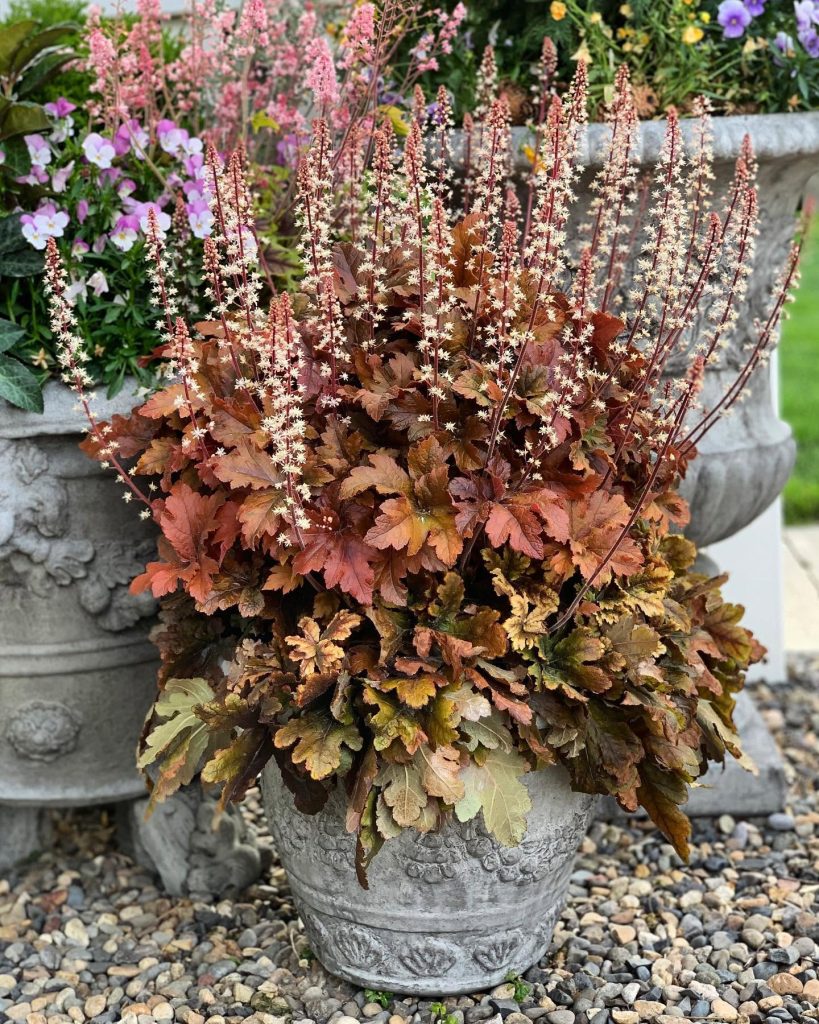
Velvety leaves alone earn this plant a spot in your garden. Heuchera villosa ‘Autumn Bride’ thrives in Zones 3 through 8 and handles part to full shade without complaint.
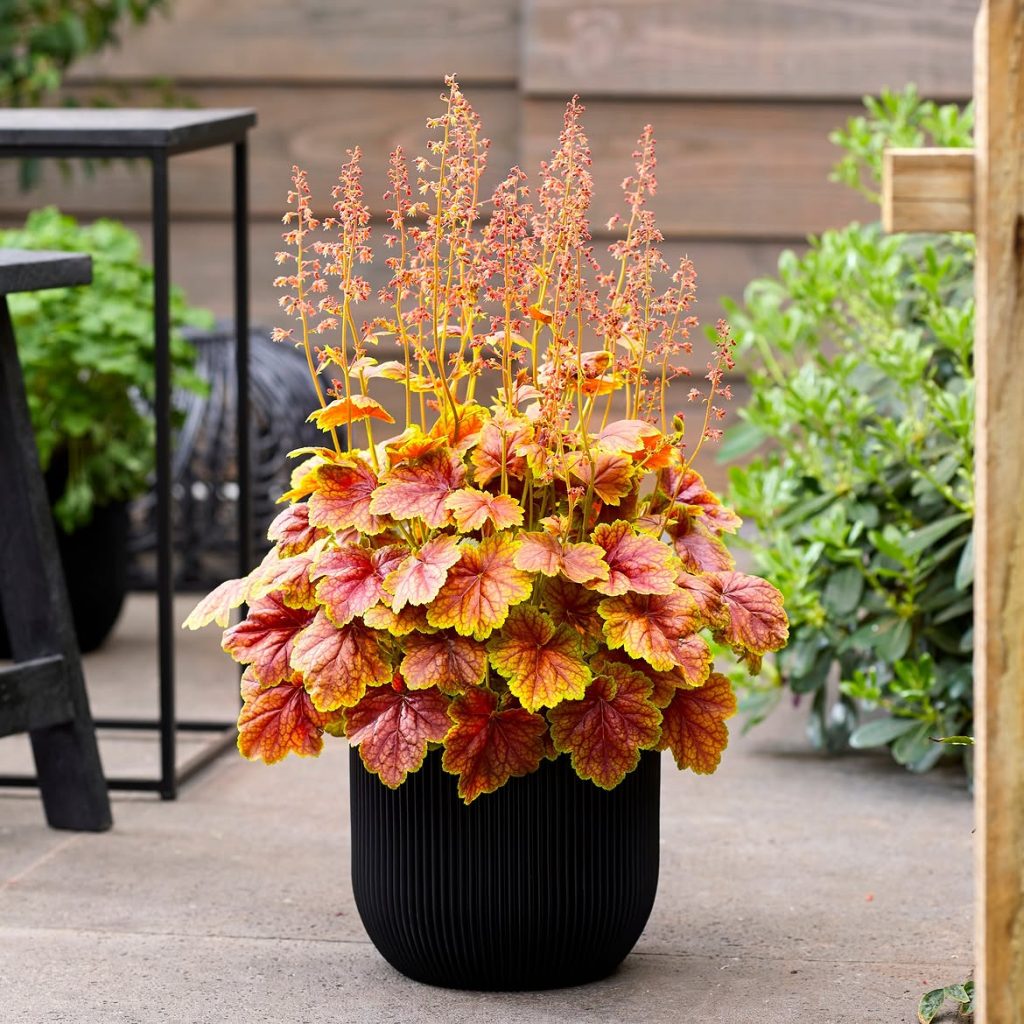
Drifts of white flowers rise above the foliage from midsummer into fall. Heat and humidity barely faze it, and drought tolerance makes it forgiving too. Plant several together along a border for the biggest visual payoff.
Winter mulch keeps the roots from heaving out of frozen ground. You’ll get years of reliable color from one planting.
Plant Overview
- Name: Heuchera villosa ‘Autumn Bride’
- USDA Hardiness Zones: 3 to 8
- Light: Part to full shade
- Soil: Moist, well-drained
- Height/Spread: 1.5 to 3 feet by 1.5 to 2 feet
- Bloom Time: Midsummer into fall
7. Japanese Toad Lily ‘Miyazaki’
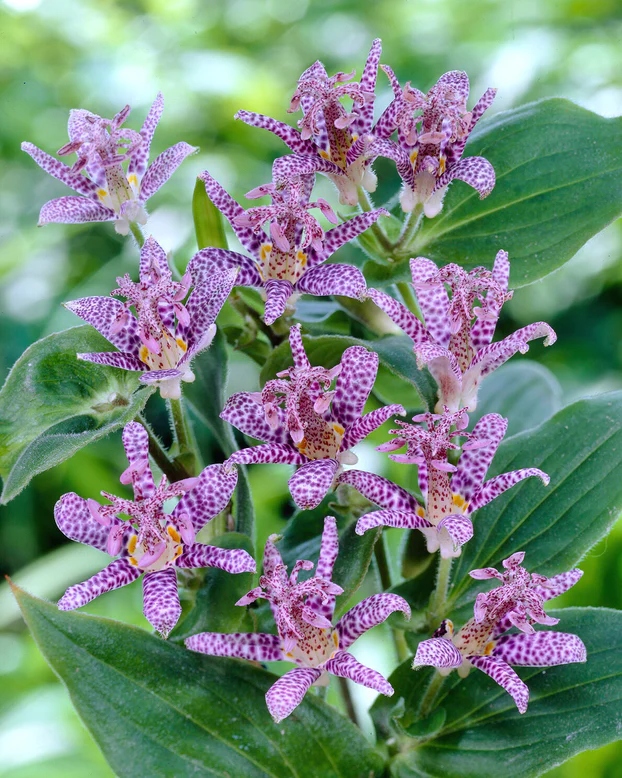
Spotted blooms give this perennial an exotic look nothing else in your garden matches. Tricyrtis hirta grows in Zones 4 through 8, favoring part to full shade and consistently moist, rich soil.
October frost rarely stops it early, and blooms often push on until mid-month. Wet woodland gardens suit it perfectly. Cat owners should know this plant is toxic to pets, so plant it out of reach if needed.
Reliability is its biggest selling point. Once established, it comes back stronger every year.
Plant Overview
- Name: Tricyrtis hirta ‘Miyazaki’
- USDA Hardiness Zones: 4 to 8
- Light: Part to full shade
- Soil: Consistently moist, rich
- Height/Spread: 1.5 to 2 feet by 1.5 to 2 feet
- Bloom Time: Late summer into early fall
- Note: Toxic to cats
8. Zigzag Goldenrod
Heavy shade won’t slow this native down one bit. Solidago flexicaulis grows naturally in North American woodlands and thrives in Zones 3 through 8, tolerating sun, part shade, or full shade equally well.
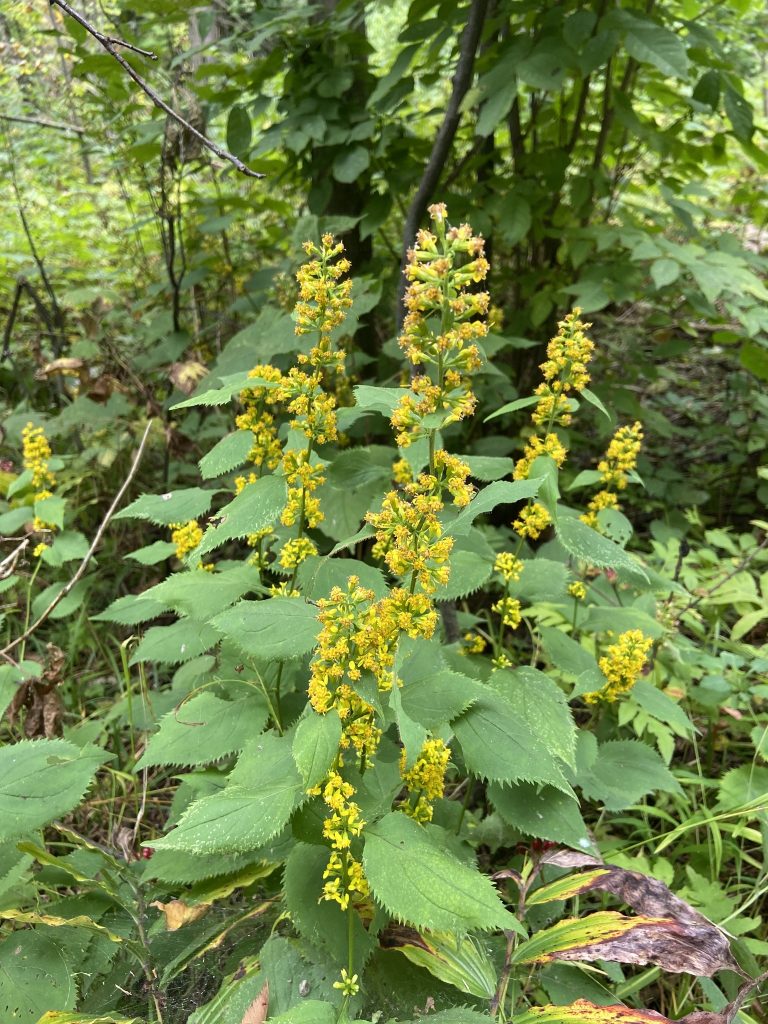
Bright yellow flowers appear on upright stems that sometimes zigzag, which explains the name. Pollinators flock to it late in the season when other food sources run low.
Frost is usually what finally ends its bloom, not lack of interest from bees.
Native plants like this one support local ecosystems in ways imported ornamentals can’t. You’re doing your garden and your local pollinators a favor by planting it.
Plant Overview
- Name: Solidago flexicaulis
- USDA Hardiness Zones: 3 to 8
- Light: Sun, part shade, or full shade
- Soil: Various, moist preferred
- Height/Spread: 1 to 3 feet by 1 to 3 feet
- Bloom Time: Summer until frost
9. Short’s Aster
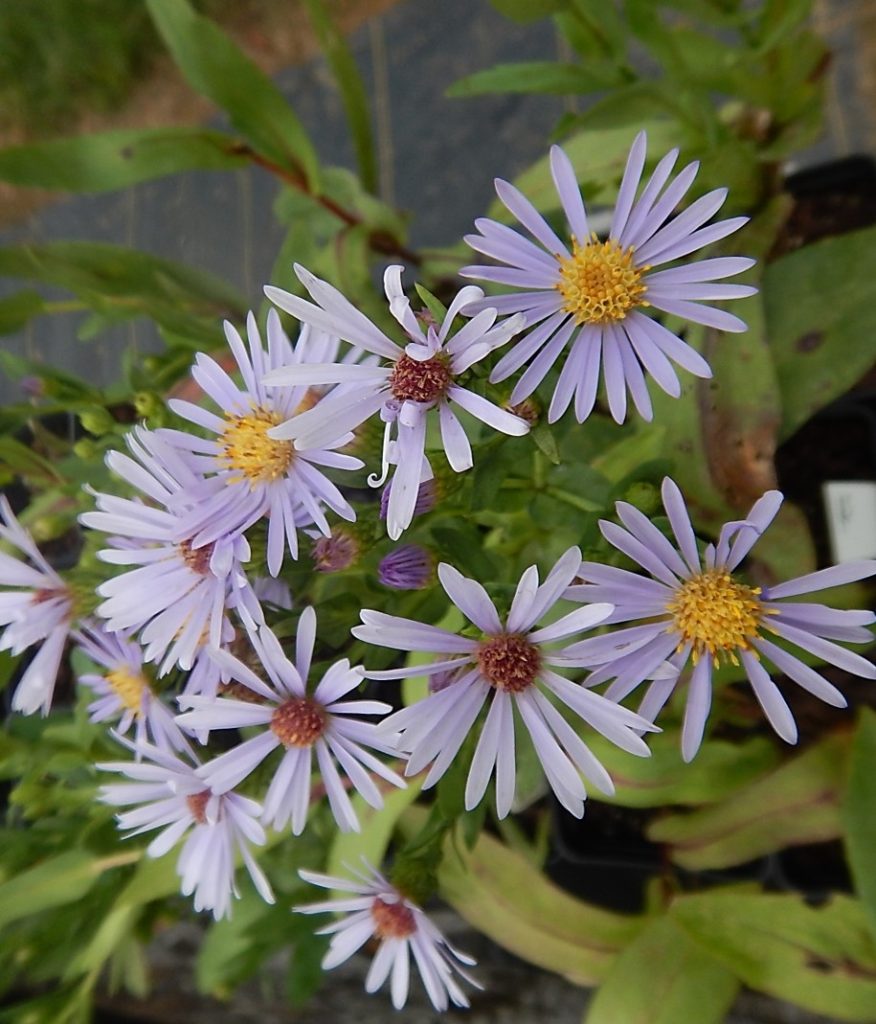
Small blooms pack a big punch late in the season. Symphyotrichum shortii suits Zones 3 through 8 and grows happily from full sun to full shade, which makes it one of the most flexible asters out there.
Powder-blue flowers cover the plant from late summer well into fall. You’ll notice the yellow centers turn brick red once pollination happens, a neat little detail most people miss.
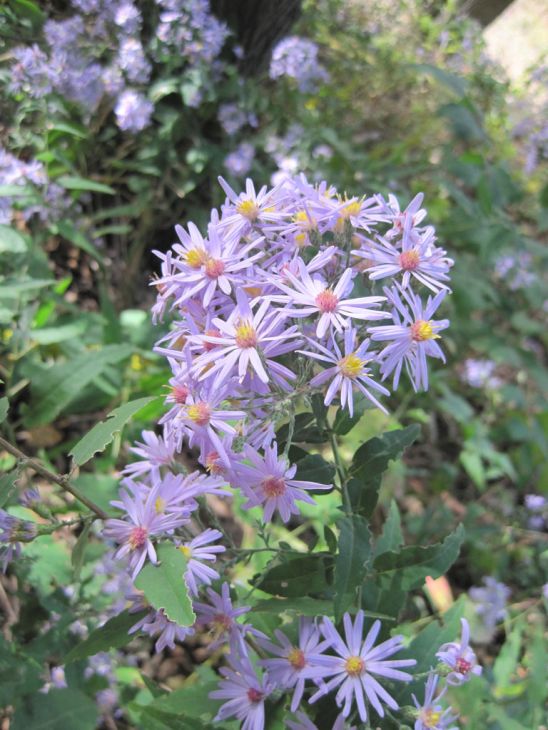
Birds love the seeds just as much as bees love the flowers, so cardinals, finches, and chickadees often show up too.
Reseeding happens fast with this one. Give it room to spread, or expect volunteers popping up nearby next spring.
Plant Overview
- Name: Symphyotrichum shortii
- USDA Hardiness Zones: 3 to 8
- Light: Full sun to full shade
- Soil: Sandy loam to loam
- Height/Spread: 1 to 4 feet by 1 to 2 feet
- Bloom Time: Late summer into fall
10. White Wood Aster
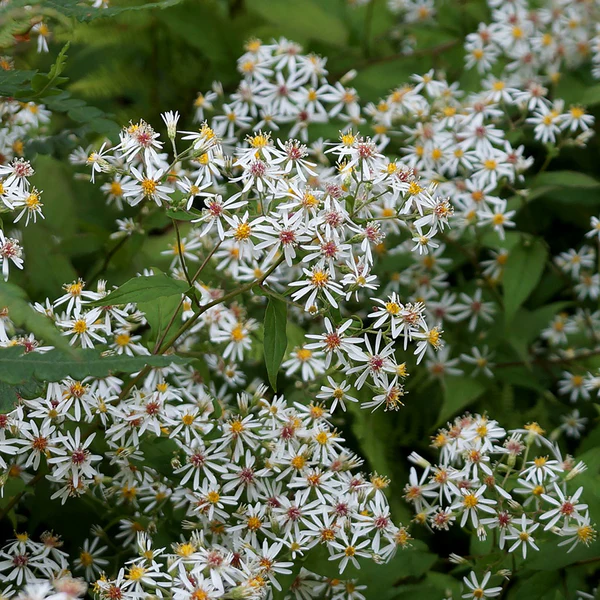
Woodland hikers know this aster well, and your backyard can host it too. Eurybia divaricata handles Zones 3 through 8, growing best in full to part shade with sandy, well-drained soil.
Starry white flowers blanket the plant from late summer through mid-fall. Drought barely bothers it once established, which makes it a smart pick for drier shaded spots under trees. Butterflies benefit directly, since it hosts Pearl Crescent caterpillars and eggs.
Massing several plants together creates a soft, cloud-like effect in the garden. Pair it with darker foliage nearby, and the white blooms practically glow.
Plant Overview
- Name: Eurybia divaricata
- USDA Hardiness Zones: 3 to 8
- Light: Full to part shade
- Soil: Sandy, well-drained
- Height/Spread: 1 to 2.5 feet by 1.5 to 2.5 feet
- Bloom Time: Late summer through mid-fall
11. Yellow Corydalis
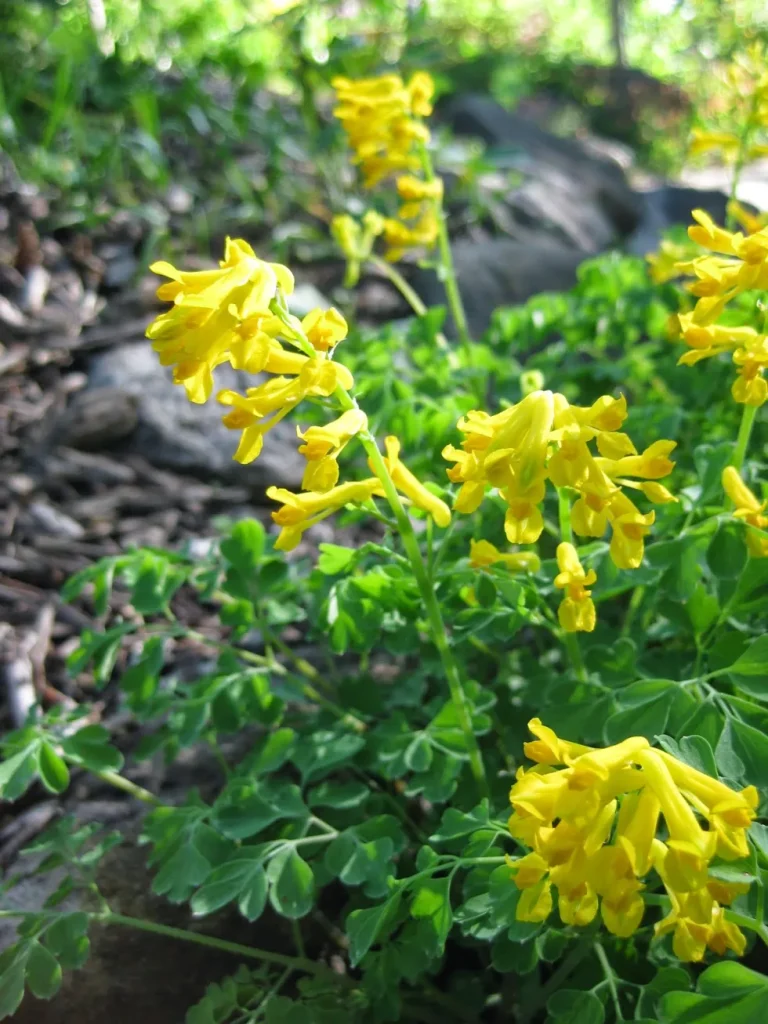
Nonstop blooms make this little plant a garden workhorse. Corydalis lutea grows in Zones 5 through 7, favoring part to full shade and rich, consistently moist soil.
Tubular yellow flowers appear starting in late spring and keep coming until a hard frost finally ends the show.
Fernlike foliage adds softness even when it’s not flowering. Shady nooks and crannies suit it perfectly, so tuck it into spots where bigger plants won’t fit.
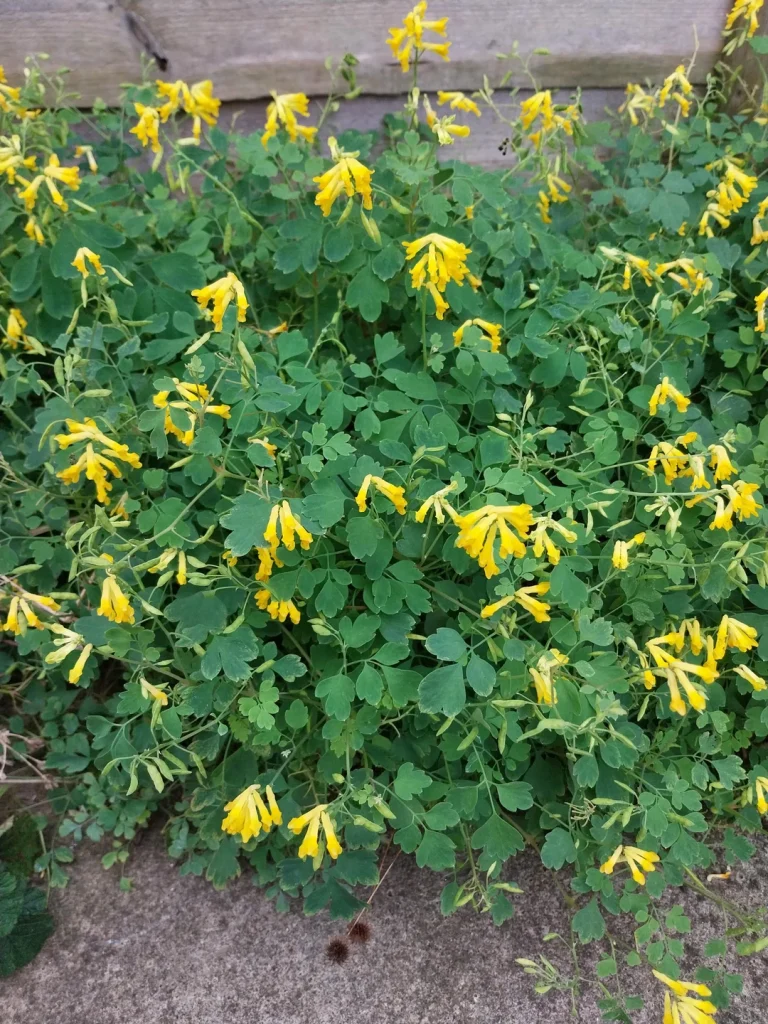
Reseeding happens, but not aggressively, so you won’t spend next spring pulling out unwanted seedlings everywhere. It’s a filler plant that quietly earns its keep all season long.
Plant Overview
- Name: Corydalis lutea
- USDA Hardiness Zones: 5 to 7
- Light: Part to full shade
- Soil: Rich, consistently moist
- Height/Spread: 1 to 1.5 feet by 1 to 1.5 feet
- Bloom Time: Late spring until hard frost
12. Hellebore
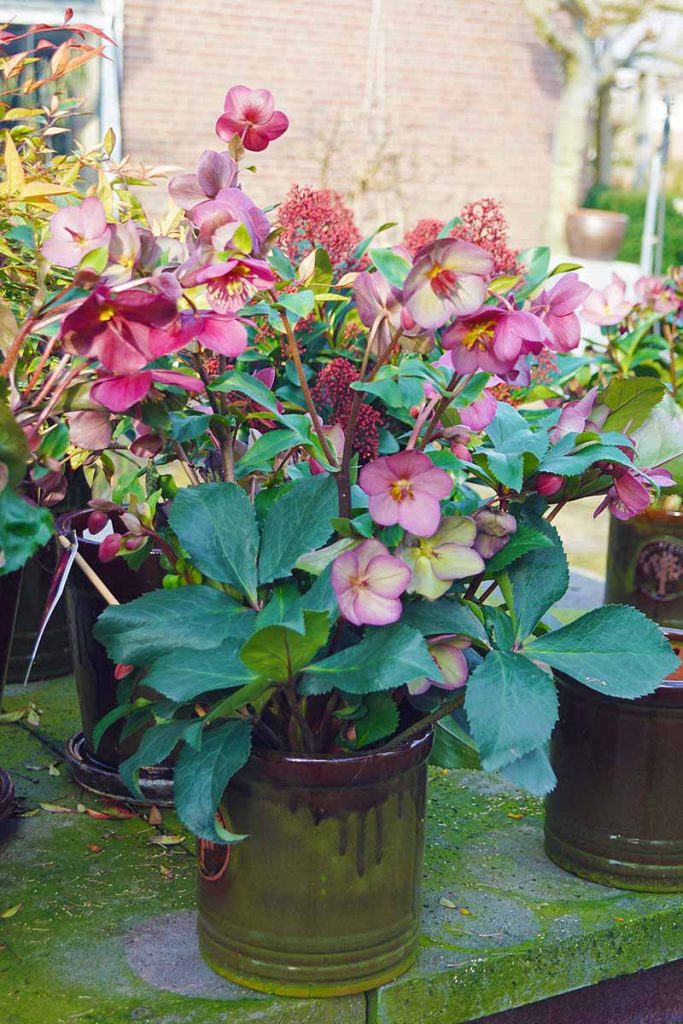
Spring bloomers get all the hellebore credit, but fall varieties deserve attention too. Helleborus spp. grows in Zones 3 through 9, thriving in part to full shade with moist, well-drained soil.
Bearsfoot hellebore and Christmas rose varieties like ‘Jacob’ and ‘Josef Lemper’ all produce blooms once autumn arrives. Flower colors range from white to pink, purple, and yellow, so you’ll find one that fits almost any color scheme.
Leathery, evergreen foliage keeps the plant looking sharp even when it isn’t flowering.
Deer and rabbits tend to leave hellebores alone, which is a huge bonus if wildlife raids your garden regularly. Once planted, this perennial asks for very little and gives back for years.
Plant Overview
- Name: Helleborus spp.
- USDA Hardiness Zones: 3 to 9
- Light: Part to full shade
- Soil: Moist, well-drained
- Height/Spread: 1 to 1.5 feet by 1 to 1.5 feet
- Bloom Time: Fall (select varieties); most bloom in late winter/spring
- Flower Color: White, pink, purple, yellow
13. Turtlehead
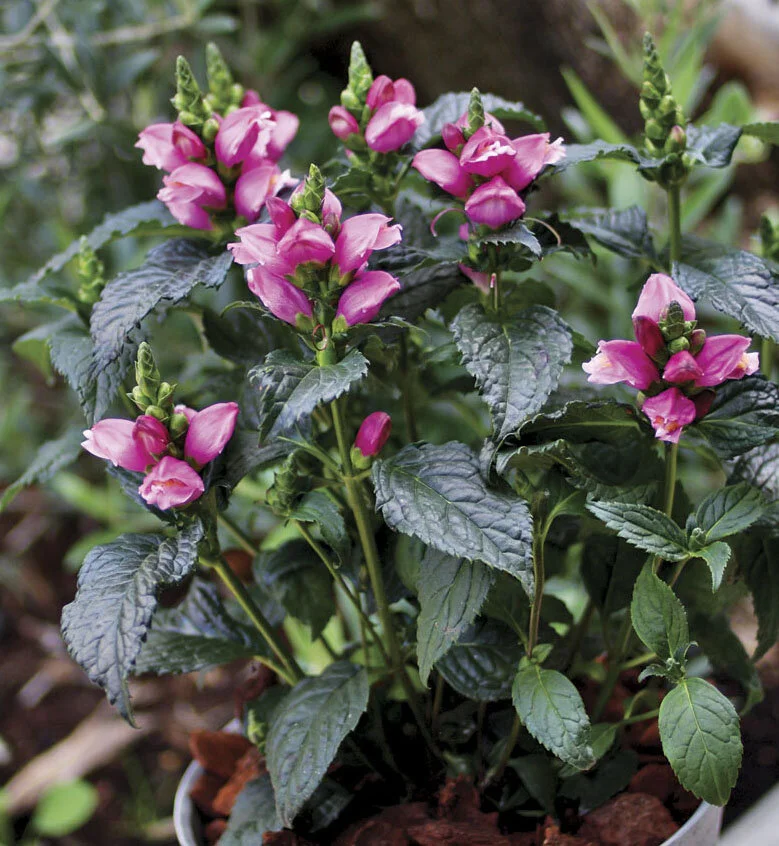
Odd blooms make this native perennial memorable. Chelone obliqua grows well in Zones 5 through 9, tolerating full sun to part shade in rich, medium to wet soil.
Pink flowers shaped like little turtle heads give the plant its playful name. Three to six weeks of color follow once blooming starts, which stretches your fall display further than many other perennials manage.
Bumblebees, butterflies, and hummingbirds all stop by for nectar before winter sets in.
Boggy spots and rain gardens suit it especially well. Dry soil won’t kill it outright, but it prefers consistent moisture whenever possible.
Plant Overview
- Name: Chelone obliqua
- USDA Hardiness Zones: 5 to 9
- Light: Full sun to part shade
- Soil: Rich, medium to wet
- Height/Spread: 2 to 3 feet by 1 to 2 feet
- Bloom Time: Late summer into fall
Final Words
Thirteen flowers, zero excuses left for a boring fall shade bed. Hydrangeas, asters, hellebores, and toad lilies all prove shade doesn’t mean sacrifice.
Liza and I fill our shadiest containers with a mix of these every year, and the color keeps surprising us into November.
Pick two or three from this list and tuck them into the spots you thought were hopeless. Your neighbors will wonder how your shade garden still looks alive in October. Go find out for yourself.