13 Front Yard Hydrangea Landscaping Ideas

Curb appeal starts with the right plant, and hydrangeas deliver color that stops cars mid-street. My own front yard went from forgettable to photo-worthy the year I added three hydrangea beds near the porch.
Neighbors started asking what I fed them. Nothing fancy, just smart placement and a little soil know-how.
Below you’ll find 13 ways to turn your front yard into a hydrangea showcase, whether you’ve got a huge lawn or a tiny city lot.
13 Hydrangea Landscaping Ideas for Front Yard
1. Line Your Front Walkway with Hydrangeas
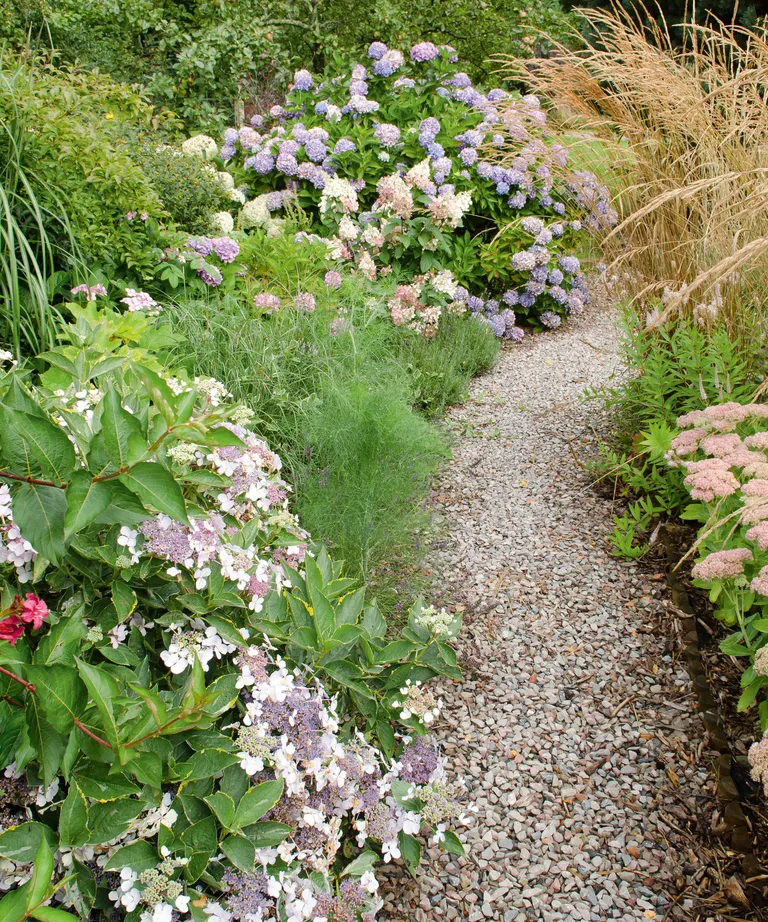
Picture this: a path that blooms on both sides as you walk it. That’s what lace cap hydrangeas bring to a front walkway.
Their frilly, flattened blooms feel delicate, never bulky, so they won’t swallow your pavers.
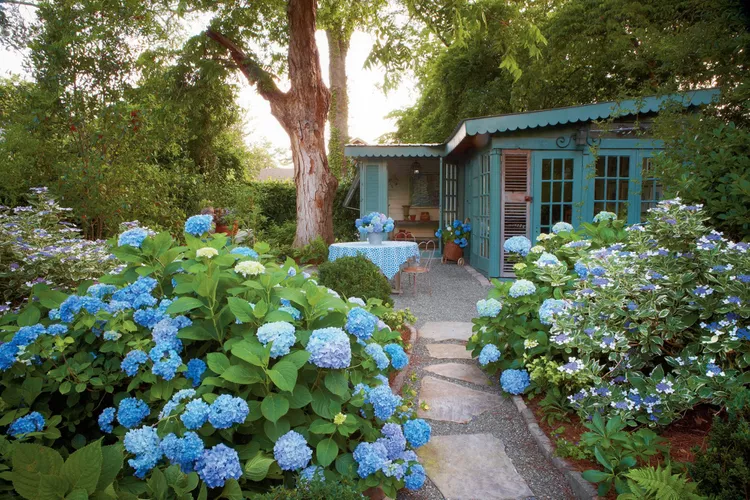
I like giving these a little breathing room from the edge. Wet leaves brush against ankles after rain, and nobody wants that on their way to work. Space plants three to four feet apart and let them fill in naturally.
Morning sun with afternoon shade keeps lace caps happiest along most walkways. Doesn’t a flower-lined entrance beat plain concrete every time?
Also read: 15 Genius Small Front Yard Flower Bed Ideas
2. Frame the Entrance with Matching Planters
Here’s an easy win: two matching pots, one on each side of your door. Symmetry does a lot of visual heavy lifting without much effort on your part.
I always reach for pastel blooms here since they play nice with almost any house color.
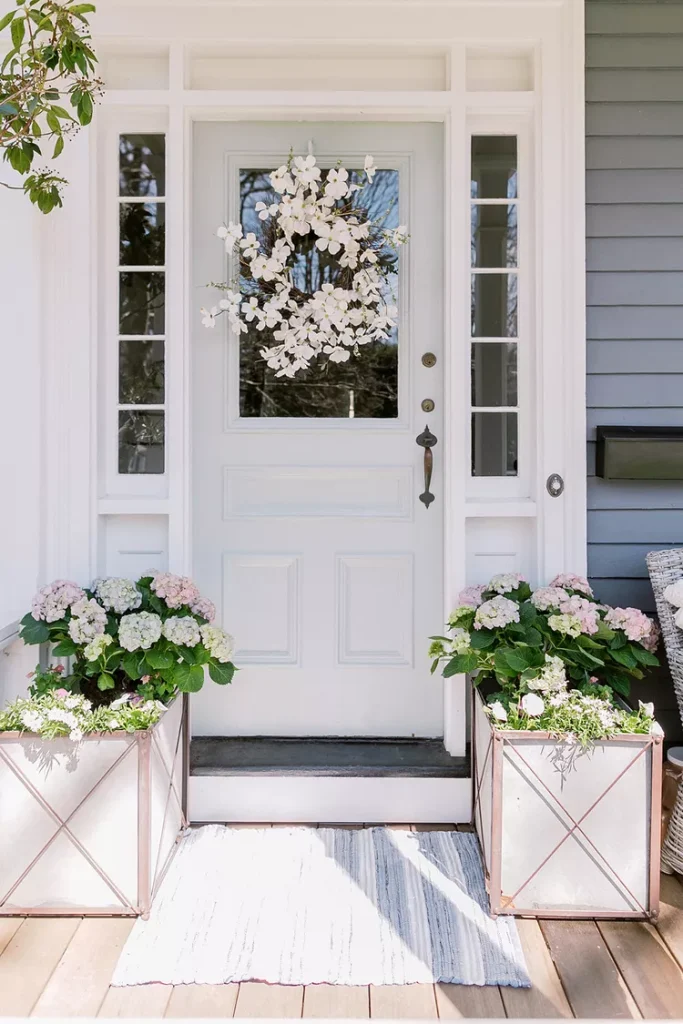
Containers also give you an escape hatch. A pot struggling in one spot can move somewhere better in minutes. Try doing that with something planted straight into the ground.
Come fall, shift both planters to the patio and start fresh next spring. Container hydrangeas are forgiving that way, and forgiving is exactly what a busy gardener needs.
Also read: 15 Front Yard Landscaping Ideas With Rocks for Structure
3. Build a Living Foundation Planting
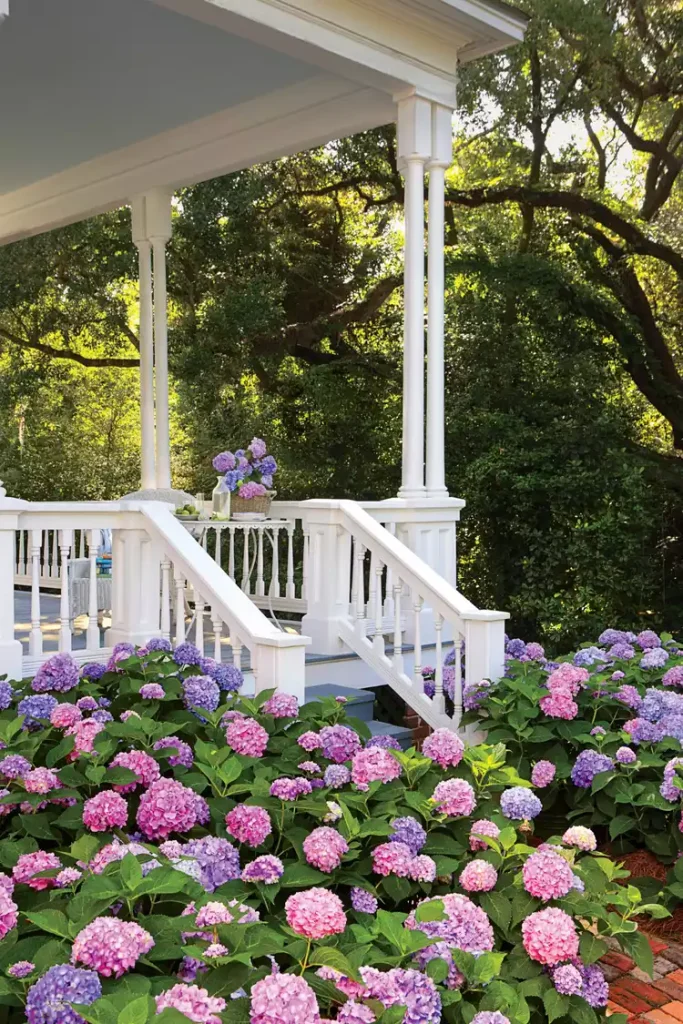
Bare house foundations look unfinished to me, plain and a little cold. A row of hydrangeas fixes that fast. Smooth hydrangeas are my go-to for this job because they stay compact and won’t creep up over your windows.
Those round, pom-pom blooms look cheerful against brick or siding. Drainage matters a lot right here, though. Water loves to pool near foundations, and soggy roots rarely thrive.
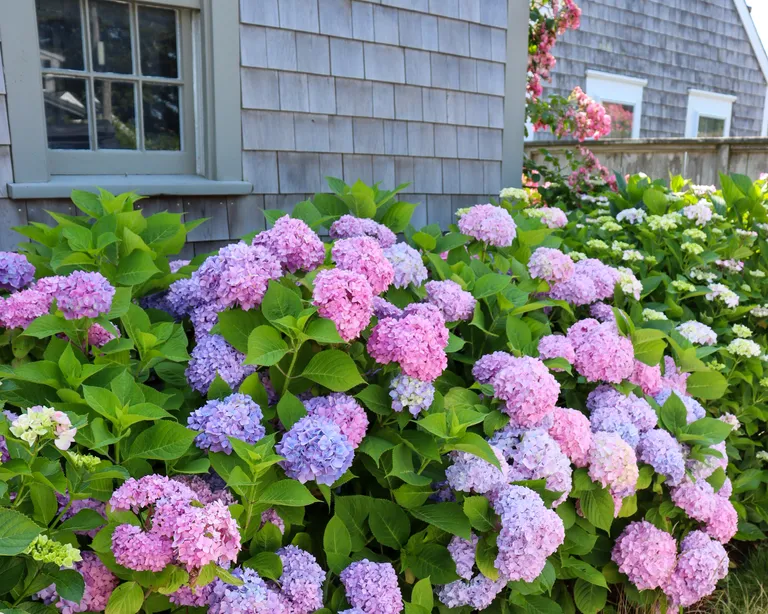
So work some compost or aged manure into the soil first. Loosen up any heavy clay before you plant. Your hydrangeas will thank you with better blooms for years.
Also read: 20 Front Yard Flower Bed Ideas to Boost Your Curb Appeal
4. Mix Bloom Colors for Instant Curb Appeal
I love a front bed that looks like it happened on purpose. Blue, pink, and purple blooms mixed together does exactly that. Here’s the fun part: you actually get to choose the colors.
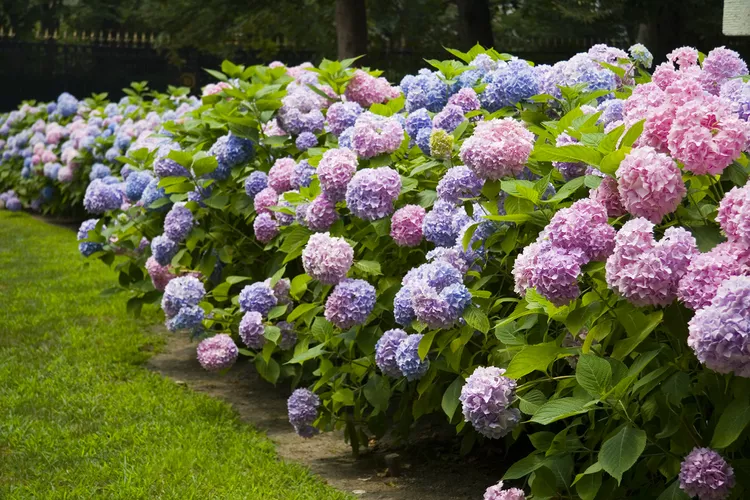
Bigleaf hydrangeas change hue based on your soil’s pH. Acidic soil pushes blooms toward blue. Alkaline soil shifts them pink instead.
Want bluer blooms? Work coffee grounds into the soil each fall. Chasing pink? Lime does the opposite job. Either path leads to a front yard that looks far more curated than a single-color bed ever could.
5. Add a Climbing Hydrangea to Your Porch or Trellis
A bare porch post always looks a little sad to me. Climbing hydrangeas fix that in a season or two. Give them a trellis, some wire, or even a rough wall, and they’ll grab on with their own rootlets.
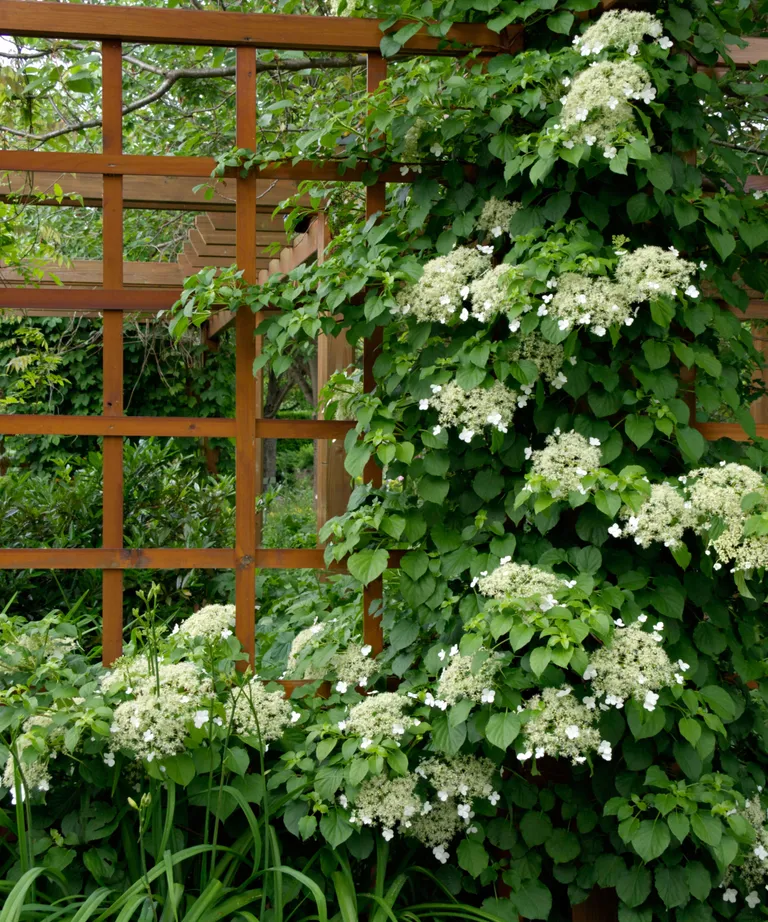
They grow slowly at first, so patience matters here. Once established, though, they cover ground fast and cover it well. I’ve seen them turn a plain north-facing wall into the prettiest spot on the block.
Tie in new shoots for the first year or so. After that, they mostly take care of themselves. Few plants offer that much drama for so little upkeep.
6. Plant a Hydrangea Tree as a Focal Point
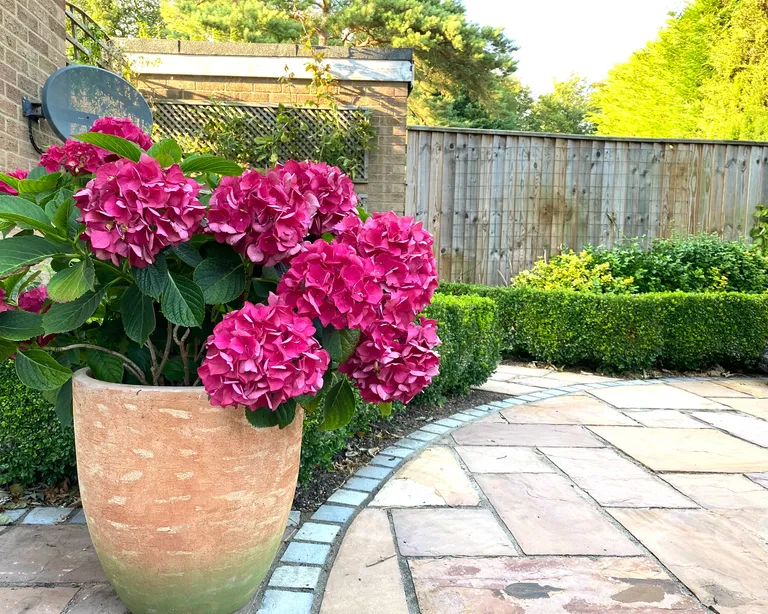
Every front yard needs one plant that draws the eye first. A hydrangea pruned into tree form does that job beautifully. Panicle hydrangeas work great for this since they take well to being trained onto a single leading stem.
I place mine near the walkway so it greets people before they even reach the door. Tall and full, it reads as instant landscaping maturity. You don’t need ten plants when one striking tree does the work of many.
Give it room to spread as it matures. Full sun keeps the blooms coming strong all summer. Trust me, this one plant earns its spot fast.
7. Underplant with Shade-Loving Companions
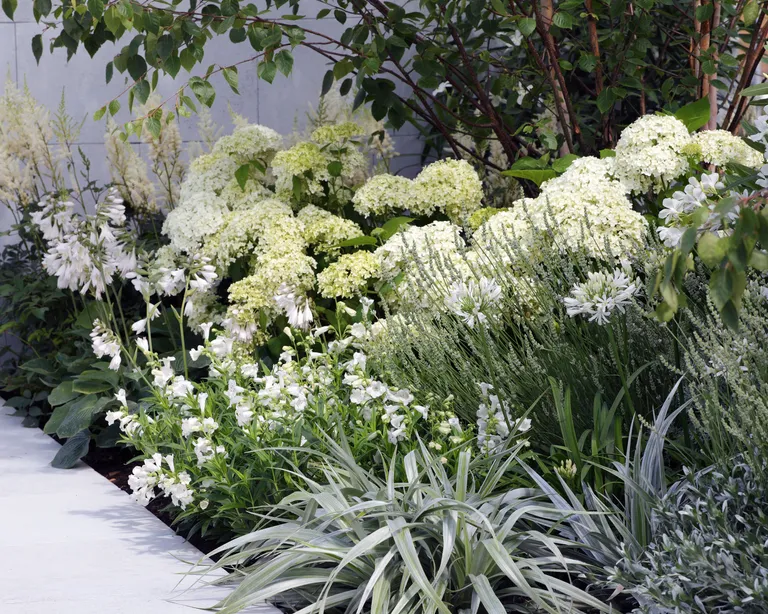
Hydrangeas cast a nice patch of shade once they fill out. Why waste that space? I always tuck hostas or ferns underneath mine for extra texture down low.
Daylilies work well too, adding color right at eye level while the hydrangeas bloom higher up. Impatiens and begonias fill gaps nicely for gardeners who want fresh color every year. Layering plants this way makes a bed look designed, not just planted.
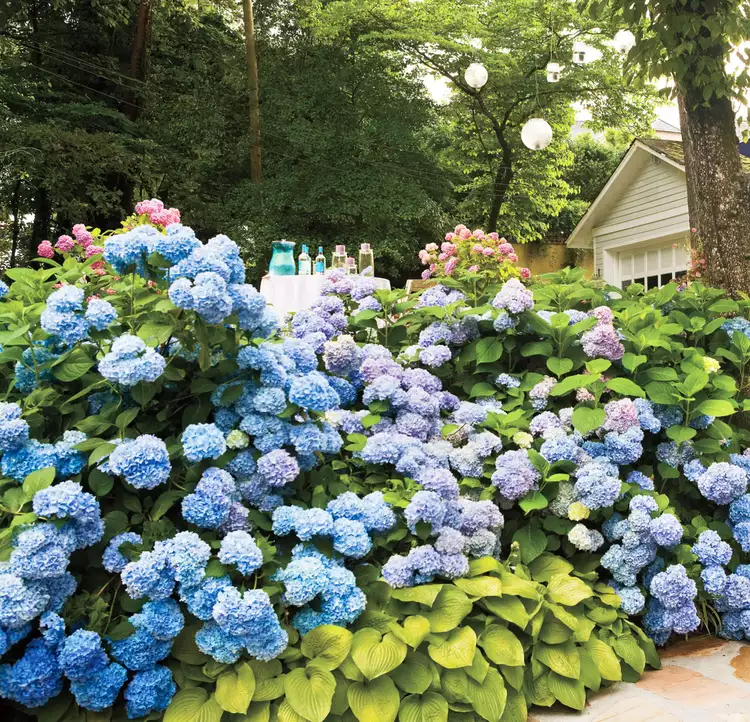
Start with your hydrangeas first. Fill in around them once you know how much shade they’re actually casting. That order saves you from replanting later.
8. Group Plants in Odd Numbers for a Natural Look
Ever notice how three plants look better together than two or four? That’s not an accident. Landscape designers call it the rule of three, and it works every single time.
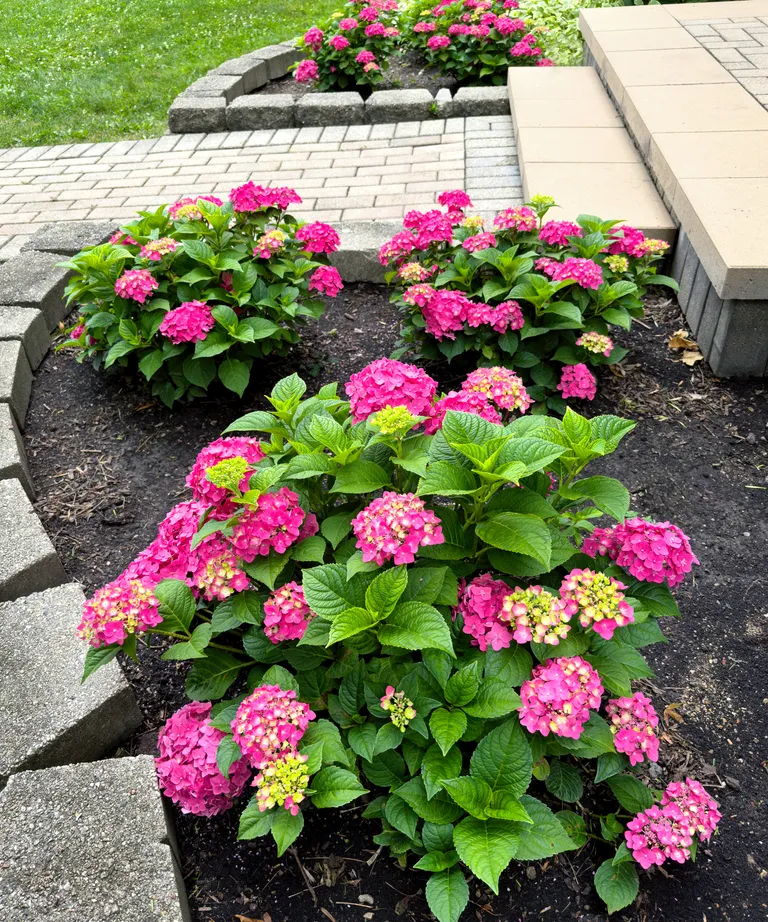
I stagger my groupings instead of lining them up straight. That small trick makes a bed look like it grew in naturally rather than following a ruler. Odd numbers just please the eye in a way even numbers can’t quite match.
Space each plant three to four feet apart within the group. Give them room now, even if the bed looks sparse at first. They’ll fill in fast, and you’ll be glad you waited.
9. Create a Boundary with a Hydrangea Hedge
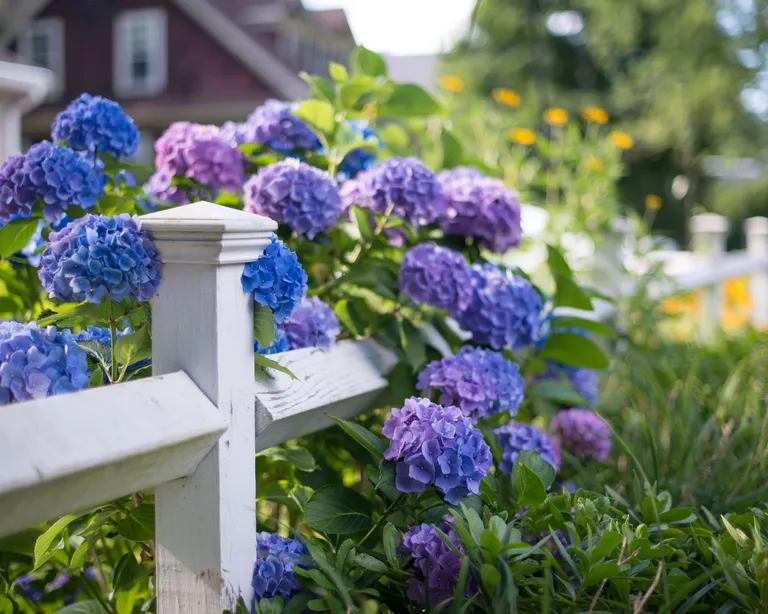
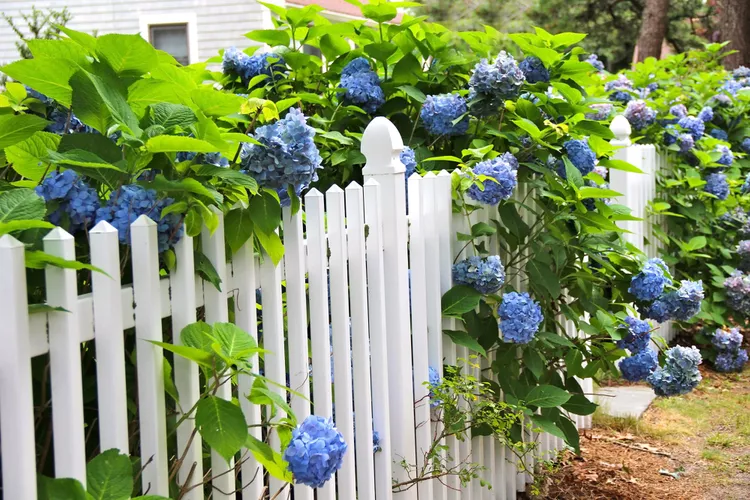
A plain fence line bores me every time I see one. Hydrangeas turn that same space into a living wall of color. Pick smaller varieties for a low border, or go big with oakleaf types if you want real privacy.
I’ll admit hedges take more work than single plantings. Regular pruning keeps the shape tidy and encourages fuller growth. Skip that step, and you’ll end up with a floppy, uneven line instead of a hedge.
Plant them close enough to touch as they mature. That’s what creates the solid, unbroken look you’re after. Give it a season, and you’ll forget the fence was ever bare.
10. Soften Steps or a Sloped Yard with Symmetrical Planting
Steps look stark without something growing alongside them. I like flanking mine with matching hydrangeas on each side. The symmetry pulls your eye straight up toward the front door.
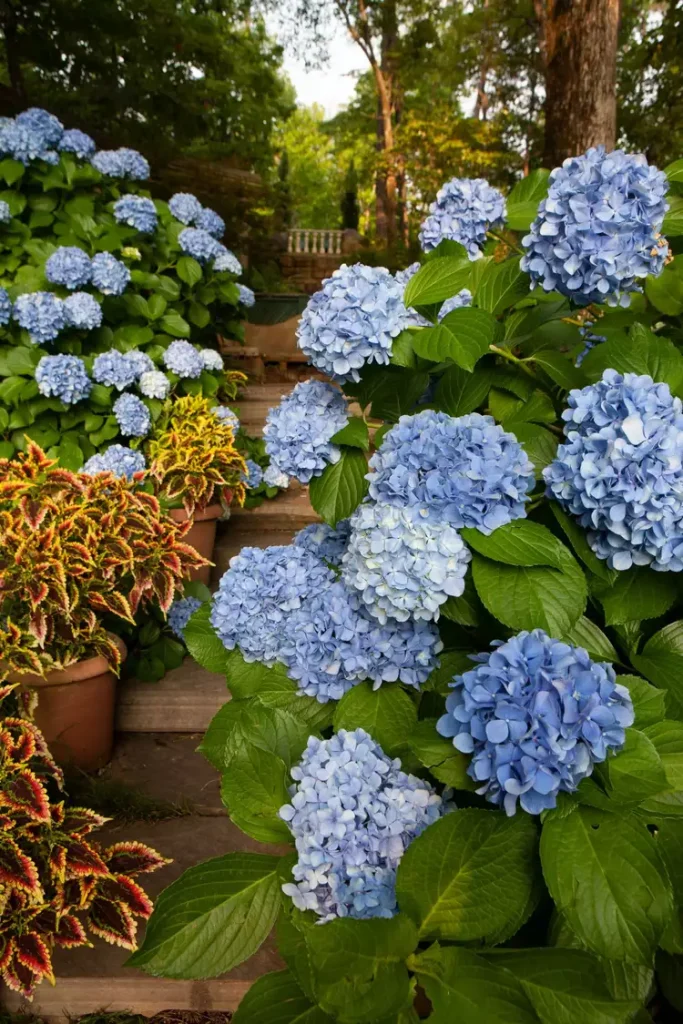
Bigleaf varieties with big, dinner-plate blooms make the biggest impact here. Their size holds its own against stone or concrete steps. Sloped yards benefit too, since hydrangeas planted along an incline catch your eye as you walk down.
Choose a variety that won’t outgrow the space in a year or two. Check the mature height before you plant. A little research now saves a lot of pruning later.
11. Use Lime-Green Blooms for a Modern Front Yard
Not every front yard wants pink and blue everywhere. Some homes call for something cooler and more contemporary. That’s where lime-green hydrangeas earn their keep.
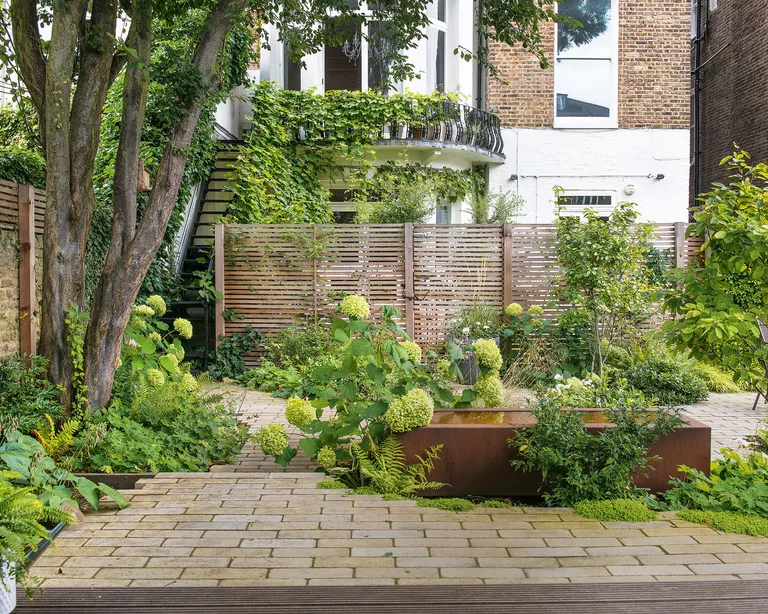
‘Limelight’ and ‘Little Lime’ both deliver that fresh, chartreuse color without looking loud. I think they pair beautifully with modern homes done in wood and stone. Concrete pavers and clean lines only make the green pop more.
Smaller spaces benefit from ‘Little Lime’ especially, since it stays compact. Full sun or partial shade both work fine for these varieties. Either way, your front yard gets a color nobody else on the street is using.
12. Balance Bold Architecture with Rounded Shapes
Sharp angles dominate a lot of modern home designs these days. Hydrangeas soften that look better than almost any other shrub I’ve planted.
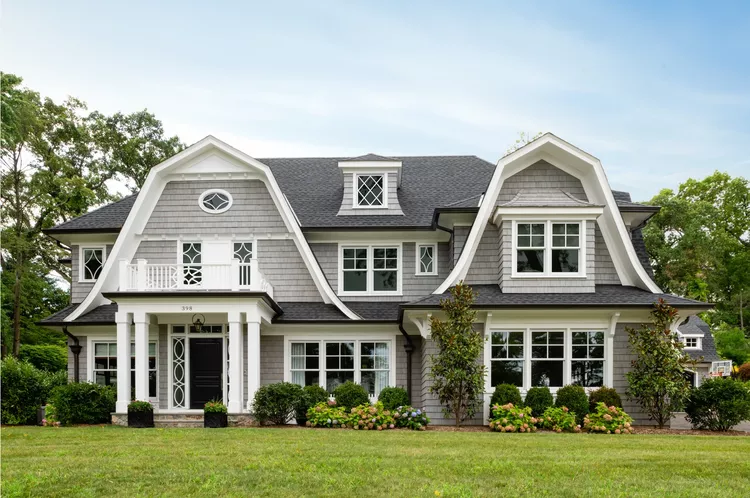
Their naturally round shape works like a visual counterweight against straight lines and hard edges.
I’ve watched this trick transform a boxy front yard into something warmer and more welcoming. Plant them near corners or along straight walkways where the architecture feels most rigid.
The contrast does more work than you’d expect from one plant choice.
Round shrubs near angular homes just feel intentional. It’s a small design move with a big payoff.
13. Welcome Guests with a Pastel or White Entrance Display
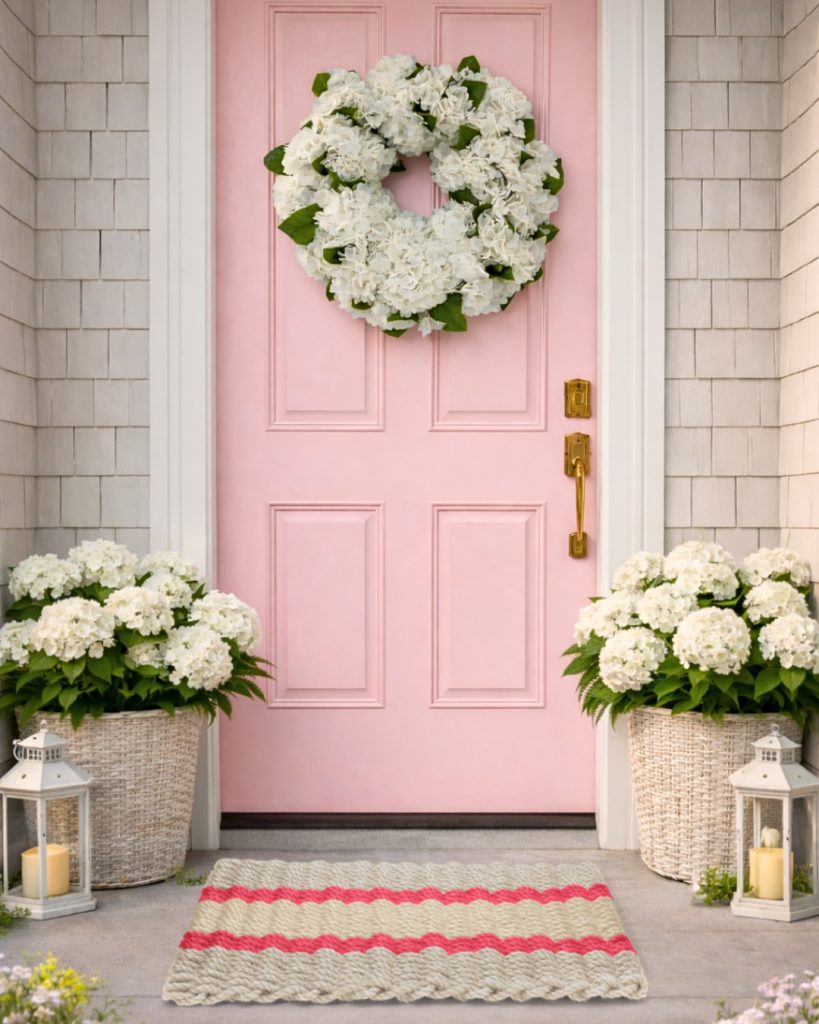
Nothing says welcome quite like soft, pastel or white blooms greeting you at the door. I love pairing pink and white hydrangeas together for an entrance that feels warm without trying too hard. Matching planters on either side of the door tie the whole look together.
Choose a container that fits your home’s color and style. Size matters too. Guests should be able to spot it from the street, not squint to find it.
This idea works in nearly any climate or house style. Simple, welcoming, and hard to get wrong.
Final Thoughts
Thirteen ideas, one goal: a front yard that actually gets noticed. I didn’t need a landscaping degree to pull mine off, just patience and a little trial and error with soil and placement. You don’t need all thirteen ideas either.
Pick two or three that fit your yard’s light and style. Start small, watch how your hydrangeas respond, then build from there.
Before long, you might be the one fielding questions from curious neighbors.