Garden Mulch Calculator: How Much Mulch Do You Actually Need?

I’ve bought too little mulch more times than I’d like to admit.
You eyeball a garden bed, grab a few bags from the store, and by the third bed you’re back in the car for more.
Or worse, you overbuy and end up with half-empty bags sitting in the garage all winter.
That’s why I built this calculator.
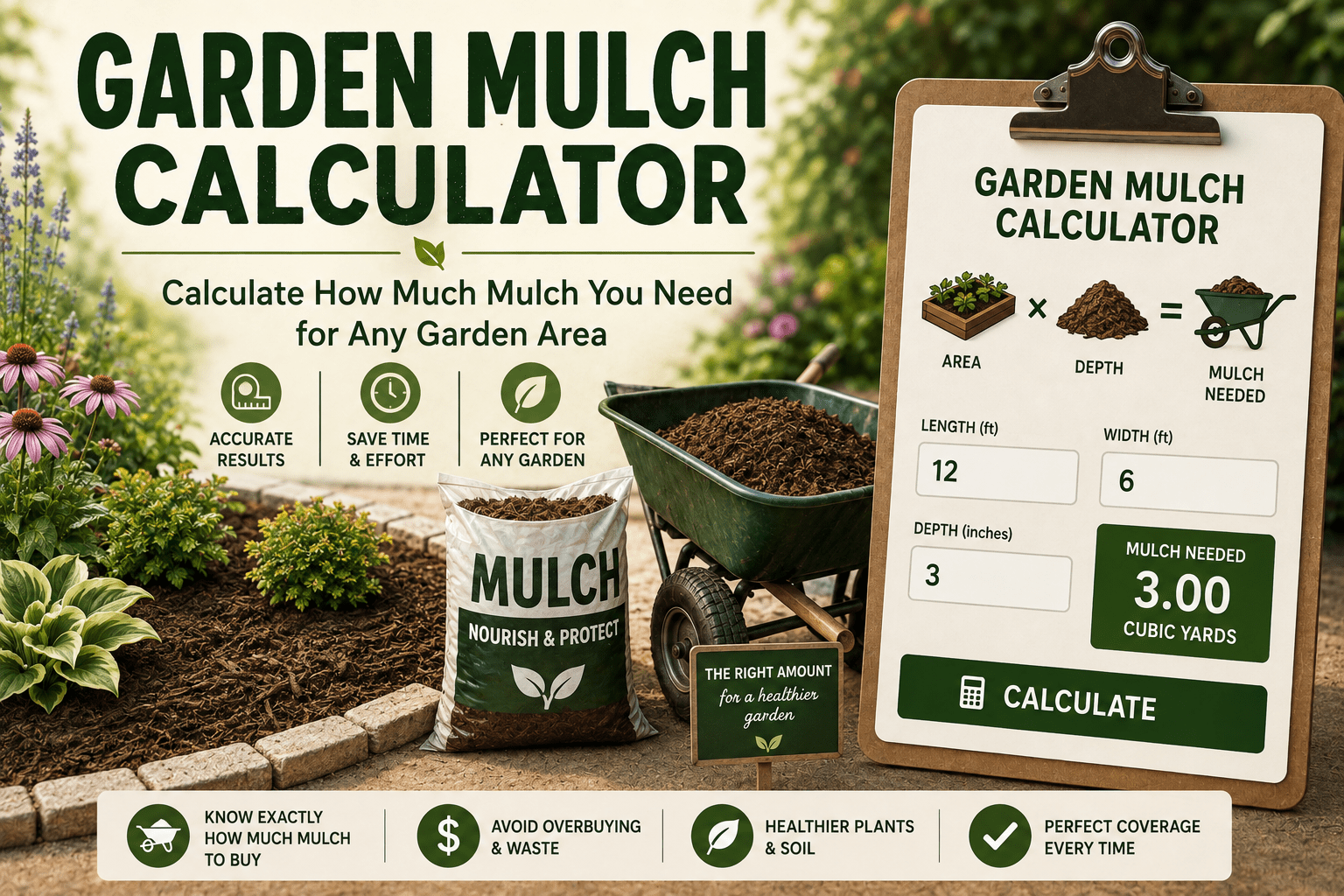
Punch in the size and shape of your beds, tell it how deep you want the mulch, and it’ll tell you exactly how many cubic feet, cubic yards, or bags to pick up.
You can add multiple sections too, so if your yard has a few different beds, you get one combined total instead of doing the math separately for each.
Try it below, then keep scrolling for depth guidelines, mulch types, and answers to the questions I get asked most.
Mulch Calculator
How to Measure Your Garden Bed for Mulch
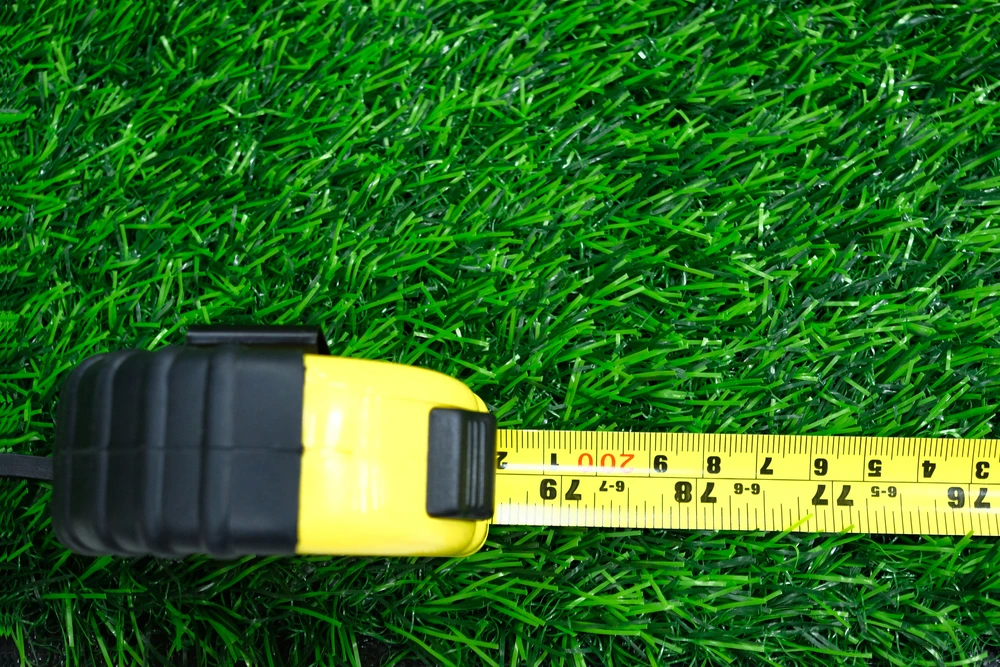
Grab a tape measure and note the length and width of each bed in feet.
If a bed is round, like a mulch ring around a tree, measure straight across the widest point to get the diameter.
Odd-shaped beds are easier to handle than you’d think. Break the shape into a few rectangles or circles that roughly cover the space, measure each one, and add them as separate sections in the calculator above.
Overlapping the pieces slightly is fine. It’s an estimate, not a geometry exam.
If you’re mulching several beds around the yard, add each one as its own section so you get a single combined total instead of running the numbers separately.
How Deep Should Your Mulch Be?
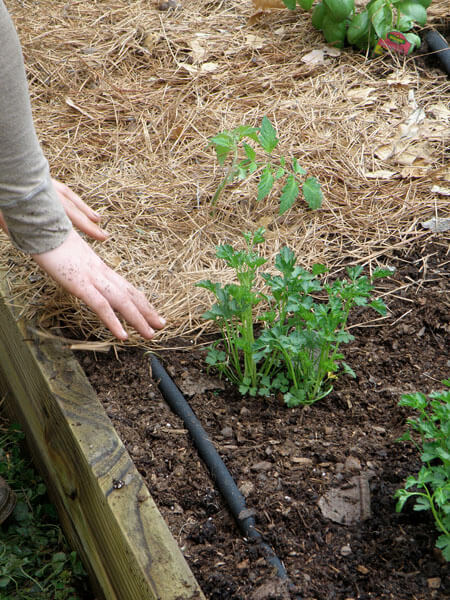
Depth depends on where you’re putting it and what it’s protecting.
Too thin and weeds push right through. Too thick and you risk smothering roots or trapping too much moisture against stems.
| Area | Recommended Depth | Notes |
|---|---|---|
| New Raised Vegetable Beds | 3–4 inches | Go thicker on new beds to choke out weeds early. Stick with fine, weed-free material like straw or shredded leaves. |
| Established Vegetable Beds | 1–2 inches | A light top-up is usually enough. Keep it pulled back from stems and seedlings. |
| Flower Beds & Shrub Borders | 2–3 inches | Bark, wood chips, or pine straw all work well here. Leave a gap around trunks and stems. |
| Pathways & Walkways | 3–4 inches | Coarser wood chips hold up best underfoot and resist washing away. |
| Around Trees | 2–3 inches | Spread in a wide ring, but never pile mulch against the trunk itself. |
Types of Mulch and When to Use Them
Shredded bark breaks down gradually and feeds the soil as it goes. It’s a solid all-purpose choice for small flower beds and around shrubs, and it holds its color longer than most other options.
Wood chips last longer than bark before they need replacing, which makes them a good fit for pathways and areas you don’t want to redo every season.
They decompose slowly, so they’re less useful if you’re trying to build up soil quickly.
Straw is a favorite in vegetable gardens because it’s light, breaks down fast, and is easy to work into the soil at the end of the season. Just make sure it’s weed-free straw, not hay, or you’ll be pulling volunteer grass all summer.
Pine straw (or pine needles) is common in the South and works especially well on slopes since it knits together and resists washing away in heavy rain.
Shredded leaves are free if you have trees on your property, and they’re one of the best things you can add to garden soil. Run them through a mower first so they break down faster and don’t mat together.
Whatever you choose for a vegetable garden, avoid anything dyed or treated with herbicide, and skip rubber mulch entirely around food crops.
Bagged Mulch vs. Bulk Mulch
For a bed or two, bagged mulch from a garden center is the easier option. Most standard bags hold 2 cubic feet, which is what the calculator above uses by default.
If your bags are a different size, just update the “Bag Size” field before calculating.
Once you’re covering a larger area, bulk mulch by the cubic yard is almost always cheaper and means fewer trips hauling bags.
Most local nurseries and landscape suppliers sell it by the yard and can deliver a load to your driveway. That’s when the cubic yard number from the calculator becomes the one you actually give them.
Mulch Application Tips
Keep mulch a few inches back from tree trunks and plant stems. Piling it up against a trunk (sometimes called a “mulch volcano”) traps moisture against the bark and invites rot and pests.
Water your beds before mulching if the soil is dry. Mulch holds moisture in, but it doesn’t add moisture on its own.
Fluff up old mulch before adding a fresh layer on top. If a bed already has 2 to 3 inches sitting there, you likely just need a thin refresh rather than a full re-mulch.
Frequently Asked Questions
How often should I re-mulch my garden beds?
Once a year is typical for most beds, usually in spring or fall. Organic mulches like bark and wood chips break down over time, so check the depth each season and top up as needed rather than stripping and replacing the whole layer.
Can I use grass clippings as mulch?
Yes, in thin layers. Grass clippings mat down quickly and can get slimy if piled too thick, so spread them no more than an inch deep at a time and let them dry out slightly first. Avoid clippings from lawns treated with herbicide.
Does mulch attract pests like termites or ants?
Mulch can create a moist, sheltered spot that some insects like, but it’s rarely the cause of a termite problem on its own. Keeping mulch away from your house’s foundation and tree trunks reduces the risk significantly.
Should mulch touch the base of my plants?
No. Leave a couple of inches of bare soil around stems and trunks. Mulch piled directly against a plant traps moisture and can lead to rot or disease.
How many bags of mulch are in a cubic yard?
A cubic yard is 27 cubic feet, so if your bags hold 2 cubic feet each, you’d need about 14 bags to equal one cubic yard.
What’s the cheapest way to mulch a large yard?
Buying in bulk by the cubic yard from a local supplier is almost always less expensive per square foot than buying bags, especially once you’re covering more than a few beds. Shredded leaves from your own yard are the cheapest option of all.
Can I mulch over weeds instead of pulling them first?
It’s better to pull or cut weeds down first. A thick layer of mulch can suppress new weed growth, but established weeds, especially ones with deep roots, can still push through.
Final Words
Mulching doesn’t need to be complicated, and buying the right amount the first time saves you a second trip to the store.
Plug your bed sizes into the calculator above, pick a depth that fits your project, and you’ll walk out with a number you can actually use, whether that’s bags on a cart or a delivery order for bulk mulch.
If you’re planning other yard projects, our raised bed soil calculator and garden edging calculator can help you plan those too.
Article Resources:
https://www.rhs.org.uk/soil-composts-mulches/woody-waste-using-as-mulch
https://extension.oregonstate.edu/news/add-organic-matter-improve-most-garden-soils