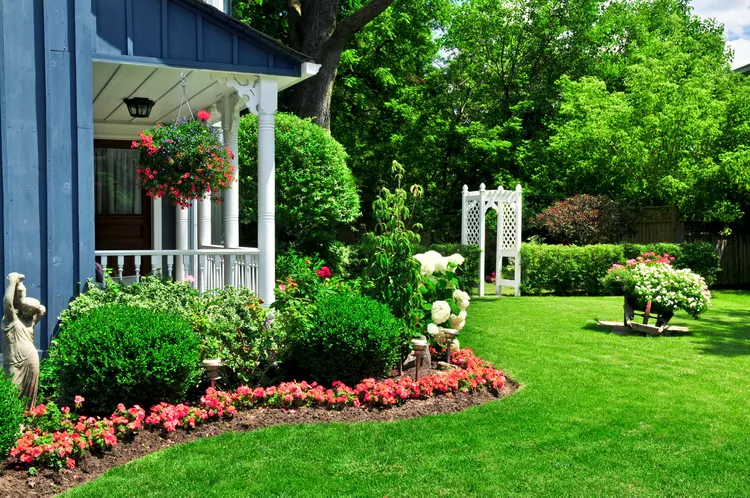
13 Front Yard Flower Beds Against the House

A bare wall next to a front door looks lonely. My own house felt exactly that way until I planted a simple bed right against the foundation.
Curb appeal jumped overnight, and neighbors actually stopped to compliment it.
You don’t need a landscaping degree to pull off the same transformation.
Below, I’m sharing 13 front yard flower bed ideas that work beautifully against a house, straight from real gardens and real trial and error.
Why Flower Beds Against the House Actually Work
Foundation beds soften the hard lines of any home. Concrete, brick, and siding all look a little stiff on their own. Flowers add movement, color, and life right where visitors first look.
Curb appeal jumps the moment you add a bed like this. Guests notice a welcoming entryway before they even reach your door. That first impression matters more than most homeowners realize.
Structure matters too. Shrubs and grasses give a bed its bones, while soft blooms fill in the rest. Balance between the two keeps a bed looking intentional instead of messy.
Money talks, and this project won’t drain your wallet. A few perennials, some mulch, and a weekend of digging go a long way. Even a small bed transforms how a house looks from the street.
Wildlife benefits show up too. Bees and butterflies flock to pollinator-friendly flowers planted near a foundation. Drought-tolerant varieties cut down on watering, which saves both time and money.
Foundation beds also hide flaws. Cracked concrete, exposed pipes, or an ugly utility box all disappear behind the right plants. Isn’t that a nice bonus on top of the beauty?
Prepping the Bed the Right Way
Skip the fancy tools. Grab a hose, some gloves, and a shovel instead. That’s really all you need to start this project right.
Clear the space first. Pull up sod or weeds along the wall where your bed will sit. Give yourself at least two feet of planting room between the house and your first row of plants.
Curves beat straight lines against a house. Lay a garden hose along the ground to sketch a natural shape before digging. Straight edges can feel harsh next to a home’s foundation, while soft curves feel welcoming.
Soil quality decides everything. Mix compost or topsoil into the area to give roots a strong start. Poor soil stunts growth no matter how nice your plant choices are.
Downspouts cause more damage than people expect. Water pouring straight from a spout can drown roots or erode soil within a season.
Add river rock under the spout, or extend it further into the bed, so plants stay dry enough to thrive.
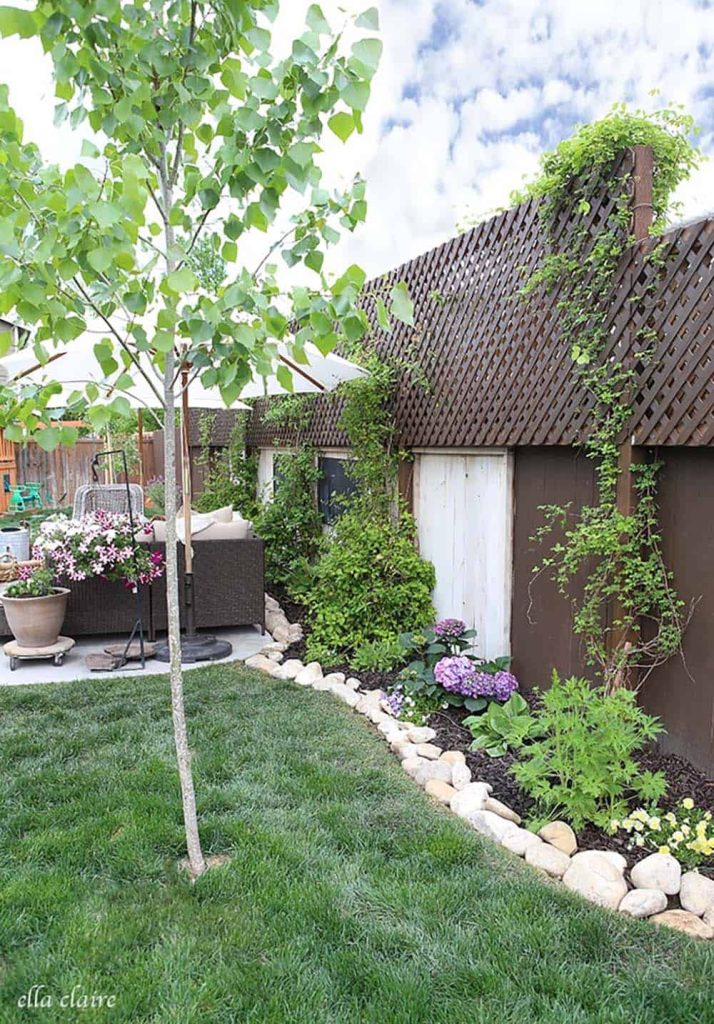
Edging keeps everything tidy. Bricks, rocks, or a clean shovel-cut edge stop grass from creeping in and mulch from washing out. That small step saves hours of maintenance later.
13 Stunning Front Yard Landscaping Ideas
1. Layered Cottage Charm
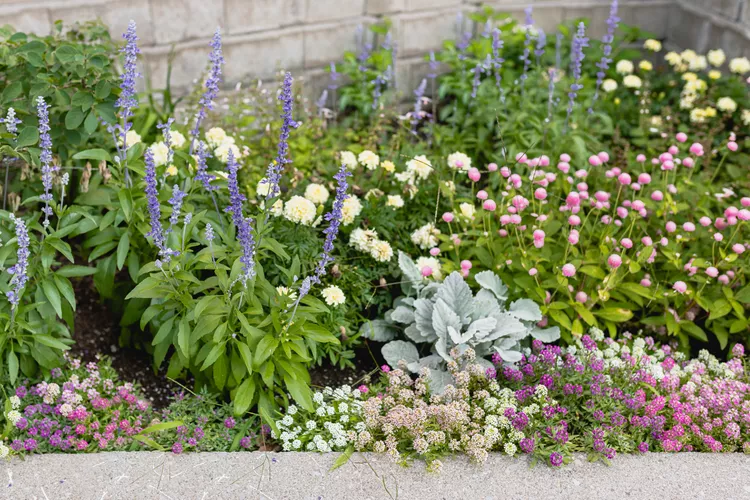
Cottage beds never go out of style. Lavender, daylilies, and hydrangeas mix together for that soft, lived-in look everyone loves on Pinterest.
Height matters here: taller hydrangeas sit near the wall, daylilies fill the middle, and lavender spills toward the lawn.
Fragrance becomes a bonus with this combo. Bees and butterflies show up constantly once lavender starts blooming. Doesn’t that sound better than a plain strip of mulch?
Also read: 15 Genius Small Front Yard Flower Bed Ideas
2. Trellis and Climbing Vines
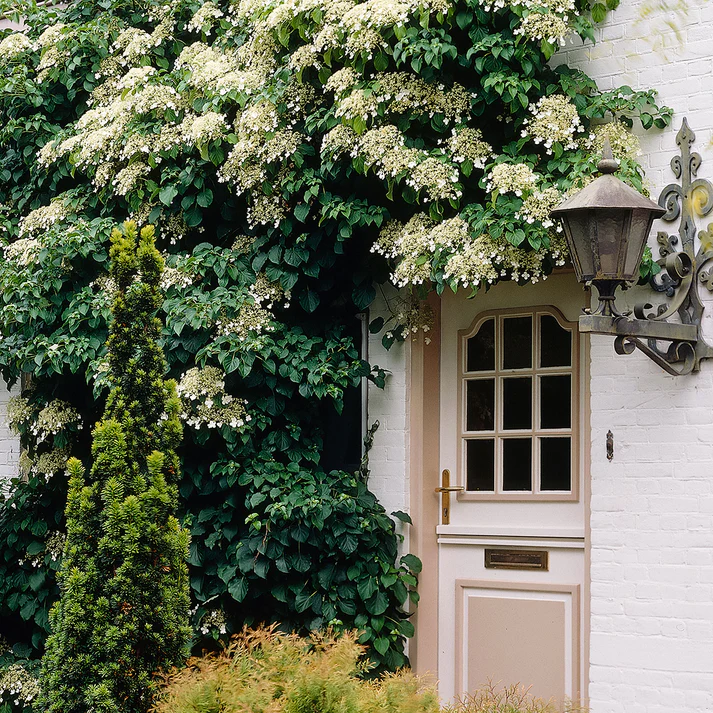
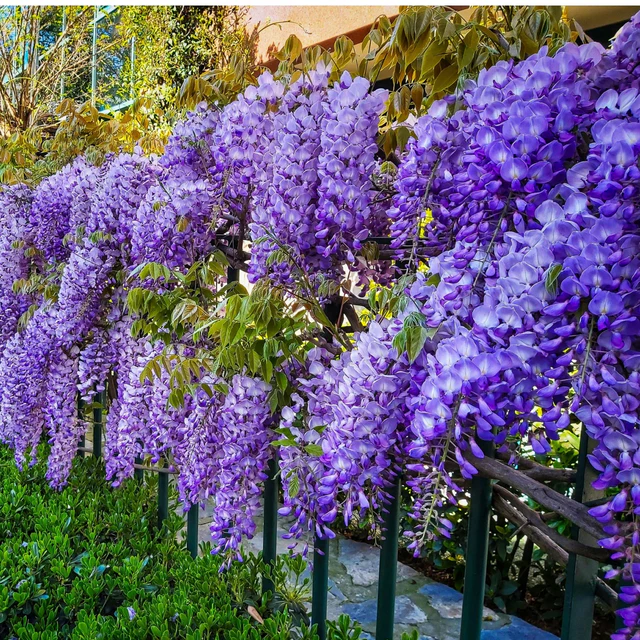
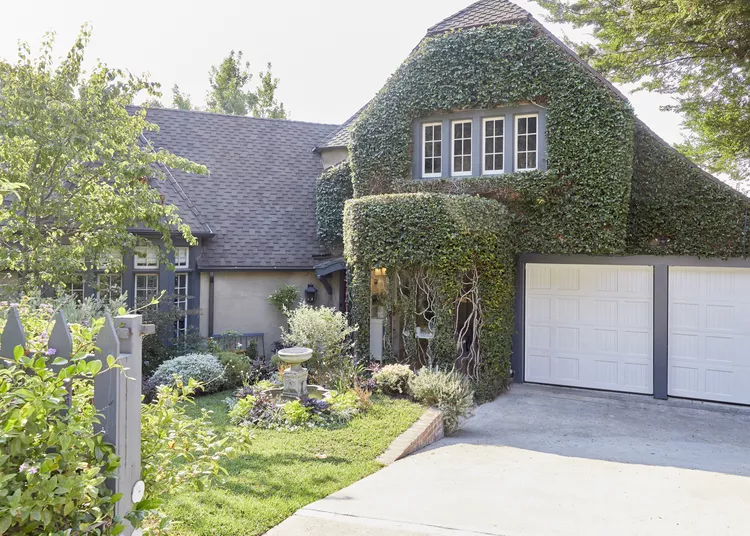
Bare siding practically begs for a trellis. Climbing hydrangea or clematis softens tall walls and adds vertical interest fast.
Install the trellis first, then plant the vine right at its base.
Training matters more than people expect. Guide new growth up the structure early, or vines sprawl sideways across your walkway instead.
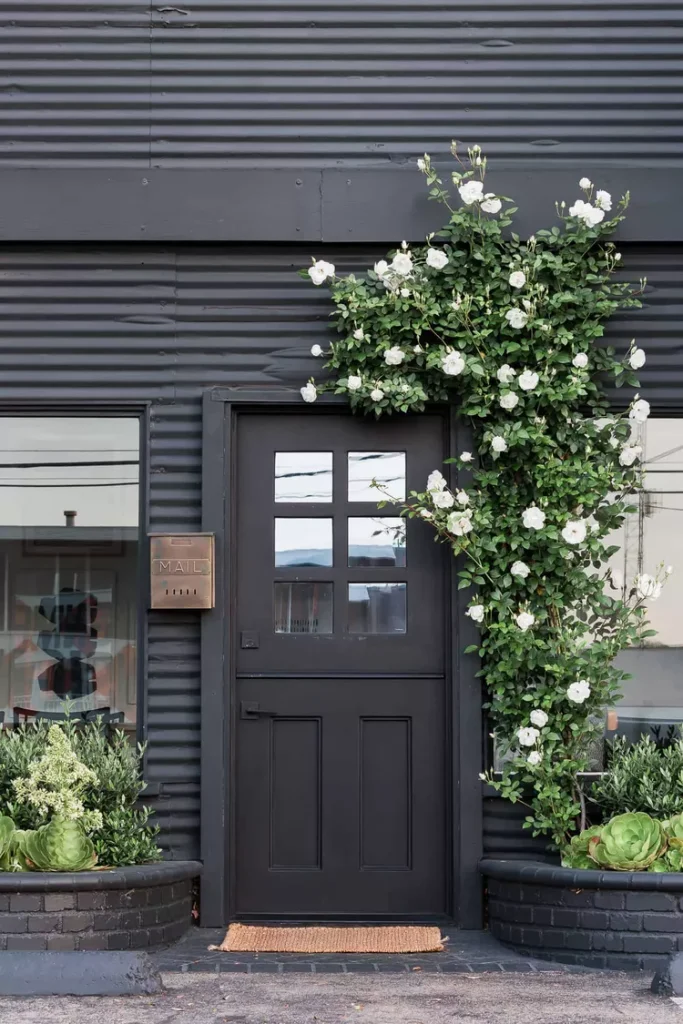
A little weekly attention keeps everything climbing where you want it.
Also read: 15 Front Yard Landscaping Ideas With Rocks for Style
3. Layered Rows for a Polished Look
Three simple rows create instant structure. Hydrangeas, boxwoods, or ornamental grasses go in back, closest to the house.
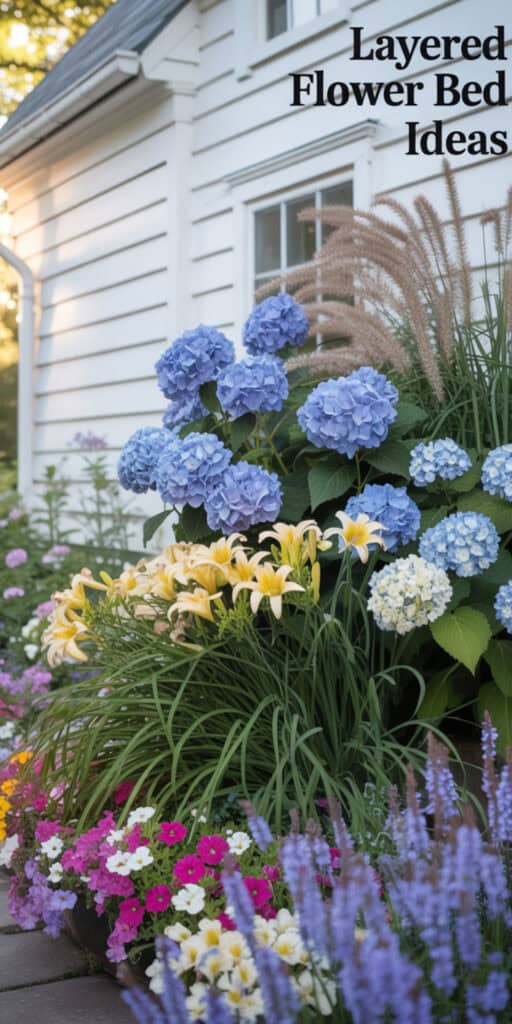
Daylilies, spirea, or hostas fill the middle row, while lavender, marigolds, or petunias finish things off up front.
Repetition makes this layout look professional. Repeat the same three-row pattern down the entire bed length. That rhythm is what separates a designed bed from a random scattering of plants.
4. Window Boxes for Instant Charm
Window boxes solve a problem ground beds can’t touch. Attach them directly under windows along the front of your house for flowers right at eye level.
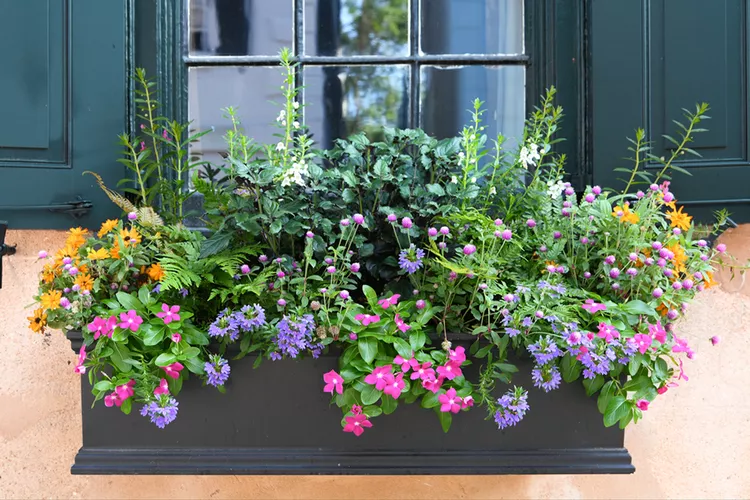
No digging required, and no worrying about foundation drainage either.
Herbs and trailing flowers both work well in these boxes. Petunias spill nicely over the edges, softening the hard line of a windowsill.
Swap the plants each season, and your whole house looks refreshed in minutes.
5. Shade-Loving Corner Beds
Corners near a house often sit in shadow most of the day. Hostas thrive exactly there, tucked against foundation walls where sun barely reaches.
Their broad leaves add texture without needing a single flower.
Ferns pair beautifully alongside hostas in these shaded spots. Both plants tolerate low light and still look lush all season. Isn’t it nice knowing a dark corner doesn’t have to stay empty?
6. Pink and Green Foundation Beds
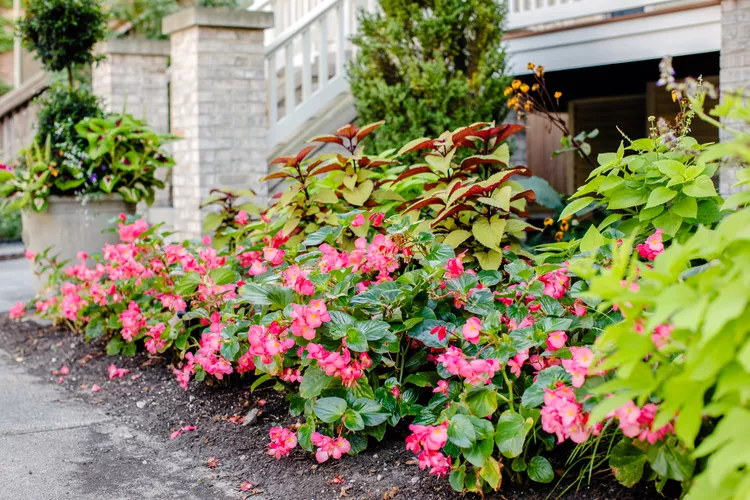
Color pairing makes a foundation bed pop without feeling chaotic. Peonies, roses, or hydrangeas bring the pink, while boxwood or euonymus fills in the green backdrop behind them. That contrast pulls the eye straight to your front door.
Mulch ties the whole look together. A fresh layer keeps moisture locked around the roots while giving the bed a clean, finished edge.
Simple color pairing like this photographs beautifully too, which explains why it shows up constantly on Pinterest.
7. Mixed Shrub Beds Near an Entrance
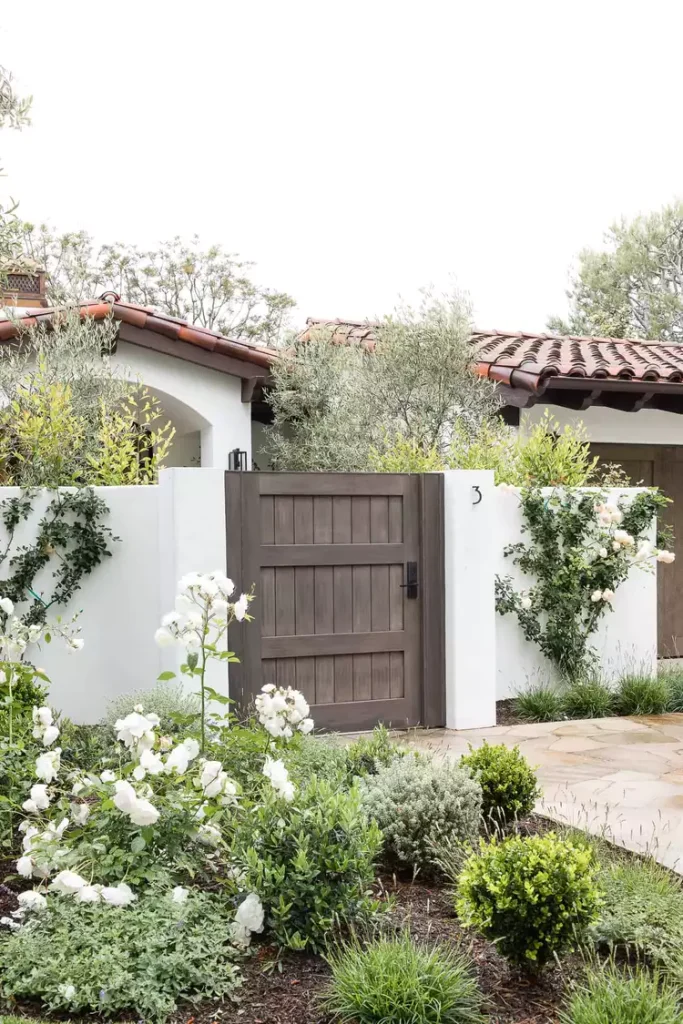
Entrances need plants that won’t outgrow their space and block the door. Evergreen shrubs give year-round structure right where guests walk past daily.
Colorful flowers tucked between the shrubs add depth without overwhelming the entryway.
Sunlight and mature plant size both matter near a door or gate. Check how tall a shrub grows before planting it close to a walkway. A little research now saves you from pruning battles later.
8. Classic Rose Gardens by the Door
Roses never feel outdated next to a house. Plant rose bushes in pink, red, or white right along the foundation for that timeless, romantic look.
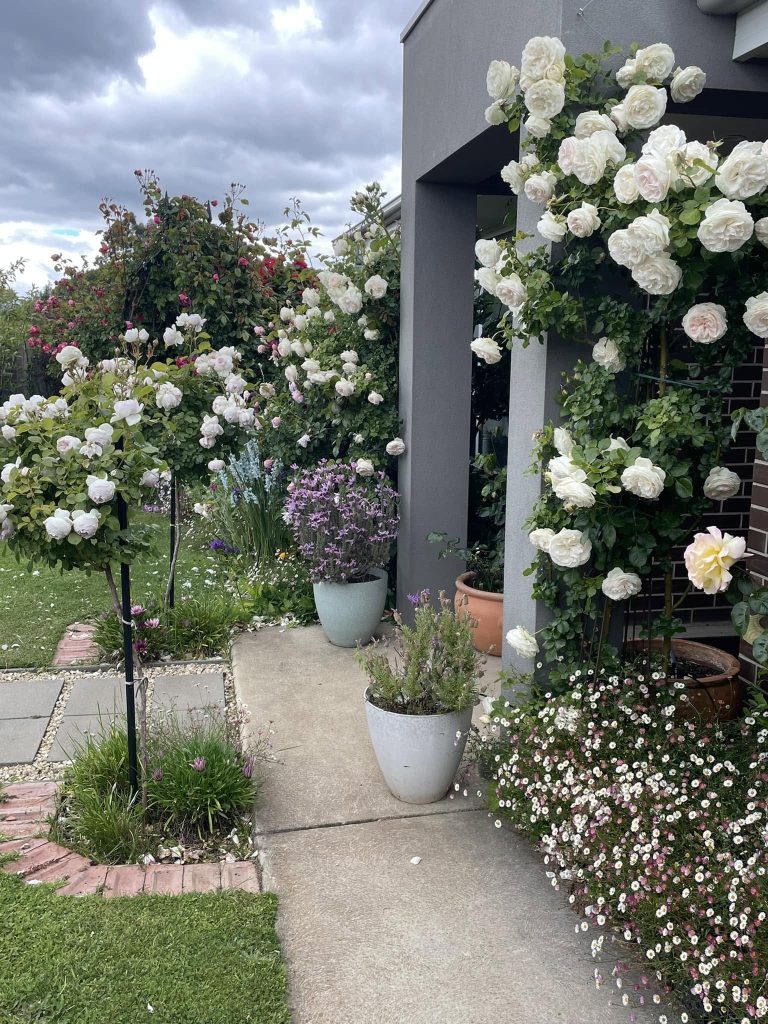
Surround them with low greenery to keep the whole bed from feeling too formal.
Sunlight matters a lot here. Roses need several hours of direct sun to bloom well, so check your wall’s exposure before planting. South-facing walls almost always work best for this idea.
9. Drought-Tolerant Beds for Sunny Walls
Some walls bake in sun all afternoon, and regular flowers just can’t keep up. Lavender, salvia, and penstemon handle that heat without constant watering.
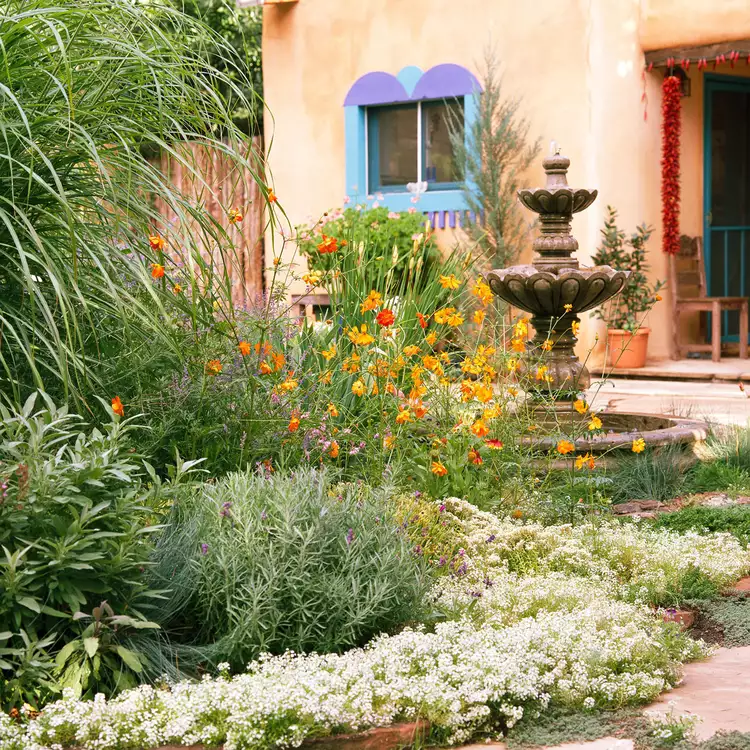
Surround them with gravel or mulch to hold in what little moisture they need.
Watering less sounds appealing to almost everyone. These plants actually prefer drier soil, so skipping a day or two of watering won’t hurt them.
I switched one hot, west-facing bed to this combo and haven’t touched a hose since.
10. Flowering Trees as a Foundation Anchor
A single tree changes everything about a foundation bed. Dogwood, cherry blossom, or magnolia trees bring big, showy blooms right against the house for a season-long focal point.
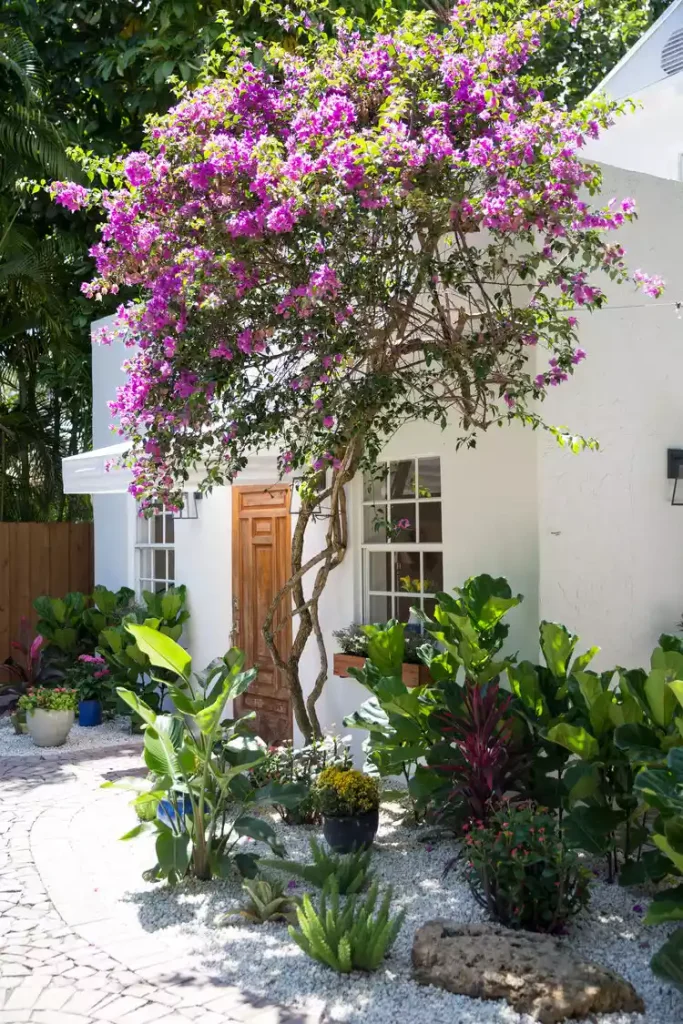
Plant it slightly away from the foundation, though, since roots need room to spread.
Smaller plants fill in nicely around the base. Colorful flowers, low shrubs, or groundcovers tucked beneath the tree tie the whole bed together.
Doesn’t a flowering tree just make the whole yard feel more established?
11. Wildflower Beds for a Relaxed Look
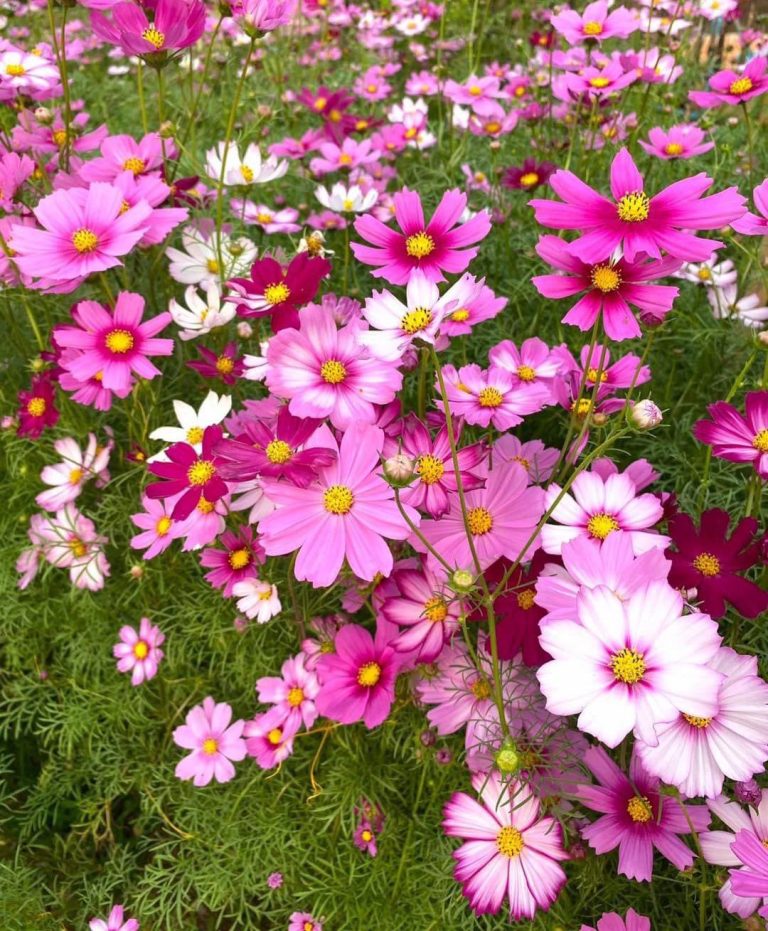
Not every foundation bed needs a strict design. Scatter wildflower seeds like black-eyed Susans, coneflowers, and bachelor’s buttons for a loose, meadow-style look.
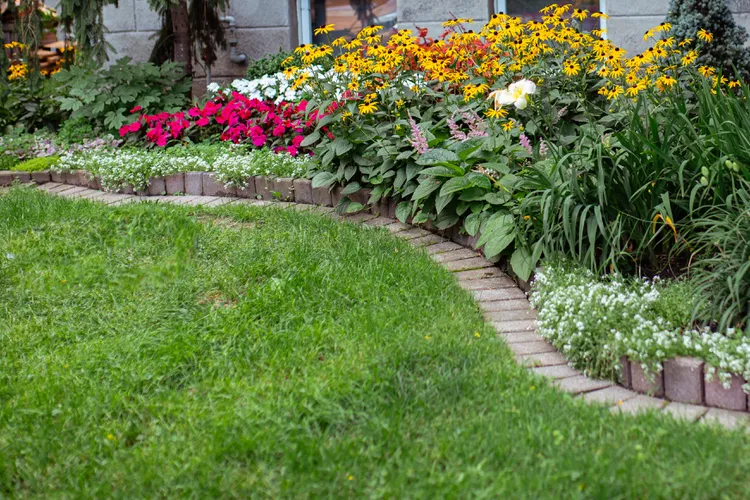
This works especially well along a longer stretch of wall.
Upkeep stays refreshingly simple. Wildflowers mostly take care of themselves once established, needing just an occasional trim. Sunlight is the only real requirement, so save this idea for a wall that gets plenty of it.
12. Monochromatic Beds for a Sleek Look
Sometimes less really is more. Stick to one or two colors, like white and green, for a bed that looks calm and put-together against any house style.
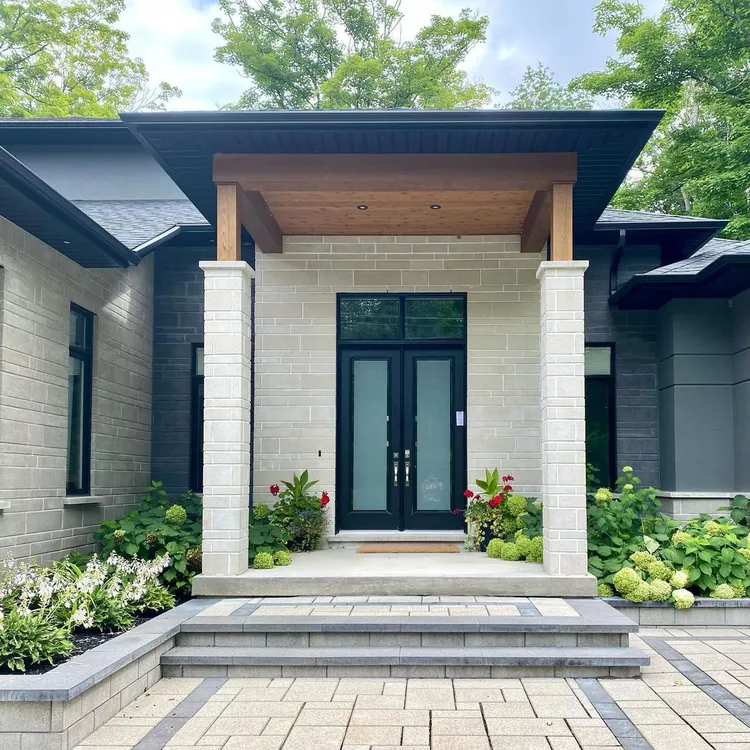
Whites and soft greens especially suit modern or minimalist homes.
Edging sharpens this look even further. Metal, stone, or concrete borders keep the bed’s lines crisp and intentional. A monochromatic bed also hides dead blooms better than a busy, multicolor mix.
13. Raised Beds for Dark-Colored Houses
Dark siding needs bright plants to avoid looking flat. Bold reds, electric blues, and vivid yellows stand out beautifully against black or charcoal exteriors.
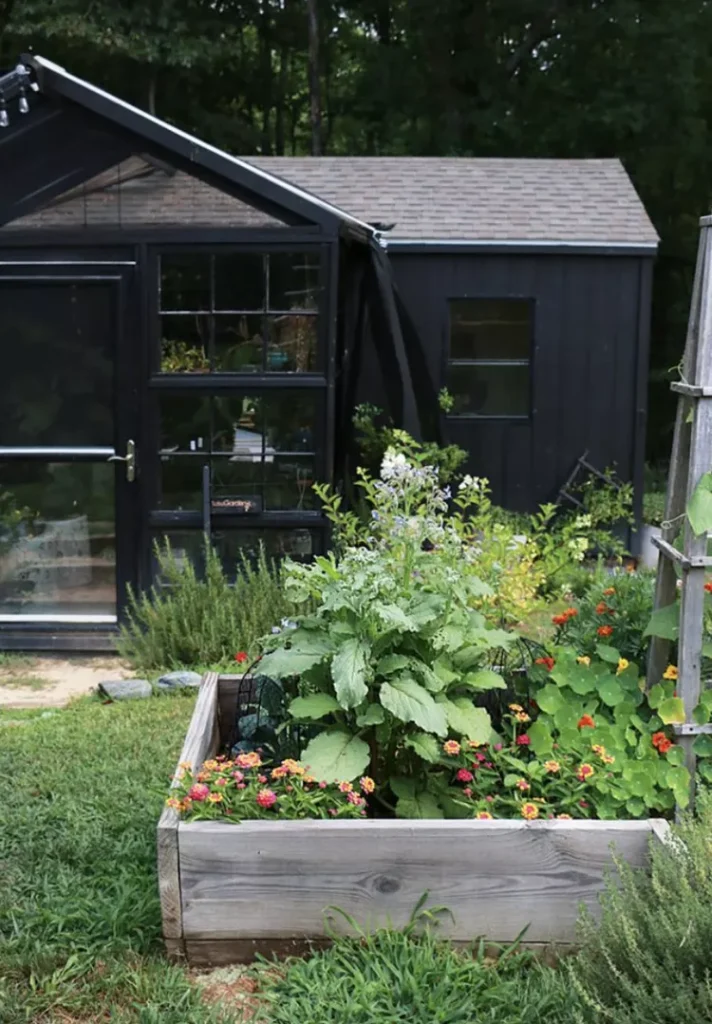
A raised bed lifts those colors up, right where passersby actually notice them.
Compact plants work best in this setup. Dwarf shrubs and low perennials won’t overwhelm a smaller raised space near the door. My neighbor’s dark gray house went from flat to striking the second she added one.
Final Thoughts
Thirteen ideas, one simple goal: a house that finally matches the effort you put into it. Every option above works directly against a foundation, whether you want roses, wildflowers, or a single flowering tree.
Start small if money’s tight, and remember that free perennial divisions count just as much as pricey nursery plants.
Grab your gloves this weekend. Pick one idea from this list and just start digging. Trust me, that first bloom against your house is going to feel like a small victory worth bragging about.