Raised Bed Soil Calculator: Know Exactly How Much Soil to Buy

Ever stood in the garden center parking lot, staring at bags of soil, guessing how many to load into your cart?
You’re not alone.
Figuring out soil volume by eye almost always ends one of two ways: you run short halfway through filling your bed, or you haul home six extra bags you didn’t need. Either one is annoying and neither is cheap.
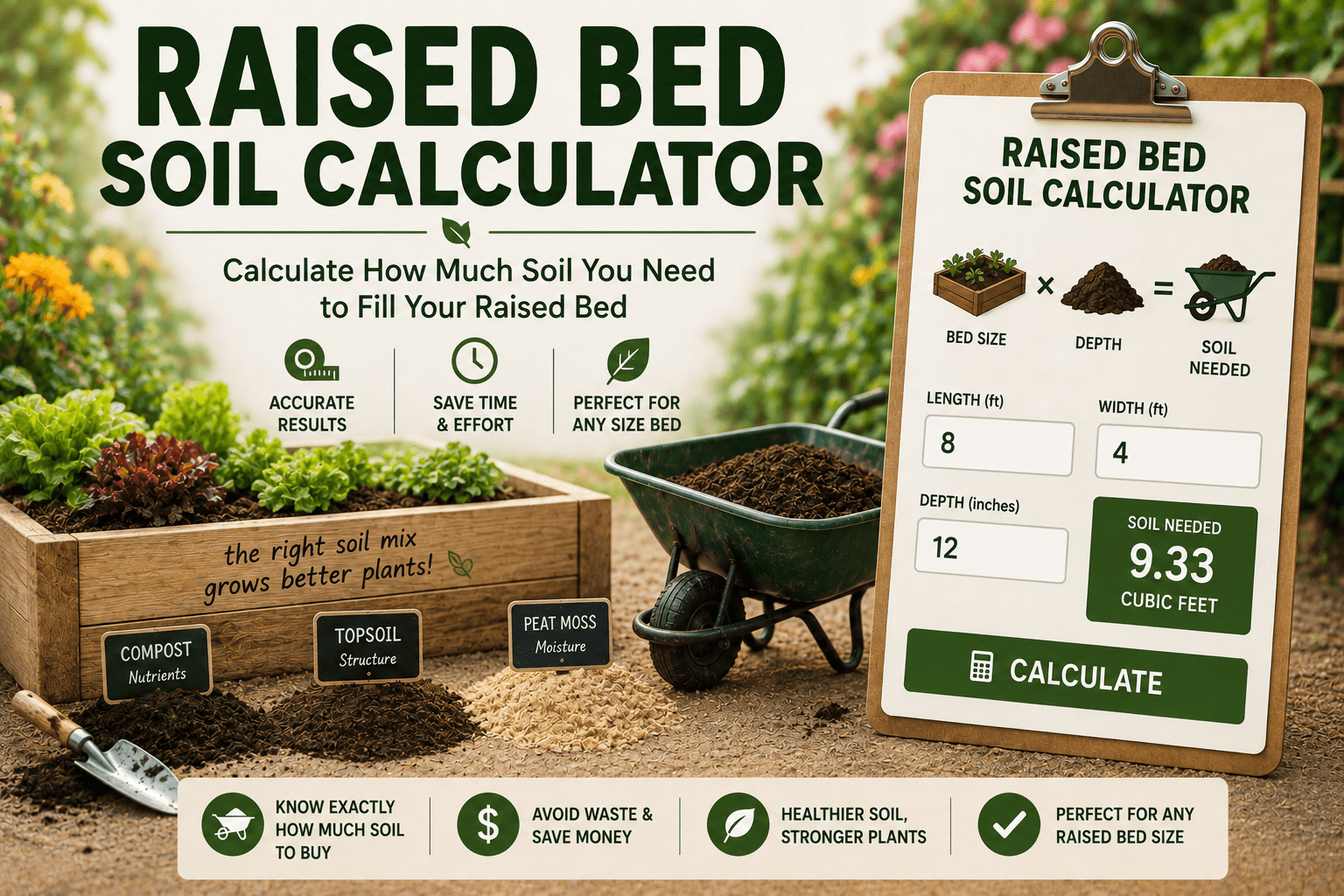
That’s why we built the calculator below. Punch in your bed or pot dimensions, pick a soil mix, and it tells you exactly how much you need in cubic feet, cubic yards, or liters.
It’ll even estimate the cost so you know whether bagged soil or a bulk delivery makes more sense for your project.
Raised Bed & Container Soil Calculator
How to Use the Calculator
Start by choosing your units and whether you’re filling a raised bed or a round pot. For a bed, measure the inside length, width, and depth.
Inside measurements matter here, not the outside of the frame, since that’s the space soil actually fills. For a pot, measure straight across the top for diameter, then the depth from rim to base.
Got more than one bed or pot? Click “Add Another” and enter each one separately. The calculator adds them all together, so you get one shopping list instead of doing math five times.
Once your dimensions are in, pick a soil mix recipe, choose a bag size you can actually find locally, and hit calculate.
If you already have quotes from a soil supplier, drop those prices into the cost fields and it’ll tell you whether bags or a bulk load saves you more.
Choosing the Right Soil Mix
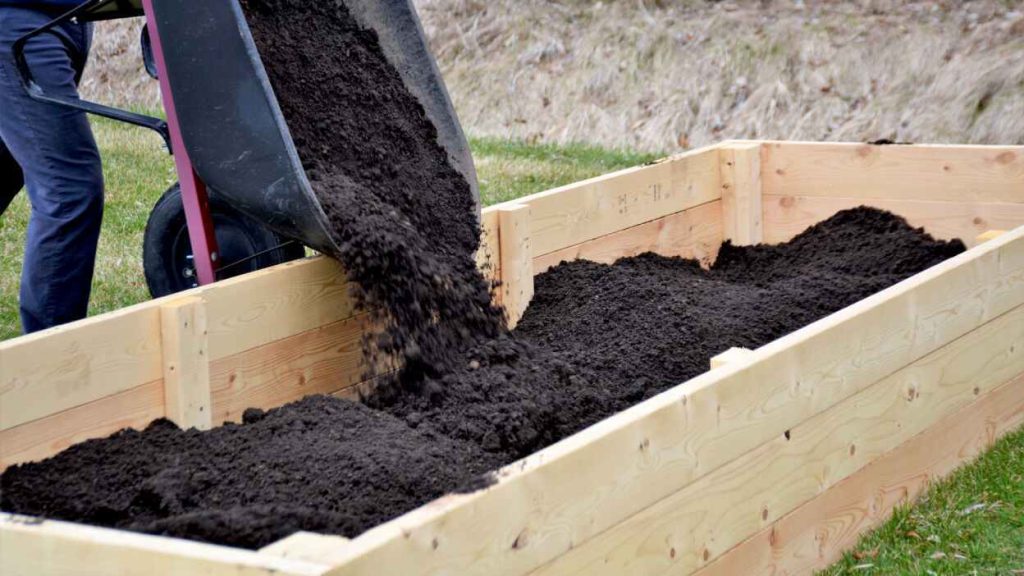
Raised beds don’t do well with straight garden soil dumped in from the yard. Native soil compacts fast once it’s boxed in, and roots hate that.
A blended mix keeps things loose enough for roots to spread while still holding onto water and nutrients.
The standard 60/30/10 recipe works for most vegetables and flowers:
- 60% topsoil for structure and weight
- 30% compost for nutrients and better drainage
- 10% perlite or coarse sand for airflow around roots
If your beds tend to dry out fast or you’re growing heavy feeders like tomatoes, try the richer 40/40/20 blend instead, with equal parts topsoil and compost and a slightly larger aeration share.
Either way, skip the temptation to fill a bed with 100% compost. It looks great on day one and then compacts into something closer to mud by midsummer.
Also read: Avoid These 10 Mistakes When Building Raised Garden Beds
Best Soil for Pots and Containers
Containers play by different rules. There’s less room for roots and less soil to hold moisture, so a heavier bed mix will drain poorly and suffocate roots in a pot.
Go lighter here. A basic potting mix of compost, coconut coir or peat, and perlite gives you the drainage and moisture balance containers need.
You can buy potting mix pre-bagged, which is usually the easiest route for a handful of pots. Mixing your own only really pays off once you’re filling several large planters.
Soil Depth by Plant Type
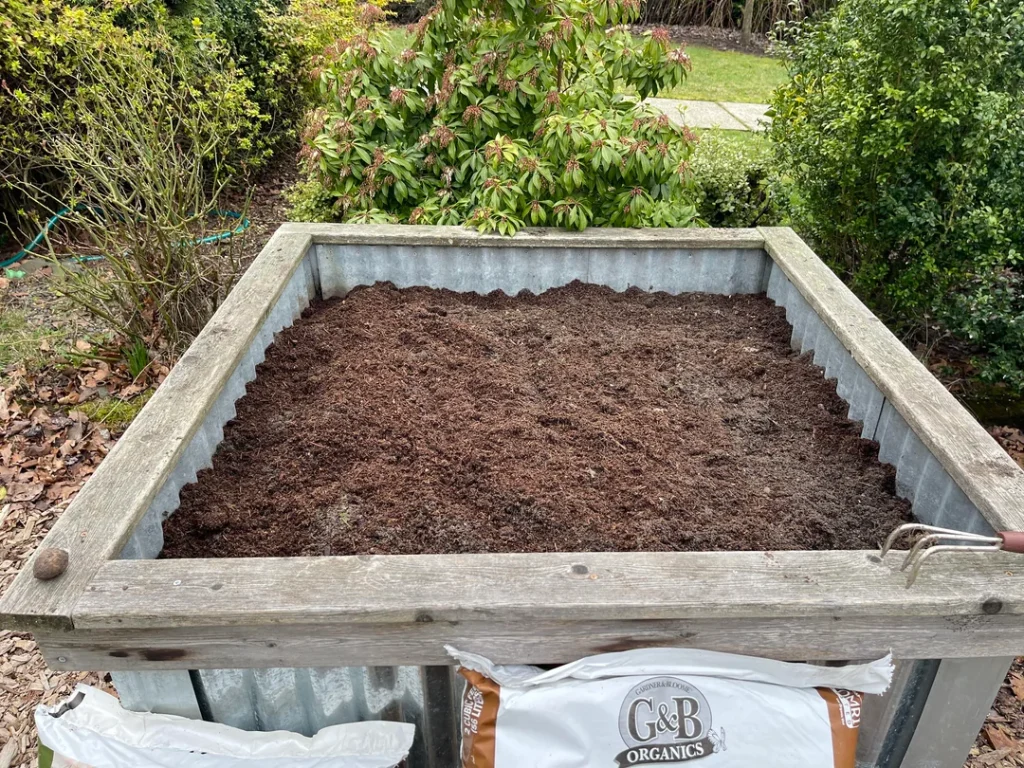
Depth is where a lot of raised beds fall short. Six inches is fine for lettuce, but that same depth will stunt your carrots or leave tomatoes rootbound. Use this as a rough guide when deciding how deep to build:
- 6 to 12 inches: lettuce, spinach, radishes, herbs, most bedding flowers
- 12 to 18 inches: peppers, bush beans, broccoli, cabbage, onions
- 18 to 24 inches: tomatoes, cucumbers, squash, peas
- 24 inches or more: carrots, potatoes, asparagus, melons
If your bed sits directly on the ground rather than on a patio or gravel, you can often get away with a few inches less. Roots will just keep growing down into the native soil underneath.
Frequently Asked Questions
How much soil do I actually need for a 4×8 raised bed?
At 12 inches deep, a standard 4-foot by 8-foot bed holds 32 cubic feet of soil, or about 1.2 cubic yards.
Bump the depth to 18 inches and you’re looking at 48 cubic feet instead. Plug your exact numbers into the calculator above to skip the mental math.
Should I fill my raised bed all the way to the top?
Fill it close to the top, but leave an inch or two of headroom so water doesn’t run straight off the sides when you irrigate.
Keep in mind that soil settles after the first few waterings, so what looks slightly overfilled on day one usually ends up just right by week two.
What’s the difference between raised bed soil and potting soil?
Raised bed soil leans on topsoil for weight and structure, which works fine since beds sit on the ground and drain into it.
Potting soil is lighter and fluffier by design, made to drain well in a container with nowhere else for excess water to go. Using potting soil to fill a large bed gets expensive fast and still won’t hold nutrients as well as a proper bed mix.
Can I just use soil from my yard?
You can, but it’s rarely a good idea on its own. Native soil is often compacted, low in nutrients, or heavy in clay, and all of that gets worse once it’s boxed into a raised bed.
If you want to use what you’ve got, mix it generously with compost and sand rather than filling the bed with it straight.
What should go on the bottom of a raised bed?
For deep beds, a layer of sticks, dried leaves, or straw at the bottom saves you soil and breaks down slowly over time, a method sometimes called hugelkultur. If you’re building on grass, lay down cardboard first to smother weeds before you start filling.
Does soil settle over time, and should I plan for it?
Yes, usually by a few inches over the first season as watering compacts loose fill and organic matter breaks down. Most gardeners just top off with an inch or two of fresh compost each spring rather than overfilling from the start.
Final Thoughts
Getting your soil volume right saves you a wasted trip to the garden center and gives your plants the depth and structure they need to actually thrive.
Run your bed or pot dimensions through the calculator, grab the right mix, and you’ll spend a lot less time guessing and a lot more time planting.
Article Resources: