How to Use Epsom Salt for Ferns Safely

Epsom salt can help ferns, but only if you understand what it actually fixes. How to use Epsom salt for ferns isn’t about dumping crystals on soil, it’s about correcting a specific magnesium deficiency when fronds turn yellow between the veins.
If your fronds are greening up after treatment, you likely diagnosed correctly. But if yellowing persists, the problem may not be magnesium.
Per the American Society for Horticulture, Epsom salt should be applied at 1 tablespoon per gallon of water as a soil drench during the growing season.
Quick Answer
How to use Epsom salt for ferns: mix 1 tablespoon per gallon of lukewarm water.
Apply as a soil drench every 4 to 6 weeks during active growth.
Only treat ferns showing interveinal yellowing on older fronds.
Stop immediately if fronds continue yellowing after two applications.
What Epsom Salt Actually Does for Ferns
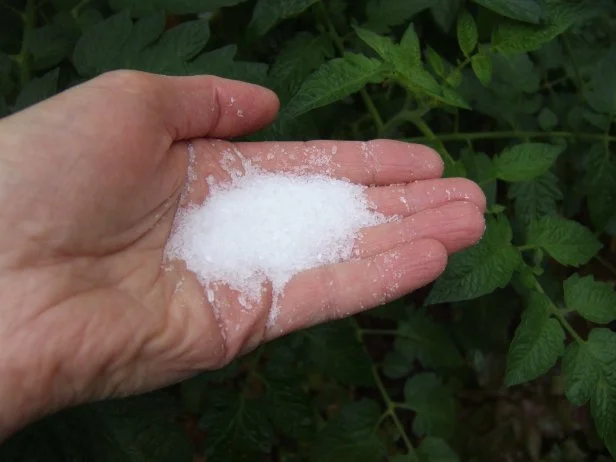
Epsom salt provides magnesium, an essential nutrient ferns need to produce chlorophyll.
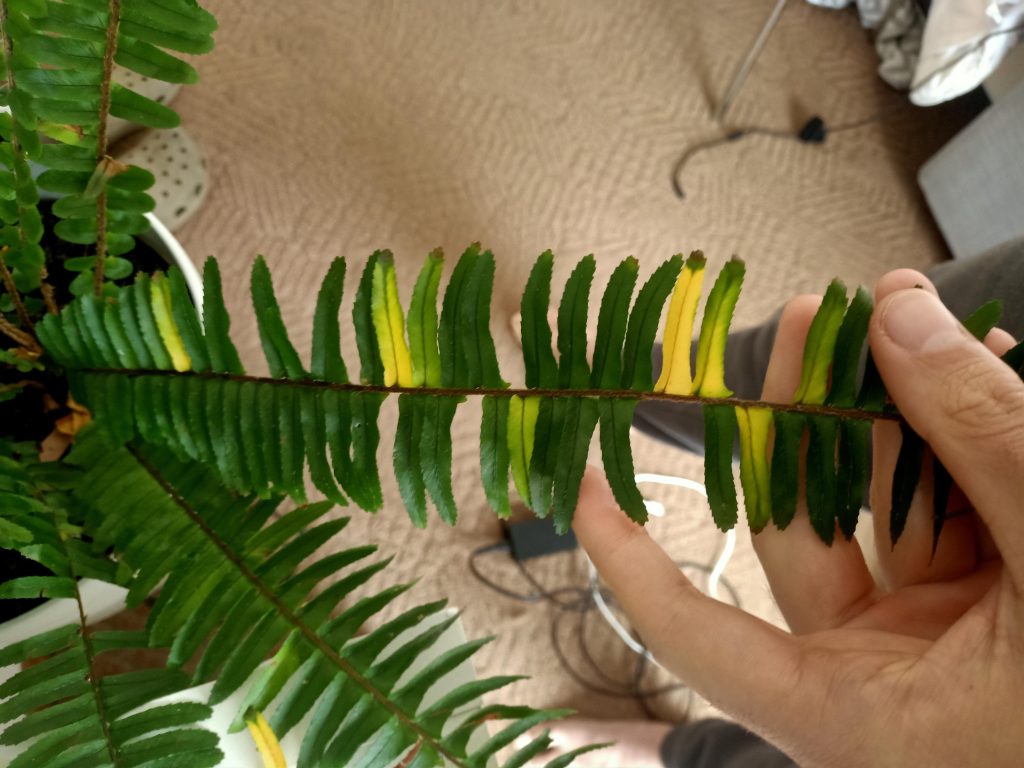
Manufacturer specifications from the American Society for Horticulture indicate that magnesium deficiency appears as yellowing between leaf veins while veins remain green.
This differs from nitrogen deficiency, which causes uniform yellowing starting from older fronds.
Ferns showing interveinal chlorosis on lower fronds are prime candidates for Epsom salt treatment.
However, ferns growing in consistently waterlogged soil may show similar symptoms due to root dysfunction rather than nutrient deficiency.
Signs Your Fern Needs Epsom Salt
Look for these specific visual indicators before treating:
- Yellowing between leaf veins with green veins intact
- Older fronds affected first (new growth stays green)
- No improvement after adjusting watering habits
If your fern shows different symptoms, such as brown leaf tips or uniform yellowing across entire fronds, Epsom salt won’t help.
Step-by-Step Application Method
Follow these precise steps for safe application:
Step 1: Prepare solution: Dissolve 1 tablespoon Epsom salt in 1 gallon lukewarm water
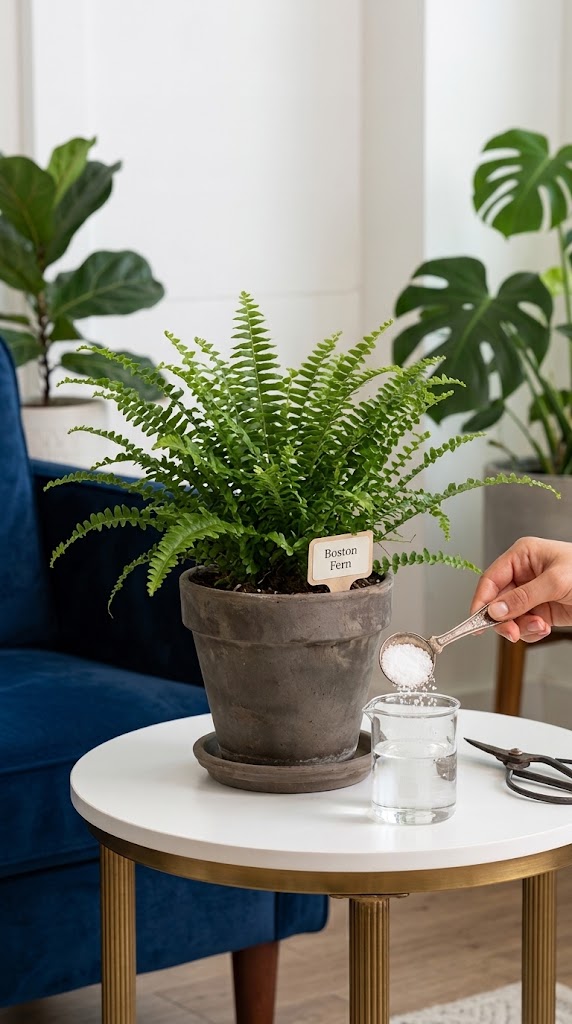
Step 2: Test soil moisture: Water soil should be slightly damp, not bone dry
Step 3: Apply evenly: Spray the solution evenly around the leaves and root zone until absorbed
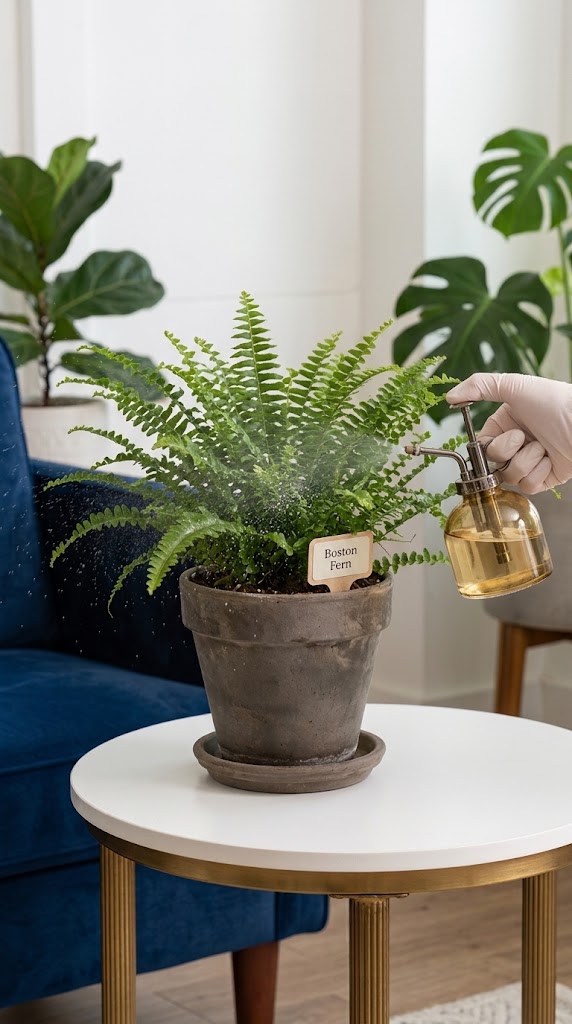
Step 4: Frequency: Every 4 to 6 weeks during March through September growing season
Step 5: Stop treatment: Discontinue if no improvement after two applications
Common Mistakes to Avoid
Skipping diagnosis leads to wasted effort and potentially harming your fern. Here’s what typically goes wrong:
- Over-applying: More than 1 tablespoon per gallon causes salt buildup
- Wrong timing: Applying during dormant periods stresses active roots less
- Ignoring soil conditions: Salty or compacted soil prevents nutrient uptake
- Misdiagnosing: Treating root rot with Epsom salt worsens the problem
When Epsom Salt Won’t Help Your Fern
Several conditions mimic magnesium deficiency but require completely different solutions:
| Symptom | Actual Problem | Correct Solution |
|---|---|---|
| Brown crispy leaf tips | Fluoride/chlorine toxicity | Switch to distilled water |
| Uniform yellow fronds | Nitrogen deficiency | Use balanced 10-10-10 fertilizer |
| Mushrooms in soil | Overwatering/root rot | Improve drainage, reduce watering |
Choosing Between Soil Drench and Foliar Spray
Soil drench delivers magnesium directly to root systems where ferns naturally absorb nutrients. Foliar spray (mixing 1 teaspoon per 16 oz spray bottle) works faster but requires humid conditions to prevent crystal residue.
For most indoor ferns, soil drench is safer and more effective since it matches how these plants evolved to uptake nutrients through their root systems.
How Do I Know When to Stop Epsom Salt Treatments
Most ferns respond within 4 to 6 weeks. If yellowing doesn’t improve by then, stop applying and focus on light, water, and soil issues instead. Continuing treatment won’t fix poor drainage or root damage.
Signs to discontinue:
- No green-up after two full applications
- New fronds emerging pale or stunted
- White salt crust forming on soil surface
- Fronds dropping despite consistent moisture
We recommend pausing treatments during fall and winter months for most indoor ferns. Dormant plants absorb nutrients slowly. Resume applications in early spring when new growth appears.
Reassessment matters more than persistence here. Overuse can cause more harm than underuse.
What Happens If I Apply Too Much Epsom Salt
Magnesium toxicity causes more problems than deficiencies in ferns. Excess salt damages root hairs, leading to brown leaf tips and stunted new growth.
Symptoms mirror underwatering stress:
- Crispy brown frond edges
- Sudden leaf drop without yellowing first
- Soil turning white or crusty on top
- Earthy smell indicating root decay
Flushing with plain water helps remove built-up salts. Water thoroughly until drainage runs clear. Then let soil dry slightly before normal watering resumes.
Avoid “more is better” thinking with Epsom salt. Dilution prevents most issues when following standard rates.
How Do I Prevent Future Magnesium Deficiencies
Maintaining proper soil pH between 6.0 to 6.5 helps ferns absorb magnesium naturally. This range works for most Boston ferns, maidenhair ferns, and Japanese painted ferns commonly grown indoors.
Key prevention strategies:
- Add compost annually to replenish trace minerals
- Water with rainwater or distilled water when possible
- Test soil pH every growing season with simple kits
- Rotate plants periodically for even light exposure
Overhead misting with plain water twice weekly supplements root feeding. Ferns absorb small amounts through fronds during high humidity periods naturally.
Consistent care beats reactive treatments every time. Plants maintained within optimal ranges rarely develop severe deficiencies requiring correction.
Frequently Asked Questions
Can I Use Epsom Salt on All Fern Varieties
Most common houseplant ferns respond well to Epsom salt treatments. Boston ferns, maidenhair ferns, rabbit’s foot ferns, and Japanese painted ferns handle magnesium supplementation nicely.
However, some tropical species like staghorn ferns prefer foliar misting over soil applications. These epiphytic types absorb nutrients differently through their leaves rather than roots.
Test one frond first before treating entire plants. If yellowing spreads within 48 hours, discontinue use immediately.
Always research your specific fern variety before applying any supplement. What works for one species may stress another.
How Long Does It Take to See Improvement
Visible changes typically appear within 2 to 4 weeks after consistent monthly applications. New frond growth shows richer green coloration first, followed by gradual improvement in existing yellowing fronds.
Patience matters here. Nutrient transport moves slowly through fern vascular systems, especially in mature plants with established root networks.
If no improvement appears after 6 weeks, reassess your care routine. Issues like poor drainage, insufficient light, or pH imbalance may mask treatment effects entirely.
What’s the Difference Between Epsom Salt and Regular Table Salt
Epsom salt (magnesium sulfate) feeds plants, while table salt (sodium chloride) damages them. Sodium buildup in soil kills beneficial microbes and burns root systems over time.
Many growers accidentally reach for the wrong container when treating ferns. Always double-check labels before mixing solutions.
Pure Epsom salt contains no additives or anti-caking agents found in some table salt brands. Look for pharmaceutical-grade crystals for safest results.
Using food-grade Epsom salt straight from the garden center works fine too. Just avoid products labeled as bath salts with added fragrances or oils.