15 Deer Resistant Shrubs for Shade

Deer are relentless. You plant something beautiful in a shady corner of your yard, and by morning it’s gone — stripped clean like it was never there.
I’ve been there, and it’s genuinely heartbreaking. The good news? Plenty of shrubs thrive in low light and send deer packing.
These plants fight back with bitter leaves, sharp textures, or strong scents that deer simply can’t stand. Here are 15 deer resistant shrubs for shade that actually work.
What Deters Deer From Certain Shrubs?
Deer are picky eaters, and that works in our favor. They rely heavily on smell and taste to decide what’s safe to eat. Shrubs with strong fragrance, like lilac or bluebeard, confuse and repel them instantly.
Plants with bitter or toxic leaves, like boxwood and mountain laurel, teach deer a quick lesson they don’t forget. Sharp thorns or spiny textures — think barberry or mahonia — make grazing physically uncomfortable.
Rough or hairy foliage is equally off-putting to them. Deer also avoid plants with thick, leathery leaves like sweet box. No single trait guarantees full protection, but combining these qualities dramatically cuts down on damage.
Top 15 Deer-Resistant Shrubs for Shade
1. Boxwood (Buxus spp.)
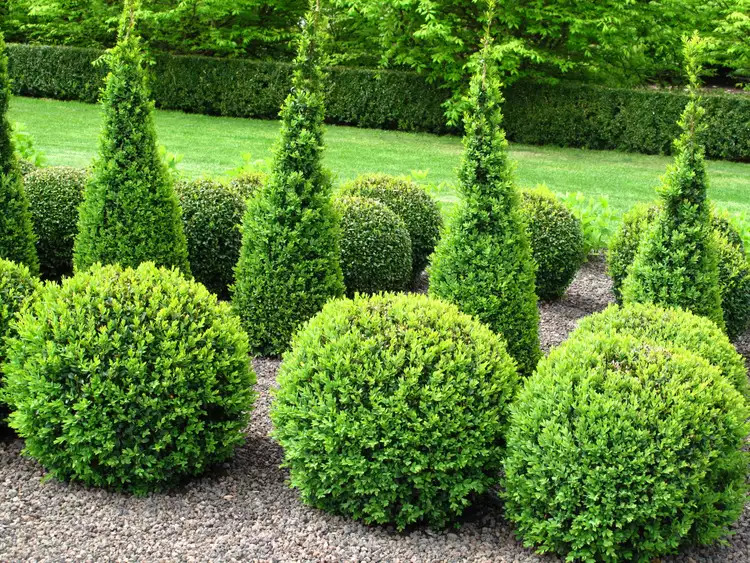
Rutgers University hands boxwood one of its top deer-resistance ratings, and it earns that grade honestly. The foliage carries bitter alkaloid compounds along with a musky scent that most deer simply won’t tolerate.
It handles everything from full sun to full shade without complaint, which makes it a workhorse in zones 5 through 9.
Expect a tidy, dense habit that tops out around 2 to 4 feet, perfect for shearing into hedges or leaving loose and natural.
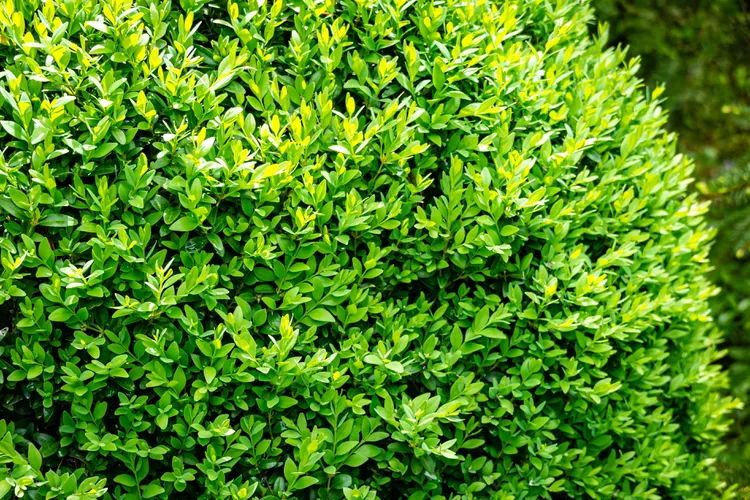
One thing worth flagging if you share your yard with pets: boxwood foliage is toxic to dogs, cats, and horses, so keep grazing animals and curious puppies away from it.
- USDA Growing Zones: 5 to 9
- Color Varieties: Dark green to golden-yellow foliage
- Sun Exposure: Full sun to full shade
- Soil Needs: Loamy, evenly moist, well-draining
2. Japanese Pieris (Pieris japonica)
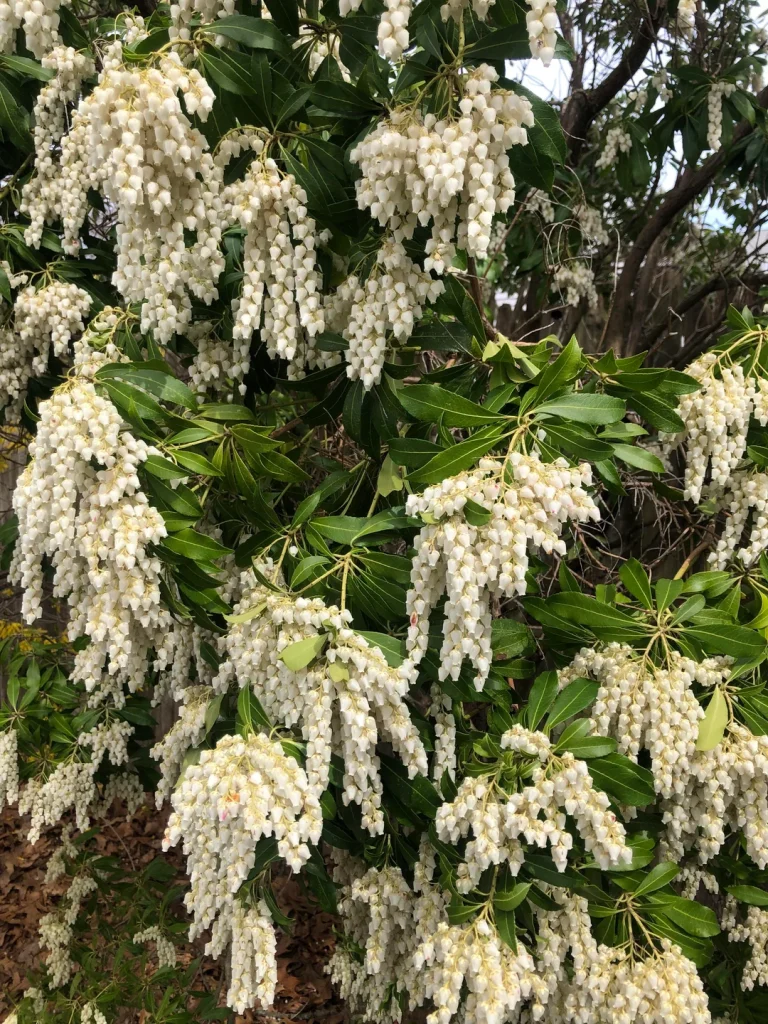
This shrub carries the shade garden through the dullest stretch of the year. Clusters of small bell-shaped flowers open in late winter or early spring, well before most of the yard has woken up.
Deer steer clear because the leaves are genuinely bitter, and like its cousin mountain laurel, pieris belongs to a plant family that produces compounds toxic to grazing animals if eaten in quantity.
Give it partial sun to partial shade and it settles in nicely under tree canopies, reaching anywhere from 3 to 12 feet depending on the cultivar.
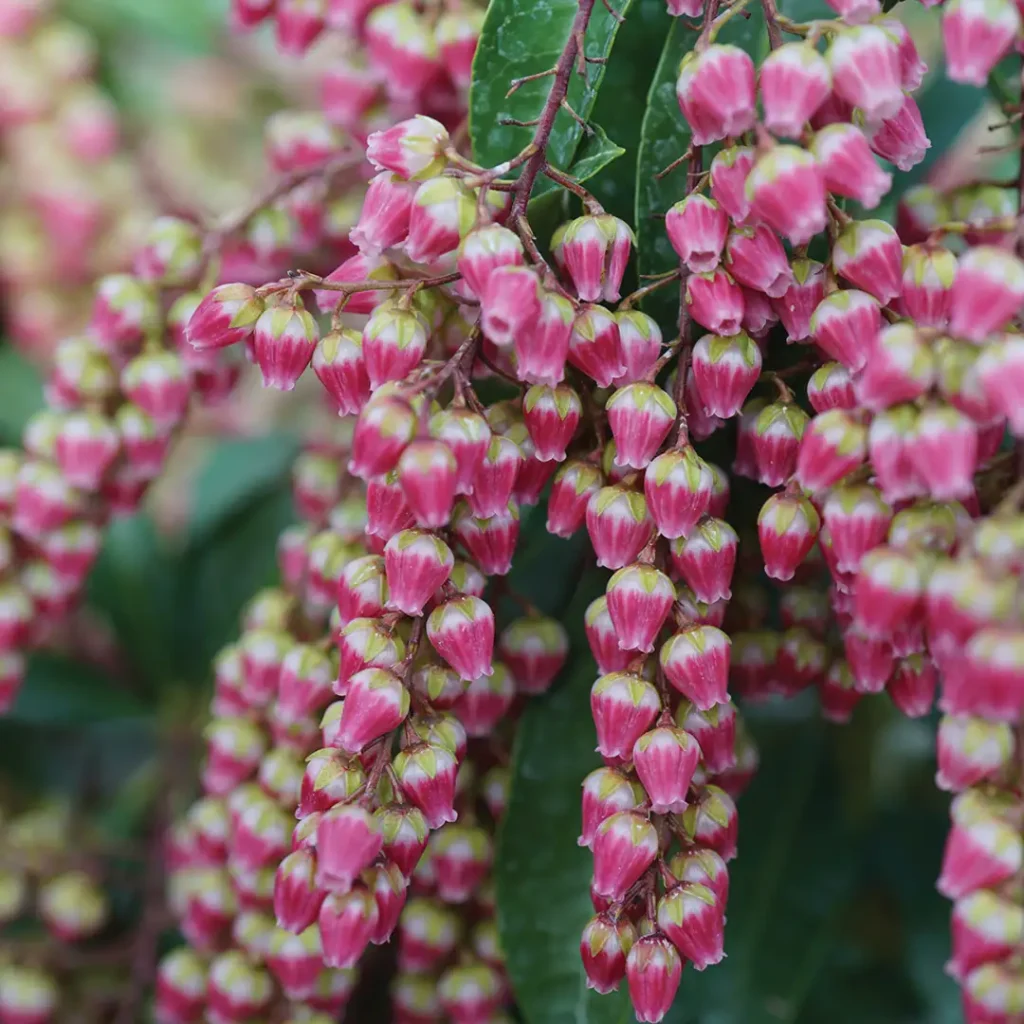
Watch the branch tips through autumn and you’ll see next spring’s flower buds already forming, a small preview that makes the winter wait easier.
New leaf growth often flushes red or bronze against the darker mature foliage. The Interstella variety stays compact and suits smaller foundation beds well.
- USDA Growing Zones: 5 to 8
- Color Varieties: Dark green foliage with red to bronze new growth
- Sun Exposure: Partial sun to partial shade
- Soil Needs: Acidic, moist, well-draining
3. Mountain Laurel (Kalmia latifolia)
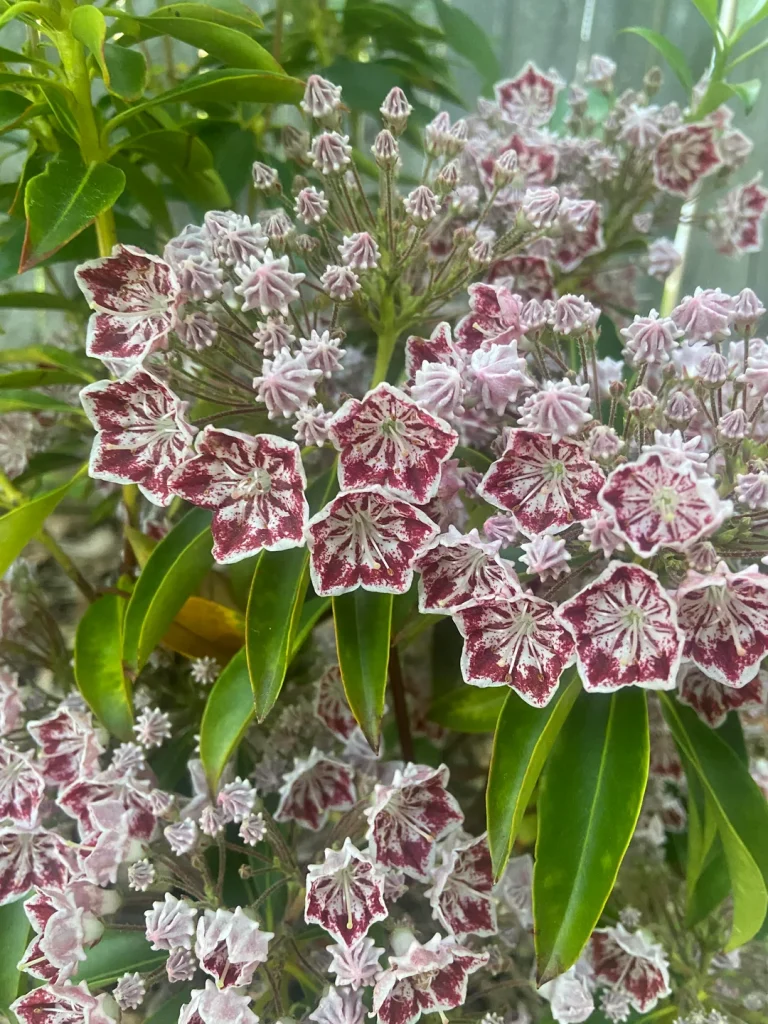
Deer learn this lesson exactly once. The leaves cause a burning sensation when eaten, and that memory sticks, so mature mountain laurel plants are rarely bothered again.
Older farmers in Appalachia used to call it “calfkill” for good reason. The foliage is toxic enough to livestock that it earned a reputation long before anyone was worried about deer damage.
What you get in exchange is a native broadleaf evergreen with striking bell-shaped spring blooms in white, pink, or deep red.
It grows slowly, often taking a decade or more to reach its full mature spread, so patience matters here more than with fast growers like forsythia.
This plants range from compact 3-footers to woodland specimens pushing 15 feet. Deer might nip a flower now and then, but the foliage stays intact.
- USDA Growing Zones: 4 to 9
- Color Varieties: Dark green evergreen foliage; flowers in white, pink, and red
- Sun Exposure: Partial sun to dappled shade
- Soil Needs: Acidic, moist, well-draining
4. Sweet Box (Sarcococca hookeriana)
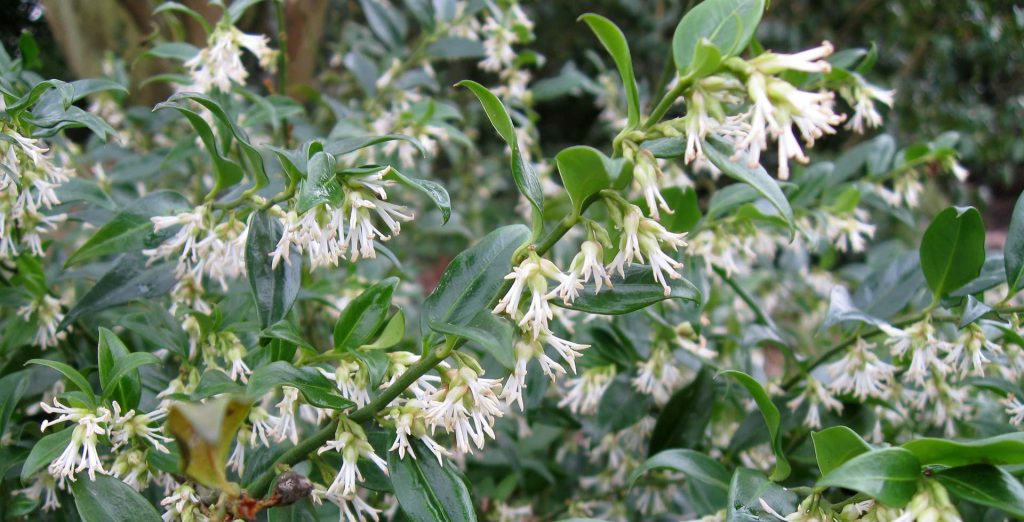
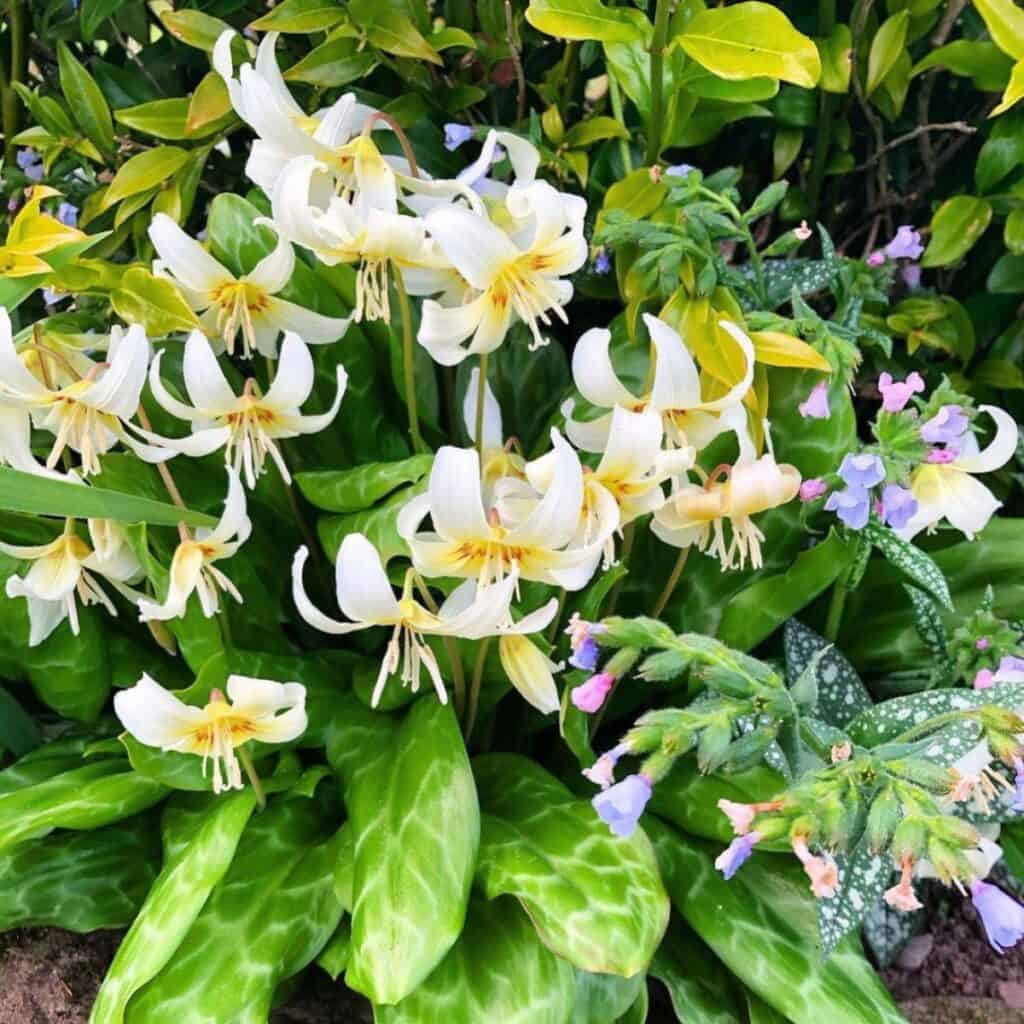
Don’t judge this one by size. Sweet box stays low and unassuming most of the year, then in mid-winter it opens tiny white flowers that throw an outsized fragrance across the whole garden bed.
That same intensity is exactly what keeps deer from touching it.
Sweet box spreads slowly by underground runners and knits itself into a solid evergreen groundcover, which makes it genuinely useful in the deep shade under mature trees where grass gives up.
Few shrubs on this list double as living mulch quite this well.
The leathery, glossy leaves add another layer of deer resistance since the tough texture discourages casual browsing.
If you cut a few flowering stems for a small indoor vase in January, the scent alone will fill a room.
- USDA Growing Zones: 6 to 9
- Color Varieties: Dark green, glossy evergreen foliage
- Sun Exposure: Partial sun to full shade
- Soil Needs: Humus-rich, moist, well-draining
5. Daphne (Daphne spp.)
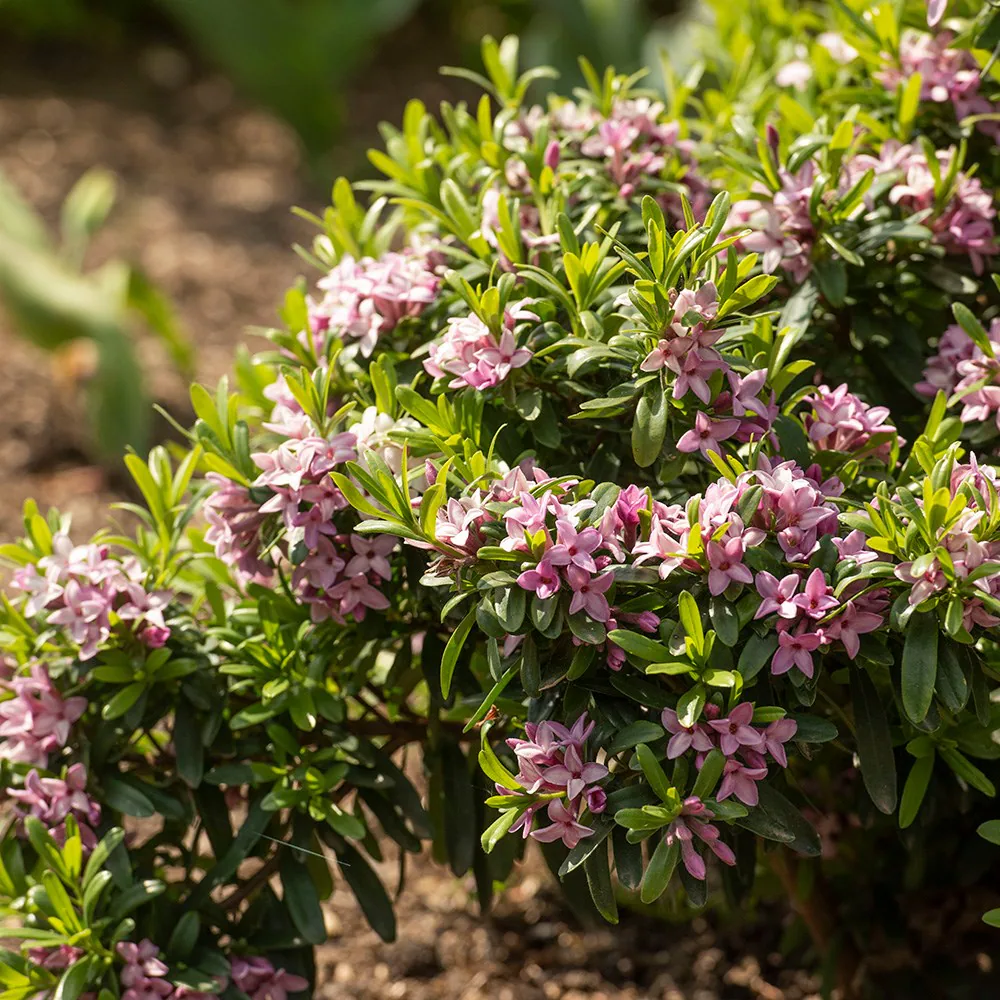
Daphne is one of the most underrated deer resistant shrubs for shade. The flowers produce an intense, almost intoxicating fragrance that humans love but deer find overwhelming.
On top of that, the berries are poisonous, which deer instinctively avoid.
This broadleaf evergreen grows in partial shade with green or variegated foliage and tubular flowers that bloom from late winter through fall depending on the variety.
Hardy in zones 4–9, it stays relatively compact at 1–5 feet tall. This shrub truly shines in woodland borders and foundation plantings of yard.
Few shrubs offer this combination of beauty, fragrance, and deer resistance all in one tidy package.
- USDA Growing Zones: 4 to 9
- Color Varieties: Green or variegated foliage; flowers in white, pink, and purple
- Sun Exposure: Partial shade
- Soil Needs: Well-draining, moderately fertile, slightly alkaline
6. Mahonia (Mahonia spp.)
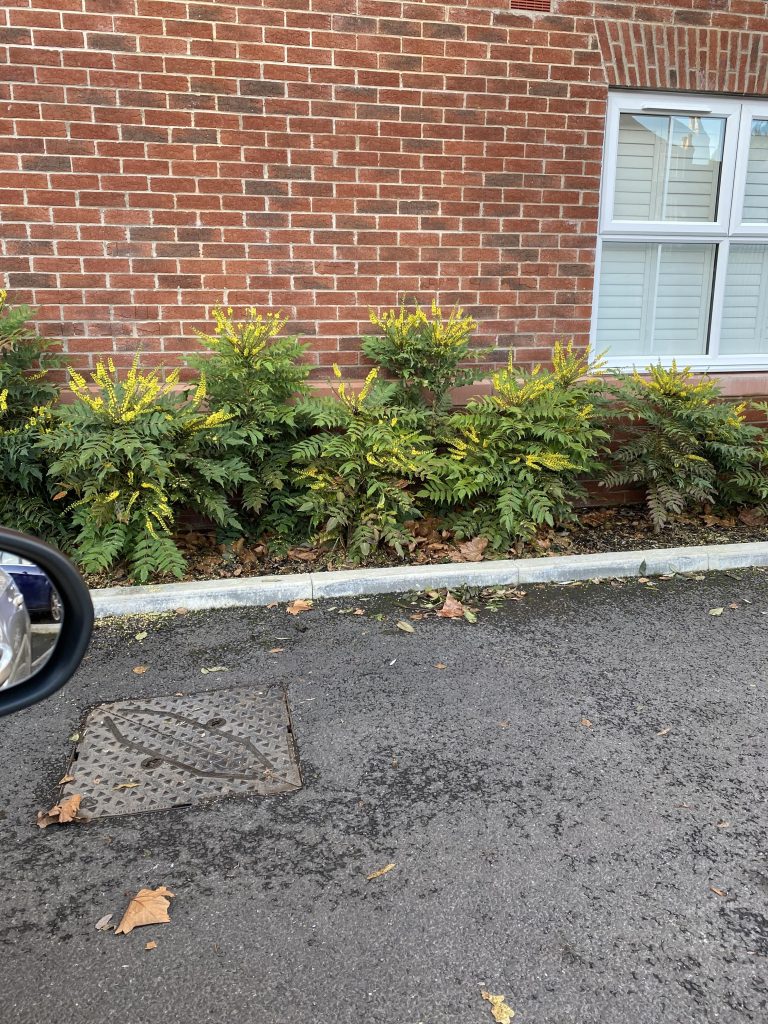
The spiny, holly-like leaves do most of the deer-deterring work here, making even a curious nibble genuinely uncomfortable. Most deer decide it isn’t worth the effort and move along.
What’s easy to miss is that this “unappetizing” shrub is actually edible for people. The tart blue-purple berries that follow the winter flowers can be cooked into jams and jellies, and the inner bark contains berberine, a compound with a long history of use in traditional herbal remedies.
Oregon grape, the most widely planted species, was named the official state flower of Oregon back in 1899.
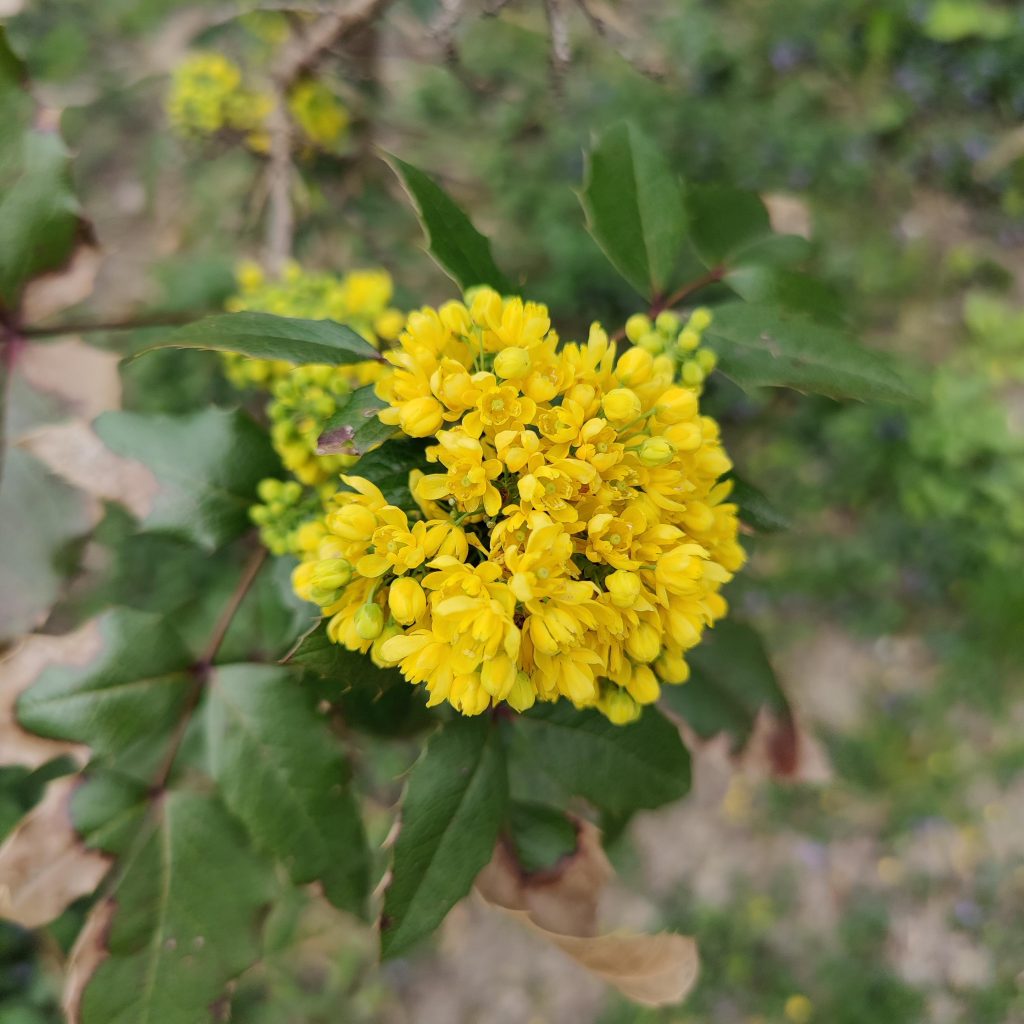
Hardy in zones 5 to 9, mahonia handles full sun to partial shade and ranges from 1 to 10 feet depending on the variety, fitting neatly into shaded foundation beds and native plantings.
- USDA Growing Zones: 5 to 9
- Color Varieties: Deep green, holly-like foliage with yellow flowers and blue berries
- Sun Exposure: Full sun to partial shade
- Soil Needs: Well-draining, average to poor soil
7. Elderberry (Sambucus spp.)
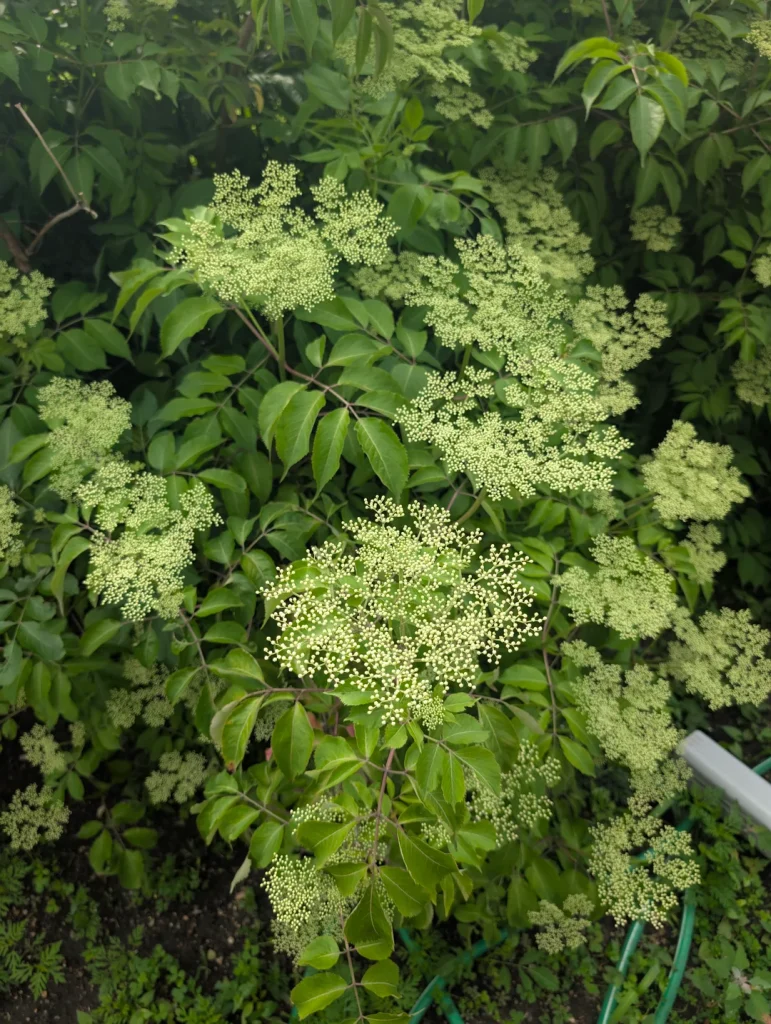
Big, lacy, and a little wild-looking, elderberry brings a texture to shaded beds that most tidy foundation shrubs can’t match.
Deer generally have better options elsewhere in the yard, so damage tends to stay minor even in high-pressure areas.
One caution worth knowing before you plant it near a vegetable patch: raw elderberries, along with the leaves, bark, and stems, contain compounds that are mildly toxic if eaten uncooked.
The berries only become the syrups, wines, and jams people love once they’re properly cooked, so this isn’t a snacking shrub for kids or pets.
Hardy in zones 3 to 9, elderberry ranges wildly in size, from 3 feet to 30 feet depending on what you plant.
Black Lace stays a manageable 6 to 8 feet with deep purple-black foliage and soft pink flowers, working well as a woodland focal point with strong fall color to close out the season.
- USDA Growing Zones: 3 to 9
- Color Varieties: Green, purple-black, or golden foliage depending on variety
- Sun Exposure: Full sun to partial shade
- Soil Needs: Moist, well-draining, fertile
8. Deutzia (Deutzia spp.)
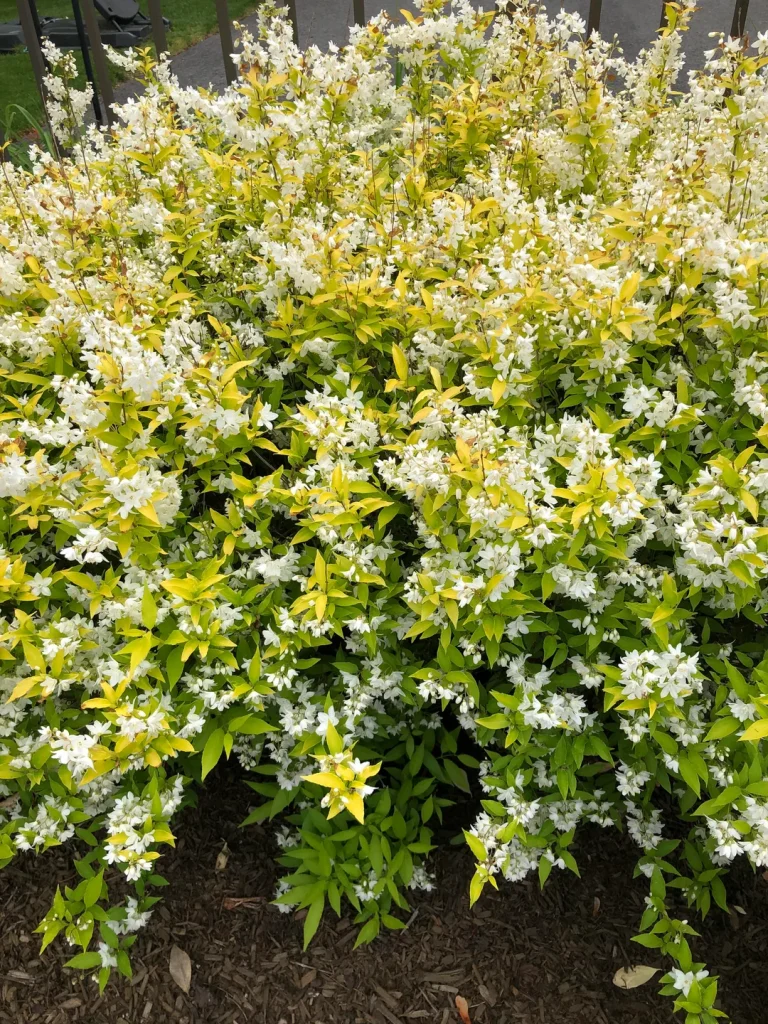
Fragrant, floriferous, and largely left alone by deer, deutzia earns its spot through a combination of scent and foliage that browsing animals just don’t find appealing.
Timing matters more with this shrub than people expect. Deutzia sets its flower buds on old wood right after it finishes blooming in spring, so any pruning done in fall or late winter cuts off next year’s show before it even starts.
Prune within a few weeks of the flowers fading and you’ll keep the display coming every year.
It grows in full sun to partial shade and ranges from ground-hugging 1-footers to 10-foot specimens. Yuki Cherry Blossom stays compact with rich burgundy fall color that extends its season well past the spring bloom.
- USDA Growing Zones: 5 to 8
- Color Varieties: Green foliage with white or pink flowers; purple-red fall color
- Sun Exposure: Full sun to partial shade
- Soil Needs: Well-draining, moderately fertile, adaptable
9. Forsythia (Forsythia spp.)
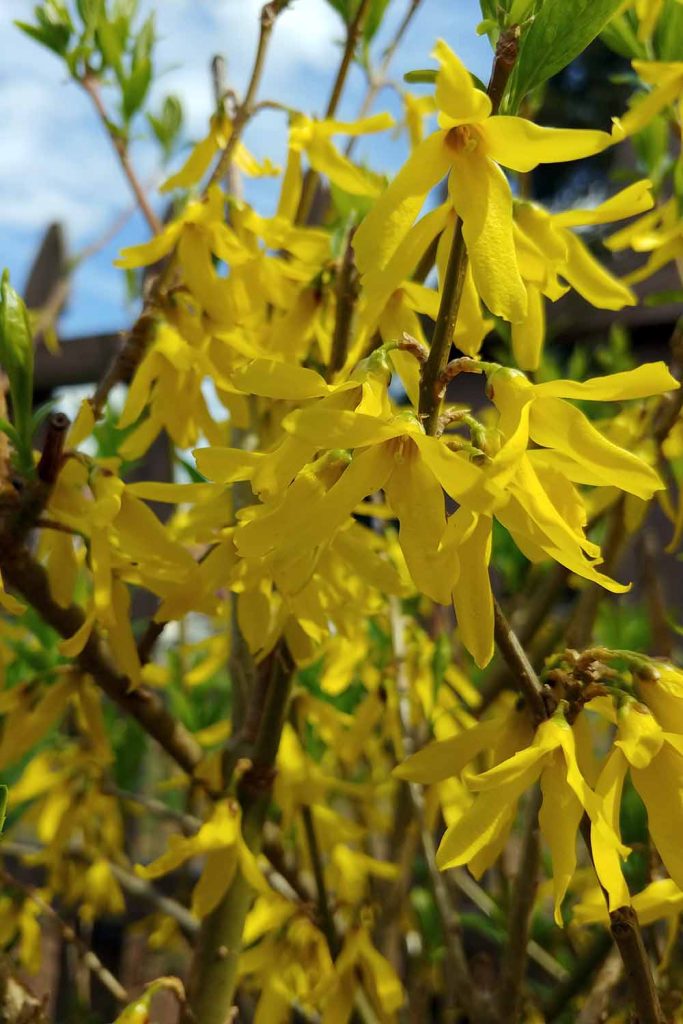
Nothing announces the end of winter quite like forsythia. Those yellow blooms open on bare branches before a single leaf appears, and bitter-tasting foliage means deer leave the whole display untouched.
Like deutzia, forsythia flowers on old wood, so the pruning window is short: cut it back right after the blooms drop, not in fall.
Miss that window and you’ll be staring at a bare shrub next spring. On the upside, cut branches force beautifully indoors, so snipping a few in late winter and setting them in water can bring color inside weeks before the garden catches up.
Forsythia tolerates partial shade well and grows 1 to 10 feet depending on variety. Show Off holds a tidy shape with minimal pruning required.
- USDA Growing Zones: 3 to 9
- Color Varieties: Bright green foliage; vivid yellow spring flowers
- Sun Exposure: Full sun to partial shade
- Soil Needs: Well-draining, adaptable to most soil types
10. Juniper (Juniperus spp.)
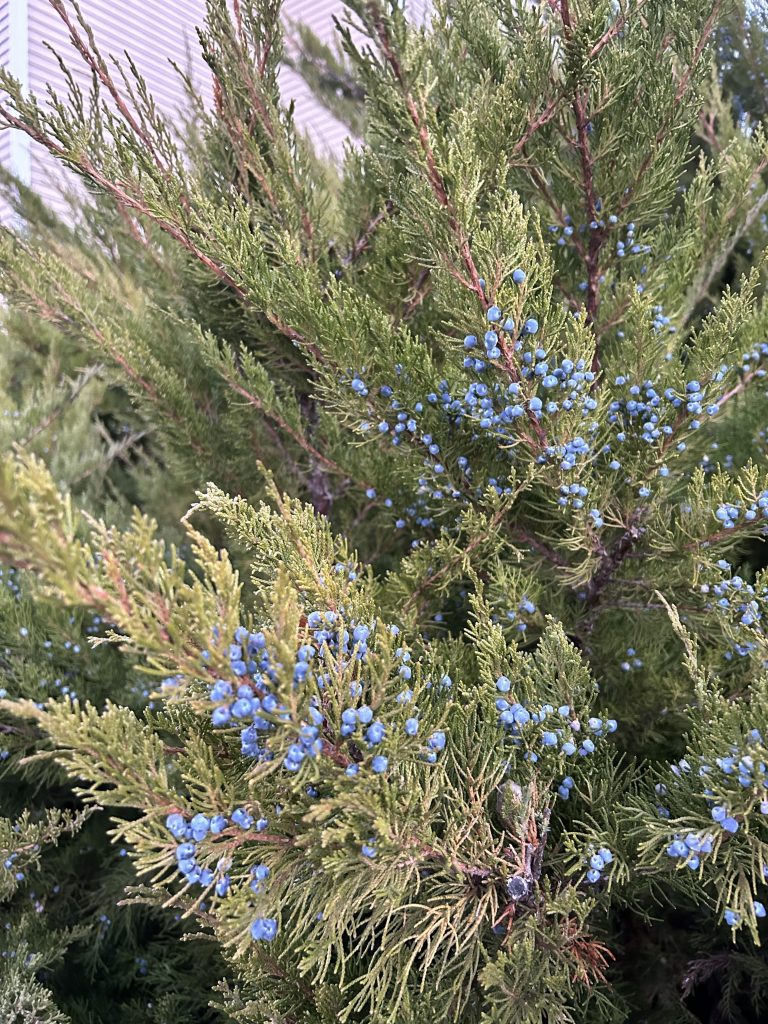
Sharp needles, a bitter bite, and a strong resinous smell team up to make juniper one of the most consistently deer-avoided shrubs around. Few plants make a browsing deer change course faster.
Those same aromatic berries have a second life well beyond the garden: they’re the flavoring behind gin, which gets its signature piney note from juniper.
That resinous quality humans enjoy in a cocktail is precisely what deer find so off-putting in the landscape.
Juniper prefers full sun but tolerates partial shade reasonably well, and spreading types make excellent groundcover under trees where turf struggles. Sizes run from 2-foot creepers to upright forms over 10 feet.
Gin Fizz offers a pyramidal shape with soft foliage and blue-green berries for winter interest.
- USDA Growing Zones: 2 to 10
- Color Varieties: Green, blue-green, or golden foliage depending on variety
- Sun Exposure: Full sun to partial shade
- Soil Needs: Well-draining, sandy to loamy, drought tolerant once established
11. Viburnum (Viburnum spp.)
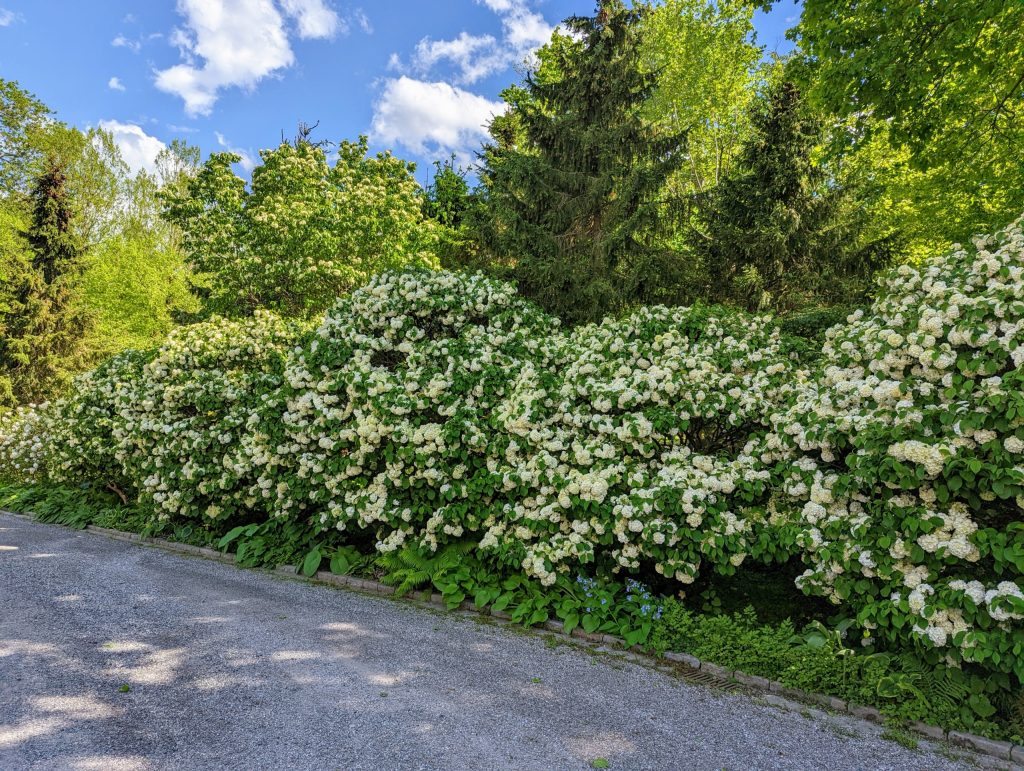
Few shrubs cover as much ground, literally and climate-wise, as viburnum.
Depending on the species, it’s hardy anywhere from zone 2 to zone 11, and both its fragrance and leaf texture keep deer from bothering it season after season.
This is also one of the better wildlife shrubs on the list. Songbirds rely on the berries well into winter after other food sources thin out, and many viburnum varieties support pollinators during their mid to late spring bloom.
Just keep an eye out for the viburnum leaf beetle in areas where it’s established, since that pest can defoliate susceptible varieties faster than deer ever would.
Plants range from a compact 3 feet to a towering 20 feet, and partial shade suits most varieties well.
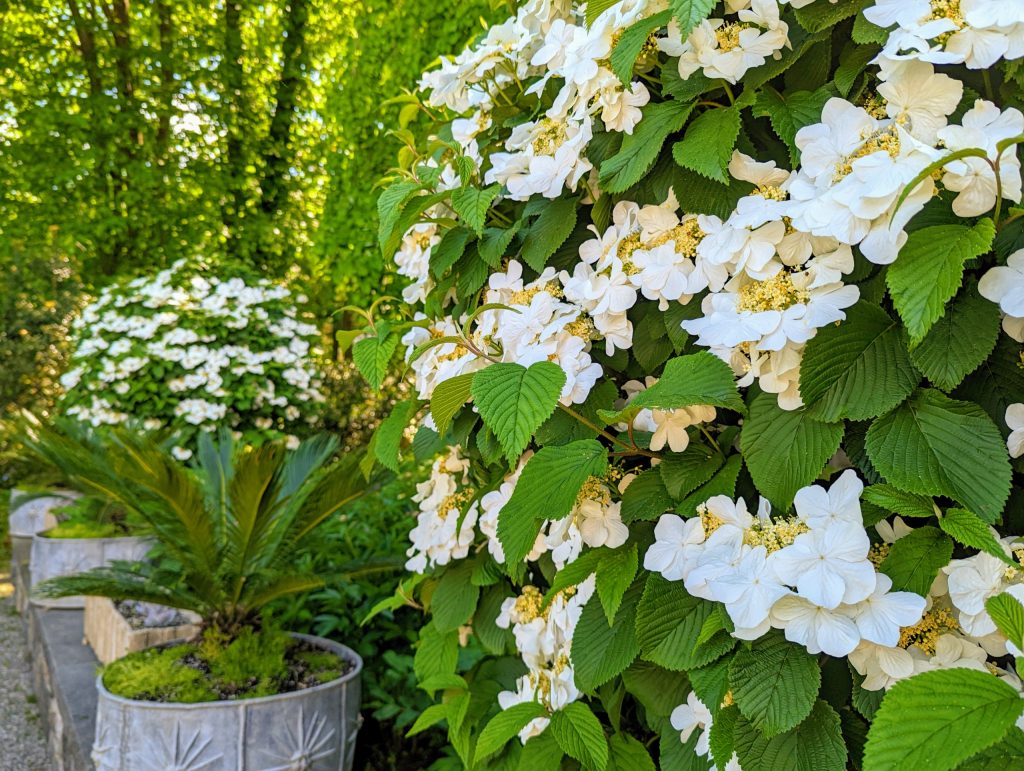
Brandywine stands out with maroon-red fall foliage and berries that shift from pink to blue as they ripen.
- USDA Growing Zones: 2 to 11
- Color Varieties: Green to deep burgundy fall foliage; white or pink flower clusters
- Sun Exposure: Full sun to partial shade
- Soil Needs: Moist, well-draining, moderately fertile
12. Red Twig Dogwood (Cornus sericea)
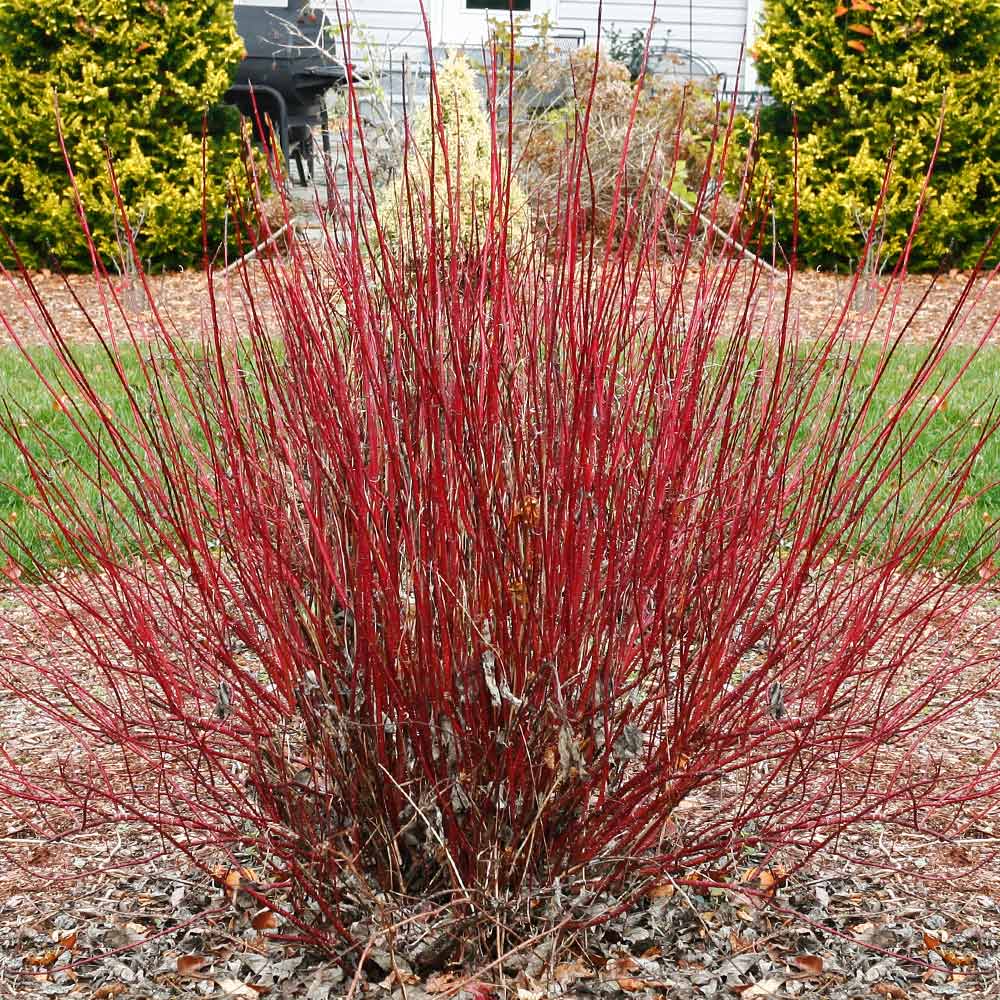
Everything else in the garden goes quiet in winter, and that’s exactly when red twig dogwood steps up. Its blazing red stems light up a shaded corner when the rest of the landscape has faded to grey and brown.
Here’s the part most gardeners miss: that vivid red color only shows up on young stems.
Older wood gradually fades to a dull brown-grey, so the trick to keeping the display bright is cutting back roughly a third of the oldest stems to the ground each early spring.
Skip this and the shrub still grows fine, it just loses its winter punch over time.
It thrives in full sun to partial shade and handles consistently wet soil better than most shrubs on this list. Arctic Fire Red stays compact at 3 to 5 feet, a smart pick for smaller yards that still want that four-season color.
- USDA Growing Zones: 2 to 8
- Color Varieties: Green foliage with orange-red fall color; bright red winter stems
- Sun Exposure: Full sun to partial shade
- Soil Needs: Moist to wet, adaptable, tolerates clay
13. Abelia (Abelia spp.)
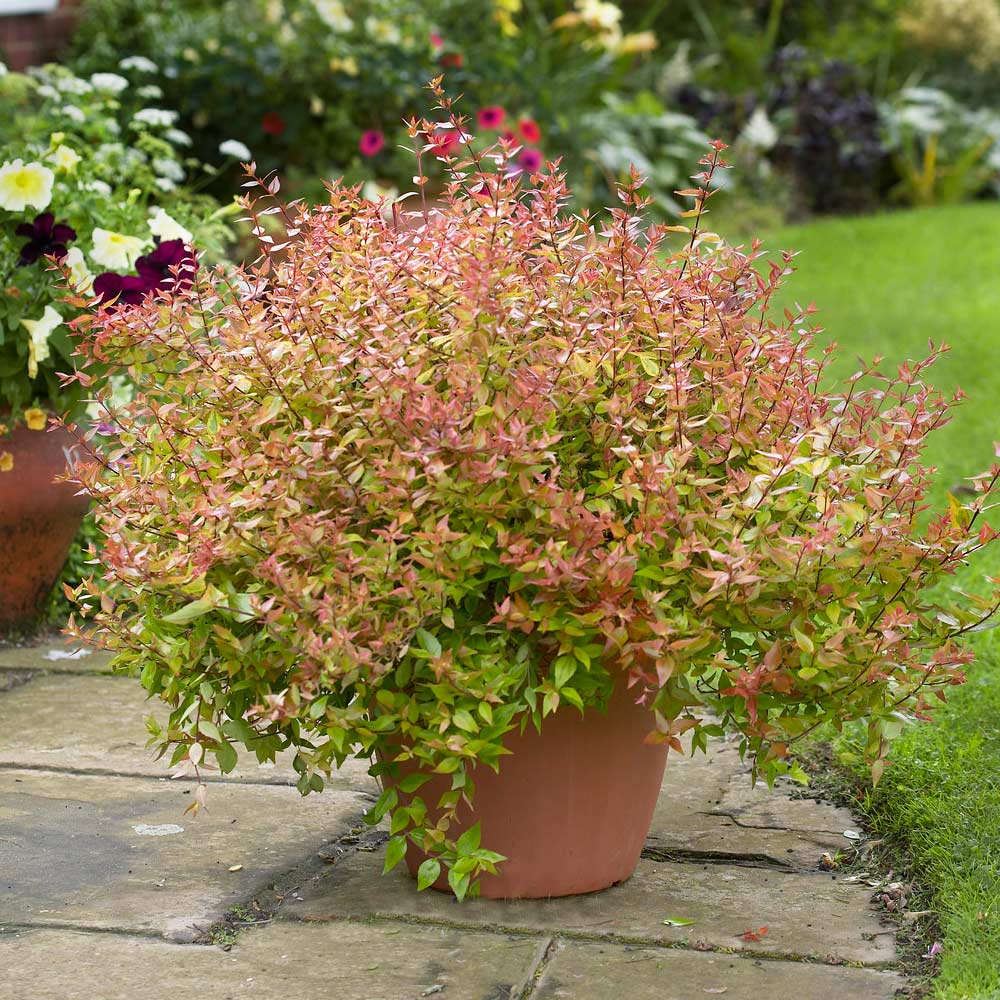
Abelia works harder than most gardeners expect. The fragrant flowers bloom continuously from spring all the way through fall, which is an unusually long season for any flowering shrub.
Deer avoid it because of that persistent floral scent combined with foliage that tastes genuinely bitter.
Tolerant of shade, drought, and poor soil, abelia is about as low-maintenance as a flowering shrub gets.
Hardy in zones 4–11 depending on the variety, plants grow 2–10 feet tall with a mounding bushy habit that looks tidy without much pruning. Variegated varieties add extra visual interest even when the shrub isn’t in bloom.
- USDA Growing Zones: 4 to 11
- Color Varieties: Green or variegated foliage; white, pink, or lavender-tinged flowers
- Sun Exposure: Full sun to partial shade
- Soil Needs: Well-draining, adaptable, tolerates poor soil
14. Lilac (Syringa spp.)
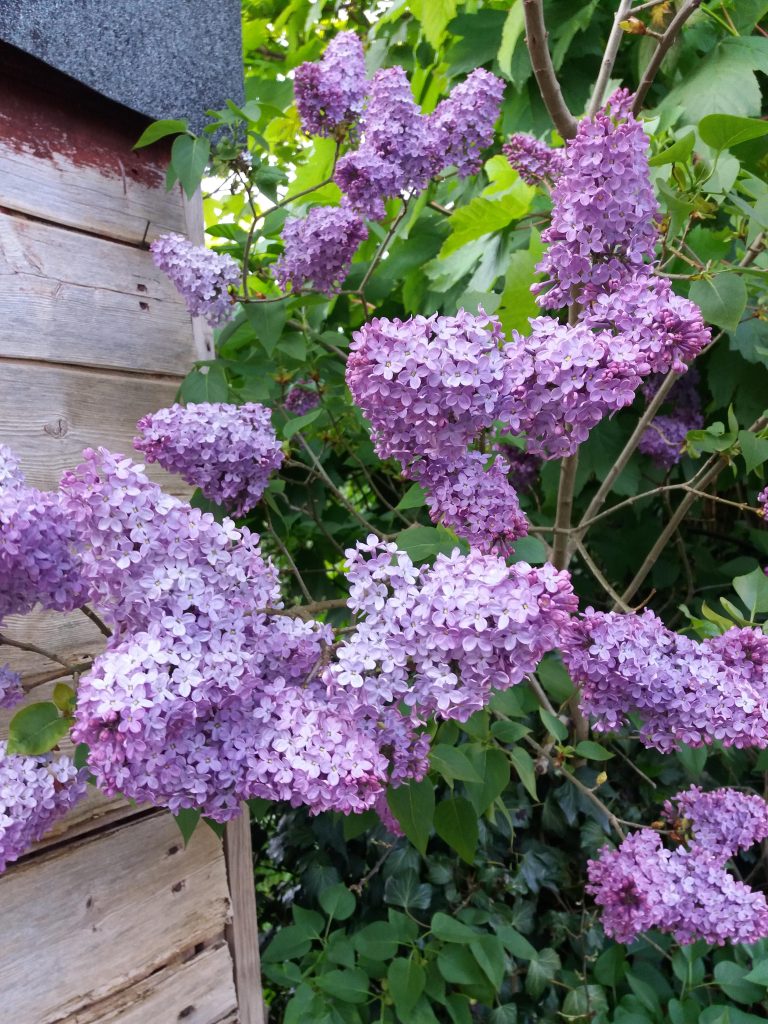
Few shrubs stop people in their tracks the way lilac does. Those dense clusters of flowers fill the spring garden with a sweet, heady fragrance that is instantly recognizable.
Ironically, that same beloved scent is exactly what keeps deer away — they find it overwhelming rather than inviting.
This hardy deciduous shrub grows in full sun to partial shade and suits zones 2–8 depending on the variety. Plants reach 4–15 feet tall, making them useful as hedging, privacy screening, or bold specimen plants in a shaded border.
Deer may occasionally browse lilac during a harsh winter when food is desperately scarce, but damage is rarely significant.
- USDA Growing Zones: 2 to 8
- Color Varieties: Green foliage; flowers in purple, pink, white, and lavender
- Sun Exposure: Full sun to partial shade
- Soil Needs: Well-draining, fertile, slightly alkaline
15. Beautybush (Kolkwitzia amabilis)
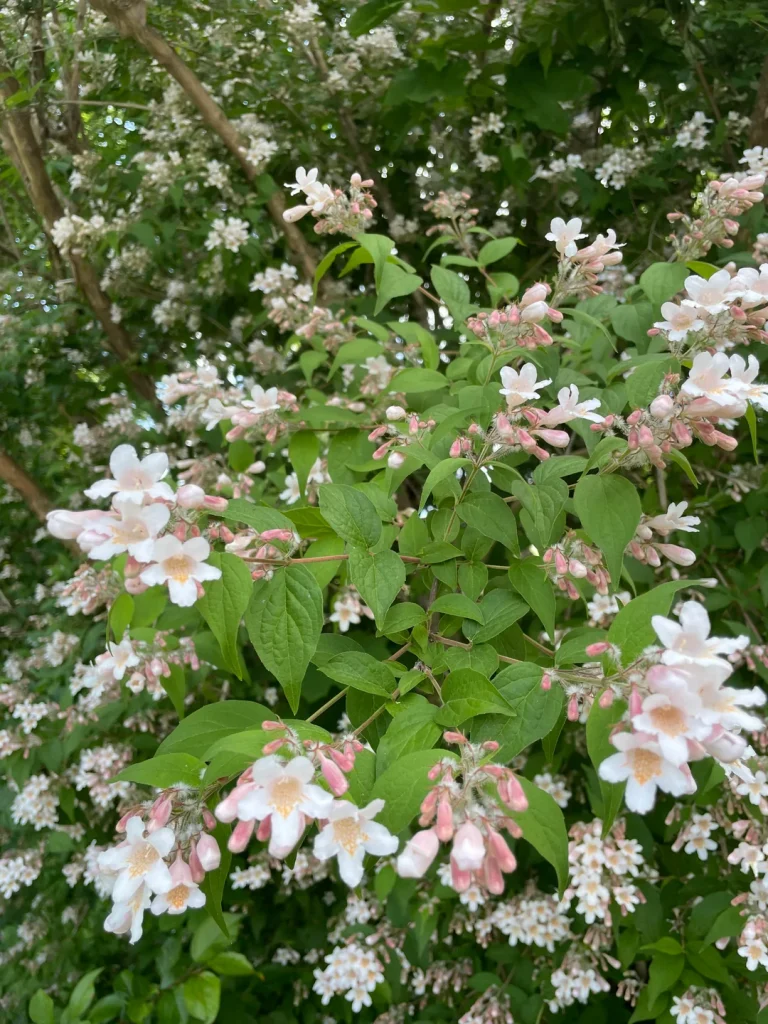
Beautybush is one of those shrubs that completely earns its name. Cascading arching branches covered in soft pink flowers make a genuinely spectacular show every spring.
Deer tend to leave beautybush alone, drawn away by far more palatable options elsewhere in the garden.
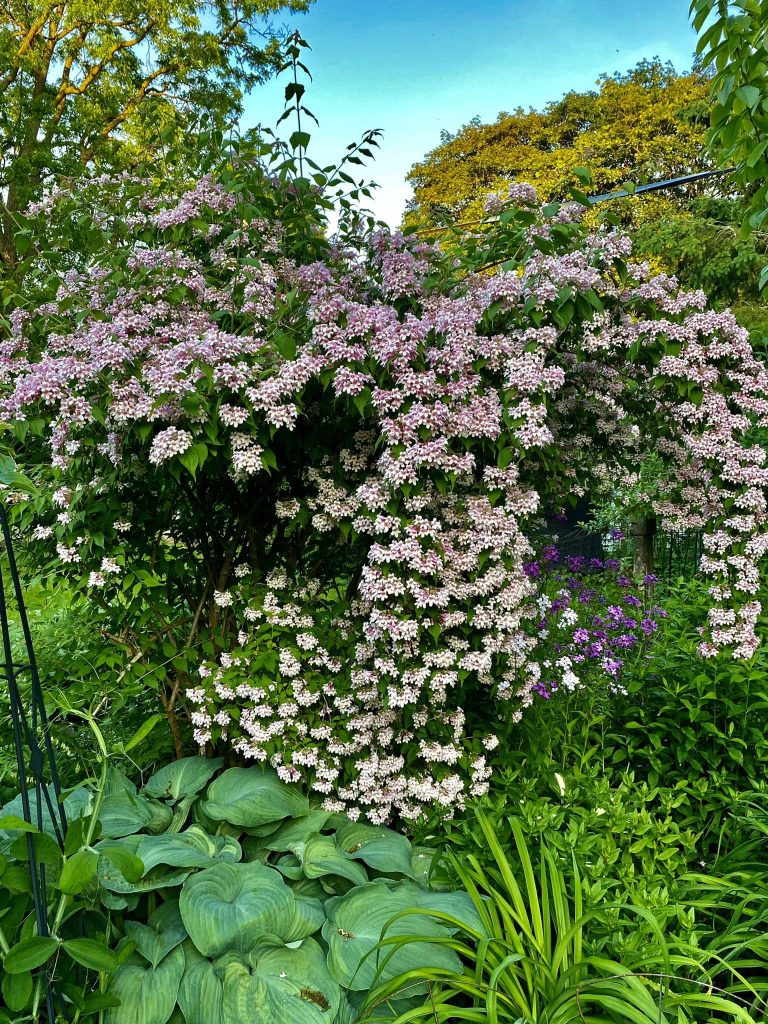
Hardy in zones 4–8, this deciduous shrub grows 6–10 feet tall with an elegant arching habit that looks graceful even without flowers. Blue-green foliage holds well through summer before the shrub settles into dormancy.
Partial shade suits it comfortably, making it a reliable choice for garden edges where the tree canopy filters the afternoon sun.
- USDA Growing Zones: 4 to 8
- Color Varieties: Blue-green foliage; soft pink flowers in spring
- Sun Exposure: Full sun to partial shade
- Soil Needs: Well-draining, adaptable to most soil types
Final Words
Planting smart is genuinely the easiest long-term solution to deer damage. These 15 shrubs give you fragrance, texture, color, and structure — all wrapped up in plants that deer simply don’t want to eat.
Some fight back with bitter leaves, some with sharp spines, and others with scents so strong that deer take one sniff and move on.
Shade doesn’t have to mean a limited plant palette. From the winter fragrance of Sweet Box to the spring fireworks of Beautybush, there’s a deer resistant option here for every shaded corner of your yard.
Pick a few, mix them up, and give yourself a garden that looks great and protects itself.
Your plants worked hard to get established. They deserve to stick around.