15 Fast Growing Shrubs Full Sun: Beautiful, Low-Maintenance Picks

Waiting years for your garden to look full and lush? That’s genuinely frustrating. Fast growing shrubs for full sun fix that problem quickly, giving you color, structure, and privacy in a fraction of the time.
I’ve spent years growing plants on a small balcony and in garden beds, and nothing transforms a bare, sunny space faster than the right shrub.
Whether you want to screen an ugly fence, attract butterflies, or simply make your yard look like you know what you’re doing, these 15 picks will deliver.
Why Choose Fast Growing Shrubs for Full Sun?
Sunny spots in the garden can feel tricky. Most flowering plants need at least 6 hours of direct sunlight daily to bloom well, and full-sun shrubs are built exactly for that.
Fast growers fill gaps that would otherwise take years to close. Many of them are also drought-tolerant once established, meaning less babying from you.
The best part? Several of these shrubs attract pollinators, feed birds, and even offer cut flowers for the house, all while growing at an impressive pace.
15 Fast Growing Shrubs for Full Sun
Zones, exposure, size, growth rate, and bloom time at a glance
| Shrub | Zones | Exposure | Height / Spread | Growth Rate | Bloom Time |
|---|---|---|---|---|---|
| Forsythia Forsythia spp. | 3–8 | Full sun – part shade | 1–20 ft / 3–10 ft | 1–2 ft/yr | Early – mid spring |
| Weigela Weigela spp. | 4–8 | Full sun – part shade | 1–10 ft / 1.5–12 ft | 1–2 ft/yr | Mid – late spring |
| Butterfly bush Buddleia spp. | 5–9 | Full sun | 3–12 ft / 3–12 ft | 1–2 ft/yr | Summer – early fall |
| Spirea Spiraea spp. | 4–9 | Full sun | 1.5–8 ft / 2–7 ft | 1–2 ft/yr | Late spring – midsummer |
| Crape myrtle Lagerstroemia spp. | 6–10 | Full sun | 2–30 ft / 2–30 ft | 1–3 ft/yr | Summer – early fall |
| Rose of Sharon Hibiscus syriacus | 5–9 | Full sun – part shade | 8–12 ft / 6–10 ft | Up to 2 ft/yr | Midsummer – fall |
| Ninebark Physocarpus opulifolius | 2–8 | Full sun – part shade | 3–10 ft / 3–12 ft | Full size yr 1 | Late spring – early summer |
| Elderberry Sambucus spp. | 3–9 | Full sun – part shade | 3–30 ft / 3–30 ft | Full size 1–3 yrs | Spring – summer |
| Mock orange Philadelphus spp. | 4–8 | Full sun – part shade | 3–10 ft / 3–10 ft | 2+ ft/yr | Late spring – early summer |
| Viburnum Viburnum spp. | 2–10 | Full sun – part shade | 2–30 ft / 2–12 ft | 1–2 ft/yr | Spring |
| Flowering quince Chaenomeles spp. | 5–9 | Full sun – part shade | 3–10 ft / 3–10 ft | 1–2 ft/yr | Late winter – early spring |
| Lilac Syringa spp. | 3–8 | Full sun – part shade | 4–15 ft / 3–12 ft | 1–2 ft/yr | Spring |
| Beautyberry Callicarpa spp. | 5–10 | Full sun – part shade | 3–6 ft / 3–6 ft | 3–5 ft/yr | Late spring – midsummer |
| Smoke tree Cotinus coggygria | 4–8 | Full sun – part shade | 10–15 ft / 10–15 ft | 1–2 ft/yr | Late spring – early summer |
| Caryopteris Caryopteris spp. | 5–9 | Full sun | 2–4 ft / 2–4 ft | 1–2 ft/yr | Late summer – fall |
15 Fast Growing Shrubs for Full Sun
1. Forsythia (Forsythia spp.)
Zones: 3–8
Exposure: Full sun to partial shade
Habit: Upright bushy or arching habit
Height/Spread: 1–20 ft tall, 3–10 ft wide
Growth rate: 1–2 feet per year
Bloom time: Early to mid-spring
The First Burst of Spring Yellow
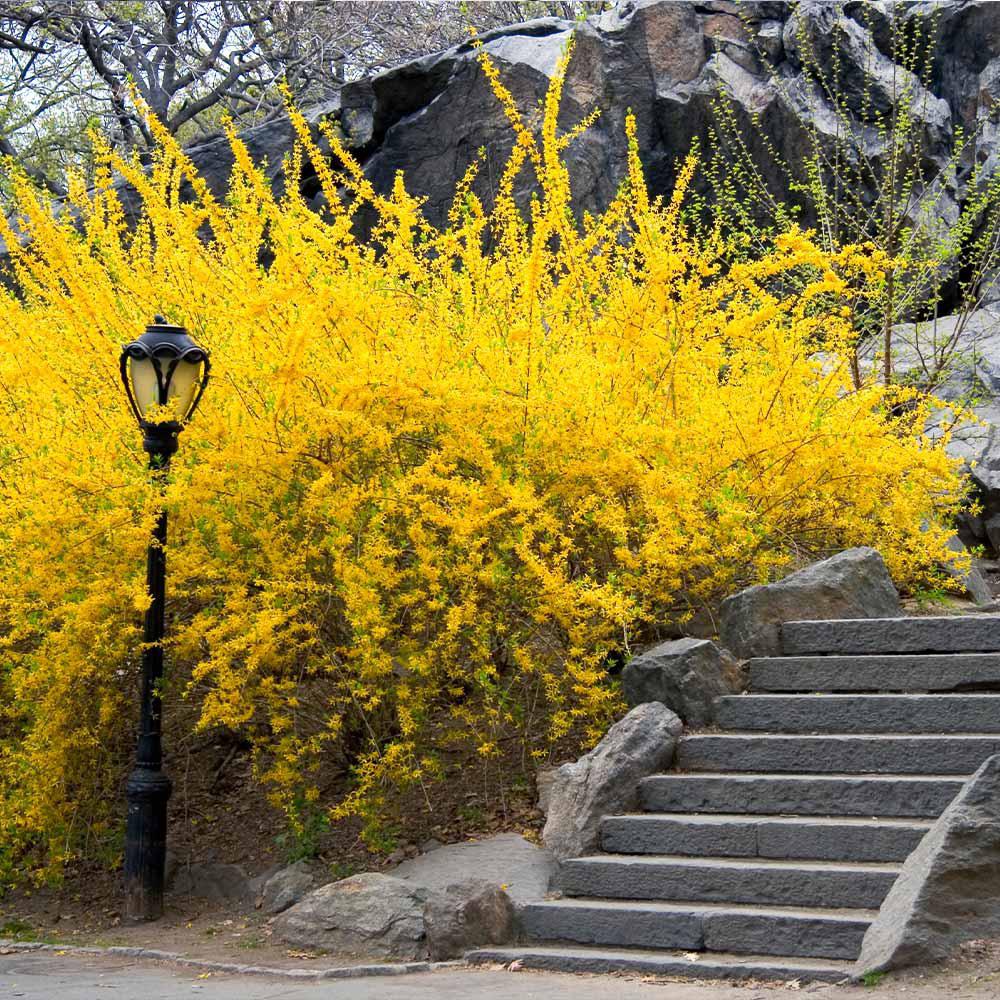
Few shrubs signal the end of winter quite like forsythia. Bright yellow, bell-shaped flowers cover every bare branch before a single leaf appears, sometimes as early as late February.
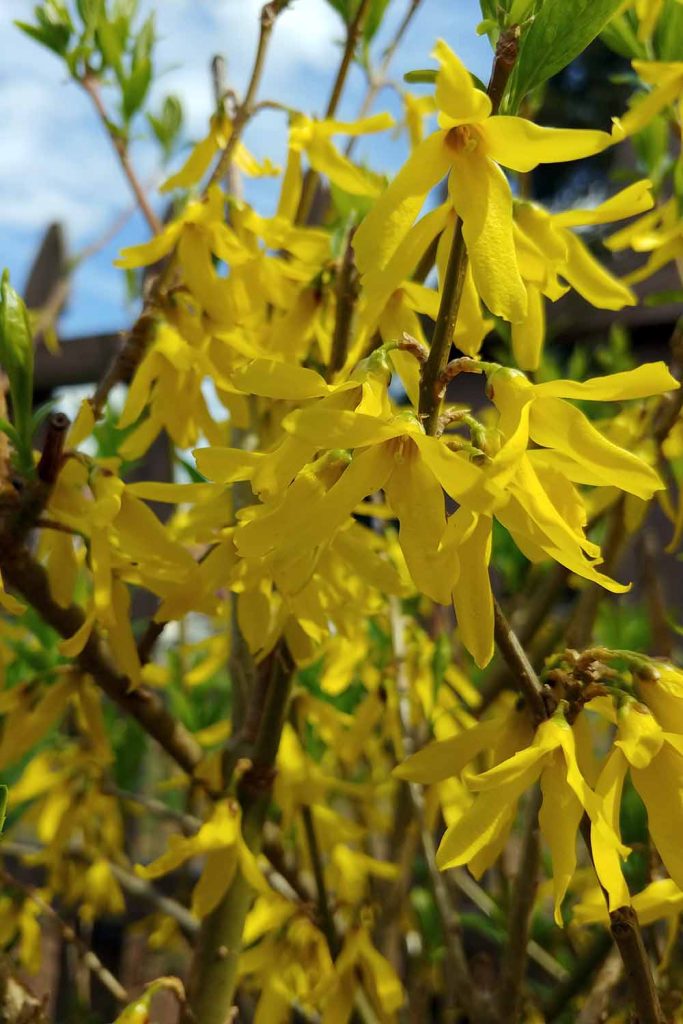
Growing 1 to 2 feet per year, it can reach up to 10 feet tall and 12 feet wide. Hardy in USDA Zones 3 to 8, it handles cold winters with ease.
Compact varieties like ‘Show Off Starlet’ stay under 3 feet, making forsythia a great choice even for smaller sunny gardens.
Also read: 15 Beautiful Shade Loving Flowering Shrubs
2. Weigela (Weigela spp.)
Zones: 4–8
Exposure: Full sun to partial shade
Habit: Upright, arching, mounding, or spreading habit
Height/Spread: 1–10 ft tall, 1.5–12 ft wide
Growth rate: 1–2 feet per year
Bloom time: Mid to late spring, with some rebloom
Trumpet Flowers That Hummingbirds Can’t Resist
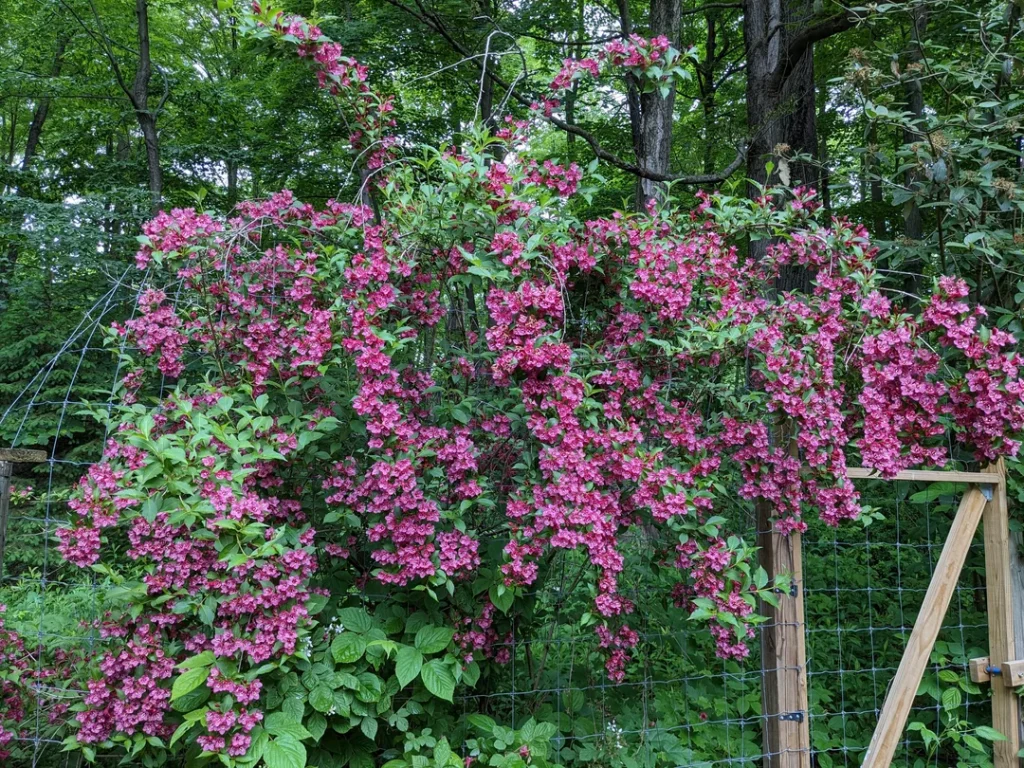
Weigela grows 1 to 2 feet per year and reaches its full mature size within just a few years. Trumpet-shaped pink or red flowers bloom in mid to late spring, with some varieties reblooming through summer.
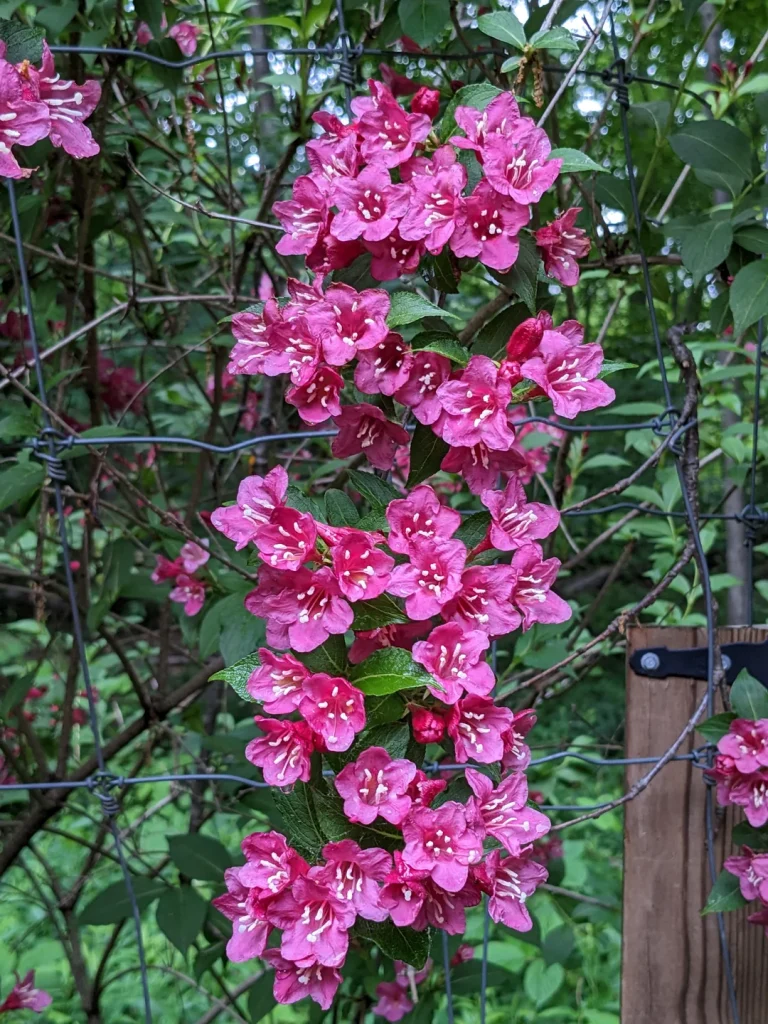
Hummingbirds absolutely love this shrub. Purple-leaved cultivars like ‘Very Fine Wine’ give you bold, wine-colored foliage that holds its color all season long.
Hardy in Zones 4 to 8, weigela tolerates different soil types and needs very little fuss once established.
Also read: 15 Best Flowering Bushes for Front of House Full Sun
3. Butterfly Bush (Buddleia spp.)
Zones: 5–9
Exposure: Full sun
Habit: Upright bushy habit
Height/Spread: 3–12 ft tall and wide
Growth rate: 1–2 feet per year
Bloom time: Summer to early fall
A Pollinator Magnet That Grows Fast
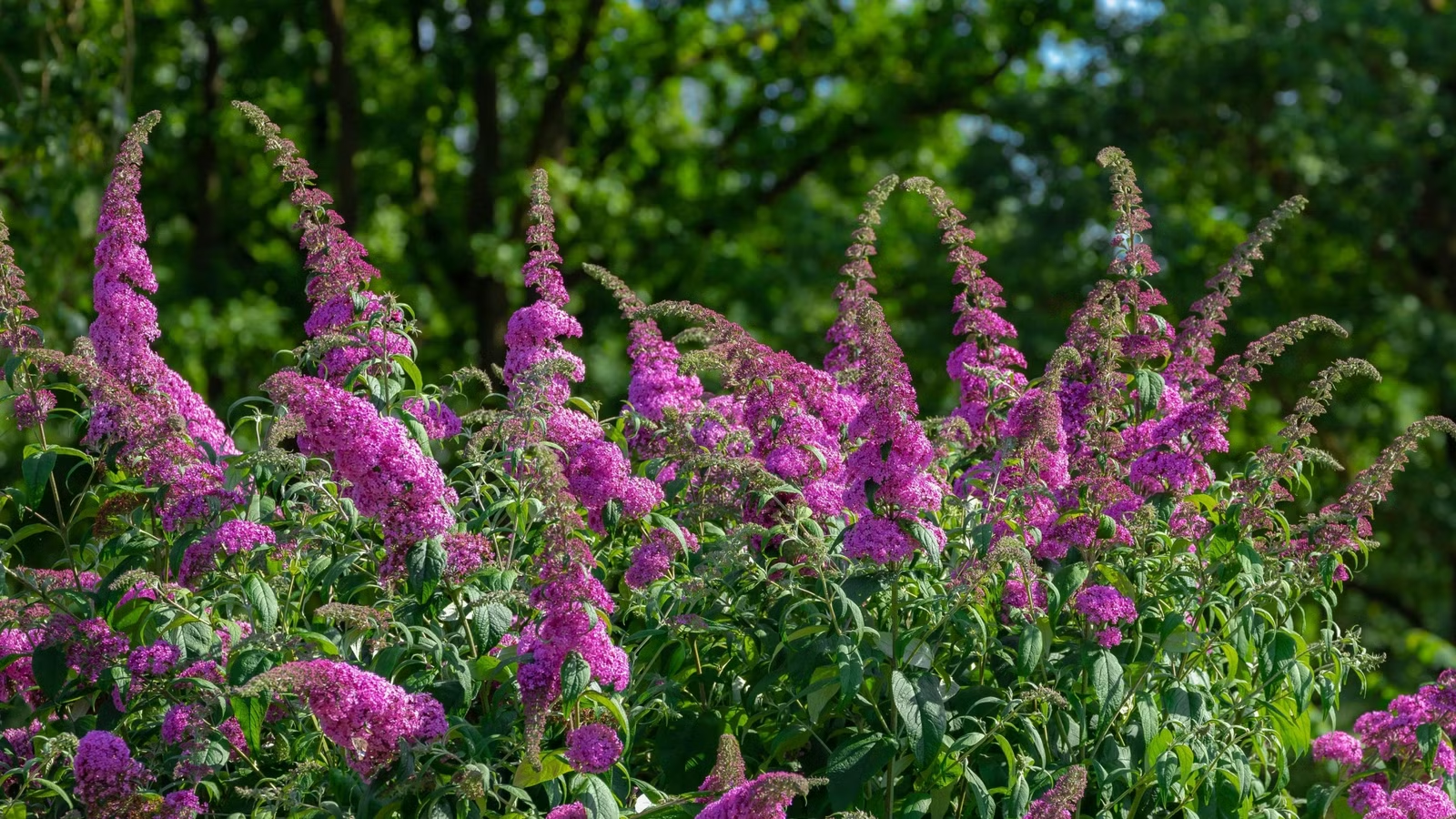
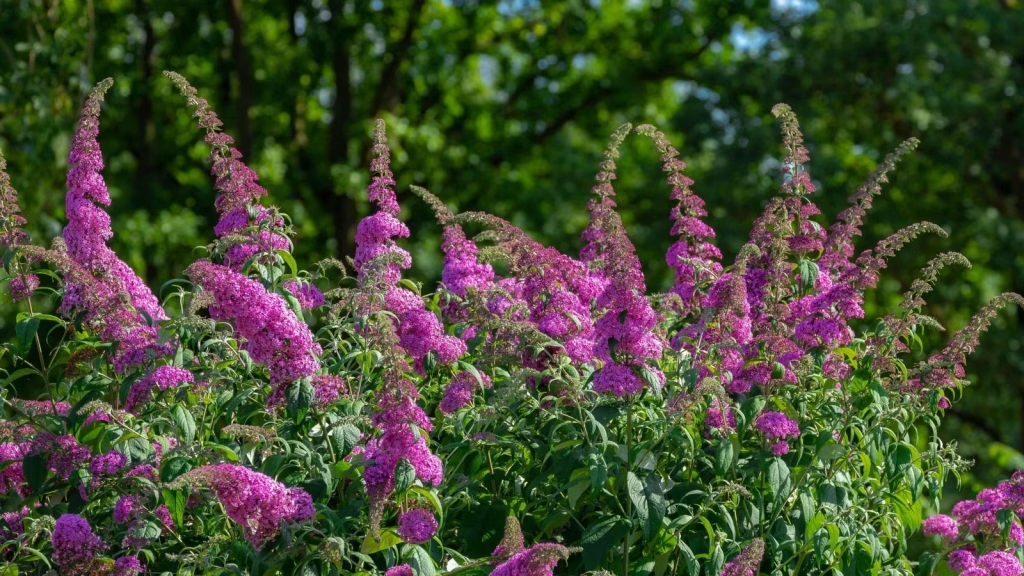
Butterfly bush earns its name, on a warm summer afternoon, you’ll count dozens of butterflies feeding on those long, colorful flower spikes. It grows 1 to 2 feet per year and reaches 3 to 12 feet tall.
Hardy in Zones 5 to 9, it blooms from summer through early fall, long after most other shrubs have finished. Full sun is non-negotiable here, shade makes it leggy and reduces flowering dramatically.
Choose sterile cultivars like ‘Lo & Behold Blue Chip Jr.’ to enjoy the beauty without the invasive spread some older varieties are known for.
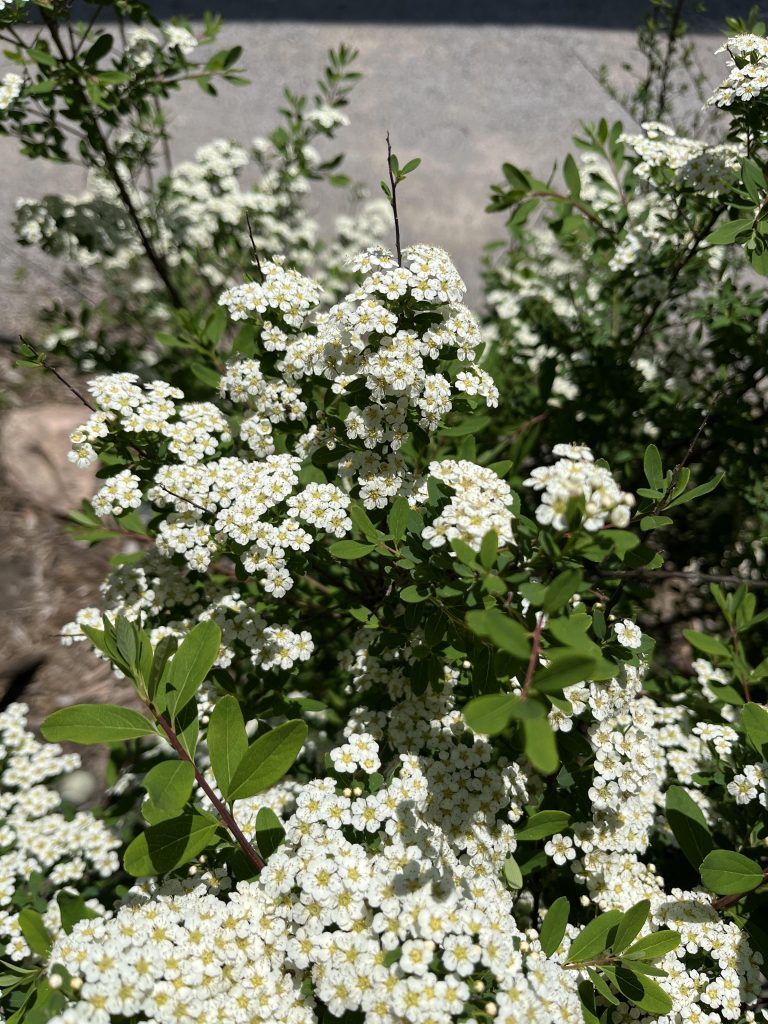
4. Spirea (Spiraea spp.)
Zones: 4–9
Exposure: Full sun
Habit: Mounded, bushy habit
Height/Spread: 1.5–8 ft tall, 2–7 ft wide
Growth rate: 1–2 feet per year
Bloom time: Late spring to midsummer (varies by variety)
One of the Easiest Full-Sun Shrubs Alive
Spirea might just be the most forgiving fast-growing shrub on this list. It grows quickly, isn’t fussy about soil pH, and produces masses of white, pink, or red flowers depending on the variety.
Japanese spirea (Spiraea japonica) handles Zones 4 to 9 and tops out at 4 to 6 feet. Some types bloom in spring, others in summer, so you can mix varieties for extended color.
Honestly, if you’ve never grown shrubs before, start here. Spirea rarely disappoints.
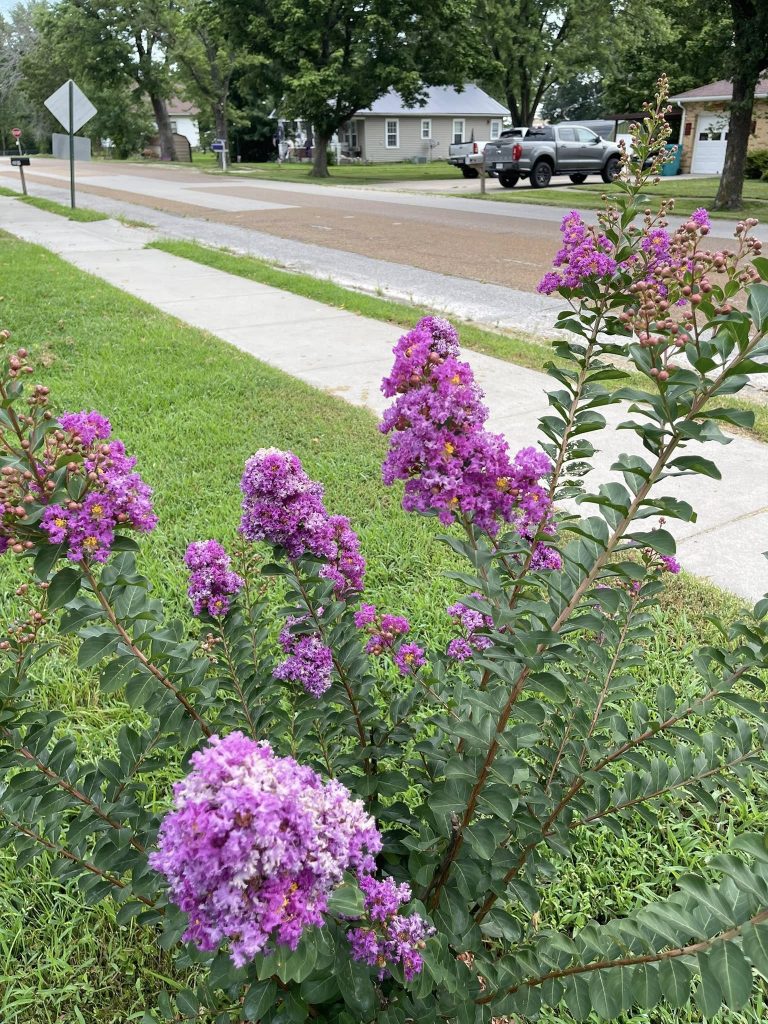
5. Crape Myrtle (Lagerstroemia spp.)
Zones: 6–10
Exposure: Full sun
Habit: Upright bushy or tree-like habit
Height/Spread: 2–30 ft tall, 2–30 ft wide
Growth rate: 1–3 feet per year
Bloom time: Summer to early fall
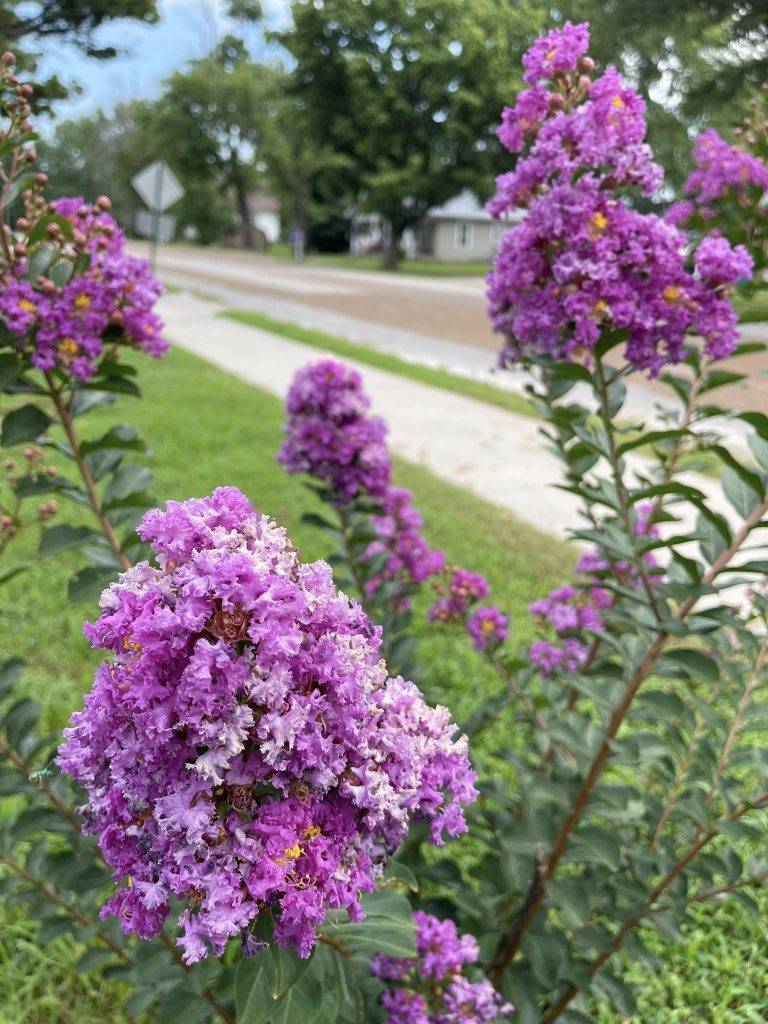
Summer’s Showiest Flowering Shrub
Crape myrtle blooms when most other shrubs have already called it quits for the season. Those ruffled, crepe-paper flowers in pink, red, purple, or white keep coming from midsummer well into fall, a genuinely spectacular display.
This shrub thrives in heat and full sun, making it especially valuable in warmer gardens across Zones 6 to 10. Dwarf varieties stay compact at just 2 to 3 feet, while larger types grow into small multi-stemmed trees with beautiful peeling bark.
Black Diamond ‘Mystic Magenta’ is a standout pick, deep jewel-toned flowers against almost-black foliage create a dramatic, high-contrast effect unlike anything else in the summer garden.
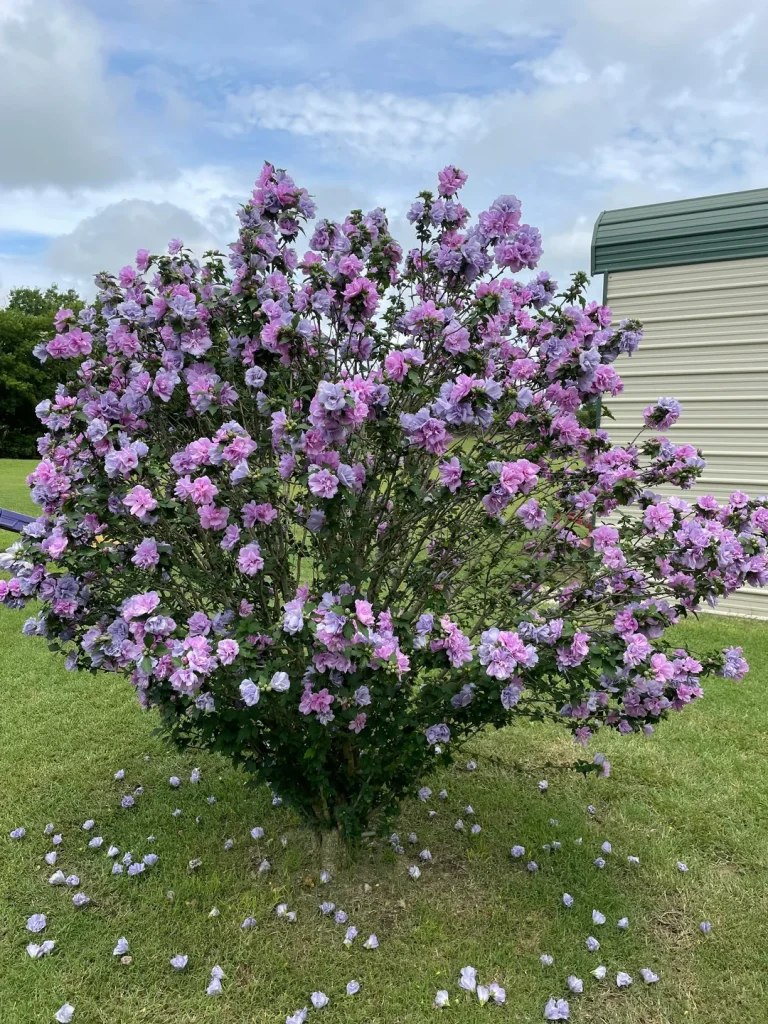
6. Rose of Sharon (Hibiscus syriacus)
Zones: 5–9
Exposure: Full sun to partial shade
Habit: Upright bushy habit
Height/Spread: 8–12 ft tall, 6–10 ft wide
Growth rate: Up to 2 feet per year
Bloom time: Midsummer to fall
Late-Season Color When You Need It Most
Rose of Sharon steps in exactly when the rest of your garden starts to look tired. Large, hibiscus-like flowers in white, pink, purple, or blue appear from midsummer and keep going right into early fall.
This shrub handles heat, poor soil, and urban growing conditions surprisingly well. Growing up to 2 feet per year, it develops a tall, upright form that adds real vertical interest to sunny borders.
Columnar varieties like ‘Purple Pillar’ squeeze into narrow spaces beautifully, making them perfect for tight spots along fences or driveways.
7. Ninebark (Physocarpus opulifolius)
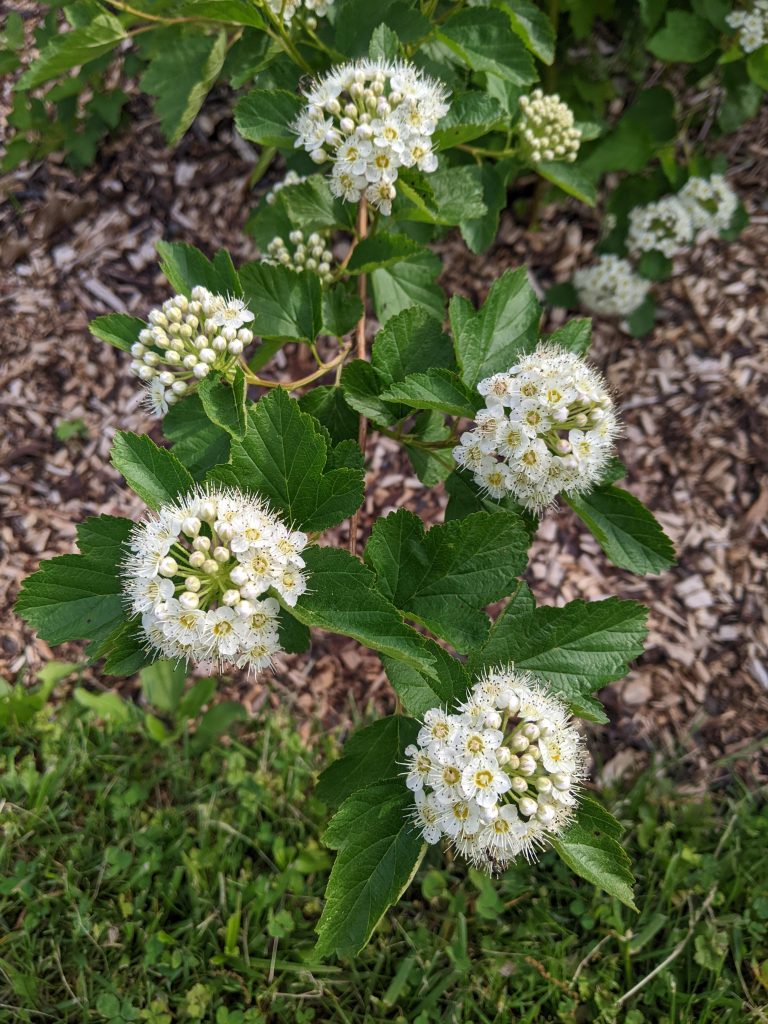
Zones: 2–8
Exposure: Full sun to partial shade
Habit: Upright bushy, arching, or compact habit
Height/Spread: 3–10 ft tall, 3–12 ft wide
Growth rate: Some varieties reach full size in the first growing season
Bloom time: Late spring to early summer
Four Seasons of Interest in One Shrub
Natural Rewrite
Ninebark is one of those shrubs that earns its place in the garden all year long. In late spring, it produces soft clusters of pale pink or white flowers.
Then come reddish seed heads, rich fall color, and peeling bark that stands out beautifully against winter snow.
Purple-leaved varieties like ‘Summer Wine’ and compact ‘Tiny Wine’ offer deep burgundy foliage all season long, providing structure even when nothing is in bloom.
This North American native is exceptionally hardy, thriving from Zone 2 all the way to Zone 8.
Poor soil? Fluctuating temperatures? Ninebark handles both without complaint.
8. Elderberry (Sambucus spp.)
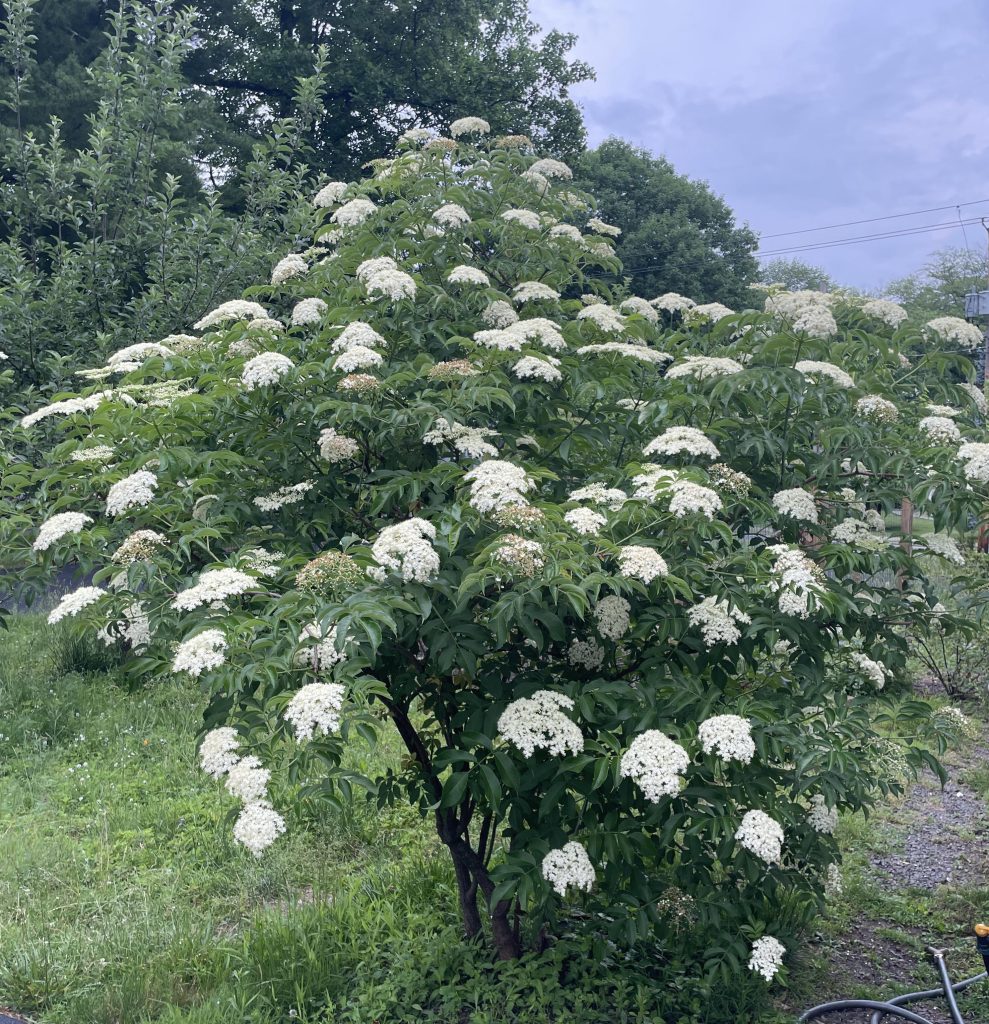
Zones: 3–9
Exposure: Full sun to partial shade
Habit: Upright bushy habit
Height/Spread: 3–30 ft tall and wide
Growth rate: Reaches full mature size in 1–3 years
Bloom time: Spring to summer
Fast, Beautiful, and Surprisingly Useful
Elderberry is one of the fastest shrubs on this entire list, some varieties reach their full mature size within just 1 to 3 years. Flat-topped clusters of creamy white flowers appear in early summer, followed by dark berries that birds devour enthusiastically.
Ornamental varieties like ‘Black Lace’ bring deeply cut, almost black-purple foliage that looks more like a statement plant than a wildlife shrub.
Gardeners who enjoy elderflower cordial or elderflower baking will also appreciate that those blooms are edible and intensely fragrant.
9. Mock Orange (Philadelphus spp.)
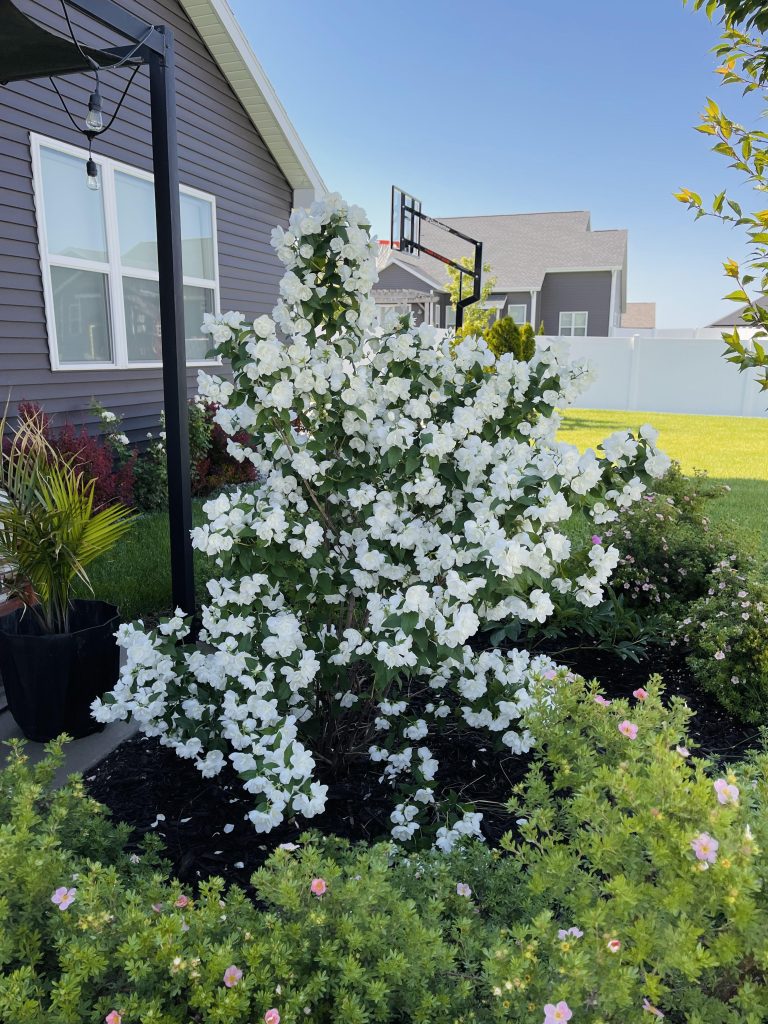
Zones: 4–8
Exposure: Full sun to partial shade
Habit: Upright bushy or arching habit
Height/Spread: 3–10 ft tall and wide
Growth rate: 2 feet or more per year
Bloom time: Late spring to early summer
The Shrub That Fills Your Garden With Fragrance
Natural Rewrite
Mock orange gets its name from its four-petaled white flowers, which smell a lot like orange blossoms. On warm evenings, their sweet fragrance can drift through the garden.
It can grow 2 feet or more each year, making it one of the faster-growing shrubs on this list.
This native deciduous shrub is virtually carefree once established, asking for little more than an occasional prune after flowering.
Plant it near a patio or garden path where you’ll actually catch that incredible scent.
10. Viburnum (Viburnum spp.)
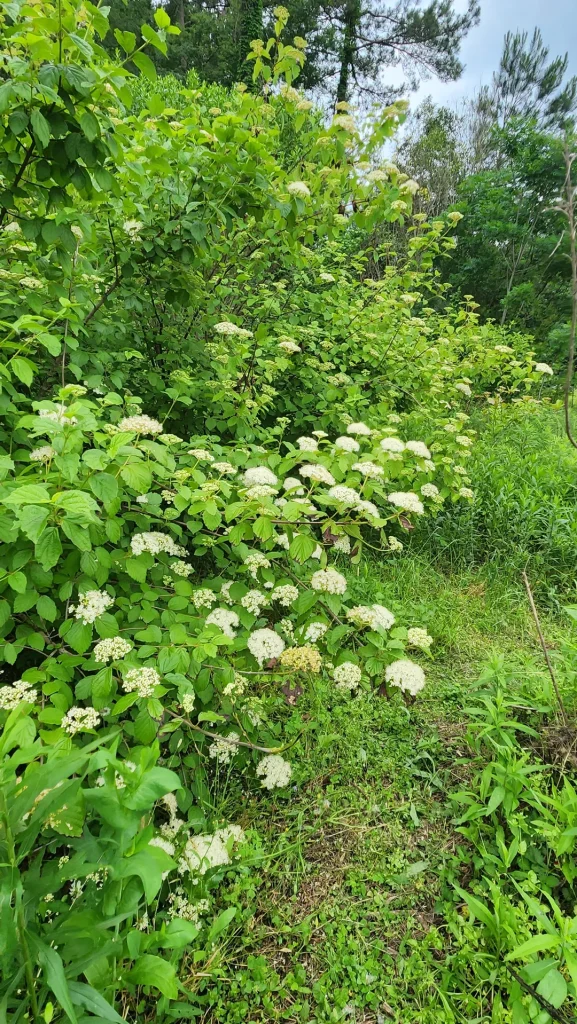
Zones: 2–10
Exposure: Full sun to partial shade
Habit: Upright or rounded bushy habit
Height/Spread: 2–30 ft tall, 2–12 ft wide
Growth rate: 1–2 feet per year
Bloom time: Spring
Fragrant Flowers, Fall Berries, and Deer Resistance
Viburnum is one of the most versatile shrubs you can plant in a sunny garden. Fragrant white or pink flowers arrive in spring, followed by red or black berries in autumn that birds absolutely flock to.
Depending on the type, the foliage can be glossy or velvety, and the leaves turn deep red in fall before they drop.
Butterflies visit the flowers, birds feast on the berries, and deer tend to leave it alone, genuinely hard to beat that combination.
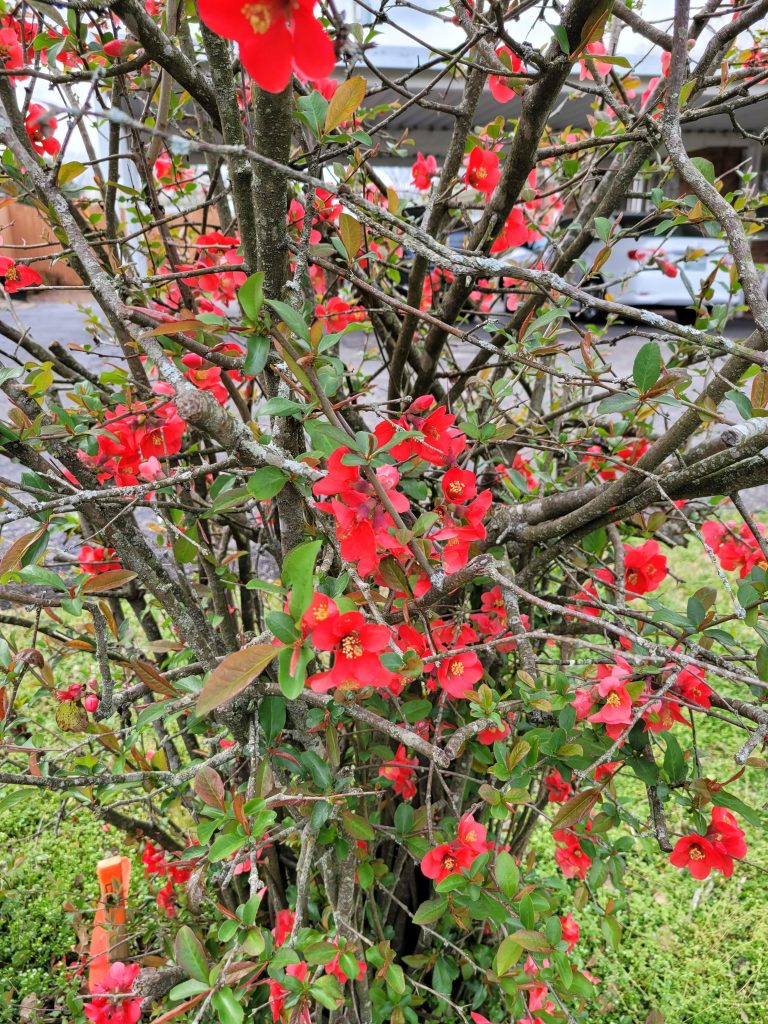
11. Flowering Quince (Chaenomeles spp.)
Zones: 5–9
Exposure: Full sun to partial shade
Habit: Dense, rounded bushy habit
Height/Spread: 3–10 ft tall and wide
Growth rate: 1–2 feet per year
Bloom time: Late winter to early spring
The Bravest Bloomer in the Garden
Flowering quince is one of the first shrubs to put on a show each year. Its vivid orange, red, pink, or white flowers open on bare branches in late winter, sometimes while frost is still on the ground.
That burst of color can feel like a welcome surprise after a long, gray winter.
This shrub is drought tolerant once rooted in and needs almost zero pruning to keep its naturally rounded shape.
Honestly, flowering quince asks for very little and gives back a lot.
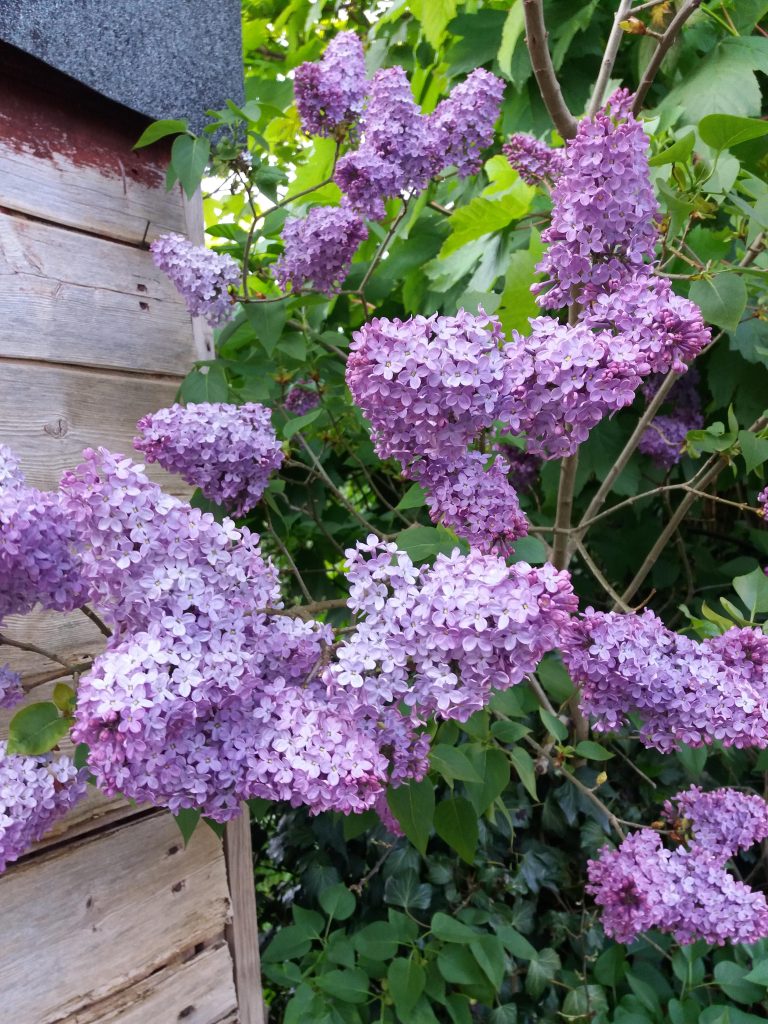
12. Lilac (Syringa spp.)
Zones: 3–8
Exposure: Full sun to partial shade
Habit: Upright bushy habit
Height/Spread: 4–15 ft tall, 3–12 ft wide
Growth rate: 1–2 feet per year
Bloom time: Spring
Old-Fashioned Fragrance That Never Gets Old
Lilac has been a garden favorite for centuries, and once you catch that sweet, heady fragrance drifting across the yard on a warm spring evening, you’ll understand exactly why.
Dense clusters of flowers in purple, pink, white, or blue completely smother the shrub in spring.
Common lilac (Syringa vulgaris) is tough, deer-resistant, and thrives in cold climates right down to Zone 3. Dwarf Korean lilac is the compact alternative, staying at just 4 to 5 feet tall, it delivers the same intoxicating fragrance in a fraction of the space.
Both types attract butterflies and hummingbirds in impressive numbers during their spring bloom.
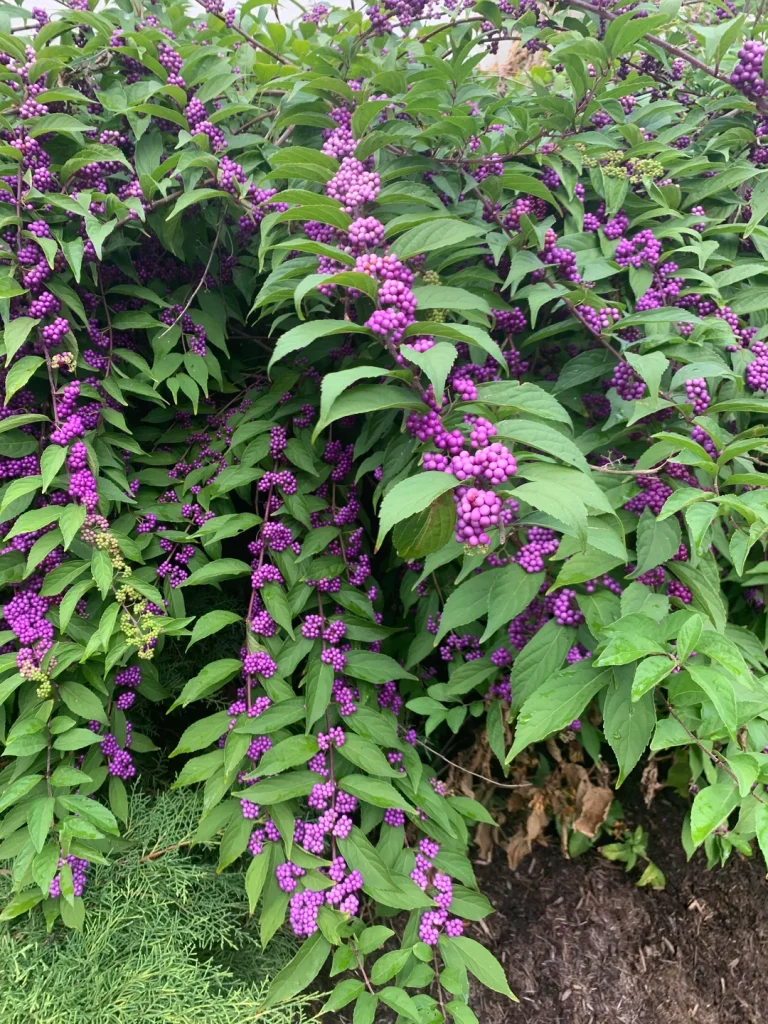
13. Beautyberry (Callicarpa spp.)
Zones: 5–10
Exposure: Full sun to partial shade
Habit: Mounding or arching habit
Height/Spread: 3–6 ft tall and wide
Growth rate: Several inches to 3–5 feet per year
Bloom time: Late spring to midsummer (berries follow in fall)
The Most Jaw-Dropping Fall Shrub You’ve Never Grown
Beautyberry can catch you by surprise. Small lavender-pink flowers appear in late spring, but the real display comes in fall, when clusters of bright purple berries cover the branches from top to bottom.
Beautyberry grows quickly, adding several inches to as much as 3 to 5 feet each year. It fills empty space fast but usually stays around 3 to 6 feet tall.
It adds a splash of late-season color just when many other shrubs are starting to fade.
Birds love those berries too, so expect regular feathered visitors well into the colder months.
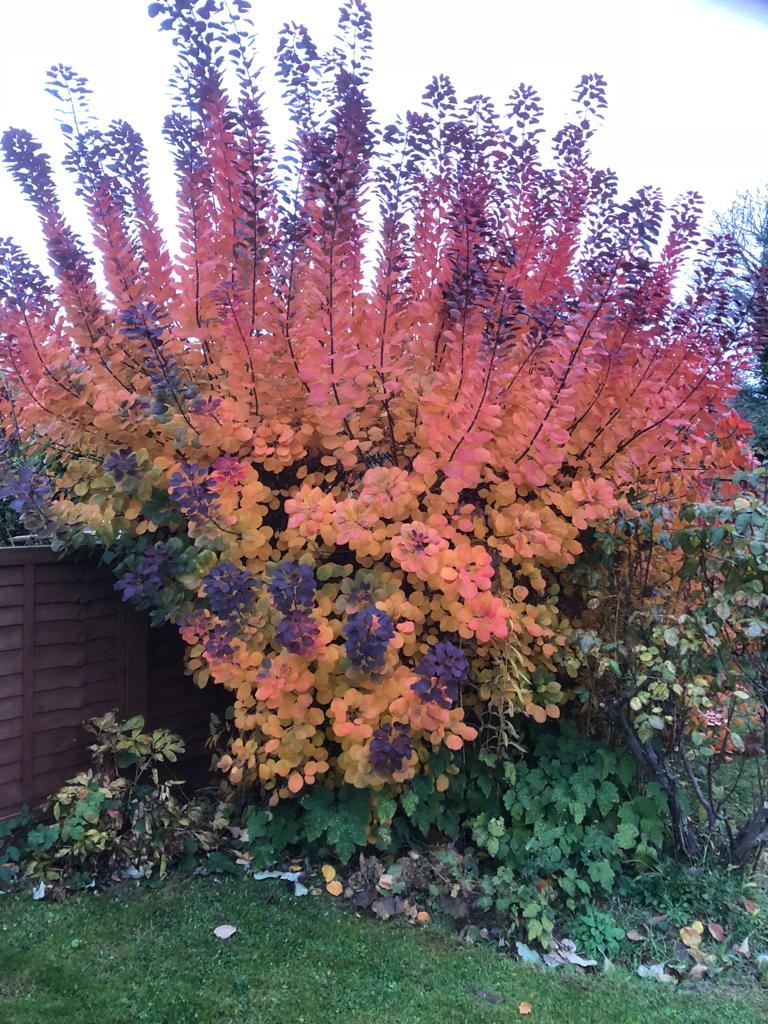
14. Smoke Tree (Cotinus coggygria)
Zones: 4–8
Exposure: Full sun to partial shade
Habit: Upright bushy or multi-stemmed habit
Height/Spread: 10–15 ft tall and wide
Growth rate: 1–2 feet per year
Bloom time: Late spring to early summer (smoky plumes persist through summer)
The Shrub That Looks Like a Cloud of Smoke
Smoke tree has one of the most unusual looks of any shrub on this list. Its tiny flowers turn into soft, feathery plumes in shades of pink, purple, and gray. From a distance, the whole plant looks like it’s covered in a light, smoky haze.
Purple-leaved varieties keep their rich foliage color through the season before turning fiery orange-red in fall. They’re drought-tolerant and easy to care for, thriving in full sun across Zones 4 to 8 with little attention once established.
Few shrubs create this level of drama with this little effort.
15. Caryopteris (Caryopteris spp.)
Zones: 5–9
Exposure: Full sun
Habit: Mounded, compact bushy habit
Height/Spread: 2–4 ft tall and wide
Growth rate: 1–2 feet per year
Bloom time: Late summer to fall
True Blue Flowers When Everything Else Has Faded
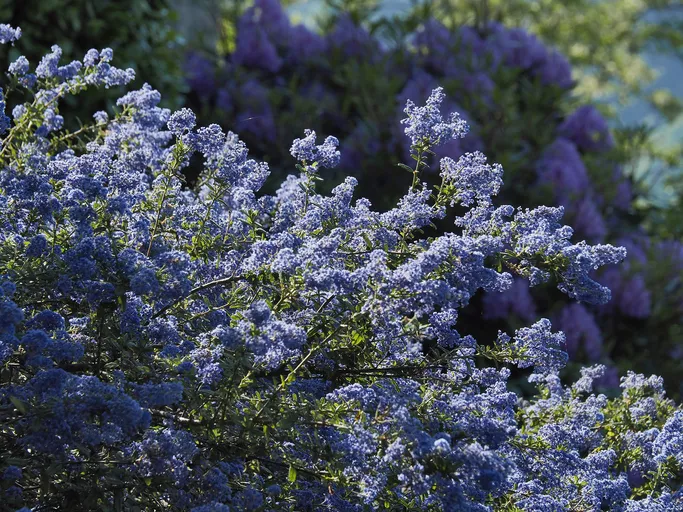
Caryopteris, commonly called bluebeard or blue mist, fills a gap that almost no other shrub can. True blue flowers are genuinely rare in the garden, and this compact shrub delivers them in abundance from late summer right through fall.
Its fragrant leaves add a nice scent to the garden as soon as they emerge in spring. Later in the season, the flowers draw butterflies, hummingbirds, and other helpful insects, just when many other nectar sources are fading.
It grows into a neat 2 to 4 foot mound, so it works well in borders, containers, or sunny spots without taking over.
Plant several together for a spectacular late-season drift of blue that stops visitors in their tracks.
Putting It All Together
Transforming a sunny garden doesn’t have to mean waiting forever. These 15 fast growing shrubs for full sun cover every season, from forsythia’s early spring yellow to caryopteris’s late-fall blue, so something is always happening in your garden.
Mix shrubs with different bloom times and you’ll create a space that looks intentional and layered all year round.
Pair tall, upright growers like Rose of Sharon with low mounders like spirea and caryopteris for the kind of layered border that landscape designers charge good money to plan.