How To Grow A Cut Flower Container Garden – Beginners Guide

Small patio? Tiny balcony? No problem. You can grow a stunning cut flower container garden almost anywhere and trust me, once you start, you won’t stop.
I turned a sad little apartment balcony into a mini flower farm, and now I’m clipping fresh bouquets every week through summer.
Pots give you total control over soil, sunlight, and placement. That flexibility changes everything.
Why Container Cut Flower Gardens Actually Work
People think you need rows of garden beds to grow flowers worth cutting. That’s simply not true.
Containers let you move your plants to chase sunlight throughout the day. They also let you swap out spent plants without disturbing anything else.
The Big Advantage Nobody Talks About
Soil quality matters more in containers than in the ground. You get to choose exactly what goes into each pot — rich, well-draining mix tailored to each flower’s needs.
Ground soil can be unpredictable. Container soil is always yours to control.
Small Space, Big Yields
Compact container gardens can produce impressive bouquets week after week through summer. A single large pot of zinnias, for example, can give you cut stems right up until the first frost.
Consistent deadheading keeps the blooms coming. Snip a flower, get two more.
Choosing the Right Containers
Pot size matters more than most people realize. Too small, and your flowers struggle to establish strong roots. Too large, and the soil holds excess moisture that can rot roots.
For most cut flowers, aim for pots at least 12 inches (30 cm) in diameter. Dahlias especially need this minimum to thrive.
Material Makes a Difference
Terracotta pots are a favorite for flowers like Bachelor’s Buttons (cornflowers) because they breathe and drain well. Plastic pots hold moisture longer, which suits thirstier plants.
Heavy ceramic pots look gorgeous but think about whether you’ll need to move them. Lightweight options win on a windy balcony.
Drainage Is Non-Negotiable
Every container you use must have drainage holes at the bottom. Waterlogged roots kill cut flower plants faster than almost anything else.
Add a layer of gravel or broken pot pieces before filling with compost. That simple step protects your plants season after season.
The Best Cut Flowers to Grow in Containers
Picking the right flowers makes all the difference. Some plants genuinely love life in a pot — others struggle no matter how well you care for them.
Here are 15 proven performers across full sun, part sun, and shade.
Cut Flower Container Garden — At a Glance
15 proven pot performers| Flower | Type | Soil Temp | Light | Blooms | Zones |
|---|---|---|---|---|---|
| 1Zinnias | Annual | 70–80°F (21–27°C) | 6–8 hrs direct sun | Summer to fall | 2–11 |
| 2Cosmos | Annual | 60–70°F (15–21°C) | 6–8 hrs direct sun | Summer to fall | 2–11 |
| 3Dwarf Sunflowers | Annual | 70–80°F (21–27°C) | 6–8 hrs direct sun | Summer | 2–11 |
| 4Celosia | Annual | 70–80°F (21–27°C) | 6–8 hrs direct sun | Summer to fall | 2–11 |
| 5Alliums | Perennial | 40–50°F (4–10°C) | 6–8 hrs direct sun | Late spring–early summer | 4–8 |
| 6Lavender | Perennial | 65–70°F (18–21°C) | 6–8 hrs direct sun | Late spring–early summer | 5–9 |
| 7Scabiosa | Perennial | 65–70°F (18–21°C) | 6–8 hrs direct sun | Summer to fall | 4–9 |
| 8Verbena | Annual/Perennial | 65–75°F (18–24°C) | 6–8 hrs direct sun | Spring to fall | 8–11 |
| 9Amaranthus | Annual | 70–80°F (21–27°C) | 6–8 hrs direct sun | Summer–early fall | 2–11 |
| Flower | Type | Soil Temp | Light | Blooms | Zones |
|---|---|---|---|---|---|
| 10Foxgloves | Perennial | 60–70°F (15–21°C) | 4–6 hrs sun/filtered | Late spring–early summer | 4–8 |
| 11Hydrangeas | Perennial | 50–60°F (10–15°C) | 4–6 hrs sun/filtered | Summer to fall | 3–9 |
| 12Aquilegia (Columbine) | Perennial | 60–70°F (15–21°C) | 4–6 hrs sun/filtered | Spring–early summer | 3–8 |
| 13Shirley Poppies | Annual | 60–70°F (15–21°C) | 4–6 hrs sun/filtered | Late spring–summer | 2–11 |
| Flower | Type | Soil Temp | Light | Blooms | Zones |
|---|---|---|---|---|---|
| 14Astilbe | Perennial | 50–60°F (10–15°C) | 2–4 hrs filtered | Late spring–summer | 4–9 |
| 15Hellebores | Perennial | 50–60°F (10–15°C) | 2–4 hrs filtered | Late winter–early spring | 4–9 |
Zone ranges reflect general hardiness for the species; container-grown plants at the edge of a zone range often need extra winter protection since pots offer less insulation than ground soil.
1. Zinnias
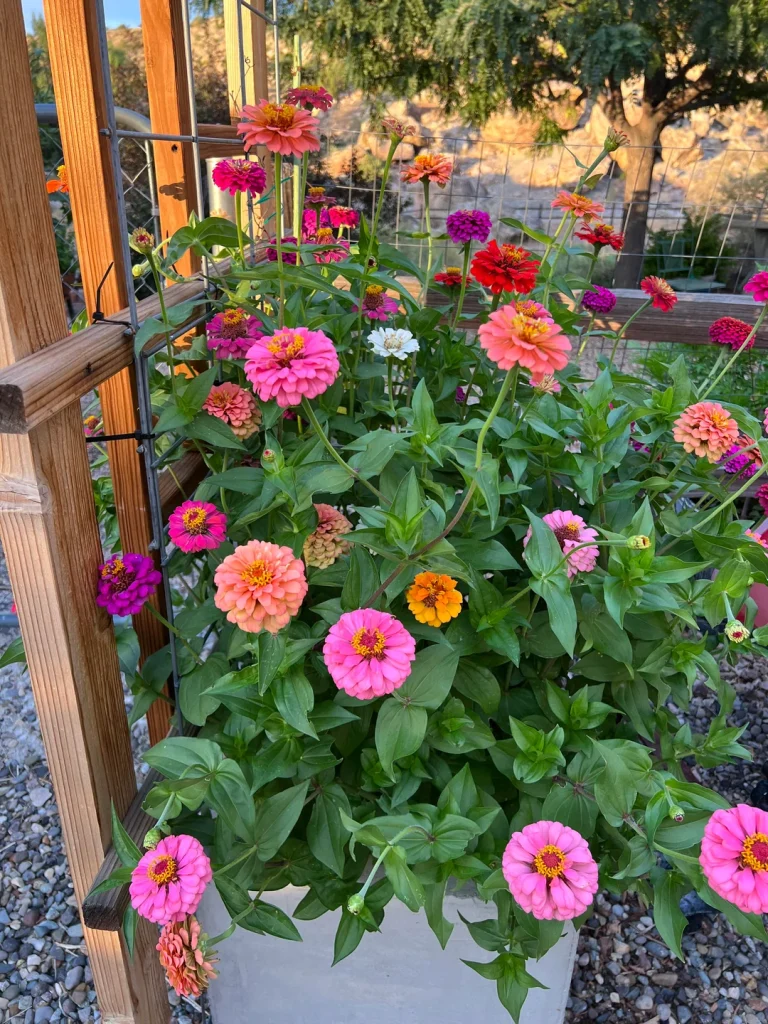
I always tell beginners to start here. Zinnias just don’t quit. Sow a fresh batch every three weeks and you’ll have blooms until frost.
Pick a compact variety made for pots. Then cut often. Every snip tells the plant to make more flowers.
One warning from experience: water the base, not the leaves. Wet foliage invites mildew fast.
- Type: Annual
- Soil Temperature: 70–80°F (21–27°C)
- Location: Sunny; excellent for container gardening.
- Light: 6–8 hours of direct sunlight
- Expected Blooming: Summer to fall
- Hardiness Zones: 2–11
2. Cosmos
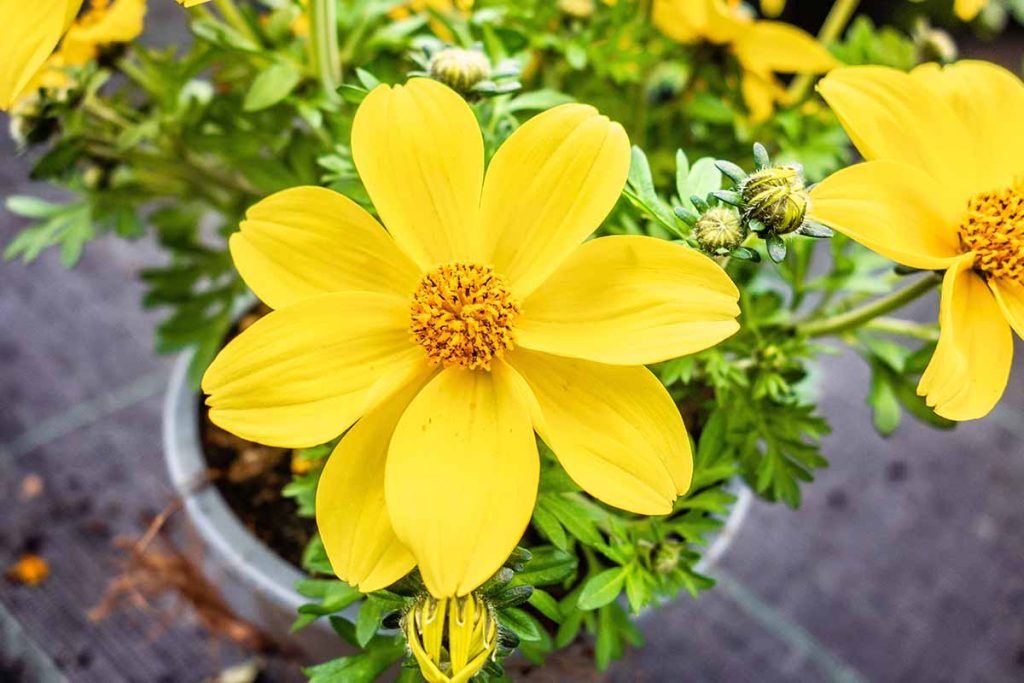
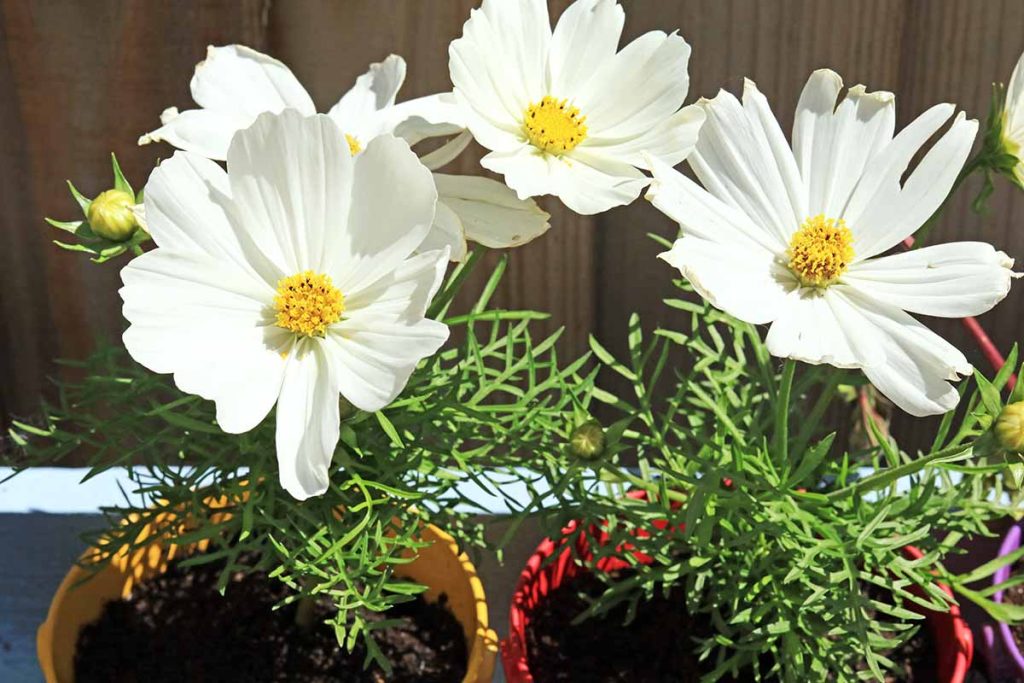
You’ll fall for cosmos the first time you see it swaying in a breeze. It has that wild, meadow feel pots rarely pull off.
Sonata and Candyfloss Mix stay compact enough to behave. Forget to water it once? No big deal. It bounces back.
Just skip the fertilizer once buds show up. Too much richness gives you leaves instead of flowers.
- Type: Annual
- Soil Temperature: 60–70°F (15–21°C)
- Location: Sunny; excellent for container gardening.
- Light: 6–8 hours of direct sunlight
- Expected Blooming: Summer to fall
- Hardiness Zones: 2–11
3. Dwarf Sunflowers
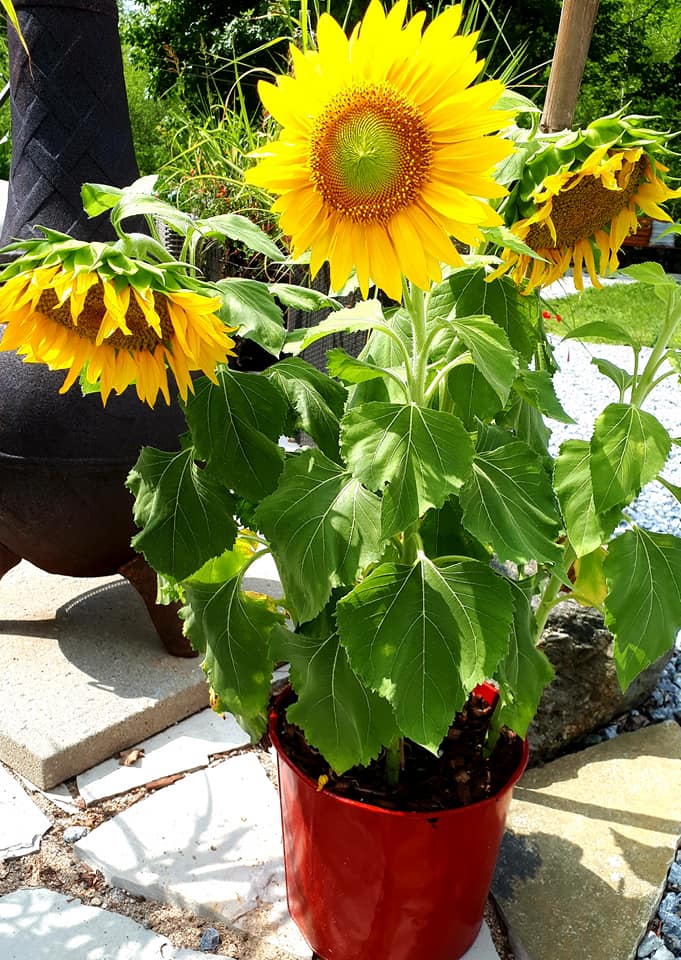
Leave the giant varieties for the backyard. In a pot, you want something like Teddy Bear or Elf. They stay short but still bring that big sunflower charm.
I’d choose a branching type over single-stem if you want repeat cuts all summer.
One tip you won’t find on the seed packet: change your vase water often. Sunflower stems release sap that clouds fast and shortens the life of everything else in the bunch.
- Type: Annual
- Soil Temperature: 70–80°F (21–27°C)
- Location: Sunny; suitable for container gardening.
- Light: 6–8 hours of direct sunlight
- Expected Blooming: Summer
- Hardiness Zones: 2–11
4. Celosia
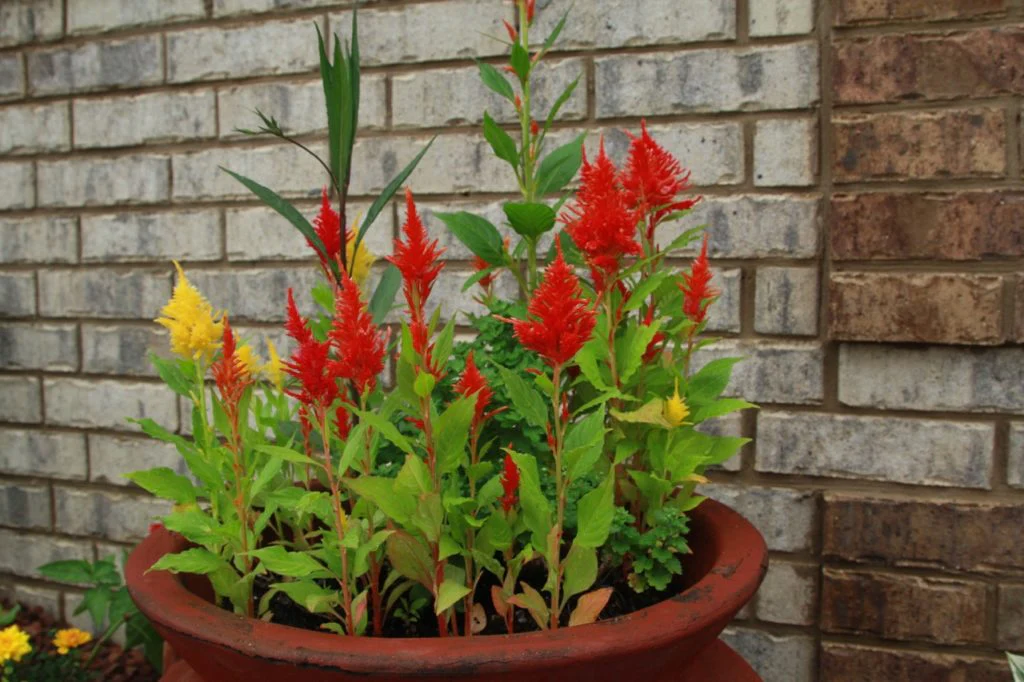
Celosia gives you flame-shaped blooms that hold their color long after cutting. You can use it fresh or dry it for months.
Go plume-style for something feathery, or crested for a bold, brain-like texture. Grow both if you have room.
Here’s the surprising part: celosia actually likes being a little root-bound. Don’t rush it into a bigger pot. A snug container pushes more energy into blooms.
- Type: Annual
- Soil Temperature: 70–80°F (21–27°C)
- Location: Sunny; perfect for container gardening.
- Light: 6–8 hours of direct sunlight
- Expected Blooming: Summer to fall
- Hardiness Zones: 2–11
5. Alliums: best perennial for cut flower garden
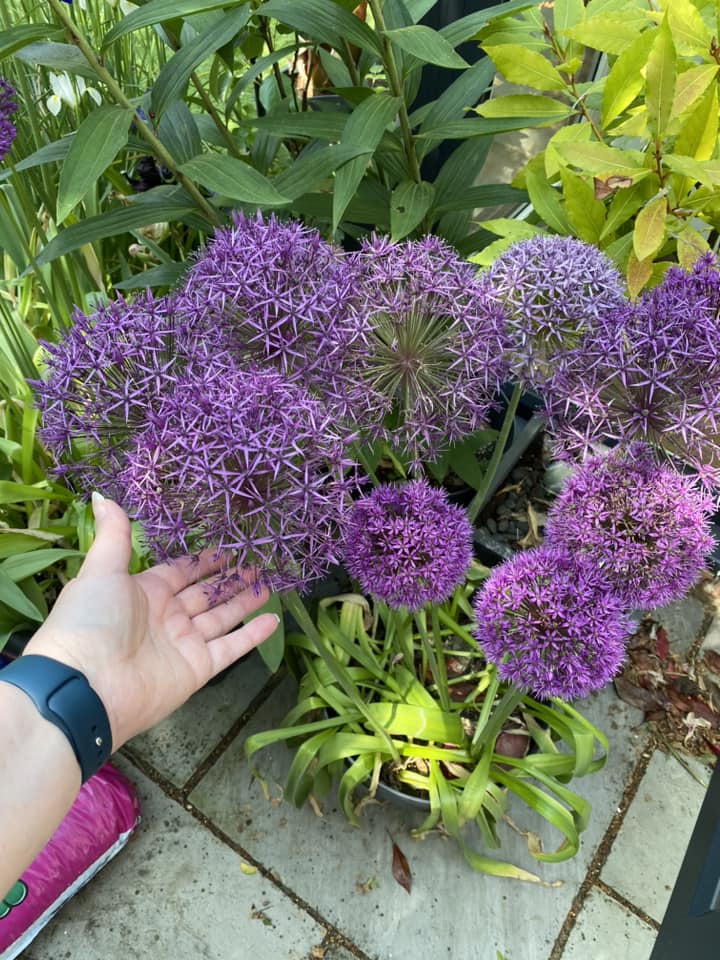
This is one of the best perennials for cut flower garden. These ornamental onions punch way above their size. Plant the bulbs in fall and forget about them. Spring will remind you they’re there.
One thing to plan for: the foliage turns yellow and messy right as flowers open. I always tuck a few annuals in front to hide it.
And don’t rush to deadhead everything. Leave a few spent blooms on the stem. They dry into striking seed heads you’ll want standing through fall.
- Type: Perennial
- Soil Temperature: 40–50°F (4–10°C)
- Location: Sunny; container gardening is ideal.
- Light: 6–8 hours of direct sunlight
- Expected Blooming: Late spring to early summer
- Hardiness Zones: 4–8
6. Lavender
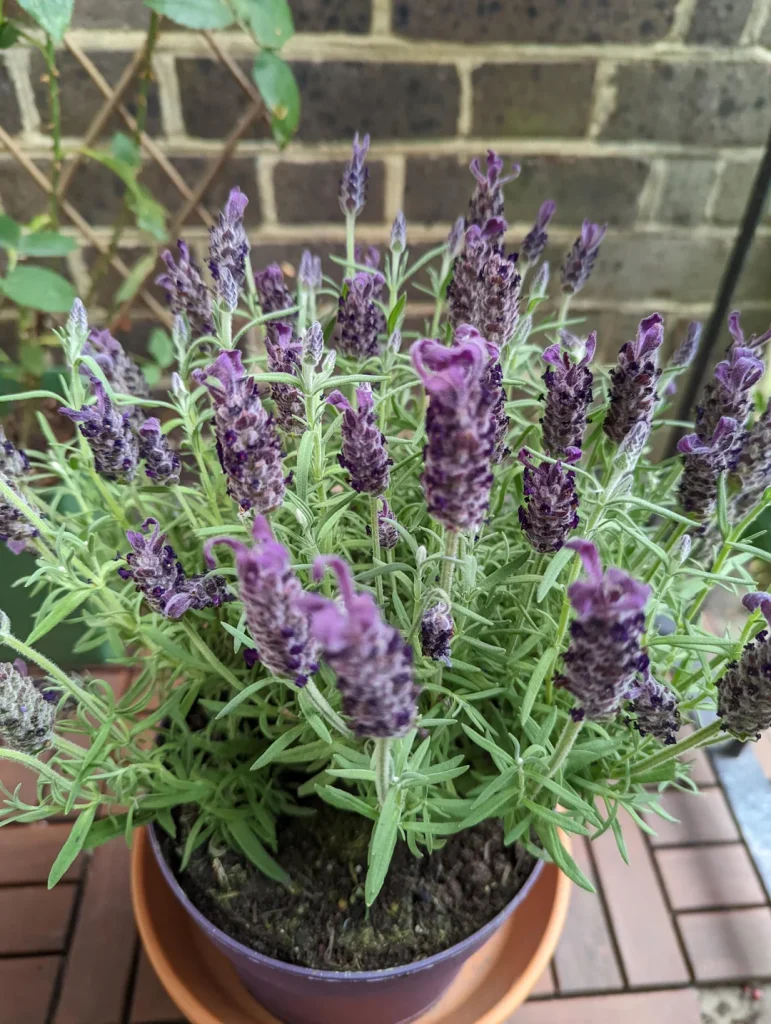
Lavender rewards you twice. You get color in the pot and fragrance every time you walk past. French varieties handle container life best. Trim it hard right after it blooms.
Skip that step and you’ll end up with a woody, sparse plant within a couple seasons.
My biggest tip: don’t overwater. Let the top two inches of soil dry out completely first. More container lavender dies from soggy roots than cold.
- Type: Perennial
- Soil Temperature: 65–70°F (18–21°C)
- Location: Sunny; great for container gardening.
- Light: 6–8 hours of direct sunlight
- Expected Blooming: Late spring to early summer
- Hardiness Zones: 5–9
7. Scabiosa
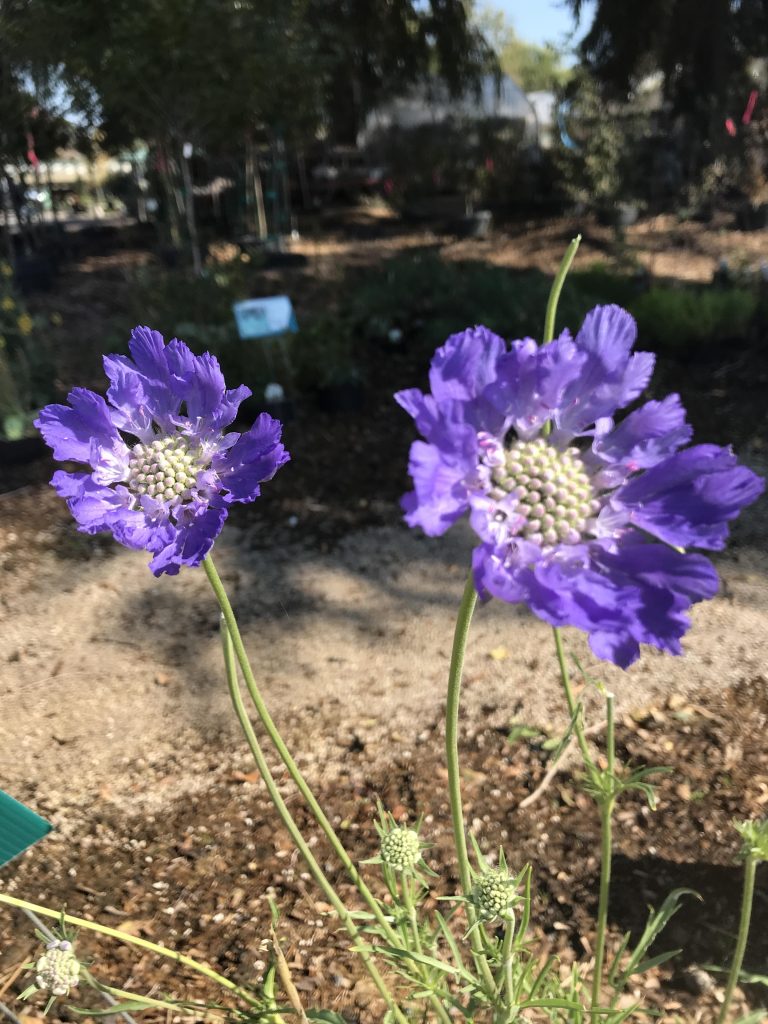
Scabiosa gives you those charming pincushion blooms every mixed bouquet needs. Keep deadheading and it keeps producing, right into fall.
Let a few blooms go to seed on purpose, though. Those papery pods add great texture to dried arrangements.
Here’s a trick that actually matters: cut when the flower is only a third open. Scabiosa keeps opening in the vase, so an early cut buys you extra days.
- Type: Perennial
- Soil Temperature: 65–70°F (18–21°C)
- Location: Sunny; container gardening is suitable.
- Light: 6–8 hours of direct sunlight
- Expected Blooming: Summer to fall
- Hardiness Zones: 4–9
8. Verbena
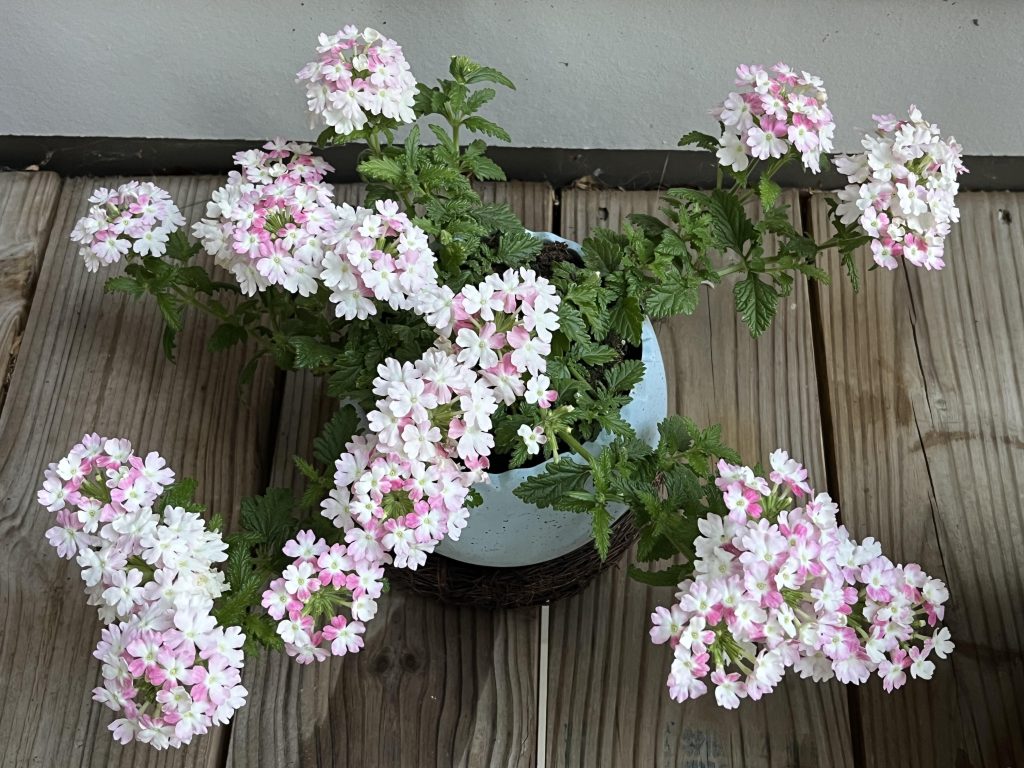
Verbena just doesn’t stop blooming. Spring through frost, you’ll have color. Pick a trailing variety for your pot.
It spills beautifully over the edge and shrugs off heat that wilts other flowers.
One thing to know before you cut: the individual flowers are tiny. Cut whole clusters, not single stems. Think of verbena as your filler, not your star.
- Type: Annual or Perennial (varies by region)
- Soil Temperature: 65–75°F (18–24°C)
- Location: Sunny; great for container gardening.
- Light: 6–8 hours of direct sunlight
- Expected Blooming: Spring to fall
- Hardiness Zones: 8–11
9. Amaranthus
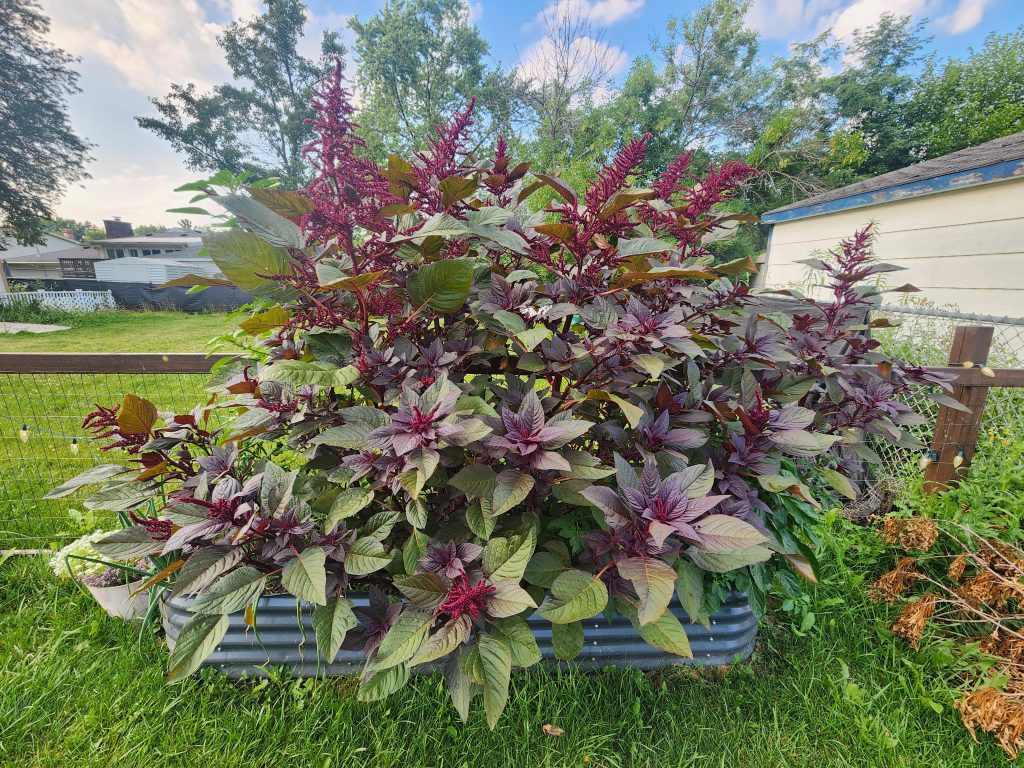
Amaranthus brings serious drama to a container. Want tall, upright stems? Go with an upright variety. Want cascading, rope-like blooms?
Try Love Lies Bleeding. Either way, use a heavy pot. Top-heavy growth tips over fast in summer storms.
Here’s the bonus: it tolerates dry, poor soil better than almost anything else on this list. Perfect if you tend to forget a pot during a busy week.
- Type: Annual
- Soil Temperature: 70–80°F (21–27°C)
- Location: Sunny; suitable for container gardening.
- Light: 6–8 hours of direct sunlight
- Expected Blooming: Summer to early fall
- Hardiness Zones: 2–11
10. Foxgloves
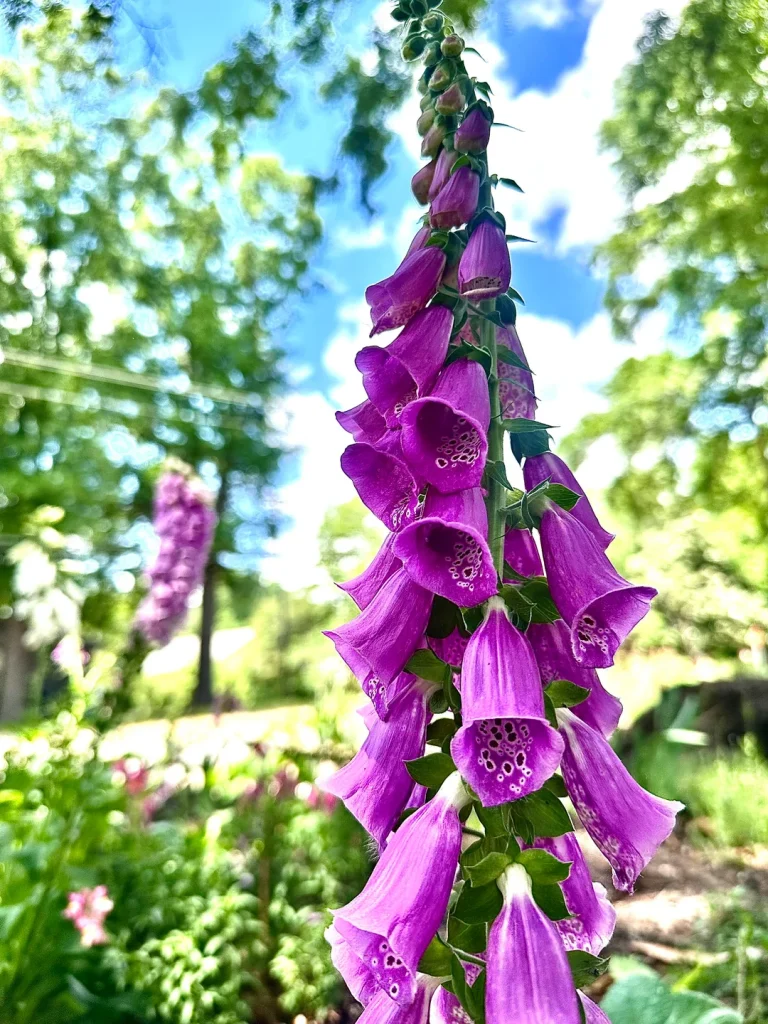
Foxgloves ask for patience. Most varieties are biennial, so you’ll wait until year two for those tall spires. Trust me, it’s worth it.
One thing you need to know: every part of this plant is toxic if eaten. Keep it away from pets and kids.
If two years feels too long, look for Dalmatian or Camelot series. Both bloom in their first year if you start them early.
- Type: Perennial
- Soil Temperature: 60–70°F (15–21°C)
- Location: Partial shade; container gardening is ideal.
- Light: 4–6 hours of sunlight or filtered light
- Expected Blooming: Late spring to early summer
- Hardiness Zones: 4–8
11. Hydrangeas
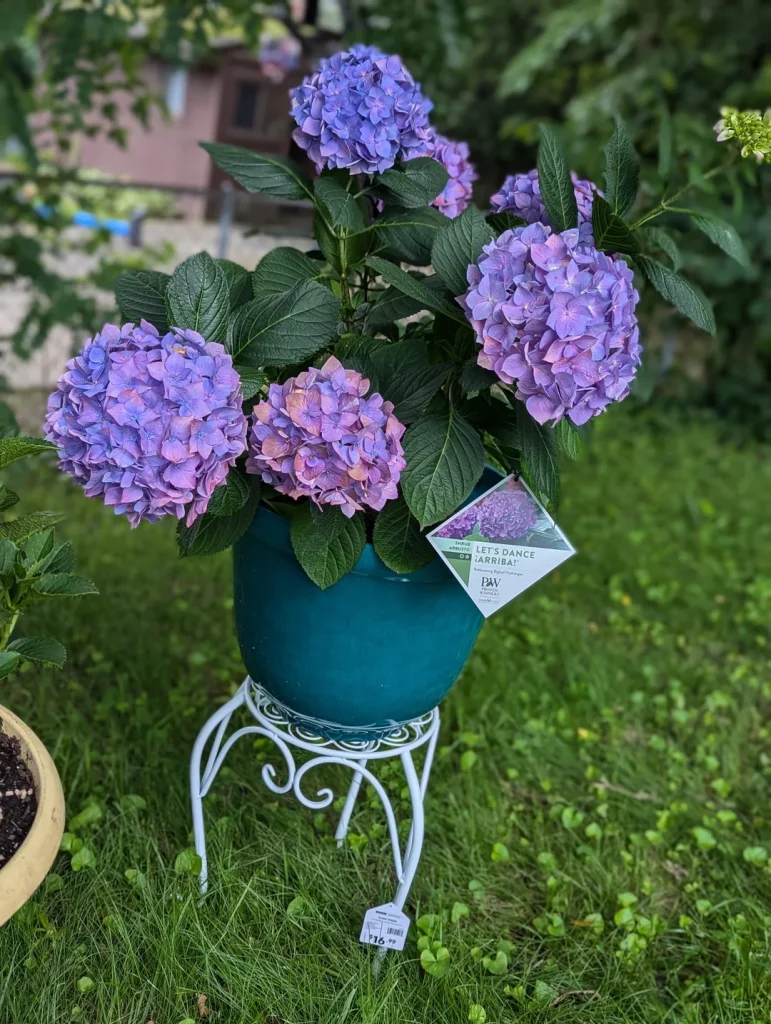
Nothing fills a vase faster than hydrangeas. If you grow Annabelle, prune it hard in late winter. It blooms on new growth, so you won’t lose next year’s flowers.
Endless Summer works the opposite way. It blooms on old wood, so prune right after flowering instead. I recommend hydrangeas for shade areas because they love low light.
One more thing I’ve learned the hard way: container hydrangeas dry out faster than ground-planted ones. Check the soil daily once summer heats up.
- Type: Perennial
- Soil Temperature: 50–60°F (10–15°C)
- Location: Partial shade; container gardening is suitable.
- Light: 4–6 hours of direct sunlight or filtered light
- Expected Blooming: Summer to fall
- Hardiness Zones: 3–9
12. Aquilegia (Columbine)
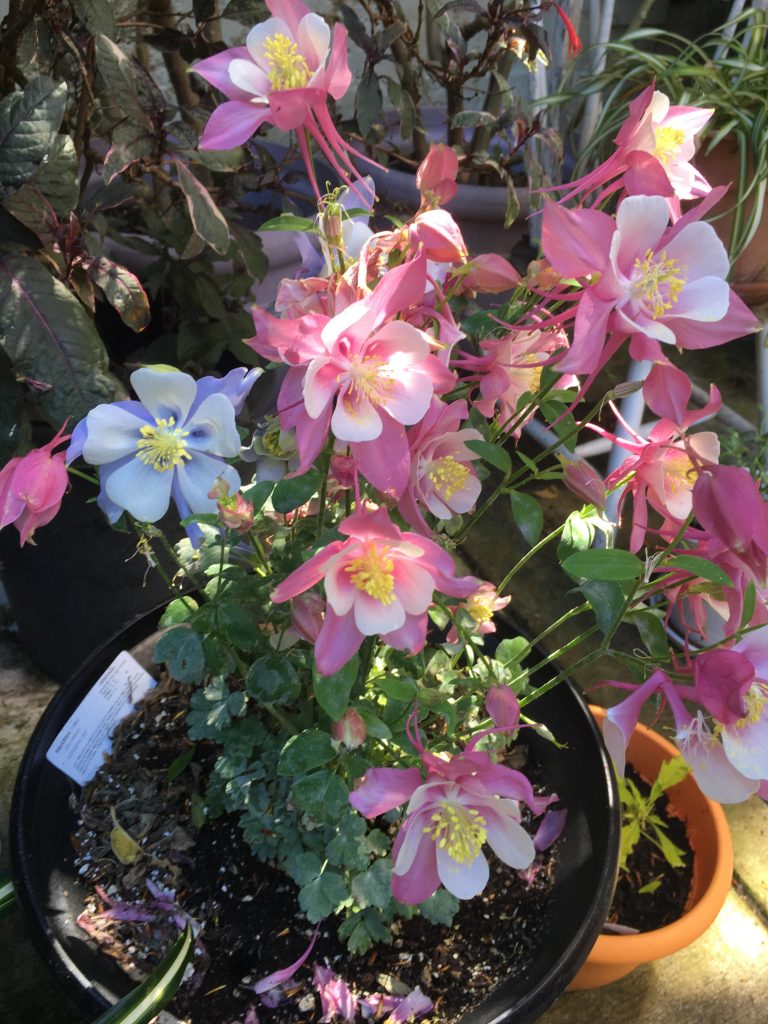
Columbine’s spurred blooms always stop people mid-conversation. You’ll love how it self-seeds, too.
Don’t be surprised when new seedlings pop up in nearby pots next spring. Hummingbirds usually find it before you do.
Watch for leaf miners, though. If you spot squiggly white trails on the leaves, snip them off right away. They spread fast if you let them.
- Type: Perennial
- Soil Temperature: 60–70°F (15–21°C)
- Location: Partial shade to sun; container gardening is suitable.
- Light: 4–6 hours of direct sunlight or filtered light
- Expected Blooming: Spring to early summer
- Hardiness Zones: 3–8
13. Shirley Poppies
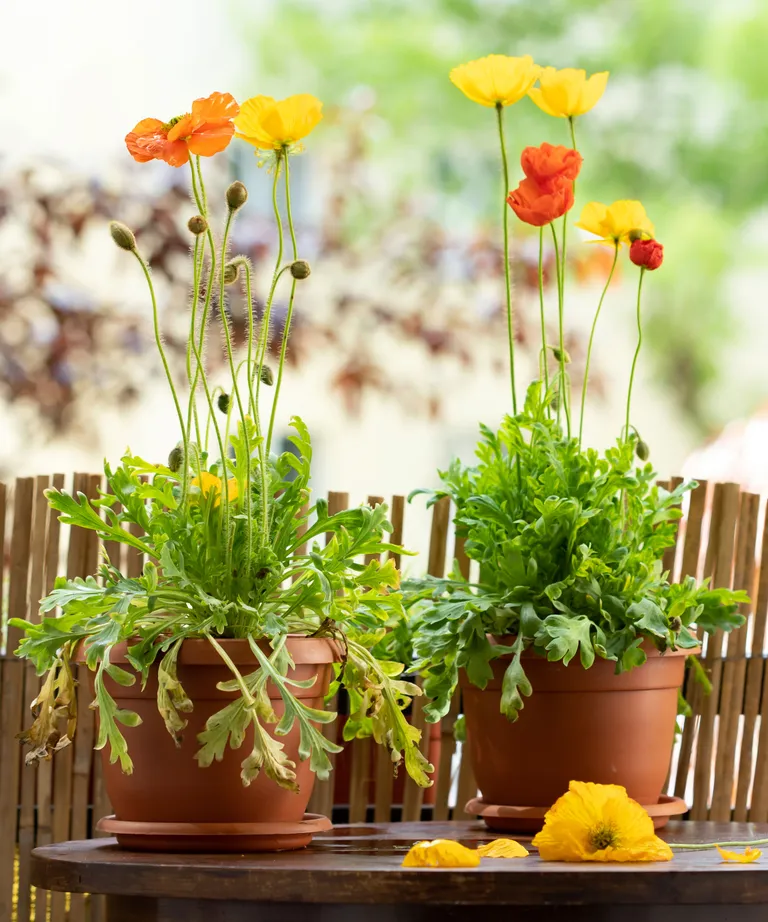
Shirley poppies bring soft, tissue-paper romance to any bouquet. Sow the seeds directly outside. They hate being transplanted.
Here’s a trick worth remembering: dip the cut stem ends in just-boiled water for a few seconds.
It seals in the milky sap and nearly doubles how long the blooms last.
And don’t thin your seedlings too aggressively. A little crowding actually helps poppies stay upright in wind.
- Type: Annual
- Soil Temperature: 60–70°F (15–21°C)
- Location: Partial shade to full sun; great for container gardening.
- Light: 4–6 hours of direct sunlight or filtered light
- Expected Blooming: Late spring to summer
- Hardiness Zones: 2–11
14. Astilbe
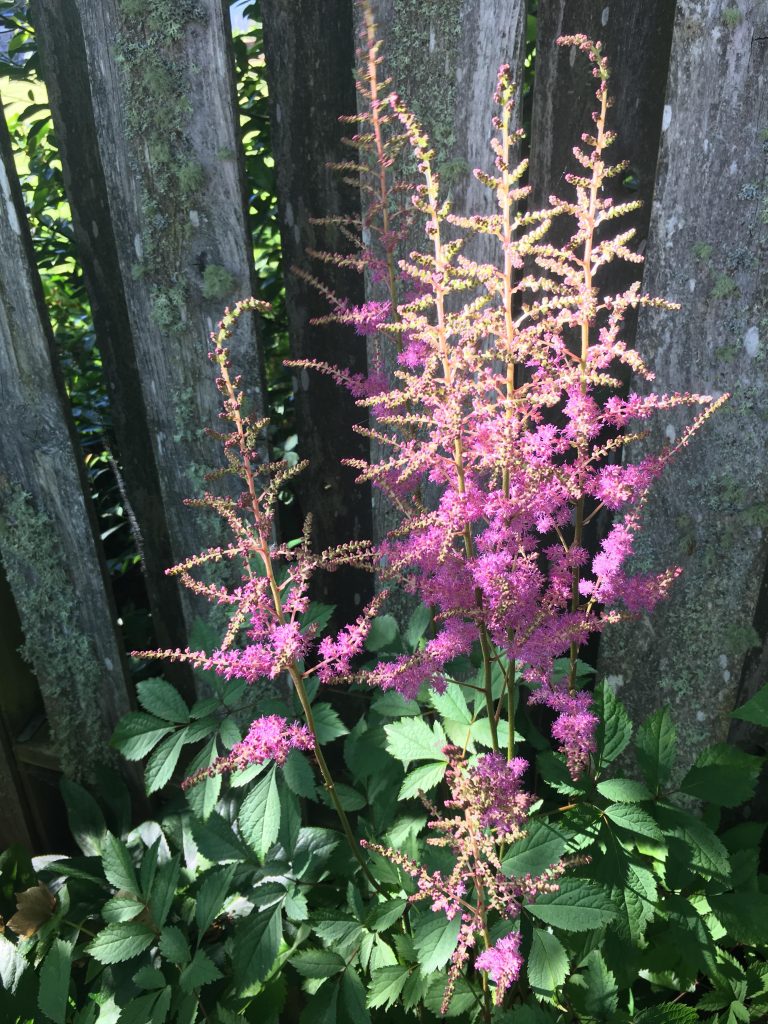
Astilbe softens any shady container with feathery plumes. Hang a few stems upside down at the end of the season and they’ll dry with most of their color intact.
Divide the clump every three or four years. It gets crowded fast, and you’ll notice better blooms once you thin it out.
One more thing: astilbe drinks a lot. Check the soil daily in summer, or the plumes will brown at the edges.
- Type: Perennial
- Soil Temperature: 50–60°F (10–15°C)
- Location: Partial to full shade; container gardening is ideal.
- Light: 2–4 hours of filtered light
- Expected Blooming: Late spring to summer
- Hardiness Zones: 4–9
15. Hellebores
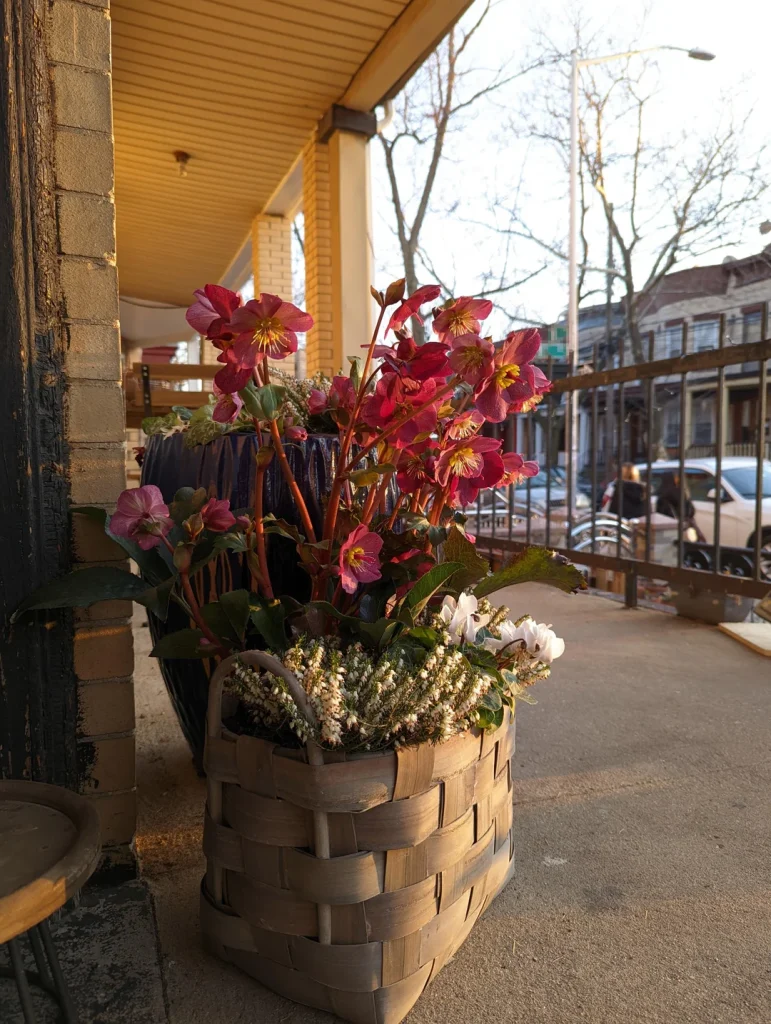
Hellebores bloom when almost nothing else in your garden will. That alone earns them a spot here. Cut stems wilt fast in a regular vase, though.
Do this instead: float the blooms face-up in a shallow bowl of water. It’s the trick that actually makes them work as cut flowers.
The evergreen foliage keeps your container looking alive all winter, too. For the longest vase life, wait until you see seed pods starting to form before you cut. Blooms picked at this stage hold up far better than ones cut fresh open.
- Type: Perennial
- Soil Temperature: 50–60°F (10–15°C)
- Location: Partial to full shade; suitable for container gardening.
- Light: 2–4 hours of filtered light
- Expected Blooming: Late winter to early spring
- Hardiness Zones: 4–9
Combining Plants in One Container
Single-variety pots are simple and effective. Mixed containers, though, create something really special.
Pairing plants with different bloom times means your pot delivers cutting material across more of the season rather than all at once.
Thriller, Filler, Spiller for Cut Flowers
The classic container design formula works brilliantly for cut flower pots too.
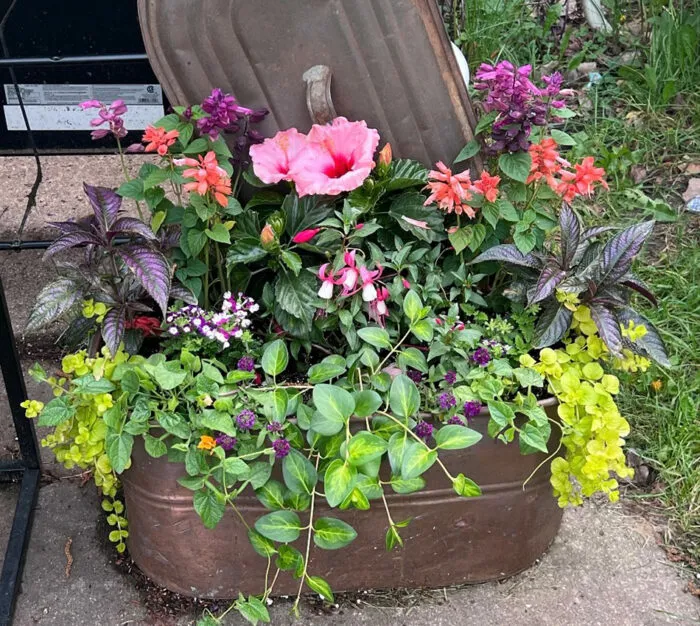
Use a tall statement flower (like a dwarf sunflower or dahlia) as your thriller, a mid-height bloomer (zinnia or cosmos) as your filler, and a trailing or low-growing option at the edges.
Celosia works beautifully as a filler with its rich texture and long vase life. Creeping phlox or low compact lavender can soften the pot edges.
Annuals and Perennials Together
Mixing annuals and perennials in the same container stretches your cutting season significantly.
Annuals like zinnias and cosmos bloom quickly — often within six to eight weeks of planting — while established perennials return season after season.
Hydrangeas and astilbe can anchor a large container as permanent perennial centerpieces. Surround them with seasonal annuals to keep things fresh and rotating.
Soil, Feeding, and Watering for Container Cut Flowers
The difference between a struggling plant and a flowering one often comes down to simply getting the conditions right.
Containers dry out faster than garden beds — full stop.
That one fact should shape every watering and feeding decision you make.
Building the Perfect Potting Mix
Never use garden soil straight from the ground in containers. It compacts badly, drains poorly, and suffocates roots within weeks.
Start with a good quality peat-free potting compost as your base. Add perlite or coarse sand to improve drainage — roughly one part sand or perlite to three parts compost works well for most cut flowers.
Feeding Your Container Flowers
Plants growing in pots exhaust their nutrients much faster than ground-planted flowers. Regular feeding is what keeps your blooms coming strong all season.
Use a balanced liquid fertilizer every one to two weeks once your plants start actively growing. Switch to a high-potassium feed (like a tomato fertilizer) once flower buds begin forming — potassium directly supports stronger, longer-lasting blooms.
Watering — Getting the Balance Right
Some container cut flowers need daily watering during hot spells. Others, like lavender, strongly prefer to dry out slightly between drinks.
Check the top inch of soil with your finger before watering rather than following a fixed schedule. That simple habit prevents both underwatering and root rot far more reliably than any timer or routine.
Positioning Your Containers for Maximum Blooms
Where you place your pots makes an enormous difference to how well your flowers perform. Sunlight is the single biggest factor driving bloom production in cut flower plants.
Most cut flowers demand at least six hours of direct sun daily to flower reliably and generously.
Working With Your Space
South-facing walls and patios offer the most sun exposure in the northern hemisphere — ideal for full-sun lovers like zinnias, cosmos, and sunflowers.
East-facing spots deliver gentler morning sun, which suits part-sun plants like lavender and foxgloves beautifully.
Rotate your containers every week or two if some sides get more light than others. Even a quarter-turn keeps growth balanced and prevents plants leaning heavily toward the light.
Harvesting Your Container-Grown Cut Flowers
Knowing exactly when and how to cut your flowers determines how long they’ll last in the vase. Cut too late and the blooms fade within a day or two.
Timing your harvest correctly is honestly as important as any growing technique.
The Golden Harvest Rule
Cut your flowers just as the petals begin to unfurl — not when they’re fully open. At that stage, the flower still has its full display life ahead of it rather than behind it.
Early morning is the best time to harvest, when stems are fully hydrated from the cool night air. Flowers cut in midday heat wilt faster and condition less successfully.
Conditioning Your Cut Flowers
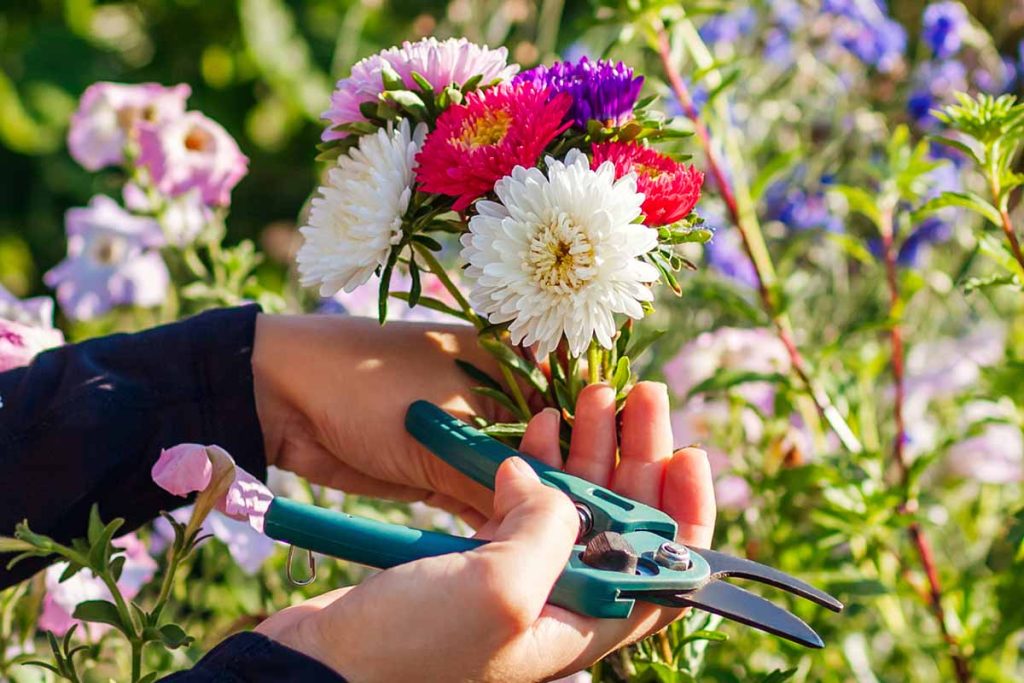
Always cut stems at a 45-degree angle using clean, sharp scissors or pruners. That angled cut maximizes the surface area drawing up water and dramatically extends vase life.
Place cut stems immediately into a bucket of cool, clean water. Strip any leaves that would sit below the waterline — rotting foliage contaminates the water and shortens the life of every stem in the vase.
How Annuals Reward Regular Cutting
Annuals like zinnias, cosmos, and cornflowers operate on a brilliant principle — the more you cut, the more they produce. Removing blooms signals the plant to push out new flower stems rather than setting seed and slowing down.
Regular harvesting essentially keeps your container in a permanent state of peak production. Few things in gardening feel as satisfying as that virtuous cycle.
Your Cut Flower Container Garden Starts With One Pot
Every great container cut flower garden started with someone filling a single pot and seeing what happened. You don’t need a perfect setup, a big budget, or years of experience to get started.
Pick one flower from the full sun list — zinnias if you’re unsure — grab a 12-inch pot, fill it with good compost, and put it somewhere sunny. That’s genuinely all it takes to begin.
Build Your Collection Over Time
Add a second pot next season. Try a part-shade flower like foxgloves on a shadier corner of your patio. Experiment with mixing a thriller, filler, and spiller in a single large container.
Each season teaches you something new about which flowers love your specific space and light conditions. That knowledge is worth more than any gardening guide.
Think About Your Cutting Season
Smart container gardeners plan for blooms across the whole year, not just summer. Hellebores give you late winter flowers. Alliums and foxgloves carry spring. Zinnias, cosmos, and verbena power through summer and into fall.
Stagger your planting times and mix annuals with perennials. Suddenly your containers are delivering cutting material for ten months of the year rather than three.
Final Words:
No garden space should stop you from growing flowers worth cutting. Containers completely level the playing field between a tiny apartment balcony and a sprawling country garden.
Matched to the right light conditions, fed consistently, watered wisely, and harvested at exactly the right moment — your container cut flowers will outperform what most people grow in the ground.
Give it one season and you’ll never look at an empty pot the same way again.