Companion Planting Checker: Find Out Which Plants Grow Well Together

Ever wonder if two plants belong in the same bed? I get this question a lot.
Maybe you’ve stood in your garden holding a tomato seedling in one hand and a pepper start in the other.
Will they fight for the same nutrients? Or will they actually help each other out?
You’re not alone if you’ve been there.
That’s exactly why I built this tool. Pick two plants, hit check, and get a straight answer. No guesswork. No digging through ten different blog posts. Just pick your plants and see what happens.
Companion Planting Checker Tool
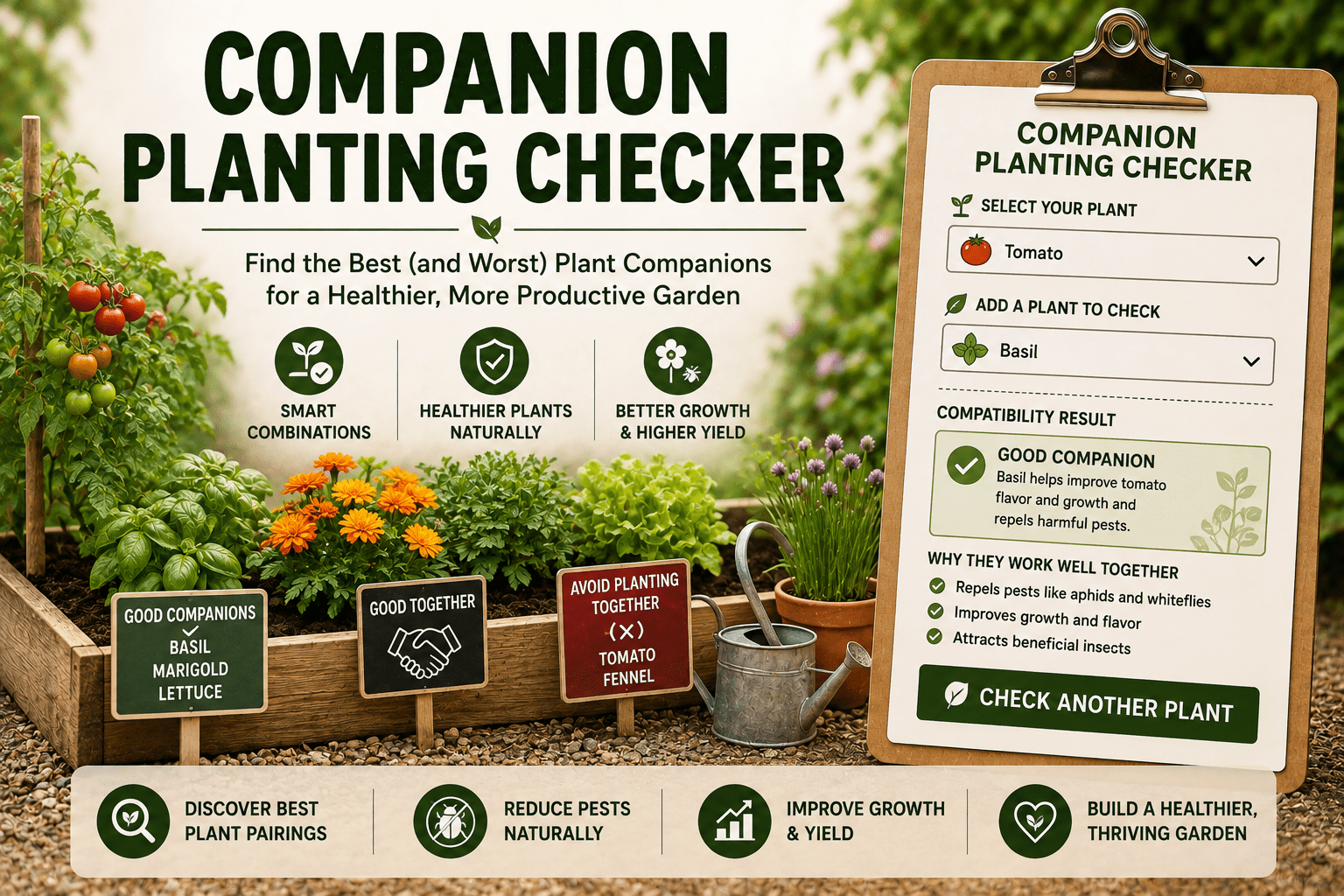
How to Use This Companion Planting Checker
Step 1: Pick your first plant. Open the first dropdown. Scroll or type to find it. Got tomatoes going in this year? Start there.
Step 2: Pick your second plant. Same thing, second dropdown. This is the plant you’re thinking about growing nearby.
Step 3: Hit “Check Compatibility.” One click. That’s it.
Step 4: Read your result. You’ll get one of three answers:
- Companions — these two help each other out. Plant them close.
- Antagonists — these two don’t get along. Keep some distance.
- Neutral — no strong effect either way. You’re free to plant them together.
Each result comes with a short reason why. So you’re not just taking my word for it. You’ll actually understand what’s happening underground, or in the air, if we’re talking about pests.
Planning a bigger bed with more than two plants?
Just run each pair through the checker one at a time. Takes a few seconds per pair. Saves you a whole season of guessing.
What Is Companion Planting?
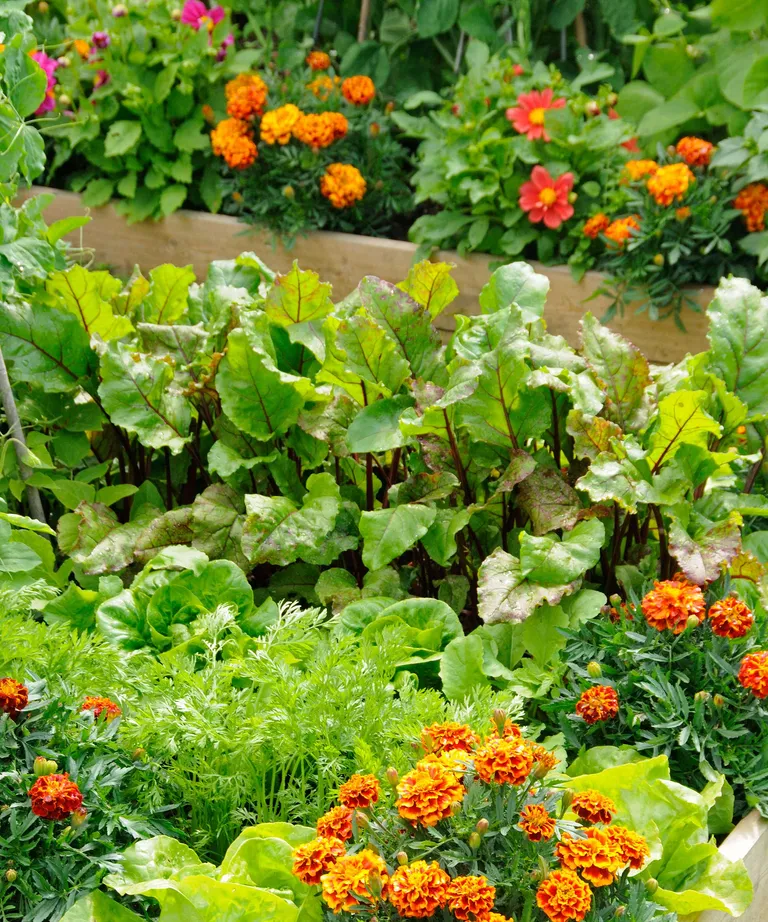
Companion planting means growing certain plants near each other on purpose, because together they do better than they would alone.
Some plants repel pests. Some feed the soil. Some just provide shade or support for a neighbor.
It works both ways, though. Some plants compete for the same nutrients. Some attract pests that spread to their neighbors. Some release chemicals through their roots that slow other plants down.
That’s why knowing which pairs help and which pairs hurt actually matters.
How This Checker Works
I built a database of plant relationships pulled from university extension research, established horticulture references, and long-standing gardening practice.
When you pick two plants, the checker looks up whether either one lists the other as a companion or an antagonist.
If neither plant has a strong relationship with the other, you’ll get a neutral result. That’s not a bug. Most plant pairings are neutral.
There’s just no strong evidence either way, so you’re free to plant them together without worry.
I’ll be upfront: not every relationship in here has been tested in a controlled study. Some are backed by hard data, like nitrogen fixation from legumes or nematode suppression from marigolds.
Others come from generations of gardeners noticing the same patterns season after season. I’ve tried to only include pairings that extension services and trusted horticulture sources actually stand behind.
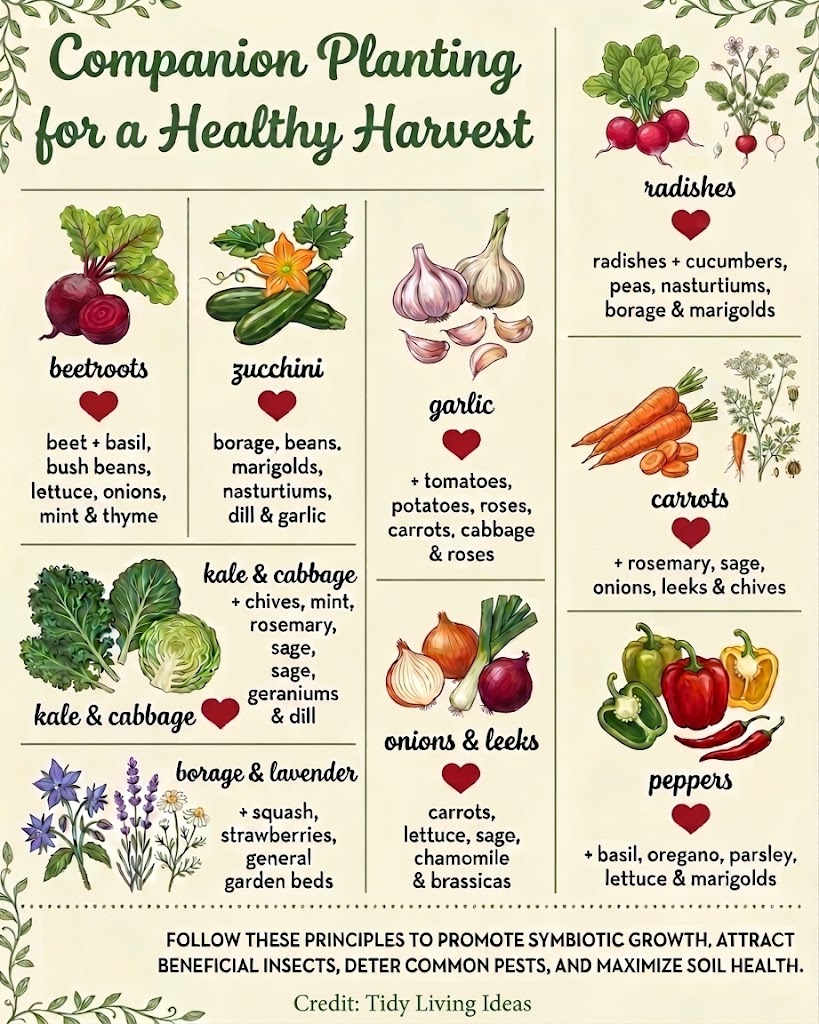
Companion Pairings Worth Trying
Tomatoes and basil. The classic pairing, and for good reason. Basil may help confuse pests that would otherwise home in on your tomatoes, and plenty of gardeners say both plants taste better for it.
Corn, beans, and squash. Known as the Three Sisters. Corn gives beans something to climb. Beans pull nitrogen from the air and feed it into the soil for the corn.
Squash spreads out low and wide, shading the soil, holding in moisture, and crowding out weeds. Three plants, one job each.
Carrots and onions. Carrot fly finds carrots by scent. Onion scent throws it off the trail. Plant them side by side and each one helps mask the other from its main pest.
Marigolds, planted almost anywhere. Their roots release compounds that suppress harmful nematodes in the soil, and their strong smell keeps a lot of common pests away. I plant them along the edges of nearly every bed.
Radishes and lettuce. Radishes grow fast and pull out of the ground before lettuce needs the extra room. You get two harvests out of the same patch of soil.
Pairings to Keep Apart
Fennel and just about everything. Fennel releases compounds from its roots that slow down growth in a lot of common vegetables. Give it its own spot, away from the main garden.
Tomatoes and potatoes. Both belong to the same plant family and share the same diseases, including blight. Plant one near the other and you’re giving disease an easy path to jump between them.
Beans and onions or garlic. Alliums release sulfur compounds that can slow down the nitrogen-fixing bacteria living in bean roots. Your beans will still grow, just not at their best.
Cabbage family and tomatoes. Brassicas like broccoli, cabbage, and cauliflower compete with tomatoes for the same nutrients, and they tend to draw in overlapping pests.
Companion Planting Quick Reference Chart
| Plant | Good Companions | Avoid Planting Near |
|---|---|---|
| Tomato | Basil, Carrots, Marigold, Onion, Parsley | Potato, Cabbage, Fennel, Corn |
| Pepper | Basil, Onion, Carrot, Spinach | Beans, Kale, Broccoli |
| Cucumber | Beans, Peas, Sunflower, Dill | Potato, Sage, Melon |
| Beans | Corn, Squash, Carrot, Cucumber | Onion, Garlic, Leek |
| Carrot | Onion, Lettuce, Peas, Rosemary | Dill, Celery |
| Onion | Carrot, Beets, Lettuce, Tomato | Beans, Peas, Sage |
| Lettuce | Carrot, Radish, Onion, Strawberry | Celery, Parsley |
| Cabbage | Onion, Dill, Celery, Beets | Tomato, Strawberry, Beans |
| Squash | Corn, Beans, Marigold, Nasturtium | Potato |
| Corn | Beans, Squash, Cucumber, Peas | Tomato, Celery |
Frequently Asked Questions
Is companion planting actually backed by science?
Some of it, yes. Nitrogen fixation from legumes is well established. Marigolds suppressing nematodes has held up in controlled studies too.
Other pairings come from generations of gardeners noticing the same results. I’ve stuck to relationships that extension services and trusted sources actually back.
What does a neutral result mean?
It means there’s no strong evidence of either benefit or harm between those two plants. Most combinations fall here. You’re safe to plant them together, you just won’t see any special boost from doing it.
Can I still plant antagonists near each other anyway?
You can. These are guidelines, not rules carved in stone. Plenty of small gardens don’t have room to keep every antagonist pair apart, and that’s fine. Your crop won’t fail, it just might not perform at its absolute best.
Do I need to check every single plant in my garden against every other plant?
Not really. Focus on your main crops first, especially anything you’re planting close together on purpose. A quick check on your two or three key pairings will catch most of the problems worth catching.
Does companion planting replace good spacing and soil prep?
No. Think of it as one more tool, not a substitute for the basics. Good soil, proper spacing, and regular watering still matter more than any companion pairing.
One Last Thing
Companion planting won’t fix a struggling garden on its own. But pairing the right plants together gives you a real head start, less pest pressure, better soil, and a bed that works with itself instead of against itself.
Run your plants through the checker before you plant this season. It only takes a minute, and it might save you a whole lot of trouble later.