10 Lawn Edging Ideas That Actually Work on a Slope

A slope changes everything about how edging works. Flat-ground tricks like plastic strips or thin metal stakes just don’t hold on a grade.
Rain pushes soil downhill, mulch migrates onto the lawn, and loose edging shifts within a season.
I’ve pulled together ten edging ideas that actually handle a slope instead of fighting it. Some use weight and mass to hold soil in place. Others lean into flexible materials that follow the curve of the land.
Whether you’re dealing with a gentle front yard slope or a steep backyard bank, you’ll find an option here that fits your terrain and your budget.
Why Edging on a Slope Is Different
Erosion changes the math
Flat ground lets edging just sit there and look nice. A slope won’t let it off that easy. Rain doesn’t soak in politely on a hill. It runs, and it picks up speed as it goes.
That water grabs your mulch, your topsoil, even loose pebbles, and dumps them straight onto your lawn or driveway.
I’ve seen a fresh bed lose half its mulch after one heavy storm. Your edging has to act like a tiny dam.
It needs to slow that water down long enough for your soil to actually drink it in, instead of just shoving the problem downhill onto someone else’s yard.
Depth matters more than height
On flat ground, you can get away with shallow edging. Nothing’s pushing against it. A slope pushes back constantly. Gravity never clocks out, and it’s always leaning on whatever you’ve placed in its way.
Skimp on depth and water finds the gap underneath. It digs a little channel, then a bigger one, and before long your whole border tilts or slides right out of place.
This is exactly why boulders and stacked stone hold up so much better than thin plastic strips. Weight and depth do the work that gravity keeps trying to undo.
The curve has to follow the grade
Slopes almost never run in a straight line, so don’t force your edging to. Cut a rigid, straight border across a hill and you create pinch points.
Water backs up right at that pinch, then blasts through it, and that’s exactly where erosion hits hardest. Let your edging follow the land’s real curve instead.
Water spreads out and slows down the way it’s supposed to. And honestly?
It just looks better too. A curved line that hugs the slope feels like you planned it. A straight one cutting across a hill looks like you didn’t.
Nail these three things and your edging pulls double duty. It looks sharp, and it actually holds your soil in place, storm after storm, instead of needing a redo next spring.
Also read: How to Edge a Lawn with Bricks for A Clean Garden Border
10 Sloped Yard Edging Ideas to Stop Erosion for Good
1. Boulder Edging
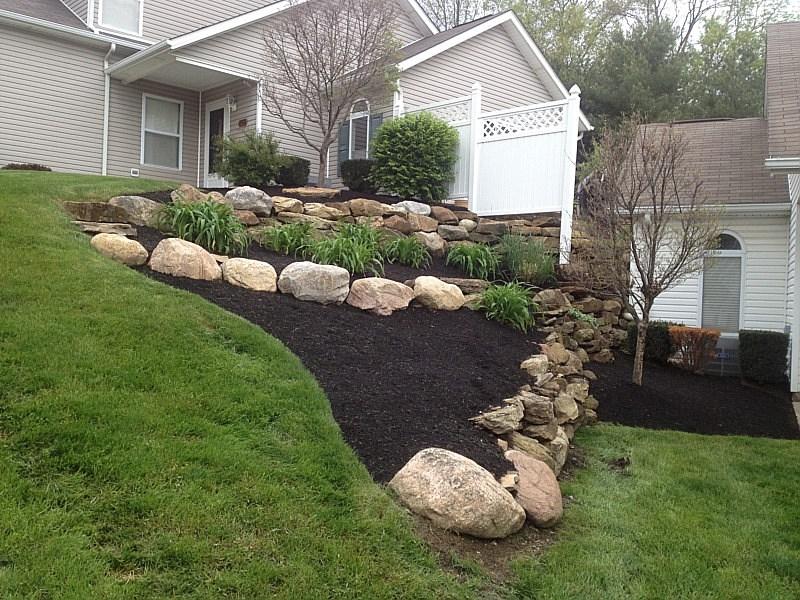
Large boulders work as edging and erosion control at once. I like this option because the weight of the stone does the heavy lifting. Nothing washes out from under a boulder that size.
You place them along the base and sides of a sloped bed, then backfill with mulch and plantings behind them.
The irregular shapes create a natural, layered look instead of a straight hard line.
Installation takes real muscle or equipment, since boulders in this size range can weigh hundreds of pounds.
You’ll want a professional for anything you can’t move by hand. Once they’re set, though, they need almost no upkeep.
This look works especially well on steep front yard slopes near a house foundation, where you need serious erosion control and curb appeal in the same space.
Best for: steep slopes and erosion-prone beds
Maintenance: very low once installed
Cost range: $$$–$$$$ depending on boulder size and delivery
Pairs well with: ornamental grasses, daylilies, low shrubs
Pros:
- Holds heavy erosion pressure with zero hardware
- Needs almost no maintenance once placed
- Creates natural depth and texture in the bed
- Lasts essentially forever, no material breakdown
Cons:
- Heavy boulders usually require professional equipment to install
- Hard to reposition later if you change the layout
2. Timber Retaining Wall Edging
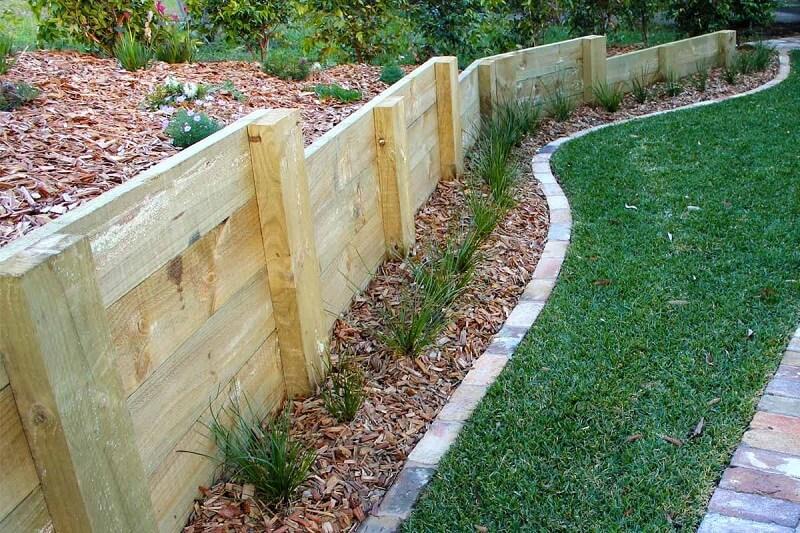
Timber walls turn a slope into a series of flat, usable steps instead of one steep drop. Stacked pressure-treated boards hold soil back at each level, so you get a raised bed effect rather than a single sloped border.
I think this option suits a modern backyard best. The clean horizontal lines feel structured without looking harsh. The brick or paver edge at the base adds a nice transition into the lawn.
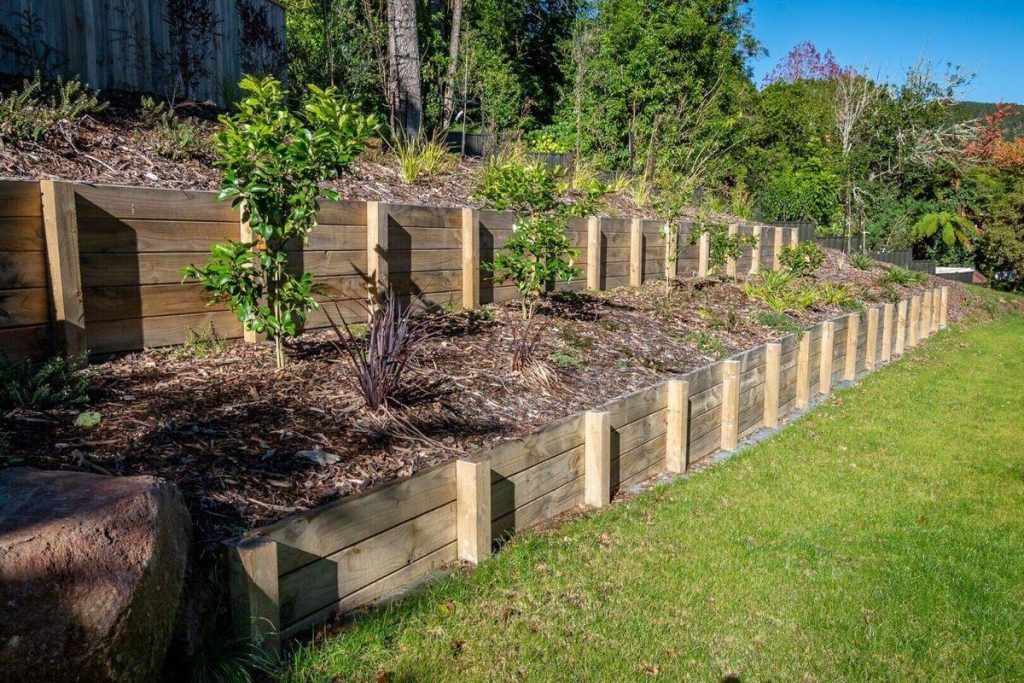
You’ll need proper drainage behind the timber, or water pressure builds up and pushes the wall out over time. That’s not a DIY detail to skip.
Wood does need more attention than stone. Expect to reseal or replace boards every several years depending on your climate and moisture exposure.
Best for: terraced backyard slopes
Maintenance: moderate, reseal or replace boards periodically
Cost range: $$–$$$
Pairs well with: ornamental grasses, ground covers, gravel paths
Pros:
- More budget-friendly than stone or steel
- Creates flat, usable planting terraces on a steep grade
- Fits DIY skill level if you’re comfortable with basic building
- Clean, structured look that suits modern yards
Cons:
- Needs proper drainage planning or it can fail early
- Wood breaks down faster than stone or metal, so expect upkeep
3. Natural Stone Retaining Wall Edging
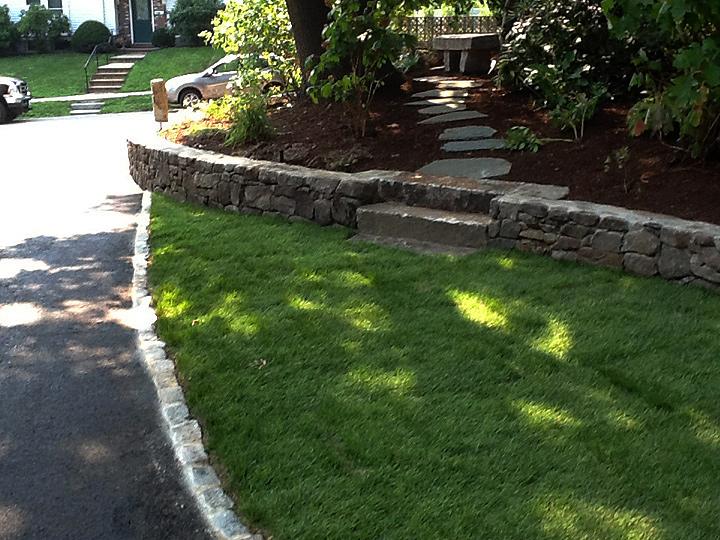
A stacked stone wall gives you a solid, permanent edge along a driveway or walkway slope. This is the option I’d choose for a front yard that needs to look established from day one.
The stones lock together under their own weight, so this holds a slope firmly without any hardware. Add a contrasting curb stone along the top edge, (like in this photo) and you get a finished, tailored look next to the lawn.
Stone steps built right into the wall solve a real problem too. They give you a way to move between levels without cutting a separate path through the grass.
This is a bigger investment than most edging options, but it lasts for decades with basically no maintenance. I’d call it one of the best long-term choices for a sloped front yard.
Best for: driveway slopes and formal front yards
Maintenance: very low
Cost range: $$$$
Pairs well with: flagstone paths, boxwood, low perennials
Pros:
- Extremely durable, often lasts decades without repair
- Adds instant curb appeal and a finished look
- Can incorporate built-in steps for slope access
- Handles heavy erosion pressure with no hardware needed
Cons:
- One of the more expensive edging options on this list
- Requires skilled labor for proper installation
4. Corten Steel Edging
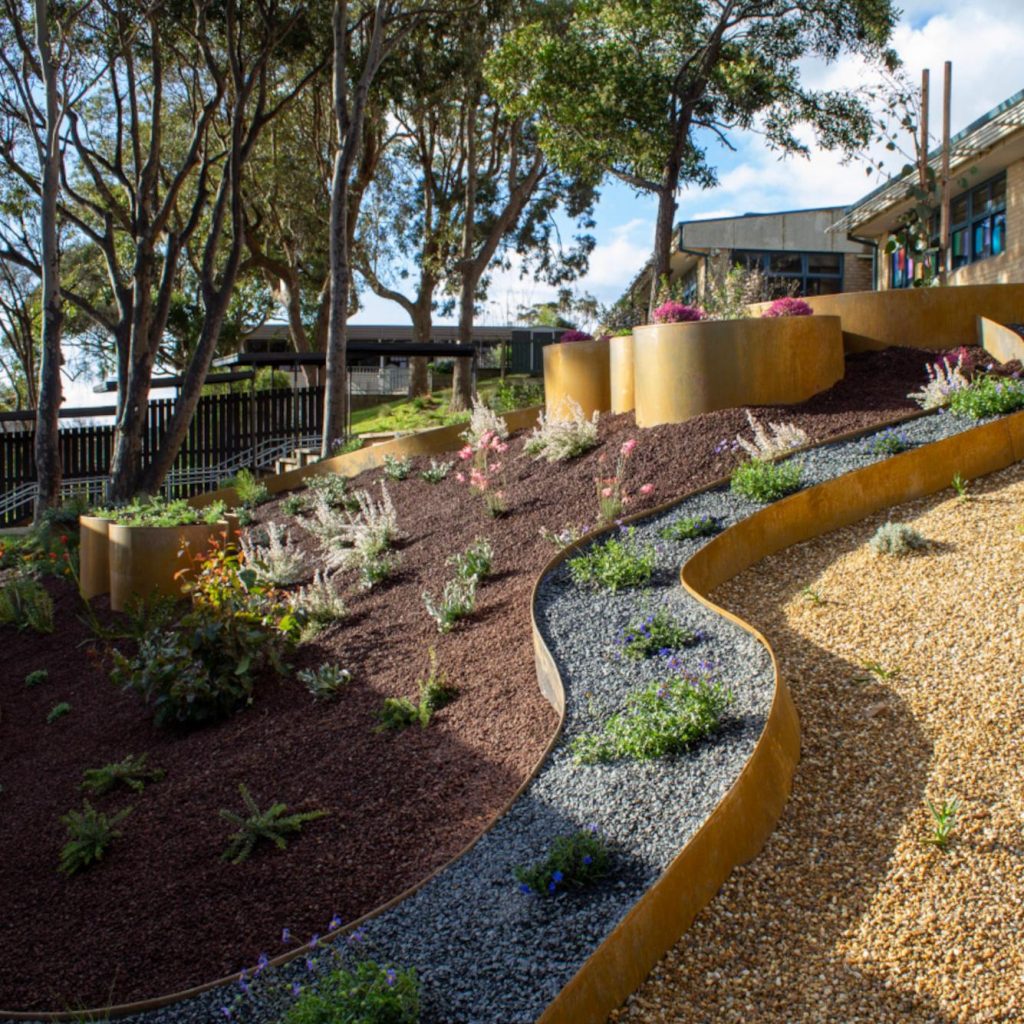
Corten steel edging brings a sleek, modern edge to a slope, and it bends into curves that rigid materials can’t match. The rusted finish develops naturally and actually protects the metal underneath from further corrosion.
I really like this idea for a slope with multiple textures, like the gravel and mulch combination here. The steel creates a clean line between zones while still following the slope’s natural flow.
Because it’s flexible, you can shape it into tight curves and terraced levels without seams or joints breaking up the design. That makes it a strong pick for a sculptural, contemporary landscape.
It costs more than timber or plastic edging, and it needs professional installation to get those smooth curves right. But it holds its shape for decades and only gets better looking as it weathers.
Best for: modern landscapes and mixed-texture beds
Maintenance: very low
Cost range: $$$–$$$$
Pairs well with: ornamental grasses, gravel, native flowering plants
Pros:
- Bends into smooth curves that rigid materials can’t achieve
- Rust patina protects the metal and needs no sealing
- Holds its shape for decades without warping
- Creates a clean, modern line between different textures
Cons:
- Higher upfront cost than timber or brick
- Professional installation is usually needed for tight curves
5. Brick Paver Edging
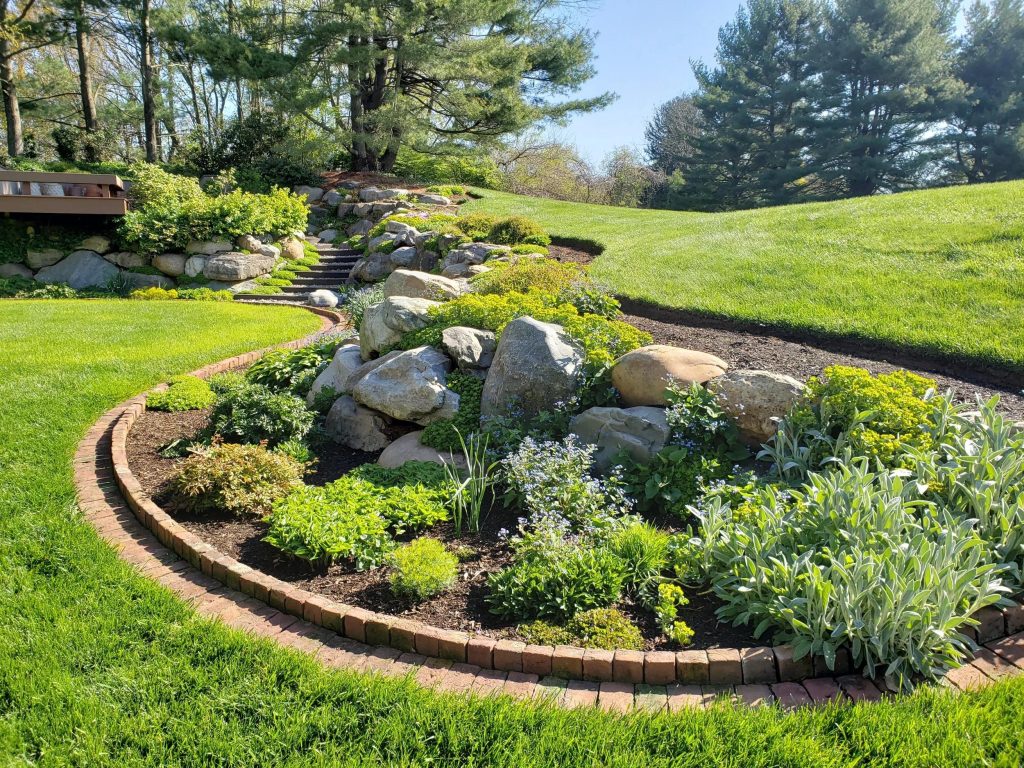
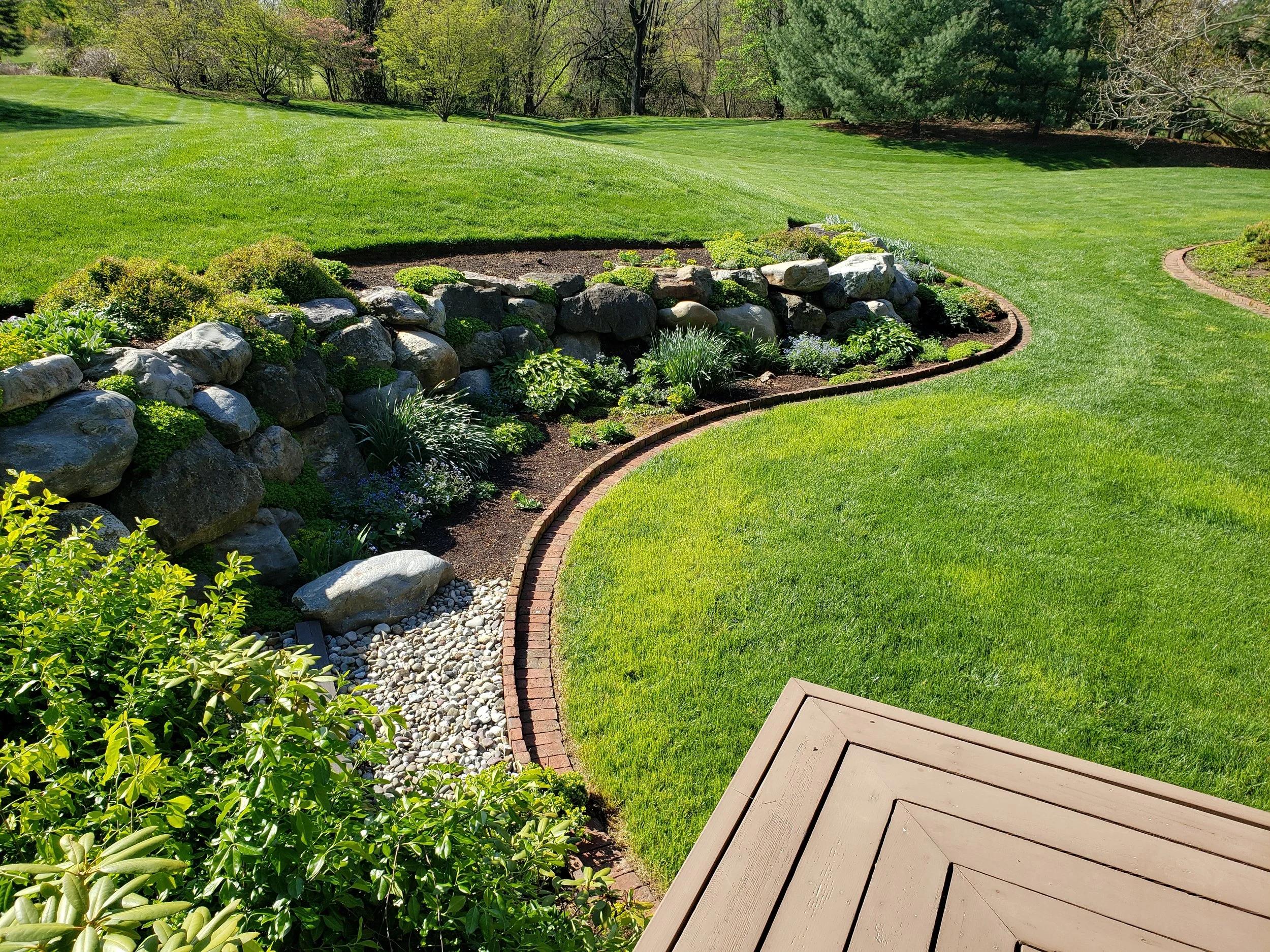
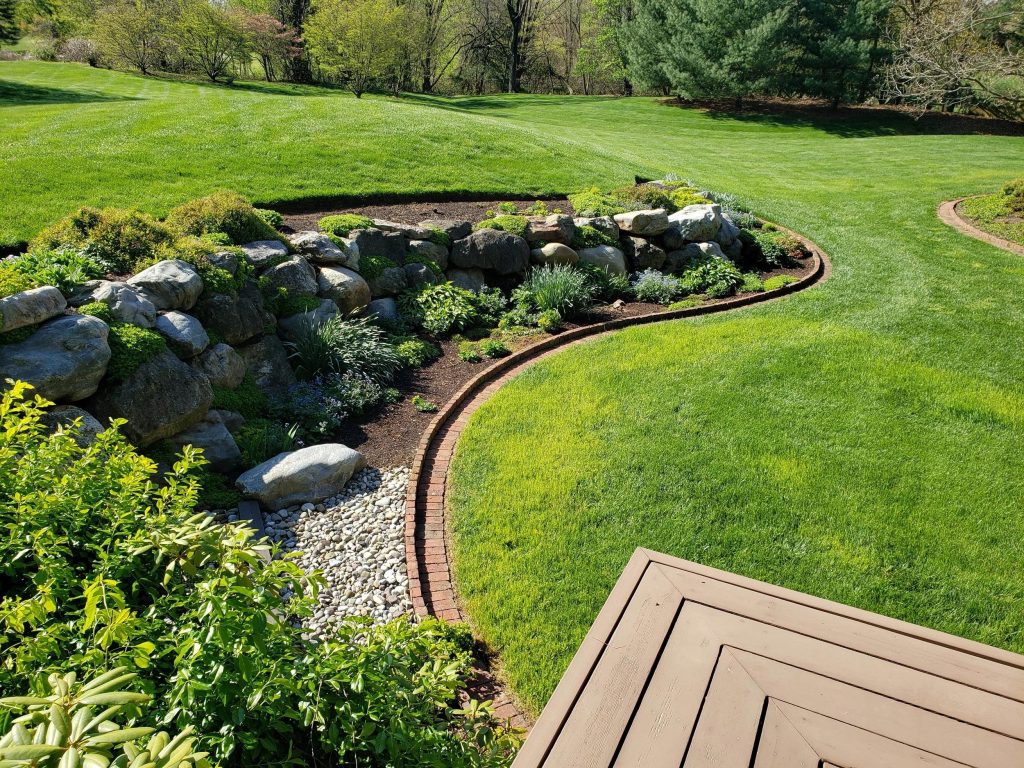
A curved brick paver border gives a sloped bed a soft, traditional edge that still holds soil in place. I like how this style reads as intentional and tidy, even next to a wild, boulder-filled planting bed.
The bricks sit low to the ground and follow the slope’s curve closely, so they don’t fight the natural shape of the land.
Combine this with boulders or larger stones behind it, like in this photo, and you get both structure and erosion control.
Installation involves digging a shallow trench and setting the bricks on a compacted base. It’s a manageable weekend project if you’re comfortable with basic hardscaping.
This edging style works especially well where a planting bed meets open lawn, since it creates a clear, mower-friendly line between the two.
Best for: transitional edges between lawn and planting beds
Maintenance: low, occasional resetting if bricks shift
Cost range: $$–$$$
Pairs well with: hostas, sedum, low ground covers
Pros:
- Manageable DIY project for most homeowners
- Creates a clean, mower-friendly line along the lawn
- Softer, more traditional look than metal or stone walls
- Budget-friendly compared to full retaining walls
Cons:
- Bricks can shift over time on steeper grades
- Doesn’t hold back as much soil as a true retaining wall
6. Poured Concrete Curbing
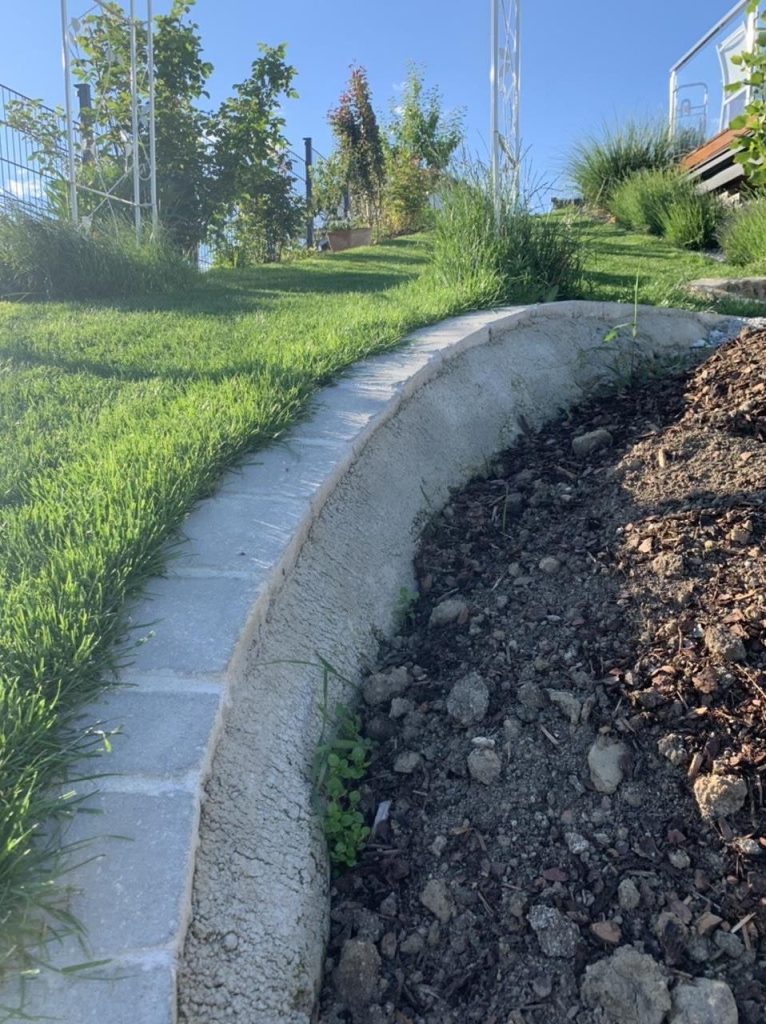
Poured concrete curbing creates a smooth, seamless edge that follows a slope’s curve without a single joint or seam. I like this option because it’s molded right on-site, so it hugs the exact contour of your yard.
The rounded top and buried base make it tough to beat for erosion control. Water runs along the curve instead of cutting underneath it, which matters a lot on a grade like this one.
You’ll need a landscaping crew with the right equipment for this job. Concrete curbing gets poured with a specialized machine, so it’s not really a weekend DIY project.
Once it cures, this edging holds its shape for years with almost no attention. It’s a solid pick if you want a clean, permanent line between lawn and planting bed on a steep or winding slope.
Best for: curved slopes needing a permanent mowing edge
Maintenance: very low
Cost range: $$–$$$
Pairs well with: gravel mulch, low groundcovers, mixed planting beds
Pros:
- Molds to any curve without seams or joints
- Buried base resists erosion and undercutting
- Holds up for years with almost no upkeep
- Creates a clean mowing edge along the lawn
Cons:
- Requires professional installation and equipment
- Cracks can develop over time in freeze-thaw climates
7. Fieldstone Boulder Border
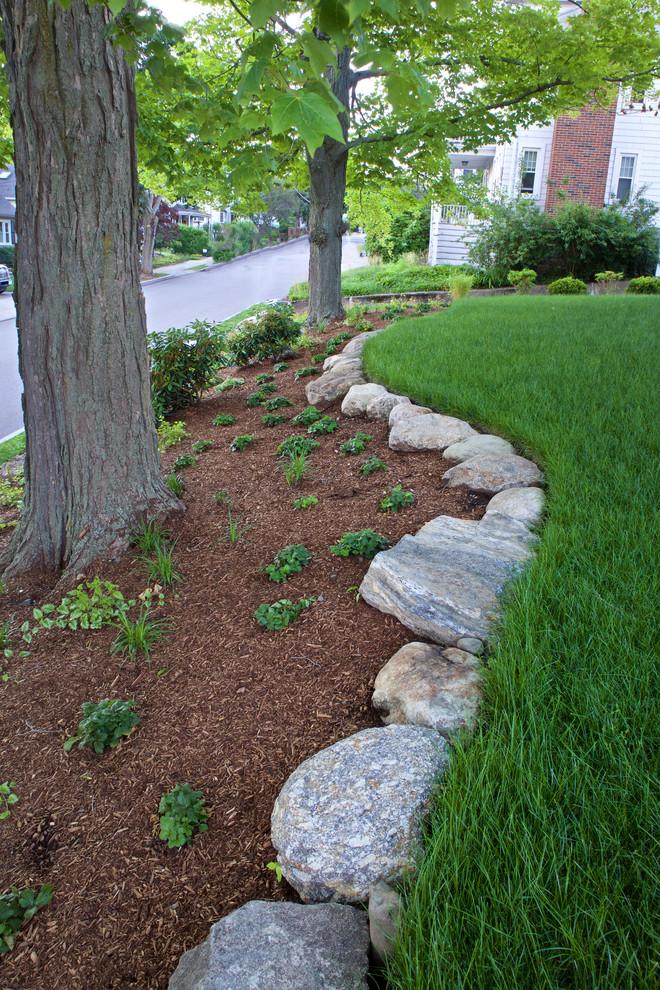
This fieldstone boulder border runs along a mulched slope where lawn meets a wooded edge. I like how the varied stone sizes create a natural transition instead of a hard, obvious line.
The boulders sit low and tight against the grass, so they hold the mulch bed in place while still letting the lawn curve naturally around the trees.
That mix of structure and softness is what makes this style so popular for front yard slopes shaded by mature trees.
You don’t need to bury these boulders as deep as a full retaining wall, since they’re managing a gentler grade here rather than a steep drop. That makes installation a bit more approachable, though the stones are still heavy.
This edging style also works well near the street, where erosion control and curb appeal both matter.
Best for: wooded or tree-lined slopes
Maintenance: low
Cost range: $$–$$$
Pairs well with: hostas, ferns, native shade groundcovers
Pros:
- Blends naturally into wooded or shaded slopes
- Requires less digging than a full retaining wall
- Adds long-term erosion control near tree roots
- Low upkeep once the stones settle in
Cons:
- Heavy stones still need help to place and position
- Irregular shapes can leave gaps weeds slip through
8. Timber Sleeper Terracing
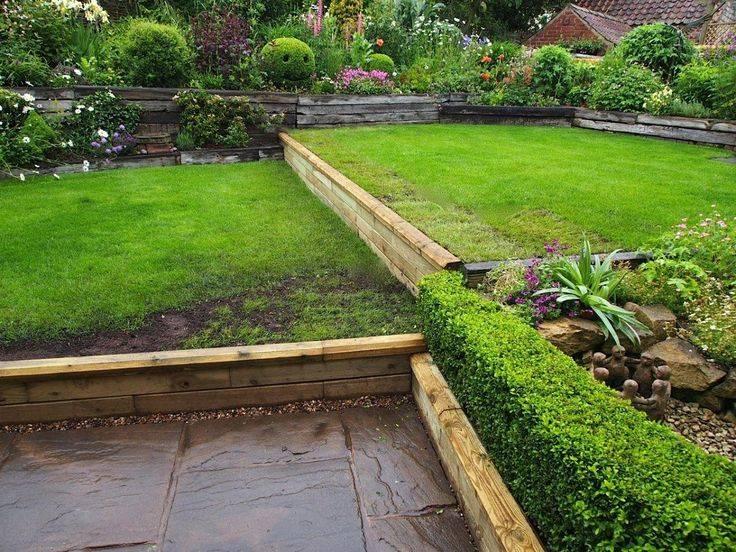
Timber sleepers turn a sloped yard into two distinct, level lawn areas. I think this is one of the most functional options on this list, since it actually changes how usable the space feels.
The horizontal beams hold each level firmly, and a low boxwood hedge along the edge softens the transition between the raised section and the patio below.
That combination gives the yard real structure without feeling stiff.
This setup takes more planning than most edging styles, since you’re essentially building two flat lawns instead of one sloped one.
It’s worth it if you actually plan to use both levels for seating, play space, or entertaining.
Drainage behind the sleepers matters just as much here as with any timber retaining wall. Skip that step and you’ll deal with bowing or shifting down the line.
Best for: yards that need usable flat space on a slope
Maintenance: moderate
Cost range: $$$
Pairs well with: boxwood hedges, flagstone patios, cottage garden beds
Pros:
- Creates genuinely usable flat lawn space on a hill
- Clean horizontal lines suit both formal and casual yards
- Pairs easily with hedges for a finished, tailored look
- More budget-friendly than a full stone retaining wall
Cons:
- Bigger project scope than a simple border edge
- Needs proper drainage or the timbers can shift over time
9. Buried Paver Mow Strip
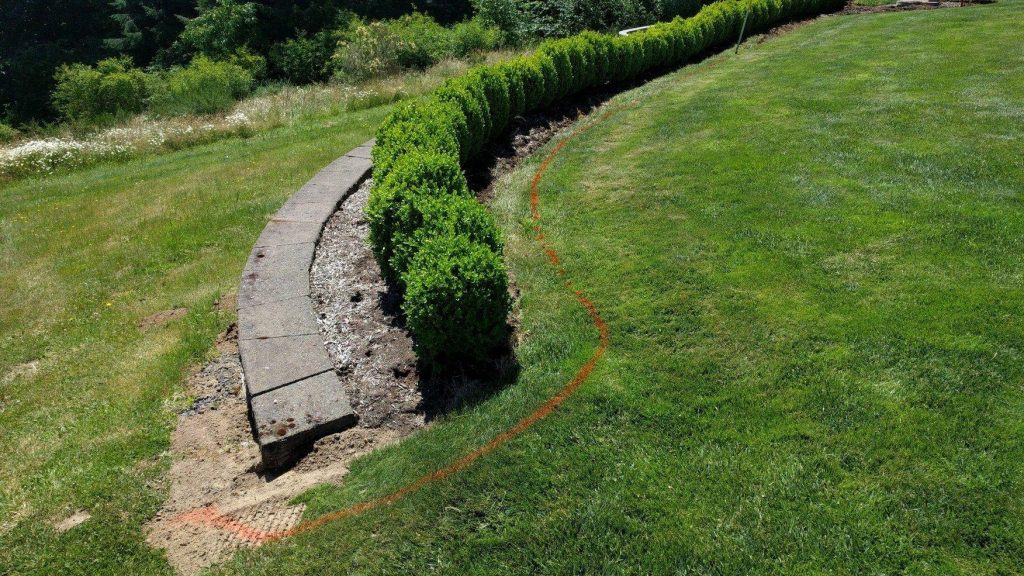
This buried paver mow strip sits flush with the ground, so a mower can roll right over it without extra trimming. I really like this idea for anyone who wants a clean edge without adding a raised border to maintain.
You can see the curve marked out here before the final grass line gets cut in. That planning step matters. Getting the curve right before you commit saves a lot of rework later.
The pavers hold their line even as the boxwood hedge behind them fills in and spreads. That’s the real advantage of a buried strip over loose materials like gravel or bark, which shift as plants grow.
This style takes patience to install correctly, since every paver needs to sit level and flush. But once it’s in, it basically disappears into the landscape while still doing its job.
Best for: slopes with hedges or shrub borders
Maintenance: low
Cost range: $$–$$$
Pairs well with: boxwood, low hedges, ornamental grasses
Pros:
- Flush design means no separate trimming needed
- Holds a crisp line even as hedges spread and grow
- Blends visually into the lawn once installed
- Handles curves well when planned out correctly
Cons:
- Installation requires precise, level paver placement
- Pavers can shift over time on a steep grade
10. River Rock Dry Creek Edging
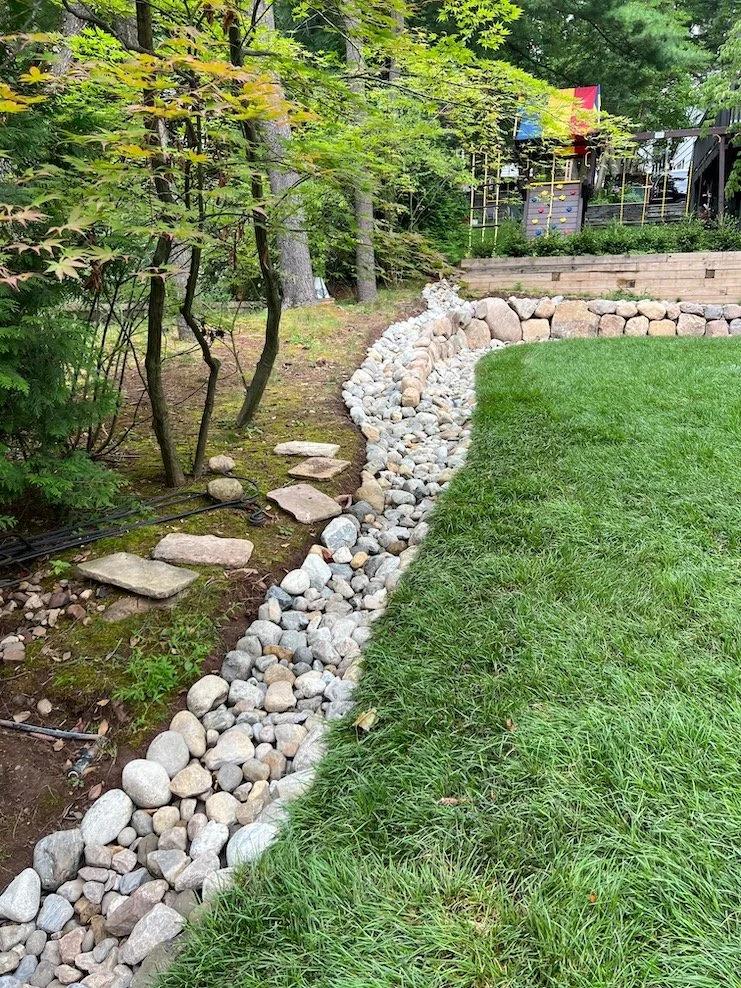
A river rock border does double duty on a slope. It edges the lawn and manages runoff at the same time. I think this is one of the smartest options here if drainage is your main concern.
The mix of rounded cobbles creates a channel that water naturally follows downhill instead of cutting through the grass or the planting bed.
A stacked stone wall behind it adds extra structure and holds the upper slope in place.
This style also gives you a lot of design flexibility. You can widen the rock band in low spots that collect more runoff, or narrow it where the slope levels out.
Maintenance mostly means keeping leaves and debris from clogging the channel. Beyond that, this edging style holds up well through heavy rain seasons.
Best for: slopes with drainage or runoff issues
Maintenance: low, occasional debris clearing
Cost range: $$–$$$
Pairs well with: ornamental trees, ferns, stacked stone walls
Pros:
- Manages runoff while also edging the lawn
- Flexible width adjusts to different drainage needs
- Natural look fits wooded or shaded slopes well
- Low-maintenance once the channel is established
Cons:
- Rocks can shift or scatter during heavy storms
- Needs occasional clearing to prevent clogging
FAQ’s
Does edging actually stop erosion on a slope?
Edging alone won’t stop erosion completely, but the right kind slows it down a lot.
Heavier materials like boulders or stacked stone hold soil in place better than thin plastic strips. Pair your edging with mulch or ground cover for the best results.
What’s the best edging material for a steep slope?
For steep slopes, I’d reach for something with real weight, like boulders or a stacked stone wall.
Their mass resists the water pressure that builds up on a grade. Timber works too, but only if you plan the drainage behind it properly.
Can I use gravel or loose stone as edging on a hill?
You can, but loose gravel tends to migrate downhill over time, especially in heavy rain.
It works better as a drainage channel, like a dry creek bed, than as a standalone edge. Pair it with a solid border behind it for the best of both worlds.
Do I need a professional to install slope edging, or can I DIY it?
It depends on the material. Brick pavers, gravel channels, and small timber projects are manageable DIY jobs if you’re comfortable with basic tools.
Boulders, poured concrete, and corten steel usually need equipment and experience, so I’d call in a pro for those.
How do I stop mulch from washing down my slope?
A solid edging border is your best defense here, since it physically blocks mulch from sliding onto the lawn.
Choose one that sits deep enough to handle runoff, not just sit on the surface. Refreshing mulch depth each season helps too, since thinner layers wash away faster.
Final Thoughts
A sloped yard doesn’t have to fight you every time it rains. Pick edging that matches your grade, not just your style, and you’ll spend way less time redoing beds after every storm.
Start with whichever idea fits your slope and your budget, and build from there.