The Ultimate Guide to River Rock Landscaping for Your Front Yard

Nothing beats driving past a house and thinking, “wow, that yard looks amazing.” River rock does exactly that without demanding hours of weekend work.
I got hooked on this stuff after installing a dry creek bed in my own front yard a few years back, and now I notice it everywhere. Skip the mulch runs.
Forget the endless watering. Grab some ideas below, and your curb appeal problem solves itself pretty fast.
How Much Rock You Actually Need for Yard Landscaping
Guessing never works with river rock. I learned that the hard way after ordering way too little for my first bed. You end up making a second trip, and nobody wants that.
Here’s the trick: multiply length by width to get square footage. Say your bed runs 10 feet by 4 feet. That’s 40 square feet right there.
Depth matters just as much as area. Most beds need 2 to 3 inches of rock for a decorative look. Weed control zones need more, closer to 6 to 8 inches deep.
Now do the math. Multiply your square footage by your depth in feet. Confused about converting inches to feet? Just divide your inch measurement by 12. Three inches becomes 0.25 feet.
Let’s run that 40-square-foot bed at 3 inches deep. Forty times 0.25 equals 10 cubic feet of rock. Simple, right?
Rock usually sells by the ton, not by cubic feet. One ton typically covers about 80 to 100 square feet at 2 inches deep for smaller 1 to 2 inch stone, depending on the size you pick.
Bigger rocks cover less area per ton, since larger stones leave bigger gaps. Smaller pea gravel and river rock pack tighter and stretch further.
Always order a little extra. I add 10 percent to every calculation now. Settling happens over time, and gaps show up in spots you didn’t expect.
Your supplier can help too. Bring your measurements in, and most yards will calculate tonnage for you on the spot. That saves you from doing mental math in a parking lot.
Skip the guesswork next time. Grab a tape measure, do the quick multiplication, and order with confidence. Your wallet and your back will both thank you for it.
Do You Need Landscape Fabric Under River Rock?
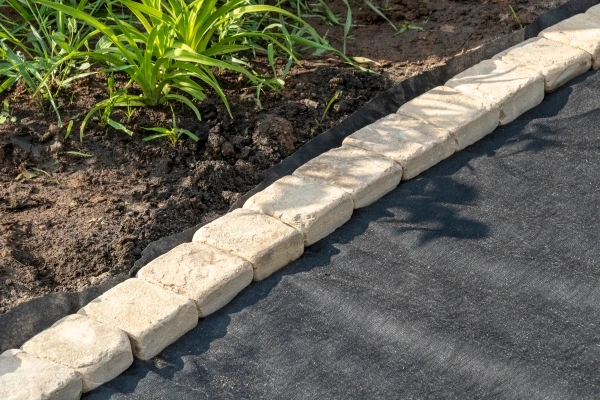
Short answer: yes, in most cases. I skipped it once, and weeds pushed straight through my rock bed within a month.
Fabric creates a barrier between soil and stone. Weed seeds can’t reach the dirt underneath. Your rocks also stay put instead of sinking into soft ground over time.
There’s one exception, though. Skip fabric near trees. It blocks moisture and nutrients from reaching tree roots, and your tree won’t thank you for that.
Fabric isn’t permanent, either. It breaks down eventually, especially cheaper versions. Go with a thicker, woven fabric if you want it lasting years instead of months.
One more tip. Fabric only stops weeds growing up from below. Wind-blown seeds still land on top of your rocks and sprout there anyway.
You’ll still need occasional cleanup no matter what you install underneath.
Bottom line? Landscape Fabric saves you real headaches for decorative beds and walkways. Just leave it out around your trees, and you’re set.
Also read: 15 Genius Small Front Yard Flower Bed Ideas
10 Ways to Landscape Your Front Yard with River Rock
1. Curve a River Rock Bed Along Your Walkway
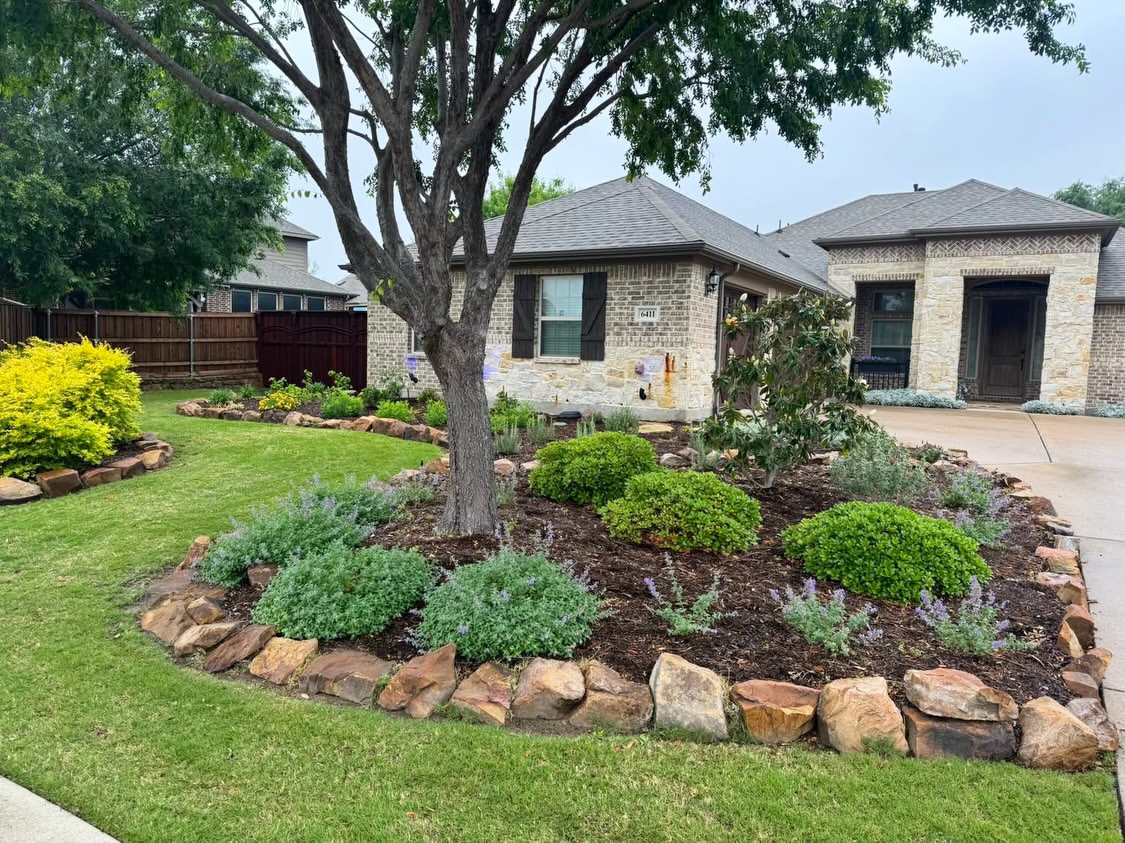
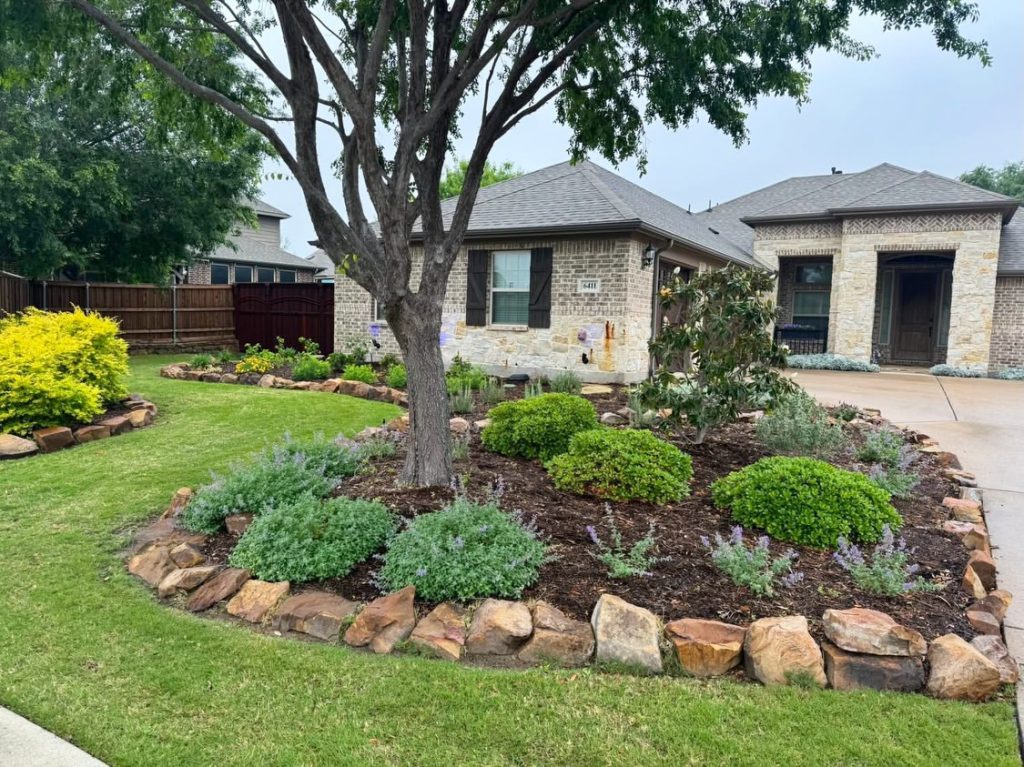
Picture this: a stiff, straight rock border next to your sidewalk. Boring, right? Curved river rock beds fix that instantly. You get a soft, natural flow instead of a hard line.
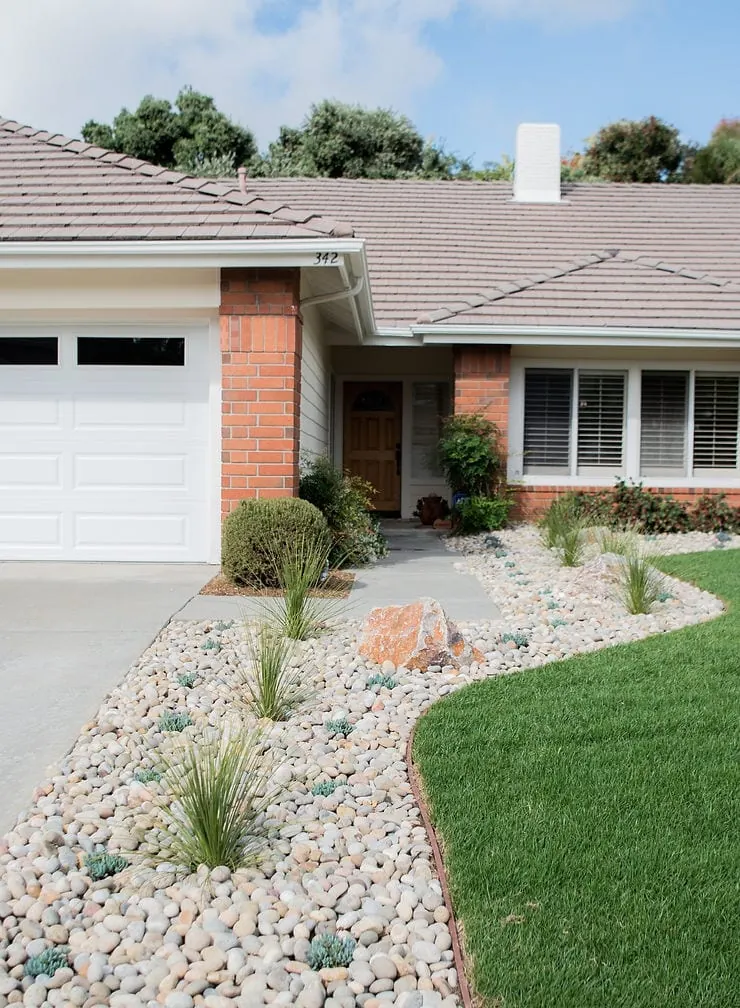
Why stop at the walkway? Let that curve wrap around the base of your house too.
I love how this trick makes a yard feel pulled-together instead of patchy. Tuck some green shrubs inside the curve, and suddenly the stone pops against all that color. Your front door practically invites people in.
2. Edge Your Mulch Bed With Small River Stones
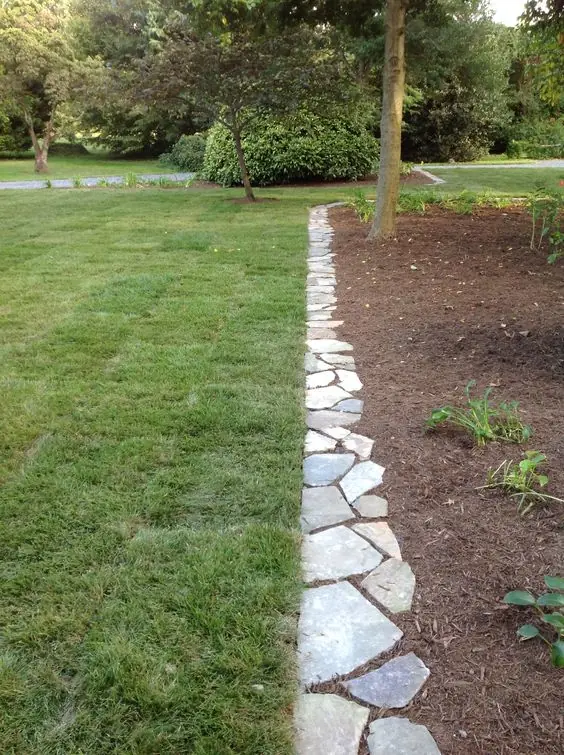
A little rock can transform a lot. Small river stones give you a crisp, clean line between mulch and grass. You’ll notice the difference the second it’s installed.
Here’s the catch, though. Mowing gets a bit messier with this setup. Grass clippings love to land right on top of those stones.
Grab a leaf blower after each mow, and you’re golden. Trust me, that extra five minutes pays off big every time you pull into the driveway.
3. Swap Mulch for a Full River Rock Bed

Tired of buying mulch every single spring? Full river rock beds solve that problem for good. Rock doesn’t rot, wash away, or fade like mulch does.
Larger stones usually line the edges to keep everything locked in place. You’ll never haul another mulch bag again. I’ll be honest, though.
Rock beds sometimes look a bit less lush than a fresh mulch bed does. Still, if your weekends matter more than that extra pop of color, this swap wins every time.
4. Build a Dry Creek Bed
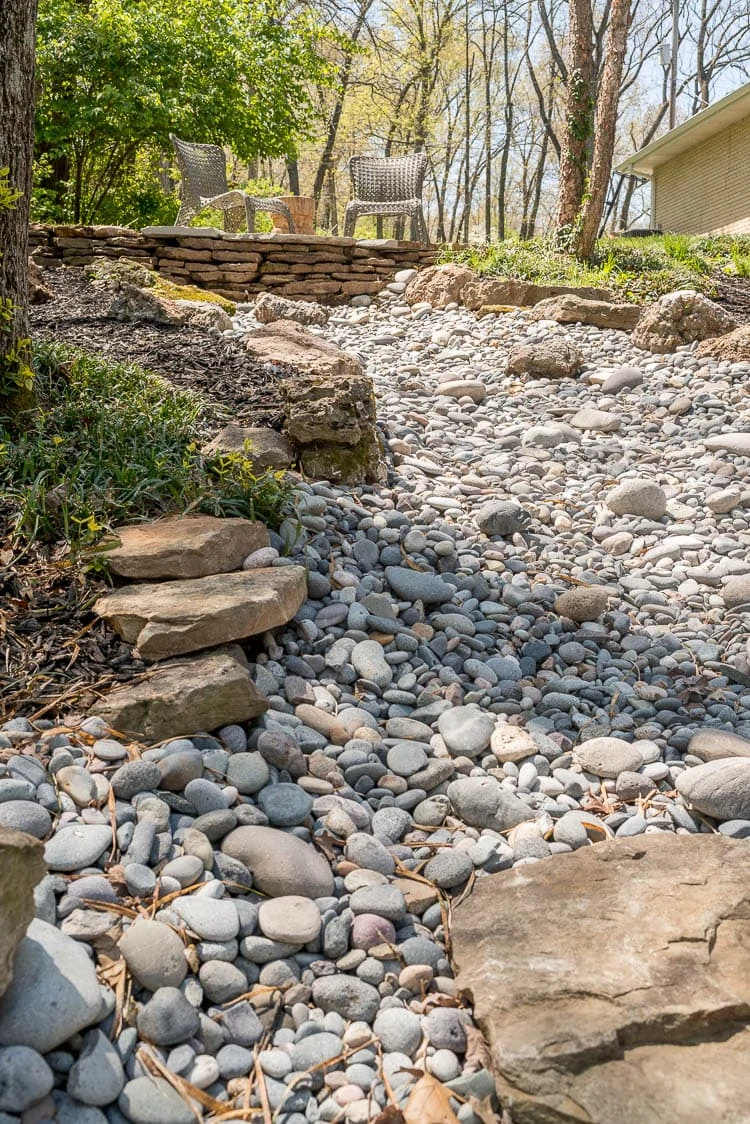
Ever seen a “creek” with no water in it? Dry creek beds trick your eye into thinking rain carved that path through your yard. I built one myself, and it’s become my favorite feature.
Big river rocks and boulders line the winding path. Heavy rain hits, and the water follows that channel instead of pooling near your house.
Slope it slightly away from your foundation, and you’ve got a drainage fix that doubles as art.
5. Ring Your Trees With Stone
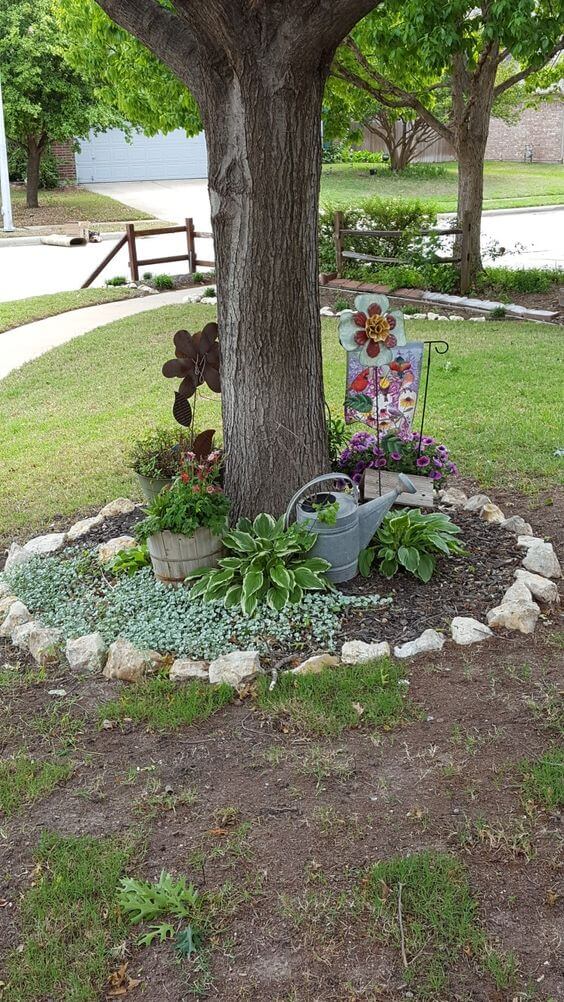
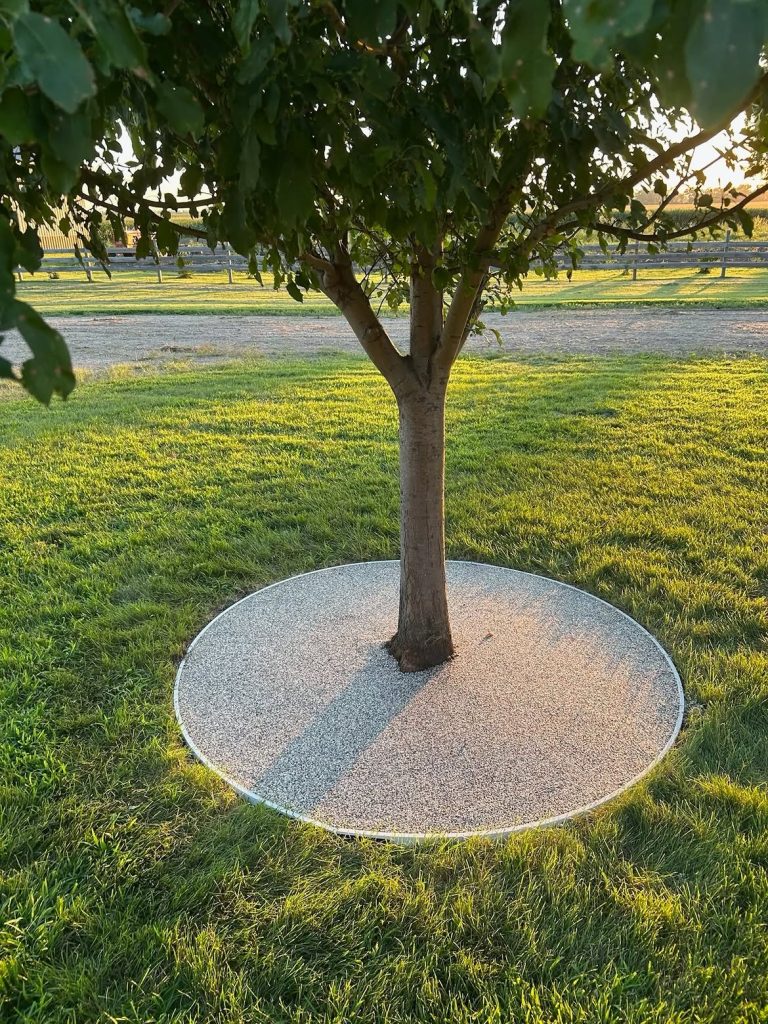
Lawnmowers and tree roots don’t mix well. Circular stone borders around tree trunks protect those roots from nicks and scrapes. You’ll thank yourself the first time you don’t have to weed-whack around the base.
Mulch fills the middle, and stone wraps the edge. This combo keeps grass from creeping toward the trunk.
Honestly, it just looks tidy, like someone actually planned the yard instead of letting nature take over.
6. Go Blue-Gray for a High-End Look
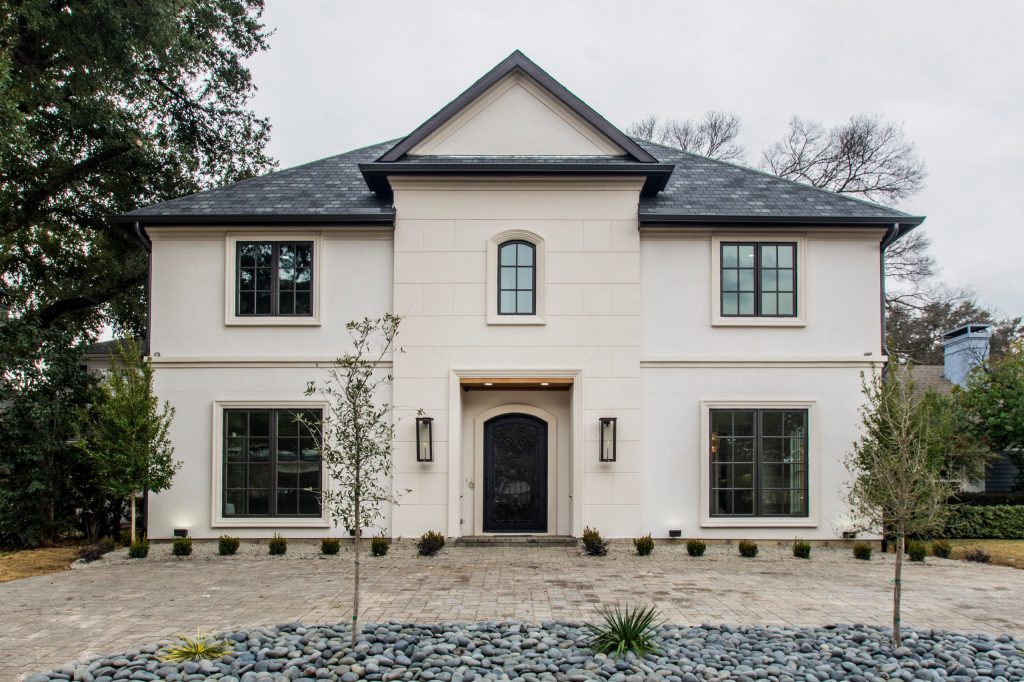
Want your yard to look expensive without spending a fortune? Blue-gray river rock does exactly that. Something about that cool, smooth color screams luxury the second you see it.
I upgraded my own dry creek bed to this shade, and the difference floored me. Regular gray rock looks flat next to it.
Pair blue-gray stone with a light-colored house exterior, and the contrast practically glows.
7. Mix Boulders Around Your Trees
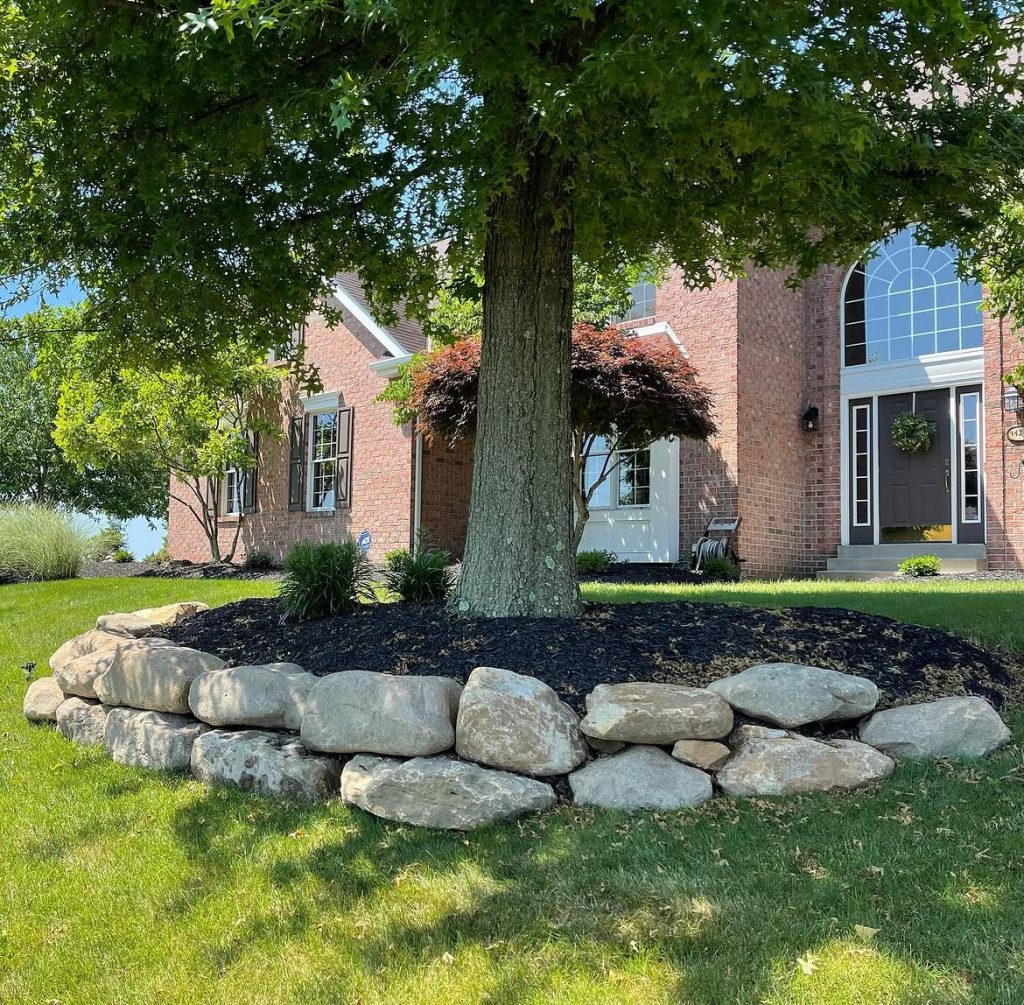
One size of rock gets boring fast. Mixing mid-size boulders with smaller river rock around tree bases adds depth you just can’t fake with uniform stone.
Your eye naturally moves around the design instead of glazing over it.
Group a few larger boulders near the trunk. Scatter smaller stones around the edges. This layered look feels intentional, like a landscaper spent real time thinking it through, even if you did it yourself in an afternoon.
8. Anchor Your Yard With Large Boulders
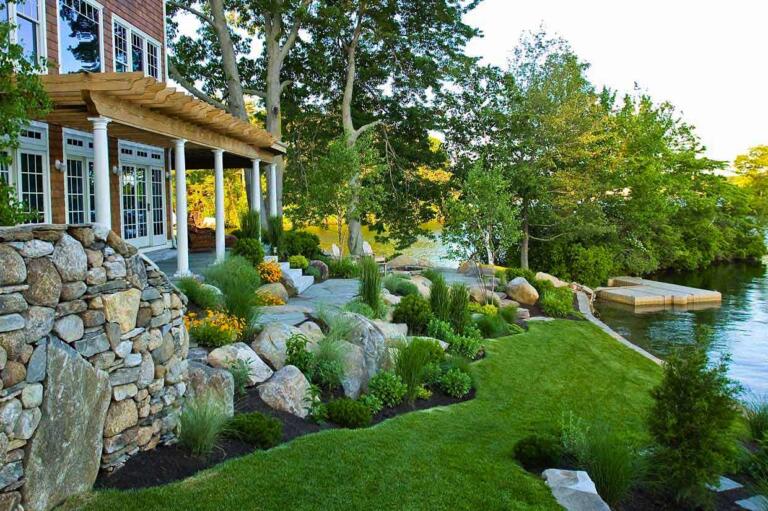
Sometimes bigger really is better. Large boulders surrounded by mulch create an instant focal point in any front yard. People notice a big rock before they notice anything else nearby.
Fair warning, though. Weeds love creeping in around boulders if you’re not diligent.
Stay on top of it, and that boulder becomes the single feature everyone remembers about your house.
9. Border Your Lawn With Flat Stones
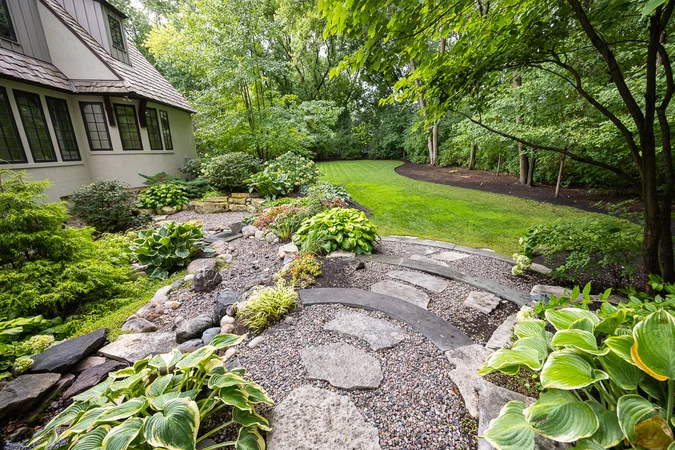
Round rocks aren’t your only option. Flat, large river stones create a totally different vibe than typical round pebbles. Laying them flat along a lawn edge gives a bed serious definition.
I walked past a yard using this style once, and it stopped me in my tracks. The stones felt substantial underfoot, almost architectural.
Pair them with boxwood shrubs, and your border looks like it belongs in a magazine.
10. Try a Minimalist, Japanese-Inspired Layout
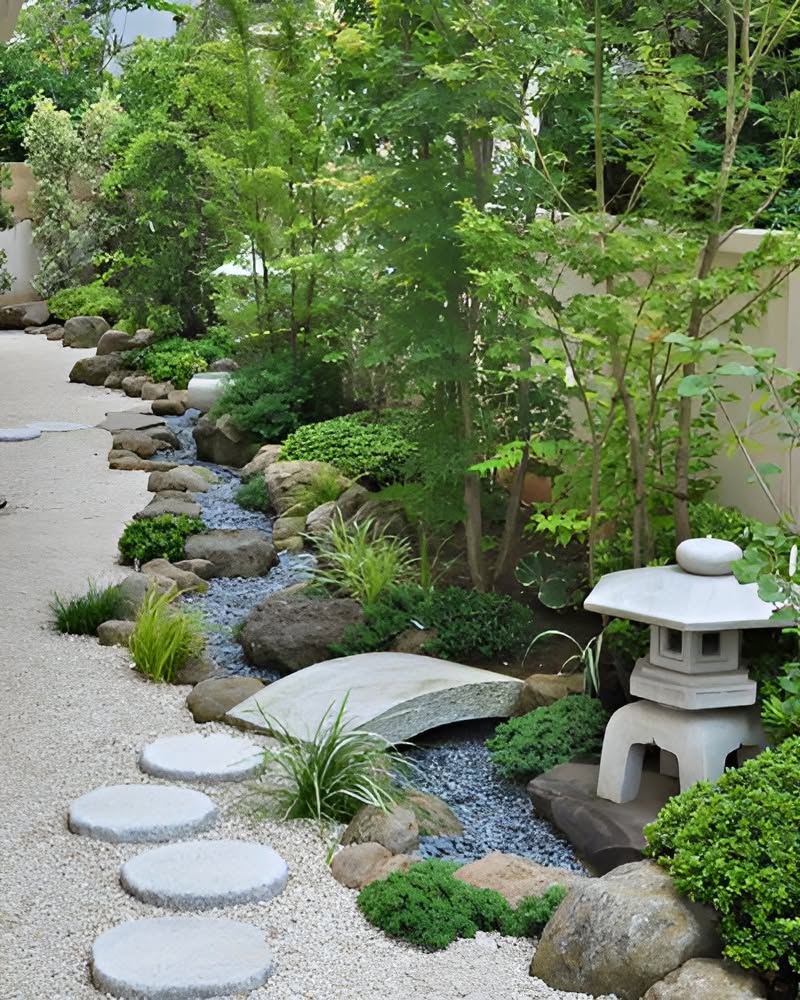
Less can absolutely be more. Japanese-inspired rock landscaping uses fewer stones, but each one gets picked with real intention. Every rock earns its spot instead of just filling space.
Place small boulders thoughtfully near tree bases.
Give each stone room to breathe. Calm, deliberate spacing like this turns a front yard into something that feels peaceful every time you pull in the driveway.
Frequently Asked Questions
How do I keep weeds from growing through river rock?
Weeds hate deep rock beds. Aim for six to eight inches of stone, and weeds struggle to find any dirt to grab onto. Grab a leaf blower regularly too.
Clearing debris off the top stops organic matter from building up and giving weeds a place to root. A simple vinegar-and-salt spray works great for spot-treating any stragglers that pop up anyway.
How do I maintain river rock landscaping long term?
Debris is your only real enemy here. Clear leaves and dirt off the rocks every so often, and you’ll dodge most problems.
Shady spots sometimes grow algae, so a pressure wash once or twice a year keeps things looking fresh. Beyond that, river rock genuinely takes care of itself.
Does river rock landscaping for front yard increase home value?
Curb appeal jumps immediately with a well-done rock landscape. Buyers notice a polished front yard before they even walk inside.
I can’t promise a dollar figure, but a yard that looks cared-for always helps first impressions, and first impressions matter a lot in home sales.
Final Thoughts
Whether you go big with boulders or keep it minimal with a Japanese-inspired layout, you’re trading yard work for actual free time.
I switched half my own yard over, and I haven’t looked back once.
Pick the style that matches your house, your climate, and honestly, your patience level. Some of these ideas take an afternoon.
Others take a weekend with a truck full of rock. Either way, your front yard is about to get a whole lot more interesting, and your Saturdays are about to get a whole lot more free.
Article Resources: