How Do You Edge Around a Tree Without Hurting It? 13 Ideas to Try

Ugly grass patches around a tree trunk drive me crazy. Weeds creep in, mowers scalp the roots, and the whole yard looks unfinished. Lawn edging fixes that mess fast.
It also protects the tree, since a clear border keeps mower blades away from bark and roots. Below you’ll find 13 ideas
I’ve researched and picked apart for what actually works. Some cost nothing but time. Others need a quick trip to the hardware store. Pick what fits your yard, your tree, and your patience level.
How to Pick the Right Edging for Your Tree
Not every tree needs the same border. Big, mature trees with roots poking through the dirt need something different than a young sapling in the corner. So how do you choose?
Start with your soil type. Sandy soil holds edging pegs poorly, so you might need deeper stakes or a heavier material like brick. Clay soil stays firm and works with almost anything.
Next, check those roots. Roots breaking the surface? Skip digging altogether. Go with rocks, containers, or mulch instead, since anything that requires a trench could slice right through them.
Shade level matters too. Deep shade limits your plant options inside the border, but stone or brick edging doesn’t care about sunlight at all.
Finally, think about size. A massive oak deserves a bold border, maybe stacked stone or a real retaining wall. A small tree looks better with something modest, like a simple brick ring.
Match the edging to the tree, not the other way around. Your yard will thank you.
13 Lawn Edging Ideas Around Trees That Actually Protect Your Roots
1. Plastic Edging: Simple, Cheap, and Fast
Plastic edging ranks as the easiest option for beginners. Grab a roll, a hacksaw, and some plastic pegs. Dig a shallow trench around the tree first.
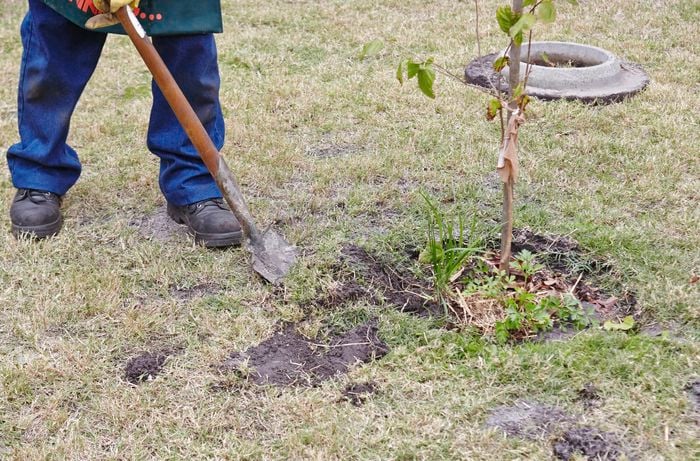
Overlap the ends by about four inches where they meet, then cut with the hacksaw. Hammer pegs into the ground every foot or so to hold everything firm. Backfill soil on both sides once everything sits secure.
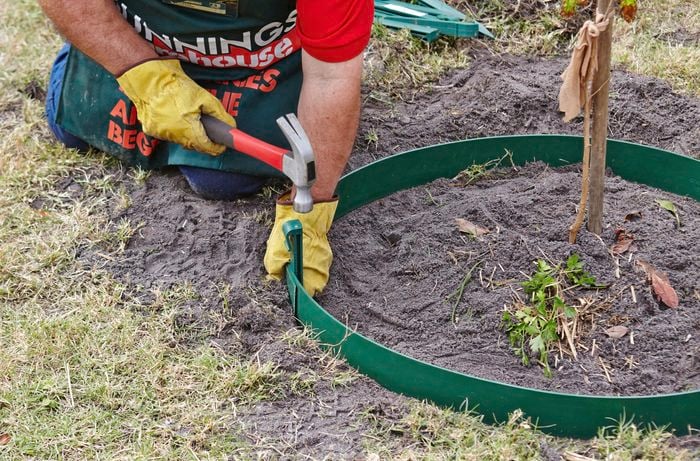
Grass grows right up to the edge this way, never crossing over it. Add mulch. Suddenly this DIY project looks like it came from a professional landscaper. Get the full process from this article.
Also Read: 12 Inexpensive Flower Bed Edging Ideas Front of House
2. River Rock Rings for Natural Texture
Smooth river rocks build a ring that looks like it always belonged there. Circle the trunk with stones, then fill the center with mulch or low ground cover.
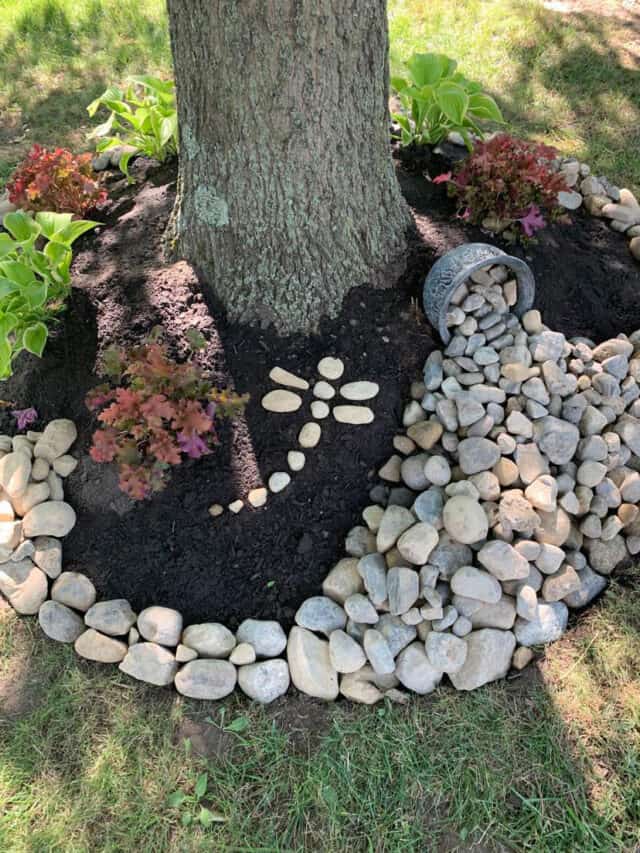
Contractors sometimes use this exact trick to hide ugly stuff running near a trunk, like electrical conduit that would otherwise stick out awkwardly against the rocks.
Color choice matters more than most people realize. Light rocks contrast against dark bark and roots beautifully. Darker stones fade quietly into a shaded yard instead.
3. Stacked Brick Borders, No Mortar Required
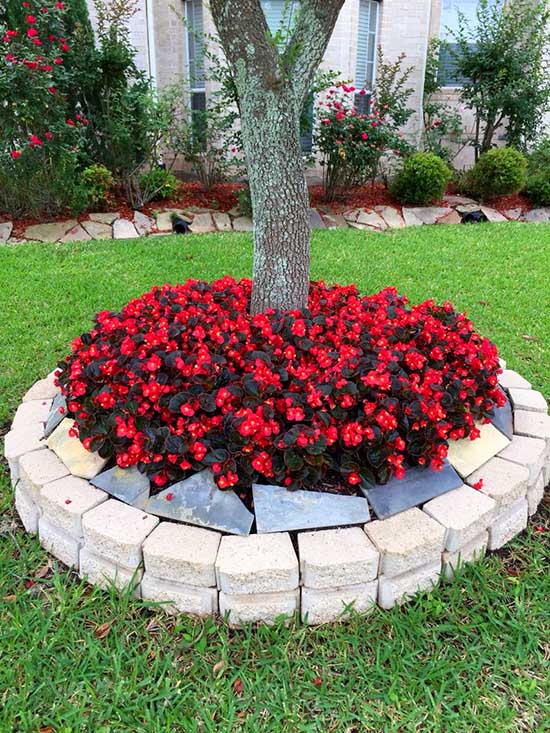
Bricks stacked without mortar create a border you can rearrange anytime. Layer them two or three rows high, and suddenly you’ve built a raised bed around the trunk.
Nothing holds these bricks together permanently, so swapping out a cracked one takes seconds.
Want something sturdier instead? Set bricks in mortar for a border that survives storms and heavy foot traffic without shifting.
Either method covers exposed roots nicely and keeps small animals from digging near the base of the tree, which matters a lot if you’ve got curious pets or wildlife wandering through.
Read more: 12 Ways to Edge Your Garden (Without Breaking the Bank)
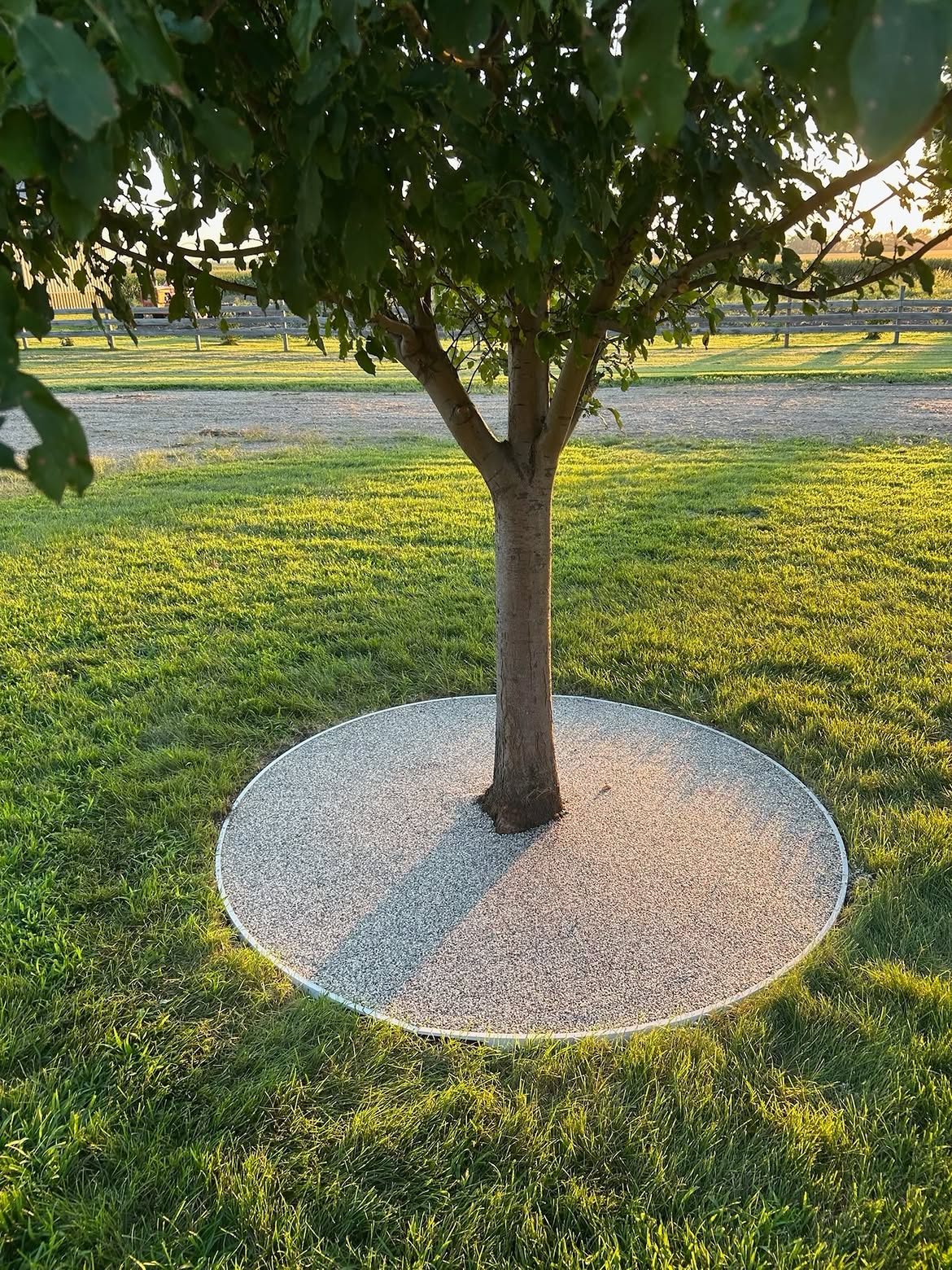
4. Concrete Rings for a Clean Modern Look
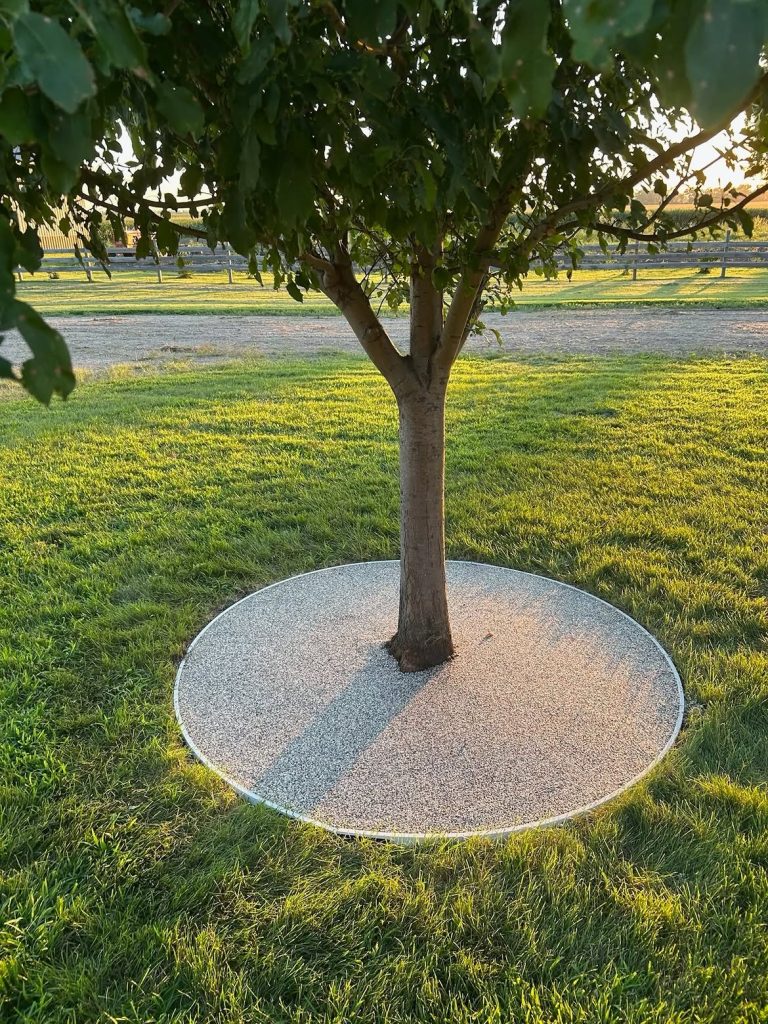
Poured concrete gives you a smooth circle with zero rough edges. Stamped concrete adds texture if plain gray feels too boring for your taste. Pour it flush with your lawn, and mowing gets easier than ever.
This edging option costs more than plastic or rocks. You’ll likely need help from a pro unless you’ve poured concrete before.
Once it’s set, though, this border lasts for decades without shifting or cracking.
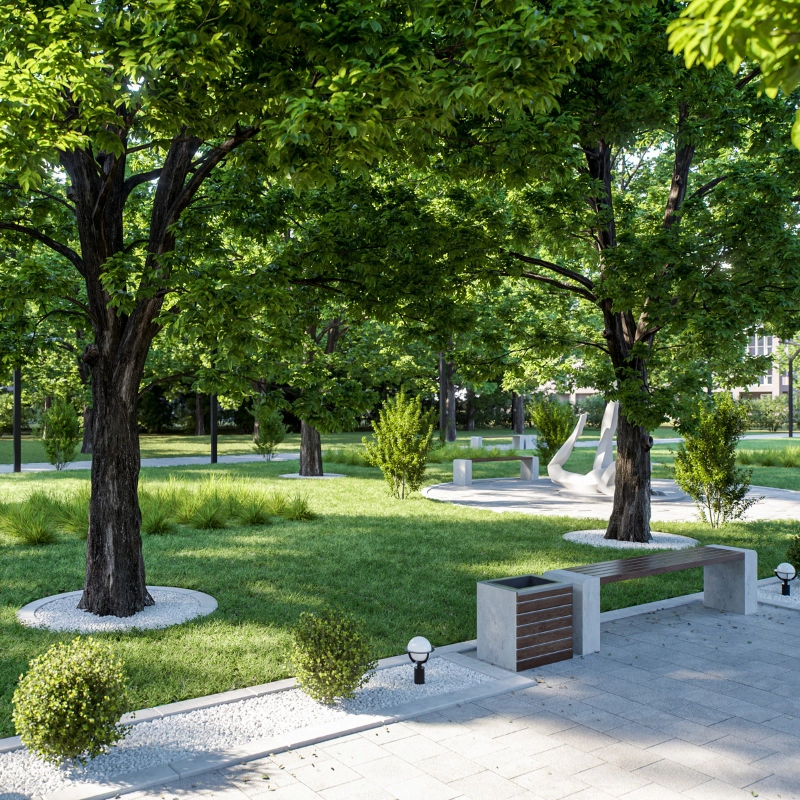
I’ll admit concrete isn’t my first pick for a cozy cottage garden. It shines in modern yards with clean lines and minimal fuss. Match your edging style to your house, not just your tree.
5. Boxwood Hedges as Living Edging
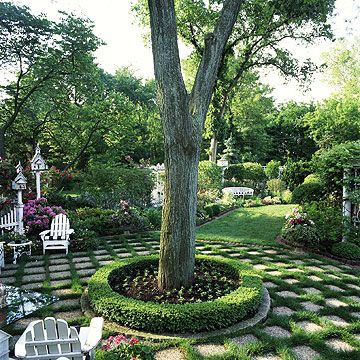
Skip hard materials entirely and plant a boxwood hedge instead. This living border rings the trunk and grows thick over a season or two.
Deer hate chewing through dense boxwood, so your tree bark stays protected from hungry critters.
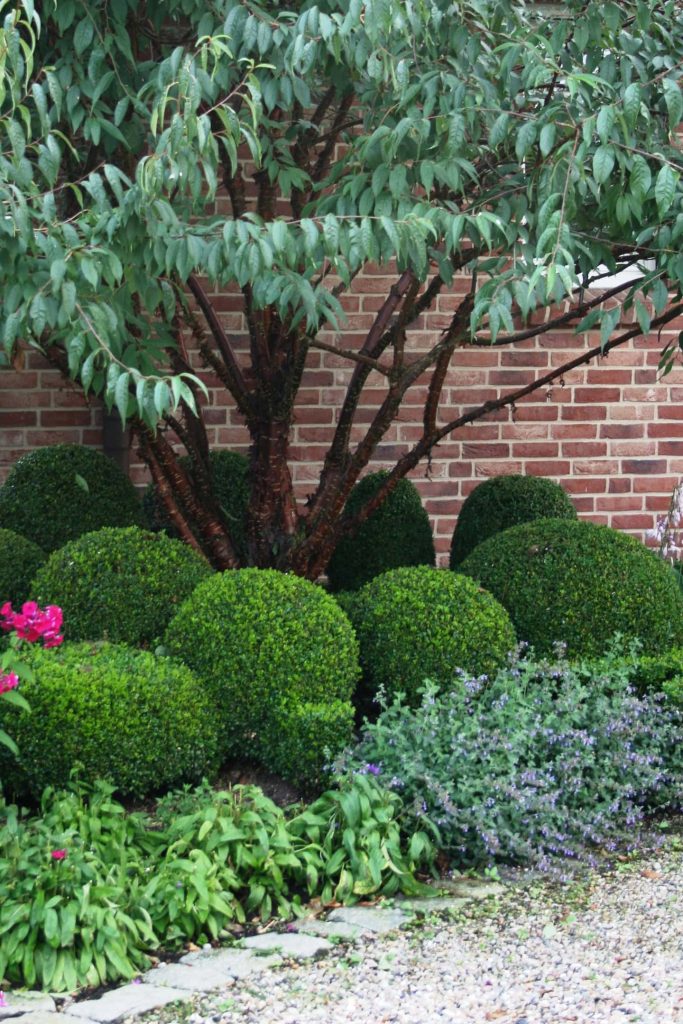
Trimming keeps this hedge tidy and tight against the trunk. Boxwood also handles shade well, which matters since most tree bases don’t get much sun.
Give it room to breathe, though, since roots underground still need their space too.
Do you want edging that requires zero tools? A hedge might be your answer. Just remember it takes longer to establish than rocks or bricks ever would.
6. Railroad-Tie Style Wood Borders
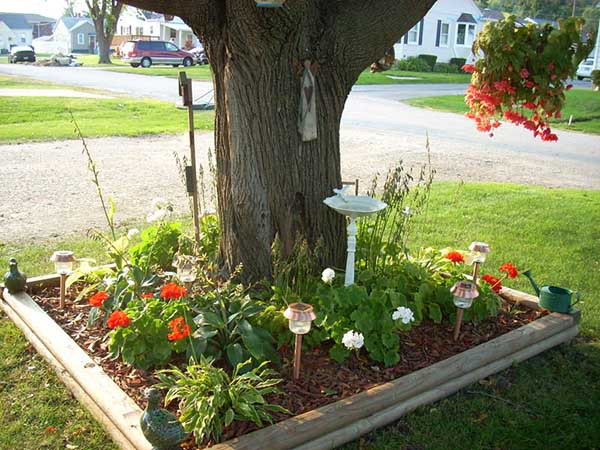
Sanded wood planks stacked around a trunk build a raised bed fast. Old railroad-tie designs inspired this rustic look, and it still holds up today. Stack two or three planks high, then fill the center with soil and mulch.
Wood weathers over time, so expect some fading and gray tones eventually. That aged look actually works in favor of a farmhouse or rustic yard style.
Add a small solar light or two, and this border glows softly once the sun goes down.
Rot happens eventually with any wood edging near soil. Choose cedar or pressure-treated lumber if you want this border to last longer. Swap out damaged planks individually instead of rebuilding the whole thing.
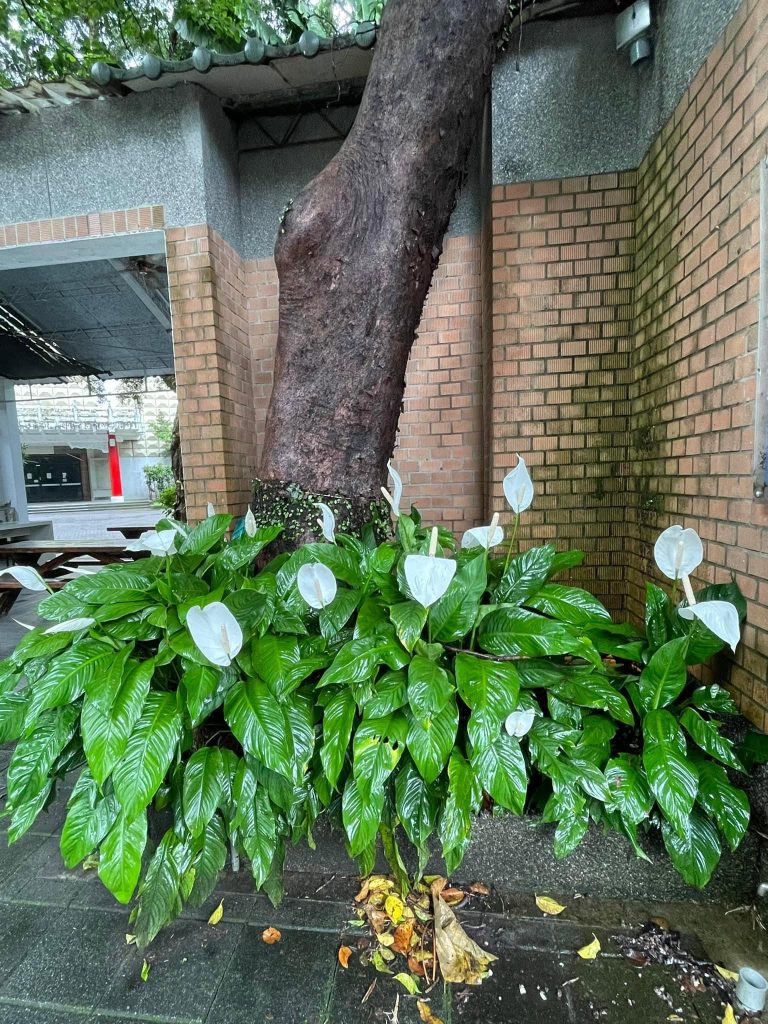
7. Container Gardens for Root-Heavy Trees
Got a tree with roots poking up everywhere? Digging becomes nearly impossible in spots like that. Container gardens solve this problem without disturbing a single root.
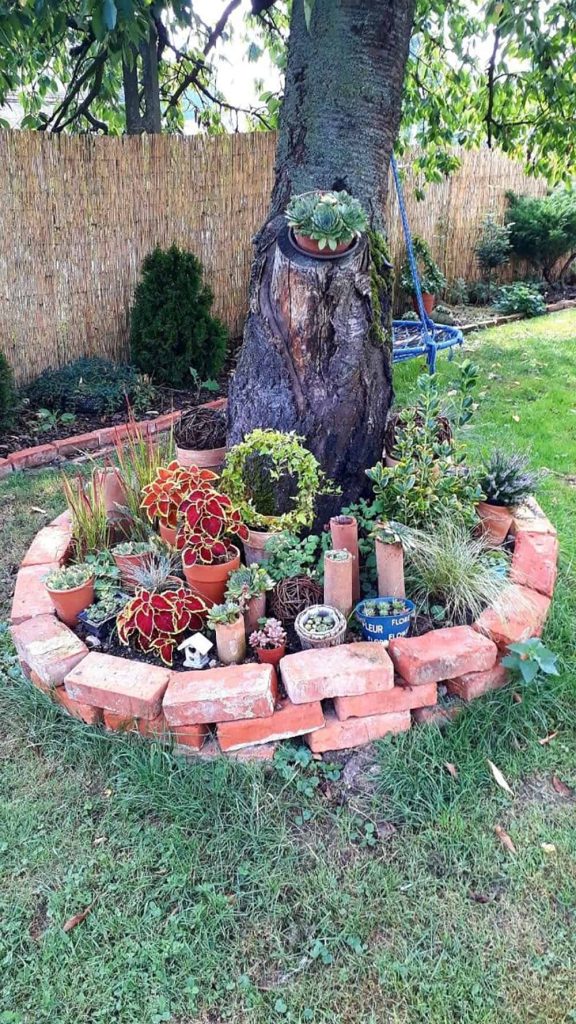
Set pots directly on top of the soil, no digging required. Fill them with flowers, succulents, or trailing vines for extra color. Move containers around whenever you want a fresh look, since nothing’s planted in the ground.
This trick works great for mature oaks and maples with shallow, thick roots. Rocks around the containers finish the whole look nicely.
Why fight with roots when you can just set pots on top instead?
8. Stacked Stone Walls for a Rustic Feel
Natural stone, stacked without cutting or shaping, builds a wall with real character.
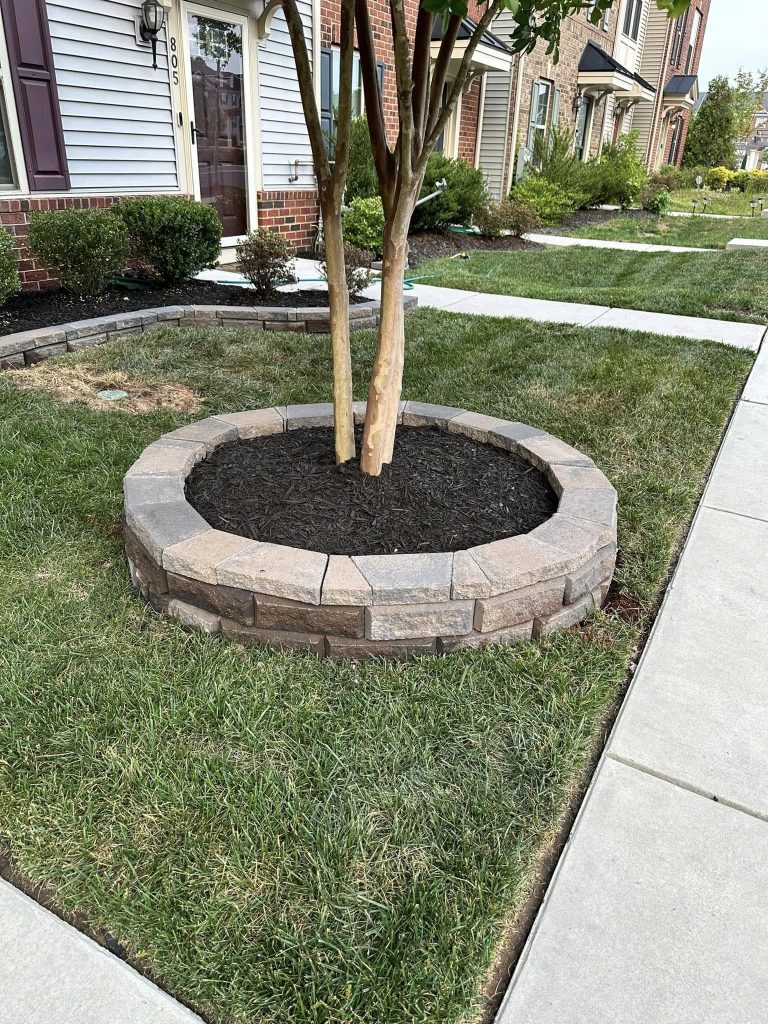
Uneven edges and mixed gray tones give this border a wild, organic vibe. Stack stones two or three layers high around the trunk for a raised bed effect.
Hostas and shade-loving flowers thrive inside a stone-walled bed like this. Dark mulch inside the ring makes bright blooms pop even more.
Isn’t it satisfying when a border looks like it grew there naturally over time?
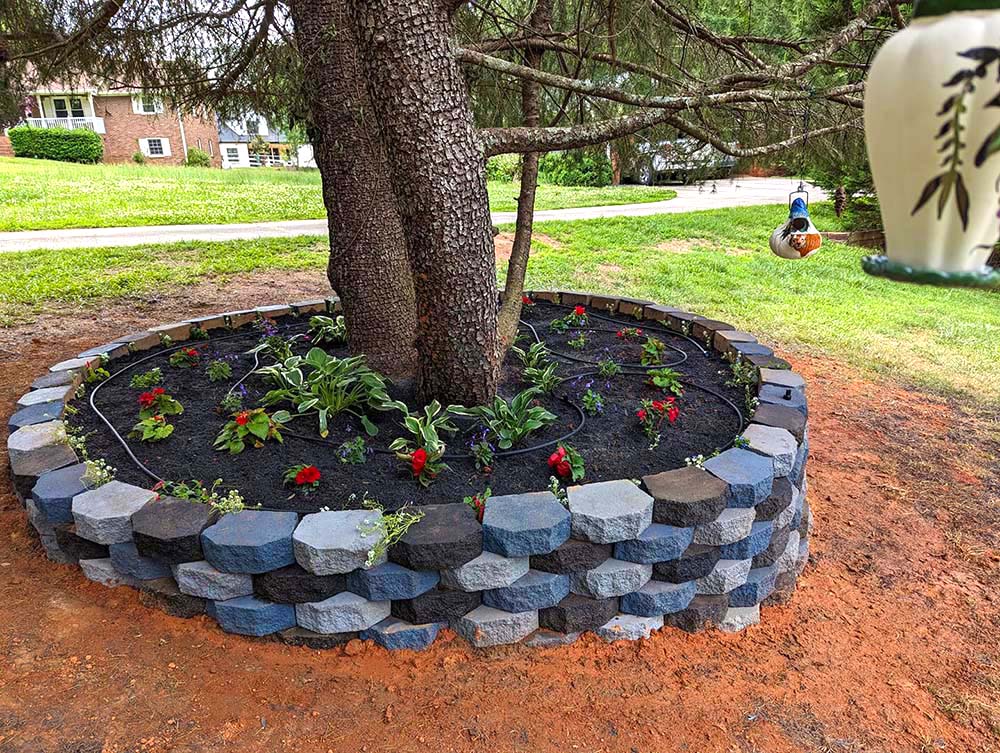
Building a stone wall takes patience, though. Each stone fits differently, so expect some trial and error while stacking. Stick with it, since the payoff looks incredible once it’s done.
9. Mulch Rings With No Hard Border at All
Sometimes the simplest edging idea skips hard materials entirely. Mulch alone, spread in a neat circle, defines the space around a trunk just fine. Keep the mulch about six inches from the bark itself.
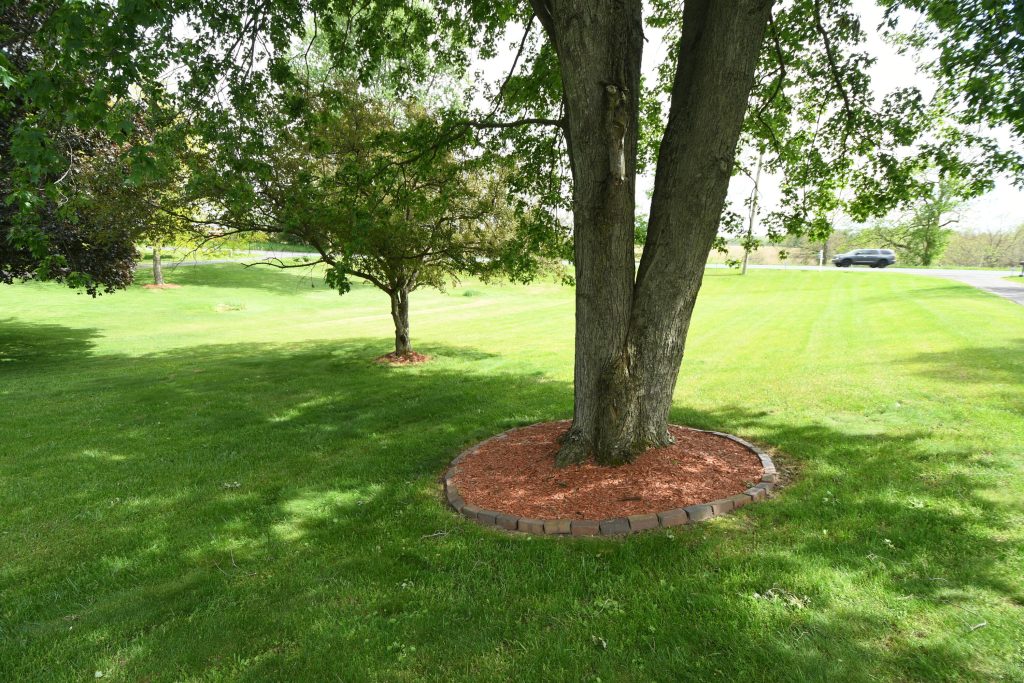
Depth matters here more than people think. Two to three inches works perfectly, and anything thicker can actually hurt your tree.
Piling mulch against the trunk causes rot, and nobody wants that after months of care.
Do you need fancy materials for good edging? Not always. A clean mulch ring, done right, looks tidy and protects tree roots at the same time.
10. Dry Riverbed Edging for a Unique Twist
Want something a little different? A dry riverbed border uses river stones arranged in a winding, curved pattern instead of a plain circle.
This idea works especially well around palm trees or anything with a tropical feel.
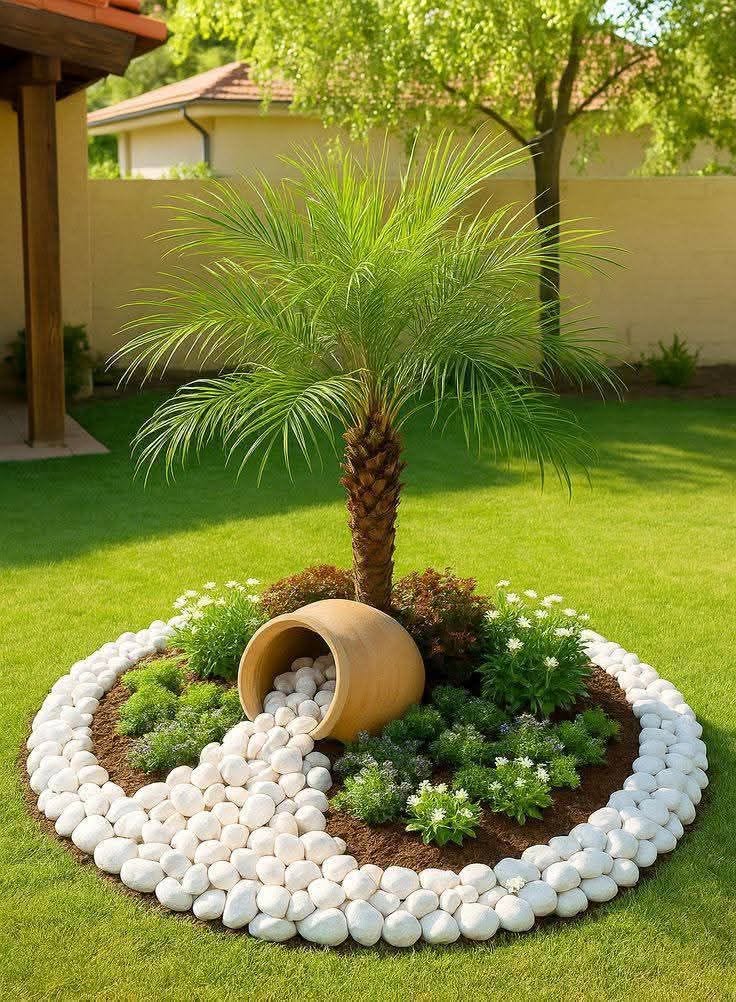
Pair it with a decorative urn or small statue for extra charm. The curved shape breaks up a boring straight line of grass.
Doesn’t a little curve make the whole yard feel more interesting?
This style takes more planning than a simple ring. Sketch your curve first with a hose or rope before you start placing stones. Adjust it until the shape feels right, then commit.
11. Raised Brick Planters for Small Trees
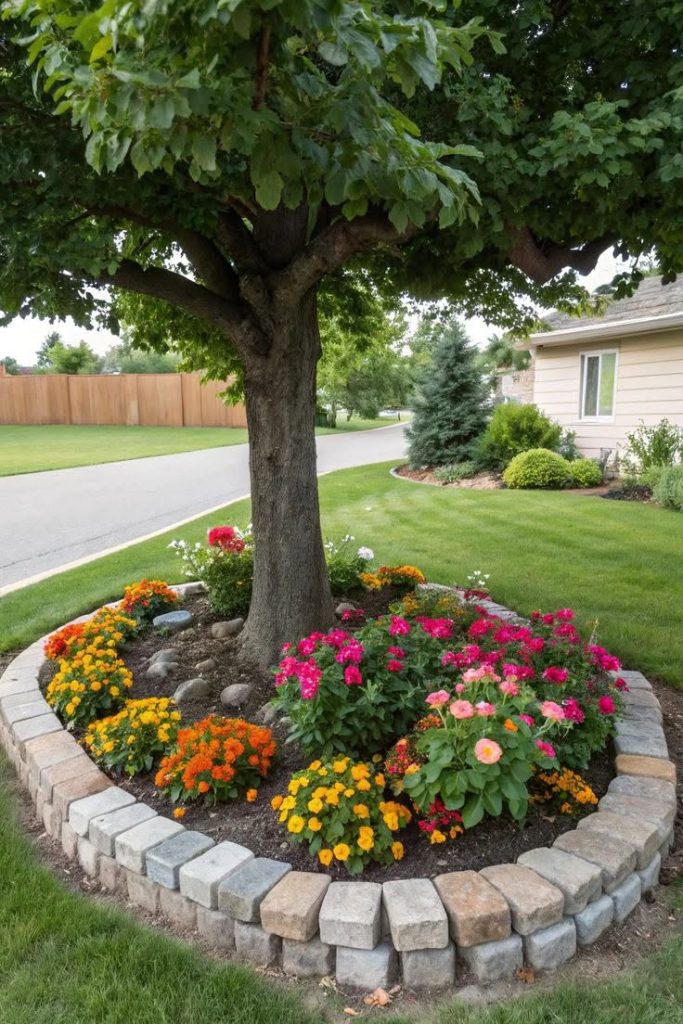
Got a young or medium tree in a corner spot? A raised brick planter gives it room to grow while adding real structure to that corner.
Build the walls a few inches taller than a typical border for extra impact.
Mortar holds everything together permanently here, which suits a corner planter well. Fill the bed with layered flowers in different heights and colors. Why let a corner go to waste when a tree can anchor the whole space?
Reclaimed bricks add character that new ones just can’t match. Mix a few different shades for a look that feels collected over time, not bought all at once.
12. Heart-Shaped and Fun Border Designs
Who says edging has to be boring? A heart-shaped brick border adds personality without much extra work.
Precast bricks bend into curves easily, so shaping a heart takes less effort than you’d expect.
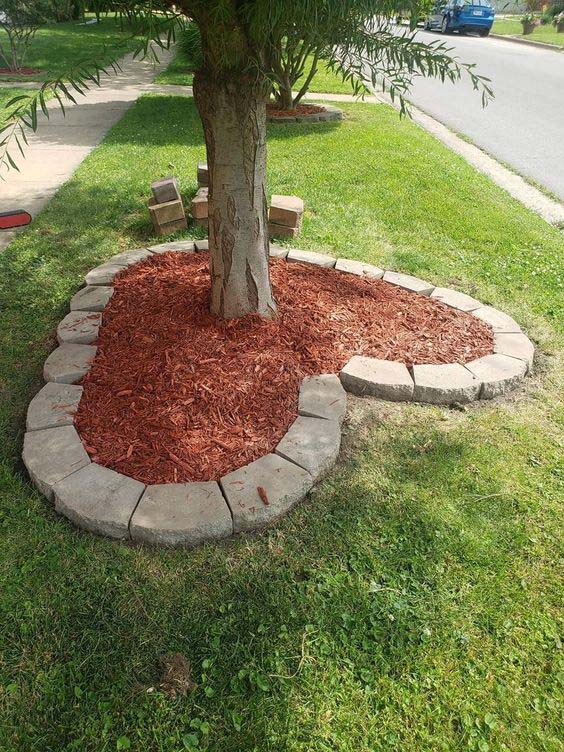
Red mulch inside the shape makes the design pop even more. Kids love spotting a heart-shaped garden bed, and honestly, so do I.
Isn’t it nice when a yard makes you smile instead of just looking neat?
Try other shapes too if hearts aren’t your style. Circles, ovals, or even simple curves all work well with the same precast bricks.
13. Ground Cover Edging Instead of Mulch
Skip mulch entirely and let ground cover plants do the job instead.
Ivy, pachysandra, and similar low plants spread out and fill a ring around the trunk on their own.
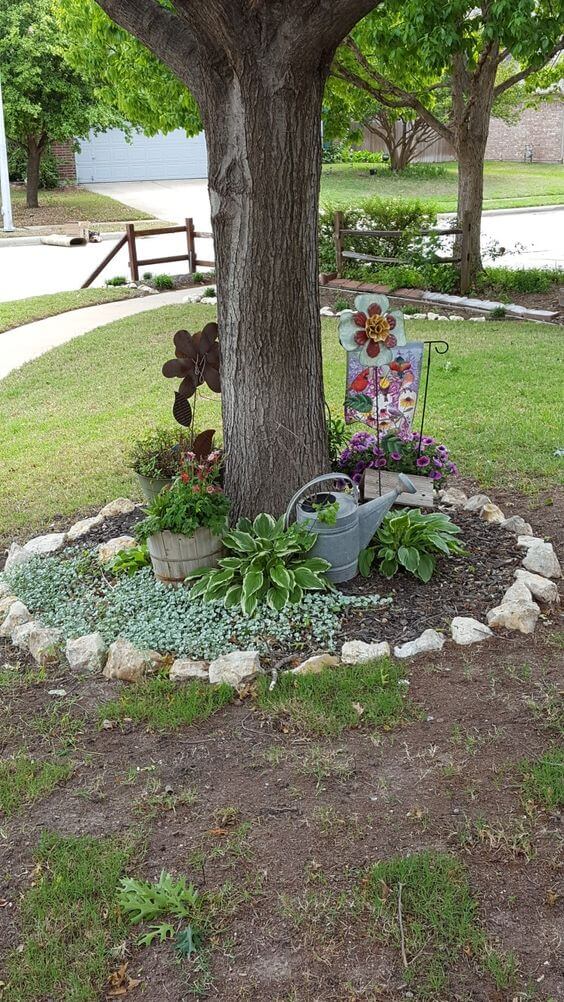
Many homeowners plant these in a six-foot circle for a clean, defined edge.
This method eliminates yearly mulch refreshing, which saves both time and money. Ground cover also chokes out weeds better than bare mulch ever could.
Doesn’t it feel good to skip a chore permanently?
Give ground cover a season or two to fill in completely. Patience pays off here, since a thick mat of green looks better than any hard border could.
FAQs
How far from the trunk should my edging go?
Aim for at least the drip line, or the edge of the tree’s canopy. That gives roots room to breathe and keeps mower blades far from the bark.
Will edging around my tree hurt it?
Not if you do it right. Skip piling soil or mulch against the trunk, and you’re in good shape. Problems start when people bury the base too deep or too close.
What’s the cheapest edging option?
Mulch alone wins here, hands down. No pegs, no bricks, no cutting. Just spread it in a neat ring and keep it a few inches from the trunk.
Can I use landscape fabric under my edging?
You can, but it’s not always necessary. Fabric blocks weeds well, but it can also clog up over time and limit water reaching the roots. Organic mulch works just as well for most yards.
How do I edge around a tree with roots sticking out of the ground?
Skip digging completely. Go with loose rocks, a container garden, or a mulch ring instead. Forcing a trench through exposed roots can damage them.
Final Thoughts
13 ideas, one goal: protect your tree and make that awkward patch of grass look intentional. Plastic edging suits impatient DIYers. Stone walls suit patient ones.
Ground cover suits anyone tired of buying mulch every spring.Pick the idea that matches your yard’s style and your own energy level. Some projects take an afternoon. Others take a whole weekend.
Either way, your tree ends up better protected, and your yard ends up looking like you actually planned it.
So which idea caught your eye first? Grab a shovel, pick a border, and give that lonely patch of grass the glow-up it deserves.