The Ultimate Guide to Growing Cucumbers Vertically: 7 Space-Saving Ideas

Sprawling cucumber vines took over half my raised bed last summer. Sound familiar?
Growing up, not out, changed everything for me. My harvest actually doubled, and the vines behaved themselves for once.
Ready to reclaim your garden space? These 7 vertical growing ideas will get your cucumbers climbing instead of crawling all over everything else.
Why Grow Cucumbers Vertically?
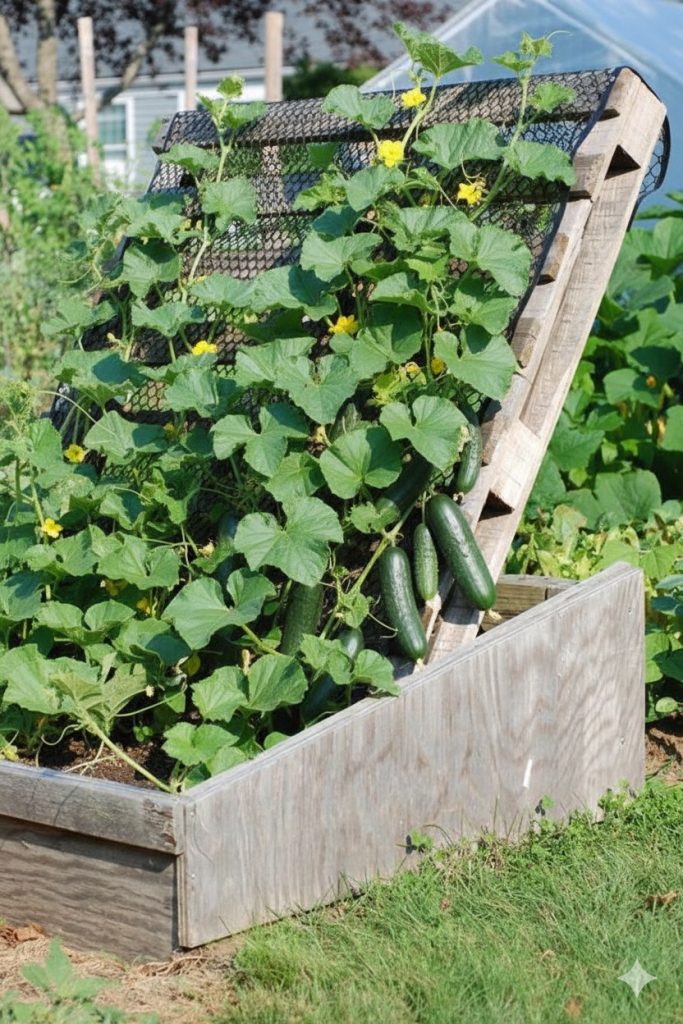
Sprawling vines eat up garden space fast. Growing up instead of out solves that problem immediately. My harvest actually tripled once I made the switch.
- Air circulation improves dramatically with vertical growing. Better airflow means fewer fungal issues and less disease creeping into your plants. Isn’t that reason enough to try it?
- Fruit quality changes too. Cucumbers resting on soil develop yellow spots and rot faster. Hanging fruit stays clean, straight, and far more appealing on your plate.
- Pests struggle to reach elevated cucumbers. Slugs, snails, and rabbits can’t exactly climb a trellis. Ground-level plants don’t get that same protection.
- Water savings surprised me most. Vertical plants use a smaller root footprint, which means less water gets wasted on soil that isn’t even growing anything useful.
- Harvesting becomes so much easier too. No more crouching or digging through tangled vines to find hidden fruit. Everything hangs right at eye level, ready for picking.
Disease drops, yields climb, and your back thanks you. What’s not to love about that combination?
7 Vertical Cucumber Growing Ideas to Save Space and Boost Your Harvest
1) The Classic Trellis
Trellises remain the go-to choice for good reason. Simple wood frames, wire fencing, or even cattle panel all work great here.
Height matters most: aim for at least 5 to 7 feet tall.
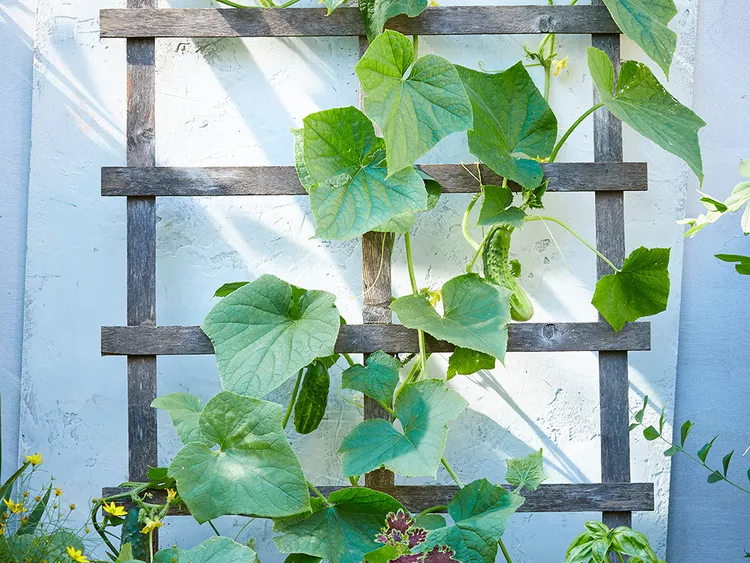
Weak trellises topple under a loaded vine. Secure yours firmly into the ground or against a fence before planting anything. Otherwise, a summer storm could wreck weeks of growth in seconds.
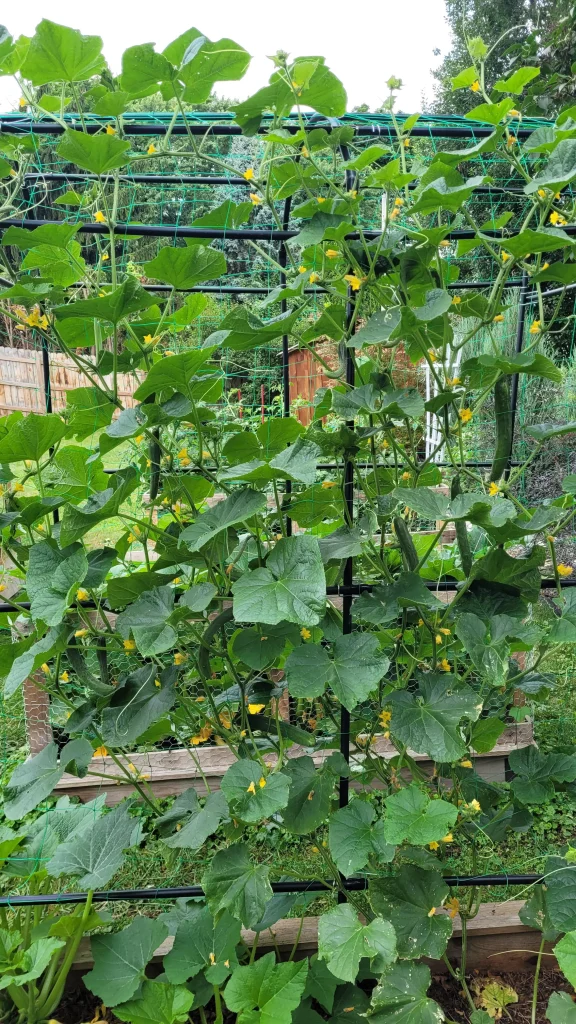
Space your plants a foot apart along the base. 12 inches gives roots room to breathe.
Sowing seeds directly at the trellis base beats transplanting later, since cucumbers hate having their roots disturbed.
Once vines start climbing, help guide those curly tendrils. They’ll wrap around wire or string naturally, but a gentle nudge in the right direction speeds things along.
Garden twine, plant clips, or even strips of old fabric work fine for securing heavier stems.
Also read: How to Grow Cucumber in Raised Bed Garden
2) The A-Frame Trellis
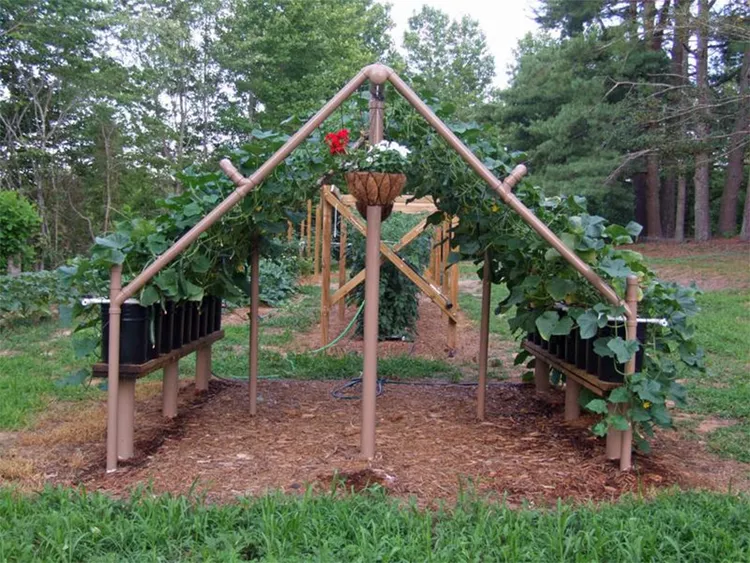
Picture two trellis panels leaning together like a tent. That’s your A-frame, and it’s a fantastic option if you’re growing multiple plants.
Both sides get full sun exposure throughout the day.
Building one yourself isn’t complicated. Bend a cattle panel in half for an instant frame, or build sides from wood and wire remesh.
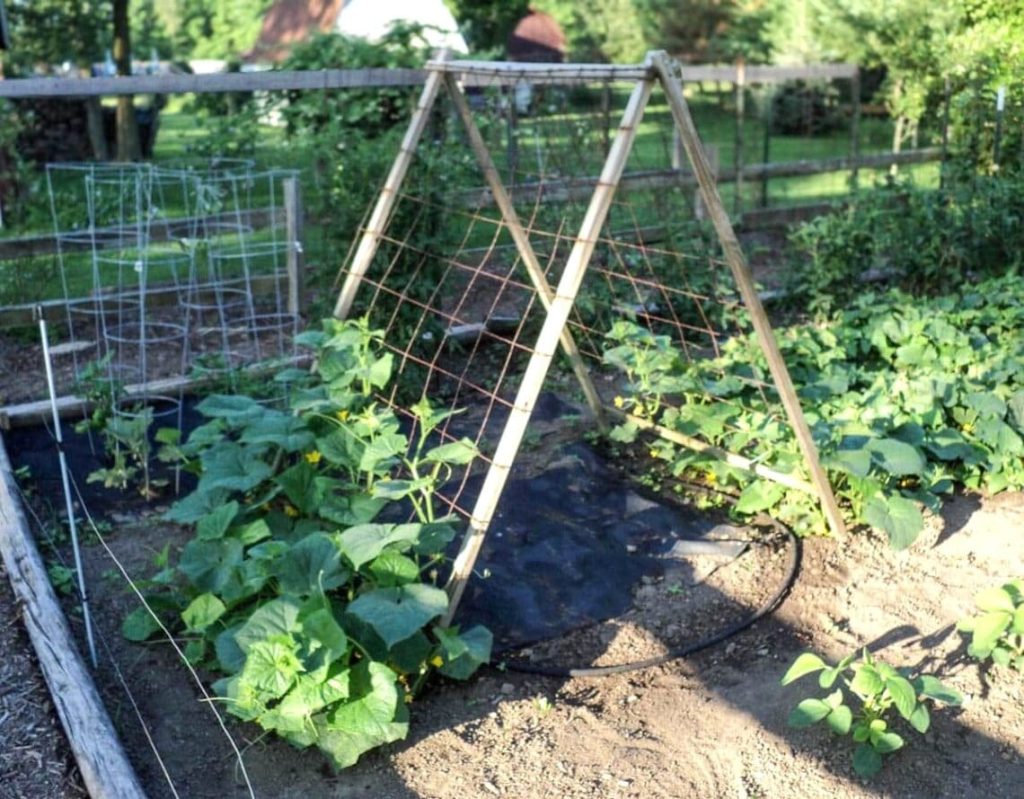
Bolted hinges let you fold the whole thing flat for winter storage, which saved me serious garage space last year.
Bigger footprints come with this design, though. Smaller gardens might struggle to fit one comfortably.
Larger plots or backyard vegetable patches suit A-frames best, giving cucumbers room to climb both slopes without crowding each other out.
Hanging one off the back edge of a raised bed works brilliantly too. I lean mine like a lean-to against my bed’s edge, and it barely eats into my growing space at all.
Here’s a video guide to do it properly:
Winter squash and melons love this same setup once cucumber season wraps up.
Read more: 10 Cheap Cucumber Trellis Ideas for Raised Bed Gardening
3) The Vertical Panel Trellis
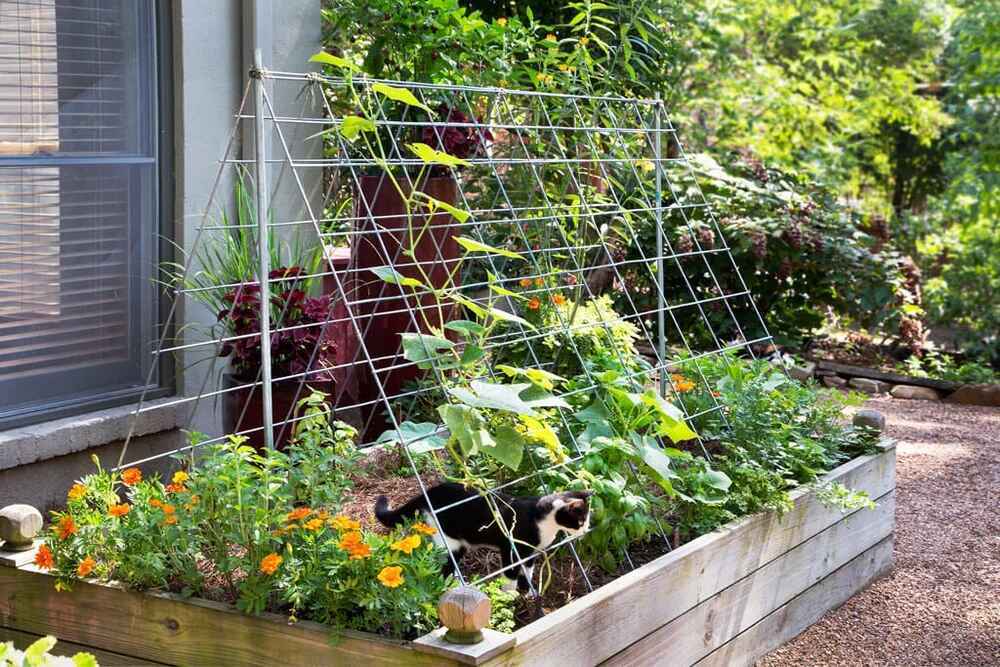
Flat and upright, this style hugs a wall, fence, or bed edge. Space stays free everywhere else. Isn’t that the whole point of growing vertically?
Wire fencing strung between two sturdy stakes gets the job done fast. Concrete wire remesh works even better since it’s rigid and affordable.
I’ve used it for years, and the openings are just the right size for reaching through to pick fruit.
Sun direction changes everything with flat trellises. Place yours where it won’t shade your other crops. North-facing spots or south-facing walls usually work best, depending on where you live.
Pro Tips: Building a wood frame around your wire adds serious durability. Mine has lasted three seasons without a single wobble. Skip the frame if you’re short on time, though, since simple stakes and wire still hold vines just fine.
4) The Arched Trellis or Arbor
Want something that looks as good as it functions? Arched trellises turn a vegetable patch into a little garden destination. Walking underneath your own cucumber archway feels surprisingly magical.
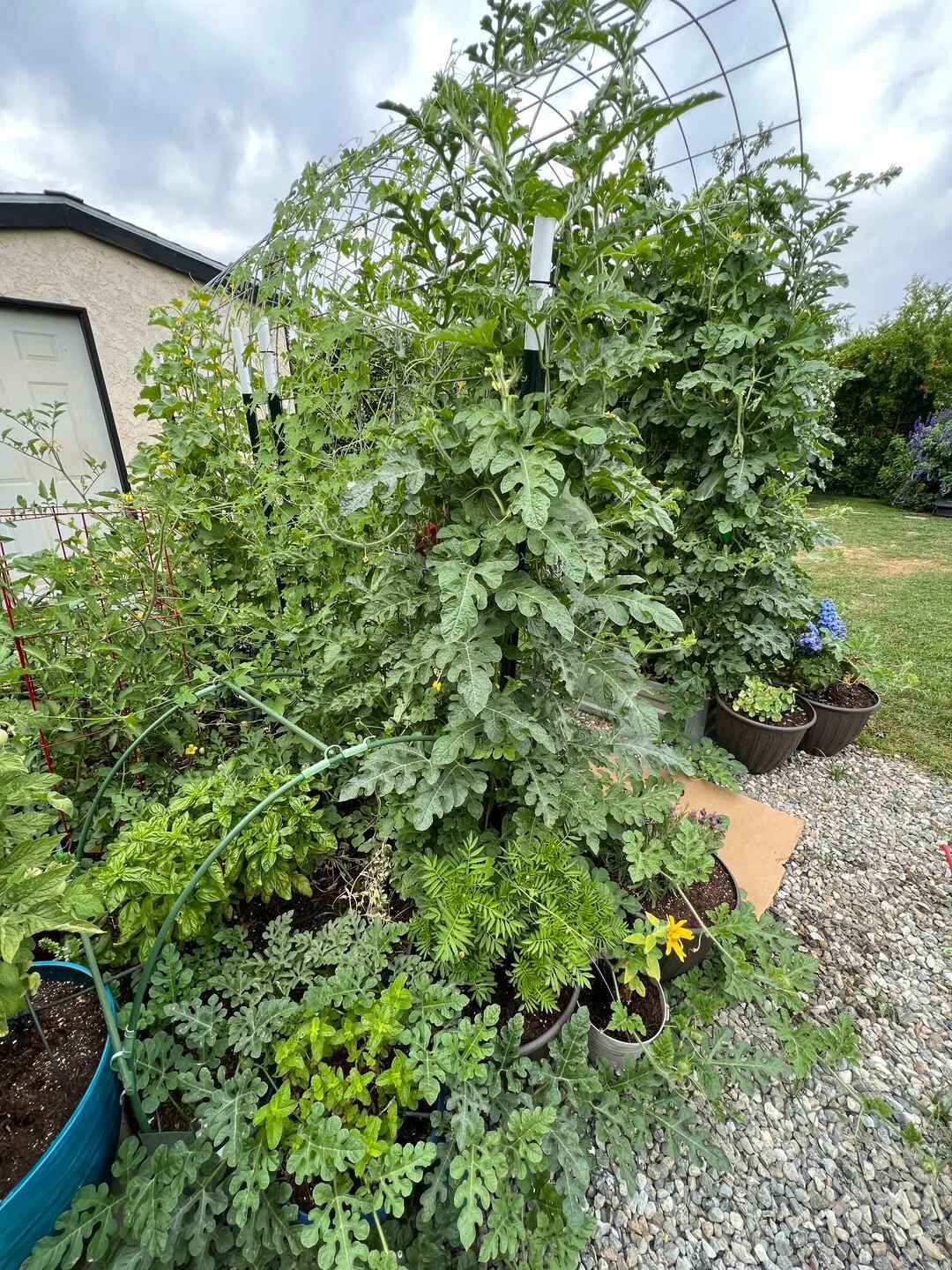
Cattle panel bends beautifully into an arch shape. Four t-posts driven deep into the ground anchor each corner securely.
Space the base about 5 to 6 feet apart so the whole structure holds its curve properly.
Will every vine reach the top? Not always. Some varieties climb higher than others, so don’t stress if yours stalls partway up the arch.
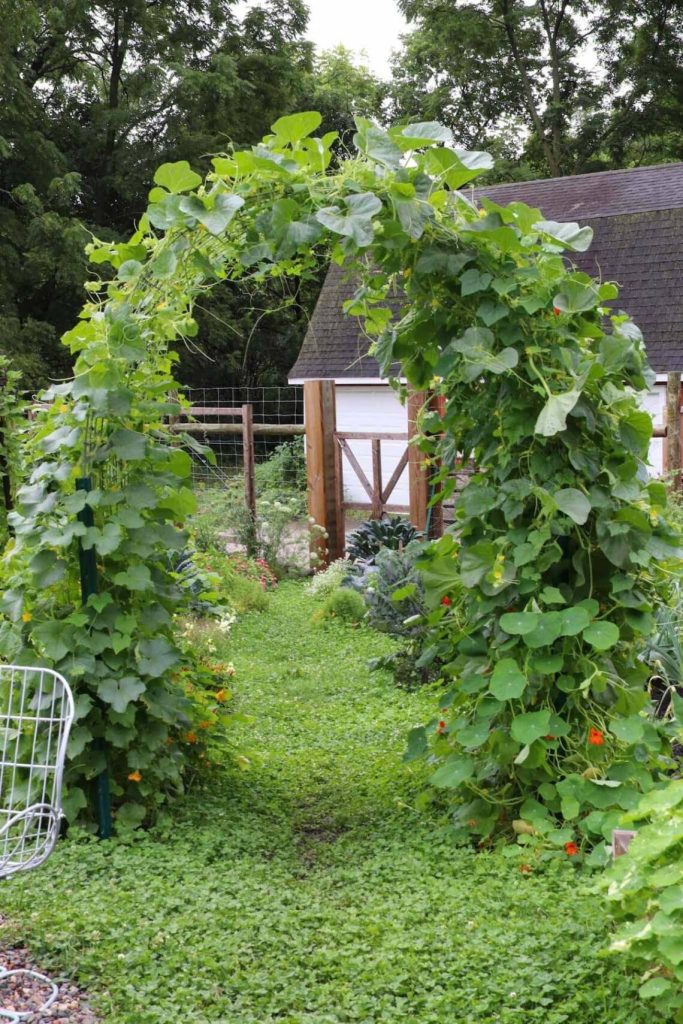
Buying a pre-made arbor skips the building step entirely. Garden centers stock plenty of styles if DIY isn’t your thing.
Either way, plant lettuce or spinach underneath for bonus shade during those brutal summer afternoons.
5) The Pergola Method
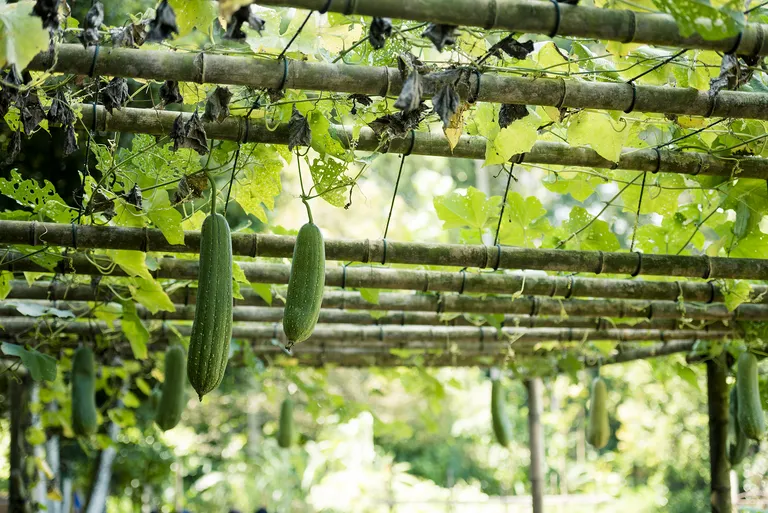
Pergolas aren’t just for climbing roses anymore. Cucumbers thrive up here too, especially if your structure gets plenty of sun.
Fruit dangles down from the canopy, making harvest almost embarrassingly easy.
Start plants at each support post’s base. Tie them loosely with jute or sisal twine right away. Loose ties matter here, since tight string can actually wound the stem and invite disease.
Guiding vines up and over takes patience. Keep tying new growth to the overhead beams as your plant climbs higher.
Eventually the whole canopy fills in, creating natural shade below while cucumbers hang ready for picking.
Sitting on hardscaping instead of soil? No problem. Grow your cucumbers in large containers positioned right next to the posts instead.
6) The Cage or Teepee Method
Got a tiny patio or a stack of pots? This one’s for you. Cages and teepees fit where bigger trellises simply can’t.
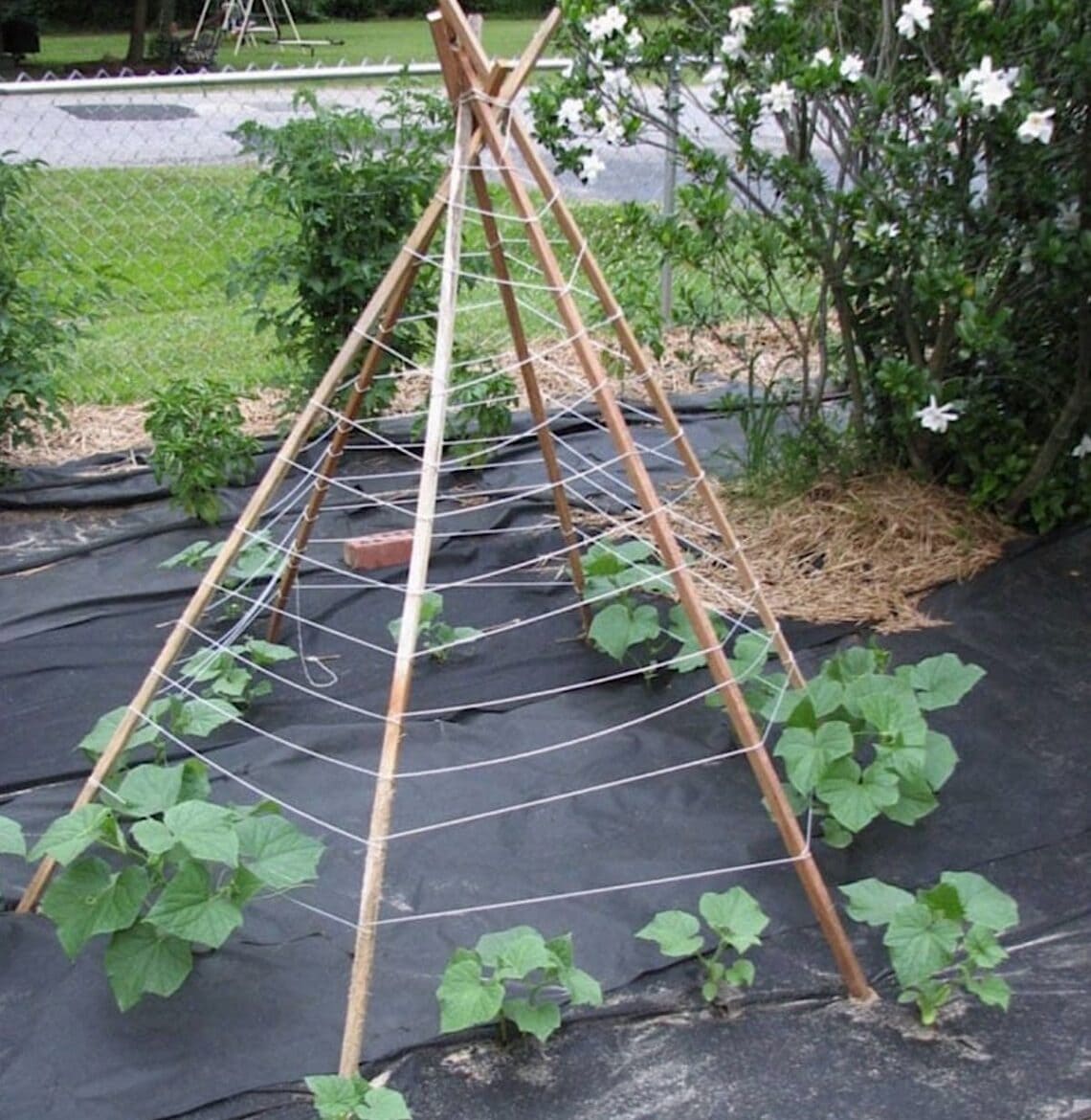
Tomato cages work great for a single cucumber plant. Just make sure yours stands tall enough, since cucumbers need real height to thrive.
Two cages joined together solve that problem instantly if your cage falls short.
Building a teepee takes ten minutes, tops. Grab three or four garden stakes or bamboo canes.
Tie the tops together with twine, then spread the legs into a cone shape around your plant.
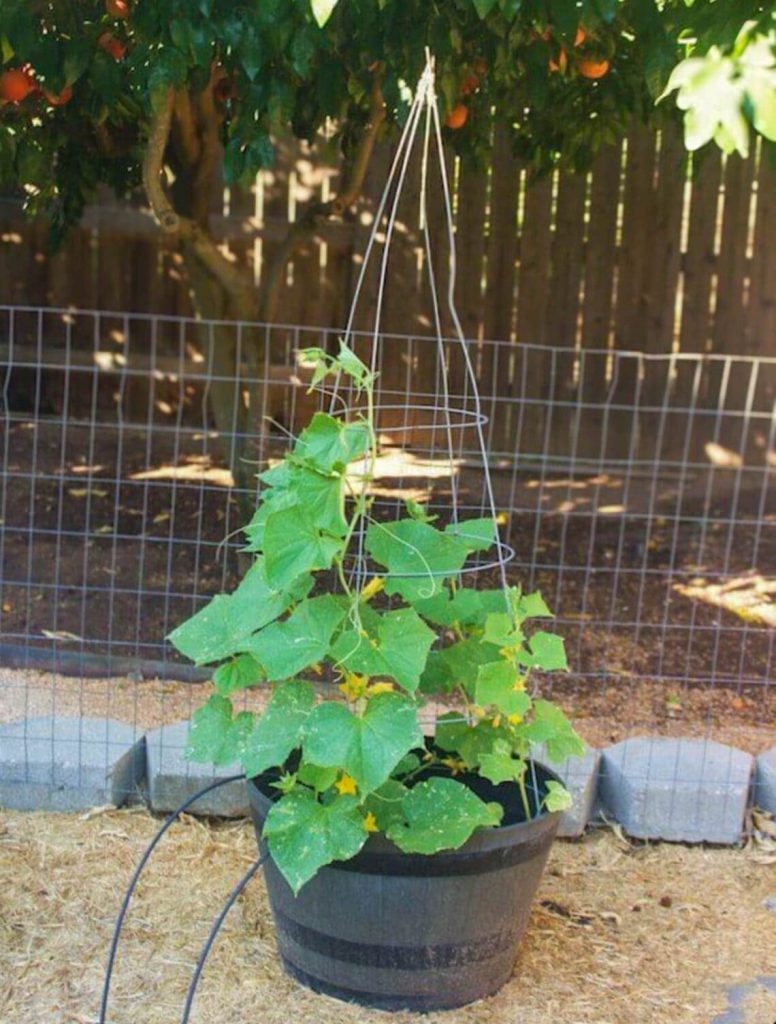
Want extra support as vines grow taller?
Add horizontal string every six inches up the frame. Curling wire fencing into a cylinder shape works too, and it holds up beautifully season after season.
Containers pair perfectly with this method. One 5-gallon pot, one cucumber plant, one simple cage. What’s easier than that?
7) The String Training Method
Sometimes the simplest option wins. String and twine alone can support a full cucumber harvest, no fancy structure required.

Stretch rows of horizontal string between t-posts or sturdy stakes. Space each row about six inches apart going up.
Vines climb naturally from there, hooking their tendrils around each new line as they grow.
Prefer vertical strings instead? Hang them from an overhead support like a wire or wooden frame.
Anchor the bottom into the soil near your plant’s base using landscape staples. Some gardeners skip the staples and just clip the string gently to the main stem.
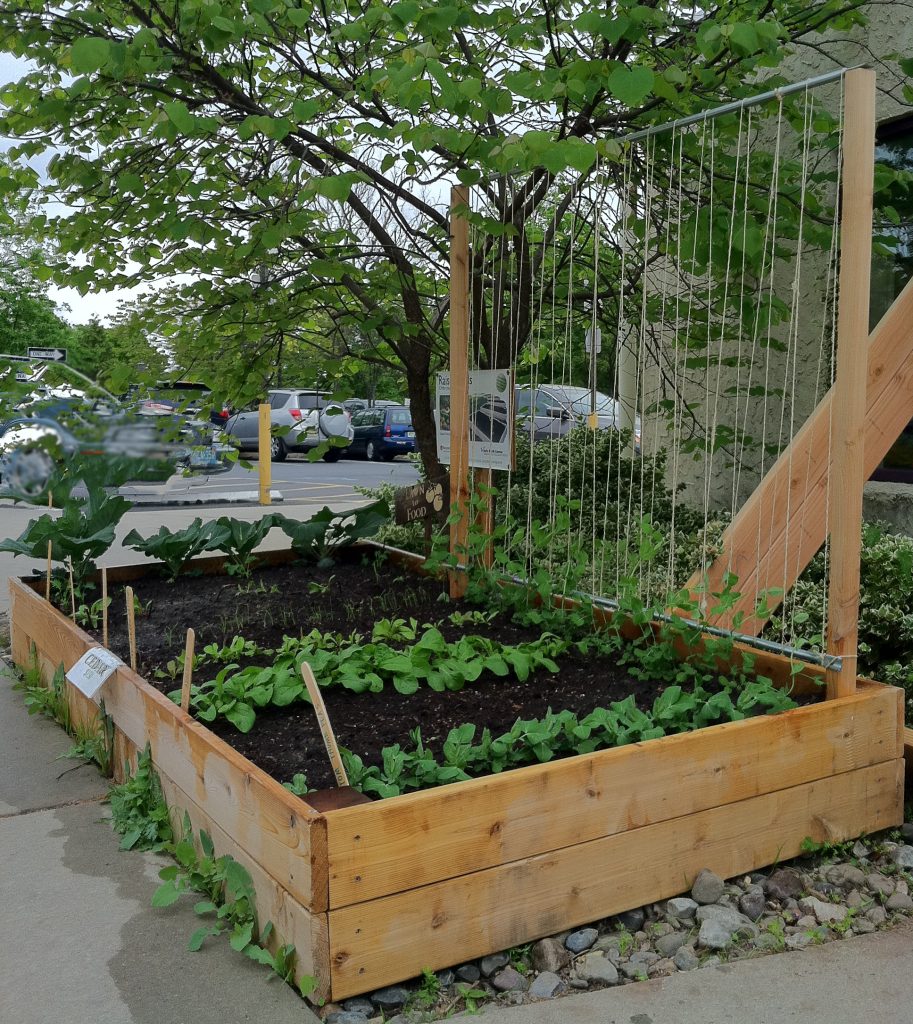
Mesh garden netting offers a quicker shortcut. Hang a sheet between two posts and let vines climb wherever they please. I love this option when I’m short on time but still want that vertical boost.
Does this method need daily attention? Not really. A quick check every few days keeps vines heading the right direction without much fuss.
Frequently Asked Questions
How tall should a cucumber trellis be?
Aim for at least 5 to 7 feet. Shorter structures leave vines with nowhere to go once they hit the top.
How far apart should I space cucumber plants?
Give each plant about 12 inches along the base of your trellis or support. Crowded plants compete for light and airflow, which invites disease.
Can I use a tomato cage for cucumbers?
Yes, as long as it’s tall enough. If your cage falls short, join two together for the extra height cucumbers need.
Do vertically grown cucumbers need extra support for the fruit?
Heavier fruit sometimes needs a hand. A simple fabric sling tied to the trellis keeps large cucumbers from snapping off the vine.
What size pot works for container-grown cucumbers?
Go with at least 18 inches wide and 18 inches deep, holding a minimum of 5 gallons. Skip terracotta pots, since they dry out too fast for cucumbers that like consistently moist soil.
Final Thoughts
Pick whichever fits your space, your budget, and how much time you want to spend building.
A tiny patio calls for a teepee. A big backyard has room for an A-frame or arbor.
Try one this season and watch what happens. Cleaner fruit, healthier vines, and way more room for everything else you want to grow. My money’s on you never going back to sprawling vines again.