Zone 7 Vegetable Planting Guide: When to Start Every Crop This Year

Plant your tomatoes too early in zone 7, and a late frost wipes out weeks of work.
Plant your fall lettuce too late, and it never has time to size up before the cold shuts things down.
Zone 7 gives you a longer season than most of the country, but that only helps if you know how to use it.
This guide breaks down exactly when to start seeds, when to transplant, and when to direct sow, for both spring and fall.
You’ll also learn why the calendar date matters less than you think.
Find Your Exact Frost Dates
“Zone 7” covers a lot of ground. It stretches from the mid-Atlantic down into parts of the South, and it splits into two sub-zones: 7a and 7b. The difference matters more than most guides admit.
7a runs a bit colder, with winter lows dropping to 0°F. 7b stays milder, bottoming out around 5°F.
That five-degree gap can shift your safe planting window by a week or two in either direction.
Don’t rely on the zone-wide average alone. Look up your frost dates by ZIP code through online or your local extension office. Your exact address, not just your zone, drives your last and first frost dates.
As a general rule, expect your last spring frost somewhere between late March and mid-April, and your first fall frost between mid-October and mid-November.
Some zone 7 gardeners get a full seven months of frost-free growing. Others get closer to six. Check your specific numbers before you plant anything.
Also read: November Vegetable Planting Guide: 13 Crops That Thrive in the Cold
Why Soil Temperature Matters More Than the Calendar
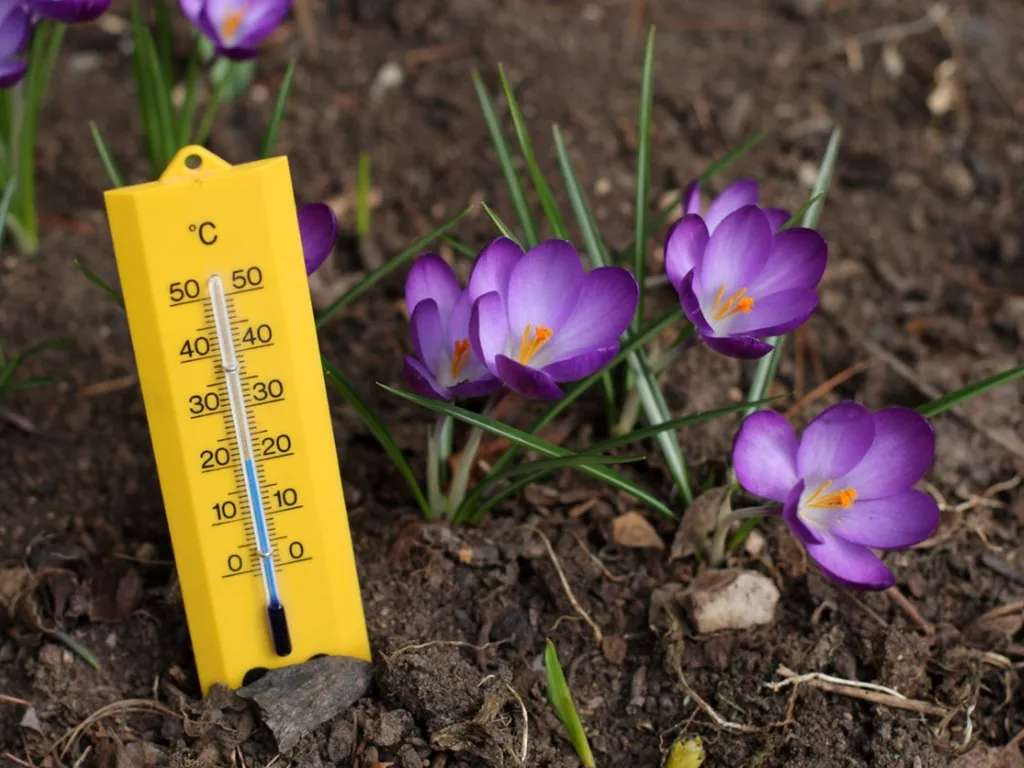
Here’s what most planting calendars leave out: seeds don’t care what the date says. They care about soil temperature.
Air warms up fast in spring. Soil doesn’t.
It typically lags behind air temperature by four to six weeks, which means the ground can still be too cold to plant even after a run of warm, sunny days.
Plant into cold soil, and your seeds either rot or take forever to sprout.
The difference is bigger than you’d expect. Tomato seeds germinate in about six to eight days in soil that’s 65 to 85°F. Drop that to 50°F, and the same seeds can take over 40 days, if they germinate at all.
A cheap soil thermometer solves this. Push it four inches deep, check it in the morning before the sun heats the surface, and average your readings over two or three days.
Use this as your rough guide:
- Cool-season crops (lettuce, spinach, peas, kale, radishes, carrots, broccoli, cabbage) germinate once soil hits 40 to 50°F.
- Warm-season crops (beans, corn, cucumbers) need soil closer to 60°F.
- Heat lovers (tomatoes, peppers, eggplant) want soil at 65°F or warmer before they’ll germinate reliably.
Spring Planting Calendar for Zone 7
Start seeds indoors first for anything that needs a head start, then move to direct sowing as the soil warms.
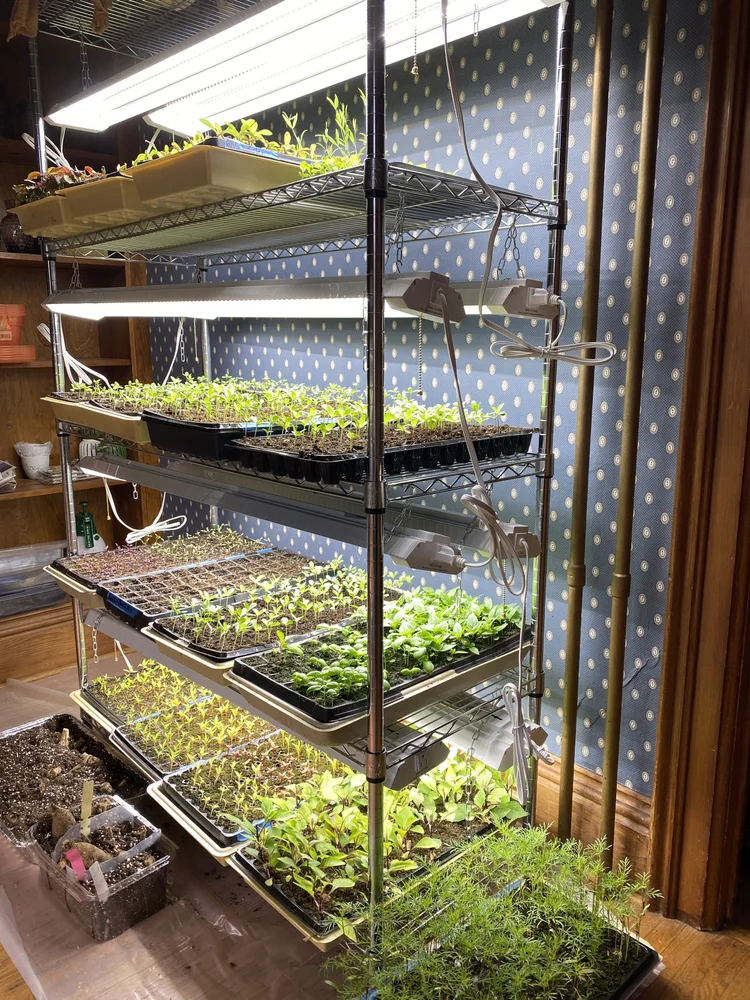
Start indoors in January and February: onions, celery, and leeks need the longest lead time. Start them 10 to 12 weeks before your last frost date.
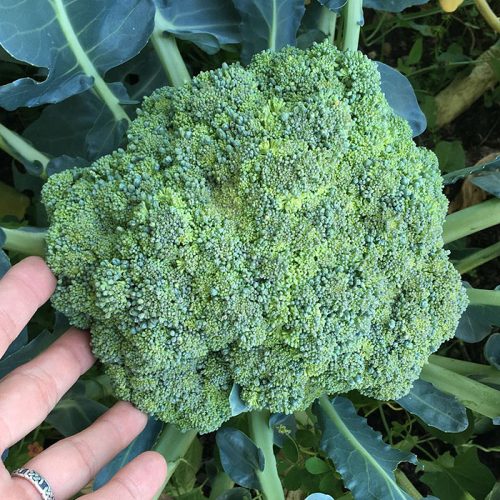
Start indoors in February: broccoli, cabbage, cauliflower, and Brussels sprouts. These cole crops handle cool weather well once they’re transplanted, but they need a jump start indoors.
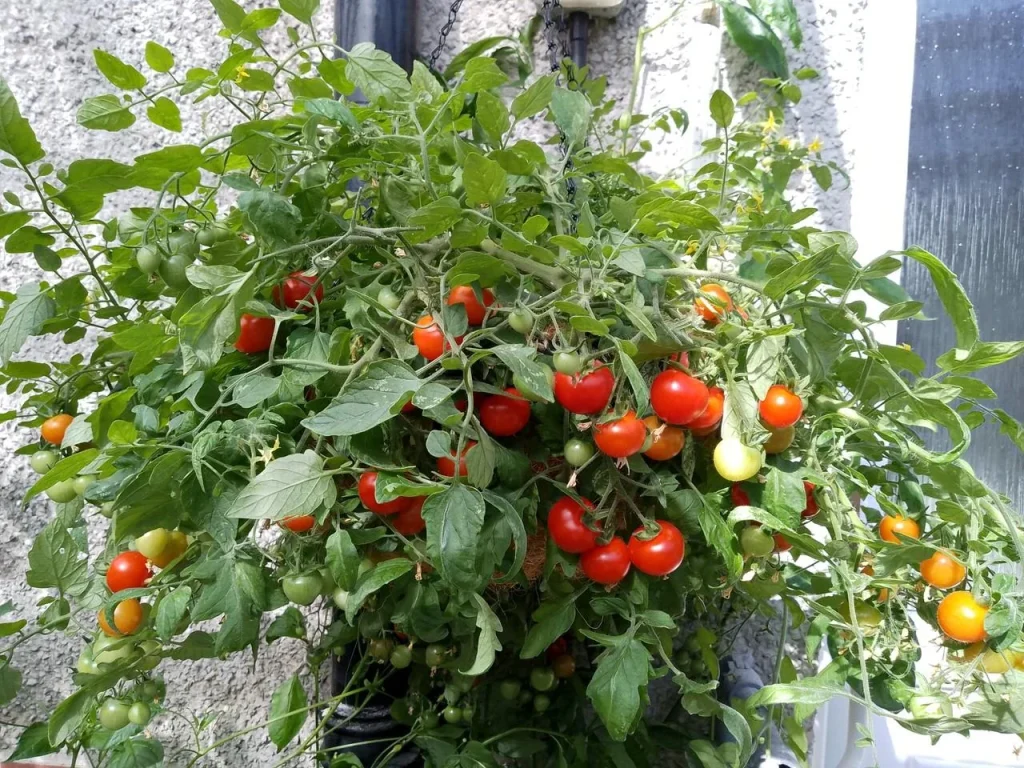
Start indoors in early March: tomatoes, peppers, and eggplant. These are your heat lovers, so don’t rush them outside early. Wait until nighttime temps stay reliably above 50°F before transplanting.
Direct sow outdoors in March, once soil hits 40°F: peas, spinach, lettuce, radishes, and carrots. These cool-season crops actually prefer to get going while it’s still chilly.
Transplant outdoors in April: your cole crop seedlings (broccoli, cabbage, cauliflower) once the worst frost risk has passed.
Direct sow outdoors in mid-to-late April, once soil hits 60°F: beans and corn.
Transplant outdoors in late April or early May: tomatoes, peppers, and eggplant, once nighttime lows stay consistently above 50°F and soil has warmed to at least 65°F.
Direct sow outdoors in May: cucumbers, squash, melons, and pumpkins, once the soil is reliably warm.
| Vegetable | Start Seeds Indoors | Direct Sow / Transplant Outdoors | Min. Soil Temp |
|---|---|---|---|
| Onions, Celery, Leeks | January – February | Transplant mid-to-late March | 50°F |
| Broccoli, Cabbage, Cauliflower, Brussels Sprouts | February | Transplant April | 40–50°F |
| Tomatoes, Peppers, Eggplant | Early March | Transplant late April – early May | 65°F+ |
| Peas, Spinach, Lettuce, Radishes, Carrots | — | Direct sow March | 40°F |
| Beans, Corn | — | Direct sow mid-to-late April | 60°F |
| Cucumbers, Squash, Melons, Pumpkins | — | Direct sow May | 65–70°F |
Also read: 10 Best Vegetables to Plant in August in Zone 6
Fall Planting Calendar for Zone 7
Fall planting trips people up more than spring does. The instinct is to wait until summer heat breaks, but by then it’s often too late. Count backward from your first fall frost date instead of waiting for cooler weather to show up.
Start seeds indoors or direct sow in late June and July: celery and leeks for fall need this early start, since they’re slow growers.
Direct sow outdoors in July and early August: bush beans, carrots, and beets. These need enough warm weeks left to mature before frost.
Start seeds indoors in late July, transplant in mid-August: broccoli, cabbage, and cauliflower. Starting these indoors in the summer heat protects young seedlings from scorching sun and lets you set out stronger transplants.
Direct sow outdoors in August: kale, collards, Swiss chard, and peas. Peas actually do better going into fall than they do in a hot spring.
Direct sow outdoors in late August and September: lettuce, spinach, and radishes. These fast growers can go in later than most people assume, since they only need a few weeks to mature.
Direct sow outdoors in September and into early October: a second round of spinach and radishes, plus arugula and turnips, if your first fall frost is running later than average.
| Vegetable | Start Indoors | Direct Sow / Transplant Outdoors | Weeks Before First Frost* |
|---|---|---|---|
| Celery, Leeks | Late June – July | Direct sow late June – July | 14–16 weeks |
| Bush Beans, Carrots, Beets | — | Direct sow July – early August | 10–12 weeks |
| Broccoli, Cabbage, Cauliflower | Late July | Transplant mid-August | 10–11 weeks |
| Kale, Collards, Swiss Chard, Peas | — | Direct sow August | 8–10 weeks |
| Lettuce, Spinach, Radishes | — | Direct sow late August – September | 6–8 weeks |
| 2nd Spinach/Radish Round, Arugula, Turnips | — | Direct sow September – early October | 3–4 weeks |
*Includes the extra 2-week buffer for slower fall growth as daylight shortens. Count back from your actual first frost date, not the zone average.
A rule of thumb worth keeping in your back pocket: check the “days to maturity” on your seed packet, then count backward from your first frost date and add two extra weeks as a buffer.
That buffer accounts for slower fall growth as daylight shortens, something the seed packet’s maturity estimate doesn’t factor in.
Read more: 13 Best Fall Vegetables to Plant in Zone 8 Garden
Succession Planting to Stretch Your Harvest
Most zone 7 gardeners plant everything once and call it done. That leaves you buried in radishes for two weeks, then nothing.
Fast-maturing crops like radishes, lettuce, and bush beans are made for succession planting.
Sow a new short row every two to three weeks instead of planting it all at once. You’ll get a steady trickle of harvests instead of one overwhelming glut followed by an empty bed.
This works especially well in spring and fall, when the growing window is shorter and every week of usable garden space counts.
Lettuce is the easiest place to start. Sow a small patch, then sow another the moment the first one has true leaves.
Frequently Asked Questions
Can I plant tomatoes in March in zone 7?
No. March soil is usually too cold for tomatoes to germinate or survive outdoors. Start seeds indoors in early March instead, and wait until late April or early May to transplant outside.
What’s the real difference between zone 7a and 7b?
7a winters drop to about 0°F, while 7b stays milder around 5°F. That gap can shift your safe planting window by a week or two, so it’s worth checking which sub-zone your address falls into.
What if I miss the spring planting window?
You still have options. Many crops, especially beans, cucumbers, and summer squash, can go in through May and even June and still produce a full harvest before fall frost.
Is it too late to plant vegetables in October?
For most crops, yes, but fast growers like spinach, radishes, and arugula can still go in during early October in milder zone 7b areas, especially with a floating row cover for frost protection.
Do I really need a soil thermometer?
It’s not required, but it removes the guesswork. A four-inch soil reading tells you far more than a calendar date, especially in a zone where spring weather swings as much as zone 7’s does.
Final Thoughts
Zone 7 hands you a longer growing season than most gardeners get, but only if you plant by soil temperature and frost dates instead of guessing off the calendar.
Once you’ve got your zone 7a or 7b dates dialed in, the rest becomes a rhythm you repeat every year.
Get your first round in the ground, and the rest of the season tends to fall into place.