How to Care for Coleus Indoors: The Complete Guide to Keeping Its Color All Year

You grew a gorgeous coleus all summer. Then frost hit, and you tossed it. Sound familiar?
I get it, but you don’t have to do that every year. Coleus is tougher than its reputation.
Give it the right spot indoors, and it’ll keep showing off those wild colors straight through winter. Let’s get into what it actually needs.
Getting the Light Right
Light trips up more indoor coleus plants than anything else.
I’ll say it straight: this plant wants bright light, just not harsh direct sun. An east window works great. You get that soft morning sun without the midday blast.
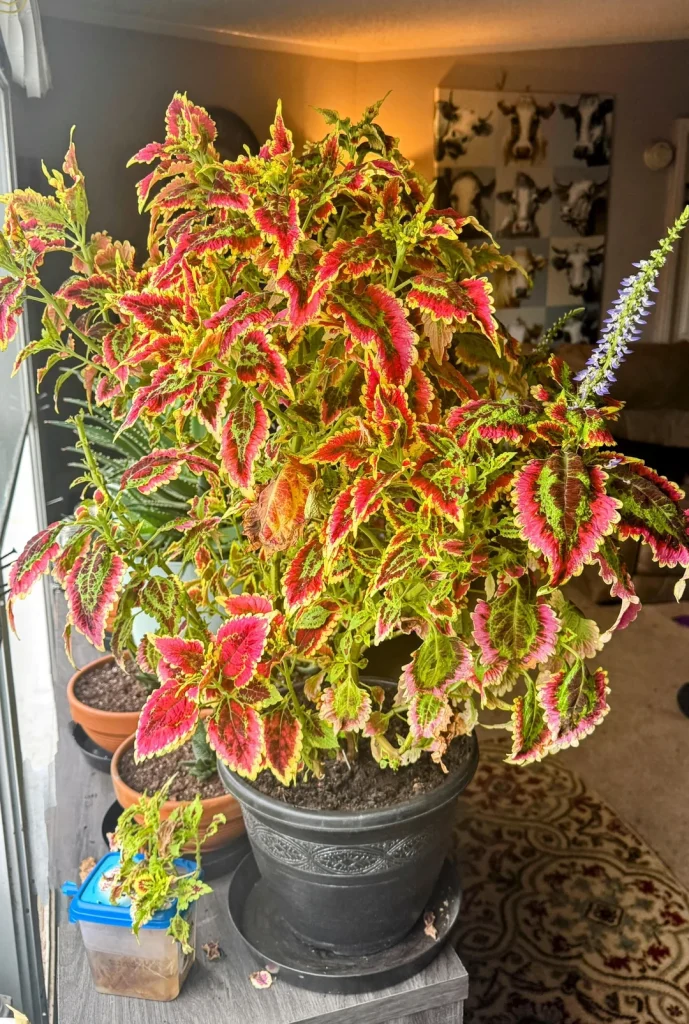
A north window with strong daylight? Also fine. Stuck with only a south or west window? Pull the pot back a few feet from the glass so afternoon sun doesn’t fry it.
Here’s the thing. Your plant will tell you what’s wrong, if you know what to look for. Colors fading out and turning washed-out?
Too much direct sun. Stems stretching thin with leaves spaced far apart? Not enough light.
Winter days are shorter no matter where you live, so don’t be shocked if you need to add a grow light once fall rolls in. Six hours of decent light a day keeps most varieties happy.
Temperature Matters More Than You’d Think
This plant is tropical to its core, and it acts like it. Keep it somewhere between 60 and 75°F, and don’t push your luck below that.
Once temperatures dip near 50°F, coleus starts declining fast, even sitting inside your house.
Skip the spot near a drafty door or window. Skip the heating vent too. Both do the same damage in different ways: wilting, leaf drop, colors going flat.
I’d rather find one steady spot for my plant than a “pretty good” spot that swings hot and cold all day. Consistency wins every time with this one.
How Much Water Does It Actually Need?
Picture a wrung-out sponge. That’s the moisture level you’re chasing, not dripping wet, not bone dry.
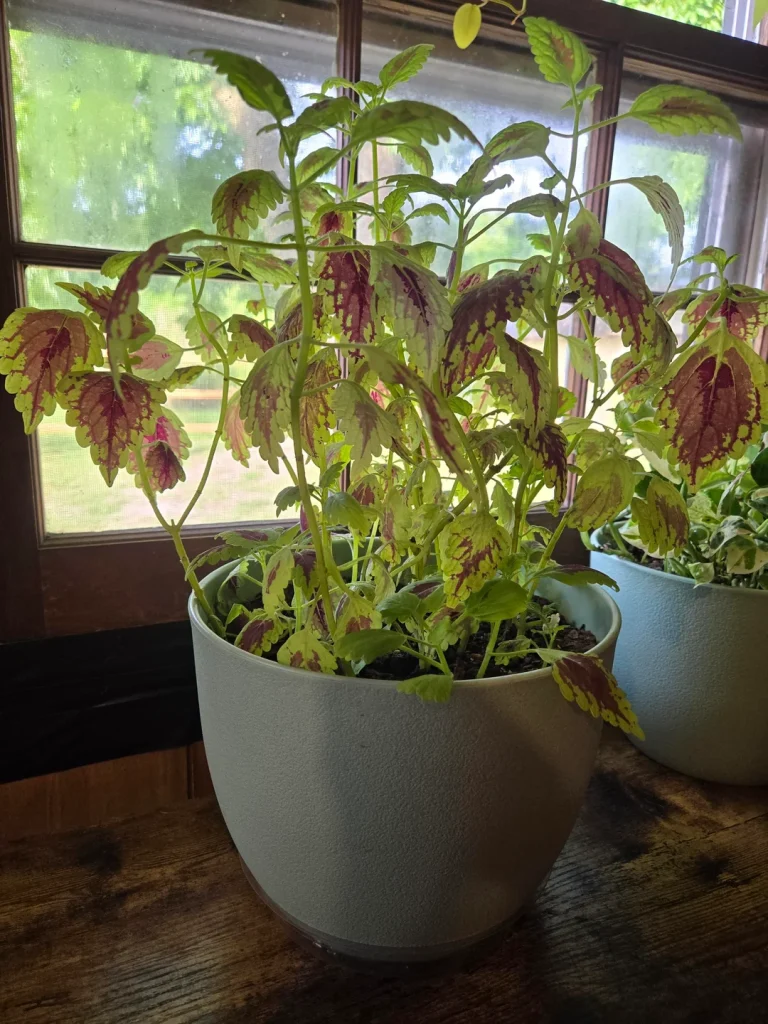
Stick your finger into the top inch of soil before you reach for the watering can. Dry? Water it well.
Still damp? Give it another day or two. Let the soil dry out completely, and the leaves will wilt hard, sometimes for good.
Keep it soggy instead, and you’re looking at root rot, which is a much messier fix than a little drooping.
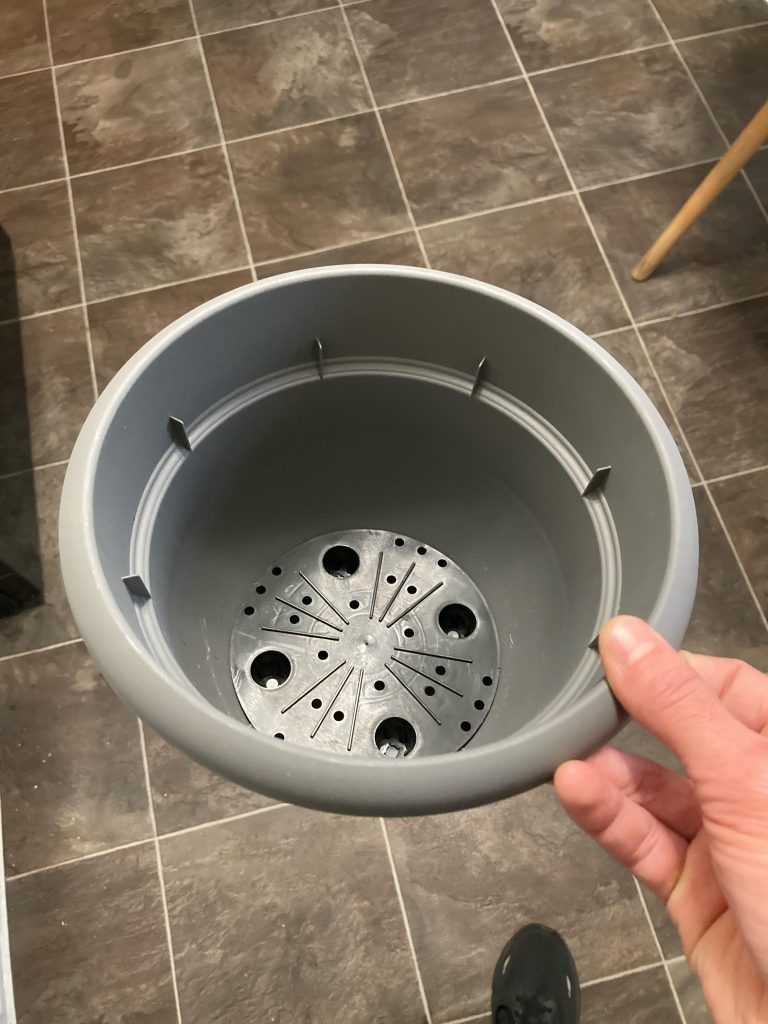
One more thing: use a pot with drainage holes, always, and never let it sit in a saucer full of water.
Adding Humidity Without Overthinking It
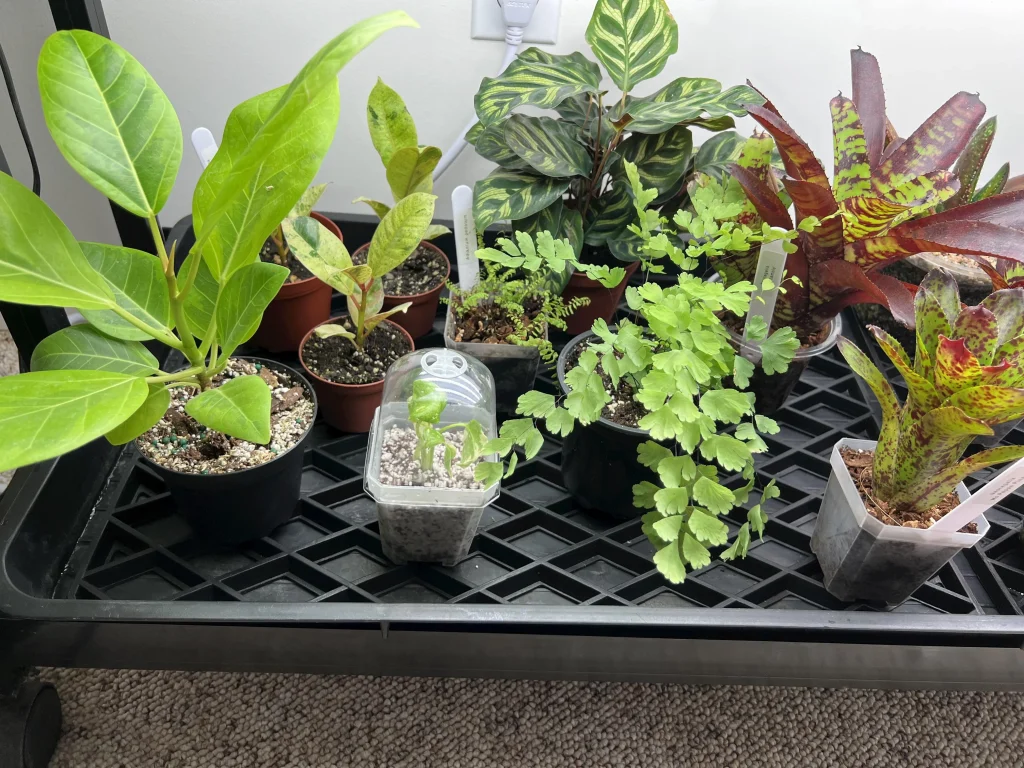
Indoor air, especially in winter, runs drier than coleus likes. You’ll spot the problem first at the leaf edges. They turn crispy and brown when the air’s too dry for comfort.
The fix is simple. Set the pot on a tray filled with pebbles and a little water. As the water evaporates, it raises the humidity right around the leaves.
Just make sure the pot sits above the waterline, not in it. Let the roots touch standing water, and you’re back to root rot territory. A quick daily mist works too, if you don’t mind adding it to your routine.
Feeding Coleus the Right Way
Coleus grows fast, and fast growth needs fuel. During spring and summer, feed it every two weeks with a balanced, water-soluble fertilizer diluted to half strength.
Full strength sounds like a shortcut to better color. It’s not. It just stresses the roots.
Once fall arrives, ease off. Cut back to once a month. Come winter, stop feeding altogether. Your plant’s growth slows way down this time of year, and feeding a resting plant does nothing but risk burning the roots.
Come spring, when you see fresh growth kick back in, that’s your cue to start feeding again.
Pinching and Pruning to Keep It Bushy
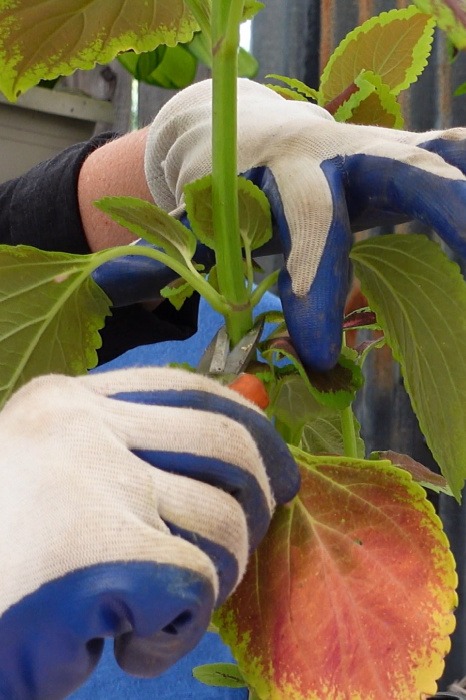
Left alone, coleus gets leggy. Long, bare stems with leaves clustered at the top aren’t a disease. They’re just what happens when nobody pinches the plant back.
Grab the growing tips regularly, right above a leaf node, and pinch them off. Do this every few weeks, and you’ll end up with a fuller, bushier plant instead of a lanky one.
Already gone leggy on you? Don’t panic. Coleus handles aggressive pruning fine. Cut a stem back by a third, even half, and it’ll push out new growth in no time.
Flower spikes show up eventually too. Pinch those off the moment you see them.
Flowering pulls energy away from the foliage, which is the whole reason you’re growing this plant in the first place. Left to bloom and go to seed, the plant will actually decline faster.
Common Mistakes (And How to Fix Them Fast)
Most coleus problems trace back to one of a few habits. Here’s what usually goes wrong, and what actually fixes it.
Watering on a schedule instead of checking the soil. Watering every Sunday, whether the plant needs it or not, is how root rot sneaks up on people. Check the soil first. Water second.
Feeding a plant that’s not actively growing. Fertilizer in December doesn’t help a dormant plant. It just sits in the soil and can burn the roots. Save it for spring through early fall.
Ignoring legginess until it’s out of control. A few bare stems are easy to fix with pinching. A plant that’s six inches of bare stem topped with a sad little tuft of leaves takes a lot longer to recover. Pinch early, pinch often.
Assuming more sun always means better color. Some varieties handle full sun just fine outdoors. Indoors, behind glass, that same light intensifies and can bleach the leaves out. Bright and indirect beats direct, every time.
Propagation: Your Backup Plan
Here’s something worth knowing. Coleus plants don’t live forever, even indoors with perfect care.
After a year or two, they tend to get woody and stop looking their best. Instead of babying an old plant, just take cuttings and start fresh.
It’s genuinely one of the easiest plants to propagate. Snip a 4 to 6 inch cutting just below a leaf node, strip the lower leaves, and stick it in moist potting mix or a glass of water.
Keep it warm and bright, and you’ll see roots within two to three weeks. This isn’t just a fallback plan, either. It’s a smart habit.
Take a few cuttings each fall, and you’ll always have a young, vigorous plant ready to go, even if your original one starts to fade.
Here’s the details guideline:
Watch for These Pests
Coleus isn’t a huge pest magnet, but dry indoor air makes it more vulnerable than it is outside.
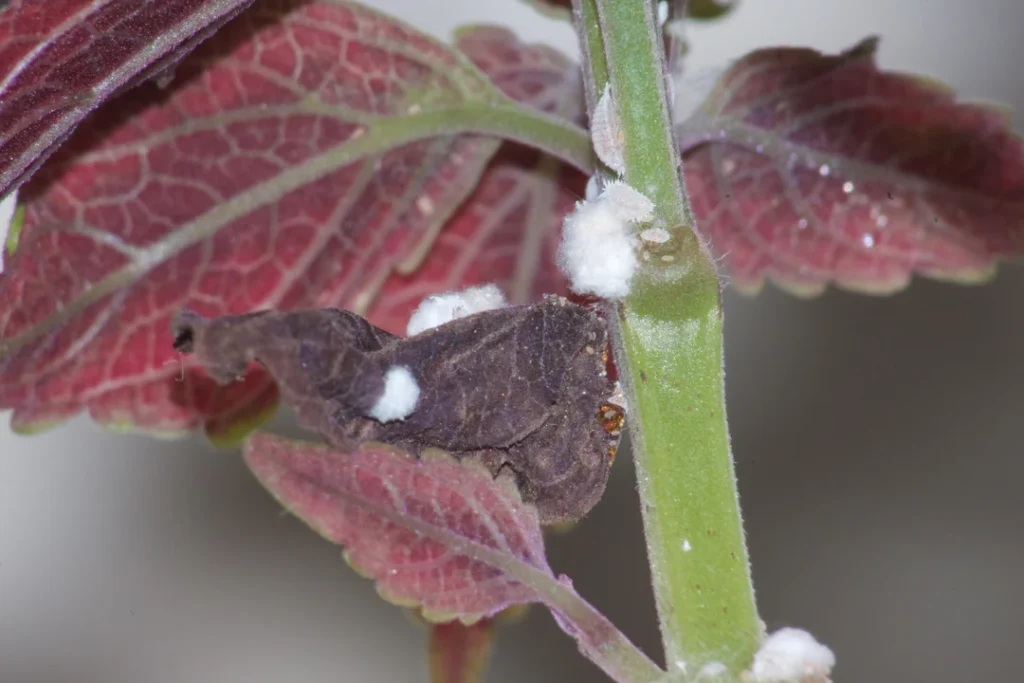
Keep an eye out for spider mites, mealybugs, and whiteflies, especially on the undersides of leaves where they like to hide.
Check your plant once a week. Catching a problem early makes it a five-minute fix instead of a whole ordeal. If you do spot something, insecticidal soap or neem oil handles most infestations.
Spray thoroughly, cover both sides of the leaves, and repeat every week or so until they’re gone. Good airflow around the plant helps keep pests from moving in in the first place.
Frequently Asked Questions
Can coleus really live indoors year-round, or is it just for overwintering?
Both work. Some people bring plants in just to save them through winter, then move them back outside in spring.
Others keep coleus as a permanent houseplant, and it’ll happily grow indoors for years with the right light and care.
Why is my coleus losing its bright color indoors?
It’s almost always light-related. Too much direct sun bleaches the color out, while too little light causes the plant to lose vibrancy and stretch out.
Adjust the spot and watch how the new growth responds over the next couple of weeks.
My coleus looks leggy and sparse. Can I fix it, or should I start over?
You can absolutely fix it. Coleus tolerates hard pruning well. Cut the leggy stems back by a third or even half, and fresh growth will fill in within a few weeks.
If the plant is really far gone, taking cuttings and starting fresh is often faster than trying to rehab it.
Do I need a grow light for indoor coleus?
Not always, but it helps a lot in winter when natural light is weaker and days are shorter.
If your plant starts fading or stretching once the seasons change, a basic grow light will make a noticeable difference.
How do I know if I’m overwatering versus underwatering?
Wilting can mean either one, which is what makes it confusing. Underwatered leaves feel dry and crisp before they droop.
Overwatered leaves stay soft and mushy, and the soil feels wet days after you last watered. When in doubt, check the soil with your finger before adding more water.
Final Thoughts
Coleus doesn’t need a green thumb, just a little consistency.
Get the light right, keep the soil evenly moist, and pinch it back when it starts to stretch, and you’ll have a plant that looks just as good in January as it did in July.
Once you’ve got the rhythm down, you might find yourself starting new cuttings every fall just so you never have to buy another one.