10 Creative & Stunning Front Yard Flower Bed Ideas for Texas

Texas summers are brutal on plants. I’ve killed my share of flowers before figuring out what actually survives here. You don’t need fancy tools or a design degree for this.
Just the right plants in the right spot. Your yard already has clues about what’ll work. Sun, soil, water access.
All of it matters. So let’s get your front yard looking amazing instead of embarrassing.
10 Stunning Front Yard Landscaping Ideas for Texas
1. Try A Native Pocket Prairie
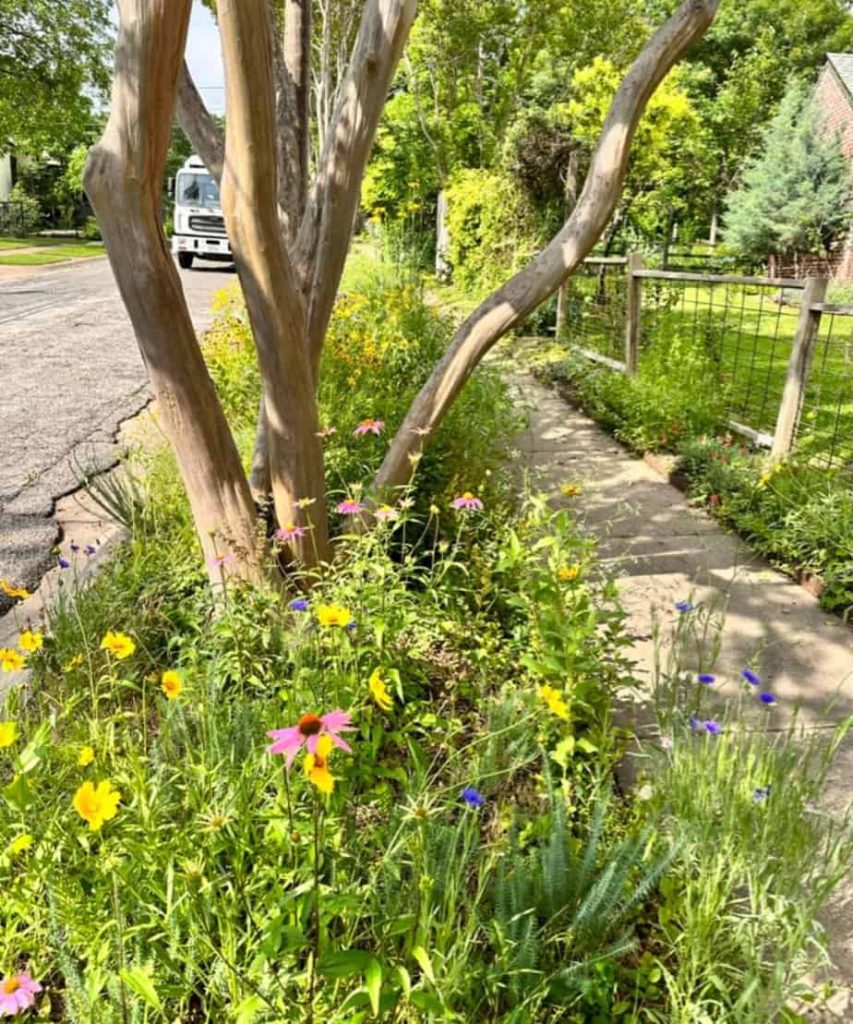
Got a weird strip of grass near your sidewalk? I bet it’s struggling right now. Rip it out and plant a pocket prairie instead. Think asters, goldenrod, sunflowers, milkweed, and coreopsis.
These plants grew up tough. They don’t need babysitting once they’re settled in. I’ve seen homeowners in Dallas turn a whole 60-foot strip into this kind of bed.
The result? Butterflies everywhere. Bees too. And barely any watering required, even in August.
Asters bring color in fall when everything else fades. Milkweed feeds monarch caterpillars, so you’re basically running a butterfly nursery. Coreopsis just won’t stop blooming.
Also read: 15 Best Texas Shade Plants You’ll Love to Have in Your Yard
2. Mix Fast Color With Steady Structure
Here’s a mistake I made early on. I planted only annuals, and my bed looked empty by midsummer. Don’t do that.
Pair quick-color annuals like angelonia, zinnia, pentas, scaevola, petunia, and vinca with perennials that stick around longer.
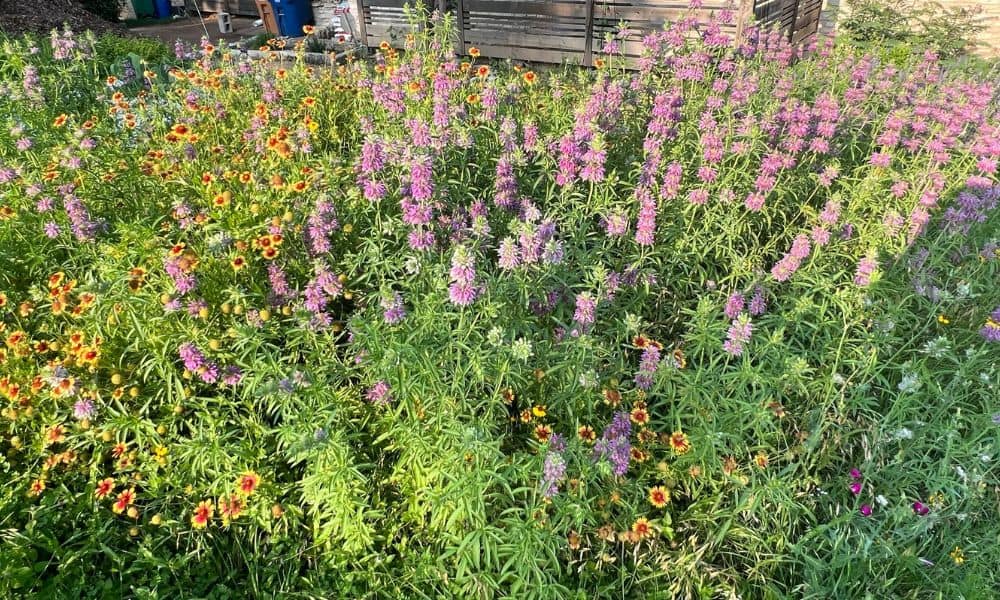
Group your plants in clusters. Trust me on this one. Scattered single plants look accidental, but clusters look like you meant to do that.
Pick your colors before you plant, too. Either stick with one palette or choose colors that actually complement each other. Random colors thrown together rarely work, no matter how much you love each individual flower.
3. Build A Rock Garden With Yucca And Cactus
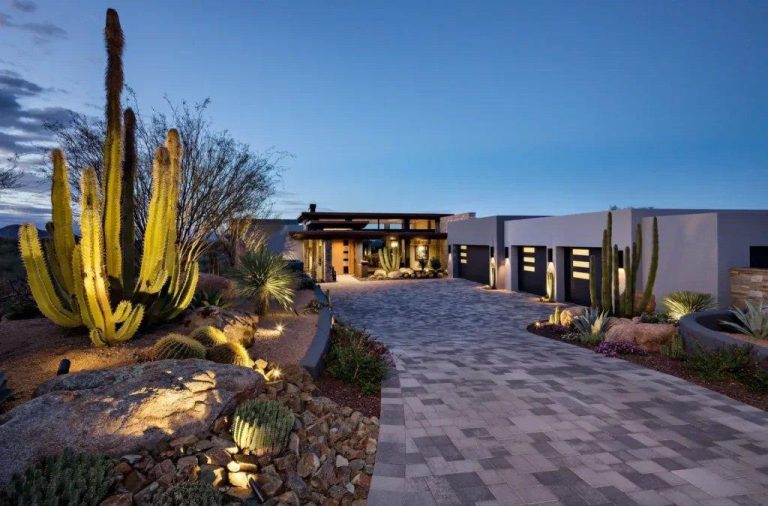
Does your front yard bake in full sun all afternoon? Mine does. That’s exactly where red yucca, twistleaf yucca, and prickly pear shine.
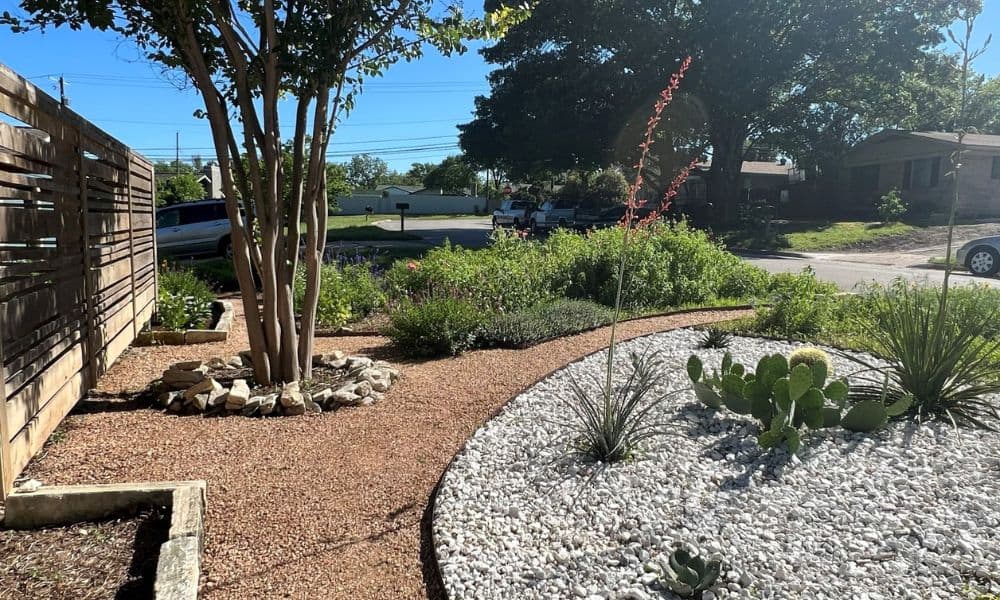
I’ve seen Austin yards built entirely around these three, and they look incredible with almost zero effort. Rocks trap heat, which sounds harsh, but these plants love it. Your water bill will thank you too.
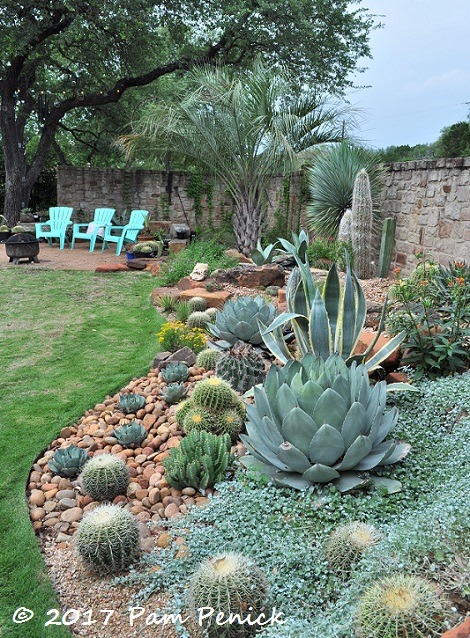
Placement makes a real difference here. Put your yuccas toward the back since they grow tall. Let prickly pear sprawl out front where it can soak up all that sun.
4. Add A Coral Honeysuckle Arch
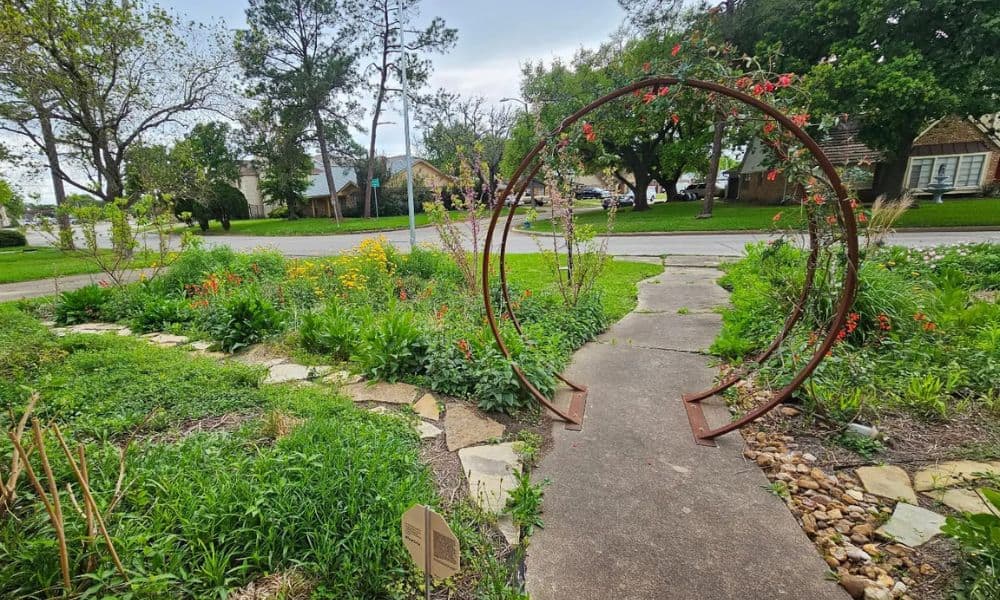
Want a front yard feature that stops people walking by? Try a coral honeysuckle vine trained over an arch. I’ve seen this done in Houston yards, and it never fails to catch attention.
Hummingbirds love the tubular red-orange blooms. You’ll spot them zipping around all spring and summer.
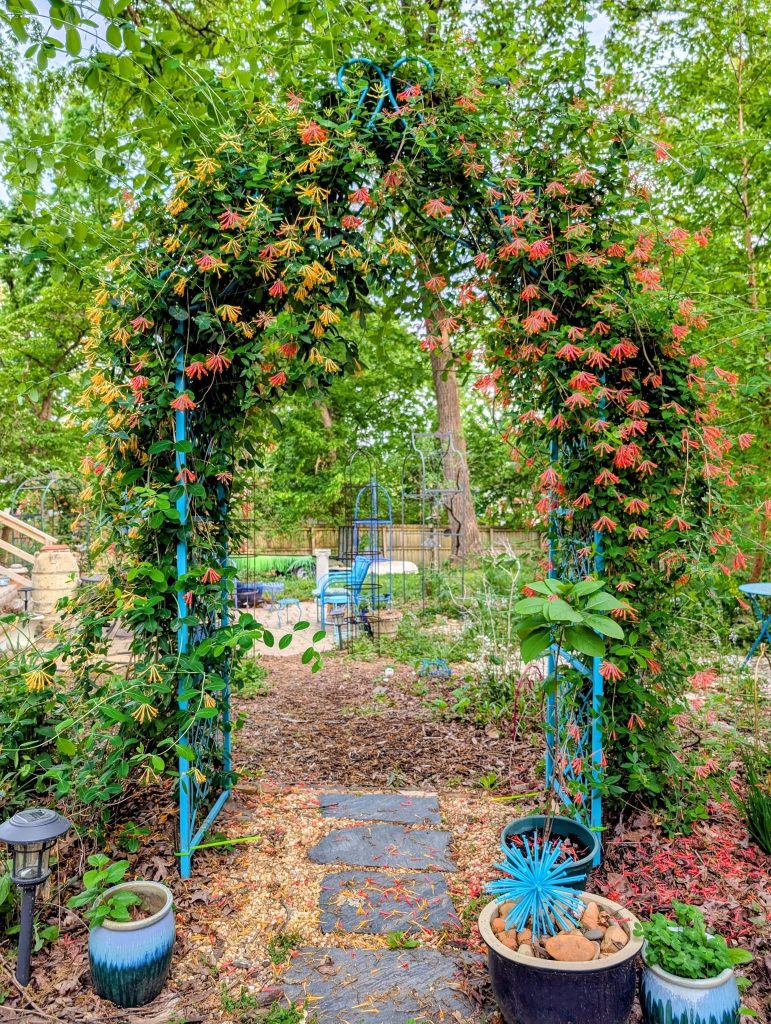
Keep the pathway underneath clear and defined. A simple stone or mulch path works fine. Pair the arch with coreopsis patches nearby for extra color without stealing the spotlight.
5. Go Dense With A Hill Country Mix
Some yards just want to be packed full of plants. If that’s you, lean into it.
Try blackfoot daisy, Mexican feather grass, and yucca planted close together, curb to curb. San Antonio gardeners do this a lot, and honestly, it looks lush without needing much water.
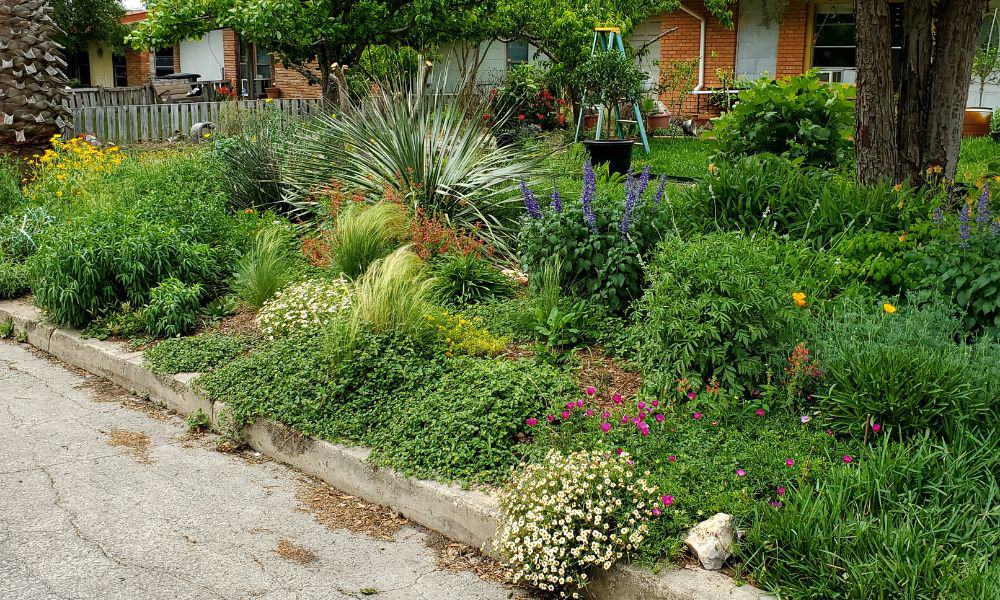
Feather grass adds movement every time wind passes through. Blackfoot daisy fills gaps with tiny white blooms most of the year. Yucca gives you height and structure so the bed doesn’t look flat.
6. Layer In Autumn And Tropical Sage
Craving color that actually brings wildlife back to your yard? Autumn sage, tropical sage, and Gulf penstemon do exactly that.
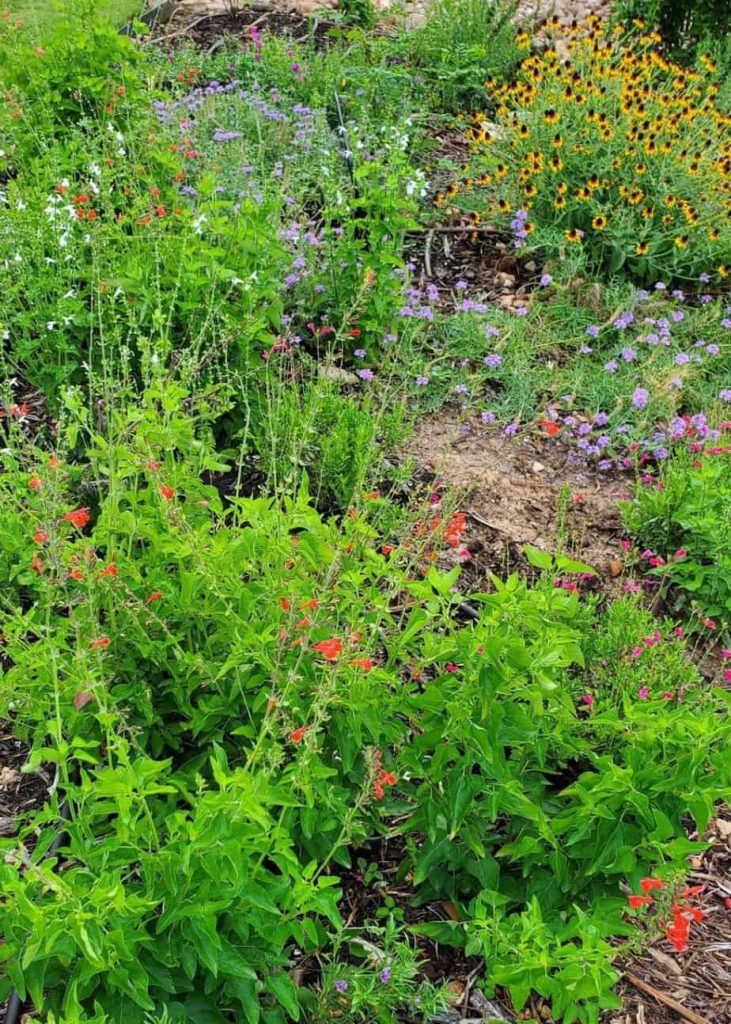
I’ve talked to a gardener near New Braunfels who added these and started seeing hummingbirds, painted buntings, and all kinds of pollinators within a season.
Frogfruit works well as a low ground cover underneath. It spreads fast and chokes out weeds for you. Prairie verbena adds another low layer of purple blooms that bees can’t resist.
7. Try A Japanese-Inspired Fusion Bed
Ever seen a front yard that mixes Texas plants with an Asian garden feel? I love this combo.
Add a Japanese stone lantern as your focal point, then surround it with asparagus fern for that dense green texture.
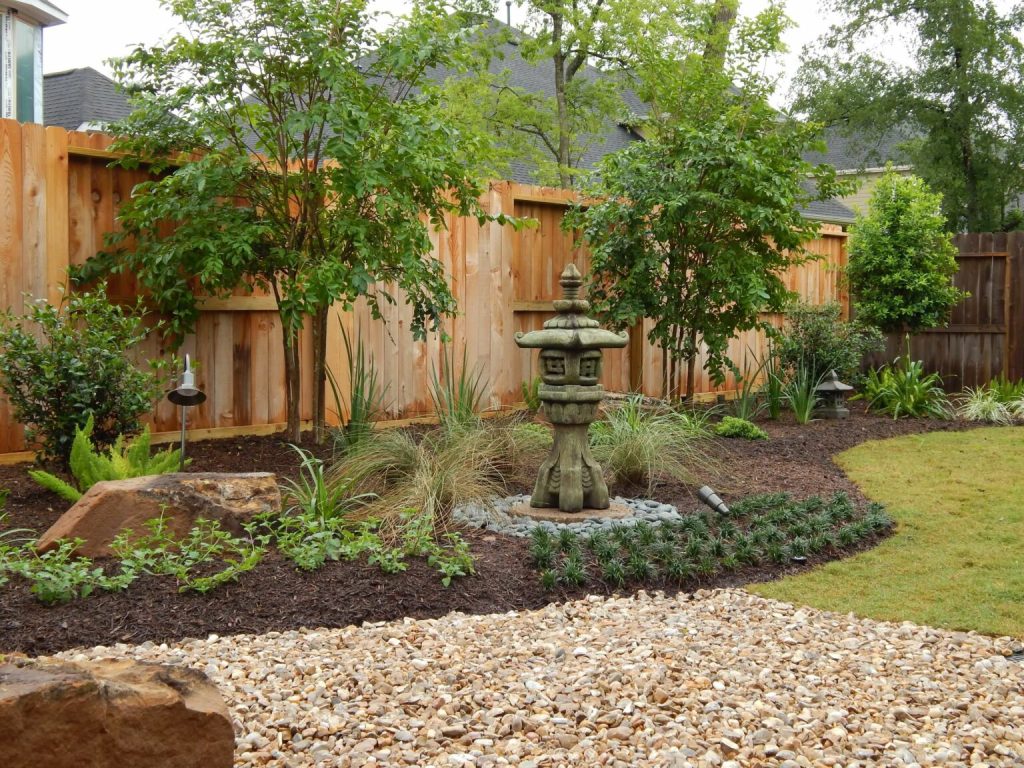
A Sugar Land gardener I read about built his whole entry this way, and it looks calm without feeling boring.
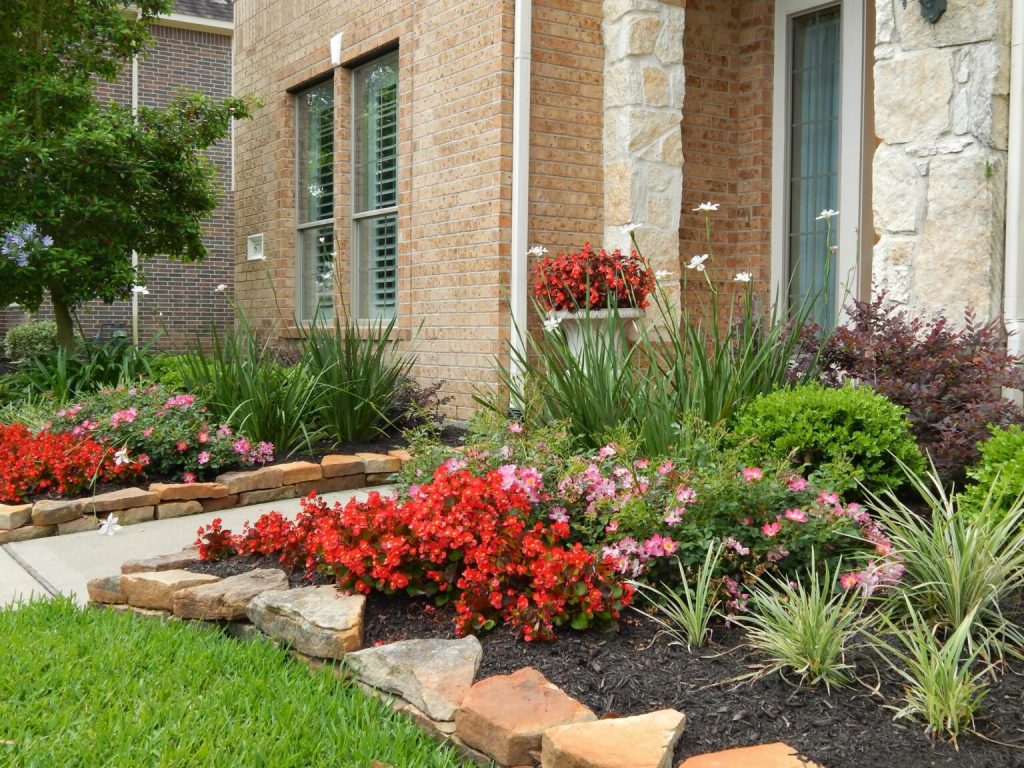
Begonias work great here too. They bloom nonstop and fill in color without much fuss. Snapdragons add height and cool-season color when everything else slows down for winter.
8. Sculpt A Spiral Juniper Accent
Junipers already handle Texas heat like champs. But you can take it further and prune one into a spiral shape. It sounds fussy, I know.
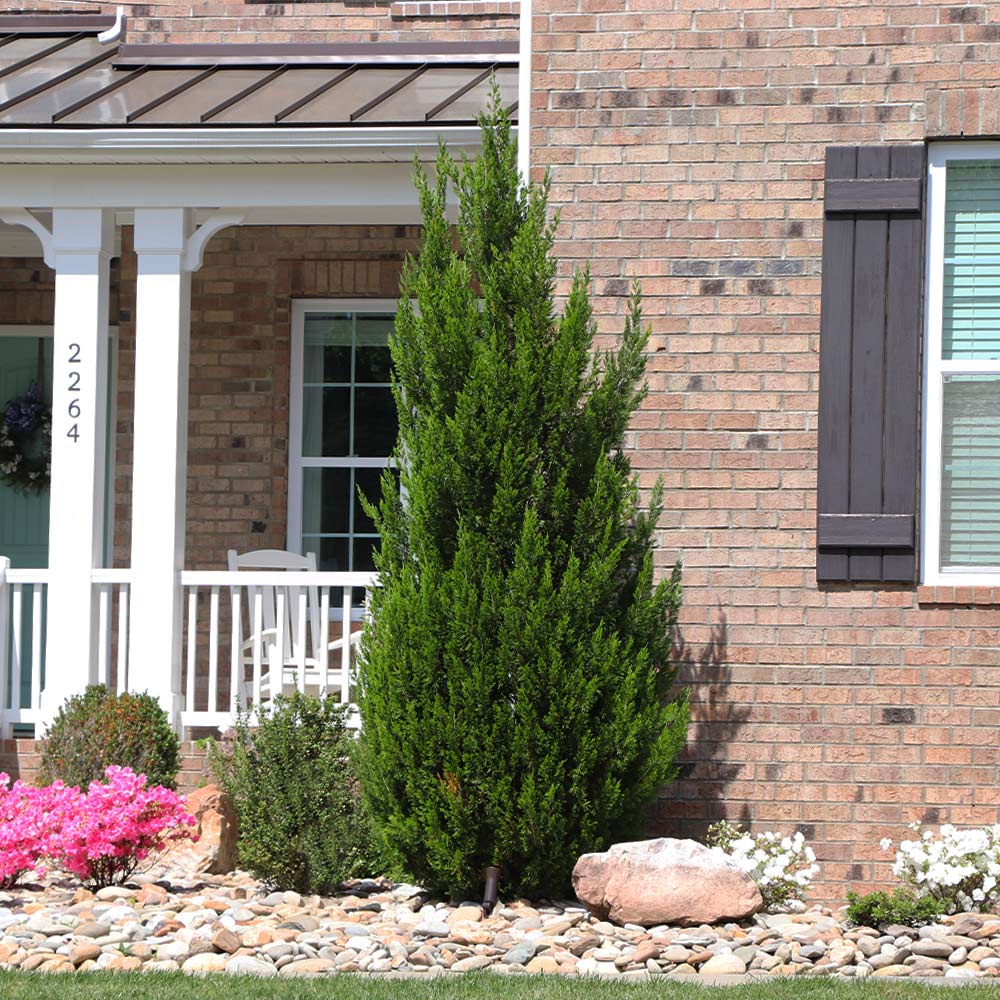
Still, one well-placed spiral juniper near your entrance turns a plain bed into something people actually notice.
You’ll need to trim it a few times a year to keep the shape clean. That’s the only real catch. Pair it with low mulch and simple edging so the juniper stays the star of the show.
9. Blend Formal Pavers With A Grass Path
Do you want structure but not something too stiff? Set pavers directly into your lawn near the flower bed. This creates a formal stone walkway that transitions naturally into an informal grass path.
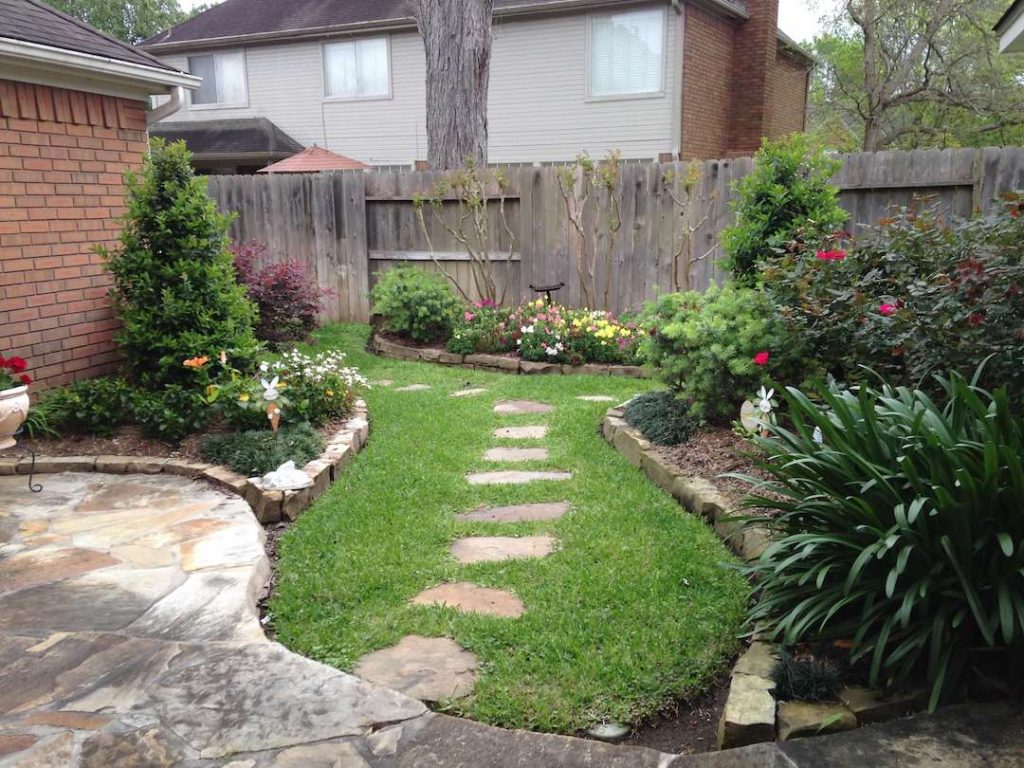
I think this trick works especially well for older Texas homes with a lot of straight lines already.
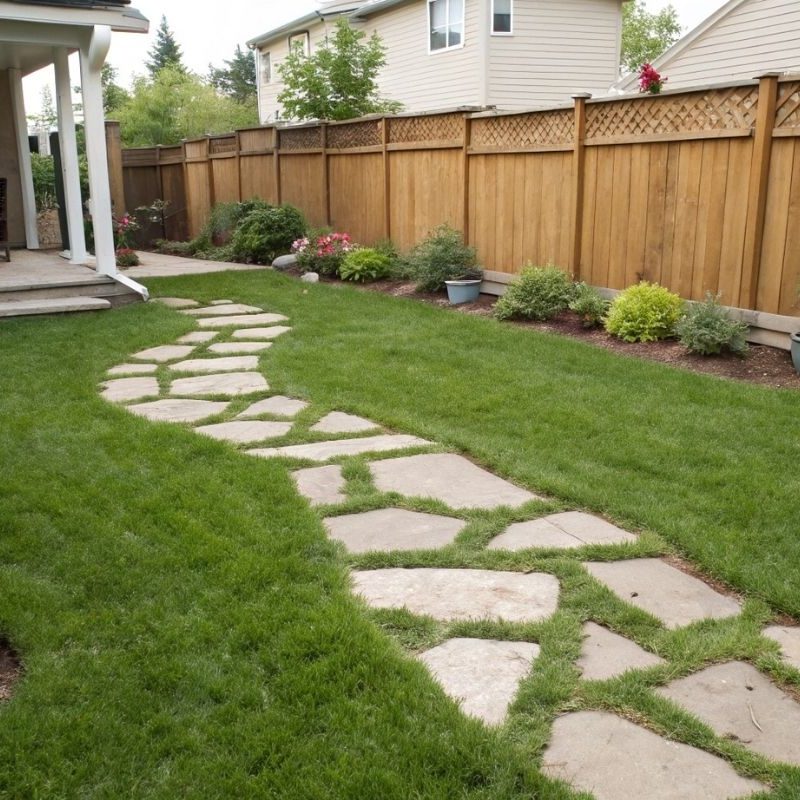
Keep your flower bed edges clean where they meet the pavers. Rock or metal edging does the trick. Snapdragons or begonias along the path add color without blocking foot traffic.
10. Convert Your Whole Yard, One Section At A Time
Overwhelmed by the idea of redoing everything at once? Don’t be.
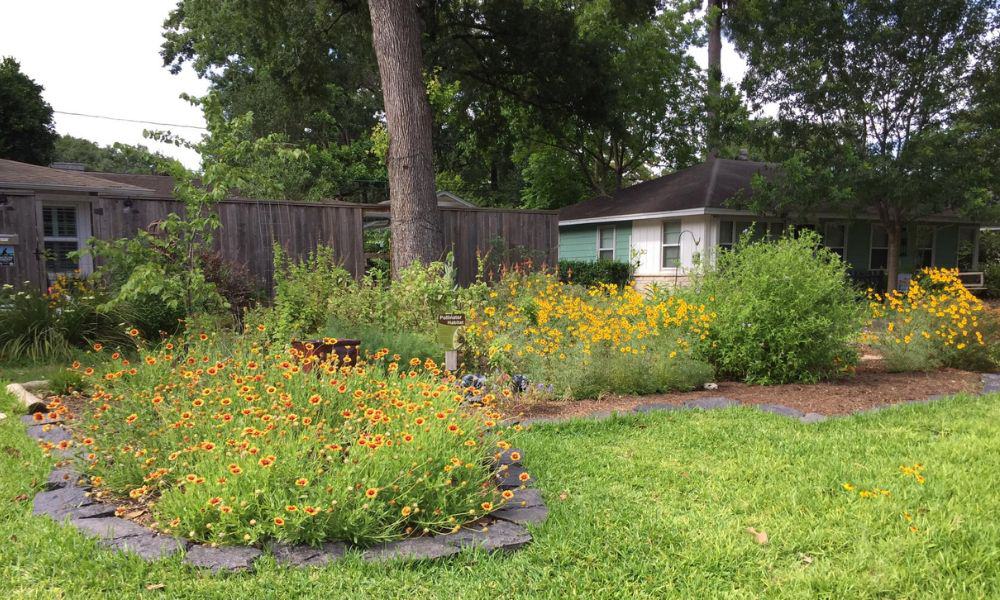
I’ve watched a Houston gardener (Gina) transform her entire yard using cardboard, compost, and mulch, section by section, over a few seasons.
She ended up with over 30 native species and never touched a shovel for sod removal.
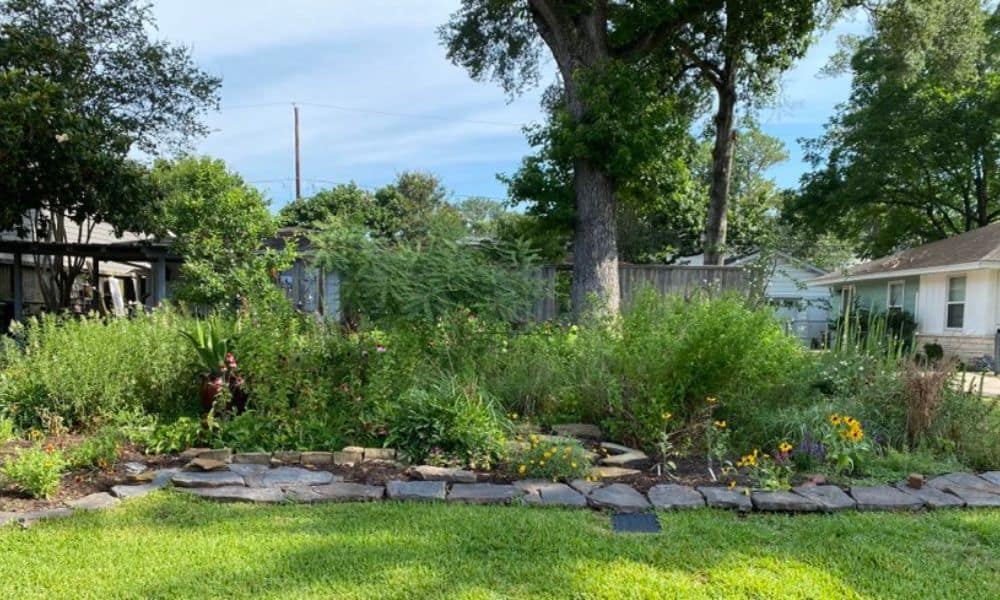
N.B You can follow along with Gina’s gardening adventures and Seeking Pollinators on Instagram!
Bringing It All Together
10 ideas, one goal: a front yard that actually fits Texas weather. Native plants save water. Clusters look better than scattered singles. Mulch beats bare rock for plant health. Edging keeps everything looking sharp instead of messy.
Pick one idea that matches your yard’s sun and space. Start small if you’re nervous. I promise your first bed won’t be your last.
Texas gardens reward patience, and your front yard will thank you every single season.