12 Best Fall Shrubs for Stunning Front Yard

Bare, brown, and boring. That’s what my front yard looked like every October until I discovered fall shrubs. Now leaves blaze red, berries draw in cardinals, and neighbors slow their cars just to look.
You don’t need a green thumb to pull this off either. Most of these shrubs practically take care of themselves once you get them in the ground.
I’ve tested plenty over the years, and some flopped while others turned into absolute showstoppers.
This list only includes the winners, the shrubs that earned their spot through actual fall color, not just a nice description on a plant tag. Grab your gloves, because your front yard is about to get a serious upgrade this season.
12 Fast-Growing Shrubs for Autumn Front Yard Landscaping
1. Oakleaf Hydrangea
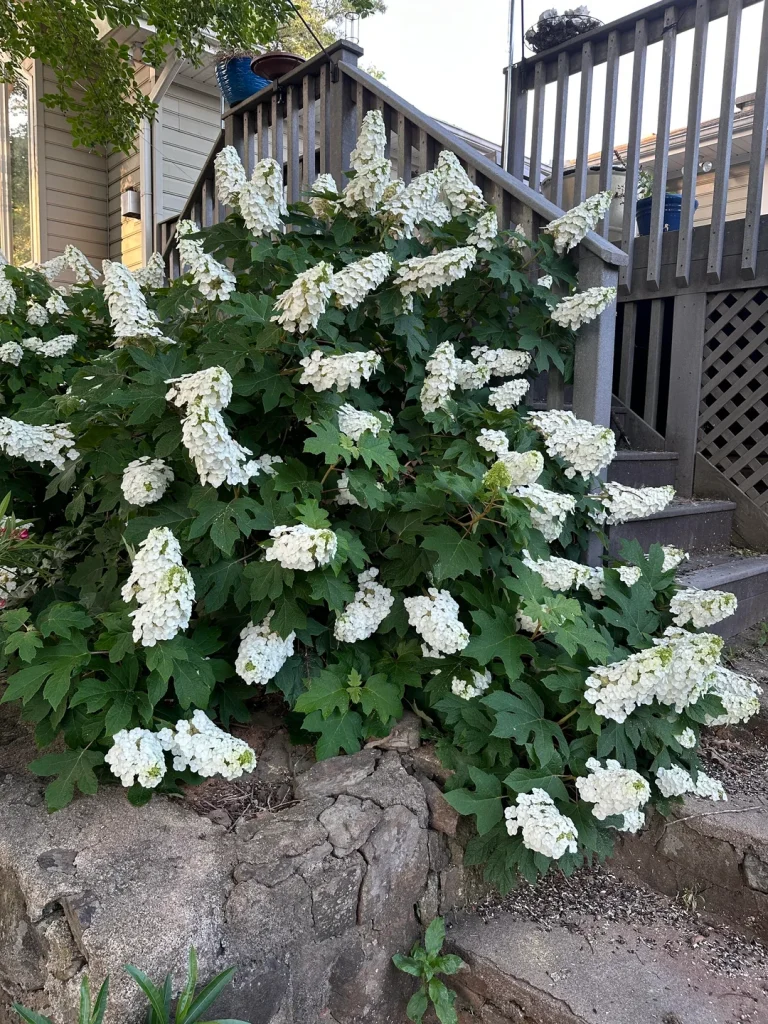
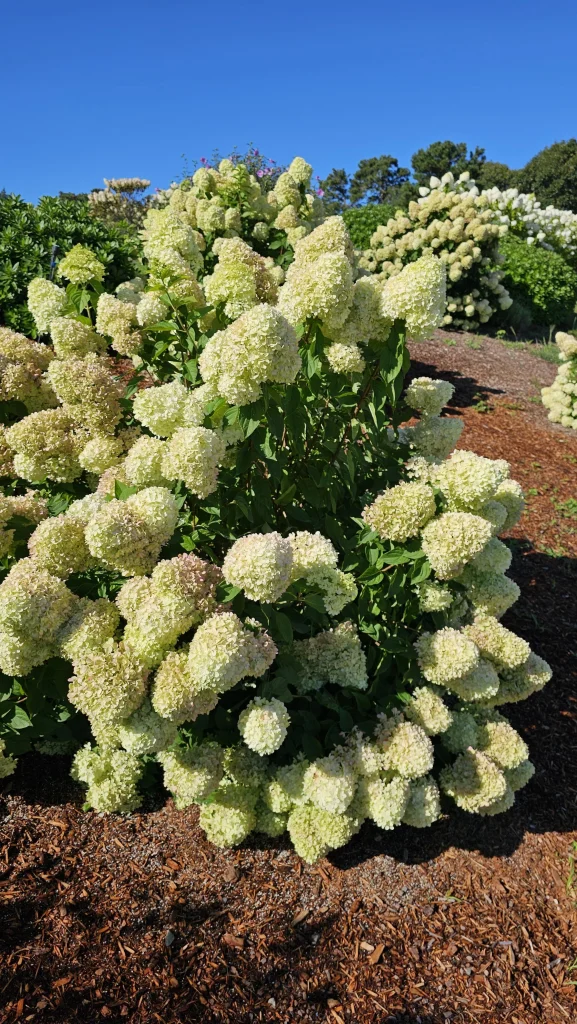
Picture leaves shaped like giant oak leaves turning deep red and purple. That’s oakleaf hydrangea doing its fall thing.
Summer blooms fade into soft pink and tan, so you get color long before autumn even starts.
I planted mine right by my porch steps, and the peeling cinnamon bark keeps the view interesting all winter. Just keep pets away from the leaves, since they’re toxic if chewed on.
Plant Overview
- Sun: Partial sun
- Soil: Rich, well-draining, slightly acidic soil
- Zones: 5 to 9
Also read: 15 Fall Flowers to Plant in August for a Garden
2. Smokebush
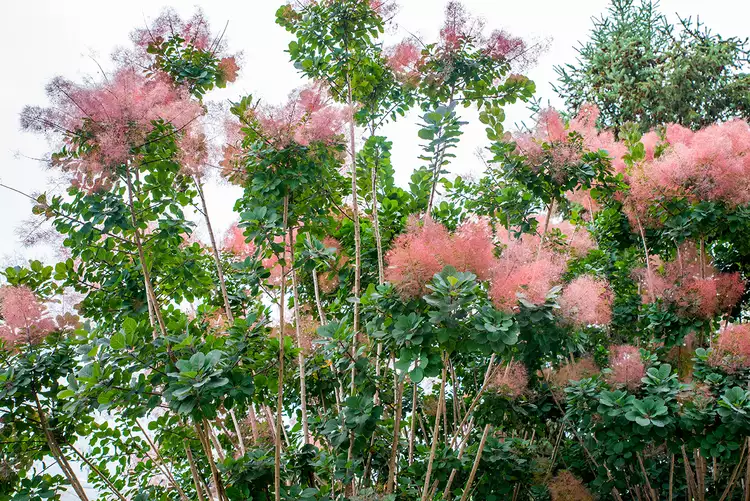
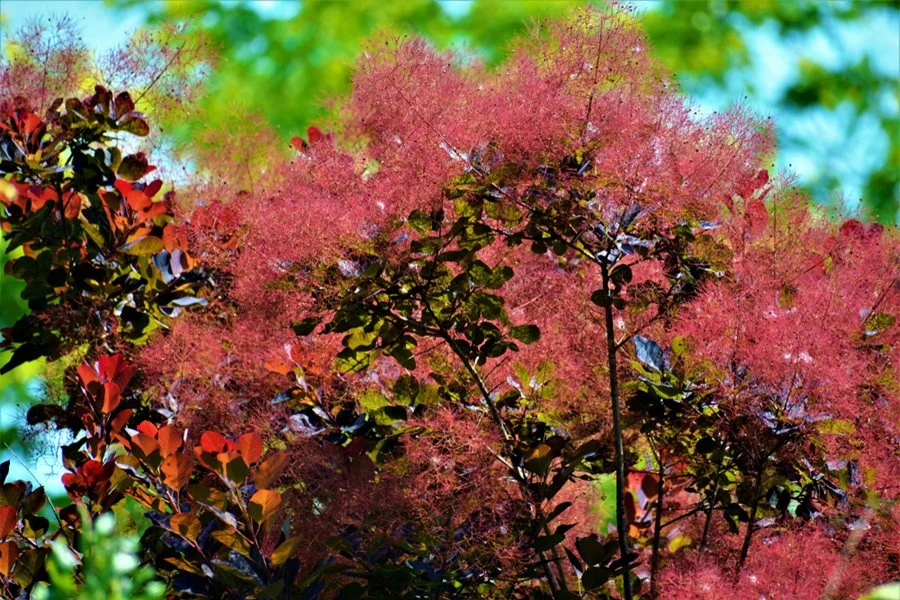
You’ll notice the smoky plumes before anything else. They float above this shrub all summer like little clouds. Fall flips the script though, and leaves turn orange, red, or deep purple depending on the variety.
My neighbor grows ‘Grace’, and hers shifts from plum-red to fiery orange practically overnight.
Give this one full sun and some space, since it can reach fifteen feet tall.
Plant Overview
- Sun: Full sun
- Soil: Well-draining soil (acidic, neutral, or alkaline)
- Zones: 4 to 9
Read more: 15 Shade-Loving Perennial Flowers for Fall
3. Arrowwood Viburnum
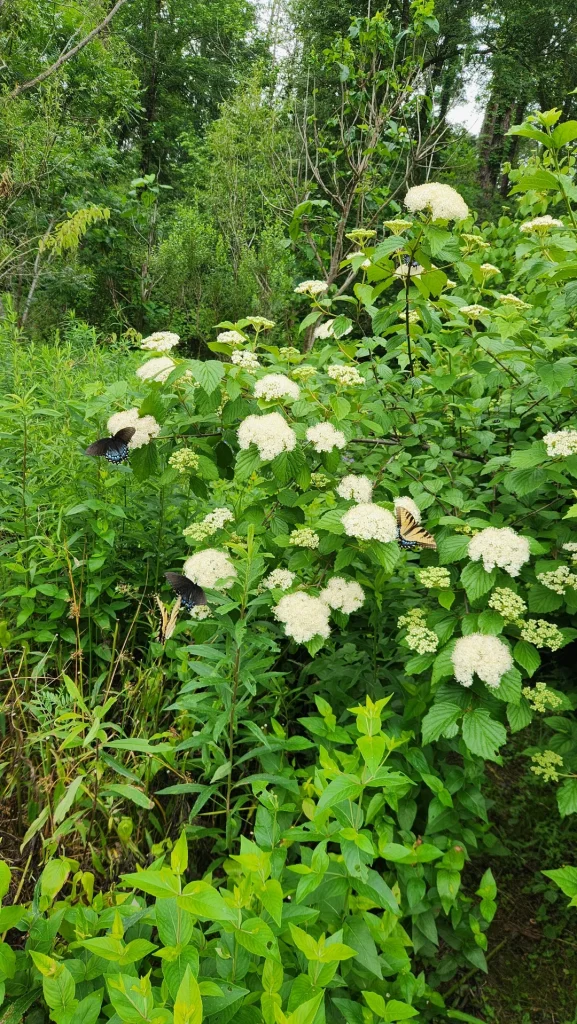
Birds love this shrub, and once you see the berries, you’ll understand why. Blue fruit clusters show up right as the leaves turn rich red.
I like the ‘Red Feather’ variety specifically, since it colors up more reliably than a standard arrowwood.
Sun tolerance stays flexible here, so full sun or partial shade both work fine.
Plant Overview
- Sun: Full sun to partial shade
- Soil: Moist, well-draining, neutral to acidic soil
- Zones: 2 to 8
Also read: 14 Inspiring Front Yard Fall Landscaping Ideas
4. Kaleidoscope Abelia
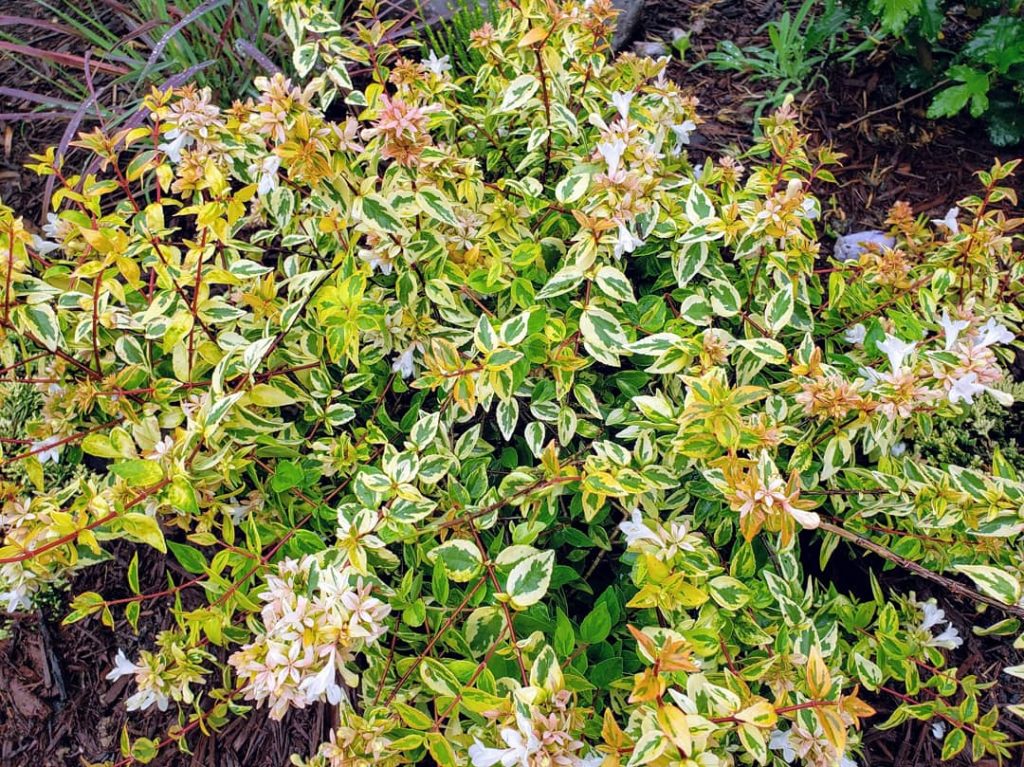
Look closely and you’ll spot something unusual. The outer edges of each leaf glow orange and red while the center stays green.
I love how this shrub keeps its leaves year-round, since it’s evergreen and holds color even in cooler months. Pollinators show up for the small blooms too, so you get color and buzzing activity in one plant.
Give it partial to full sun and well-draining soil, and it stays fairly compact and easy to manage.
Plant Overview
- Sun: Full to partial sun
- Soil: Well-draining, slightly acidic soil
- Zones: 6 to 9
5. Dwarf Fothergilla
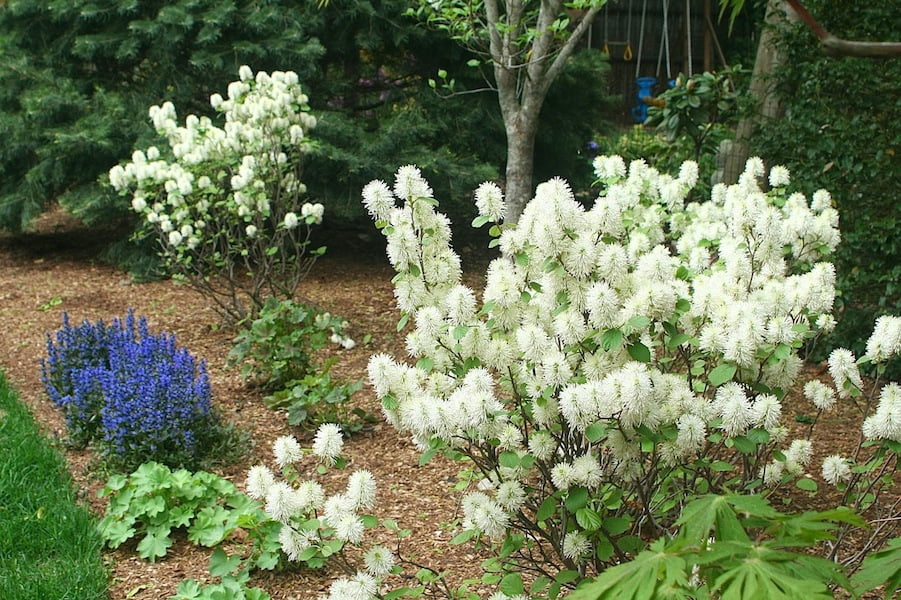
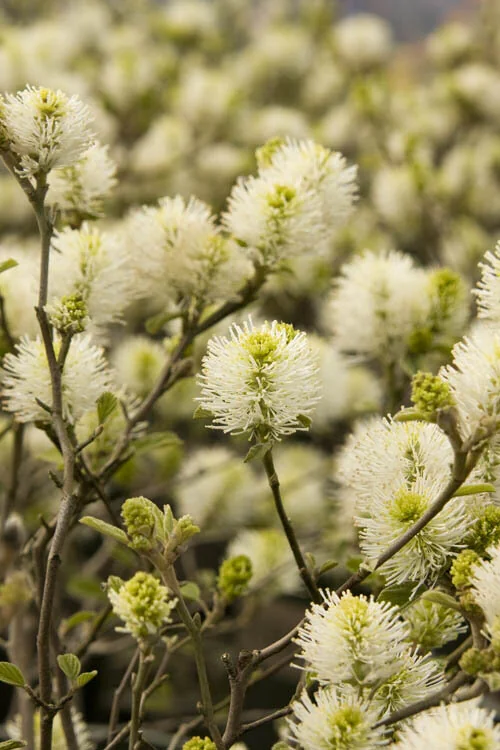
White bottlebrush flowers show up first in spring, but fall is when this shrub really earns its spot. Yellow, orange, and red hues take over the leaves, and each leaf seems to color differently.
You won’t need much space either, since dwarf fothergilla stays compact at just two to three feet tall.
I tucked mine along a walkway, and full sun brought out the boldest color by far. Moist, acidic soil keeps it happy through the growing season.
Plant Overview
- Sun: Full to partial sun
- Soil: Moist, well-draining, acidic soil
- Zones: 4 to 9
6. Virginia Sweetspire
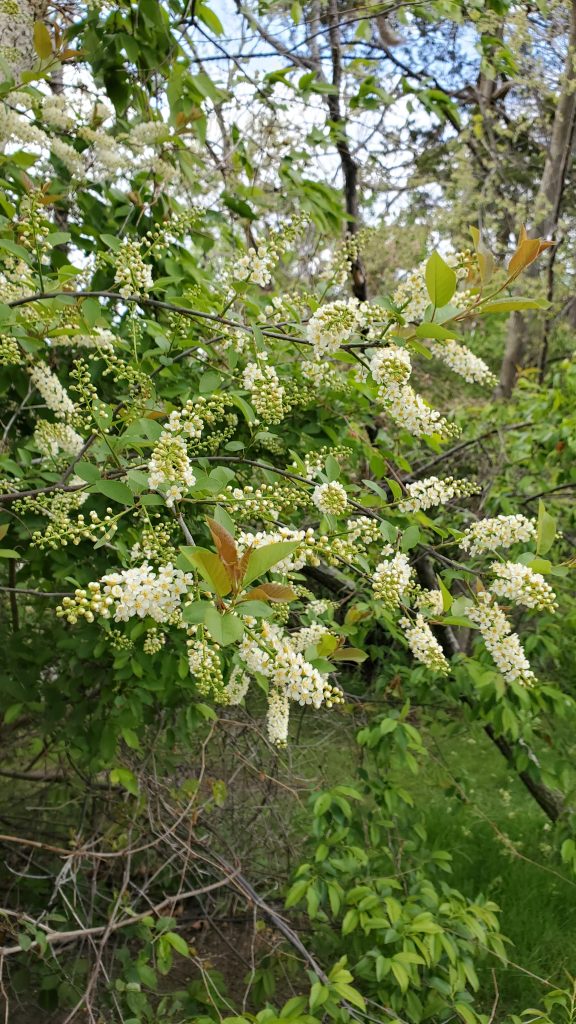
Fragrant white flowers dangle from this native shrub every spring, drawing in butterflies before fall even crosses your mind. Then autumn hits, and the leaves shift into red, orange, purple, and gold all at once.
That color sticks around longer than most shrubs on this list, often lasting well into winter. I appreciate how forgiving sweetspire is with wet soil, since it handles damp spots that other shrubs struggle with.
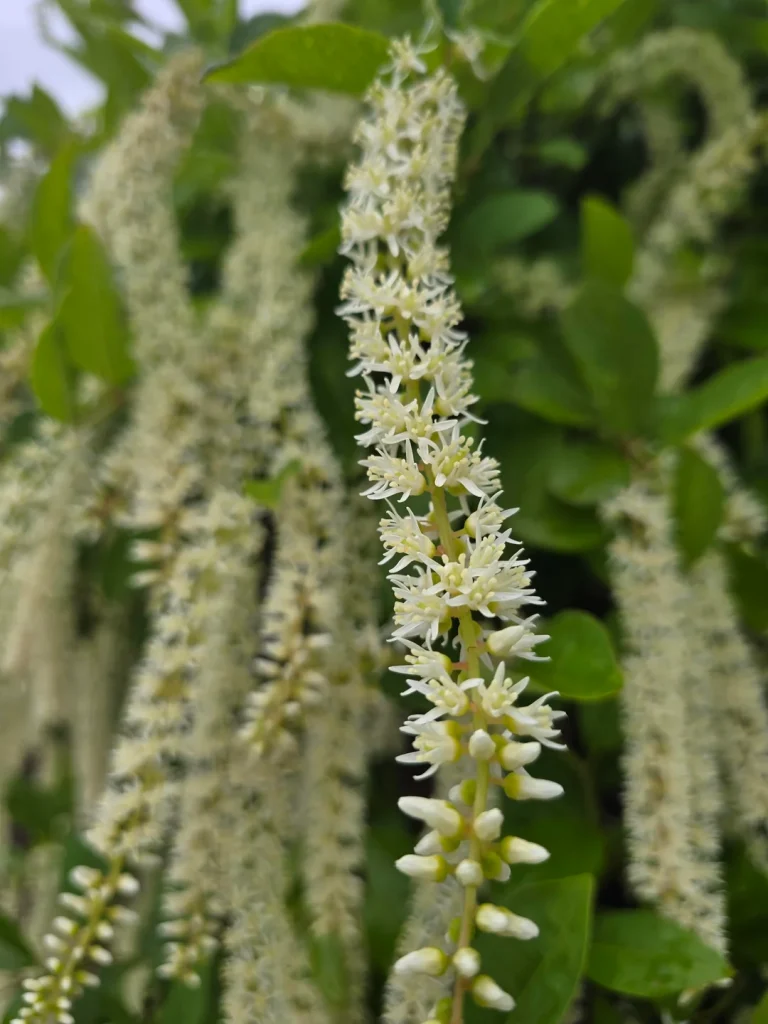
Try ‘Henry’s Garnet’ if you want a proven variety with reliable color.
Plant Overview
- Sun: Full sun to partial shade
- Soil: Moist, well-draining soil
- Zones: 5 to 9
7. Ninebark
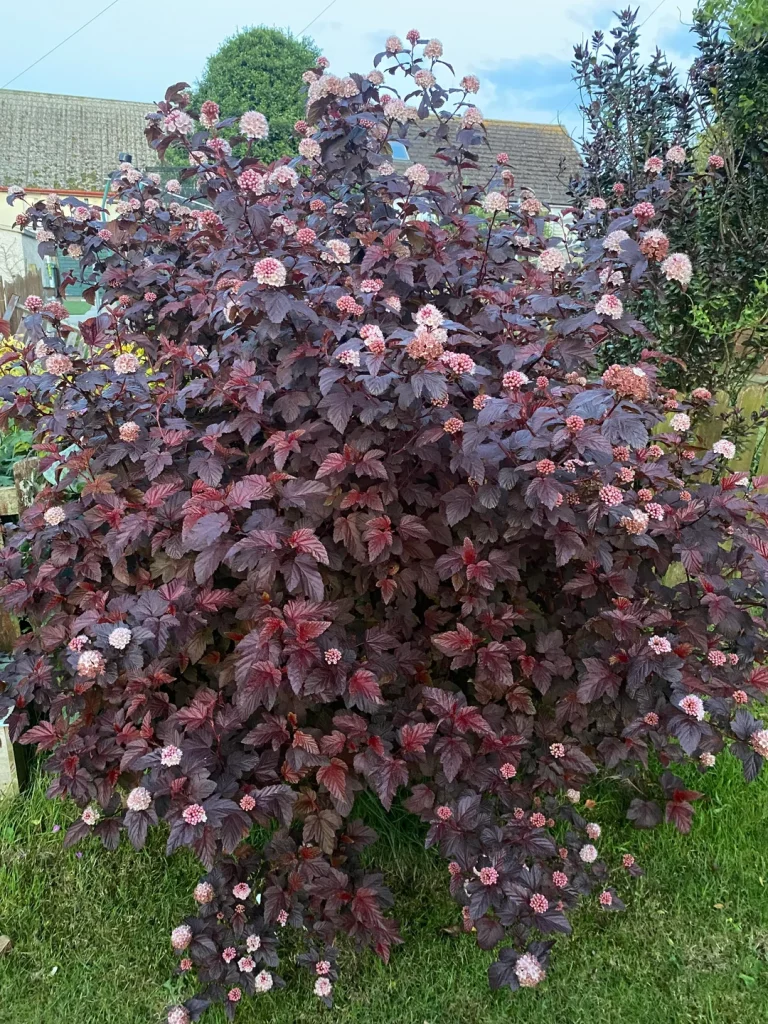
Peeling bark gives this shrub year-round texture, but fall brings out its best colors. Bronze and burgundy tones spread across the leaves as the season shifts.
You’ll also notice how fast ninebark grows, filling in gaps quickly if your front yard needs coverage. I trimmed mine back hard one spring, and it bounced back thicker within a few months.
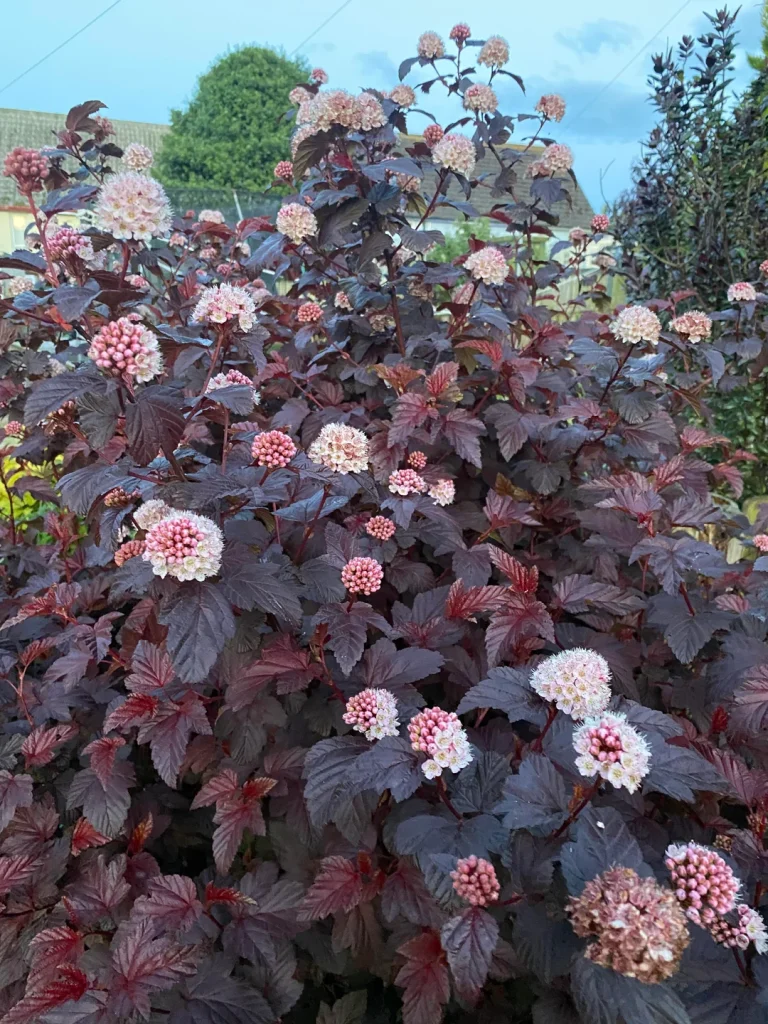
Full sun to partial shade both work well, and this shrub asks for very little maintenance overall.
Plant Overview
- Sun: Full sun to partial shade
- Soil: Acidic, clay, or loamy soil
- Zones: 4 to 8
8. Red Twig Dogwood
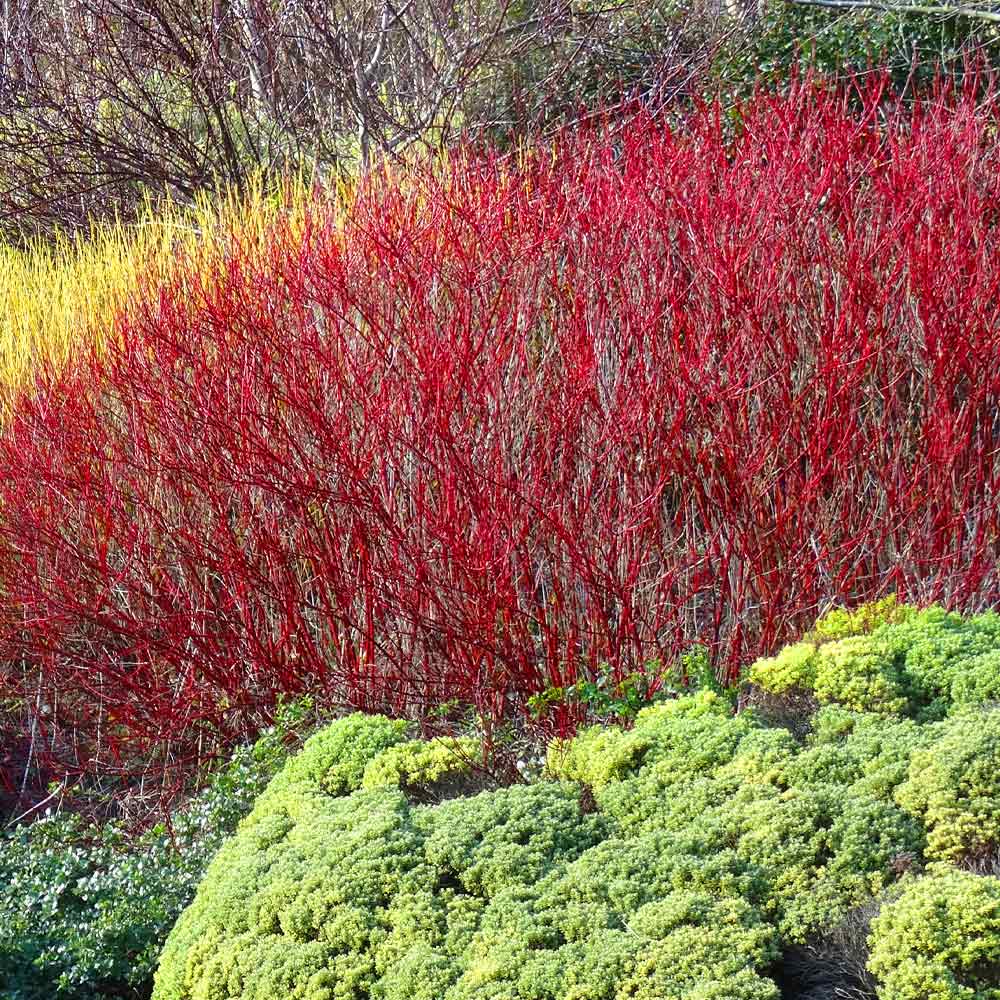
Winter interest starts here, but let’s talk fall first. Leaves turn a mix of rose and gold before dropping, and that’s when the real magic begins.
Bright red stems take center stage once the branches go bare, giving your yard color straight through the cold months.
I planted a row of these along my fence line, and they’ve become the first thing people notice in December. Moist, well-draining soil and partial shade keep this shrub thriving.
Plant Overview
- Sun: Partial to full sun
- Soil: Moist, well-draining soil
- Zones: 3 to 8
9. Tiger Eyes Sumac
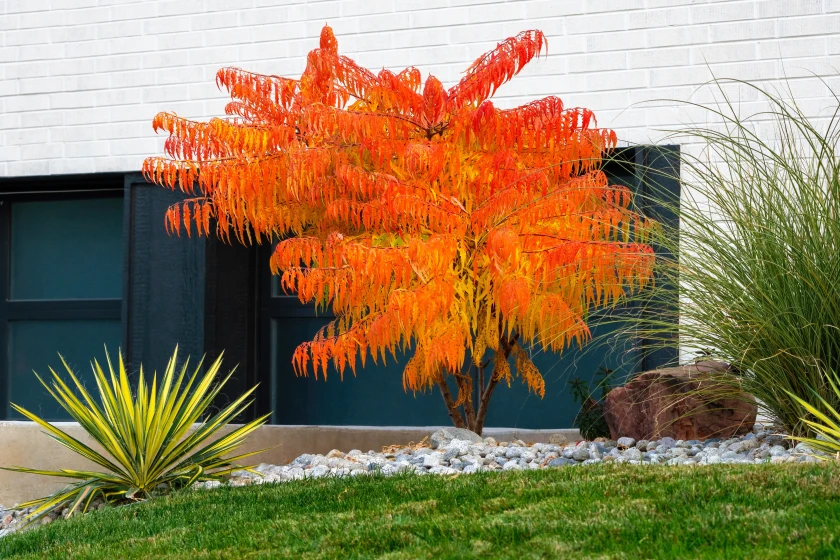
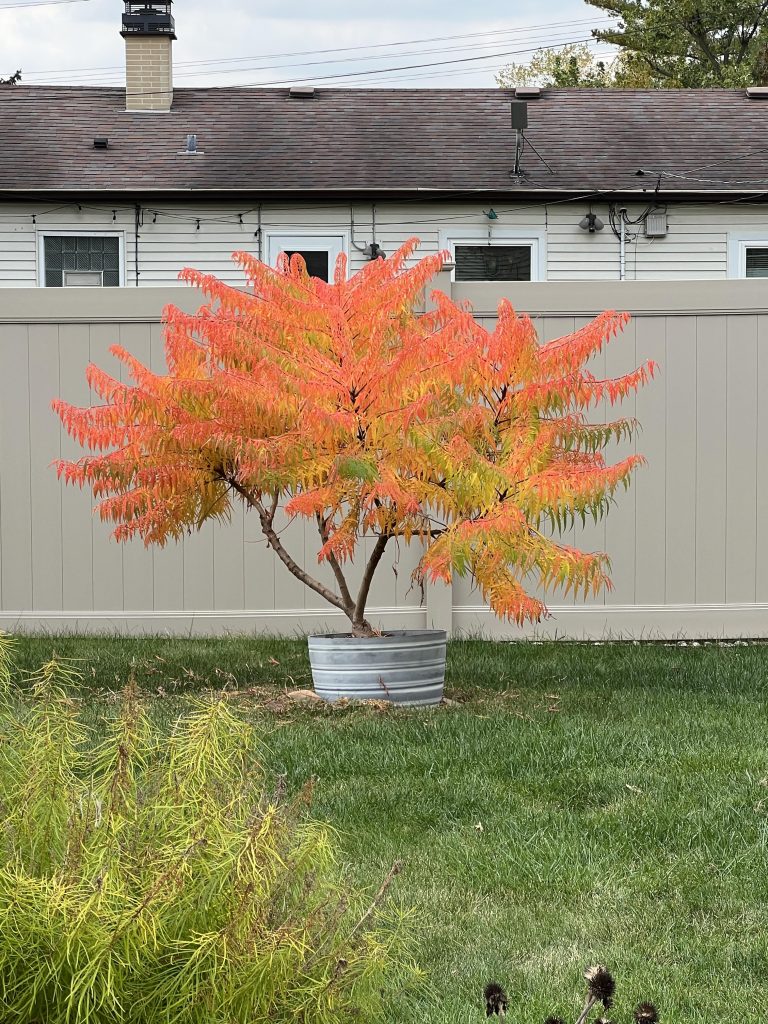
Chartreuse leaves open up in spring, and you’d never guess how much this shrub changes by fall. Purple stems support yellow summer foliage, then everything shifts toward red and orange as temperatures drop.
Unlike regular sumac, this dwarf variety won’t spread aggressively through your yard.
I love how compact it stays, since it tops out around six feet and never turns into a maintenance headache. Give it full sun for the most dramatic color transition.
Plant Overview
- Sun: Full sun
- Soil: Well-draining soil
- Zones: 4 to 8
10. American Beautyberry
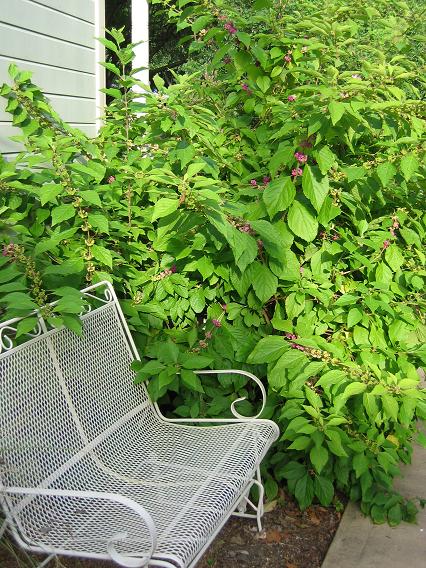
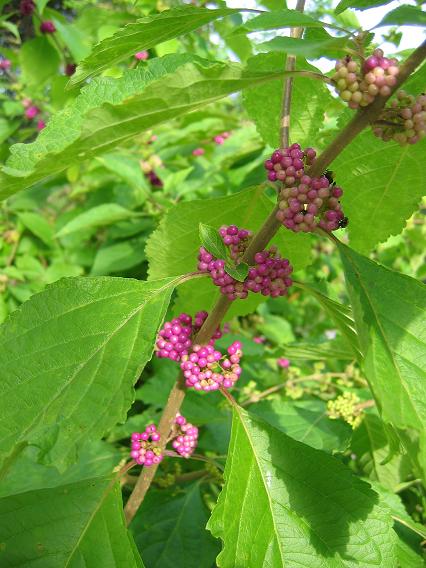
Purple berries steal the show on this native shrub, clustering along the stems in eye-catching bunches. Yellow leaves show up around the same time, creating a striking contrast against those iridescent berries.
Birds and wildlife flock to this plant, so you get movement and color in your front yard at once.
I added one near my mailbox, and it’s become a magnet for cardinals every October. Give it room to spread, since mature plants can reach eight feet wide.
Plant Overview
- Sun: Full sun to partial shade
- Soil: Moist, well-draining soil
- Zones: 6 to 11
11. Chokeberry
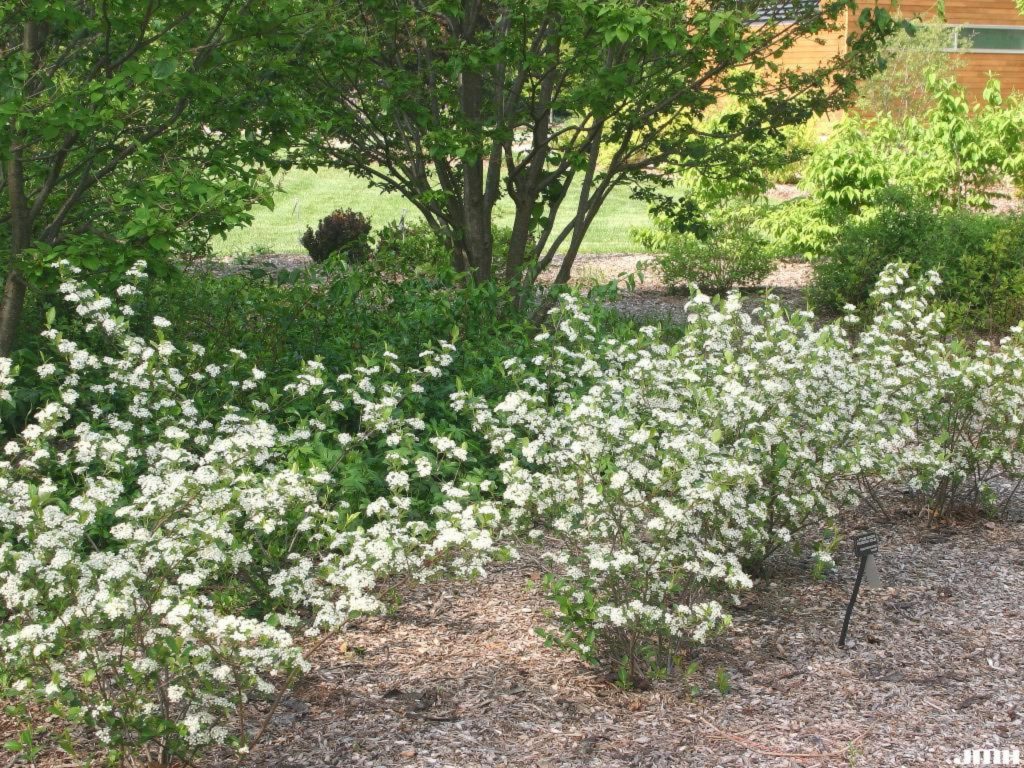
Red and black berries cling to the branches long after the leaves drop, feeding birds well into winter. Fall color hits hard on this shrub, with leaves turning deep shades of red before falling.
Wet soil never bothers chokeberry, which makes it a smart choice for low spots that other shrubs struggle in.
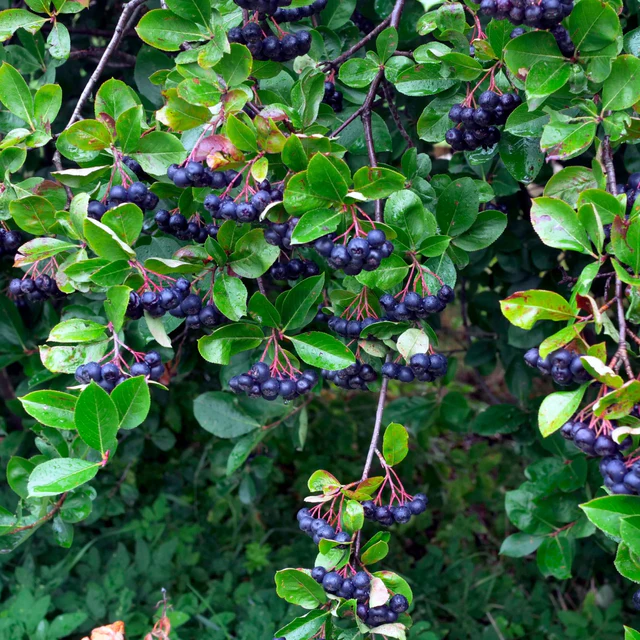
I planted mine near a downspout, and it’s thrived despite soggy soil every spring. Full sun brings out the richest berry color, though partial shade still works fine.
Plant Overview
- Sun: Full sun to partial shade
- Soil: Wet to dry, adaptable soil
- Zones: 3 to 9
12. Witch Hazel
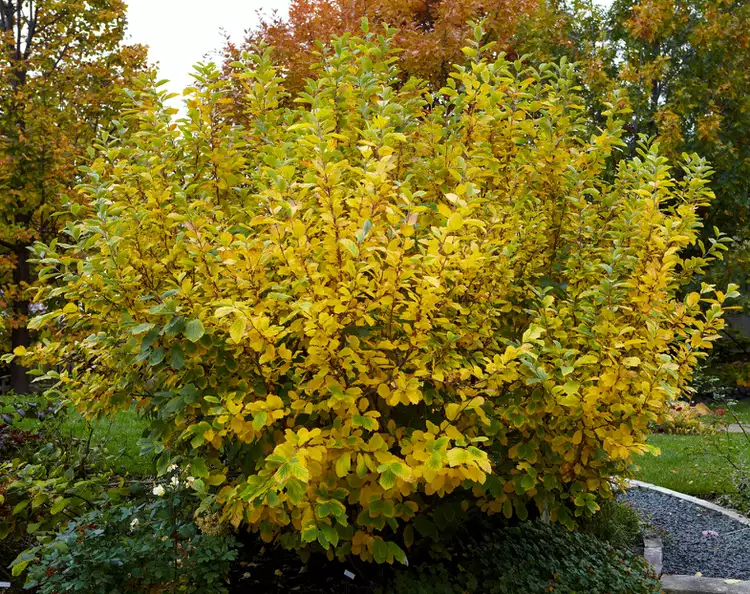
Fragrant yellow flowers bloom late in the season, often surprising gardeners who expect blooms to be finished by fall. Yellow foliage joins those flowers, creating a two-for-one show most shrubs can’t match.
Drought never seems to faze witch hazel once it’s established, and I’ve seen mine push through dry spells without wilting.
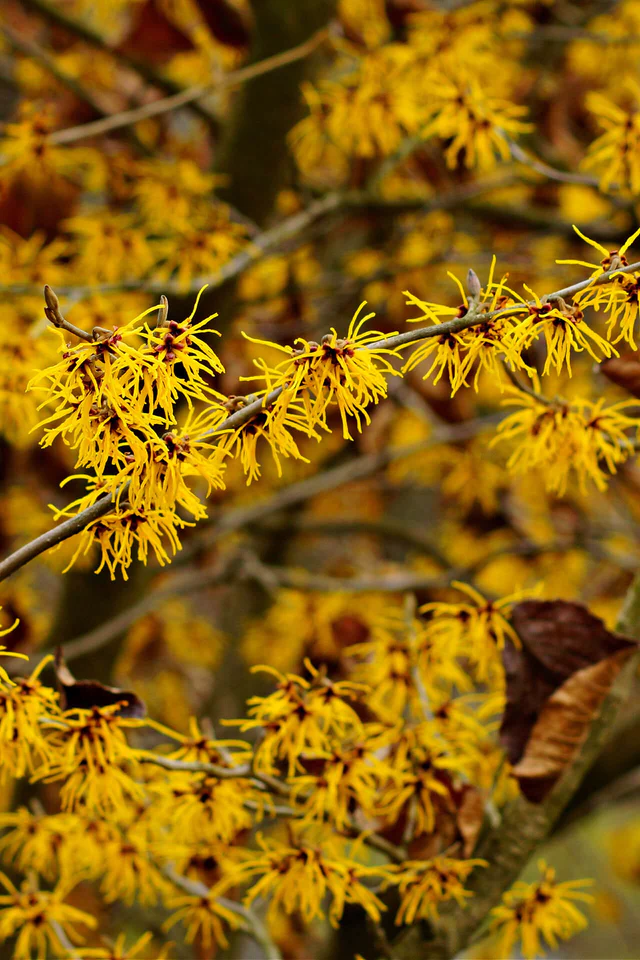
Sun or shade both suit this shrub, giving you flexibility for tricky spots in your front yard. Plant it where you’ll catch that late bloom, since the flowers show up when little else does.
Plant Overview
- Sun: Full sun to partial shade
- Soil: Well-draining soil, tolerates drought
- Zones: 3 to 9
Final Thoughts
Twelve shrubs, twelve totally different looks, and every single one earns its spot in a fall front yard. Berries pull in birds. Bark adds texture. Leaves turn colors you’d swear were painted on.
Pick two or three that match your soil and sun, plant them this fall, and watch your yard transform by the time the leaves drop.
Your neighbors are going to ask what you did differently. Just tell them you finally figured out what fall shrubs can do.