Companion Planting Ideas for Vegetables Garden (With Chart)

Good garden neighbors can save you from a lot of backyard drama. I learned that after planting basil near my tomatoes and watching fewer bugs bother the leaves.
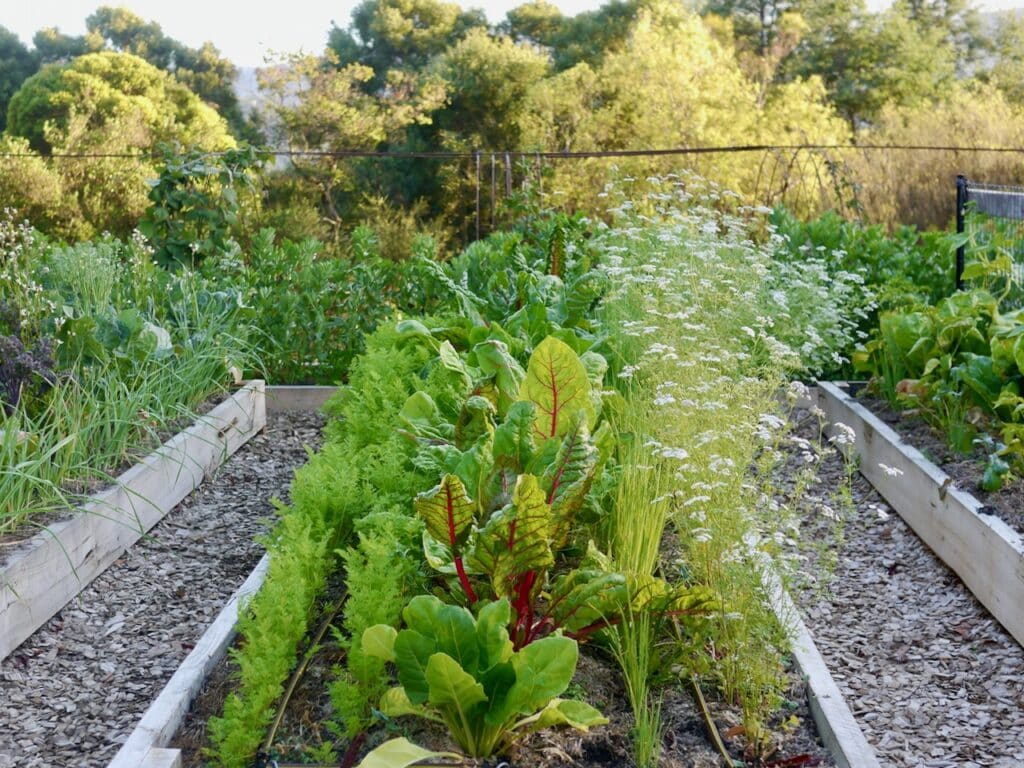
Companion planting vegetables gives each crop a helpful friend, like a flower that calls in bees or an herb that confuses hungry pests.
You do not need a huge garden or fancy tools.
Smart pairings, simple spacing, and a little trial can quickly turn a messy bed into a calmer, more productive vegetable patch.
What Companion Planting Vegetables Really Means
Gardeners use companion planting vegetables to grow crops near plants that help them in some useful way.
Plants may help by drawing pollinators, hiding crop smells from pests, giving shade, or sharing space well.
Bugs smell dinner before they see it. Flowers bring backup. Herbs can confuse pests with strong scents.
When you place the right crops near each other, you create a small team instead of a crowded mess fighting for light, water, and food.
That simple idea makes vegetable companion planting feel less like a rulebook and more like smart garden planning.
Why Vegetable Companion Planting Works
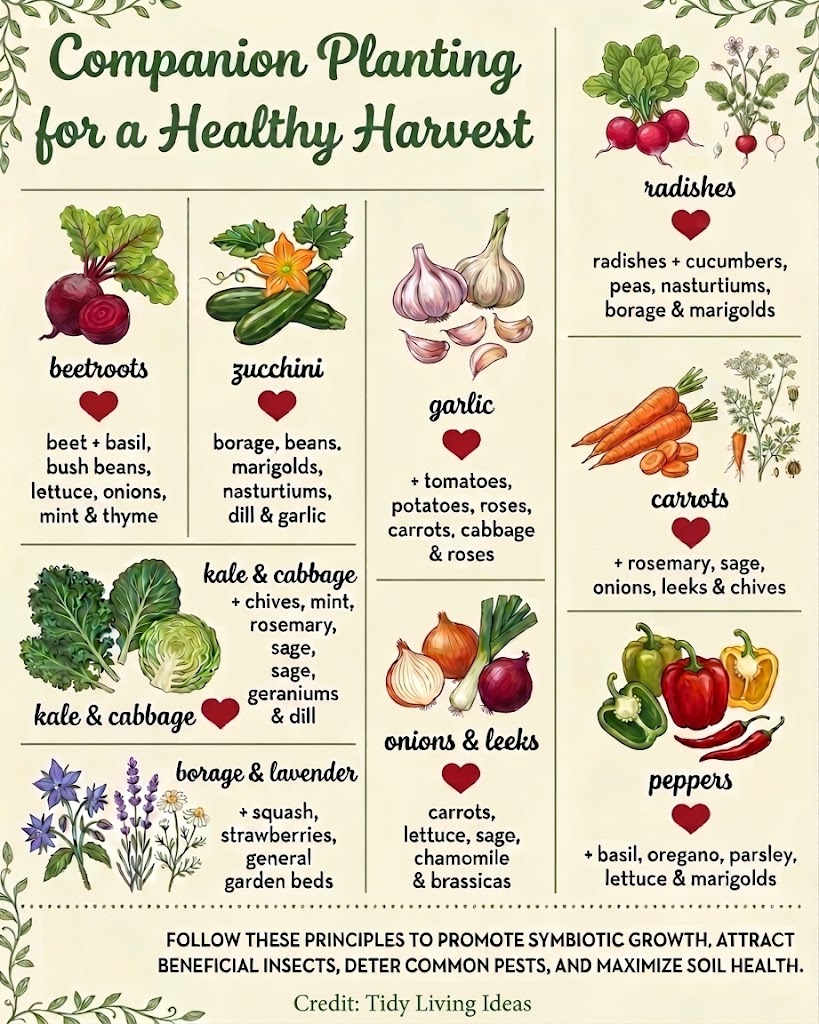
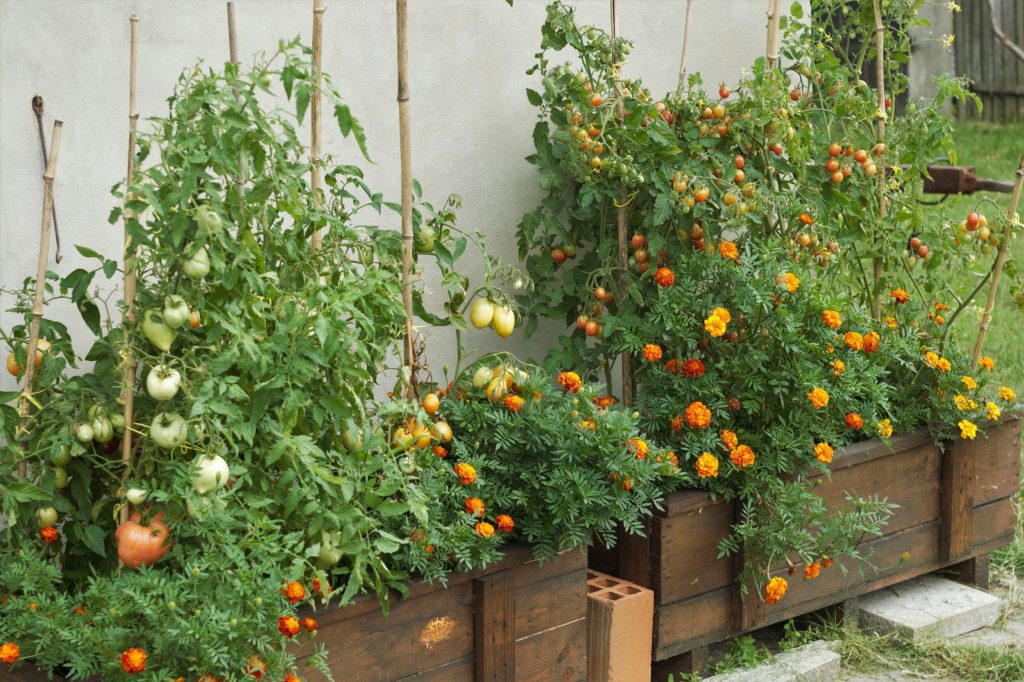
Basil makes a great tomato neighbor because its strong smell can help distract pests.
Marigolds earn a spot in many vegetable beds because gardeners use them to help deter some garden pests and draw helpful insects.
Beans add another smart lesson. Corn gives pole beans a natural place to climb, beans support the garden by working with soil bacteria, and squash spreads wide leaves that shade the ground.
Some people call that trio the Three Sisters. That name fits. Each plant brings something useful to the group.
What I Like About This Method
My favorite thing about companion planting vegetables is how simple it feels once you stop chasing perfect charts. One bed can hold tomatoes, basil, marigolds, and carrots, while another can support kale with dill, garlic, lettuce, or onions.
Tomatoes do not need ten fancy tricks. Kale does not need a lecture. Lettuce just needs enough cool shade and space to grow without stress.
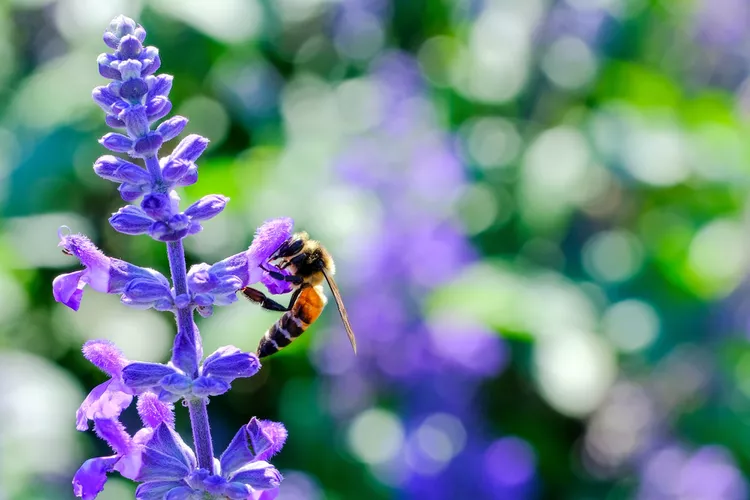
Pairing vegetables with herbs and flowers also makes the garden feel alive. Bees visit more often, ladybugs show up like tiny bodyguards, and the whole bed starts looking less like a project and more like a place you actually want to visit.
Also read: 15 Easy Vegetables to Grow in Containers
Best Companion Planting Vegetables for a Strong Garden
| Crop | Companion Plants |
|---|---|
| Asparagus | Basil, marigold, oregano, parsley, tomato |
| Beans | Corn, tomato, eggplant, carrot, cucumber, pumpkin, radish |
| Cabbage | Sage, dill, beet, peppermint, rosemary, corn, spinach, sunflower, nasturtium |
| Carrot | Onion, chive, rosemary, radish, nasturtium, cilantro |
| Celery | Onion, cabbage, tomato, bush bean, nasturtium |
| Corn | Beans, marigold, sunflower, cucumber, nasturtium, squash |
| Cucumber | Beans, dill, marigolds, radish, chives, zucchini, peas |
| Eggplant | Beans, marigold |
| Kale | Sage, dill, beet, peppermint, rosemary, corn, spinach, sunflower, nasturtium |
| Lettuce | Carrot, garlic, peas, radish, strawberry, onion, chive |
| Onion | Beet, carrot, lettuce, tomato, watermelon, eggplant |
| Peas | Apple, carrot, radish, raspberry, turnip |
| Pepper | Basil, garlic, onions, radish, nasturtium, cilantro, marigold |
| Potato | Basil, beans, corn, nasturtium, cilantro, marigold |
| Spinach | Strawberry |
| Squash | Beans, nasturtium, mint, radish, dill, basil, sunflower |
| Tomato | Basil, marigold, nasturtium, carrot, garlic, chive |
Beans, Corn, and Squash
Beans climb upward and make great use of vertical space. Corn gives pole beans a natural support, so you do not always need a trellis.
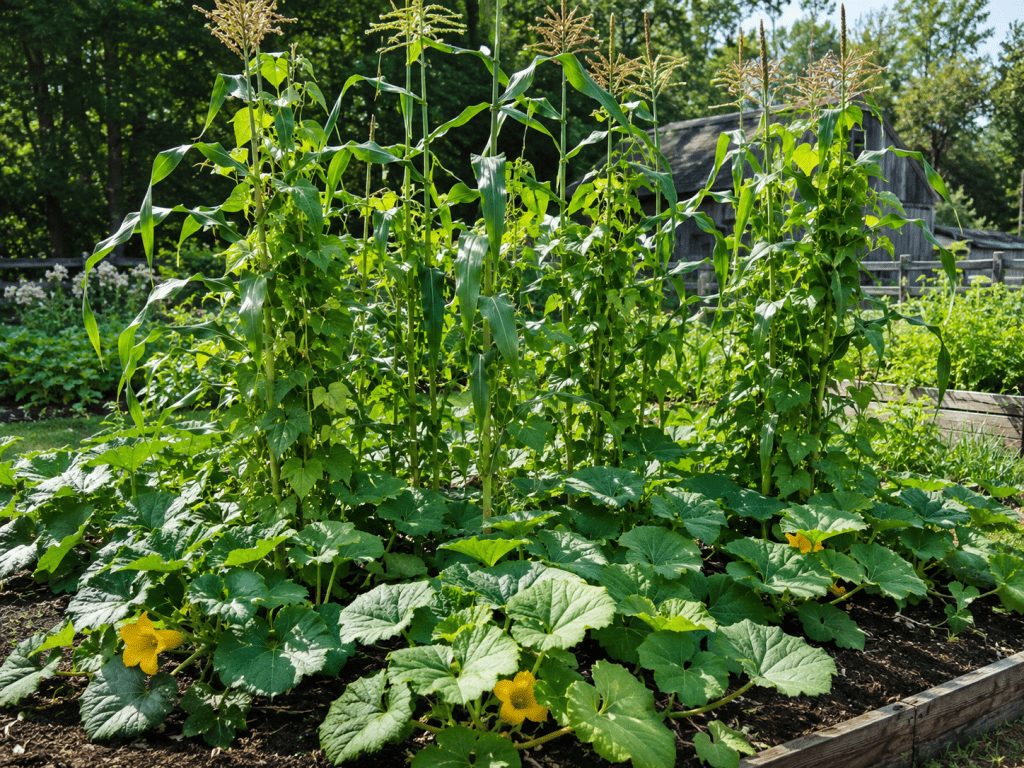
Squash spreads wide leaves across the soil and helps shade the ground. Together, these three crops create the classic Three Sisters planting, which works because each plant plays a clear role.
Lettuce, Carrots, and Onions
Lettuce grows fast and likes cooler soil. Carrots fit well nearby because they grow underground and do not hog the top of the bed.
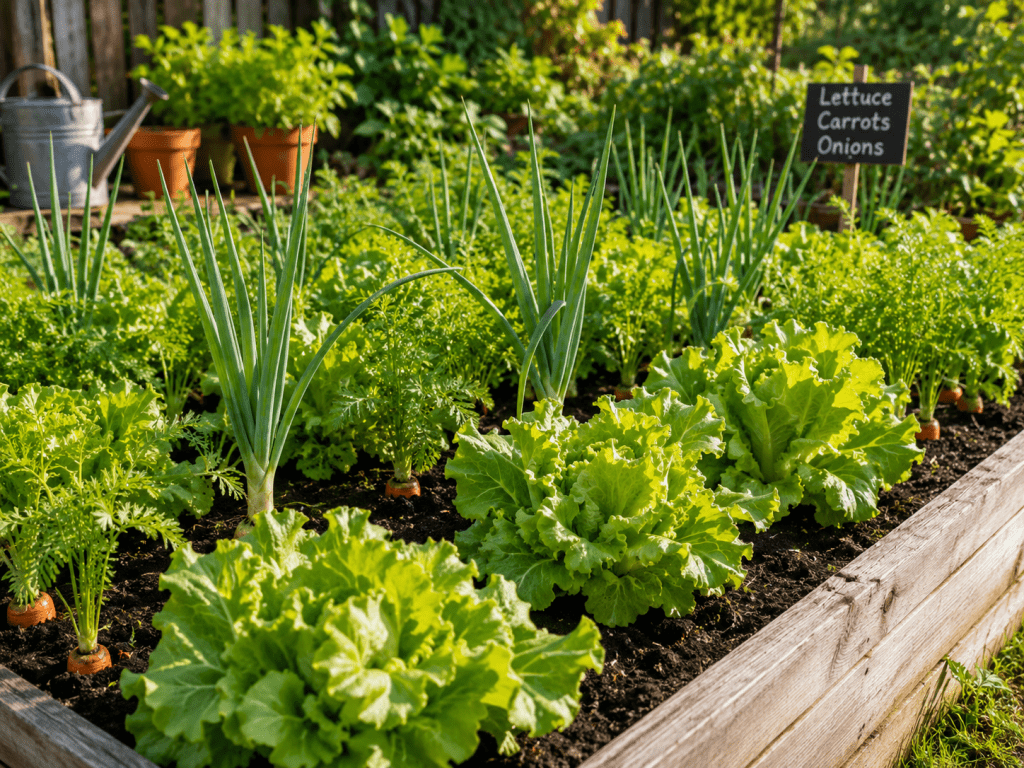
Onions bring a sharp smell that may help confuse pests around carrots and leafy greens. That mix works nicely in small gardens because the plants use space in different ways.
Cucumbers, Dill, and Radishes
Cucumbers need room, water, and pollinator visits. Dill attracts helpful insects when you let some of it flower.
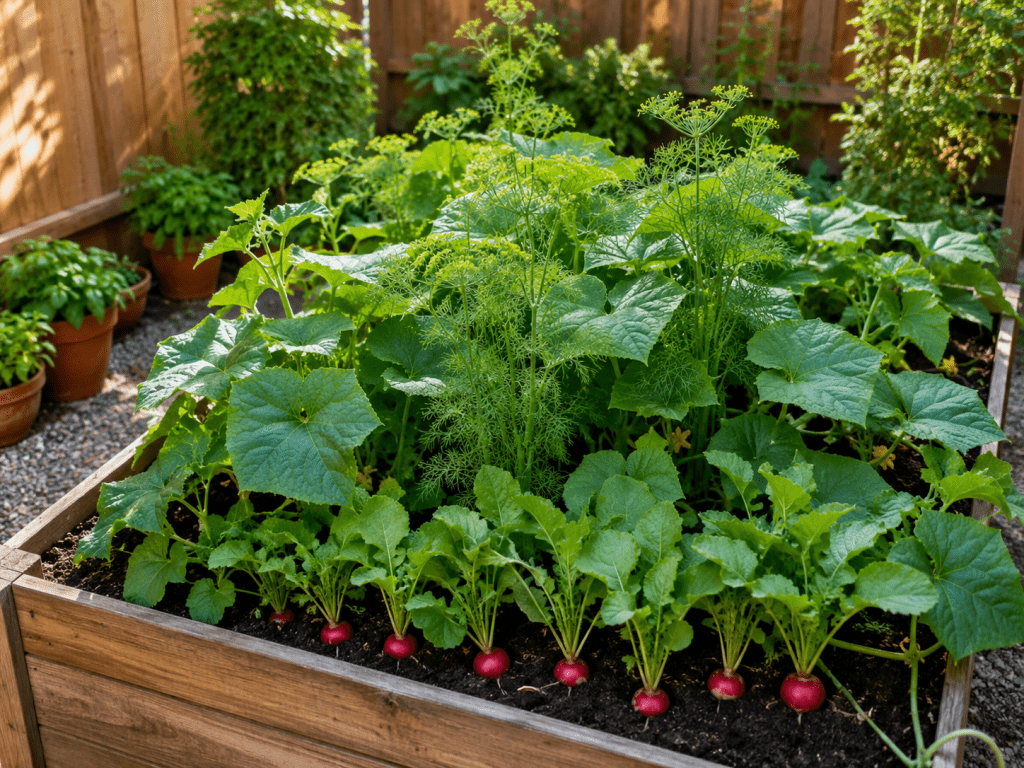
Radishes grow quickly near cucumbers and help mark rows while slower plants get started. Few things feel better than pulling a crunchy radish while the cucumber vines still stretch across the bed.
Peppers, Garlic, and Nasturtiums
Peppers pair well with basil, onions, garlic, cilantro, and marigolds. Garlic adds a strong smell that many gardeners use to help deter aphids and mites.
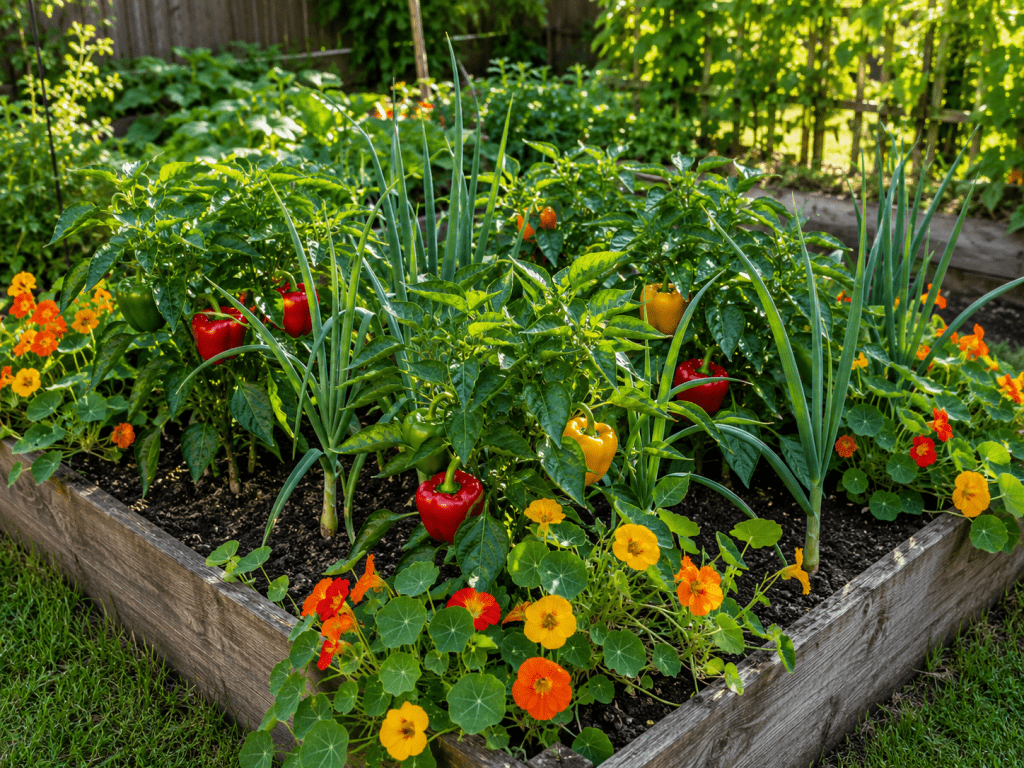
Nasturtiums can draw some pests away from vegetables and also bring flowers to the bed. Wouldn’t you rather lose a few nasturtium leaves than watch pests chew your peppers?
Read more: 10 Genius and Inexpensive Small Raised Garden Bed Ideas
Plants That Should Not Sit Together
Bad neighbors can slow a garden down. Some plants fight for the same food, water, root space, or sunlight.
Tomatoes and corn make a poor match because corn grows tall and can shade tomato plants too much. Both crops also feed heavily, so they can compete in the same bed.
Beans dislike alliums such as onions, garlic, and chives because these plants can reduce bean growth and germination. Fennel deserves its own corner because it can bother many nearby vegetables.
How to Plan a Companion Vegetable Garden
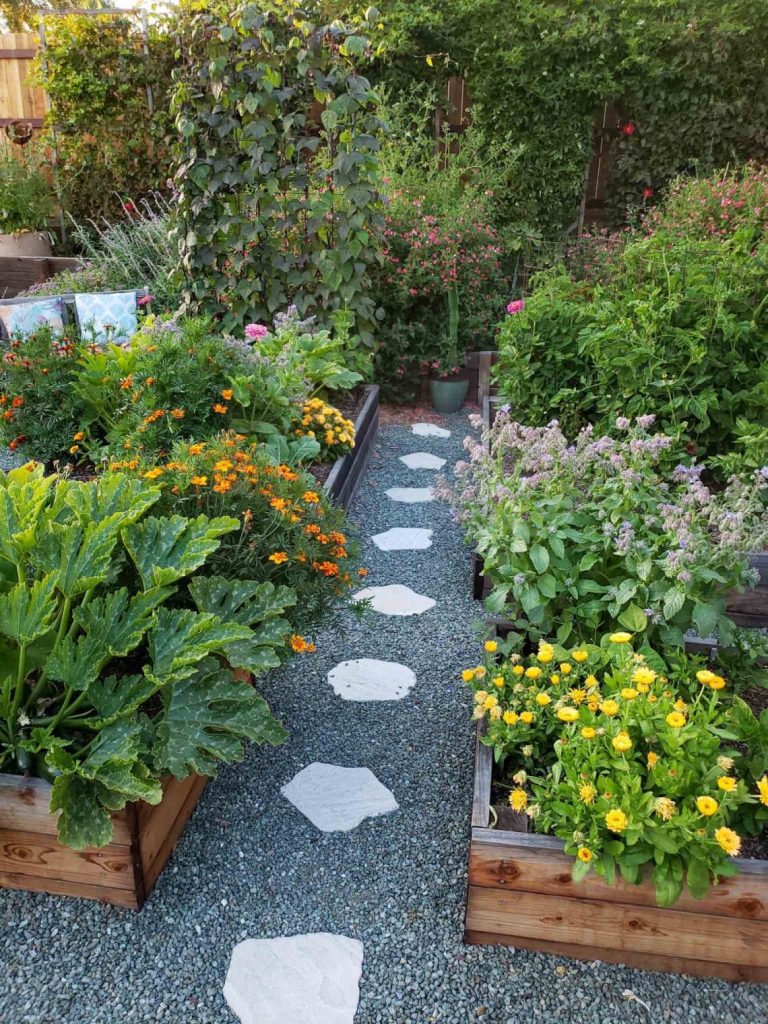
Start with crop rotation before you choose pretty pairings. Growing the same crop in the same spot year after year can invite more pests, disease, and soil problems.
Group plants by their needs first. Sun-loving crops need sun, thirsty crops need steady water, and big crops need enough room to stretch.
Spacing matters more than most people think. A helpful companion can still cause trouble when you plant it too close.
Use Height Like a Tool
Tall plants can help shade crops that hate hot soil. Sunflowers, corn, and trellised beans can give nearby lettuce or herbs a little relief during warm days.
Shade should help, not smother. Place taller plants where they block harsh afternoon sun without stealing the whole day’s light.
Add Flowers for Pollinators
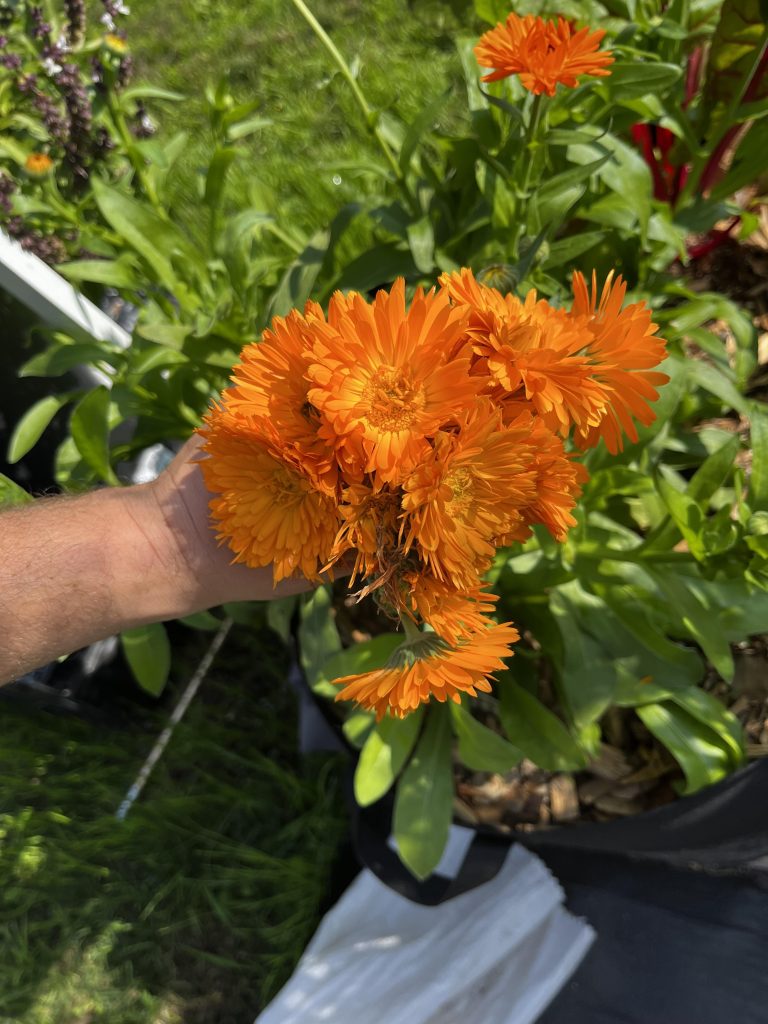
Flowers make companion planting vegetables more useful and more beautiful.
Zinnias, cosmos, marigolds, lavender, bee balm, and sunflowers can bring bees and other pollinators closer to the food crops.
Bright blooms near tomatoes, peppers, eggplants, cucumbers, and squash can increase insect visits during flowering.
More visits can mean better fruit set, especially with crops that rely on pollination.
Mix Herbs With Purpose
Herbs earn their space when they help the garden and the kitchen.
Basil, dill, rosemary, thyme, sage, cilantro, mint, and oregano can support useful insects or help confuse pests.
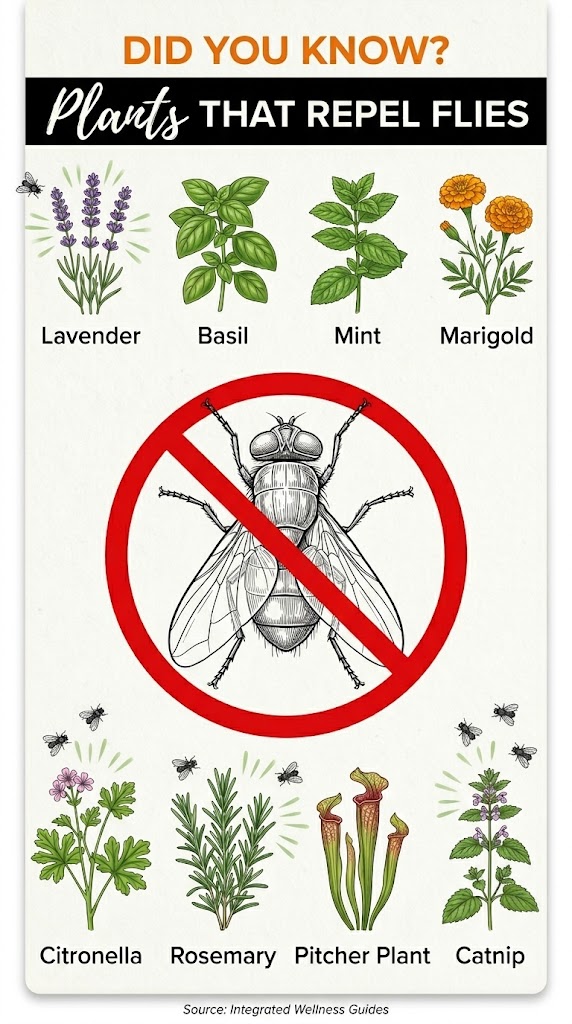
Mint needs control because it spreads fast. I would keep it in a pot near the bed instead of letting it run wild through the soil.
Easy Tips for Better Companion Planting
Use companion planting vegetables as a guide, not a strict law. Different gardens have different soil, weather, pests, and sunlight.
Choose one main crop for each bed, then add two or three helpful partners around it. A tomato bed can hold basil, marigolds, carrots, and chives without feeling crowded.
Give every plant enough room to breathe. Helpful neighbors still need space for roots, leaves, and airflow.
Save the tight planting for crops that truly fit together. Lettuce and radishes can share space more easily than corn and tomatoes.
Watch your garden each week and trust what you see. Yellow leaves, weak stems, or heavy pest damage can tell you that a pairing needs a change.
Swap plants when a match fails. Gardening gets better when you treat mistakes like notes, not disasters.
Final Thoughts
Companion planting vegetables works best when you mix smart pairings with common sense. Strong garden partners can attract pollinators, deter pests, shade soil, support vines, and help you use space better.
Small changes can make a big difference. A few marigolds near tomatoes, dill near cucumbers, or nasturtiums near peppers can make the whole bed feel more balanced.
Honest gardeners know no pairing fixes everything. Healthy soil, crop rotation, steady watering, and good spacing still carry the garden.
Perfect charts can wait. Your garden will teach you plenty when you plant, watch, and adjust.
Grab a few herbs, add some flowers, and give your vegetables better neighbors this season. Your tomatoes may not send a thank-you card, but I like to think they would.