12 Partial Shade Perennials That Actually Thrive in Backyard

Got a shady corner in your garden that you just don’t know what to do with?
I’ve been there. My balcony gets morning sun and then shade for the rest of the day, and for a while I thought that meant I was stuck with boring greenery.
Turns out, partial shade is actually a sweet spot for some seriously gorgeous perennials.
These plants get enough light to bloom well but stay protected from harsh afternoon heat. Once you know which ones to pick, that shady spot becomes your favorite part of the garden.
What Exactly Is Partial Shade?
Partial shade means a spot gets 3 to 6 hours of sunlight per day, usually in the morning. Areas on the east side of your home are a classic example.
So are spots under a high tree canopy where filtered, dappled light comes through all day.
Morning sun is cooler and gentler than afternoon sun. Shaded soil also stays moist longer, which many flowering perennials absolutely love.
That combination of light and moisture is why so many plants perform their best in these conditions.
Full shade is a different story — that’s very little direct light, usually under dense trees or next to a north-facing wall. Partial shade is far more plant-friendly than full shade, giving you a much wider plant palette to work with.
The Best Spots for Partial Shade Perennials
Before you plant anything, spend a day watching how light moves across your garden.
East-facing beds are usually your best bet for partial shade planting. Spots along the edge of a wooded area work beautifully too.
Taller shrubs and small trees can also create shade for smaller plants below them. That layered approach gives your garden a natural, woodland feel.
Think of it as building a mini ecosystem right in your own backyard.
Partial Shade Perennials — At a Glance
| Plant | Exposure | Height / Spread | Seasons | Hardiness |
|---|---|---|---|---|
1 Bleeding HeartDicentra spectabilis |
Partial Sun | 2′–3′ / 1′–3′ | Spring (Late), Summer (Early) | Zones 3–9 |
2 HelleboresHelleborus spp. |
Part Sun / Shade | 1′–2′ / 1′–2′ | Winter, Spring | Zones 4–9 |
3 HostaHosta spp. |
Full / Part / Shade | 6″–3′ / 1′–4′ | Spring (Mid, Late), Summer, Fall | Zones 3–9 |
4 Japanese Painted FernAthyrium niponicum var. pictum |
Part Sun / Shade | 1′–2′ / 1′–2′ | Spring (Mid, Late), Summer, Fall | Zones 3–8 |
5 ColumbineAquilegia spp. |
Full / Part Sun | 1′–3′ / 1′–2′ | Spring (Mid, Late) | Zones 3–9 |
6 PulmonariaPulmonaria spp. |
Part Sun / Shade | 9″–1′ / 1′–2′ | Spring (Early, Mid, Late), Summer | Zones 3–8 |
7 Foam FlowerTiarella spp. |
Part Sun / Shade | 6″–1′ / 1′–2′ | Spring (Late), Summer (Early, Mid) | Zones 4–9 |
8 Solomon’s SealPolygonatum odoratum ‘Variegatum’ |
Part Sun / Shade | 2′–3′ / 9″–1′ | Spring (Late), Summer (Early) | Zones 3–8 |
9 AstilbeAstilbe spp. |
Part Sun / Shade | 1′–4′ / 1′–3′ | Spring (Late), Summer (Early, Mid) | Zones 3–8 |
10 Japanese AnemoneAnemone hybrids |
Part Sun / Shade | 2′–4′ / 2′–4′ | Summer (Late), Fall | Zones 4–8 |
11 Lady’s MantleAlchemilla mollis |
Full / Part / Shade | 1′–2′ / 1′–2′ | Spring (Late), Summer (Early) | Zones 3–8 |
12 Siberian BuglossBrunnera macrophylla |
Part Sun / Shade | 6″–1′ / 1′–2′ | Spring | Zones 3–8 |
12 Partial Shade Plants Perennial Plants
1. Bleeding Heart (Dicentra spectabilis)
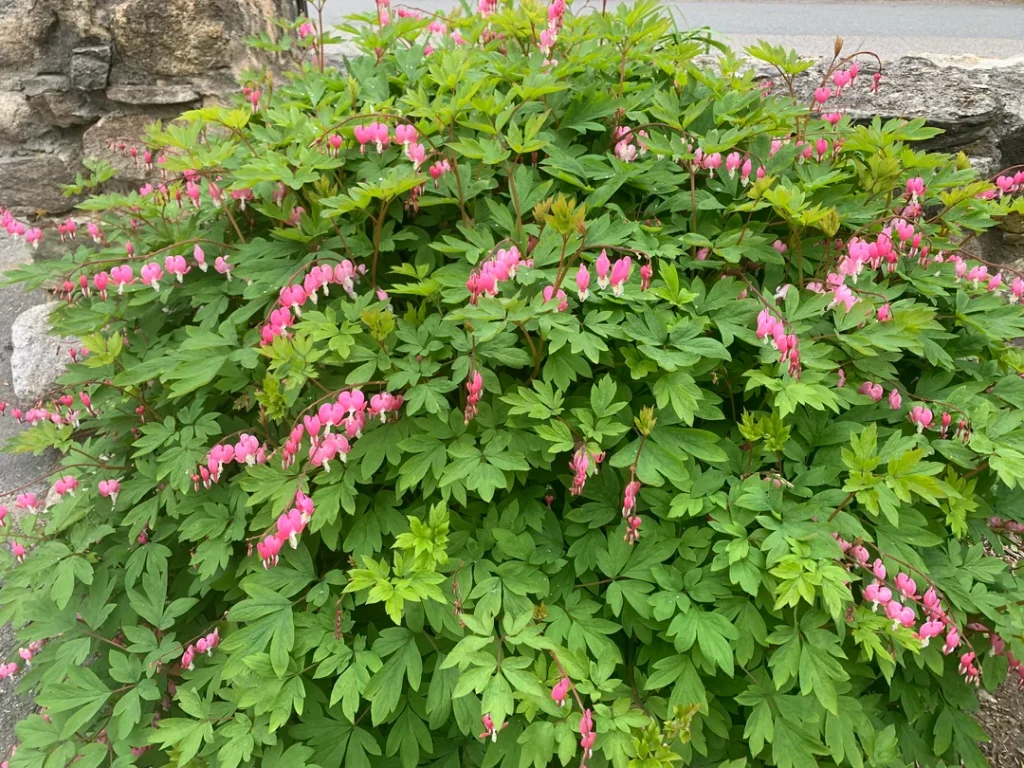
I dare you to walk past this plant without stopping. Those dangling pink hearts with the little white tips look almost fake. You get 4 to 6 weeks of that show in late spring, right when your bulbs are fading and summer flowers haven’t shown up yet.
Give it partial shade and moist, neutral soil. It’s hardy from Zones 3 to 9, so odds are it’ll work in your yard.
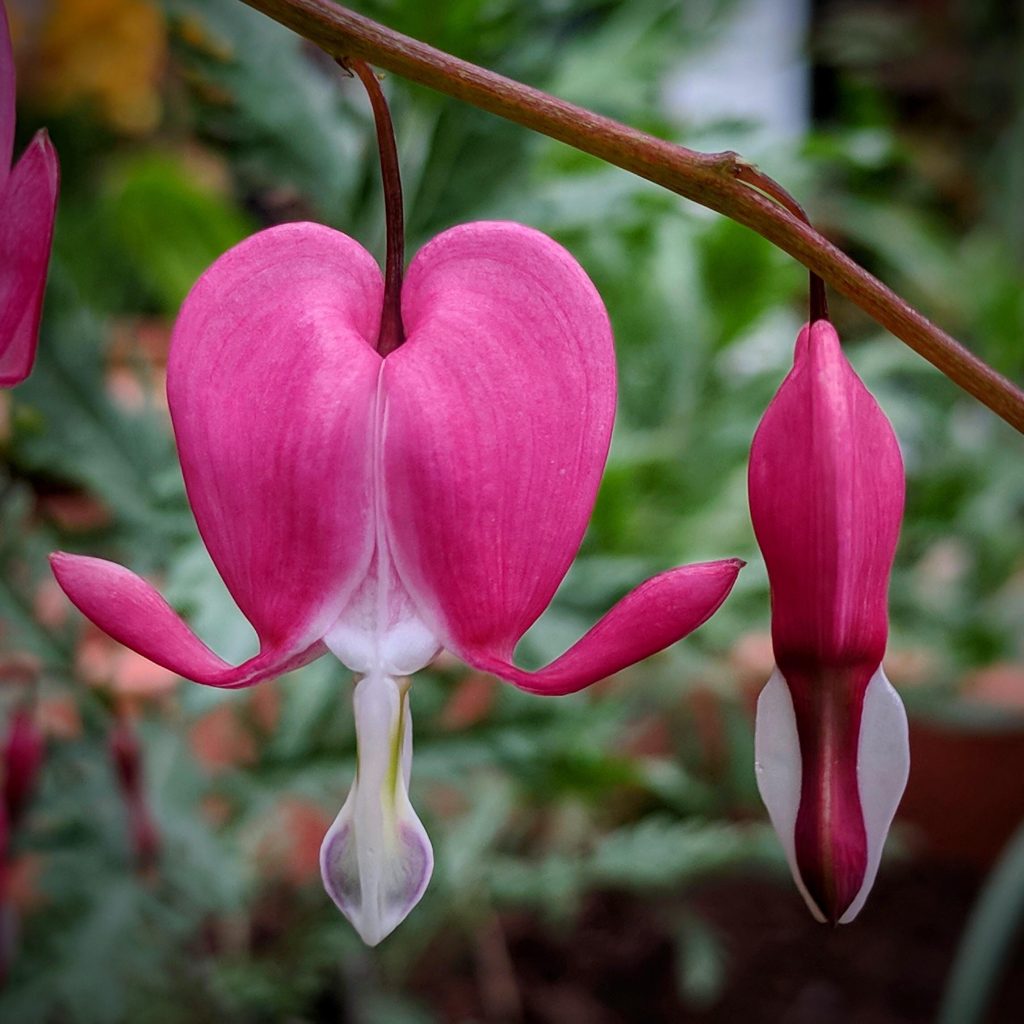
Here’s what nobody tells you: it vanishes by midsummer. The foliage just disappears, and you’re left with a bare patch. So plant hostas or ferns nearby to fill that gap once it’s gone.
And if you’ve got a dog or little kids running around, keep this one away from digging zones. It’s toxic if eaten.
- Hardiness: Zones 3 – 9
- Exposure: Partial Sun
- Seasons: Spring (Late), Summer (Early)
- Height: 2′ – 3′
- Spread: 1′ – 3′
Also read: 13 Gorgeous Part Shade Perennials for Pots and Container
2. Hellebores (Helleborus spp.)
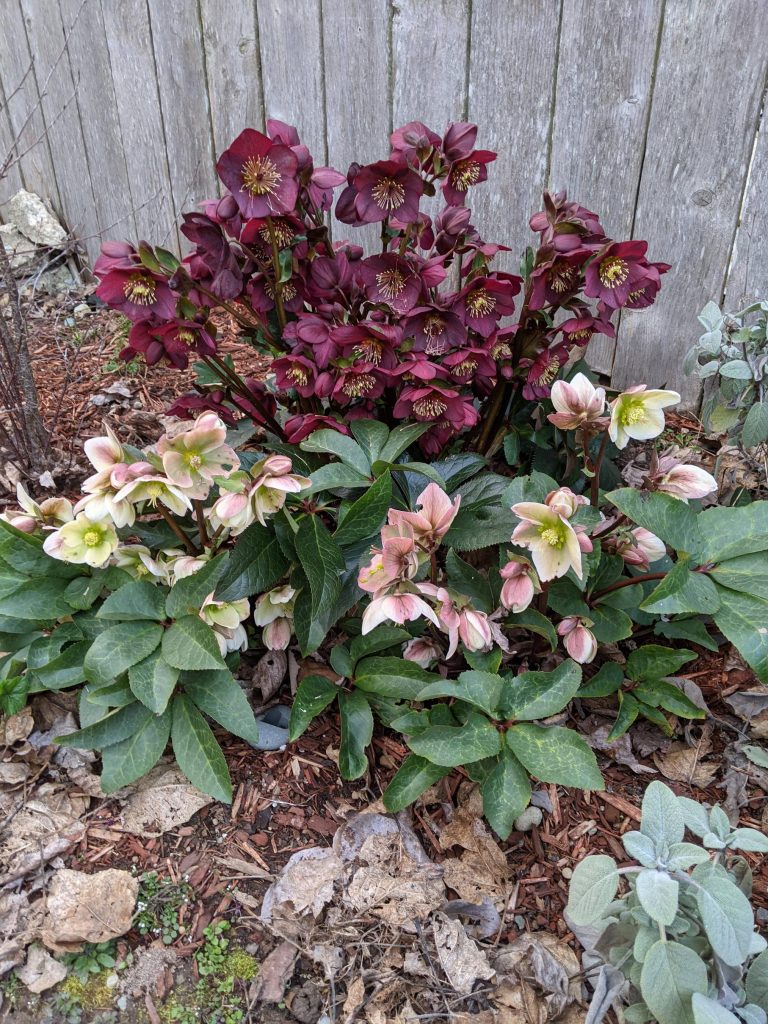
You’ll get flowers before winter even finishes packing up. That’s not an exaggeration. Some varieties bloom while snow is still on the ground, in cream, pink, purple, and deep burgundy.
Bees need this early food source badly, so you’re doing them a favor too.
They stay evergreen in most climates. Low-growing. Perfect at the front of a border or in a container.
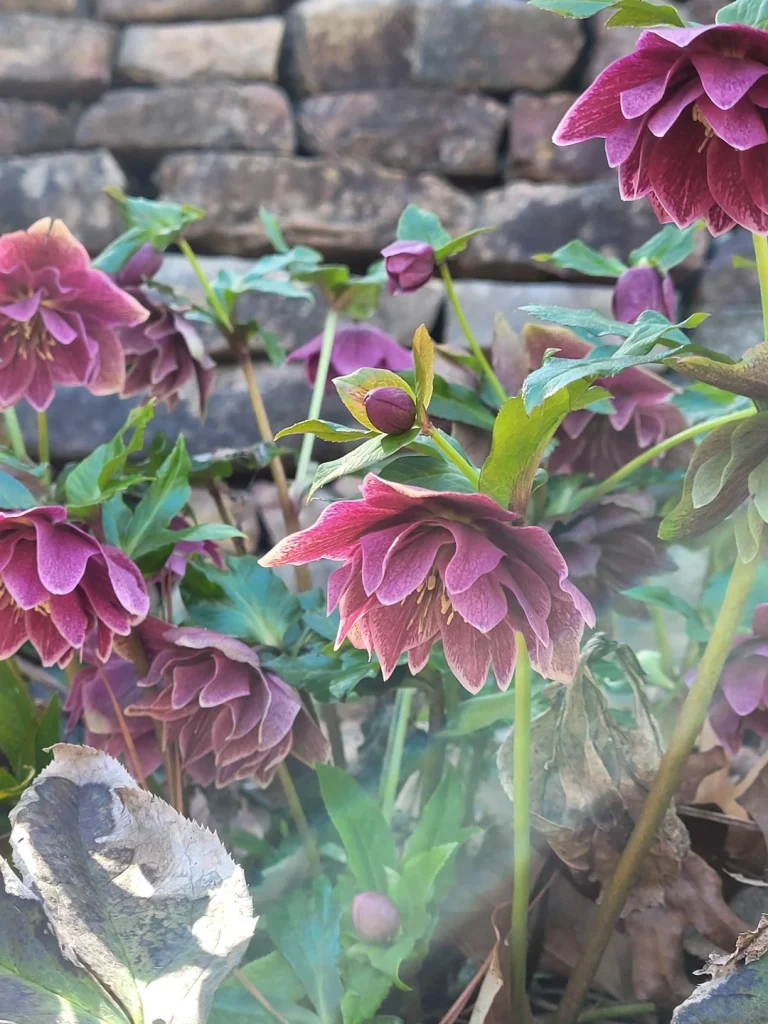
Here’s a trick most people miss: those flowers nod straight down. If you plant hellebores at eye level, you’ll just see the tops of the petals.
Put them on a slope or a raised bed instead, and you’ll actually see the blooms.
Bonus: deer and rabbits leave them alone because the foliage is toxic. Divide clumps in fall and you’ll double your stock for free.
- Hardiness: Zones 4 – 9
- Exposure: Partial Sun, Shade
- Seasons: Winter, Spring
- Height: 1′ – 2′
- Spread: 1′ – 2′
3. Hosta (Hosta spp.)
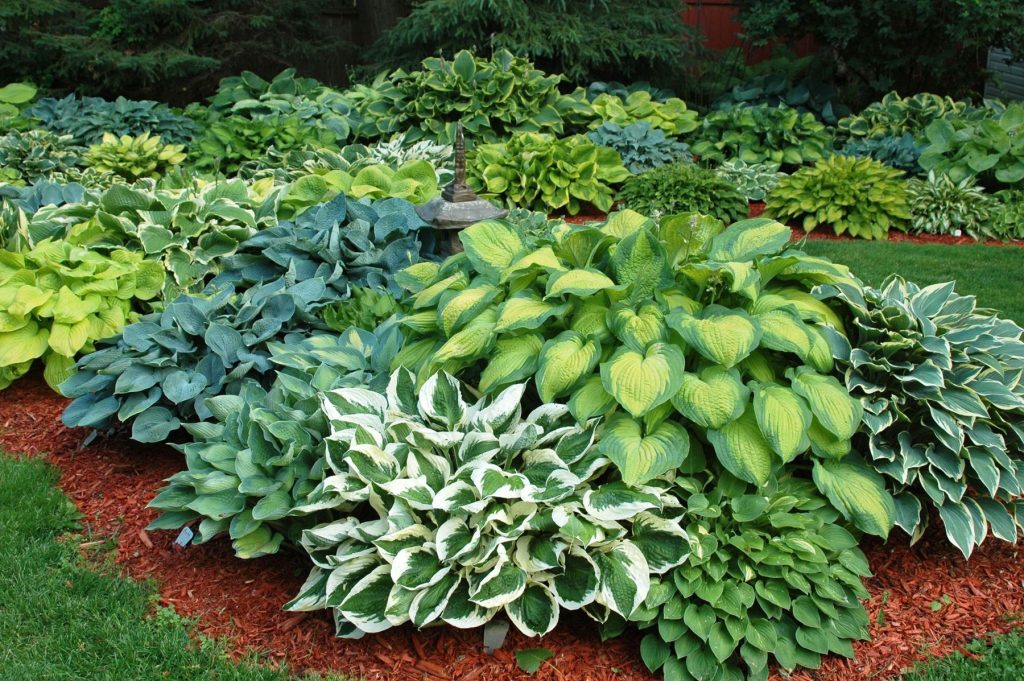
You want variety? Hostas give you more of it than almost any other shade plant. Tiny mounds. Dinner-plate-sized leaves. Everything in between. Hardy in Zones 3 to 9, so you’ve got room to experiment.
Partial shade brings out the richest colors. Too much sun scorches the leaves fast, so aim for dappled light under a tree. Some varieties even handle full shade without complaint.
Now, the part most guides skip: slugs and deer will wreck a hosta bed if you let them. If that’s been your experience, switch to a thick-leaved variety like ‘Sum and Substance.’
It holds up far better against both. The dense foliage also chokes out weeds for you. Pair it with ferns or astilbe and you’ve got that classic layered woodland look.
- Hardiness: Zones 3 – 9
- Exposure: Full Sun, Partial Sun, Shade
- Seasons: Spring (Mid, Late), Summer, Fall
- Height: 6″ – 3′
- Spread: 1′ – 4′
4. Japanese Painted Fern (Athyrium niponicum var. pictum)
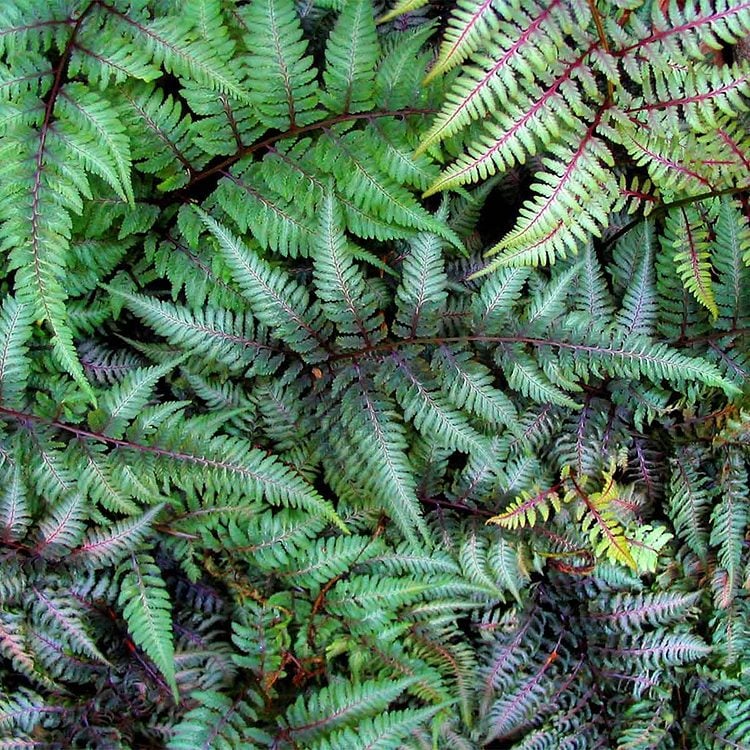
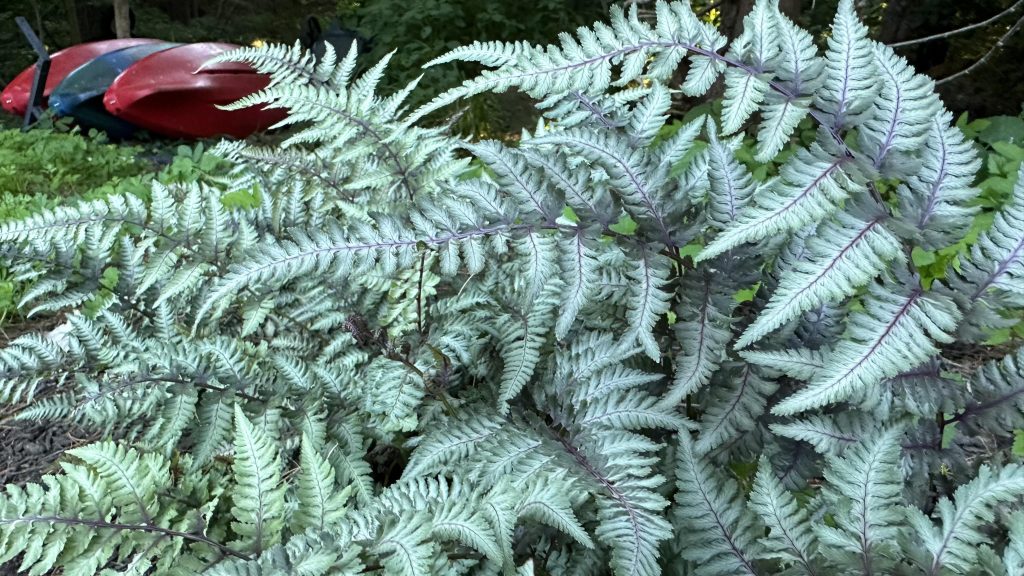
Not every plant needs flowers to earn its spot. This fern proves it. Arching fronds mix silver, blue-green, and burgundy, and they genuinely glow in low light.
Native to northeastern Asia, it’s deciduous, slow-spreading, and shrugs off pests and disease. Hardy in Zones 3 to 8, it takes a hard winter without flinching.
This plant likes slightly acidic soil. If your beds run alkaline, mix in some peat moss or pine bark mulch and watch it perk up. Once winter knocks the fronds down, cut the old growth in early spring, right as new fiddleheads unfurl.
That’s also your window to divide it and spread it around. Pair it with hostas or Bleeding Heart, and you’ll get a foliage combo that looks like you hired a designer.
- Hardiness: Zones 3 – 8
- Exposure: Partial Sun, Shade
- Seasons: Spring (Mid, Late), Summer, Fall
- Height: 1′ – 2′
- Spread: 1′ – 2′
5. Columbine (Aquilegia spp.)
Don’t let the delicate look fool you. This plant is tougher than it seems.
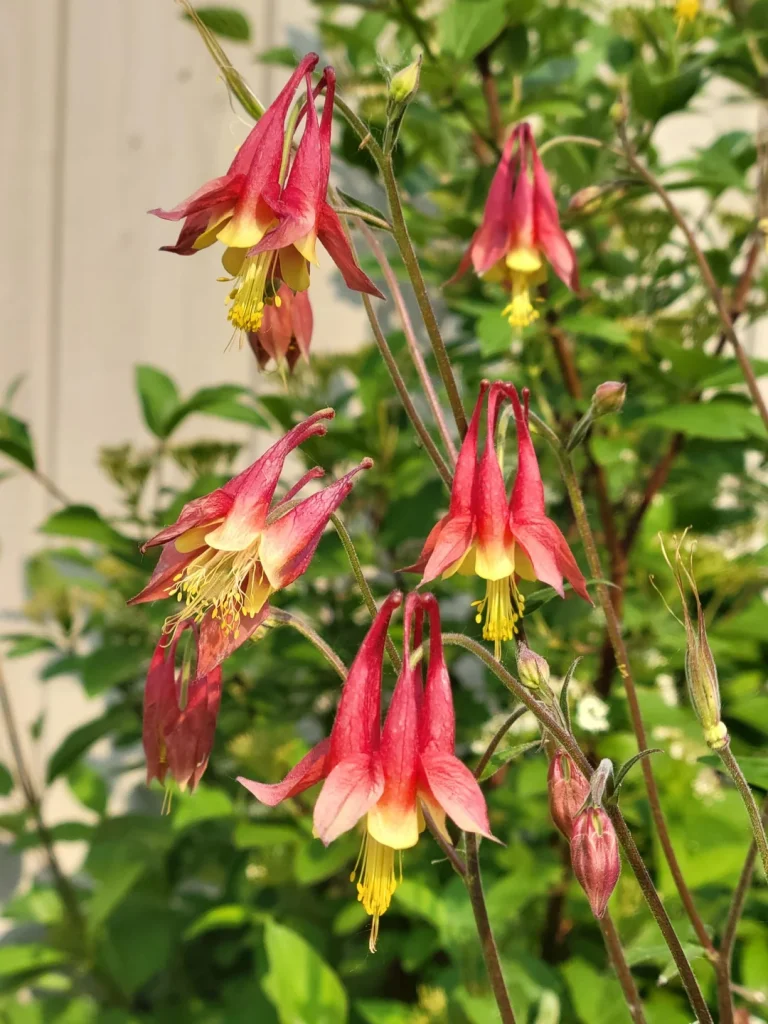
Those spurred, bicolored blooms open in mid-spring and fill the gap between your bulbs and summer flowers. Hummingbirds show up for these before almost anything else.
Give it partial shade and the foliage stays fresh instead of drying out. Full sun works too, but only if you’re willing to water it constantly.
I wouldn’t bother. Shaded spots with average, well-draining soil do the job with way less effort.
Columbine doesn’t stick around forever. Most plants fade out after 3 to 4 years. Don’t panic, though. These are native wildflowers, and they reseed on their own, so new plants keep showing up to take their place.
Watch for leaf miners too. Those squiggly trails in the leaves are the most common problem you’ll run into.
- Hardiness: Zones 3 – 9
- Exposure: Full Sun, Partial Sun
- Seasons: Spring (Mid, Late)
- Height: 1′ – 3′
- Spread: 1′ – 2′
6. Pulmonaria (Pulmonaria spp.)
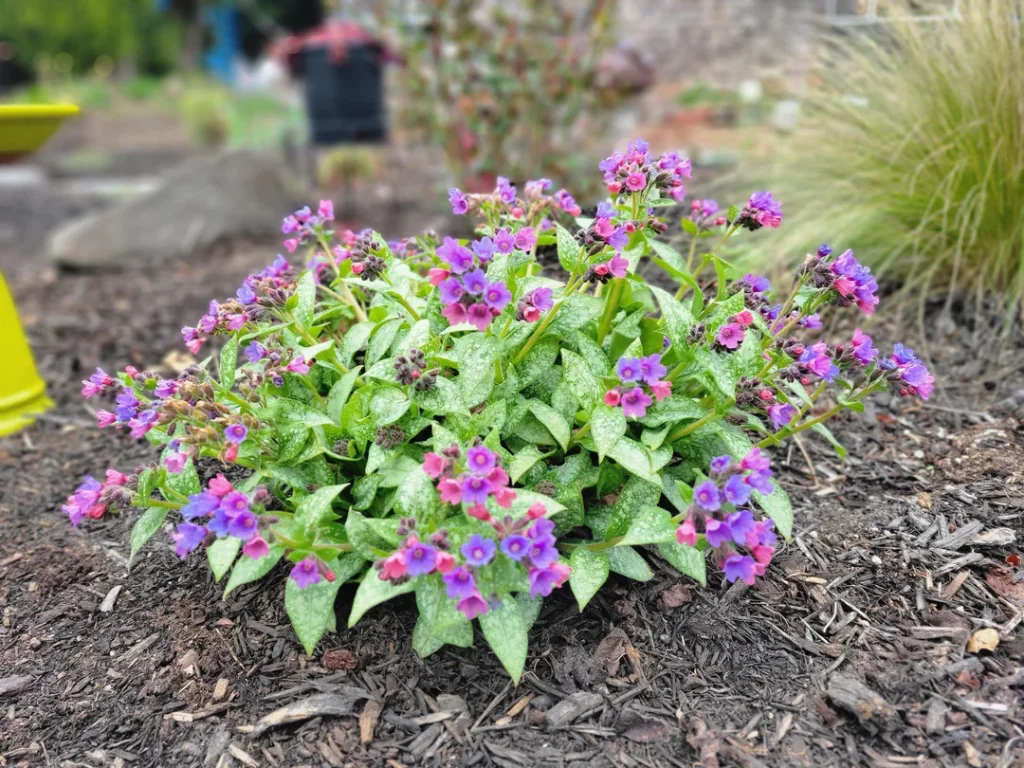
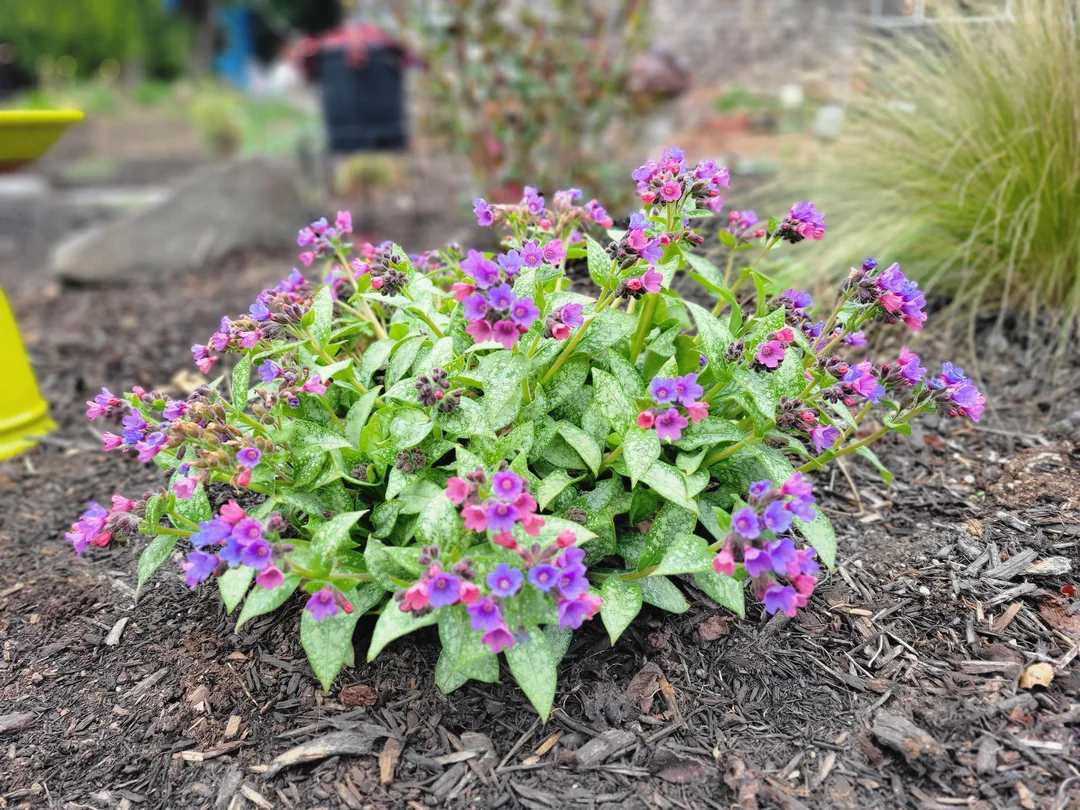
Want a plant that works overtime? Meet lungwort. Flowers open pink in late winter, then shift to inky blue-purple by spring.
That’s two colors from one plant, no extra effort on your part. The silver-spotted leaves stay attractive long after the blooms are gone.
Semi-evergreen and fully hardy, it performs in everything from semi-shade to deep shade. Not many flowering perennials can say that.
Here’s what actually matters: pulmonaria gets powdery mildew if the soil dries out too much, especially with afternoon sun beating on it.
Give it morning sun and afternoon shade instead, and the foliage stays clean all season.
Plant it at the front of a border where you can actually see those patterned leaves. Divide clumps after flowering and you’ll multiply your stock for free.
- Hardiness: Zones 3 – 8
- Exposure: Partial Sun, Shade
- Seasons: Spring (Early, Mid, Late), Summer
- Height: 9″ – 1′
- Spread: 1′ – 2′
7. Foam Flower (Tiarella spp.)
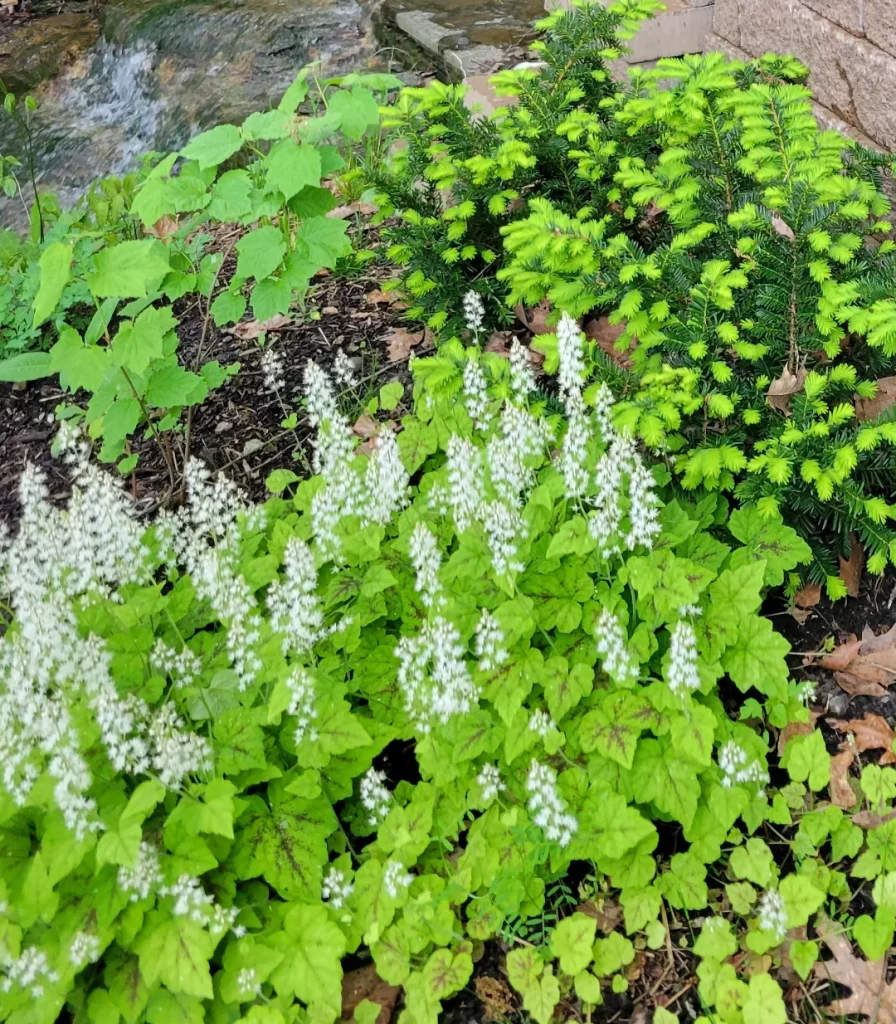
The name says it all. Frothy cones of cream and pink petals hover over the foliage like little clouds.
You get that show from late spring through summer, and it brings a soft, romantic feel to any shaded bed. Keep the soil moist but well-drained and it’ll thrive.
Hardy, deciduous, and low-maintenance. You won’t be out there pruning it every week.
Tiarella is native to North American woodlands, and it spreads by stolons. That means it fills in as a natural groundcover on its own, instead of staying in a tidy little clump.
It’s also great for holding soil on a shaded slope. Fun fact: it’s the parent plant of Heucherella, a hybrid cross with coral bells. Varieties like ‘Alabama Sunrise’ bring lime-green leaves with cherry-red centers if you want more color.
Watch for slugs and mildew, and divide in spring to speed up that groundcover effect.
- Hardiness: Zones 4 – 9
- Exposure: Partial Sun, Shade
- Seasons: Spring (Late), Summer (Early, Mid)
- Height: 6″ – 1′
- Spread: 1′ – 2′
8. Solomon’s Seal (Polygonatum odoratum ‘Variegatum’)
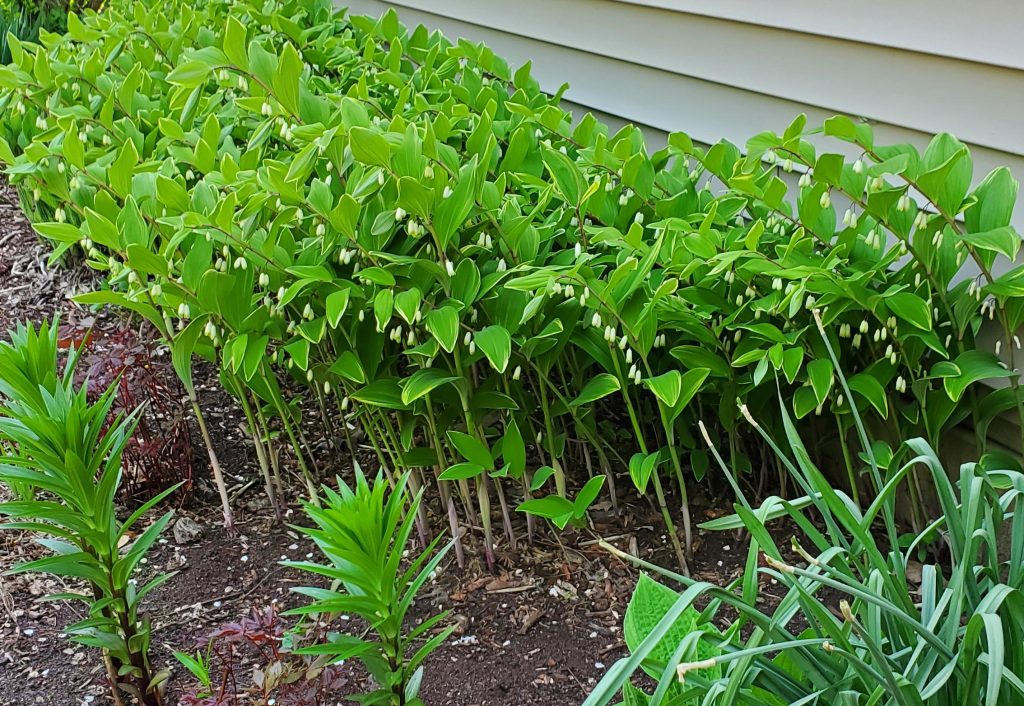
Arching stems carry cream-edged leaves that light up your darkest shaded corner. Underneath, small white bell-shaped flowers hang in late spring, lightly fragrant and easy to love.
This woodland perennial wants moist, humus-rich soil, and it spreads slowly over time. Hardy in Zones 3 to 8, it laughs off cold winters.
Solomon’s Seal spreads through underground rhizomes. Instead of sitting still, it slowly naturalizes and forms a colony over the years.
That makes it a solid long-term groundcover for a slope or woodland edge. It’s also deer resistant, which puts it ahead of most plants on this list.
- Hardiness: Zones 3 – 8
- Exposure: Partial Sun, Shade
- Seasons: Spring (Late), Summer (Early)
- Height: 2′ – 3′
- Spread: 9″ – 1′
9. Astilbe (Astilbe spp.)
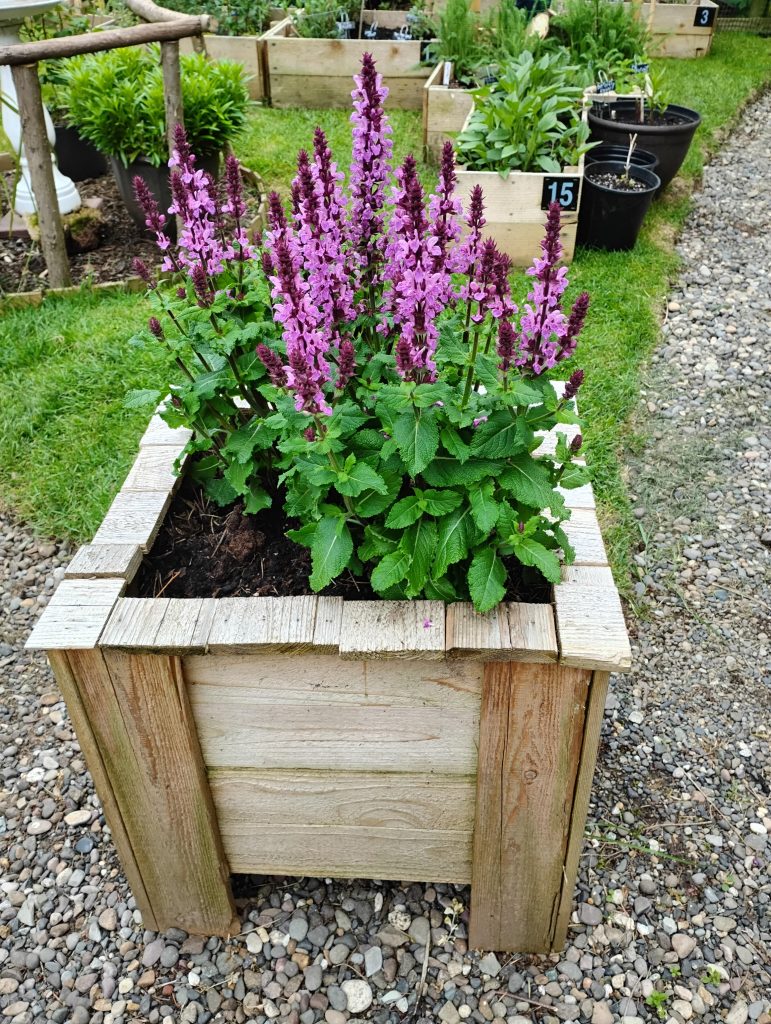
Feathery plumes in red, pink, white, and purple rise above fern-like foliage in summer. It’s the kind of display that makes your shady garden look like it belongs on a magazine cover.
Partial shade suits it best. Too much sun in a hot climate scorches those delicate plumes fast. Hardy in Zones 3 to 8, it comes back reliably every year.
Astilbe needs consistently moist soil. Let it dry out, even briefly, and it’ll decline fast. So put it near a downspout, a pond edge, or that low spot in your yard where other perennials struggle.
It’ll love you for it. Divide clumps every three to four years to keep them vigorous, and don’t rush to cut back the dried flower heads.
They hold their shape and look good through fall and winter.
- Hardiness: Zones 3 – 8
- Exposure: Partial Sun, Shade
- Seasons: Spring (Late), Summer (Early, Mid)
- Height: 1′ – 4′
- Spread: 1′ – 3′
10. Japanese Anemone (Anemone hybrids)
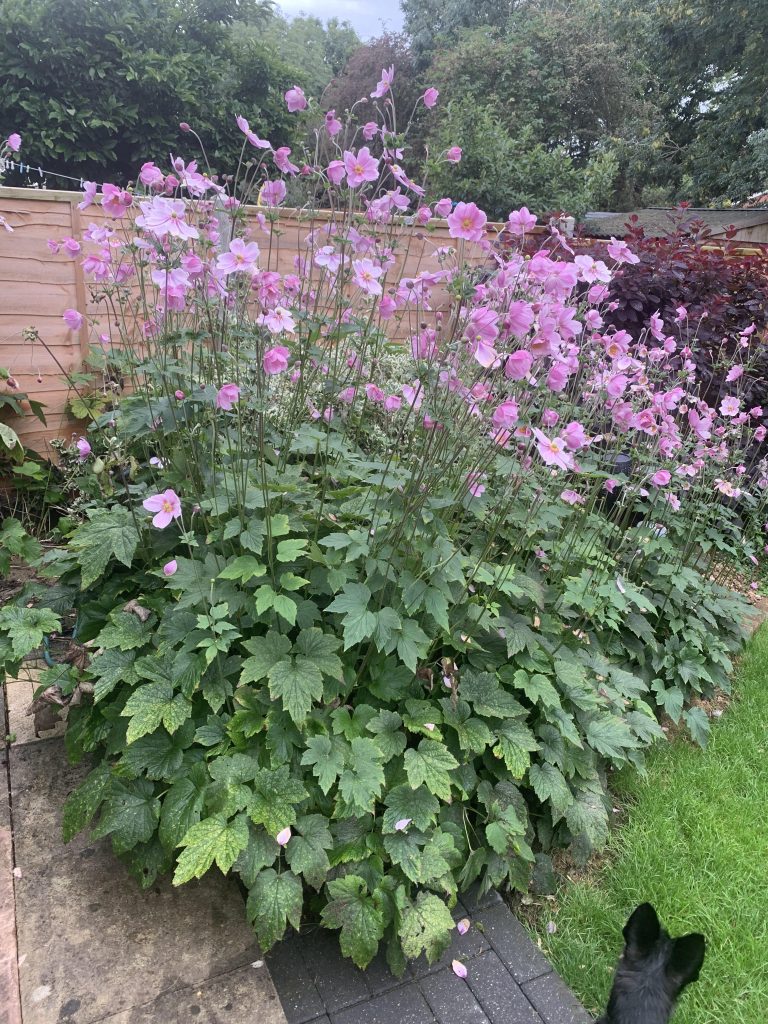
Right when your garden starts running out of steam, this plant steps in and steals the show. Large, graceful flowers in white, pink, or lavender dance on tall wiry stems from late summer through fall.
You’ll be glad you planted it once nothing else is blooming.
The foliage earns its keep too, showing up well before the flowers do. Partial shade keeps the leaves from scorching, which is a real risk in a hot, sunny spot.
Hardy in Zones 4 to 8, it spreads into a tall groundcover or a bold mass planting over time.
Japanese Anemone spreads through underground rhizomes, and it can get aggressive in rich, moist soil. It might crowd out slower neighbors if you don’t keep an eye on it.
Give it its own bed, or use a root barrier to keep it in line. On the bright side, the cut stems hold up beautifully in a vase. That’s a nice bonus when most of your garden has little left to offer.
Plant a few and you’ll find yourself wondering how your garden ever existed without them.
- Hardiness: Zones 4 – 8
- Exposure: Partial Sun, Shade
- Seasons: Summer (Late), Fall
- Height: 2′ – 4′
- Spread: 2′ – 4′
11. Lady’s Mantle (Alchemilla mollis)
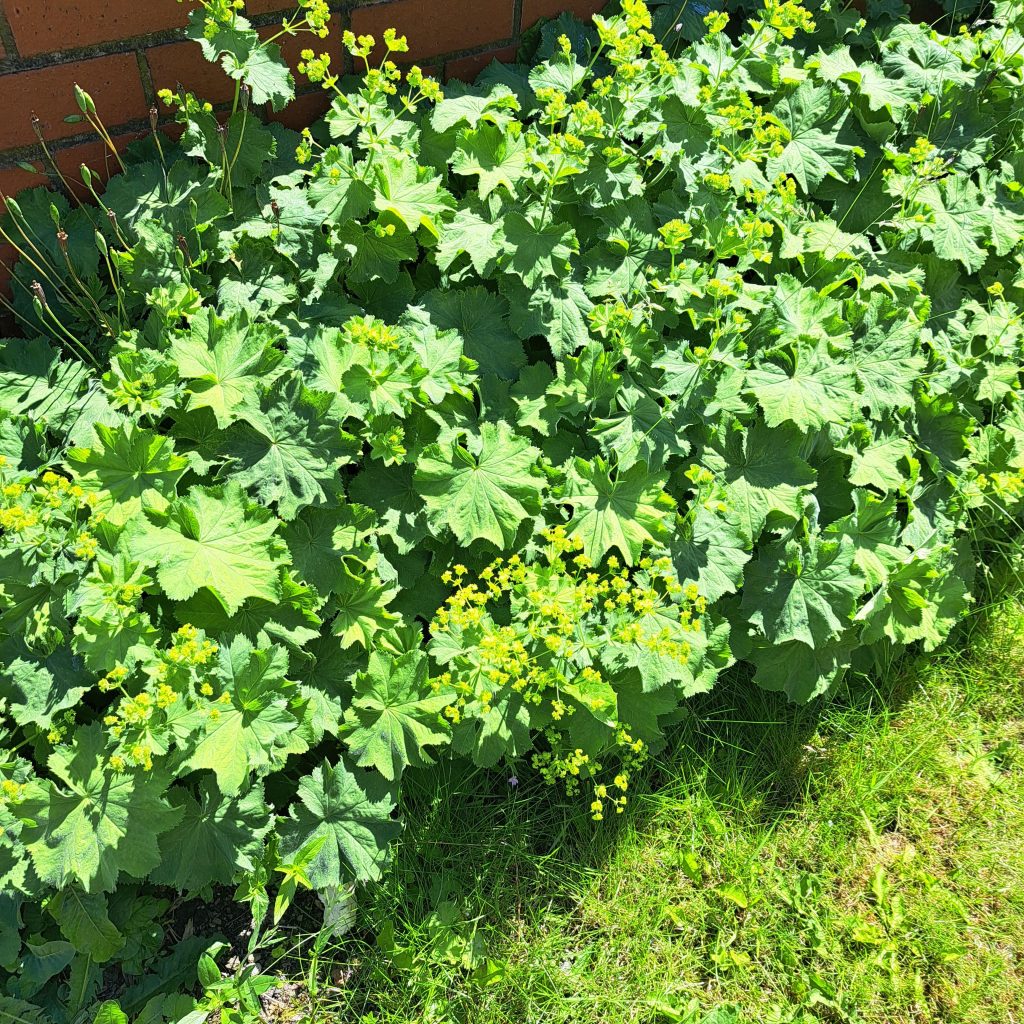
You’ll notice this plant before you can name it. Soft, scallop-edged leaves covered in fine hairs catch rain droplets and hold them like tiny jewels in morning light.
Sprays of chartreuse-yellow flowers show up in late spring and blend into just about any border.
This clump-forming perennial handles a wide range of conditions, from full sun to full shade. Partial shade keeps it looking fresh the longest, though.
Here’s a fun bit of history: the name Alchemilla comes from alchemy. Medieval healers believed the dew collected in those leaves had magical properties.
That history isn’t just trivia either, the foliage has been used in herbal remedies for centuries.
Florists love it too, since it makes excellent filler in cut arrangements. Deadhead the spent blooms in late summer, or it’ll self-seed more than you probably want.
- Hardiness: Zones 3 – 8
- Exposure: Full Sun, Partial Sun, Shade
- Seasons: Spring (Late), Summer (Early)
- Height: 1′ – 2′
- Spread: 1′ – 2′
12. Siberian Bugloss (Brunnera macrophylla)
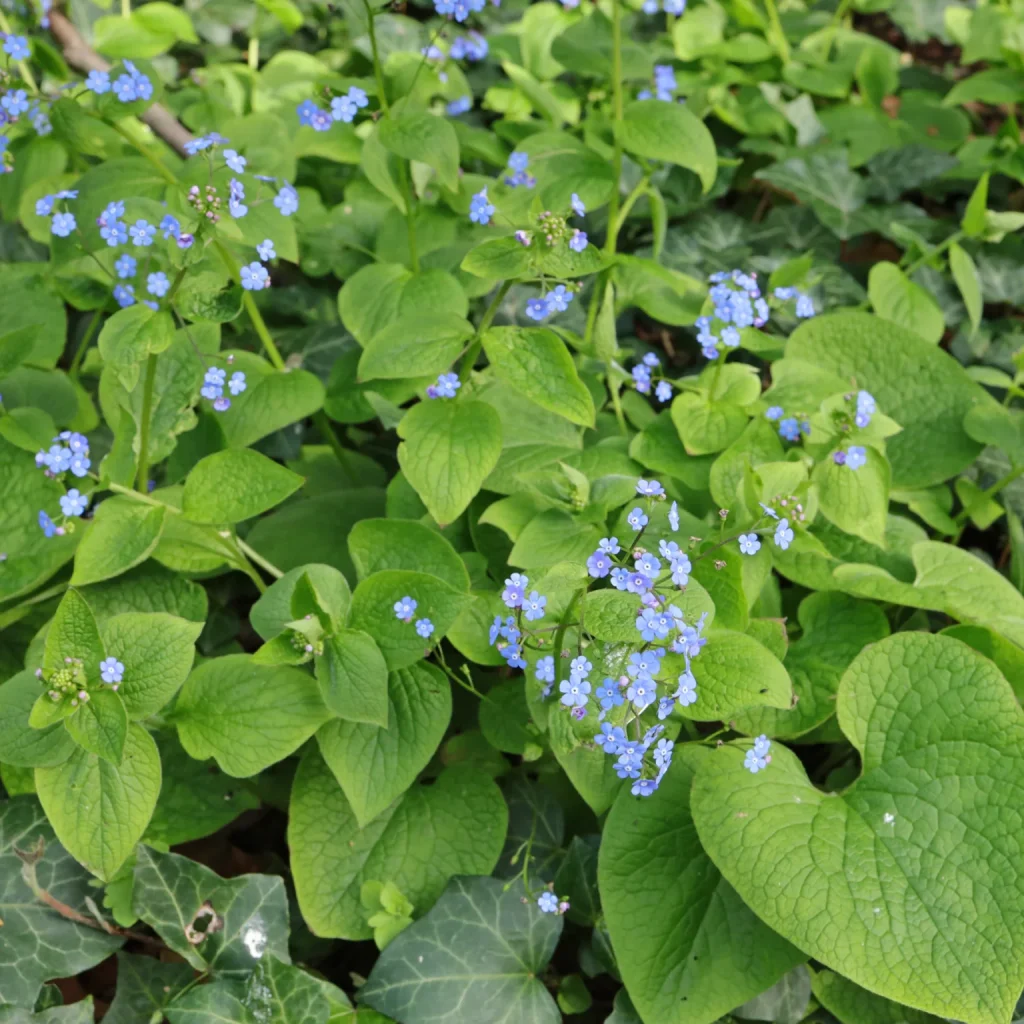
Tiny, bright blue flowers that look like forget-me-nots show up in spring, floating above big heart-shaped leaves that stay pretty all season. Hardy in Zones 3 to 8, it thrives in partial shade and doesn’t ask for much.
Want more drama? Try a variegated cultivar like ‘Jack Frost.’ Its silver-splashed leaves keep a shaded corner glowing even after the flowers are done.
If you’ve always liked forget-me-nots but hated replanting them every year, here’s your answer. Siberian Bugloss gives you the same blue spring flowers, but it comes back on its own year after year.
No replanting required. It’s also deer and rabbit resistant, which real forget-me-nots can’t claim. Give it moist, well-draining soil and a sheltered spot, and it’ll do the rest.
Check young growth for slugs early in the season, and divide clumps every few years to keep it fresh.
- Hardiness: Zones 3 – 8
- Exposure: Partial Sun, Shade
- Seasons: Spring (Mid, Late), Summer
- Height: 1′ – 2′
- Spread: 2′ – 3′
Final Words
Partial shade isn’t a gardening problem , it’s an opportunity most people overlook. These 12 perennials prove that shaded corners can produce some of the most beautiful, interesting, and low-maintenance plantings in your entire garden.
From the heart-shaped blooms of Bleeding Heart in spring to the dancing flowers of Japanese Anemone in fall, there’s something on this list for every season.
Start with two or three plants that catch your eye and build from there. Watch how light moves through your space before you plant, and match each perennial to the right spot. Your shady corner has been waiting for this — it’s time to make it shine.