13 Tropical Plants Outdoor Full Sun in Florida

Florida is basically a tropical plant paradise. I’ve spent years growing things on a balcony, but Florida gardeners?
They’re playing a whole different game.
Full sun, heat, humidity – conditions that would stress most plants actually make these 13 beauties thrive.
Whether you’re in Miami or the Panhandle, there’s a sun-loving tropical plant with your name on it.
Here’s my honest breakdown of the best tropical plants for outdoor full sun in Florida – and what makes each one worth growing.
13 Best Tropical Plants for Florida Landscapes
1. Bird of Paradise
Stop what you’re doing and picture this. Orange petals. Electric blue tips. A flower so bold it looks almost fake — like something straight out of a painting.
That’s Bird of Paradise (Strelitzia reginae) for you. Each bloom sits high above large gray-green leaves and opens one at a time from a spathe.
When birds swoop in for a sip of nectar, the petals split open and dust their feet with pollen. Nature is wild.
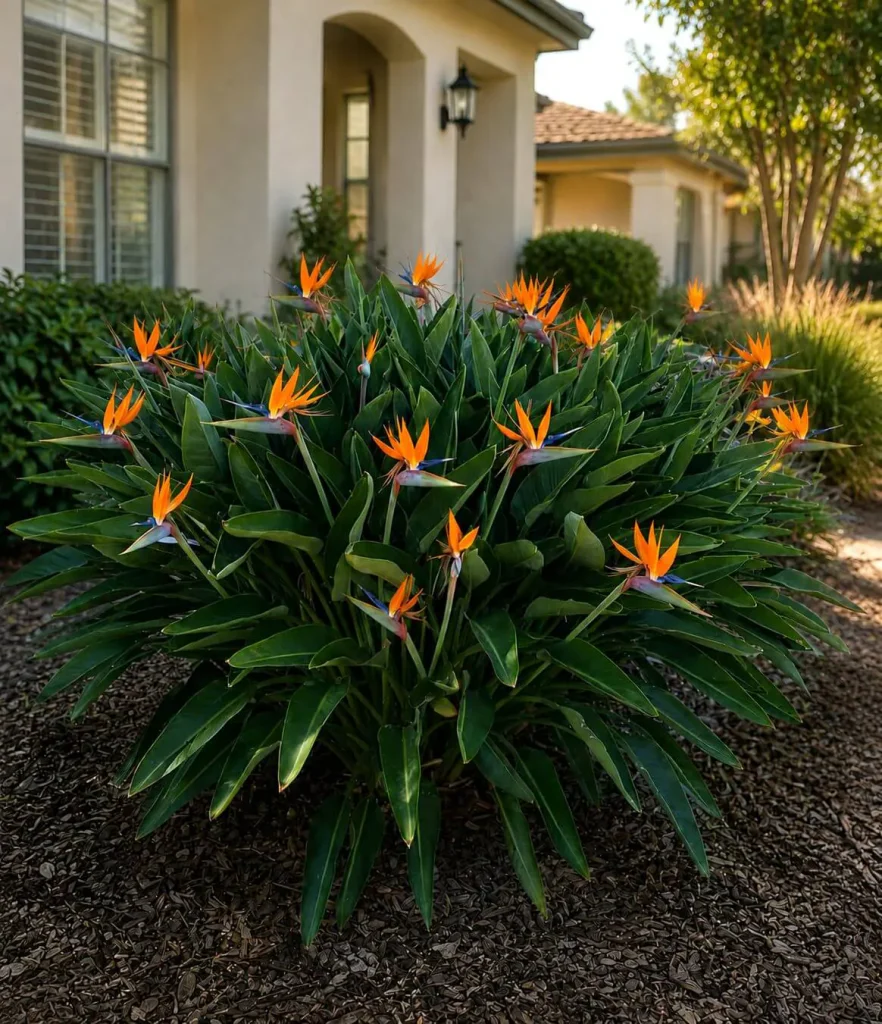
Florida’s heat suits this plant perfectly. Water it well through summer and you’ll get weeks of those showstopping blooms.
- Botanical Name: Strelitzia reginae
- Sun Exposure: Full, partial
- Soil Type: Loam, sand, high organic matter
- Soil pH: Acidic, Neutral, Alkaline
Also read: 15 Tropical Plants for Outdoor Full Sun That Grow in Pots
2. Bougainvillea
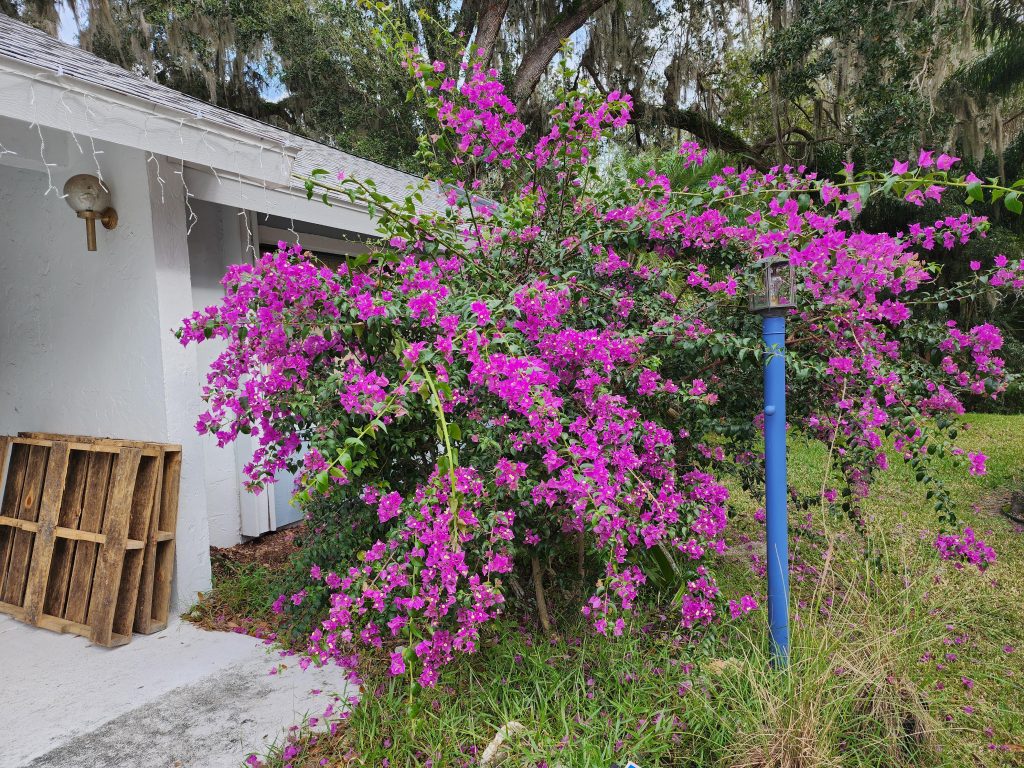
Here’s something that’ll surprise you. Those gorgeous, colorful “flowers” on a bougainvillea? They’re not actually flowers. They’re bracts — a type of modified leaf — and the real blooms are tiny and tucked away inside.
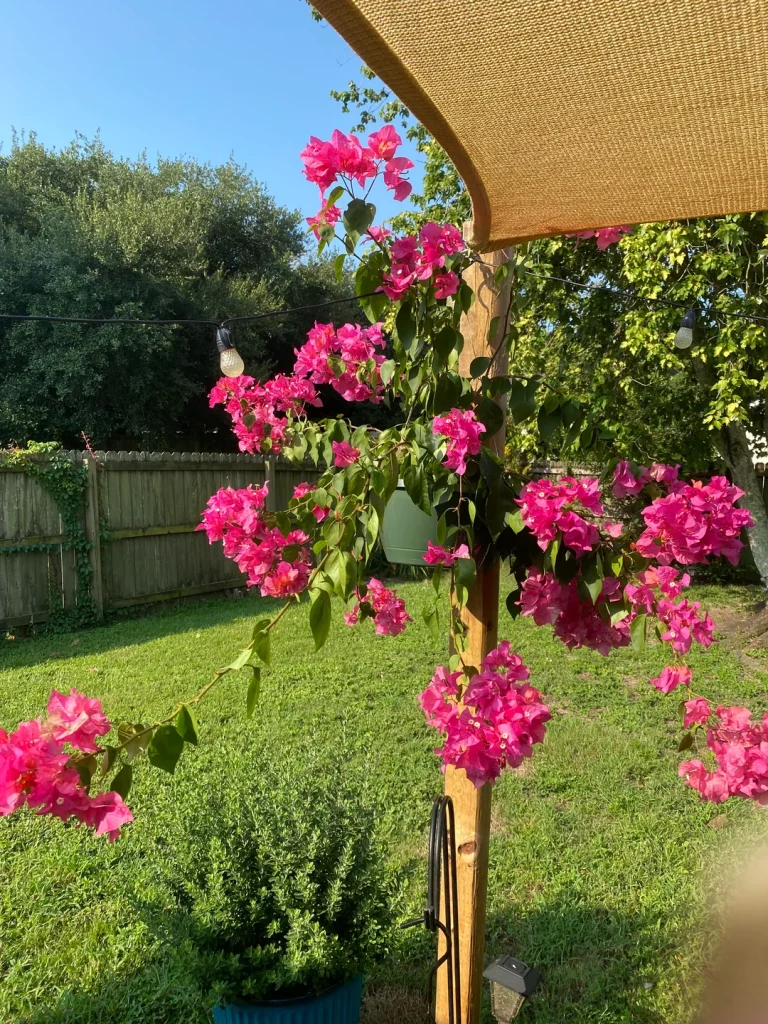
Don’t let that fool you though. Bougainvillea is one of the most jaw-dropping vines you can grow in Florida. Pink, magenta, purple, red, orange, white, yellow – pick your favorite.
Plant it in full sun and it’ll bloom all year long, even through Florida’s mild winters.
Coastal winds don’t bother it at all. Just watch those thorns — they’re sharp.
- Botanical Name: Bougainvillea spp.
- Sun Exposure: Full sun
- Soil Type: Loam, sand
- Soil pH: Acidic
Also read: 15 Tropical Plants That Grow Well in Shade
3. Hibiscus
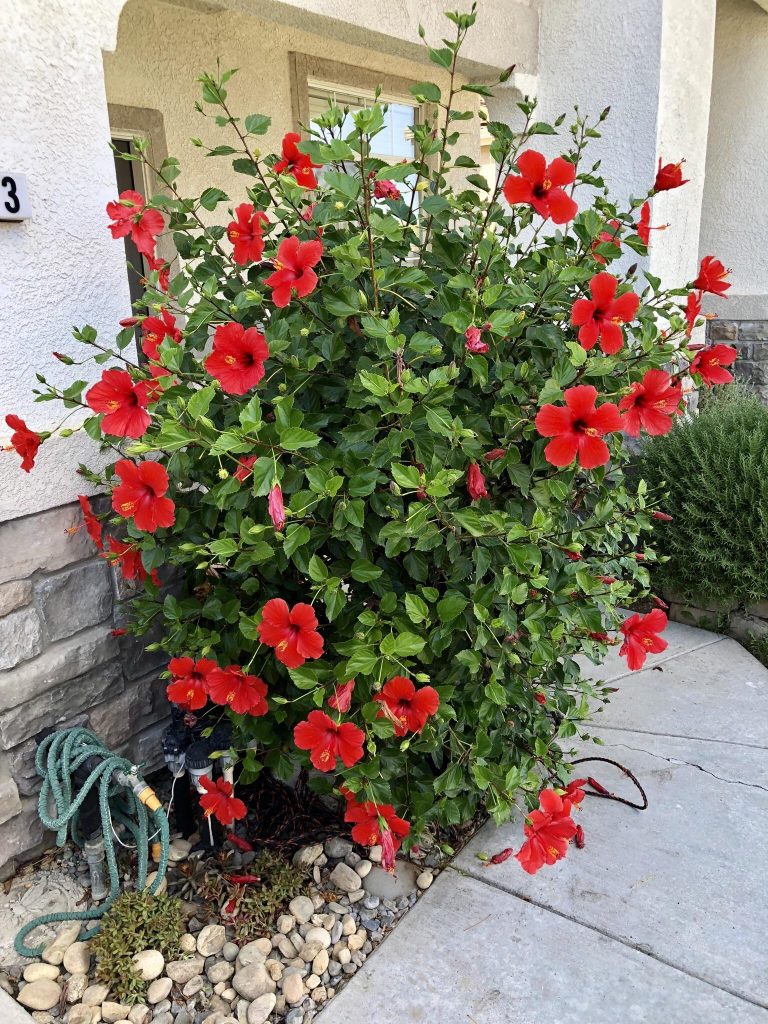
Honestly? Hibiscus might be the most cheerful plant in any Florida yard. Blooms can stretch nearly 10 inches wide and show up in white, red, pink, yellow, and orange.
Florida’s heat and humidity suit it perfectly. With the right nutrients, it’ll flower almost every single month of the year.
Most people wreck this plant by trimming it too often – cutting off new buds before they even get a chance. Trim just twice a year, once in spring and once in fall, a foot from the ground.
Simple care. Spectacular blooms. You’ll love it.
- Botanical Name: Hibiscus rosa-sinensis
- Sun Exposure: Full sun
- Soil Type: Moist, well-draining
- Soil pH: Acidic to Neutral
4. Croton
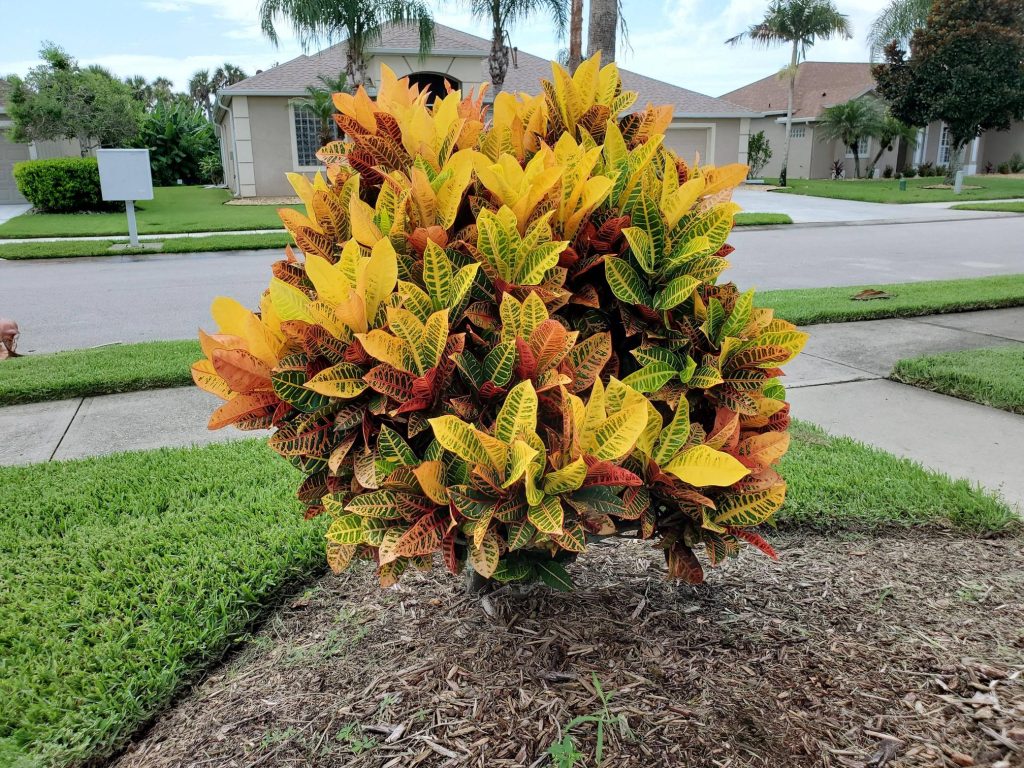
Want instant color without waiting for flowers? Croton is your answer. Those vivid yellow, orange, and red leaves bring the party whether anything else in your yard is blooming or not.
There are over 800 known varieties — yes, really. Most people grab the popular ones like ‘Mammy’ or ‘Petra,’ but why not try something your neighbor doesn’t have?
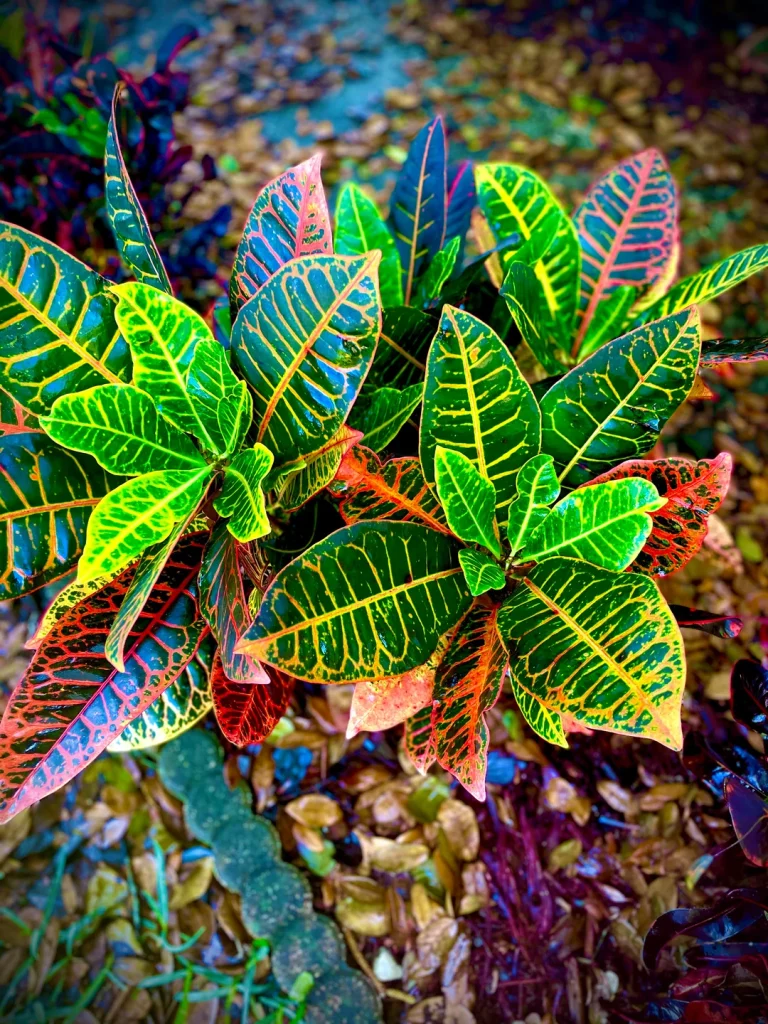
‘King of Siam’ has narrow, twisted leaves in reds and yellows. ‘Dreadlocks’ cascades down like an exotic hairdo. Go bold.
Crotons love Florida’s heat and can grow up to six feet tall. They thrive in full sun and reward you with color year-round.
- Botanical Name: Codiaeum variegatum
- Sun Exposure: Full sun
- Soil Type: Moist, well-draining, organically rich
- Soil pH: Acidic to Neutral
5. Ixora
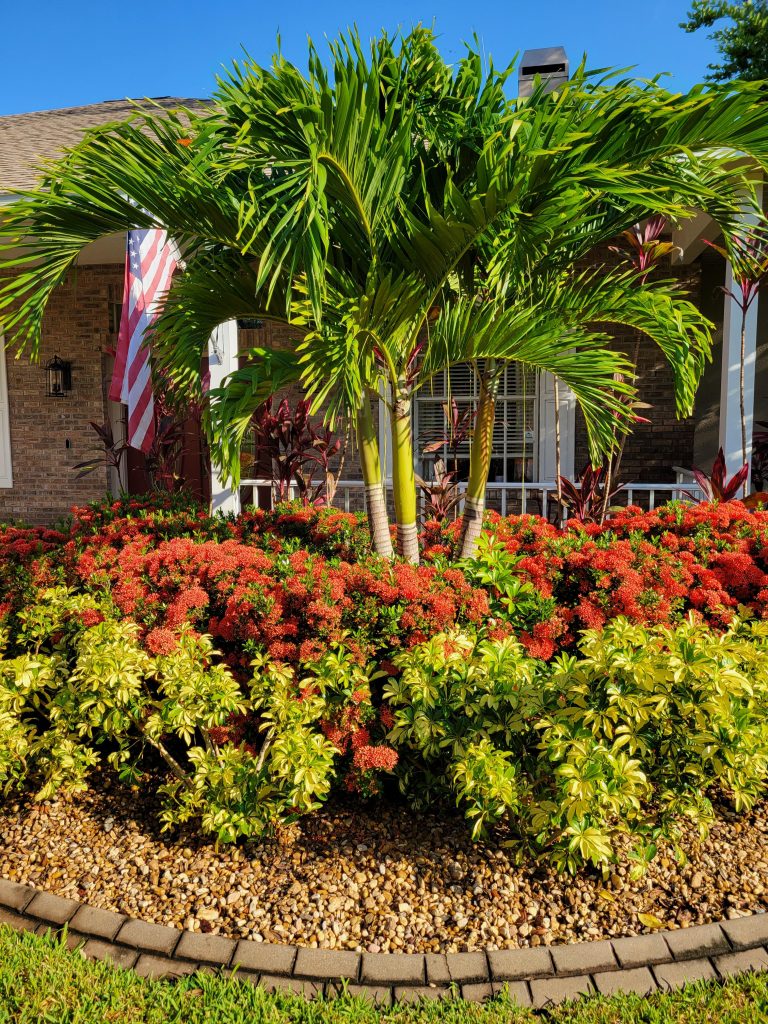
Dotted all over Florida, Ixora is one of those plants that just works everywhere. Hedges, borders, specimen plantings — it fits right in wherever you put it.
Clusters of tubular flowers bloom in bright red, orange, yellow, or pink. Each flower cluster can last six to eight weeks, which means your yard stays colorful for a long time.
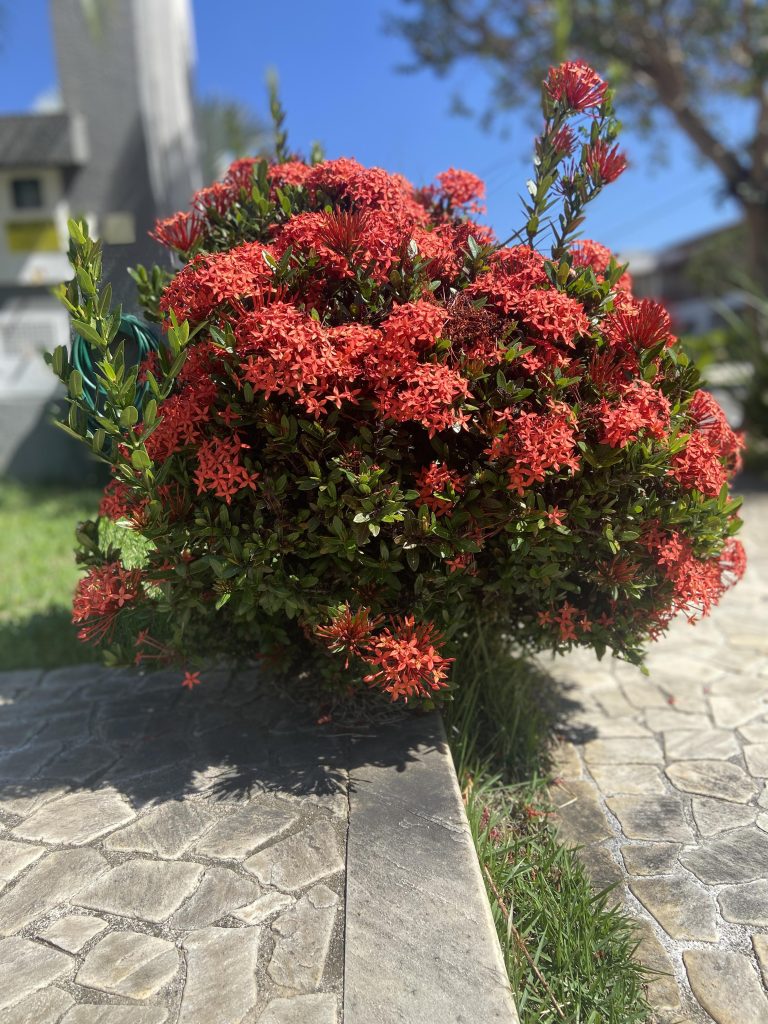
‘Nora Grant’ grows tall and pink — perfect as a hedge. The ‘Petite’ varieties stay at just one to two feet if you need something compact.
Florida’s full sun brings out the best in this shrub. Plant it and pretty much leave it alone.
- Botanical Name: Ixora coccinea
- Sun Exposure: Full sun
- Soil Type: Organically rich, well-drained but moist
- Soil pH: Acidic
6. Pride of Barbados
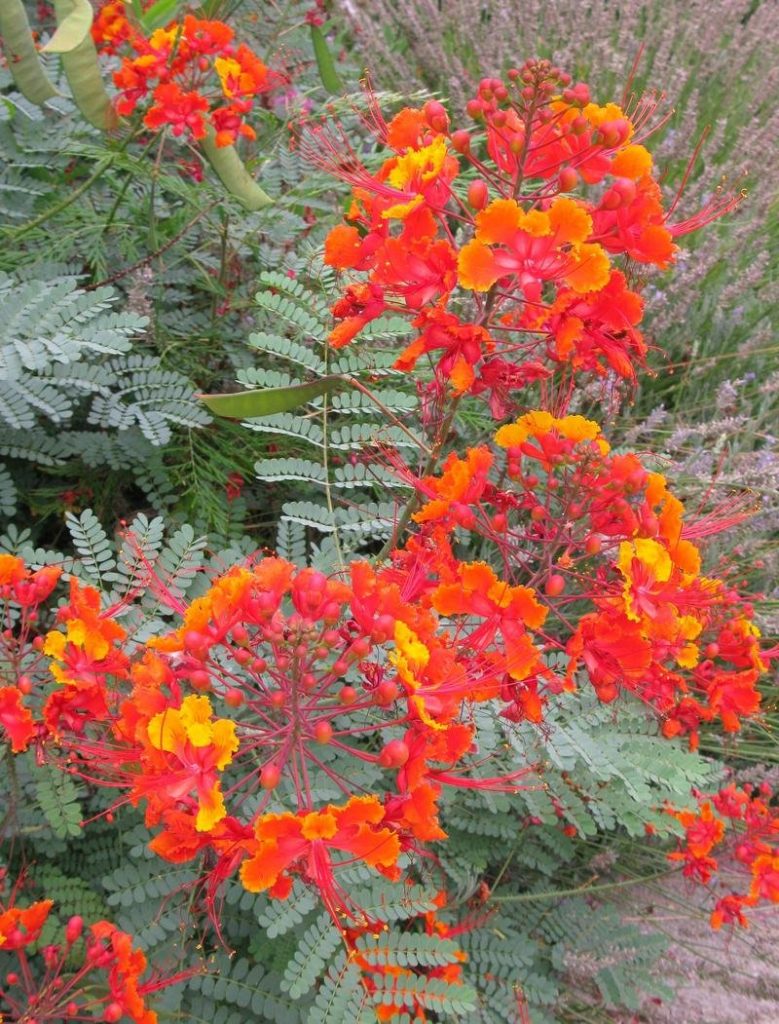
Hot orange and yellow blooms on fern-like foliage – Pride of Barbados is a real showstopper. Southern Florida gardeners get to enjoy it as a full evergreen shrub or small tree year-round.
Central and northern Florida gardeners aren’t left out though. It sheds its leaves in cooler months but bounces right back when the warmth returns.
Those prickly stems and branches also make it a surprisingly effective natural barrier against deer – and nosy neighbors.
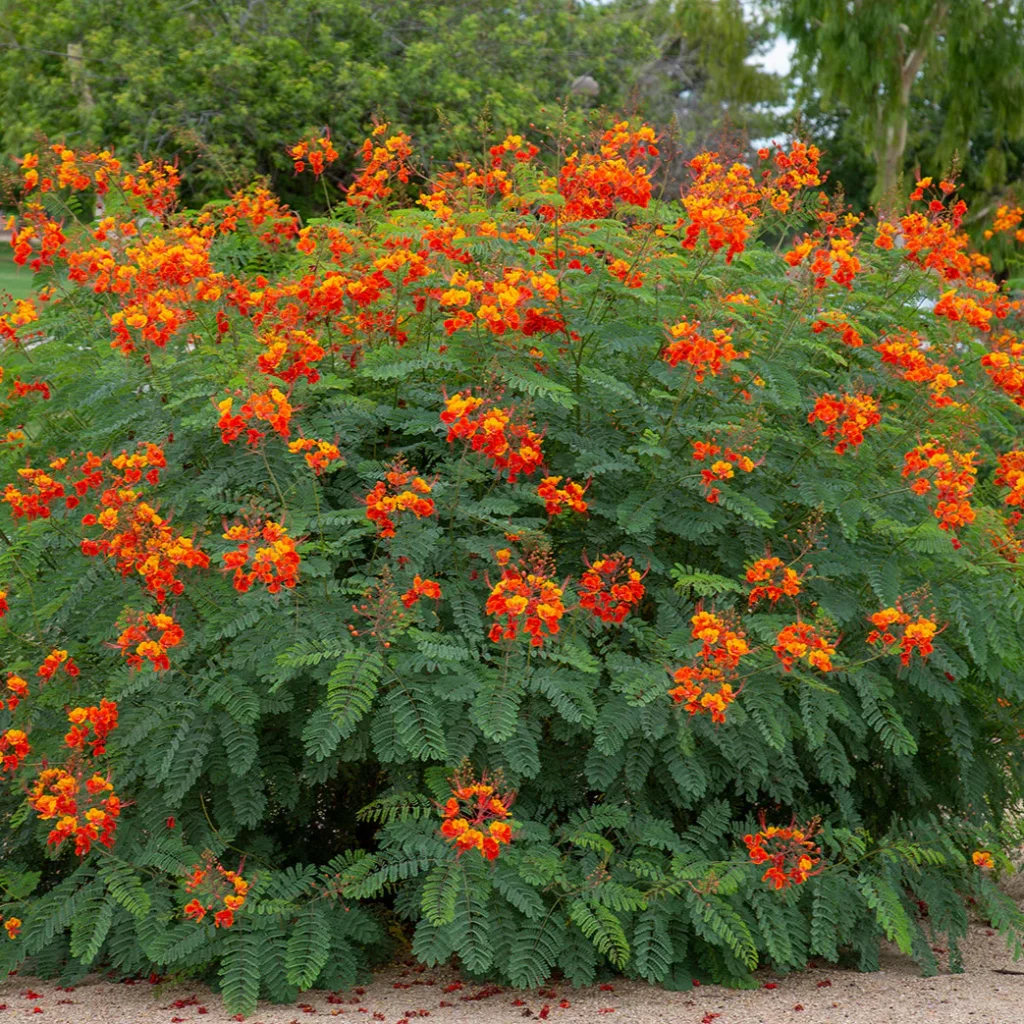
Give it full sun and well-drained soil and it practically takes care of itself. Few plants are this tough and this beautiful at the same time.
- Botanical Name: Caesalpinia pulcherrima
- Sun Exposure: Full sun, partial shade
- Soil Type: Clay, loam, sand
- Soil pH: Acidic, Neutral, Alkaline
7. Trumpet Bush
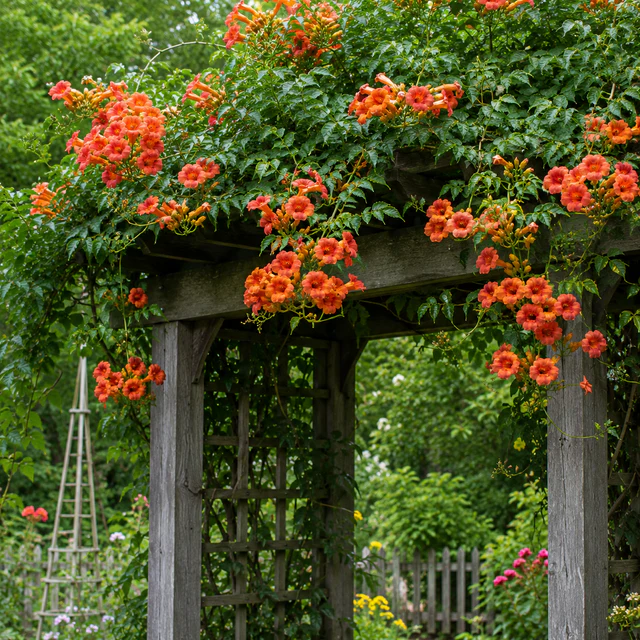
Hummingbirds will find your yard fast once you plant a Trumpet Bush. Those bright yellow, trumpet-shaped flowers with red veins in the throat are impossible for them – or butterflies – to resist.
Native to the American tropics, this broadleaf evergreen typically grows three to six feet tall in most Florida yards. Given the right conditions though, it can shoot up to an impressive 25 feet.
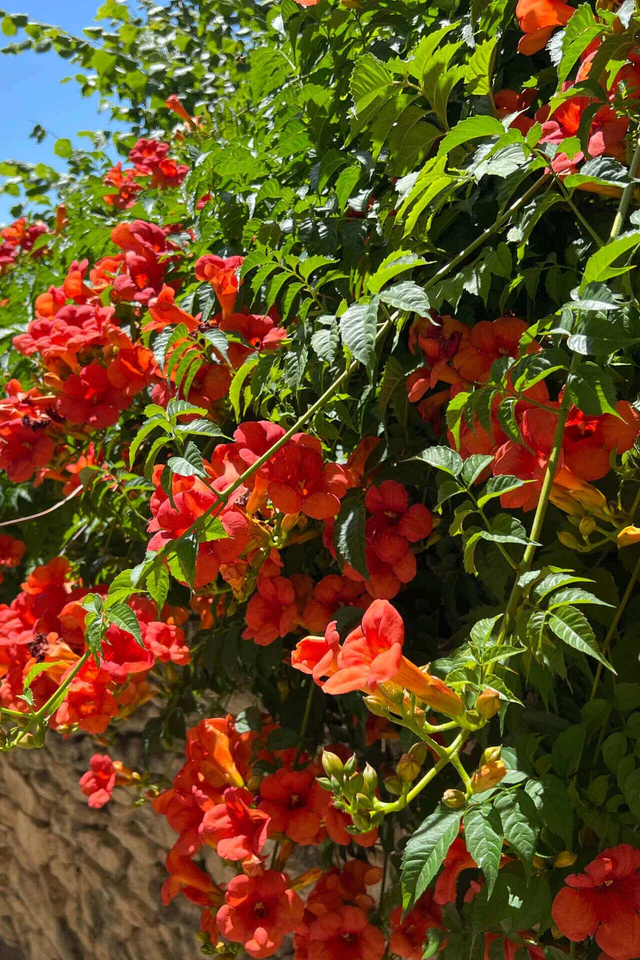
Deadhead the spent blooms regularly and it’ll keep flowering from spring all the way through frost.
Full sun is non-negotiable for this one. More sun equals more flowers — simple as that.
- Botanical Name: Tecoma stans
- Sun Exposure: Full sun, partial shade
- Soil Type: Clay, loam, sand
- Soil pH: Acidic, Neutral, Alkaline
8. Angel’s Trumpet
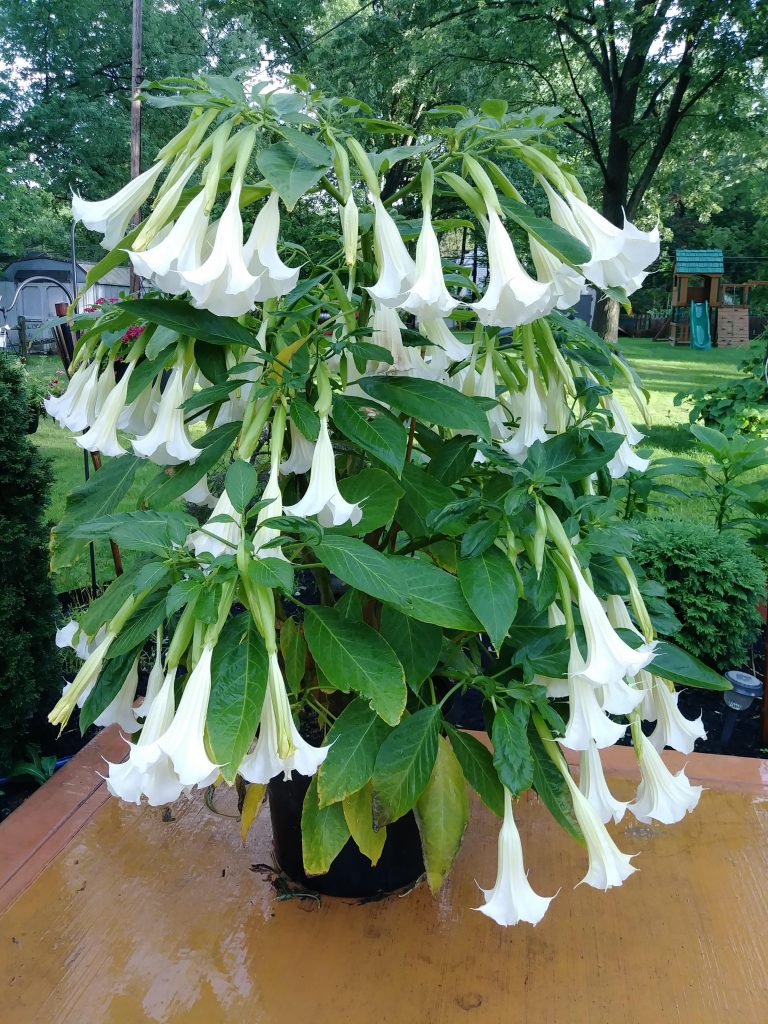
Picture a tree dripping with giant, bell-shaped flowers in white, peach, or creamy yellow. That’s Angel’s Trumpet (Brugmansia spp.) — and the fragrance it puts out is something else entirely.
In Zones 10 and 11, this beauty grows as a full evergreen tree and can reach a jaw-dropping 35 feet tall.
Cooler zones will see it die back in winter, but don’t panic – it comes roaring back when temperatures climb again. Once it hits maturity, it flowers continuously through the entire growing season.
Give it rich, moist soil and plenty of sun. You won’t regret it.
- Botanical Name: Brugmansia spp.
- Sun Exposure: Full sun to partial shade
- Soil Type: Organically rich and moist
- Soil pH: Neutral
9. Mandevilla
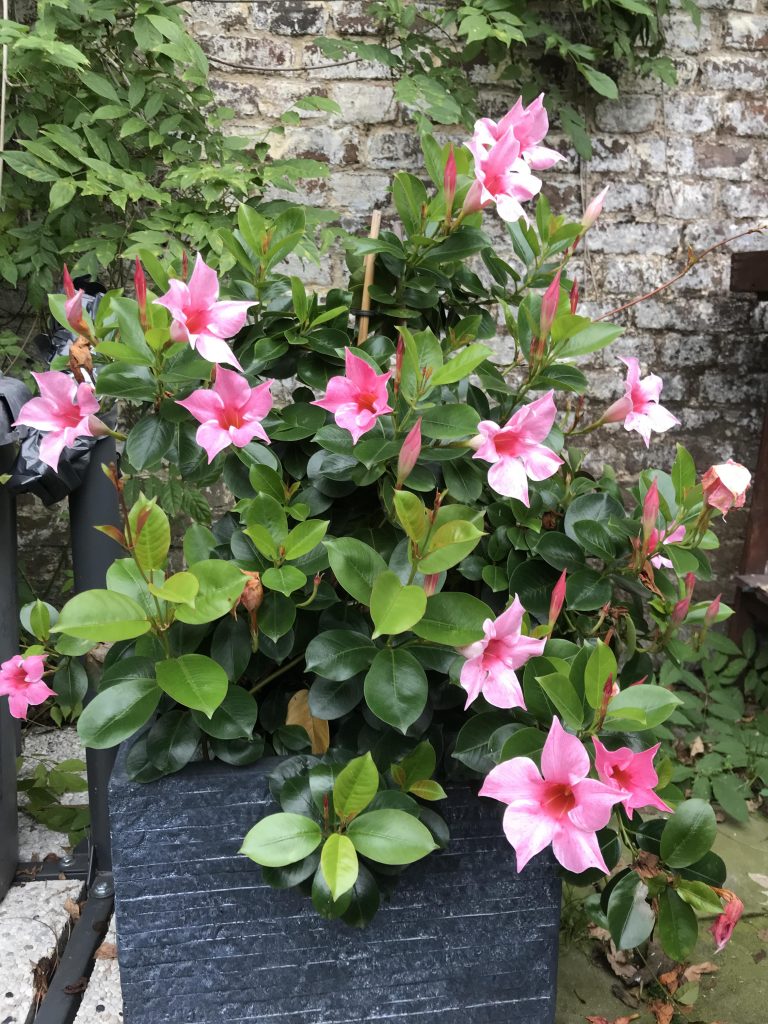
Tropical, showy, and surprisingly tough — Mandevilla checks every box for Florida gardeners. With over 180 species and hybrids available, there’s a variety for almost every space and style.
The popular SunParasol® group comes in every shade of pink and red, plus white, yellow, bicolors, and even a bluish-purple. Coastal gardeners especially love this plant because it shrugs off salt air and strong winds without missing a beat.
Grow it as a vine climbing a trellis or let it spread as a shrubby mound — either way it delivers.
Full sun keeps it blooming its best. Cold hardiness drops off in northern Florida zones, so give it a sheltered spot up there.
- Botanical Name: Mandevilla spp.
- Sun Exposure: Full sun
- Soil Type: Moist but well-draining
- Soil pH: Neutral
10. Egyptian Star Cluster
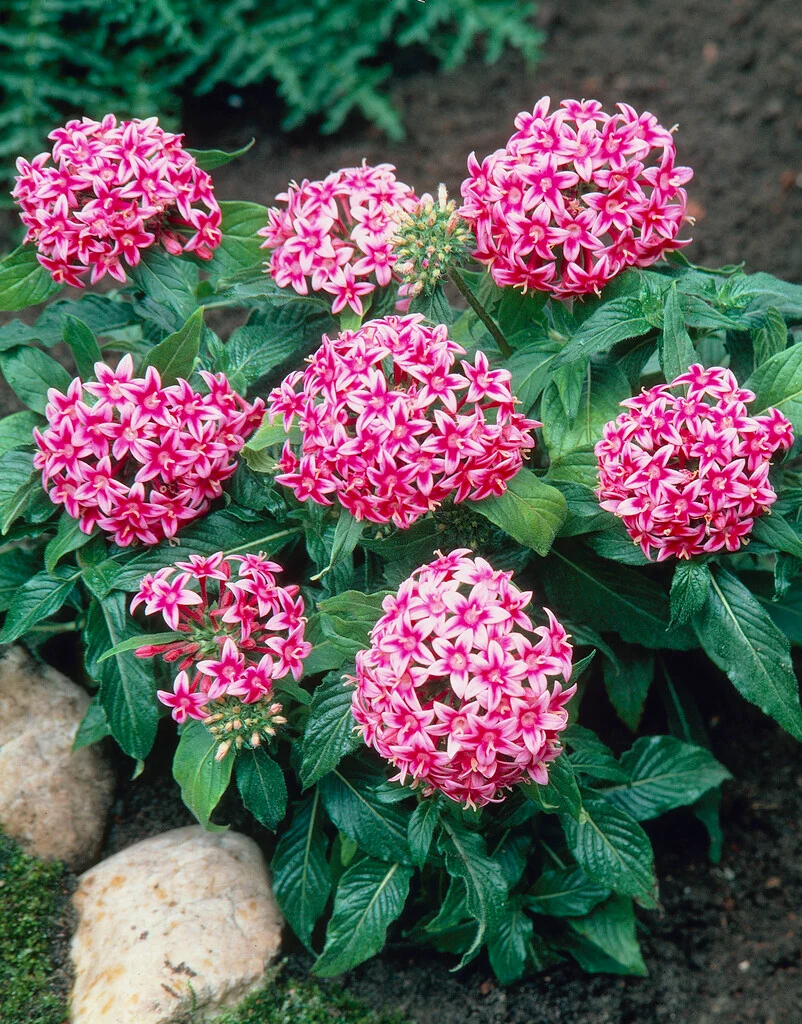
Every pollinator in your neighborhood will thank you for planting Egyptian Star Cluster (Pentas lanceolata). Butterflies, bees, hummingbirds — they absolutely swarm these dense clusters of star-shaped flowers.
Blooms come in white, pink, lavender, and red, and they just keep going from spring all the way through winter. Florida gardeners in Zones 10 and 11 get to enjoy it as a true perennial.
Everyone else can grow it as an annual – and honestly, it performs so well that it’s worth replanting every year.
Full sun to partial shade works well for this one. Few plants give you this much pollinator action for this little effort.
- Botanical Name: Pentas lanceolata
- Sun Exposure: Full sun to partial shade
- Soil Type: Clay, loam, sand
- Soil pH: Acidic
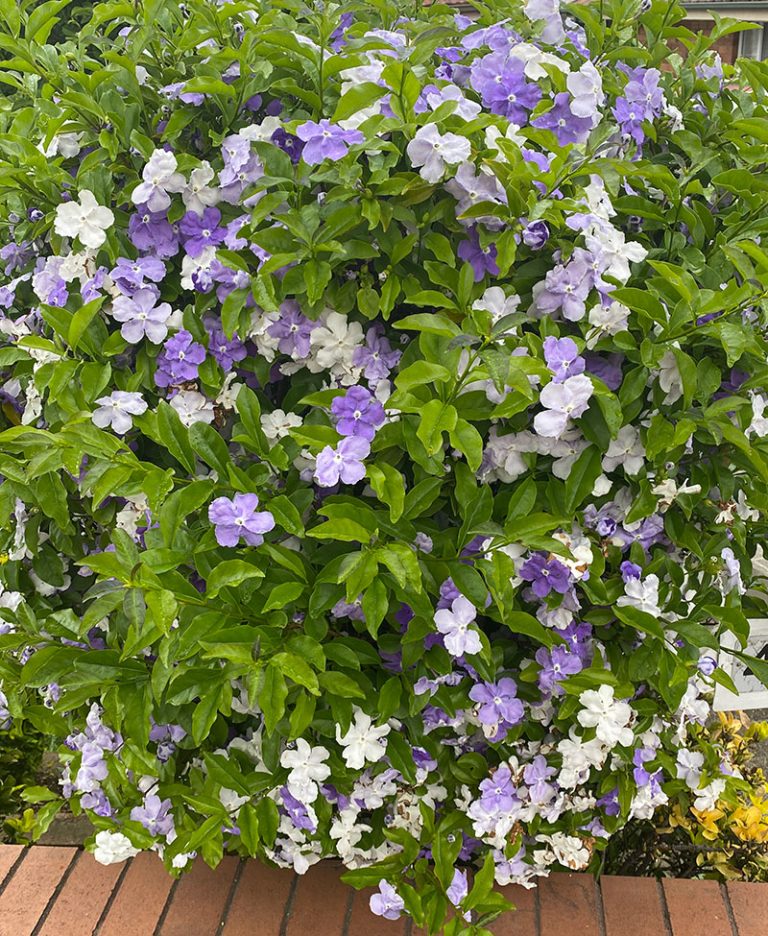
11. Plumbago
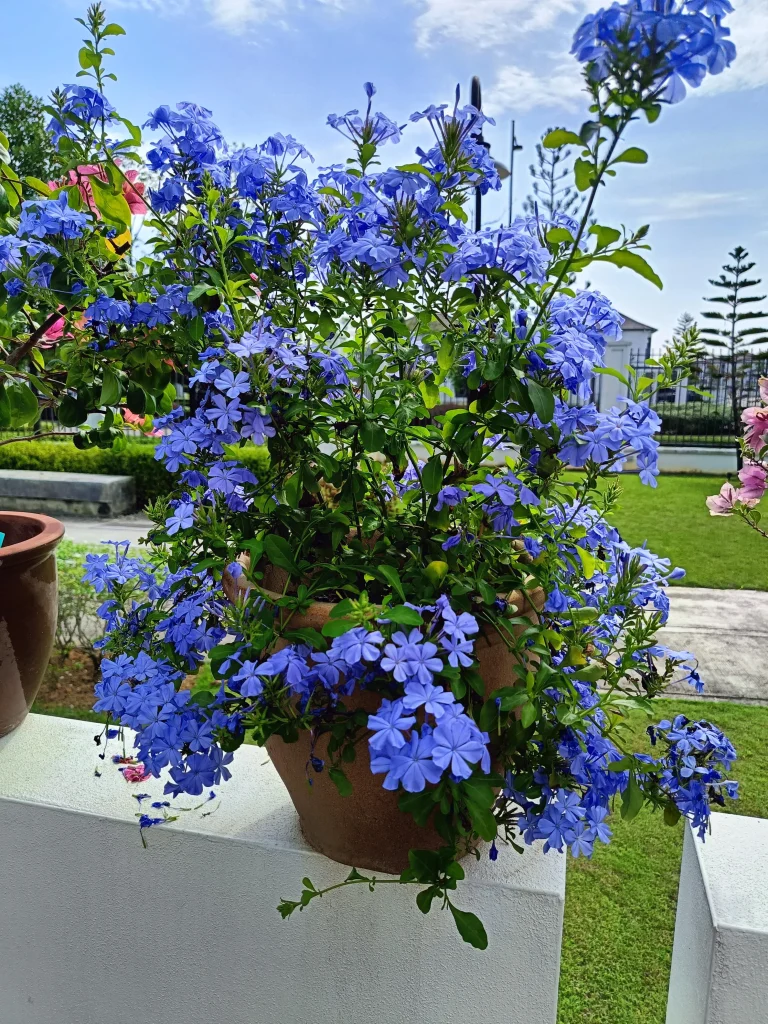
Cool, breezy periwinkle blue in a sea of hot tropical colors — Plumbago is a breath of fresh air. Those delicate five-petaled flowers spill out along vine-like branches and just keep coming.
Hardy in Zones 9 through 11, this shrub can grow anywhere from 6 to 15 feet tall and spread 6 to 8 feet wide – so give it room. Deer tend to avoid it completely, making it a smart pick if four-legged visitors raid your garden regularly.
One important heads-up though – always wear gloves when handling plumbago because every part of the plant can cause skin irritation.
White-flowered varieties exist too if you want something even softer. Either way, it’s a gorgeous contrast plant against bold tropical neighbors.
- Botanical Name: Plumbago auriculata
- Sun Exposure: Full sun to partial shade
- Soil Type: Sandy, well-drained
- Soil pH: Neutral
12. Japanese Banana
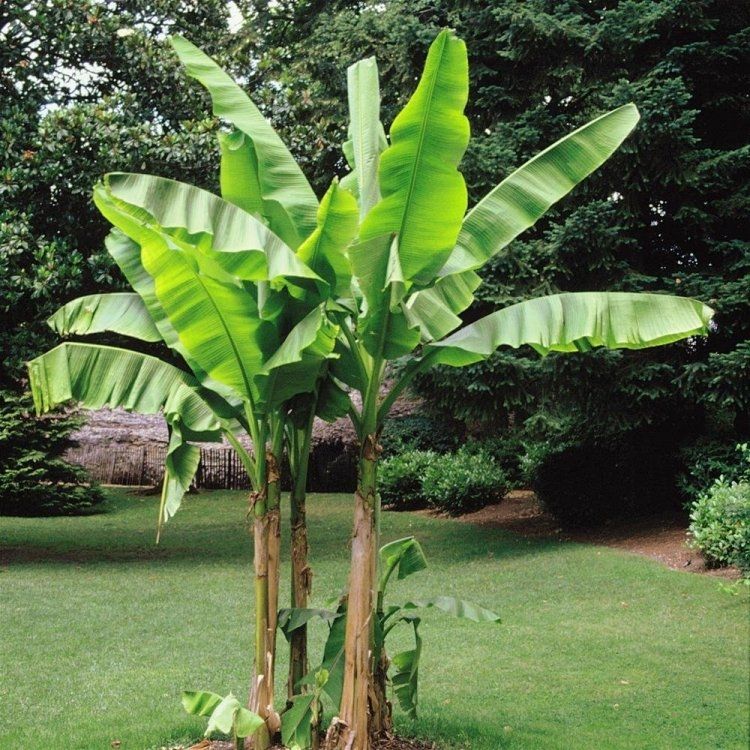
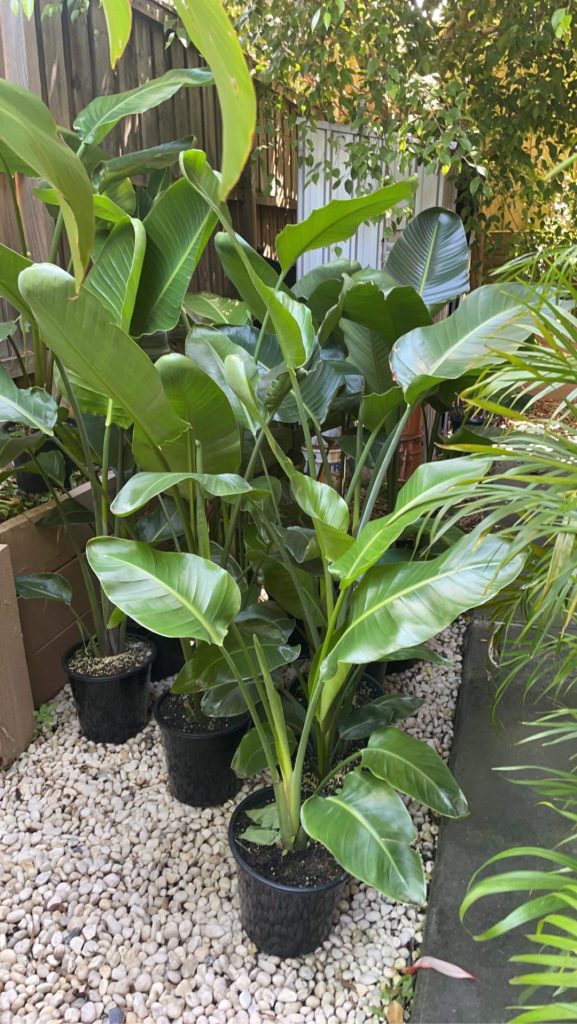
Don’t let the name fool you — Japanese Banana (Musa basjoo) is one of the toughest tropical-looking plants you can grow in Florida.
Those enormous, paddle-shaped bright green leaves arch dramatically from the center and make an instant statement in any yard.
Here’s what makes it special. It’s cold-hardy across every single Florida zone — something very few true tropical plants can claim. The plant does produce clusters of creamy yellow flowers followed by fruit, but honestly most gardeners grow it purely for that lush, dramatic foliage.
After it flowers, the center stem dies back naturally and fresh new shoots push up from the roots to start the whole cycle again.
Full sun or partial shade both work fine. Plant it somewhere with room to spread and watch it transform your yard.
- Botanical Name: Musa basjoo
- Sun Exposure: Full sun, partial shade
- Soil Type: Loamy, sandy, organically rich
- Soil pH: Acidic, Neutral, Alkaline
13. Foxtail Palm
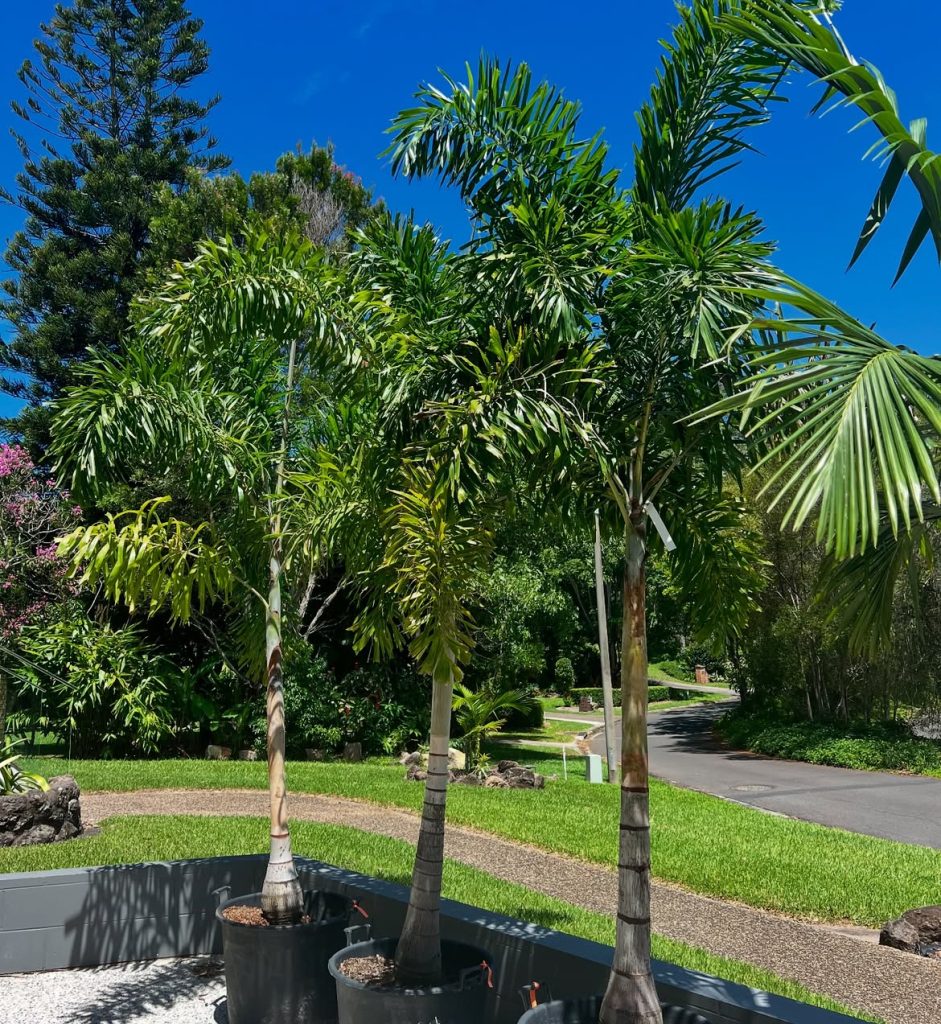
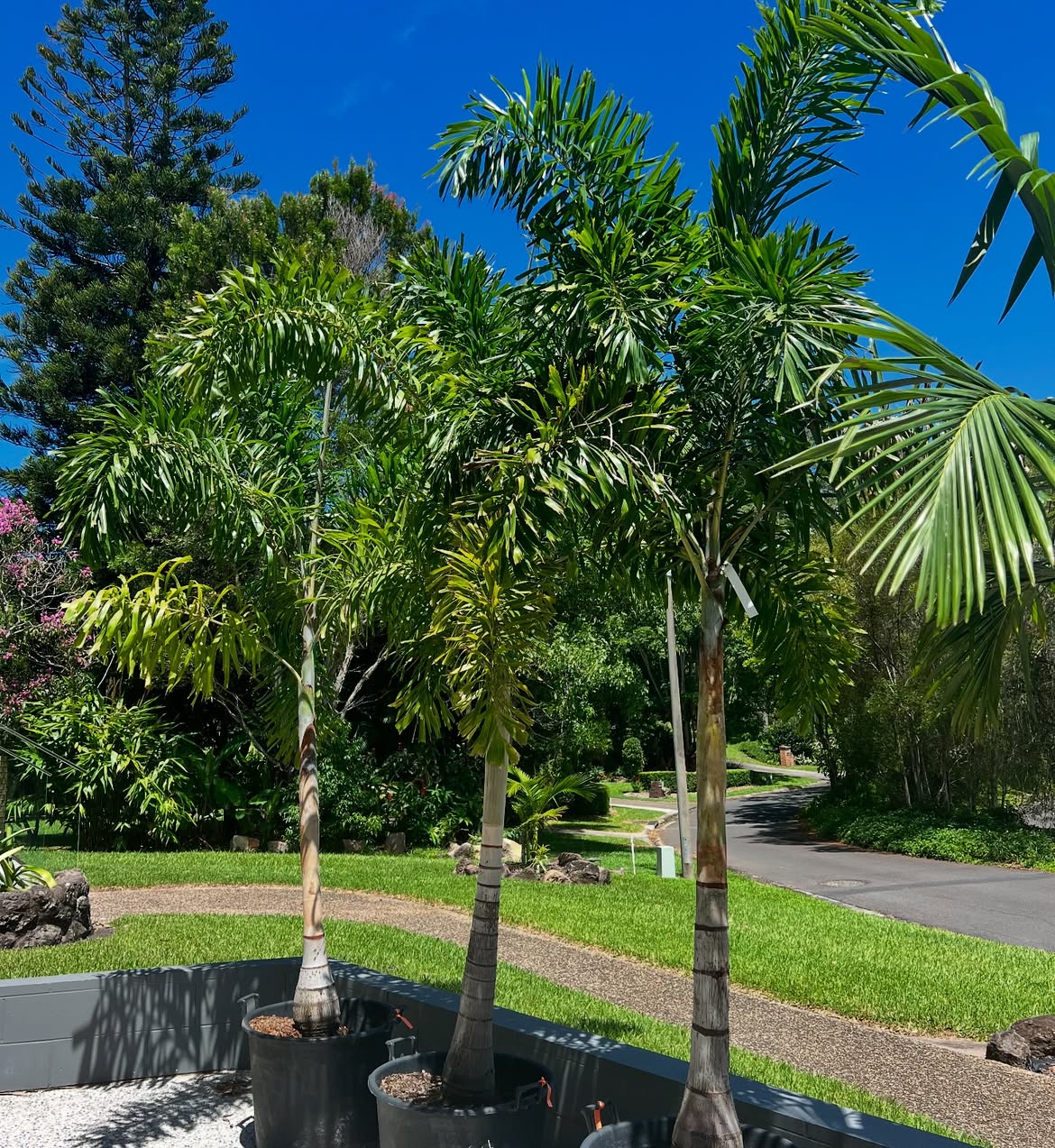
Few palms turn heads quite like the Foxtail Palm. Those full, fluffy fronds look exactly like a fox’s bushy tail arching gracefully overhead – and once you see one, you’ll want one immediately.
Florida’s full sun and heat suit this palm perfectly. You can find it with a single trunk for a classic look, a double trunk for something a little different, or a triple trunk if you really want to make a statement.
Unlike some palms that look sparse and leggy, the Foxtail stays lush and full from top to bottom – which is exactly why landscape designers reach for it so often.
It grows beautifully as a specimen plant or in a dramatic row along a driveway. Either way, your yard instantly looks like a five-star resort.
- Botanical Name: Wodyetia bifurcata
- Sun Exposure: Full sun
- Soil Type: Sandy, well-draining
- Soil pH: Acidic to Neutral
Frequently Asked Questions
What tropical plants grow best in full sun in Florida?
Bird of Paradise, Bougainvillea, Hibiscus, Ixora, and Croton all thrive in Florida’s full sun. These plants love the heat and humidity and reward you with stunning color throughout the year.
Can tropical plants survive Florida winters?
It depends on where you live in Florida. South Florida gardeners in Zones 10 and 11 can grow most tropicals as year-round evergreens. Gardeners in central and northern Florida zones should choose cold-hardy varieties like Japanese Banana or give more tender plants a sheltered spot during cooler months.
How often should I water tropical plants in Florida’s full sun?
Most tropical plants in full sun need deep, regular watering — especially through Florida’s hot summers. Once established, many varieties like Pride of Barbados and Plumbago become more drought-tolerant. Always check that your soil drains well because soggy roots are a bigger problem than dry ones for most tropicals.
Do full sun tropical plants in Florida attract pollinators?
Absolutely. Egyptian Star Cluster, Trumpet Bush, and Hibiscus are pollinator magnets that draw butterflies, bees, and hummingbirds. Planting a mix of these in your yard essentially creates a living pollinator garden that stays active from spring through winter.
Conclusion
Florida’s full sun doesn’t have to be a challenge — it’s actually your biggest advantage. These 13 tropical plants are built for exactly those conditions, thriving in the heat that would exhaust plants anywhere else.
From the electric blooms of Bird of Paradise to the swaying fronds of a Foxtail Palm, there’s something on this list for every yard, every style, and every Florida zone.
Pick a few that speak to you, get them in the ground, and let Florida’s sunshine do the rest.