
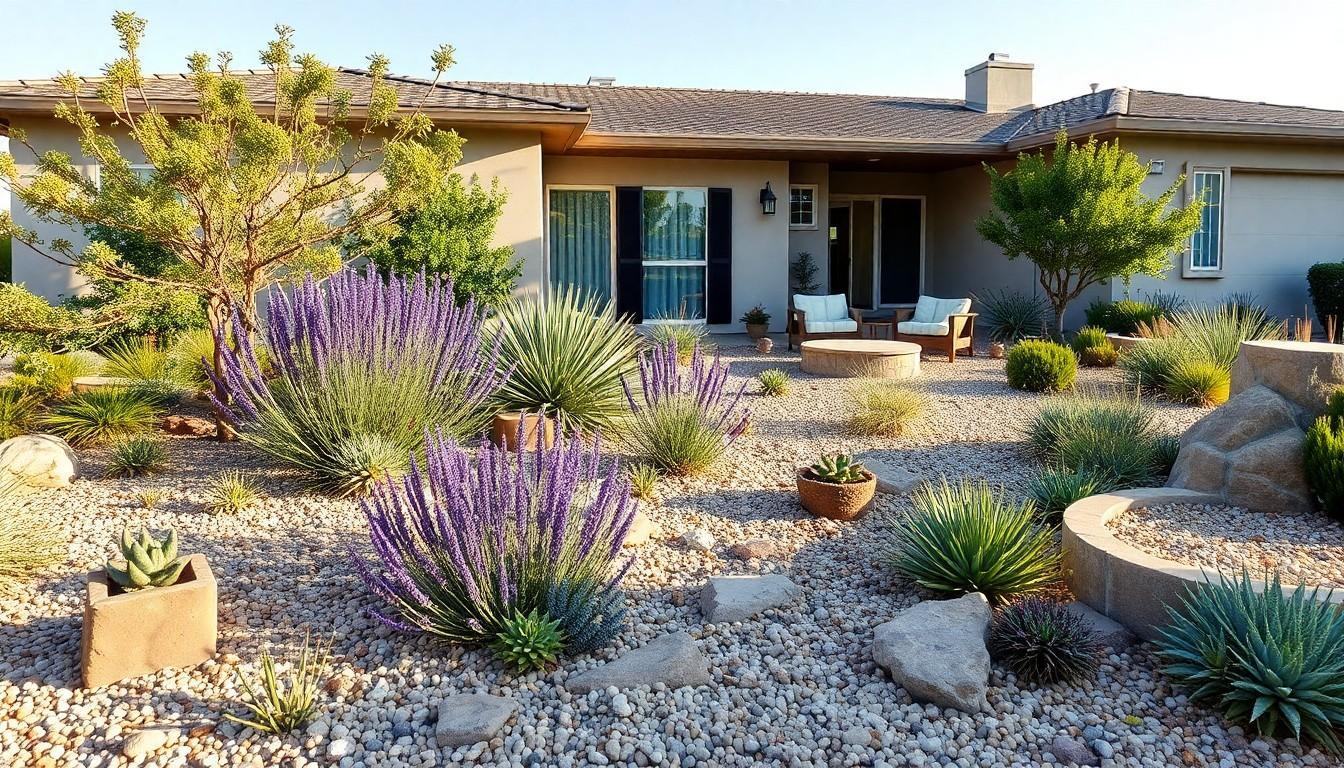
Tired of a Thirsty Lawn? 12 Drought Tolerant Front Yard Ideas to Try Instead

Watching your grass turn brown every summer gets old fast. You water it anyway, and your bill still climbs. There’s a better way to handle your front yard.
Drought tolerant landscaping doesn’t mean gravel and a single cactus. You can build a front yard that’s colorful, textured, and full of life. It just uses plants and materials that don’t need constant watering to survive.
I’ve pulled together 12 real front yard designs that prove this style works in almost any climate.
Some lean into desert vibes with boulders and agave. Others use wildflowers and native perennials for a softer, cottage-garden feel.
Whatever your style, you’ll find an idea here you can adapt for your own home. Let’s get into it.
Why Go Drought Tolerant?
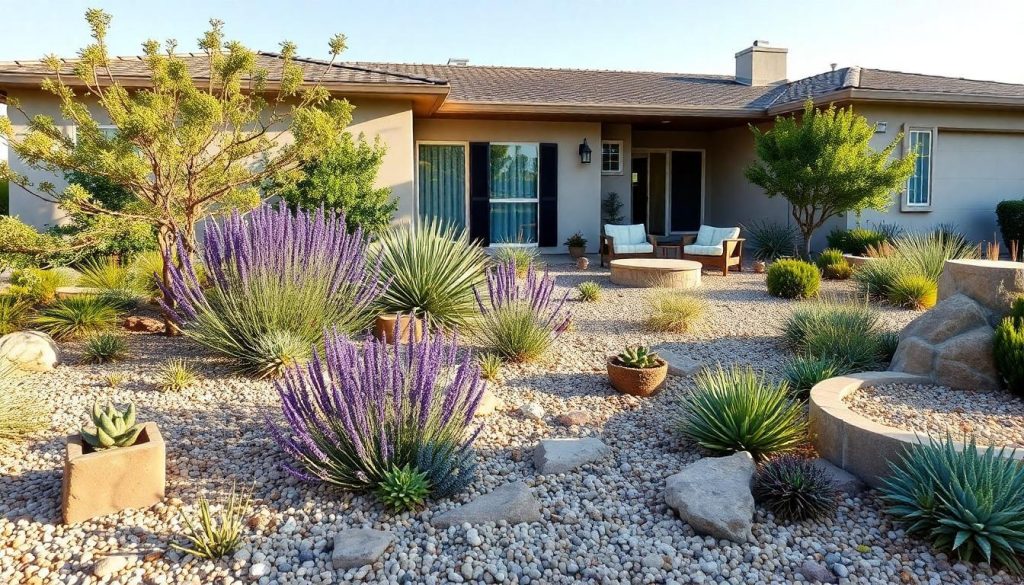
Cutting back on watering isn’t just good for your wallet. It changes how your whole yard functions, looks, and holds up over time.
Lower Water Bills
You’ll water less, sometimes only during the first year while plants establish. Once roots settle in, most drought tolerant plants survive on rainfall alone in many climates.
That adds up to real savings over a full season, and the savings only grow as your plants mature.
Less Time on Maintenance
Native and drought tolerant plants don’t need constant mowing, fertilizing, or babying.
You skip the weekly mow, the weed-and-feed routine, and most of the fussing that comes with a traditional lawn. You get your weekends back, and your yard still looks good.
Handles Water Restrictions Without Stress
If your area enforces watering limits, a drought tolerant yard already meets them.
You won’t scramble every time restrictions tighten, and you won’t watch your lawn go brown while your neighbors’ xeriscapes stay green.
It’s one less thing to worry about during a dry summer.
Supports Local Wildlife
Native flowering plants draw in bees, butterflies, and birds. Your yard becomes part of the local ecosystem instead of working against it.
Plants like salvia, penstemon, and coneflower feed pollinators all season, and that activity brings a yard to life in a way mowed grass never does.
Boosts Curb Appeal Year-Round
A drought tolerant yard doesn’t go dormant and brown the way lawns do in late summer. Layered textures, from spiky agave to soft ornamental grasses, keep the yard visually interesting in every season.
You get color and structure even when your neighbors’ grass is struggling.
Builds Resilience Against Heat and Drought
Extreme heat and dry spells are becoming more common in a lot of regions. A yard built around tough, adapted plants won’t wilt or die the moment watering slows down.
You’re not just saving water now. You’re future-proofing your landscaping against whatever the next few summers bring.
Can Increase Your Home’s Value
Buyers notice low-maintenance landscaping, especially in areas where water costs or restrictions are a real concern.
A well-designed drought tolerant yard signals that the home is easy to care for, which can make your property more appealing when it’s time to sell.
Bottom line: you save water, save time, and still end up with a front yard that looks good and holds up under pressure.
Also read: No-Grass Front Yard Ideas: 15 Modern Ways to Upgrade Your Curb Appeal
12 Drought Tolerant Front Yard Landscape Ideas That Still Look Lush
1. Gravel Bed with Layered Perennials Along a Staircase Entry
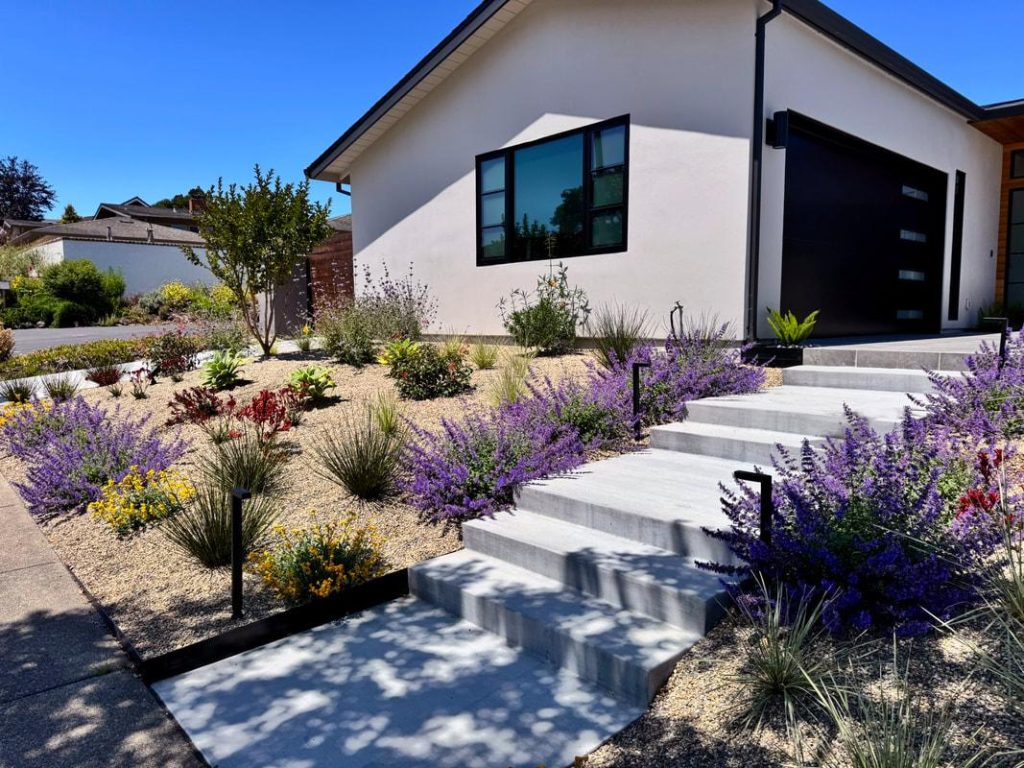
This front yard turns a simple staircase entry into the main event. Waves of purple Russian sage spill over the steps, and clumps of ornamental grass add movement on either side.
Decomposed granite fills in the gaps between plants, so you never see bare dirt. It also keeps weeds down and drains fast after rain. Pops of yellow and red kangaroo paw break up all that purple and keep the bed from feeling one-note.
You don’t need a huge lot for this look. It works just as well on a narrow side bed as it does across a full front yard.
Best for: Modern or contemporary homes
Maintenance: Low, occasional pruning after bloom
Cost range: $$-$$$
Pairs well with: Ornamental grasses, succulents
2. Native Wildflower Meadow Instead of Lawn
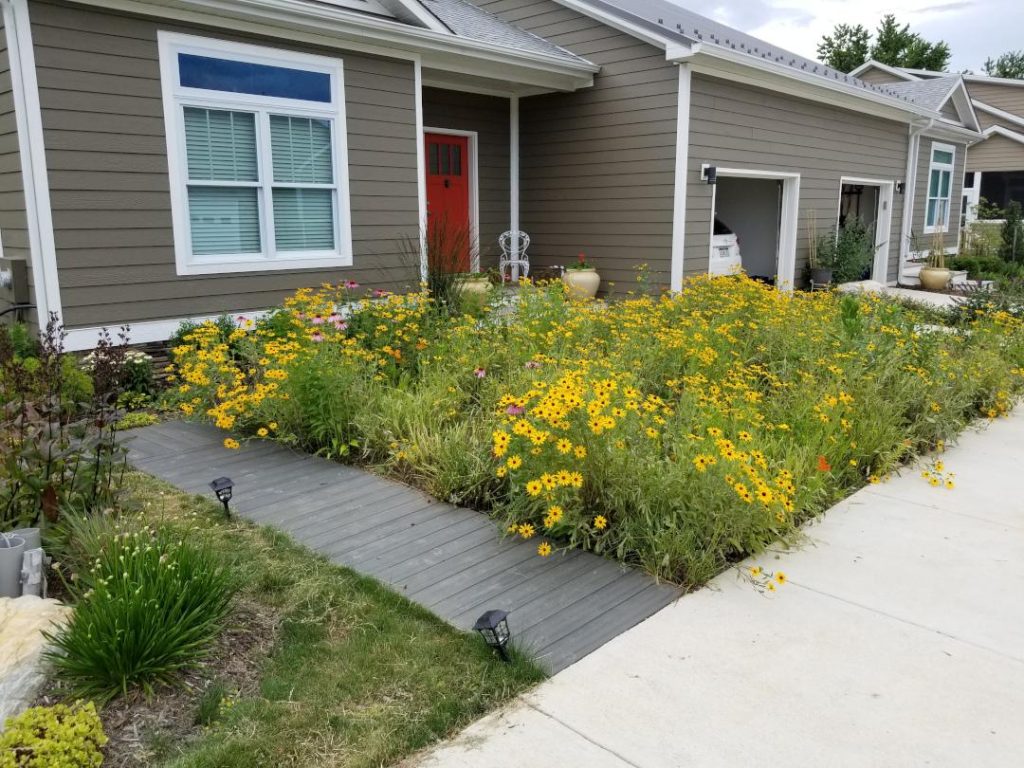
If you’re tired of mowing, this is your sign to let go of grass entirely. This yard swaps a traditional lawn for a dense meadow of black-eyed Susans and coneflowers.
A simple wood-plank path cuts straight through the middle, so the space still feels walkable and intentional.
Once established, this kind of meadow needs almost no irrigation. It thrives on rainfall alone in most regions.
I love this option for anyone who wants their yard to feel alive. Bees and butterflies show up here in a way they never do on plain grass.
Best for: Cottage-style or naturalistic homes
Maintenance: Low, annual cutback in late fall
Cost range: $-$$
Pairs well with: Ornamental grasses, stepping stone paths
3. Boulder and Succulent Rock Garden
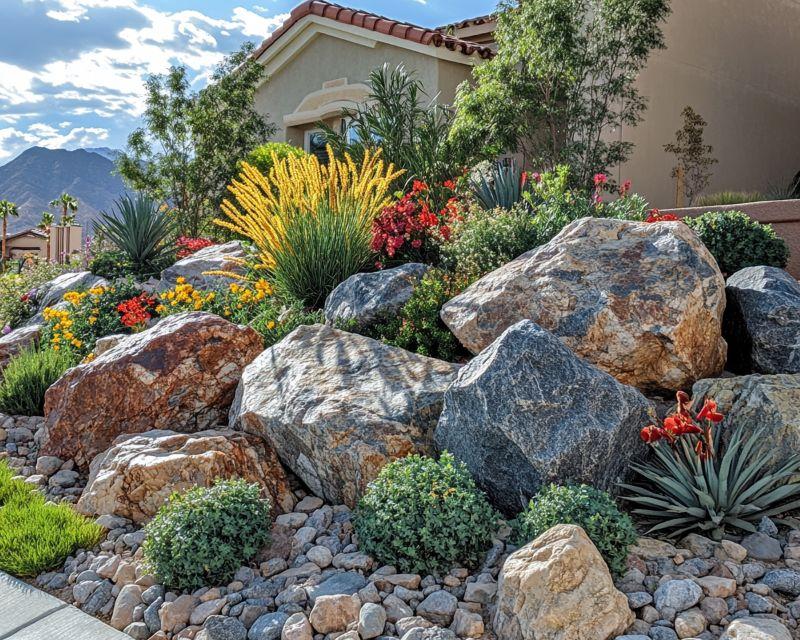
Large boulders do the heavy lifting in this design. They anchor the whole bed and give it a sense of permanence that plants alone can’t create.
Around the rocks, agave, yucca, and low mounding succulents fill in the gaps. Bursts of red kangaroo paw and yellow desert marigold keep the palette from feeling too muted.
Loose river rock covers the ground, so there’s no mulch to replace and almost nothing to water.
This style holds up especially well in hot, sunny climates where softer plants would struggle.
Best for: Desert or Southwestern homes
Maintenance: Very low
Cost range: $$-$$$
Pairs well with: Agave, yucca, ornamental grasses
4. Curved Gravel Pathway Through Mounded Shrub Beds
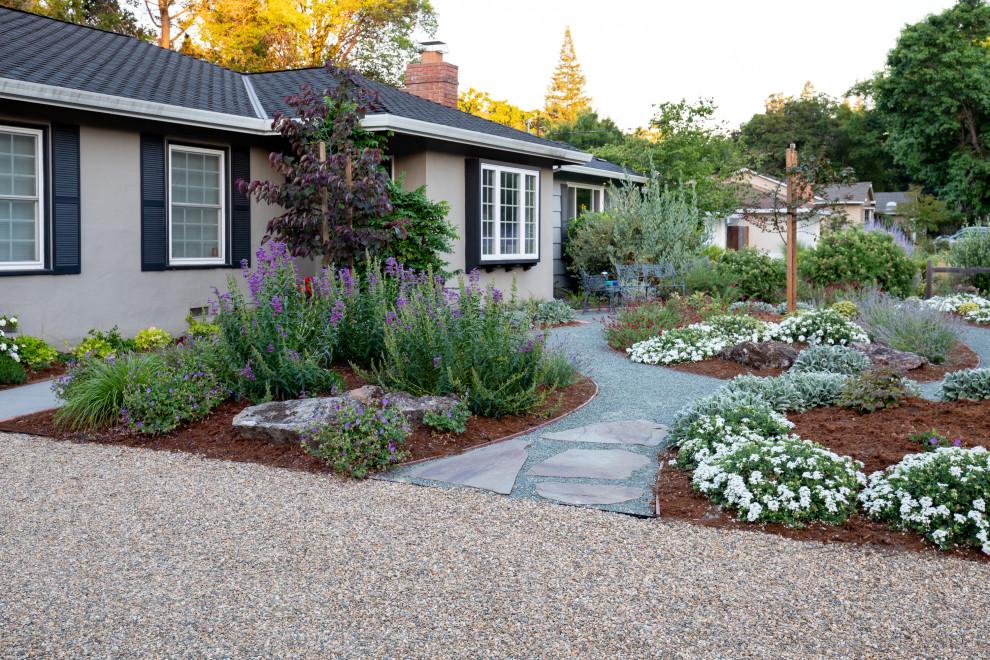
A curved gravel path splits this front yard into two distinct beds, each packed with rounded, mounding shrubs. On one side, purple-flowering perennials add height.
On the other, clusters of white alyssum-like blooms create a soft, snowy effect against dark mulch.
The rounded shapes throughout give the whole yard a tidy, cohesive look, even with several different plants mixed in. Stone accents and a single flagstone landing tie the path together without feeling fussy.
This is a solid pick if you want structure without a strict, formal layout.
Best for: Traditional or transitional homes
Maintenance: Low to moderate, shape pruning twice a year
Cost range: $$
Pairs well with: Lavender, dusty miller, flagstone paths
5. Full California Native Plant Border
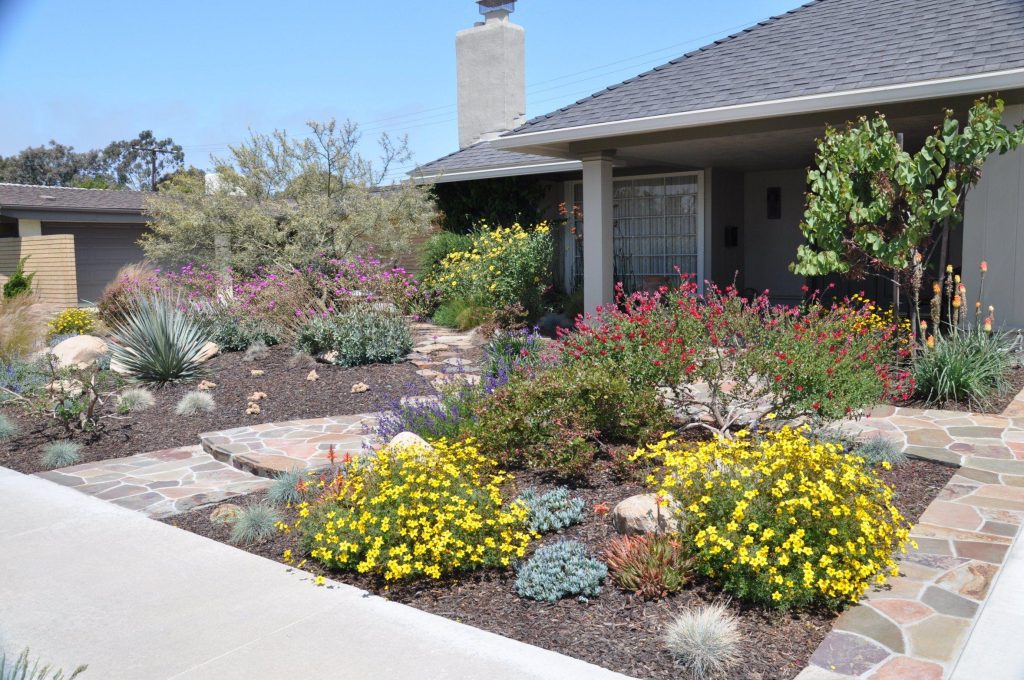
This yard goes all in on California natives, and the payoff is a border that looks good in every season.
Yellow bush poppies, red penstemon, and purple salvia bloom in overlapping waves along a flagstone path.
Mulch beds keep moisture in around the roots, so even in a dry summer, these plants keep flowering. A silvery yucca adds sharp, spiky contrast against all that soft color.
If you want a yard that feels wild but never messy, this layered native approach is worth copying.
Best for: California-style or ranch homes
Maintenance: Low, seasonal deadheading
Cost range: $$
Pairs well with: Yucca, ornamental grasses, flagstone
6. Mediterranean Yard with Agave and Olive Tree
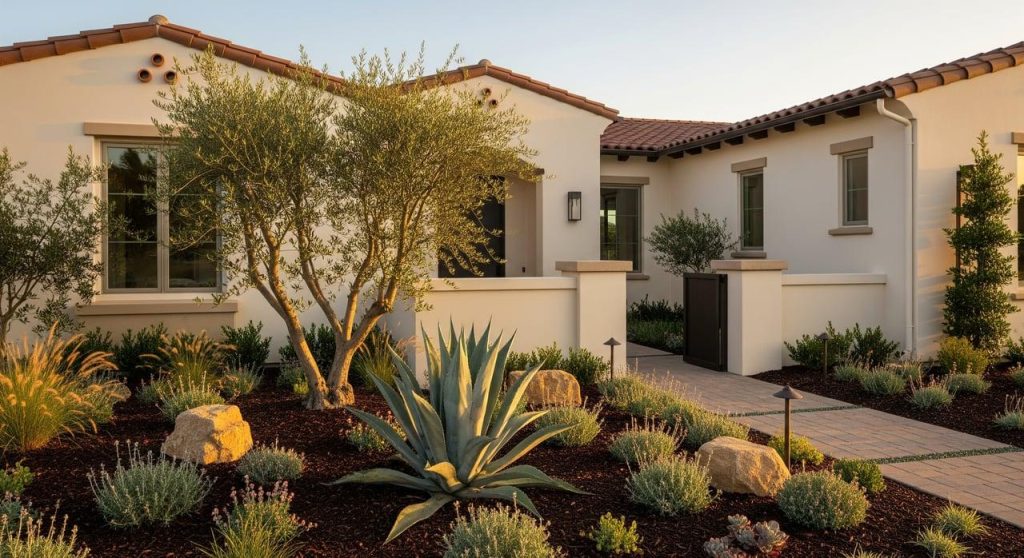
An olive tree sets the tone here, casting soft shade over a bed of agave, lavender, and low grasses. Dark mulch makes the plants pop and keeps the soil from drying out too fast between waterings.
A single oversized agave acts as the focal point near the entry, while smaller plants fill in around it without competing for attention. Boulders and a paver walkway add texture without cluttering the design.
This style suits stucco or tile-roof homes especially well, but it translates to almost any warm-climate house.
Best for: Mediterranean or Spanish-style homes
Maintenance: Low
Cost range: $$-$$$
Pairs well with: Lavender, olive trees, boulders
7. Full Desert Cactus Garden with Golden Barrels
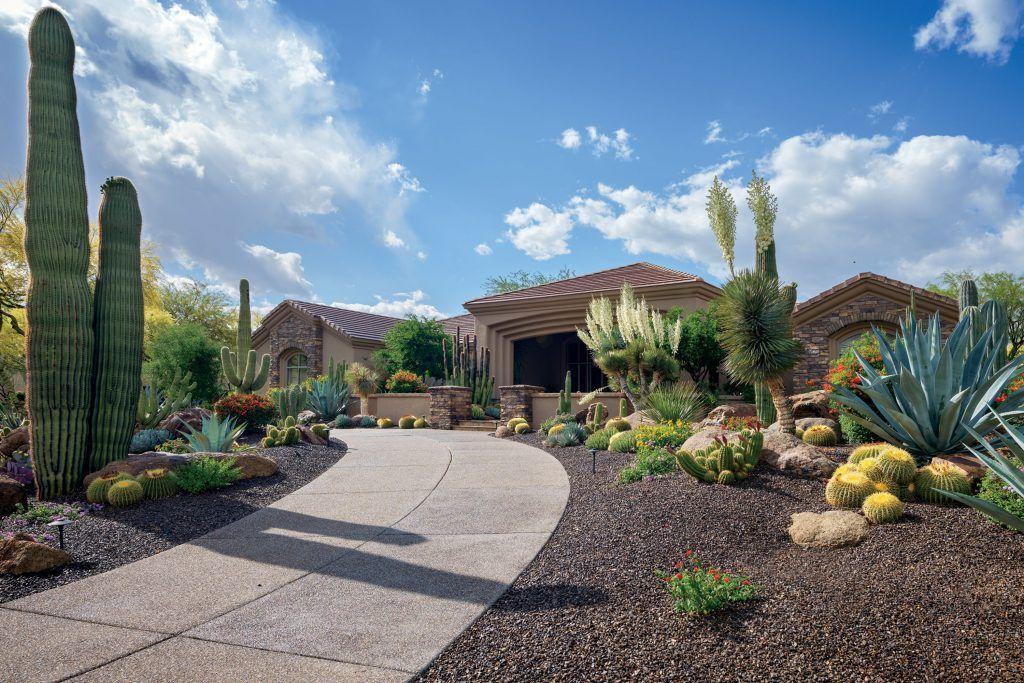
This front yard commits fully to desert style, and it pays off. Towering saguaro cacti frame the driveway, while golden barrel cacti cluster together like a garden of their own near the entry.
Dark lava rock covers the ground and holds heat well, which most desert plants love. Agave and yucca add sharp, spiky texture, and a few well-placed red blooms keep the whole scene from feeling too monochrome.
This look takes commitment, but it needs almost no water once established. If you live somewhere hot and dry, it’s hard to beat.
Best for: Desert or Southwestern homes
Maintenance: Very low
Cost range: $$$
Pairs well with: Golden barrel cactus, agave, lava rock
8. River Rock Bed with Wood Edging and Mixed Succulents
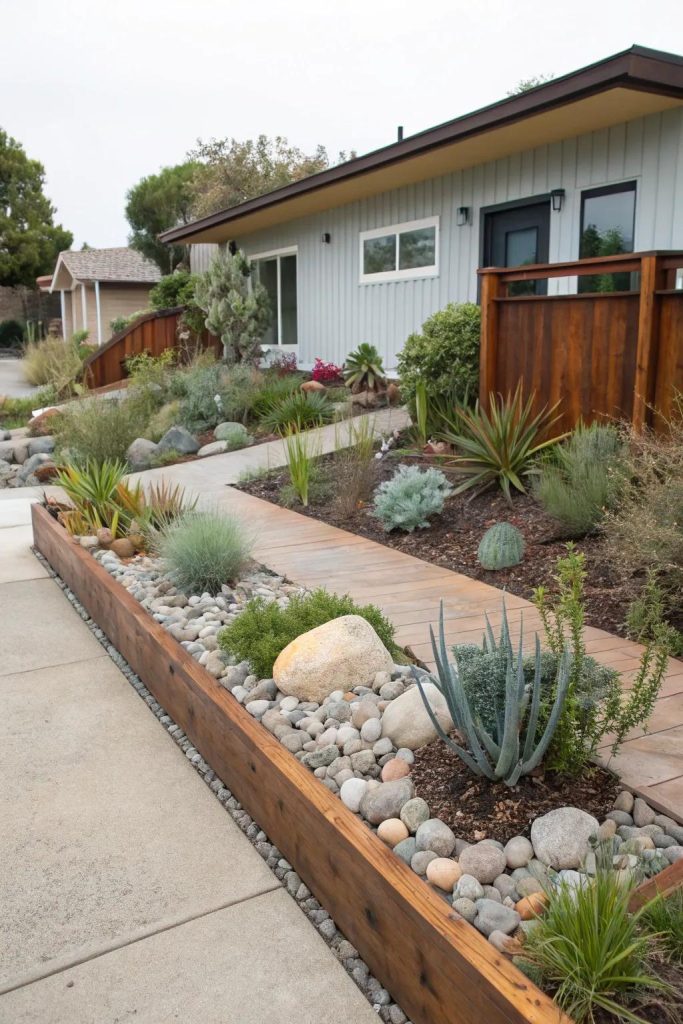
A wood-framed bed filled with river rock gives this yard a clean, modern edge. Smooth stones in different sizes create texture on their own, even before you add plants.
Aloe, yucca, and blue fescue grass poke up through the rocks in loose clusters. A wood deck path runs alongside the bed, so you get a defined walkway without pouring more concrete.
I like this design because it feels intentional without looking overdone. The wood edging keeps everything contained and gives the whole yard a finished look.
Best for: Modern or mid-century homes
Maintenance: Low
Cost range: $$
Pairs well with: Aloe, blue fescue, wood accents
9. River Stone Bed Around a Mature Shade Tree
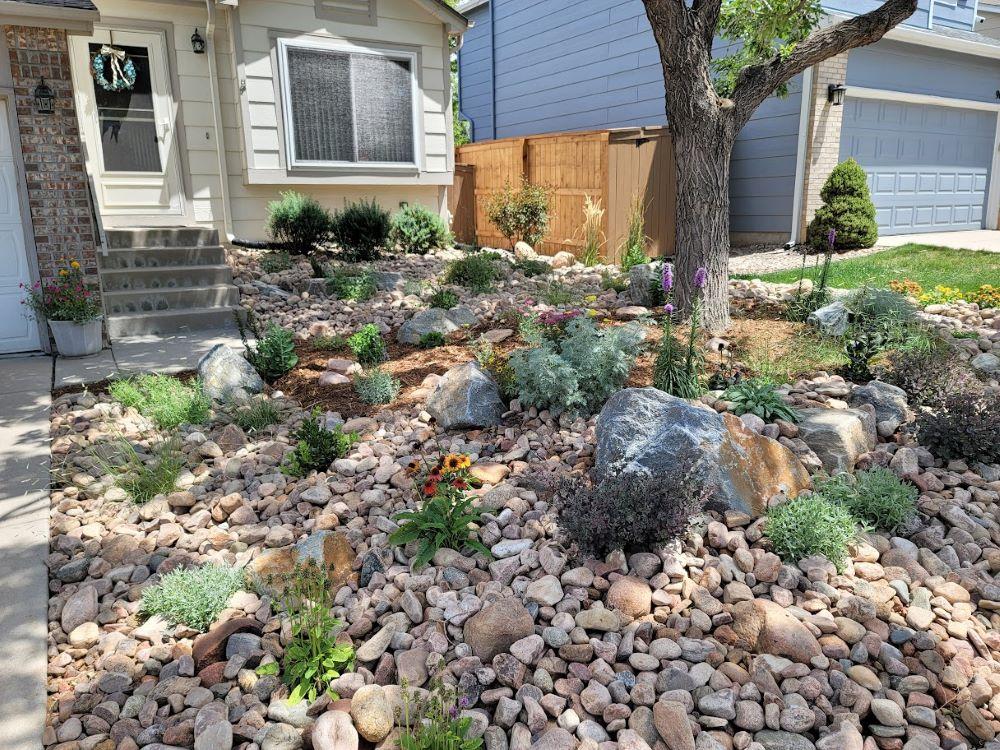
Working around an existing tree gets tricky, and this yard handles it well. River stones cover the ground beneath the canopy, with boulders scattered in to break up the flat surface.
Small pockets of black-eyed Susans and other low perennials poke through the stone, adding color without asking for much water.
Because the tree already provides shade, the plants underneath need even less to survive.
This is a smart option if you’ve got a tree you don’t want to lose but still want to cut back on lawn.
Best for: Homes with mature shade trees
Maintenance: Low
Cost range: $-$$
Pairs well with: River stone, boulders, shade-tolerant perennials
10. Compact Lawn Bordered by Ornamental Grasses
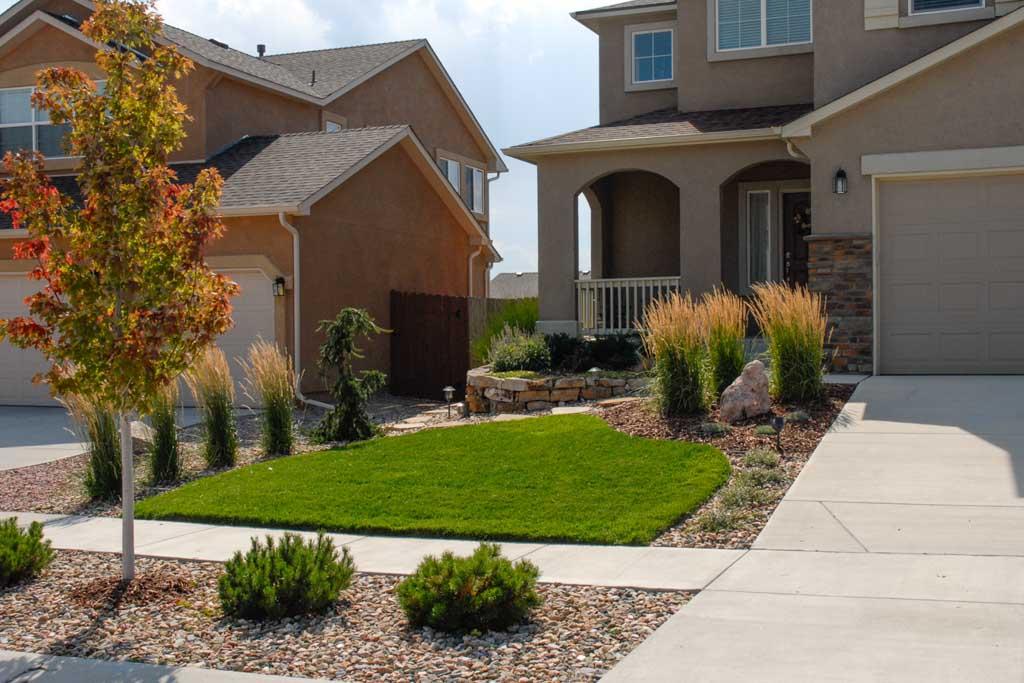
You don’t have to give up grass entirely to save water. This yard keeps a small, tidy lawn patch but surrounds it with ornamental grasses, low shrubs, and river rock mulch.
Tall feather reed grass adds height and movement near the driveway, while a low stone wall breaks up the space near the entry.
The lawn stays small enough to water efficiently, so you’re not stuck maintaining a huge water-hungry patch.
This is a good middle-ground option if you’re not ready to lose your grass completely.
Best for: Suburban or traditional homes
Maintenance: Low to moderate
Cost range: $$
Pairs well with: Feather reed grass, river rock, stone walls
11. Layered Perennial Bed with Plant Labels and Mixed Textures
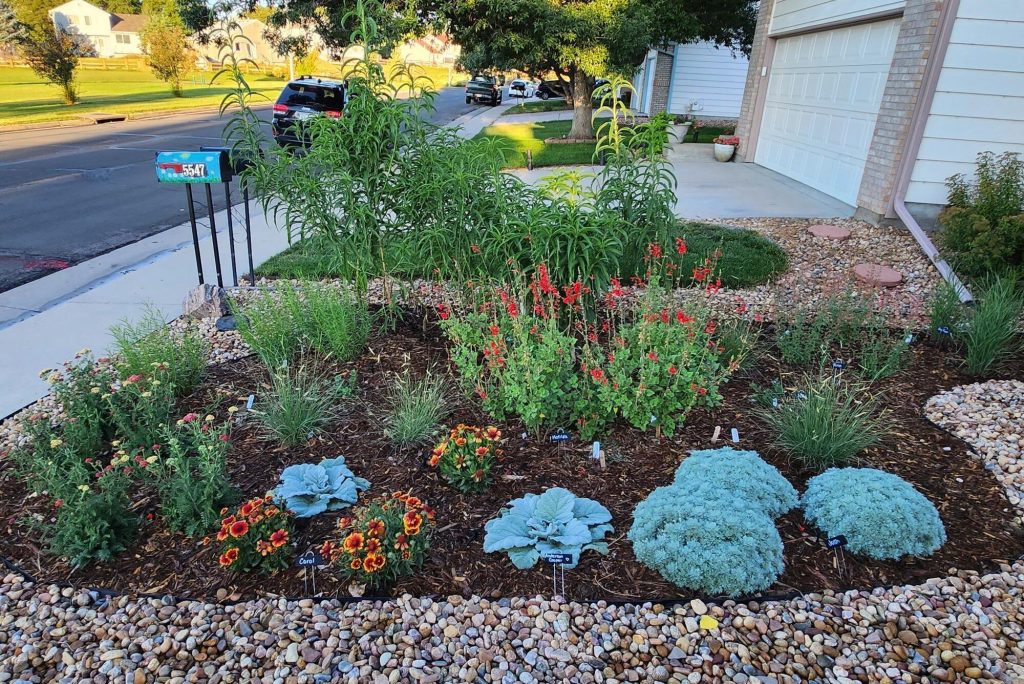
This bed reads like a working garden, and I mean that as a compliment. Tall ornamental millet shoots up in the back, while dusty miller and sedum form soft, rounded mounds up front.
Red gaillardia and orange blanket flowers add pops of warm color throughout. River rock edges the whole bed and keeps mulch from washing onto the sidewalk after rain.
If you like the idea of experimenting with different drought tolerant plants, this layered, almost collector’s-garden style gives you room to do it.
Best for: Gardeners who like variety
Maintenance: Moderate, some seasonal thinning
Cost range: $$
Pairs well with: Ornamental millet, sedum, blanket flower
12. Terrazzo Stepping Stone Path Through a Naturalistic Border
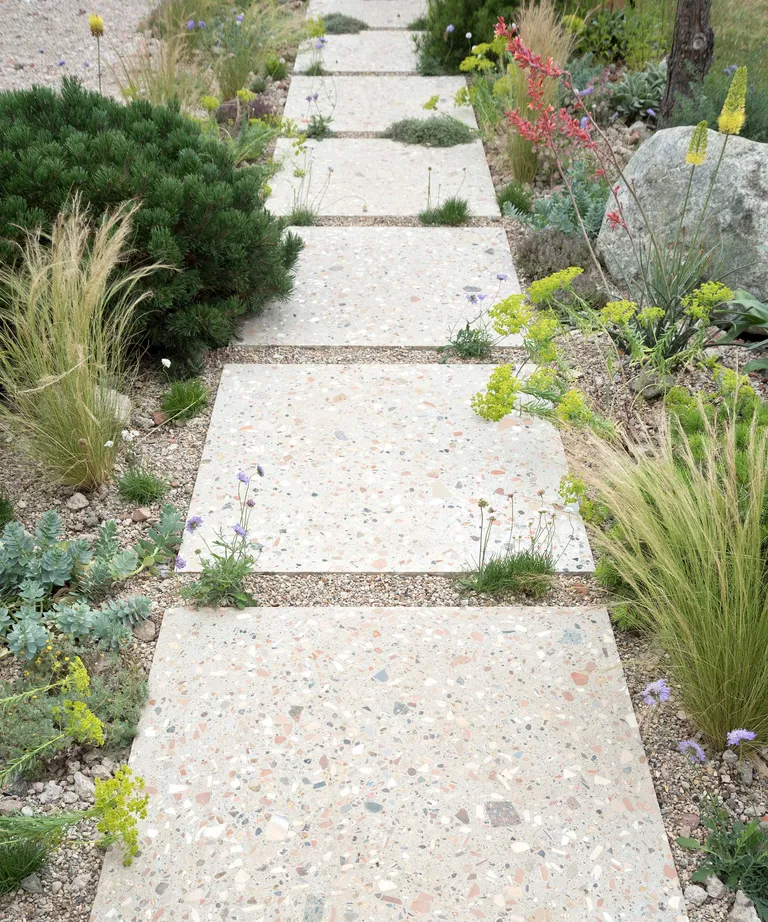
Square terrazzo pavers create a path that feels more like art than a walkway. Gravel fills the gaps between each stone, and low, wispy plants spill over the edges on both sides.
Ornamental grasses sway on one side while flowering perennials and dwarf pine add structure on the other. The mix of hard and soft materials keeps your eye moving without feeling cluttered.
This path works best as a side yard or secondary walkway, somewhere you want detail up close.
Best for: Modern or designer-style homes
Maintenance: Low
Cost range: $$-$$$
Pairs well with: Ornamental grasses, dwarf pine, gravel
Frequently Asked Questions
Do drought tolerant plants need any watering at all?
Yes, especially at first. Most drought tolerant plants need regular watering for the first few months while their roots establish.
After that, many can survive on rainfall alone, though an occasional deep watering during extreme heat helps them look their best.
Will an HOA approve a drought tolerant front yard?
Many HOAs do, but it depends on your community’s rules. Some require a certain percentage of green space or restrict gravel and rock beds.
Check your HOA guidelines first, and consider mixing in a small lawn patch or lush plantings if a fully rock-based design isn’t allowed.
Can I mix drought tolerant plants with a small lawn?
Absolutely. You don’t have to remove your lawn entirely. A lot of the yards in this list keep a small grass patch and surround it with drought tolerant beds, which cuts your water use without giving up green space completely.
What planting zones work best for drought tolerant landscaping?
Drought tolerant design works in most zones, but plant choice matters. Hot, dry zones like the Southwest do well with cacti and succulents.
Cooler or more humid zones should lean toward native perennials and grasses that are still low-water but better suited to local rainfall patterns.
How much does a drought tolerant front yard cost to install?
Costs vary a lot depending on size, materials, and whether you hire a landscaper. A simple gravel-and-perennial bed can run a few hundred dollars if you DIY it.
Boulder-heavy or fully hardscaped designs with mature plants cost more, often into the thousands.
Final Thoughts
You don’t have to choose between a beautiful yard and a lower water bill. Every idea on this list proves that drought tolerant landscaping can look just as full and colorful as a traditional lawn, sometimes even more so.
Start small if you need to. Swap out one bed, add a few native perennials, or replace a strip of grass with gravel and succulents. You can always expand from there.
Pick the style that fits your home, and give it a season to settle in. You’ll be surprised how quickly it starts to feel like it was always meant to be there.

One Comment