10 Dog-Friendly Ground Covers That Survive Muddy Paws and Backyard Zoomies

Dogs don’t care about your landscaping plan. They cut corners across flower beds, dig test holes wherever the mood strikes, and treat certain patches of the yard like a personal bathroom.
Regular grass often can’t keep up, leaving behind bare dirt, yellow urine spots, and mud that tracks straight into the house.
The good news is that some ground covers are built for exactly this kind of abuse. Below are 10 that hold their shape, stay safe around a curious nose, and still look good doing it.
| Plant | Botanical Name | Best For | Traffic Tolerance | Hardiness (approx.) |
|---|---|---|---|---|
| Creeping Thyme | Thymus serpyllum | Sunny paths & stepping stones | Light–Moderate | Zones 4–9 |
| Dog Tuff Grass | Bouteloua dactyloides (cultivar) | High-traffic lawn replacement | Heavy | Zones 6–9 |
| Kurapia | Lippia nodiflora | Drought-prone, high-traffic yards | Moderate–High | Zones 8–11 |
| White Clover | Trifolium repens | Improving soil while covering ground | Moderate–Heavy | Zones 3–10 |
| Silver Carpet | Dymondia margaretae | Hot, dry paths & walkways | High | Zones 9–11 |
| Irish Moss | Sagina subulata | Shaded, moist spots between pavers | Moderate | Zones 4–8 |
| Bugleweed | Ajuga reptans | Shady, hard-to-grow spots | Moderate–High | Zones 3–9 |
| Liriope | Liriope spp. | Path edges & borders | High | Zones 5–10 |
| Blue Star Creeper | Isotoma fluviatilis | Between pavers & stepping stones | Light–Moderate | Zones 5–9 |
| Snow-in-Summer | Cerastium tomentosum | Sunny slopes & borders | Moderate | Zones 3–7 |
A Note on Foot-Traffic Zones: Placement Matters as Much as the Plant
No ground cover, no matter how tough, survives a 60-pound dog sprinting the same lap every single day. Before you plant anything, watch where your dog actually runs.
The strip along the fence line, the path from the back door to the favorite tree, the spot by the gate: these are high-wear zones, and they usually need something closer to a durable turf alternative or hardscaping.
Save the softer, prettier ground covers for border beds, side yards, and anywhere your dog wanders through but doesn’t camp out.
Matching the plant to the actual traffic pattern, rather than just the prettiest option in a catalog, is what determines whether it survives.
10 Best Pet-Friendly Ground Cover
1. Creeping Thyme
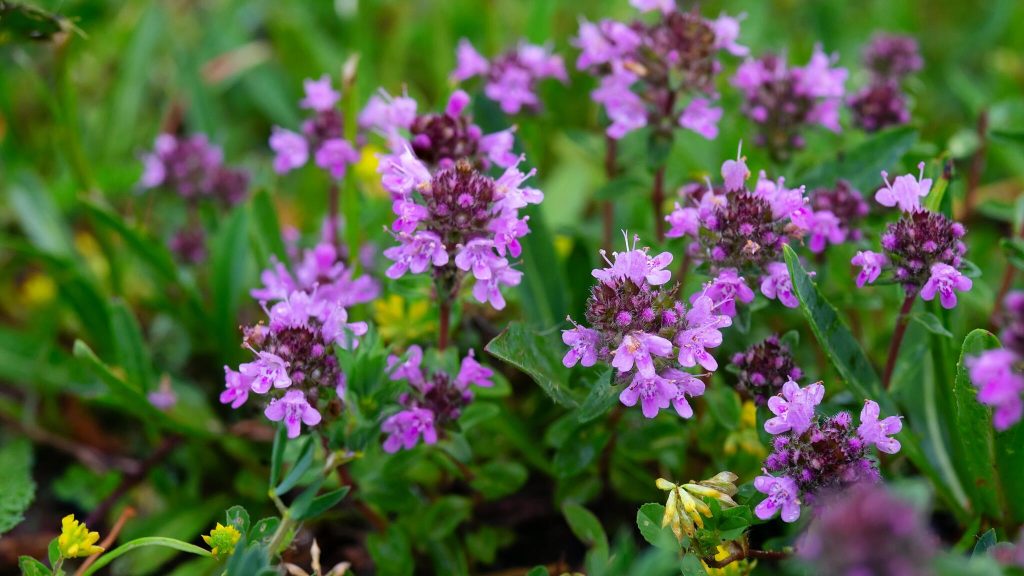
Step on this one by accident and you get a burst of herbal scent instead of a squashed flower. Creeping thyme (Thymus serpyllum) forms a low, woody mat only two to four inches tall, studded with tiny pink-purple blooms through summer.
It spreads on its own once established, filling gaps between stepping stones or covering a sunny slope without much fuss.
It wants full sun and soil that drains well; soggy roots are its one real weakness.
Hardy in zones 4 through 9, it shrugs off drought once its roots settle in, which makes it a low-water option for yards that already deal with enough wear and tear.
Fill-in time: Space plugs about 12 inches apart and expect a solid mat within one growing season.
Traffic tolerance: Light to moderate. Its low mat bounces back from an occasional trot through, but daily sprinting will thin it out.
2. Dog Tuff Grass
If you want something that still looks and feels like a lawn, this one was bred with your exact problem in mind.
Dog Tuff Grass is a buffalo grass cultivar developed specifically to hold up against dog urine and heavy paw traffic, two things that turn most standard lawns brown and patchy within a season.
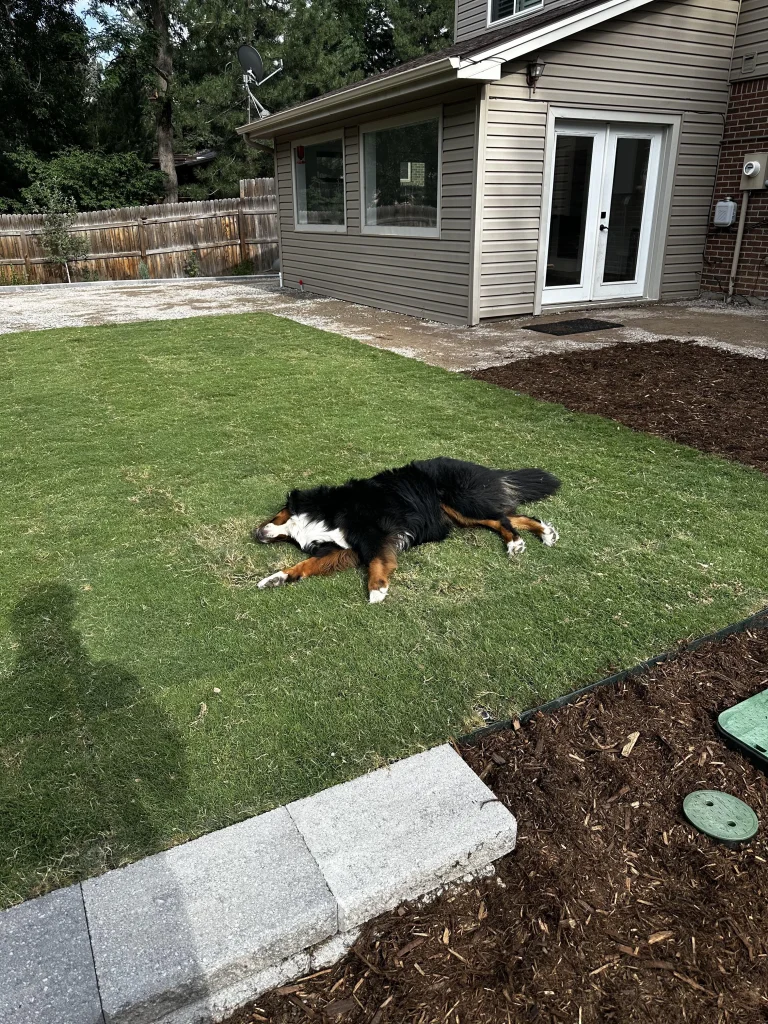
It’s a warm-season grass, so it goes dormant and tan-colored in cold winters before greening back up in spring.
That tradeoff comes with a real payoff: it needs a fraction of the water that fescue or bluegrass demands, and it handles zones 6 through 9 without complaint in full sun.
Fill-in time: Sod knits in within a few weeks; plugs take a full season to close the gaps completely.
Traffic tolerance: Heavy, daily use. This is the one built for the exact spot your dog wears a path.
3. Kurapia
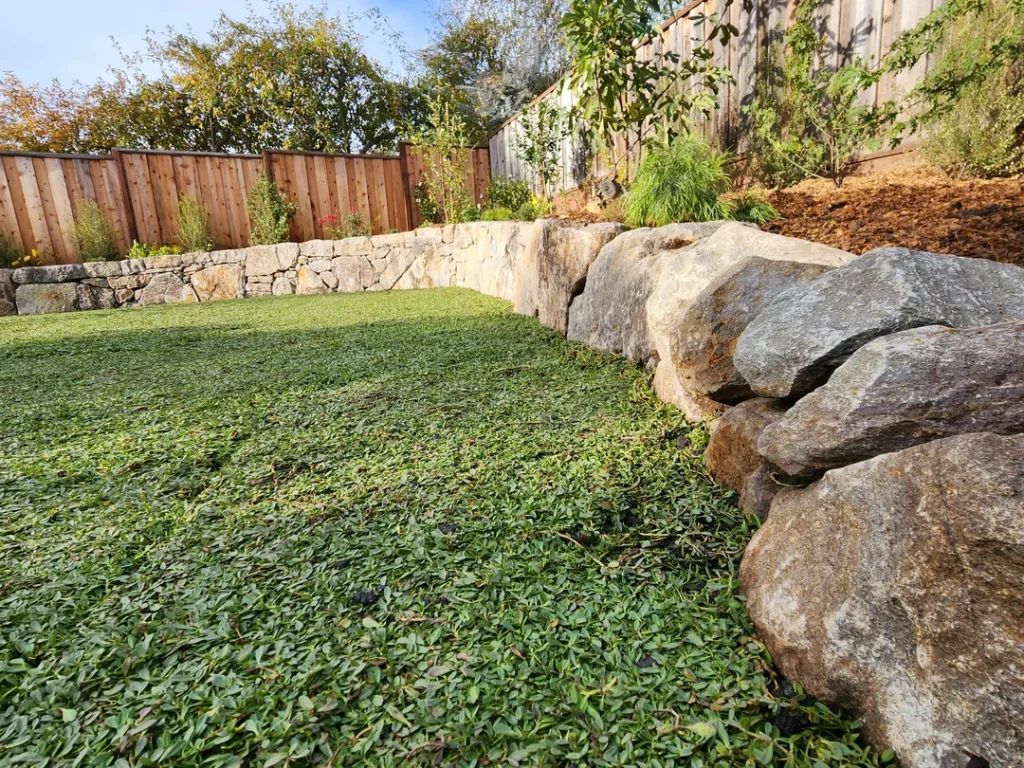
Ever wish your lawn could just use less water and still take a beating? Kurapia is a spreading, low-growing perennial covered in small white flowers that pollinators actually appreciate.
Its deep root system is what makes it drought-tough, and in mild climates it stays evergreen year-round.
Best suited to zones 8 through 11, it handles moderate to high foot traffic once it’s filled in, and mowing is optional rather than required.
It spreads fast through runners, which is exactly what you want in a yard that gets walked on daily.
Fill-in time: Two to three months for full coverage from plugs during the warm season.
Traffic tolerance: Moderate to high once established, but keep dogs off freshly planted areas until the runners knit together.
4. White Clover
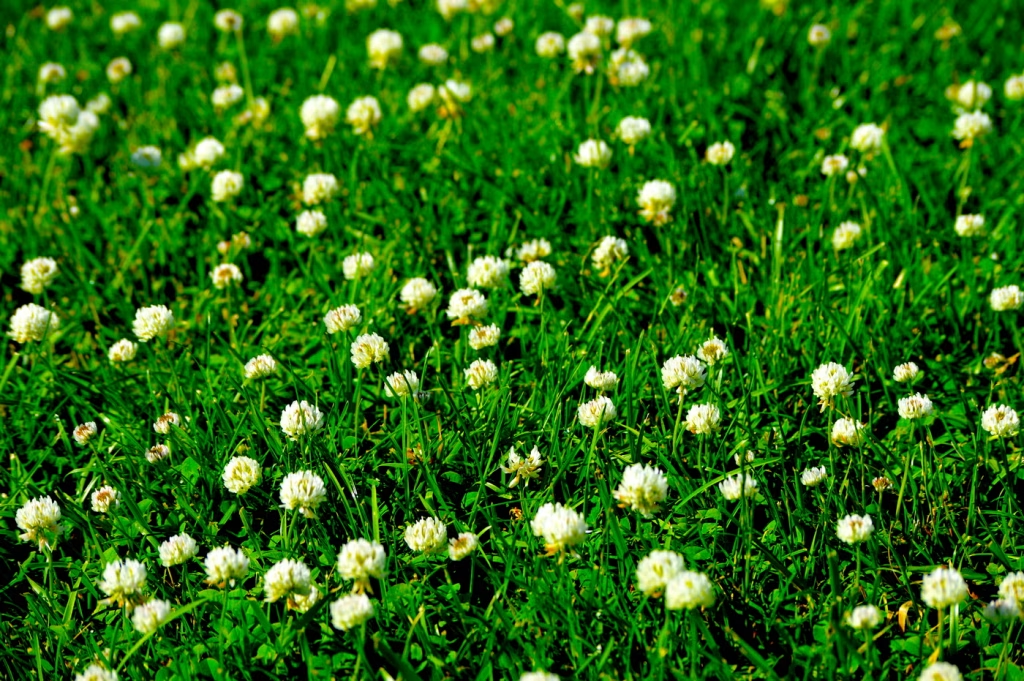
Most people spend money trying to kill this one. In a dog yard, it might be the best thing you can do for your lawn.
White clover (Trifolium repens) fixes nitrogen in the soil as it grows, which means less fertilizer for you and healthier soil underneath. It also resists the yellow urine-burn spots that plague regular turfgrass.
Soft underfoot and low to the ground, it spreads through creeping stolons and fills bare patches on its own.
Small white flower clusters appear in summer and draw in bees, so keep that in mind if anyone in the house is allergic to stings. It grows well across zones 3 through 10.
Fill-in time: New patches typically fill in within a few weeks during the growing season.
Traffic tolerance: Moderate to heavy. It springs back within days of being flattened.
5. Silver Carpet
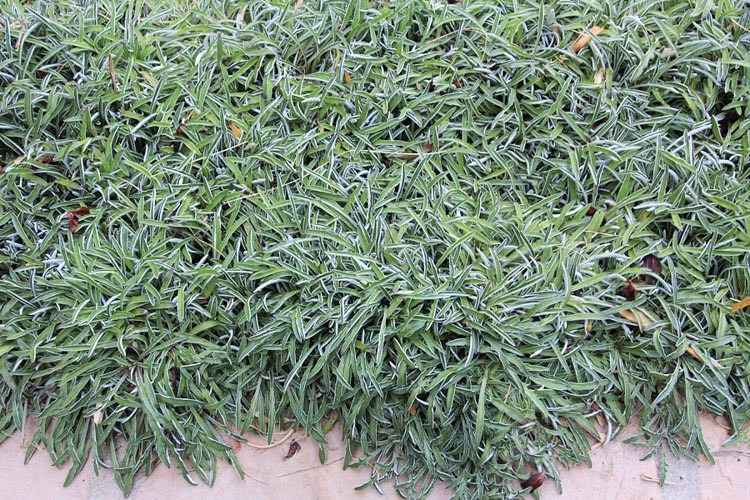
This one earns its name honestly: a tight, silvery-gray mat that looks almost frosted year-round. Dymondia margaretae hugs the ground so closely, usually under an inch tall, that it reads more like a living rug than a typical plant.
Small yellow, daisy-like flowers pop up sporadically in warm weather, but the foliage is really the draw here.
It’s built for hot, dry climates and struggles in prolonged wet or freezing conditions, so it’s best suited to zones 9 through 11.
Give it full sun and sharp drainage and it will slowly knit itself into a dense, weed-blocking carpet.
Fill-in time: Slow to start, often a full year or more from plugs to a solid mat, but very low-maintenance once established.
Traffic tolerance: High. It’s one of the toughest options on this list for a path or side yard that gets walked constantly.
6. Irish Moss
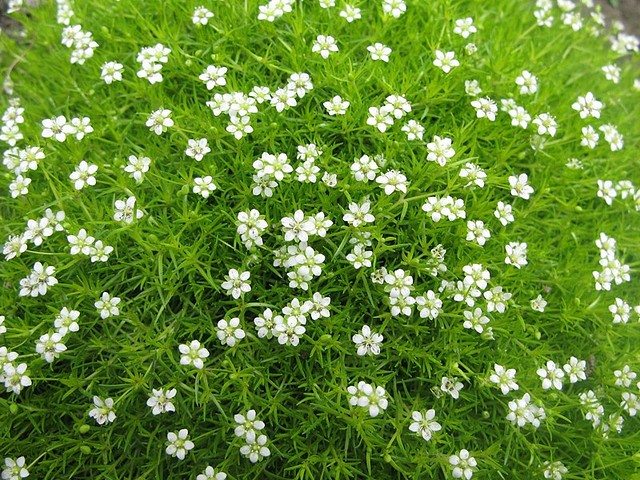
Not an actual moss, despite the name, Irish moss (Sagina subulata) forms a bright green, almost mossy-looking cushion that feels soft enough to nap on.
Tiny white star-shaped flowers dot the surface in late spring, adding a delicate touch without overwhelming the deep green base.
It prefers consistent moisture and partial shade, wilting quickly if the soil dries out for too long. It works well tucked between pavers or lining a shaded path where the ground stays cool.
Fill-in time: Around one growing season for a dense, even cushion from small starter plugs.
Traffic tolerance: Moderate. It handles regular foot traffic but doesn’t love being dug at or repeatedly pounced on.
7. Bugleweed
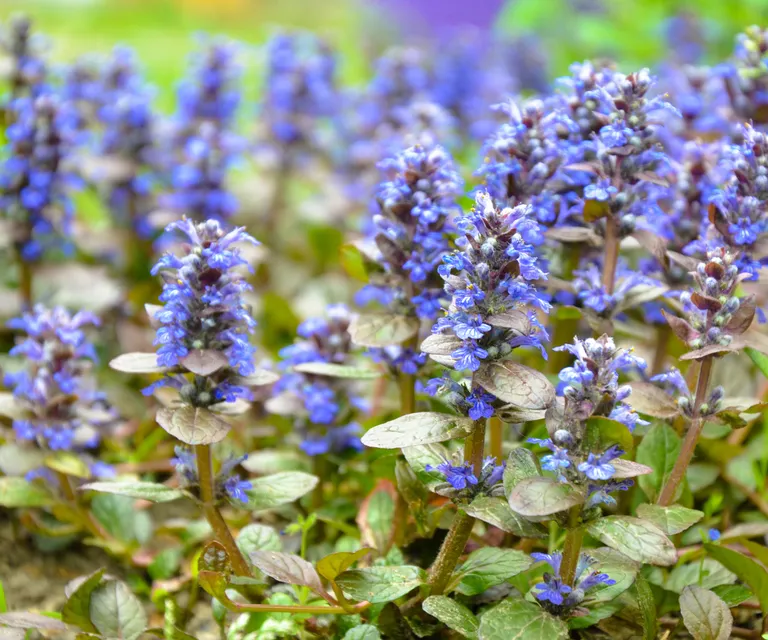
Here’s a plant that solves two problems at once: it fills in shady, hard-to-grow spots and still puts up a fight against dog traffic.
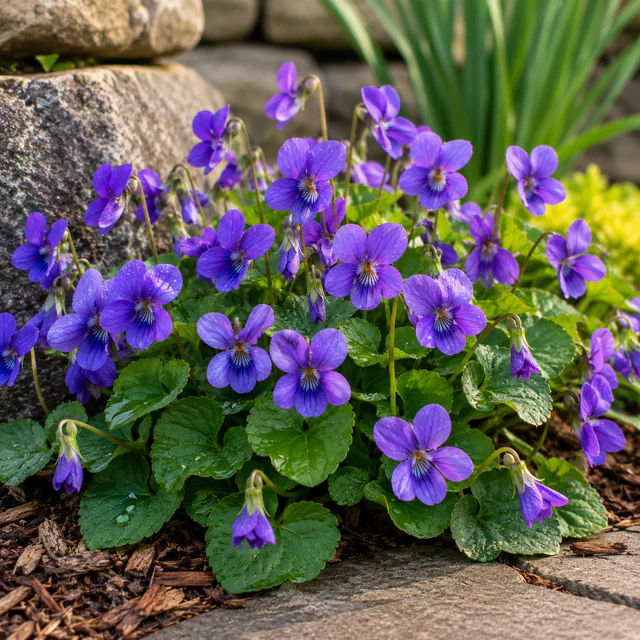
Bugleweed (Ajuga reptans) spreads via rosettes of glossy, sometimes bronze-tinted leaves, topped with spikes of blue-purple flowers each spring.
It’s remarkably adaptable, tolerating everything from deep shade to a few hours of sun, and it spreads fast enough to choke out most weeds on its own.
Zones 3 through 9 suit it well, and it handles average to slightly moist soil without complaint.
Fill-in time: Spreads aggressively; expect solid coverage within one season, sometimes needing containment along borders.
Traffic tolerance: Moderate to high. Established patches recover well, though brand-new plantings need a few weeks to root in before regular use.
8. Liriope
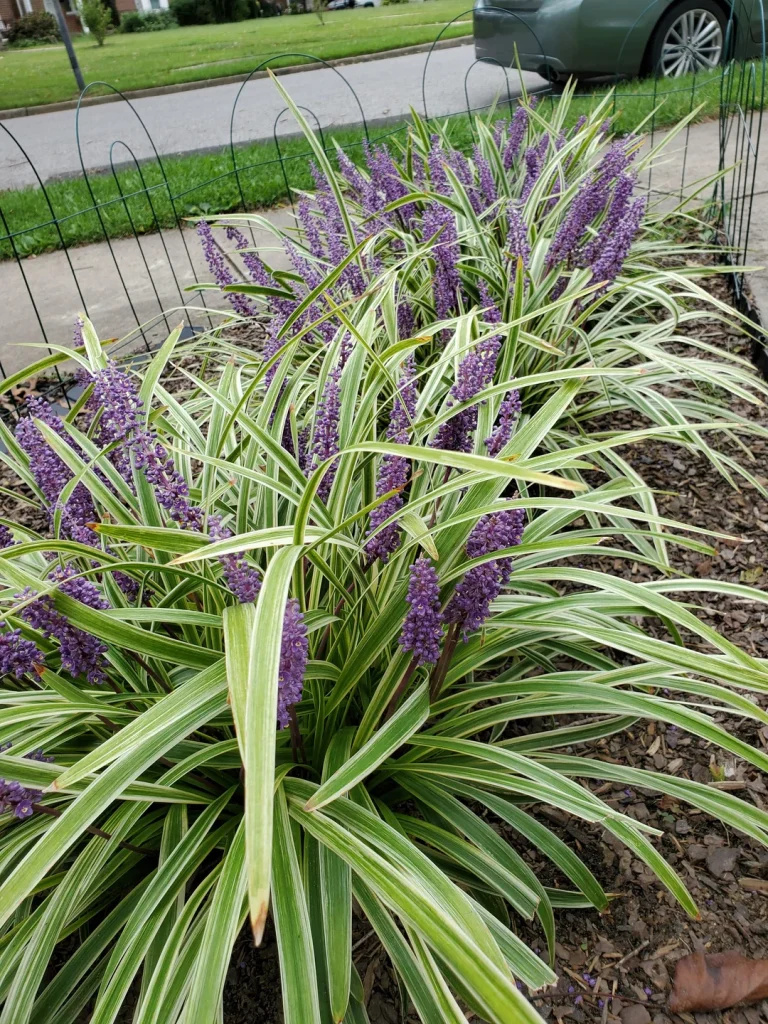
Sometimes called lilyturf, Liriope looks like an ornamental grass but behaves like a workhorse.
Its arching, strappy leaves stay evergreen through most winters, and in late summer it sends up spikes of purple flowers that add real structure to a border or path edge.
Few dog-friendly ground covers pull double duty as both function and decoration this well.
It grows in clumps or slowly spreads depending on the variety, tolerating everything from full sun to fairly deep shade. It’s forgiving of average soil, drought, and the general chaos of a busy yard.
Fill-in time: Clumping varieties fill a bed within one to two seasons; spreading types close gaps faster, often by the following year.
Traffic tolerance: High. It’s a common choice for pathway edges precisely because it holds up to repeated foot traffic.
9. Blue Star Creeper
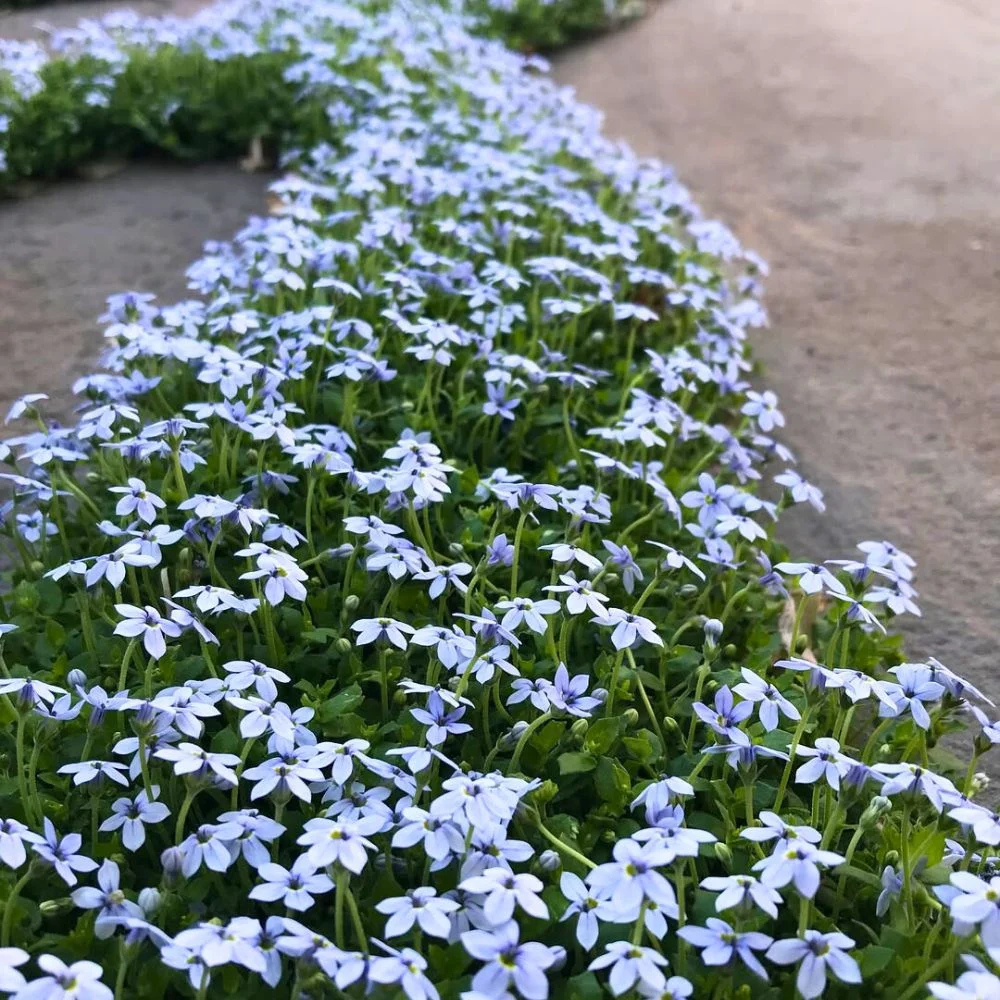
Somewhere between a ground cover and a living mulch, blue star creeper (Isotoma fluviatilis) spreads into a dense green mat sprinkled with tiny pale blue, star-shaped flowers most of the growing season.
It’s the plant people reach for when they want the space between stepping stones or pavers to look intentional instead of weedy.
It likes consistent moisture and does best with a bit of afternoon shade in hot climates, though it tolerates full sun in cooler regions. Hardy in zones 5 through 9, it stays low, usually under two inches, which keeps it out of the way of digging paws.
Fill-in time: Roughly one growing season from plugs spaced about six inches apart.
Traffic tolerance: Light to moderate. It’s best suited to walkways and low-wear spots rather than a dog’s main sprinting lane.
10. Snow-in-Summer
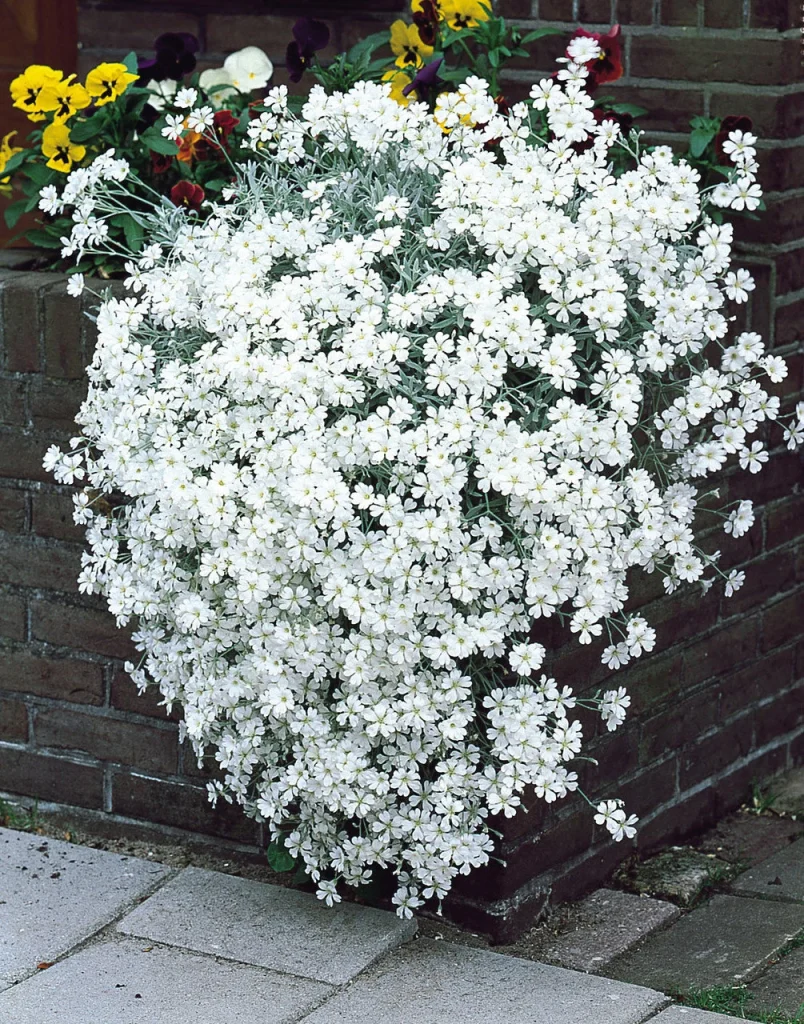
This one earns its name from the way it blankets itself in white blooms each late spring, covering silvery, almost felted foliage underneath.
It’s an old cottage-garden favorite that happens to also be tough enough for a yard with dogs in it.
Snow-in-summer (Cerastium tomentosum) thrives in full sun to partial shade and shrugs off drought once it’s rooted in, making it a low-maintenance filler for a sunny slope or border.
It grows well in zones 3 through 7 and spreads readily without becoming invasive.
Fill-in time: A full mat typically forms within one growing season from young plants.
Traffic tolerance: Moderate. It bounces back from regular walking but thins out under constant, heavy wear.
FAQs
Can I mix different ground covers in the same yard?
Yes, and it often works better than planting just one.
Pairing a tough, high-traffic option like Dog Tuff Grass or liriope along paths with softer plants like Irish moss in low-wear border areas gives you durability where you need it and variety everywhere else.
How do I prep the soil before planting around a dog run?
Clear existing grass or weeds, loosen the top few inches of soil, and work in compost if your soil is heavy clay or fast-draining sand.
Most of these ground covers establish faster in soil that isn’t compacted, so breaking it up first matters more than any fertilizer.
Will any of these hold up if my dog digs, not just walks?
Not really. No living ground cover is dig-proof, and a determined digger will get through even the toughest option here.
If digging is a regular problem, consider a designated digging pit filled with sand or mulch to redirect the behavior.
What happens to these plants in winter?
Some, like Dog Tuff Grass, go dormant and turn tan or brown in cold weather before greening up again in spring.
Evergreen options like liriope, bugleweed, and silver carpet keep their color through most winters, though growth slows down until warmer weather returns.
Is it expensive to switch from grass to ground cover?
It depends on the size of the area and whether you start from seed, plugs, or sod. Plugs are usually the most budget-friendly route for a large yard.
Because, the plants fill in and spread on their own over a season or two, rather than needing full coverage purchased upfront.
Final Thoughts
The right ground cover for a dog yard has less to do with looks and everything to do with matching the plant to how your dog actually uses the space.
A tough, traffic-ready option belongs where your dog runs daily, while the softer, prettier choices can shine in the corners they mostly ignore.
Start with one or two of these in a small test patch, see how they hold up, and expand from there once you know what actually survives in your yard.