Plant Spacing Calculator: How Far Apart to Plant Vegetables, Herbs & Flowers

That empty container is lying to you.
It looks like it has room for ten more plants. It doesn’t. Give it a few weeks and everything you crammed in there will be stretching, pale, and fighting over the same patch of light.
Spacing is the cheapest fix in gardening. It costs nothing. You just need the right numbers before you start digging.
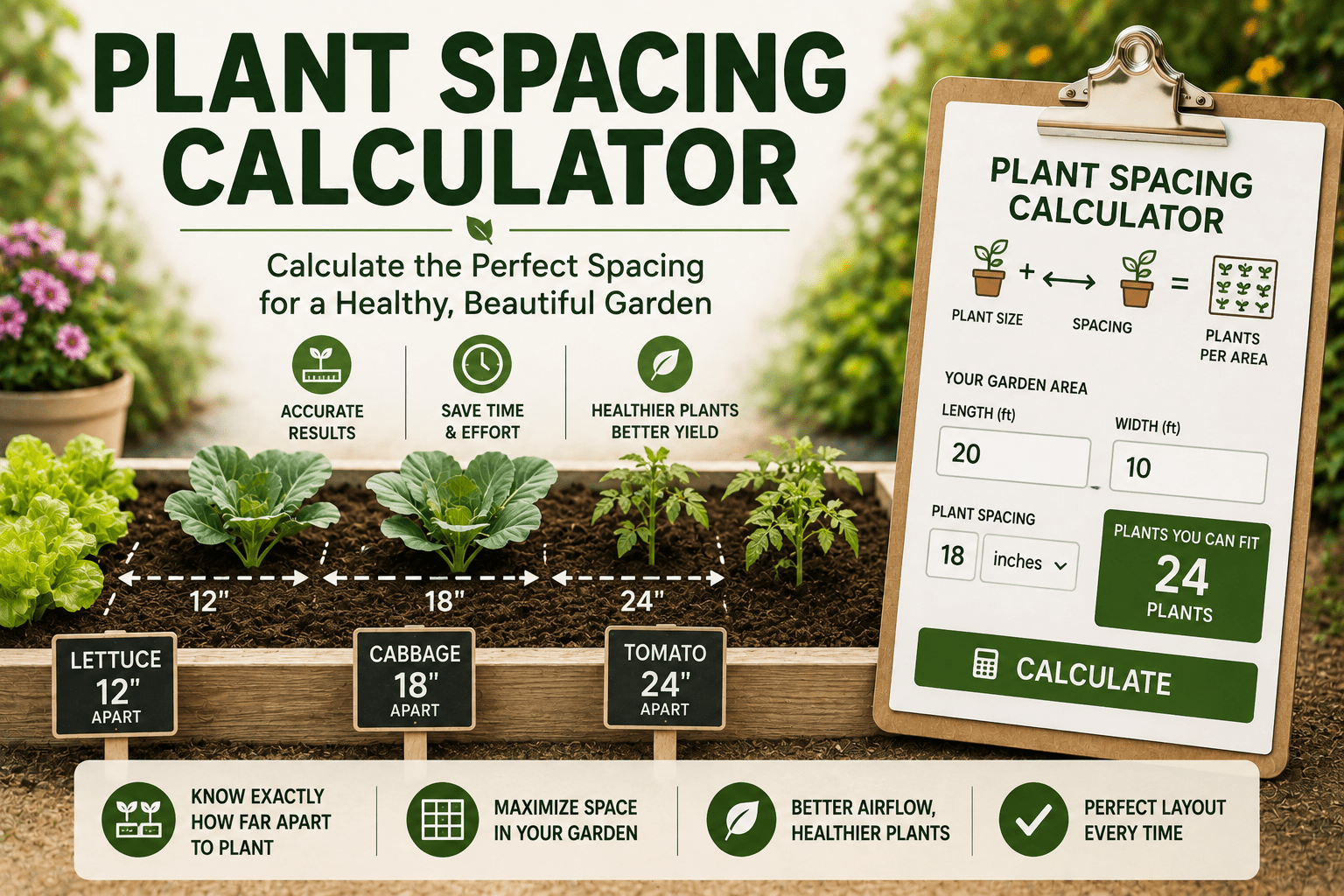
That’s what this calculator does. Tell it your container’s shape and size, pick a plant, and it shows you exactly how many fit and where to put them.
Plant Spacing Calculator
Plug in your dimensions below and watch the layout update as you type.
Results
You can fit approximately:
- Each green dot represents one plant, spaced center-to-center.
- Works for raised beds, grow bags, window boxes, or any pot shape.
- Spacing varies by variety — always check your seed packet or plant tag.
How Plant Spacing Works
Two numbers control every planting layout: the space between plants, and the space between rows.
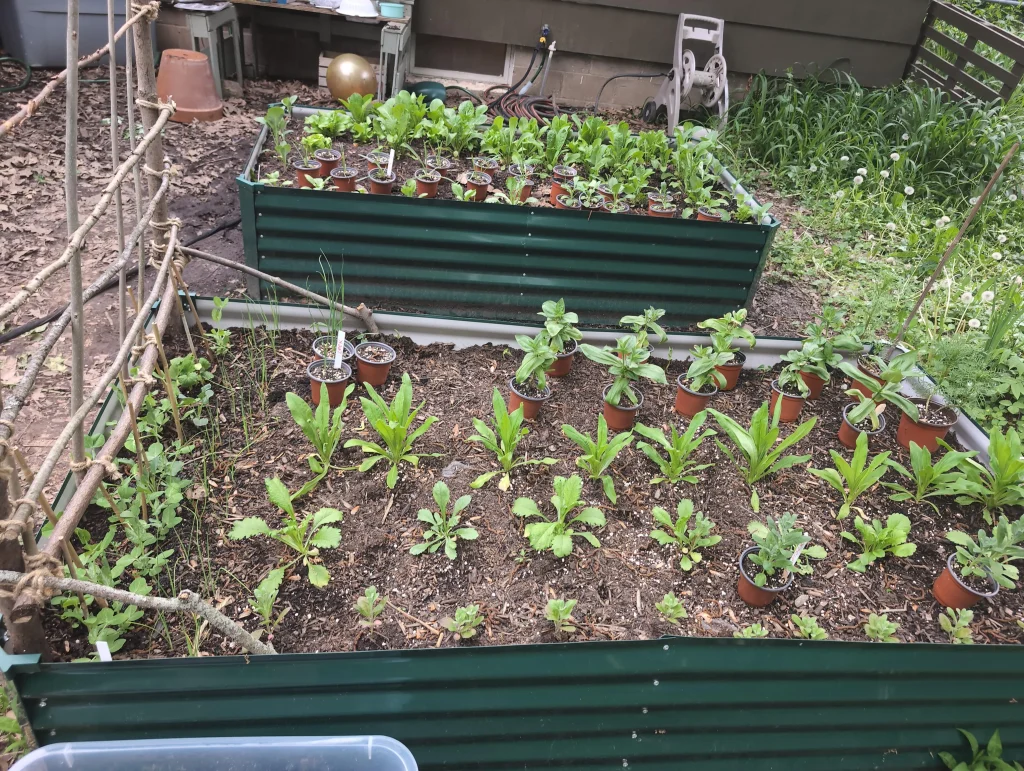
Plant spacing is the distance from one plant to the next within the same row, measured center to center, not leaf-tip to leaf-tip.
It's set by how wide the mature plant gets and how much root space it needs underground.
Row spacing is the distance between one row and the next. In a traditional ground garden, row spacing is usually wider than plant spacing, because you need room to walk between rows to weed and harvest.
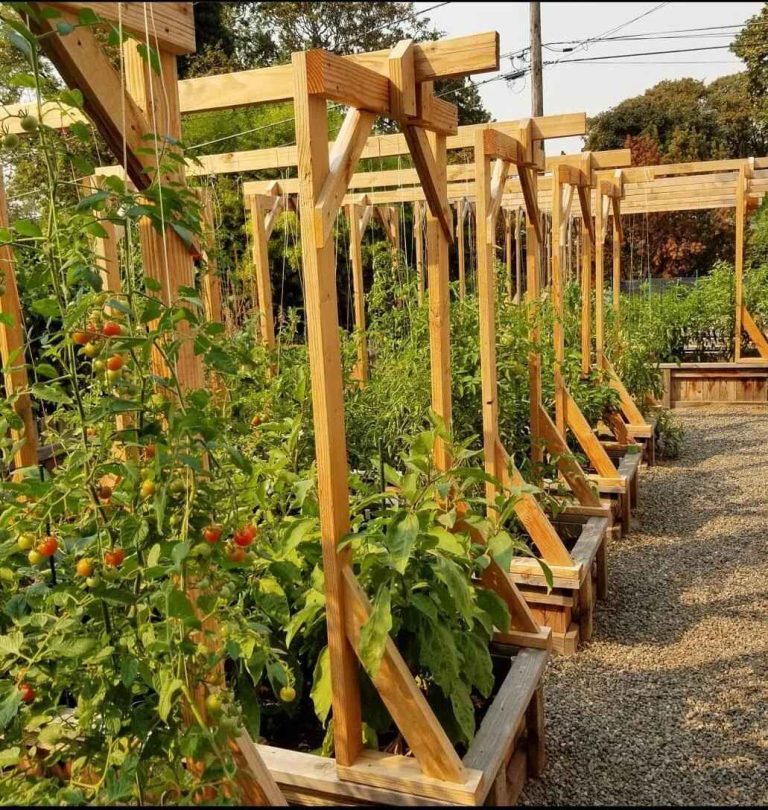
Pull up a chair next to any classic vegetable garden and you'll see the pattern: tight plants, wide aisles.
Containers and raised beds change that math. You're not walking between rows. You're reaching in from the outside, so rows can sit almost as close as the plants themselves.
This is the logic behind square-foot gardening, where a bed gets divided into 12-inch squares and each square holds a set number of plants based on their size. A carrot square might hold 16 plants. A tomato square holds one.
The formula our calculator runs is straightforward.
For a rectangular bed: divide the width by your plant spacing to get plants per row, divide the length by your row spacing to get the number of rows, then multiply the two together.
For round pots, it's a bit trickier: the calculator places one plant in the center, then builds outward in rings, fitting as many plants as will comfortably circle each ring without crowding.
Once you know the baseline number, you can adjust it up or down.
Space tighter than the chart recommends if:
- You're growing baby greens like lettuce or spinach for cut-and-come-again harvests
- Your soil is rich and you're feeding regularly
- You're growing something you'll thin out as it matures
Space wider than the chart recommends if:
- Your soil is poor or you're not fertilizing much
- Water is limited and plants will compete for it
- You're working with partial shade, where plants stretch further to find light
Your seed packet's numbers and this calculator's numbers might not match exactly. That's normal. Spacing recommendations shift by variety, region, and growing method. Treat the chart as a solid starting point, not a rule carved in stone.
Plant Spacing Chart — Quick Reference
Extension-standard spacing for the crops we get asked about most. All measurements are center to center, in inches.
| Plant | Between Plants | Between Rows | Notes |
|---|---|---|---|
| Radish | 2" | 12–18" | Fast crop, good for filling gaps |
| Carrot | 3" | 12–18" | Thin seedlings once they sprout |
| Beet | 3" | 12–18" | Greens are edible too |
| Spinach | 4" | 12–18" | Bolts fast in heat, plant early |
| Lettuce | 8" | 12" | Space tighter for cut-and-come-again |
| Chard | 8" | 18–24" | Keeps producing all season |
| Kale | 12" | 18–24" | Gets big — don't skimp on room |
| Bush Bean | 4" | 18–30" | No trellis needed |
| Pea | 2" | 18–36" | Likes cool weather, plant early |
| Broccoli | 18–24" | 24–36" | One of the bigger space-hogs |
| Cabbage | 12–18" | 24–36" | Heads need room to size up |
| Pepper | 18" | 18–24" | Compact enough for containers |
| Eggplant | 18" | 24–36" | Give it full sun and room to branch |
| Tomato | 18–36" | 24–48" | Wider spacing for indeterminate varieties |
| Basil | 12" | 12" | Pinch it back to keep it bushy |
Spacing varies by variety. Always check your seed packet or plant tag for specifics.
FAQs
What if my seed packet says something different than this calculator?
Go with your seed packet for that specific variety. Spacing recommendations shift based on region, growing method, and the exact cultivar you're growing. Think of the calculator as a solid starting point, not the final word.
Can I plant closer together in containers than in a regular garden bed?
Yes, within reason. Row spacing exists mostly to give you room to walk and work between rows. In a pot or raised bed, you're reaching in from the outside, so you can tighten that up.
Plant-to-plant spacing matters more than row spacing once you're container gardening.
What does "center-to-center" spacing mean?
It means you measure from the middle of one plant's stem to the middle of the next one's stem, not from leaf edge to leaf edge.
This keeps your spacing consistent no matter how big or small the transplants look on planting day.
How is spacing different for a round pot versus a rectangular one?
In a rectangle, plants line up in a grid. In a round pot, you get one plant in the center and then rings of plants around it, since a grid doesn't wrap efficiently around a curve. The calculator handles this automatically based on the shape you pick.
What actually happens if I plant too close together?
Plants compete for water, nutrients, and light. Roots crowd each other underground.
You'll usually see smaller yields, more disease pressure from poor airflow, and taller, leggier growth as plants stretch to find space. It's rarely fatal, but it does cut into your harvest.
Is it better to overcrowd or overspace if I'm not sure?
Space wider. Overcrowded plants compete and underperform. Overspaced plants just leave you with a little unused container room, which costs you nothing but a few empty inches.
Final Words
Good spacing isn't complicated. It's just math you don't want to do by hand every time you plant something new.
Run your container through the calculator, check the chart if you want a sanity check, and get planting. Your future self — the one harvesting actual full-size vegetables instead of stunted, sun-starved ones — will thank you.
If you're building out a container garden from scratch, our raised bed soil calculator is a good next stop to figure out how much soil you'll need to fill it.