How to Grow Zucchini Vertically: Small Space, Big Harvest

If your zucchini plant has taken over half your garden bed and you’re still tripping over it every time you water, this article is for you.
Growing zucchini vertically solves the sprawl problem completely. It gives you cleaner, straighter fruit with better air circulation around the leaves.
Note: Not every zucchini variety takes to climbing equally well. Bush types will stay low no matter how much trellis you give them, so if vertical growing is your goal, you’ll want to pick the right variety from the start. More on that below.
What type of zucchini should you grow vertically?
Not all zucchini varieties are built for climbing.
Bush varieties, which are what you’ll find in most garden centers, stay compact and low no matter what kind of trellis you give them.
They simply don’t produce the long vining growth needed to climb.For true vertical growing, look for vining or semi-vining zucchini varieties specifically.
Black Beauty is a classic choice with strong vining habit and reliable production.
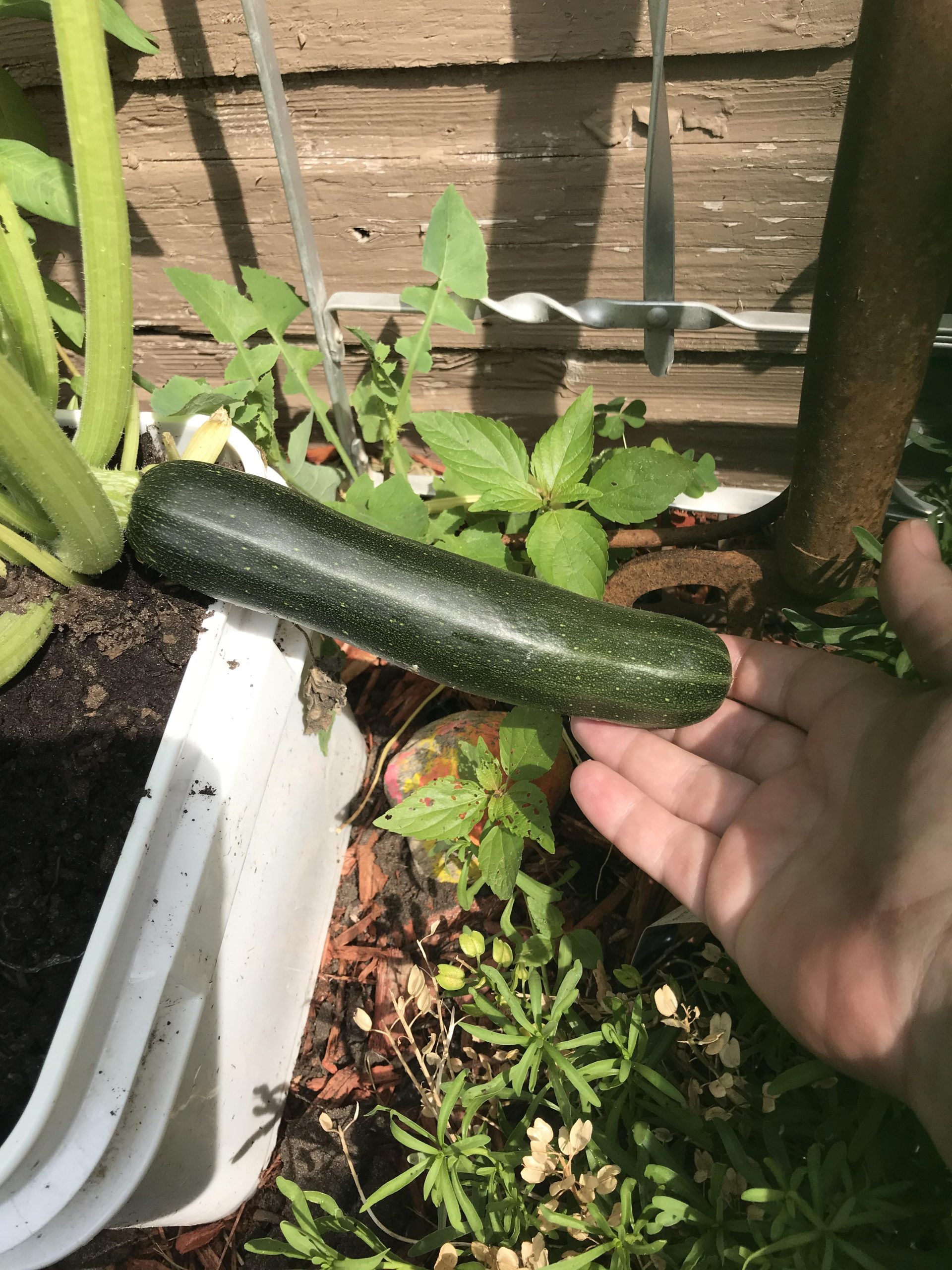
Costata Romanesco also climbs well and has the bonus of ribbed, flavorful fruit that holds up nicely on the vine.
If your seed packet or plant tag doesn’t specify growth habit, check with the seed company before you buy, since a bush variety planted at the base of a trellis just won’t cooperate.
How to train zucchini to climb
Unlike peas or cucumbers, zucchini won’t grab onto a trellis on its own. You’ll need to do the work of guiding it as it grows.
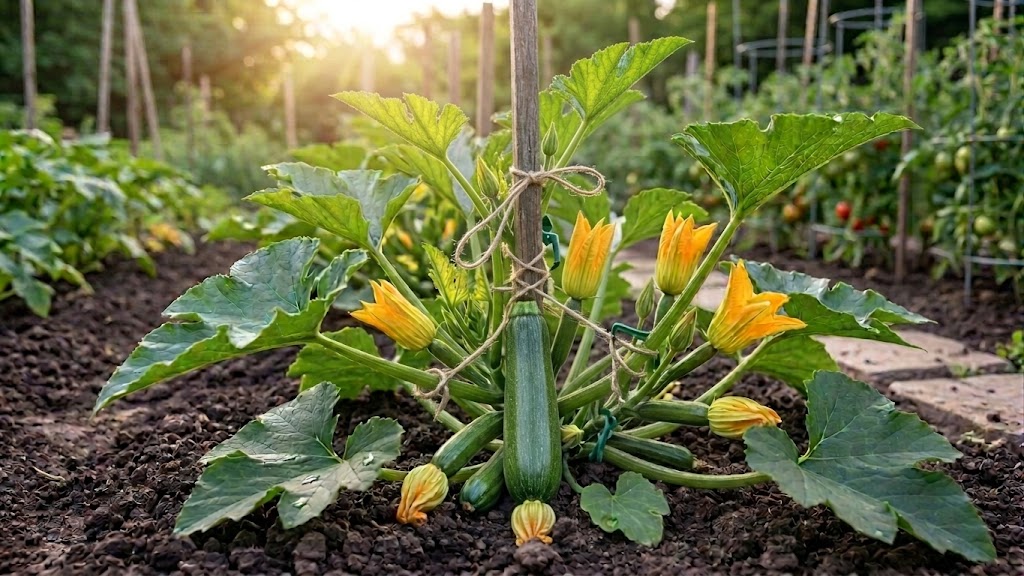
As soon as the main stem is a foot or so tall, start gently weaving it through the trellis openings or loosely tying it to the support with soft garden twine or plant clips. (You can use a single stacking pole.)
Check on it every few days, since zucchini grows fast once it gets going, and a stem left untied for too long will flop over and start sprawling on its own.
Keep tying loosely as the plant grows taller, spacing ties every 12 to 18 inches along the main stem. Avoid tying too tightly. The stem needs room to thicken as it matures, and a tight tie can girdle it.
Supporting the fruit as it grows
This is the part gardeners often overlook.
A zucchini growing vertically produces fruit that hangs in midair instead of resting on the ground, and a full-size zucchini gets heavy. Left unsupported, the weight can snap the stem right where the fruit attaches.
Once a zucchini starts to swell past a few inches, give it some backup. A simple sling made from an old t-shirt, mesh produce bag, or piece of pantyhose tied to the trellis works well and costs nothing.
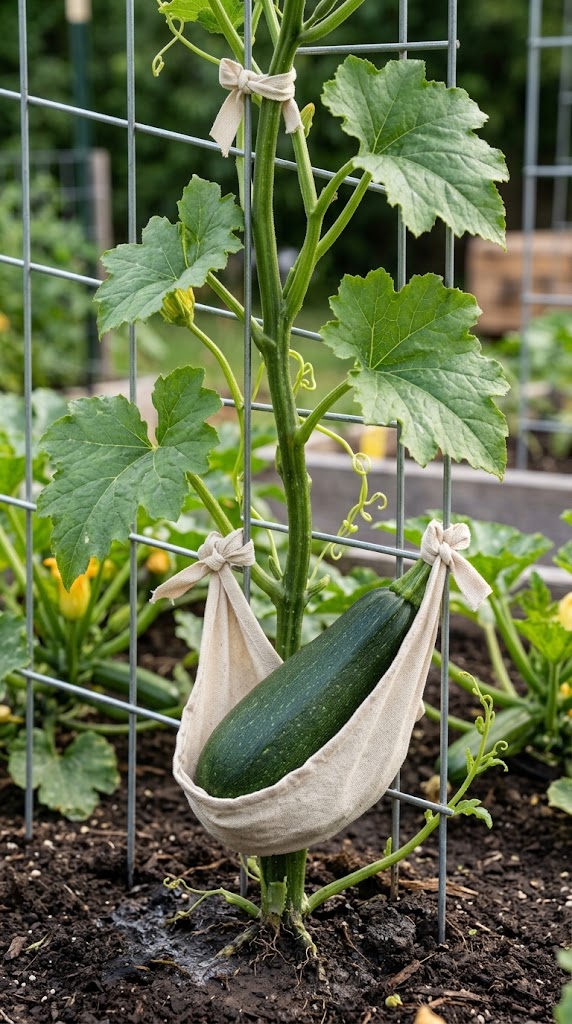
Just loop it under the fruit and secure the ends to the support above. It’s a small step that saves you from losing a zucchini right before harvest.
Best Trellis Options for Growing Zucchini Vertically
The right trellis makes or breaks a vertical zucchini setup. Since zucchini can’t grip a support on its own, the structure needs to be sturdy enough to hold a heavy, leafy plant loaded with fruit.
Also, it should be easy enough for you to reach through when it’s time to tie the vine or pick a squash. Here are the options worth considering.
A-Frame Trellis
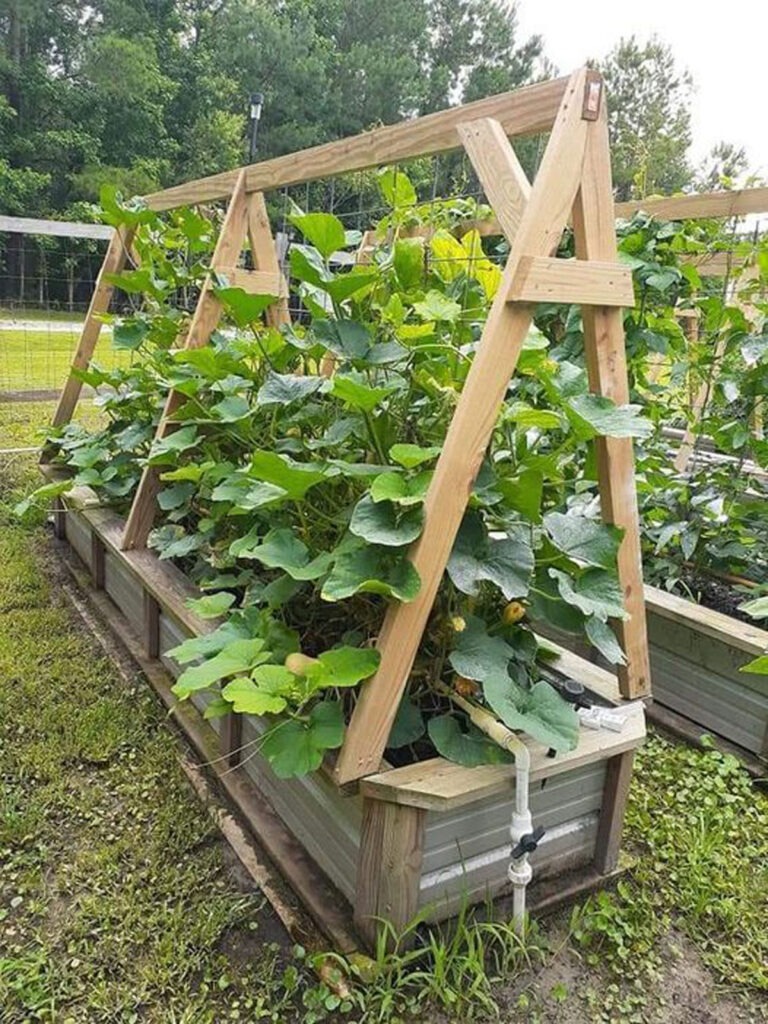
An A-frame is two flat panels hinged together at the top, forming a tent shape that stands on its own without needing to be anchored to a fence or wall.
This makes it a good choice if you want to move your trellis setup from year to year or use it in a raised bed where driving stakes into the ground isn’t an option.
The wide base gives excellent stability, which matters once your zucchini is fully grown and heavy with fruit.
It also creates a shaded pocket underneath, which some gardeners use to tuck in a shade-loving companion plant like lettuce during the hottest part of summer.
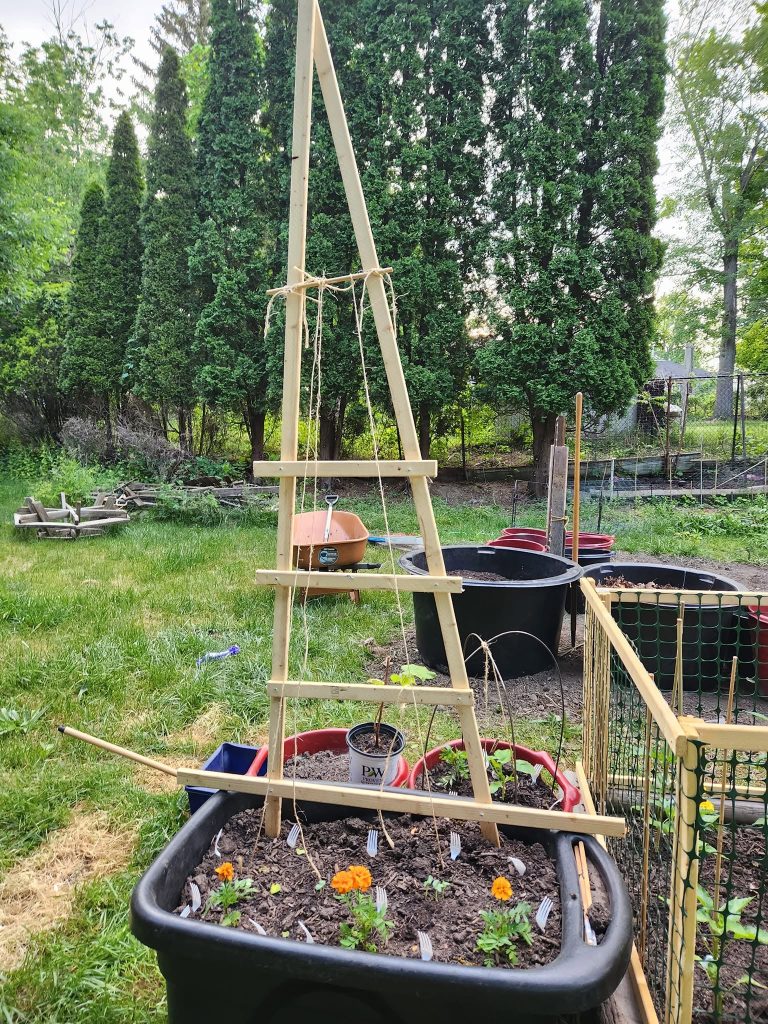
Build one from cattle panel bent into a peak, or from wood and wire mesh if you want something more finished-looking for a front yard garden.
Either way, make sure the hinge at the top is solid, since that’s the point under the most stress once the plant fills in. A frame trellis also work best for growing cucumber vertically.
Cattle Panel Trellis
A single flat panel of cattle fencing, anchored upright with T-posts on either end, is one of the sturdiest and most affordable options out there.
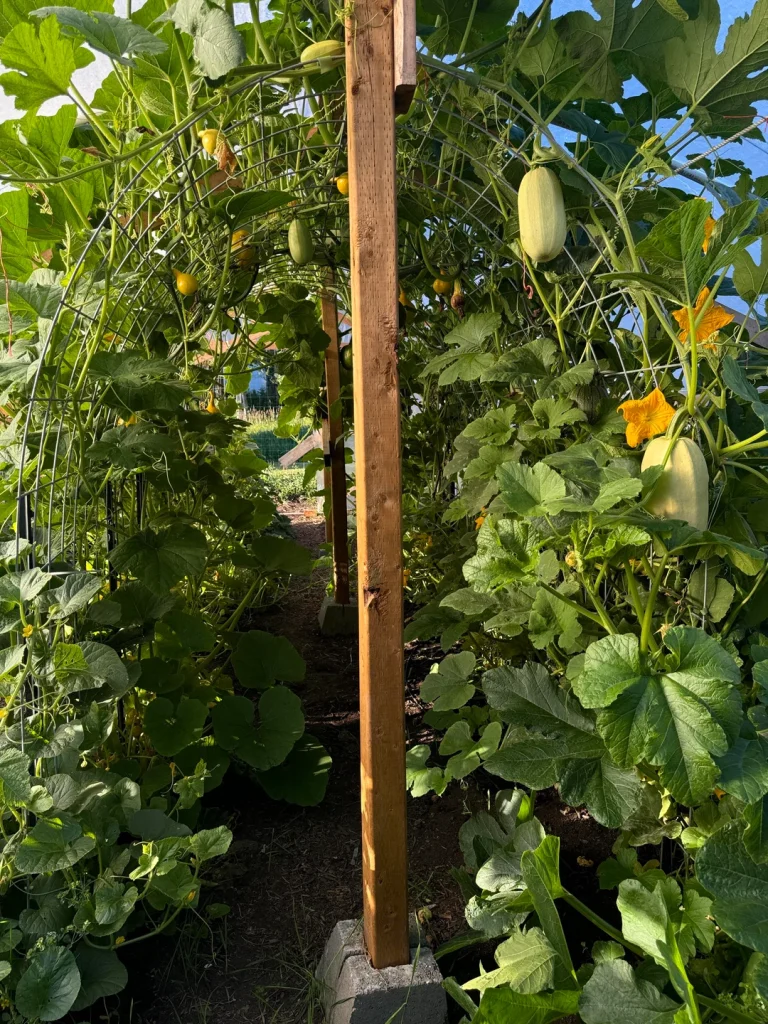
Cattle panels are rigid enough to hold serious weight without bowing, and the wide grid openings make it simple to reach through for tying and harvesting.
Set the panel along a fence line or between two posts sunk at least a foot into the ground for stability.
Because it’s flat rather than freestanding, a cattle panel trellis works especially well against a wall or fence where you want to save space rather than have a structure jutting out into the garden.
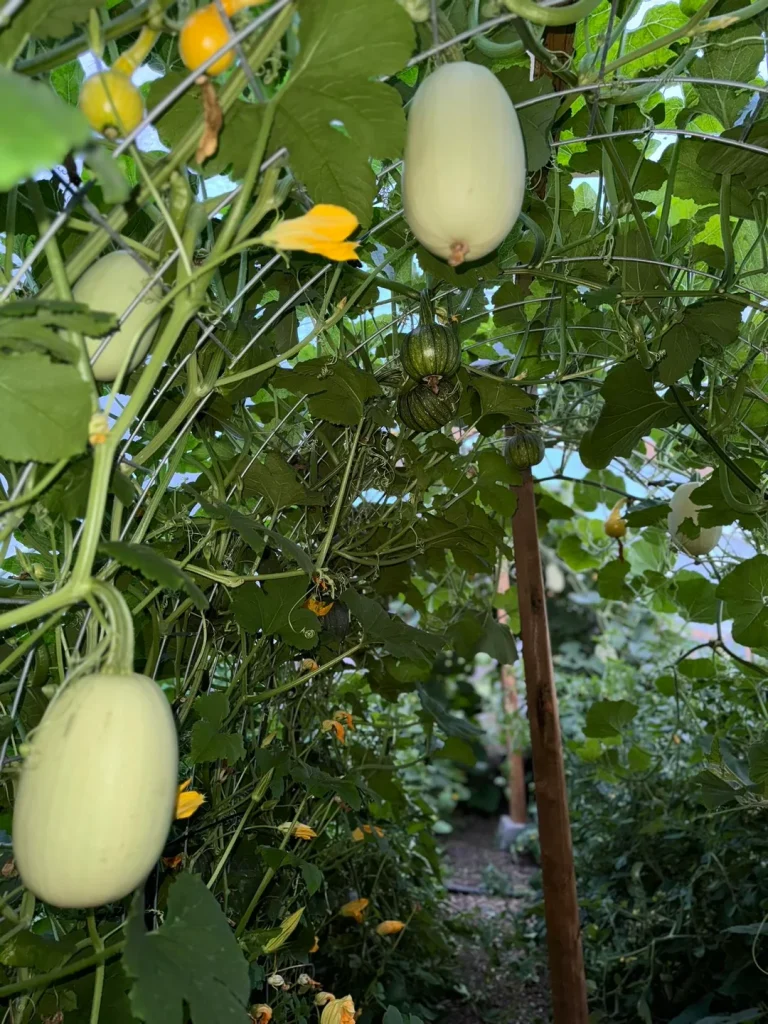
The main downside is that cattle panels are large and can be awkward to transport or cut down to size. But once it’s in place, this is a trellis you can reuse season after season with almost no maintenance.
Also read: The Ultimate Guide to Growing Cucumbers Vertically: 7 Space-Saving Ideas
Tripod or Teepee Trellis
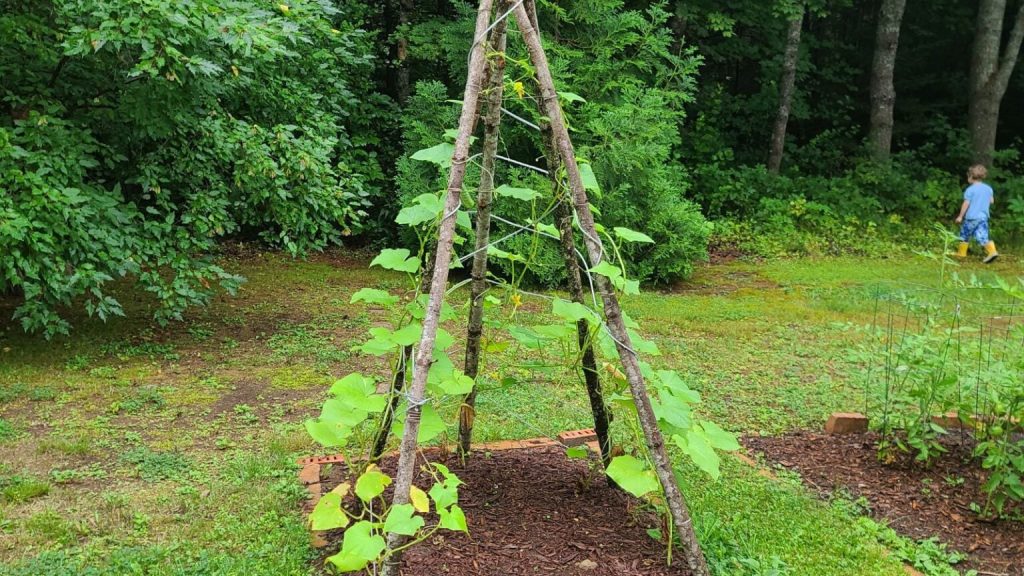
Three or four sturdy poles, like bamboo stakes or wooden dowels, lashed together at the top and spread into a wide base, create a simple teepee shape that’s easy to build with materials you may already have.
This is one of the most budget-friendly options and works well in smaller garden beds where a bulkier structure wouldn’t fit.
Plant one zucchini at the base of each pole and let the vines climb toward the center as they grow.
The narrow footprint at ground level combined with a wider canopy up top makes efficient use of space, which is part of why vertical growing is appealing in the first place.
Because the poles rely on the lashing point at the top for stability, check that connection periodically through the season. A loose tie at the peak can let the whole structure lean once it’s carrying the weight of mature vines and fruit.
Garden Arch or Arbor Trellis
An arch trellis curves overhead, creating a tunnel-like structure that zucchini can climb up one side and over the top.
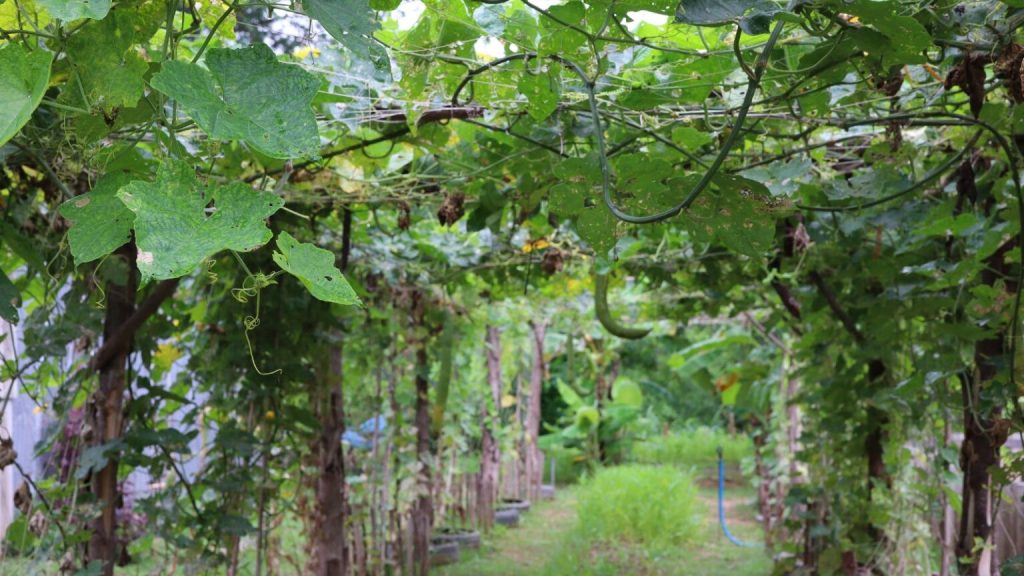
This is more of an investment than the other options. Whether you’re buying a metal arch or building one from cattle panel bent into a curve, it doubles as an attractive garden feature beyond just supporting the plant.
Set the base posts deep and secure, since an arch bears weight differently than a straight panel or frame does, with fruit and foliage often hanging down into the walkway beneath it.
That overhead fruit display is actually one of the biggest perks. Squash hanging down through the arch is easy to spot and easy to reach, without any bending or digging through leaves.
Arches work best along a path or as an entry point into a garden bed, where the tunnel shape has a clear purpose. In a smaller space, the footprint may be more than a zucchini plant alone really needs.
Reinforced Tomato Cage
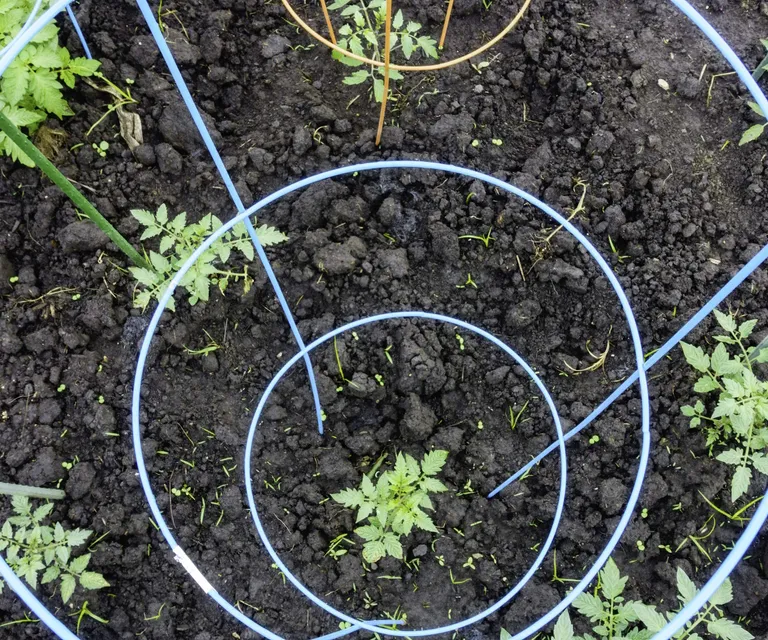
A standard flimsy tomato cage won’t cut it for zucchini, but a heavy-duty, reinforced version with thick-gauge wire can work for a single plant in a container or small bed.
This is the simplest option if you already have one on hand and don’t want to build or buy anything new.
Because a cage surrounds the plant on all sides rather than giving it a single flat surface to climb, you’ll need to guide the stem in a loose spiral around the interior as it grows rather than training it straight up.
This takes a bit more regular attention than a flat trellis does.
Cages also tend to be shorter than other options, often topping out around 4 feet, so they suit compact vining varieties better than the most vigorous climbers.
For container-grown zucchini on a patio, though, a sturdy cage is often the most practical choice available.
Existing Fence or Wall
If you already have a chain-link fence, wooden privacy fence, or even a sturdy trellis panel mounted on a wall, you may not need to build anything at all.
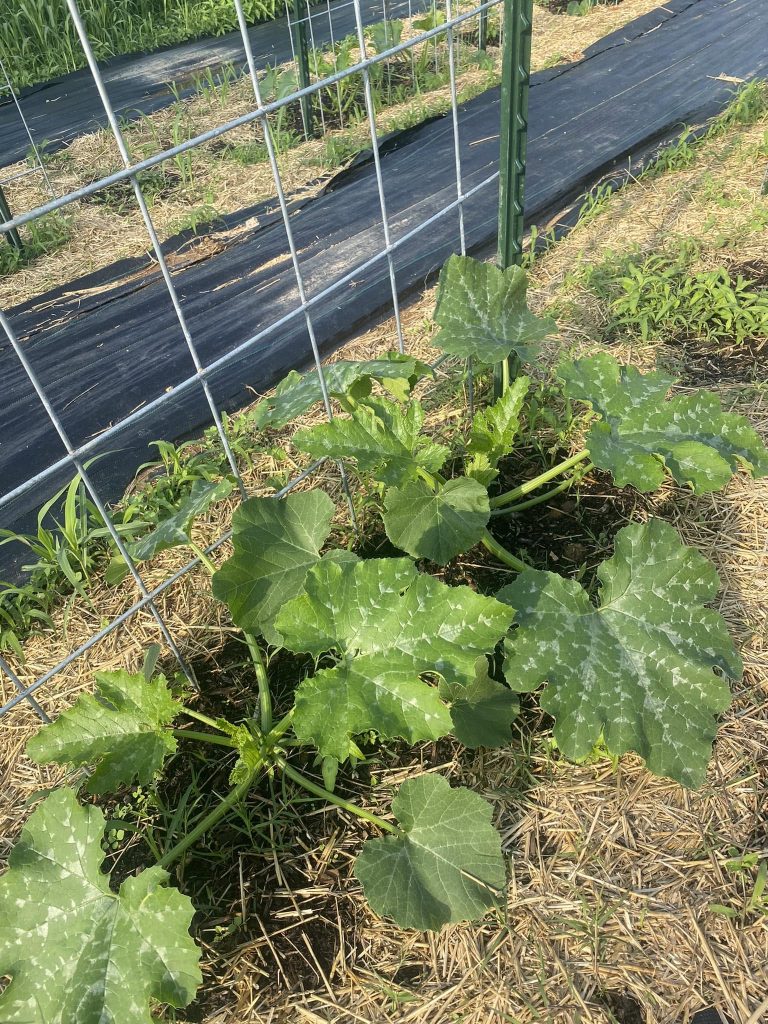
Planting zucchini at the base and training it to climb an existing structure is the lowest-cost, lowest-effort option on this list.
The main thing to check is spacing. Zucchini needs openings wide enough to weave a stem through and reach in for ties and harvesting, so a solid wall or tightly woven fence won’t work without adding some kind of wire or netting first.
A chain-link fence, on the other hand, is often ideal as-is.
Keep in mind that a shared fence with a neighbor or a painted wall may not be the best spot for a plant that will need regular tying and occasional pruning. Choose a structure you have full access to from both sides if you can.
What type of soil do you need to grow healthy zucchini vertically?
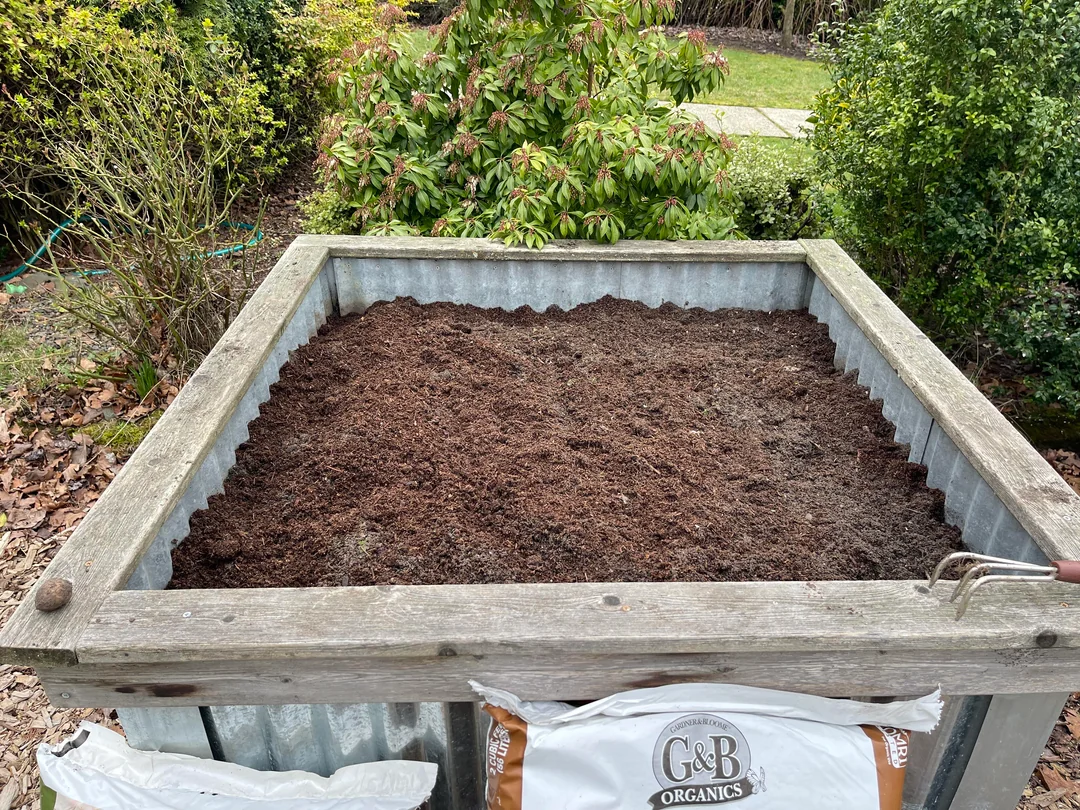
Zucchini plants are heavy feeders, and growing them vertically doesn’t change that. What it does change is how quickly the soil around the base dries out, since more of the plant’s energy is going up instead of spreading its roots wide.
Give your zucchini rich, well-draining soil loaded with organic matter.
Work in a generous amount of compost or aged manure before you plant, and if you’re growing in a raised bed or container, use a quality potting mix rather than garden soil straight from the ground.
Garden soil tends to compact in containers and won’t drain the way zucchini roots need.
Good drainage matters just as much as good nutrition here. Zucchini roots sitting in soggy soil are prone to rot, and that’s true whether the plant is sprawling or climbing.
Also read: Raised Bed Soil Calculator: Know Exactly How Much Soil to Buy
Advantages of growing zucchini vertically
Vertical growing solves the biggest complaint gardeners have about zucchini: the sheer amount of space it eats up.
- A trellised plant needs a fraction of the footprint a sprawling one does, which frees up ground space for other crops nearby.
- Air circulation improves dramatically too, since the leaves aren’t piled on top of each other the way they are in a sprawling patch. That better airflow means less powdery mildew and fewer fungal issues overall.
- Fruit quality tends to improve as well. Zucchini growing off the ground stays cleaner, avoids soil contact rot, and grows straighter since it isn’t bending around obstacles as it develops.
- Harvesting is easier too, since the fruit hangs at eye level instead of hiding under a canopy of leaves.
Disadvantages of growing zucchini vertically
The trellis itself is the main hurdle. You need something sturdy in place before you plant, and that takes upfront effort and sometimes cost that sprawling zucchini doesn’t require.
Training the vine is ongoing work as well. Unlike a plant left to sprawl on its own, a vertical zucchini needs regular tying and checking throughout the season, especially during peak growth.
Water needs also climb, since the concentrated root zone dries out faster than a spread-out sprawling plant would.
And not every variety is suited to it, so your choices at the seed rack are more limited than they’d be if you were happy to let the plant sprawl.
Harvesting vertical zucchini
Zucchini grows fast, and vertical vines are no exception. Check your plant every day or two once it starts fruiting, since a zucchini can go from perfect to oversized in just a couple of days.
Harvest when the fruit is 6 to 8 inches long for the best flavor and texture. Use a sharp knife or pruning shears to cut the stem rather than twisting or pulling, which can damage the vine.
Because the fruit hangs at eye level on a trellis, it’s much easier to spot ripe zucchini before it hides and grows into a baseball bat you find a week too late.
How to store zucchini
Fresh zucchini keeps in the refrigerator for about a week, stored loose in the crisper drawer rather than sealed in plastic, which traps moisture and speeds up rot.
For longer storage, zucchini freezes well once it’s shredded or sliced and blanched. It also holds up nicely pickled or dehydrated into chips if you’re looking for ways to use up a heavy harvest.
Growing Zucchini Vertically Is Easier Than It Looks
Once you’ve got the right trellis and variety in place, growing zucchini vertically is genuinely simple.
It takes a bit more upfront effort than letting the plant sprawl, but the payoff is cleaner fruit, healthier leaves, and a garden bed that isn’t buried under zucchini vines by midsummer.
Now go pick out a trellis and get those seeds started!