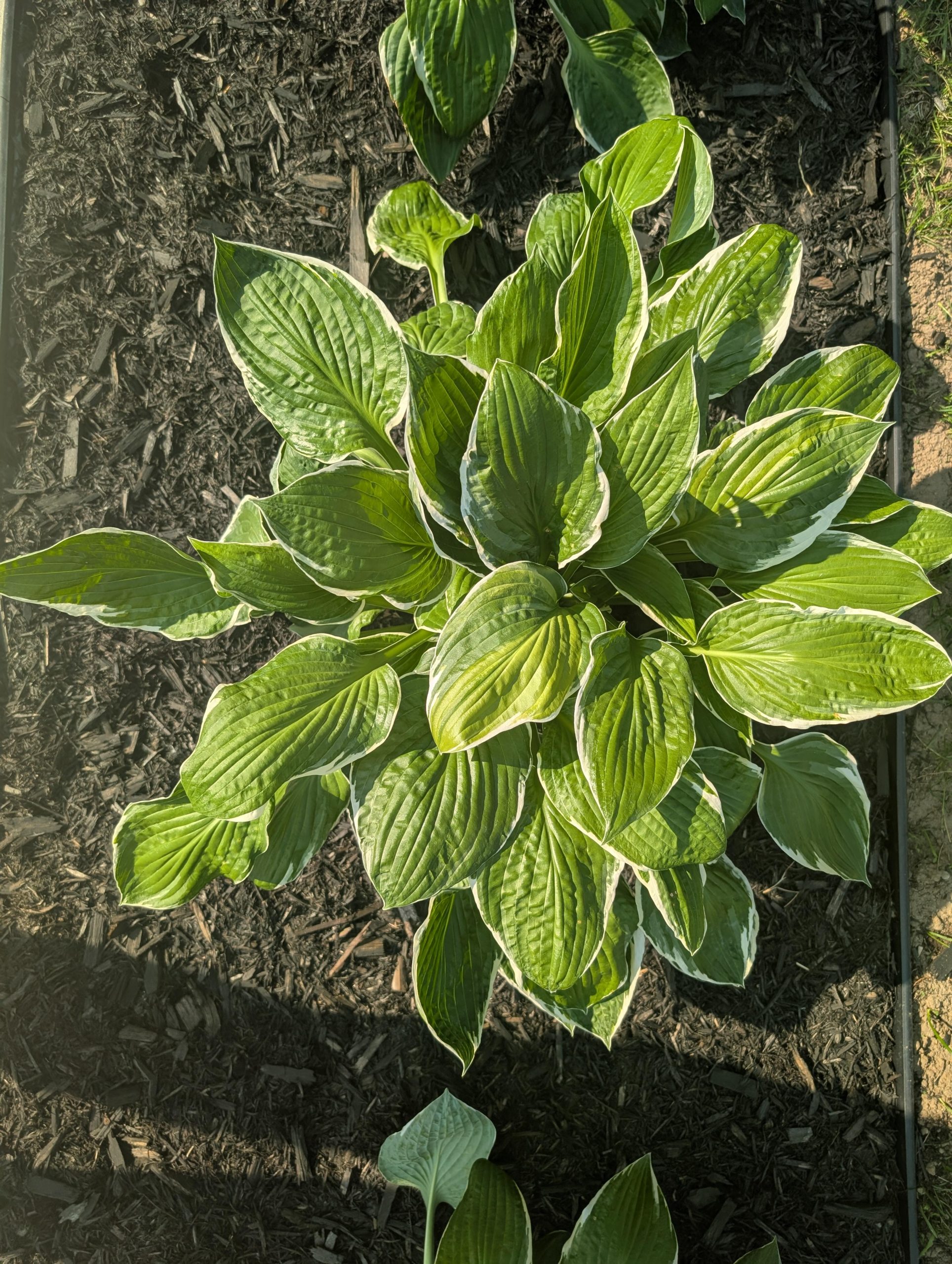
What Causes Hosta Leaves To Curl and Quick Fixes You Can Try

Curling hosta leaves usually mean your plant is trying to tell you something. Most of the time it’s stress, and the good news is that stress is fixable once you know the cause.
Sun, water, heat, pests, and disease all show up on hosta foliage in slightly different ways, so the exact way the leaves curl gives you real clues.
We’ll walk through each cause below and show you what to look for and what to do about it.
Note: If your hosta’s leaves are curling along with yellowing, mushy stems, or a foul smell near the base, stop reading about curling and check for crown rot first. That’s a different problem with a different fix, and it moves fast.
Is too much sun causing your hosta leaves to curl?
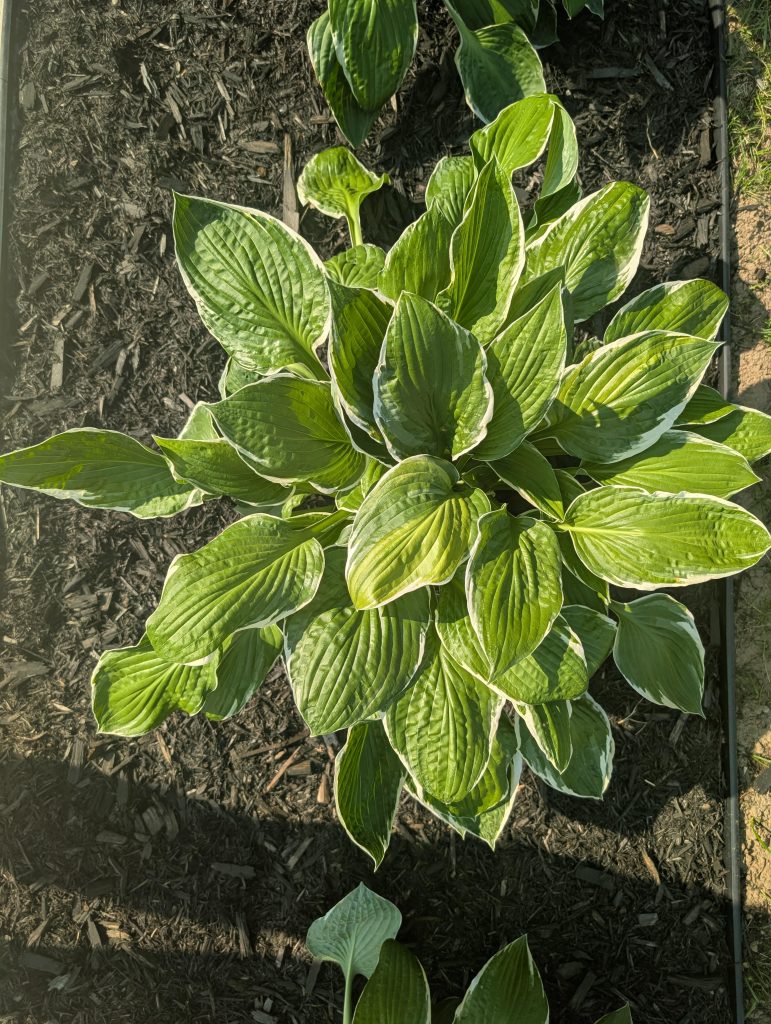
Hostas are shade lovers at heart. Give them too much direct sun, especially in the afternoon, and the leaves will curl inward to protect themselves from moisture loss.
You’ll usually see this paired with faded or bleached-looking patches on the leaf surface.
Thin-leafed varieties and blue-toned hostas are the most sensitive to sun scorch. Thicker, greener varieties can handle a bit more light, but even they will curl if left in full sun for most of the day.
What to do: Move container-grown hostas to a spot with morning sun and afternoon shade. For in-ground plants, add a taller companion plant or small shrub nearby to cast some shade during the hottest part of the day.
Could underwatering be the problem?
When hostas don’t get enough water, the leaves curl to reduce their surface area and slow down moisture loss. It’s the plant’s built-in survival move.
You’ll often notice the curling starts at the leaf edges and the soil feels dry an inch or two below the surface.
Hostas need about 1 inch of water per week, more during hot or dry stretches. Container hostas dry out faster than those in the ground, so check them daily in summer.
What to do: Water deeply and slowly at the base of the plant rather than a quick sprinkle on top. A layer of mulch around the base also helps the soil hold moisture longer between waterings.
Can overwatering also cause curling?
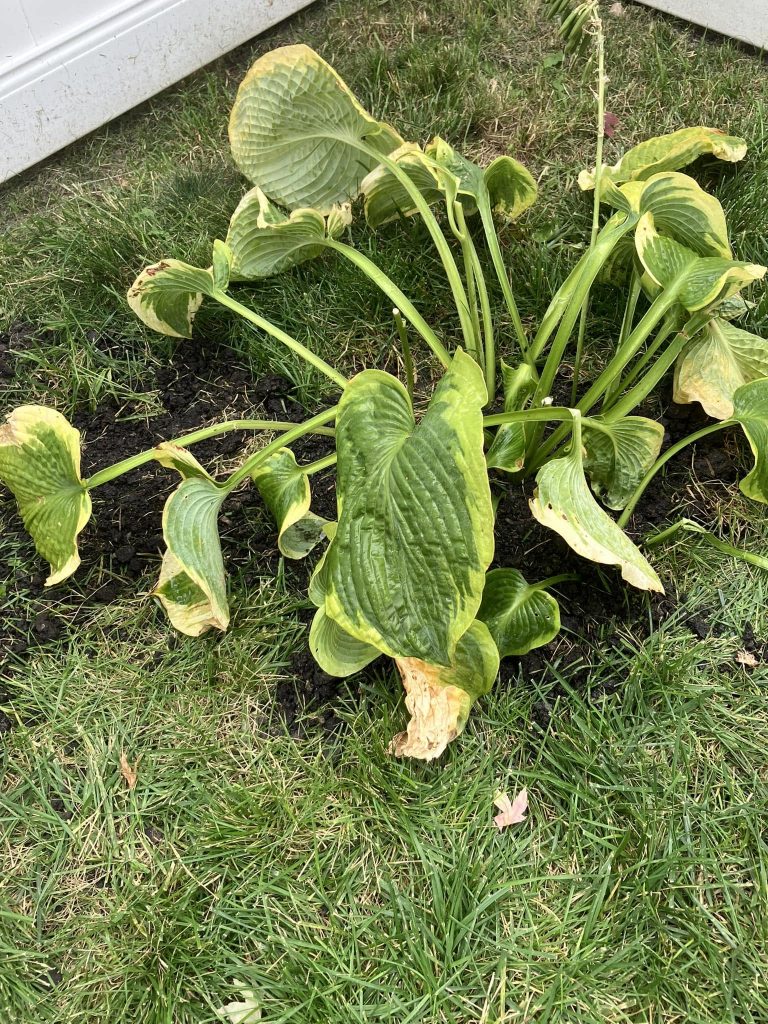
Yes, and this one surprises a lot of gardeners. Too much water drowns the roots and stops them from absorbing nutrients properly.
The leaves respond by curling, but this time you’ll usually see yellowing too, and the soil will feel soggy rather than dry.
Poor drainage is often the real culprit here, not the amount of water itself.
What to do: Check that containers have drainage holes and that garden soil isn’t compacted or holding water. Let the top inch of soil dry out between waterings, and consider working some compost into heavy clay soil to improve drainage.
Is heat stress causing the leaves to curl?
During heat waves, hostas curl their leaves as a defense mechanism, even when the soil moisture is fine.
This is temporary and usually resolves once temperatures drop back down in the evening or overnight.
What to do: If curling only happens during the hottest part of the day and the leaves look normal again by morning, your hosta is likely just coping with the heat.
Extra mulch and consistent watering during heat waves will help it bounce back faster.
Are pests behind the curling leaves?
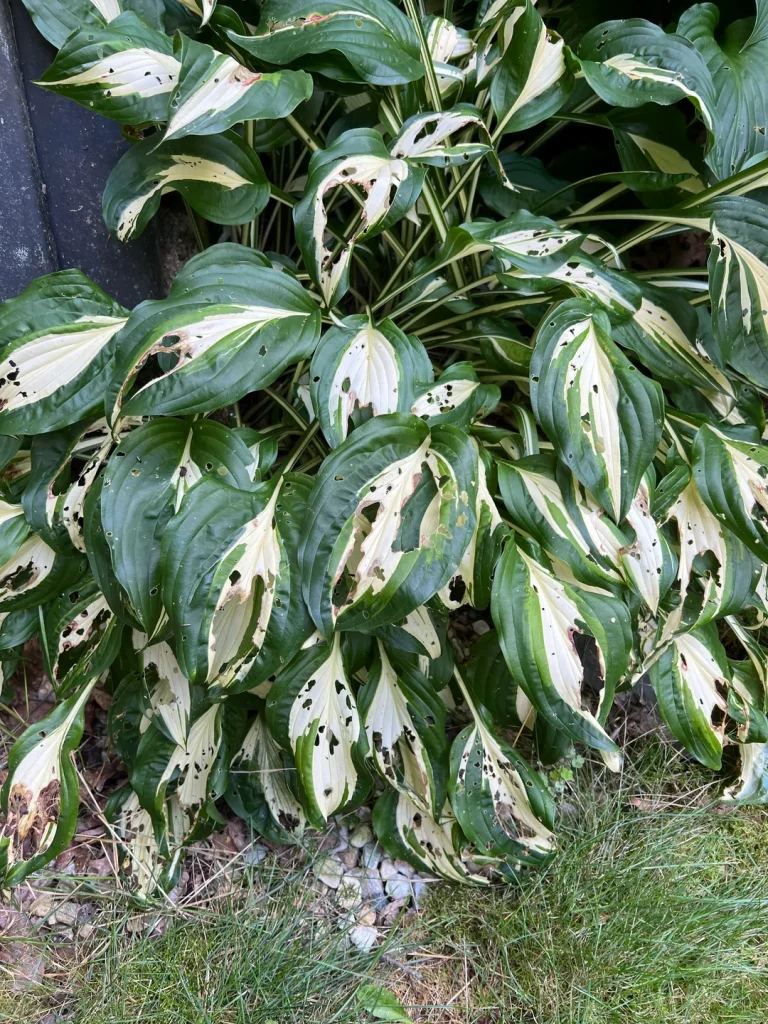
Several common pests can cause hosta leaves to curl, and each leaves its own calling card. Slugs and snails chew ragged holes near the edges, which can pull the leaf into a curled shape as it tries to heal.
Aphids cluster on the undersides of leaves and suck out sap, leaving the foliage curled and sometimes sticky.
Foliar nematodes are a tougher pest to spot. They live inside the leaf tissue and cause brown streaks between the veins along with curling and distortion. Unlike slugs and aphids, nematodes can’t be treated with a simple spray.
What to do: Check leaf undersides for aphids and wipe them off with a damp cloth or insecticidal soap. Handpick slugs in the evening or set out shallow beer traps to keep slugs off hosta.
If you suspect foliar nematodes, remove and destroy the affected leaves and avoid overhead watering, since that’s how the pest spreads.
Could disease be causing the curl on hosta leaves?
Fungal and bacterial diseases sometimes announce themselves through curling before any spots or discoloration show up.
Hosta virus X is one to watch for. It causes mottled, puckered, or curled leaves with uneven coloring, and unfortunately there’s no cure once a plant is infected.
Less serious fungal issues, like leaf spot, can also cause curling in the early stages, usually along with small brown or tan spots that spread over time.
What to do: If you suspect hosta virus X, remove and dispose of the entire plant. Don’t compost it, since the virus can spread to healthy hostas nearby.
For fungal issues, remove affected leaves, improve air circulation around the plant, and avoid wetting the foliage when you water.
Is transplant shock or a root-bound plant to blame?
Newly moved or divided hostas often curl their leaves for a week or two while the roots settle in. This is normal and nothing to worry about as long as new growth appears soon after.
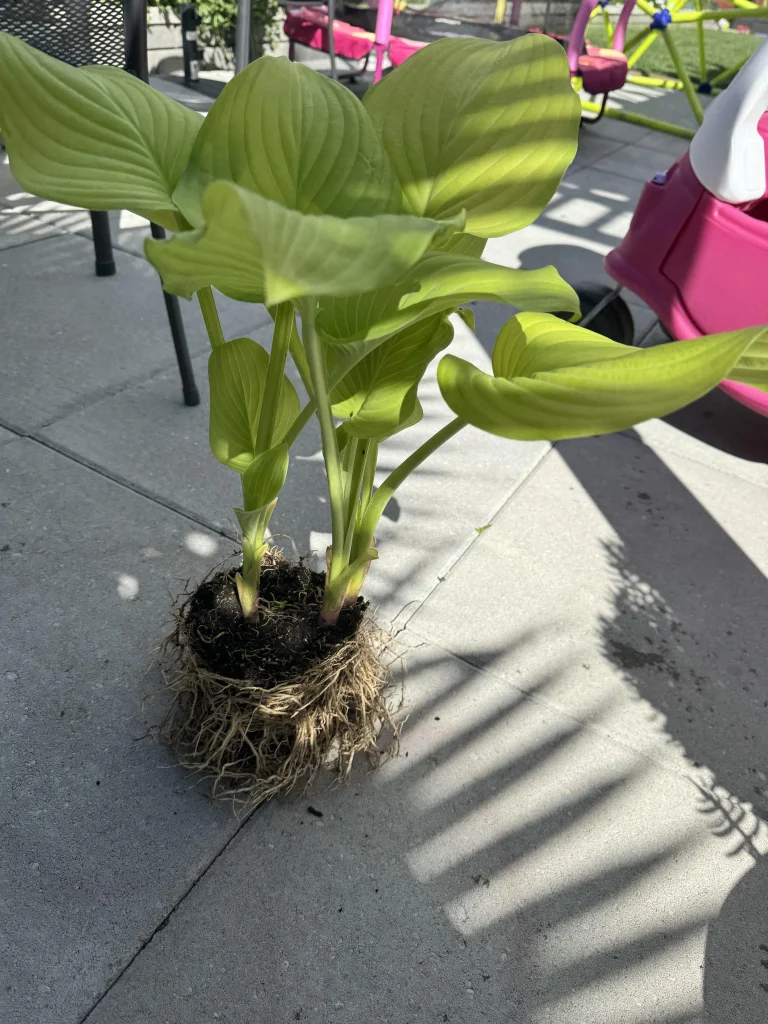
Root-bound hostas, especially ones left in containers too long, show a similar curl because the roots simply don’t have room to take up enough water and nutrients.
What to do: Give transplants time and consistent watering while they adjust. For root-bound plants, size up the container or divide the plant and give it fresh soil.
Quick fixes to try first
- Check the soil moisture before anything else. Dry means water. Soggy means back off and improve drainage.
- Move sun-scorched hostas to a shadier spot or add nearby shade cover.
- Inspect leaf undersides for pests like aphids and slugs.
- Look for brown streaking between leaf veins, a sign of foliar nematodes.
- Give new transplants a couple of weeks before assuming something’s wrong.
Curling Hosta leaves aren’t the end of the story
Most of the time, a curling hosta leaf is simply asking for a small adjustment, whether that’s more shade, steadier watering, or a closer look for pests.
Once you match the symptom to the cause, the fix is usually straightforward. Keep an eye on your hostas through the season, and they’ll reward you with the lush, full foliage they’re known for.