12 Stunning Fall Container Plants for A Sunny Porch

My porch turns dull every August like clockwork. I dread that awkward gap between fading petunias and the first pumpkin on the steps. Petunias droop. Geraniums quit.
Fall containers save the whole scene once summer flowers give up, and I’ve tested plenty of plants to find ones that survive a hard frost without turning to mush.
12 made my final list. Zones shift depending on where you garden, but cold tolerance is the one thing every plant here shares. Grab your gloves. Your porch is about to get a serious glow up.
12 Fall Potted Plants for Front Porch and Patio
1. Mums: The Fall Classic You Can’t Skip
You can’t walk past a garden center in September without tripping over mums. I get it. They’re everywhere for good reason.
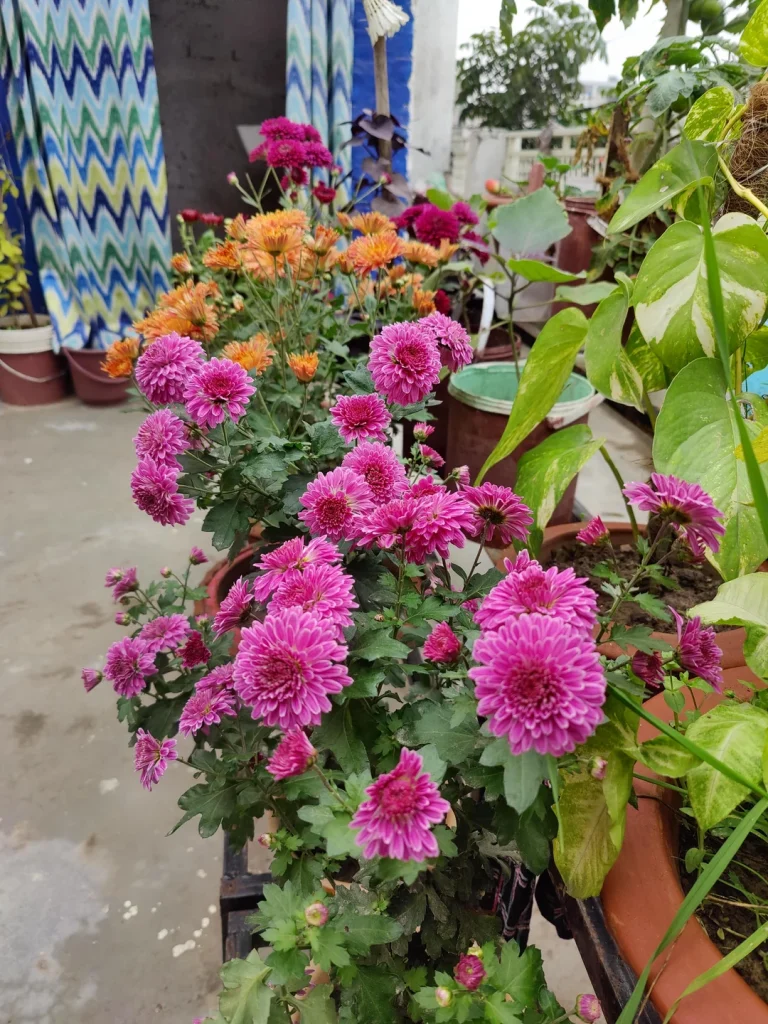
Chrysanthemums bloom in deep burgundy, bright gold, and every warm shade between, and that color sticks around for weeks.
Here’s my favorite trick: buy mums while the buds are still tight. Tight buds mean longer bloom time once you get them home. Give them full sun and soil that drains well, and they’ll reward you.
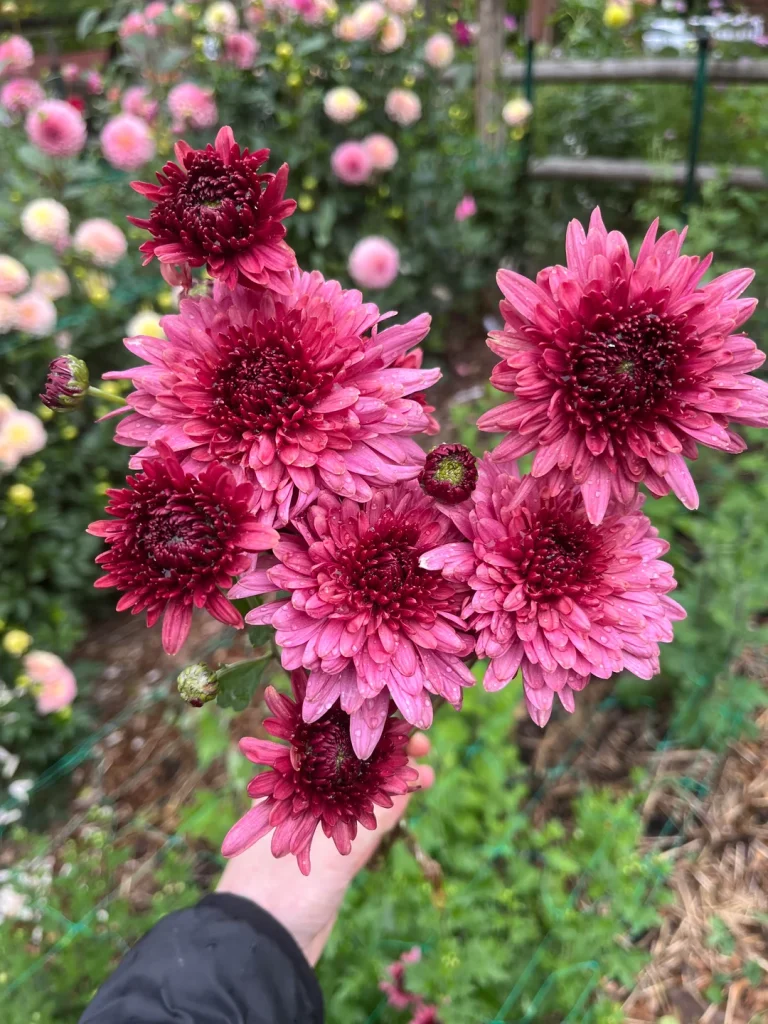
Want more texture? Pair mums with ornamental kale in the same pot. Garden mums actually come back as perennials in zones 5 through 9. Florist mums won’t survive winter, so treat those as one-season color only.
- Zones: 5-9 as a perennial; grown as an annual elsewhere
- Sun: Full sun
- Soil: Well-draining
- Height/Spread: 1-3 feet tall and wide
- Bloom Time: Late summer through fall, until frost
Also read: 15 Fall Flowers to Plant in August for a Garden
2. Pansies and Violas: Tiny Flowers With Big Attitude
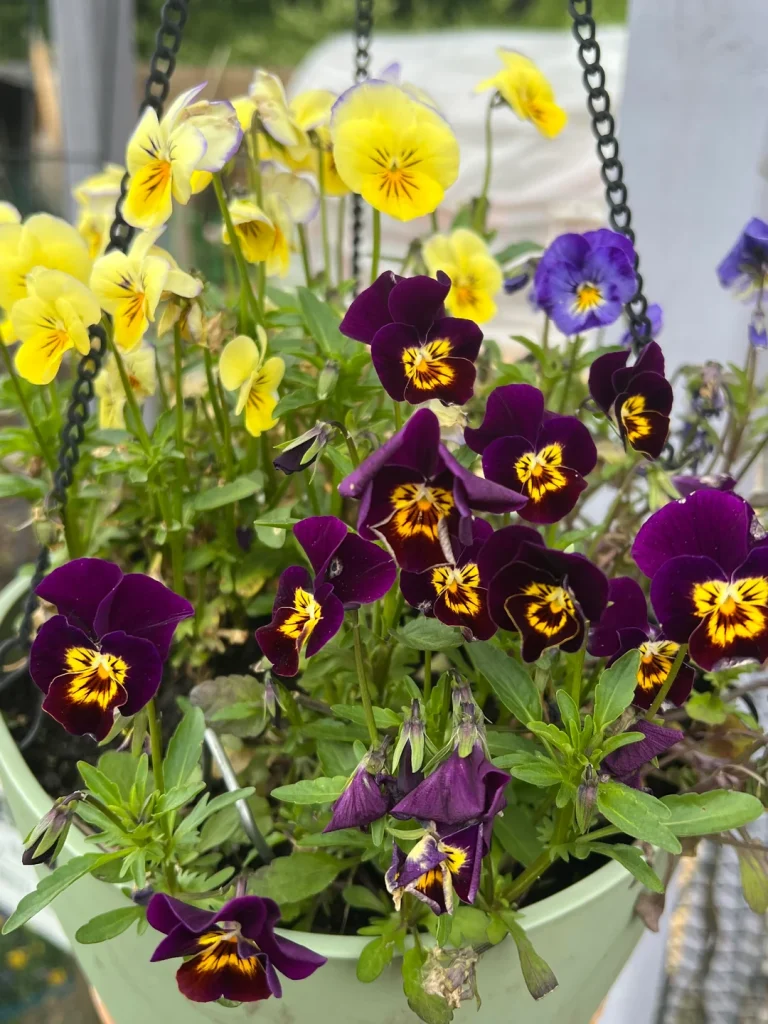
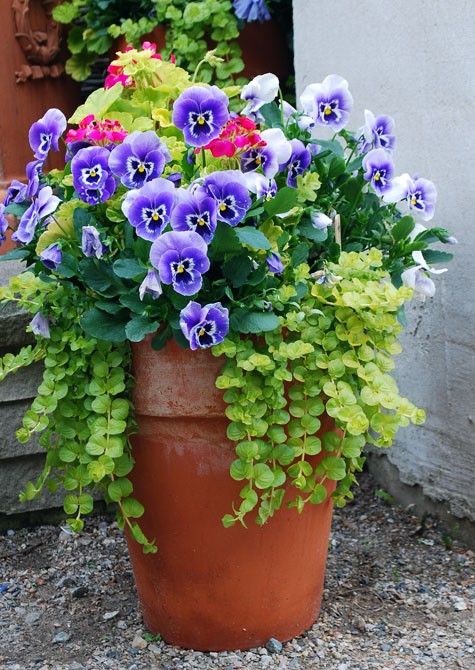
Cold doesn’t scare these two at all. I’ve watched pansies bloom straight through a light frost like it’s nothing. Some gardeners even see blooms return the next spring in milder climates.
Violas pack in tons of small blooms at once. Pansies go bigger but bloom a little sparser. Either way, both spill gorgeously over the edge of a container.
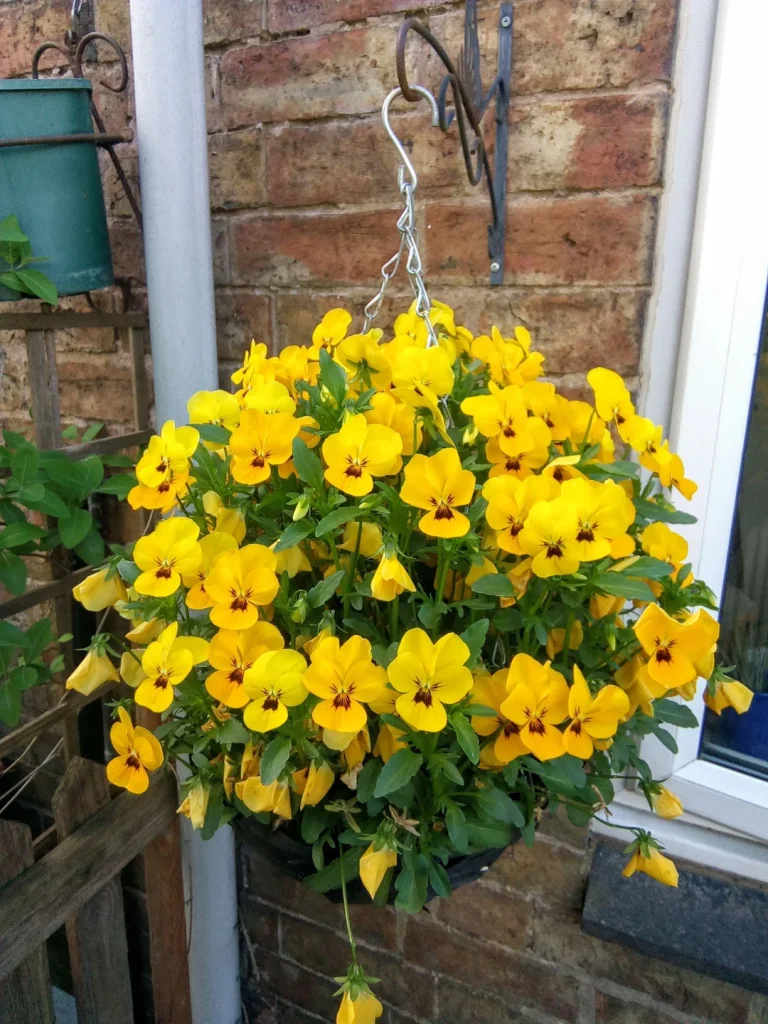
Give them partial to full sun and steady water. Containers dry out fast, faster than you’d think. Try tucking a few around ornamental grasses for a nice contrast.
- Zones: Grown as cool-season annuals in most areas; can act as short-lived perennials in mild climates
- Sun: Partial to full sun
- Soil: Moist, well-draining
- Height/Spread: 6-8 inches tall, trailing habit
- Bloom Time: Fall through frost, sometimes into spring
Also read: 15 Best Fall Container Plants for Shade
3. Ornamental Kale and Cabbage: The Foliage Everyone Forgets
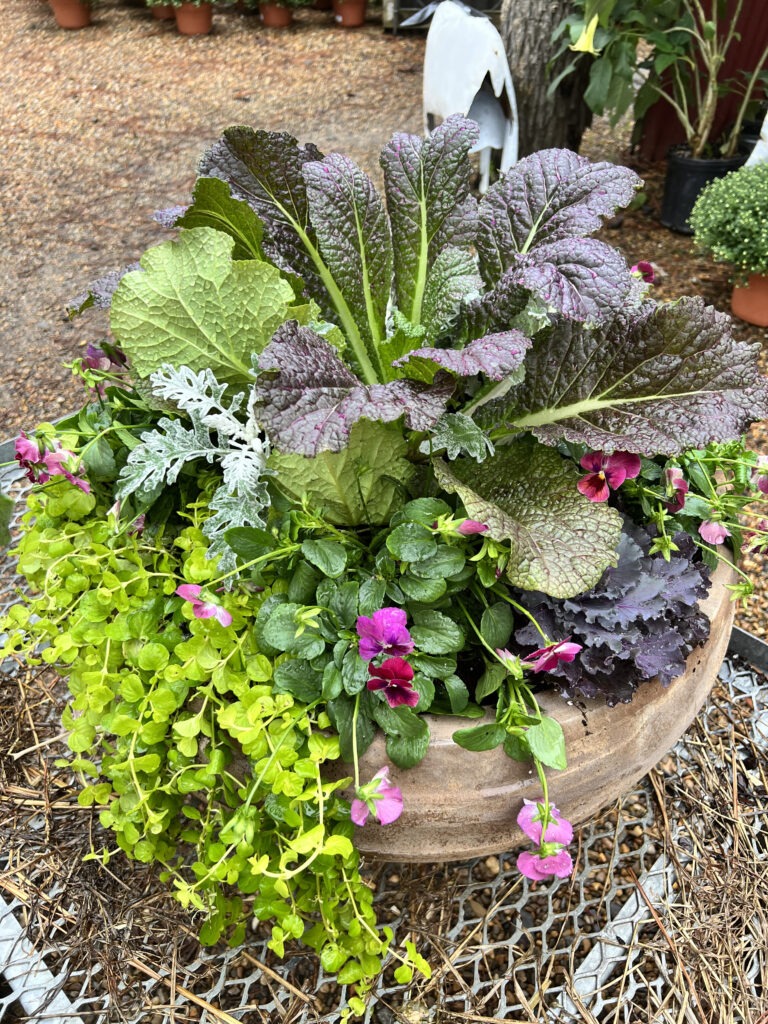
Flowers aren’t the only option here, and honestly, foliage might win this round. Kale and cabbage bring sage green leaves splashed with pink, purple, and cream. Frost actually deepens their color instead of ruining it.
Kale grows spiky, ruffled leaves that grab attention fast. Cabbage forms smoother, rounder heads instead. Either one adds instant drama to your porch.
Plant these by early July if starting from seed. Full sun brings out their boldest colors. Winter pansies make a lovely companion for a matching color scheme.
- Zones: Grown as an annual; technically a true biennial
- Sun: Full sun
- Soil: Well-draining
- Height/Spread: 10-15 inches tall and wide
- Bloom Time: Grown for foliage color, which peaks fall through early winter
Also read: 15 Stunning Fall Container Plants Full Sun
4. Asters: The Butterfly Magnet of Fall
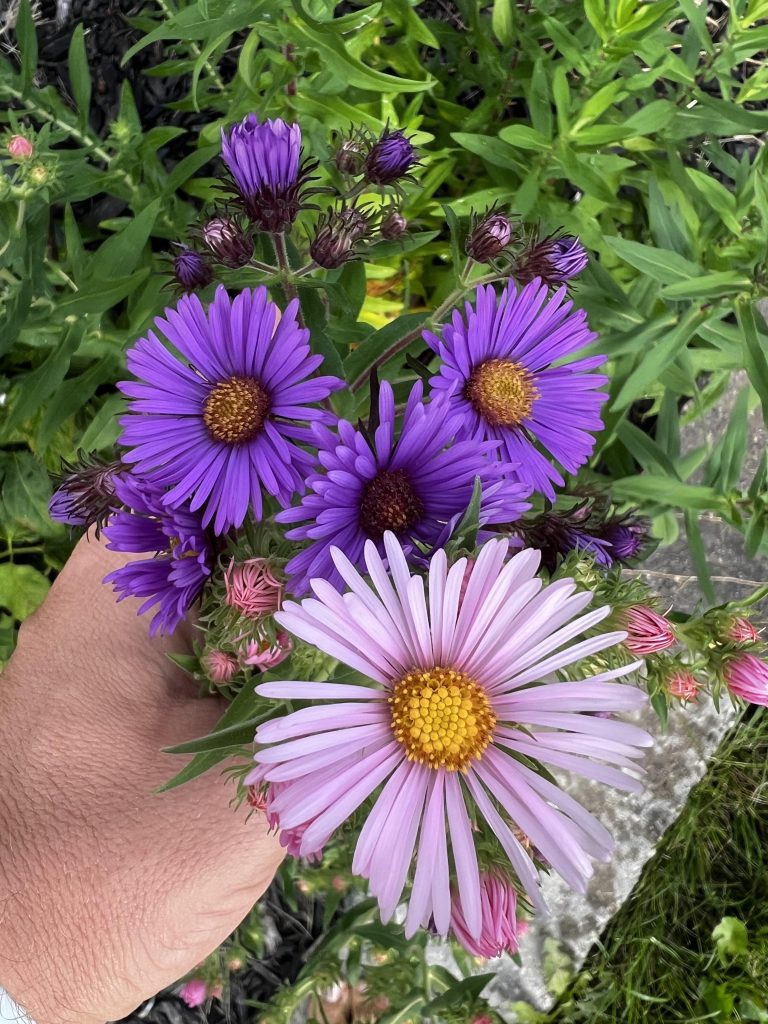
Just when your garden starts looking tired, asters show up ready to party. I love how their daisy-like blooms pop in shades of purple, pink, and blue.
Butterflies love them too, and you’ll notice more pollinator visits the moment they open.
These work great as a filler between taller plants. Asters fill gaps without stealing the spotlight. Pair them with goldenrod for a classic fall combo that feels straight out of a farmhouse magazine.
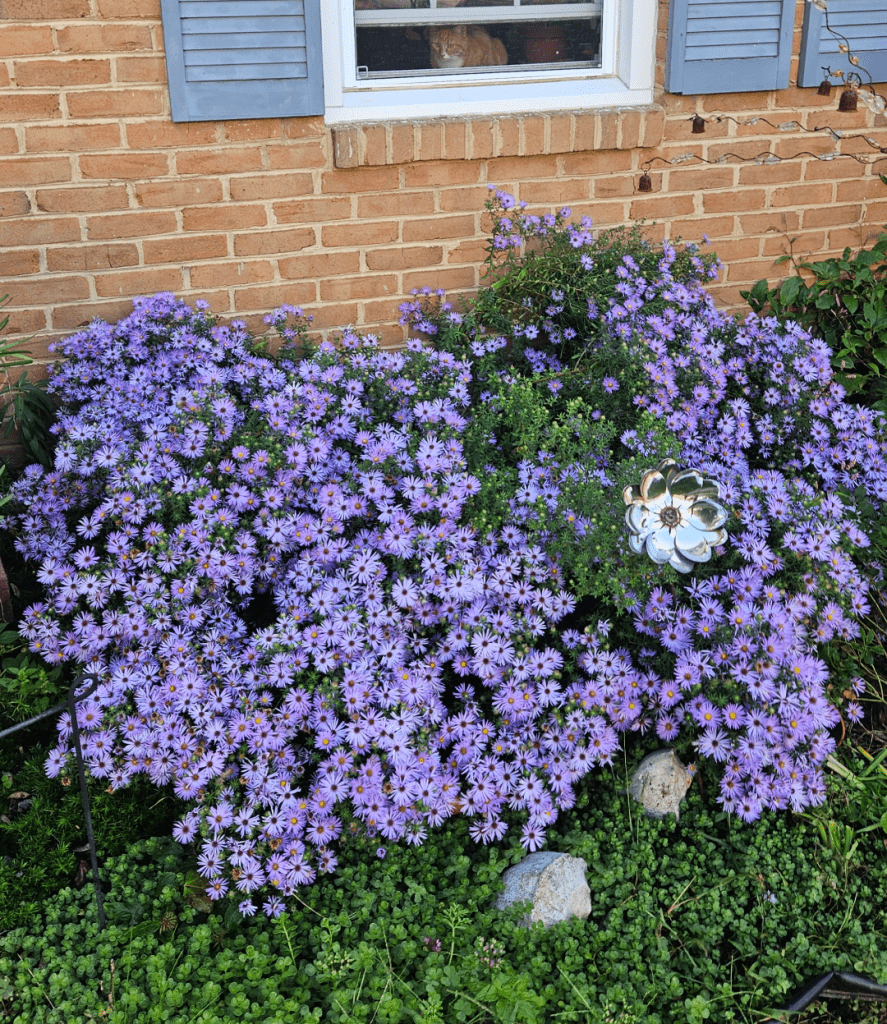
Give asters full sun for the best bloom. Water them regularly since containers dry out quicker than garden beds. Watch closely, because once they start blooming, they don’t stop until frost hits hard.
- Zones: 3-8 as a perennial
- Sun: Full sun
- Soil: Moist, well-draining
- Height/Spread: 1-3 feet tall
- Bloom Time: Late summer through fall
5. Impatiens: Your Shade Garden Savior
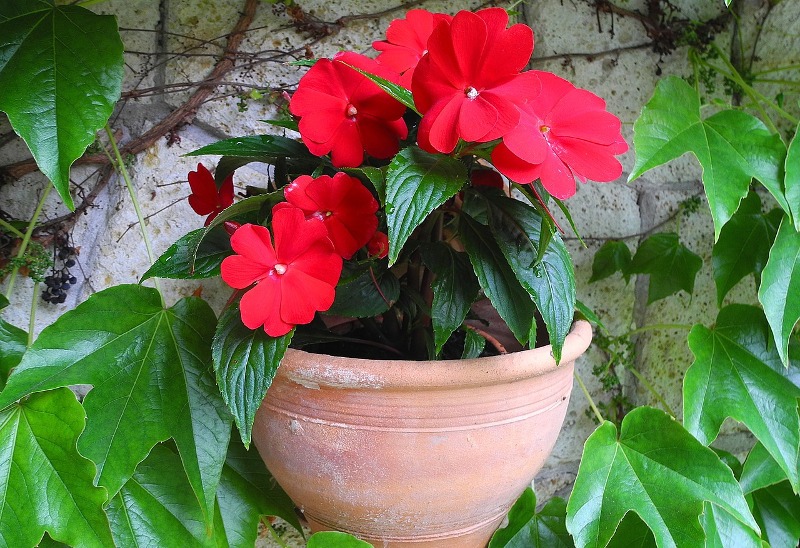
Does your porch stay shady most of the day? I’ve got good news. Impatiens bloom happily where mums and asters would sulk and refuse to flower.
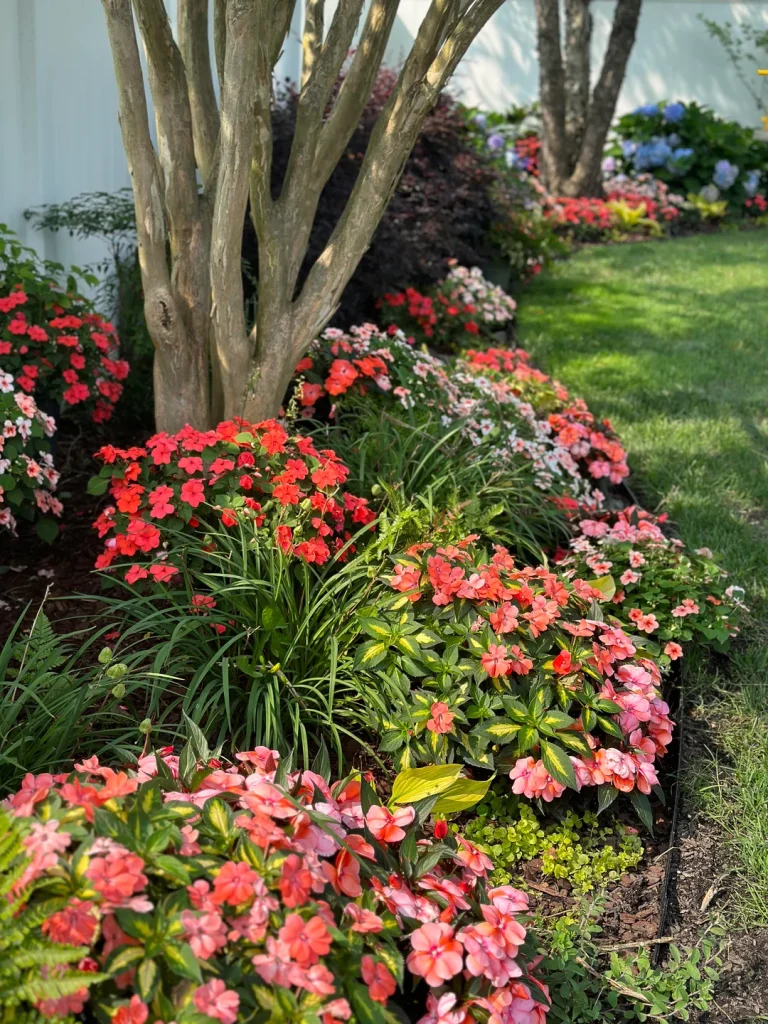
These bright little blooms come in white, pink, red, and everything between. I always pinch back leggy stems in late summer. That one trick keeps the plant bushy instead of stringy and sparse.
Pair impatiens with begonias for a lush, full look. Both thrive in similar shady spots. Together, they fill a container fast without demanding much fuss from you.
- Zones: Grown as an annual in most areas; perennial in zones 10-11
- Sun: Partial to full shade
- Soil: Moist, well-draining
- Height/Spread: 6-18 inches tall
- Bloom Time: Summer through first frost
6. Celosia: Fall’s Wildest Texture Play
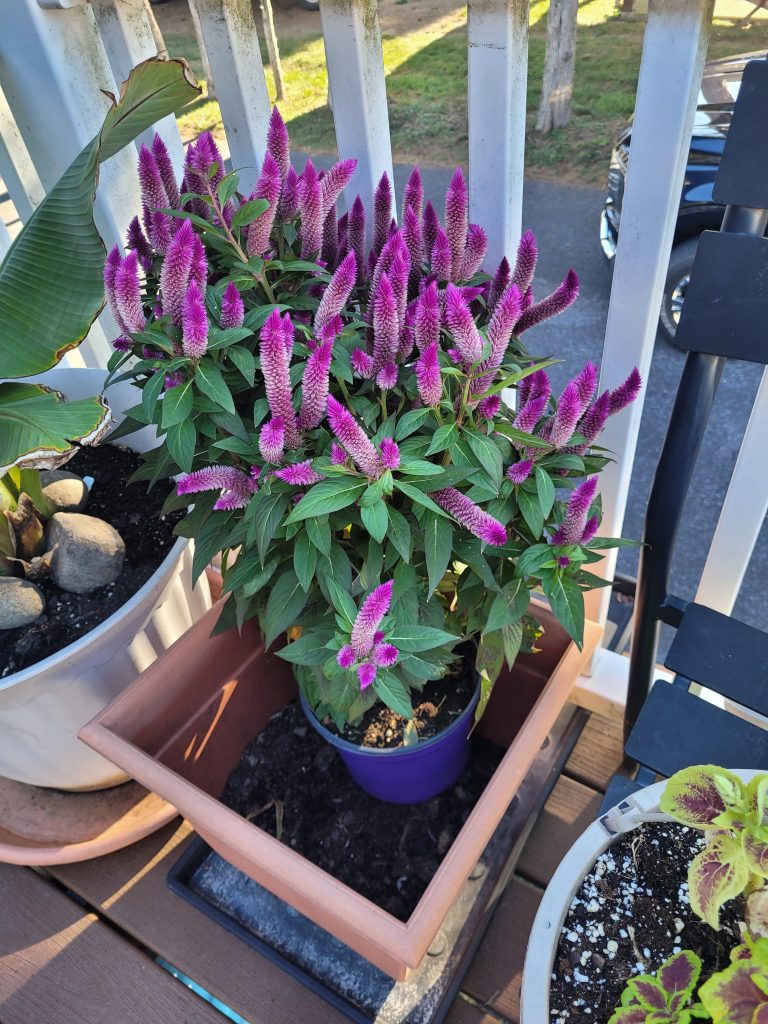
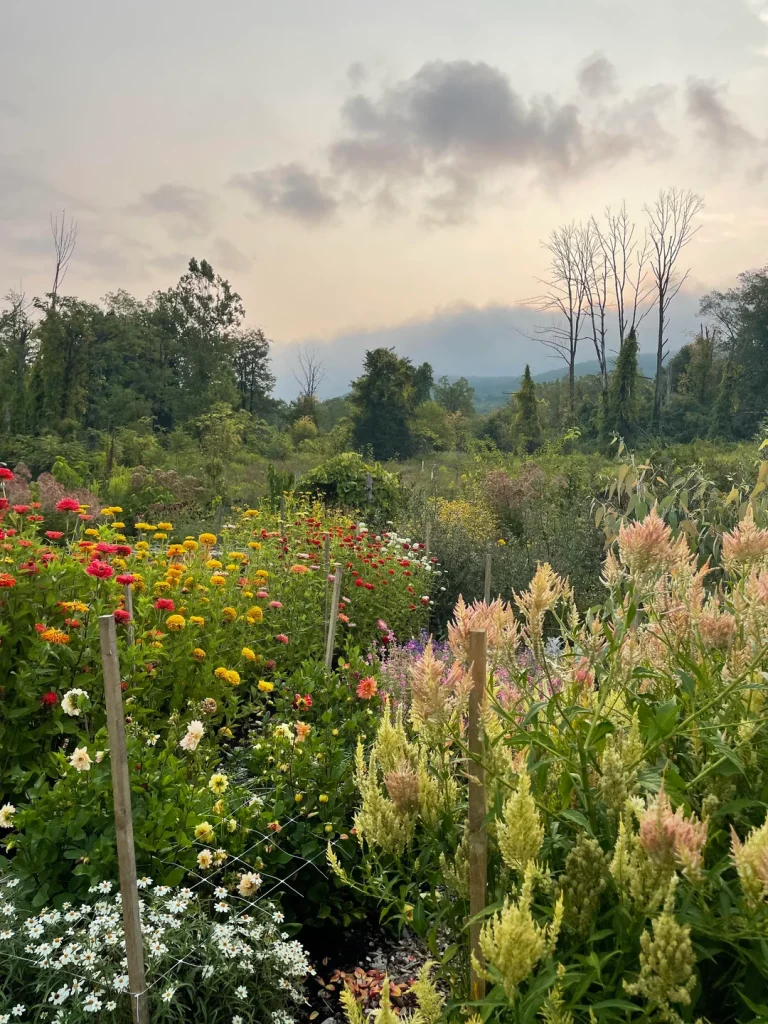
Celosia looks nothing like your typical fall flower, and that’s exactly why I love it. Feathery plumes or crested blooms bring serious texture to a container. Colors run fiery red, orange, and yellow, almost like tiny flames sitting in your pot.
Pair celosia with dusty miller for contrast. That silvery foliage makes the fiery blooms pop even harder. Trust me, this combo turns heads on any porch.
Give celosia full sun and well-draining soil. It handles heat fine early in fall. Once cooler nights arrive, the color only gets richer and deeper.
- Zones: Grown as an annual
- Sun: Full sun
- Soil: Well-draining
- Height/Spread: 1-3 feet tall, depending on variety
- Bloom Time: Summer through frost
7. Coleus: Proof You Don’t Need Flowers
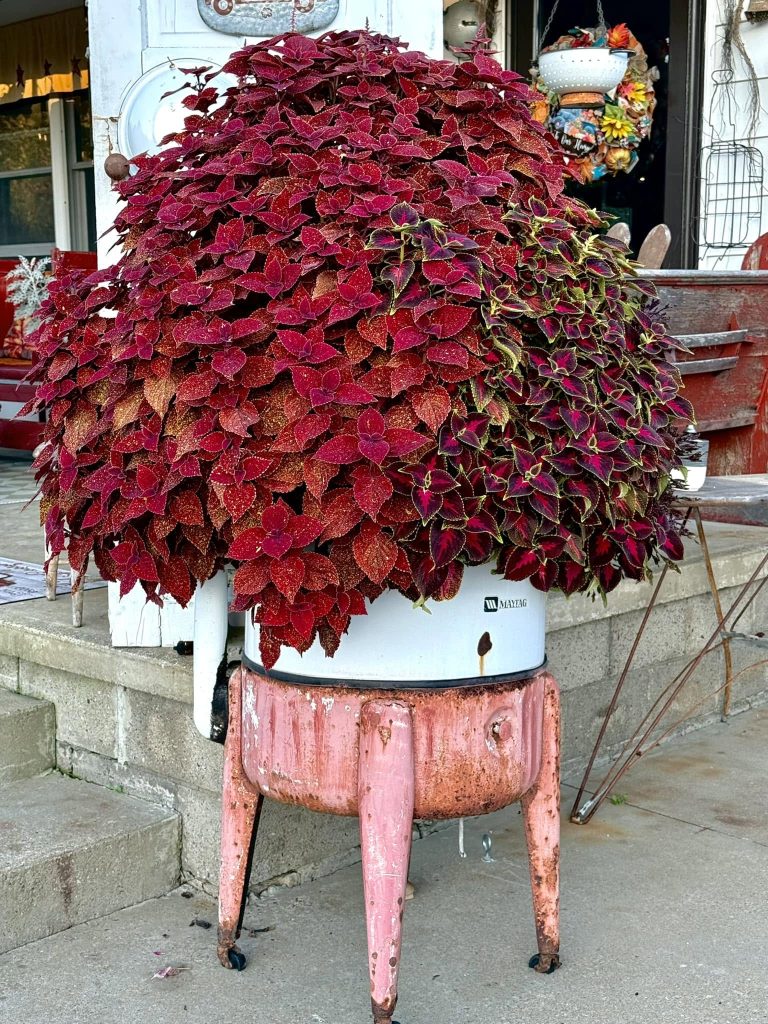
Coleus skips flowers entirely, and honestly, nobody misses them. Bold, multicolored leaves do all the talking here. You’ll find colors ranging from deep purple to lime green to fiery red, sometimes all on one leaf.
Deep purple varieties bring instant drama to any front step. I love using coleus as a thriller in bigger containers. It holds its own against mums, kale, or anything else you throw beside it.
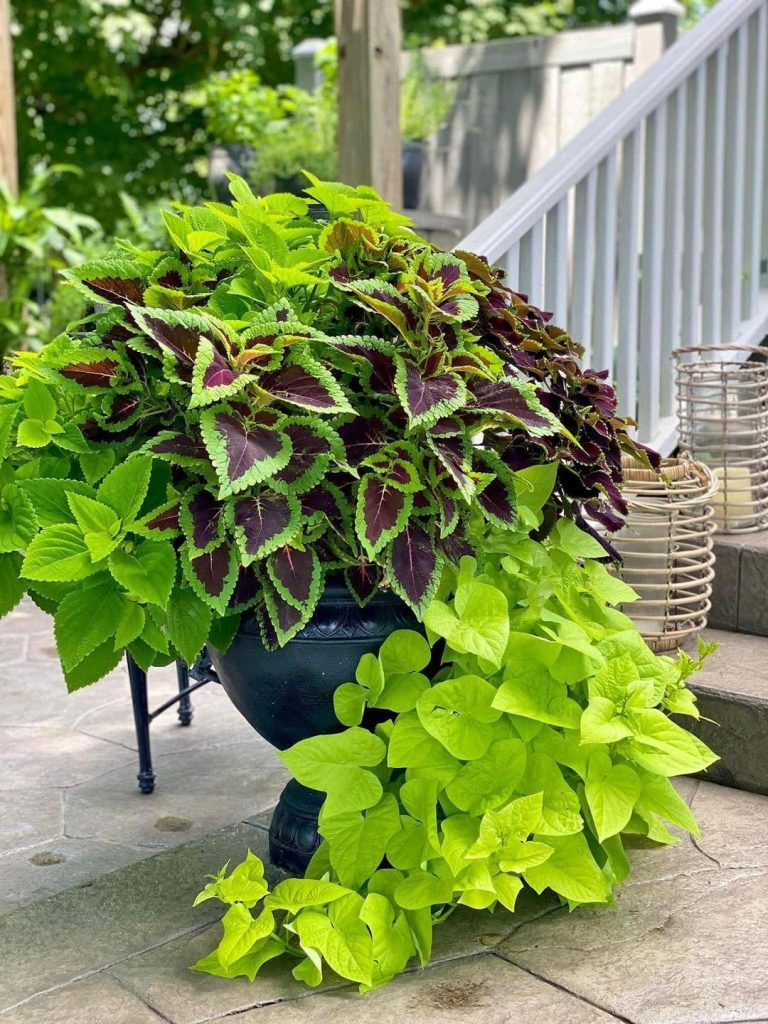
Pair coleus with sweet potato vine for a trailing pop of color. That combo spills beautifully over the pot’s edge. Just remember, coleus isn’t frost hardy, so enjoy it before the first freeze.
- Zones: Grown as an annual; perennial only in zones 10-11
- Sun: Partial shade to full sun, depending on variety
- Soil: Moist, well-draining
- Height/Spread: 1-3 feet tall
- Bloom Time: Grown for foliage; not frost tolerant
8. Ornamental Grasses: The Movers of Fall Containers
Ever notice how a little movement makes a container feel alive? Ornamental grasses sway in the breeze and bring height nobody else on this list offers.
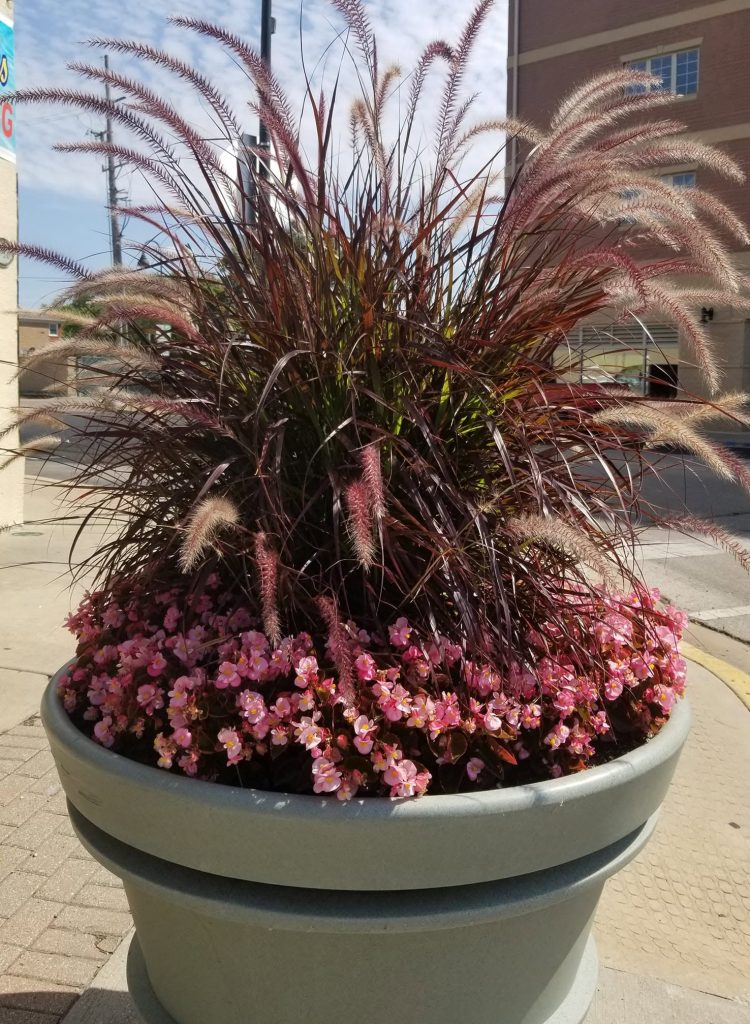
Purple fountain grass ranks as my favorite, but honestly, any variety adds serious drama.
These grasses need almost nothing from you once planted. Low maintenance sits right at the top of their list of perks. I pair mine with black-eyed Susans for a warm contrast that feels effortlessly autumn.
Full sun keeps grasses looking their best through the season. They hold up well into winter too. Snow or frost settling on the blades actually looks beautiful, not sad.
- Zones: 9-11 as a perennial; grown as an annual elsewhere
- Sun: Full sun
- Soil: Well-draining
- Height/Spread: 2-4 feet tall
- Bloom Time: Grown for foliage interest, which holds through fall and into winter
9. Marigolds: The Workhorse Nobody Talks About
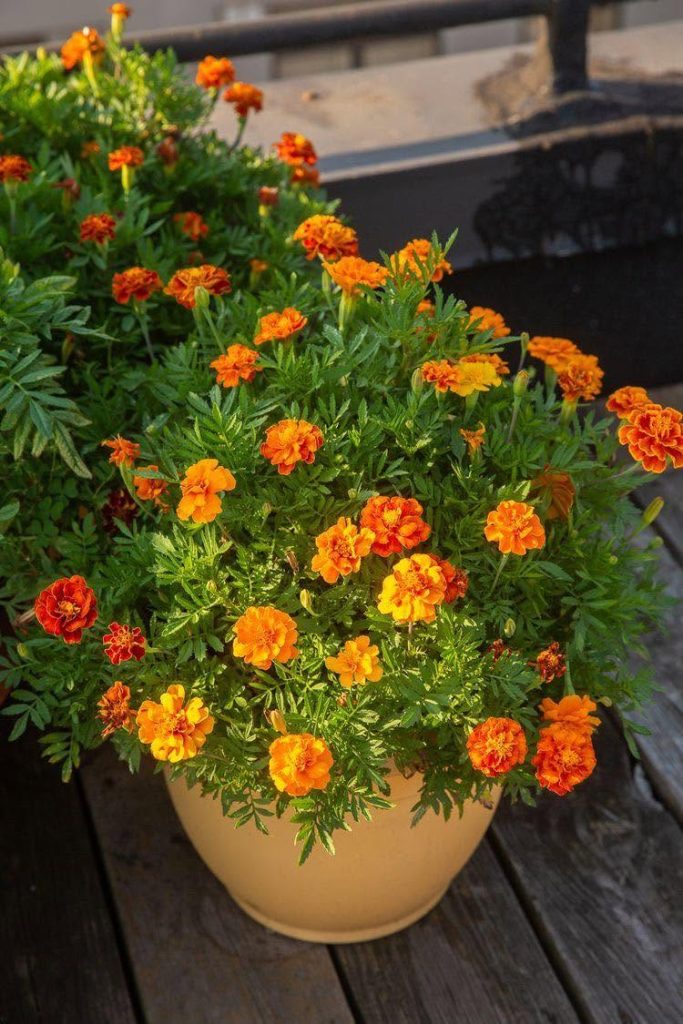
Marigolds bloom from summer straight through the first frost without slowing down. I appreciate how little fuss they demand in return. Their scent, oddly enough, keeps pests and even deer away from your porch.
Orange and yellow dominate the marigold color range. Some newer varieties lean toward deep red and rust tones instead. Either way, they blend perfectly into a classic fall palette.
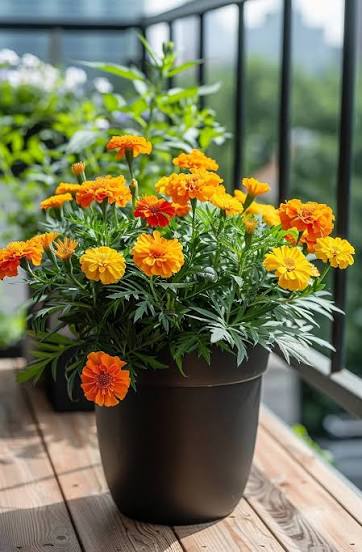
Pair marigolds with zinnias for extra color punch. Both plants bloom reliably without babying. Give them full sun, and they’ll reward you well past October.
- Zones: Grown as an annual
- Sun: Full sun
- Soil: Well-draining
- Height/Spread: 6 inches to 3 feet tall, depending on variety
- Bloom Time: Summer through frost
10. Heuchera: The Perennial That Keeps Giving
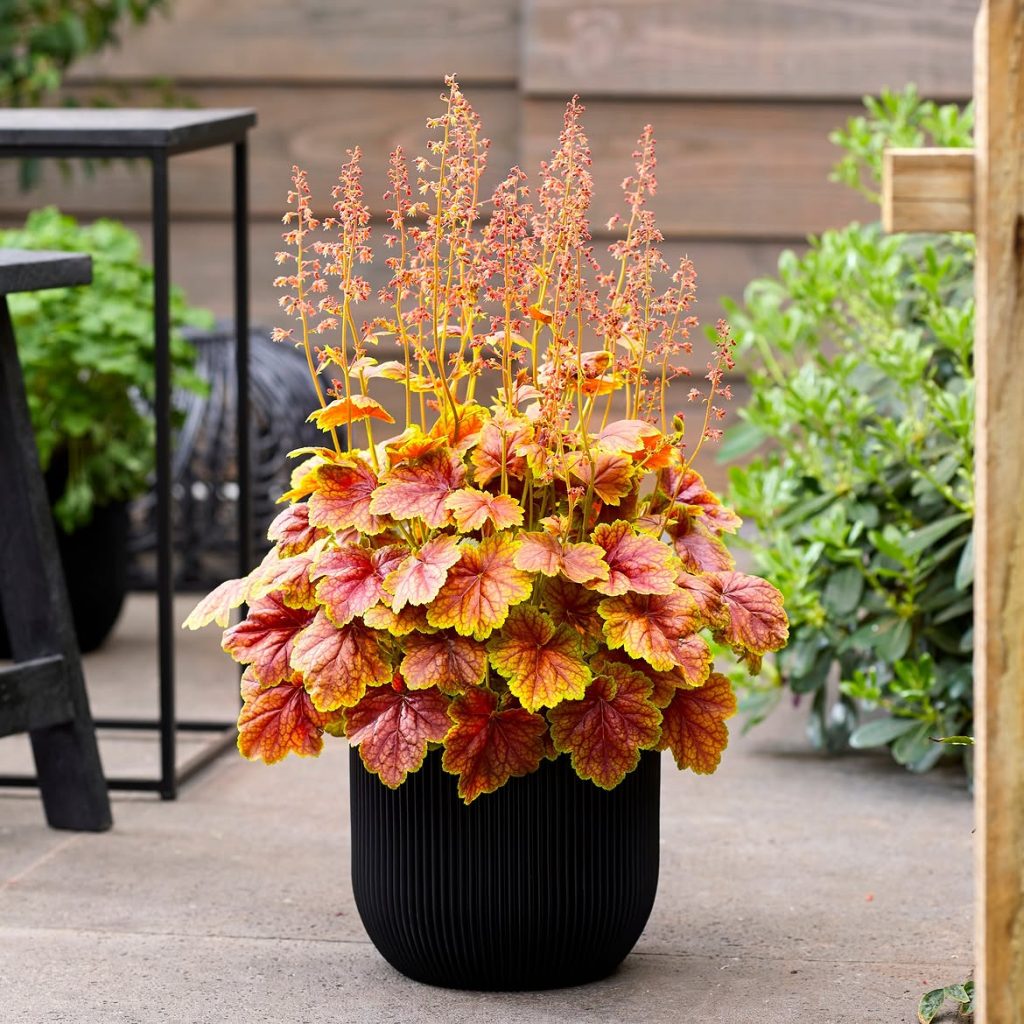
Heuchera, or coral bells if you prefer the common name, might be the most underrated plant on this whole list. Compact and colorful, it fills gaps in a container beautifully.
Foliage ranges from lime green to deep burgundy, depending on the variety you pick.
I love pairing heuchera with ornamental grasses or ferns. That combo creates layered texture without competing colors.
Unlike most fall annuals, heuchera comes back year after year in many climates.
Partial shade suits heuchera just fine. It won’t demand constant sun like mums or marigolds. Once established, this plant becomes the quiet anchor your container relies on every single fall.
- Zones: 4-9 as a perennial
- Sun: Partial shade to full sun, depending on variety
- Soil: Well-draining
- Height/Spread: 10-14 inches tall, 18-20 inches wide
- Bloom Time: Foliage color holds through fall; small flowers appear in summer
11. Creeping Jenny: The Golden Spiller You Need
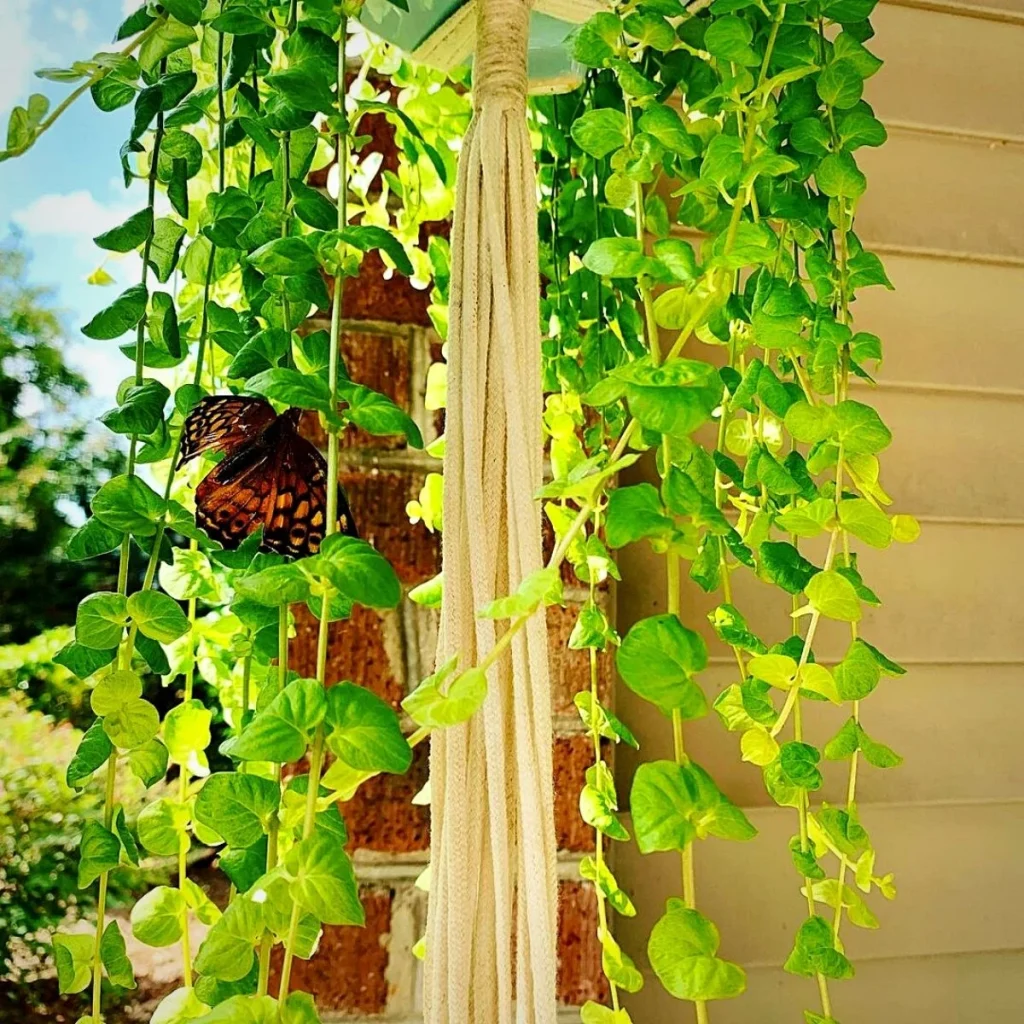
Creeping Jenny might just steal the show, and it doesn’t even bloom. Bright chartreuse leaves trail over the edge of any pot with zero effort. I love how that golden color pops against darker foliage nearby.
This plant grows fast, almost too fast if you’re not careful. Trim it back if it starts taking over your container.
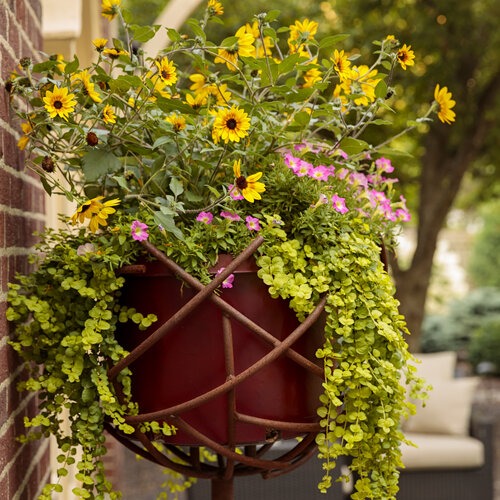
Pair creeping Jenny with ornamental grasses for a combo that feels both wild and intentional.
Partial sun works best for keeping that bright color. Too much shade dulls the leaves over time. Water it regularly, since trailing plants like this dry out faster than you’d expect.
- Zones: 3-9 as a perennial
- Sun: Partial sun
- Soil: Moist, well-draining
- Height/Spread: 2-4 inches tall, trails 12-24 inches
- Bloom Time: Grown for foliage; small yellow flowers appear in summer
12. Ornamental Peppers: The Showstopper Finish
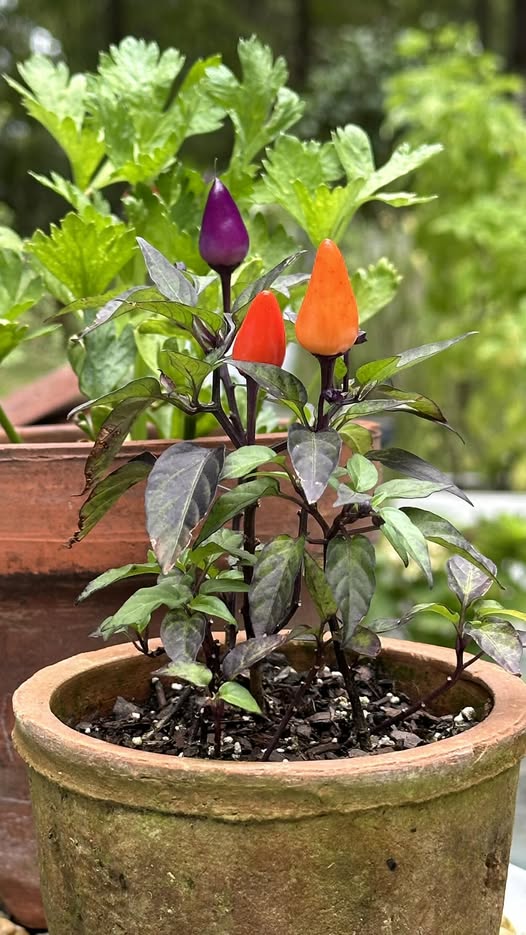
Ornamental peppers close out my list, and they deserve the spot. Tiny peppers grow in bright purple, red, orange, and even black, clustered along sturdy stems. I always get compliments on these, even from neighbors who don’t garden at all.
Don’t snack on these unless you enjoy serious heat. These peppers are decorative first, edible second, and definitely not mild. Full sun and consistent watering keep the fruit clusters looking glossy and full.
Use ornamental peppers as your final thriller piece. They last well into fall without fading. Honestly, they might outlast half the flowers on this list.
- Zones: 9-11 or grown as an annual
- Sun: Full sun
- Soil: Rich, well-draining
- Height/Spread: 8-12 inches tall
- Bloom Time: Fruit clusters color up from late summer through frost
Don’t Forget the Pumpkins
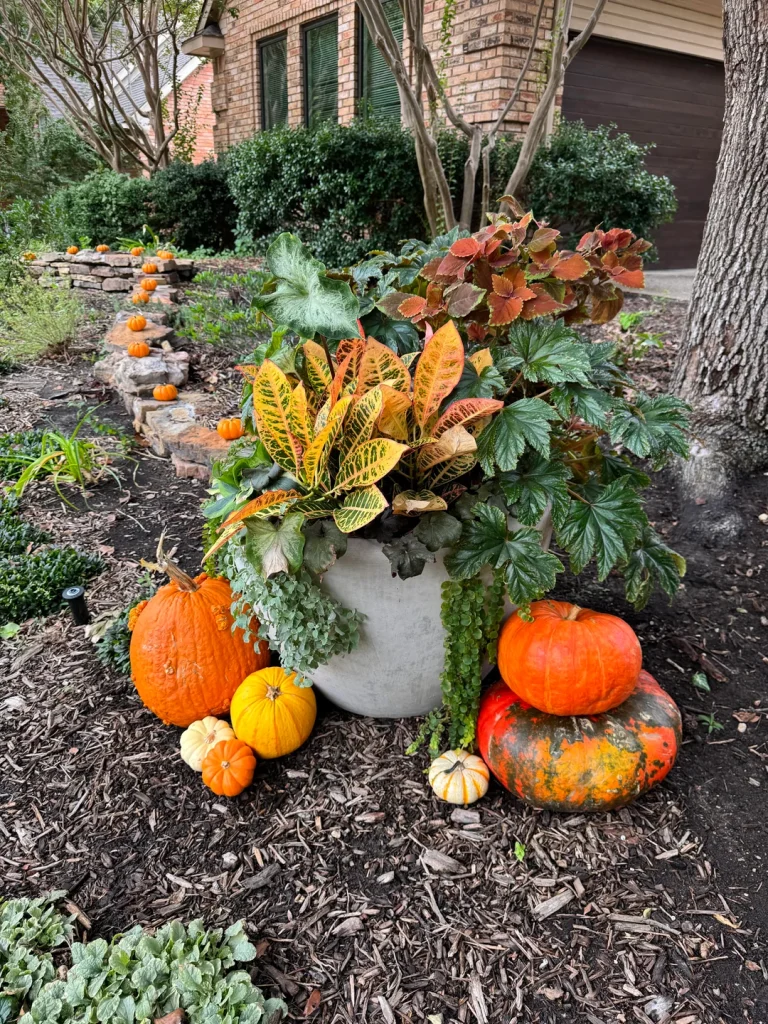
Here’s my favorite trick for a full container without buying more plants: tuck in a few mini pumpkins or gourds.
Nestle them right into the soil between your plants. Nobody will know you didn’t plan it that way from the start.
Small pumpkins suit tiny pots perfectly. Medium ones work as a focal point in bigger containers. Mix colors too, since classic orange, creamy white, and even blue-gray pumpkins all play well together.
Growing your own pumpkins makes this trick basically free. Swap them out anytime the display starts looking tired. That flexibility alone makes pumpkins one of the easiest fall upgrades you’ll ever try.
Quick Tips Before You Plant
Timing matters more than most people realize. Plant your containers 6 to 8 weeks before your first expected frost. That window gives roots time to settle before cold weather slows growth.
Don’t let pots dry out completely, even as temperatures drop. Cooler weather doesn’t mean your plants stop needing water. Check the soil regularly, since containers dry faster than garden beds ever do.
Mix textures for the best visual impact. Combine bold blooms, trailing spillers, and interesting foliage in the same pot. That contrast is what makes a container feel finished instead of flat.
Wrapping Up
Twelve plants, endless combinations, and one seriously upgraded porch. Mums and kale bring instant color.
Grasses and creeping Jenny add movement and texture nobody expects. Pumpkins tie the whole look together without costing you a dime extra.
Which plant caught your eye first? I’d pick heuchera and celosia together, if you’re curious. Grab a few of these, mix and match, and watch your porch outshine every neighbor on the block this season.
FAQs
When should I plant my fall containers?
Aim for six to eight weeks before your first frost. That gives roots time to settle in before cold weather hits. Wait too long, and your plants won’t establish properly.
Do fall container plants need less water than summer ones?
Yes, but don’t skip watering completely. Cooler temps slow growth, so plants drink less. Still, check the soil every few days, since containers dry out faster than you’d think.
Can I mix mums with other fall flowers in one pot?
Absolutely, and I encourage it. Mums pair beautifully with kale, pansies, or ornamental grasses. Just make sure everything shares similar sun and water needs.
Which fall container plants survive a hard frost?
Pansies, violas, and ornamental kale handle frost like champs. Mums and heuchera also hold up well once temperatures drop. Coleus and celosia, though, won’t survive that first freeze.
How do I keep my porch containers looking full all season?
Tuck in a few pumpkins or gourds between your plants. That trick fills gaps without buying more flowers. Swap them out anytime the display starts looking tired.