Best Perennials to Plant in October (So Your Garden Explodes Come Spring)

October might feel like the season winding down, but it’s actually one of the best months to get perennials in the ground.
Cooler air, warm soil, and a slower garden schedule make it the ideal window for roots to settle in before winter hits.
Skip this window and you’re often waiting an extra year for a plant to hit its stride.
Below are 13 reliable perennials worth planting this month, along with when to expect blooms and whether each one is safe around pets.
A Note on Timing Your October Planting by Zone
Your planting window in October depends heavily on where you garden. If you’re in a colder region, roughly USDA zones 3 through 6, aim to get plants in the ground by mid-month.
Roots need a solid stretch of workable soil before it locks up for winter. Wait too long and your new perennials won’t have time to anchor themselves.
Gardeners in milder zones, 7 through 10, have more breathing room. You can often plant into late October or even November.
Either way, the general rule holds everywhere: get perennials in the ground at least four weeks before your area’s first frost date.
Planting too close to a hard freeze stresses the foliage. It can also prevent roots from taking up water once the ground starts to harden.
13 Low Maintenance Perennials for October Garden
1. Peony (Paeonia)
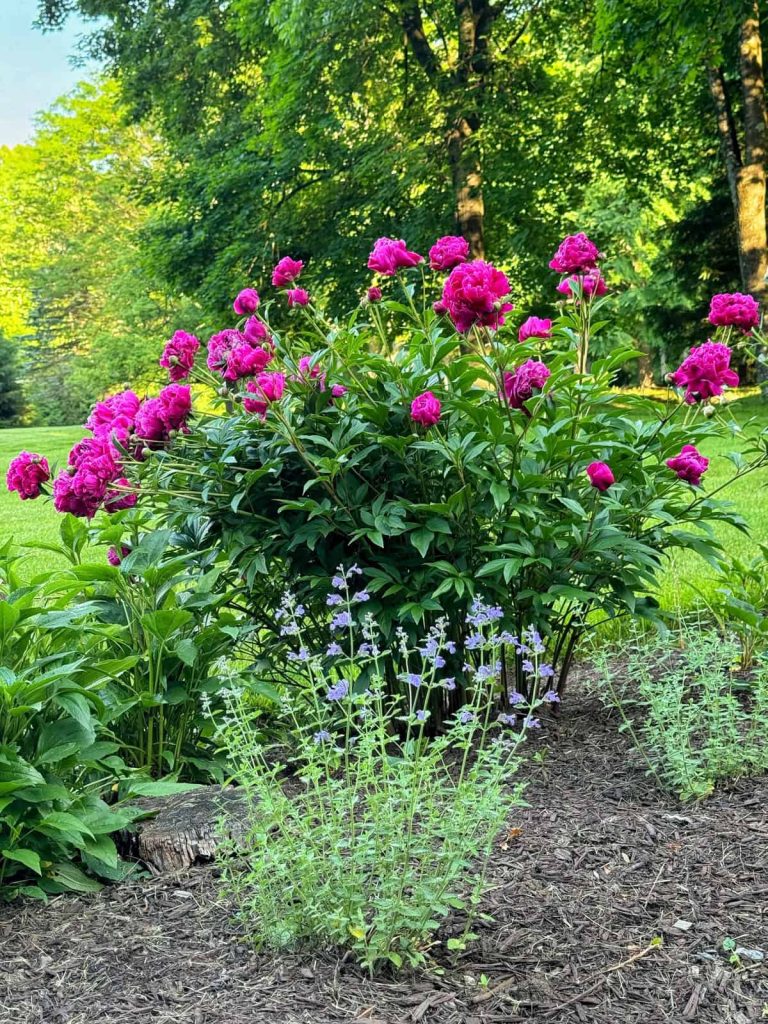
Peonies look delicate but behave like the toughest plant in your garden. Once established, they’ll bloom reliably for decades.
They don’t need to be dug up or divided, which makes fall planting a true set-it-and-forget-it investment. Their big, blousy blossoms come in creamy whites, soft pinks, and deep fuchsias.
These plants prefer full sun and grow into a shrub-like clump. They eventually reach 2 to 3 feet tall. Peonies are hardy in zones 3 through 8.
October planting gives the root system a full season to establish before the demanding work of producing those heavy blooms next spring.
Time to Bloom: Peonies planted in fall typically don’t flower much, if at all, their first spring. Expect a full show by the second season, continuing for years afterward.
Pet Safety: Peonies are mildly toxic to dogs and cats if chewed. They can cause vomiting or diarrhea. Keep an eye on curious pets around new plantings.
2. Russian Sage (Salvia yangii)
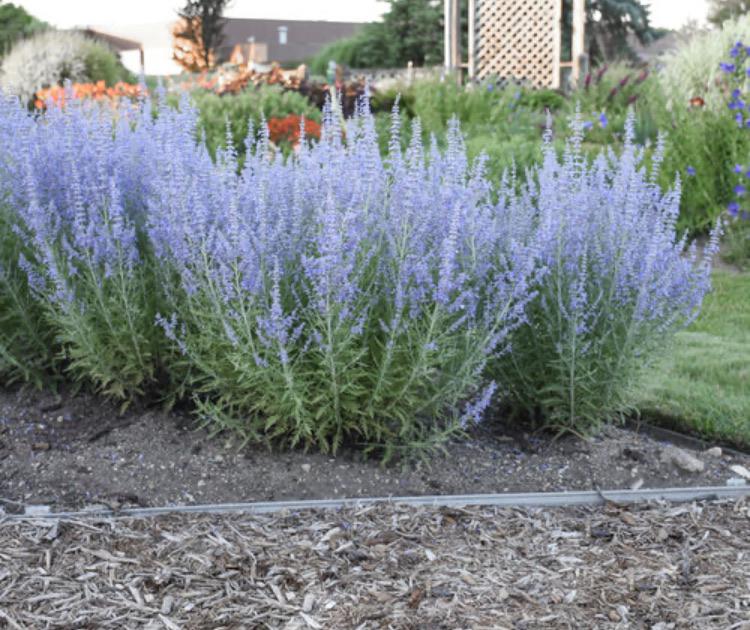
Russian sage rewards neglect. Plant it in lean, well-drained soil and mostly leave it alone. It will send up tall, silvery stems covered in fragrant blue-purple flowers.
It’s also one of the better pollinator magnets you can add to a fall planting list.
This perennial wants full sun, the more the better. It’s hardy in zones 4 through 9. Mature plants reach around 3 feet tall and spread up to 4 feet wide, so give it room when you’re deciding where it goes.
Time to Bloom: Fall-planted Russian sage spends its first season building roots. It then produces its signature haze of blue-purple flowers from mid-summer through fall the following year.
Pet Safety: Russian sage is non-toxic to both dogs and cats, making it a safe choice for pet-friendly borders.
3. Catmint (Nepeta)

Catmint asks for almost nothing and gives back plenty. Expect mounds of scalloped green foliage topped with purple flower spikes.
It works beautifully as a border along walkways or massed together for a soft, informal look. Bees love it as much as cats do.
Give catmint full sun, though it tolerates partial shade without complaint. Depending on the variety, it grows 1 to 3 feet tall. It’s hardy in zones 3 through 8.
Time to Bloom: Expect flower spikes by late spring into early summer. A shearing after the first flush often triggers a second round of blooms later in the season.
Pet Safety: Catmint is non-toxic and part of the mint family. Cats are often drawn to it because of a compound called nepetalactone. It won’t cause any harm if nibbled.
4. Daylily (Hemerocallis)
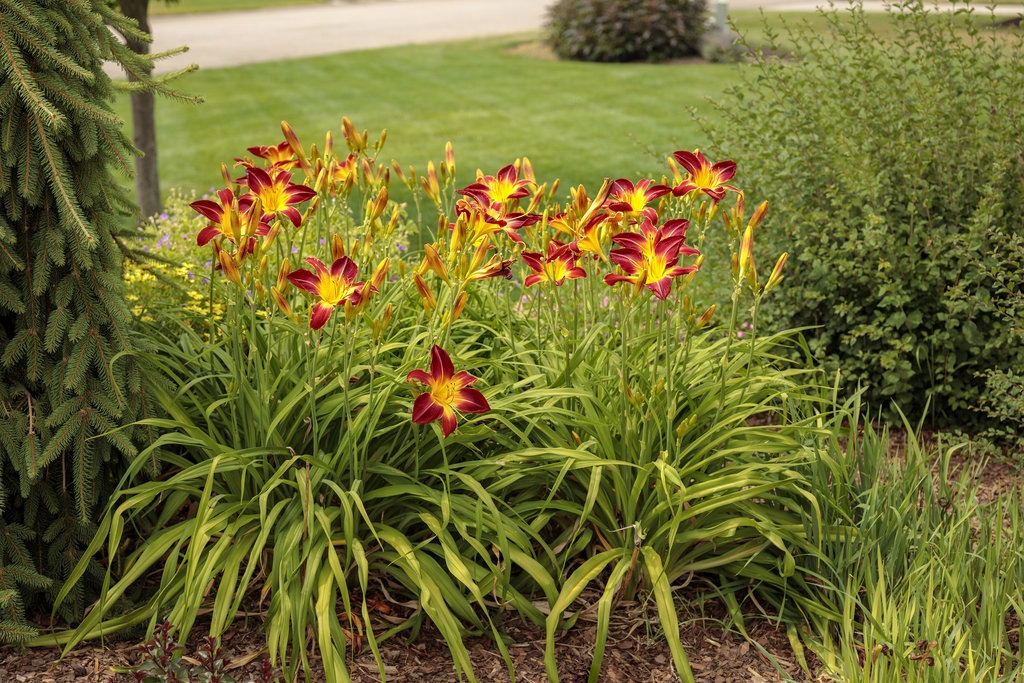
Daylilies are about as low-maintenance as flowering perennials get. Each bloom only lasts a day.
But a mature clump produces so many buds that you’ll have continuous color for weeks. Colors range from soft peaches to deep burgundies, many with ruffled or contrasting centers.
These plants prefer full sun but handle partial shade well. They grow 1 to 3 feet tall depending on variety.
They’re hardy in zones 4 through 9, making them one of the most widely adaptable picks on this list.
Time to Bloom: A fall-planted daylily typically produces a modest bloom show its first summer. It ramps up to full flowering by its second year.
Pet Safety: This one matters. Daylilies are highly toxic to cats. Even small amounts of pollen or petals can cause acute kidney failure.
They’re not considered significantly toxic to dogs, but if you have cats, plant daylilies somewhere they can’t access.
5. Hosta
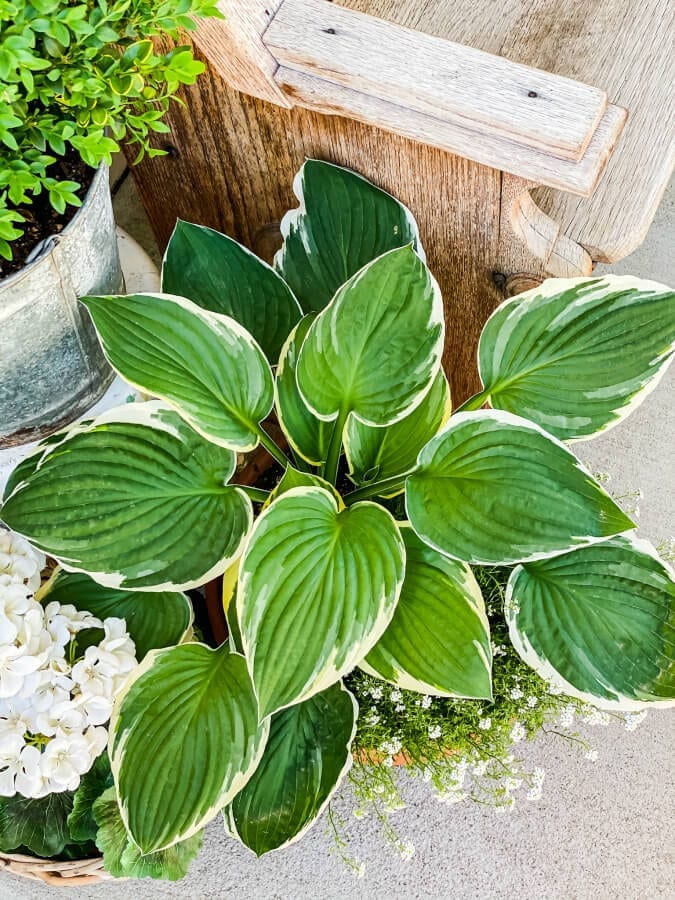
Hostas are the go-to answer for shady corners that need some life. They range from tiny varieties with leaves the size of a silver dollar to giants with leaves bigger than your head.
Their foliage covers nearly every shade of green, along with creamy white and golden variegation.
Plant hostas in full to partial shade. They grow anywhere from 8 to 24 inches tall depending on the variety.
They’re hardy in zones 3 through 9. Established clumps take a couple of seasons to reach their mature spread.
Time to Bloom: Hostas are grown mainly for foliage, but tall flower spikes typically appear by early to mid-summer. Full foliage size usually takes two to three growing seasons.
Pet Safety: Hostas are toxic to both dogs and cats due to saponin compounds. Ingestion can cause vomiting, diarrhea, and lethargy. Plant them where pets aren’t likely to graze.
6. Hydrangea
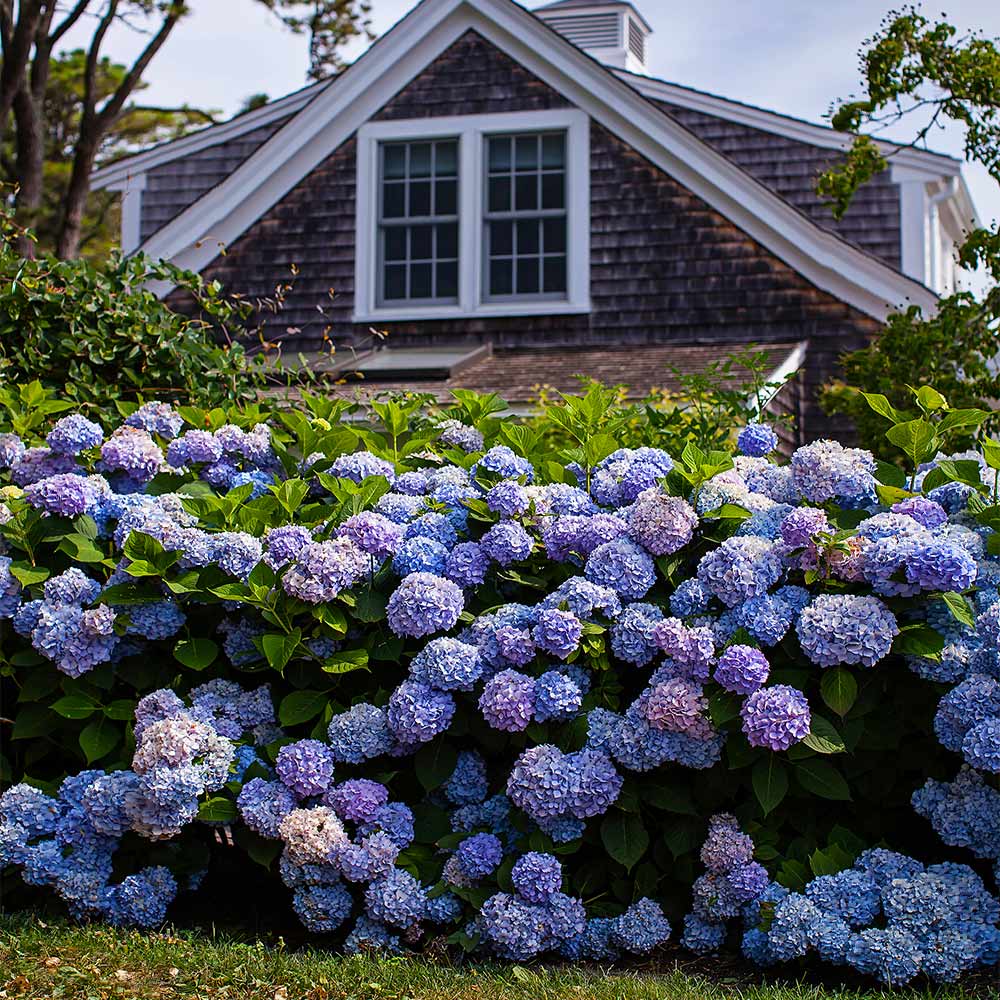
Hydrangeas are known as summer showstoppers, but fall is actually the smarter time to plant them.
Their big, rounded flower heads come in shades of blue, pink, and white. Some varieties even shift color depending on your soil’s pH.
Plant hydrangeas somewhere with morning sun and afternoon shade for the best blooms. Most varieties are hardy in zones 3 through 8, though this depends on the type you choose.
Mature size varies widely, from 3 feet to well over 10 feet, so check the tag before you dig.
Time to Bloom: Fall-planted hydrangeas usually skip flowering their first spring while they focus on root growth. Expect blooms to ramp up by the second year, with full-size flower heads by year three.
Pet Safety: Hydrangeas are toxic to both dogs and cats. All parts of the plant contain a compound that can cause vomiting and diarrhea if eaten. Keep them out of reach of chewers.
7. Coral Bells (Heuchera)
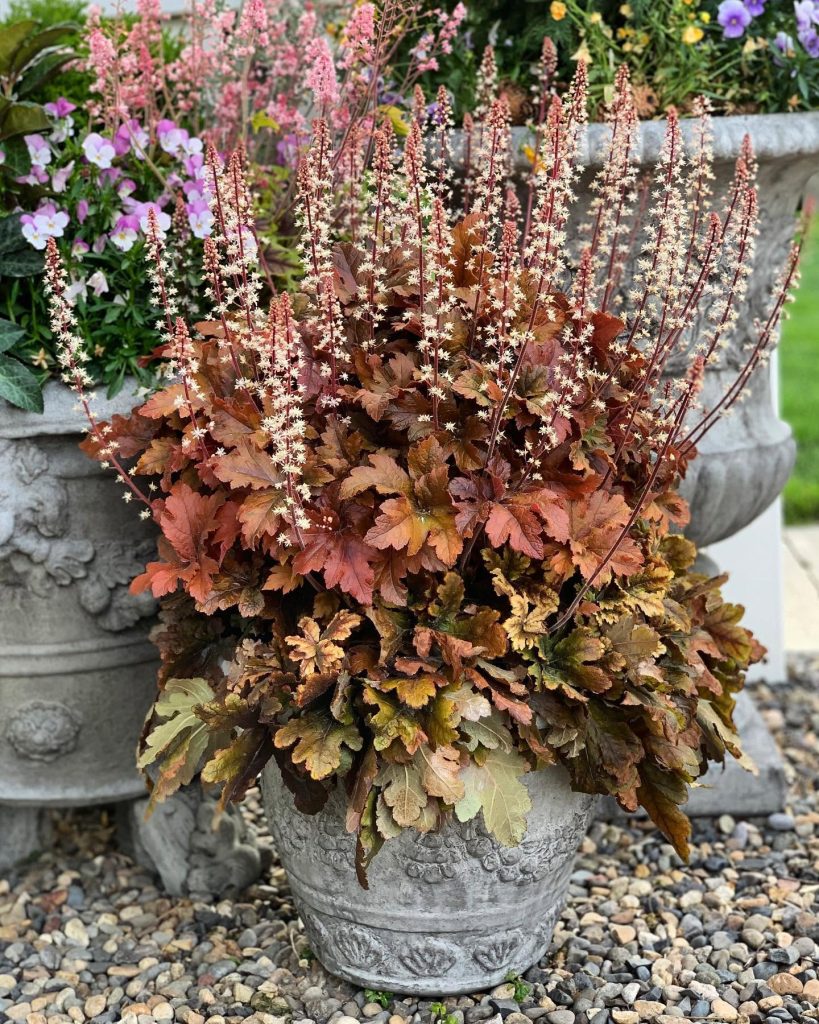
Coral bells earn their spot in the garden through foliage alone. Leaves come in shades of lime green, deep purple, caramel, and near-black, often with contrasting veining.
Thin flower stalks rise above the foliage in early summer, but most gardeners plant this one for the leaves.
Coral bells do well in full sun to partial shade, depending on the variety. They stay compact, usually 1 to 2 feet tall, which makes them a great border or sideway plant. They’re hardy in zones 4 through 9.
Time to Bloom: Foliage color shows up right away, even in the first fall. Flower stalks typically appear by the following early summer, once the plant has had a full season to root in.
Pet Safety: Coral bells are considered non-toxic to both dogs and cats, making them a safe pick for gardens with curious pets.
8. Astilbe
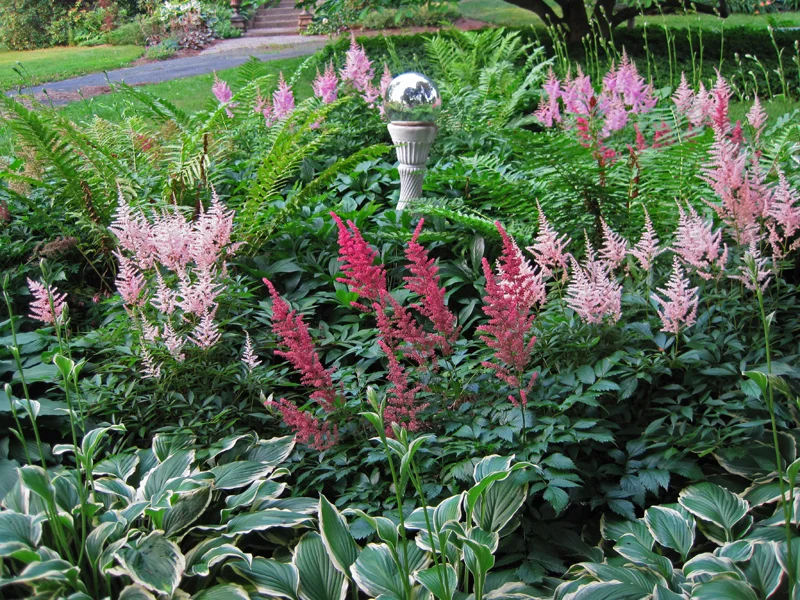
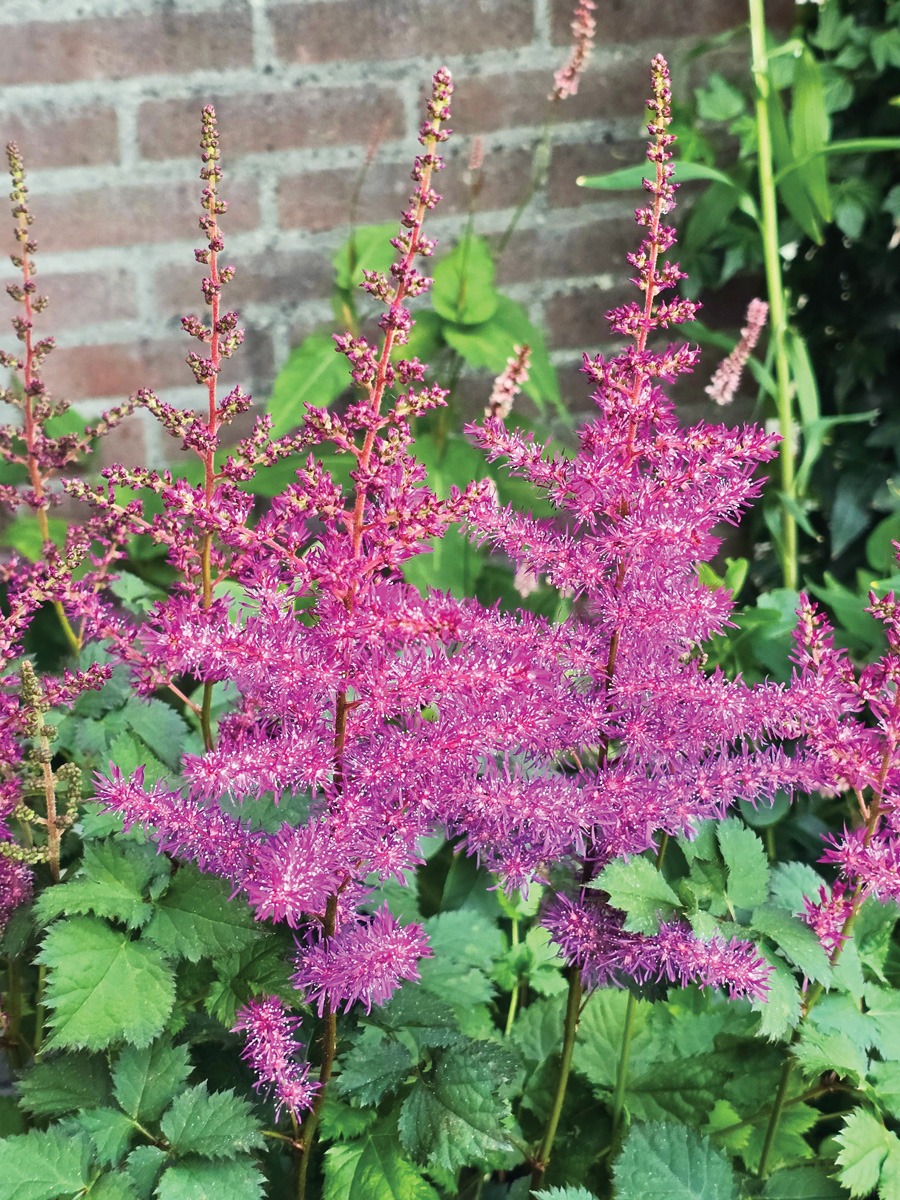
This is one of the few perennials that actually thrives in shade and still puts on a real flower show. Feathery plumes rise above fern-like foliage in shades of pink, red, and white.
Astilbe looks especially good planted near hostas, where the contrasting textures play off each other.
Give astilbe partial shade and consistently moist soil. It won’t tolerate long dry spells well. Plants reach 1 to 2 feet tall and are hardy in zones 3 through 8.
Time to Bloom: Astilbe planted in October typically produces a light bloom the following summer, with a fuller flush by year two once the root system fills out.
Pet Safety: Astilbe is non-toxic to dogs and cats, so it’s a safe choice for shady beds near pet play areas.
9. Coneflower (Echinacea)
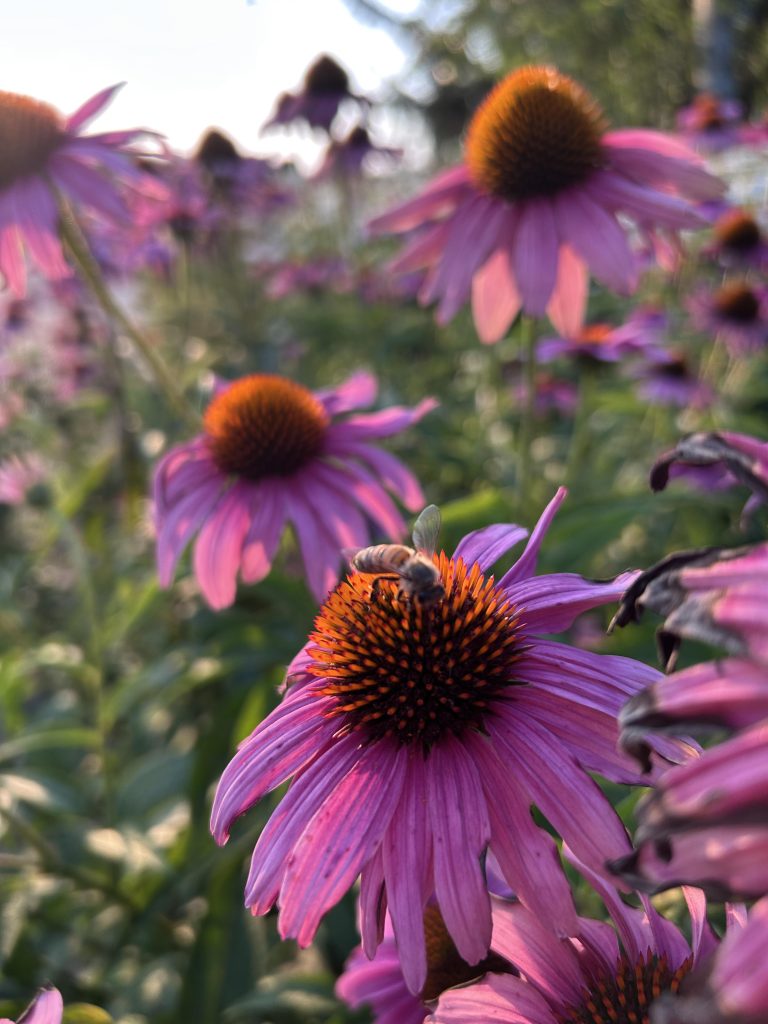
Coneflowers are a favorite for pollinators, and for good reason. Their daisy-like blooms draw bees and butterflies all summer, and the seed heads that follow keep goldfinches fed well into fall. They’re also remarkably tough once established.
Plant coneflowers in full sun for the best flowering. They’re drought-tolerant and unfussy about soil, which makes them a strong pick for gardeners who want color without much fuss. They’re hardy in zones 3 through 9.
Time to Bloom: Fall-planted coneflowers usually bloom modestly their first summer and hit full size and flower count by their second or third year.
Pet Safety: Coneflowers are non-toxic to dogs and cats. Mild stomach upset is possible if a pet eats a large amount, but serious harm is unlikely.
10. Yarrow (Achillea millefolium)
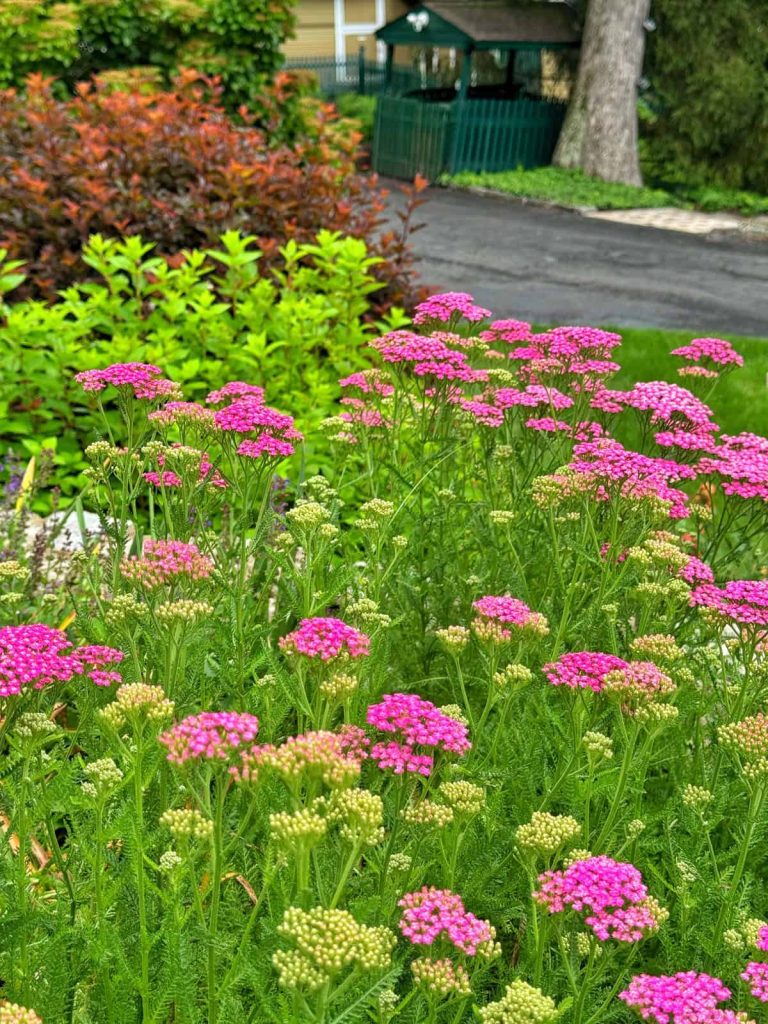
Yarrow brings feathery, fern-like foliage and flat clusters of tiny flowers in white, yellow, pink, or orange.
It’s a strong pollinator plant, especially for hoverflies, which makes it a smart addition if you’re also growing vegetables nearby.
Yarrow wants full sun and thrives in average to poor soil. It’s genuinely low-maintenance once it’s in the ground.
Depending on the variety, it grows 6 to 24 inches tall and is hardy in zones 3 through 9.
Time to Bloom: Yarrow planted in fall often produces a few flowers by early summer the following year, with a fuller bloom cycle from midsummer through fall as the clump matures.
Pet Safety: Yarrow is mildly toxic to dogs and cats. Ingestion can cause vomiting, diarrhea, or drooling, so it’s worth planting it somewhere pets aren’t likely to snack.
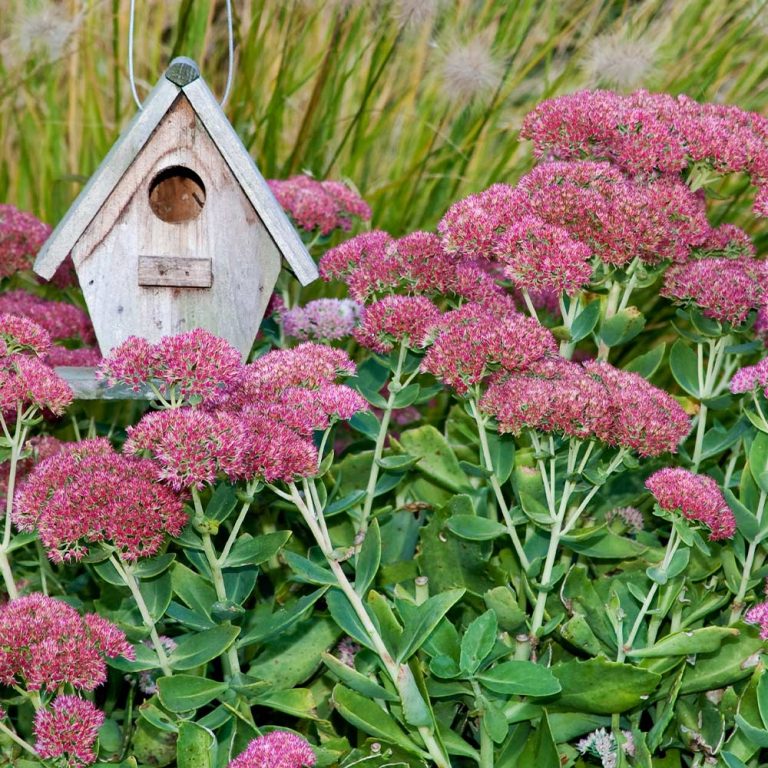
11. Sedum
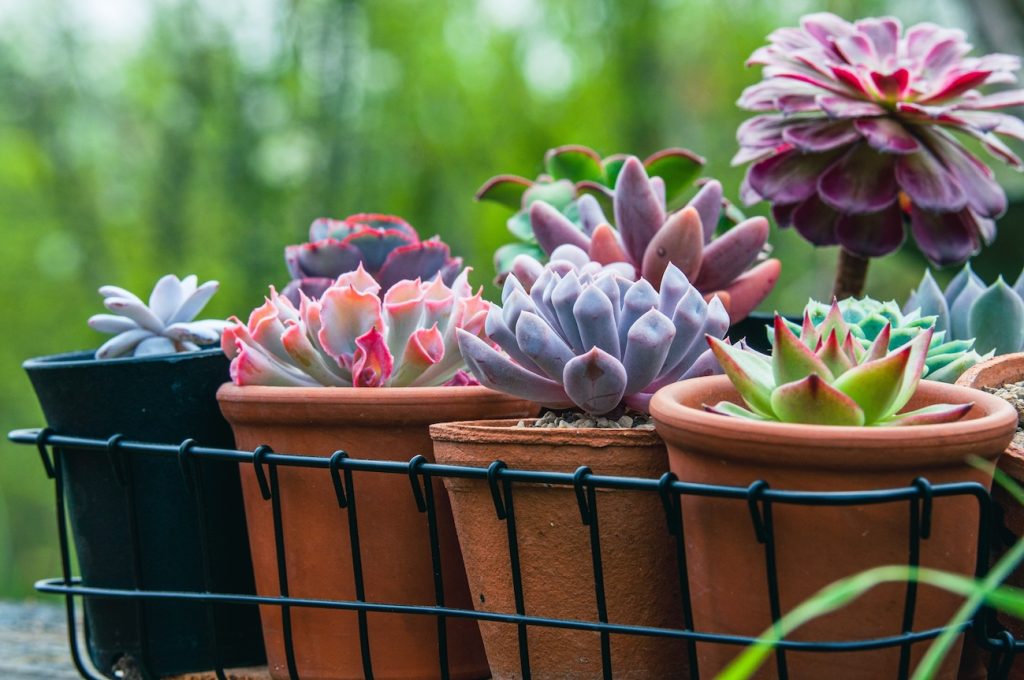
Sedum is a rock garden favorite for a reason. These plants store water in thick, fleshy leaves, which makes them nearly bulletproof against drought once established.
Low-growing varieties like Stonecrop hug the ground, while upright types like Autumn Joy turn a deep burgundy as the weather cools.
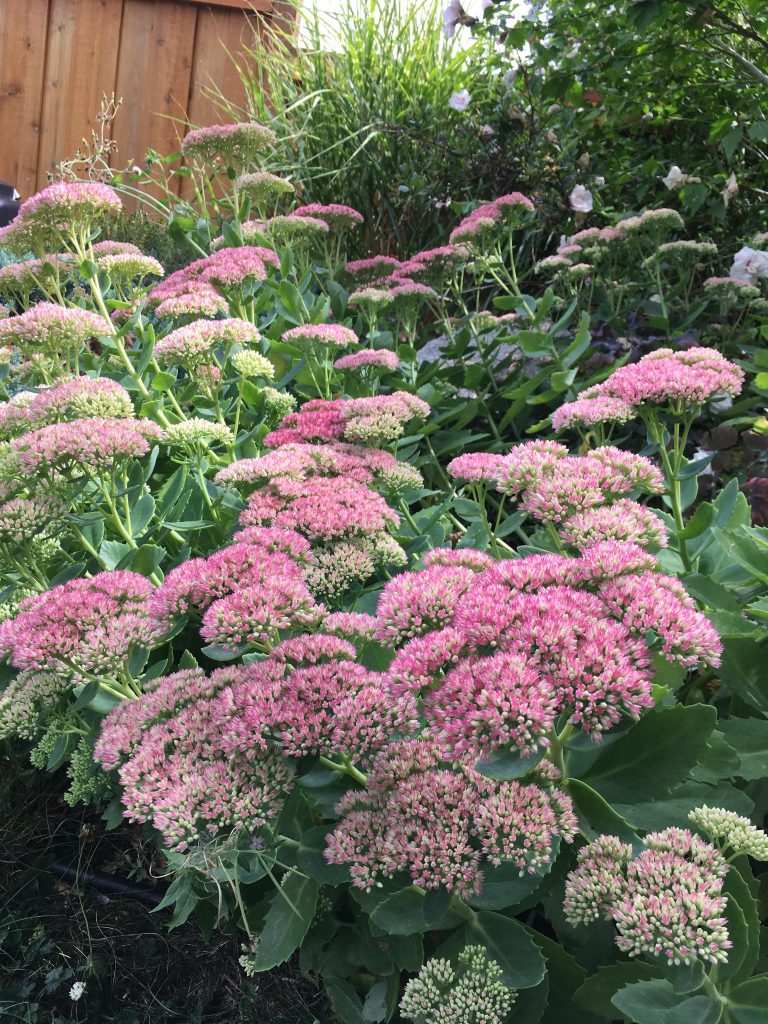
Give sedum full sun and well-drained soil. It doesn’t do well in soggy spots. Height varies by variety, and most types are hardy in zones 3 through 9.
Time to Bloom: Sedum planted in fall typically shows foliage growth through its first spring and summer, with flowering beginning in late summer to fall of the following year.
Pet Safety: Sedum is generally considered non-toxic to dogs and cats, though very large amounts can cause mild stomach upset.
12. Lamb’s Ear (Stachys byzantina)
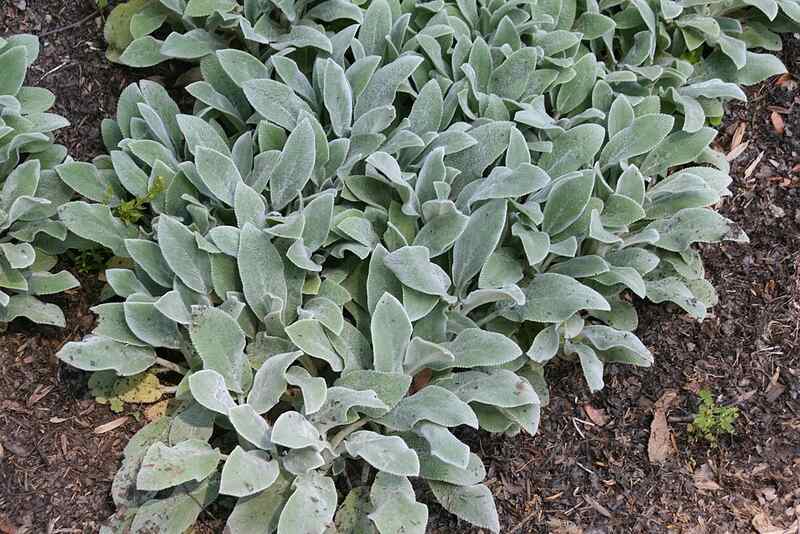
Lamb’s ear isn’t much of a bloomer, but its silvery, fuzzy foliage adds texture that few other plants can match.
Kids and pet owners alike tend to love it simply because it’s fun to touch. It adds softness to a bed full of spikier plants.
Plant it in partial shade to full sun. It’s not picky about soil as long as drainage is decent. Lamb’s ear grows 8 to 18 inches tall and is hardy in zones 4 through 9.
Time to Bloom: Lamb’s ear is grown mostly for foliage, which fills in fast, often within one growing season.
Small purple flower spikes may appear by early summer once the plant is established, though many gardeners trim these off to keep the foliage looking tidy.
Pet Safety: Lamb’s ear is non-toxic to dogs and cats, making it a safe, touchable addition to pet-friendly gardens.
13. Switchgrass (Panicum virgatum)
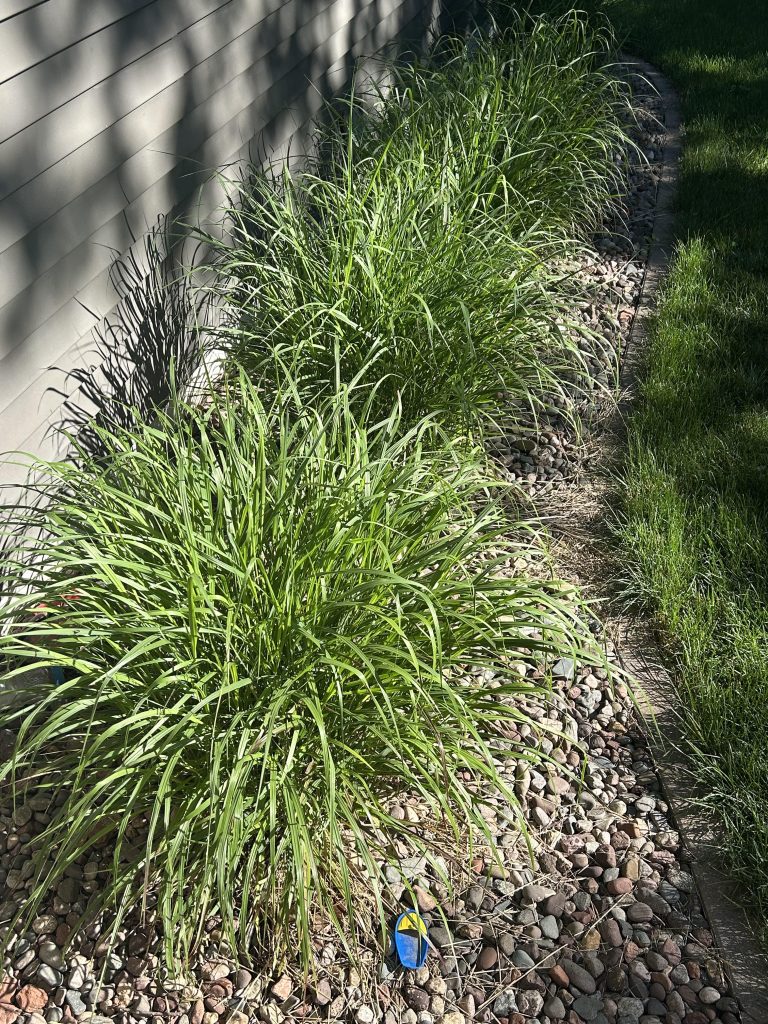
Switchgrass brings movement and height to a perennial bed. This native prairie grass has tall, feathery plumes that catch the wind, and the seed heads feed birds through the colder months.
It’s a smart choice if you want four-season interest without much upkeep.
Switchgrass needs full sun to perform well. It grows 3 to 6 feet tall, so plant it toward the back of a bed or use it as a natural screen.
It’s hardy in zones 3 through 10, making it one of the most adaptable plants on this list.
Time to Bloom: Switchgrass planted in fall establishes its root system over winter and produces modest growth the first summer. Expect full height and the feathery seed heads by the second growing season.
Pet Safety: Switchgrass is non-toxic to dogs and cats. The blades can be a bit sharp, so pets may avoid chewing on it anyway.
Frequently Asked Questions
Do I need to amend my soil before planting perennials in October?
Not usually. Most of the perennials on this list tolerate average soil just fine. A light layer of compost worked into the planting hole helps, but heavy amendment isn’t necessary for these tougher varieties.
Can I still plant perennials if I’ve already had a light frost?
A light frost alone isn’t a dealbreaker, especially for hardy perennials. Just avoid planting if the ground is already starting to freeze, since roots won’t be able to establish properly.
Should I fertilize new perennials at planting time?
Skip the fertilizer for fall planting. Feeding encourages new foliage growth right before winter, which can leave the plant more vulnerable to cold damage. Focus on watering instead.
How much should I water newly planted perennials in fall?
Water thoroughly right after planting, then keep the soil consistently moist until the ground freezes. Fall rain often does most of the work for you, but check during dry stretches.
Do I need to mulch after planting in October?
Yes, a 2 to 3 inch layer of mulch around the base helps regulate soil temperature and retain moisture. Wait until after the first hard frost to add a second layer, which protects roots through the coldest months.
Getting Started
You don’t need to plant all 13 of these at once. Pick two or three that fit your space and light conditions, get them in the ground this month, and build from there next fall.
A little patience now means a garden that comes back stronger, fuller, and mostly on its own, year after year.