
Struggling With Weedy Gaps Between Pavers? Try These 13 Ground Covers

Bare gaps between your stepping stones are basically an invitation for weeds to move in.
Fill them with the right ground cover instead, and your path turns into something people actually stop and look at.
Some of these plants handle heavy foot traffic, others thrive only in deep shade, and a few are picky about water. Here are 13 best ground covers that actually earn their spot between the stones.
Things You Need to Consider When Combining Plants with Paver Material
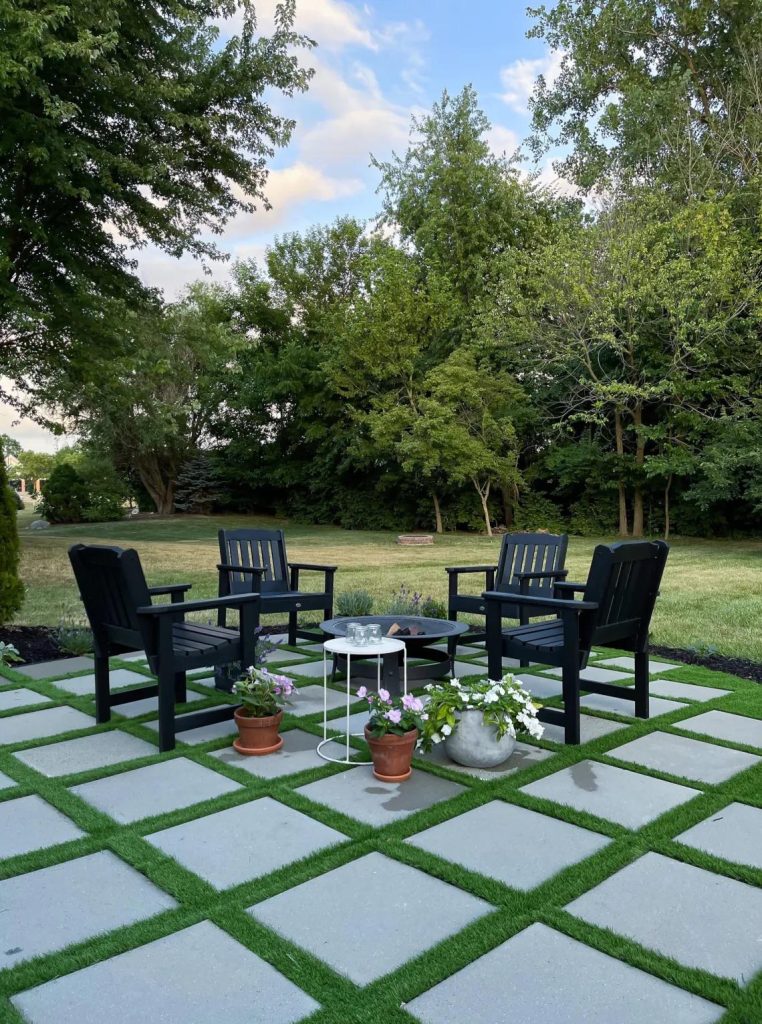
The color and texture of your pavers should guide which ground cover you pick, not the other way around.
Light stone like bluestone or limestone creates strong contrast against darker foliage, so plants like Woolly Yarrow or Dymondia’s gray-green leaves practically pop against the pale rock.
Dark concrete or slate does the opposite; low, gray-toned plants tend to vanish into the background instead of standing out.
Go bright and warm-toned against dark pavers to keep the contrast alive. Golden Creeping Jenny or chartreuse-leaved Sedum varieties read clearly against charcoal or black stone, where a plain green thyme would blend in and disappear.
Reddish types like ‘Dragon’s Blood’ Sedum work well here too, since burgundy pops against nearly any gray or dark surface.
Texture matters as much as color. Rough, irregular flagstone pairs naturally with looser, wilder growers like Sweet Woodruff or Corsican mint.
On the other hand precise, geometric pavers look sharper with tight, mat-forming plants like Dymondia or ‘Elfin’ thyme that hold a clean edge.
13 Ground Cover Plants That Turn Stepping Stones Into a Living Path
1. Creeping Thyme
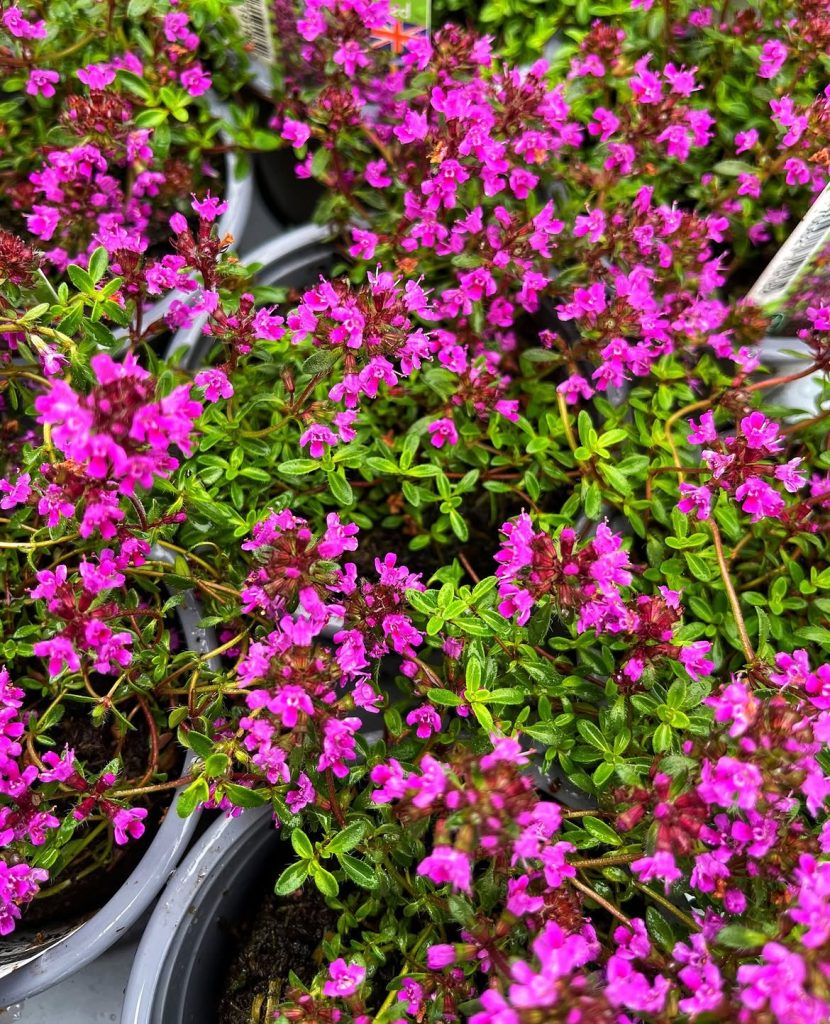
Walk across a thyme-planted path on a warm afternoon and you’ll smell it before you even look down. That’s the real draw here: it turns a plain walkway into something that engages more than just your eyes.
Woolly thyme stays fuzzy and silver-gray with pale purple flowers, while wild thyme runs brighter green with pink blooms. For seriously tight gaps, ‘Elfin’ thyme barely clears 2 inches and stays compact instead of sprawling.
Full sun is non-negotiable, and drainage matters even more than light does. Thyme rots fast in wet feet, so skip low spots where water pools after rain.
It handles USDA zones 4 through 8 comfortably, and once established, you can mostly forget the watering can outside of real drought.
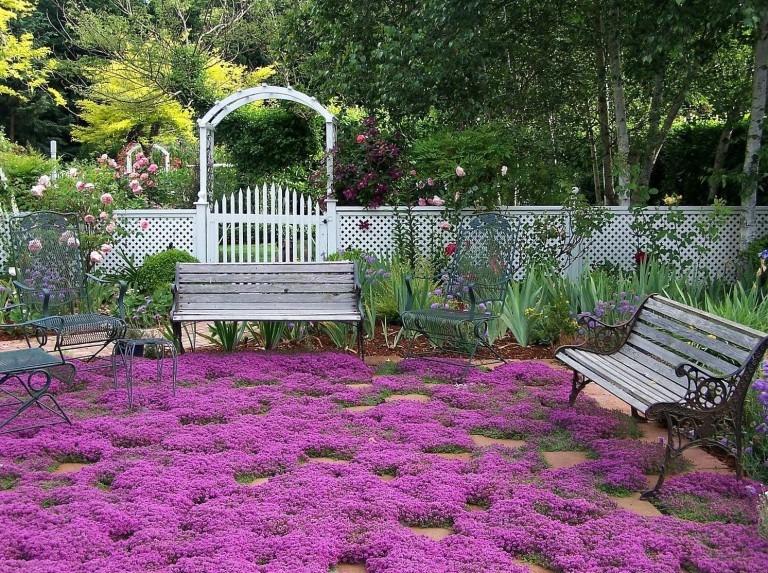
How long until it fills in: Space 4-inch pots 6 to 8 inches apart, and a 1- to 2-inch gap fills in within a single growing season. Gaps closer to 6 inches wide can take a full year to close completely.
Pet safety: Thyme is non-toxic to dogs and cats, so it’s a safe pick for yards where pets roam freely.
Also read: How to Grow Red Creeping Thyme Ground Cover Plant?
2. Blue Star Creeper

This one surprised me the first time I planted it. The foliage looks almost too delicate for a path, yet it shrugs off regular foot traffic without missing a beat.
Tiny star-shaped flowers, pale blue and easy to miss until you’re up close, cover the mat most heavily in spring and then pop up on and off through fall.
Morning sun paired with afternoon shade gets the best growth. Full sun works too, but only if the soil never fully dries out, since this plant hates going thirsty.
Zones 5 through 9 suit it well, and it spreads by shallow roots that root wherever a stem touches soil, which is part of why it fills gaps so quickly.
How long until it fills in: A single nursery pot can cover a 12-inch gap in about one growing season under good moisture. Dividing the root ball into smaller chunks before planting speeds up coverage in narrow cracks.
Pet safety: Blue star creeper carries no known toxicity for dogs or cats, making it one of the safer options for pet-heavy yards.
3. Dwarf Mondo Grass
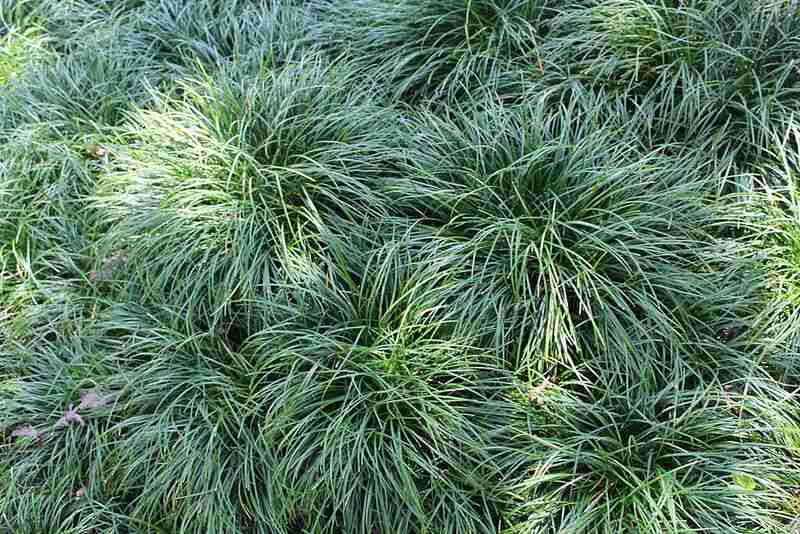
If your path sits in shade most of the day, this is probably your best bet. It grows in tight, grass-like tufts that never need mowing and hold their deep green color through winter in most climates.
Unlike faster spreaders, it grows from underground rhizomes at a slow, steady pace, so patience matters more here than with almost anything else on this list.
Morning sun is fine, but hot afternoon rays will scorch it, especially in southern climates. It handles zones 6 through 10 and tolerates both drought and damp soil, though it won’t forgive standing water.
One advantage over looser spreaders: it stays in its lane instead of creeping across the surface of your stones.
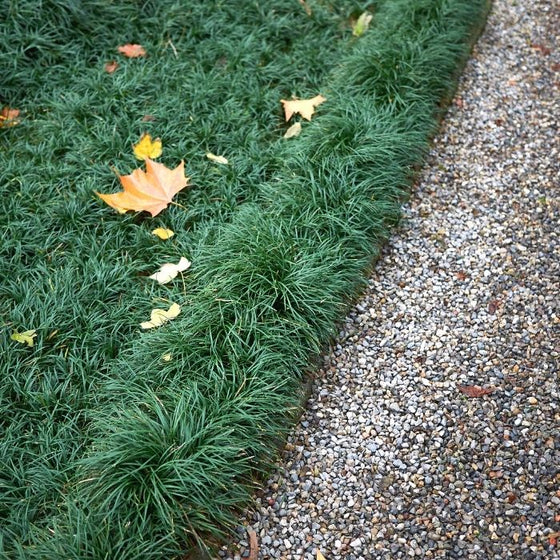
How long until it fills in: Because it spreads so slowly, expect two to three years for full coverage of a 2-inch gap, even with regular watering and fertilizing.
Pet safety: Mondo grass is considered non-toxic to dogs and cats, so it’s a solid choice around pets, though the tough blades aren’t especially appealing for chewing anyway.
4. Baby’s Tears

Nothing else on this list looks quite as much like moss without actually being moss.
The foliage is made up of hundreds of tiny, round leaves that pack together into a soft green carpet, which is why it shows up so often in fairy garden designs and shaded courtyards.
It fills small cracks impressively fast once it’s happy, but the stems are too fragile for heavy foot traffic, so save it for edges rather than the main walking line.
Shade and consistent moisture keep it alive. It sulks and browns quickly in full sun or dry spells, and frost will knock it back hard or kill it outright.
USDA zones 9 through 11 are really its comfort zone; anywhere colder, treat it as an annual or grow it in a container instead.
How long until it fills in: Given moist shade and mild temperatures, baby’s tears can cover a small gap in as little as 6 to 8 weeks, faster than nearly anything else here.
Pet safety: Baby’s tears is generally considered non-toxic, though some cats will nibble the soft foliage out of curiosity more than hunger. It’s not a plant known to cause problems, but keep an eye out if your cat is a chronic muncher.
5. Irish Moss
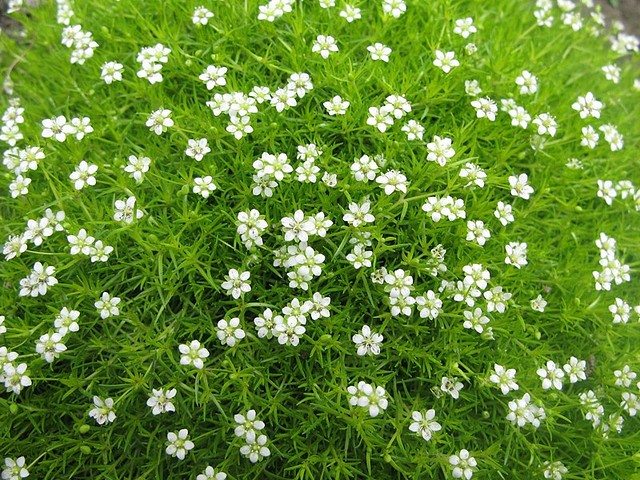
Despite the name, this isn’t a true moss at all. It’s a creeping perennial ground cover that mimics the look of moss so convincingly that most people never question it.
The texture is what sells it: dense, velvety, and almost springy underfoot, which makes it one of the more satisfying ground covers to walk across barefoot.
Partial shade suits it best, especially in hot inland climates where afternoon sun will scorch the fine foliage. It wants consistently moist soil and struggles the moment things dry out for more than a day or two.
It tolerates light foot traffic better than baby’s tears does, though heavy daily use will thin it out over time.
How long until it fills in: Expect a full growing season for coverage of a 2-inch gap, assuming consistent moisture throughout summer.
Pet safety: Irish moss is non-toxic to both dogs and cats, making it a low-risk choice for households with curious pets underfoot.
6. Creeping Jenny
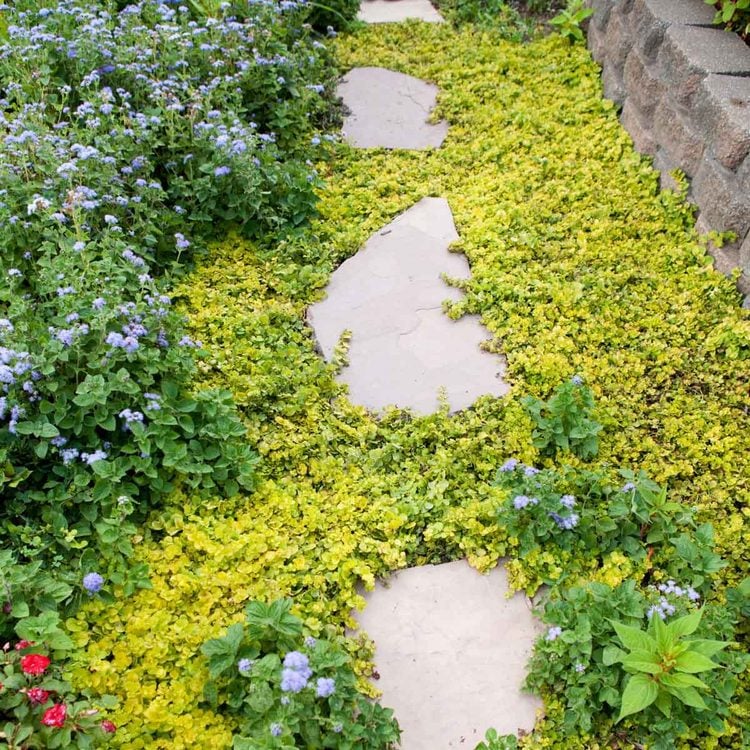
This is the plant to reach for when your gaps run wide, 6 inches or more, since narrower spreaders can’t keep up with how fast Creeping Jenny moves.
The trailing stems carry round, coin-shaped leaves in a lime-green to golden color that genuinely glow in a shaded corner.
Come winter, the foliage often shifts to a warm orange, which is a nice surprise most gardeners don’t expect from a groundcover.
It grows in sun or shade, though the golden color intensifies in shade while sun-grown plants tend to look more washed out green. Established plants handle drought reasonably well, but soil that stays evenly moist keeps the color richest.
Zones 4 through 9 cover it, and this is one plant you actually need to watch, since it spreads aggressively and can climb right over the tops of your pavers if you don’t trim it back.
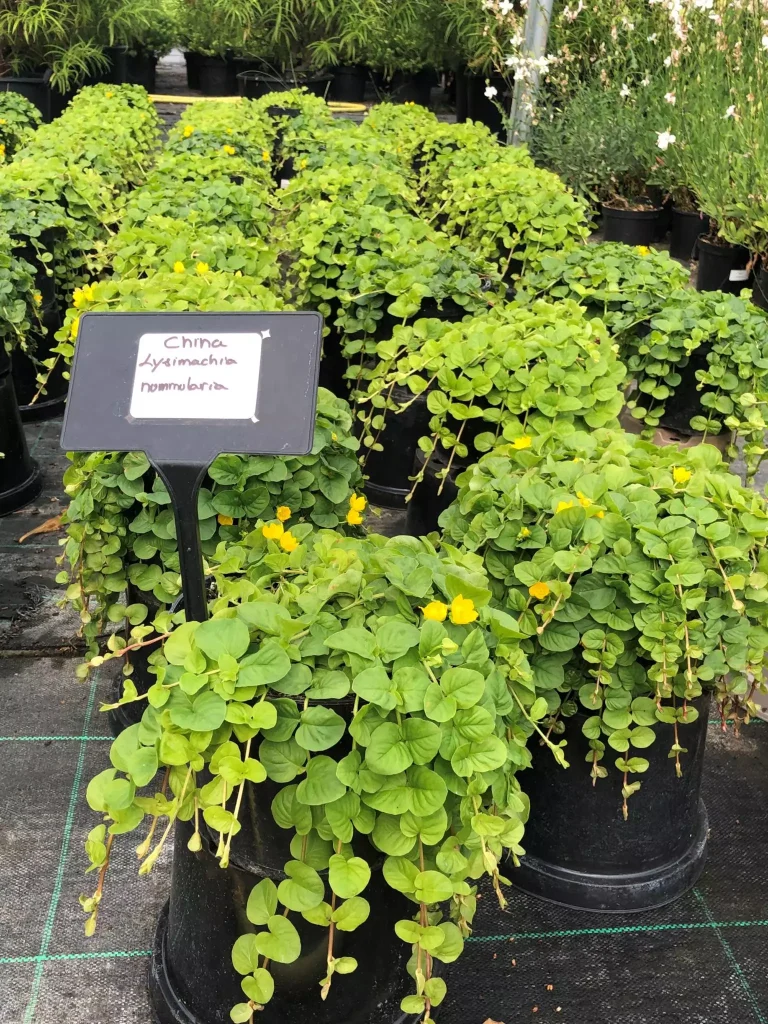
How long until it fills in: A single plant can cover 2 to 3 square feet in one season under decent moisture, making it one of the fastest fillers on this list for wide gaps.
Pet safety: Creeping Jenny is non-toxic to dogs and cats, so it’s fine for pet-friendly yards, though its aggressive spread means it may need boundary control near lawns.
7. Silver Carpet (Dymondia)
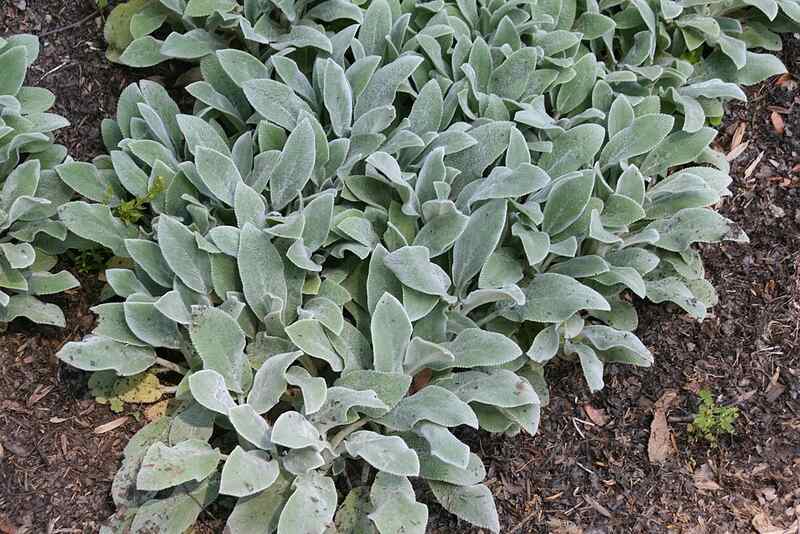
If you want something that looks intentional and designed rather than wild, this is it.
The blade-like leaves are green on top and silvery-gray underneath, and a slight upward curl on each leaf edge shows off both colors at once for a frosted, two-tone effect.
It stays flat, almost pressed against the ground, which makes it look tidy even without any trimming.
Full to partial sun and well-draining soil are the two requirements that matter most. It’s genuinely drought tolerant once established, needing only occasional deep watering during long dry stretches.
Zones 9 through 11 are its range, so gardeners in cooler climates will need to treat it as an annual or skip it entirely.
How long until it fills in: Coverage of a 2-inch gap typically takes one full growing season, though established Dymondia continues to thicken and tighten for a second year after that.
Pet safety: Dymondia has no reported toxicity for dogs or cats, making it a safe pick, though its tough, low profile isn’t particularly tempting for pets to chew anyway.
8. Chamomile
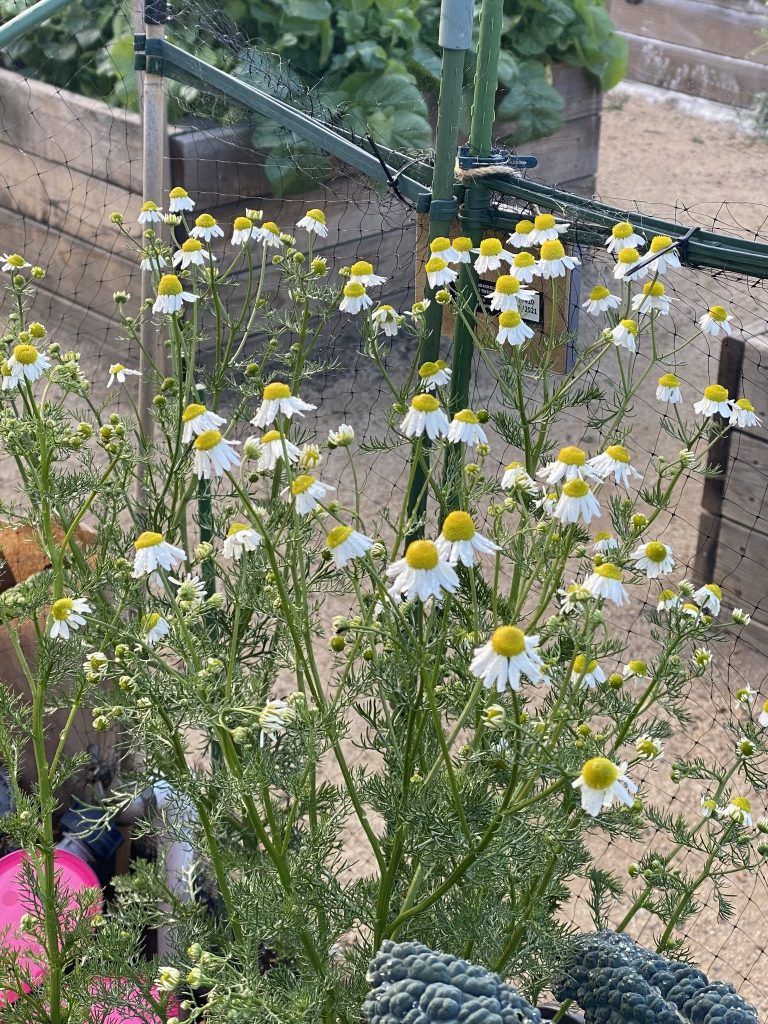
Chamomile brings a softer, meadow-like look that none of the flatter ground covers can match. Ferny, apple-green foliage stays low and mounding, then sends up small white daisy flowers that genuinely smell like the tea you’d steep from them.
Crush a leaf between your fingers and you get that same familiar apple-and-hay scent instantly.
This plant wants moderate, consistent water rather than drought conditions, which sets it apart from most other options here. A light shear after the flowers fade keeps it from getting leggy and encourages a second flush of blooms later in the season.
It handles zones 4 through 9 and tolerates coastal full sun to partial shade, though inland gardens should give it some afternoon protection.
How long until it fills in: Chamomile fills a small gap within one growing season but needs that post-bloom trim to stay dense rather than sprawling and thin.
Pet safety: Chamomile is non-toxic to dogs and cats and is actually used in some calming pet products, so it’s one of the safer choices on this list.
9. Corsican Mint
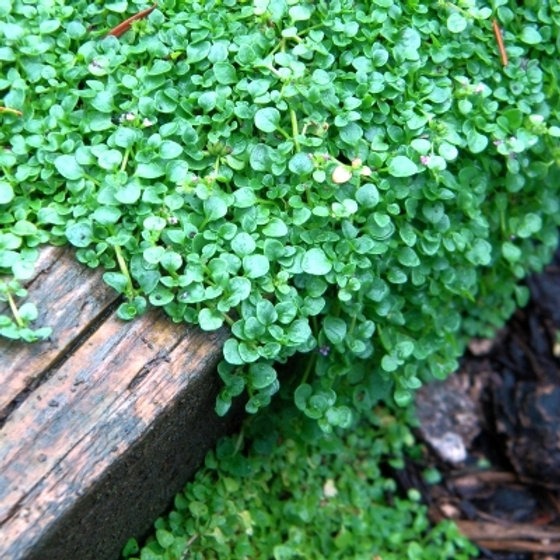
Step on this one and you’ll get an instant hit of mint, sharp enough that some people compare it to walking across a stick of gum.
The leaves are tiny, almost moss-like, and form a low mat that hugs the ground tighter than actual mint plants usually do.
It’s a favorite for herb gardens and pathways where that surprise scent adds something the eyes alone can’t.
Regular water is non-negotiable here, since the shallow roots dry out fast in warm weather. Partial sun to partial shade works best, especially with protection from harsh afternoon heat.
Unlike its taller mint cousins, this one stays remarkably well-behaved and doesn’t take over the yard.
How long until it fills in: Given consistent moisture, Corsican mint covers a narrow gap in about 8 to 10 weeks, one of the quicker fillers on this list.
Pet safety: Mint species carry mild toxicity concerns for cats in large ingested quantities, so keep an eye on cats that graze on greenery, though dogs generally tolerate it without issue.
10. Sea Thrift
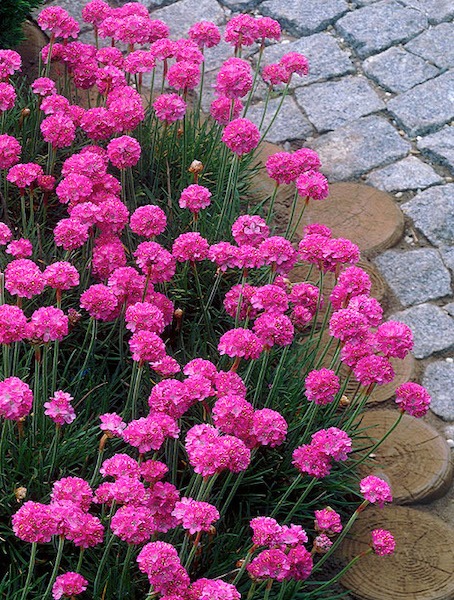
Sea Thrift brings something the other plants on this list don’t: real color drama from pompom-shaped pink or white flowers that rise above tidy, grass-like foliage clumps.
It reads more like an accent than a filler, so use it sparingly between wider-set pavers rather than as your main gap-filler.
Native to coastal cliffs, it genuinely doesn’t mind salt spray or wind, which makes it a standout for beach-adjacent gardens.
Well-draining soil and low water are the keys to keeping it alive long term. It actually performs worse in rich, moist soil than in poor, sandy ground, which surprises a lot of gardeners used to feeding everything.
How long until it fills in: Sea Thrift grows slowly compared to true spreaders, so expect two seasons before clumps merge into a continuous border along a path edge.
Pet safety: Sea Thrift has no significant toxicity reported for dogs or cats, making it safe near pets, though its clumping habit means pets are unlikely to walk directly over it anyway.
11. Stonecrop (Sedum)
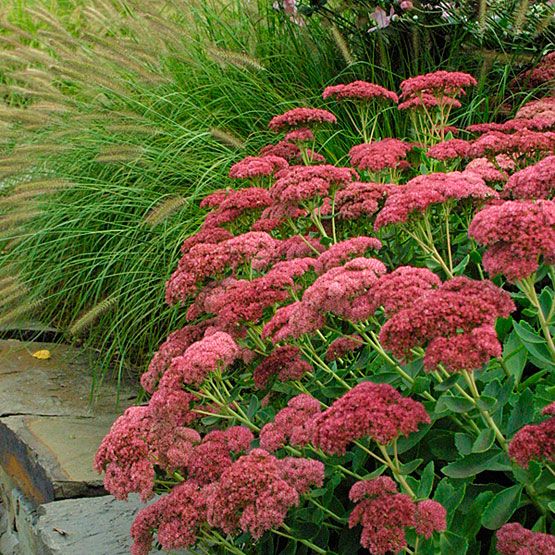
If your path bakes in the sun and your soil is rocky or compacted, Sedum is the plant that won’t quit on you.
Ground cover types like ‘Dragon’s Blood’ turn a deep burgundy red through the growing season, while finer-leaved varieties like ‘Blue Spruce’ stay a soft blue-green and spread more slowly.
Both handle poor, dry soil that would kill off half the plants on this list.
Full to partial sun keeps the color richest, and low water is genuinely all it needs once roots establish.
This is one of the few ground covers where too much kindness backfires, since rich soil and frequent watering actually cause rot and leggy growth. Hardiness ranges widely by variety, spanning zones 3 through 11, so check the specific cultivar tag before buying.
How long until it fills in: ‘Dragon’s Blood’ spreads roughly 12 inches in a season under full sun, while slower varieties like ‘Blue Spruce’ can take two seasons to reach the same coverage.
Pet safety: Sedum is generally considered non-toxic to dogs and cats, though the fleshy leaves can cause mild stomach upset if a pet eats a large amount at once.
12. Sweet Woodruff
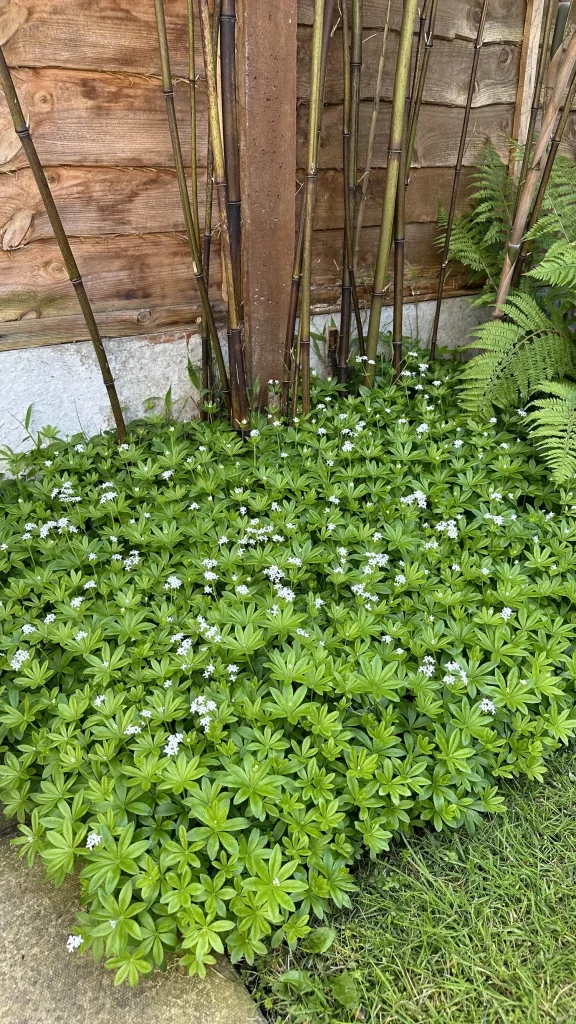
Sweet Woodruff earns its keep in the shadiest, trickiest corners of a path where almost nothing else agrees to grow.
Whorls of narrow leaves circle each stem, giving the foliage a layered, almost lacy look that’s different from the flatter mats most ground covers form.
Small white flowers appear from late spring through summer and carry a faint vanilla-hay scent, especially once the leaves dry out.
Shade to partial shade suits it best, and it actually resents strong afternoon sun, unlike sun-hungry options like thyme or Sedum.
It tolerates average garden soil without much fuss and spreads readily by seed, so expect volunteer seedlings showing up in nearby beds within a couple of years. Zones 4 through 8 are its range.
How long until it fills in: A few starter plants spaced a foot apart typically merge into a solid mat within one to two growing seasons, helped along by its habit of self-seeding into any bare gaps nearby.
Pet safety: Fresh Sweet Woodruff poses little risk, but the dried foliage contains coumarin, which can build into a mildly toxic compound if a pet eats a large quantity of dried clippings. Fresh, growing plants in the garden aren’t a real concern for typical pet behavior.
13. Woolly Yarrow
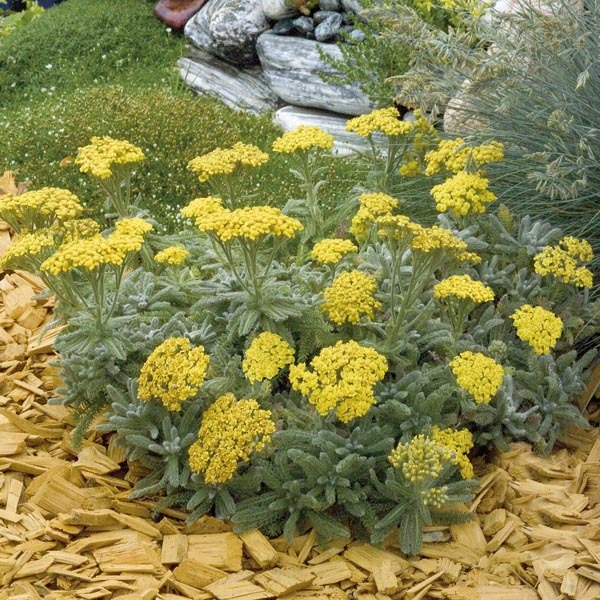
Woolly Yarrow rounds out this list as one of the toughest, most drought-proof options available, thriving in spots that get baked by sun all day with barely any irrigation.
The fine, feathery, silver-gray foliage forms a soft-looking mat that’s actually quite resilient underfoot, and small yellow button flowers appear in early summer if you let a few stems grow taller near path edges.
It brings a texture contrast none of the flatter ground covers on this list offer.
Full sun and sharp drainage are essential, since wet feet cause the same rot problems Sedum struggles with.
It handles genuinely poor soil, including gravelly or sandy conditions where richer ground covers would fail outright. Zones 3 through 9 make it one of the more cold-hardy choices here.
How long until it fills in: Expect one growing season for a 2-inch gap to fill, with the mat continuing to thicken and tighten into its second year.
Pet safety: Yarrow carries mild toxicity for dogs and cats if eaten in quantity, causing possible digestive upset, so it’s worth choosing a different option for yards with pets that graze on greenery regularly.
Frequently Asked Questions
Do I need to remove the old soil before planting between pavers?
Yes, in most cases. Soil between pavers is usually compacted from installation, and roots can’t push through it easily. Dig out a few inches and replace it with loose, rich soil or compost before planting anything.
Can I mix different ground covers in the same path?
Absolutely, and I’d actually recommend it. Mixing varieties gives your path a more natural, less uniform look, and if one type struggles in a particular spot, you haven’t lost the whole planting.
How much space should I leave between plants when I plant them?
Most ground covers do best spaced 6 to 9 inches apart, close enough to fill in within a season or two without wasting plants. Wider gaps between pavers can handle slightly closer spacing to speed up coverage.
Will these plants survive winter, or do I need to replant every year?
Most of the plants on this list are perennials and come back on their own, though hardiness depends on your zone. Baby’s tears and Dymondia are the exceptions, since both need warm winters and will die back or need replacing in colder climates.
What’s the fastest way to get full coverage without spending a fortune?
Buy a few plants and divide them yourself rather than purchasing enough to fill every gap at once. Plants like Blue Star Creeper and Dwarf Mondo Grass can be split with a utility knife into smaller sections that root and spread just as well as full-sized nursery plants.
Final Thoughts
So, you’ve got 13 different ways to turn a plain stone path into something worth walking slowly across.
Pick based on your light, your soil, and how much foot traffic the space actually gets, not just which plant looks best in a photo. Start small, watch what thrives in your specific spot, and expand from there once you know what works.