10 Flowers That Bloom in Fall and Winter (When Everything Else Goes Dormant)

Fall doesn’t have to mean the end of color in your garden. Neither does winter. While summer flowers fade and lawns turn brown, a whole group of plants is just getting started.
Some bloom right through the first frost. Others wait until the coldest months to show off. In this list, you’ll find 10 flowers that keep your garden alive when everything else looks done.
Plant a few now, and you’ll have something blooming from October straight through February.
| Flower | Zone | Size (H x W) | Exposure | Bloom Time |
|---|---|---|---|---|
| Pansies & Violas | 6–8 | 6–8″ x 6–9″ | Full sun | Fall–spring |
| Chrysanthemums (Mums) | 5–9 | 1–3′ x 1–3′ | Full sun | Fall |
| Asters | 4–8 | 1–4′ x 1–3′ | Full sun | Late summer–fall |
| Ornamental Kale & Cabbage | 2–11 | 12–15″ x 12–15″ | Full sun | Fall–winter (foliage color) |
| Camellias | 7–8 | 6–15′ x 5–10′ | Sun to partial shade | September–March |
| Witch Hazel | 3–9 | 10–25′ x 10–20′ | Full sun to light shade | October–March |
| Lenten Rose (Hellebore) | 5–8 | 1–2′ x 1–3′ | Partial to full shade | Late winter–early spring |
| Winter Jasmine | 6–10 | 3–5′ x 3–6′ | Full sun to partial shade | Late winter–early spring |
| Wintersweet | 7–9 | 10–15′ x 8–12′ | Full sun to partial shade | January–early spring |
| Snowdrops | 3–8 | 4–10″ x 3–6″ | Full sun to part shade | Late winter |
Why Fall and Winter Blooms Matter
They keep pollinators fed. Bees and other pollinators need food late into the season. Fall and winter bloomers give them one of their last meals before the cold sets in.
They stretch your color season. Pair an early fall bloomer with a late winter one, and you close the gap. Your garden never goes fully dormant.
Your zone changes the timeline. Bloom times shift depending on where you live. A flower that blooms in December in Georgia might not open until February in Ohio.
Always check your zone before you plant.
Also read: 12 Frost-Tolerant Flowers That Keep Blooming Long After Your First Fall Frost
10 Beautiful Fall & Winter-Blooming Flowers to Keep Your Garden Colorful
1. Pansies and Violas
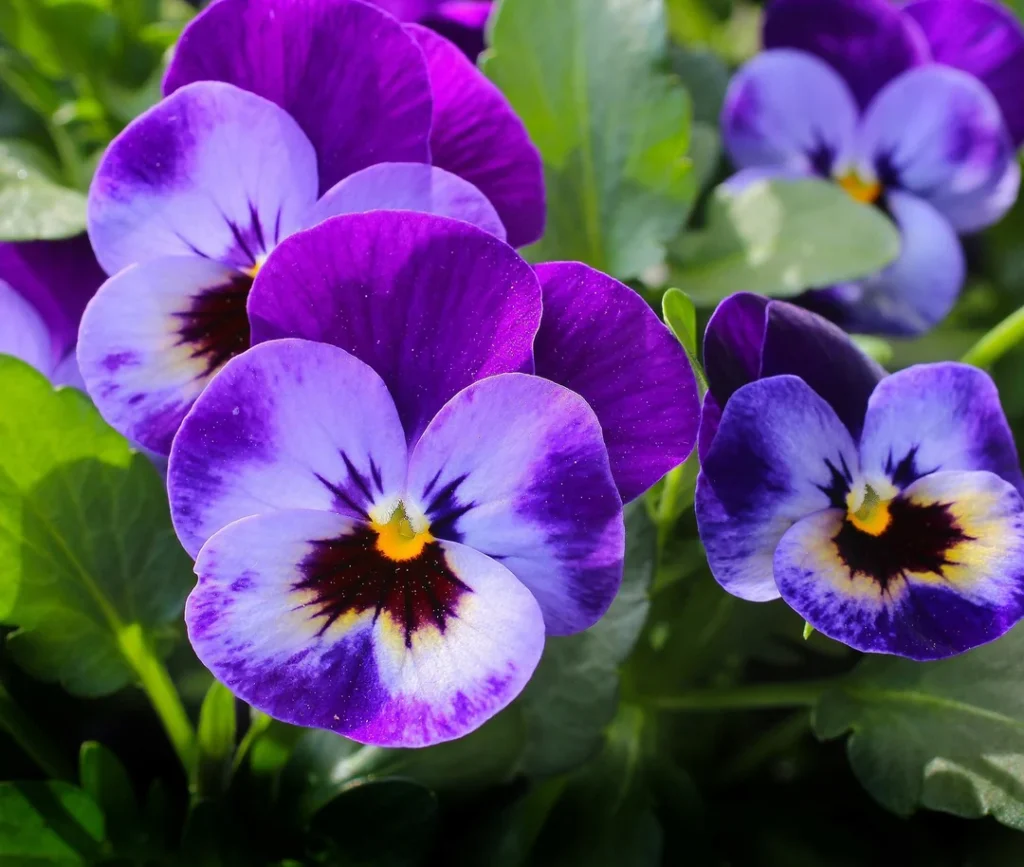
Pansies and violas are the easiest way to add instant color to a fall or winter garden. You’ve probably seen their cheerful, face-like blooms in nursery flats every autumn. They come in almost every color you can imagine.
These little annuals love cool weather. They actually struggle once summer heat returns. Plant them in fall, and they’ll bloom straight through winter into spring.
Violas are smaller than pansies, but they bloom more and need less deadheading.
Both thrive in full sun and grow well in beds or containers. They’re hardy in zones 6 to 8, and they hold up surprisingly well under snow.
Zone: 6–8
Good to know: Violas tolerate shade better than pansies do.
2. Chrysanthemums (Mums)
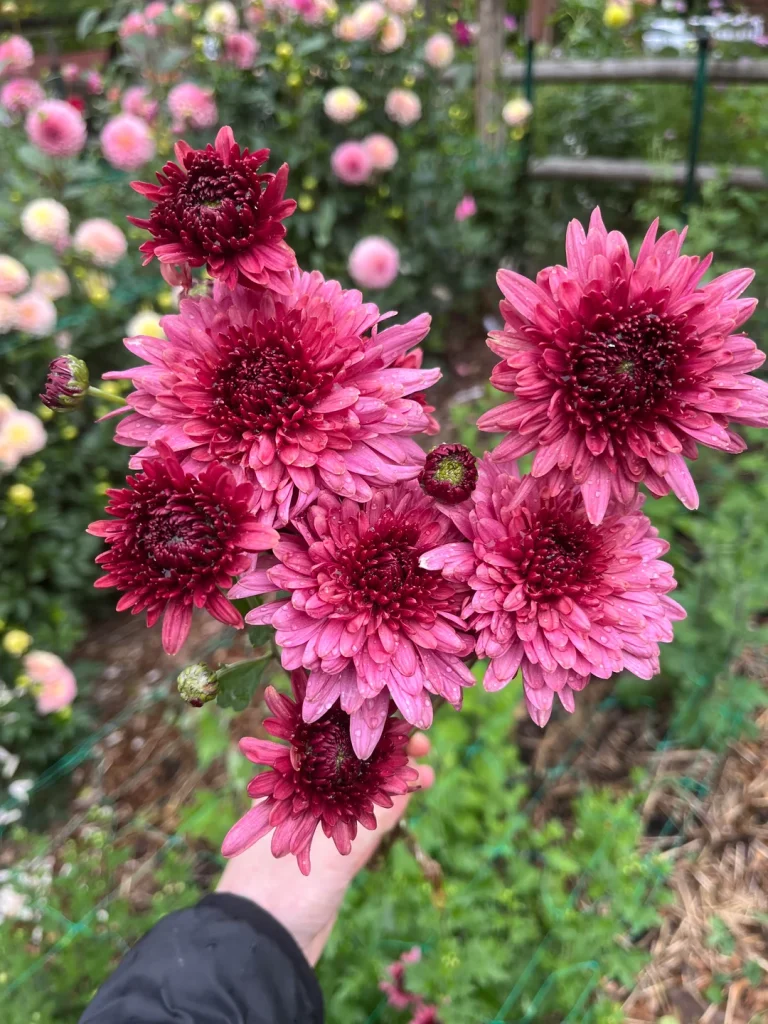
Mums are the flower most people think of first when fall rolls around. You’ll find them everywhere in September, stacked outside grocery stores and garden centers in every shade of orange, red, and gold.
Most gardeners treat mums as annuals. They rarely survive winter unless planted early enough to establish strong roots.
If you want yours to come back next year, get them in the ground by late summer, not fall.
Mums like full sun and well-draining soil. Give them room to spread, and pinch back the buds early in the season for a fuller, bushier bloom later on.
Good to know: Potted mums from the store are usually bred for looks, not longevity. Garden-center “hardy mums” aren’t always as hardy as the label suggests.
3. Asters
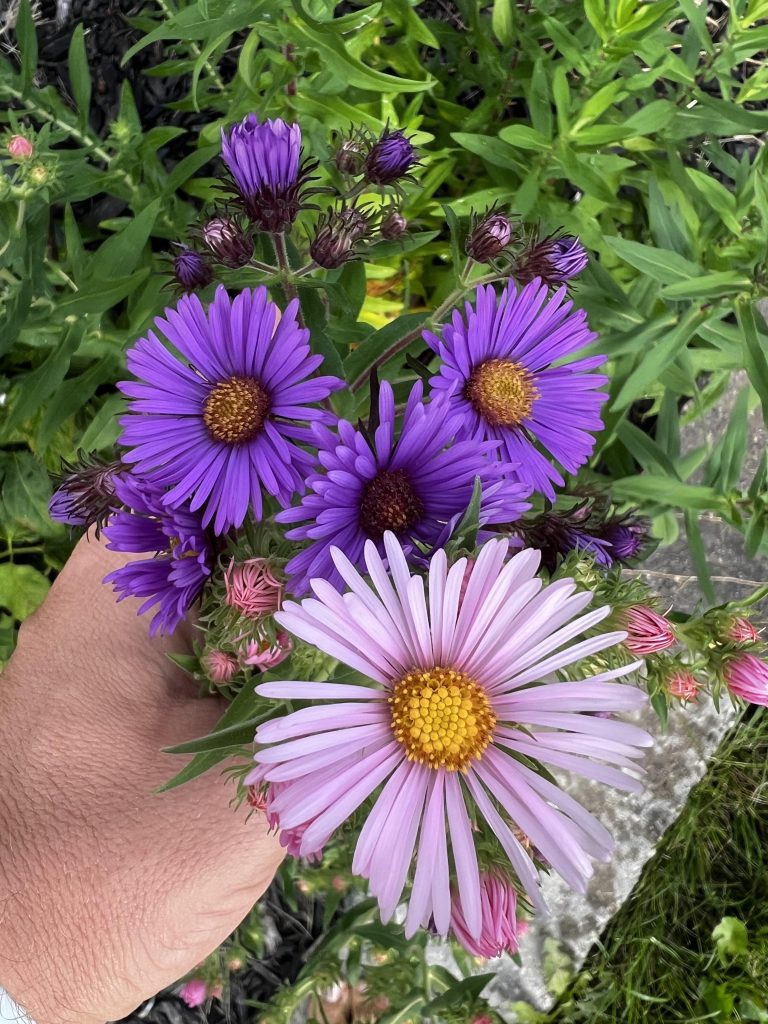
Asters bring a wilder, more natural look to a fall garden. Their daisy-like blooms come in shades of purple, pink, and white, and they show up right when summer flowers start to fade.
You’ll often spot asters growing along roadsides and in meadows. They’re native to much of the U.S., which makes them a great choice if you want to support local pollinators.
Bees and butterflies flock to them late in the season, when food sources are running low.
Asters prefer full sun and can get a little unruly if left alone. Cutting them back in early summer keeps the growth more compact and controlled by bloom time.
Zone: Most varieties thrive in zones 4–8.
Good to know: Plant asters in masses for the best visual impact.
4. Ornamental Kale and Cabbage
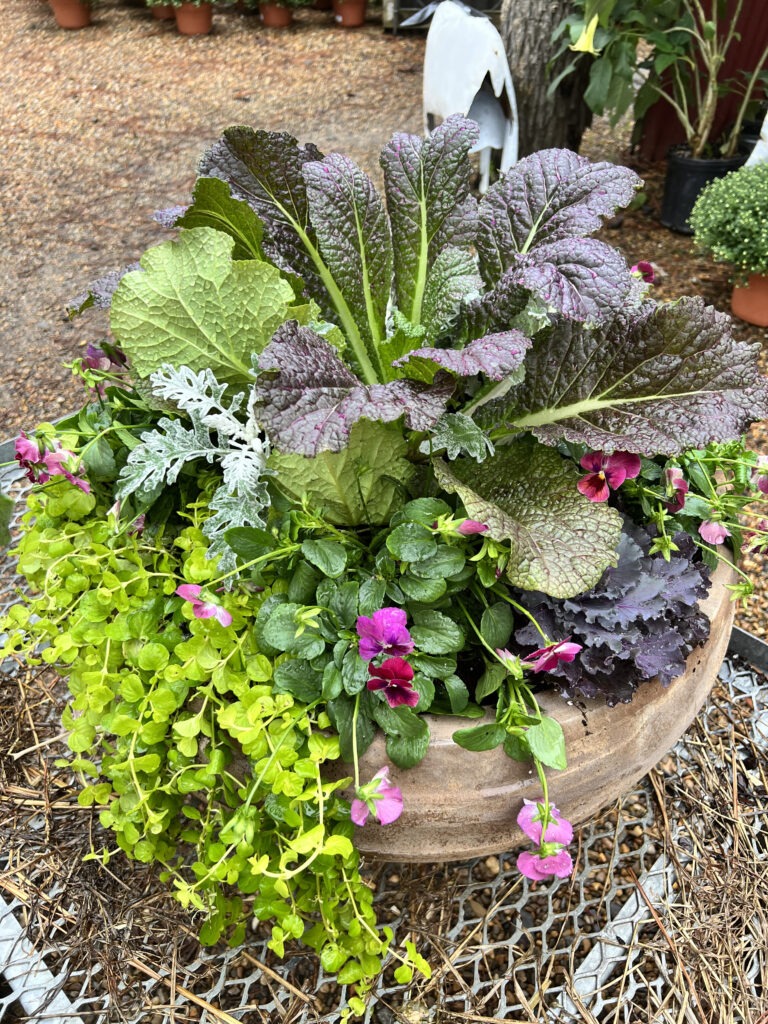
Ornamental kale and cabbage aren’t technically flowers, but they earn their spot on this list anyway. Their frilly, rosette-shaped leaves mimic blooms so well that most people can’t tell the difference from a distance.
What makes them special is how they respond to cold. The colder it gets, the more vivid their color becomes. Purples deepen, pinks brighten, and whites turn almost ghostly against the frost.
These plants are cousins of the vegetables you eat, but they’re grown purely for looks.
They hold their color well into December in most climates and pair beautifully with pansies in a container.
Zone: 2–11
Good to know: Full sun brings out the boldest color.
5. Camellias
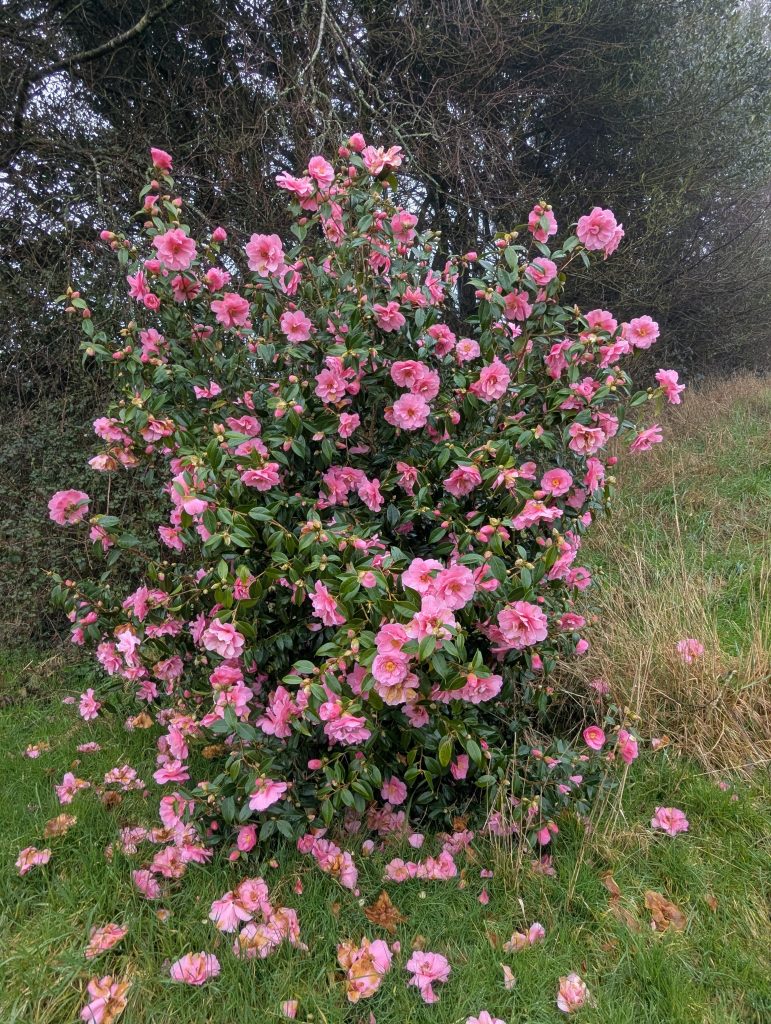
Camellias earn their nickname, “the winter rose,” for good reason. These evergreen shrubs bloom anywhere from September to March, depending on the variety, filling the gap left by roses and other summer flowers.
You’ll find camellia flowers in shades of white, pink, and red, with forms ranging from simple singles to full, rose-like doubles.
Some dwarf varieties stay compact, topping out around 3 to 5 feet. Standard camellias can reach 15 feet tall over time.
These fall shrubs need a little patience. They’re slow growers, but the payoff is worth the wait. Give them a spot with sun to partial shade, and they’ll reward you for years.
Zone: 7–8 (some varieties to zone 6)
Good to know: Camellias prefer well-drained, slightly acidic soil.
6. Witch Hazel
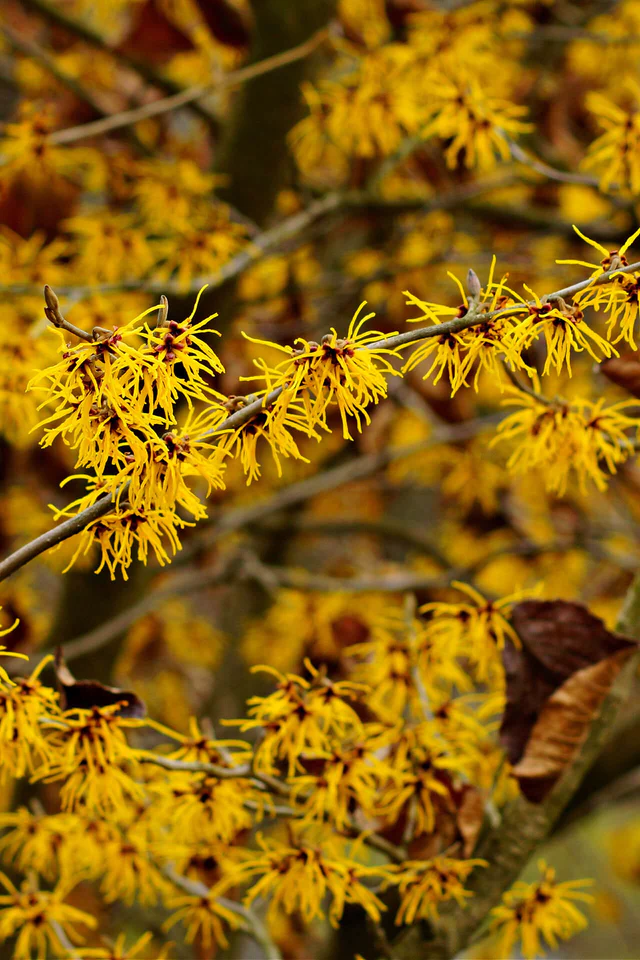
Witch hazel might be the strangest-looking flower on this list, and that’s exactly why it stands out.
Its spidery, ribbon-like petals unfurl on bare branches, sometimes even through snow. You won’t mistake it for anything else in your yard.
This large shrub can reach 10 to 25 feet tall at maturity, so give it room to grow. Flowers open anywhere from October to March, depending on the variety, and they range from yellow to orange to deep red.
One odd but cool detail: witch hazel can hold both flowers and fruit on its branches at the same time. It’s a true multitasker in the garden.
Zone: 3–9
Good to know: Witch hazel tolerates full sun to light shade, so it fits in more spots than you’d think.
7. Lenten Rose (Hellebore)
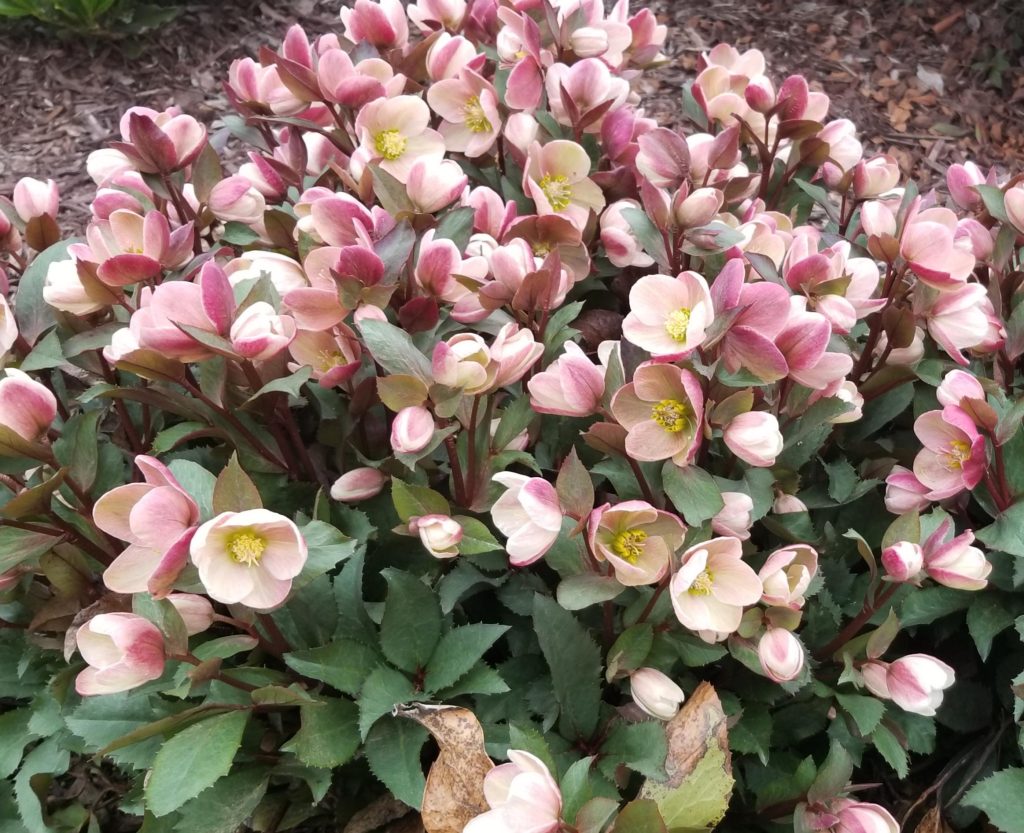
Lenten rose blooms when almost nothing else dares to. Its nodding, bell-shaped flowers open in late winter, often pushing through a thin layer of snow.
You’ll usually see them in shades of white, pink, or soft lavender.
This fall perennial forms slow-spreading clumps, growing up to 2 feet tall and 3 feet wide over time. It’s evergreen, so even when it’s not blooming, it still adds structure to shady beds.
Lenten rose works especially well on slopes, since its spreading habit helps hold soil in place. It’s also easy to propagate, so one healthy plant can turn into several.
Zone: 5–8
Good to know: Give it dappled shade. Too much sun will scorch the leaves.
8. Winter Jasmine
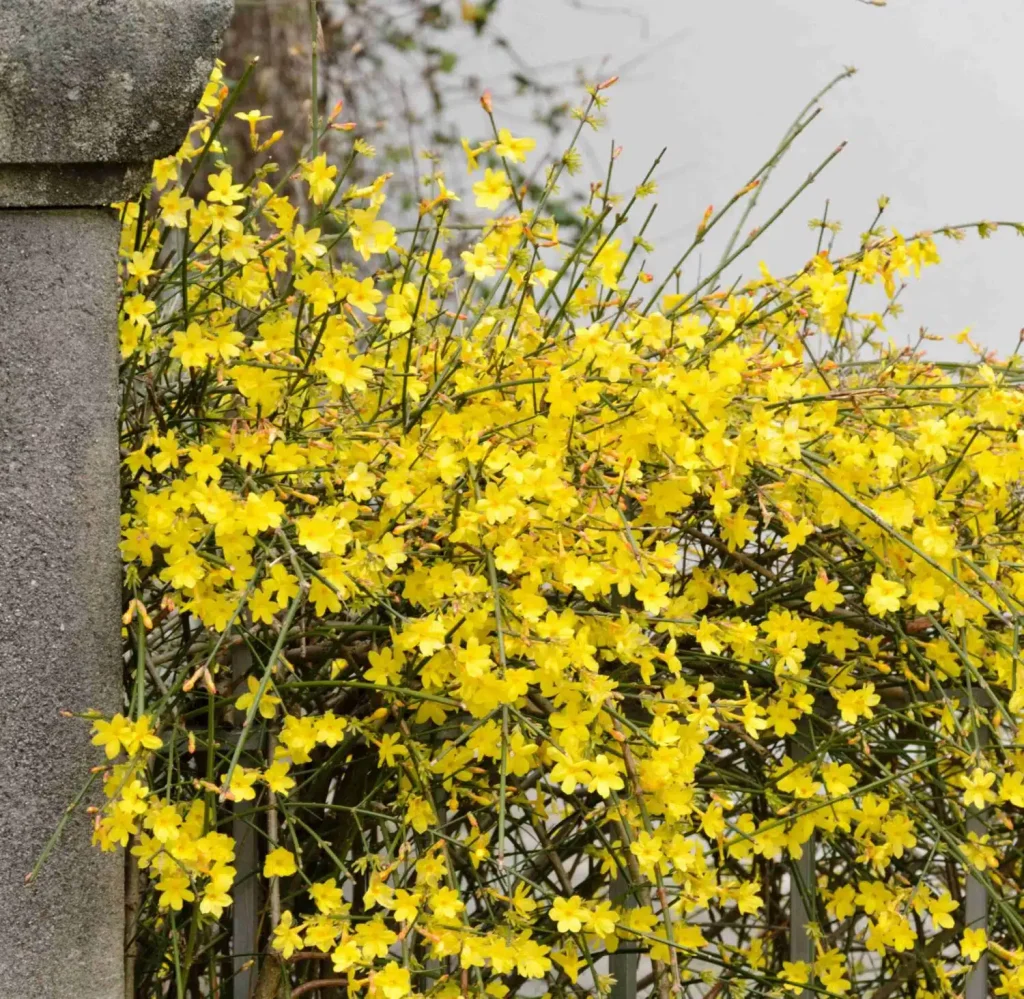
Winter jasmine brings a graceful, cascading look to winter gardens.
Its slender, arching branches stay green through winter, then burst into small, star-shaped yellow flowers in late winter to early spring, often before any leaves appear.
This shrub grows 3 to 5 feet tall and works well on slopes, walls, or anywhere you want a trailing effect.
Where branches touch the ground, they can root and spread, so it doubles as a loose ground cover.
Winter jasmine isn’t fussy. It tolerates poor soil, heavy pruning, and even a little neglect. Deer tend to leave it alone too.
Zone: 6–10
Good to know: Full sun to partial shade gives you the best bloom show.
9. Wintersweet
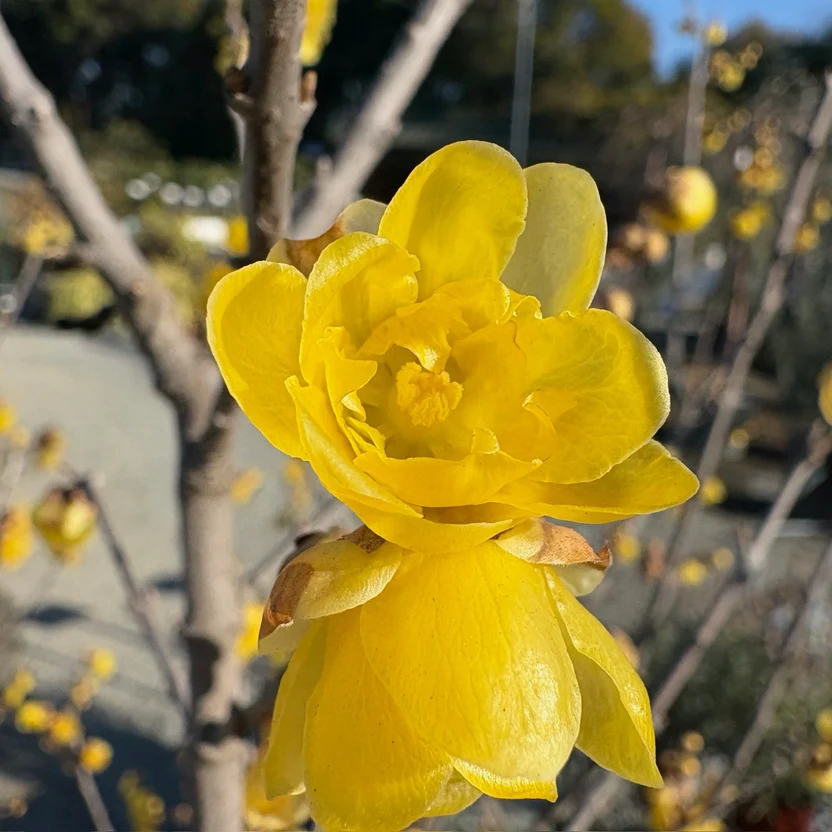
Wintersweet doesn’t ask for much attention visually, but it makes up for it with scent. Its small, pale yellow flowers open on bare branches starting in January, and the fragrance can carry across your whole yard.
This deciduous shrub grows 10 to 15 feet tall with an open, arching shape. It’s not fast-growing, but it’s tough.
Wintersweet handles severe pruning well, so you can shape it without much worry.
Plant it near a walkway or window. That way, you’ll catch the fragrance even on the coldest days, when you’re less likely to wander the whole garden.
Zone: 7–9
Good to know: Sun to partial shade both work fine for this one.
10. Snowdrops
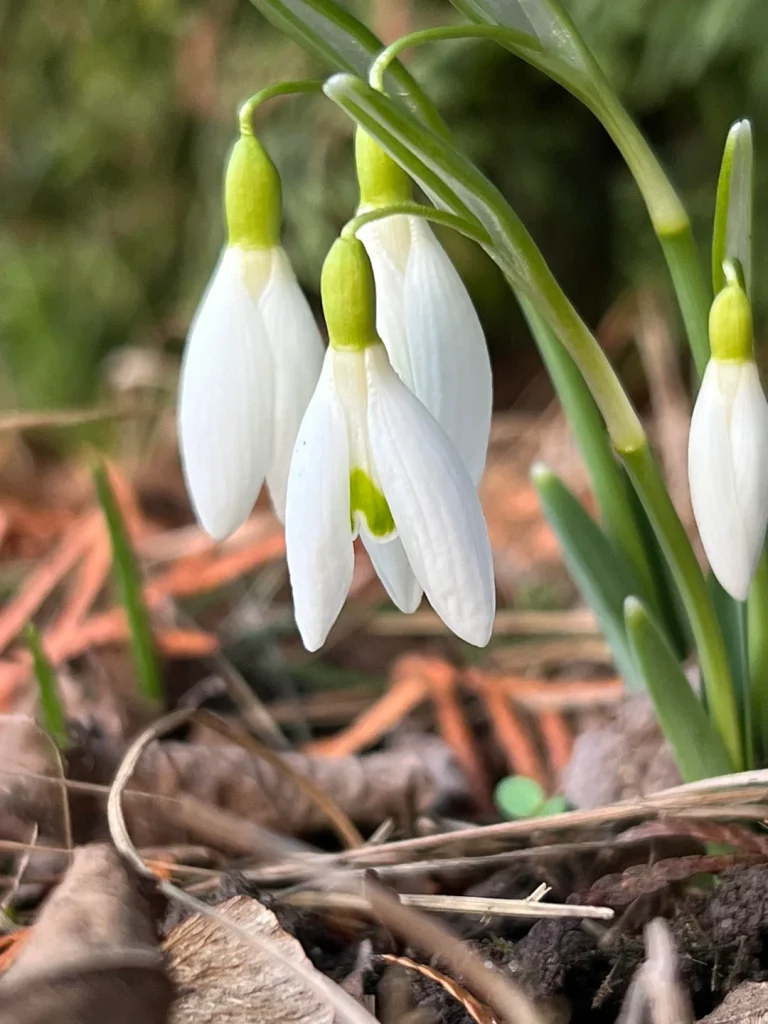
Snowdrops are the flower most people picture when they think of blooming through snow, and the name fits perfectly. These small white bulbs push up early, sometimes before the last snowfall has even melted.
Each plant stays tiny, usually just 4 to 10 inches tall, with delicate, nodding white blooms that face the ground.
Over time, snowdrops spread and form clumps, so a small planting now can fill in nicely over the years.
They’re some of the easiest bulbs you can grow. Plant them in fall, and they’ll multiply on their own with almost no help from you.
Zone: 3–8
Good to know: Snowdrops naturalize well under trees and shrubs.
FAQ’s
Can I plant pansies and mums together?
Yes, they pair well since both like cool weather and full sun. Just give mums a little more room to spread, since they get bushier than pansies.
Do winter-blooming shrubs need frost protection?
Most on this list are bred to handle frost just fine. A hard freeze can damage open flowers, but new blooms usually follow once temperatures rise again.
Which of these flowers work best in containers?
Pansies, violas, and ornamental kale all do great in pots. They’re compact, cold-hardy, and easy to swap out as the season changes.
Will these flowers survive in colder zones than listed?
Not reliably. Check your zone before planting, since a shrub rated for zone 7 usually won’t survive a zone 5 winter without serious protection.
How do I keep color going from fall through winter?
Layer your picks by bloom time. Start with asters and mums in fall, then let camellias, witch hazel, and snowdrops carry you through winter.
Final Thoughts
A garden doesn’t have to go quiet just because summer’s over. With the right mix of fall and winter bloomers, you can keep color, scent, and life in your yard through the coldest months.
Start with one or two from this list, and build from there. Your winter garden might end up being your favorite one yet.