15 Dreamy Garden Border Plants That Define Edges

A good garden border can completely change how your outdoor space feels. It adds shape, color, and that “pulled-together” look that makes a garden feel intentional rather than accidental.
I’ve tried dozens of plants along my own paths and edges over the years, and some of my favorite combinations came from pure experimentation.
Whether you love a soft cottage style or something bolder, these 15 ideas give you plenty to work with.
15 Plants to Achieve a Naturalistic Looking Garden Border
1. Russian Sage
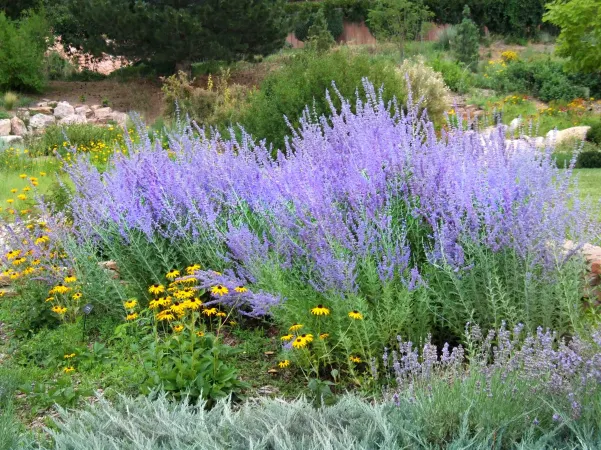
Honestly, few border plants match the dreamy effect of Russian sage. Those silvery stems and lavender-blue flower spikes create a hazy, soft look that pairs beautifully with just about everything.
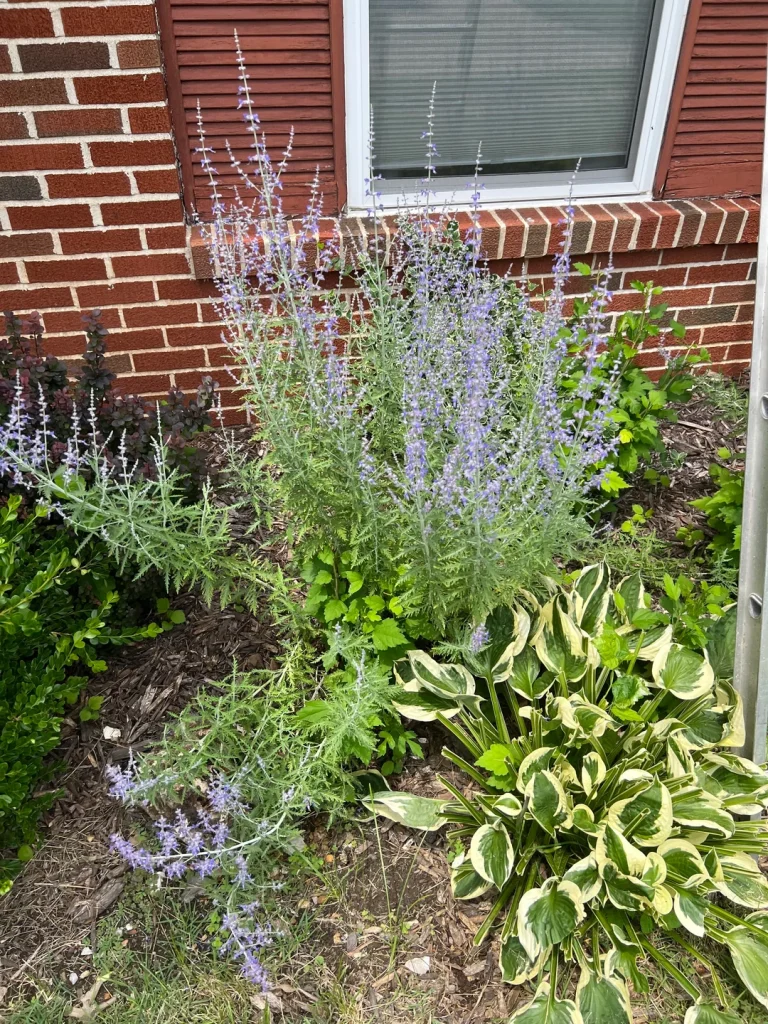
Newer varieties stand more upright than the old ones, though some still reach lazily over a path — and that’s part of the charm.
Try pairing it with black-eyed susans, roses, or hydrangeas for a combination that looks effortless. It handles drought and poor soil without much complaint. Once established, it spreads gradually and gets better every year.
- Zones: 3 to 9
- Mature size: 3 to 4 feet tall x 2 to 3 feet wide
- Care requirements: Full sun; well-drained soil; drought-tolerant once established
Also read: 15 Genius and Stunning Corner Garden Ideas for Front Yard
2. Catmint
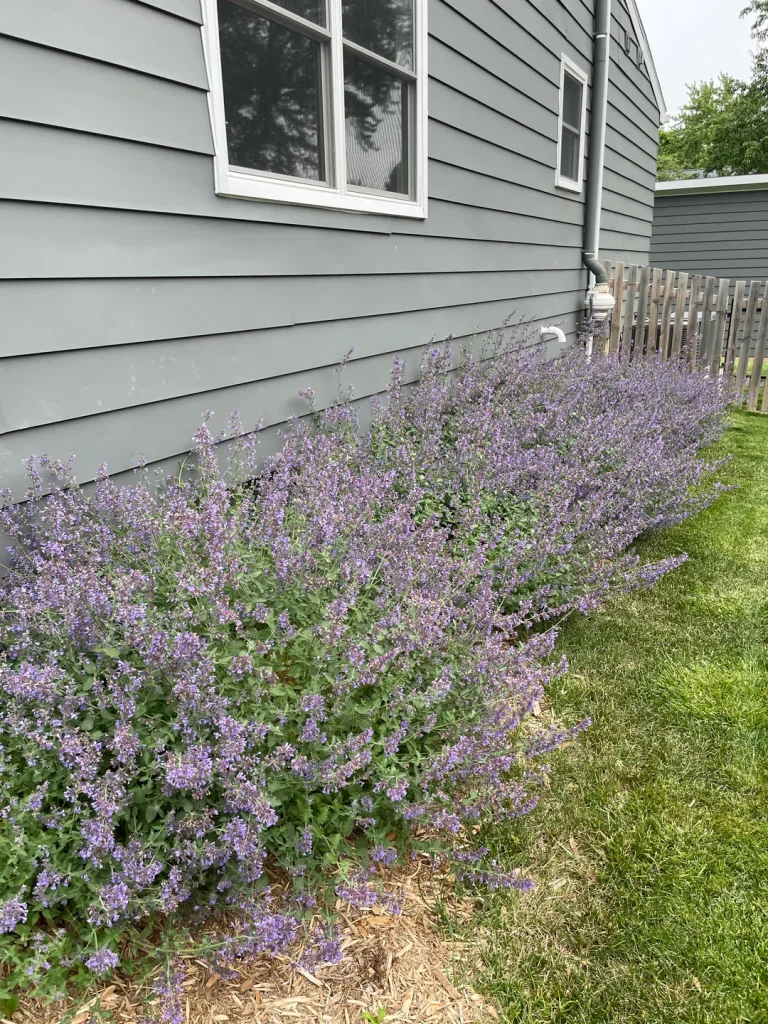
Few plants work as hard as catmint along a garden edge.
Those soft purple-blue flower spikes bloom for months, and cutting it back mid-season gives you a whole second flush of color. Shorter varieties mound neatly without crowding their neighbors.
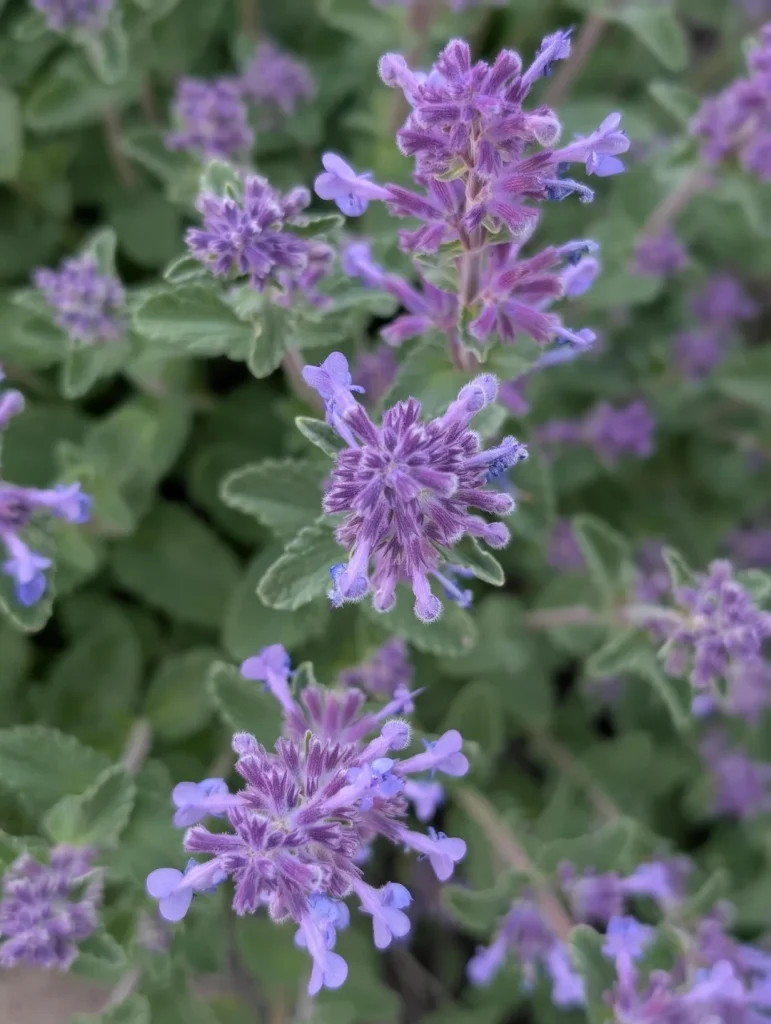
Catmint softens the hard line between a path and a bed beautifully. Poor soil and drought? It handles both with ease. Bees and butterflies absolutely flock to it too.
- Zones: 4 to 8
- Mature size: 24 inches tall x 30 inches wide
- Care requirements: Full sun; dry soil; drought-tolerant
Also read: 15 Stunning Fall Blooming Perennials for Your Garden
3. Yarrow
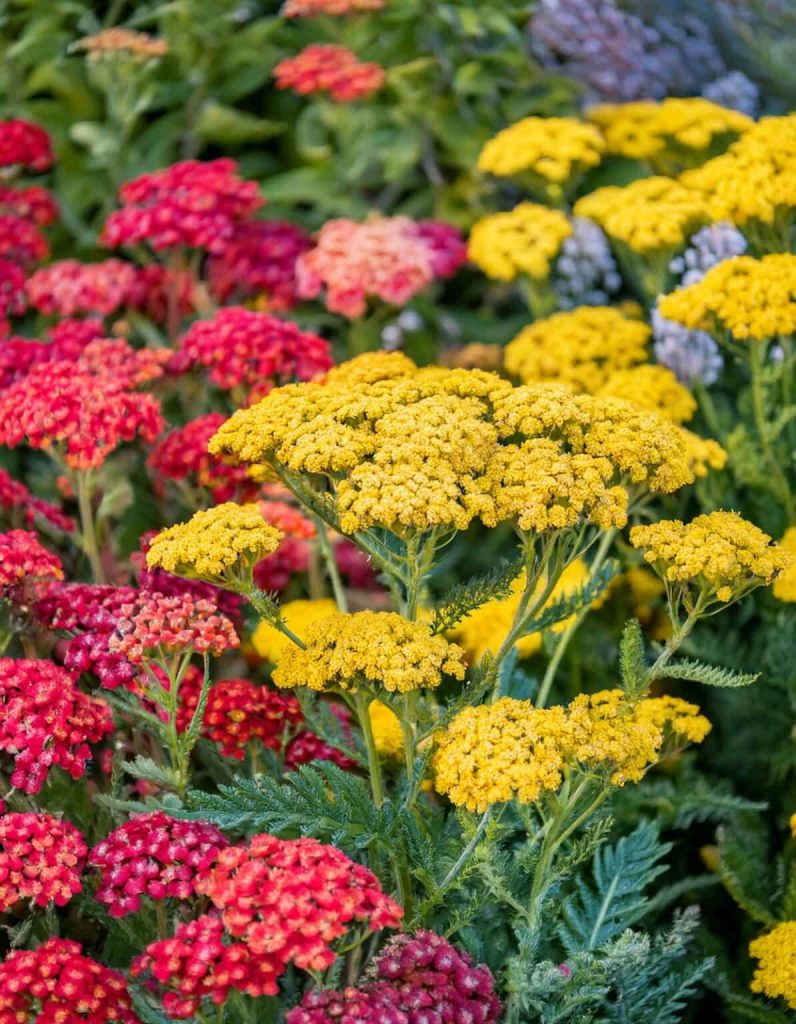
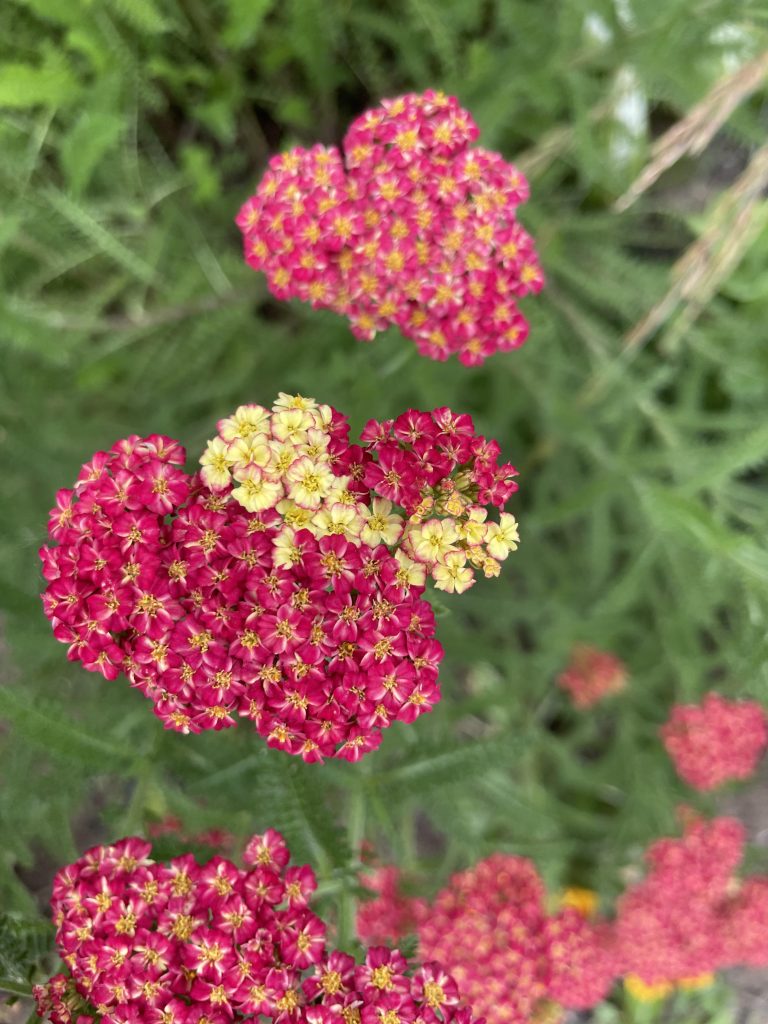
Underrated is the word I’d use for yarrow. Plant it once and expect a carpet of color — even in year one. That blue-green, lacy foliage looks stunning even when no blooms are present.
Full sun is ideal, but partial shade works fine too. Poor soil doesn’t bother it at all. Two trims a season — mid-summer and end of season — and you’re basically done.
- Zones: 3 to 9
- Mature size: 2 to 3 feet tall x 2 feet wide
- Care requirements: Full sun to part shade; tolerates poor, dry soil
4. Salvia
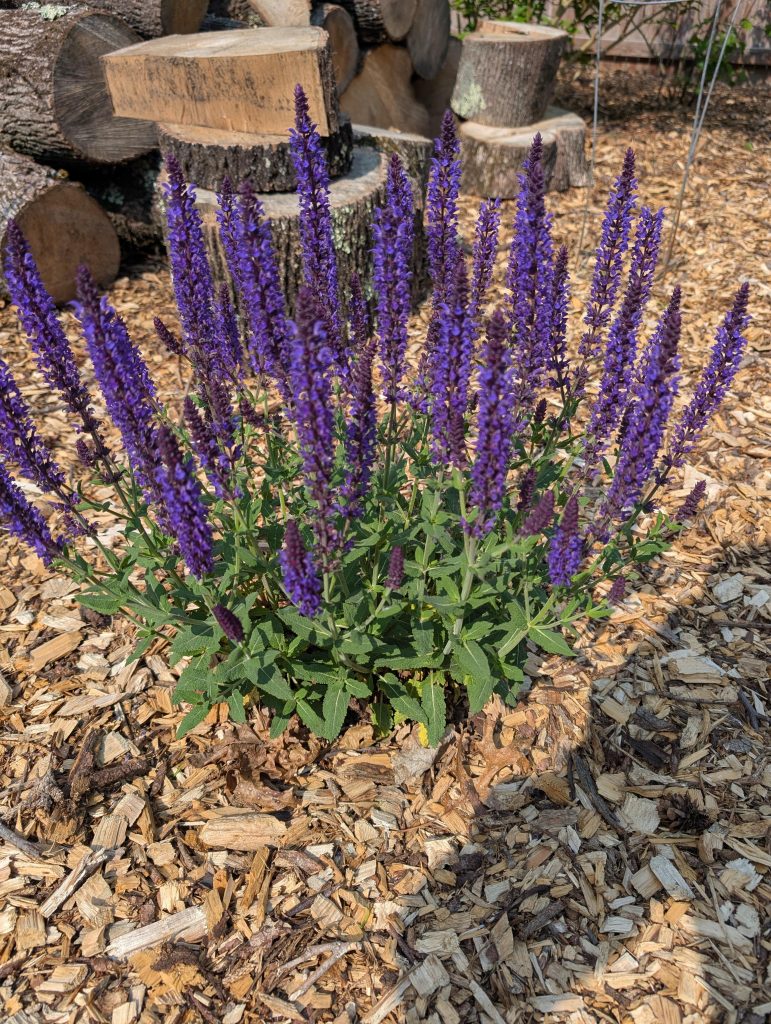
Earlier than almost anything else in the garden, salvia brings color to your border when you need it most. Those spiky flower forms contrast beautifully against softer, rounder foliage nearby.
Cut it back after the first bloom and a second round of flowers often follows later in summer.
Blue and pink varieties both look wonderful along a border edge. Zones 5 to 10 make it widely adaptable. Bees and butterflies rarely leave it alone — and that’s a good thing.
- Zones: 5 to 10
- Mature size: 18 inches tall x 12 inches wide
- Care requirements: Full sun; well-drained soil
5. Black-Eyed Susans
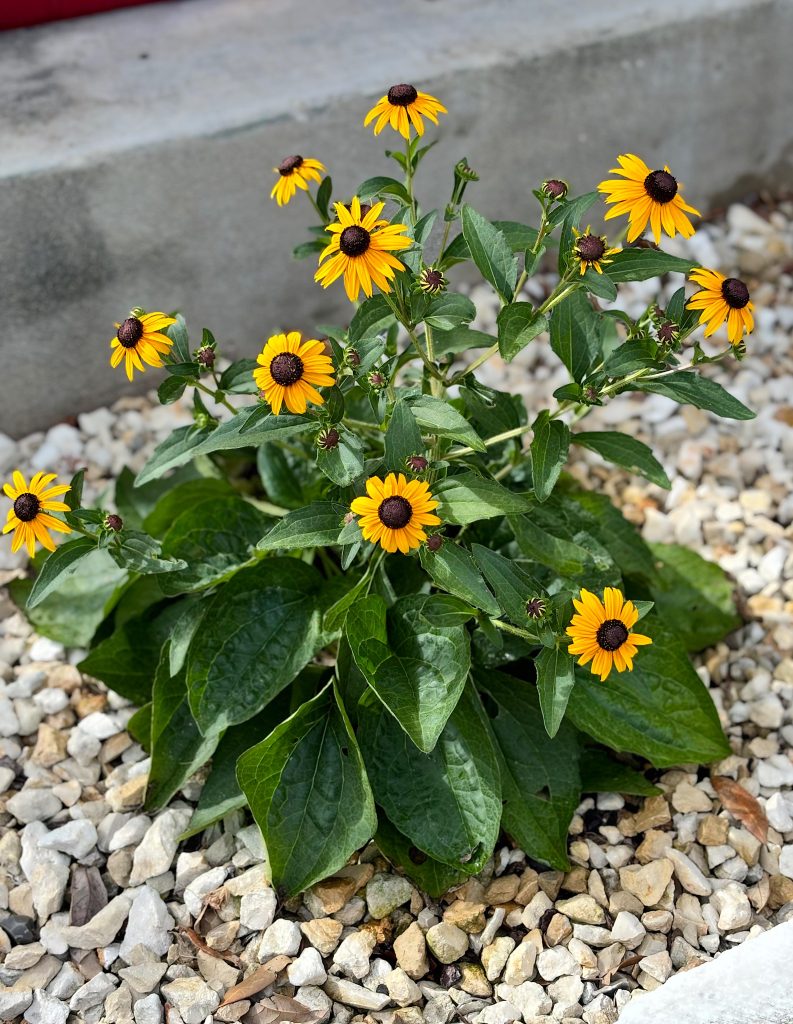
Bright, cheerful, and incredibly easy — black-eyed susans deserve a spot along every garden border.
Their golden-yellow petals and dark centers bloom from mid-summer right through to late summer, filling the gap when spring flowers start to fade.
I pair mine with irises — the irises take the spring shift, and the black-eyed susans take over just as the irises wind down.
Full sun is ideal, but they’ll tolerate some shade. Flexible soil requirements make them genuinely unfussy. Cut them back at the end of the season or bring the blooms inside for arrangements.
- Zones: 3 to 9
- Mature size: 2 to 3 feet tall x 1 to 2 feet wide
- Care requirements: Full sun to part shade; flexible soil; low maintenance
6. Lavender
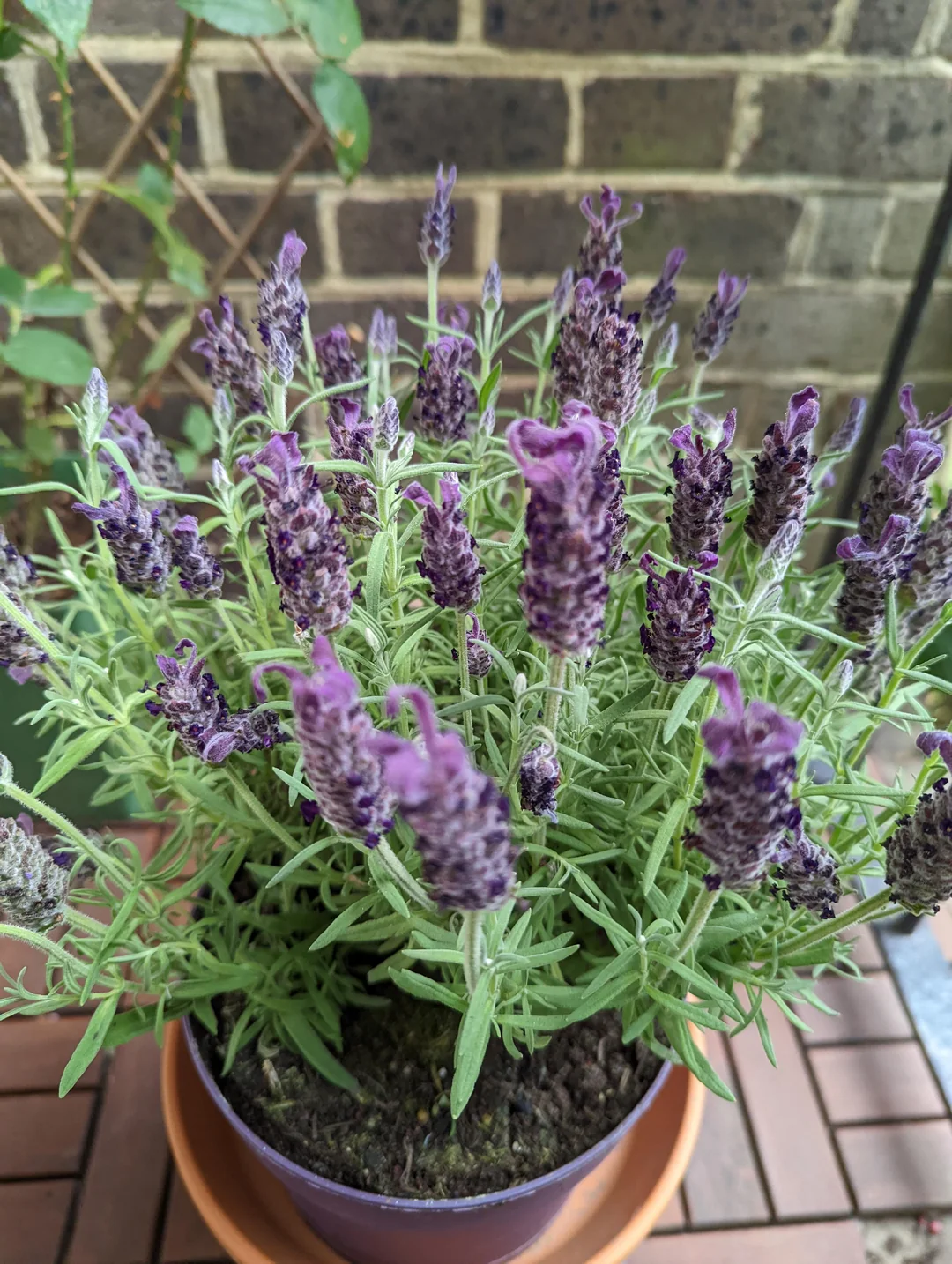
Walking past a border lined with lavender and catching that scent as you brush against it — there’s honestly nothing better.
Its soft purple flower spikes and low, mounding growth make it a natural fit for path edges and garden borders. Mass plant three or more together and the effect becomes truly bold and beautiful.
Lavender loves full sun and well-drained soil above everything else. Drought tolerance makes it a dream for low-maintenance gardeners. Bees treat it like their personal paradise all summer long.
- Zones: 5 to 9
- Mature size: 1 to 3 feet tall x 1 to 3 feet wide
- Care requirements: Full sun; well-drained soil; drought-tolerant
7. Blazing Star
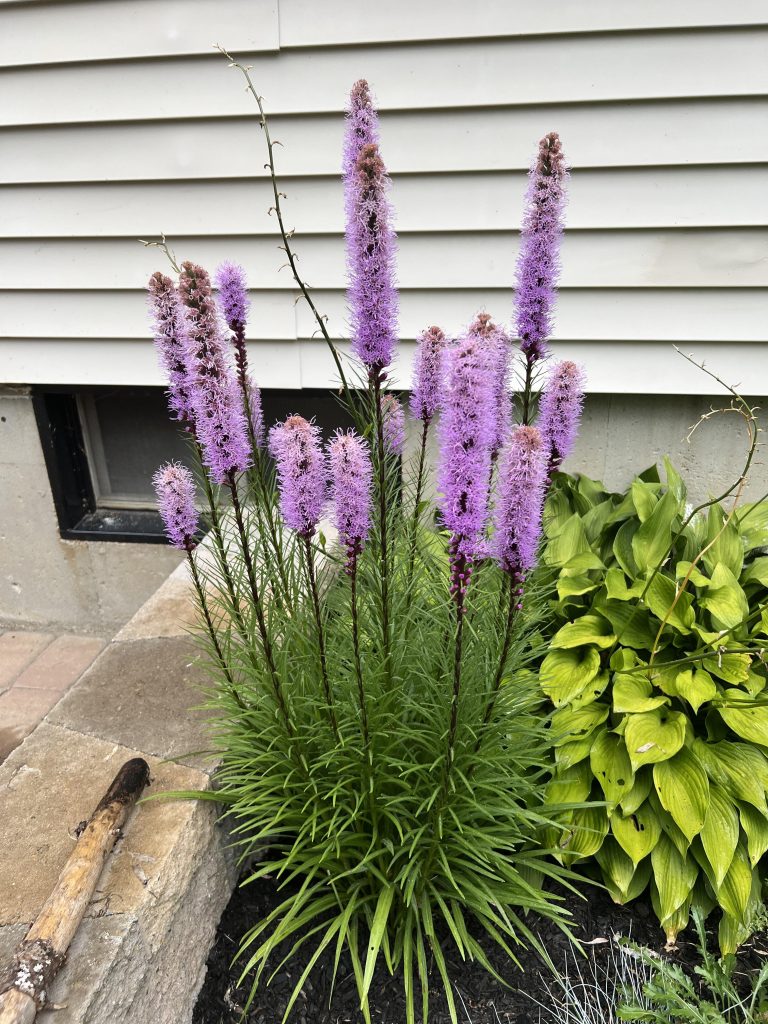
Showy and native, blazing star (Liatris spicata) brings something genuinely special to a garden border.
Those tall, vivid purple flower spikes bloom upward from the bottom — the opposite of most flowers — which makes them instantly eye-catching. Butterflies, bees, and other pollinators can’t seem to resist them.
Formal gardens and naturalistic plantings both suit blazing star equally well. Cutting the blooms for indoor arrangements is absolutely worth doing. Hardy across a wide range of zones, it’s a reliable performer year after year.
- Zones: 3 to 8
- Mature size: 3 feet tall x 1 to 2 feet wide
- Care requirements: Full sun to part shade; moist soil
8. Phlox
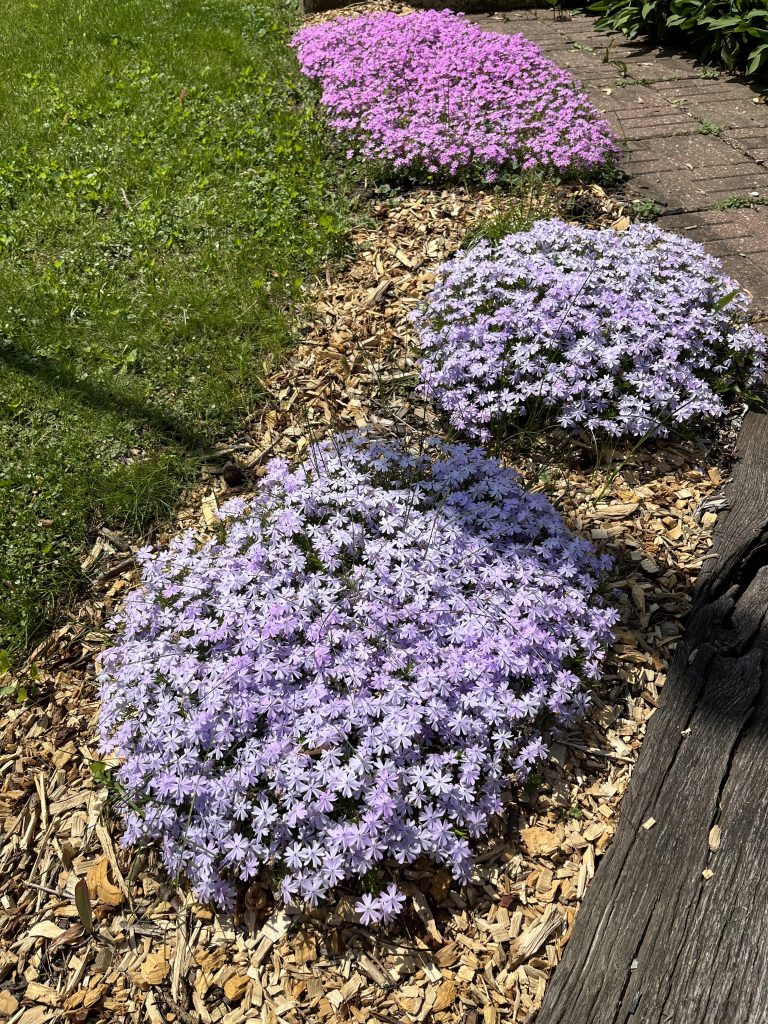
Color week after week — that’s what phlox delivers along a garden border. Even in its very first season, it puts on a genuinely impressive show. Give it a couple of years and it spreads into something really spectacular.
Deadheading spent blooms helps, but honestly, phlox seems determined to keep blooming regardless.
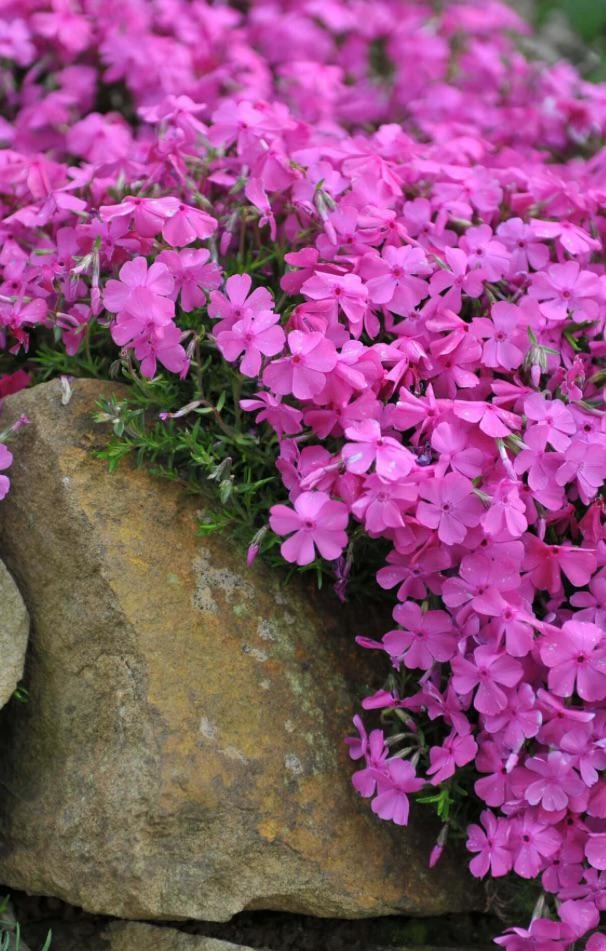
Various sizes and colors mean there’s a phlox for almost every garden style. Year after year it gets bigger, bolder, and more beautiful.
- Zones: 4 to 8
- Mature size: 2 to 4 feet tall x 2 feet wide
- Care requirements: Full sun to part shade; moist, well-drained soil
9. Lamb’s Ears
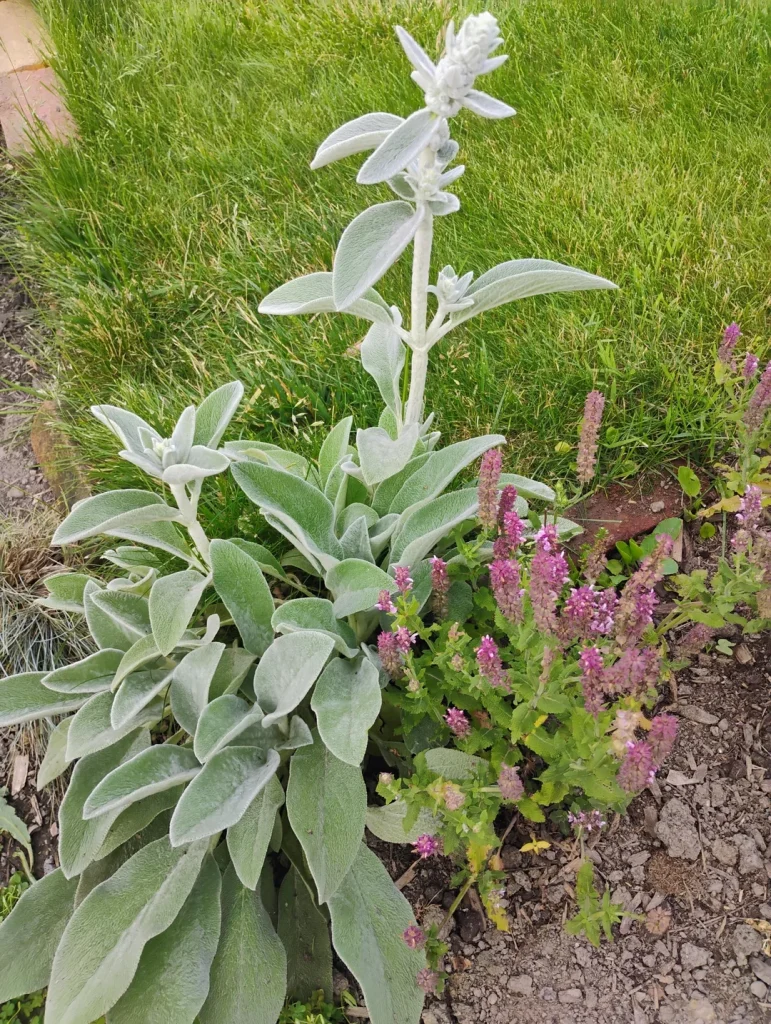
Soft, silvery, and instantly touchable — lamb’s ears brings incredible texture to a garden border. That fuzzy, silver foliage catches the light beautifully and pairs especially well with purple-flowering plants nearby.
Kids and adults alike can’t seem to walk past it without reaching down for a feel.
It spreads readily in most soil types, forming a dense, attractive ground cover. Just keep an eye on it — along a border edge it needs occasional trimming to stay in bounds. Tough and drought-tolerant, it asks for very little in return.
- Zones: 4 to 8
- Mature size: 12 to 18 inches tall x 18 to 24 inches wide
- Care requirements: Full sun to part shade; well-drained soil; drought-tolerant
10. Gaura
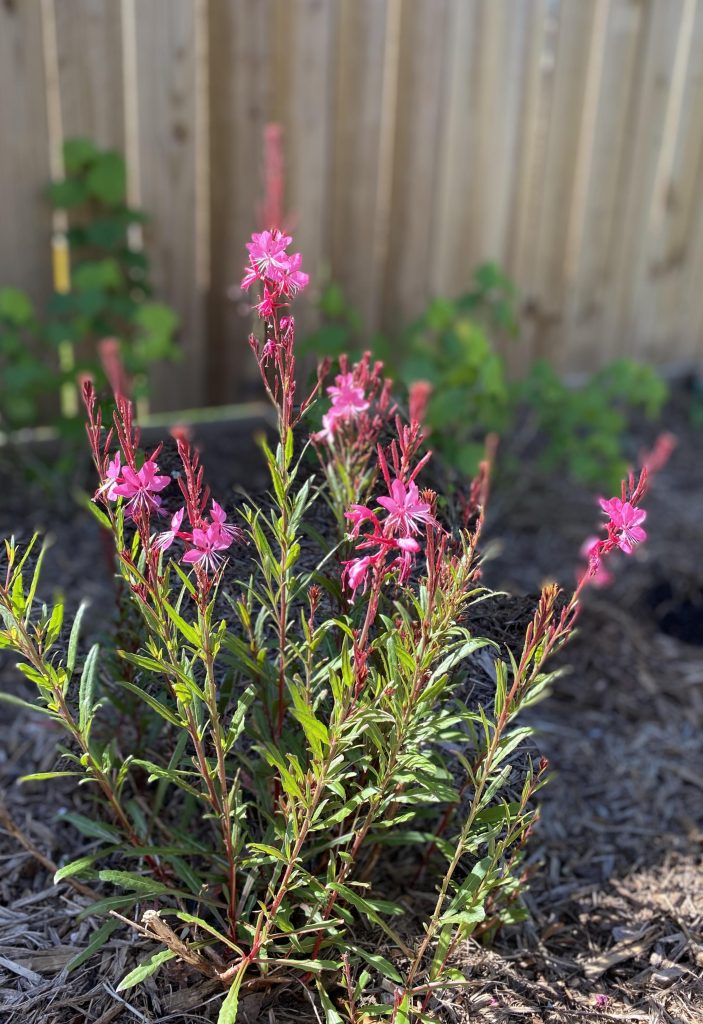
Wispy, graceful, and endlessly charming — gaura is one of those plants I keep coming back to garden after garden.
Its slender stems carry delicate pink or white blooms at the tips and sway gently in the breeze, adding movement that most border plants simply can’t offer.
Planted along an edge, it reaches out over the path and almost waves at you as you walk by.
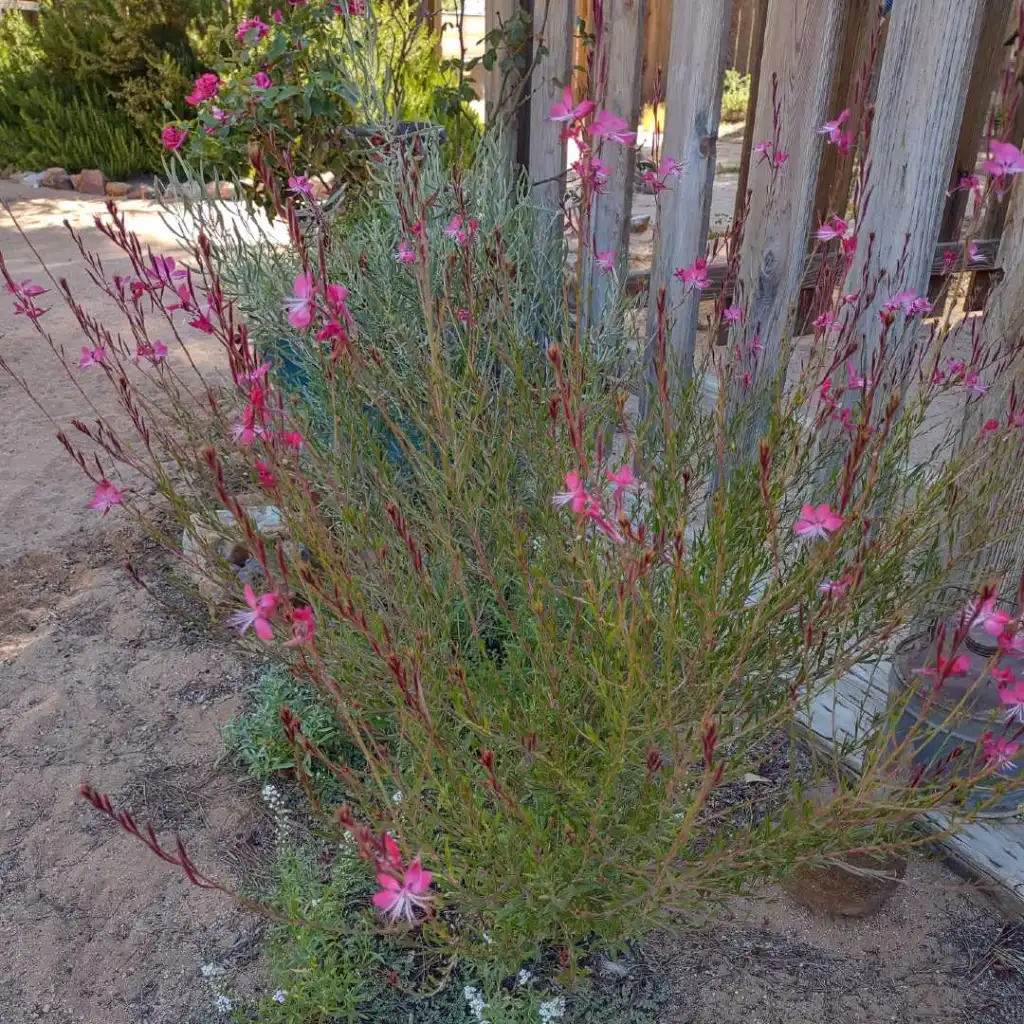
Texture is where gaura really earns its place. Pair it with bolder, chunkier plants like black-eyed susans or hydrangeas for a beautiful contrast. Drought-tolerant and easy to grow, it rewards neglect almost as well as it rewards attention.
- Zones: 5 to 9
- Mature size: 2 to 4 feet tall x 2 to 3 feet wide
- Care requirements: Full sun; well-drained soil; drought-tolerant
11. Coral Bells
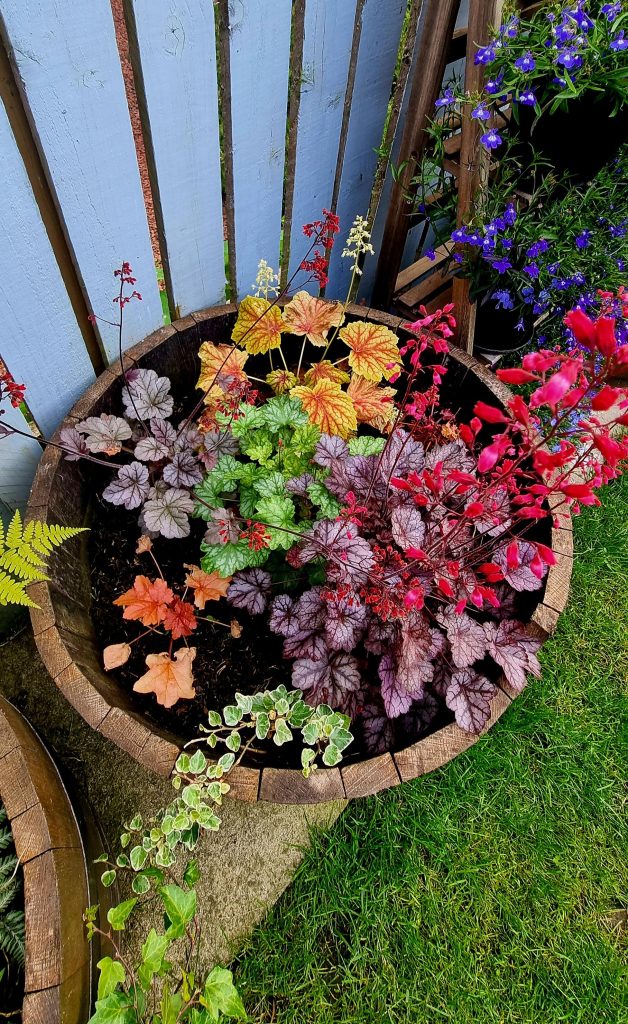
Bold foliage that steals the show — that’s what coral bells (Heuchera) brings to a border. While the feathery flower spikes in spring and summer are pretty, the real magic is in the leaves.
Dark purple varieties make yellow flowers nearby absolutely glow, while caramel-toned leaves bring warmth to green-heavy plantings.
Shade tolerance makes coral bells genuinely versatile along borders that don’t get full sun all day. Pair them with hostas or astilbe for a layered, textured look. Low maintenance and long-lived, they come back reliably year after year.
- Zones: 4 to 9
- Mature size: 12 to 18 inches tall x 12 to 24 inches wide
- Care requirements: Part shade to full shade; moist, well-drained soil
12. Butterfly Bush
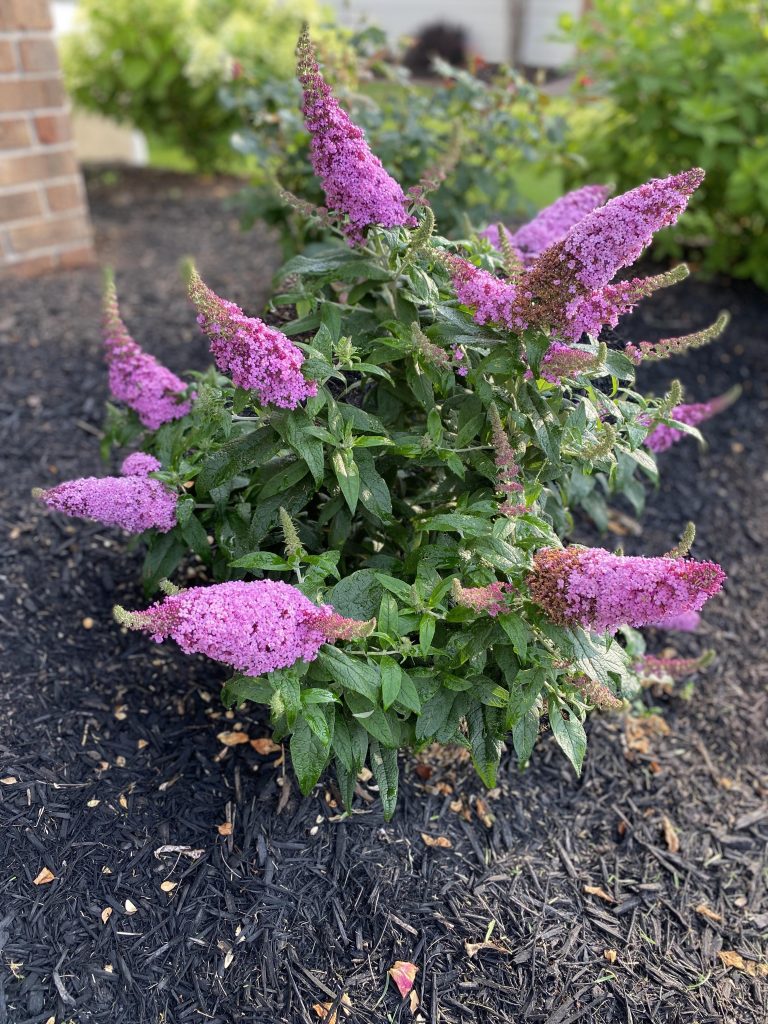
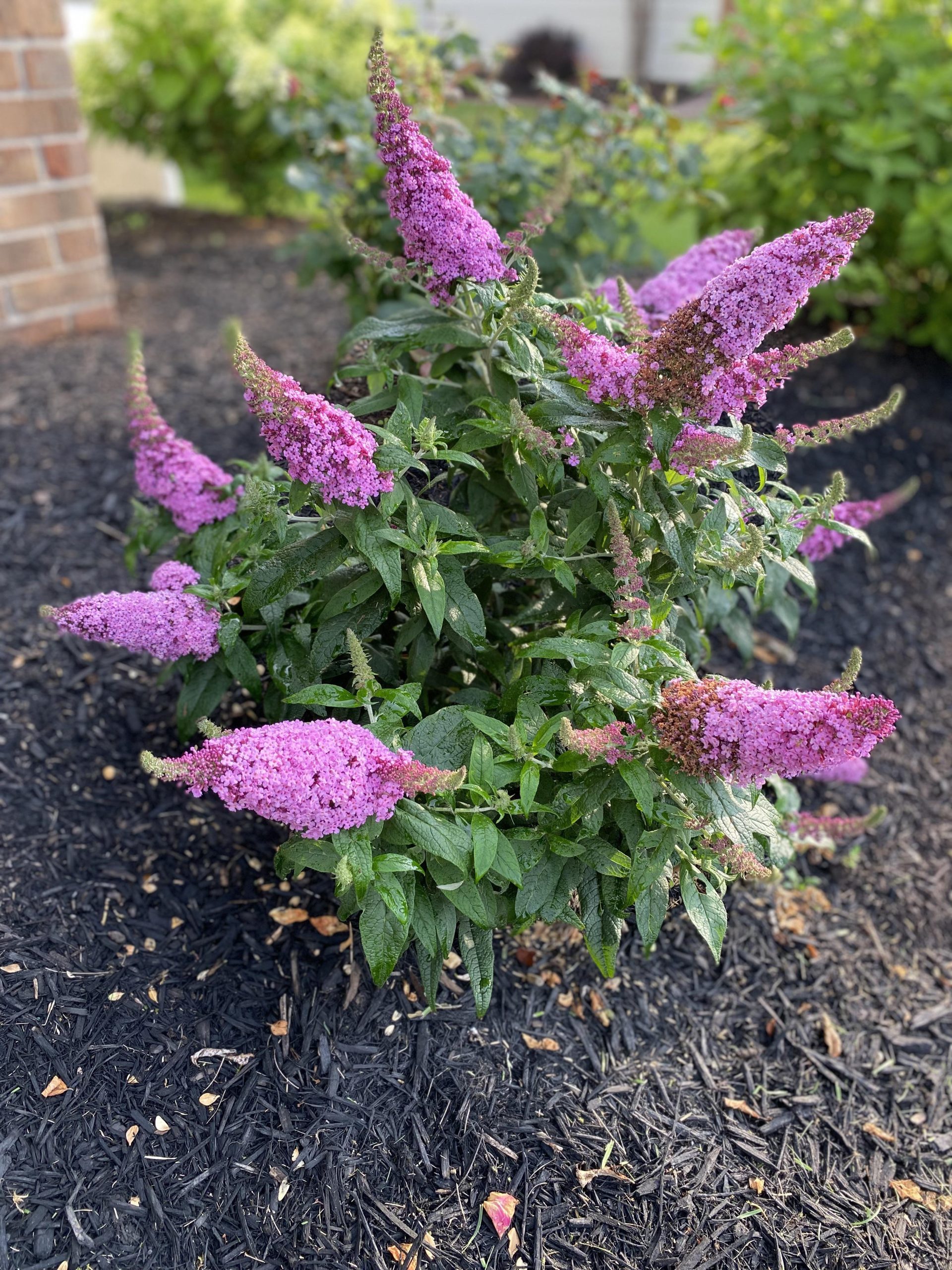
Three compact ‘Pugsy’ butterfly bushes planted together along a border creates one of the most magical effects you can imagine.
Blooms start early in summer and continue right through the first frost, and the butterflies that gather around them are simply breathtaking. Walking past a border of these in full bloom stirs up clouds of wings all around you.
Bigger varieties exist, but compact types suit a border edge far better. Japanese beetles can be a nuisance in mid-summer, which is worth knowing going in.
Avoid planting along heavily trafficked paths — the thorns on some varieties can catch clothing and skin.
- Zones: 5 to 9
- Mature size: 2 to 3 feet tall x 2 to 3 feet wide
- Care requirements: Full sun; well-drained soil; low maintenance
13. Beardtongue
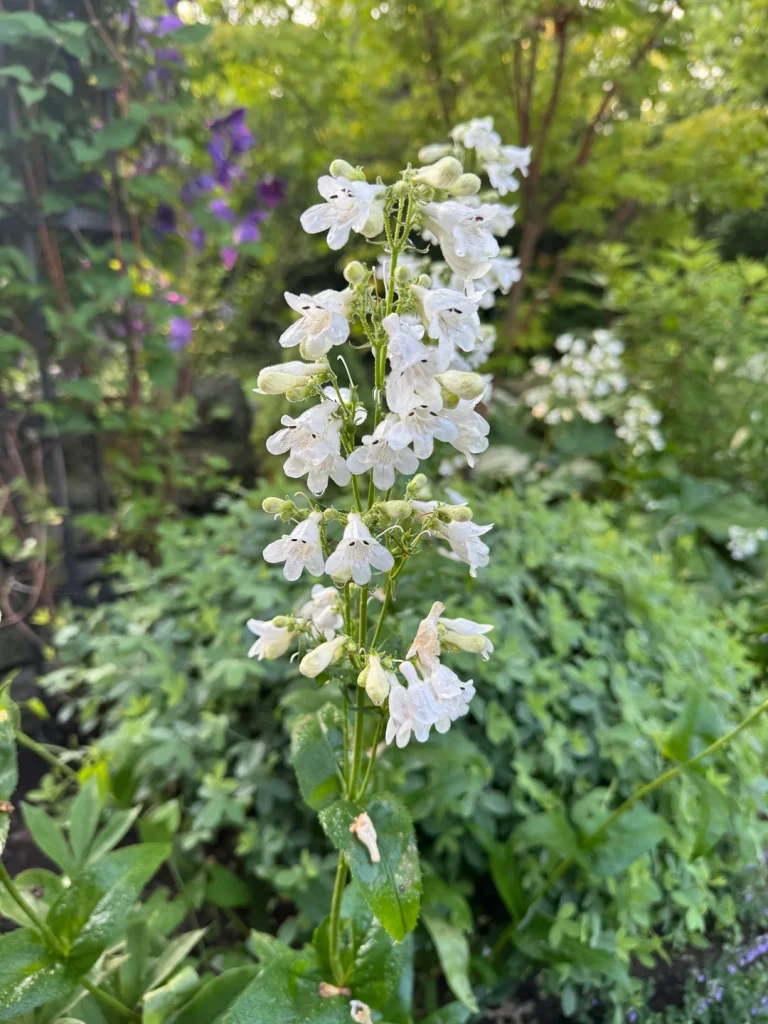
Tall, elegant, and native to the U.S. — beardtongue (Penstemon digitalis) is a border plant that deserves far more attention than it gets.
Those white tubular flower spikes shoot up in late spring and reach an impressive 3 feet tall, creating a vertical element that draws the eye beautifully.
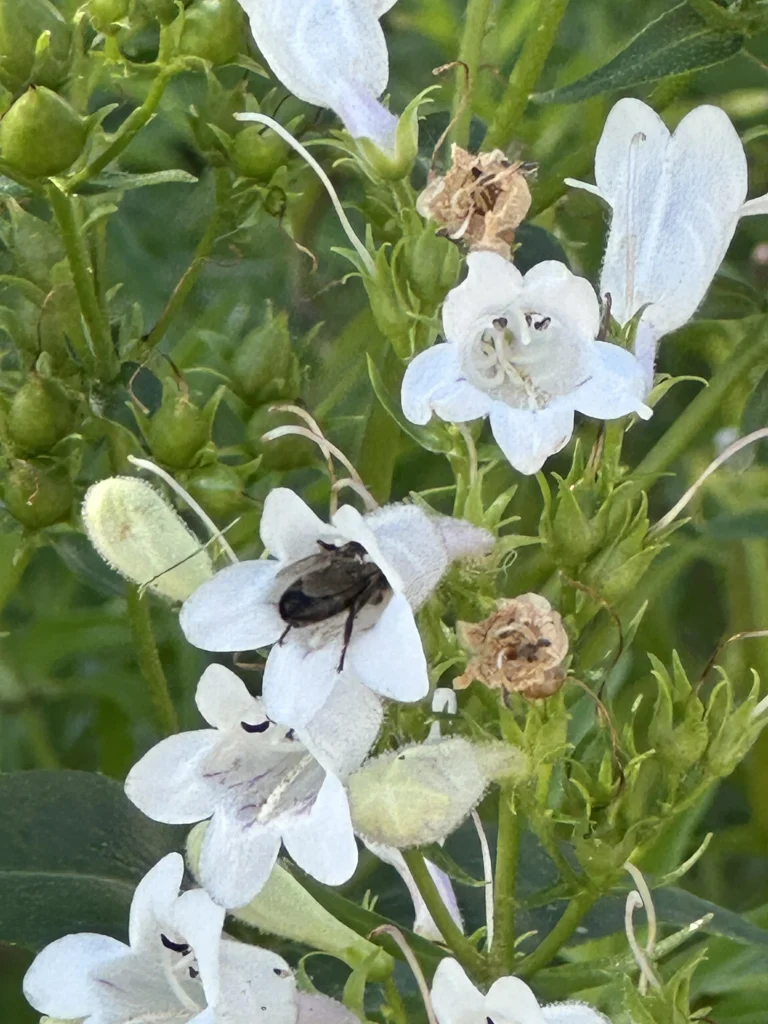
Pollinators love it, and the blooms cut well for indoor arrangements too.
Deer resistance is a genuine bonus if you garden in an area where deer are a problem.
Cultivars like ‘Husker Red’ and ‘Midnight Masquerade’ offer striking red and purple foliage for extra visual interest. Hardy across a wide range of zones, it performs reliably with minimal fuss.
- Zones: 3 to 8
- Mature size: 2 to 5 feet tall x 1 to 2 feet wide
- Care requirements: Full sun to part shade; moist, well-drained soil
14. Sedum
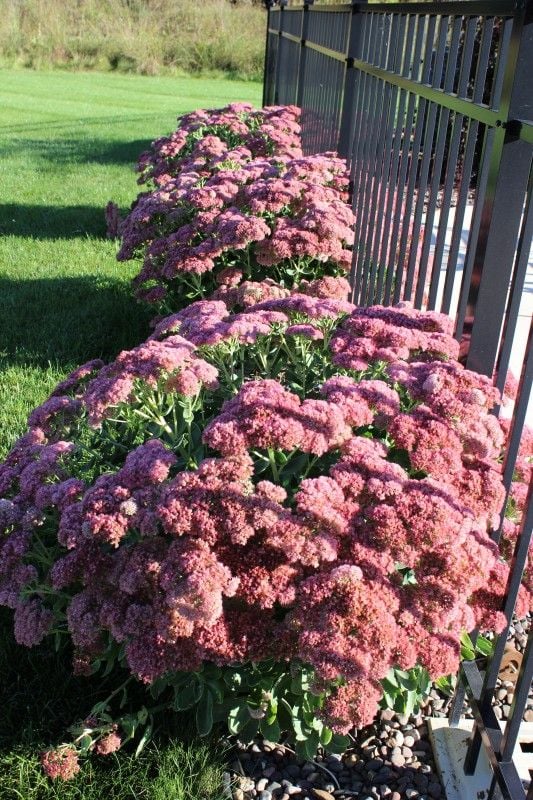
Reliable, tough, and beautiful right when most other plants are winding down — sedum earns its place at the front of a sunny border.
Those upright clusters of flowers add rich fall color just as summer perennials start to fade, keeping the border looking full and interesting deep into the season. Heat and drought barely slow it down.
Butterflies and pollinators flock to sedum in late summer and fall when other nectar sources become scarce.
Also known as stonecrop, it holds up in some of the toughest growing conditions going. Plant it along a sun-drenched border edge and it will genuinely thrive on neglect.
- Zones: 3 to 9
- Mature size: 1 to 2 feet tall x 1 to 2 feet wide
- Care requirements: Full sun; well-drained soil; drought-tolerant
15. Ornamental Grasses
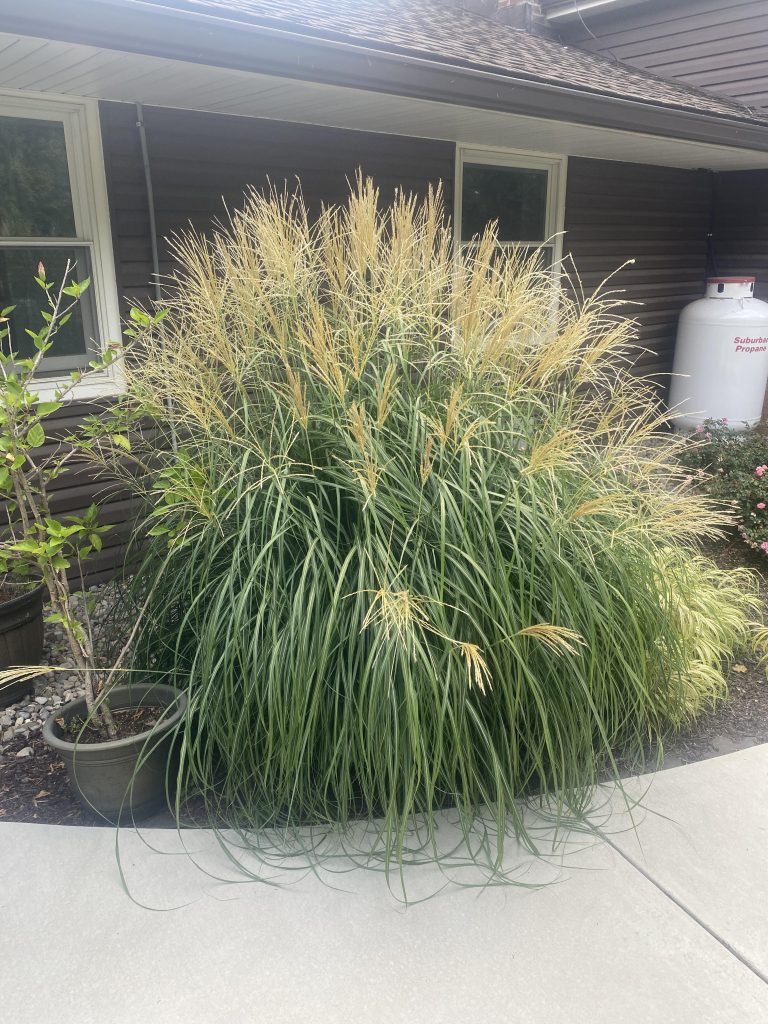
Movement, texture, and year-round structure — ornamental grasses bring something to a border that flowering plants simply can’t replicate.
Their slender stems arch gracefully over a path edge and catch every little breeze, creating gentle, constant motion in the garden.
Two varieties worth trying are ‘Pink Muhly’ grass for its stunning pink autumn plumes and ‘Dwarf Hameln’ for a more compact, tidy option.
Winter is where ornamental grasses really separate themselves from the crowd. Long after perennials have died back, grasses hold their shape and add structure to an otherwise bare border. Plant them with confidence — they’re genuinely hard to get wrong.
- Zones: 5 to 9
- Mature size: 2 to 4 feet tall x 2 to 3 feet wide
- Care requirements: Full sun to part shade; well-drained soil; low maintenance
Your Border, Your Rules
Garden borders don’t need to be complicated or perfectly manicured. The best ones feel a little relaxed — plants spilling softly over path edges, colors mixing naturally, and pollinators buzzing through all summer long.
Pick three or four plants from this list that excite you, get them in the ground, and watch what happens. Your garden will tell you what it wants next.