
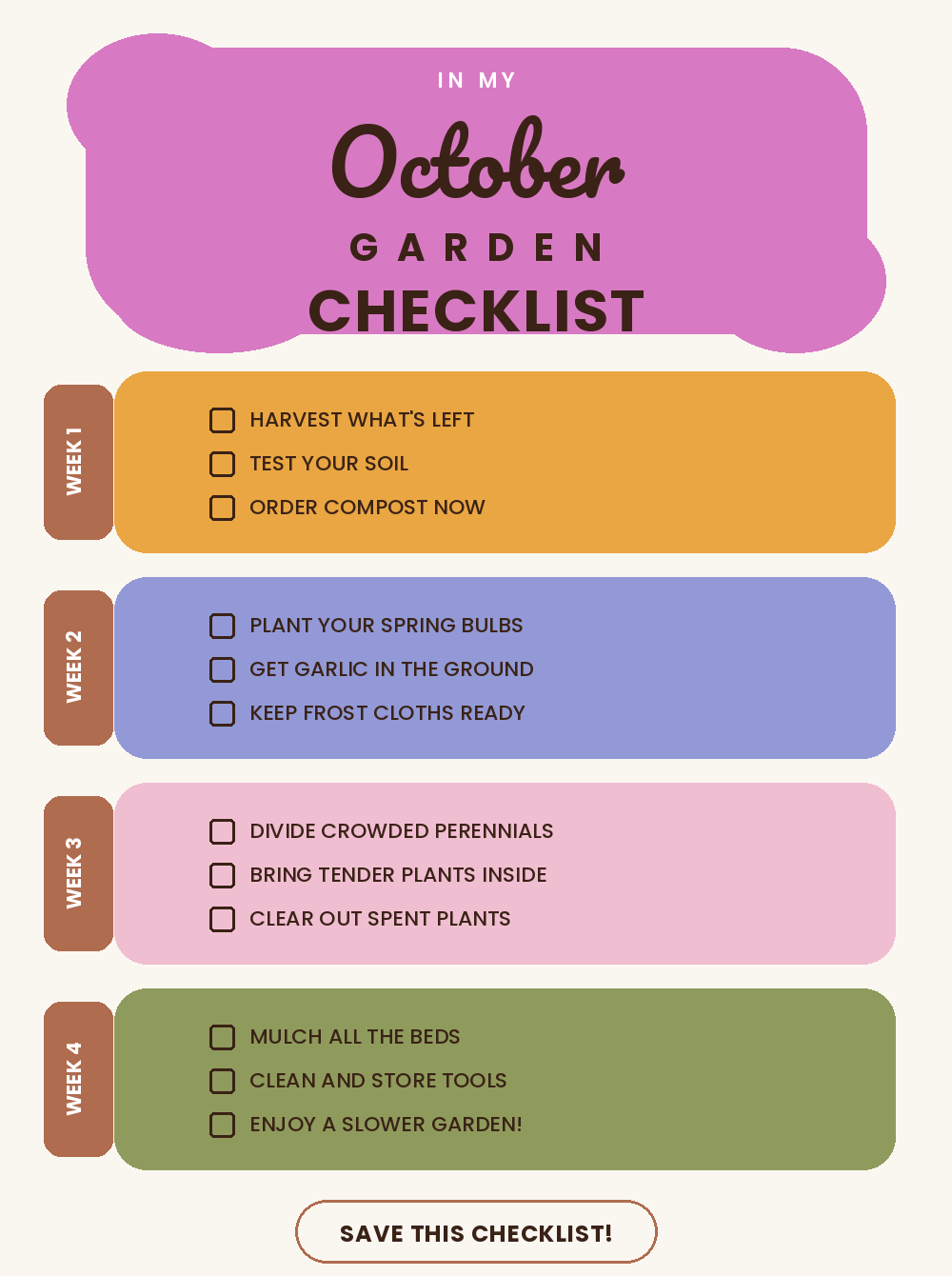
October Garden Checklist: What to Do Week by Week This Month

October keeps you guessing. One week I’m still picking tomatoes off the vine. The next, frost hits overnight and the whole garden looks different by morning.
That in-between feeling makes this month hard to plan for. Move too fast, and you waste good growing weeks. Move too slow, and frost catches you off guard.
So I broke October into three simple stretches. Follow them, and you’ll always know exactly what to do next.
Know Your First Frost Date
Here’s the thing about October: none of it works without one key piece of info. Your first frost date.
And no, it’s not the same for everyone. It shifts by zone, by elevation, even by which side of your yard you’re standing in. Look yours up through your local extension office or a frost date calculator.
Once you have it, count backward from there. That date, not the calendar page, is what actually drives your timing.
Pay attention to your own yard too. A bed tucked against a south-facing wall stays warmer than open lawn. Low spots collect cold air first. You’ll learn these patterns faster by watching than by reading any guide.
Live somewhere warm? Push everything on this list back a few weeks. Cold climate? You might need to move faster than this list suggests.
Also read: Fall Garden Care: 12 Tasks That Actually Set You Up for Spring
Fall Gardening Mistakes to Skip This Year
I’ve made every one of these mistakes at some point. Let me save you the trouble.
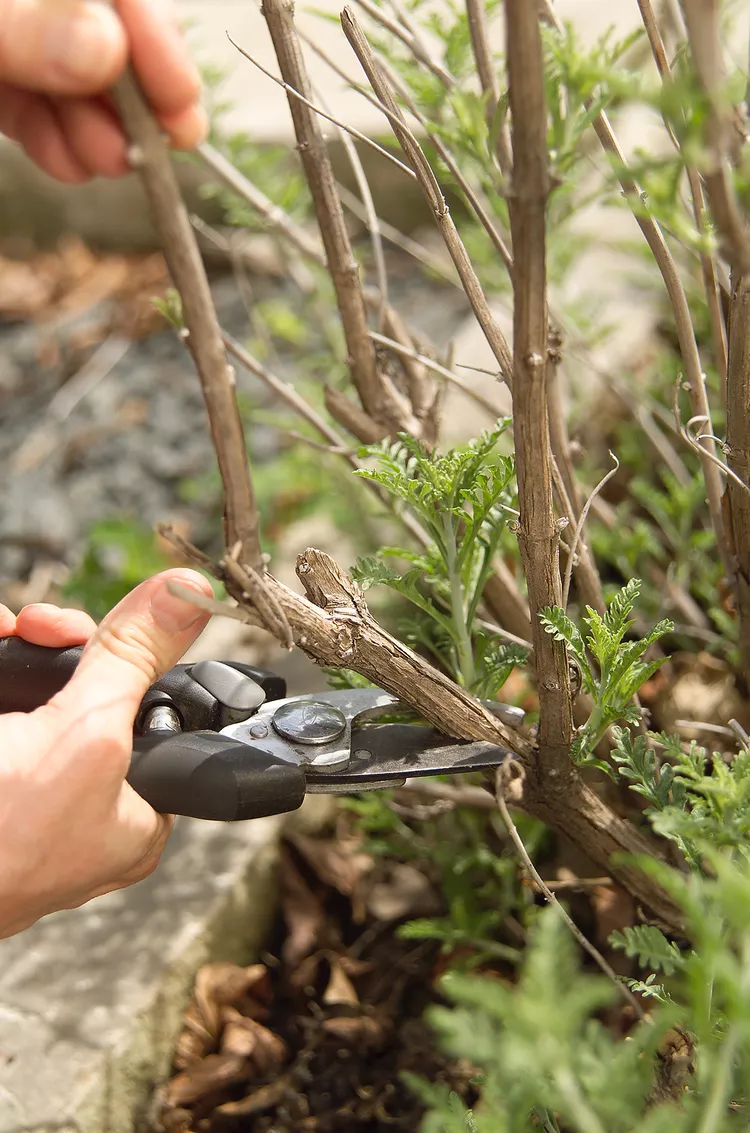
Cutting perennials too hard.
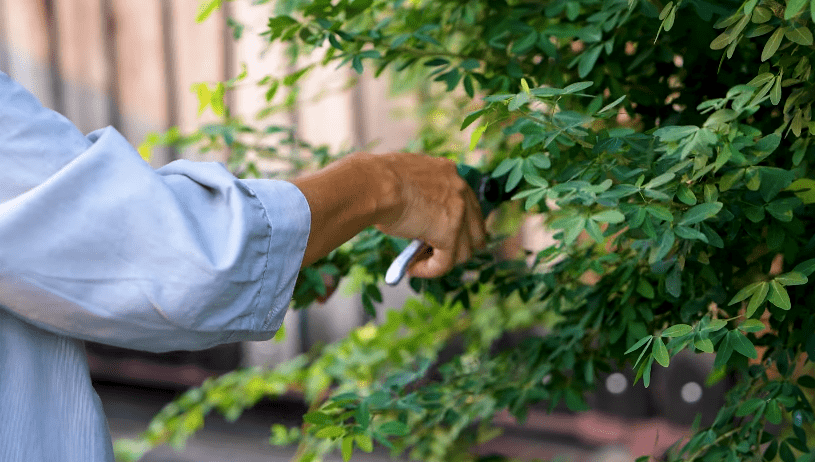
This tops the list. Your plants are still pulling nutrients back into their roots this time of year. Cut them now, and you interrupt that process.
Some perennials even use their old stems to shield their crowns from frost, or they’ve already set next spring’s flower buds on that “dead-looking” wood.
Leave them standing. Spring cleanup works just fine.
Retiring the mower too soon.
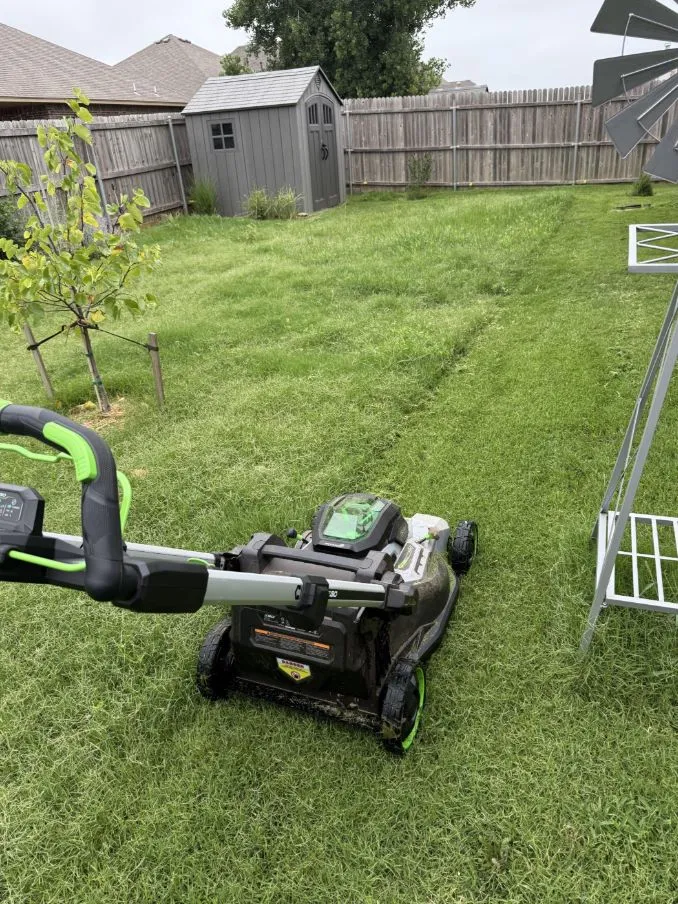
Packing it away in early October feels satisfying, but grass often keeps growing well past that point.
Cut it too short too early, and you’re inviting fungal disease right as the weather turns damp. Keep mowing until growth genuinely slows down.
Planting off-zone.
Falling for a pretty plant on Pinterest without checking your zone first? We’ve all done it. That gorgeous photo doesn’t know what your winters look like.
Check your hardiness zone before anything goes in the ground this month.
Waiting too long to harvest.
Don’t write off your harvest just because it’s October. Carrots and kale actually sweeten up after a light frost. Keep checking those beds.
Early October: Finish the Harvest, Set the Stage
This stretch still feels like summer’s last gasp in most places. Don’t waste it.
Harvest what’s left.
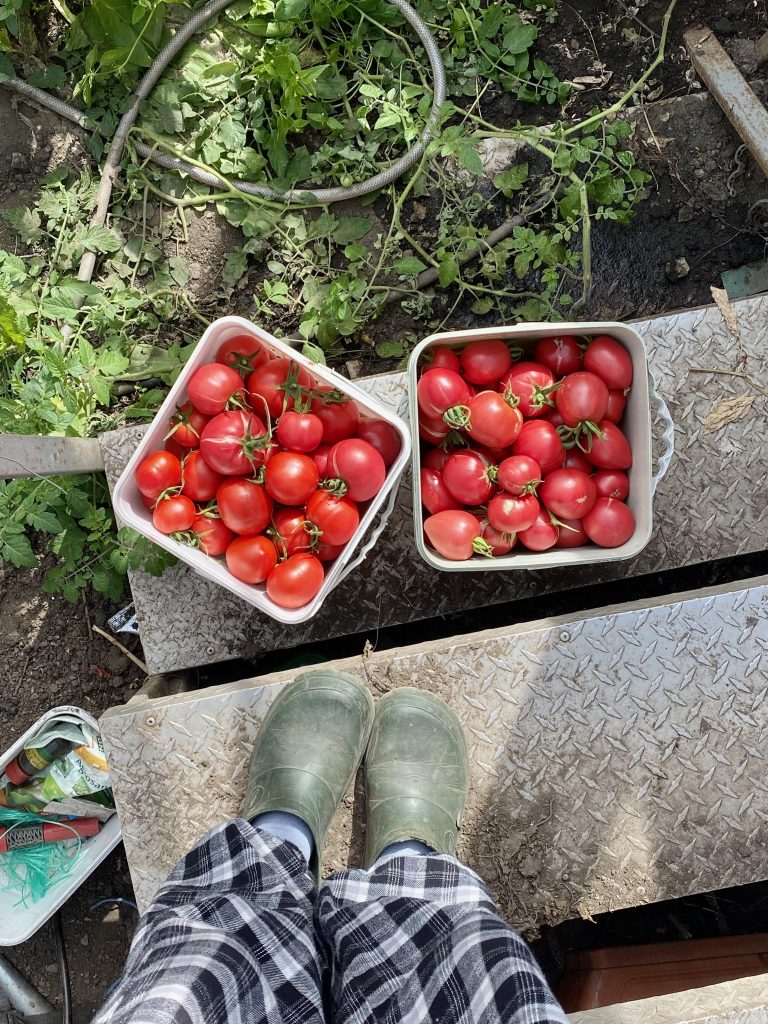
Get everything you can off those tomato, pepper, and squash plants before a hard freeze wipes them out.
They might look fine right now, but cooler nights are already slowing them down behind the scenes.
Green tomatoes? Toss them in a paper bag and they’ll ripen just fine indoors. Basil won’t survive a frost either, so blitz what’s left into pesto before it’s gone.
Test your soil.
Ever wonder why your tomatoes struggled this year? A soil test can tell you.
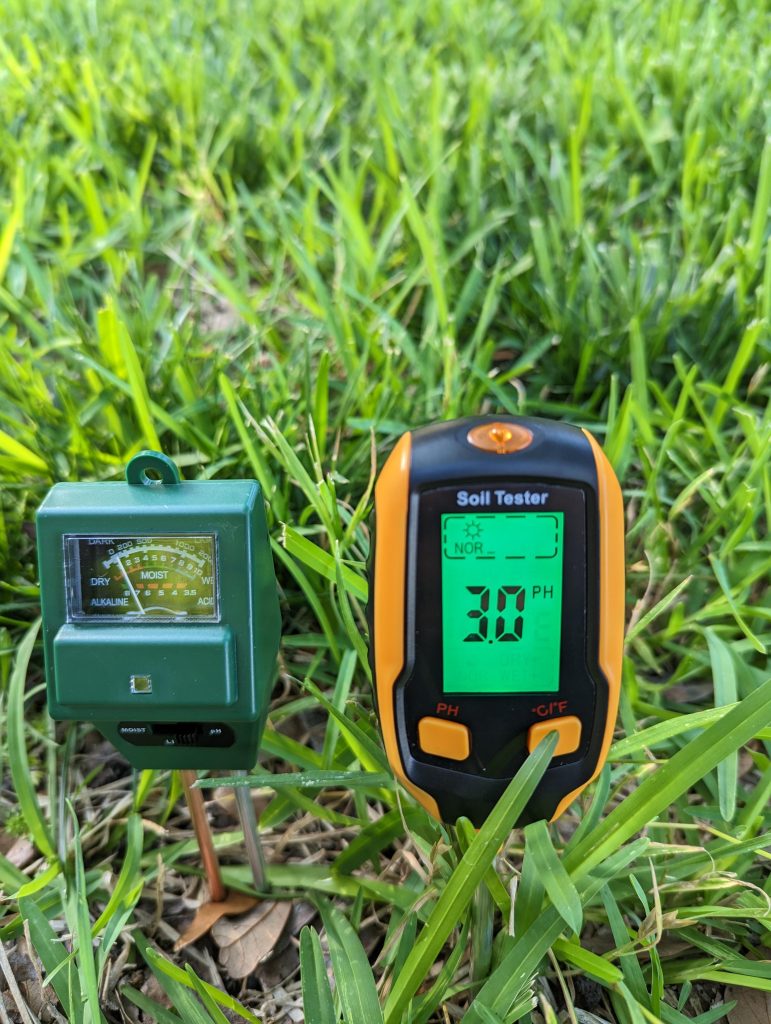
Fall is the perfect window for one, since results come back long before spring planting chaos hits. Whatever amendments the test recommends, you’ve got all winter for them to settle into the soil.
Order compost now.
Buy it now, not in spring. Prices tend to climb once everyone else remembers they need it too.
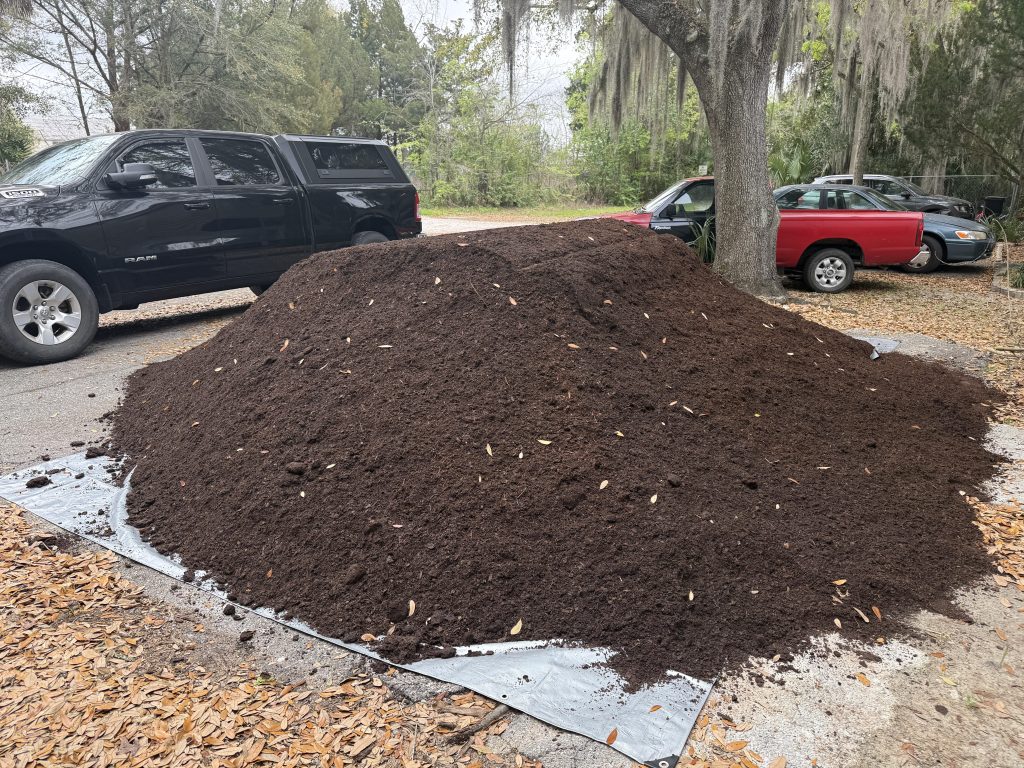
Spread a thick layer over your beds while they’re already bare, and let worms and microbes do the heavy lifting all winter long.
Give the lawn one more mow.
One more won’t hurt. Keep cutting at your usual height as long as the grass is still growing. Stop too soon, and you’ll head into winter with grass that’s the wrong length for staying healthy through the cold.
Mid-October: Plant for Spring, Prep for Cold
This is the stretch where October really earns its reputation. Frost gets closer, but there’s still plenty to plant.
Plant your spring bulbs.
Fall is the perfect time to plant the flower bulb for spring garden. Grab a soil thermometer if you’ve got one.
Tulips, daffodils, and crocus want soil temps below 60°F before they go in, which usually lines up with mid-October in a lot of zones.
Plant too early, and warm soil tricks them into sprouting now instead of waiting for spring.
Depth matters here too: big bulbs like tulips go about 8 inches deep, smaller ones like crocus only need 3 or 4.
No thermometer? Just watch your nighttime lows. Once they’re settling into the 40s and 50s consistently, you’re good to go.
Get garlic in the ground.
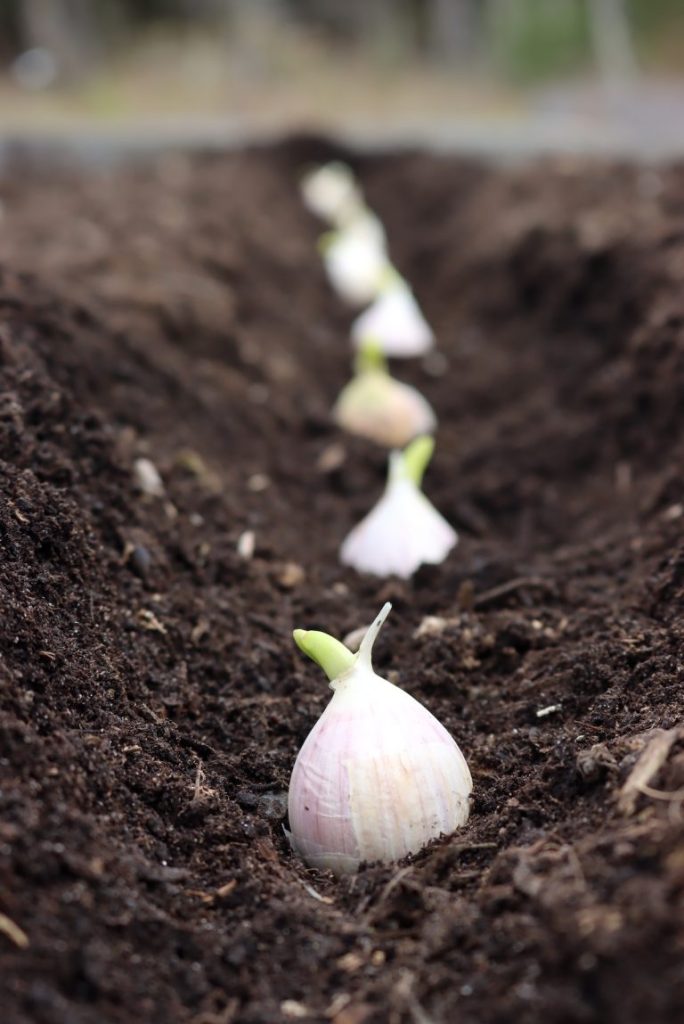
Plant it a little later than everything else, usually right after that first light frost.
Garlic wants a solid six to eight weeks of root growth before the ground locks up for winter.
Break the bulb into individual cloves first, pointy side up, and space them a few inches apart. Shallots follow the same rules. Miss this window and you’re waiting until next fall.
Keep frost cloths within reach.
Frost has a way of sneaking in on a clear, calm night when you least expect it. Fold up an old sheet or grab a proper frost cloth and keep it somewhere easy to grab.
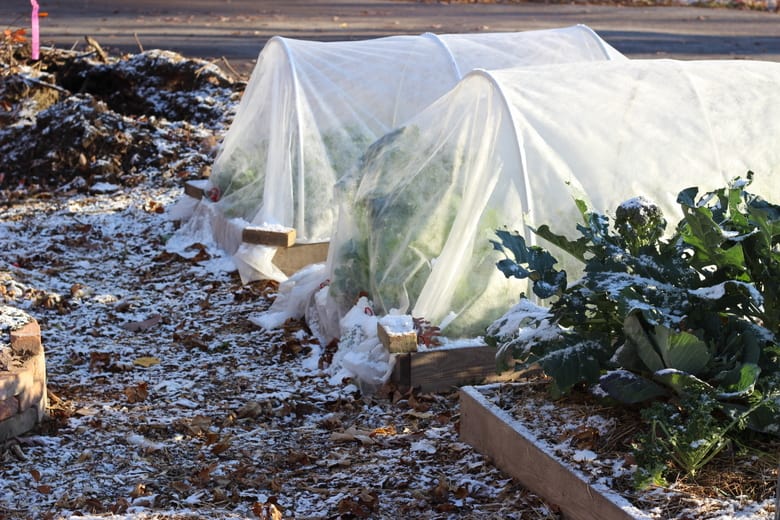
Toss it over tender plants in the evening, then pull it off again once the sun’s up.
Do this a few times and you can often squeeze two or three extra weeks out of your fall harvest. That adds up more than you’d think.
Divide crowded perennials.
Notice a clump that’s stopped blooming well or looks squished into its space?
Mid-October is a solid window to dig it up and split it. Cooler air means less stress on the roots, and you’ve still got enough weeks before frost for new divisions to settle in.
Hostas, daylilies, and coneflowers all handle this well. Just skip anything that blooms in spring on old growth, since those need a different schedule entirely.
Late October: Tuck the Garden In
By now the garden’s winding down for real. This is about protecting what you’ve got and setting next year up right.
Bring tender plants indoors.
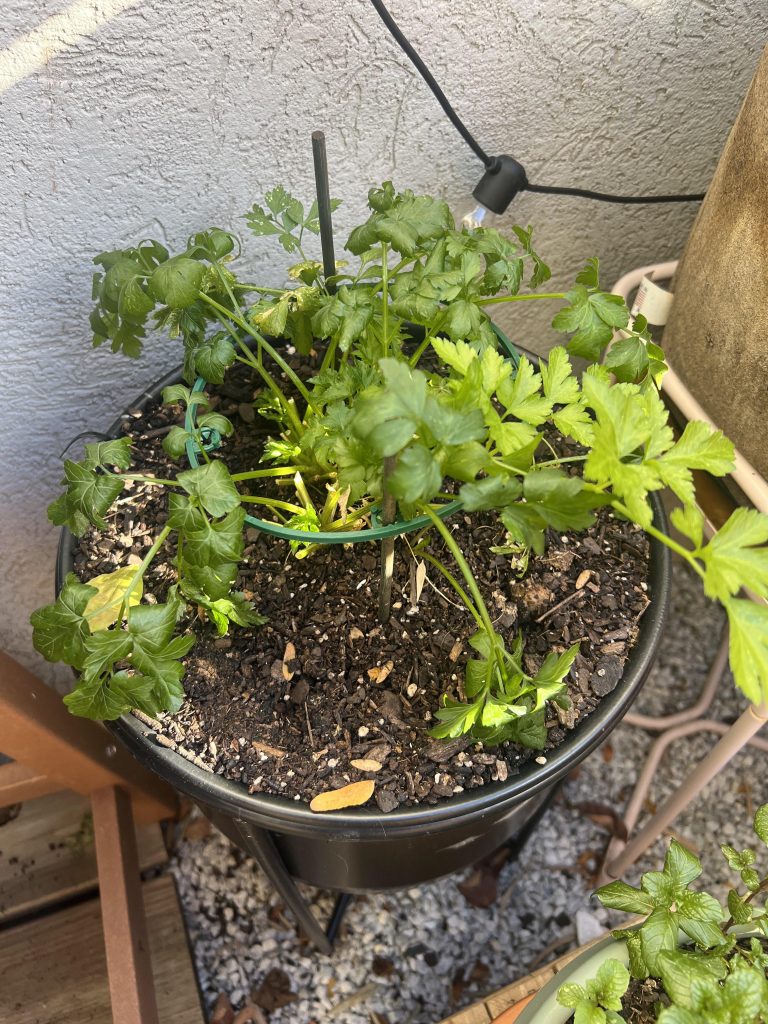
Peppers, parsley, thyme, chives, even a few herbs you’d never think to save, can transition inside with a little effort.
Dig around the roots with some room to spare, trim the top growth back by about a third, and pot them up with fresh compost.
A sunny windowsill keeps them ticking along all winter, even if growth slows way down. It’s not a huge project, but it does take a bit of babying at first while they adjust.
Clear out spent plants.
Pull anything that’s finished for the season. Healthy plant material goes straight into the compost pile.
Anything diseased gets bagged for the trash instead, since composting it just spreads the problem next year.
While you’re at it, rake up loose leaves and stems that pests love to hide in over winter. A cleaner bed now means fewer surprises come spring.
Mulch your beds.
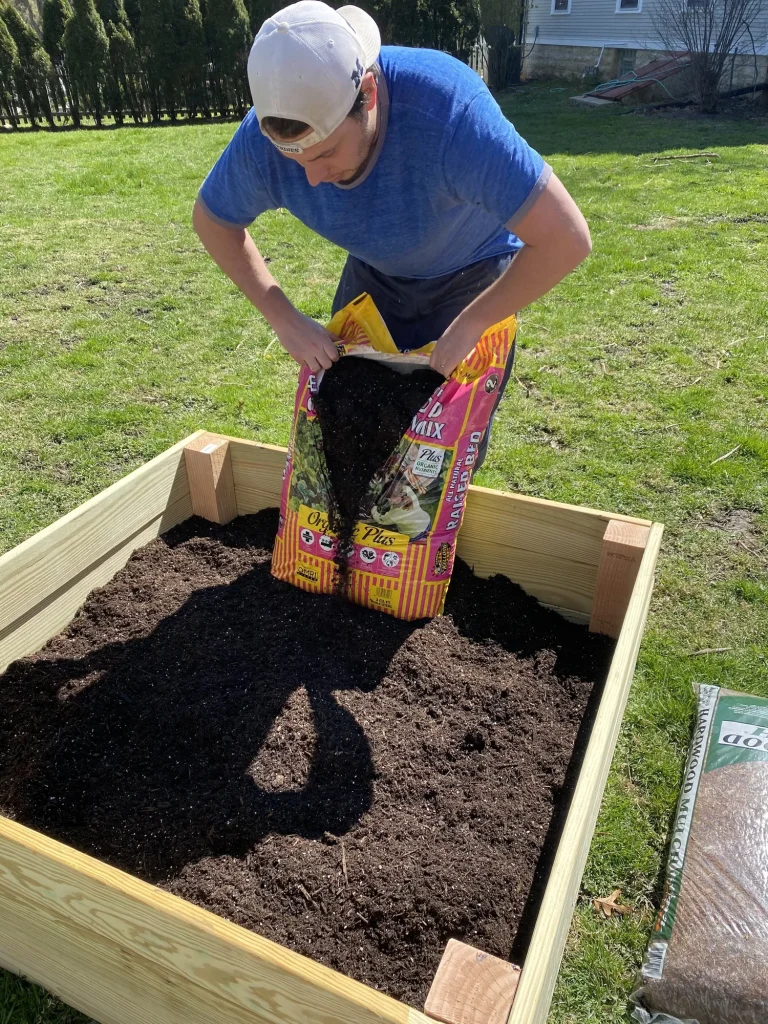
Once everything’s cleared, spread a thick layer of compost, leaf mold, or straw over the soil. Think of it as tucking the garden in for the night.
It insulates roots against harsh freezes, and by spring, worms will have worked most of it into the soil for you.
Skip this step, and you’ll likely notice compacted, tired soil come next planting season.
Clean and store your tools.
Nothing kills spring motivation faster than rusted pruners and a tangled hose.
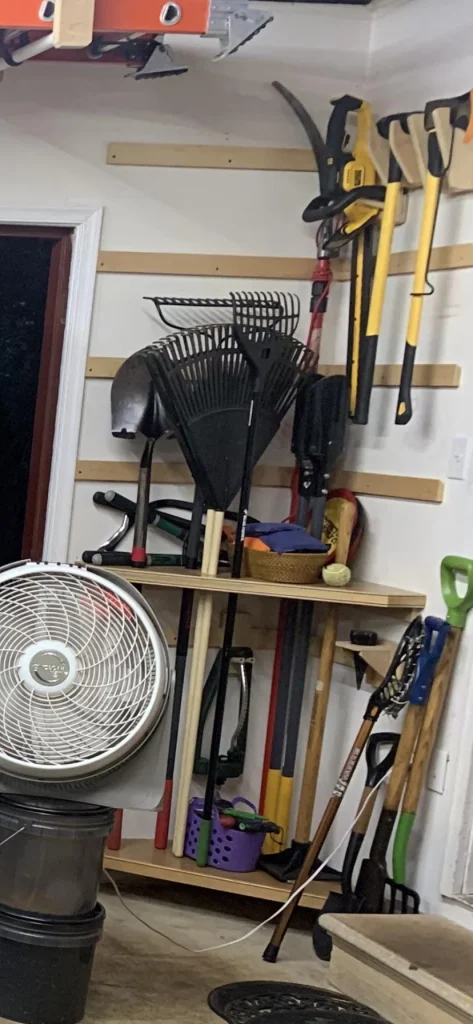
Wash and drain the hoses before they freeze and crack. Sharpen and oil anything with a blade. Sweep out the shed while you’re in there.
It’s maybe thirty minutes of work now that saves you a frustrating afternoon later.
FAQ’s
Is it too late to plant bulbs if I miss October?
Not necessarily. As long as the ground is still soft enough to dig, bulbs can go in. They just need soil temps above 40°F to grow roots. Add a layer of mulch afterward so freeze-thaw cycles don’t heave them back out.
Do I really need to wait for a frost before pulling my tomato plants?
No, you can pull them anytime once they’ve stopped producing well. Waiting for frost only matters if you’re hoping for one last batch of green tomatoes to ripen indoors.
Otherwise, pull them the moment they’re more trouble than they’re worth.
What if my region never really freezes?
Then shift this whole list later. Watch your soil temperature instead of the calendar, and lean on nighttime lows staying consistently cool as your cue.
Warmer zones often have more wiggle room than this checklist assumes.
Should I cut back my ornamental grasses now too?
Leave them standing through winter if you can. They add structure to an otherwise bare garden, and birds appreciate the seed heads. Cut them back in early spring instead, right before new growth starts.
Is it worth testing my soil every single year?
Not every year, but every two to three years is a smart habit. Soil doesn’t change dramatically season to season, so annual testing is usually overkill.
Definitely test again anytime a crop struggles for no obvious reason.
Wrapping Up
October rewards a little patience. Rush through it, and you’ll miss half the good stuff still happening in the garden. Take it too slow, and frost sneaks up before you’re ready.
Work through these tasks at your own pace, keep an eye on your first frost date, and you’ll walk into next spring with a garden that’s already ahead of the game.

One Comment