Container Size Calculator: What Size Pot Do You Need?

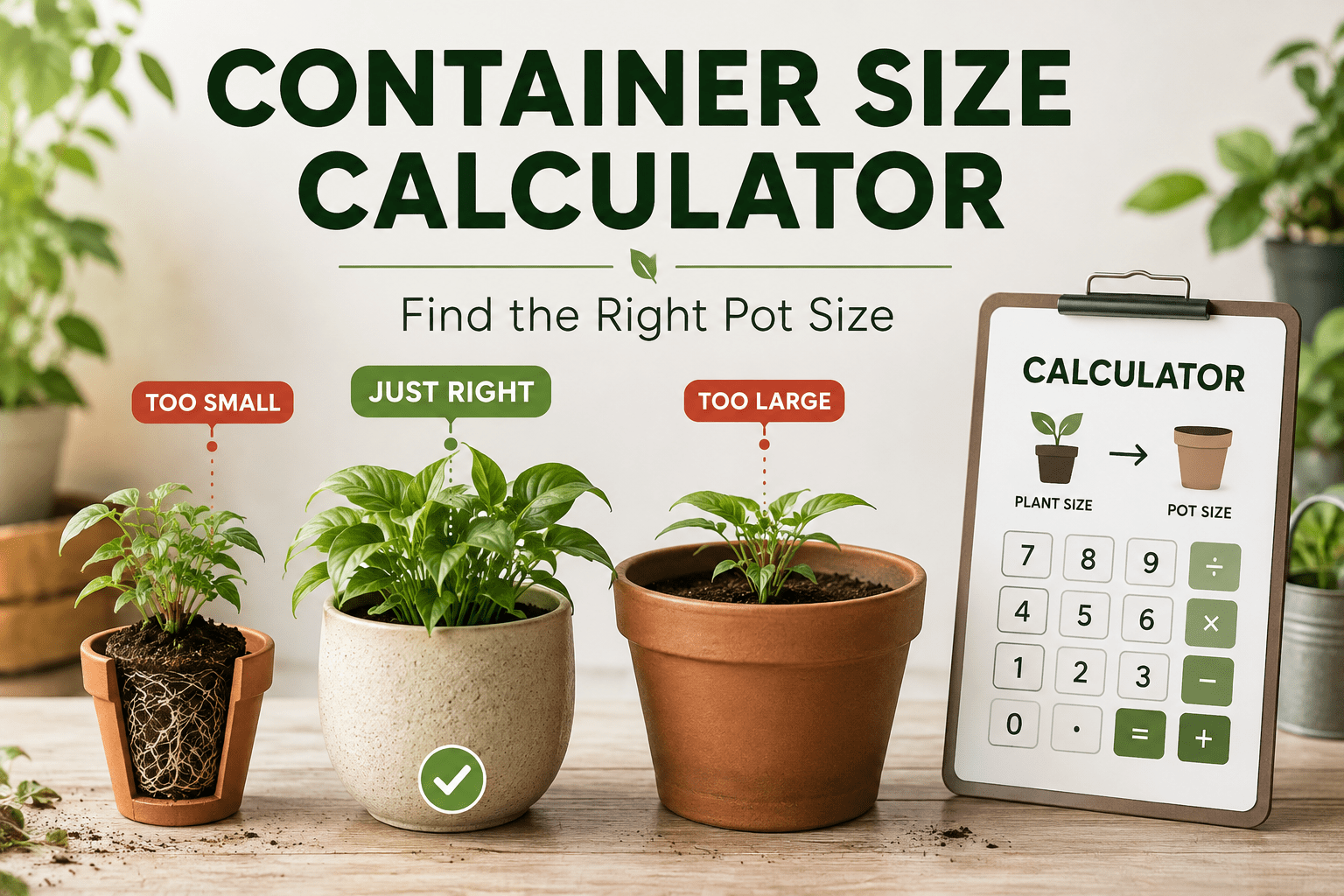
Choosing the right pot size can make a big difference in how well a plant grows. A pot that’s too small leaves roots cramped, dries out quickly, and slows growth.
A pot that’s too large holds excess moisture, keeping the soil wet for too long and increasing the risk of root rot.
Use this calculator to skip the guesswork. Pick your plant, tell it your growing goal and how many you’re planting, and you’ll get a recommended container volume, minimum depth, and spacing in seconds.
It also estimates the soil you’ll need, so you know what to buy before you head to the garden center.
Below the calculator, you’ll find a quick reference chart, notes on which plants can share a planter, and answers to the pot-size questions I get asked most.
Container Size Calculator
Pick a plant, your growing goal, and how many you’re growing. I’ll estimate the container size, depth, and spacing you need.
Already have a container? Check if it’s big enough
Results are practical estimates for container gardening, not strict rules. Choose the larger option if your growing space is hot, windy, or hard to water every day.
How to Use This Calculator
Start by choosing your plant from the dropdown. If you’re growing something not on the list, pick the closest match by root size and growth habit.
A dense root system like zucchini behaves more like squash than like lettuce, even if the plant looks nothing alike above the soil.
Next, choose a growing goal. Minimum workable size gets a plant through the season, but it means more frequent watering and a smaller yield.
Comfortable size is what I recommend for most home growers. Best yield gives roots the most room and usually means fewer problems with heat stress or blossom drop.
Enter how many plants you’re growing, then decide whether they’ll live in separate pots or share one planter.
Sharing works for herbs and shallow-rooted crops, but it crowds anything with an aggressive root system. The calculator will warn you if your pick isn’t a good candidate for sharing.
If you already own a container and want to know whether it’s big enough, expand the “Already have a container?” section and enter its size. You’ll get a straight answer instead of a guess.
What the Result Means
The volume number tells you how much space the roots need, not how much the pot needs to hold to the brim.
A container listed at 10 gallons on the label usually holds a bit less once you account for drainage layers and headspace, so it’s fine to round up if you’re between sizes.
Depth matters separately from volume. A wide, shallow bowl and a narrow, deep pot can hold the same volume of soil, but they aren’t interchangeable.
Root vegetables and tomatoes need real depth. Lettuce and herbs care more about surface area.
Spacing only shows up when you’re sharing a planter. It tells you how far apart to set each plant so roots and leaves both have room to spread without smothering each other.
If you see a warning message, it means the plant you picked usually grows better alone. You can still share a planter with it, but expect to water more often and watch for one plant outcompeting the others.
Quick Reference Chart
Prefer a chart over typing into a calculator? Here are the comfortable-size numbers for the most common container plants.
| Plant | Container Size | Minimum Depth | Can Share a Planter? |
|---|---|---|---|
| Full-size tomato | 15 gal | 14 in | No |
| Patio / determinate tomato | 10 gal | 12 in | Sometimes |
| Cherry tomato | 7 gal | 12 in | Sometimes |
| Pepper | 5 gal | 12 in | Sometimes |
| Cucumber | 7 gal | 14 in | No |
| Zucchini / summer squash | 15 gal | 16 in | No |
| Basil | 2 gal | 8 in | Yes |
| Mint | 3 gal | 8 in | No |
| Parsley or cilantro | 2 gal | 8 in | Yes |
| Lettuce / leafy greens | 1 gal | 6 in | Yes |
| Carrots or radishes | 2 gal | 10 in | Yes |
| Strawberry | 2 gal | 8 in | Yes |
| Sunflower (dwarf) | 5 gal | 12 in | Sometimes |
| Lavender | 3 gal | 12 in | Sometimes |
Can Plants Share One Container?
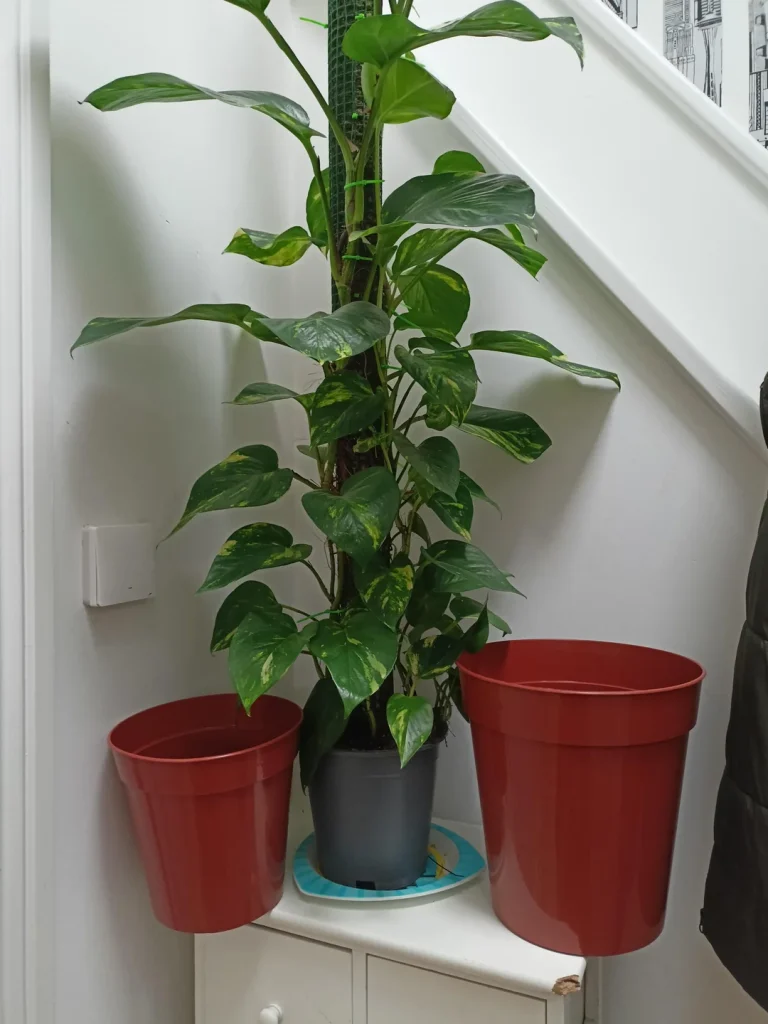
Some plants share well. Others turn a planter into a competition for water, light, and root space.
The short version: match plants with similar root depth and similar water needs, and give each one enough surface area to spread without shading its neighbors.
Herbs are the easiest combination. Basil, parsley, and cilantro all want similar moisture and similar depth, so a long planter box works well for a small herb garden.
Lettuce and other leafy greens pair the same way, since their roots stay shallow and their spacing needs are small.
Mint is the one exception I’d keep separate no matter what else is in the planter. It spreads through underground runners and will crowd out anything nearby within a season, even in a large container.
Fruiting vegetables like tomatoes, peppers, and cucumbers generally do better alone. Their root systems compete hard for the same nutrients, and cramming two into one pot usually means both underperform instead of one thriving.
Common Mistakes to Avoid
The biggest mistake I see is sizing a container by diameter alone. A wide, shallow pot might look roomy, but if it’s only 6 inches deep, it won’t work for anything with a real taproot or a deep root ball.
The second is forgetting the plant’s mature size. A pepper seedling looks tiny in a 6-inch nursery pot, but it needs several times that volume by midsummer. Size the container for what the plant will become, not what it looks like on planting day.
The third is underestimating heat. A small pot on a sun-baked balcony or a south-facing patio dries out fast, sometimes within hours on a hot day.
If your growing space runs hot, size up from whatever the calculator suggests as a minimum.
Last, don’t ignore drainage. A perfectly sized container with no drainage holes will hold water at the roots no matter how well you’ve matched the volume. Every container on this list needs holes at the bottom, plus something to keep soil from washing out.
Frequently Asked Questions
What size pot do I need for a tomato plant?
Full-size tomatoes need at least 15 gallons for comfortable growth, with a minimum depth of 14 inches. Patio and cherry varieties can get by with 7 to 10 gallons if space is tight.
Can a container be too big for a plant?
Yes. An oversized container holds more soil than the roots can use, which keeps that soil wet for longer after watering. That extra moisture around a small root system is a common cause of root rot, especially in cooler or shadier spots.
How do I know when to size up to a bigger pot?
Watch the drainage holes. If roots are visible poking through, or if the plant needs water every single day even in mild weather, it’s outgrown its container. Wilting between normal watering intervals is another sign.
Does container material affect the size I need?
Not the volume itself, but it changes how often you’ll water. Unglazed terracotta breathes and dries out faster than plastic or glazed ceramic, so a terracotta pot on the smaller end of a range will need more frequent attention than the same size in plastic.
Can I use the minimum size instead of the comfortable size?
You can, especially if space or budget is limited. Just expect to water more often, and don’t expect the biggest possible harvest. Minimum sizing works better for herbs and greens than it does for fruiting vegetables like tomatoes and peppers.
How much soil will I need to fill my container?
Check the soil estimate in the calculator results. It converts the container’s volume into gallons and cubic feet, which matches how most bagged potting soil is labeled at the store.
What if my plant isn’t on the list?
Match it to the closest plant by root depth and growth habit. A squash-family plant like a melon or pumpkin behaves like zucchini. A leafy herb with shallow roots behaves like basil or parsley. When in doubt, size up rather than down.
Final Words
Container size isn’t something you need to overthink, but it’s worth getting right before you plant instead of fixing it mid-season. A few extra gallons of soil and a slightly bigger pot almost always beat a plant that’s fighting for root space in July.
If you’re setting up a full container garden this season, my topsoil calculator, mulch calculator, and raised bed soil calculator can help you plan out the rest of what you’ll need.