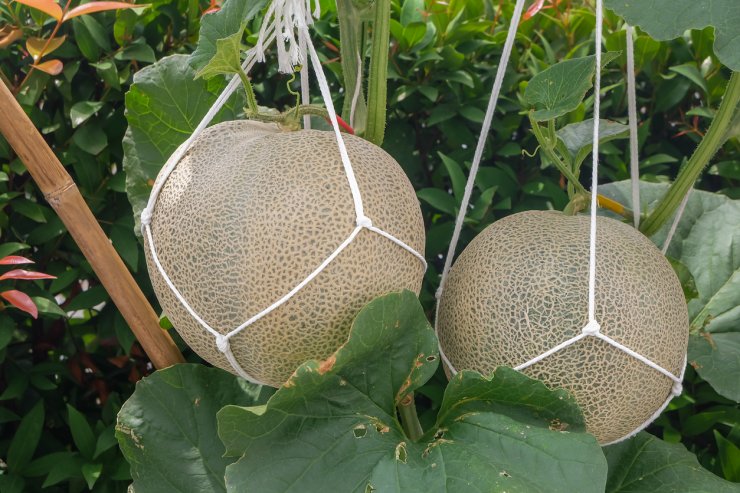
How to Grow Cantaloupe Vertically for Maximum Harvest

Cantaloupe vines are notorious space hogs. Learning how to grow cantaloupe vertically changes that, turning a sprawling plant into a tidy column of green. One plant left to sprawl takes over 5 square feet.
Trellised, it fits in a single square foot.
The payoff goes beyond saving space. Vertical vines get more airflow, which means less mildew. The fruit hangs clean and off the soil, so it rots less and ripens more evenly.
As of 2026, this method is the go-to for raised bed gardeners with limited room.
Quick Answer
Grow cantaloupe vertically on a sturdy 6-8 foot trellis. Prune side shoots so the plant focuses on the main vine. Use fabric slings to support fruit once it reaches tennis-ball size.
That’s the core method, repeated weekly until harvest.
Why Cantaloupe Grows Well Vertically (What You’ll See)
Cantaloupe vines naturally climb with tendrils. They don’t need to sprawl across your garden. Trellising works with the plant’s instincts, not against them.
The visual difference shows up within two weeks. A ground vine sends out long, curling runners in every direction. A trellised vine shoots straight up, hugging the support with tight spirals and fresh growth at the top.
Here’s what you’ll see:
- Cleaner fruit. Melons hang in the air, never touching soil or sitting in damp spots.
- Better airflow. Leaves dry out faster after rain, cutting down on powdery mildew.
- Higher density. You can plant cantaloupe 18-24 inches apart in raised beds instead of giving every vine a 6-foot circle.
- Easier harvesting. The fruit sits at eye level, so you can check color and stem slip without crawling around.
University Extension research supports this approach. The University of Minnesota Extension publishes cantaloupe guides that recommend trellising for small plots and cleaner fruit production.
Before You Build: Trellis Components and Visual Checklist
You don’t need a big budget or a greenhouse. The shopping list is short and most items are already in your shed.
| Component | What It Does |
|---|---|
| Trellis panel | Gives the vine 6-8 feet of climbing surface |
| Support posts | T-posts or 4×4 lumber, sunk 2 feet deep |
| Soft plant ties | Twine, twist ties, or cloth strips to secure stems |
| Pruning shears | For trimming side shoots and pinching tops |
| Sling material | Old t-shirts, pantyhose, or mesh produce bags |
The visual checklist matters. Check that the trellis is anchored before the vine touches it, not after. A loaded cantaloupe vine can weigh 30-40 pounds, and a flimsy support will tip over in the first stiff breeze.
The Right Trellis Height and Structure for Heavy Vines
Height is the most important number. Cantaloupe vines routinely stretch 6-10 feet in a single season. A 4-foot trellis just makes the vine fold at the top and tangle into itself.
Standard specs for vertical cantaloupe:
- Trellis height: 6-8 feet minimum
- Horizontal space per plant: 18-24 inches
- Post depth: 2 feet in the ground, or bolted to a raised bed frame
- Material: cattle panels, welded wire fencing, wood lattice, or PVC
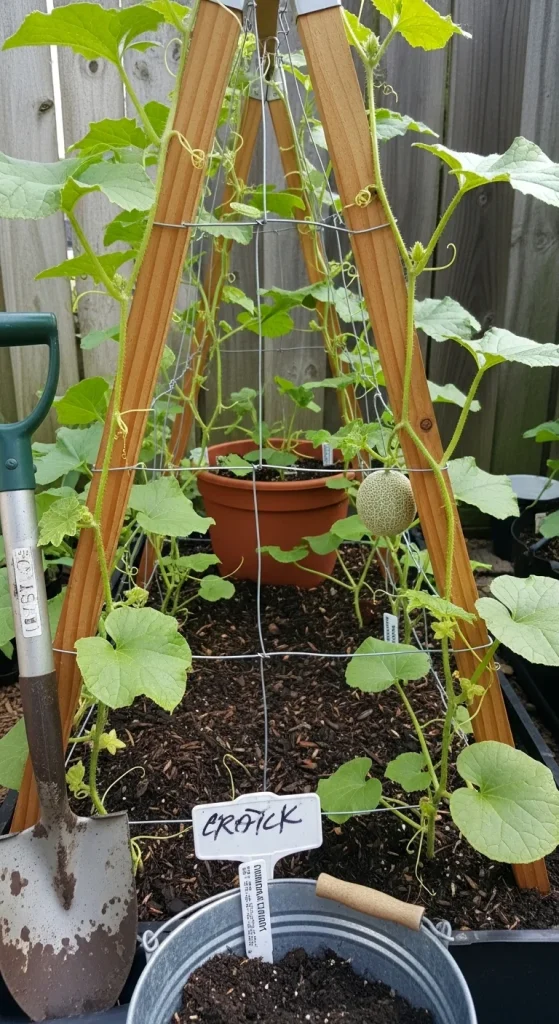
The A-frame is the most popular structure for good reason. Two panels leaning into each other create a self-bracing shape that handles heavy loads without extra stakes.
I love inclined trellis for melon and cantaloupe because it works so well with my raised bed.
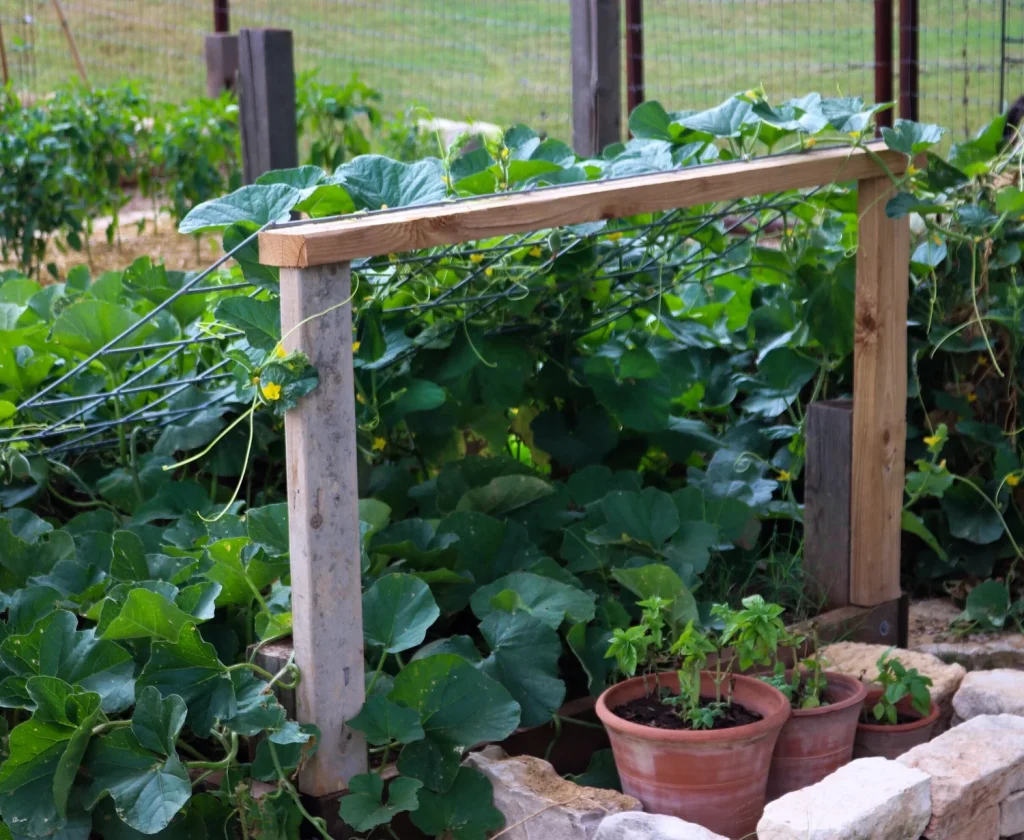
A single cattle panel works too, but it needs solid anchoring at the base.
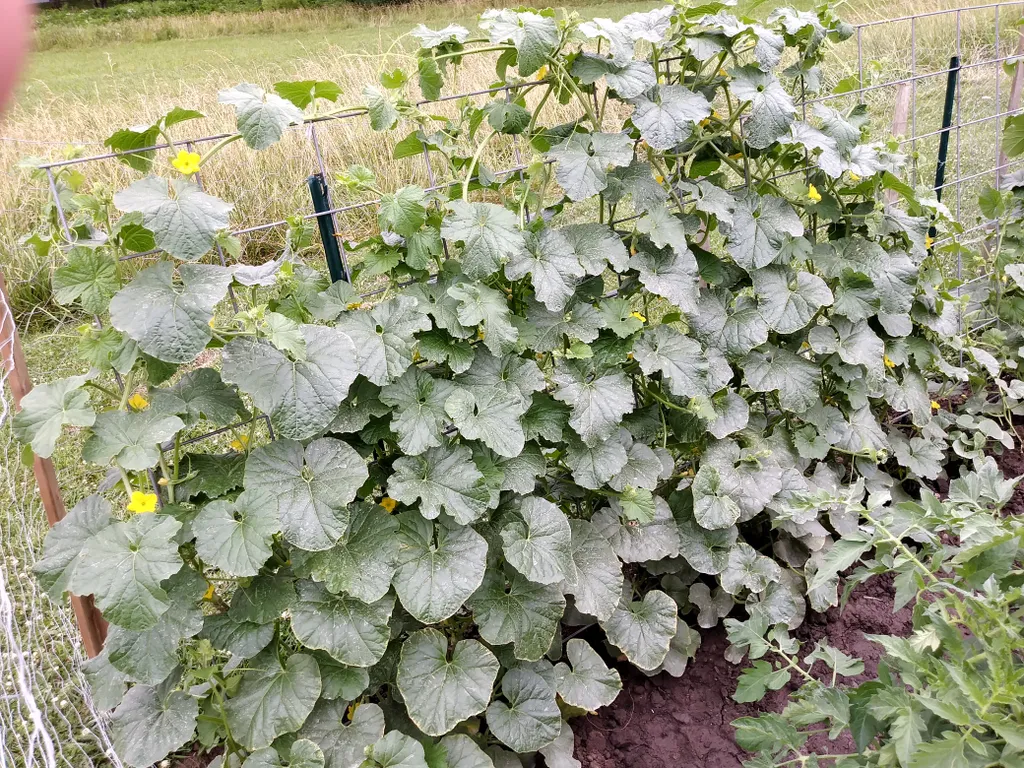
If you’ve built a cheap cucumber trellis for a raised bed, you already know this setup. That same frame works for cantaloupe, as long as it’s tall enough and anchored well.
Step-by-Step Visual Guide: Training the Vine Upward
This is where the hands take over. Here’s the exact flow:
- Plant close to the trellis. Put seedlings about 2 inches from the support, spaced 18-24 inches apart.
- Guide the main vine. Early on, the stem needs a gentle hand to find the trellis. Weave it through the openings or tie it loosely.
- Tie every 6-12 inches. Use soft ties with a loop that leaves room for stem growth. Tight knots strangle the vine.
- Pinch the tip at the top. When the main vine hits the trellis top, pinch off the growing point. That pushes energy into the side branches that set fruit.
- Check weekly. Vines add several inches per day in peak summer. A week of neglect means a tangled mess.
The training works best when you check the plant every 5-7 days. For a deeper look at similar setups, the techniques in vertical cucumber growing carry over to melons almost directly.
Pruning With Your Eyes: Side Shoots vs. the Main Vine
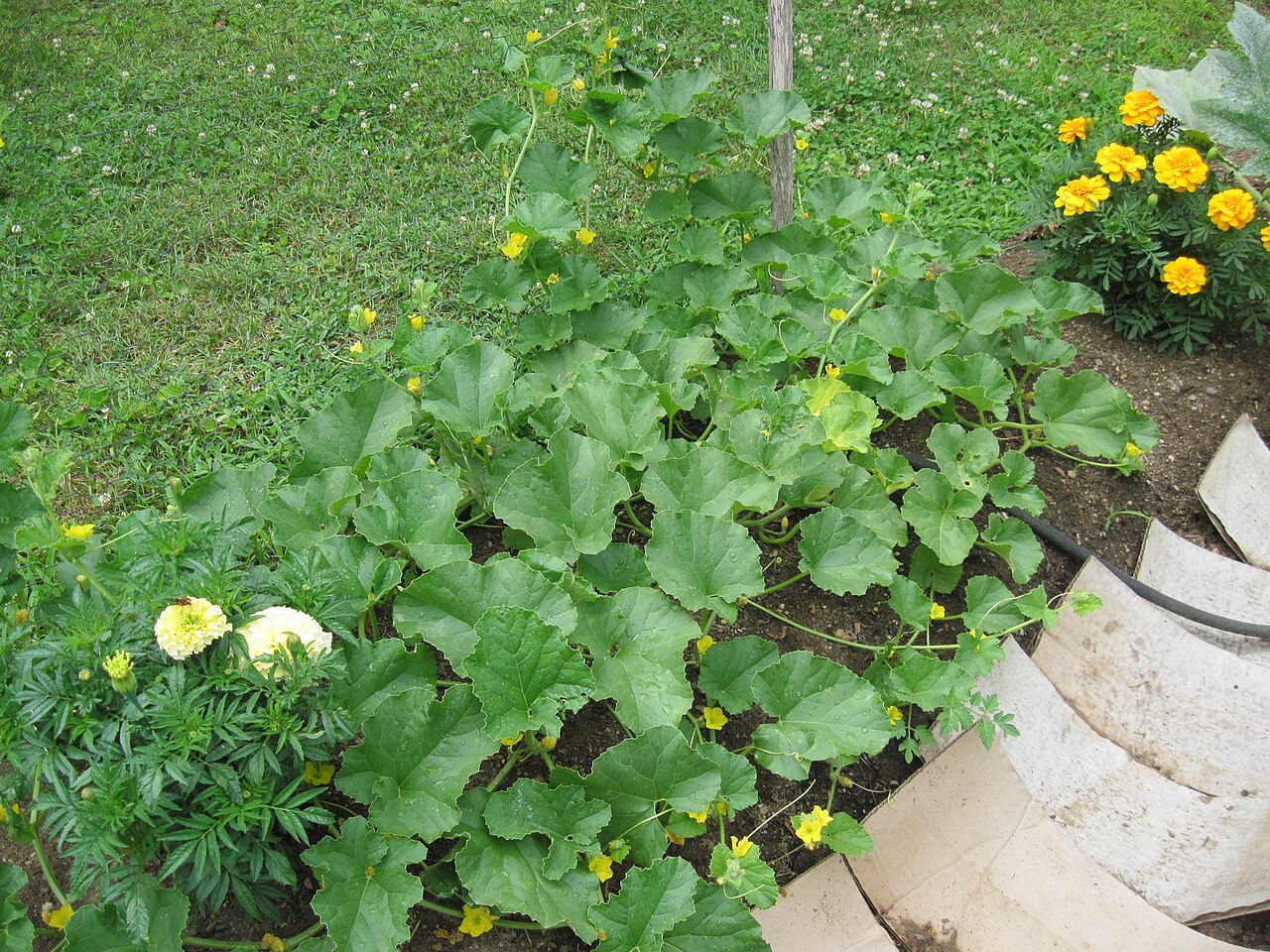
Image source: Wikimedia Commons / Rob Duval (CC BY-SA)
This is where most people freeze. The difference between the main vine and a side shoot isn’t hard once you know what to look for.
The main vine is the central stem shooting straight up the trellis. It’s the thickest one, with regular leaf nodes along its length. This is the backbone of the plant.
Side shoots emerge at an angle from those leaf nodes. They look like smaller vines trying to branch off in their own direction.
The rule is simple:
- Prune side shoots low. Remove all side shoots on the bottom 3-4 feet of the main vine.
- Keep some higher up. Let 2-3 side shoots grow near the top. These produce the female flowers that turn into melons.
- Never prune the growing tip, unless it has hit the trellis top and you want to stop upward growth.
If you let every side shoot grow, you get a leafy thicket and a poor harvest. The plant wastes energy on foliage instead of fruit. A clean single-stem vine produces bigger melons and stays manageable.
The Fruit Sling: Seeing When and How to Support Melons
This step is non-negotiable. A cantaloupe hitting 1-2 pounds is too heavy for its vine, and it will rip off when the stem snaps.
Sling each fruit once it reaches tennis-ball size. Use old t-shirts, pantyhose, or mesh produce bags. Secure the ends to the trellis with a loose knot so the melon sits in a cradle.
Adjust the sling as the melon grows. Leave room for air circulation, or moisture will trap against the rind and cause rot.
If you wait until the fruit looks heavy, you’ve waited too long. The stem starts tearing long before the melon drops.
Identifying Male and Female Flowers for Better Pollination
Cantaloupe produces both flower types on the same vine. Male flowers come first, growing on thin straight stems. Female flowers appear a few weeks later, and each one has a tiny swollen melon behind the petals.
That small bump is the ovary. If it gets pollinated, it swells into fruit. Without pollinators, the bump shrivels and falls off.
No bees visiting? Hand-pollinate. Pick a fresh male flower, strip off its petals, and brush the exposed stamen against the center of several female flowers.
Do this in the morning when flowers are wide open and pollen is most viable.
Common Visual Mistakes and How to Spot Them Early
Most vertical melon failures are silent. The plant looks fine until something falls, rots, or mildews.
Here’s what to catch before it costs you:
- Ties too tight. The stem thickens fast. A snug knot becomes a strangling wire in two weeks.
- Slinging too late. By the time the stem bends, the tear is already there.
- Heavy shade from over-pruning. You need leaf cover to prevent sunscald on exposed melons.
- Powdery mildew hiding under lower leaves. Yellow spots and white dust mean airflow has failed.
Spot-check twice a week. Bending a leaf back takes two seconds and saves whole vines.
Quick-Reference Guide: Spacing, Timing, and Support Specs
| Specification | Vertical Cantaloupe Value |
|---|---|
| Trellis height | 6-8 feet |
| Plant spacing | 18-24 inches apart |
| Row spacing | 4-6 feet |
| Soil temperature for planting | 70-85°F |
| Days to maturity | 70-90 days |
| Sling timing | Tennis-ball size, 1-2 pounds |
| Watering | 1-2 inches weekly |
| Expected yield | 2-4 melons per vine |
Frequently Asked Questions
Do all cantaloupe varieties grow well vertically?
Most do. Compact and icebox varieties like Minnesota Midget and Sugar Cube are easier because their fruit stays under 3 pounds. Standard supermarket varieties like Athena work too, but need stronger slings.
Can I grow cantaloupe vertically in a container?
Yes, with a 10-gallon pot and a 6-foot stake or obelisk. Container vines need more frequent watering and a steady feed. Root-bound stress shows up fast as leaf yellowing.
How many melons should I leave per vine?
Two to four quality melons beat eight tiny ones. Once fruit sets, pinch off new female flowers. The plant will plump up what’s already there instead of exhausting itself.