15 Vertical Herb Garden Ideas for Fresh, Stylish, Small-Space Growing

Fresh herbs make a home feel alive. A few leaves of basil on pasta, mint in a cold drink, or thyme brushed from your fingers can turn an ordinary day into something softer and more grounded.
A vertical herb garden is a smart way to grow more without needing a big yard. It uses walls, rails, shelves, ladders, racks, and small corners that often go unused.
It is not about creating a perfect garden display. It is about making fresh flavor easy to reach, even in a rental, balcony, patio, or sunny kitchen.
These ideas will help you grow herbs in a way that feels practical, beautiful, and personal.
Also read:
Grow Like a Pro: Raised Bed Herb Garden Ides for Beginners
13 Best Herb Plants to Grow in Shady Garden
15 Creative Vertical Herb Garden Ideas
1.Rolling Herb Cart Garden
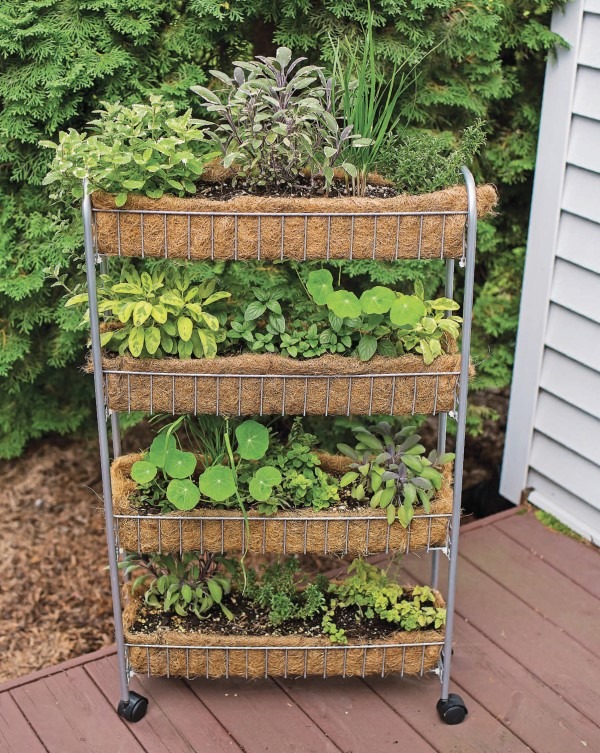
A rolling herb cart is perfect when your sunlight shifts during the day. The metal frame gives you strong support, while the stacked planting rows let you grow several herbs in one slim footprint.
It feels casual and useful, like a tiny outdoor market stand sitting on your deck.
This idea works well for renters because it does not need to be fixed to a wall.
You can move it closer to morning sun, pull it away during harsh heat, or tuck it beside a door when guests come over. The coconut-style liner also gives it a soft, natural texture.
Action Steps:
- Choose a cart with drainage-friendly planting baskets.
- Plant sun-loving herbs like basil, thyme, oregano, and sage on the upper levels.
- Place softer herbs like parsley or mint where they get a little shade.
- Roll the cart near your kitchen door for easy picking.
Styling tip: Mix trailing herbs with upright herbs for a fuller, lived-in look.
2. Leaning Ladder Herb Display
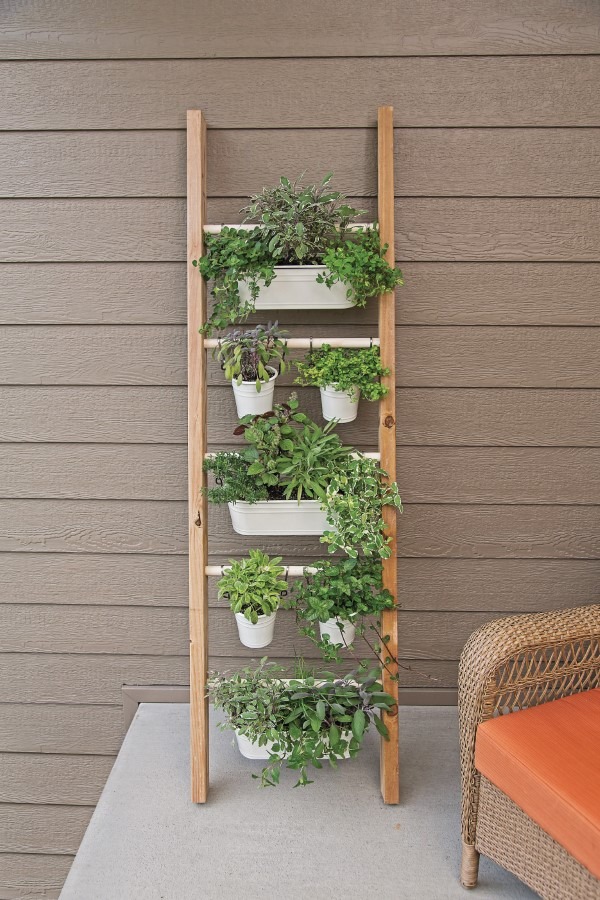
A leaning ladder herb garden brings height without feeling heavy. It has that easy, relaxed look that suits patios, balconies, and narrow side spaces.
The wooden frame adds warmth, while the small white pots keep everything neat and bright.
This setup is especially helpful when you want a garden that looks styled but still works hard. Each rung can hold a different herb, so you can group plants by cooking use.
Think basil and oregano for pasta, mint for drinks, and rosemary for roasted vegetables. The open design also lets air move around the plants, which helps reduce damp, crowded growth.
Action Steps:
- Place the ladder against a stable wall.
- Use lightweight pots with drainage holes.
- Keep thirsty herbs lower where watering is easier.
- Rotate pots weekly so each plant gets even light.
Styling tip: Let one trailing herb spill over the side to soften the straight ladder lines.
3. Framed Living Herb Wall
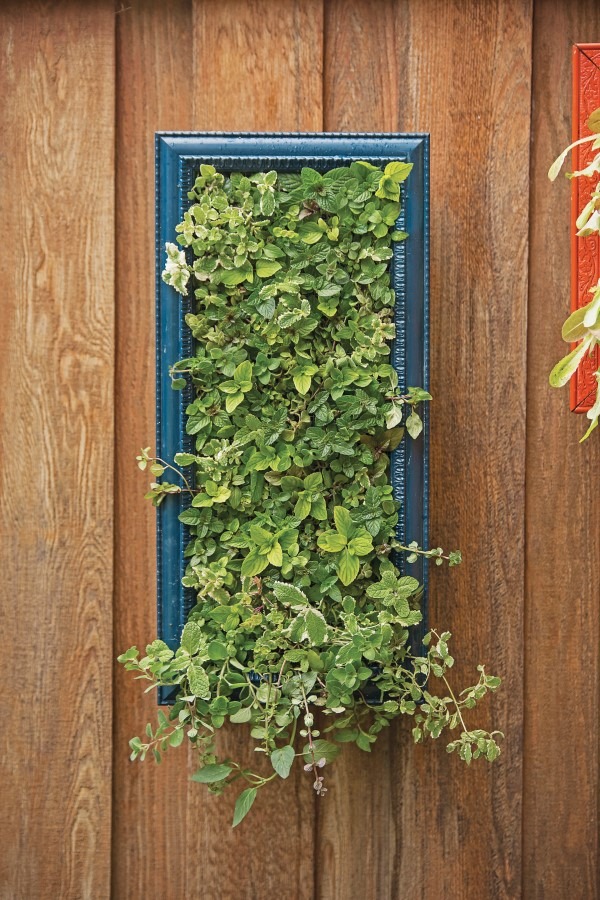
A framed herb wall turns plants into living art. It feels fresh, soulful, and a little unexpected, especially when set against warm wood or a plain fence. Instead of hanging a picture, you hang fragrance, texture, and flavor.
This idea works best for compact herbs and low-growing varieties. Mint, oregano, thyme, and small-leaf basil can create a lush green surface when planted closely.
The frame gives the garden a finished look, so even a simple wall feels intentional. It is a lovely option for people who want a garden that doubles as decor.
Action Steps:
- Choose a sturdy frame with a planting pocket or backing system.
- Use lightweight potting mix to reduce wall strain.
- Plant compact herbs close together for a full effect.
- Water gently so soil does not wash out.
Styling tip: Pick a frame color that contrasts with your wall so the herbs feel like a true focal point.
4. Wall-Mounted Pot Grid
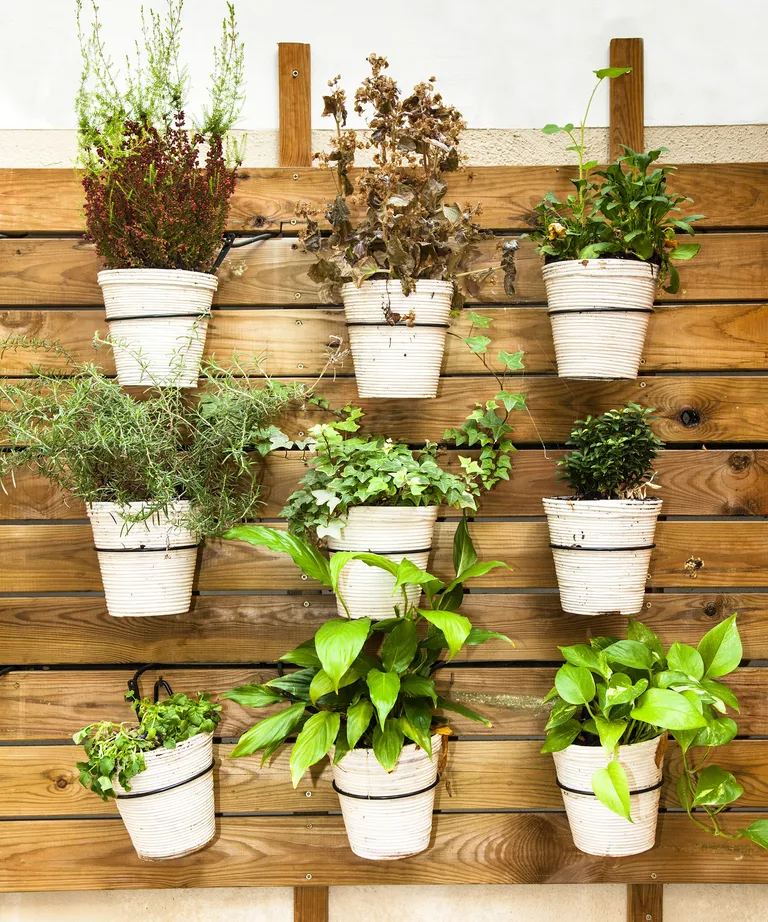
A wall-mounted pot grid is simple, flexible, and easy to refresh. The wooden backing brings a warm, rustic mood, while the white pots make the herbs feel clean and organized.
It is a great choice when you want a vertical herb garden that looks tidy but not too formal.
The best part is control. Each herb gets its own pot, so mint will not take over your basil, and you can move struggling plants without disturbing the whole garden.
This setup also lets you swap herbs by season. In summer, you might grow basil and cilantro. In cooler months, try parsley, thyme, and chives.
Action Steps:
- Mount strong horizontal boards or a ready-made wall panel.
- Use matching pots for a calm, polished look.
- Label each herb with small wooden markers.
- Leave space between pots for airflow.
Also read: 12 Creative Container Herb Garden Ideas for Small Spaces
5. Rustic Indoor Herb Bench
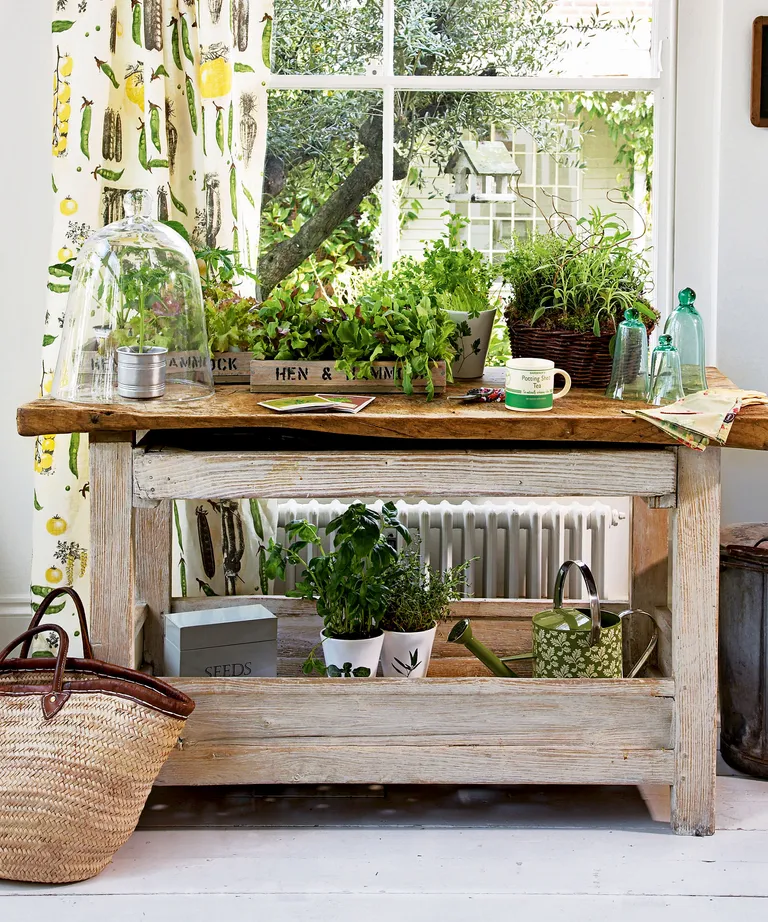
A rustic indoor herb bench makes gardening feel slow and comforting. Placed near a bright window, it becomes part growing station, part styling moment.
The wood, baskets, watering can, and seed box add texture that feels grounded and lived-in.
This idea is lovely for homeowners and renters who do not have outdoor space. A bench gives you room for herbs, tools, seed packets, and small pots without spreading clutter across the kitchen. It also creates a gentle ritual.
You can water in the morning, snip leaves before dinner, and enjoy that soft green view through the day.
Action Steps:
- Place the bench near a bright window.
- Use trays under pots to catch extra water.
- Keep scissors and plant labels in a small box.
- Grow herbs you use often, like basil, parsley, mint, and chives.
6. Hanging Window Herb Shelves
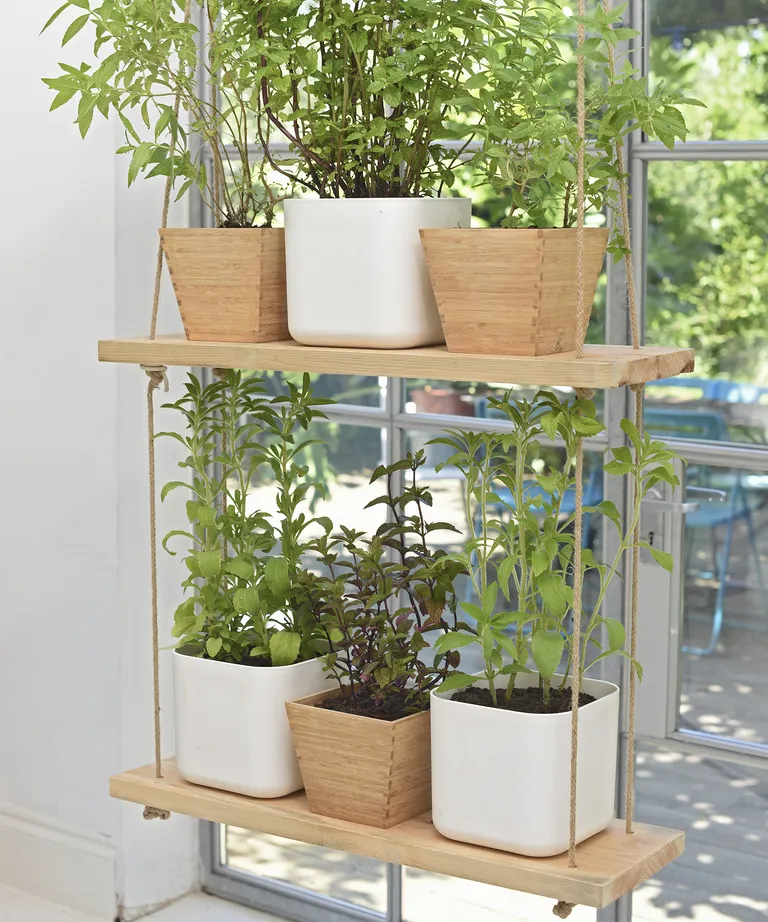
Hanging window shelves make herbs feel airy and light. The soft wood boards, rope supports, and bright pots create a calm, fresh look that works beautifully in kitchens, sunrooms, and small apartments.
It uses vertical space without taking up your counter or floor.
This setup is best for herbs that enjoy steady light. A sunny window can support basil, thyme, oregano, and chives, while slightly softer light may suit mint and parsley.
The shelves keep everything at eye level, so you are more likely to notice when plants need water, trimming, or turning.
Action Steps:
- Hang shelves from a strong ceiling hook or secure bracket.
- Use lightweight pots to reduce strain.
- Place taller herbs on the top shelf.
- Check that the shelves hang level before watering.
7. Terracotta Herb Grid Wall
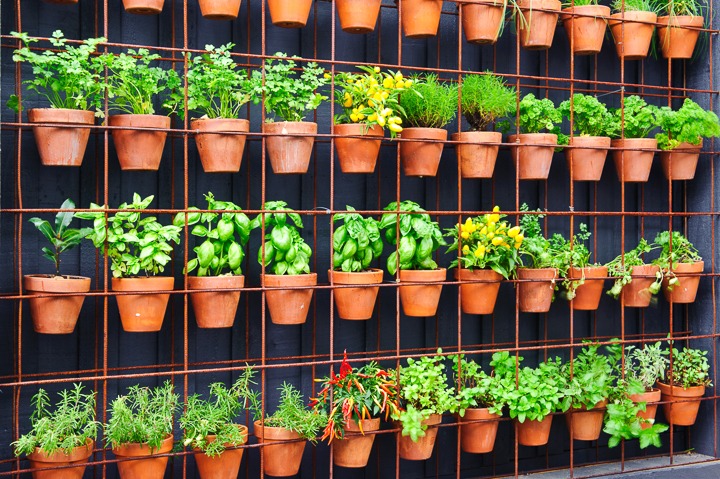
A terracotta herb grid wall feels bold, warm, and wonderfully practical. The repeated clay pots create rhythm, while the metal grid keeps the whole setup clean and structured.
Against a dark wall, the herbs look extra bright, almost like a fresh green pattern.
This idea is great when you want to grow many herbs in a small outdoor area. Each pot can hold one herb, which makes care easier.
Basil, parsley, rosemary, thyme, cilantro, and oregano can all have their own space. Terracotta also has a timeless garden feel, though it can dry out faster than plastic or glazed ceramic.
Action Steps:
- Attach a strong metal grid to a wall or fence.
- Use secure pot hooks made for outdoor weight.
- Water terracotta pots more often in hot weather.
- Group herbs with similar water needs together.
8. Hydroponic Gutter Herb Rows
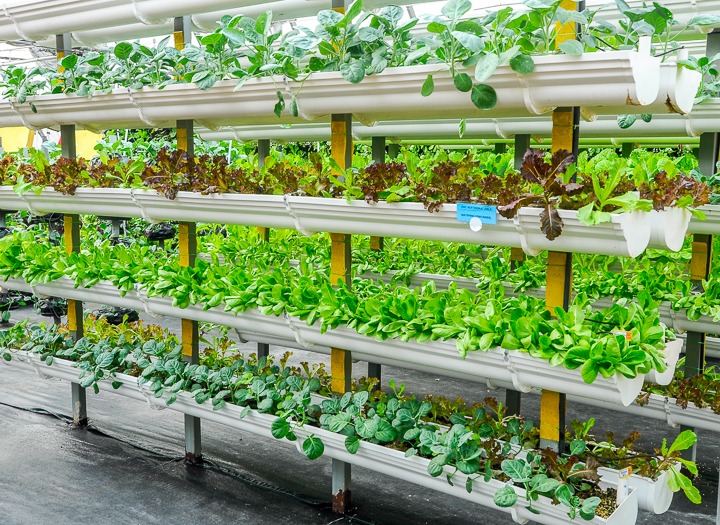
Hydroponic gutter rows give a vertical herb garden a clean, modern edge.
Instead of soil-filled pots, herbs grow in long channels, often with nutrient-rich water moving through the system. It looks fresh, efficient, and slightly greenhouse-inspired.
This idea works best for people who enjoy a more organized growing setup. It can be used outdoors, in a greenhouse, or in a bright protected area.
Leafy herbs such as basil, cilantro, parsley, and mint can do well in hydroponic systems when light, water, and nutrients stay balanced. It may take a little learning at first, but the tidy rows make harvesting easy.
Action Steps:
- Start with a small ready-made hydroponic kit.
- Choose leafy herbs before woody herbs.
- Keep the water level and nutrients consistent.
- Place the system where it gets strong light.
9. Freestanding Gutter Herb Stand
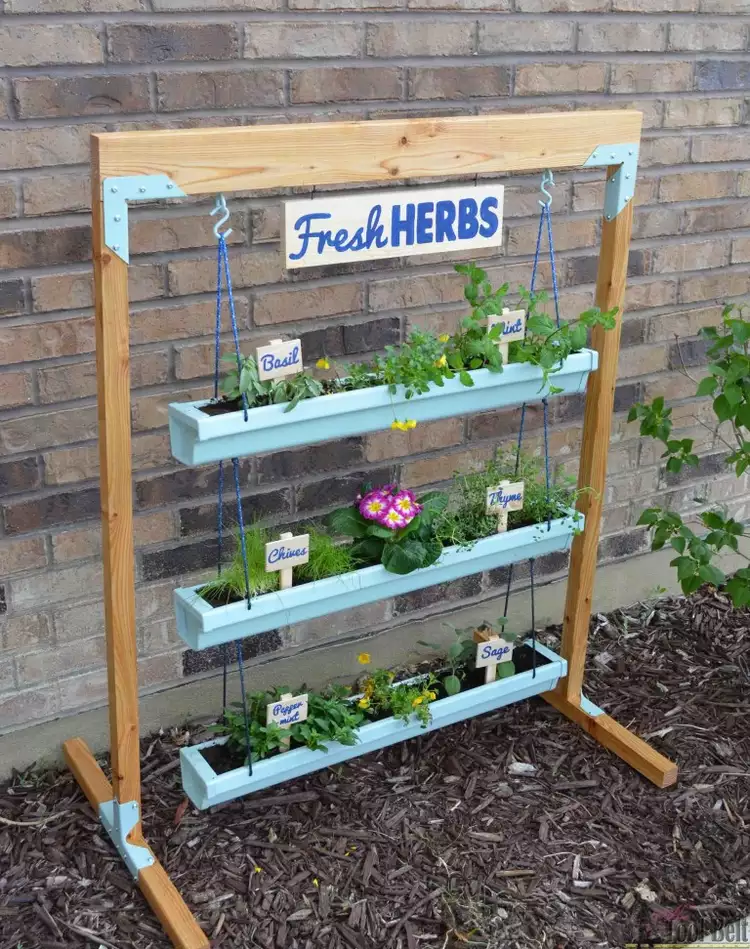
A freestanding gutter herb stand is charming, useful, and easy to place almost anywhere.
The wooden frame gives it structure, while the long narrow planters hold herbs in tidy rows. It feels like a small farm stand made just for your backyard.
This idea is helpful when you cannot attach anything to walls. Renters can place it on a patio, near a brick wall, or beside a garden path.
The shallow gutters work well for herbs with modest roots, such as chives, thyme, oregano, parsley, and cilantro. Adding handwritten labels makes it feel personal and friendly.
Action Steps:
- Build or buy a stable wooden frame.
- Drill drainage holes in each gutter planter.
- Fill with quality potting mix.
- Add plant labels so herbs are easy to find while cooking.
Styling tip: Paint the gutters in one soft color to make the whole stand feel calm and pulled together.
10. Balcony Pallet Herb Corner
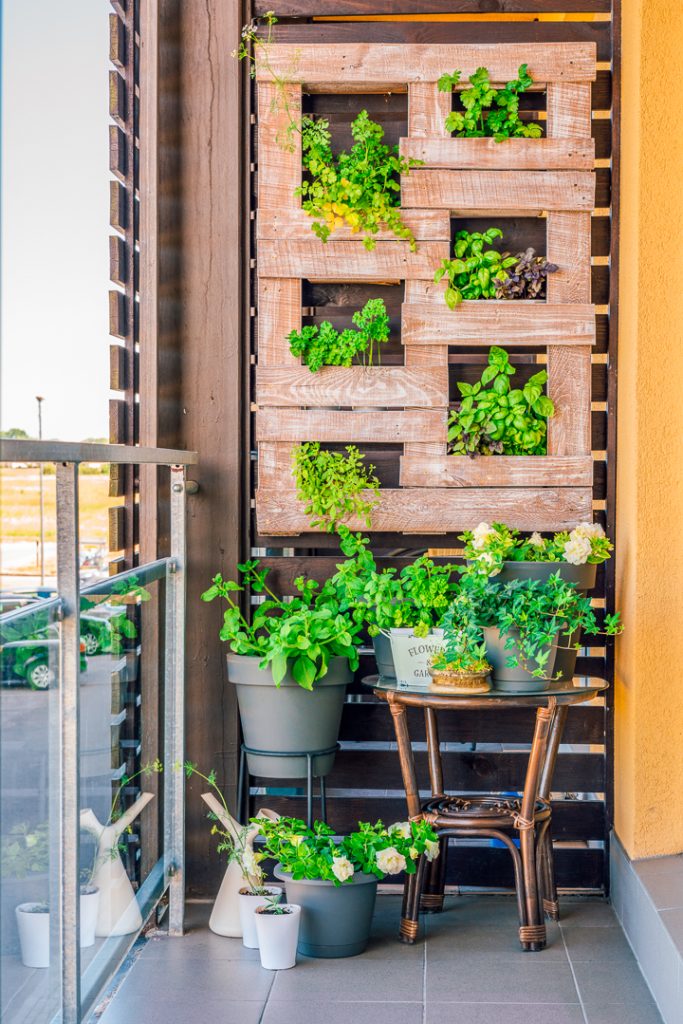
A balcony pallet herb corner makes a small outdoor space feel lush and cared for.
The pallet adds rustic texture, while the mix of wall pockets, floor pots, and a small table creates layers. It is not too perfect, and that is what makes it lovely.
This idea works well for renters because pallets can often lean against a wall instead of being permanently fixed.
You can tuck herbs into the openings, then add larger pots below for basil, rosemary, or mint. The whole corner becomes a cozy green moment, even if your balcony is narrow.
Action Steps:
- Sand the pallet to remove rough edges.
- Lean or secure it safely against a wall.
- Add small pots or planter boxes into the openings.
- Place larger herbs at the base for fullness.
11. Pocket Herb Board Charm
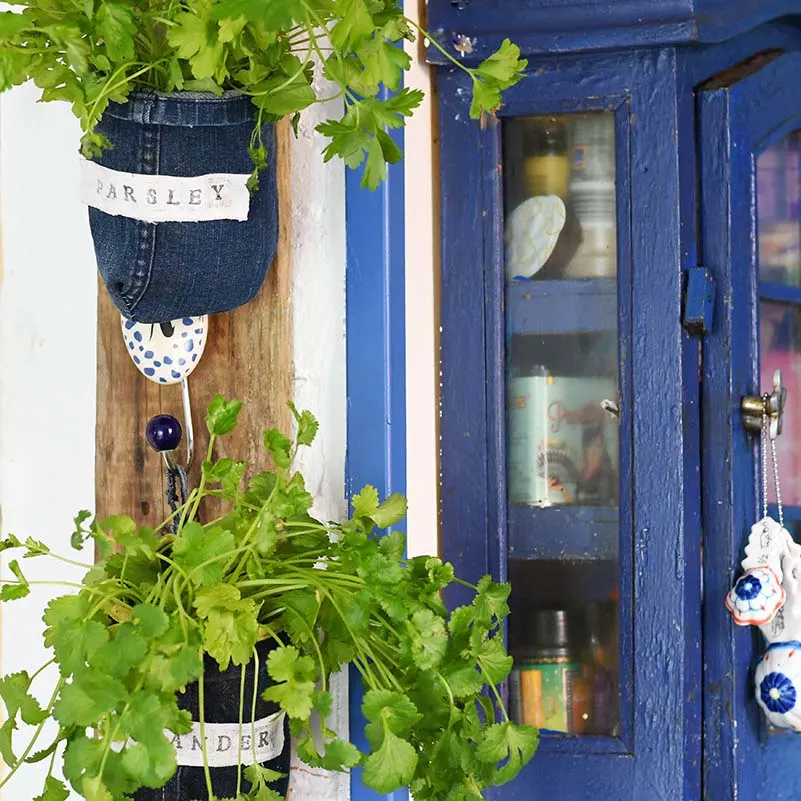
A pocket herb board brings a playful, handmade feel to a small vertical garden.
In this setup, soft fabric pockets are mounted on a wooden board, turning a plain wall or narrow corner into something personal and useful.
It feels cheerful and a little unexpected, which is often what makes a garden memorable.
This idea works especially well for lightweight herbs like parsley, cilantro, and small mint starts. Since fabric can dry faster than regular pots, it is better for herbs you can check often.
It also suits renters and creative homeowners who like mixing gardening with repurposed materials.
Action Steps:
- Use sturdy fabric pockets or repurposed denim with drainage holes.
- Mount the board securely in a bright, sheltered spot.
- Grow smaller herbs that do not need deep roots.
- Water lightly and more often to prevent the fabric from drying out.
12. Vintage Window Herb Frame
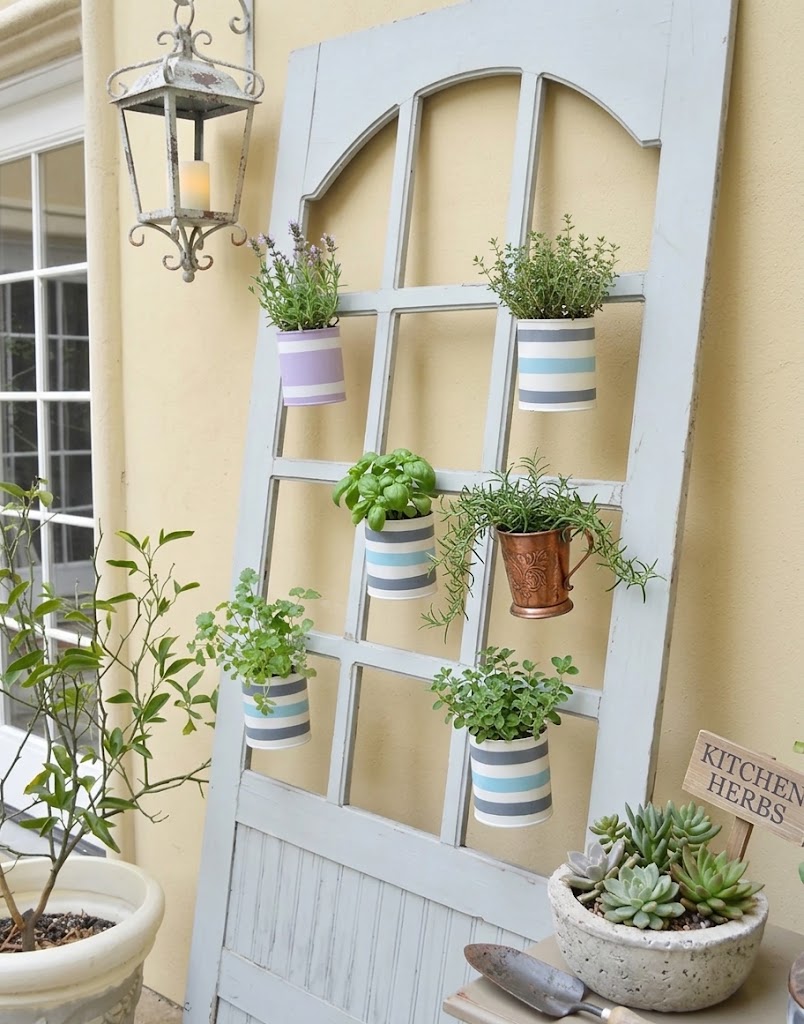
A vintage window frame herb garden feels airy, nostalgic, and full of character. The old frame gives structure, while the small hanging pots add a neat pop of green without making the setup feel bulky.
It is one of those ideas that makes a patio or porch feel gently styled rather than overly designed.
This layout is great for herbs that do well in separate containers, such as dill, basil, thyme, and oregano. Because each pot hangs on the frame, you can adjust and swap them as the seasons change.
The beauty of this design is that it celebrates imperfection. A slightly weathered frame or a chipped finish only adds charm, much like a lived-in home that tells its own story.
Action Steps:
- Choose an old window frame or decorative panel with solid support.
- Hang lightweight pots securely from the frame bars.
- Keep herbs with similar light needs together.
- Place the frame where it gets steady sun and some protection from strong wind.
Styling tip: Repeat one pot color or stripe pattern to keep the arrangement calm and cohesive.
13. Hanging Basket Herb Tower
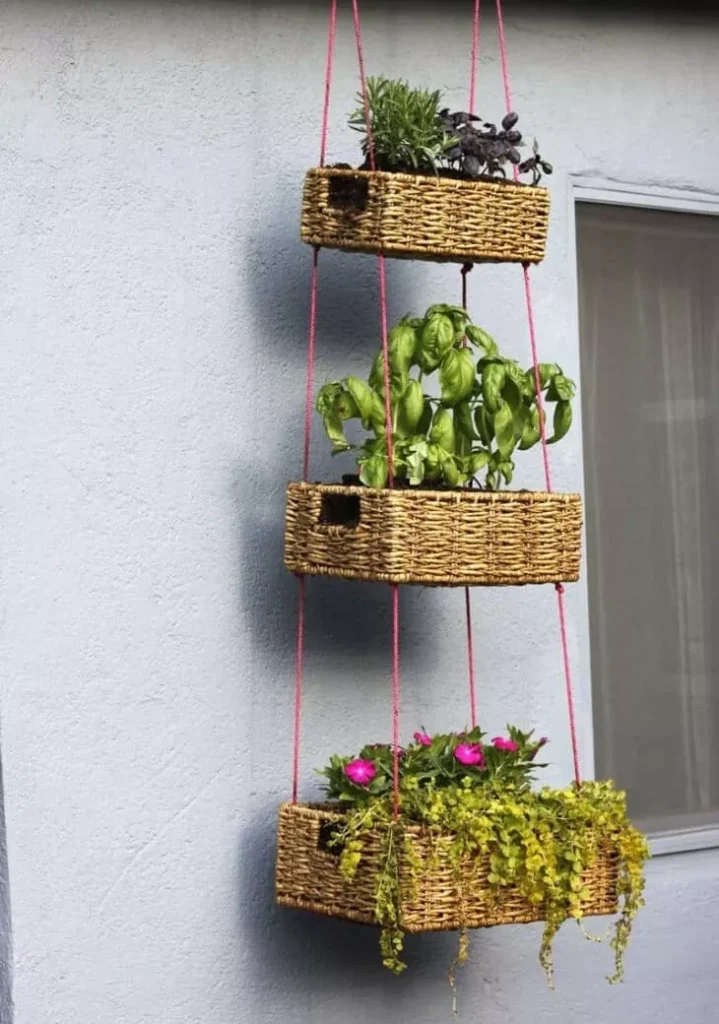
A hanging basket tower creates a lovely layered effect, almost like a soft green waterfall. The stacked woven baskets feel warm and natural, and the vertical arrangement helps you grow more herbs without using much floor space.
It works beautifully on a porch, near a sunny wall, or in a quiet outdoor corner.
This is a strong choice when you want vertical gardening to feel decorative as well as practical. Basil, trailing thyme, oregano, and even edible flowers can all work in a setup like this.
The upper baskets often stay a little drier, while the lower ones may catch extra moisture, so placement matters. That small bit of attention helps your plants stay balanced and healthy.
Action Steps:
- Use strong rope and secure hooks that can hold the full weight of wet soil.
- Line the baskets to help hold potting mix in place.
- Put upright herbs in the middle basket and trailing herbs lower down.
- Check drainage so the bottom basket does not stay too soggy.
14. Kitchen Niche Herb Shelf
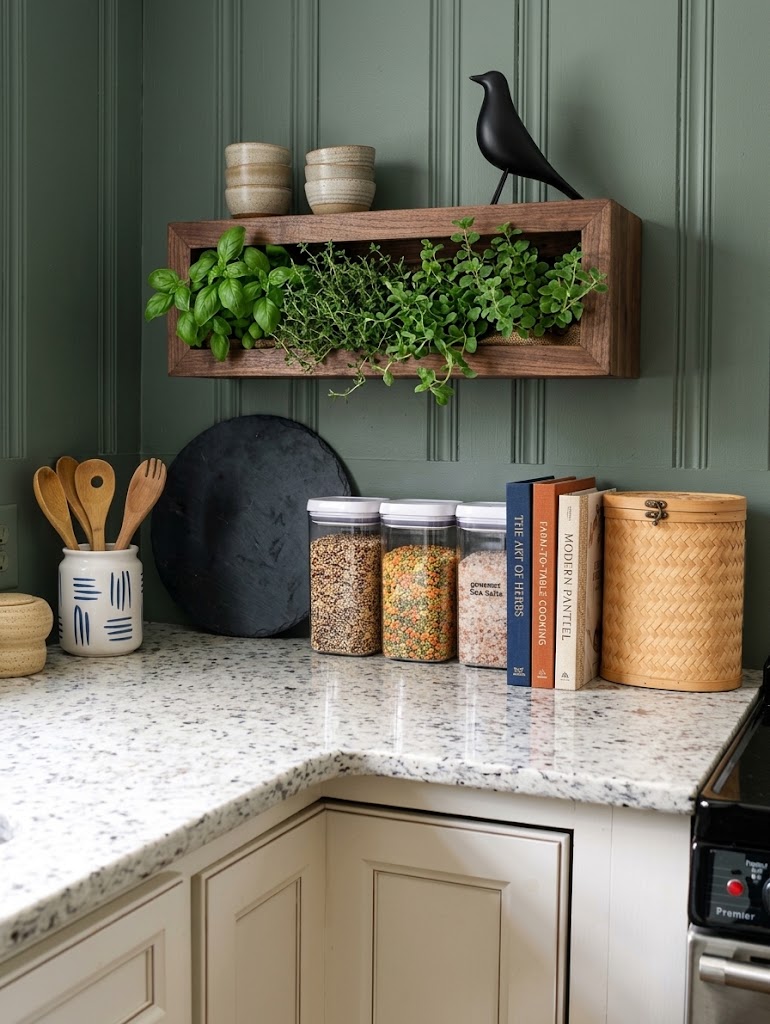
A kitchen niche herb shelf makes fresh herbs feel like part of daily life instead of a separate hobby.
The recessed wooden shelf in this setup holds herbs in a clean, tucked-in way, turning a blank wall into something useful and beautiful. It feels simple, warm, and deeply practical.
This idea works especially well in kitchens where counter space matters. Keeping herbs just above your prep area means basil, mint, rosemary, or parsley are always close by when cooking.
Action Steps:
- Install a shallow but sturdy wall shelf in a bright kitchen spot.
- Use compact containers that fit neatly inside the shelf.
- Choose herbs you reach for often while cooking.
- Trim regularly so plants stay bushy and do not crowd one another.
15. Recycled Bottle Herb Rail
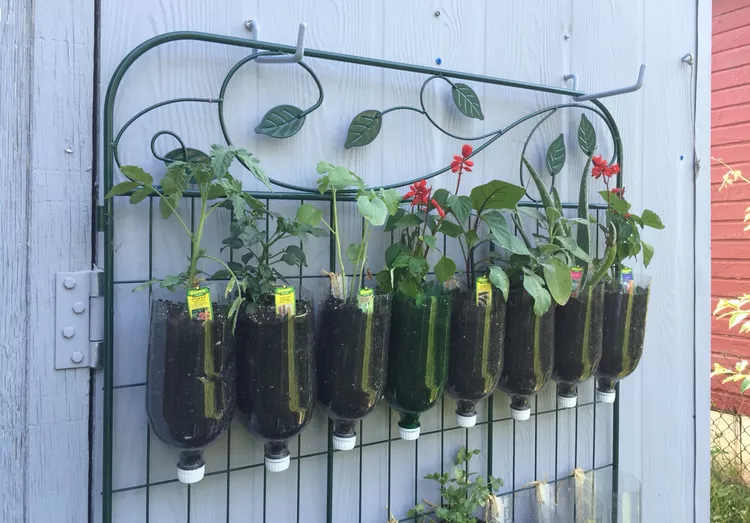
A recycled bottle herb rail is clever, budget-friendly, and full of charm. Plastic bottles are turned into vertical planters and hung in a row on a decorative frame, proving that a useful herb garden does not need expensive materials.
It has a practical, resourceful spirit that many small-space gardeners appreciate.
This is a smart project for anyone who likes low-cost growing and simple DIY solutions. It works best for herbs and compact edible plants that do not need a deep root zone.
Basil, cilantro, mint, and small leafy greens can do well if the bottles are large enough and drainage is handled properly. Repurposing materials also brings a gentle sustainability angle, which makes the garden feel even more meaningful.
Action Steps:
- Cut bottle openings wide enough for planting and airflow.
- Add drainage holes at the base of each bottle.
- Secure the bottles firmly to a strong frame or rail.
- Use light potting mix and avoid overwatering.
Styling tip: Paint or wrap the bottles in matching tones if you want the recycled look to feel more polished.
Final Thoughts
A vertical herb garden does more than save space. It brings freshness, texture, and a quiet sense of care into daily life.
Whether you choose a rolling cart, a rustic pallet, a hanging shelf, or a recycled bottle setup, the real beauty comes from making it work for your home and your habits.
The best herb gardens do not need to be perfect. They can be a little uneven, slightly wild, and still deeply useful. That lived-in feeling often makes them more welcoming.
Start small with one wall, one frame, or just a few favorite herbs you already love to cook with. As your confidence grows, your garden can grow too.