15 Lush and Low maintenance Tropical Garden Bed Ideas

Nothing beats stepping outside to a garden that feels like a mini vacation.
I’ve spent years testing tropical plants on my own balcony, and I can tell you the right combo turns any yard into a jungle escape.
You don’t need acres of land for this. A single garden bed can carry that lush, exotic vibe from spring straight through fall. Ready to steal some ideas? Let’s get your garden looking like paradise.
1. Start With One Tall Banana Plant
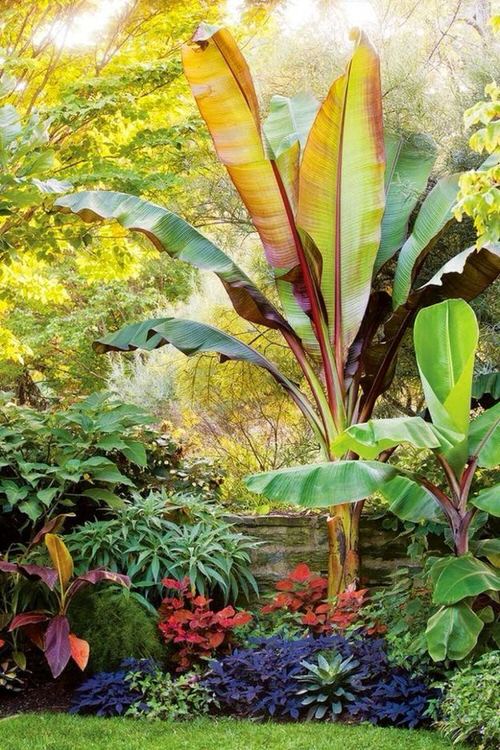
Sometimes less really is more. A single banana plant anchors a whole garden bed without any extra effort. Its giant paddle-shaped leaves catch light beautifully and sway with every breeze.
I planted one banana in a corner bed last year, and neighbors kept asking where I “went on vacation.”
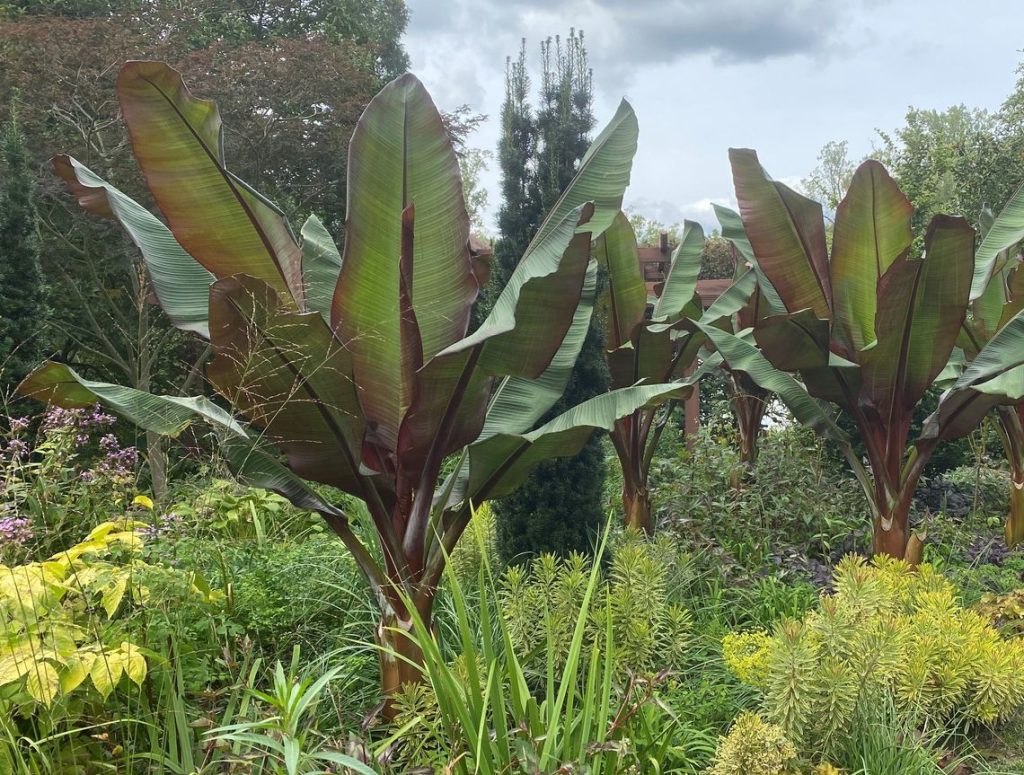
Musa basjoo works great if you want something hardy enough to survive in the ground through cooler winters. Pair it with low grasses underneath, and you’ve got instant tropical drama with barely any maintenance.
Also read: 13 Tropical Plants Outdoor Full Sun in Florida
2. Layer Elephant Ears for Instant Jungle Vibes
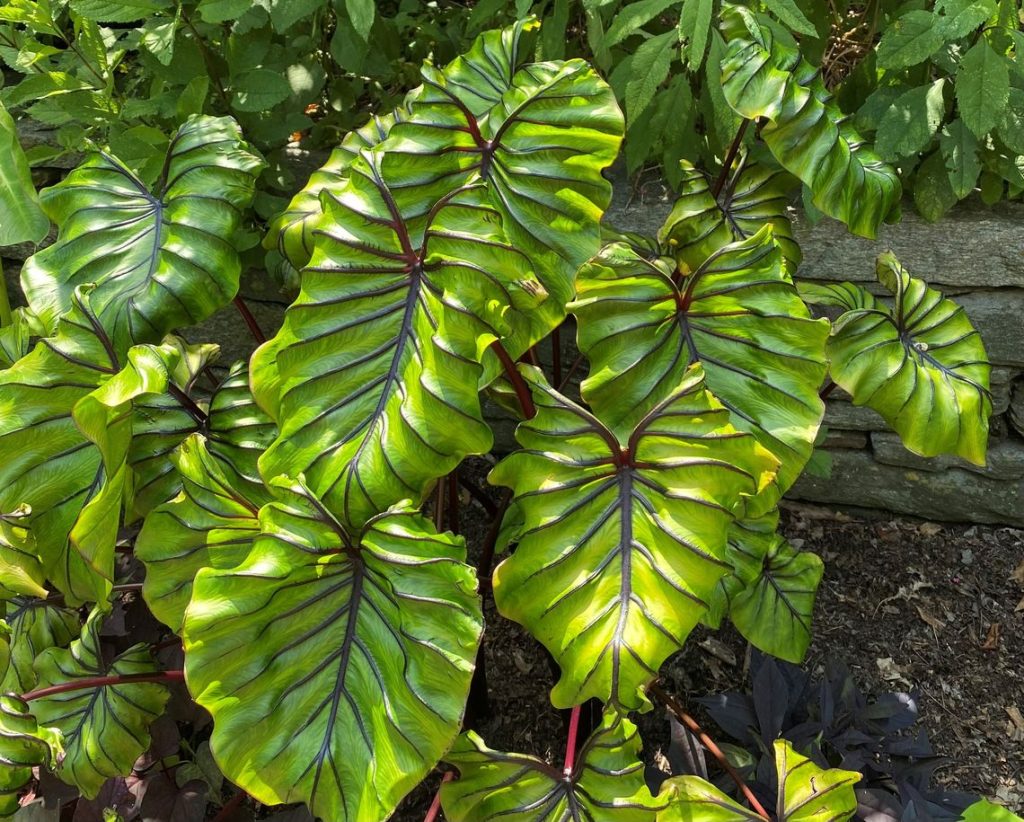
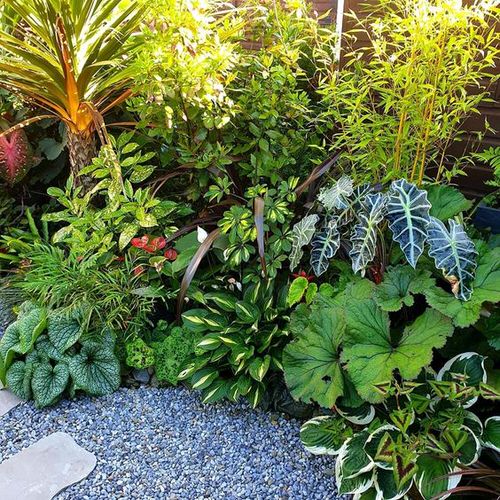
Elephant ears are the backbone of nearly every tropical bed I’ve ever built. Their heart-shaped leaves come in green, black, and even chartreuse, so mixing varieties creates depth fast.
Colocasia ‘Illustris’ next to a lime-colored variety looks like something out of a rainforest.
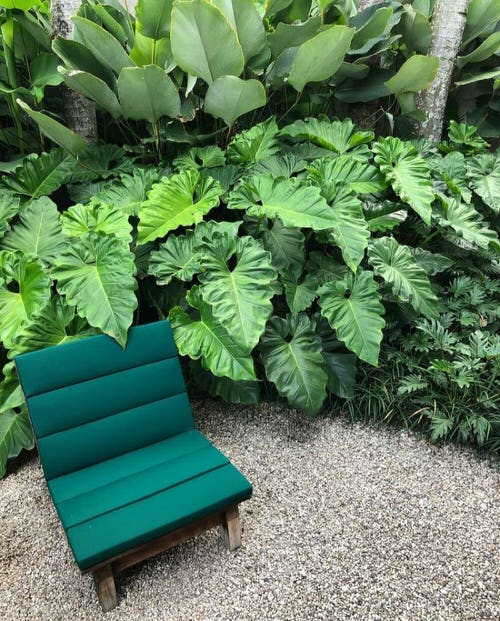
Height matters here. Place taller varieties like ‘Thai Giant’ toward the back of your bed, then layer shorter ones in front.
This creates that lush, tiered look tropical gardens are known for, and honestly, it’s one of the easiest tricks in the book.
Read more: 15 Tropical Plants for Outdoor Full Sun That Grow in Pots
3. Add Bromeliads for a Pop of Color
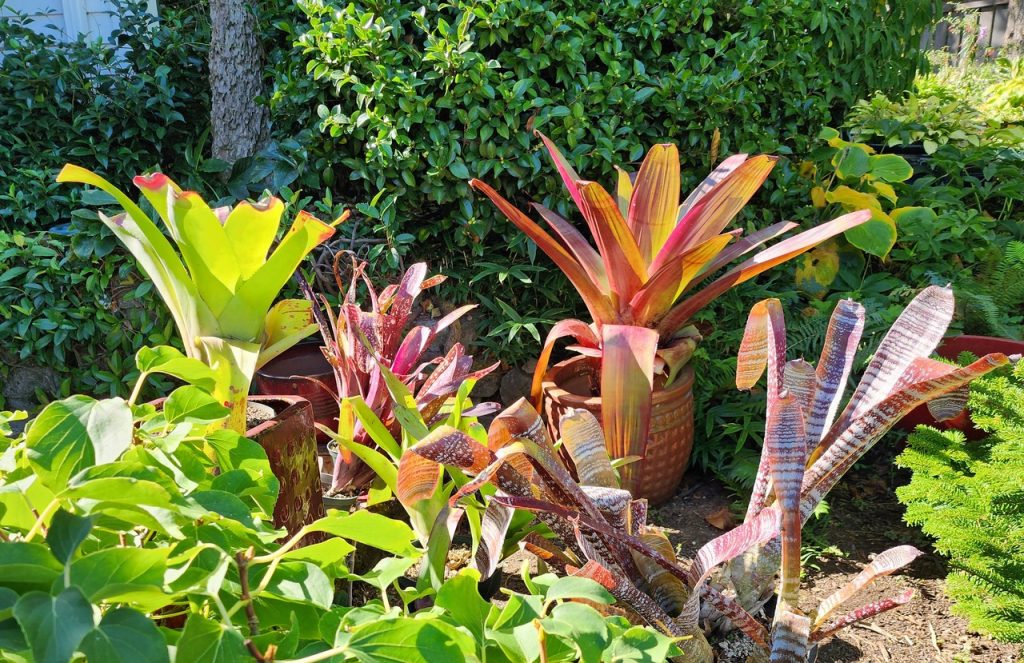
Bromeliads solve a problem elephant ears can’t: color that doesn’t rely on flowers. These rosette-shaped plants come in fiery reds, deep purples, and sunny yellows.
Aechmea blanchetiana brings arching orange-yellow leaves that practically glow in afternoon sun.
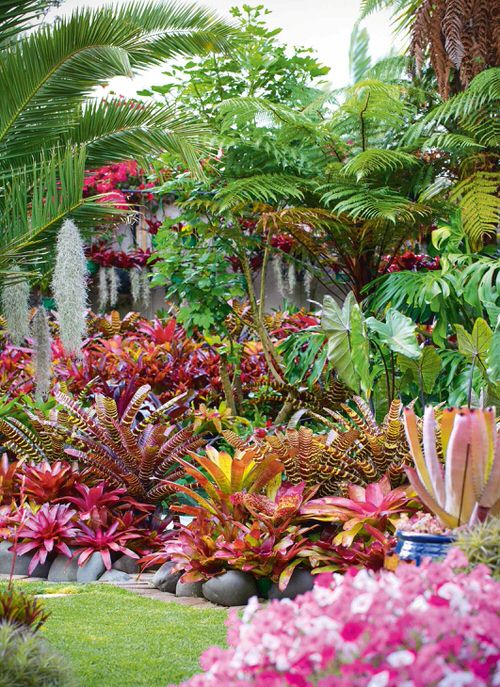
Tuck them between taller foliage plants for contrast. Smaller Neoregelia varieties work especially well along bed edges.
Once established, bromeliads need shockingly little care, which makes them perfect for anyone who wants big impact without babysitting their garden daily.
4. Mix Cannas In for Height and Drama
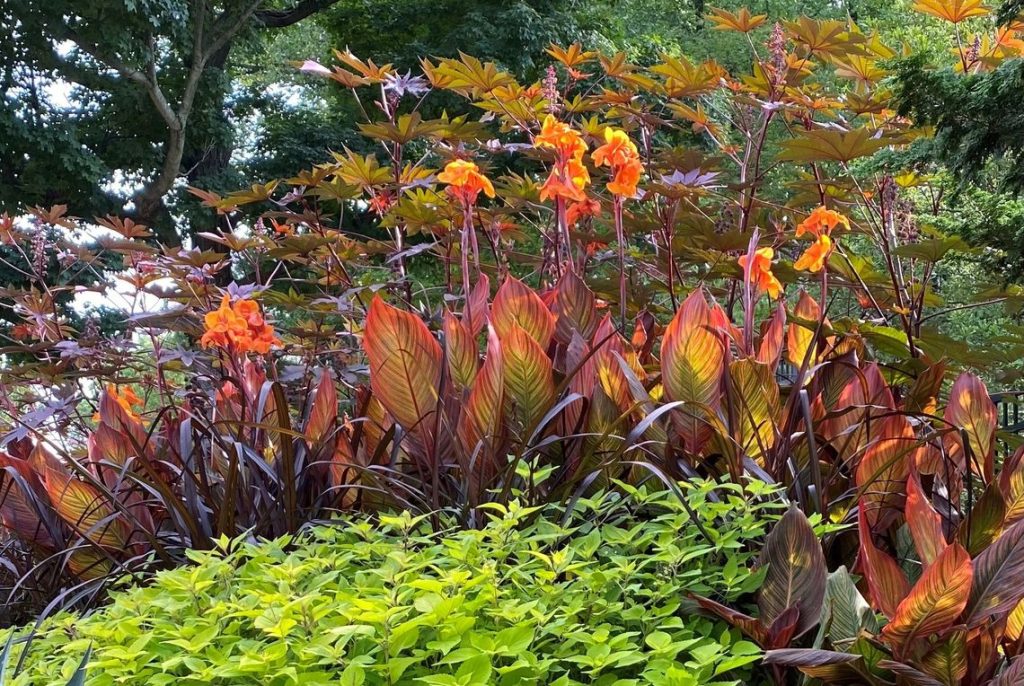
Cannas grow fast, and I mean fast. Give them a sunny spot with regular water, and they’ll rocket up several feet in one summer.
Their broad leaves alone earn a spot in any tropical bed, but many varieties throw in bold flowers too.
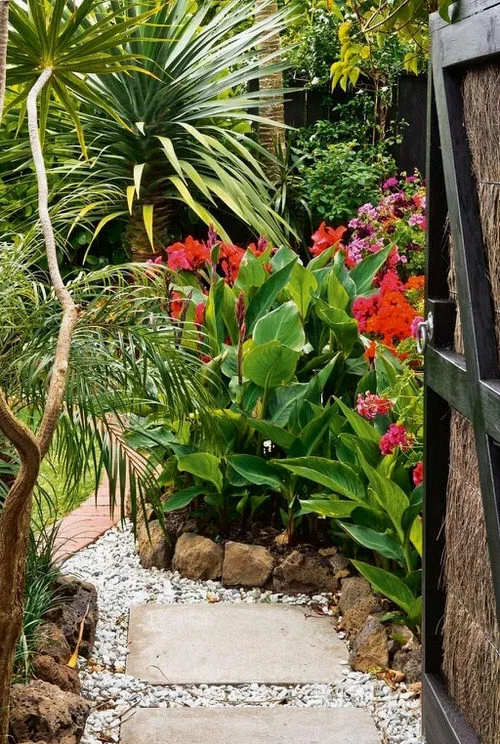
‘Tropicanna’ brings burgundy and pink striped foliage that steals the show even without blooms. Smaller Cannova types fit tighter spaces if you’re working with a compact bed.
Either way, cannas fill gaps quickly and give your garden that dense, jungle-like fullness within just a few weeks.
5. Bring in the Tractor Seat Plant for Bold Texture
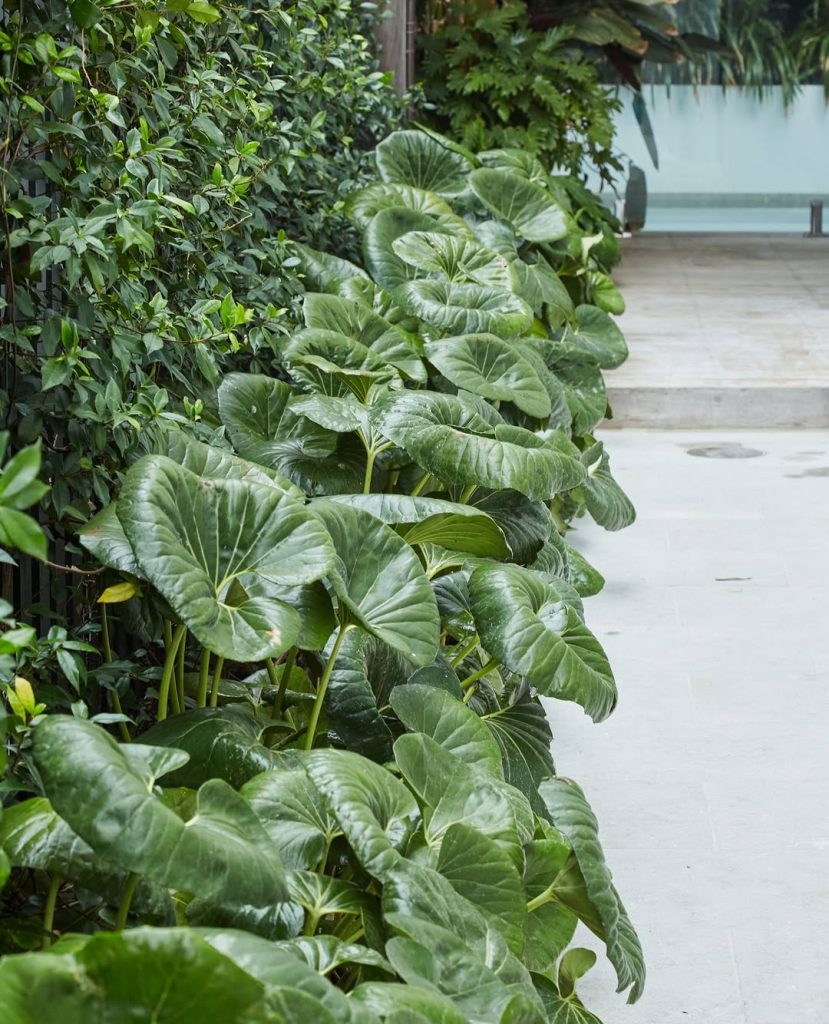
Some plants just steal attention, and the tractor seat plant does exactly that. Its round, glossy leaves look nothing like typical garden foliage. You’ll spot it and instantly want one.
I added this plant to a shady corner, and it filled the space beautifully.
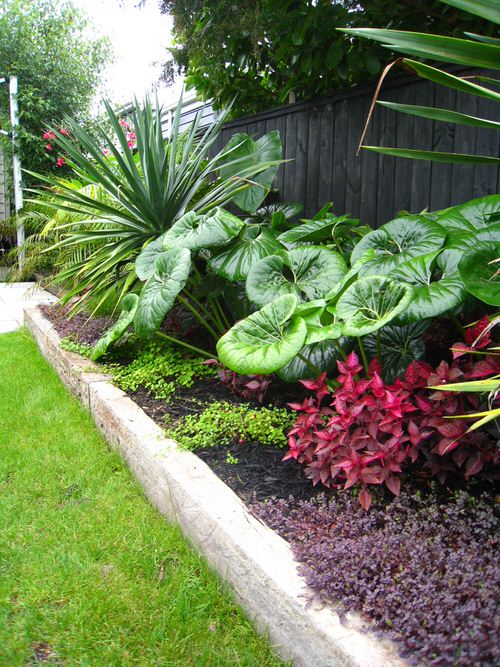
It handles partial shade better than most tropical, which makes it a smart pick for beds that don’t get full sun all day.
Pair it with something spiky nearby, like a yucca, and the texture contrast really pops.
6. Play With Foliage Plant for Drama
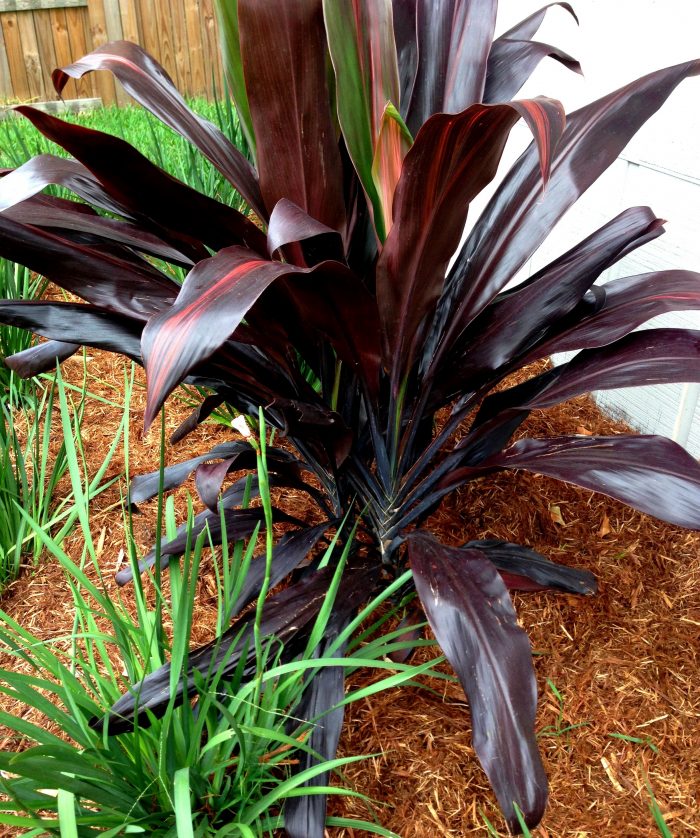
Black plants create instant contrast in a tropical bed. Black elephant ears, like ‘Black Magic’, look almost velvety against brighter greens and yellows. That kind of contrast grabs the eye immediately.
Try placing a black-leafed plant next to something chartreuse or silver. The difference will pop without you needing a single flower.
Persian shield works wonderfully here too, since its purple sheen plays off dark foliage in a way that feels intentional and designed, not accidental.
7. Combine Coleus and Impatiens for Easy Color
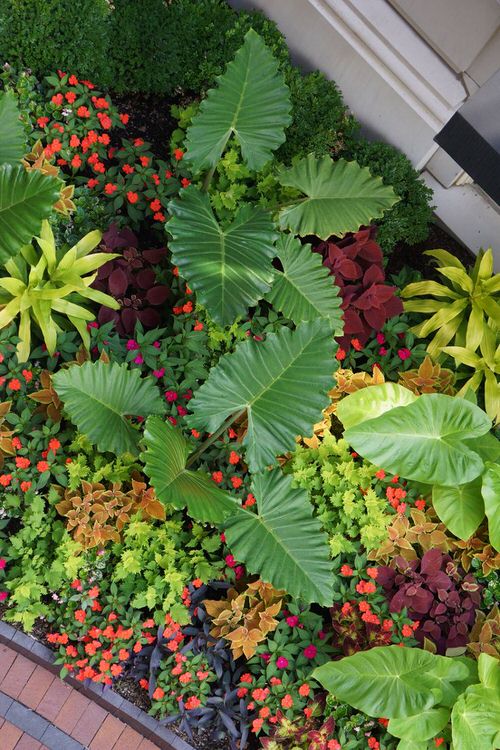
Not every tropical plant needs to be dramatic or oversized. Coleus and impatiens fill gaps between bigger plants and add color without stealing the spotlight.
Coleus comes in hundreds of leaf patterns, so finding one that matches your color scheme is never hard.
Impatiens bloom nonstop in shade, which solves a real problem for tropical beds tucked under trees.
Both plants are cheap, widely available, and forgiving if you forget to water them once in a while. They’re basically the reliable friends of the tropical garden world.
8. Use Heliconia for a True Rainforest Feel
Heliconia brings something most tropical plants can’t offer: those wild, beak-shaped flower bracts in orange and red.
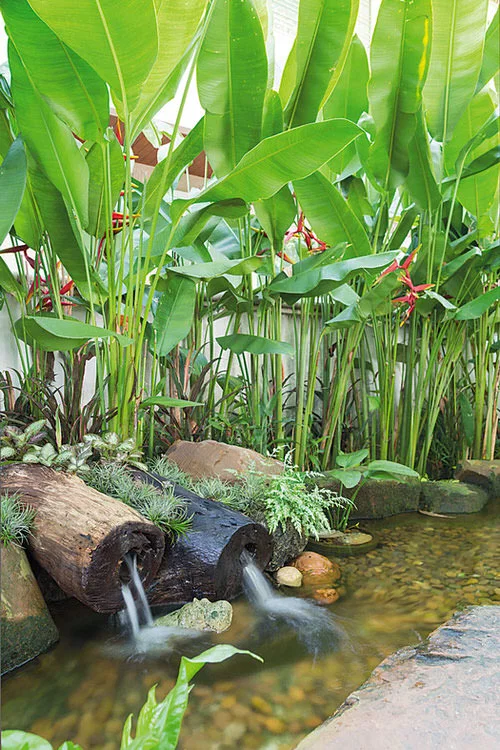
They look almost fake, honestly, like something a florist designed rather than nature. That’s exactly why they work so well in a bed meant to feel exotic.
Give heliconia consistent moisture and warmth, and it rewards you with blooms that last for weeks. Pair it near water features if you have one, since the lush look practically begs for a stream or small pond nearby.
Even without water, heliconia holds its own as a showstopper.
9. Add a Stone Path Through Calathea Plantings
Calathea leaves move throughout the day, almost like they’re breathing. That subtle motion makes a bed feel alive.
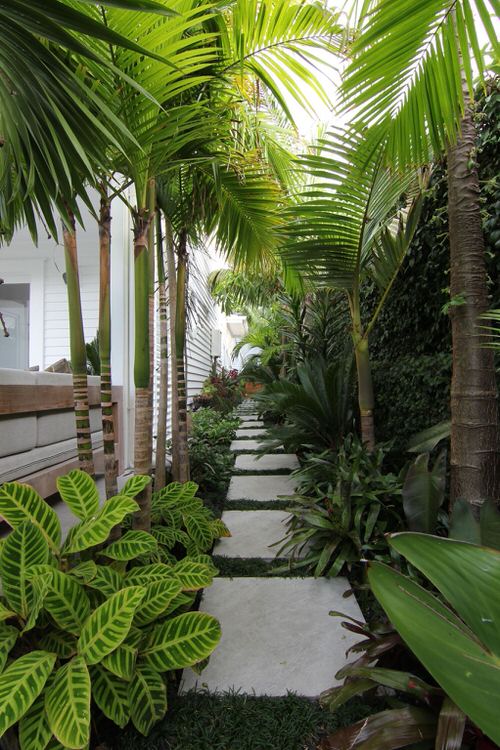
Adding a stone path through a cluster of calatheas turns a simple planting into a real destination.
I love how this combo invites people to actually walk into the garden instead of just looking at it from a distance.
Calathea lutea works especially well here, since its large paddle-like leaves create a canopy effect over the path. Keep the soil moist, and these plants will thrive without much fuss.
10. Create a Mini Island With a Small Pond
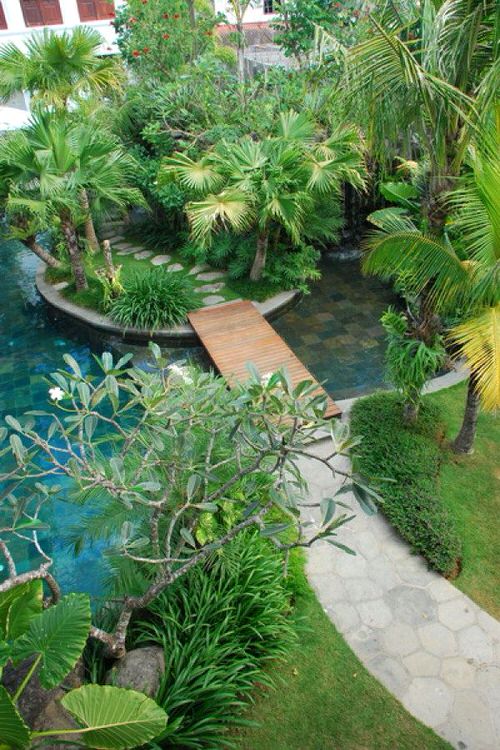
Water changes everything in a tropical bed. Even a tiny pond adds movement, sound, and a cooling effect on hot days.
Surround it with lush plants, and suddenly you’ve got a little island escape right in your backyard.
Elephant ears and ferns work beautifully near water since they love the extra humidity. You don’t need anything elaborate here.
A small pre-formed pond liner and a few well-placed rocks can create this look in a single weekend, and the payoff is huge.
11. Plant Bamboo for Instant Privacy
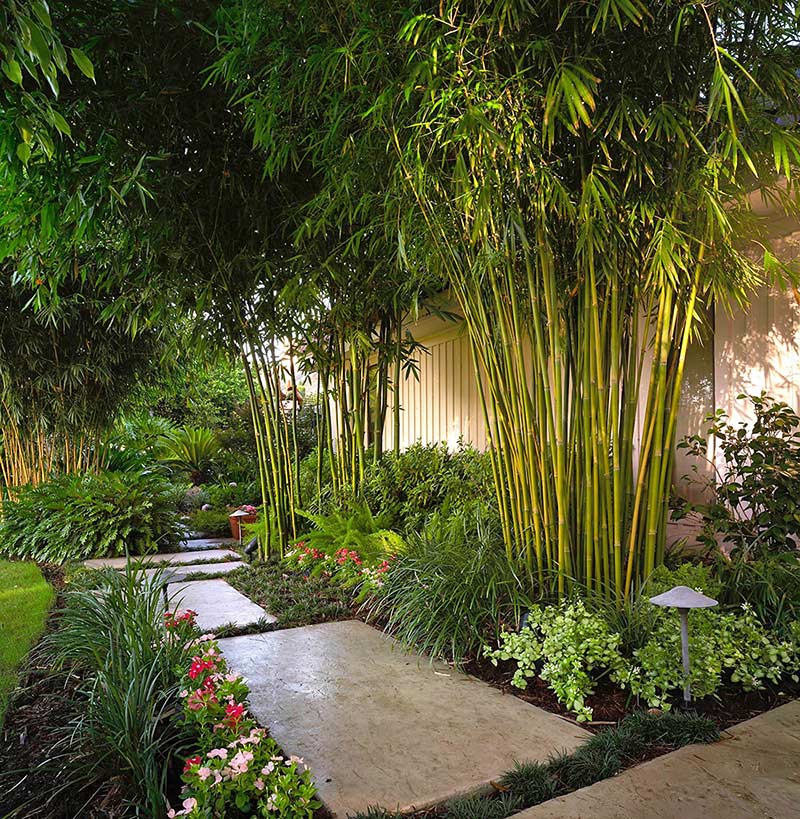
Bamboo grows fast, and it solves a problem a lot of tropical gardens face: nosy neighbors. Planting a row along your fence line creates a natural screen within just one or two seasons.
The rustling sound it makes in the wind is honestly one of my favorite garden sounds.
Choose a clumping variety if you’re worried about it spreading where you don’t want it. Running types can take over a yard fast, so read the label before you buy.
Once established, bamboo needs very little care beyond occasional trimming.
12. Pair Palms With Crotons for Color and Height
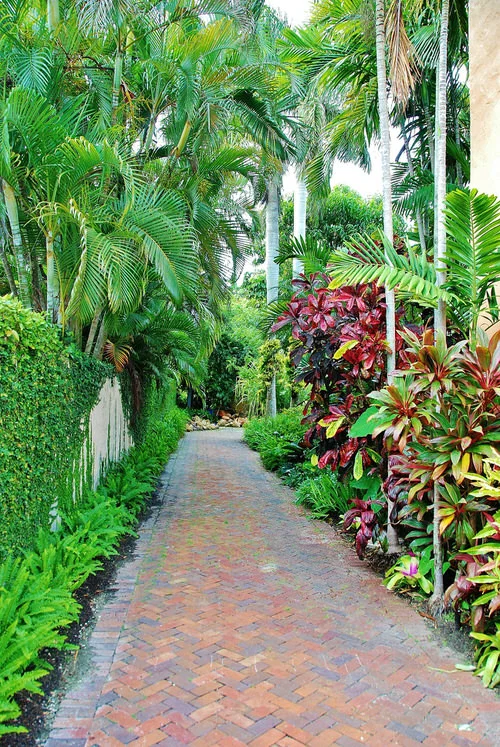
Palms bring height and movement, while crotons bring color that never fades with the seasons.
Together, they create a combo that feels both structured and wild at the same time. I’ve never seen this pairing look bad, honestly.
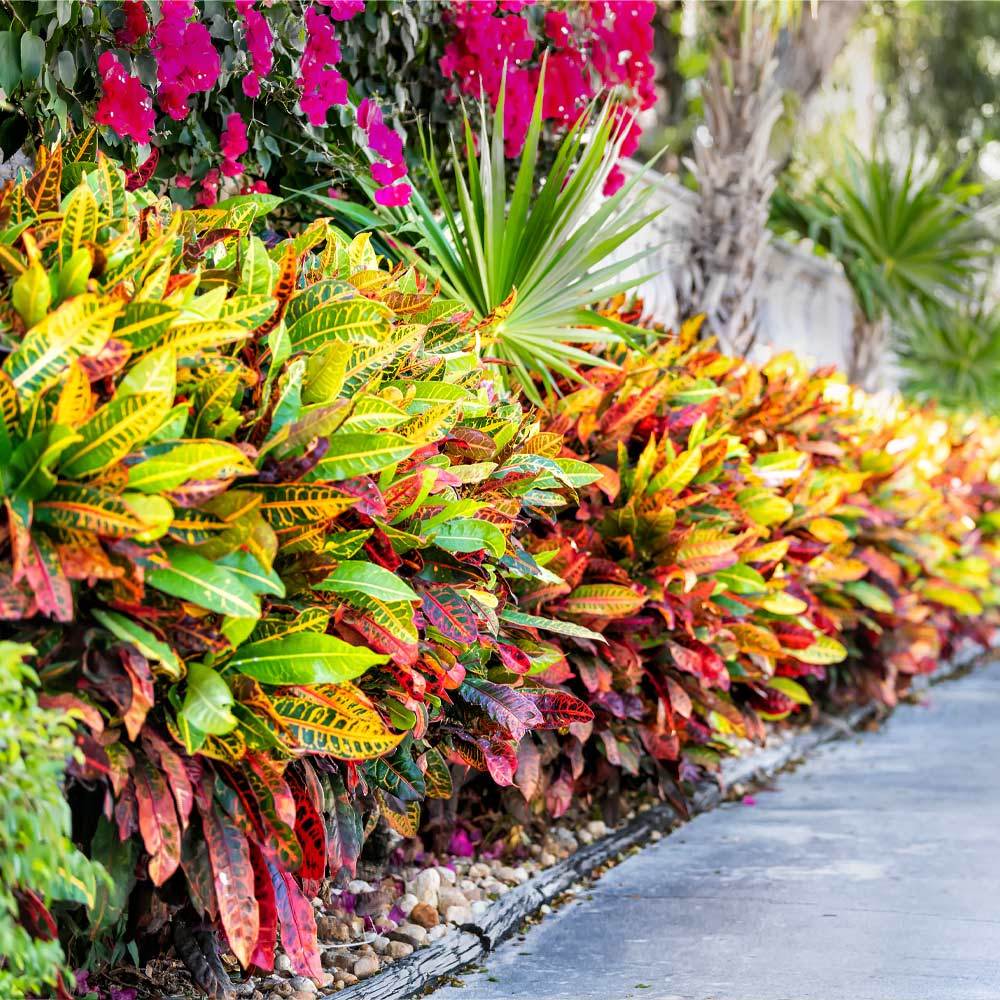
Crotons come in red, orange, yellow, and green, often all on the same leaf. Place them at the base of a palm, and you get layers of color from top to bottom.
This works especially well in warm climates where both plants can stay outside year-round.
13. Add a Big Urn as a Focal Point
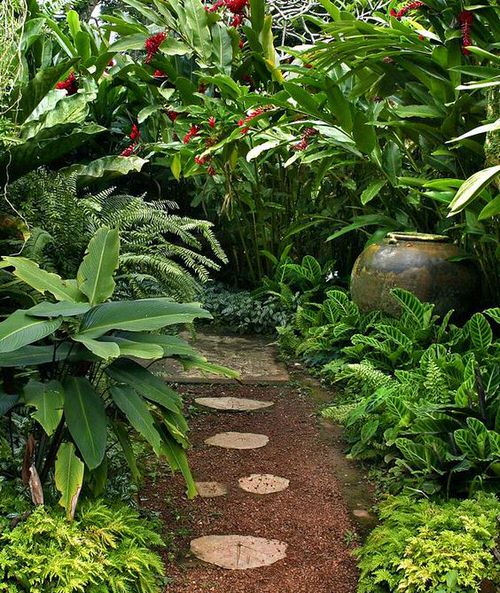
Not every focal point in a tropical bed needs to be a plant. A large urn placed along a path gives your eyes somewhere to land. It adds structure in a space that can otherwise feel like a wild jumble of leaves.
I placed a tall urn at the end of a narrow bed once, and it instantly made the whole area feel finished. Let vines or trailing plants spill over its edges for softness.
Even an empty urn works, though I’ll admit planting something small on top looks even better.
14. Combine Cordylines With Red Palms for Bold Color
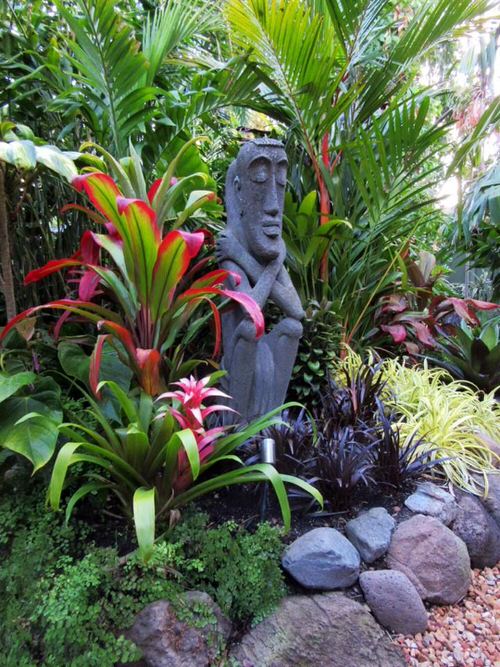
Cordylines bring spiky, colorful foliage that instantly reads as tropical. Pair them with a red palm, and your bed gets height, color, and texture all in one spot.
Bromeliads tucked around the base finish the look without any extra effort.
This combo works in tight spaces too. You don’t need a huge bed to pull this off.
Even a small corner near a patio can handle this trio, and the color payoff is honestly worth the minimal upkeep these plants demand.
15. Build a Vivid Coastal-Style Bed
Coastal tropical beds mix bright flowers with bold foliage for a beachy, relaxed feel.
Think hibiscus blooms next to spiky yuccas and low, spreading ground cover. The combination feels breezy, not overdone.
Salt-tolerant plants matter if you’re near the coast, but the coastal look works anywhere.
I’ve built this style inland just for the vibe, and nobody’s ever guessed I don’t live near the ocean. Add a few weathered rocks or shells for that final coastal touch.
Easy-Care Tips for Your Tropical Garden
Tropical beds look fancy, but they don’t ask for much once you know the basics. I’ve killed my share of plants learning these lessons, so let me save you the trouble.
Water generously. Tropicals crave moisture, especially during hot stretches. Check soil daily during summer, since containers dry out faster than you’d think. Ground beds hold moisture longer, but they still need a good soak during dry spells.
Feed your plants regularly. Fast growers like bananas and cannas burn through nutrients quickly. A monthly dose of fertilizer keeps leaves lush instead of pale.
I switched to a balanced liquid feed a few summers back, and the difference in leaf size was honestly kind of shocking.
Deadhead spent blooms. Snipping tired flowers pushes plants to produce new ones. It also keeps your bed looking fresh instead of ragged.
Remove yellowing or damaged leaves too, since they attract pests and slow down overall growth.
Watch for overcrowding. Tropicals grow fast, and beds fill in quicker than you’d expect. Divide or rearrange plants once they start crowding their neighbors.
Crowded roots compete for water and nutrients, which stresses everyone involved, plants included.
Give plants room to breathe. Good airflow prevents fungal issues, especially in humid climates. Space things out now, even if the bed looks sparse at first. Trust me, that gap will fill in faster than you expect once summer heat kicks in.
Rearrange containers as needed. If you’re working with pots, don’t be afraid to shuffle things around mid-season. Taller plants sometimes need to move back as they grow, and smaller ones might need more light than their original spot offered.
Final Thoughts
Fifteen ideas, one goal: turning any bed into a tropical escape. You don’t need a huge yard or a big budget to pull this off.
Start with one bold plant, like a banana or an elephant ear, then build layers around it.
Mix textures, play with color, and don’t be afraid to add water or a stone path if you have the space. My own garden started with just one plant and grew into something I actually look forward to walking past every single day. Yours can too.
So grab a shovel, pick a few plants from this list, and get your hands dirty this weekend. Your future self, relaxing in a jungle-like backyard, will thank you.