15 Best Plants for Fence Line Beauty and Privacy

Want real privacy in your backyard? Plants can give you that, no expensive fence required. I learned this after my own fence rotted out, and honestly, plants turned out to be the better fix.
You don’t need a huge budget or a construction crew. Just pick the right plants for your fence line, and you’re set. Some grow tall and block views instantly. Others climb, filling gaps in an existing fence until it disappears behind green leaves.
Renters can do this too. Containers and fast growers work even without permanent structures. Rural yards benefit just as much, adding lush greenery where there’s nothing but open space.
Whatever your yard looks like, there’s a plant here that’ll fit. Let’s find yours.
Evergreen Shrubs for Year-Round Privacy
Nothing beats evergreens when you want privacy that never takes a season off. Deciduous plants look great in summer, sure. But bare branches in January? That’s a privacy plan with a hole in it.
1. Emerald Arborvitae
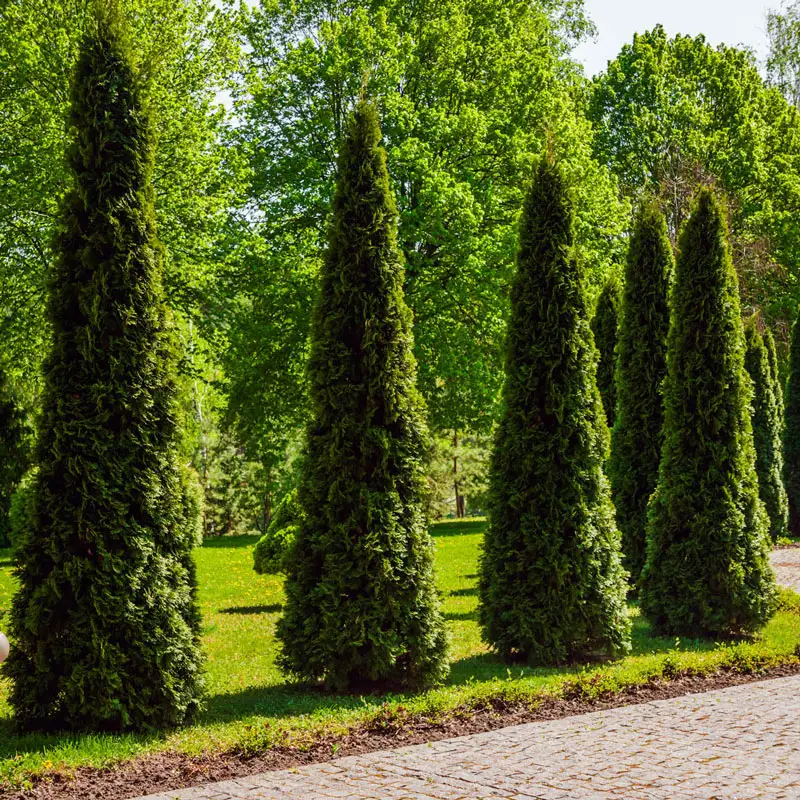
Tall, narrow, and dense, Emerald Arborvitae grows into a genuine green wall with barely any effort from you. It reaches 15 to 20 feet high but only spreads about 4 feet wide, so it fits tight side yards perfectly.
Flat, feathery needles hold their color through winter, unlike a lot of so-called “evergreens” that go patchy.
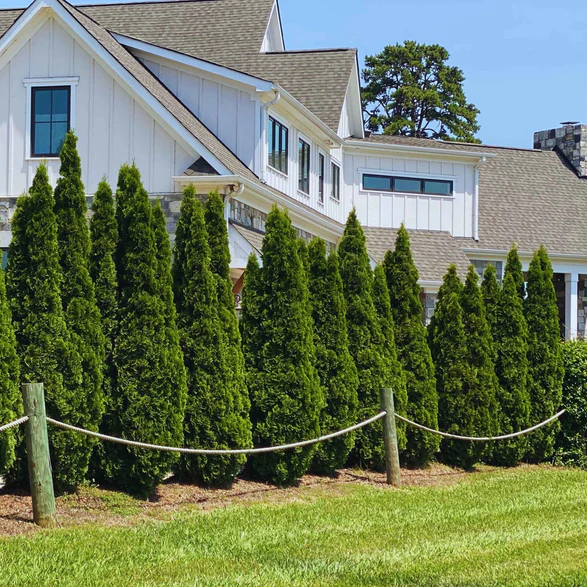
My neighbor planted a row of these along her back fence three years ago. Already, she can’t see into our yard at all during her morning coffee. That’s the kind of return you want from a plant.
Also read: 13 Best Climbing Plants for Shady Areas
2. English Laurel
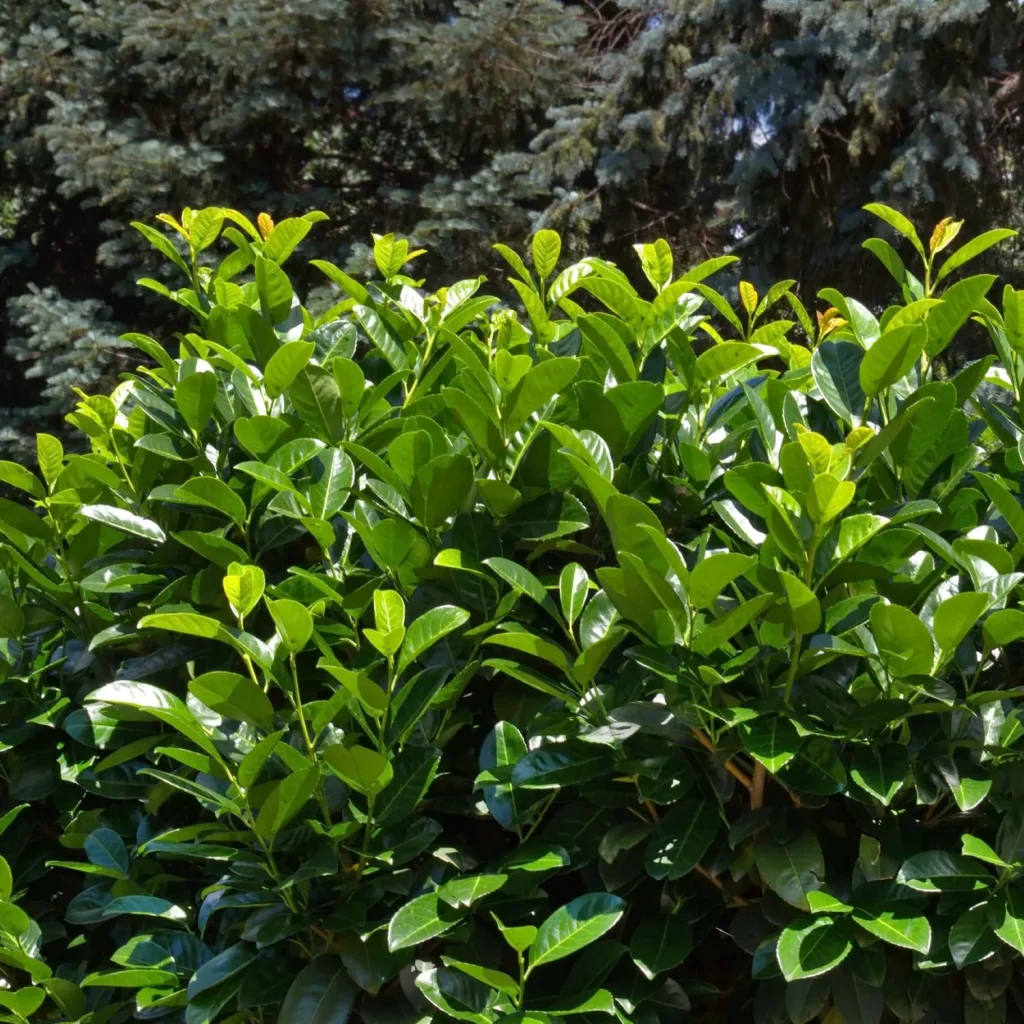
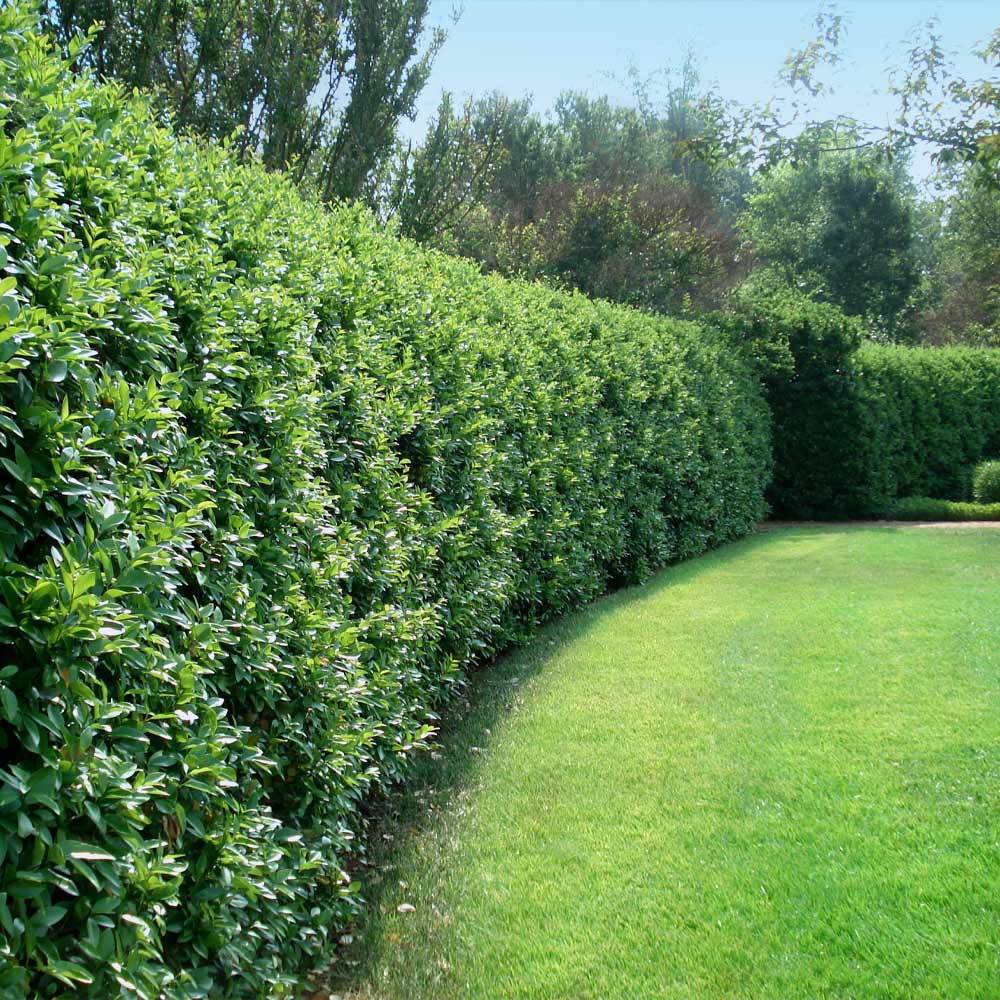
Glossy, thick leaves make English Laurel one of the fastest ways to build a solid green screen.
Full sun or partial shade both work fine for this plant, and drought barely fazes it once established. Pests mostly leave it alone too.
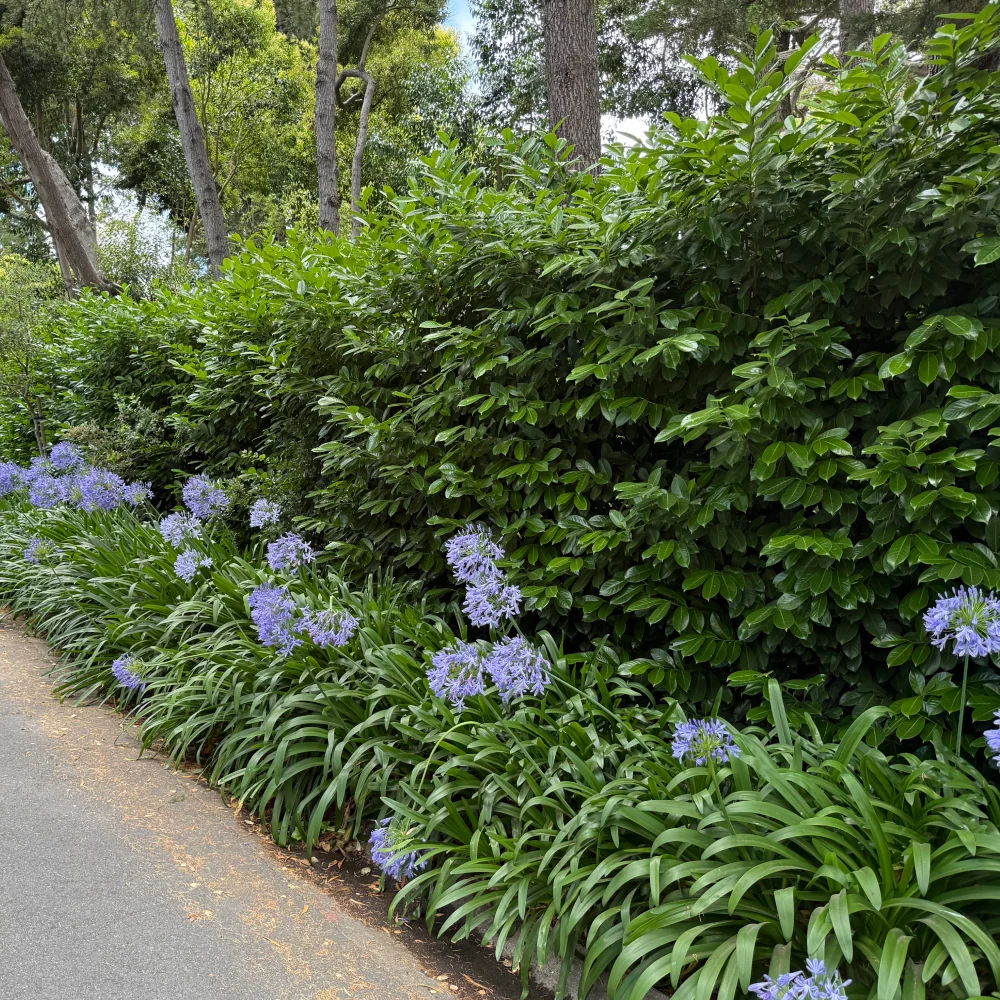
Growth speed cuts both ways here. Left alone, laurel gets bulky and wild fast, so you’ll want pruning shears ready every year. Small yards might find it a bit much, honestly.
3. Privet
Cheap, fast, and reliable, Privet has been a go-to hedge plant for generations of gardeners. Choose an evergreen variety if privacy is your real goal, since deciduous types drop their leaves right when you need coverage most.
Dense branching means gaps disappear quickly once it fills in.
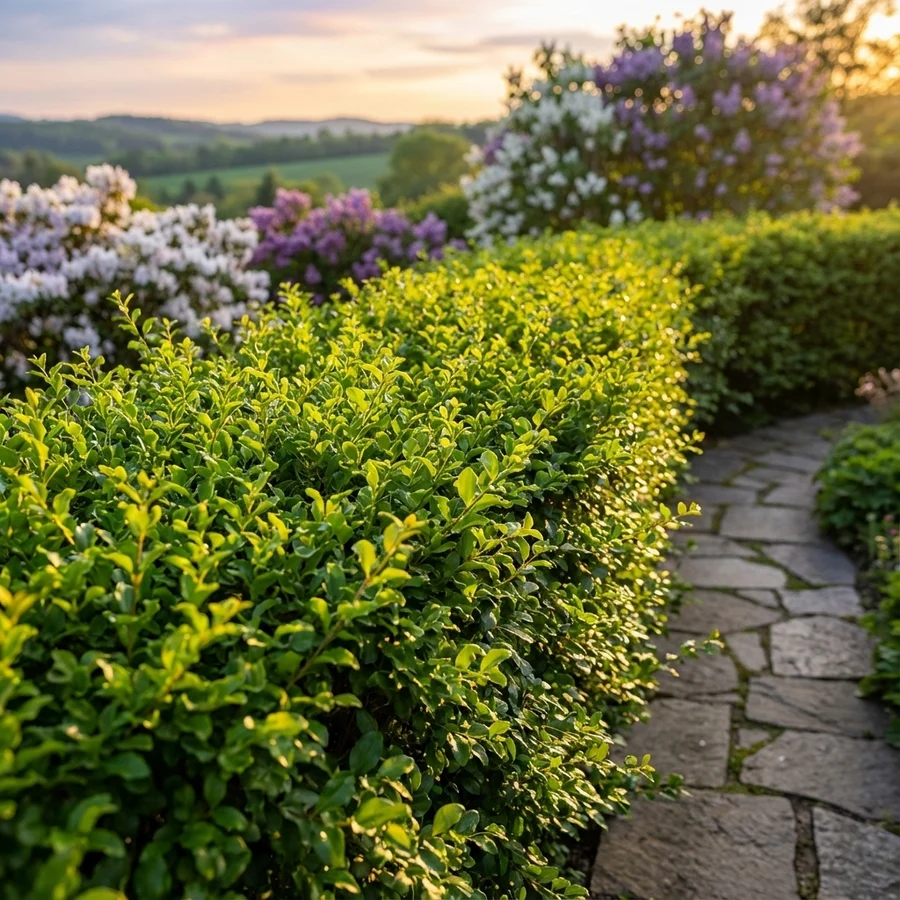
Some regions consider certain privet varieties invasive, so check with a local nursery first. A quick call saves you a headache later.
4. Blue Princess Holly
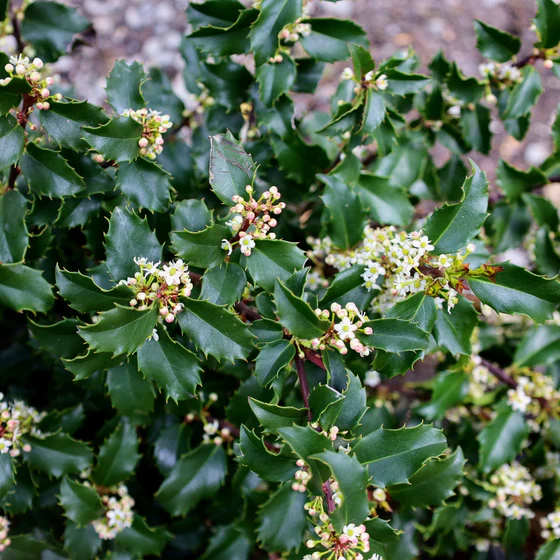
Red berries and white spring flowers give Blue Princess Holly way more personality than its name suggests.
This evergreen shrub climbs to about 15 feet tall and 10 feet wide, forming a genuinely dense screen. Birds love the berries, and honestly, so do I.
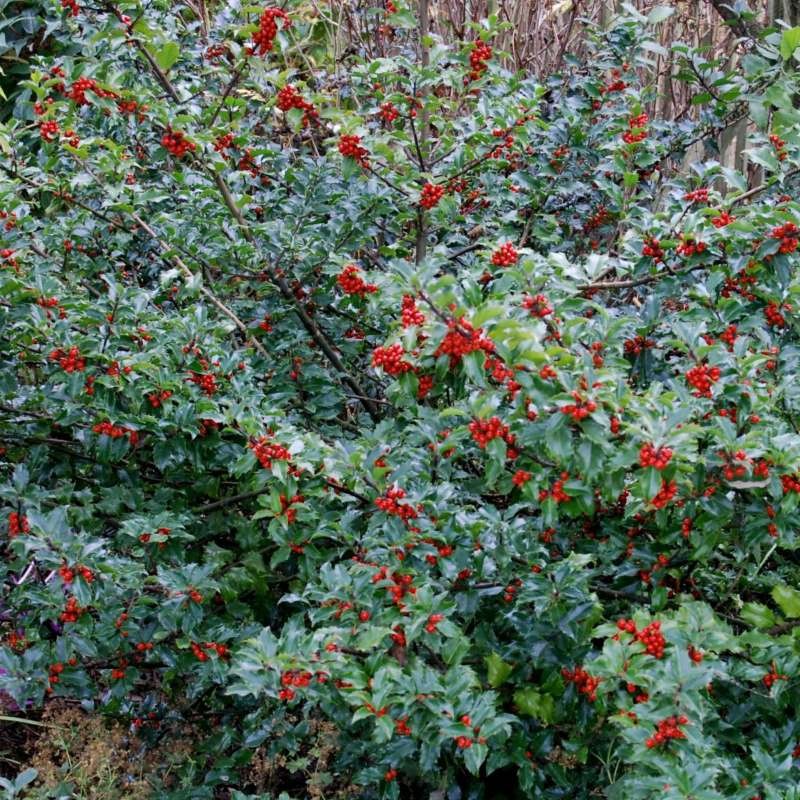
Pruning keeps it in check if your space runs smaller. Wear gloves though. Those leaves have a spiky edge that bites back.
Flowering Shrubs That Add Color and Coverage
Privacy doesn’t have to mean boring green walls. Flowers add personality while still blocking your neighbor’s view. These next few plants earn their spot on any privacy list twice over.
5. Lilac
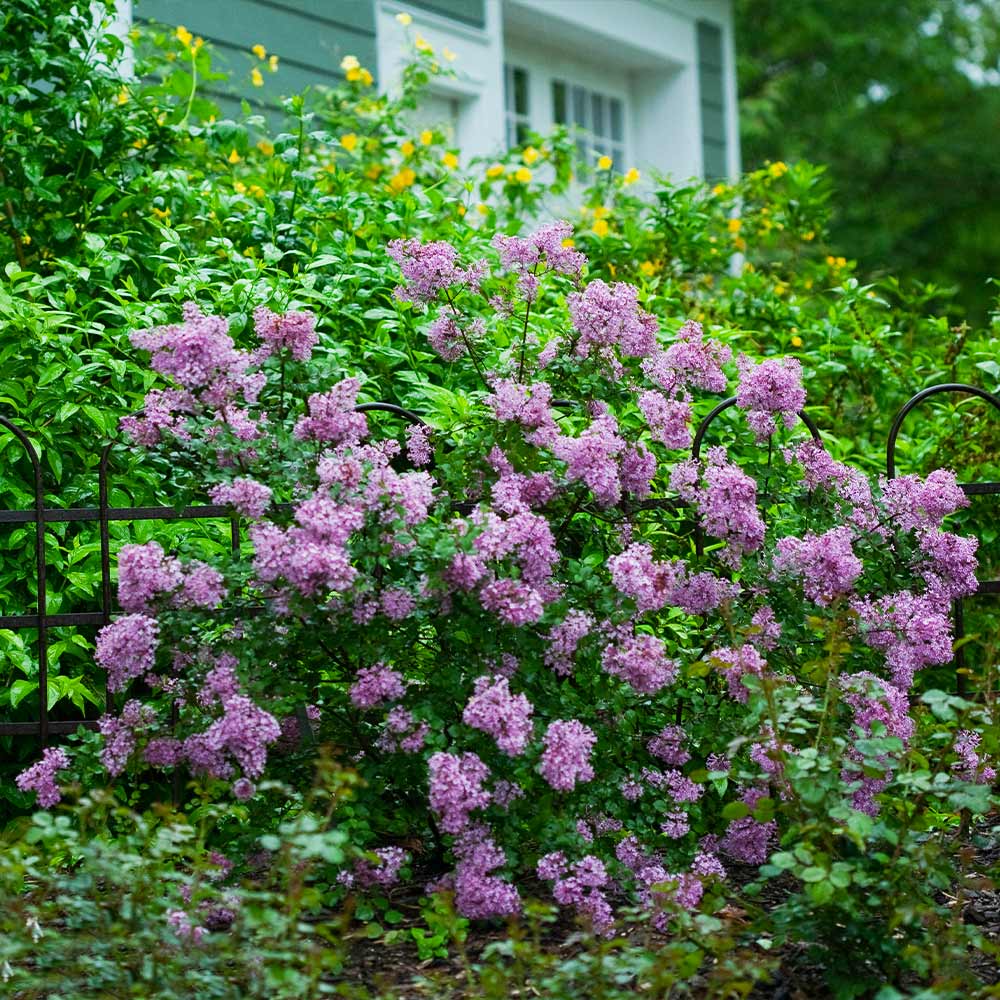
Fragrant purple blooms make Lilac one of the most-loved shrubs in cooler climates. Spring brings roughly two weeks of that famous scent drifting through your whole yard.
Height reaches up to 15 feet with a spread of 12 feet, so give it room.
Pruning stays minimal since lilac only grows about a foot each year. Patience pays off here. Once mature, few plants look this good lining a fence.
6. Rose of Sharon
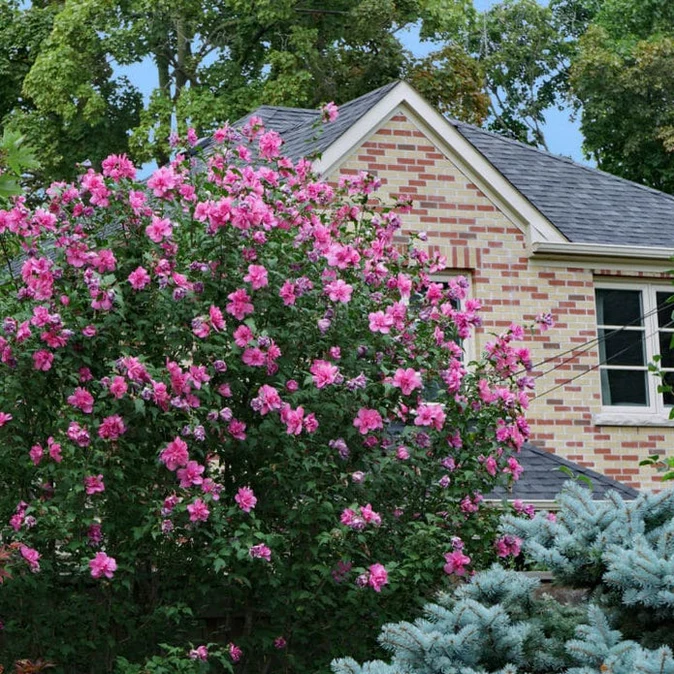
Blooms in red, pink, blue, purple, or white make Rose of Sharon a color chameleon for your border. Height typically lands between 8 and 10 feet, with a spread of 4 to 6 feet.
Plant several in a row and watch them form a genuinely colorful screen by midsummer.
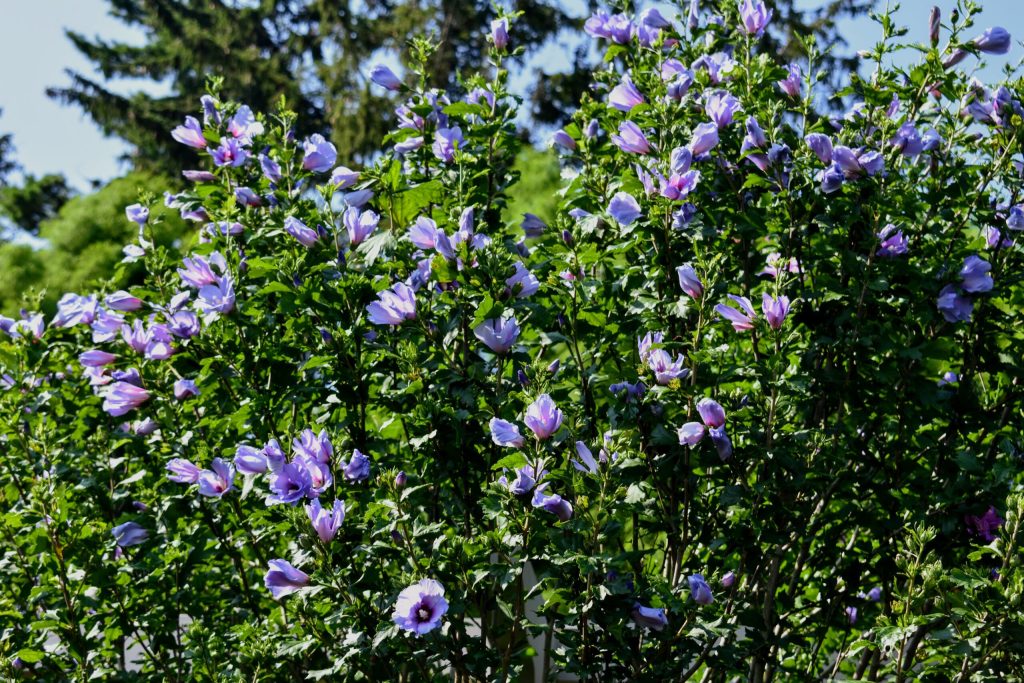
Regular pruning keeps this shrub tidy and full. Skip that step, and it gets leggy fast. A little effort each spring goes a long way.
7. Azalea
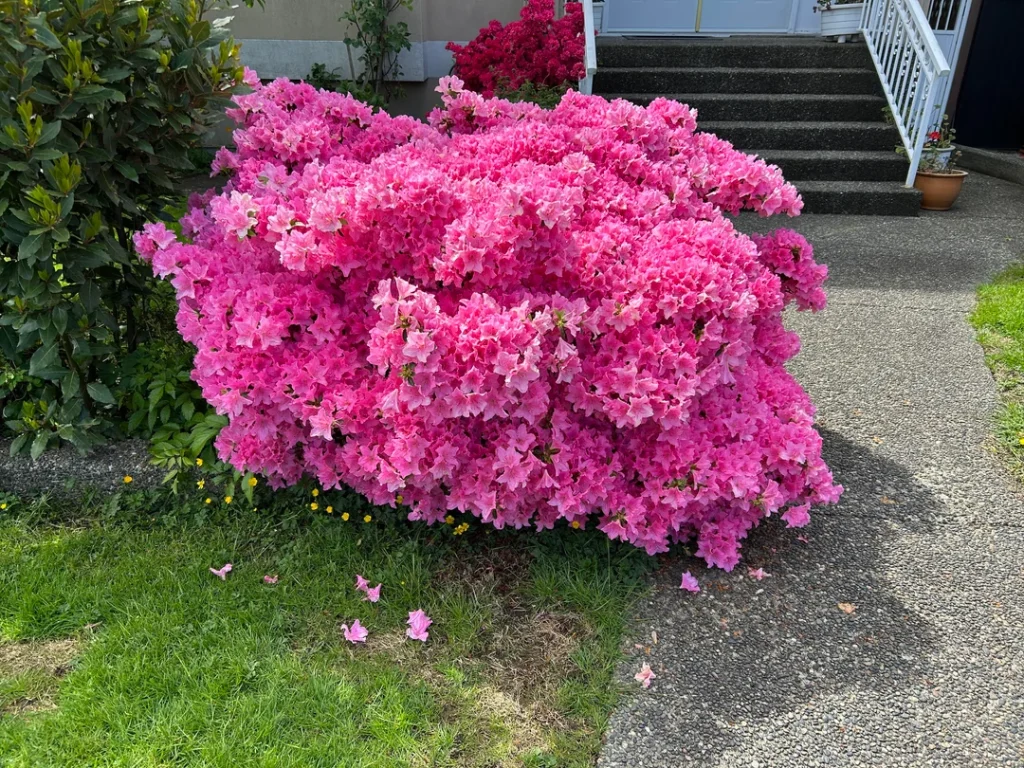
Few shrubs pack as much color punch as Azalea in bloom season. Given good soil and steady fertilizing, azaleas can reach 20 feet tall and wide, though most gardeners prune them smaller.
Rhododendron cousins offer similar coverage if you want variety along the same fence line.
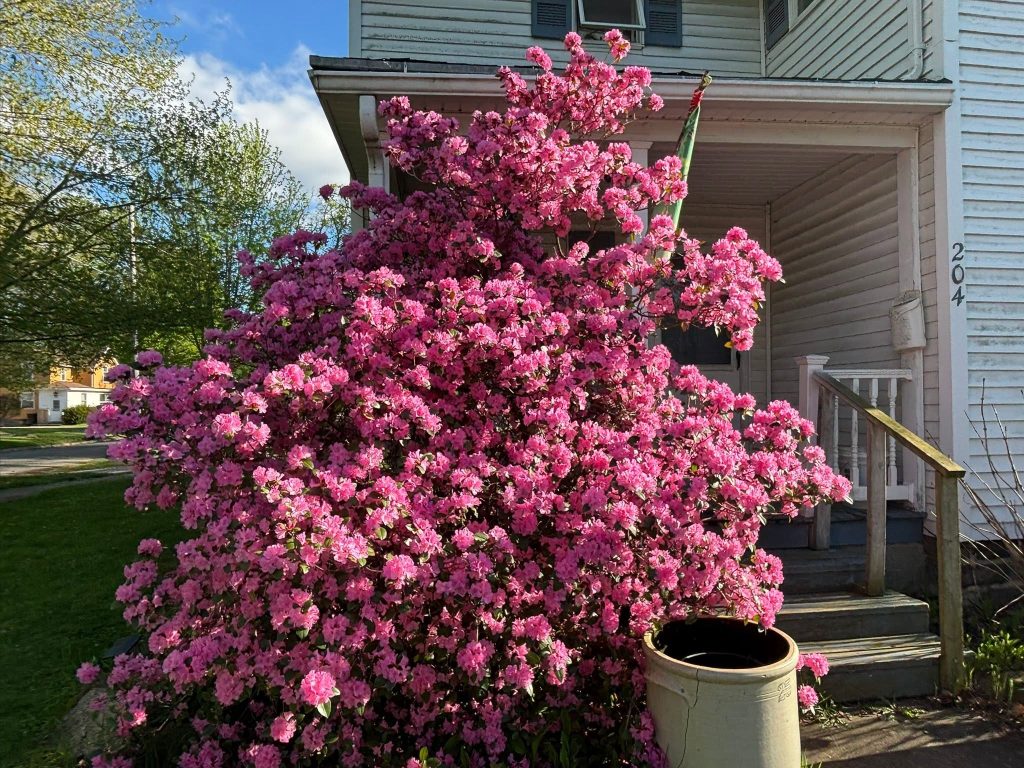
Partial shade suits azaleas better than blazing sun. My own azalea hedge struggled the first summer until I moved it under a taller tree’s dappled light. Now it thrives.
8. Blackhaw Viburnum
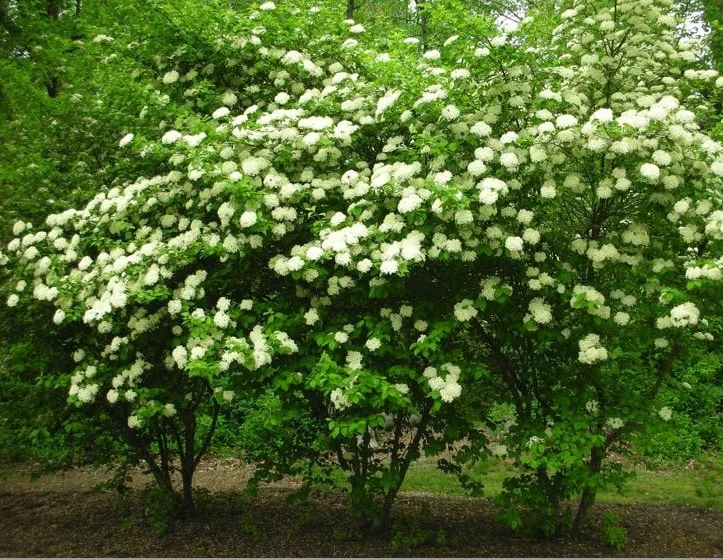
White spring flowers turn into edible fruit by fall on Blackhaw Viburnum, and birds show up for the show. This deciduous shrub reaches about 15 feet tall with a slightly narrower spread near 12 feet.
Fall foliage shifts to purplish bronze or deep crimson, giving your fence line real seasonal drama.
Wildlife interest sets this one apart from purely ornamental choices. Berries feed songbirds right through autumn. That’s a privacy plant doing double duty as a mini ecosystem.
Vines and Climbers for Fences and Trellises
Got an existing fence that just looks tired? Vines transform it without a full teardown.
These climbers grab onto structure and fill gaps fast, especially once they get a full season to establish.
9. Wisteria
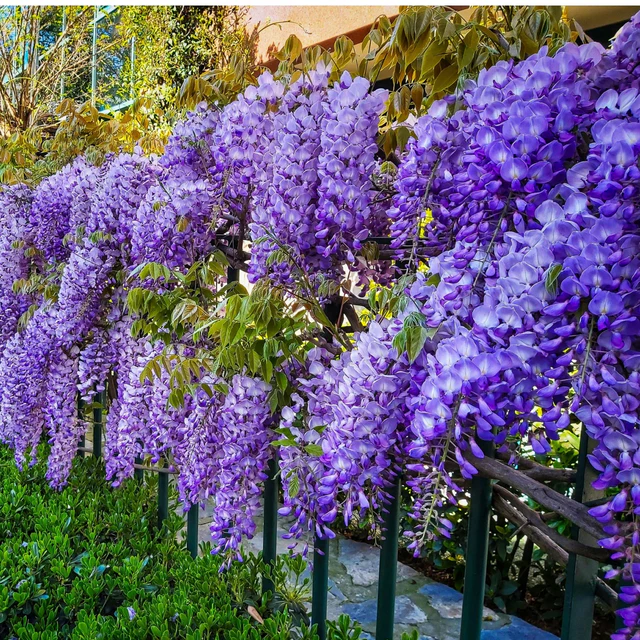
Massive cascading purple flowers make Wisteria the showstopper of the vine world. Full sun and a sturdy structure are non-negotiable, since mature wisteria gets seriously heavy over time.
Winters leave it bare and woody, so pair it with an evergreen nearby if you want year-round screening.
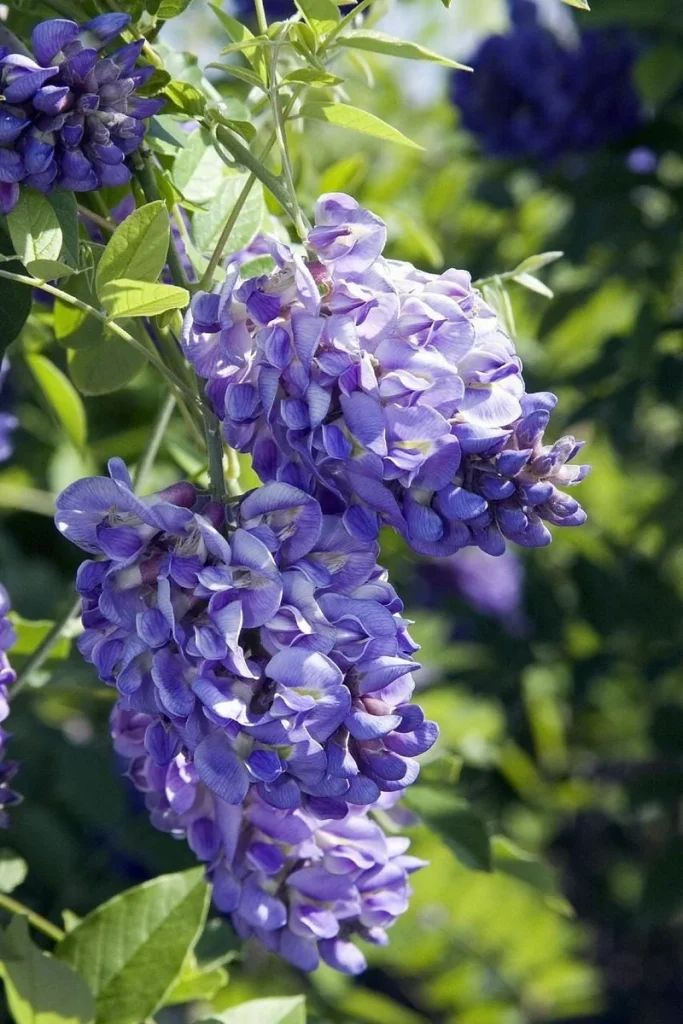
Years pass before wisteria really fills out. Don’t expect instant results. Once established though, neighbors will stop and stare every single spring.
10. Climbing Roses
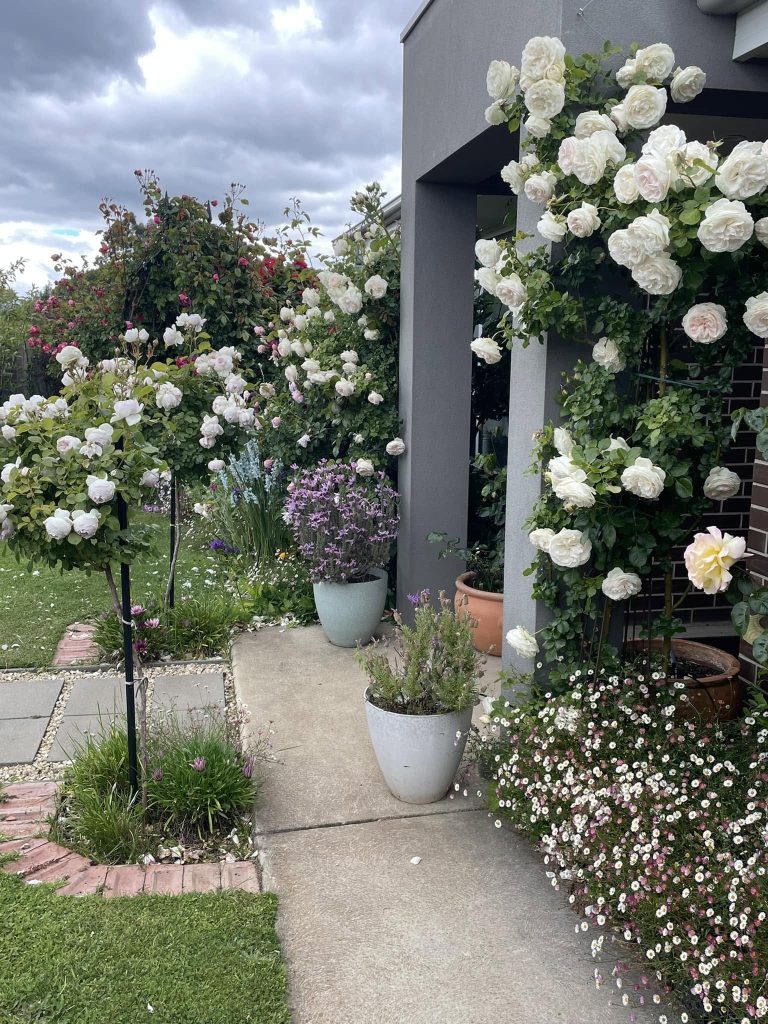
Nothing dresses up a chain-link fence like Climbing Roses trained along its length. Full sun brings out the densest growth and the most blooms.
Height maxes out around 6 to 12 feet, plenty tall enough to block a standing view from next door.
Thorns mean gloves are mandatory during pruning season. Worth it, though. Few plants combine beauty and a natural “keep out” message quite this well.
11. Honeysuckle
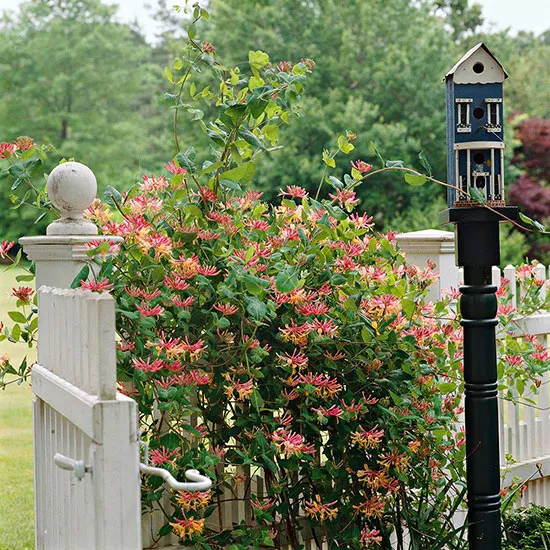
Sweet, nostalgic fragrance drifts from Honeysuckle every early summer, and I genuinely look forward to it each year.
Full to partial sun keeps blooms coming strong. Drought rarely bothers this vine once its roots settle in.
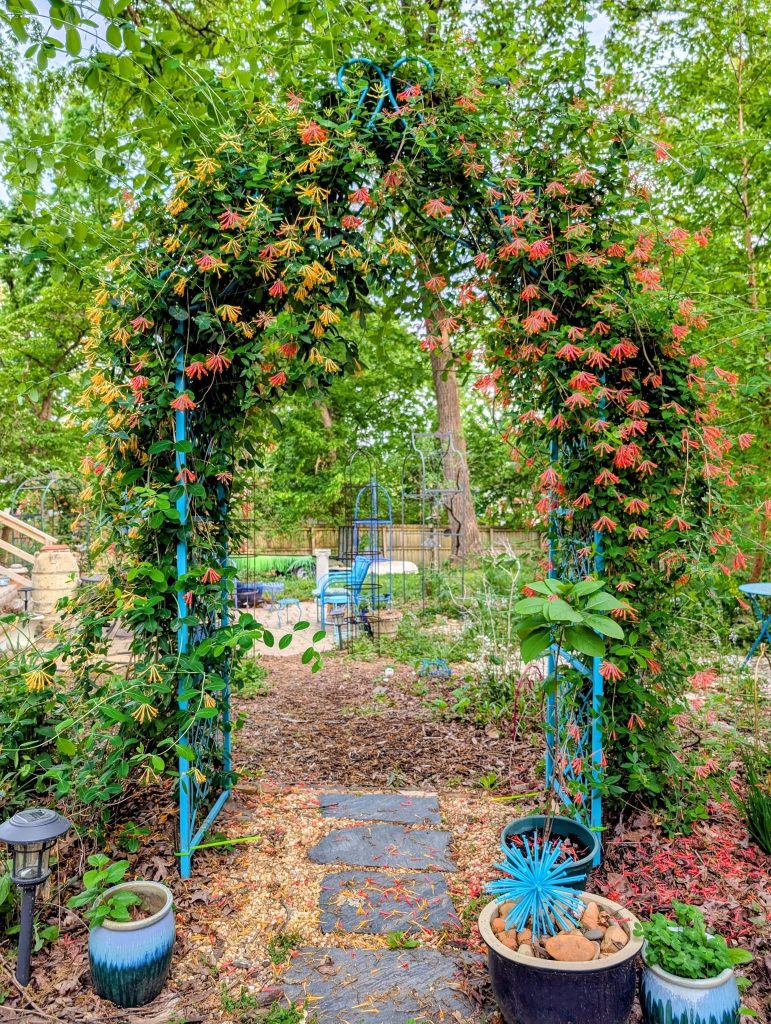
Little maintenance is needed beyond an annual trim. Mine grows along an old trellis and has never once shown signs of pests or disease.
That kind of easy reliability earns a permanent spot in my garden.
12. English Ivy
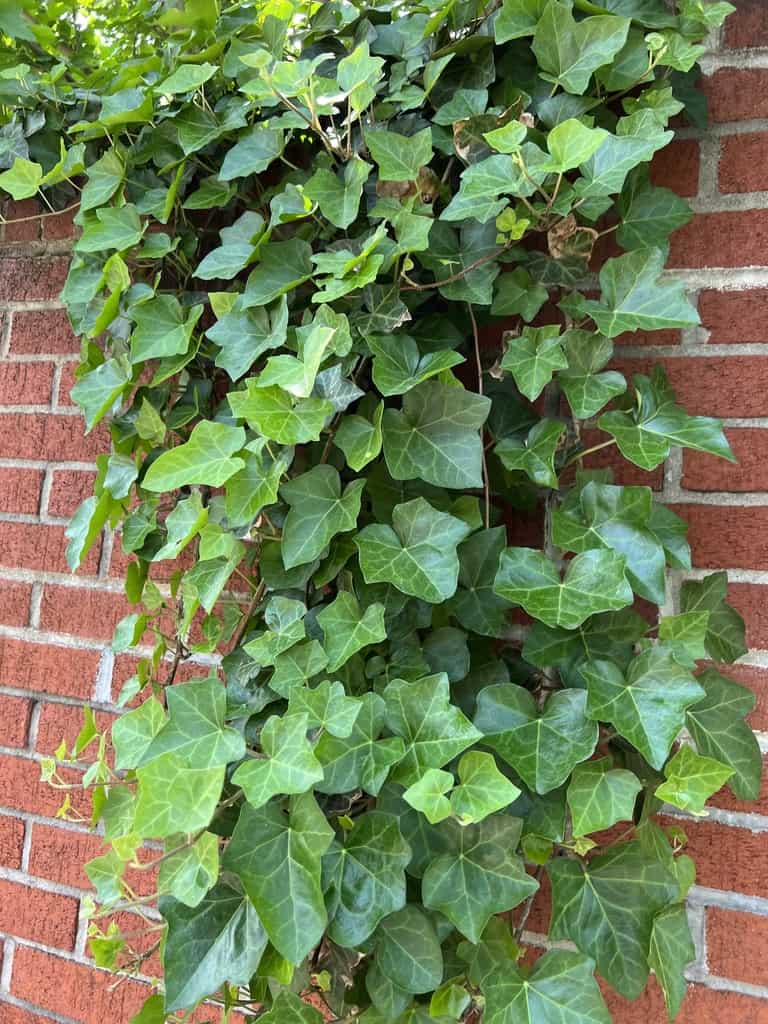
Chain-link, lattice, or plain masonry all disappear under a mature stand of English Ivy. Growth can stretch up to 80 feet given enough time and space.
Dense evergreen leaves mean privacy that holds strong through winter too.
Vigorous growth demands yearly control, or ivy spreads well past its intended spot. Keep pruners handy. A little discipline keeps this vine a privacy solution instead of a takeover.
Trees That Build a Tall, Lasting Screen
Sometimes shrubs just don’t cut it. Trees solve height problems that no bush ever will, especially against a two-story house next door watching your whole backyard.
13. Eastern White Pine
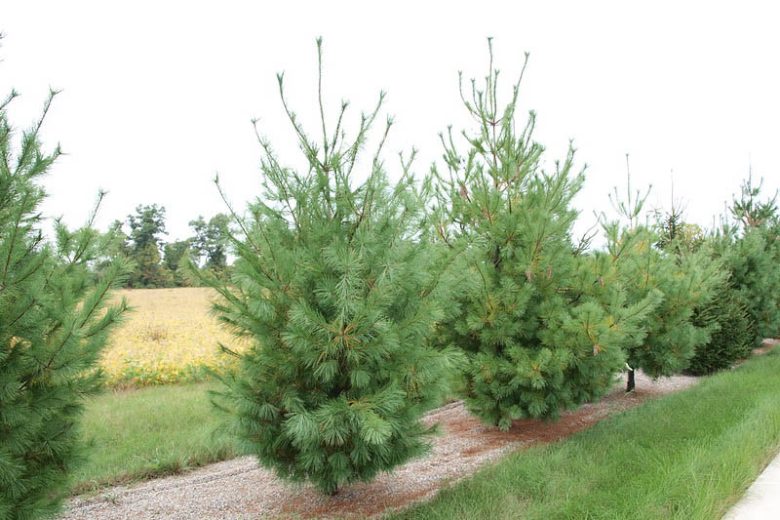
Soft, feathery needles give Eastern White Pine a gentler look than most privacy trees. Left wild, it reaches 80 feet or more in a forest setting.
Pruned and shaped, though, gardeners keep it at a manageable height while still blocking every angle of view.
Full sun brings out the healthiest growth. Rows of these pines create one of the tallest living fences you can plant. Give them room, since crowded pines thin out and lose that dense look you’re after.
14. Canadian Hemlock
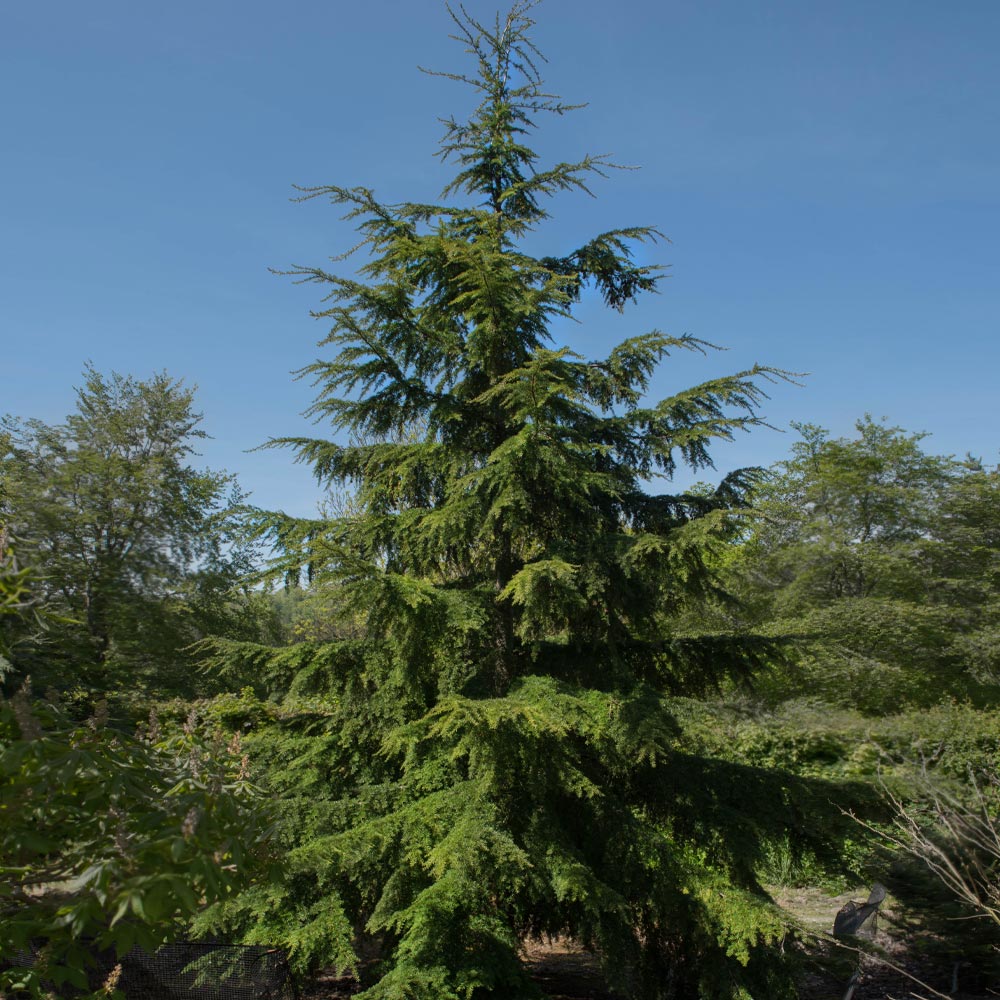
Feathery, soft foliage makes Canadian Hemlock a favorite for anyone who wants texture along with coverage. Shrub-form cultivars like ‘Gentsch White’ or ‘Sargentii’ stay far shorter than the towering 70-foot wild version.
Pruned into a hedge, hemlock forms a dense, attractive wall almost year-round.
Shade tolerance sets this tree apart from most privacy evergreens. Many pines and cedars demand full sun, but hemlock handles a shadier fence line just fine.
That flexibility makes it worth considering if your yard doesn’t get much direct light.
Edible Options That Double as Privacy Screens
Why plant something purely decorative when food could grow along that same fence? These next two choices earn their spot by feeding you while they block the view.
15. Grape Vines
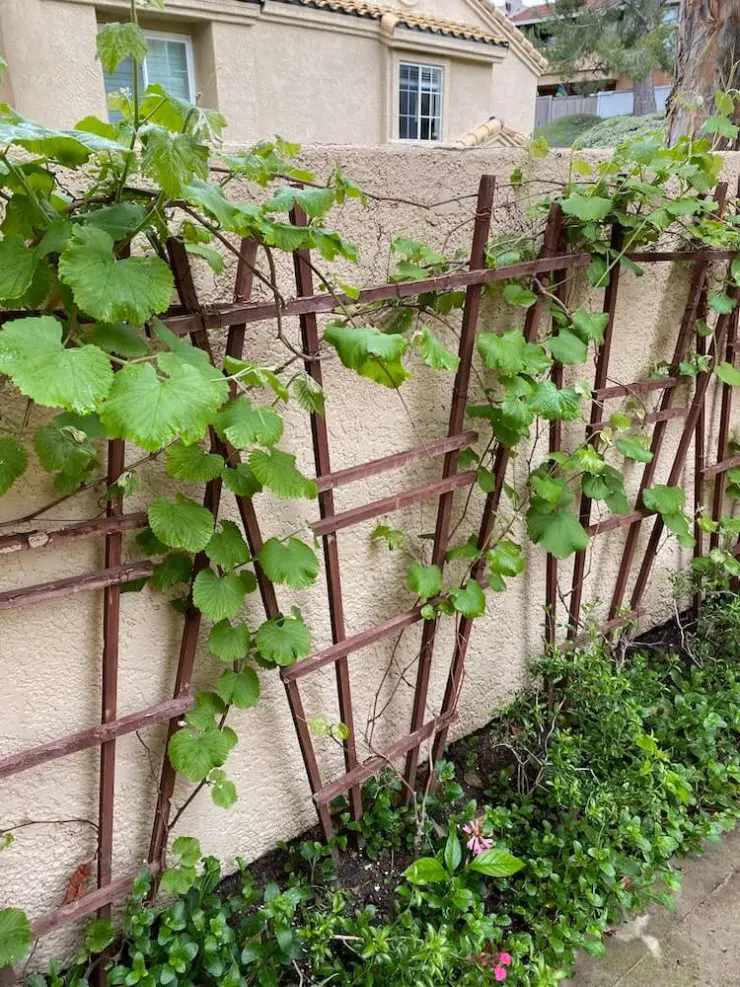
Juicy fruit and thick summer foliage both come from Grape Vines trained along a fence or trellis. Six or more hours of direct sun each day keeps production strong.
Regular watering during the growing season matters too, especially in the first couple years.
Pruning shapes both the harvest and the privacy coverage. Skip it, and vines sprawl unevenly with gaps showing through.
My neighbor grows grapes along his back fence, and neighborhood kids occasionally find a ripe cluster hanging low enough to grab.
Bonus: Blueberry Bush
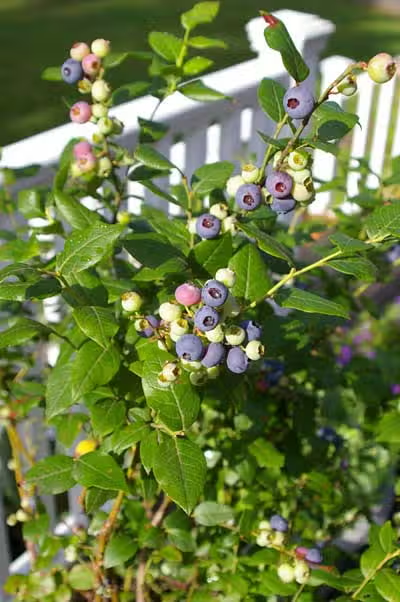
Dense branches and genuinely tasty fruit make Blueberry Bush an underrated privacy pick. Height ranges up to 8 feet with a spread near 10 feet, depending on variety.
Evergreen options exist in warmer regions, stretching that privacy coverage through winter too.
Birds show up for the berries just as much as you will. That’s fine, honestly. Sharing a little fruit feels like a small price for a fence line that feeds both you and the local wildlife.
Choosing the Right Plants for Your Fence Line
Fifteen options sound like a lot, but narrowing it down comes down to just a few questions.
What’s your sunlight actually like? Sun-hungry plants like grape vines and roses sulk in shade, while hemlock and azaleas thrive there instead.
Height matters just as much as sun. A row of holly won’t block a second-story window, but Eastern White Pine will.
Match your pick to the actual view you’re trying to hide, not just whatever looks nice at the garden center.