15 Indoor Plant Shelf Ideas That Make Your Home Feel Calm, Fresh, and Alive

I used to think plant shelves were just for people with huge windows and perfect homes. Then I added one small shelf near my own bright corner, and the room instantly felt softer.
That’s the magic of indoor plant shelves.
They don’t just hold plants. They bring height, texture, color, and a little daily calm into your home.
Whether you rent or own, you can use a shelf to turn an empty wall, window, or corner into something fresh and personal.
Let’s explore 15 indoor plant shelf ideas you can actually use in your living room.
15 Stunning Indoor Plant Shelf Ideas for Living Room
1. Floating Grow-Light Garden

This idea is perfect when you want a lush plant wall but do not have a bright window in the right place. I love how the simple wooden shelves feel warm and natural, while the black brackets give everything a clean, modern structure.
The hidden charm here is the grow lights under the shelves—they make the display practical, not just pretty.
This kind of setup works especially well for trailing plants, leafy philodendrons, pothos, and small statement pots.
Let some vines fall naturally instead of forcing everything to look tidy. That slightly wild, lived-in look is what makes the corner feel comforting.
Actionable Steps:
- Choose sturdy wall shelves with strong brackets.
- Add slim grow lights under each shelf.
- Place trailing plants near the edges.
- Mix terracotta, black, and soft neutral pots.
- Leave some open space so leaves can breathe.
Extra Styling Tip: Add one small framed print or handwritten plant label on the lower shelf. It adds personality without competing with the greenery.
2. Moody Plant Bookcase
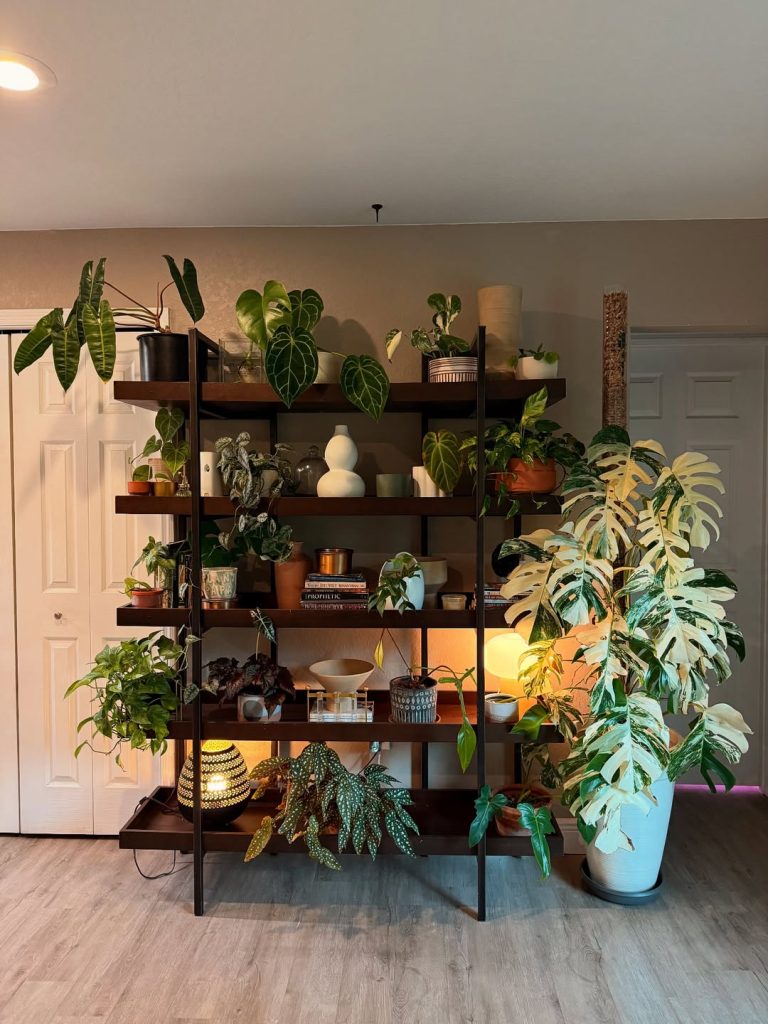
A dark wood bookcase filled with plants has a grounded, cocoon-like feeling. This idea works beautifully if your style leans cozy, collected, and a little dramatic.
The shelves become more than plant storage—they feel like a living cabinet of treasures, with books, vessels, lamps, and leafy shapes layered together.
What makes this look successful is contrast. Deep green leaves glow against dark shelving, while warm lamps create that soft evening atmosphere we all want after a long day.
I’d use this idea in a living room, reading nook, or bedroom corner where you want the room to feel restful and intimate.
Actionable Steps:
- Use a tall open bookcase with deep shelves.
- Place larger plants on the top and bottom.
- Add books and ceramics between pots.
- Use warm lamps for soft, golden lighting.
- Keep heavier pots on lower shelves for safety.
Extra Styling Tip: Repeat one finish, such as matte black, brass, or cream ceramic, across several shelves. This keeps the display from feeling too busy.
3. Slim Console Plant Shelf
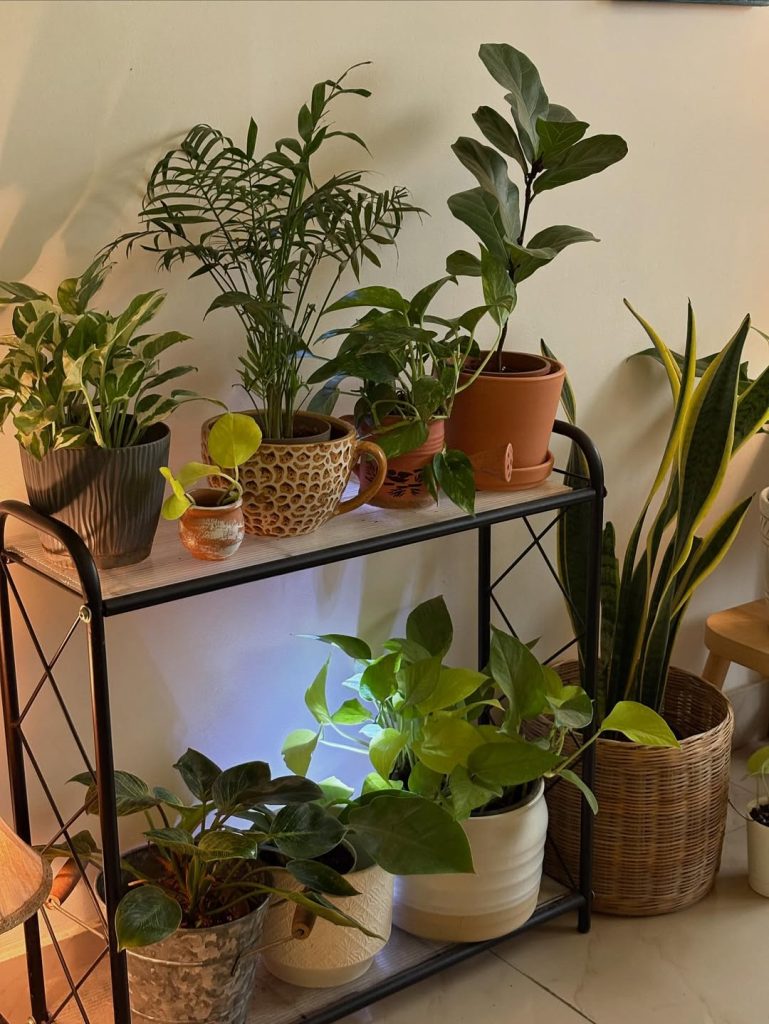
This narrow console-style shelf is a smart choice for renters, small homes, and awkward empty walls. It gives you two levels of plant display without taking over the room.
I like this idea because it feels casual and approachable—like something you could build slowly with plants you already own.
The mix of ceramic pots, terracotta, woven baskets, and soft lighting makes the corner feel warm instead of cluttered. You can place taller plants on the top shelf and fuller, wider plants below.
The open frame keeps the whole piece airy, which is helpful when you want greenery but still need the room to feel spacious.
Actionable Steps:
- Choose a narrow shelf that fits your wall.
- Place tall upright plants at the back.
- Use fuller plants on the lower level.
- Add a small light for evening warmth.
- Group pots in odd numbers for balance.
Extra Styling Tip: Slide a shallow tray under smaller pots. It protects the shelf from water marks and gives the whole arrangement a more intentional look.
4. High Wall Shelf Jungle
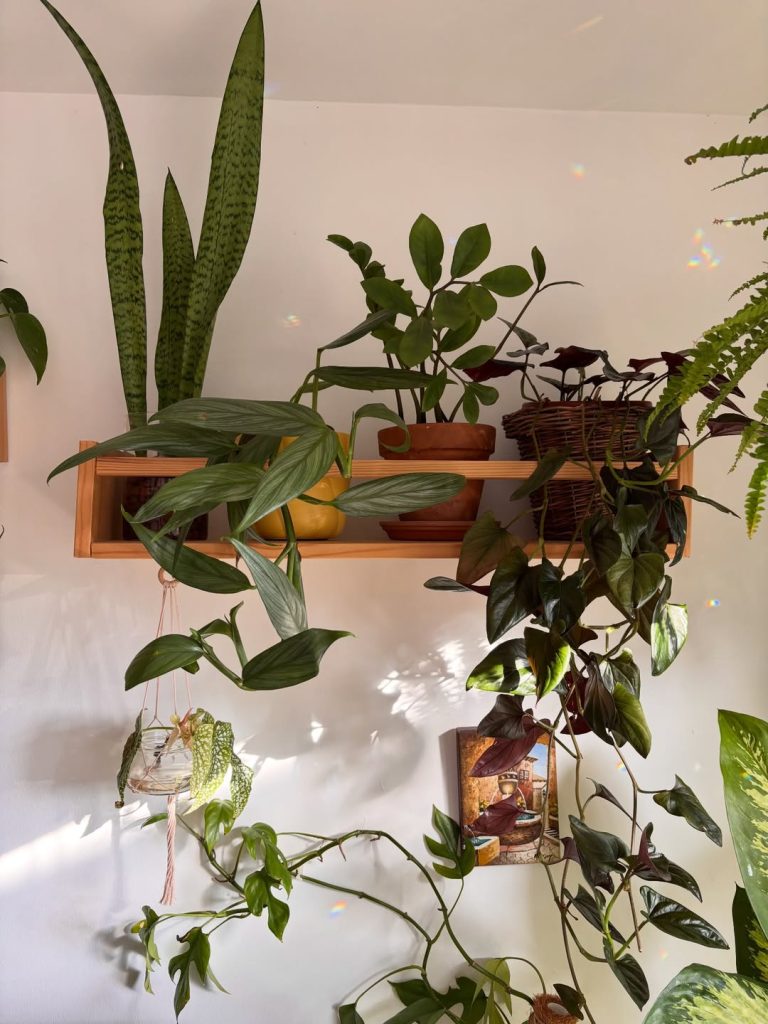
A high wall shelf is a lovely way to use vertical space, especially if your floor is already full.
This image has that soft, sunlit feeling I always associate with relaxed plant homes—nothing too perfect, just leaves stretching naturally toward the light.
The key is to combine upright plants with trailing ones. Tall leaves add height, while vines spill down and soften the wall.
This creates movement, almost like the plants are gently drawing the eye around the room. It is especially useful above a desk, sideboard, or quiet reading corner.
Actionable Steps:
- Install the shelf securely into wall studs.
- Place upright plants toward the back.
- Let trailing plants hang from the front.
- Use lightweight pots where possible.
- Keep a step stool nearby for watering.
Extra Styling Tip: Add a small wall hook below the shelf for a hanging propagation jar. It creates a delicate floating detail and makes the wall feel more layered.
5. Hexagon Wall Plant Display
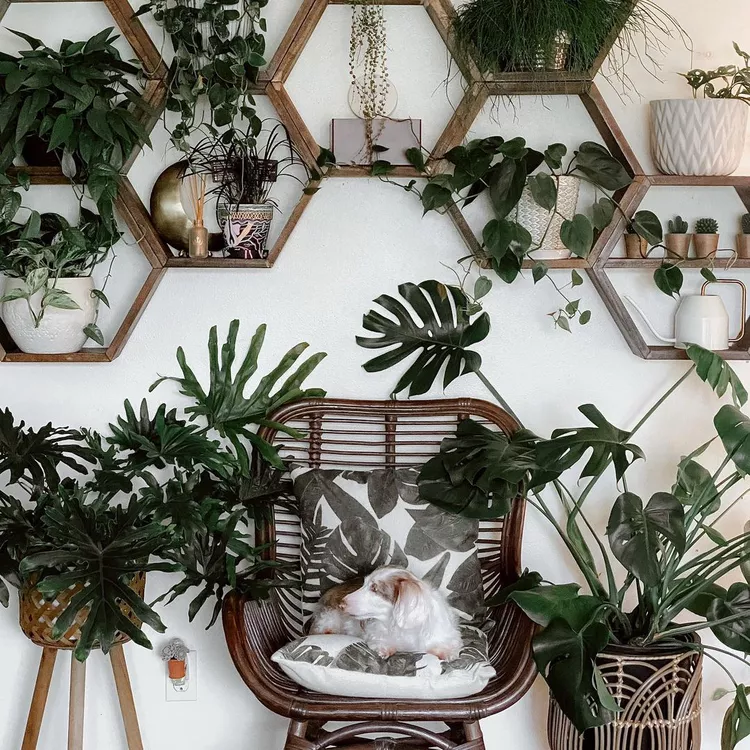
Hexagon shelves are ideal when you want your plant shelf to feel like wall art. The geometric shape adds structure, while the plants bring softness and life.
I like this idea for homeowners or renters who want a decorative focal point without using a large bookcase.
This look works best when you do not fill every single opening. Negative space matters. Let a few shelves hold plants, a few hold small decor pieces, and a few stay visually quiet.
That balance helps the design feel curated rather than crowded. The mix of rattan, wood, leafy plants, and cozy seating also gives the space a relaxed bohemian warmth.
Actionable Steps:
- Arrange hexagon shelves in a loose cluster.
- Use small to medium plants only.
- Mix trailing leaves with compact plants.
- Leave a few openings partly empty.
- Add one or two natural decor pieces.
Extra Styling Tip: Paint the wall behind the shelves a soft warm white or muted clay tone. It makes the wood and greenery feel richer without overwhelming the room.
6. Entryway Plant Station
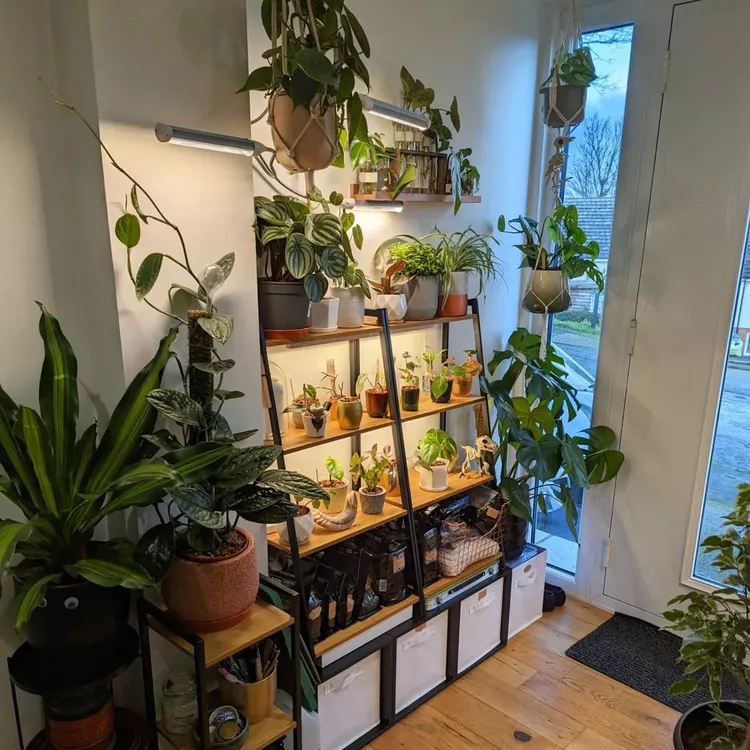
This plant shelf idea is practical and beautiful because it uses an entryway or door-side wall that might otherwise feel empty.
I love how this setup combines shelves, hanging planters, grow lights, storage bins, and floor plants. It feels like a tiny indoor greenhouse tucked into everyday life.
For renters, this is especially useful because it keeps plant care supplies in one zone.
You can store soil, watering tools, trays, and extra pots below while keeping the top shelves bright and decorative. The result feels organized, but still soft and green.
Actionable Steps:
- Use a shelving unit with storage space below.
- Add grow lights if natural light is limited.
- Hang trailing plants near the window or door.
- Store supplies in simple baskets or bins.
- Keep the walkway clear and uncluttered.
Extra Styling Tip: Place a washable runner or small mat beneath the shelf. It catches soil spills and visually defines the plant-care zone.
7. Fireplace Mantel Plant Shelf
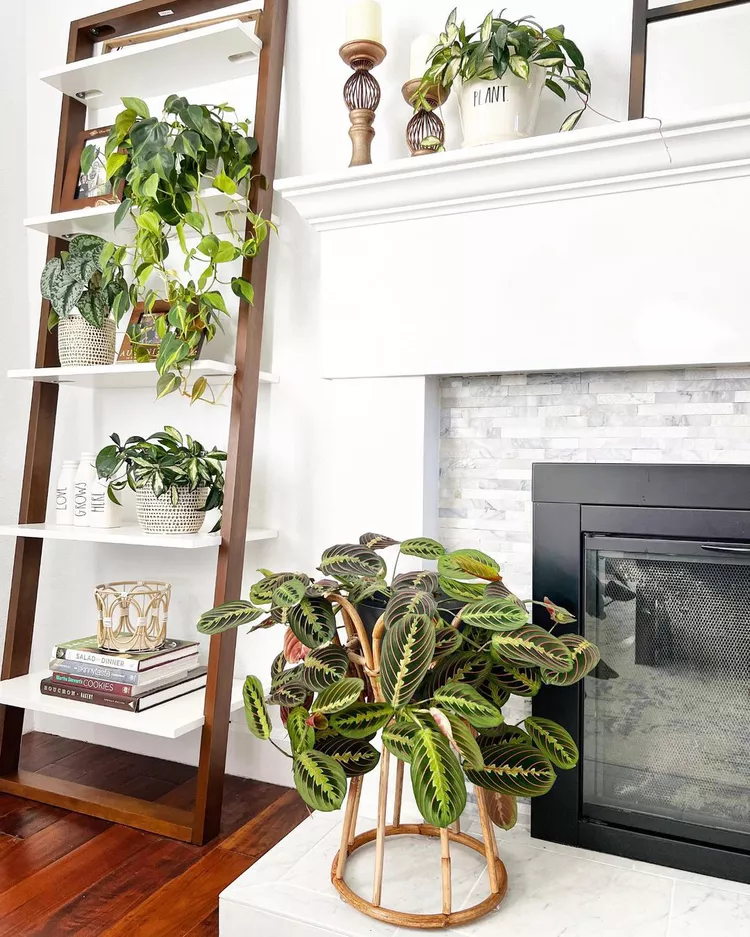
A fireplace mantel can become a beautiful plant shelf, especially when the fireplace is not used often or is purely decorative.
The white mantel in this idea creates a fresh, bright backdrop, while the trailing plants soften the hard lines of the surround. It feels classic, but still relaxed.
The nearby ladder shelf adds height and gives the display a layered look.
This is a clever approach because the mantel alone might feel too formal, but the plants make it warmer and more lived-in.
I’d use this idea in a living room where you want greenery without blocking the floor space.
Actionable Steps:
- Place trailing plants at mantel edges.
- Use lightweight pots on higher shelves.
- Add books or candles for height variation.
- Keep plants away from active heat.
- Repeat white or woven pots for harmony.
Extra Styling Tip: Add a low mirror or framed artwork behind one mantel plant. It reflects light and makes the greenery look fuller.
8. Collected Living Room Shelf
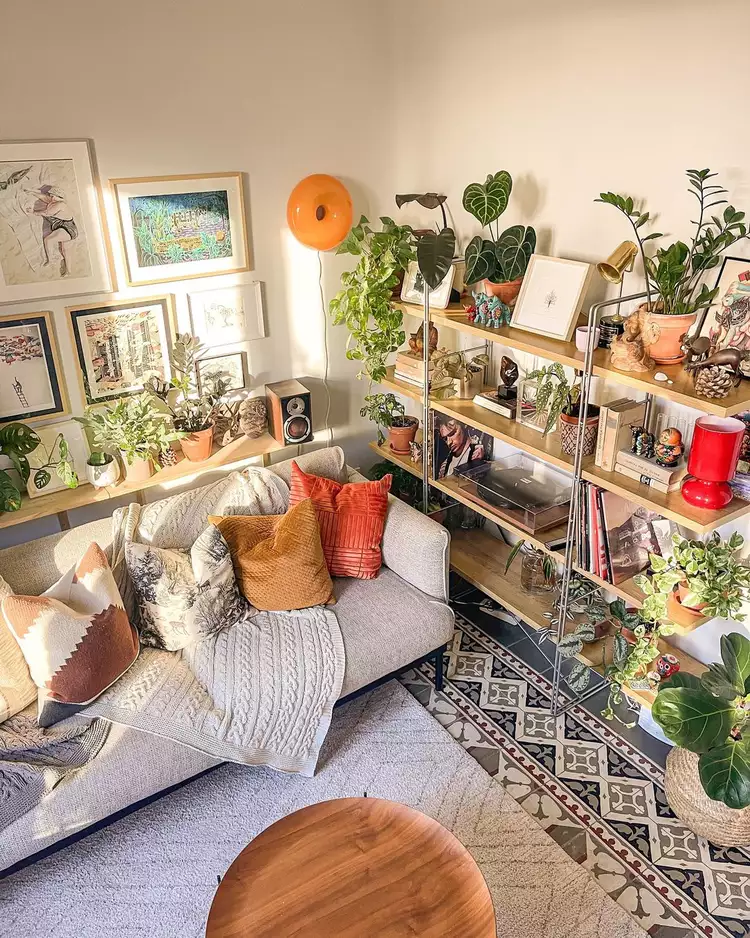
This idea feels personal, colorful, and full of stories. It is not a showroom-perfect plant shelf—and that is exactly why it works.
Plants sit beside art, books, lamps, pillows, and meaningful objects, creating a room that feels warm, creative, and lived-in.
If you love maximalist or eclectic decor, this is a wonderful direction. The trick is to create rhythm so the shelf does not feel chaotic.
Repeat colors from your sofa pillows, artwork, or rug in your pots and accessories. Then let the plants soften everything with natural movement.
Actionable Steps:
- Mix plants with books, art, and personal objects.
- Repeat two or three accent colors.
- Place taller plants near shelf ends.
- Use trailing plants to soften corners.
- Keep everyday items in baskets or boxes.
Extra Styling Tip: Choose one “memory shelf” for travel finds, handmade pieces, or family objects. It makes the plant display feel emotionally connected to your life.
9. DIY Ladder Plant Shelf
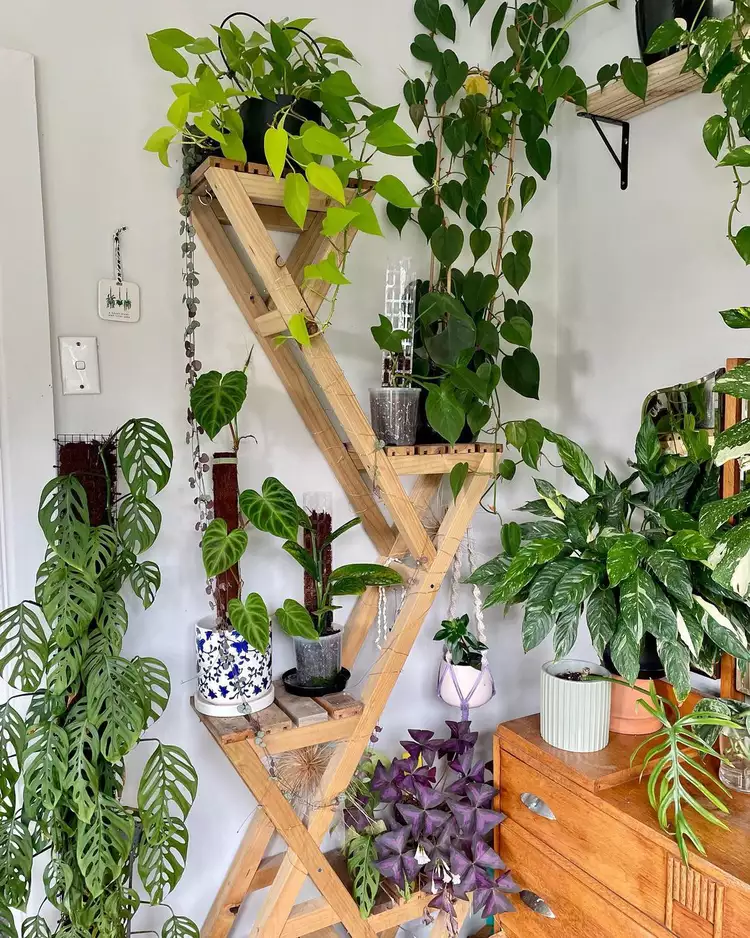
A ladder-style plant shelf brings instant charm, especially if you like natural wood, handmade details, and relaxed interiors.
This idea has a slightly wabi-sabi feeling—the beauty is in the imperfect angles, the visible wood grain, and the way plants grow in different directions.
The ladder shape is also practical because it creates several levels without needing a bulky bookcase. Small plants can sit on narrow steps, while trailing vines can wrap around the frame.
It feels vertical, airy, and playful, making it perfect for a sunny corner or a plant-filled bedroom.
Actionable Steps:
- Use a stable ladder shelf with wide feet.
- Place heavier plants near the bottom.
- Let vines trail along the frame.
- Mix leafy textures for depth.
- Avoid overloading narrow shelves.
Extra Styling Tip: Wrap a thin jute cord or soft cotton rope around one side rail. It adds texture and gives climbing vines a gentle path to follow.
10. Minimal Floating Shelf Row
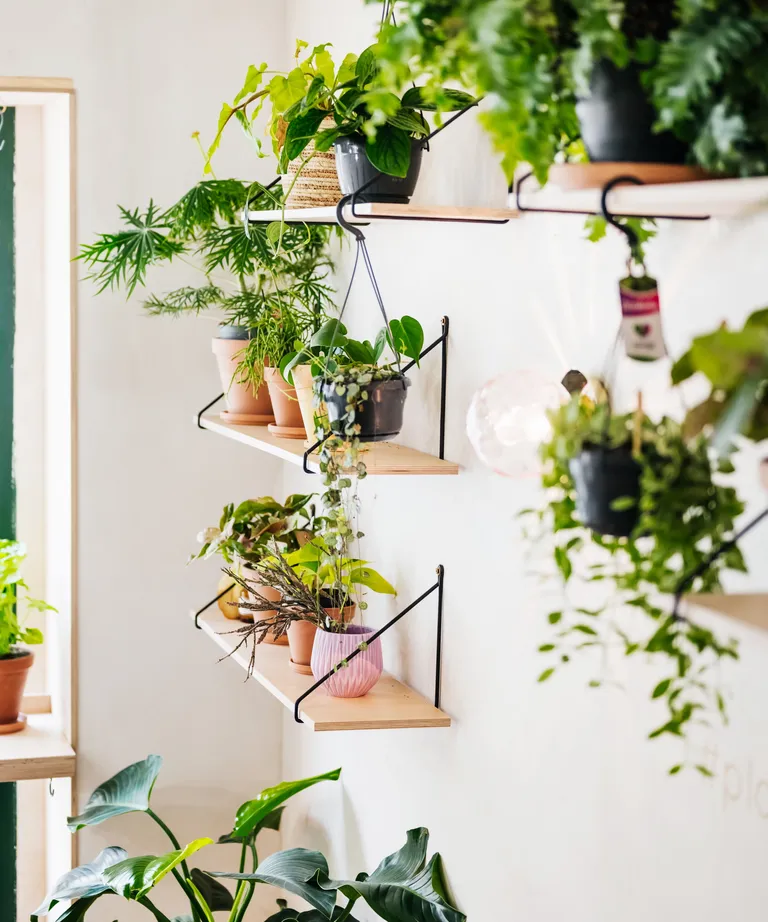
This floating shelf row is a clean, modern way to display plants without making the room feel crowded. The simple pale wood and black brackets create a crisp structure, while the plants add movement and softness.
I like this idea for kitchens, hallways, studios, or small living rooms where every inch matters.
Because the shelves are narrow, editing is important. Choose fewer plants, but make each one count.
A mix of compact pots, soft trailing leaves, and one or two sculptural plants will feel more intentional than a crowded line of mismatched containers.
Actionable Steps:
- Install several shelves in a staggered row.
- Keep pots small to medium-sized.
- Place trailing plants near shelf ends.
- Use matching brackets for a clean look.
- Leave space between plants for airiness.
Extra Styling Tip: Add one small rechargeable picture light nearby. It creates a gallery-like glow in the evening and makes the shelves feel designed, not accidental.
11. Sunlit Window Shelf Wall
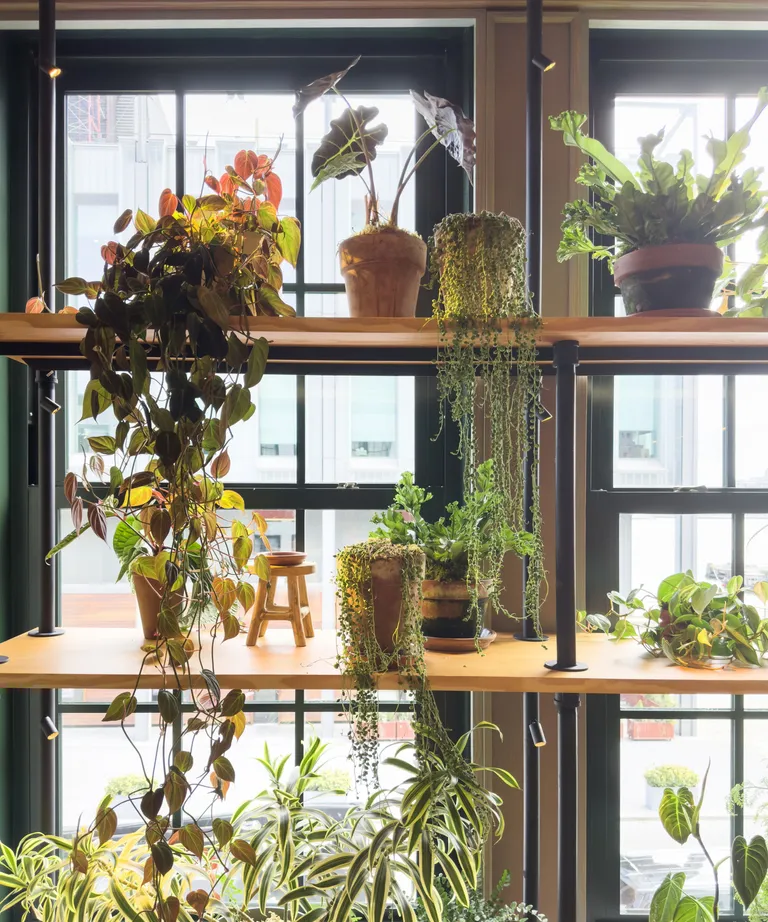
If you’ve ever wished your plants could feel like part of the architecture, this is such a beautiful way to do it.
The shelving sits right against the tall windows, so the plants almost become a living screen—softening the view, filtering the light, and turning the whole wall into a calm focal point.
This idea works especially well for light-loving plants and trailing varieties. The open metal frame keeps the look from feeling heavy, while the wood shelves add warmth.
If you have a bright apartment or large windows, this can make the most of every inch without crowding the floor.
Actionable Steps:
- Choose an open shelving frame that won’t block too much light.
- Place sun-loving plants on the upper shelves.
- Let trailing plants spill from the top and middle levels.
- Keep smaller plants at eye level for easy care.
- Rotate pots every few weeks for even growth.
Extra Styling Tip: Add a slim moisture meter or a small watering diary nearby. In bright window setups, plants can dry out faster than you expect, and this helps you care for them without guessing.
12. Styled Cube Shelf Display
This is a lovely reminder that a plant shelf does not have to be all plants to feel green and inviting. In fact, I often think mixed shelves feel more human.
Here, the cubby shelf blends greenery with baskets, vintage finds, soft lighting, and a few decorative pieces, which makes the whole setup feel playful and personal rather than overly styled.
This is a great choice if you want your plants to blend into your everyday decor. The cube structure helps you stay organized because each section naturally creates its own little vignette.
You can also use it in family rooms, bedrooms, or even home offices where you want storage and softness to live side by side.
Actionable Steps:
- Use a cube shelf with open compartments.
- Place larger plants on top where they can stretch upward.
- Mix decor, baskets, and plants throughout the cubes.
- Keep one or two cubbies mostly empty for visual breathing room.
- Choose a color palette that ties the display together.
Extra Styling Tip: Try lining the back of one or two cubbies with peel-and-stick wallpaper or textured paper. It gives certain sections a quiet “framed” feeling and makes small plants stand out beautifully.
13. Bright Corner Plant Nook
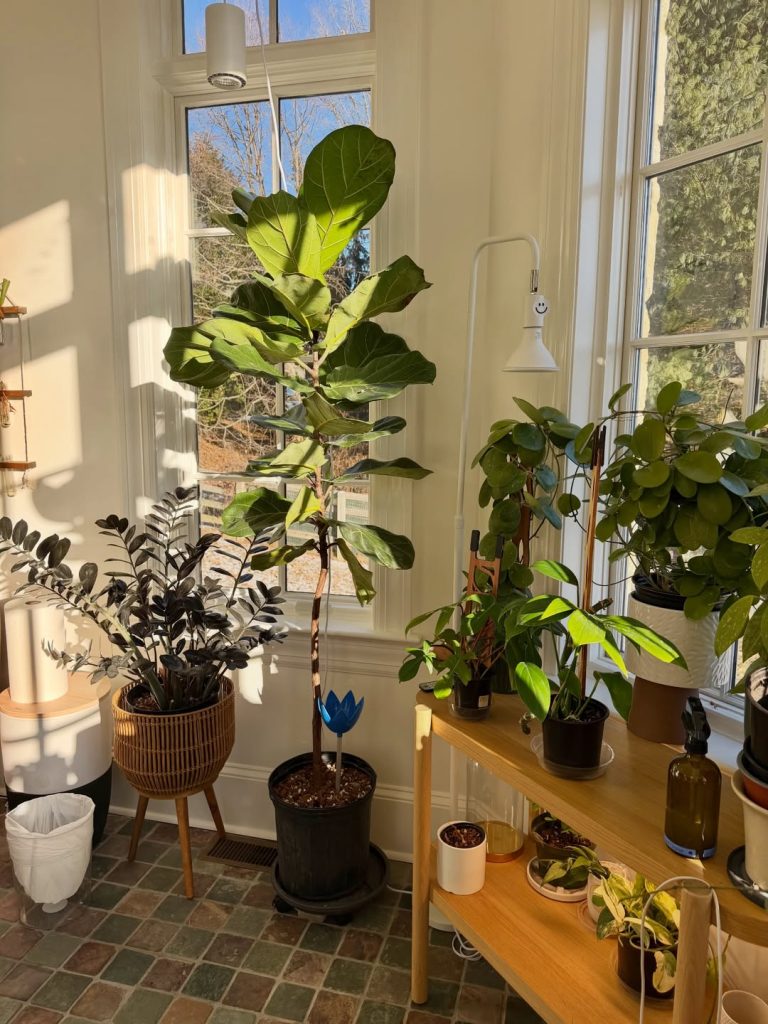
There’s something almost magical about a sun-filled corner like this. I can imagine standing there with coffee in hand, noticing how the morning light moves across the leaves.
This idea is less about one single shelf and more about creating a layered plant zone, where shelves, floor plants, and stands work together in a way that feels natural and relaxed.
It’s especially effective in bright corners with tall windows, because you can create height variation without making the area feel cramped.
A shelf holds medium and small plants, while a large statement plant—like a fiddle leaf fig—anchors the space. That mix keeps the corner balanced and full of life.
Actionable Steps:
- Start with one tall statement plant to anchor the corner.
- Add a simple shelf for medium and smaller plants.
- Use plant stands to vary heights around the base.
- Keep sun-loving plants closest to the brightest window.
- Leave walking space so the corner still feels open.
Extra Styling Tip: Place a lightweight linen curtain nearby if the sun gets harsh in summer. It softens intense afternoon light and gives the whole nook a more serene, diffused glow.
14. Slim Corner Shelf Tower
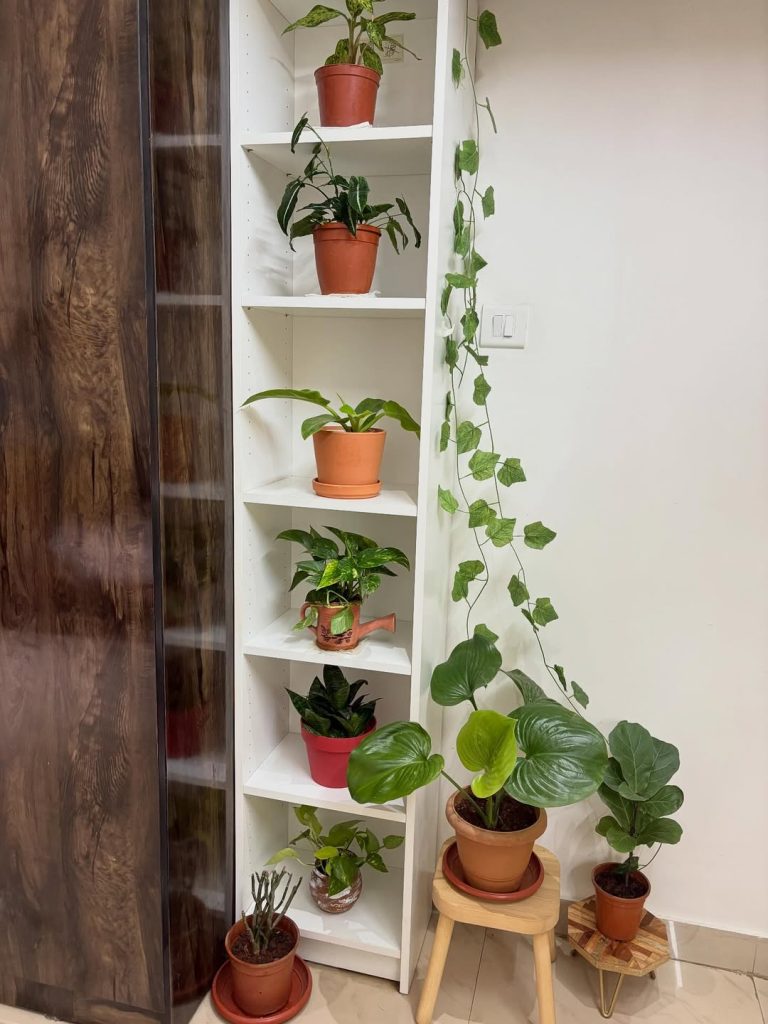
Not every home has room for a wide shelf or dramatic plant wall, and that’s exactly why this idea is so useful. A slim vertical shelf tucked into a corner gives you a plant moment without demanding much square footage.
I really like this look for apartments, bedrooms, or those in-between spaces that often go ignored.
The clean white shelving keeps the display fresh and simple, while the terracotta pots add warmth and a grounded, earthy feel. What makes this idea work is restraint.
You do not need to crowd every shelf. A few healthy plants, some varied leaf shapes, and one trailing vine can be more charming than a packed arrangement.
Actionable Steps:
- Use a tall, narrow shelf that fits snugly into a corner.
- Place compact plants on each shelf level.
- Keep heavier pots on lower shelves for stability.
- Add one trailing plant to soften the vertical lines.
- Use matching saucers to keep the look neat.
Extra Styling Tip: Add felt pads or a waterproof tray under the shelf base. It protects flooring from moisture and makes the setup easier to clean when watering day gets a little messy.
15. Double-Height Living Room Shelves
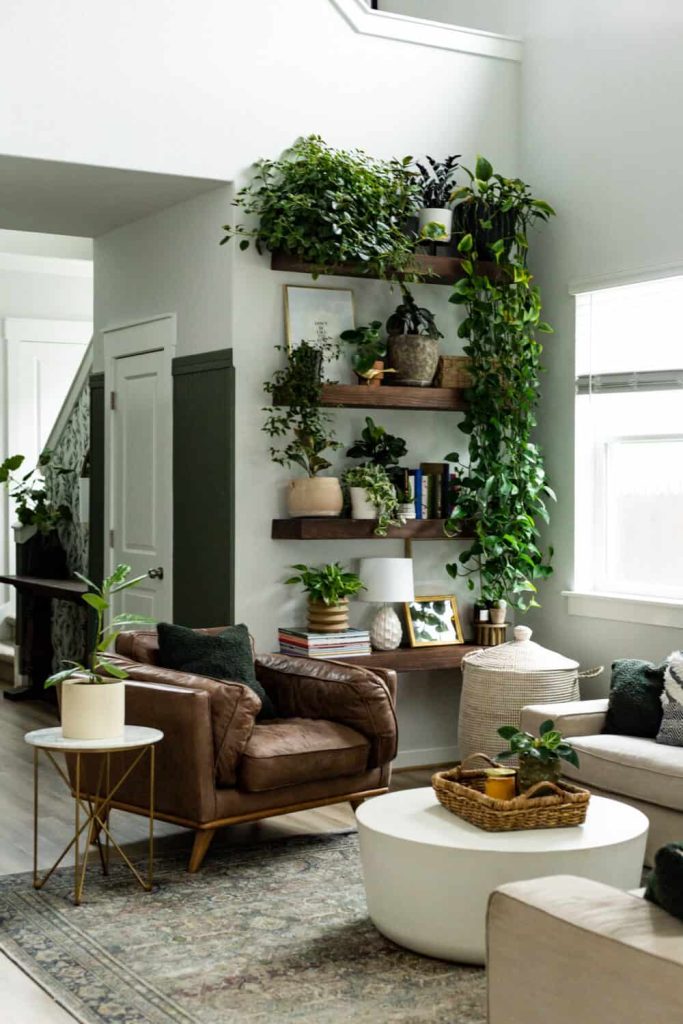
This final idea feels bold, elegant, and incredibly inviting. Tall floating shelves in a living room can transform a blank vertical wall into a layered green feature, especially in homes with high ceilings.
The secret here is using height with intention.
Trailing plants draw the eye downward, while stacked shelves help fill the wall in a way that feels balanced instead of empty.
If you’ve got a double-height space or simply an awkward tall wall, this is one of the most effective ways to make it feel warm and finished.
Actionable Steps:
- Install sturdy floating shelves across a tall wall.
- Mix plants with books, art, and soft decor.
- Use trailing vines on the top shelf for movement.
- Keep everyday-use items on the lowest shelf.
- Repeat wood tones and neutral pots for cohesion.
Extra Styling Tip: Style one shelf seasonally with subtle changes—a candle in winter, a small shell or stone in summer, or a dried branch in autumn. It keeps the plant wall feeling fresh without redoing everything.
Final Thoughts
Indoor plant shelves are one of the simplest ways to make your home feel fresher, calmer, and more personal. They bring texture, height, color, and a little daily ritual into your space.
You do not need a huge collection or a perfect layout to begin—just one sturdy shelf, a few healthy plants, and a willingness to let the look evolve.
Start small. Choose one corner, add light where needed, group your pots with care, and leave room for growth. The best plant shelves feel alive because they change with you.
Which of these indoor plant shelf ideas will you try first?