How to Propagate Pothos in Water Step by Step (With Pictures)

You can grow a brand-new pothos plant from one healthy vine, and you do not need fancy tools to do it.
That is the fun part.
Pothos is one of the easiest houseplants to root in water. If you have a long vine hanging from a pot, you already have the start of a new plant.
You can make a fuller pot, grow a new plant for another room, or give a cutting to a friend.
The only real trick is knowing where to cut.
A pothos leaf alone will not grow into a new plant. You need a piece of stem with a node. That little bump on the stem is where the new roots come from.
Once you understand that, the rest is simple.
What You Need
You do not need much. Grab:
- A healthy pothos plant
- Clean scissors or pruning shears
- A clear glass jar, cup, or small vase
- Room-temperature water
- A small pot with drainage holes
- Light, well-draining potting mix
Clean your scissors before cutting. A quick wipe with rubbing alcohol works well. This may feel like a small step, but it helps keep bacteria away from the fresh cut.
Best Time to Propagate Pothos
Spring and summer are the best times because pothos grows faster in warm months.
That said, you can still propagate pothos indoors at other times. It may just take longer. If your room is cold or dark, the cutting may sit there for weeks doing almost nothing.
A warm room with bright, indirect light gives you the best chance.
You should also think about the mother plant. If your pothos has long, thin vines or looks bare on top, propagation is a great idea. You can trim those vines and later plant the rooted cuttings back into the same pot to make it look fuller.
Right Way to Propagate Pothos in Water ( Step by Step)
Step 1: Choose a Healthy Vine
Pick a vine that looks strong.
Look for firm stems and healthy green leaves. Avoid stems that feel soft, mushy, black, or dry. Also skip vines with yellow leaves, brown spots, or pest damage.
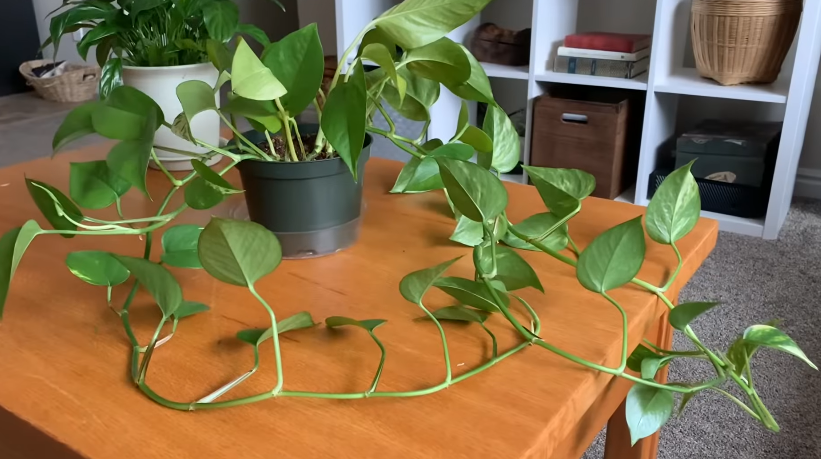
A strong cutting has more energy. It can stay alive while it grows roots.
If the mother plant is very dry, water it the day before cutting. This gives the plant a little boost before you take cuttings.
Step 2: Find the Node
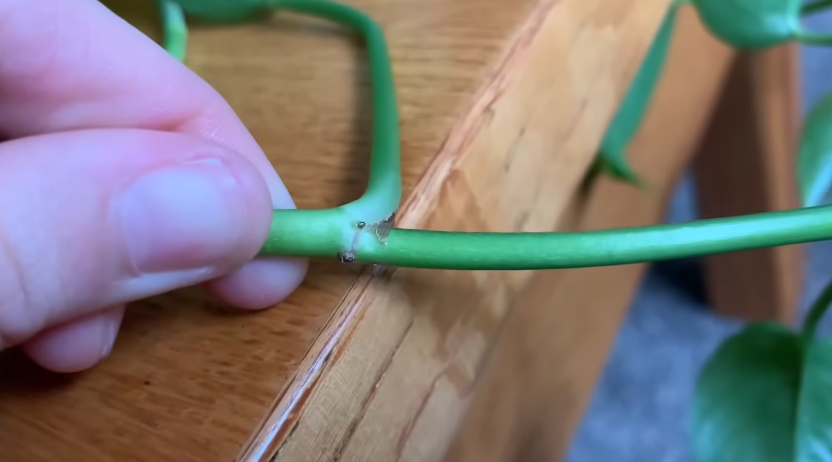
This is the most important step.
A node is a small bump on the stem. It often sits near the place where a leaf joins the vine. Sometimes it looks like a tiny brown nub. Sometimes you may even see a small aerial root starting there.
That node must go into the water.
No node means no roots. A leaf may stay green in water for a while, but it will not turn into a full plant by itself.
So before you cut anything, look closely at the stem. Find at least one node. Two nodes are even better.
Step 3: Cut Below the Node
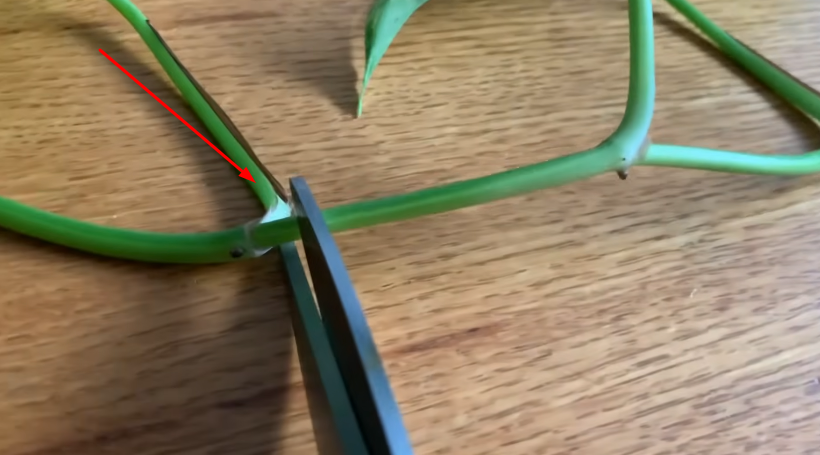
Take your clean scissors and cut about half an inch to one inch below a node.
You have two good options.
You can make a small cutting with one leaf and one node. This is useful if you want many cuttings from one vine.
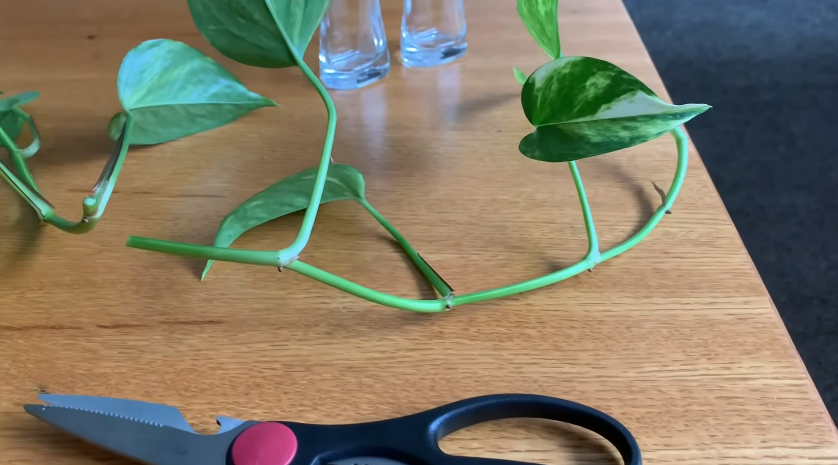
Or you can take a longer cutting, around four to six inches long, with several leaves and nodes. This is easier for beginners because the cutting has more stem and more chances to root.
For your first try, go with longer cuttings. They are more forgiving.
Step 4: Remove the Lower Leaves
Any leaf that would sit under the water needs to come off.
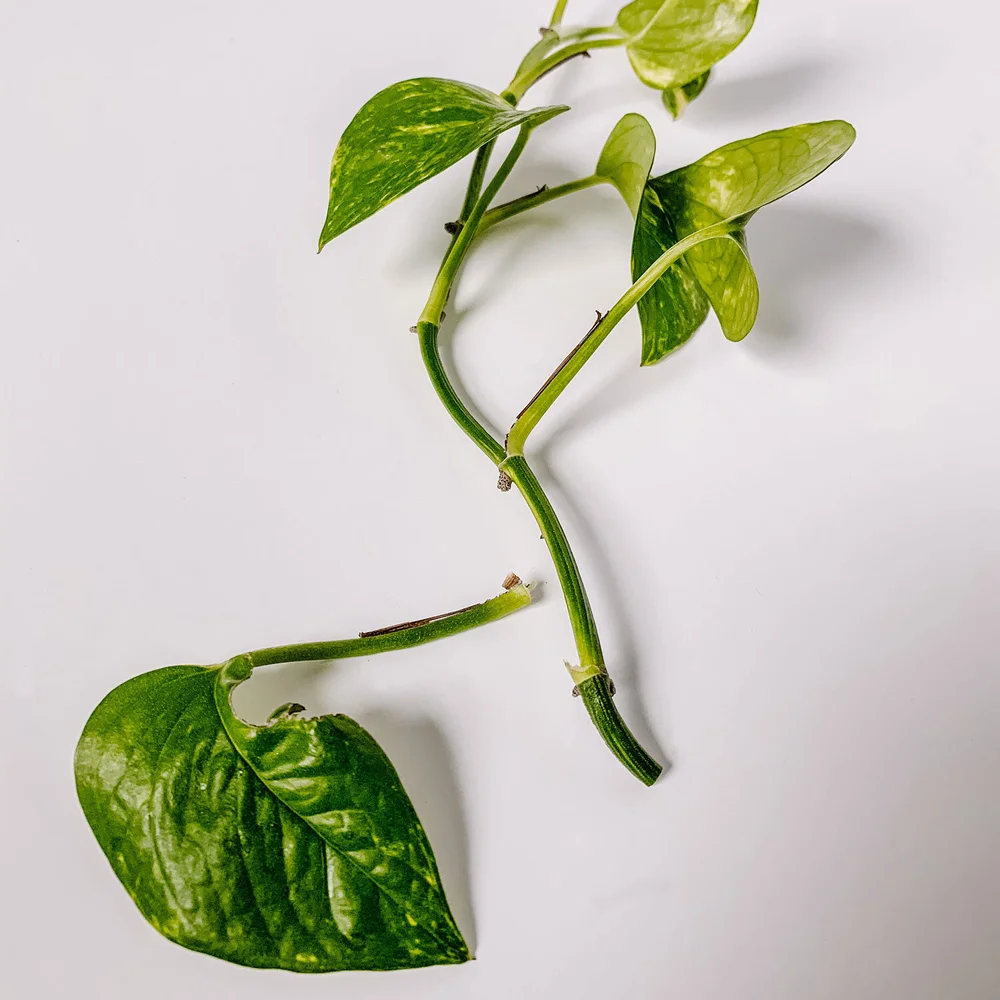
Leaves rot when they stay in water. Rotten leaves make the water cloudy and smelly. They can also hurt the cutting.
Gently remove the bottom leaf near the node you plan to place in water. Keep the upper leaves on the cutting. Those leaves help the cutting stay healthy while roots form.
The goal is simple:
Stem and node in water.
Leaves above water.
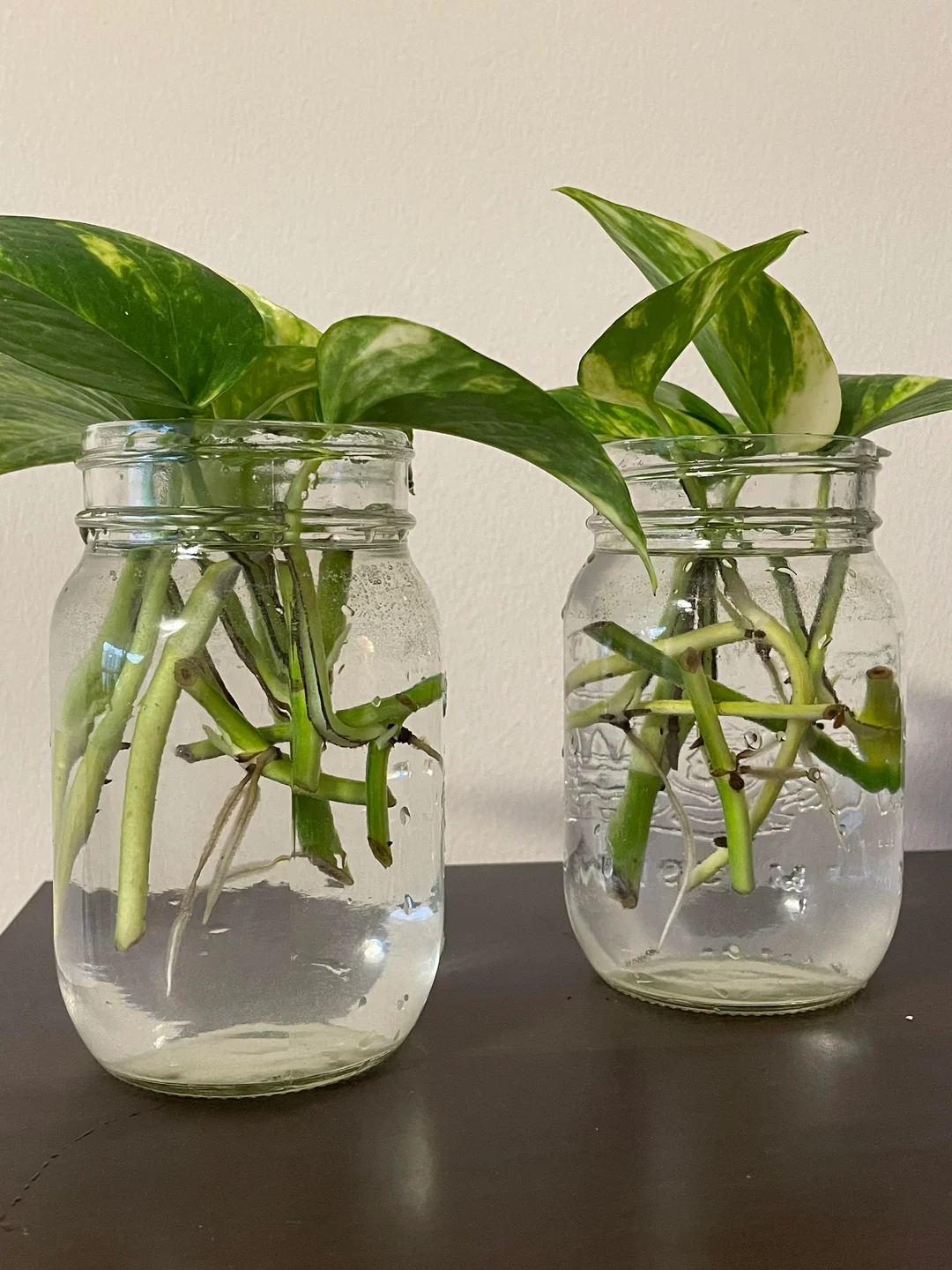
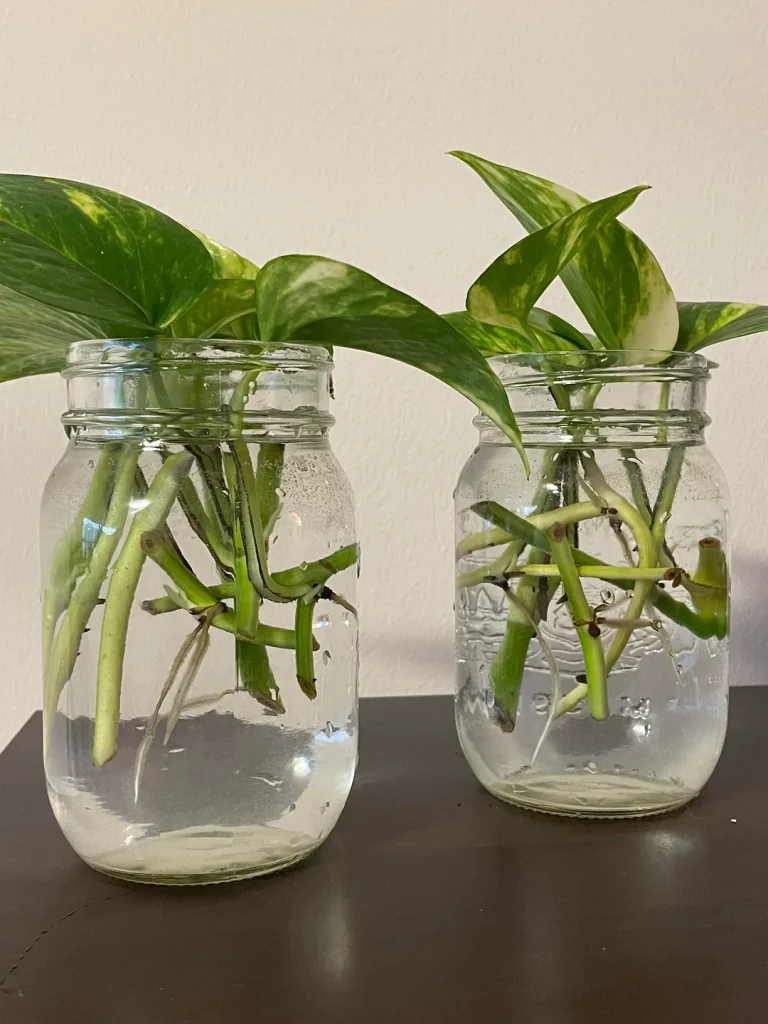
Step 5: Place the Cutting in Water
Fill a jar or glass with room-temperature water.
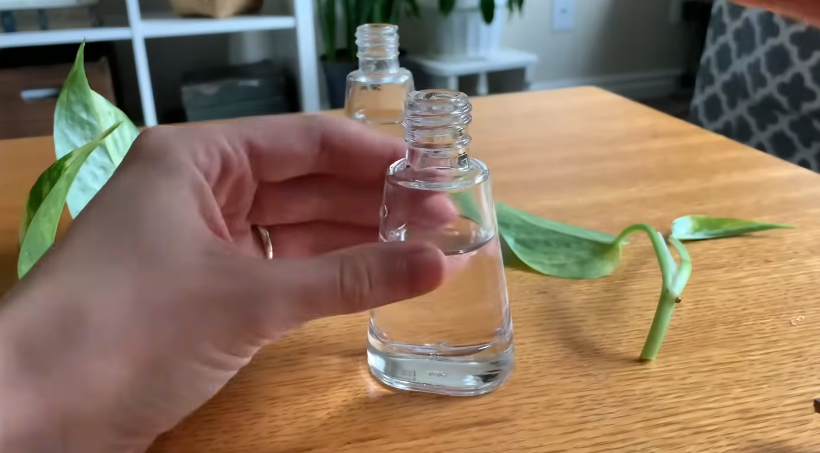
Place the cutting in the jar so at least one node sits under the water. The leaves should stay above the rim.
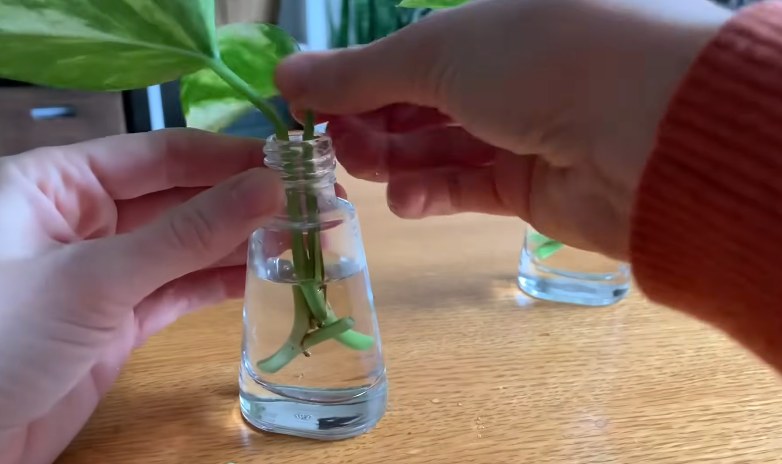
A clear jar is nice because you can watch the roots grow. It also helps you notice cloudy water or rot early.
If your cutting keeps slipping out, use a narrow-neck bottle or propagation tube. Pothos leaves can be heavy, and a wide jar may not hold the stem in place.
Do not use hot or icy water. Room-temperature water is best. If your tap water has a strong chlorine smell, let it sit out for a few hours before using it.
Step 6: Put the Jar in the Right Spot
Place the jar in bright, indirect light.
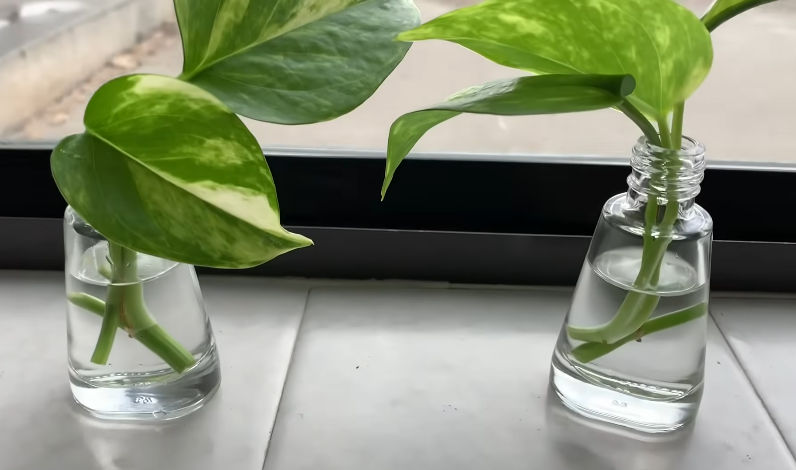
Near a window is good. Direct sun is not. Strong sun can burn the leaves and heat the water too much.
Think bright, but gentle.
Keep the jar away from cold drafts, heaters, air conditioners, and strong fans. Pothos likes steady warmth. A room around normal indoor temperature works well.
If the cutting sits in a dark corner, it may still survive, but roots will grow slowly.
Step 7: Change the Water Often
Fresh water matters.
Change the water about once a week. Do it sooner if the water turns cloudy, smells bad, or looks slimy.
Also check the water level. The node needs to stay under water. If the water drops too low, top it up.
When you change the water, rinse the jar if it feels slippery. Clean water gives the cutting a better place to grow roots.
Healthy roots are usually white, cream, or light tan. They may start as tiny bumps, then stretch out into thin roots.
Bad signs include:
- Black mushy stem
- Bad smell
- Slimy water
- Cloudy water that returns fast
- Leaves suddenly collapsing
If you see rot, do not panic. Take the cutting out, cut off the rotten part with clean scissors, rinse the jar, and place the healthy part back in fresh water. Make sure no leaves are underwater.
Step 8: Wait for Roots
Now comes the hard part.
Waiting.
Pothos cuttings can root in a few weeks, but sometimes they take longer. Most cuttings need about three to six weeks.
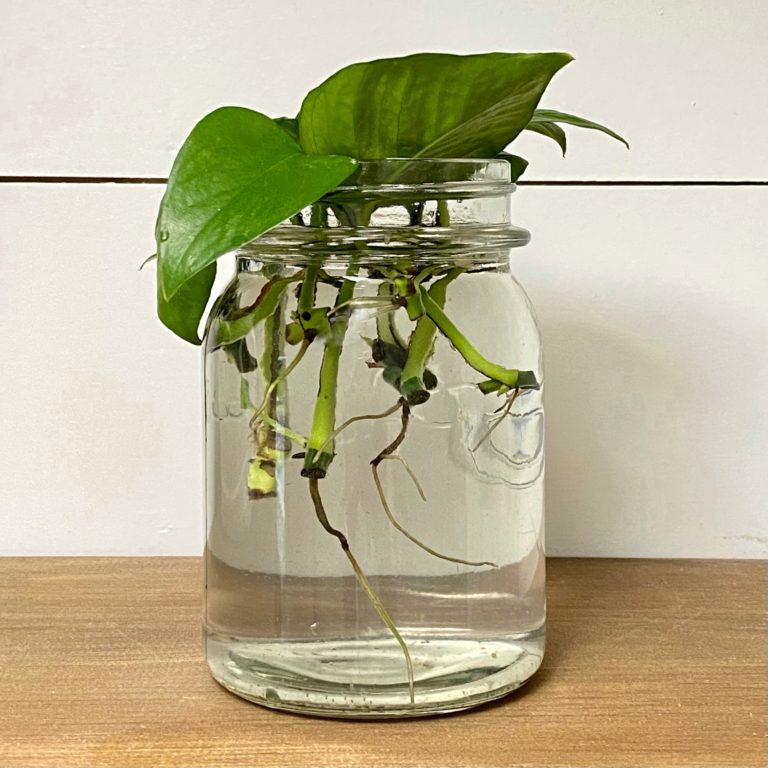
Light, warmth, water quality, and the health of the cutting all matter. A strong cutting in a warm bright room may root fast. A weak cutting in a cold room may take much longer.
You do not need rooting hormone for pothos. It usually roots well on its own.
Avoid poking or moving the cutting every day. Check it, yes. Fuss over it, no. Roots are delicate when they first appear.
Step 9: Know When It Is Ready for Soil
Do not plant the cutting as soon as you see one tiny root.
Wait until the roots are around two to three inches long. Even better, wait until the cutting has several roots.
That gives it a better chance in soil.
But do not leave it in water forever if your plan is to grow it in a pot. Very long water roots can have a harder time adjusting to soil. They are used to living in water, so the move can feel like a shock.
A good rule: when the roots are a few inches long and there are more than one or two roots, it is time.
Step 10: Plant the Rooted Cutting
You’ll Need the following items:
- Well-draining soil
- A small Pot
- Rooting hormone (for propagating in soil)
Use a small pot with drainage holes.
Do not place tiny cuttings in a huge pot. Too much soil holds too much water, and that can lead to root rot.
A four-inch pot is a good size for a few cuttings.
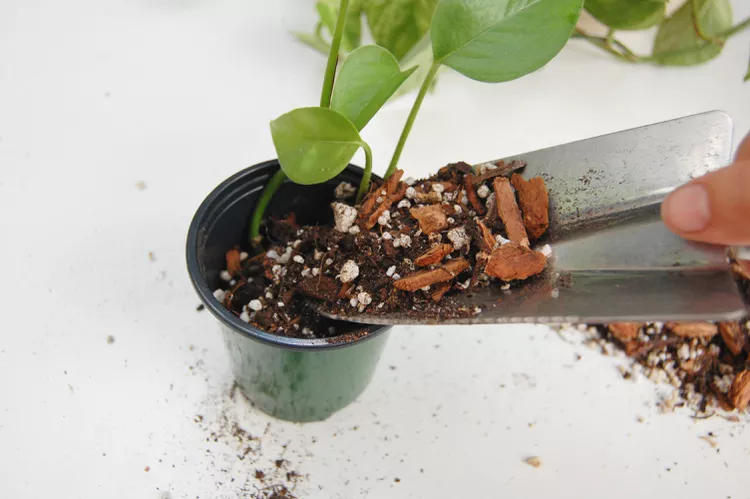
Fill the pot with light potting mix. A regular indoor plant mix with extra perlite works well. The soil should feel airy, not heavy like garden dirt.
Make a small hole in the soil with your finger. Place the roots inside gently. Cover them with soil and press lightly.
Do not pack the soil down too hard. Roots need air too.
After planting, water the soil lightly until water drains out of the bottom. Let the extra water drain away.
If you want a fuller plant, plant several cuttings together in the same pot. One cutting may grow, but several cuttings make the pot look lush much faster.
Step 11: Help It Adjust
The first week or two after planting matters.
Water roots are used to constant moisture. Soil feels different. Keep the soil lightly moist at first, but not soaked.
Do not let it dry out completely right away. Also do not drown it.
A little drooping can happen after moving from water to soil. That does not always mean something is wrong. Keep the plant in bright, indirect light and give it time.
Skip fertilizer for a few weeks. The cutting needs to settle in first. Later, you can feed it lightly during the growing season.
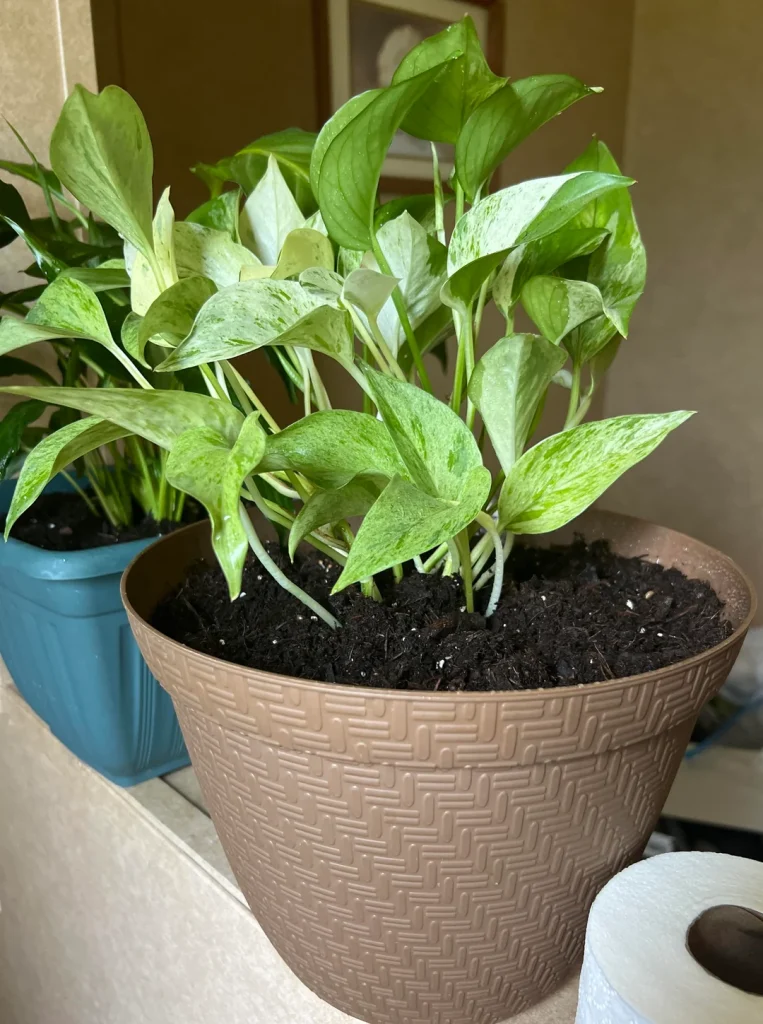
Once it starts growing new leaves, you can treat it like a normal pothos.
Can You Keep Pothos in Water Forever?
Yes, pothos can live in water for a long time.
Many people keep pothos cuttings in jars as water plants. They look pretty on shelves, desks, and windowsills.
But if you keep pothos in water long term, you need to care for it. Change the water often. Keep the jar clean. Add a very weak liquid plant food now and then, because plain water does not have many nutrients.
For strong long-term growth, soil is usually better. For decoration, water works fine.
Common Mistakes to Avoid
The biggest mistake is cutting without a node. Always check first.
Another common mistake is placing leaves under the water. That almost always leads to rot.
Direct sun is also a problem. Bright light is good, but hot sun can stress the cutting.
Dirty water can slow everything down. Change it weekly.
Planting too early can fail because the roots are too weak. Waiting too long can also make the soil move harder. Aim for roots that are a few inches long.
A pot without drainage is another easy mistake. Pothos hates sitting in soggy soil.
Why Your Pothos Cutting Is Not Rooting
Sometimes a cutting just sits there.
First, check for a node. If there is no node, it will not root.
Next, look at the light. A dark spot slows root growth. Move the jar somewhere brighter, but keep it out of direct sun.
Cold rooms can also delay rooting. Try a warmer spot.
Cloudy water is another clue. Change the water and clean the jar.
The cutting itself may also be weak. If the stem was old, damaged, or stressed, it may not root well. Try again with a healthier vine.
Some highly variegated pothos types may grow more slowly too. They have less green on the leaves, so they may take more time.
Quick Safety Note
Pothos is not a snack plant.
Keep it away from pets and small children. If chewed, it can irritate the mouth and stomach. The sap may also bother sensitive skin, so wash your hands after cutting.
FAQ’s
Can I propagate pothos from just one leaf?
No, not really. A pothos leaf by itself will not grow into a full new plant.
You need a piece of stem with at least one node. The node is the small bump on the stem where new roots grow. A leaf may stay green in water for a while, but without a node, it has no real way to grow roots and turn into a plant.
How long does pothos take to root in water?
Most pothos cuttings start growing roots in about 3 to 6 weeks.
Sometimes it happens faster. Sometimes it takes longer. It depends on the cutting, the room temperature, the light, and how clean the water is. A warm spot with bright, indirect light usually helps roots grow faster.
How many nodes should a pothos cutting have?
One node is enough, but two or more nodes are better.
A cutting with more nodes has more chances to grow roots. If you are new to this, take a cutting that is around 4 to 6 inches long and has a few leaves and nodes. It is easier to work with and usually more forgiving.
How often should I change the water?
Change the water about once a week.
If the water turns cloudy, smells bad, or looks slimy, change it sooner. Clean water helps the cutting stay healthy and lowers the chance of rot. Also make sure the node stays under water the whole time.
Why is my pothos cutting turning yellow?
A yellow leaf does not always mean the cutting is dying.
It can happen because the cutting is stressed, the water is dirty, the leaf is old, or the cutting is getting too much direct sun. Check the stem first. If the stem is firm, the cutting may still be okay. If the stem is black, soft, or mushy, cut away the rotten part and place the healthy part in fresh water.
Why is my pothos cutting not growing roots?
The first thing to check is the node.
If there is no node, the cutting will not root. If there is a node, then check the light and temperature. A dark or cold room can slow everything down. Move the jar to a warm spot with bright, indirect light and keep the water fresh.
Also, be patient. Some cuttings take their sweet time.
When should I move pothos from water to soil?
Move the cutting to soil when the roots are about 2 to 3 inches long.
It is even better if the cutting has several roots instead of just one tiny root. Do not rush it. Weak roots may struggle in soil. But do not wait forever either, because very long water roots can have a harder time adjusting.
Can I keep pothos in water forever?
Yes, you can keep pothos in water for a long time.
Many people grow pothos in jars or glass vases as a simple indoor plant. Just remember that water-grown pothos still needs care.
Change the water often, clean the jar, and give it bright, indirect light. If you keep it in water long term, add a very weak liquid plant food sometimes.
Can I plant pothos cuttings back into the same pot?
Yes, and it is a great idea.
If your pothos looks thin or bare on top, plant rooted cuttings back into the mother plant’s pot. This makes the plant look fuller and bushier over time. Plant a few cuttings together for the best look.
Do pothos cuttings need direct sunlight?
No. Direct sunlight can burn the leaves and heat the water too much.
Pothos cuttings do best in bright, indirect light. A spot near a window is usually fine, as long as strong sun is not hitting the leaves for hours.
Do I need rooting hormone for pothos?
No, you do not need it.
Pothos roots very easily in water when the cutting has a healthy node. Rooting hormone may help some plants, but for pothos, clean cuts, fresh water, and good light are usually enough.
Is pothos safe for pets?
Pothos is not safe for pets to chew.
It can irritate a cat’s or dog’s mouth and stomach. Keep the plant, cuttings, and water jars away from pets and small children. Wash your hands after cutting the plant, especially if your skin is sensitive.
Final Thoughts
Propagating pothos in water is simple once you know the rule: cut below a node, keep the node in clean water, and wait for strong roots.
Start with a few cuttings instead of one. That gives you a better chance of success, and it also helps you grow a fuller pot later.
The first little white root always feels exciting. After that, you may start looking at every long pothos vine in your house and thinking, “I could turn that into another plant.”