How to Increase Humidity for Houseplants

I know how frustrating this feels. You water the plant, give it light, check the soil, and still the leaves look dry and tired.
That usually happens because tropical plants do not only care about water in the pot. They also care about moisture in the air.
Many popular indoor plants come from warm, humid places. Your home may feel comfortable to you, but it can feel dry to a fern, calathea, orchid, or prayer plant.
Winter heating, air conditioning, heat vents, and drafty windows can make that problem worse.
Good news: you do not need to turn your home into a rainforest. You just need to create a better little space around your plants. Once you understand what works and what does not, raising humidity becomes much easier.
What Humidity Level Do Houseplants Need?
Most common houseplants do well when indoor humidity stays around 40% to 60%. According to the University of New Hampshire Extension, many houseplants prefer this range, while some tropical plants may enjoy even higher humidity around 70% to 80%.
Cacti and succulents are different because they usually handle dry air much better.
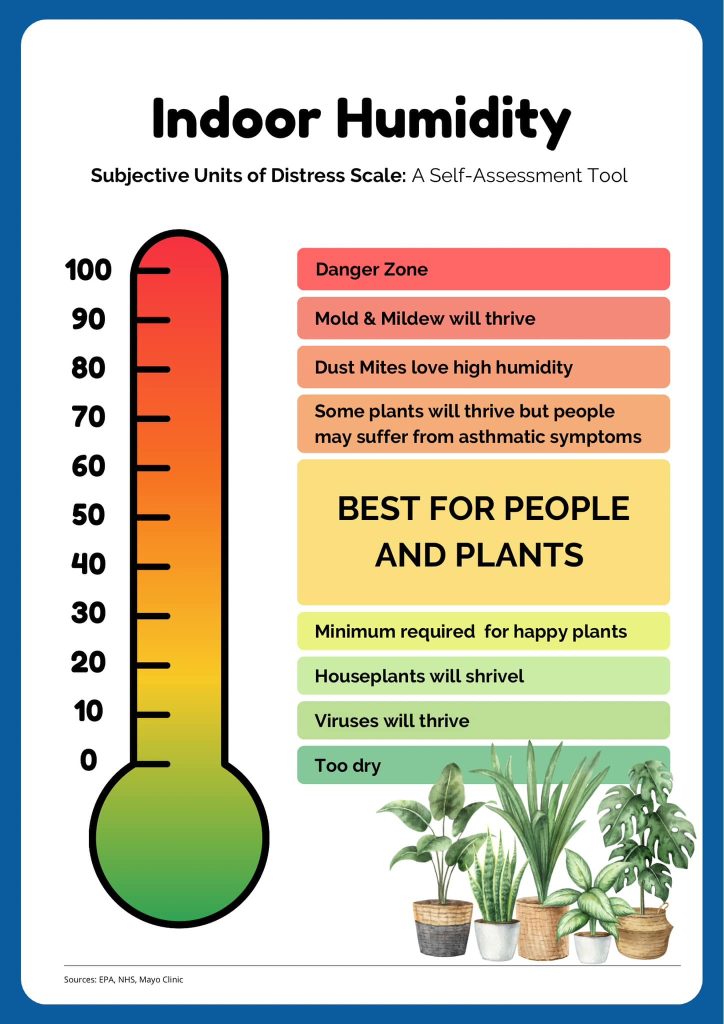
That range does not mean every plant will suffer at 35% humidity. Some plants are tough and can adjust. Others, like maidenhair ferns or calatheas, may show crispy edges fast when the air stays dry for too long.
I like to think of humidity as comfort for leaves. Roots drink water from the soil, but leaves lose moisture into the air. When the room is very dry, thin leaves can lose water faster than the plant can replace it.
Your goal is not to chase a perfect number all day. A better goal is to keep humidity steady enough that your plant can grow without constant stress.
For most indoor gardeners, that means checking the room and fixing the driest spots first.
Signs Your Houseplants Need More Humidity
Brown tips are often the first sign people notice. The rest of the leaf may still look green, but the edges turn dry, crisp, or papery. This happens a lot with peace lilies, spider plants, calatheas, and palms.
Curled leaves can also point to dry air. Some plants curl their leaves when they are trying to slow water loss. If the soil is not bone dry and the leaves still curl, humidity may be part of the problem.
Crispy patches are another clue. A leaf may feel thin, rough, or brittle instead of soft and smooth. New leaves may also open with damaged edges if the air is too dry while they are forming.
Wilting can happen too, but you need to check the soil before you blame humidity. A plant can wilt from dry soil, soggy soil, root rot, heat, cold, or pests. Humidity is only one piece of the care puzzle.
Flower buds may dry before they open. Orchids, peace lilies, and some flowering houseplants can drop buds when the air is too dry or the plant is stressed. If this keeps happening, check humidity, light, and watering together.
Measure Humidity Before You Change Anything
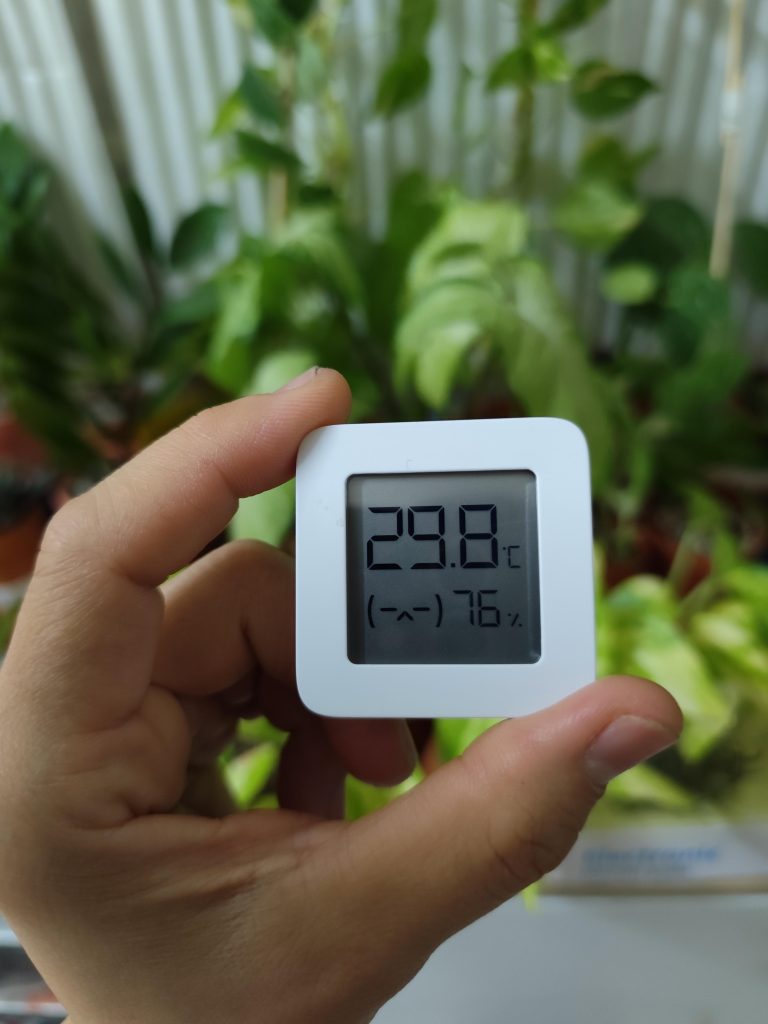
Before following any of the below methods, you must be sure of the humidity levels around your plants.
Once you are sure that your plants are indeed suffering from low humidity, you can follow any of the following ways to give your plants a boost of humidity.
A small digital hygrometer is one of the best tools you can buy for indoor plants. It tells you the humidity level near your plant, so you are not guessing based on how the room feels. Most people are surprised when they finally see the number.
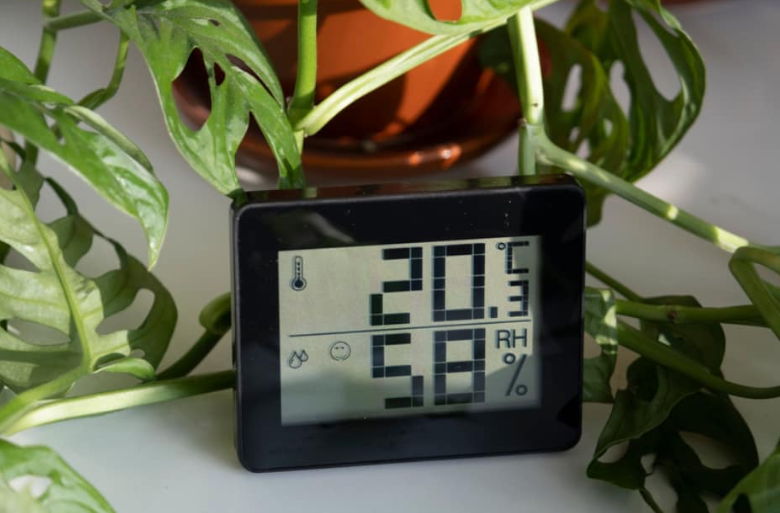
Place the hygrometer close to your plants, not across the room. A plant near a sunny window, heater, or air vent may sit in much drier air than the rest of the room. That small area around the plant matters most.
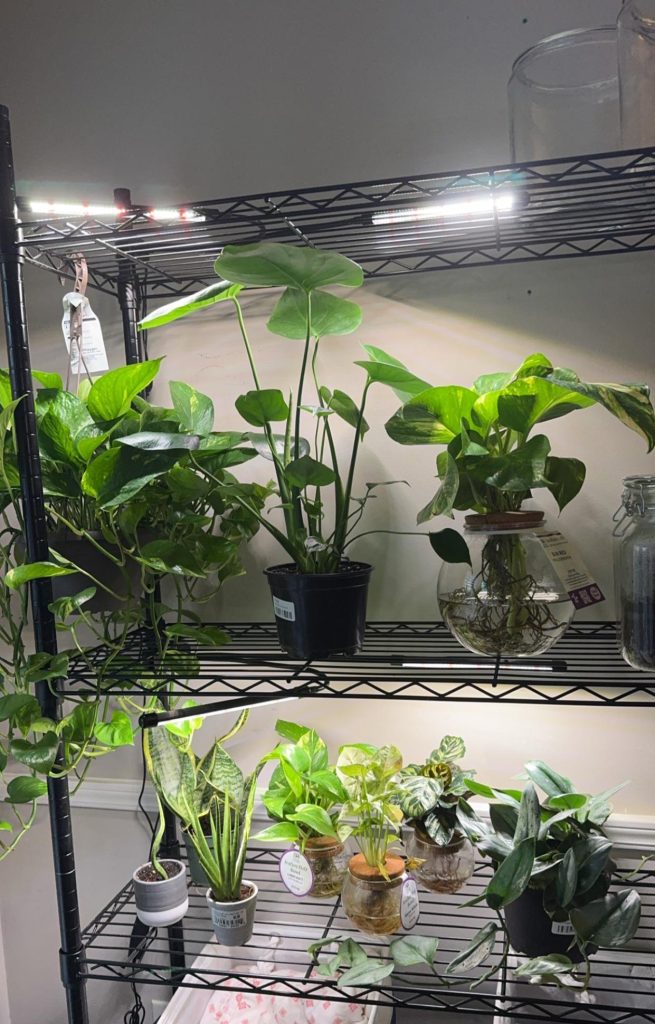
Check different rooms if you can. Bathrooms, kitchens, and laundry rooms often hold more moisture than bedrooms or living rooms. A bright bathroom may be a much better home for a fern than a dry shelf near a heater.
Winter readings are especially helpful. Indoor heating can dry the air for weeks, and many houseplants show damage during that season.
If your humidity drops below 40% often, your tropical plants may need extra help.
9 Ways To Increase Humidity Indoors For Plants
Use a Humidifier Near Your Plants
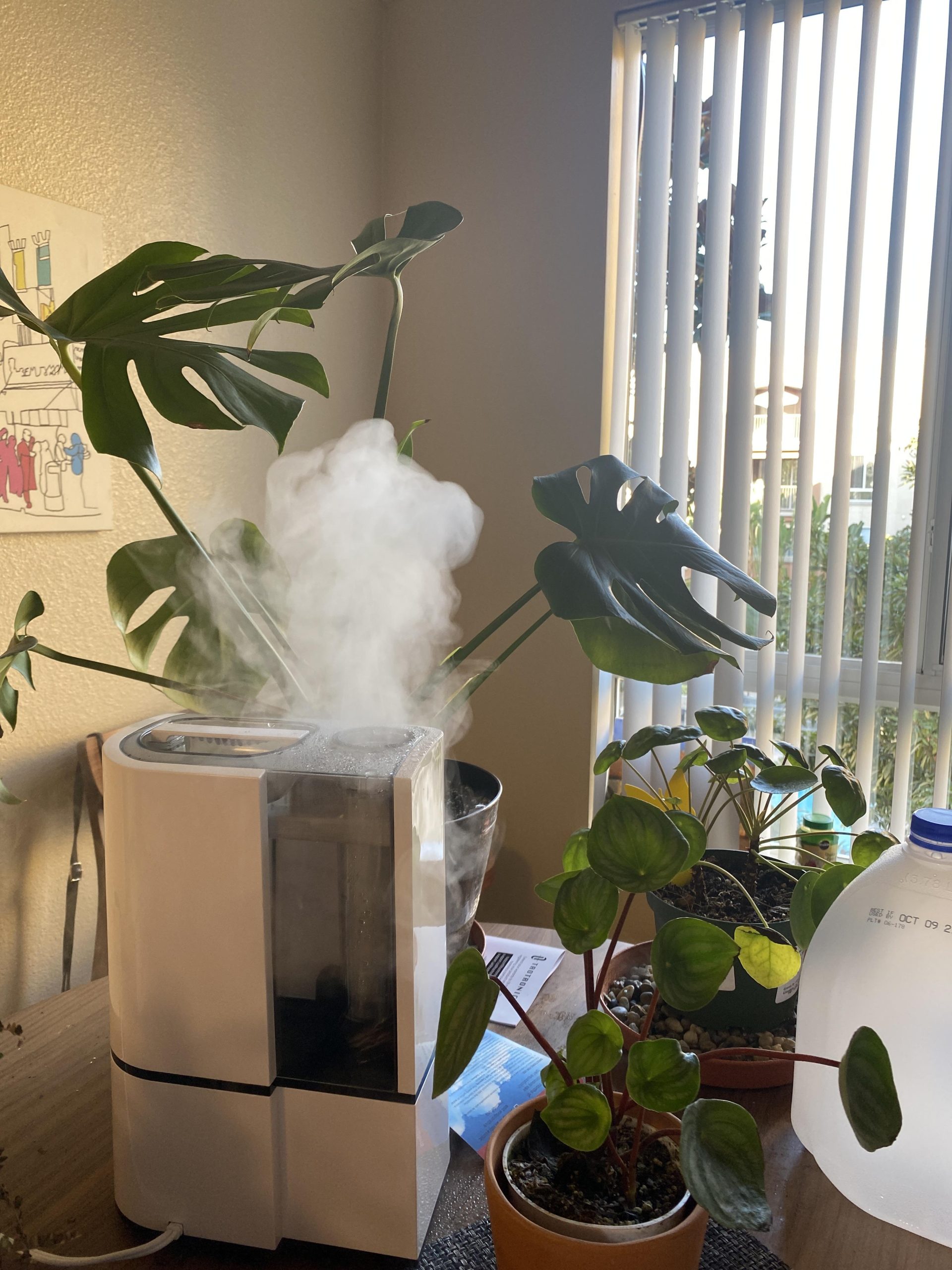
A humidifier is the most reliable way to increase humidity for houseplants. It adds moisture to the air for more than a few minutes, which makes it much better than quick tricks like misting.
If you have several tropical plants, this is usually the method I would choose first.
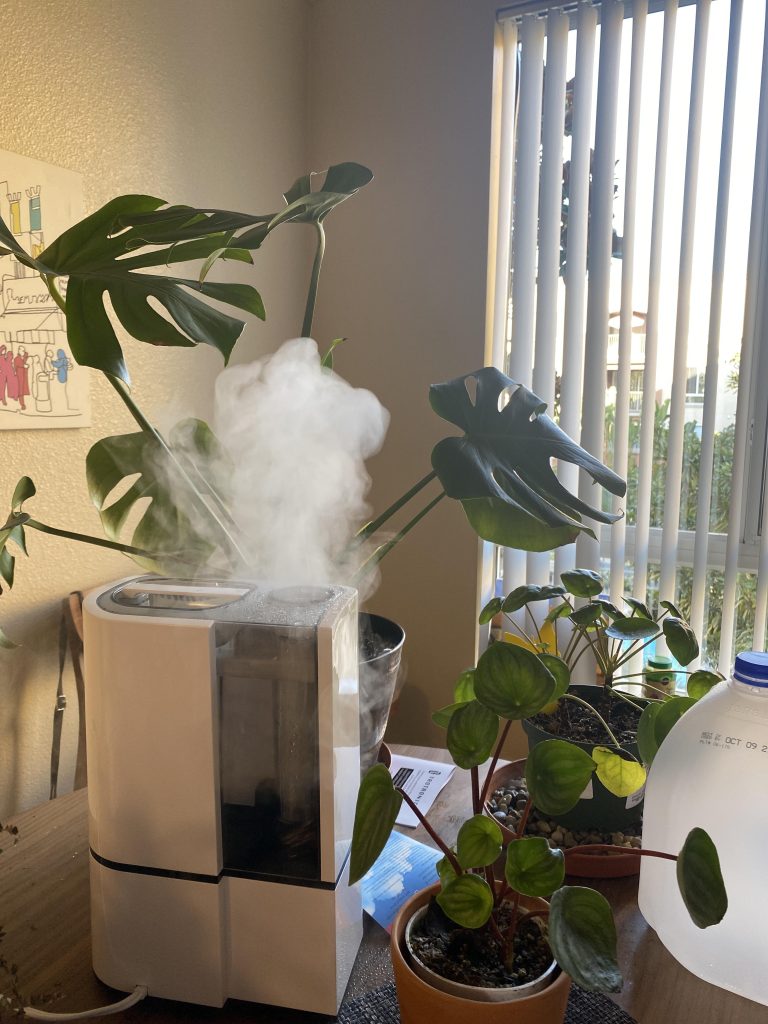
Place the humidifier near your plant group or plant shelf. You do not need to blast the leaves with mist. The goal is to raise the air moisture around the plants, not keep the leaves wet all day.
Use your hygrometer while the humidifier runs. This helps you see whether the humidity is actually rising. Without a reading, it is easy to run a humidifier too much or too little.
Clean the humidifier often. Dirty tanks can grow buildup, and old water can smell bad. Fresh water and regular cleaning make this method safer and more pleasant.
A small humidifier can work for one shelf or a plant corner. A larger room with many plants may need a stronger unit. Pick the size based on your space, not just the number of plants you own.
Group Your Plants Together
Grouping plants is a simple way to create a small humid pocket. Plants release moisture through their leaves, and several plants sitting together can help the air around them stay a little more humid. This method is free, which makes it a great first step.
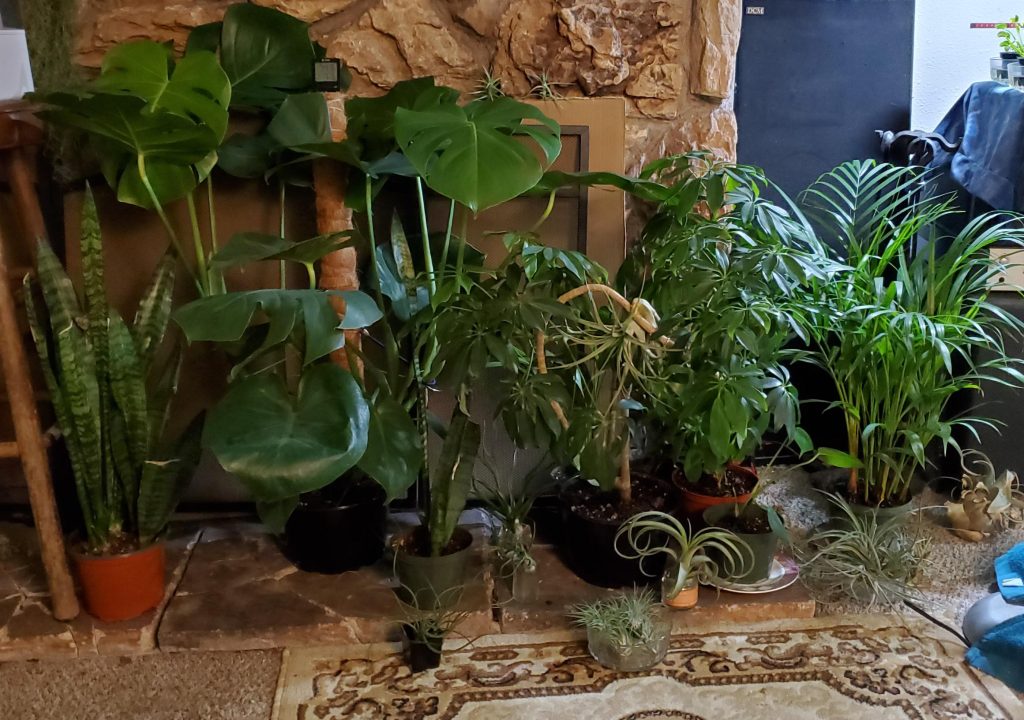
You should select plants with similar needs. Ferns, calatheas, pothos, philodendrons, monsteras, and prayer plants can often sit together well. Cacti and succulents should stay in a drier group because they do not need the same moisture.
Leave breathing room between the leaves. Crowding plants too tightly can trap stale air and make pest problems easier to spread. A little space helps each plant get light and airflow.
Check for pests before you group plants. Spider mites, mealybugs, and fungus gnats can move from plant to plant when everything is packed together.
I would rather catch one problem plant early than let it spread across the whole shelf.
Grouping will not raise humidity like a humidifier. Still, it can help when your room is only a little dry. It also works nicely with other methods, like pebble trays or a small humidifier.
Make a Pebble Tray
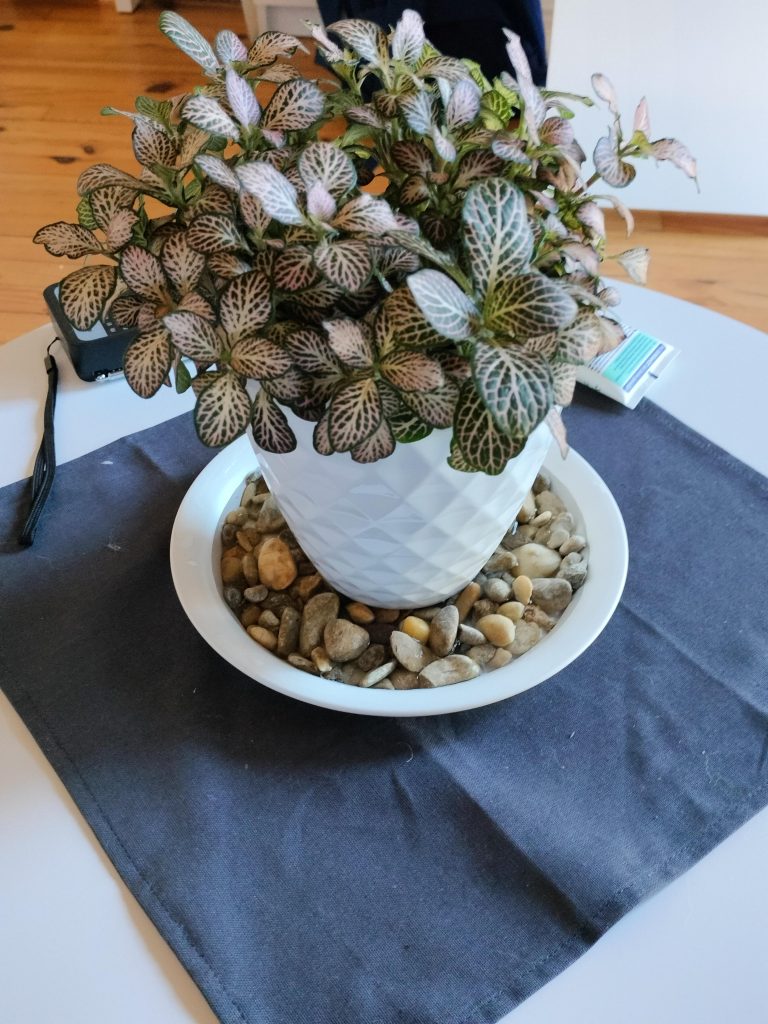
A pebble tray gives your plant a small humidity boost as water evaporates. It is easy to make, and it works best for small plants or a small group of plants. You only need a shallow tray, clean pebbles, and water.
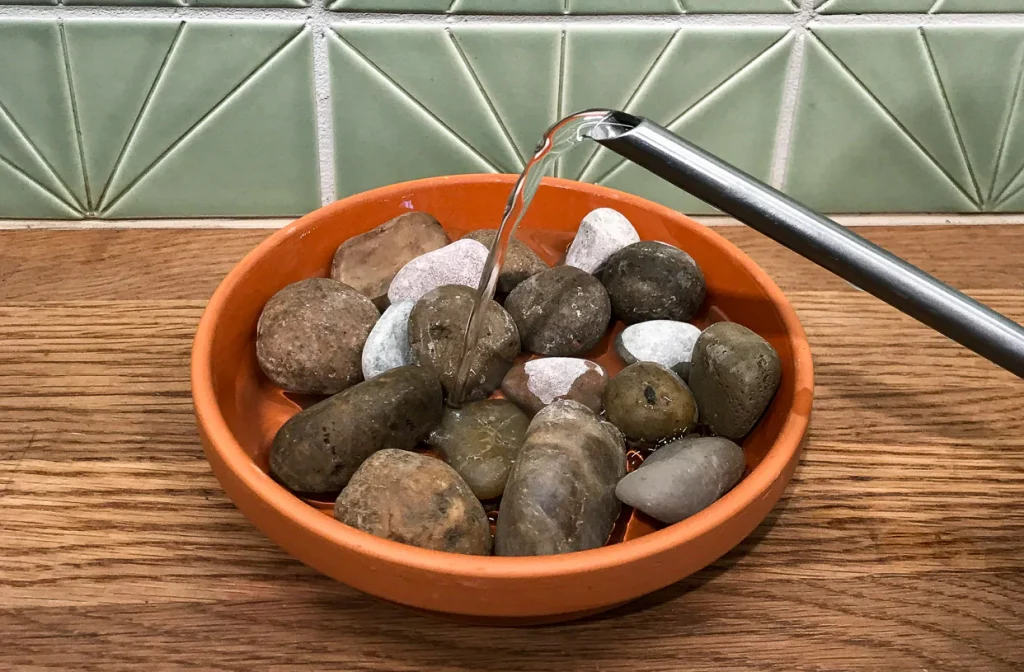
Fill the tray with pebbles first. Add water until it sits below the top of the stones. Then place the pot on top of the pebbles.
The bottom of the pot should not sit in water. If the pot absorbs water all day, the soil can stay too wet and roots may rot. You want evaporation around the plant, not a soaked root system.
Watch the following video for a step by step process in just 5 mins:
Use a wider tray if you want a better effect. More surface area means more water can evaporate. A tiny saucer under a large plant will not do much.
Clean the tray often. Algae, dust, and stale water can build up if you forget about it. Fresh water and clean stones keep the setup simple and safe.
Pebble trays are helpful, but they are not powerful. I would use them as a support method, not the main fix for a very dry room. They are best for plants that need a gentle boost.
Move Plants to a More Humid Room
Some rooms naturally have more humidity than others. Your bathrooms, kitchens, and laundry rooms often have more moisture in the air because of showers, sinks, and washing machines. That makes them useful spots for humidity-loving plants.
Light still matters more than humidity. A dark bathroom will not help a plant long term, even if the air feels damp. Your plant still needs enough bright, indirect light to grow.
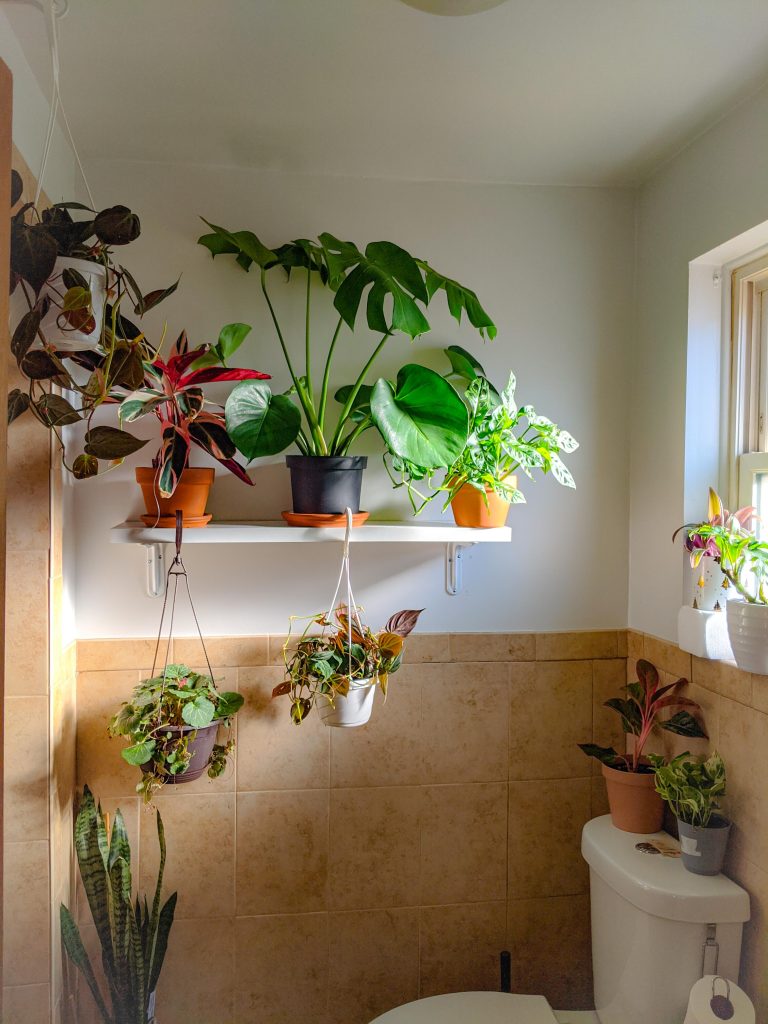
A bright bathroom can be perfect for ferns, orchids, peace lilies, and calatheas. These plants often enjoy the extra moisture from showers. Just make sure the room does not stay cold or dark.
Kitchens can also work well. A plant near a bright kitchen window may enjoy the extra moisture from cooking and washing dishes. Avoid placing it too close to hot stoves, greasy splashes, or cold windows.
Laundry rooms are useful only when they have enough light. If the room is dim, your plant may stretch, lean, or stop growing. Humidity cannot replace light.
Use a Terrarium, Cloche, or Greenhouse Cabinet
A terrarium traps moisture around small plants. This makes it great for plants that like steady humidity, such as fittonia, small ferns, moss, and some tiny tropical plants. It also works well for cuttings that need a protected space.
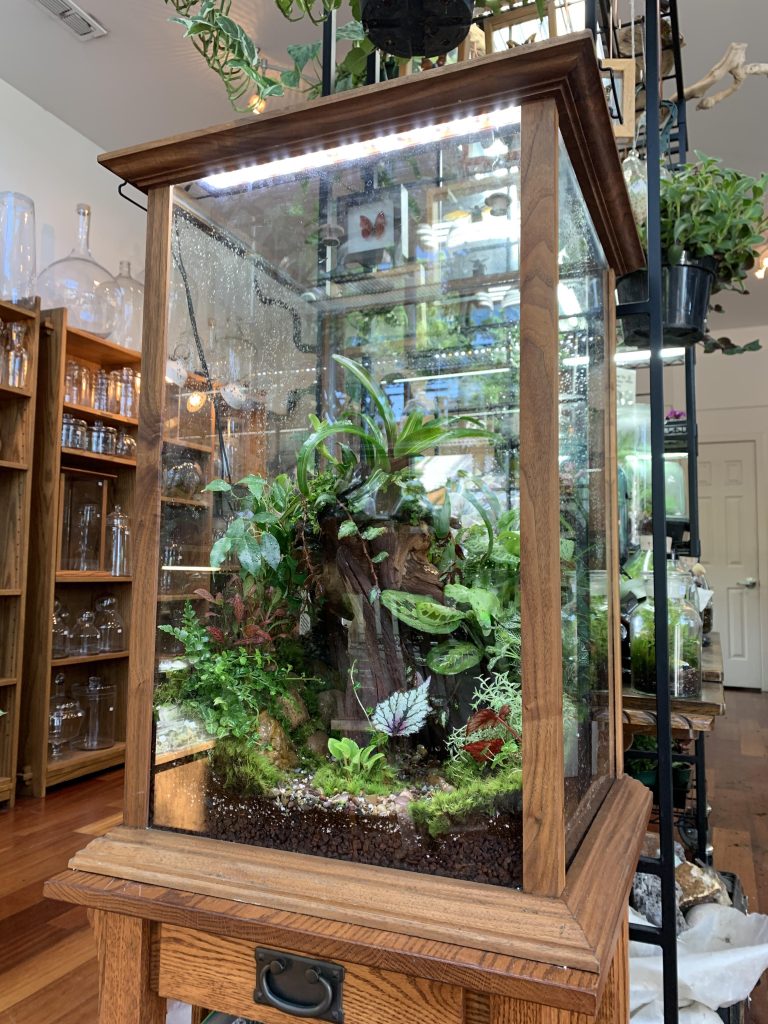
Closed terrariums hold more moisture than open ones. That can be helpful, but it can also become too wet if there is no airflow. Open the lid sometimes so fresh air can move in.
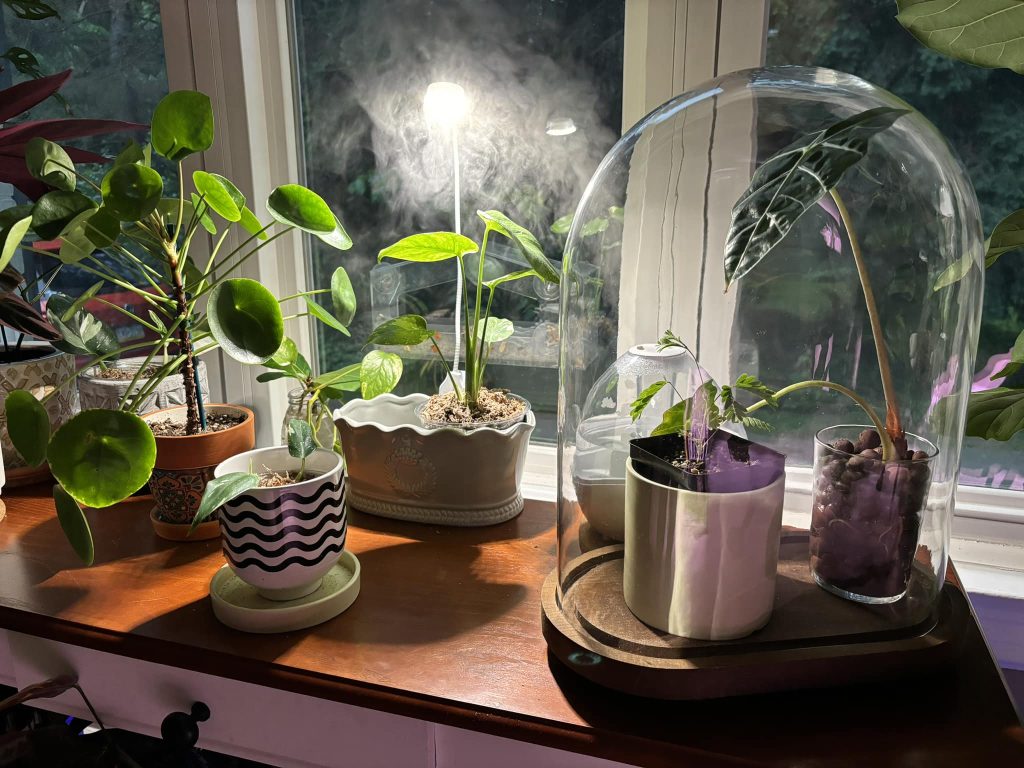
A glass cloche works like a mini greenhouse for one plant. You can place it over a small humidity-loving plant for part of the day. Lift it regularly so the plant does not sit in stale, wet air.
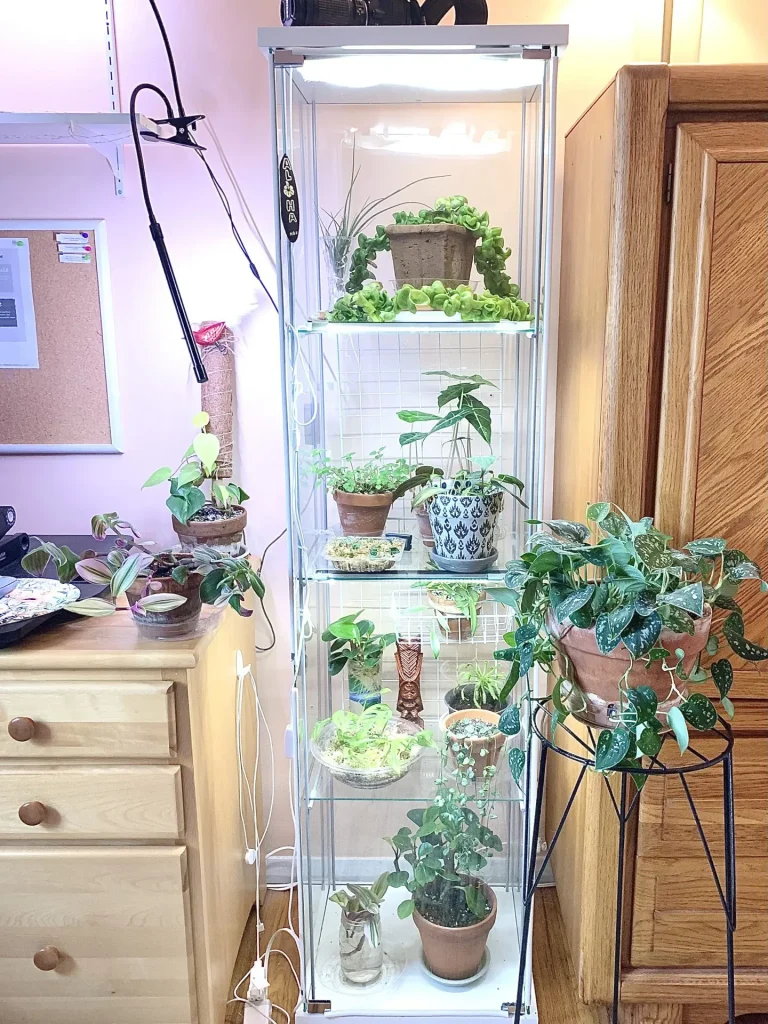
Greenhouse cabinets are a bigger option for serious plant lovers. They can hold tropical plants, raise humidity, and create a beautiful display.
They also need airflow, lighting, and regular checks for mold or pests.
Do not use this method for succulents or cacti. Those plants prefer drier conditions and can rot in trapped moisture. Match the setup to the plant before you close anything in glass.
Try the Double-Pot Method With Damp Moss
The double-pot method is another simple humidity trick. You place your plant’s nursery pot inside a slightly larger decorative pot. Then you fill the empty space between the two pots with damp sphagnum moss.
As the moss dries, it releases moisture around the plant. This can help create a slightly more humid space near the leaves. It works best with small or medium plants.
Drainage still matters. The inner pot should never sit in standing water. If water collects at the bottom, empty it.
Check the moss often. It should be damp, not sour, slimy, or moldy. Replace it when it breaks down or smells bad.
This method is useful for plants that like moisture but do not need a full terrarium. I would not use it for plants that prefer dry air. Succulents, cacti, and jade plants are better left out of this setup.
Be Careful With Misting
Misting is popular because it feels like plant care. You spray the leaves, the plant looks fresh, and it seems like you solved the problem. The trouble is that misting only raises moisture for a short time.
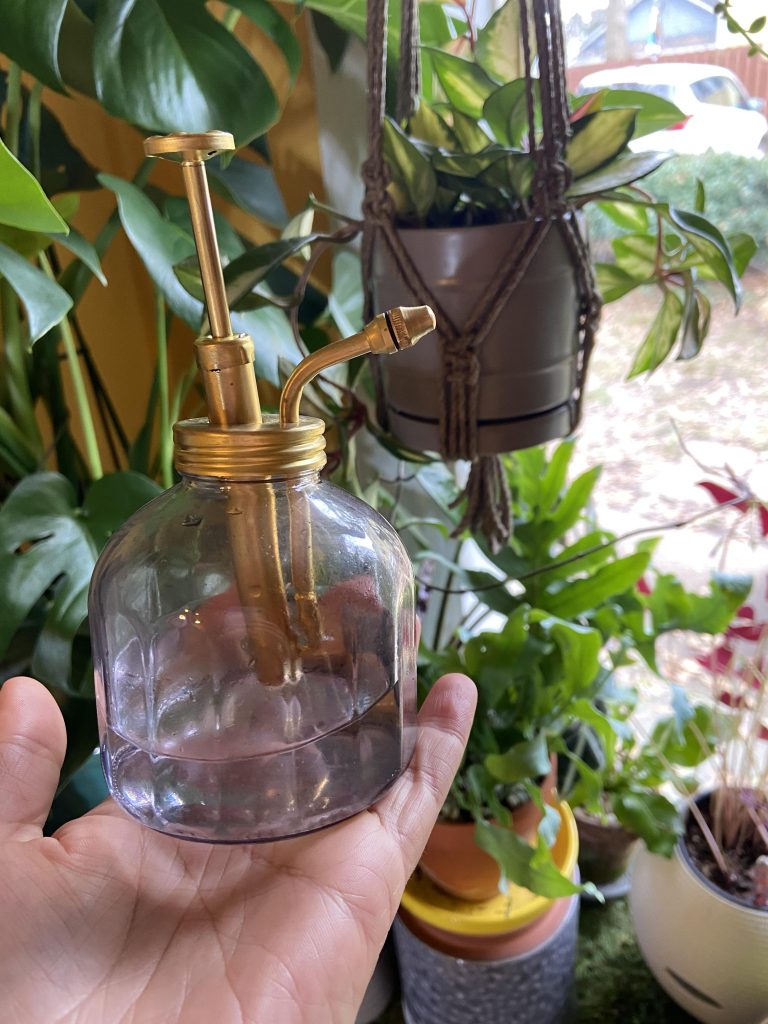
A few sprays do not change the humidity of a whole room for long. If your home is very dry, misting will not replace a humidifier. It may help a little, but it should not be your main method.
Some plants also dislike wet leaves. Fuzzy or velvety leaves can hold water on their surface, which may lead to spots or damage. African violets and velvet-leaf plants are common examples.
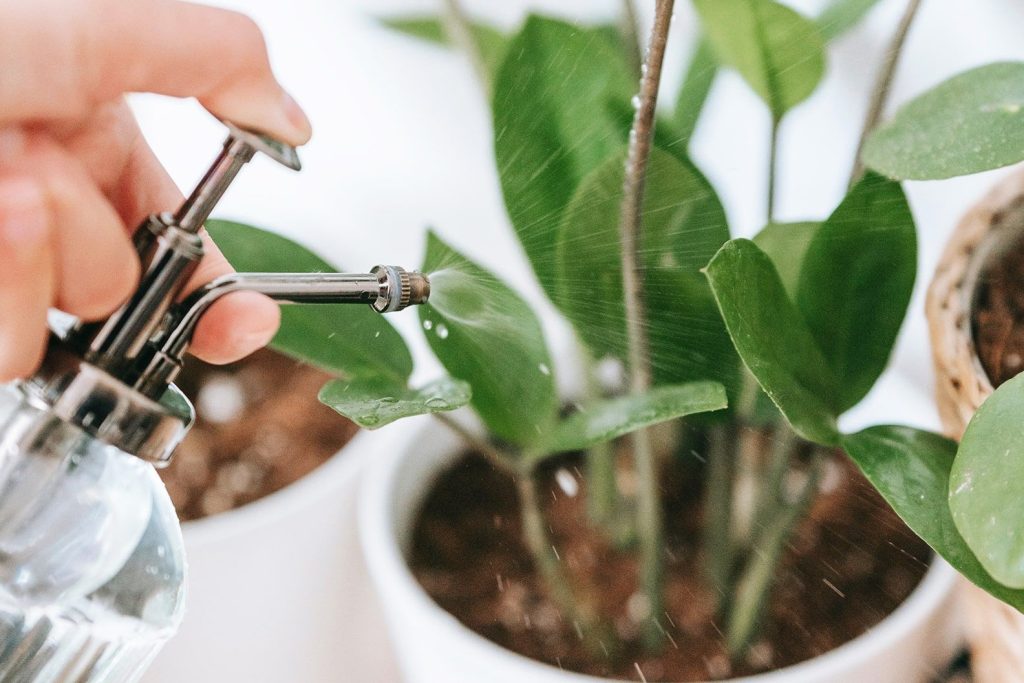
Morning is the best time to mist if you do it. Leaves have more time to dry during the day. Night misting can leave plants wet for too long.
Use clean, room-temperature water. Hard water can leave pale marks on leaves. Cold water can also shock tender tropical plants.
Misting can be useful for air plants, some cuttings, and a few humidity-loving plants. Still, I would use it with care. If leaves stay wet or spots appear, stop misting and try a safer method.
Give Plants an Occasional Shower
A gentle shower can help some houseplants. It washes dust off the leaves and gives the plant a short burst of moisture. Clean leaves also catch light better.
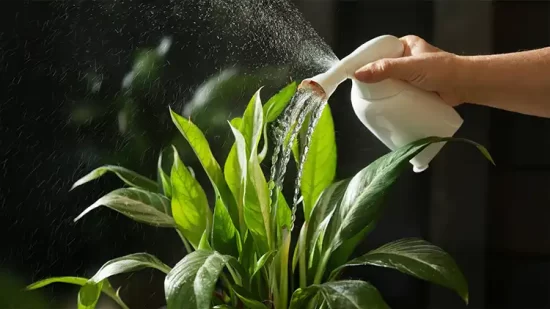
Use lukewarm water, not hot or cold water. Let the water run gently over the leaves and soil. Avoid strong pressure that can break stems or bruise soft leaves.
Let the plant drain fully after the shower. Water should not sit inside a decorative pot or saucer. Sitting water can lead to root problems.
Good airflow helps leaves dry after the shower. Place the plant somewhere bright and airy, but not in harsh direct sun. Wet leaves can burn or spot if they sit in strong sun too soon.
Do not shower every plant. Fuzzy-leaf plants, small fragile plants, and rot-prone plants may not enjoy it. Use this method for sturdy tropical plants that can handle wet foliage.
Keep Plants Away From Dry Air Sources
Heat vents can dry plant leaves fast. Radiators, fireplaces, air conditioners, drafty doors, and poorly sealed windows can also make the air around plants too harsh. A plant can struggle even when the rest of the room feels fine.
Move sensitive plants away from direct airflow. Even a few feet can make a difference. Leaves should not sit in the path of hot or cold air.
Cold drafts are stressful too. Tropical plants often dislike sudden temperature changes. Dry air plus cold air can lead to quick leaf damage.
Check your plant’s spot during the day. Sun, airflow, and temperature can change from morning to night. A shelf that feels fine at noon may sit near a cold window after sunset.
This is one of the easiest fixes. Before you buy anything, look at where the plant sits. Sometimes the best humidity trick is simply moving the plant to a kinder spot.
Which Houseplants Like High Humidity?
Tropical plants usually enjoy higher humidity. Many of them come from places where the air stays warm and moist. That is why they may struggle in dry indoor rooms.
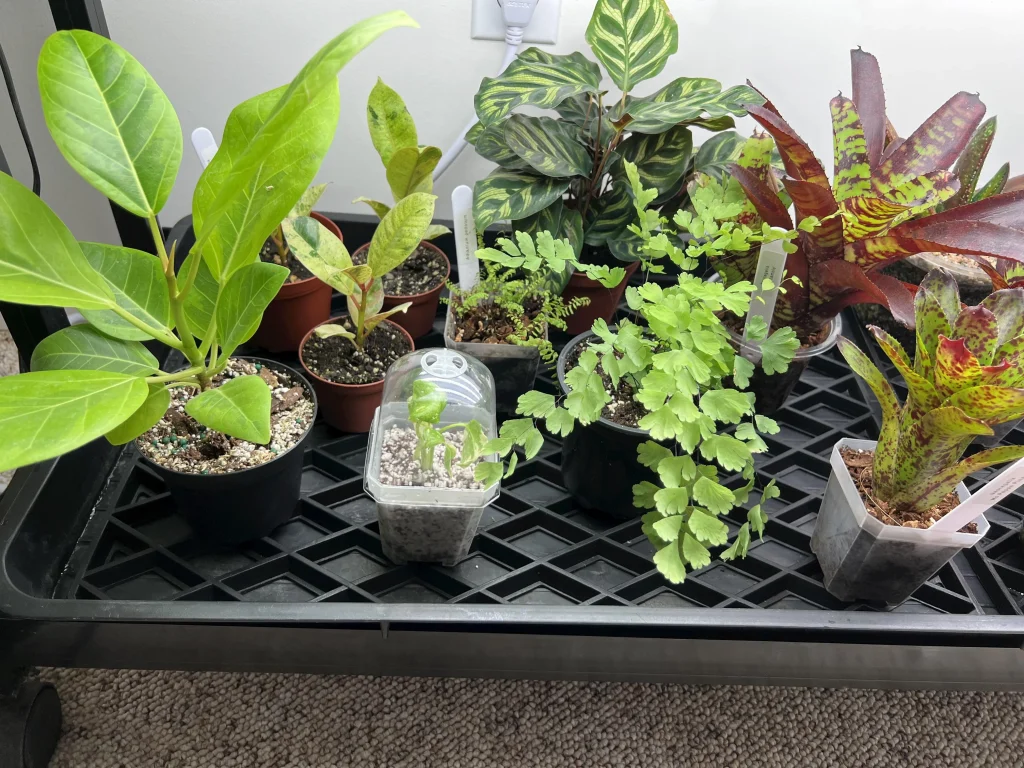
Ferns are some of the biggest humidity lovers. Boston ferns, maidenhair ferns, bird’s nest ferns, and button ferns often get crispy when the air is dry. A humidifier or bright bathroom can help them a lot.
Calatheas and prayer plants are also sensitive. Their leaves are beautiful, but they can brown or curl when the air stays too dry. These plants usually do better with steady moisture around them.
Orchids, peace lilies, alocasias, fittonias, monsteras, pothos, and philodendrons can also enjoy extra humidity. Some are tougher than others, but most will appreciate a more comfortable plant corner.
Cacti and succulents usually do not need extra humidity. Aloe, jade plants, snake plants, ponytail palms, and many desert plants prefer drier air. Giving them too much moisture can cause more harm than good.
| Plants that enjoy more humidity | Plants that usually handle dry air better |
|---|---|
| Ferns | Cacti |
| Calatheas | Succulents |
| Prayer plants | Snake plants |
| Alocasias | Aloe vera |
| Orchids | Jade plants |
| Peace lilies | ZZ plants |
| Fittonias | Ponytail palms |
| Monsteras | Some dracaenas |
| Philodendrons | Many desert plants |
Can Too Much Humidity Hurt Houseplants?
Too much humidity can hurt houseplants when airflow is poor. Moist air, wet leaves, and crowded plants can create a good place for fungal problems. Mold can also grow on soil if the top stays damp for too long.
High humidity is not the same as good care. Your plant still needs the right light, soil, pot size, drainage, and watering routine. A humidifier will not save a plant that is sitting in soggy soil.
Overwatering is a common mistake when people see brown tips. Dry air can cause brown edges, but so can root stress, salt buildup, uneven watering, or too much fertilizer. Always check the soil before adding more water.
Airflow keeps humidity safer. A small fan can help in a plant room or greenhouse cabinet. The fan should move air gently, not blast the leaves.
Balance is the goal. You want the air moist enough for the plant to stay comfortable, but not so damp that leaves, soil, and stems stay wet all day. Healthy humidity should support growth, not create a swamp.
A Simple Humidity Plan for Beginners
Start with a hygrometer. Check the humidity near your plant for a few days. If the number stays low and your plant shows dry leaf damage, then you can start making changes.
Move the plant away from vents, heaters, cold windows, or strong AC first. This costs nothing and often helps more than you expect. A better spot can reduce stress right away.
Group your tropical plants together if they are pest-free. Leave space between leaves so air can still move. This small plant group can hold a little more moisture than a lonely plant on a dry shelf.
Add a pebble tray for small plants that need a gentle boost. Use enough pebbles to keep the pot above the water. Clean the tray before it gets slimy or dusty.
Use a humidifier if the room stays dry for many days. This is the strongest choice for ferns, calatheas, orchids, alocasias, and other humidity-loving plants. A hygrometer will help you run it only as much as needed.
Try a terrarium or cloche for small plants that need steady moisture. Open it often so the air does not get stale. Avoid putting dry-loving plants inside.
Watch the newest leaves. Old crispy tips will not turn green again, but new growth can tell you if the plant feels better. That is the best sign your humidity plan is working.
FAQs
What is the fastest way to increase humidity for houseplants?
A humidifier is the fastest reliable way to raise humidity for houseplants. It can add moisture for hours, which helps more than short-term tricks like misting. Place it near your plant shelf or plant group for the best result.
Do pebble trays really work for humidity?
Pebble trays can work, but the effect is small. They help most around one plant or a small group of plants. They will not raise humidity across a large room.
Is misting enough for indoor plants?
Misting is usually not enough by itself. The moisture disappears fast, so it does not give long-lasting humidity. It can also cause problems for plants that dislike wet leaves.
How often should I mist my houseplants?
Mist only if the plant can handle it. Morning is best because leaves have time to dry. Avoid misting fuzzy leaves, succulents, cacti, or plants with leaf spot problems.
Can I put plants in the bathroom for humidity?
Yes, a bathroom can be a great spot if it has enough light. Ferns, orchids, peace lilies, and calatheas may enjoy the extra moisture. A dark bathroom is not a good long-term plant home.
Should I increase humidity for plants in winter?
Many tropical plants need extra humidity in winter. Indoor heating often makes the air drier, and dry air can lead to crispy leaf edges. Cacti and succulents usually do not need the same help.
Final Thoughts
You do not need a complicated setup to increase humidity for houseplants. Start by checking the humidity near your plants, then fix the easiest problems first. A better spot, a plant group, or a pebble tray may be enough for mild dryness.
Choose a humidifier when your home stays dry for days or weeks. Use terrariums, cloches, or greenhouse cabinets for smaller plants that need steady moisture. Skip extra humidity for plants that prefer dry air.
Your plant will tell you what is working. New leaves should look softer, smoother, and healthier. Once that happens, you will know you created a better little home for it.