Indoor Herb Garden Window Guide: What to Grow in Every Window

You bought a pot of basil. It looked great for a week. Then it stretched, yellowed, and sulked on the sill. Sound familiar?
The plant usually isn’t the problem. The window is. Every window gives herbs a different amount of light, heat, and draft.
Once you match the herb to the window, indoor herbs get easy.
This guide shows you what to grow in each window, how to fix a dim one, and how to water, harvest, and rescue your plants all year.
Test Your Window Before You Buy Plants
Light decides everything indoors. Most herbs want at least six hours of direct sun. Eight is better.
Try this quick check. Hold your hand about a foot above the sill around midday. A sharp, dark shadow means strong light. A faint, fuzzy shadow means weak light. Weak light makes herbs leggy and bland.
Check the glass too. Some newer windows filter out part of the light. Older windows can leak cold air. Both change what your herbs can handle.
Once you pick a spot, turn each pot a quarter turn every few days. Plants lean toward the light. Turning keeps them growing evenly.
Read more: 12 Herbs You Can Still Plant This Fall for Months of Fresh Harvests
South-Facing Window: Your Best Spot
This window gives the strongest and longest light. Sun lovers thrive here.
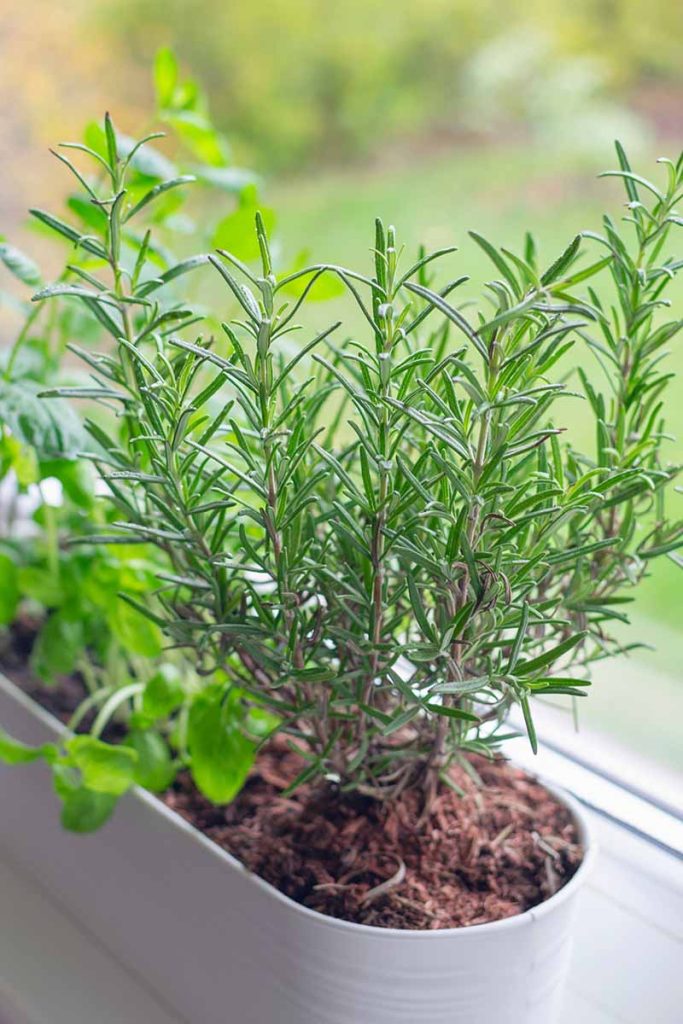
Best herbs: Basil, rosemary, thyme, oregano, and sage.
Basil needs the most warmth of the group. Keep it near 70°F and keep its leaves off cold glass on winter nights. Rosemary wants the brightest spot you have, so give it the front row.
Summer afternoons can turn this sill hot. A sheer curtain softens the glare and protects tender leaves.
Read more: 12 Creative Container Herb Garden Ideas for Small Spaces
East-Facing Window: Gentle Morning Sun
East windows catch cool morning light. Herbs that dislike heat love it.
Best herbs: Cilantro, parsley, chives, and mint.
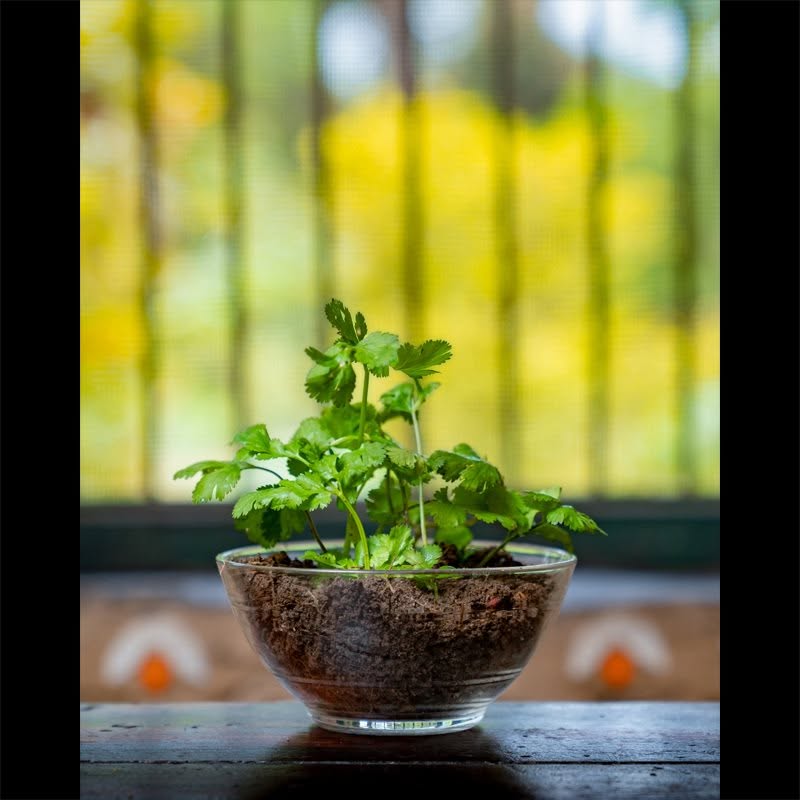
Cilantro bolts fast in warm, bright spots. The cooler light here slows that down. Mint and chives handle this window well too.
Expect slightly slower growth than a south window. A small lamp in winter fills the gap.
Also read: 13 Best Herb Plants to Grow in Shady Garden
West-Facing Window: Strong Afternoon Light
West windows deliver warm, late sun. This light suits tougher herbs.
Best herbs: Thyme, oregano, sage, and chives.
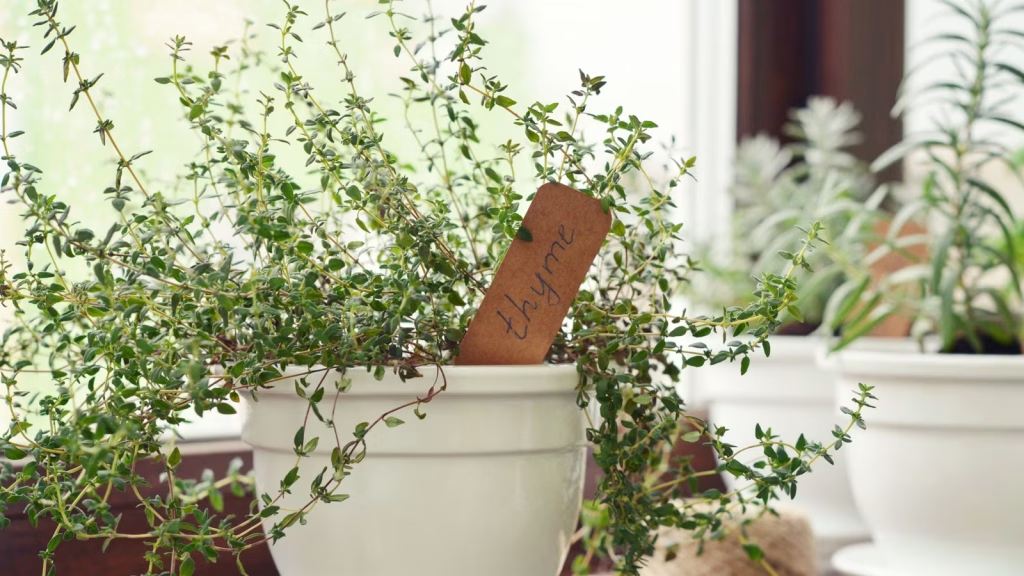
These herbs shrug off heat. Check the soil often, because afternoon sun dries pots fast. Pull plants back from the glass if the leaves feel hot to the touch.
North-Facing Window: Plan on a Grow Light
North windows rarely give herbs enough light. Most herbs turn pale and leggy there. Chives and mint cope best, but even they grow slowly.
A grow light solves the problem, and the next section shows you how.
Grow Light Basics for Dim Windows
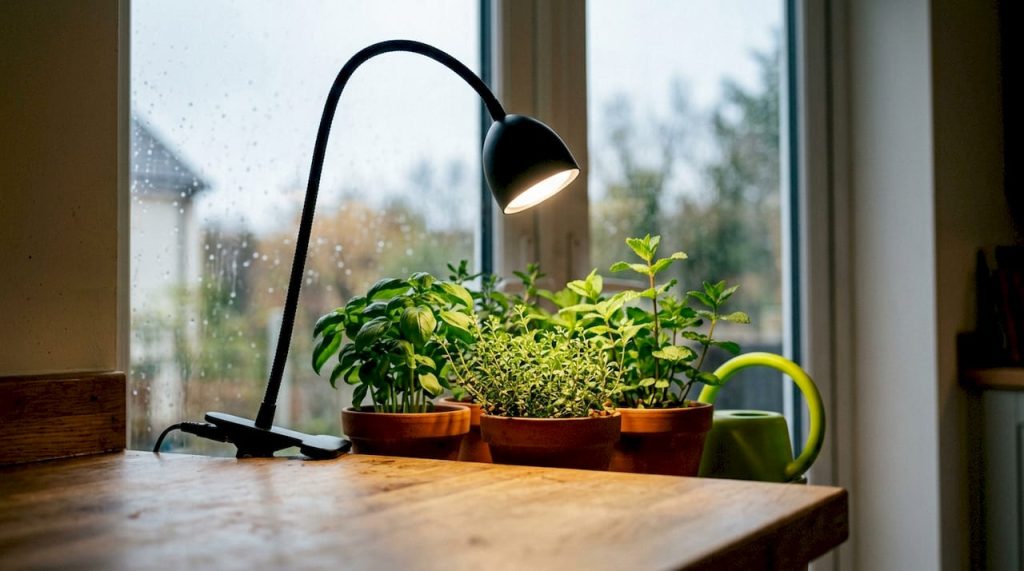
Winter days are short. Even a south window can fall short from November through February. A grow light fills the gap.
- Choose a full-spectrum, high-output light.
- Hang it 6 to 12 inches above the leaves.
- Run it 12 to 16 hours a day on a timer.
- Turn it off at night. Herbs need a dark break.
Lamp light is weaker than sun. Plan on about two hours of lamp time for every hour of sun you’re missing. A small tabletop light turns a kitchen counter into a herb garden.
Pots and Soil That Prevent Soggy Roots
Roots rot faster than leaves wilt. Fix the problem at planting time.
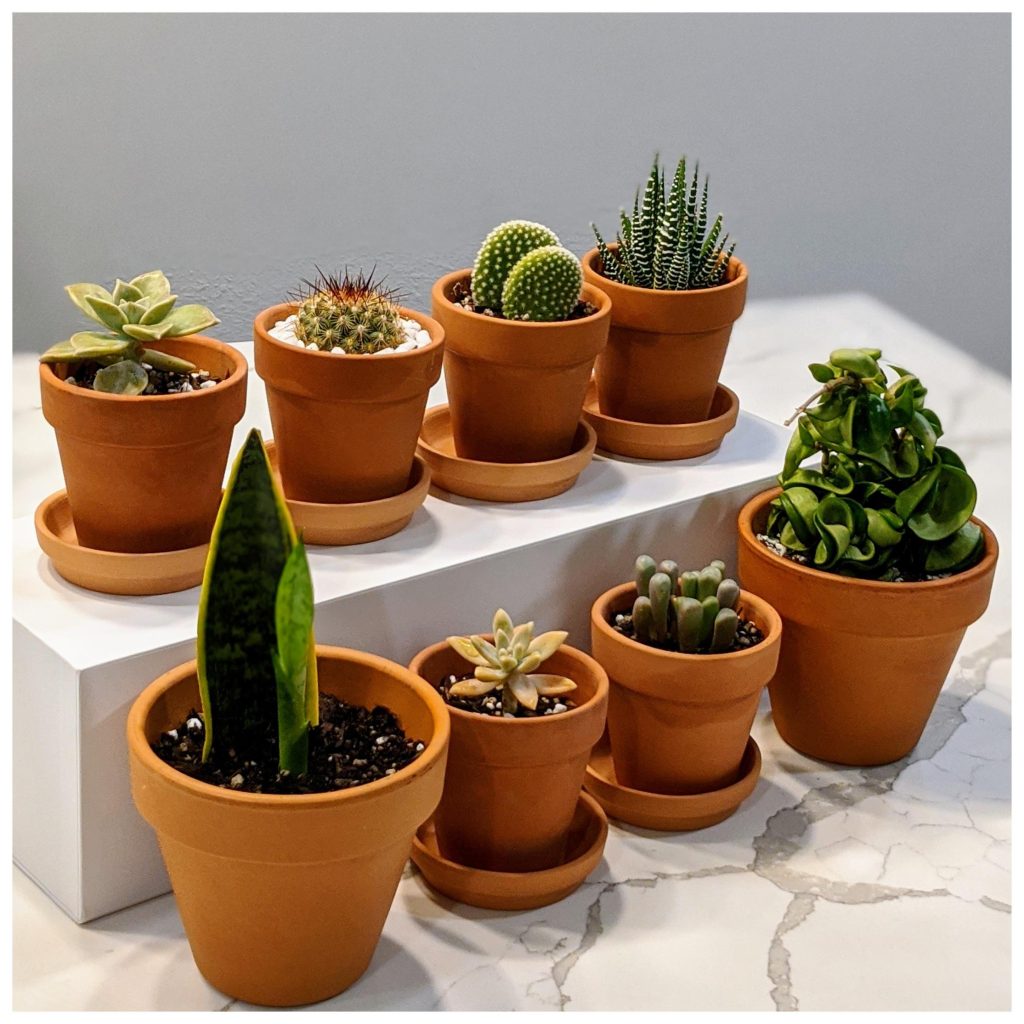
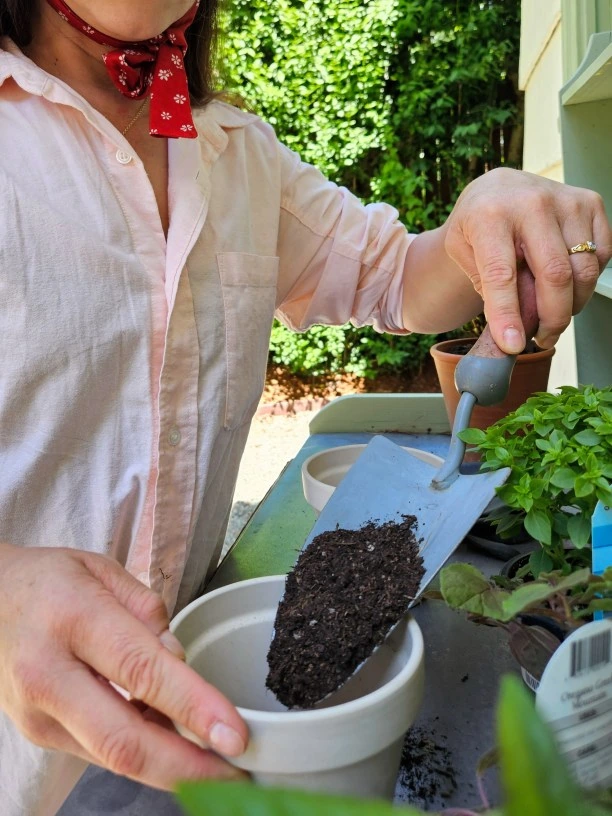
Pick terra cotta pots. Clay breathes and dries evenly. Plastic and glazed pots hold more water, so they need a lighter hand with the watering can.
Choose a pot only 1 to 2 inches wider than the nursery pot. Oversized pots stay wet too long. Every pot needs drainage holes. Empty the saucer after each watering.
Skip garden soil. It packs down and chokes roots. Use a quality potting mix blended with perlite, about two parts mix to one part perlite. For rosemary, thyme, oregano, and sage, mix potting soil and cactus mix half and half.
Give each herb its own pot. Different herbs want different conditions. One pot per herb lets you control the water for each.
Water by Thirst Group
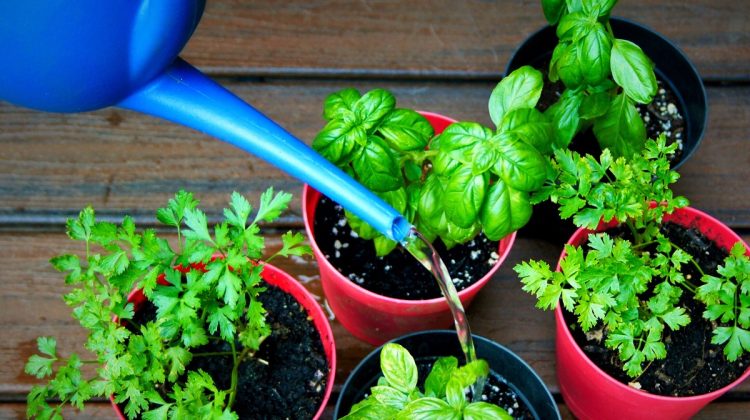
Overwatering kills more indoor herbs than anything else. Skip the calendar and use your finger. Push it into the soil up to the first knuckle.
If the soil feels dry, water. If it feels damp, wait a day or two.
Group your pots by thirst.
Dry-side herbs: Thyme, oregano, sage, and rosemary. Let the top inch of soil dry between waterings. Never let rosemary dry out completely.
Steady-moisture herbs: Basil, chives, mint, parsley, and cilantro. These want soil that stays lightly damp but never soggy.
Water until the excess runs out the bottom. Then empty the saucer. In winter, water less often, but don’t let pots go bone dry.
Use tap water that hasn’t passed through a water softener.
Heated winter air is dry. Brown, curling leaf tips are the warning sign. Set pots on a tray of pebbles with water below the top of the stones.
Group the pots together. Move them away from heating vents.
Feed Lightly
Herbs need less fertilizer than most potted plants. Too much weakens the flavor. Use a balanced fertilizer at half strength every other week while plants grow actively.
Skip November, December, and January. Growth slows during those months.
Harvest the Smart Way
Wait until a plant stands 4 to 6 inches tall. Never take more than one third at a time. Cut just above a leaf or pair of leaves. The plant branches at that cut and grows bushier.
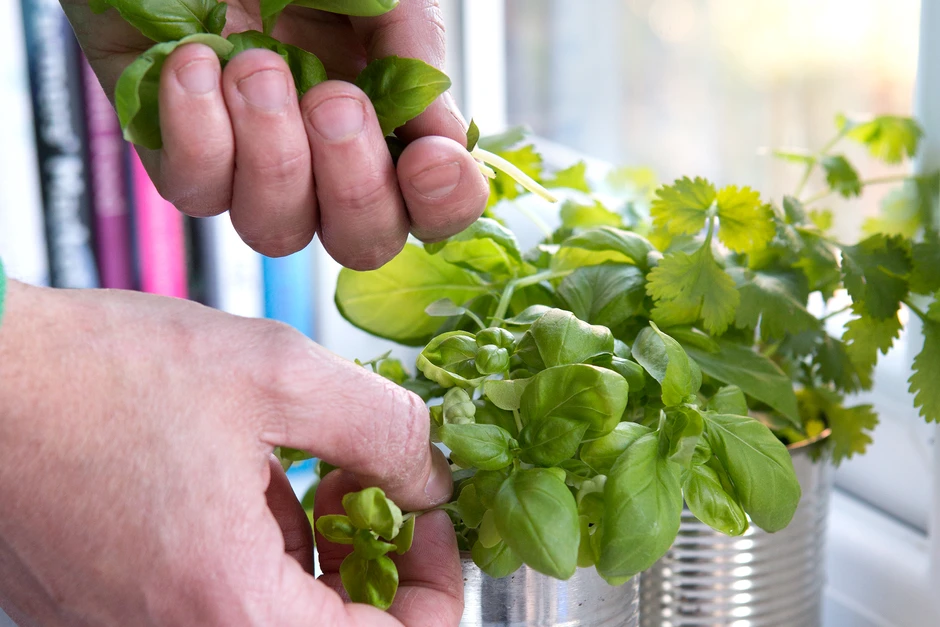
Soft herbs like basil, parsley, and cilantro can handle bigger cuts. Leave 4 to 6 inches of stem. On chives, mint, oregano, and thyme, remove only the top third.
On rosemary, thyme, and sage, cut into the green growth and avoid the old brown wood. It regrows slowly. With sage and mint, you can simply pinch off leaves.
Harvest in the morning for the strongest flavor. After many cuttings, basil and other annuals wear out. Start a fresh pot when growth slows.
Cooking with fresh herbs instead of dried? Use about 1 tablespoon of fresh for every 1 teaspoon of dried.
Your Year-Round Herb Calendar
Fall:
Bring tender perennials like rosemary inside before the first frost. Dip the plants in soapy water or spray them with insecticidal soap first.
This sends hitchhiking pests packing. You can also dig up a small division of chives, mint, sage, or parsley and pot it for the window.
Mint and chives enjoy a light frost before the move. It gives them a short rest and fresh new growth.
Winter:
Give plants every bit of light you have. Water less and skip the fertilizer.
Late winter and early spring: Repot crowded plants and start feeding again. Sow dill and cilantro from seed. Cover the pots with plastic wrap or a dome until sprouts appear. Then remove the cover.
Late spring and summer: After the last frost, move rosemary, bay, and marjoram outdoors. They’ll grow strong all summer, and you can bring them back in next fall.
Fix Common Problems Fast
- Tall, pale, floppy stems: The plant wants more light. Move it to a brighter window or add a grow light.
- Yellow leaves: Overwatering causes this most often. Let the soil dry and check the drainage. Pests can cause it too, so flip a leaf and look underneath.
- Brown, curling tips: Dry air is the usual culprit. Move the pot away from vents and add a pebble tray.
- Tiny black flies: These are fungus gnats. They breed in wet soil. Let the top inch dry, add yellow sticky traps, and repot in fresh soil if they stay.
- Fine webbing and dull, speckled leaves: Spider mites love hot, dry spots. Rinse the leaves and spray with a mix of mild dish soap and water.
- Sticky leaves or cottony bugs: Aphids and mealybugs cause this. Use the same soapy spray and repeat every few days.
FAQ’s
Can I grow herbs in a north-facing window?
Yes, with a grow light. Without one, most herbs turn weak and flavorless. Chives and mint tolerate the dim light best.
Can I plant several herbs in one pot?
One herb per pot works best. If you want a shared planter, pair herbs with the same thirst, like thyme and oregano.
How often should I water indoor herbs?
Skip the schedule. Check the top inch of soil. Water when it feels dry for dry-side herbs. Water when it feels barely damp for basil, mint, and chives.
Do I really need a grow light?
You need one if your window gives under six hours of sun, or if winter days run short. A south window may work alone from spring through fall.
Will my herbs come back every year?
Thyme, rosemary, oregano, sage, chives, and mint can last for years. Basil and cilantro finish their cycle and need replacing. Parsley lasts about two years.
Final Thoughts
A good herb garden starts with the right window. Match each herb to its light, group the thirsty ones together, and harvest often. Your windowsill will keep your kitchen stocked all year.