
Peace Lily Care Indoors: How to Stop the Droop and Get More Blooms

Your peace lily droops. Then it bounces back. Then the tips turn brown. Then the blooms stop. Sound familiar?
Most of these problems come from a few small mistakes with light, water, and humidity. Each one has a simple fix.
This guide shows you how to set up your peace lily the right way. You will also learn how to read its signals, bring back the white blooms, and keep it healthy for years.
1. Pick a Spot With Bright, Gentle Light
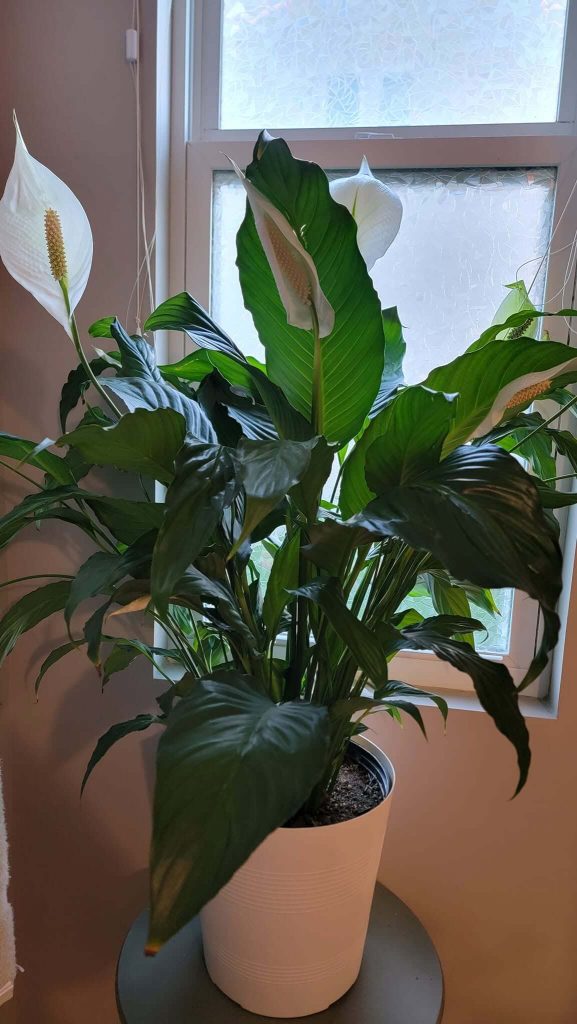
Peace lilies grow best in bright, indirect light. An east-facing window is perfect. A north-facing window works too. Both give soft light without harsh rays.
You can keep one in a dim corner. It will survive there. But it will rarely bloom. Light fuels the flowers, so a brighter spot gives you more of them.
Direct sun is the other extreme. It scorches the leaves. If your only bright window faces south, set the plant a few feet back. A sheer curtain also does the job.
Quick test: If you can read a book comfortably in that spot without a lamp, the light is strong enough for blooms.
Leaf clues: Pale or curling leaves mean too much light. Brown scorched patches mean direct sun. Plenty of green growth with no flowers points to too little light.
2. Choose a Pot and Soil That Drain Fast
Peace lily roots hate sitting in wet soil. Good drainage prevents most problems before they start.
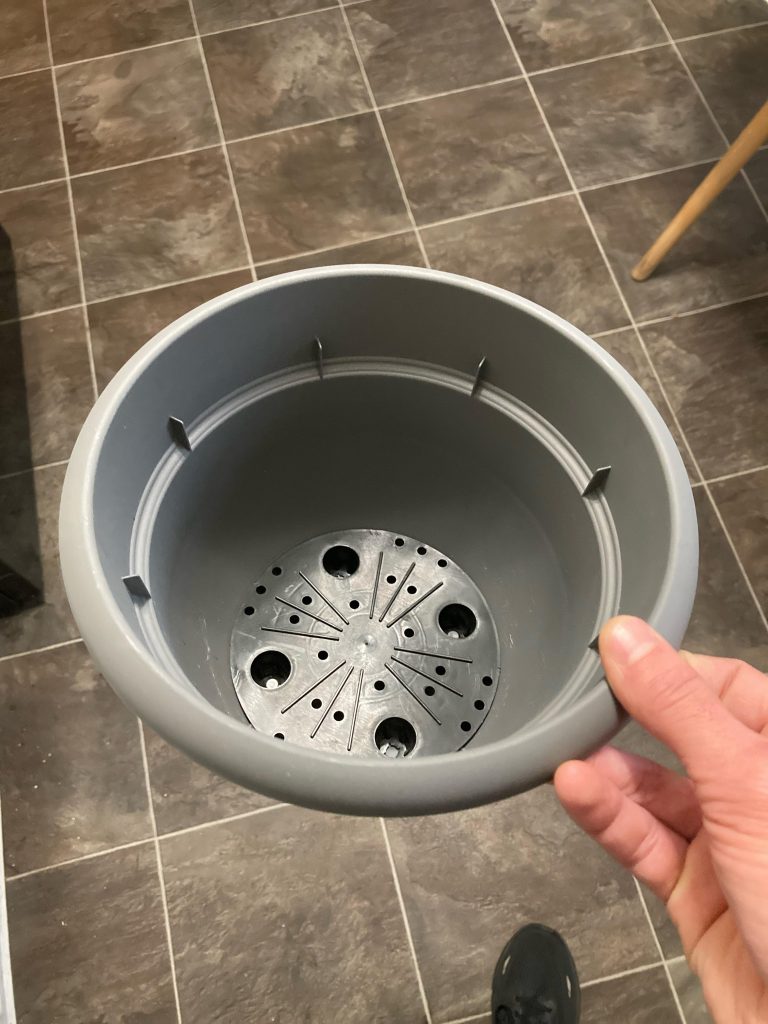
Pick a pot with drainage holes. If you love a decorative pot with no holes, leave the plant in its plastic nursery pot and slip it inside. Empty the outer pot about 10 minutes after you water.
Regular potting mix often holds too much water. Lighten it up. Mix 2 parts potting soil, 1 part perlite, and 1 part coco coir.
A handful of orchid bark adds extra airflow. The mix should feel loose and crumbly, not heavy or muddy.
Choose a pot just one size up. Peace lilies don’t mind snug roots. A giant pot holds extra wet soil that the roots can’t use.
3. Water by Touch, Not by Calendar
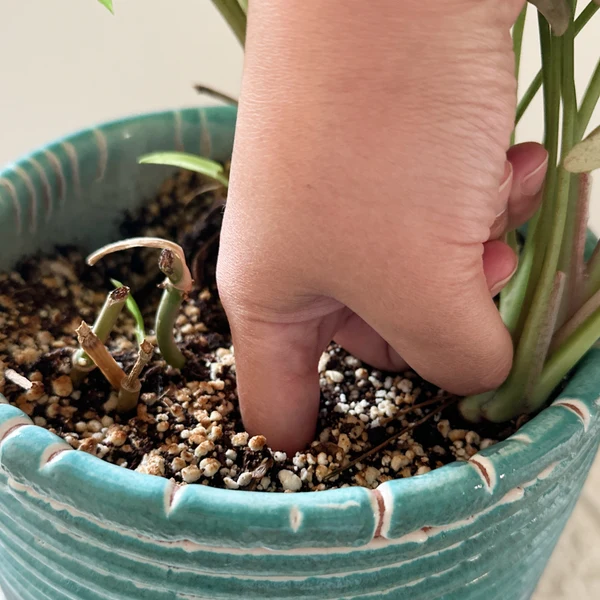
Check the soil with your finger. When the top inch feels dry, it’s time to water. In a warm, bright room, that might be once a week. In a cooler or dimmer room, the soil dries out slower.
Pour slowly until water runs out the bottom. Use lukewarm water. A 6-inch pot needs about 1 cup. A 10-inch pot needs about 3 cups. Let it drain, then empty the saucer.
Your peace lily droops when it’s thirsty. It usually perks up within a few hours of a drink. Don’t wait for the droop every time, though. Repeated wilting stresses the leaves.
A droopy plant with wet soil is a different story. That’s overwatering, so hold off and let the soil dry.

Bottom-watering tip: If the soil has gone bone dry and water races straight through, set the pot in a few inches of water for 15 to 30 minutes. Then let it drain fully.
Water quality: Tap water often contains fluoride and chlorine. Fluoride builds up in the leaf tips and turns them brown.
Switch to filtered, distilled, or rain water if you can. Letting tap water sit overnight clears the chlorine. It leaves the fluoride behind.
4. Raise the Humidity and Keep It Warm
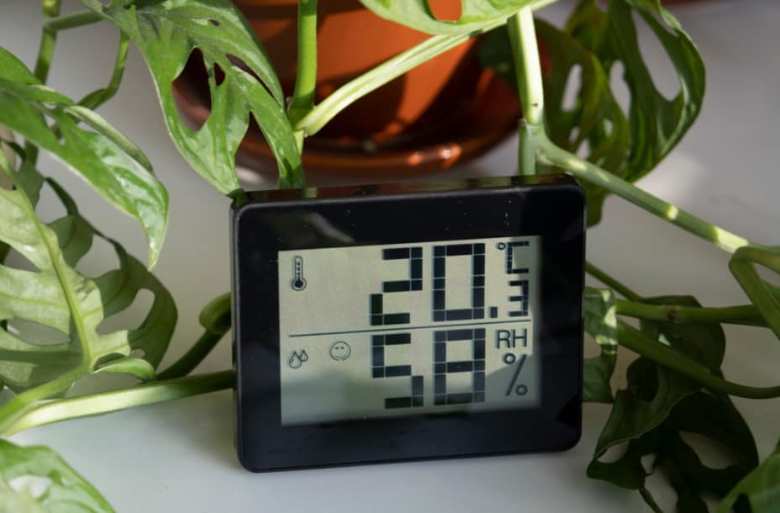
Peace lilies come from tropical forests. They like moist air and steady warmth. Aim for 65 to 80°F.
Anything below 55°F can seriously damage the plant. Temperatures under 65°F can also stop the blooms.
Dry air is the biggest problem in fall and winter. Heaters and vents pull moisture out of the room. The leaf edges turn brown and crispy first.
Try these easy fixes:
- Run a small humidifier near the plant.
- Group it with other houseplants. They release moisture and lift the humidity around each other.
- Place it in a bright bathroom or kitchen, where the air stays damp.
- Set the pot on a tray of pebbles with water. Keep the pot above the waterline.
Misting gives a quick boost, but it fades fast. A humidifier works better.
Where to avoid: Keep your peace lily away from radiators, heating vents, and drafty doors. Sudden temperature swings stress it.
5. Feed Lightly and Only When It’s Growing
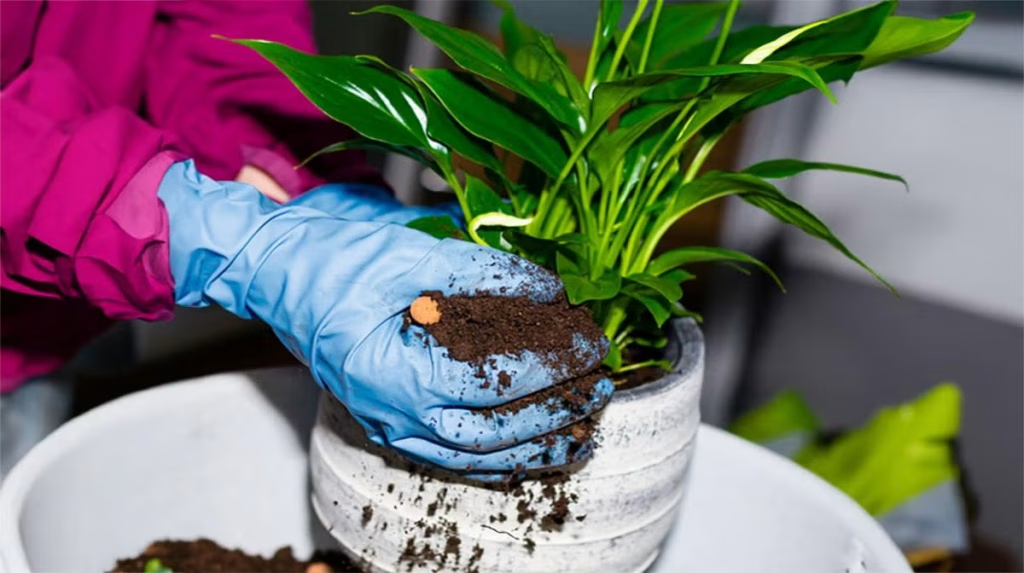
Peace lilies don’t need much food. Too much does more harm than good.
Use a balanced liquid houseplant fertilizer, such as 20-20-20. Dilute it to quarter strength. Feed every 6 to 8 weeks in spring and summer. Skip fall and winter, when growth slows down.
Heavy feeding burns the roots and leaf tips. It also leaves a white salt crust on the soil or pot rim.
If you see that crust, flush the pot. Run plain water through the soil for a minute and let it drain out the bottom.
Skip the “bloom booster” fertilizers. High phosphorus does not make peace lilies flower more. Light does that job.
Quick tip: Keep fertilizer off the leaves. Pour it onto the soil only.
6. Keep the Leaves Clean and Tidy
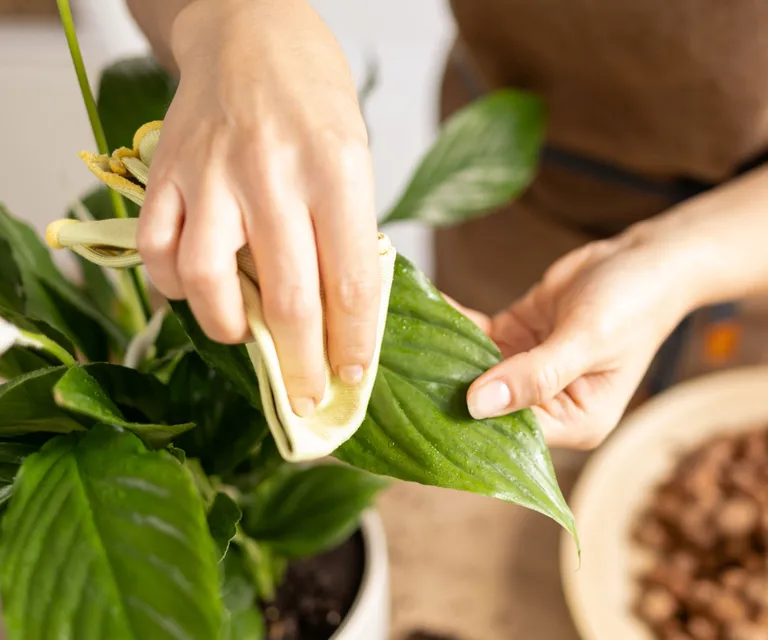
Peace lily leaves are large, so they collect dust fast. Dust blocks light and makes the plant look dull. Wipe each leaf with a damp cloth every few weeks.
Once in a while, give the plant a gentle shower with lukewarm water. That also rinses off hiding pests.
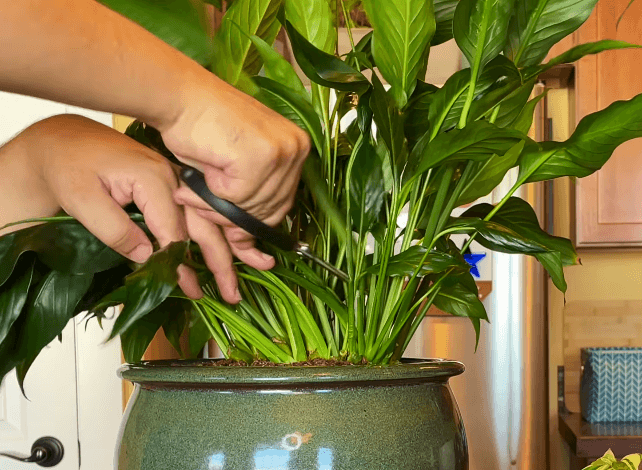
Trim as needed. Cut yellow leaves and spent flower stalks at the base of the plant. Use clean scissors.
Brown tips won’t turn green again. You can snip them off. Follow the natural shape of the leaf and leave a thin brown edge so you don’t cut into healthy tissue.
What Your Peace Lily Is Telling You
Your peace lily shows you what’s wrong. You just need to read the signs. Here’s your quick decoder.
Drooping Leaves
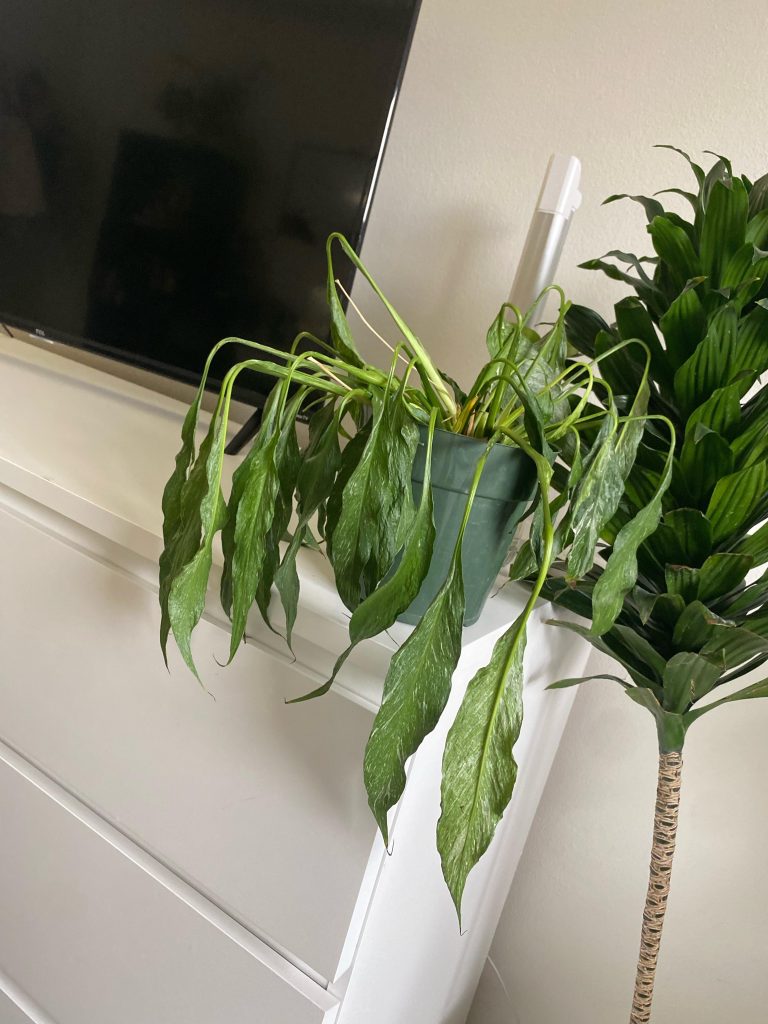
Soil is dry: Your plant is thirsty. Water it well. It should perk up within a few hours.
Soil is wet: You’re overwatering. Let the top inch dry out before you water again. Check that the pot drains.
Soil is wet and the plant keeps drooping: Slide the plant out of its pot and look at the roots. Healthy roots are white or tan and firm. Rotted roots are brown, mushy, and smell sour. Cut away the rotted parts. Then repot in fresh, airy mix.
Roots are packed tight: The plant may be root bound. Repot it into a slightly bigger pot.
Brown Leaf Tips
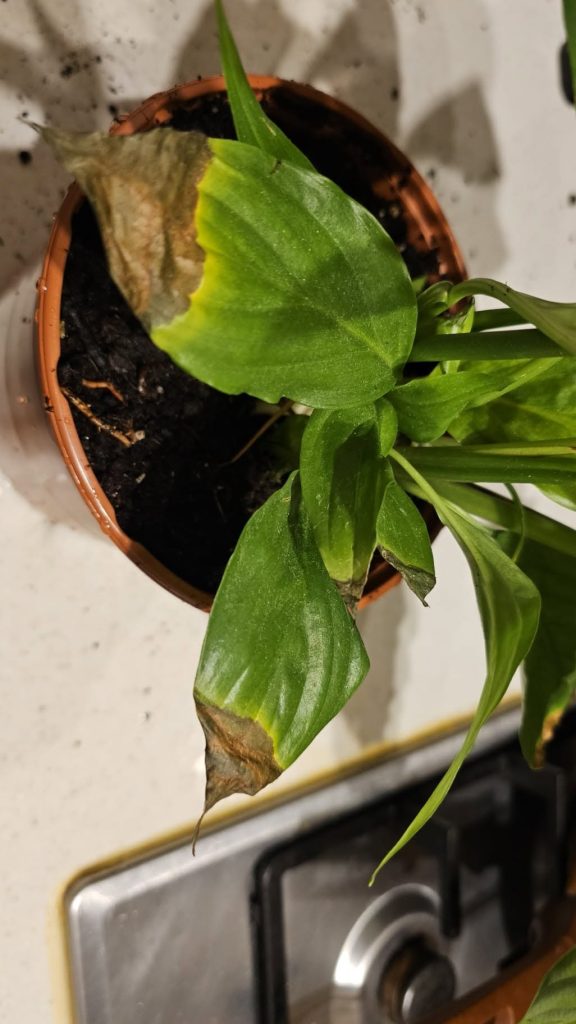
Brown tips have four common causes. Check them in this order:
- Tap water: Fluoride and chlorine burn the tips. Switch to filtered, distilled, or rain water.
- Dry air: Raise the humidity and move the plant away from vents.
- Too much fertilizer: Flush the soil and skip the next feeding.
- Too much light: Move the plant back from the window.
Yellow Leaves
One yellow leaf at the bottom is normal. Older leaves age out. Cut it off at the base.
Several yellow leaves point to a watering problem. Both too much and too little water cause it. Feel the soil to find out which one you have.
A plant that has outgrown its pot can also turn yellow. Check the drainage holes for roots.
Pests
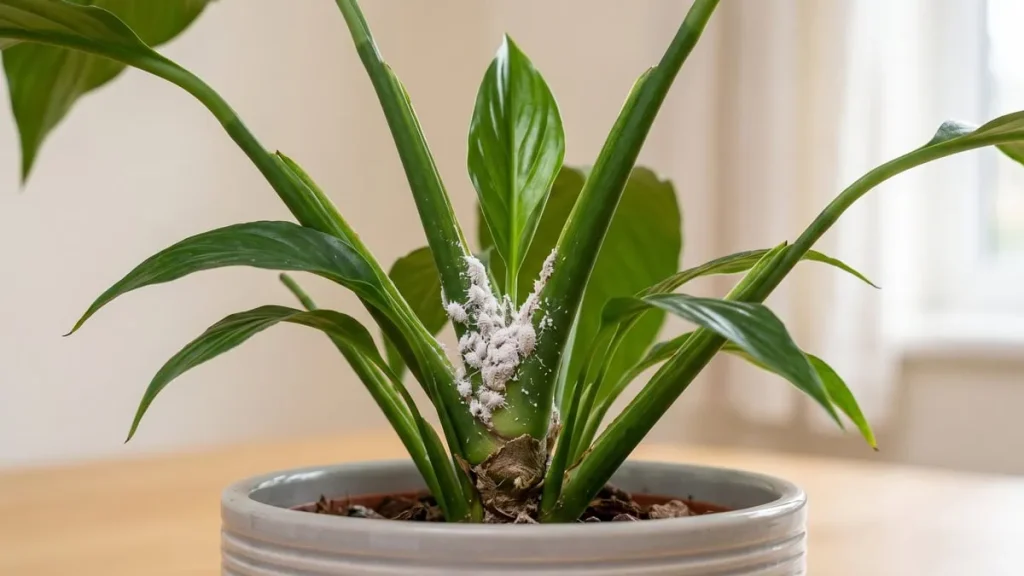
Peace lilies rarely get bugs. Check the undersides of the leaves now and then.
- Mealybugs look like tiny cotton tufts. Dab each one with a cotton swab dipped in rubbing alcohol.
- Spider mites leave fine webbing and tiny speckles on the leaves. Rinse the plant in the shower. Then spray with insecticidal soap.
- Fungus gnats are tiny black flies around the soil. They signal wet soil. Let the top layer dry out between waterings.
- Scale looks like small brown bumps on stems and leaf undersides. Wipe them off with an alcohol swab.
Isolate any plant with bugs. Repeat the treatment every week or so until they’re gone.
How to Get More Blooms
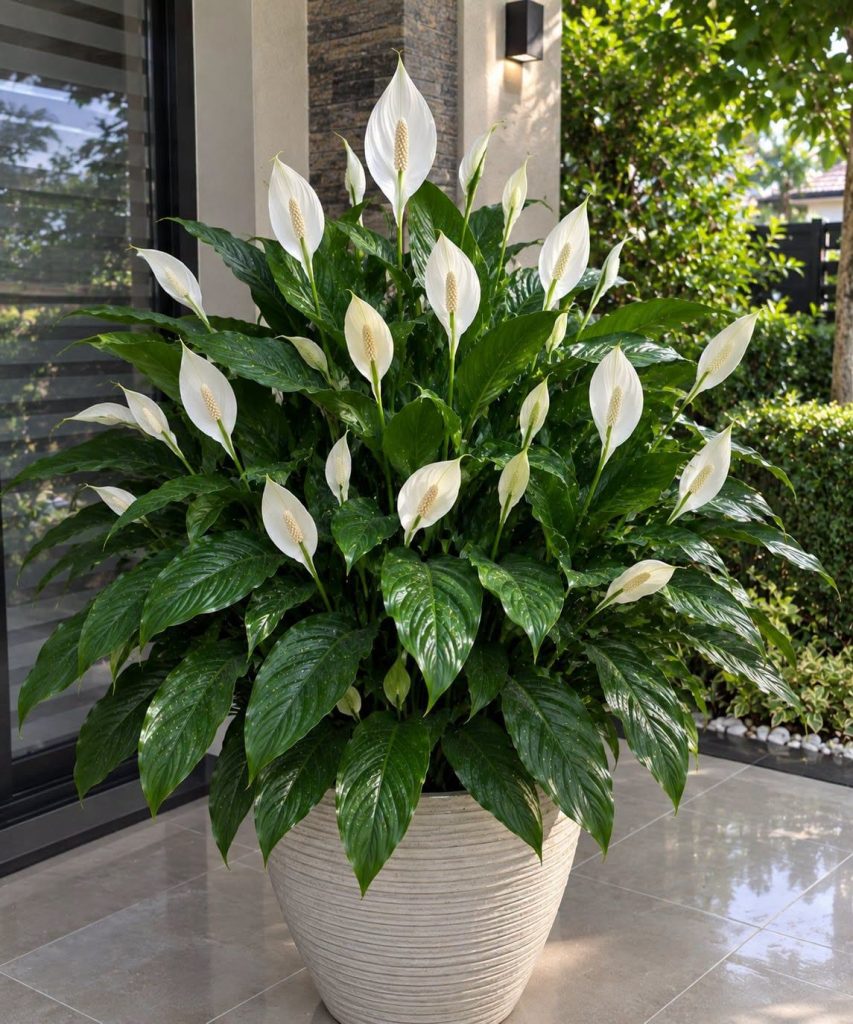
The white “flower” on a peace lily is actually a modified leaf called a spathe. It wraps a small spike in the center. Each one lasts for weeks. A happy plant can bloom several times a year, mostly from spring through fall.
Plants bought in full bloom often stop flowering at home. That’s normal. The nursery used ideal conditions to force them. Your job is to recreate those conditions.
Give it more light. This is the biggest factor. Move the plant closer to an east or north window. Brighter indirect light means more flowers.
Keep it warm. Temperatures below 65°F can stop blooming. Keep the plant away from cold windows in winter.
Check the plant’s age. Very young plants often won’t flower until they’re about a year old. Give them time.
Refresh the soil. If you haven’t repotted or fed your plant in years, the nutrients may be used up. Repot in fresh mix and feed lightly in spring.
Divide a crowded plant. Old, packed clumps flower less. Dividing them often brings the blooms back.
How to Repot and Divide a Peace Lily
Peace lilies don’t mind snug roots. Still, they need fresh soil every couple of years. Spring is the best time, because roots grow fast in warm weather.
You can repot any time of year if the roots are pushing out of the drainage holes.
Water the plant the day before. Moist soil slides out easily and protects the roots.
- Slide it out. Tip the pot on its side. Hold the base of the plant and ease it out. Squeeze a plastic pot to loosen the roots.
- Check the roots. Trim any that look brown or mushy.
- Decide: repot or divide. For a bigger pot, go up one size. To make more plants, divide it.
- Divide into sections. Look for natural clumps. Each one has its own leaves and roots. Tease them apart with your hands. Use clean scissors for stubborn spots. Most plants split into two or three sections.
- Pot each section. Use fresh, airy mix and a pot with drainage holes. Set the plant at the same depth as before.
- Water well. Let it drain fully. Then put it back in bright, indirect light.
Division is the only way to multiply a peace lily. Stem cuttings and seeds won’t work. Keep the leaves attached to their roots, and each new plant will recover quickly.
A little drooping after repotting is normal. Keep the soil lightly moist, and the leaves will perk up within a week or two.
Skip dividing while the plant is in bloom if you can. Wait until the flowers fade.
Are Peace Lilies Safe for Pets?
No. Peace lilies are toxic to cats and dogs. Every part of the plant contains tiny calcium oxalate crystals. They release when a pet chews the leaves or flowers.
Watch for drooling, a pawing mouth, vomiting, and trouble swallowing. The crystals cause burning and swelling in the mouth.
Most cases are mild. Still, call your vet or the ASPCA Poison Control line at (888) 426-4435 if your pet chews on one.
Here’s some reassurance. Peace lilies are much less dangerous than true lilies. Those can cause kidney failure in cats. Peace lilies don’t do that.
Keep your plant on a high shelf, in a hanging planter, or in a room your pets can’t enter. Small children shouldn’t chew on the leaves either.
Peace Lily Care FAQs
Can a peace lily live in low light?
Yes. It survives in dim rooms. It grows slowly and rarely blooms there. Move it to brighter indirect light when you want flowers.
How often should I water my peace lily?
Water when the top inch of soil feels dry. That’s often once a week, but it changes with the season and the room. Check the soil instead of following a calendar.
Why is my peace lily drooping after I repotted it?
Repotting shocks the roots. A few days of drooping is normal. Keep the soil lightly moist and avoid direct sun. If it still droops after two weeks, check for soggy soil or rotted roots.
Should I cut off the flower stalk after the bloom fades?
Yes. Once the white spathe turns green or brown, trim the stalk at the base. This tidies the plant and sends energy to new growth.
Do I need to mist my peace lily?
Misting helps for a short time, but it won’t fix dry air. A humidifier or a group of plants works much better. A bright, humid bathroom is another great spot.
Final Thoughts
A peace lily asks for very little. Give it bright, gentle light, a pot that drains, water you check by touch, and a little humidity. Then watch what it tells you. Tweak one thing at a time, and the glossy leaves and white blooms will follow.